Submissions, Housekeeping, and Anthologies

Facebook – General

Pleased to have submitted another story (a crime short) this evening. Am pushing myself to submit more often and am loving doing so. The nice thing is whatever happens to the stories, there will be things I can do with them later on. Nothing is ever wasted. If one competition doesn’t like it, will the tale suit another? Does it need a closer look and then submitting elsewhere? You have options!

Am working on my novel and also my Amazon Author Central pages (particularly for the US and UK). Hope to share the links for these soon. A big thanks to #PaulaReadman for putting me on to this. I blog regularly and use FB and other social media but this one had escaped me. It always pays to network with other writers because (a) it is huge fun, (b) reassures you that you are not alone in the crazy but wonderful world of writing, (c) you learn all sorts of things that can help you and, in turn, (d) you can help others too. All of that is great.

What has been nice has been looking up the various anthologies I’ve had work in over the years and it makes a nice selection to put up on said pages. So what now? Try to get in more anthologies of course!

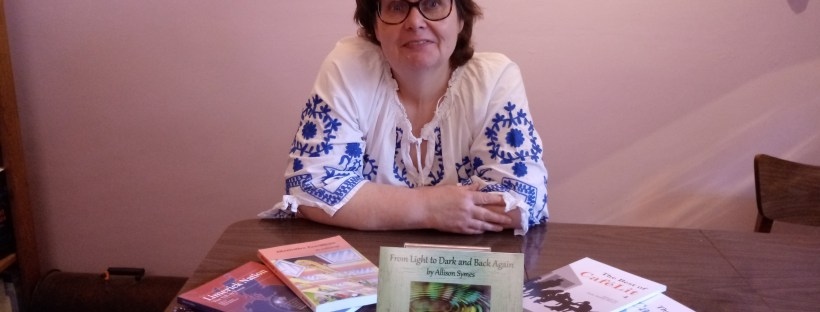
A big thank you to my better half, Adrian, for taking the pics earlier today. It makes a huge difference when the writing geek in a family has support from the rest of the family (and something I am very grateful for).

PS  Have put the new pics up on other areas of the website. Housekeeping like this is a good habit to get into!

The writing life is made up of a series of special moments. You start by plucking up the courage to submit work somewhere. You then get your first rejection (almost inevitably) and you try again and again and then, hopefully, comes the great day when a piece of work is accepted. Joy!

But rejections continue to come in long after your first publication credit and you realise the writing life is a roller coaster and you need to learn to cope with the ups and the downs. Yes, even to cope with the ups, because you don’t want those to create the sense you can never better that special moment. You can hamstring yourself here!

You need, I think, to work towards making progress all the time. Progress can include trying forms of writing new to you and that’s a great opportunity to just write for fun. I took up flash fiction because Cafelit had put out a 100-word challenge and I just thought I’d give it a go. I didn’t expect anything to come from it but quickly became addicted to the form and things took off from there.

Progress can include looking at the rejections that come in and, if lucky enough to get comments, to see if there is a common thread.

Some competitions offer critiques for a fee in addition to the competition entry fee. I’ve gone for these sometimes.Some critiques are more useful than others but you literally pays your money and take your choice. You need to work out whether such a thing would be useful to you.

I only enter competitions that have been longstanding ones or where feedback on them is positive. I also go for critiques like these where the blurb tells you what to expect. For a short story, it is never going to be a long critique. What I’m after here is the critic’s general view of how well my story and characters come across. Tickbox critiques can work well here too.

Do you finish reading a story that hasn’t gripped you?

These days, I’m afraid I don’t – life’s too short etc – but I am pleased to say I can’t remember when I last abandoned a story. That’s partly I think because I’m getting better at picking out a tale that’s likely to appeal to me. It’s also because the moment a character has gripped me, I’ve got to find out what happens to them.

So of course you try to replicate that in your own writing. For me, it is always down to the characters which determines whether a story or book is successful or not. For non-fiction, it is the voice of the “narrator” of the piece that has to grip me and therefore determine whether I’m going to like the article or not.

Do you ever find you start a story slowly, then the pace quickens, and before you know it you can’t get the words down fast enough? I’ve likened this to almost taking dictation from your characters and that’s a good sign.

The other positive is that the slow start means you’ve started the story in the wrong place and that will be what you look at first to edit, cut, or rewrite later. You sometimes need to write a start like that to help get you going. The important thing IS to get going and have that first draft down. This is why I always write a story in full and then edit. I know it won’t be perfect straightaway (what is after all?) but that’s okay. The improvement works come later on.

Only the Ten Commandments were written in stone so just be aware you’ll need to go back and change that slow start. It if serves no purpose get rid of it. If there is useful material in there, what can you do to retain that and get it across to the reader in a better way? Sometimes that material can make a separate scene later once the pace has picked up and be a useful “take a breather” scene. Sometimes you can get the character to convey the information. There are options!

By the time you’re drafted your story and then re-read the whole thing, you should also have a better idea of where your tale should have begun. Hey presto, you take it from there!

This slideshow requires JavaScript.

Facebook – From Light to Dark and Back Again

Am pushing myself on story submissions though I’ve mixed this up with flash tales, standard length short stories and so on. All good fun!

One of my longer term projects is my third flash fiction collection (which is at a reasonable length as it is now but needs editing. I’ve got some linked flash stories in this one and some historical pieces but would like to add a few more tales to this before I really edit the lot).

My starting point for a flash fiction story is always to work out who is the character who is leading it, what their motivations are, what they stand to win or lose by the end of the tale. All of these have got to be strong enough to keep my interest going (yet alone anyone else’s!) and if the three strands together, then a promising flash fiction story should be the result.

This slideshow requires JavaScript.

I use first person a lot in flash fiction as it is so immediate but when I do name a character, it’s usually by Christian name only. This is partly due to the word count restriction but, much more importantly, I can convey what I need a reader to know about a character called Mary just by using that name only.

When I do bring in a surname it’s either a means to show what class/background that character belongs to OR another character is referring to them. That tells a reader immediately the named character is important to my narrator. It makes a useful flag!

This slideshow requires JavaScript.

Another advantage to flash fiction is when you are really pressed for time to write, you can jot down something to work with. Whether you then extend those jottings to a full length 1500 words+ story or keep it as something that could work in the flash market is up to you, but you have the option! So never despair if you only have 10 minutes to write, you can get something down in that time.

This slideshow requires JavaScript.

My CFT post this week will be about Moments that Matter but in flash fiction every moment matters!

Whatever kind of story you write, you select what the reader has to know, you leave gaps for them to work things out, and end with a satisfying conclusion to your tale. With flash, that whole process is more intense.

Every word must count and play its part. For example:-

She always wore velvet.

She always wore moth-eaten velvet.

Which of those lines would I use in a story? The second one.

This is because the “always” implies there’s a character here who may well be obsessed with what she wears. The “moth-eaten” tells you something about her financial well being (or she’s exceptionally careless about how she looks after her clothes). Yes. these are two extra words to the count but both add weight and meaning to the story so stay in.

This slideshow requires JavaScript.


Goodreads Author Blog –

What Do You Look For in a Story?

What people look for in a story differs of course but, for me, the primary wish is to be entertained.

I don’t like it when genre fiction is looked down on for not being “highbrow”. That isn’t the purpose of genre fiction. Besides genre fiction CAN be challenging and make readers think.

There is nothing wrong in writing or reading “merely” to be entertained. A good story that can make you forget your troubles for while is wonderful.

One of the lovely things about books/stories is they can take you out of yourself for a while and that is invaluable. In difficult times, I’ve relished those periods when I’ve been able to escape with a good book. The ability to escape for a while is crucial.

I can understand the point of misery memoir but frankly it isn’t for me. I hope others find healing and help through it but I want to switch off the real world when I read and deliberately venture into something I know is totally made up!

This slideshow requires JavaScript.


AMAZON CENTRAL

Below is the link to the US and UK pages I’ve set up on Author Central. More will be added as and when I have news/further publications out (there’s optimism for you!).  Hope you enjoy.

https://www.amazon.com/Allison-Symes/e/B07T3HT18L?ref_=pe_1724030_132998060

(American)

https://www.amazon.co.uk/-/e/B07T3HT18L

(UK)

There are also pages for me on Author Central France, Germany, and Japan!


Dangerous Words and What Flash Fiction Isn’t

Facebook – General – and Publication News

My flash fiction story, Dangerous Words, is now up on Cafelit. Hope you enjoy it. There’ll be another from me here on 16th March.

I love getting straight into the heads of my characters and letting them get on with it! The writing seems to flow better when I do this.  And here is the link to my page on Cafelit.  Hope you enjoy the stories!

When you think about who your favourite authors are, do you stop and think about why they’ve made it on to your list of favourites?

No reader or writer worth their salt ever has one favourite author only! You are reading widely across genres to help inspire your own creativity, aren’t you?!

Besides, with such a wonderful wealth of books out there, why stick to just one genre? (I’m the same about chocolate – yes I will always prefer milk, but there’s no way I’m missing out on dark and white!).

I strongly suspect the big draw will be the characters your favourite author(s) created. A well drawn character will have you sympathising with their predicament, their hopes, the obstacles they’ve got to overcome to have any chance of realising those hopes etc.

So turn this around then and ask yourself what you can do with your characters to make readers feel all that about them. Readers should be able to identify with said predicaments and hopes (though not necessarily agree with them or the way your characters handle matters).

I’ve been sharing on Twitter some of my favourite books, the kind you have to take to the mythical desert island with you. Amongst the list are Men at Arms (Terry Pratchett), Pride and Prejudice (Jane Austen), Murder on the Orient Express (Agatha Christie), and The Daughter of Time (Josephine Tey). A nice mixed bunch so far but then I’ve never seen the point of limiting your reading to just one genre.

What do I look for from a good book? An entertaining story, characters that make me want to root for them, for good to prevail over evil, and where the story can make me think as well, even better. The Daughter of Time remains, to date, the only novel to make me change my mind over something (Richard III and whether he was innocent or guilty of the murder of the Princes in the Tower).

The challenge as a writer is to create your stories in such a way they resonate with your readers long after they’ve read them. I’ve only ever read To Kill a Mockingbird once (at secondary school) but certain images and the way it made me feel against injustice remain with me to this day. I’ve not read the follow-up and I don’t know if I will but to be able to haunt your readers long after they’ve finished your book is something to aspire to, I think.

This slideshow requires JavaScript.

I love getting right inside the heads of my characters when writing stories and often use that as a way to get started on a piece.

I like to think of it as hitting the ground running, because a brief incursion into the character’s mind will reveal (a) what they’re facing and (b) their attitude to it. That’s when the sparks fly!

It also means I’m showing you the story from the viewpoint of that lead character. No telling here! It does mean you’ve got to know your character well enough from the outset so you can write them convincingly but this is where outlining a few thoughts comes into its own. That outline can be as detailed or not as you want, but as long as YOU know enough to write the character, that is what matters. How to tell?

Ask yourself how your character would react to a situation you are not actually writing about for this story. Do you instantly know how they would react? If so, good. If not, you need to flesh your character out more to yourself so you can turn that no into a yes.

This slideshow requires JavaScript.

Facebook – From Light to Dark and Back Again

Delighted Dangerous Words is now up on Cafelit. I’m very fond of stories where the main character reveals a lot of what appears to be backstory but is very relevant to what they are facing at the time! I’m also very fond of stories about little old ladies who aren’t quite as innocent as they might seem to be.

How easy do I find writing flash fiction?

The simple answer is I never know when I write flash how it is going to turn out until I do it so I take an idea and run with it and see what happens.

Sometimes that idea will work better as a longer standard length short story (and that’s okay because there will be markets and competitions for it). At other times, something I thought would make a great flash fiction idea really isn’t strong enough.

Flash fiction ISN’T a diluted short story. It has to be a complete story in and of itself. It captures a moment in time (a short story can capture more than one) but it has to be a moment worth sharing! One moment finely honed. And it takes practice too. But that’s true of any form of writing.

Learning to write short will help with creating blurbs for a novel amongst other things so practising writing flash fiction I think is great for all writers to do. The editing and polishing skils you pick up over time will pay off in other writing work you do.

The Lord of the Rings

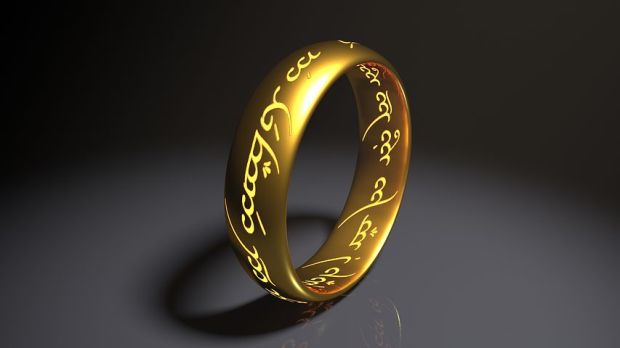
The Lord of the Rings – the ultimate in dangerous words is on this ring!. Pixabay image.

The writing prompt in my diary for this week was of a bird watching its potential mate carrying out a ritual wing display. (The mischievious side of me would have loved the picture to have shown the female holding up a score card – you know the marks out of 10 kind of thing – but then that’s my quirky sense of humour).

The prompt was to tie in with Valentine’s Day and I’ve drafted a flash story (in poetic form) where the female wishes she could have the special treatment more often during the rest of the year, that it wasn’t all down to mating etc, that there could be something special during the day to day effort to survive. My draft needs a lot of work (as all drafts do) but I sympathise with my character’s viewpoint here.

For all writers, the heady moments are (a) when you know you’ve created something good, (b) when you hear you’re going to be published, and (c) when the book contract (a good one obviously) turns up for you to sign! The nature of things means those heady moments are “spaced out” and we have to cope with the daily nitty gritty, which is far less “glamorous”.

The nitty gritty then for all writers is to get the writing done, get it out there, cope with the rejections that will come in, and so on.

And on that note I must get on!

Does flash fiction have its limitations?

Well, there is the word count of course, but I suppose the main one would be is it is not the vehicle for an in depth character study! What it can and should do is show a reader enough about a character so they fill in the gaps themselves. It is like shining a torch and you pick up ONE thing to focus more attention on.

I’ve always loved it when writers don’t tell me every last detail. I want to be able to work things out myself and flash fiction IS the perfect vehicle for that!

I really enjoy reading and writing flash fiction stories which end with a punch. Sometimes that can be literal (!) and is most satisfying when the character has deserved it (and that will be the view your readers will take too). One huge advantage of fiction is wrongs can be righted in a way they’re so often not in real life. I believe that is one reason why fairytales are always popular!

I also love the witty one-liners that can close a story. It’s good to finish a story on an “uplift” where that is appropriate. Of course the set up for that finish happens much earlier in the story and it can be as simple as showing your character has the type of attitude which will make a witty one-line retort likely. (It usually is a retort!).

Above all, it is fun, which is what writing should be after all.

This slideshow requires JavaScript.

Goodreads Author Blog Hooks into Books

I seem to have a “thing” for rhyming titles at the moment. Sure it will be a passing fad…!

What attracts you to a book? Is it the title, the blurb, the cover, or a combination of the lot?

For me, the cover draws me in but the blurb is what clinches a sale for me, whether I’m reading on Kindle or a paperback. If I like the premise of the blurb, I will “look inside” a Kindle book or look at the opening page of a paperback. If it seems to deliver, I’ll go ahead and buy.

There is no such thing as a foolproof system but this works for me!

Of course, another great hook is reading a book by an author whose works you know you like. I love series novels and my favourite of these has to be Discworld. Each book original and entertaining but there’s enough familiarity with the world to make you feel right at home as you continue to enjoy the series.

Whatever you read, enjoy!

This slideshow requires JavaScript.


Writing Wish List, Why Write Flash Fiction, and Special Offers

Facebook – General

If you could make a writing related list for Santa, what would be on it? I’d ask for:-

1. The ability to stretch time so I can get all the writing I’d like to do in and done! Naturally I would not feel any side effects from this.

2. The ability to spot ALL typos etc before submitting work anywhere ALL the time. (If it is any comfort, most writers spot errors in work later on. We just don’t admit to it! We do feel annoyed at ourselves over them though – very much the “why didn’t I spot that one?” school of thought.

3. To never run out of pens, notebooks, ink cartridges, paper etc and also to arrange for the printer toner NOT to run out half way through a print run ever again. (You do get sick of this happening when it occurs more than once. Trust me on this).

4. To never miss a writing competition that might suit you ever again. (It is difficult to keep on top of them all so help from Santa here would be useful).

5. To never run out of inspiration and ideas and to always follow them through thoroughly.

6. Extra stamina would also come in handy. You need it when the umpteenth rejection comes in during the week.

7. More reviews of my book!

8. For the charlatans in the publishing industry to disappear from it for good so nobody is ever taken in by false promises again. Meanwhile, do check out the Society of Authors and/or ALLI, the Alliance of Independent Authors websites for sound advice on what to look for in publishing contracts, self publishing services etc.

9. To never run out of bookmarks. When I don’t need them I seem to have loads. When I do, can I find any? What do you think?

10. For more independent book shops and for them to thrive and do well.

I’m not putting these in any order of importance though 10 should be very high up on any list to Santa, I think.

Am glad to share, via the link, details of some special offers on Chapeltown Books’ flash fiction collections, including From Light to Dark and Back Again by yours truly.

The offers are open until the end of the week. There are currently 8 books in the Chapeltown series and there is an offer on for all of those. Equally you can buy three or four of them and still have a special offer! This offer is on until 21st December.

Some last minute Christmas present ideas, everyone?

Hope that whatever else is amongst your presents this Christmas, some good books are amongst them!

This slideshow requires JavaScript.

The YouTube below shows the books produced by Cafelit/Chapeltown/Bridge House during the year. A lovely selection.

I was in the To Be…To Become ebook produced by Bridge House. This contains the 16 winning entries to the Waterloo Arts Festival’s first writing competition. I hope they go on to have others!

What can be confirmed is there is a lovely variety of books and stories to suit all tastes here.

When do you know a story is really special? When you can’t forget the characters.

For me, story has always been about finding out what happens to the characters. I don’t necessarily need to like them (though most of the time I do) but I do need to be intrigued enough to find out what happens to them. So then there has to be something about the characters I can either identify with or which hits my “curiosity switch” and keeps that pressed down so I have to keep reading!

A good plot can be let down by characters that aren’t strong enough for it (and this means the writer hasn’t got to know his people well enough before writing about them). Great characters will lift any story they’re in. Great characters will generate plot. Imagine the chaos a devious character can cause when they set out to cause mischief deliberately. All sorts of stories can come from that, humorous and otherwise, but the character has to be well portrayed for that to work.

Facebook – From Light to Dark and Back Again

Time for some micro Christmas stories then:-

1. The innkeeper smiled, having seen his guests to the last available room. Nobody else would be disturbing his sleep tonight then.

2. Scrooge grimaced as he walked home, having heard some youngster tell a snippet of a ghost story. Ghosts! Whatever next?

3. In the bleak midwinter, they could have done with a snow plough.4. Rudolph the red-nosed reindeer found that telling everyone he was suffering from a nasty cold stopped the awkward jokes about what he was adding to his water trough to generate said red nose.

5. Frosty the Snowman was the first to admit he really could not appreciate the benefits of central heating.

Allison Symes – 15th December 2018

This slideshow requires JavaScript.

Never worry about overwriting a story. That overwriting can and should be cut later. Usually this is a case of sharpening up phrases etc. I like the creative aspect of that side of editing where you are happy with your characters and story but know you can express things better than you have done with your first draft.

For me, it is far more of a problem when, on odd occasions, my story is too short. Not a problem for my flash fiction but it can be for standard length short stories (usually 1500 words or so). This always means one thing in my book, pun intended (!), and that is my idea simply wasn’t strong enough. I needed to do far more outlining to see where the idea could take me before I committed to writing it and that process would have shown up inherent weaknesses in it.

So do outline. It can save you a lot of grief later.

Reasons to write flash fiction:-

1. You learn how to edit well.

2. You learn to be ruthless when cutting out anything that is not moving the story forward.

3. You really do watch your word count. (This pays off for other forms of writing competitions too).

4. Given flash fiction markets and competitions have different requirements (for example some include the title as part of the word count, others specificially do not), you learn to make sure you ARE following the right rules for the competitions you’re interested in.

5. It is a great way to get work out there while you are working on a longer project.

6. There ARE more competitions and markets out there now so there should be at least one to suit your style of writing.

7. You have to write character driven stories but there’s nothing to stop you setting that character in any time, genre, or setting of your choosing. You are definitely NOT stuck to one genre here.

8. Flash fiction can make a great warm up writing exercise ahead of a longer project. The great thing is you can now do something with what your produce from those writing exercises!

9. You learn to write precisely because you are looking for the maximum impact on your readers for the minimum word count . This is a fantastic discipline which can be transferred across to other forms of writing you enjoy.

10. It’s fun! I’ve loved the challenge of writing to 100 words, to 75, to 50 etc. Flash fiction can be addictive!

This slideshow requires JavaScript.

F = Fantastic Fiction
L = Lines that Hit Home
A = Amazing Characters
S = Stories with Impact
H = Humour and sometimes with a twist too.

F = Fairytales with Bite
I = Imagination is fired up!
C = Can cross genres
T = The word count is the main thing to watch
I = Insist on ruthless editing to cut all that is unnecessary
O = On the look out for markets and competitions
N = Never underestimate the time taken to craft your tales!

Allison Symes – 18th December 2018

Goodreads Author Programme Blog – Christmas Wish List

Naturally I’m assuming books are high up on your Christmas wish list. I would like to add to that though the following:-

1. More time to read!

2. More time to re-read old favourites. Does anyone else feel a pang of guilt sometimes when you really want to go back to a novel you’ve read a few times when you know there are so many other books you really should be getting on with and reading? That you actually want to read but the “clarion call” of the old favourite just can’t be resisted.

3. Being able to read “children’s” books without feeling guilty or embarrassed. Incidentally I understand the point of more grown up covers for certain books to get around this issue but for me this doesn’t really work. I like the original covers far better in the majority of cases and want to stick with those!

4. That all adaptations of stories and books do justice to their source materials. Too many don’t!

5. That I can always find a bookmark when I want one. (I either have LOADS when I don’t need them or none at all. Don’t ask… it is the way it is!).

Hope you have a book and story filled Christmas. The joy of the winter months is WANTING to stay indoors and curl up with a good book!

This slideshow requires JavaScript.


Music and Characters

Facebook – General

Loved listening to a wonderful hour of Dr Who music on Classic FM tonight. Each piece brought back many happy memories of wonderful editions of the show. I suppose that is one reason why I love music – it can be so evocative – and for films/TV etc, it can really help set the tone for what is to come.

With stories, of course, there is no background music usually! We have to set the mood through what we reveal about our characters in what they say, think, and do. But the great thing about being the writer of the stories is you get to make the characters dance to YOUR tune! The really fun bit is making that tune varied – no monotones here, thank you.

This slideshow requires JavaScript.

It was great fun earlier today taking part in #ValPenny‘s book launch for her second novel in the Edinburgh Crime Series, Hunter’s Revenge. Many thanks, Val!

The great thing about things like this is it makes you think about what you are reading and what you particularly enjoy.

The big thing for me with series novels is discovering how the characters change and develop from one book to another. Great fun. I also see it as getting more than one story for your money.

Not only is there the individual story of each book to follow, you get to see how your favourite (and least favourite) characters move on or not, as the case may be.

My overall favourite for character development is Terry Pratchett’s Sam Vimes. Compare him with how he appears in Guards, Guards to how he is in Raising Steam. Literally a character that comes a long way!

Good luck to Val and I hope everyone has a fabulous time with their reading and writing. It should be fun.


This slideshow requires JavaScript.

How often do you review where you are with your writing? I tend to do this at the end of each year. What I’m looking for here is where I’ve been published during the last 12 months and whether I’ve achieved something I’ve not done before. I also set myself a couple of goals that I’d like to achieve in the next 12 months.

With regard to my CFT posts, I tend to look back at my topics every time I write a new article. This is partly because I’m looking for links to go with the current post. Often one writing related topic will kick off ideas for others. I love that when this happens.

In fiction, what I really love is getting ideas for other characters from the characters in the story I’m currently writing. Say Character A acts in a certain way due to pressure being put on them, I come up with a Character B who faces different pressures but reacts differently.

I love the creative buzz you get. It is always a good sign when you are buzzing with ideas to write up at some point.

Other than people giving plot endings away, what is the one thing you loathe most which is writing connected? (I take loathing the giving the plot endings away thing as read by the way!).

I suppose mine is when someone believes short stories (including flash fiction) must be easier to write than a novel. What is forgotten here is, no matter the length of story, all tales have to be edited and polished well ahead of submitting them anywhere.

Sure, a novel is going to take longer. Of course it is but it doesn’t mean short stories (including flash fiction) are any less worthwhile. Far from it. And, of course, many novelists write shorter pieces too!

This slideshow requires JavaScript.

Facebook – From Light to Dark and Back Again

Managed to write some flash fiction on the way to and from an Association of Christian Writers Committee meeting today. I do love using train journeys for this! I find it liberating to be writing but away from my desk.

I drafted a nice mix too – one story was a very short piece, the other I think is going to come in at about 200 words, but both can be submitted somewhere later once I’ve had the chance to polish them.

Looking forward to giving a brief talk on flash fiction at the Hampshire Writers’ Society in October. Will post more details nearer the time.

I like story collections which offer a variety of moods of story. I see it as dipping into a “selection box” of story treats (and a lot less fattening than dipping into an actual selection box!). This is why I wanted From Light to Dark and Back Again to be like this and that mood selection inspired the title too.

As for flash fiction collections on single themes, I like those too. (Dawn Knox’s The Great War is a fabulous example of this). Don’t know if I’ll go that route myself but it’ll be posted here first if I do! It’s fantastic having so much choice with flash fiction.

I like being able to come up with different settings for my flash fiction stories. Though my rule here is one setting for one story and generally one character too. (Sometimes I’ll use two but if I’m keeping to the 100-word limit especially it is nearly always one character only and often I’m telling the story in the first person for a more immediate impact).

The great thing is the character or the setting can dictate the story genre being used. If I mention a character is a fairy godmother, well you’ve got the fantasy genre there in a nutshell. What images you have of what a fantasy world with fairy godmothers in it looks like will almost certainly differ from the images I conjure up here (pun intended!), but that’s good. We bring our differing experiences and thoughts when we read a story. How much more when we write them too!

I find it hard to say whether I prefer writing the lighter or darker stories in From Light to Dark and Back Again (and indeed the book I’m currently working on).

I love coming up with something humorous but with the darker pieces, I often feel there is more character development in those.

Certainly whenever I read darker flash fiction whether it is written by myself or others, I am always wondering what led to that character being like this and thinking about what their back story could have been. This is a good sign as it shows that character has really come to life in your imagination.

With humorous pieces, I am kind of working to the “punchline” though this must wrap the story up beautifully, make sense, and be funny.

Goodreads Author Blog – Read the Book First or Watch the Film?

When it comes to adaptations, do you read the original book first or watch the film and then decide to go and read the book?

I must admit I’ve done both. I read The Lord of the Rings before seeing the films. I read Oliver Twist after seeing Alec Guinness play Fagin on TV all those years ago. (Mesmerising performance in evil manipulation there!).

I must admit one thing I love about the Muppets’ version of A Christmas Carol is they plug reading the original book right at the end of the film. (And they’re right – you should read it!).

A good adaptation will bring a story to life and help draw people into reading the original book. A bad one will do the exact opposite!

So where DO you turn first – the book or the film? Why do you think you’ve chosen as you have?


IDEAS, ROOM 101, AND SPECIAL CHARACTERS

Another mixed bag plus a link to my page on US based site, Scriggler, where a new story of mine is now up.

Facebook – and Chandler’s Ford Today

My CFT post this week is the final installment of my 101 Things to Put into Room 101 series. Good fun to write and therapeutic too! Amongst tonight’s items are debt, fake sincerity and all calories in a 99 icecream. (You can guess where I put that in my list numerically speaking!).

Facebook – General

When is the best time to write? When you can! I write mainly in the evenings but if I can sneak in some writing during the day, I do so. What matters more, I think, here is being consistent with your writing. You know you will always sit down at roughly the same time and you will always write X number of words or accomplish this task or that one.

I keep a list of writing tasks I want to achieve and find it helpful as, whenever I tick off one, there is a sense of achievement. Given rejections happen to everyone, that sense of achievement is very welcome.

This slideshow requires JavaScript.

Facebook – General

Little things reveal a great deal about people. Anyone who always says “please” and “thank you” was brought up to be polite (and not take anything for granted usually too!). Likewise, those who hold doors open for others (regardless of gender), you can reasonably assume at least try to be considerate in other ways.

So little things should give away clues as to what your characters are really like deep down. I think of this as the kind of trait that a character can’t completely hide/suppress.

For example, a character is shown to be a “loudmouth”. Fine but every so often during the story, we also spot the said character lighting a candle as a prayer for someone else. That tells me well hang on, this character has another side to them. A deep, spiritual side they are either not comfortable showing more openly (they’re wary of showing off their piety perhaps) or they somehow feel the need to cover that aspect of themselves up by being “loud”.

So think about what little things will give away what your character is really like. These little things can also back up the main portrayal (and help make it more convincing).

Facebook – From Light to Dark and Back Again

One thing that can be overlooked in flash fiction is, as with any story, the character still has to be at a point of change in their lives and the tale shows the results of that. The difference, of course, is that in flash, you have much less room to complete that “task”.

But a good flash fiction story will show you a character changing (for good or ill), or resolving a problem. It really is a question of cutting to the chase with flash fiction. There has to be a resolution to the conflict your character is facing, whether that is an internal or external one. Everything that is most important to the character and the resolution has to be in the story and not a word more.

This is why I think it is a good idea for most writers to have a go at writing flash fiction, even if you don’t use it as your main fiction form. Why? The skills you learn in writing to a tight word count will spill over into other things you write. As I’ve mentioned before, you soon find out what your wasted words are, you discover you don’t need many adjectives and adverbs, you do learn to say in one word what you might have taken three words to do etc.

This slideshow requires JavaScript.

Facebook – From Light to Dark and Back Again

Flash fiction is great for giving insights into a character which wouldn’t be enough in themselves for a standard length short story (usually 1500 to 2000 words).

With a novel you get to see the whole “tapestry” of the story with all the different threads coming together. With a novella you would see about half of that. With a short story you would see say part of the left or right hand side. With a flash fiction piece, you are picking one spot on the whole “tapestry” to study – and, despite the limited word count, can still produce an “intense” story. Flash fiction can have layers – it just can’t have too many of them!

Facebook – From Light to Dark and Back Again

Ideas, I think, are all over the place waiting to be picked up and used by writers who can recognize them for what they are and, more importantly, which ones are the “goers” and worth running with.

I don’t write character biographies (though I understand the point of them) but I do jot down ideas based on themes and then work out “What if?” scenarios. I think it important to recognize that ideas need development time.

Yes, a brilliant idea can occur and you write away but in my experience at least it has been ideas coming together to form a powerful whole that has inspired my stories. The advantage of this is that the ideas are layered and means I am building in depth to my stories. (Yes, you could and should have depth to flash fiction. There should be nuances the reader ponders on later).

But it is theme, motivation, and character types that interest me the most. Again looking at the news you can pick up thoughts as to what motivated someone to do this or that and then apply that motivation to your characters. For example, we all understand jealousy and how that can arise. So why would your characters be jealous and what would they do as a result?

This slideshow requires JavaScript.

Scriggler – My page

I have put a new story on this called Night Fright but am including the link to the whole of my page here.  Am hoping to add more to this later in the year.

Fairytales with Bite – Five Signs of a Great Character

I do like a list (!) and it has been a little while since my last one on here so time for another!  I would list the following as my five signs of a great character (fairytale or otherwise).

1Being Memorable.  Sounds easy but can be easier said than done.  The advantage is a character can be memorable for good or villainous reasons but there has to be something about them that sticks in your readers’ minds long after they’ve finished reading about them.  Can you say something about your character that would instantly bring them to mind without you having to refer to the story?  (This can be a useful test!)

2.  Having a Life.  Your characters have a life of their own, which may not necessarily be directly relevant to the story you’re telling about them but which feed into it.  For example, a character may be known for usually being a stay at home and then they suddenly go on a quest and they wonder how those who know them will react to this.  The quest is the story but the fact the character has friends and neighbours who will gossip about what they’re up to brings that character to life.  The obvious examples here are Frodo and Bilbo Baggins from Tolkein.

3.  They would be capable of further adventures.  The great characters have traits and skills that would be easily transferrable to other stories about them.  Your readers should be able to picture your characters going off on other adventures.

4.  The characters are willing to be challenged or overcome initial reluctance to face challenges.  I love stories with characters like these, partly because I think about what I (or my characters) would do if facing the same fictional challenges.  This feeds into 3 above, of course.  It is my experience characters like this always do more than their author originally thought them capable of and that is a very good sign.

5.  Their enemies fear them with good cause.  The irony here is that this can apply to the enemies fearing the hero, but also the hero fearing the enemy.  A worthy hero deserves a decent villain to test them.  You can also see why the fear is justified.

person typing on his macbook pro

Creating great characters. Image via Pexels.

person uses pen on book

Outlining your characters, perhaps. Image via Pexel

background black coffee bouquet chocolate

All good aids to writing, though the chocolate is not a great diet aid. Image via Pexels

motivational quotes

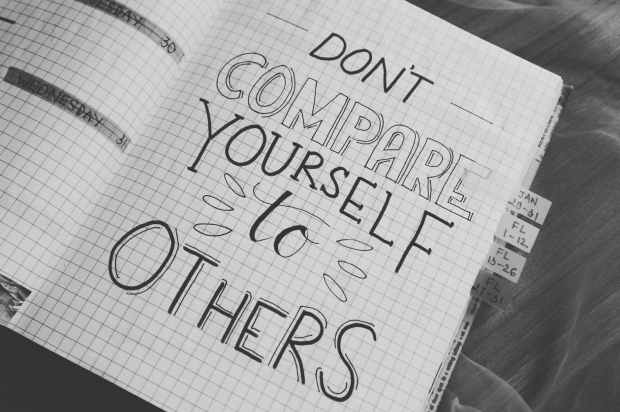
Always good advice this. Image via Pexels

This World and Others – What is Special about your Characters?

I think this question is the first thing you must ask yourself before writing your story. What is so special about your characters readers have to keep on reading to find out what happens to them?

The basic answer, of course, is that it has to be a mixture of character traits and personality to make a fully rounded “person” to be the star of your story.  So think about where your characters get their traits from and why they have the personality that they do.  What would happen to this personality if they were put under stress (especially the ongoing for some time kind of stress)?  Would your character still be special or crack under the strain and, if the latter, how can they come back from that?  There are stories to be had there!

Also, what is special to your character?  What do they consider to be the most important things about themselves and why?  Who are their heroes and villains, and why?  What possessions do they have that they value the most (and these don’t have to be priceless antiques.  it could be, say, a battered old teddy bear they’ve had since very young etc)?

Happy writing!

This slideshow requires JavaScript.


LOVING WHAT YOU DO AS A WRITER

I can’t over-emphasize the importance of loving what you do as a writer.  It can help keep you going when all you get in your inbox (or even still these days your letterbox) are the inevitable rejections all writers get.  Treasure any specific comments you receive on rejections as these can be invaluable for showing up weaknesses etc.

Facebook – General

One thing I love about writing for Chandler’s Ford Today is it has helped me work to a deadline (and a relatively short one at that). Most story competitions give you a reasonable amount of time in which to submit your tales. CFT is weekly.

I have brainstorming sessions every so often for ideas for my flash fiction but I also have some for potential articles for CFT. It takes me a while to work through them too, which is good.

There has to be a link to the local area but that link sometimes is me, especially when I’m interviewing other authors from outside the area.

Writing articles for your local online magazine could be a good place to start and it can lead to you having a track record (always handy for publishers, if you’re submitting work to magazines etc). Okay so you don’t get paid but you do learn a lot from it. I know I have.


Facebook – General

One of the lovely moments in story writing is when you discover you really like your characters and find yourself rooting for them. And you know how the story ends too!

I’m currently editing a story about two ladies of a certain age and love the pair of them! Mind, it probably helps no end I’d probably be in that “certain age” bracket now…

What appeals to you about your own characters? What drove you to write them in the first place? There has to be something special to get you to do so (and that includes villains too. Many a writer has fallen for their own evildoers!).

This slideshow requires JavaScript.

Facebook – General

My Chandler’s Ford Today post this week is called Writing Sayings – Truth or Nonsense? I look at old favourites like never judge a book by its cover and write what you know amongst others. Link to go up tomorrow.

I did find some lovely and useful sayings relating to writing I hadn’t come across before and I share those too (from Mark Twain and Margaret Attwood amongst others). I also share a couple of sayings I’d like added to the canon of wise thoughts.

I enjoy writing all of my posts for CFT but this one was great fun and I hope there will be some good comments after the piece goes live tomorrow.


Books invite you into their world - image via Pixabay

Books invite you into their world. Image via Pixabay.

What new scenes will a book show you - image via Pixabay

What new worlds and scenes will books show you? Image via Pixabay

Some very strange characters can be found inside a book - image via Pixabay

Some very strange creatures are in books. Image via Pixabay

Good advice here - all writers need to fail better - image via Pixabay

Good advice. Image via Pixabay.

Facebook – From Light to Dark and Back Again

What would I like flash fiction to achieve?

I would love it to tempt reluctant readers into developing a lifelong love of stories and books.

I would love it to tempt the “gadget freaks” into reading it on Kindle (and even via something that needs no batteries at all – the good old paperback!).

I would love it to show those who claim they have no time to read, well actually you do. Flash fiction really does not take that long! (They’d have to think of another excuse not to read then, wouldn’t they?).

I would love it to show that great characterisation does not mean having to use hundreds of words.

Flash fiction is, I think, the ultimate proof that less is more!


Facebook – From Light to Dark and Back Again

Do you have a favourite writer and, if so, who and why? I’m torn on this. I love P.G. Wodehouse and Terry Pratchett for their humour and ways with words yet their story worlds are so very different! (And that’s another reason I love them both. It’s always good to visit more than one fictional world!).

Whoever your nominee would be, I strongly suspect it is something special about the characters produced by that writer, which would be your deciding factor. (And if that doesn’t settle the argument over character -v- plot, I don’t know what will! Without well drawn characters, any plot falls down badly).

I don’t know about you but I find when recalling a story I’ve not read for a while, I may not remember every single detail about the plot, but I do recall what I loved about the characters.


This slideshow requires JavaScript.

Facebook – From LIght to Dark and Back Again

The dash to write a piece of flash
May result in a wonderful tale
But you need the edit to slash
At your draft so your work may not fail.
Cut the rough and know after all
No great work is achieved overnight
Every word must seek to enthral
Out comes anything that might well blight
You find the real tale from that first draft
This is where you develop your craft.

Allison Symes – 15th February 2018

Not arguing with this saying - image via Pixabay

Not arguing with this! Image via Pixabay

Well, would you - image via Pixabay

Well, would you? Image via Pixabay

Too late for me but a saying worth considering - image via Pixabay

Alas, too late for me! Image via Pixabay

Goodreads Author Programme – Blog

Reading, of course, educates, informs and entertains us. I think all three aspects are vital and should feed off each other.

This is where things like the Horrible Histories series have done so well – information presented with humour goes down better, especially with youngsters, than straight facts presented in a more traditional way.

I read chiefly for pleasure but I also read to research and to expand my knowledge on things I may well write about, either in fiction or for Chandler’s Ford Today at a later date.

Things I know I will want to read later I will either download straight to my Kindle or send to it (and this is so useful. I often catch up with reading here when on train journeys).

So does literacy and the love of books still matter? Of course, it does. It always will.


SHORT STORIES

Facebook – General

When editing a story, I tend to check if my main characters are coming “through” well enough. I love using thoughts as a way of showing what my “people” are really made of (and it’s even more fun when they’re deliberately hiding this from the other characters in the story. You’re left wondering whether the others will find out the truth or not and this can be a great source of conflict if they do!).

If, by the end of the tale, I’ve got a clear picture of who my characters are, what drives them, and they engage me, then hopefully other readers will feel the same way and like them too. (Or in the case of villains love to hate them, which is also good).

This slideshow requires JavaScript.

Facebook – General

A great short story has to have:-

Strong, memorable characters

An intriguing start

A middle that wants to make you keep reading to see what
happens next (definitely no saggy middles)

A powerful and appropriate ending (and I do love twist endings as they end the story with a “punch”. Sometimes I’m pleased when I see the ending coming and basically, my guess turned out to be right, but I’m even more pleased when the writer wrongfoots me).

The right word count for the type of story it is. I like short stories to be 1500 words or so. Flash fiction is 1000 or under but I must admit I feel a bit short-changed if a short story comes in at 1200 words or so. It feels to me like the story hasn’t quite got the “legs” to go the proper distance.

(Many thanks to Dawn Kentish Knox for the picture of me reading from From Light to Dark and Back Again at the Bridge House event in December. Huge fun!).

Facebook – General

Some more Murphy’s Laws for writers:-

1. Your old PC will always play up when you’re trying to save the latest version of your MSS, especially something of novel length – and you have to save several times to make sure you HAVE saved it. (No longer the case for me I’m glad to say!).

2. You’re waiting eagerly for news of how you did in a writing competition. You check your inbox as often as possible at the relevant time. Nothing. You leave the PC for two minutes to go to to the loo, hear the unmistakable sound of more email coming in, get back to your desk as quickly as possible, only to find the new mail is selling you something you didn’t want, or offering you a date with a “hot” babe, which you also don’t want. The latter offers incidentally don’t seem to mind which gender they target.

3. You’re waiting for the author copy of your book to arrive. The days you stay in – guess what? Nothing turns up even though you know it is due. You pop round to see a neighbour or go to the local shops and come back to find… the “Sorry we missed you card” on your mat. Your vocabulary tends to veer into the brusque at this point!

Facebook – From Light to Dark and Back Again

About a week ago, I set up a quick poll as to what was the most important part of a story, regardless of word count. Many thanks to all who voted.

I asked whether an intriguing start or a twist ending was the most important component. And the results are:- (Ta da… imaginary drum roll here!)

83% An intriguing start
17% A twist ending

I’m not surprised by that. After all, if the start of a story doesn’t grip you, the chances of you getting to the twist ending are slim indeed!

Having said that, an intriguing start still has to be well supported by what follows. There has to be “follow through”. If the ending disappoints, would someone read another story from that author even though the start seems very promising? I think there could be a case of “once bitten, twice shy” here.

So my view? I am a little torn on this one as I sometimes write the ending to a piece of flash fiction first and then work backwards. One great thing about doing things that way is you definitely have the twist ending and you can then work out the intriguing start that led to it.

Overall though, I would go for the intriguing start (as I also love coming up with a strong opening line and seeing where it takes me).

Facebook – From Light to Dark and Back Again

Am glad that flash fiction has really taken off as a format and that Chapeltown Books now has a good range of publications to its name.

I love the “frame” around the powerful central images (see link) and think this is a great form of branding. The stories are pretty good too… Now I know I’m bound to say that but I wasn’t just referring to From Light and Dark and Back Again, honestly. Go on, check them out. Available in paperback and Kindle.

The small independent presses are a lifeline for authors and Chapeltown has particularly encouraged quirky fiction. Fine by me! I am a quirky writer…

Facebook – From Light to Dark and Back Again

When is a tale a piece of flash fiction as opposed to a shortened story? When it has a “proper” beginning, middle and end and doesn’t feel as if more could be added to it.

I try to leave my stories on either a twist or punch ending (they’re not quite the same thing) so there really is nothing left to be said. I like people to be able to feel that the ending was an appropriate one (which, of course, is not the same thing as a happy one necessarily!).


WHAT MAKES A GOOD WRITER?

Now here is one of those questions that will never date!

FAIRYTALES WITH BITE

In What Makes a Good Writer?  I share my thoughts on the issue.  Amongst other things, I cite the importance of not giving up.  A good writer will know their characters “inside out”.  When you read a piece by them, you are left with the feeling that nothing else could have been added.  I also strongly suspect any such piece of writing will have gone through multiple edits.  I do know that if anything looks easy, whoever is behind that anything will have worked extremely hard to get to that point!

THIS WORLD AND OTHERS

Developing the Vision looks at whether it is more important to see your characters or whether hearing their voice is better.  I always hear my major characters speak and I then work out what they look like.  I like hearing the characters – I can gauge their attitude to life and I think that is far more vital than knowing immediately what their appearance is.  That tends to be one of the last aspects I “fill in”.

FACEBOOK PAGE – GENERAL

A short post tonight looking at how characters can inspire a story.

https://www.facebook.com/plugins/post.php?href=https%3A%2F%2Fwww.facebook.com%2FAllison.Symes.FairytaleLady%2Fposts%2F959280120841634&width=500

FACEBOOK PAGE – FROM LIGHT TO DARK AND BACK AGAIN

I look at outlining and discuss why I do this now, when I never used to.  I stress the advantages and, yes, I’ve outlined for flash fiction too!

https://www.facebook.com/plugins/post.php?href=https%3A%2F%2Fwww.facebook.com%2Ffairytaleladyallisonsymes%2Fposts%2F524051441317002&width=500

Fill that blank sheet with ideas from non-fiction as well as other fiction works - image via Pixabay

Where good ideas start...

FAIRYTALE ADVERTS

FAIRYTALES WITH BITE

I share what might appear in the classified adverts in a magical world periodical.  Fairytale Adverts brings you the For Sales and the Wanted columns.  Hope to follow on with this tomorrow.  (I do love writing the more light-hearted posts.  In a world which is anything but light-hearted, a chuckle or two is always welcome I find).

THIS WORLD AND OTHERS

Being Dropped Right in It looks at how characters react to this.  It can happen as a direct result of you, the writer, playing God and throwing all sorts of obstacles in the way of your characters (which is huge fun to do!).  Equally, you can get your other characters to drop them in it (though they should have sound reasons for doing so).  How do your characters react to things like this?  Do they handle it well or fall apart?

FACEBOOK PAGE

Another short post so will share in full here.  I always share one way I use to find themes for my stories.

Hello spring, hello hayfever, hello April showers, hello warm sunny days which cheer me up (especially if I avoid the flowers!). It is true every cloud DOES have a silver lining and every silver lining has…. well you can fill in the rest.

I have a soft spot for proverbs and sayings, if only because I often use them as the theme for my stories. It’s what they’re there for, really!

The magical world of the imagination. Image via Pixabay

The magical world of the imagination but just how do your characters respond to being dropped right in it? Image via Pixabay

WHEN PUSH COMES TO SHOVE…

FAIRYTALES WITH BITE

When Push Comes to Shove looks at how your characters would act when under real pressure and why they would do so.  Are they driven by cowardice, heroism etc?  What would effectively come out from their subconscious when they are driven by fear etc?  Do your characters show signs of changes in their behaviour as their stress levels rise?  And, as writers, what do we do when push comes to shove?  What will we do to get our work out there?  Are we prepared for rewrite after rewrite to get it right?

THIS WORLD AND OTHERS

Getting the Job Done opens with one of the best openings I’ve written I think.  See what you think, however!  I talk in the post about ways and means of achieving things.  I also talk about all writers having to fight the procrastination monster and to get on and get our work out there.

BOOK NEWS – FROM LIGHT TO DARK AND BACK AGAIN

Am delighted to share news reviews for my flash fiction collection are coming in for both the paperback and the Kindle version.  Many thanks to the reviewers.  Also the cyber launch will be on 1st April 2017 between 10 am and 6 pm UK time but all welcome.  There will be giveaways…! 

(In other news, I hope to produce my own monthly newsletter soon and once I’ve sorted things out will put on this site a sign up form.  I plan to share in this newsletter advance news and share extracts from work in progress (hopefully for the next flash fiction collection!) and things like some of my notes from my flash fiction workshop for those who sign up.

FACEBOOK NEWS

I talk about reviews tonight, as a result of having more reviews in for From Light to Dark and Back Again.  I talk about some of the difficulties of writing reviews (you want to say enough to make people want to know more but not give too much away for one thing).  I also share how I go about this when I write reviews for Chandler’s Ford Today.

https://www.facebook.com/plugins/post.php?href=https%3A%2F%2Fwww.facebook.com%2FAllison.Symes.FairytaleLady%2Fposts%2F927777473991899&width=500

Well, what IS your story? Image via Pixabay.

How do you review stories without giving too much away?  I share some thoughts on my Facebook Author page. Image via Pixabay.