Reading, Rhythms, and Resolutions In Fiction


Image Credits:-
All images from Pixabay/Pexels unless otherwise stated. Book cover images from Chapeltown Books and Bridge House Publishing. Screenshots taken by me, Allison Symes.
Hope you have had a good week. Am looking forward to the Association of Christian Writers Golden Jubilee weekend at the end of next week. I’ll be running my flash fiction workshop at that. Good to have some gloriously sunny weather in my part of the UK. The dog and I have been making the most of it!

WOWIG advert

Facebook – General – and Chandler’s Ford Today

I’m pleased to share Reading, Rhythms and Resolutions in Fiction for Chandler’s Ford Today this week. Must admit I’m enjoying writing the In Fiction series. Only one more tricky letter to think about – X! Wish me luck!

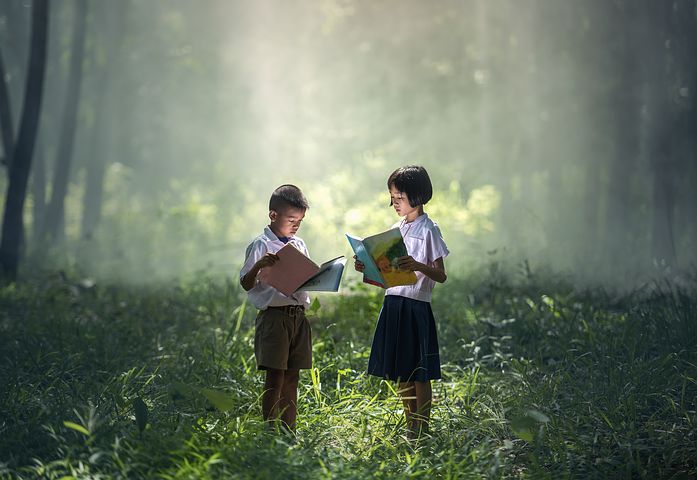
In this week’s post I look at the reasons why writers should read widely. It’s something writers are often told to do but here I look at specific reasons why it is such a good idea. I also look at why making writer friends also helps with your reading “diet” – doing so myself has done wonders for mine!

I go on to look at rhythms in stories. Now these can vary depending on genre. Crime ones for example tend to have a fast rhythm to them, a reflective piece has a slower one, but all have to follow an internal rhythm we as readers subconsciously pick up on.

Occasionally I have read a story which hasn’t felt right to me and on looking back at it, this is because the rhythm of the story is wrong for the type of story that it is. Something feels out of kilter and it is nearly always the rhythm.

As for the resolution side of things, again a story has to have a resolution which works for it. Sounds obvious, doesn’t it? But it doesn’t always work out in practice. A resolution shouldn’t be based on chance. It should also be apt to the character and type of story. My post looks at this aspect of things too. Hope you enjoy the post.

Reading, Rhythms, and Resolutions in Fiction

This slideshow requires JavaScript.

Reading, Rhythms, and Resolutions In Fiction is my Chandler’s Ford Today post for this week – link up tomorrow. See above.

I’ll be looking at why reading is so important for a writer, how stories should have a natural rhythm to them (though the rhythm can vary on genre – crime fiction will always be faster paced than reflective tales, say), and why resolutions should tie in with and make sense for your character and setting.

Just over a week to go to the Association of Christian Writers Golden Jubilee weekend. Am so looking forward to going and catching up with people. I’ll be running my flash fiction workshop and I hope people will leave it either with a draft story completed and read out later in the day or with something for them to take home and work on further (and then submit somewhere. I would love to hear of publishing success as a result of this). Looking forward to the Swanwick Writers’ Summer School later on in the year too.

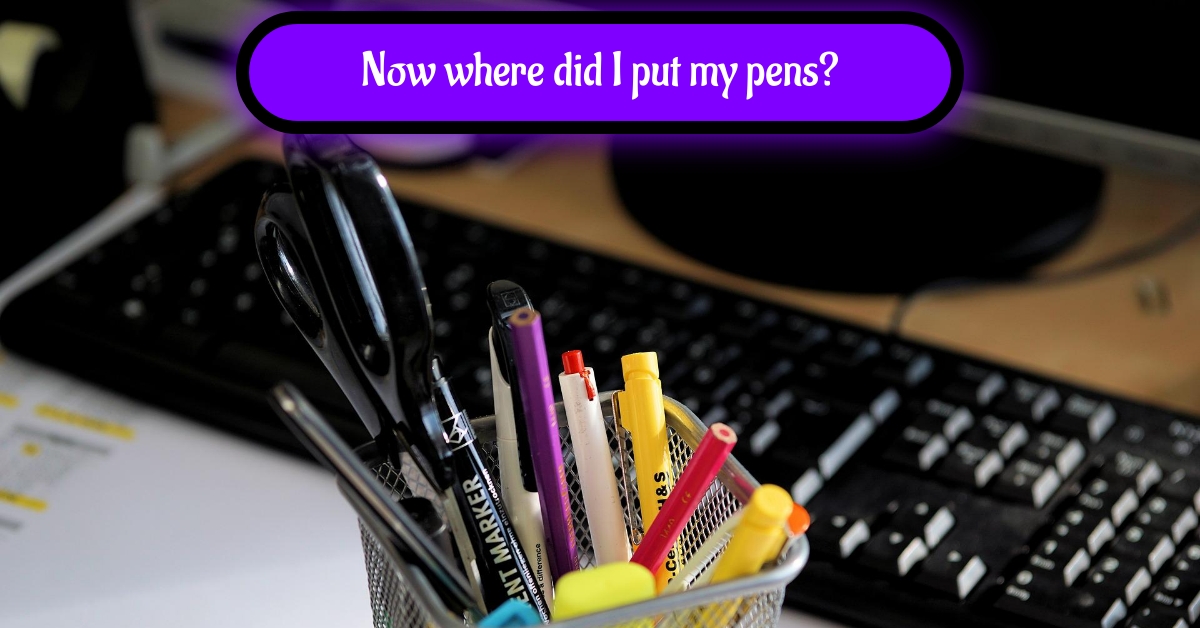
Writing Niggle Number 1890 – why is it I can never find a pen when I want one? I know I’ve got them. I’ve got loads in fact. But are they ever to hand when I need to jot something down quickly? Of course they’re not! For almost any other profession, this would be one of those things but for a writer? We’re supposed to have pens on us!
BookBrushImage-2022-5-26-19-594

Blustery day today, more like autumn out there. Not impressed! Am grateful writing is generally done indoors.

Do you have any writing niggles? If you’ve got loads, which ones particularly bug you? Mine are:-

1. Phone going just as I am completing an edit and I lose my train of thought. Okay, I can ignore the phone, but that train of thought has been derailed and nothing is bringing that back quickly. It is as if I have to step right back to just before that wretched phone rang…

2. Manage to do that and am settling down to editing the next bit when guess what… the phone goes again. Worse, it’s one of those fake Amazon/Inland Revenue calls designed to part you from your money. I’m usually thinking unpleasant thoughts at this point. May ask one of my crime writer pals (you know who you are) to arrange something to deal with these people in their next novel so the scammers never bother anyone again. How about it, girls? You would be doing the world a service here, honestly.

3. Getting off to a slow start with my writing session, then the spark really gets going and I can’t type fast enough. Okay it’s great the spark gets going but I prefer an even pace throughout and would like that spark to turn up sooner! I’m good to go, it’s just that my brain isn’t! Have learned to accept you do just get days like this. What matters is I am writing something which can be improved at a later date but it is frustrating at the time.

BookBrushImage-2022-5-25-16-5910

Facebook – From Light to Dark and Back Again

Am pleased to share my latest story on Friday Flash Fiction. This one is called The Heights of Equals and is based on a random generator which came up with “pet peeves” as a theme.

I chose one pet peeve for one character and created the story from that. It is also one where I have immense sympathy with my heroine here given I am also under five feet tall. Is it a coincidence I gave my heroine the same name as myself given this information? Err.. No! Hope you enjoy it.

Screenshot 2022-05-27 at 09-24-38 The Heights of Equals by Allison Symes

Really enjoyed the Association of Christian Writers’ Flash Group meeting on Zoom last night. I set everyone a challenge too which I will also have a go at. Groups like this are great for encouraging you to write (a) more – if I do the challenge, I will have an extra story to my credit and (b) encourage people to write something short.

The nice thing with flash is you have a market now for small pieces. If time is tight as it so often is for most of us, five minutes is enough to draft something towards a complete flash story. You’ve then got something to carry on with the next time you’ve got five minutes spare. You can build up a story like that.

BookBrushImage-2022-5-26-20-512

I was chatting about writing niggles over on my Facebook author page and one that bugs me from time to time over flash fiction writing is when I’ve got an idea for a 100-word story and a competition/market to sent it to, but try as I might, the tale will end up at 150 words or so. I know now to leave it as it is and write something else for the 100 word market but it can be frustrating at times!

Having said that, this happens and it means I end up writing two stories so you could argue it increases my productivity.

Screenshot 2022-05-27 at 17-15-34 Allison Symes Facebook

Fairytales with Bite – Using Minor Characters

I’ve used minor fairytale characters in stories. Indeed my first published story in print was about the youngest stepsister to Cinderella and appeared in Bridge House Publishing’s Alternative Renditions anthology back in 2009. It is great fun to write fairytales from the viewpoint of other characters.

Minor characters should have a vital role to play in your story, even though they’re not on the “stage” for long. This could be anything from providing key information to unwittingly getting in the way and having to be “removed” in some way so the lead character can get on with the job they’re meant to do. It should be clear to the reader why they’re in the story. The story should feel as if something was missing if they weren’t in it.

A good way of flagging up whether a character is important to a story is to name them. Unnamed characters are generally seen as “walk-ons”.

In longer works, minor characters can have sub-plots of their own which should add something to the overall plot. Think about The Lord of the Rings. The lead story there is Frodo’s quest to destroy the Ring of Power but there are many sub-plots including the role of Pippin and Merry. They’re not major in their own right (not compared with Frodo and Sam anyway) but their story adds something vital to the overall depth of that book.

Could your minor characters do the same for your story?

Always ask yourself what their role is to ensure there really is a place for them in the tale.

BookBrushImage-2022-5-27-17-2110

This World and Others – Layers

What layers does your fictional world have? I think of layers as dimensions to the fictional world created. For example. Do you focus on the political side of things with layers of government etc. Or do you focus on the creative side of your world with the layers being the various arts and industries supported by those arts?

What is the most important thing about your fictional world and how does that impact on your characters?

What layers are there to your characters themselves? What hidden depths do they have (or are they strictly shallow)?

I focus on characters for my stories so I want to know what drives those people. I need to know what their major trait is as that will give me a rough picture of what they are like.

Minor traits tend to back up the major one. For example, if a character is brave, are they also honest, direct in their speech and actions etc? Answering those questions helps me build up a composite picture of my characters and then I get on with the draft.

Working out what you need to know, what layers your world/characters needs to have for you to write convincingly about them, pays off. It can can save you a lot of grief in the editing.

BookBrushImage-2022-5-27-17-277

Twitter Corner

https://platform.twitter.com/widgets.js https://platform.twitter.com/widgets.js

Processing…
Success! You're on the list.

Pinch, Punch, The First of The Month and Trying Hard

Image Credit:-
All images from Pixabay/Pexels unless otherwise stated. Some images created in Book Brush using Pixabay photos.
Book cover images from Chapeltown Books and Bridge House Publishing. Screenshots taken by me, Allison Symes. Many thanks to Fiona Park for the fab photo of my signing copies of Tripping the Flash Fantastic at Swanwick 2021.
Hope you have had a good week. Not bad here. New story out and a new More than Writers blog post which has attracted a fair few comments but then I did ask about people’s Writing Niggles. It seems to have hit a spot!

BookBrushImage-2021-10-1-19-2246

Facebook – General – and Chandler’s Ford Today

It’s that time of the week again and time for my Chandler’s Ford Today post. This week’s one is called Pinch, Punch, The First of the Month. I look at what the first of the month means for me, writing wise. I also look at the origin of the saying and ask why white rabbits are considered lucky. Any thoughts on that? If so pop a comment over on the CFT page. This post will tie in nicely with next week’s one where I’ll be taking a look at sayings and their uses in creative writing.

Pinch, Punch, The First of the Month

This slideshow requires JavaScript.

A huge thanks for the wonderful comments coming in on my More Than Writers blog spot yesterday. See further down. My post about Writing Niggles obviously hit a sore spot or several! Mind you, the one comfort here is we all have writing niggles. It is working out a way of (a) managing them and (b) limiting the irritation they can cause you that are the tricky bits to get right.

My post tomorrow for Chandler’s Ford Today is all about Pinch, Punch The First of the Month. I look at what the first of the month means for me now (author newsletter send out day!). I also look at the origin of this strange phase (which will also tie in with my post on the 8th October as I will be talking about sayings and their uses in fiction and non-fiction).

Oh and is it just me or have the light levels in the evening just plummeted into complete darkness so far this autumn? There has been no gradual fading of the light. It looks as if someone has gone in and taken the bulb out! Dark by 7.30 pm… I wasn’t expecting that until much later into October.

It’s my turn on the More Than Writers blog spot for the Association of Christian Writers. This month I talk about Writing Niggles and it is a rare writer indeed that doesn’t have at least one. I share some of mine (yes, some!) and solutions I have found that have helped me. A huge thanks to everyone for the wonderful comments on this subject which have come in already.


Facebook – From Light to Dark and Back Again

Pleased to share my latest story on #FridayFlashFiction. Will my hapless Sarah finally make things right with her neighbour in Trying Hard?

Screenshot 2021-10-01 at 18-59-48 Trying Hard, by Allison Symes

One of the biggest things flash fiction has done for me as a writer is to help me understand what “show, don’t tell” means in practice. It took me ages to get my head around that.

Because I have to write to a tight word count, I have no room for “extras” and showing a scene rather than telling it can take up a fair bit of said word count. I’ve found it helpful to focus on one thing I have to show a reader for a story that is 500 words or less. I’ll show two for 500 to 1000 words. So I have to work out what is the most important thing to show a reader and focus on that alone. That in turn does help me keep my word count down.

I’ve mentioned before my “she wears a red coat” and “she wears a moth-eaten red coat” as these are great examples of tight writing and how one word can change perspective. I don’t need to tell you my character is poor in the second example. I’ve shown you (and hyphenated words, since they count as one word for flash fiction, are the flash writer’s best friend). So think of ways in which you could show something.

Anger – character slamming something.

Sadness – character being asked by another character something along the lines of “what’s up with you?” and then getting the first character to sob.

Happiness – Showing your character walking jauntily, whistling a cheery tune etc.

So you can show a mood quickly. Setting can be done with the selective use of detail. A poor house can be shown as characters moaning about the roof leaking again etc. Think about what you want to show and then what words you can use to do that. Always pick the strongest. A roof leaking is far more powerful than characters moaning about how poor they are. Readers do pick things up on context (I love doing this). We just need to give them the right clues so they can.

BookBrushImage-2021-9-30-20-354Just to flag up the paperback of Tripping the Flash Fantastic is currently on offer on Amazon. See link for more.

Will also be sending out my author newsletter on 1st October. I share tips, prompts, flash stories here (and these are often exclusive to newsletter readers) as well as my news. Do head over to my website (the landing page at https://allisonsymescollectedworks.com where the landing page takes you straight through to the sign-up. There is a giveaway too.

Fairytales with Bite – Seasonal Magic

Do your magical characters use their powers more at certain times of year or spread the use evenly throughout the twelve months? In your fictional setting, do certain seasons encourage the use of magic or, conversely, limit it? In the darker times of year, is magic more difficult? Is there any link to available light levels and when there is light, is it easier for a character to “produce the goods” when it comes to using their powers?

Do physical weaknesses limit magical use? After all, we are prone to colds, the flu etc more in the winter months and that affects how we “perform” so could your characters be affected by something similar?
Also, can your characters adapt their spells to match the time of year? For example, when it is dark and gloomy, are they on call for “lift me up” charms to help get people through these times? (For me a cup of hot chocolate, a cosy home, classical music, and a good book would do this for me nicely!).

Are your people expected to produce more magic at certain times of year? If magic can be equated to energy, are they on call to produce more of this at certain times of year to help keep their environment “going”? (Think Monsters Inc where the monsters need energy from children’s screams and then run into problems when they find youngsters aren’t so easily scared any more).

How do the seasons affect your people? In good ways or negatively and how could that change the outcome of your stories (or do your people “compensate” and, if so, how? What matters here is that you know how things work here even if you don’t need to share all of that with your readers.

You inevitably won’t share it all but you could have a character exploiting weaknesses here to their advantage. You would need to know what they are exploiting, how, and what would be the outcome? Also could the exploited hit back by using your natural world against whoever is trying to pull this trick off?).

This slideshow requires JavaScript.

This World and Others – Seasons

I love the seasons. See some of the above pics for proof! The last one with the summer house is from my garden earlier this year. There is beauty to be found in each, even in winter (and there I also have the delicious compensations of hot chocolate, a cosy home etc to enjoy). Okay, so we have the four, but what does your created world have? More or less? Same as ours or totally different?

How do the seasons work in your created world? Especially if you have magical characters, is there anything they can do to influence how the seasons work and, if so, how? What would they gain from this?

Seasons tie in with celebrations too so what seasonal events would your world hold? Why are these things special to them?

As for the climate, can it compare with ours or is yours worse or better? How do your characters manage the ups and downs of the seasons and the climate?

There are seasons in life too. How do your stories reflect this in your characters, especially as they age? Have they learned anything useful from their younger years (especially what not to do) that benefits them now? Do they appreciate the season of “maturity” or do they resent not being young any more?

This slideshow requires JavaScript.

BookBrushImage-2021-10-1-19-5556

https://platform.twitter.com/widgets.js https://platform.twitter.com/widgets.js https://platform.twitter.com/widgets.js https://platform.twitter.com/widgets.js https://platform.twitter.com/widgets.js https://platform.twitter.com/widgets.js

WRITING NIGGLES, CONFERENCES AND A REVIEW OF THE FAIR

Facebook – General – and Chandler’s Ford Today

I take a look back at the recent Hursley Park Book Fair for this week’s CFT post.

There are many things non-writer friends/family can do to support the writer in their life and one is to go to their events and show some moral support. Trust me, it is appreciated!

The biggest nightmare for all writers is being at an event where nobody turns up.

Helping to distribute flyers etc is also something that will go down well with your writer. (And plentiful supplies of tea/coffee/chocolate etc though in fairness those go down well with practically everyone!).

This slideshow requires JavaScript.

Managed to get caught in some rain while walking the dog this evening. Came home to find it hadn’t rained here at all. Better half and I had only gone a couple of miles up the road to one of our favourite walks! Talk about localised weather… (it was also ironic that, for once, I had hoped for more rain).

On to writing niggles then….

How to Irritate a Writer Part 10001….. (I may be exaggerating)

1. Tell them you like books but much prefer films. (Grrrr….)

2. Tell them you think books are expensive. (Double Grrrr… – books are relatively cheap when you consider you can read them over and over. A really good book will make you want to have repeat reads. It’s exactly like revisiting an old friend).

3. Tell them you think the paperback is on its way out. (If by this time the writer has refrained from throwing something at you, count your blessings for you have done very well).

4. Ask the writer of How to Irritate a Writer Part 10001 where the other 10000 posts are on the topic!😉

5. Tell them you’ll wait until they hit bestseller status and then you might get a copy of their book. They want to know it is really popular first. The writer by this time is using every inch of self control they’ve got not to grab the nearest bit of 4 x 2 and hit you with it….

6. Tell them you can’t possibly leave a review for them, they’re not well known enough. It is almost certainly a waste of breath telling such like that everyone has to start somewhere and reviews help everybody, no matter where they are on their writing journey.

7. Tell them you think notebooks and pens are outdated. Surely everyone writes to screen these days. The writer by this time is already thinking of the perfect crime story where an irritating “friend” is done to death by an angry author and have already made plans for dumping the body. There may be wistful thoughts as to why they can’t do this for real….

My fellow writers, feel free to add your own thoughts here!


My CFT post this week will be a review of the Hursley Park Book Fair from a couple of weeks ago. Link to go up on Friday.

And to all my fellow authors taking part in festivals etc, hope they all go well.

Am looking forward to Swanwick Writers’ Summer School in mid-August. Always good fun. Lovely to catch up with friends who for the rest of the year I’m in contact with via Facebook etc.

I remember being dreadfully nervous going to my first writing conference years ago (and set on the lovely Isle of Wight – and run by Felicity Fair Thompson.  It was great to catch up with her again at the recent Hursley Park Book Fair.). The nerves went when I realised networking was talking about something I absolutely love (writing and, associated with it, reading).

Also it is easy to get a conversation going with a writer – ask them what they’re writing! They in turn should ask you and before you know it, you are chatting away as if you’ve known each other all your lives. And that is how it should be.

Facebook – From Light to Dark and Back Again

What do you like to see in a good flash fiction story? Some of my thoughts include:-

1. The story has to be the right length. Whether that’s 100, 250, or 500 words, it has got to be appropriate and right to that particular story. You want the reader to feel that nothing else could be added to the story, nor could there be anything taken away.

2. A strong lead character. Without that any flash fiction piece falls flat. The great thing is that strength can come in different forms – physical strength, mental strength etc. How your character shows their inner strength is up to you but it has to be there somewhere. Else why are they the lead?

3. There has to be a good ending (though not necessarily a happy one). The story has to “follow through”. Okay, sometimes that will be a twist ending, sometimes it can be a character coming to a conclusion about what they’ve just done or have been through. But the ending has to be right for all that has come before it.

The big challenge of flash is not so much the word count but having a complete story which has a proper beginning, middle and end in that word count limit. It is too easy to just write “truncated prose” but that does not come across as a proper story and rightly so. It can leave your reader feeling cheated.

At the end of a flash piece, your reader must not be left wondering where the rest of the story is! You want them thinking the story could not have ended any other way. I see flash as short, sharp looks into a character’s life. Look, write down what you see, and stop there.

What do I look for in flash fiction, whether I’m reading or writing it?

I look for a strong character and an ending I don’t see coming but which is entirely appropriate for the story.

I do enjoy playing “guess the ending”, sometimes I’m right, more often I’m not, and I always like that.

This is where I find writing the ending first can be helpful. If I’ve got something that makes a powerful impact which is what I want my readers to finish with, then I’ll work backwards from that point to see how the story could start. I find it a useful technique.

When I brainstorm ideas for new flash fiction, I’ll sometimes come up with something that will make the perfect ending, so leave it at that. I will be looking for what “threads” could come from what I’ve written and if it seems to be linear, then I’ll write the story in the traditional way from start to end.

But it doesn’t always work like that. The threads can sometimes lead away from what I’ve written back to a start point and that’s generally when I know I’ve got something that will make a wonderful ending to the story. I know enough now to NOT force something to be a start when it really isn’t suitable for that.

I also think it a good thing to mix up how I write here. It helps keep things “fresh” for me as a writer, and that will hopefully show through in the stories.

Fairytales with Bite – Fairytale Themes

If you’re looking for themes for your stories, analyse some fairytales and ideas will leap out at you!

After all, what is the theme of Cinderella?  Never giving up?  Justice will “out” in the end?  Whatever you think the theme is, you can use that for your stories.

Themes such as anti-bullying emerge from stories like The Ugly Duckling.  (Also beauty is only skin deep and transformation is always possible!  Lots of themes from this one).

The lovely thing is that the themes from fairytales are timeless.  It is one major reason we still love these old stories.  They still resonate.  I think they always will.  They reflect on our nature.  There will always be jealousy (Snow White), a need for sensible building materials (The Three Little Pigs!), and  greed (Goldilocks – I always have sympathised with the three bears here). That is to name just a few examples.

And there’s nothing to stop you combining themes either.  After all your lead character may have the virtues of, say, Puss in Boots and the villain the qualities of The Big Bad Wolf.  Set up the conflict and away you go!

Generating the writing ideas maybe - image via Pixabay

Generating the writing ideas. Image via Pixabay.

Lost in a good book - image via Pixabay

Lost in a good book. Image via Pixabay.

Books create their own sense of space - image via Pixabay

Books have their own sense of time and space. Image via Pixabay.

Books are wonderful whatever their format - image via Pixabay

Books are fabulous, whatever the format. Image via Pixabay.

CLARITY POST - Editing is vital to help you be as clear as possible - image via Pixabay - Copy

Editing – the crucial part to getting a story right. Image via Pixabay.

Books can be one major key to knowledge - image via Pixabay

Books are the keys to knowledge. Image via Pixabay

Printers would have fun trying to print this - image via Pixabay

Let the ideas flow and let journeys encourage that! Image via Pixabay

Use review questions to find out more about your characters, image via Pixabay

Use personal reviews to help you generate character and story outlines. Image via Pixabay.

Creation is good for us, image via Pixabay

Well, let’s do so by writing lots of stories! Image via Pixabay.

This World and Others – Character Virtues -v- Vices

I thought I’d list a few character virtues and vices to look at how these can be used in storytelling.

Patience/Impatience
Patience doesn’t always come across well in fiction. Much as I love Little Women, I did find the very patient Beth to be a little too much of a goody goody for my tastes.  I think patience translates better when it is shown as a character actively trying to seek a goal, is at a point where they need to wait for a very good reason before taking further action, and that they do so.  There is a point to the patience then.  It is also an “active patience”, an act of will.  I find I want to read to find out if they CAN see that patience out and have the reward for doing so.

Impatience, of course, can be shown as a character’s weak point, causing them more problems than they needed to have (which adds to the conflicts and drama of the story).  Sometimes impatience can be used more positively in that it can be the trigger for change.  Someone is impatient with the lack of education, say, in their village and actively seeks to change that.  Again, the impatience at the status quo here can be a good catalyst for the story.  There are bound to be those who want the status quo continued.  Is there a reason why they don’t want the villagers to be educated?

Calmness/Anger
Calmness I think is easier to show in a story as there are always characters who are needed to calm other characters down and make them see sense.  What effect would that have on the tale?  If they failed to calm the other one down, what would the consequences be?  Keeping calm can be a crucial need in a thriller where that virtue gives the character time to think, time to work out a way of escape etc.  (Less likely to think of this if the character is panicking, getting worked up etc).

Anger can be shown as a character’s downfall – their temper alienates anyone who might help them.  It can be used to show a character’s sense of justice.  (You’ve got to question why anyone wouldn’t be angry at abuse, violence etc).  It can also be shown as part of a character’s development.  At the start of the story they’re hotheaded, at the end they’ve learned to temper their temper, so to speak.

This slideshow requires JavaScript.