Writing – and Multiple Projects

Image Credit:  As ever, unless otherwise stated, the images are from the marvellous Pixabay

Facebook – General

Full of cold at the moment. Not a happy bunny though booking my place for this year’s Swanwick Writers’ Summer School HAS cheered me up no end!

Also looking forward to the next edition of Writing Magazine because I love turning to the letters page, the subscribers’ news etc and see how many friends have got a mention in there! It’s nice to see the numbers going up!

Writing wise, I’m focusing on non-fiction at the moment though I have got short stories “brewing” ready for me to look at them again with a fresh eye. I find the time away from stories really useful, as when I do go back to them, I will see their strengths and weaknesses with an unjaundiced eye, but I hope to get back to these sometime next week. One I want to submit within the next couple of weeks.

Writing takes you away from the world for a bit. Just a pity it can’t get rid of the sniffles as well…


The advantages of having more than one project on the go:-

1. You never get bored.
2. If you get stuck on one thing, work on the other. Ideas for resolving the problem(s) on the first will come to you while you work on something else. One of the chief Murphy’s Laws for Writers, I think. I do know that this has always been the case for me.
3. You can work on smaller projects and see (hopefully) submission successes while still working away on a longer project you know will take longer to place even when you’ve finished writing and editing it.
4. You can try different kinds of writing and see what you like best.
5. When work has been submitted, you’ve always got something else to work on.

I’ll look at the disadvantages tomorrow.


This slideshow requires JavaScript.

Following on from yesterday’s post, now it’s time to look at the disadvantages of having more than one project on the go.

1. It can be easy to feel overwhelmed. (My advice here is to plan things out as much as you can. When you know you haven’t got much writing time, use what you’ve got to get little pieces done. It makes you feel like you’ve accomplished something – you have! – and the great thing is you can polish these pieces up and submit them later. Also remember if you only have time for say a writing exercise or two, do them because you will get some useful material from them for later, which could feed directly into the projects you’re working on. Likewise, if you can only write a page or two for one of your projects, get it done. Those pages or two mount up over time.).

2. You can feel torn as to which project you should be working on. (It can help to set yourself deadlines here but be realistic. If you’re working on a novel, and say a collection of short stories or flash fiction, it simply IS going to take you longer to complete both but that’s okay. Work out when you would like to get these projects done by in an ideal world, then add time on given it isn’t an ideal world (!), and work to that timetable. Also accept life will get in the way sometimes so don’t beat yourself up if that happens. It does happen to everybody including those who do only work on one project at a time).

3. I can’t help but sneak in another advantage here in that I’m working on big projects which I know will take ages to complete but that’s okay. Meanwhile I’m getting short pieces written and out and building up publication credits etc. All of that will add to my writing CV when I am ready to submit the big projects later.

But deciding what works for you writing wise, and what YOU feel you can sustain long term, whether you work on one or more projects at a time, is key here. Key to getting things done. Key to you being happy with your output. Good luck!

This slideshow requires JavaScript.

W = When you get to invent worlds and people for fiction or present interesting information for non-fiction.
R = Really get to understand why characters are the way they are and, for non-fiction, discovering more about your topic.
I = Imagination fires up and triggers more story ideas and, for non-fiction, imagination helps you see connections that can trigger further blog posts, articles etc.
T = Time – there’s never enough!
I = Insist on carving out writing time for yourself, whether it’s for a short period or longer; you will feel better in yourself for having that time and others will benefit from your having the benefit of the writing buzz for a while too.
N = Never running out of ideas to work up as stories or blogs or articles.
G = Genre – plenty to choose from; there’s bound to be at least one to suit you.

Just some of the many things I love about writing!


This slideshow requires JavaScript.

Facebook – From Light to Dark and Back Again

My two favourite kinds of flash fiction stories are those which end on a punchline and make me laugh, or where the twist is so good, the ending take my breath away. Neither are easy to write but are so worthwhile to do. They’re the stories you remember the longest.

I’ve found when writing funny tales, it pays to start with the punchline and then work out what could lead to that coming out “naturally” from the character. It is far more convincing doing it that way. You don’t want the punchline to seem like it is a set-up.


This slideshow requires JavaScript.

One of the joys of flash fiction is the word count limit means having to leave the reader to infer things.

Now I have always loved “filling in the gaps” in novels and the longer short stories where I’ve become attached to the characters. You know the kind of thing – wondering what other adventures they might have had after the main story is over. On those grounds, I understand fan fiction, though I don’t write it. Nor have any plans to do so.

But where a story has real emotional impact, I find that impact is stronger precisely because the writer has not had the space to spell it all out. I can and do work that out for myself – and love doing so. The challenge for me as the writer is working out what a reader must know to be able to fill in the gaps successfully for themselves.


This slideshow requires JavaScript.

One of the things I love best about flash fiction is creating characters. I always like to look at what a character’s main trait is as that can be very useful for dropping them right in the mire from a great height should I wish to do so!

For example, if I have a character who believes they are brave, I could then put them in a situation where they have to prove they are (or discover they really are not! The latter especially could have comic potential).

It is when I nail down the main trait(s), I start to have a feel for the character’s voice. Someone who thinks they’re brave is likely to be boastful (well, they’ve got to tell someone else haven’t they? It”s no good thinking you’re brave if you can’t show off about it!). That in turn gives me ideas on how they are likely to speak and the kind of language they are likely to use.

There are many different ways in to character creation but I do like this one.

Creating a Flash Fiction Story

INGREDIENTS

A strong character you can identify with and want to write about (readers will identify with them and will want to read their tale).

An idea as to what impact you want your story to have on a reader. This will affect the story mood and how you craft it.

Simmering in the back of your mind, an idea of which competition/publisher you will submit the work to and, of course, already know what their submission requirements/deadlines are.

METHOD

1. Get the story drafted. (To paraphrase P.G. Wodehouse, it’s time to apply seat of pants to seat of chair).

2. Put aside a for a while and start drafting another!

3. Come back to your original story, read it through (and where possible out loud too so you can literally hear how dialogue etc sounds), and then edit.

4. When you’re happy with the story THEN worry about the word count. Check to ensure there are no wasted words in your tale (cut out things like very, actually etc).

5. Once done, if your story has a strong impact at 250 words but it would be weakened if you tried to get it down to 100, then leave it at 250 and submit it to a suitable competition/market.

6. Apply steps 2 to 6 to the second story!

Have fun!

This slideshow requires JavaScript.

Goodreads Author Programme – First Books

Do you remember the first books you read or had read to you?

I can’t honestly say I do though the Reader’s Digest Collection of Classic Fairytales does rank very highly in this list. I still have this two volume set, though the spines are “taped up” thanks to years of use!

The illustrations in these books are lovely and I spent many a happy hour poring over them as a kid. The stories are the originals from Grimm, Perrault, Andersen etc.

I do remember collecting the Famous Five series. Southern TV, as it was then in our ITV region, had adapted the series and paperbacks were reissued to link in with this. Have no idea what happened to those books. Do know they’re not with me now. I recall going to our local newsagent to buy the paperbacks (in the days when you did have independent newsagents!).

The first books I chose for my home after getting married came to me via the old Odhams collections. You paid a subscription and received one new book every month. I collected Agatha Christie novels (and collections of short stories), which I still have.

What is important though is those first books were never last books!!


Character Types (and Why It Matters to Get Them Right)

Facebook – General – and Chandler’s Ford Today

There’s a nice little Q&A session which has developed from my CFT post this week about character types and why it matters to get them right.

This is one thing I love about my CFT posts. I can never know what reaction there will be until the posts go up and sometimes great discussions take place, sometimes not. Do pop over and have a look at this week’s post and if you have favourite character types I’ve not listed here, please do share them in the comments box.

Comments on the character -v- plot debate would also be welcome. I do come down firmly on one side here but I’ll leave you to find out which one it is!

This slideshow requires JavaScript.

My CFT post this week will look at some of my favourite character types and why it matters to get them right.

A good story can only be that way if the characters are strong enough. A decent plot will be let down badly if the characters are not “up to scratch”. More on this and the link tomorrow.

Am looking forward to going to the Association of Christian Writers’ Day at Bath on Saturday. Always good to meet other writers!


There will be an expression here which will match your thoughts about most adaptations - Pixabay image

What are your characters like? What emotions do they have? Pixabay image.

It is with great sadness I see from the Winchester Writers’ Festival page that Barbara Large, MBE, who founded the original Winchester Writers’ Conference, passed away on Monday. She will be much missed.

Barbara gave so much support and encouragement to writers across a huge range of genres including me. I have a certificate for a Commended Short Story signed by her from the 31st Winchester Writers’ Conference and it has pride of place on my wall.

Condolences to all of her family and friends.


Resized Barbara Large and Anne Wan

Barbara Large MBE (left) will be much missed by the writing community including Anne Wan (right) and myself.  Image kindly supplied by Anne Wan.

Facebook – From Light to Dark and Back Again

The advantage of flash fiction is you have to learn to write tight to keep to the word count, even though there can be flexibility with that. You don’t have to stick to 50-word stories. You can have a go at the 500-word ones!

The advantage of a novel is you have room for sub-plots and can go much further into character development, which when well done adds layers to your story.

The short story is a cross-over to an extent. Usually there would be room for only one sub-plot (but there’s no room at all for anything like that in flash). You can go into character development but the word count restrictions here will limit how far you can take that. (Though that can vary from 1500 to 8000 or thereabouts as there are some longer short story competitions out there).

And all three are brilliant writing disciplines! All need decent editing and crafting to get your story into shape. Whatever form you’re going for, or if you’re going in for more than one, you can know you will be doing a lot of editing! But above all have fun with them. Writing should be fun.

How do you find coming up with promising opening lines? Is it a pain or is coming out with those just fine but then you struggle with delivering on the promise of that opening line?

I’ve found mixing up how I approach this helps a lot. I outline (briefly, appropriately for flash fiction) how a story could go from that opening line. There is usually some promise from those thoughts that I can develop. Okie dokie then, away I go and write the thing.

Sometimes though I’m not satisfied with what I’ve come out with. Somehow the thoughts don’t seem strong enough. DO trust your gut instincts here by the way, they’re normally right. When I have this happen, I then see if what I thought might be a good opening line would actually work better as a finishing one. I then work backwards to get to the starting point.

I’ve not rejected an opening line altogether yet because if one method here doesn’t work, the other does. It’s just that sometimes you can’t always see the best way to go straight away and that’s where outlining comes into its own and to your rescue!

A quick search of Writing Magazine’s Competition Guide has shown a couple of interesting competitions I’ll try and have a go at. Note to self: go through the guide at the weekend and mark the ones of interest! What is nice is some of the competitions are rolling ones in that there is one per month or something like that so if you miss one deadline, there are others you can aim for.

It proves that the market for very short stories and flash is a healthy one. Hooray for that!

This slideshow requires JavaScript.

Fairytales with Bite – Top Five Tips for Characterisation

My theme this week is character type(s) and my CFT post also featured this but I thought a quick run down of tips would be useful.

  1. Be realistic.  Your characters must have motivations that we will all understand, even if we don’t agree with them all!
  2. Show flaws as  well as virtues.  None of us are perfect after all so why should our characters be?  Besides they can get to learn from their mistakes.
  3. Stretch your characters.  Don’t be afraid to put them through hell to find out what they are really made of/are capable of.
  4. Let your characters surprise you, sometimes (don’t overdo it!).  A great example of what I mean here is Frodo Baggins from The Lord of the Rings.  Nobody expects in that wonderful world for a hobbit to be a hero, yet Frodo becomes one.  Frodo shows a determination and courage others far bigger than him are not capable of (and yet he’d have failed completedly without Sam Gamgee’s support).  It would’ve been the easiest thing of all for Frodo to stay in Middle Earth and let someone else do the heroics.
  5. Weaknesses SHOULD get in the character’s way and be something they’re seen to be fighting against.  And that, folks, is where the drama is!  A great story has plenty of that!

This World and Others – Character Types

I look at character types and why it matters to get them right in my CFT post this week.  It doesn’t matter how fantastic your world is, the characters must be believable for your readers to engage with them and want to read your story at all.

One key to getting this right is to examine your characters’ motivations. Why are they acting the way they are?  Is it something we can understand?  I’ve long thought Woody from Toy Story is a truly great character.  Why?  Because his jealousy when Buzz comes into his life is understandable.  There are very few of us, regardless of our age, who haven’t been jealous of something or someone in our time.

Look at how your world is governed. Is it a democracy?  Is there a tier of local government?  What are the politicians like there? (And there will be politicians somewhere along the line.  Where there is any kind of power, no matter how minor, politics and playing people off against one another will come into it.  Sad perhaps but again this is something we all understand and will help make your world seem more real to your readers).

So think about emotions.  What are your characters likely to feel and why?  (This is one reason why the Cybermen as a concept are frightening.  The removal of all emotions?  Those are what make us human.  They can also make your Species X what it is and differentiate them from other character types in your fiction).


Time To Read and Heroes and Villains

Image Credit:  Many thanks to Dawn Kentish Knox for taking the picture of me reading at the recent Bridge House event and for kind permission to use it.

Facebook – General

My To Be Read pile is increasing again! Do you find you have moods where you just want to read books and, at other times, you just want to read magazines? I do. I used to ride an exercise bike and read while on that but frankly it is a very boring form of exercise. I prefer to walk the dog and swim, both of which exclude reading!

Am planning to have Christmas reading time as a treat to me. I do read something each day but I’d like solid periods of reading time. I don’t want it to be a choice between writing time and reading time. I want both! Thoughts on how to get a good balance here would be welcome.

This slideshow requires JavaScript.

I looked at finding time to read in my latest Goodreads blog the other day. It is just as important as finding time to write given we have to feed our own imaginations and by far the best way of doing that is to read widely ourselves. It also supports the industry we want to be part of!

So whether you borrow from the library (always a fab idea, that!), buy books, stick to reading on the Kindle, the important thing is to read, read, and read. A tip often passed on to new writers is to write what you want to read. How can you know what that is unless you read widely and discover what that is? (Sometimes you can discover what you don’t want to write as well!).

Naturally I’m going to put in a plug for the small indie presses such as Bridge House Publishing and Chapeltown Books since this is very much book buying season.

Can I also put a shout out for reviews for books you’ve read? Reviews don’t have to be long – one or two lines is enough. People do read them. (I always read product reviews whether it is on my online shopping or what have you!).

This slideshow requires JavaScript.

Which night of the week, if any, do you find it the hardest to write anything? For me, it is always a Monday. Yes, I write, but I write more on every other day of the week! Maybe I need a “slow day” to make me get a move on for the rest of the week. Maybe it’s just a Monday thing…

The good thing is I’ve learned over time not to worry about this. The important thing is I am writing and loving it. I’ve learned to focus on that. I am also convinced a writer’s love of writing will show through in what they actually produce.

And the “little” bits of writing mount up over time so I’ve learned never to underestimate only having small pockets of time to write in at times (whether it is due to it being a Monday or not!).

It is often said you can tell much about a person by how they treat others who can do nothing for them. This is true but it should also be true for your characters. How do they react to those they would consider weak? (Incidentally, are they right on that or are THEY themselves the weak ones but just don’t know it?).

In the setting of your story, what are the rules? Are older people treated with respect (perhaps even venerated) or are they considered of little worth and belittled? Does your character go along with what is the status quo here or do they rebel against it? If they rebel, what are the consequences? Are they the catalyst for positive change here?

Plenty of food for thought and story ideas there, I hope!

Facebook – From Light to Dark and Back Again

Great article on flash fiction in Writing Magazine. It is good to see the form get more publicity. I still find the question I’m asked most frequently is just what is flash fiction? While technically it is any story under 1000 words, I must admit I prefer flash to be 500 or under, though From Light to Dark and Back Again contains a good mix from across the word count spectrum here.

Also good to see more competitions for flash and having it added as a category to festival competitions. Sure signs flash is in a very healthy state and long may that continue!

This slideshow requires JavaScript.

Whether I read novels, short stories, plays etc, I nearly always find a few stand out moments that stay with me long after I’ve finishing reading. I suppose that looking out for specific moments in fiction that stand out might have subconciously drawn me to flash fiction given you have to make an impact quickly there.

Some of my favourite stand out moments include:-

Frodo offering to take the Ring to Mordor. You know everything changes from that point.

The fairy godmother turning up at Cinderella’s. Again you know everything will change then.

The Little Mermaid realising the Prince is not going to fall for her. Just such powerful stuff, given all she has gone through and you must read the original Hans Christen Andersen story to get the full impact of that.

Inspector Alan Grant in The Daughter of Time discovering the picture he has been given is that of Richard III and wondering what mystery he will find in the king’s story. You just know he’ll find something otherwise there is no story here. Again a major change point.


Sometimes selecting the right “moment in time” to be your flash fiction story can be tricky. My guiding rule is to go for whichever of the choices I have which makes the most impact on an impartial reader.

Incidentally I don’t “tug on the heartstrings” here. Any impact has to arise naturally out of the situation I’ve put my characters in and therefore any reaction is genuine. No matter how fantastical your setting, you have to keep it real!

And there must be something about your character that fascinates your reader in some way. It will be that which makes them read on.

What is the appeal of a well written villain? They’ve got to have good reasons for being as they are (and even elicit some sympathy from the readers for them). They’ve got to challenge the hero/heroine and make them work for their achievements. Hey, nothing worthwhile ever comes easy, does it? The villain should be reasonably likeable (it gives the reader the lovely dilemma of knowing they really shouldn’t want the villain to win BUT secretly they wouldn’t mind THAT much).

What is the appeal of a well written hero/heroine? Funnily enough there are a lot of parallels with the well written villain. Your hero/heroine should also have good reasons for being as they are (and should elicit FAR MORE sympathy from the readers for them). They should challenge, and ultimately defeat, the villain, no matter what is thrown their way. They WILL work for their achievements. They’ve got to be reasonably likeable (though no character is without flaws) for any reader to engage with them. They shouldn’t be “goody two shoes” as that will just annoy most readers.

Goodreads Author Programme Blog –

Finding the Time to Read

Finding the time to read is one of the most important things any would-be writer should do. We need to read widely and well to feed our own imaginations, to work out how we would portray characters and so on.

Like, I suspect, the majority of people, I save my reading time for when I’m in bed, which works fine. It took me a while to figure out that if I do actually want to read, I need to go to bed before my system tells me it wants to get on and sleep, thank you very much! But now I’ve finally figured that out, I relish my quality reading time.

I am planning additional periods of Christmas reading time though. I want to block out times when I do nothing but read. The thought of that is bliss! After all I carve out times for creative writing and stick to those and lo and behold I get creative writing done! The same principle must apply to carving out reading time. I’ll give it a go anyway.

I do find I have moods where I just want to read books. Other times I just want to read magazines. But I think the best gift anyone can give a reader is the time in which to indulge their love of books!


Crucial Characterisation and a Charity Cookbook

Facebook – General – and Chandler’s Ford Today

My latest CFT post shares news of a very special cookbook written by Barbara Large MBE. Barbara was the founder of the Winchester Writers’ Festival (as it is now known) and her book is raising funds for the Nick Jonas Ward at the Royal County Hospital, Winchester.

Barbara shares her thoughts on the joys and challenges of writing this book, as does Anne Wan, who through imprint North Oak Press, published the book. There is also a delicious recipe to try!


This slideshow requires JavaScript.

Shooting Star - Barbara and Anne 1

Barbara Large and Anne Wan at the launch of Anne’s book.  Image kindly supplied by Anne Wan

Anne Wan and Allison Symes at Bay Leaves Larder

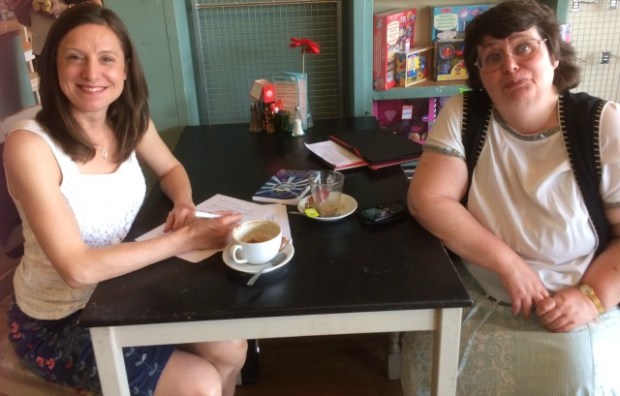
Anne Wan and I enjoying a cup of tea as I interview her for Chandler’s Ford Today a while ago.  Image taken on Anne’s phone by the cafe staff!

When Writing Magazine comes in, I flick through and see if I know anyone who has written in to the letters page or the Members’ News section. I’m glad to say there usually is someone I know in either section in most editions!

Going to writing courses, conferences etc., is the best way I know of for networking with other writers and connections build up over time. Though a week at Swanwick Writers’ Summer School speeds that process up a LOT!

Talking of connections, how do your characters build up their relationships with other characters? What kind of networking exists in the world you’ve created? Often it is a case of showing Character A has this relationship (of whatever nature) with Character B but can you hint at how it all kicked off? Is there a solid basis to how your characters interact with each other? There should be…!

This slideshow requires JavaScript.

My CFT post this week will share news of a charity cookbook called Scrumptious Recipes Shared with a Pampered Patient, written by Barbara Large, MBE, who founded the Winchester Writers’ Festival (formerly the Winchester Writing Conference). More details and the link on Friday.

I look forward to sharing thoughts on the recent Bridge House/Chapeltown/Cafelit celebrations the week after. As ever, can hardly believe how the year has raced by. Many thanks to Dawn Kentish Knox for the pic of me reading some of my more recent stories from Cafelit and also from From Light to Dark and Back Again.

Facebook – From Light to Dark and Back Again

Have fun mixing up the settings you use for your stories too. Some of mine are set in a magical or fantasy world but others are very much here on Earth.

My Time for Tea is set with the opening showing an old man arranging the tea things as he is expecting his adult children to visit. But this is no ordinary tea party.

And I guess that is the point of this post. The setting may be ordinary but it is what you do with it that will turn your story into something special.

A random word generator can be fun to play around with sometimes. Having a look at one tonight, and having set the first and last letters I wanted, my haul was “bloody”, “biography”, “biology”, and “beneficiary”. Hmm… definite possibilities there.

DANGEROUS WORDS
The biography of my long dead great-aunt whom I cared for, well it was well over a decade in the end, was a revelation, a bloody one at that. No wonder she didn’t want this coming out during her lifetime and I’m heartily wishing I hadn’t been sent this book. Someone wanted me to have it but who and why? And why send it now?

Frankly, I’m not sure what I want to do with this. The logical thing would be to burn the wretched book but how many copies were produced? How could I find out without revealing what I know? And whoever sent this to me is expecting some sort of reaction I guess. There’s nothing to stop them sending me other copies either is there? Have they gone to the police? Well let them… I’ve done nothing wrong except be a beneficiary to a sick old lady whose family abandoned her. Except I now know why they dumped her. Has one of them finally decided I ought to know? Or are they going to try to take my inheritance from me?

What did I find out? That my aunt knew quite a bit about biology as it turns out and where exactly to stick the knife. She wasn’t always crippled with arthritis! Said knife ended up right in the backs of anyone to whom she was a beneficiary. Collected quite a sum in the end – well over £500 K. People have been killed for less than that. What I can’t figure is how she got away with it. All I know is I’m keeping that money and I am getting out of here NOW.

Ends.

Allison Symes – 6th December 2018

See a random word generator as another way to conjure up ideas for you to play with. You don’t have to use all the words that come up – a lot will depend on how much of a challenge you feel up to tackling! But have fun with this and hopefully you’ll get some stories down as a result.


Ideas for flash fiction stories can come from many sources (and I’ve used advertising slogans, scenes from films, well known phrases, and sometimes puns – e.g. my Raising the Stakes. Yes it IS a vampire story but told from the viewpoint of…. well no spoilers here!).

Mix up your sources of ideas from time to time. Never use just one source. You want to have a nice wide “net” to scour for story ideas. Don’t forget pictures either. They can be a great starting point for a story. What could you do with the images below for instance?

Above all have fun with your writing. It does show through!

Fairytales With Bite – Editing Your Story

Some of the ways I edit a story are:-

1.  To put it aside for a while.  Sounds odd I know but you need to put some distance between you as the writer of the piece before you can become you, the editor of that piece.  You are too close to the work to be objective about it just after you’ve written it.  You’re either going to think it is the best or worst thing ever written (there seems to be no happy medium here!) so remind yourself, you will look at the piece when it will seem like new to you again.  Then and only then can you judge it properly.  Assuming you have done that:-

2.  Read work out loud.  This is great for literally hearing whether your dialogue works as well as you think it does.  If you stumble over words or phrases, so will your reader.  I’ve sometimes recorded a story (using Audacity) and played it back.  You get to listen to it as a listener would then.

3.  Do a basic edit first.  I start by getting rid of my known wasted words, repetitions, and go through for spelling and grammatical errors.  You will need to do this again at least once more once you’ve got a final draft but I have found it useful to use this to get me into “editor mode” and to get started on the whole business!

4.  Look at whether the structure makes sense.  Are there gaps the reader can’t follow?  Where you have hinted at something happening in the story, did you follow through on it later?

5.  Do all of your characters have a vital role in the story?  If not, can you get rid of some or amalgamate them into one person?

6.  Do all of the plot lines tie up and make sense?  Have you shown a point of change in the characters?  Have you ensured the story reaches a logical conclusion (which doesn’t need to be a happy one)?

Good luck!

This slideshow requires JavaScript.

This World and Others – Crucial Characterisation

Characterisation is always crucial, of course, but pointers I have found really useful include:-

1.  Ensure there is something about your characters that your readers can identify with.  They don’t necessarily have to agree with your characters but should be able to see why your characters are acting as they are.  Part of the challenge of a story is to get your readers to wonder whether they would have done the same as your characters and, if not, why not and what would they have done!

2.  The goal should be an understandable one.  From the character’s viewpoint, naturally, it has to be a life or death matter.  It should be something they are prepared to risk all for.  It should be something they can’t refuse to do.

3.  Characters should be memorable.  Doesn’t matter if they’re heroes or villains, the crucial point is your characters should stay in the minds of your readers long after they’ve finished your story.


CROSSING GENRES AND SECOND BOOK SYNDROME

Facebook – General – and Chandler’s Ford Today

My Chandler’s Ford Today post this week is Part 1 (out of 2) of my interview with paranormal historical fiction writer, Jennifer C Wilson. She creates a world where the heroes are ghosts and Richard III gets a MUCH better write up than he ever had from Shakespeare!

Jennifer also shares her three top tips for writers, what her trigger for writing was, and names her own favourite historical fiction writers. More next Friday when, amongst other topics, she shares the joys and woes of crossing genres and how being able to go to Richard III’s funeral influenced her writing. Just how many historical fiction writers get to go to the funeral of their leading star is debatable but there can’t be that many!

Many thanks, Jennifer, for your time and for sharing some great insights. Looking forward to sharing Part 2 next week but in the meantime here’s the link to Part 1.

This slideshow requires JavaScript.

Facebook – From Light to Dark and Back Again

There will be more Christmassy flash fiction tales from me on Cafelit over the next couple of weeks. (I hope these will eventually make it into my second book). Do head over and check out their Advent Calendar. There are wonderful stories on here. Don’t miss them!

I think flash especially comes into its own at this time of year when people are under pressure, time-wise, to get things done. It is the ultimate in the quick read after all!

Facebook – Posts from earlier this week

What do I find most interesting and useful in author interviews?

Questions that encourage the writer to expand on what they do and why rather than simply allow them to give a Yes/No answer. By giving fuller answers, you have much more of an insight as to what makes that particular author tick. I’ve found reading author interviews to be a good source of encouragement. They also make me think about what I write and why.

Am sharing a photo which has gone up on Paula Readman’s wonderful For Writers Only Who Want to Write without Fear of Rejection. Many thanks, Paula, and also to my better half for getting the Christmas tree up today without which this photo would not have been possible (as they say)…

My book on our Christmas Tree as part of Paula Readman's wonderful For Writers Only Who Want to Write without Fear of Rejection Facebook page. Image by Allison Symes

My book on our Christmas Tree as part of Paula Readman’s wonderful For Writers Only Who Want to Write without Fear of Rejection Facebook page. Image by Allison Symes

Facebook – from earlier this week – From Light to Dark and Back Again

My better half and I celebrated our 30th wedding anniversary earlier this week. (We can’t believe where the time has gone either). Looking back at wedding photos etc raises smiles and causes some sadness as we recall those we’ve lost. So much has changed in that 30 years – from computers to cars to new forms of storytelling being invented (flash fiction of course!).

It led me to think about what kind of time scale do your characters work on? Can they see the long-term bigger picture or are they of the kind who resolutely sticks to the past and treats all new things with suspicion? Some great stories could come from those questions. Happy writing!

It was good fun reading three stories out from the book on Saturday (at the Bridge House/Cafelit/Chapeltown Books/Red Telephone celebration event). As well as good experience for me, audience reaction to each story let me know the emotional impact of each story was precisely what I meant it to be! It is a bit difficult to gauge this accurately when you’re on your own! (I use reading work out loud, when alone, to help me get my dialogue right and this is also very useful).

Love the booklet Inspiring Ideas that has come with this month’s Writing Magazine. Shall be finding this useful! It has picture prompts, tips from famous authors and sets exercises too. Will be staying by my laptop for some considerable time I think. What is nice these days I nearly always turn to the Members’ News and letter pages first in the magazine and see if I spot anyone I know from writing events in there. Glad to say I often do!

I read three stories at Saturday’s Bridge House event. I chose Serving Up a Treat (poetic justice), Making the Grade (humorous magical story) and Pressing the Flesh (horror. This one is also in the Best of Cafelit 6 as it started life on Cafelit). I think of this as a kind of “pick and mix” of my stories (and those old enough to remember Woolworths will know where that term comes from!).

Image: Thanks to Dawn Kentish Knox for taking the photo of my reading and to Paula Readman for sending me the image of Dawn, Paula and I together showing off where our stories are! Three very happy authors!

Fairytales with Bite – Second Book Syndrome

It’s funny how things often don’t work out quite the way you think they will.  My initial plan this year had been to have the follow-up to From Light to Dark and Back Again with my publisher, Chapeltown Books, by, say, the end of October.  Hmm…  I am glad to report I am now editing my second book and, if I can, I hope to have it off to Chapeltown by the year end/very early into the New Year.

I can confirm there’s a nice mixture of fairytales with bite in the second volume and, as ever, some of my characters even I wouldn’t want to meet in any kind of alley, yet alone a dark one.  However, they are huge fun to write for!!

Why the hold up?  Well, I’m glad to say it has been for the best of reasons.  I’ve been involved in Book Fairs, signings, extravaganzas and library events ever since From Light to Dark and Back Again came out and these have eaten into my time more than I thought.  I know I haven’t quite got the balance between writing new material and marketing the current book right but also know I will get there eventually.  It is a great comfort to know other writers have this same struggle to get this balance right!

I thought I’d leave this post with an extract from the second book, which has also recently appeared on Cafelit.

Can I also recommend checking out Cafelit’s Advent Calendar of stories?  There is a lovely mix of styles and lengths of story here.  Am glad to say some more of my Christmassy ones will appear in the next couple of weeks.

Oh and if you want to know what to give the writer in your life?  If they have a book out, reviews on Amazon and Goodreads are always welcome!

Allison Symes’s books on Goodreads

This World and Others – Crossing Genres

My Chandler’s Ford Today post this week is Part 1 (out of 2) of my interview with paranormal historical fiction writer, Jennifer C Wilson. She creates a world where the heroes are ghosts and Richard III gets a MUCH better write up than he ever had from Shakespeare!  In her Kindred Spirits series (two so far:  Tower of London and Royal Mile), she combines historical fiction with ghost stories.

Now I’m sure you’ll have come across the maxim you are not supposed to cross genres but some of my favourite books do exactly that.  Jennifer’s series does so brilliantly.  The most famous example of cross genre work is J.K. Rowling with her Harry Potter series – boarding school stories meet magical stories.

When done well, crossing genres can create a complete new sub-section of fiction and bring new life to the two genres crossed.  Christopher Booker’s The Seven Basic Plots feels there are only so many plots and so stories are going to come into at least one of the categories he lists in this book.  (A long read but a very interesting one and well worth checking out).

In my own case I cross flash fiction with fantasy, sometimes with crime, sometimes with horror and have a wonderful time doing so!  And, of course, there are those books which are hard to categorise but you just know you love them when you read them.

So mix away but choose your ingredients carefully!  I think it essential to have a thorough love and knowledge of the two genres you’re crossing (so you could work well in either if you ever had to pick one because a publisher or agent wants you to do so.  I also think there will be a stronger element of one genre than the other in the overall mix which is where your natural preferences will take you and this could well be a good guide if you have to pick a category for your work to go in).  It will also show through in your writing that you know both genres well and, as a result, your story will be so much more convincing to the reader.).

Goodreads Author Programme – Blog – Crossing Genres

There is a theme emerging tonight!

This topic has come up as my Chandler’s Ford Today post this week is Part 1 of a two-part interview with Jennifer C Wilson, author of the Kindred Spirits series. She crosses historical fiction with ghost stories.

I cross flash fiction with fantasy, sometimes crime, sometimes horror, sometimes character studies. It occurred to me that, despite all the advice I’ve come across in my time to NOT cross genres, some of my favourites stories and books have done exactly that!

When well done, crossing genres breathes new life into both of the genres the new story uses. So mix away! I do think you need to love and know well both genres you’re writing for but as Jennifer says in her interview, the most important thing is getting the story down and worrying about what genre it fits into much, much later on.

Is it me or is creating new sub-divisions of fiction a healthy thing? I see it as creative, inventive and good for storytelling as a whole.


STORIES ON CAFELIT

Facebook – General

Glad to say I’ll be having some further stories appear on Cafelit’s Advent Calendar later this month. More details (and links) as they appear. Why not dip into the Advent Calendar to get a taster of what Cafelit authors produce? There is a nice range of styles and lengths of stories and, best of all, it’s free! Perfect for a quick read with a cup of tea I think.  (The link takes you to all of my stories on Cafelit as at the date of writing this post  on 4th December.  I would urge you to check out the other authors on here too.  Such a wonderful eclectic mix of stories).

Am currently working on an index for my next flash fiction collection. I can’t stress enough the importance of a good index for any short story collection! You’ve got to make it easy for readers to find your stories. I do know when I’ve come across ones (thankfully not many) that are either inaccurate or their cross-referencing is not what you might expect. (So let’s hear it for all hardworking indexers out there!).

Image Credit: Thanks again to Dawn Kentish Knox for taking the pic of my reading from From Light to Dark and Back Again at the recent Bridge House event. Came home feeling invigorated and inspired, which is what all good writing events should do.

20171202_134855

A great selection of books. Image by Allison Symes

Lovely having an appreciative audience, pic taken by Dawn Kentish Knox

I read three stories from From Light to Dark and Back Again. Many thanks to Dawn Kentish Knox for the picture!

Photo2986

From Light to Dark and Back Again. Image by Allison Symes

Facebook – From Light to Dark and Back Again

Love the booklet Inspiring Ideas that has come with this month’s Writing Magazine. Shall be finding this useful! It has picture prompts, tips from famous authors and sets exercises too. Will be staying by my laptop for some considerable time I think. What is nice these days I nearly always turn to the Members’ News and letter pages first in the magazine and see if I spot anyone I know from writing events in there. Glad to say I often do!

I read three stories at Saturday’s Bridge House event. I chose Serving Up a Treat (poetic justice), Making the Grade (humorous magical story) and Pressing the Flesh (horror. This one is also in the Best of Cafelit 6 as it started life on Cafelit). I think of this as a kind of “pick and mix” of my stories (and those old enough to remember Woolworths will know where that term comes from!).

Image: Thanks to Dawn Kentish Knox for taking the photo of my reading and to Paula Readman for sending me the image of Dawn, Paula and I together showing off where our stories are! Three very happy authors!

Goodreads Author Programme – Blog – Getting Out and About as a Writer

I had the great joy of being at the Bridge House Publishing/Cafelit/Chapeltown Books and Red Telephone celebration event in London on 2nd December.

I’m published by Chapeltown for From Light to Dark and Back Again of course but am also on Cafelit (a lot of my flash fiction starts life there!) and have been in Baubles and Alternative Renditions, the Bridge House anthologies.

It was fabulous getting to meet fellow authors once again. I read some pieces from From Light to Dark and Back Again, which was great. (It is ALWAYS nice to know you have a sympathetic audience!).

I thoroughly enjoyed the other stories that were read out and thought the standard very high. I was at an event in Winchester the week before where I read some of my flash fiction out and one lovely comment was a lady who really enjoyed being read to as an adult.

There is something special about it because you are either reading to your children (which is also a fabulous thing to do and hopefully encourages a lifelong love for books in them) or you are reading your work out for editing purposes. To be read to for sheer entertainment is bliss and audiobooks are wonderful for this.

So read and be read to! Enjoy!

And I am already looking forward to next year’s Bridge House event!

P.S.   I forgot to add that it is wonderful getting together with other authors and encouraging one another in our current writing projects.

From Light to Dark and Back Again

Allison Symes’s books on Goodreads


READING FOR PLEASURE AND QUICK TIPS

FAIRYTALES WITH BITE

Reading for Pleasure shares reasons why doing this is one of the most important things any writer can do to improve what they do.  (I think it is the most important thing).  Reading opens your mind to other worlds and so on.  What do your characters read for pleasure?  What books and stories would they choose?  Use that to explore more about them.

THIS WORLD AND OTHERS

I share three Quick Tips which I hope you find useful.  I discuss reading your work out loud (and why it matters).  I also discuss marketing and not panicking about it – if you have a book out, you will be marketing it in different ways (without driving everyone nuts!) not just in the short term but in the long term too.  I also discuss the need to find the right balance between marketing, getting on with your writing commitments and finding time to write new work.  This last one I am struggling with at the moment but I know I will find the right key eventually.  When I do I’ll stick with it!

CHANDLER’S FORD TODAY

I didn’t get time to blog much yesterday but my current article for Chandler’s Ford Today is a review of A Comedy Trio staged by the Chameleon Theatre Group.  This consisted of three short but very funny plays, all of which I found entertaining and were excellent character studies too.  I also enjoyed playing “spot the reference” in some of them.  One of the plays in particular had a distinct nod to the Rocky Horror Picture Show!  Another had me sympathising with not just a hostage victim but the hostage taker too and yet it was funny.  Really well done by the Chameleons and some excellent writing.

FACEBOOK PAGE – GENERAL

Yesterday, Friday 5th May it was about my Chandler’s Ford Today post.  Today I discuss the joys of the Kindle and why I always seem to forget to take it with me when travelling because I’m too busy enjoying reading from it the night before and consequently leave it behind!  Oh, the joys of human fallibility!

https://www.facebook.com/plugins/post.php?href=https%3A%2F%2Fwww.facebook.com%2FAllison.Symes.FairytaleLady%2Fposts%2F966821280087518&width=500

FACEBOOK PAGE – PUBLICITY NEWS

I’m in Writing Magazine this month in the Members’ News Page plugging both From Light to Dark and Back Again and Baubles, the Bridge House Publishing anthology for 2016.  My short story, Helping Out, is in there. The piece looks good and thanks go to friend and fellow Swanwick devotee, Jennifer C. Wilson (author of the excellent Kindred Spirits historical ghost fiction – it’s a great mix, go and have a look!) for sharing the page all over FB!!

Always enjoy spotting a familiar face in Writing Magazine!

Image may contain: 1 person

FACEBOOK PAGE – FROM LIGHT TO DARK AND BACK AGAIN

Again I share news of the Writing Magazine spot and some images I thought appropriate to go with it (some of which appear in the book trailer).

In a separate post I discuss how I got into flash fiction in the first place.

https://www.facebook.com/plugins/post.php?href=https%3A%2F%2Fwww.facebook.com%2Ffairytaleladyallisonsymes%2Fposts%2F529534257435387&width=500


wizzard-1818815_640

Flash fiction should make a positive impression, no matter how brief it is!  Image via Pixabay


PLAYING THE GAME

FAIRYTALES WITH BITE

Playing the Game means to me how your characters act in their fictional life.  Do they play the game well (i.e.  do they act honestly and honourably or are they cads?).  How do your honourable characters handle those who will cheat and scheme?  Do the latter win through their cheating or do the honourable ones win eventually?  One thing I love about fairytales is that justice does tend to win out.  The villains get their comeuppance and so on.  Perhaps this is how we can tell it is a fairytale given what life can be like at times!

THIS WORLD AND OTHERS

In The Way We Are, I look at whether nature,  nuture or a mixture of both make us what we are.  I believe it is always a question of both incidentally.  I ask what are the mistakes that have shaped us/our characters and which have changed the way we see the world?  Why are your characters the way they are?  (“Just because” isn’t a good enough answer!!).  The great thing with answering a question like this well is it will then give your characters the depth that will make them appeal to your readers so it is worth digging deep and finding out why your characters “tick” the way they do.

CHANDLER’S FORD TODAY

My post tomorrow is unique in that I review three short plays in one post!  The plays were huge fun and I take the chance to look at why they work in terms of being able to identify with characters, sympathetic portrayals and so on.  More tomorrow…

FACEBOOK PAGE – GENERAL

I share news of a book signing event coming up and I am in the pages of a national magazine today too.  Writing Magazine has a subscribers’ section where you can share your latest writing news and I, of course, have shared news about From Light to Dark and Back Again.  I also shared news of the classes I ran for the Southampton (UK) Writers’ Circle.  (One nice thing is I know my publisher also subscribes to WM so she will be pleased when she spots this, especially as there is a nice picture of the book too!).

https://www.facebook.com/plugins/post.php?href=https%3A%2F%2Fwww.facebook.com%2FAllison.Symes.FairytaleLady%2Fposts%2F965202480249398&width=500

FACEBOOK PAGE – FROM LIGHT TO DARK AND BACK AGAIN

As well as the news above, separately on the book’s FB page, I discuss what makes the perfect start to a story.  Have a look and see if you agree!

Incidentally there is an Email button on this page so if you would like to contact me directly, this is probably the best way of doing so.

https://www.facebook.com/plugins/post.php?href=https%3A%2F%2Fwww.facebook.com%2Ffairytaleladyallisonsymes%2Fposts%2F528902750831871&width=500


water-768498_640

Is everything in your fictional world as serene as it looks or are there hidden depths?  Image via Pixabay


Shakespeare had his quill, modern writers have their laptops. Image via Pixabay.

SEEING IS BELIEVING

FAIRYTALES WITH BITE

In Seeing is Believing I discuss the importance of readers being able to see where your characters are coming from” and so why they react the way they do.  Taking us into your character’s head and thoughts will help us see the way they see the world.  We don’t necessarily have to agree that perspective but it will increase our understanding.  Increasing understanding will increase sympathy for a character (even a villain) and if we are sympathetic (even slightly) we are more likely to want to read on to see how things turn out for them.

THIS WORLD AND OTHERS

In Classic Hooks, share some of the great hooks that will keep readers reading to the end of your story/book.  These range from the “character must succeed in their quest or their world is doomed” to “the character is so vile you read on hoping they will meet a truly nasty fate”!  (Readers can be so nice at times!).  But what matters is we keep reading…

BOOK NEWS

Glad to report From Light to Dark and Back Again is now up on the Association of Christan Writers’ Bookshop and Writing Magazine’s Subscribers’ Showcase.  The latter includes a link to this very blog and my interview by Jacci Gooding as well as the Amazon link.

FACEBOOK PAGE

I share news of the Subscriber Showcase Spotlight.  Really pleased with how this looks.

https://www.facebook.com/plugins/post.php?href=https%3A%2F%2Fwww.facebook.com%2FAllison.Symes.FairytaleLady%2Fposts%2F917789631657350&width=500

Social Media Tree. Image via Pixabay.

Social Media Tree – spreading the word about books and stories.   Image via Pixabay.