Sayings – Their Uses in Fiction and Non-Fiction

Image Credit:-
All images from Pixabay/Pexels unless otherwise stated. Some images created in Book Brush using Pixabay photos.
Book cover images from Chapeltown Books and Bridge House Publishing. Screenshots taken by me, Allison Symes. Image of Lady and I examining a delivery of Tripping the Flash Fantastic was taken by Adrian Symes. A huge thanks to Fiona Park for taking the wonderful shot of me signing books at the Swanwick Writers’ Summer School in August 2021.
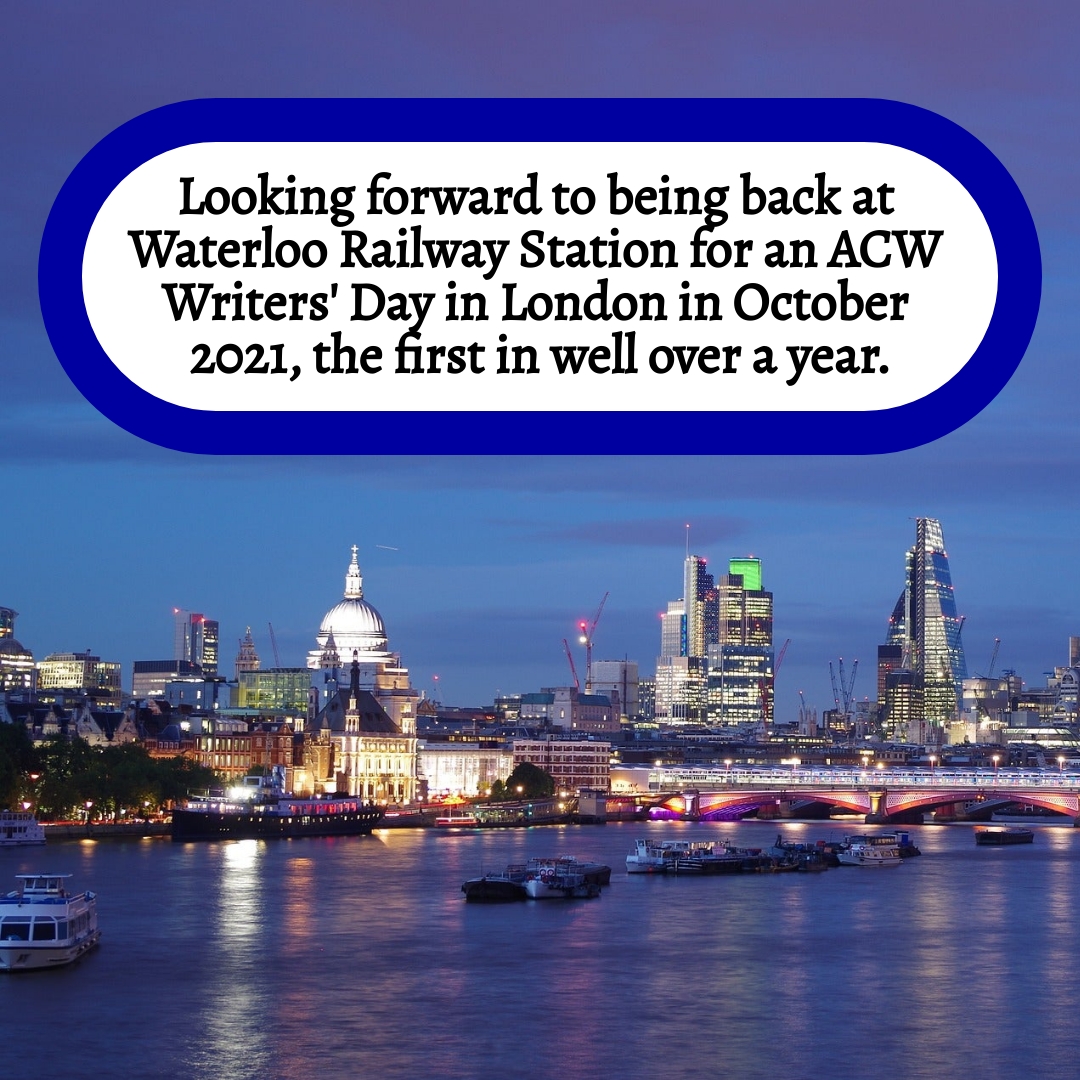
Hope you have had a good week. Looking forward to getting out and about on the train again tomorrow for the Association of Christian Writers’ first Writers’ Day in well over a year in London. Will be so lovely to meet people I haven’t seen in person again for so long.
BookBrushImage-2021-10-8-17-626

Facebook – General – and Chandler’s Ford Today

It’s time for my latest Chandler’s Ford Today post and this is on a topic I really should have written up a while ago. Sayings – Their Uses in Fiction and Non-Fiction is one of those themes with my name on it as I do use sayings a lot in my creative writing. I’ve used a number of well known sayings as story titles and even more as themes.

And many of the old sayings could be used for non-fiction work too. I share a few tips here on how to use sayings but so they don’t become cliches, which I hope proves useful. Sayings are well known for a reason but it pays to put your own spin on them so you can get something unique from them for your story or article. That is by far the best way to avoid falling into cliche territory.

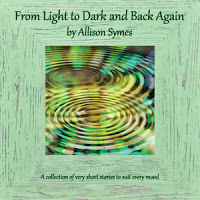
And you can change a word in a saying to put your own spin on it. I did this for my Punish the Innocent in From Light to Dark and Back Again. Subverting a well known saying for your own purposes is not only fun, it intrigues the reader. After all, we usually talk about punishing the guilty so, in the example of my story, I would hope a reader would be curious enough to find out why it is innocent in this case.

Best of all, there are loads of well known sayings so they are useful just as a source of ideas to get you started, even if you don’t use them directly. Course you could do both – as I do!

Sayings – Their Uses in Fiction and Non-Fiction

This slideshow requires JavaScript.


I don’t know where the predicted sunny spells ended up today but I do know they didn’t show up in my part of the world. Today has been a classic murky autumn day.

Looking forward to sharing my Chandler’s Ford Today post with you tomorrow. This week I’m talking about Sayings – Their Uses in Fiction and Non-Fiction. I talk about how I use these in my writing and share tips about avoiding these becoming cliches. I also take a look at character sayings. These can be an effective device – many of our well-loved characters have a pet phrase – though I think the secret is not to overuse them.

What aspect of writing do you find the most fun? For me, it is the editing. Yes, really. I know I’ve got a story down. I know what I’m going to do to it will improve it and help its chances “out there”. And when I do get to submit the piece, I know I’m sending in something far better than what I originally drafted – and that is how it should be.

This slideshow requires JavaScript.


Hope you have had a good day. Writing wise, my post on Light and Dark in Flash Fiction is now out (via Mom’s Favorite Reads) and there are some cracking stories based on that theme too. Well done, everyone! (Link takes you directly to the relevant page – see https://moms-favorite-reads.com/2021/10/06/light-and-dark-in-flash-fiction/).
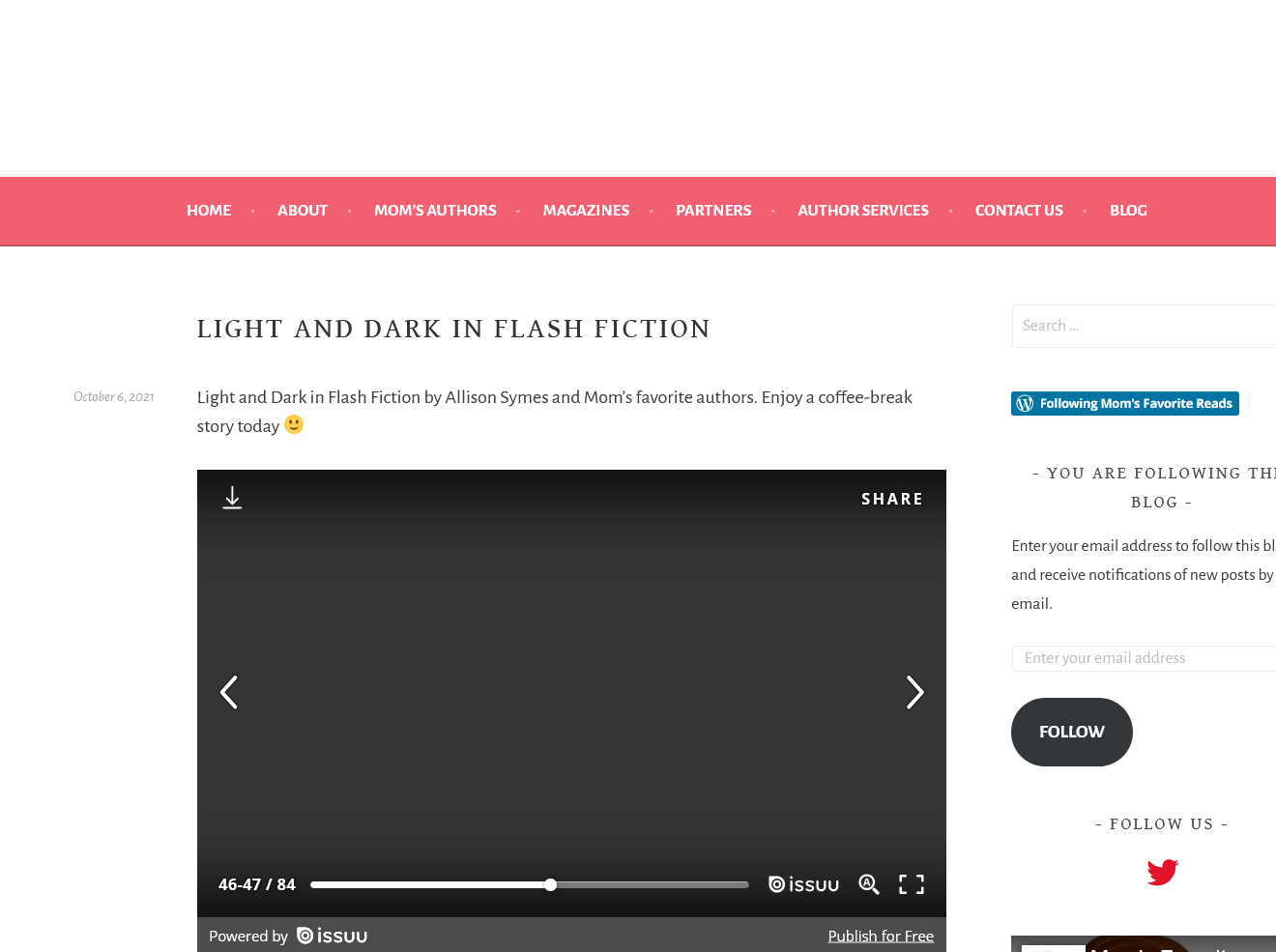
Screenshot 2021-10-06 at 20-01-30 Light and Dark in Flash FictionScreenshot 2021-10-05 at 16-34-08 Amazon co uk Mom's Favorite Reads October 2021

I tend to work on my next post for Mom’s Favorite Reads directly after I finish the last one. I find this a useful technique for everywhere I blog (Authors Electric, Chandler’s Ford Today, More than Writers etc). When I do get odd pockets of time, I will draft future blog posts and work out where to place them later. It is always a good feeling to know there is “material in the bank” good to go when I need it.

I’m also finding Friday Flash Fiction useful here given it encourages you to prepare a story for the next Friday’s magazine directly after the current one has gone live. It is helping me to produce 100-worders more regularly. For my YouTube videos, I set my own deadline and ensure I stick to it. Over the course of a week, I get a balance of fiction and non-fiction writing done.

BookBrushImage-2021-10-8-19-1831

Facebook – From Light to Dark and Back Again

Delighted to share my latest story on Friday Flash Fiction. Hope you enjoy Leaving It Late. Has my character done exactly that? Read the story and find out!Screenshot 2021-10-08 at 16-41-23 Leaving It Late, by Allison Symes

Just to flag up the paperback of Tripping the Flash Fantastic is currently on offer on Amazon. See http://mybook.to/TrippingFlashFantastic for more details. Have also topped up my supply (which is always a nice thing to do).

Looking forward to seeing both of my collections on a book stall once again when I go to the Association of Christian Writers event on Saturday, 9th October. It will be so lovely seeing book stalls again! I love a good browse…

Every so often I will draft promising opening lines or twist endings for writing up into a story later. The great thing with this is when I come back to them if the ideas still grab me, they’re likely to grab a reader too.

It can be difficult sometimes working out if an idea really is as good as you thought it was when you first came up with it. Time away from it for a while will help you assess it properly. I also find if the idea still grabs me (most of the time this is the case), I am then fired up, keen to get that draft down, and away I go. You don’t lose your enthusiasm for a really good idea. Time away from it, if anything, increases your enthusiasm because you know deep down this will work.

This slideshow requires JavaScript.


I like picking open themes for my blog posts (such as for Mom’s Favorite Reads) and flash fiction tales. I like having “manoeuvre room”. It is also more likely I will be able to come up with a twist that surprises the reader but is compatible with my story and character having an open theme. More interpretations (and therefore more twists) become possible with an open theme.

But I do need time then to work out which would be the best option to use and I use spider diagrams to help me here. I’ve found taking the time to work out the best options saves me so much time later. I find I come up with different ideas and the first couple I can instantly dismiss (too samey, seen it before etc).

I then find I have a couple of promising ideas and I then ask a series of “what if” questions. That usually shows me out of two possible ideas, which is the most likely to engage the reader. If I’m engaged with it, someone else will be.

I also look at why something has engaged me and as long as it is something to do with the character portrayal, I go with it. I say that because any story is depending on strongly portrayed characters who appeal to the reader in different ways. As long as there is the likelihood this character will appeal because… then I’m likely to write them and their story up. (The reason because can vary as different readers take different things from characters but as long as there is at least one good reason a reader would want to read this character’s story, then I go with it).

This slideshow requires JavaScript.

Fairytales with Bite – Light and Dark

Now this is a popular theme for me given the title of my debut flash fiction collection (From Light to Dark and Back Again). The title came about as I realised my two preferences for stories inevitably contrasted with each other. I love humorous/light stories. I like a well crafted darker tale too. And, with few exceptions, most characters are a mixture of light and dark.

Most readers like to read about flawed characters because we know we too are flawed. Most readers are bored by the “goody two shoes” with no spirit to them. Most readers are horrified by those who are just pure evil with no prospect of redemption. (Redemption or the possibility of it is a wonderful theme for stories).

So how will you show light and dark in your characters? What dark aspects do your “good” characters have to show they are well rounded, so a reader can identify with them precisely because they’re not perfect? What lighter aspects do your villains have to show they are nor caricatures?

For your setting, how does light and dark work in a physical sense but also what would be these be politically? Is there such a thing as a good government in your world? What would your characters see as being light and dark and would that agree with what we would consider such things should be? Not every world has the same values after all.


This World and Others – Generation and Regeneration

Now I’m a Doctor Who fan of longstanding so the idea of regeneration is not new or one I’m fazed by. In your fictional settings, do you have characters who can regenerate? How does your world generate its food, power supplies, anything it needs for the world to function properly?

Generation and regeneration can be reflected in agriculture. How does your world grow food? How does it generate seeds? How can it ensure crops can keep being grown?

If your setting is an old one, has it had periods where it has to re-generate or re-invent itself or face obliteration? How did it rise to the challenge here?

What are relationships like between the differing generations? Do the great ideas only come from one section of your society? And where there is pollution how can your setting “start again” and build a world where there is onoing regeneration?
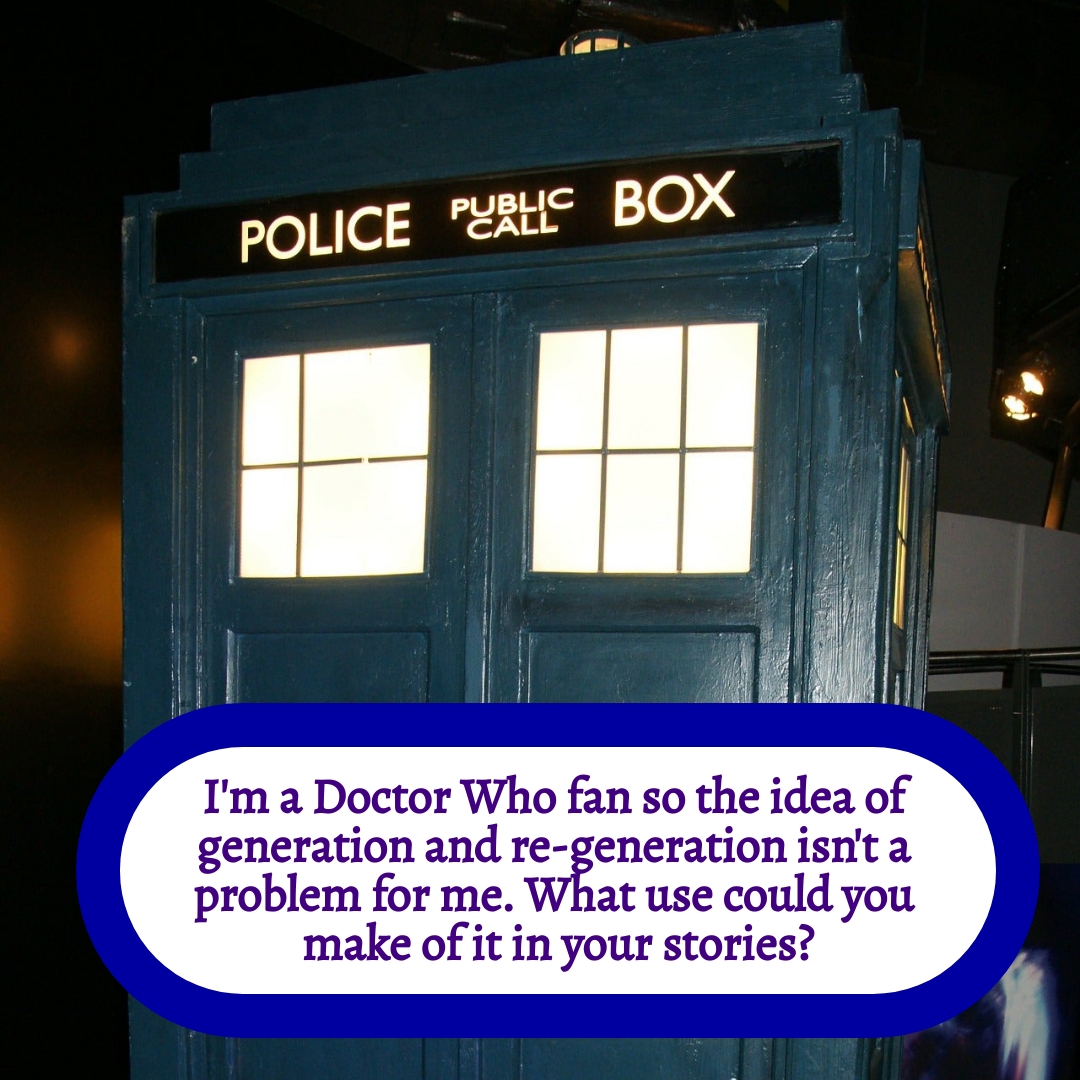
BookBrushImage-2021-10-8-19-4855

Twitter icon

https://platform.twitter.com/widgets.js https://platform.twitter.com/widgets.js https://platform.twitter.com/widgets.js

Triggers and Descriptions

Image Credit:-
All images from Pixabay/Pexels unless otherwise stated. Some images created in Book Brush using Pixabay photos.
Book cover images from Chapeltown Books and Bridge House Publishing. Image of me signing at the Swanwick Writers’ Summer School was kindly taken by Fiona Park while the photo of Lady and I examining my books was taken by Adrian Symes. I took the photo of my two flash collections for sale at Swanwick in August 2021.
Hope you have had a good few days. Writing going well. Weather less so right now!

Facebook – General

I swear it was almost time to call Noah out again given the amount of rain that has fallen in my part of Hampshire today! Hope it is not too bad where you are.

Have booked my train tickets for the Brechin/Angus Book Festival in November. I always get tickets posted so hopefully these will be with me in a few days.

Have got my train tickets for the first Association of Christian Writers in-person to be held since before lockdown – that will be on 9th October. Looking forward to that and seeing everyone again. I will make use of my railcard this year! (And it will be nice to hopefully sell a few books in person again too!).

My lovely editor at Chandler’s Ford Today and I are planning to be at the next production by The Chameleon Theatre Group in October (which will be Murder With Ghosts – sounds fun!). Definitely time for another CFT “works outing” I feel. Not the same when I go on my own!

Hope you have had a good Monday. Was pleased to get a significant amount of editing done over the weekend on what I hope will end up being my third flash fiction collection. And I managed to draft some future blogs so those will come in handy in due course.

Am enjoying the new series of Just a Minute. It is odd not having Nicholas Parsons in the chair but Sue Perkins is doing a grand job. One of the reasons I love this show is there is some wonderful word play and I always have a lot of time for that! It also shows how difficult it is not to repeat. Every word has to count – and I guess that would always prove popular with a flash fiction writer.

This slideshow requires JavaScript.


Many thanks for the comments coming in on An Undesirable Property, my latest story on #FridayFlashFiction. Much appreciated. Am currently working on another story for this week’s submission and hope to get that polished and sent off later this evening.

I’ll be looking at Pinch, Punch, The First of the Month as my topic for Chandler’s Ford Today this week given Friday will be 1st October. I’ll also look at how we can use sayings in our fiction and non-fiction. I’ve used several sayings as titles and/or themes for my flash fiction stories, for example. So don’t throw out your books of proverbs and well known sayings. Mine them for ideas!

Talking of the first of the month, my author newsletter will go out on Friday as well. I share tips, news, writing prompts, and stories here. If you’d like to sign up head over to my website (landing page).


Hope you have had a good Saturday. Nice to catch up with friends and family today. Lady loved seeing everyone. She loves people (and the food they drop of course). Autumn evenings drawing in – getting dark here before 8 pm.

I don’t use a lot of description, mainly because in flash room for this is limited. What I look for is the telling detail, something that will show a reader setting, character age/class (often done via the name I give them – names can date people – mine does as I mentioned the other day), or story mood.

It is a case of working out what a reader has to know and what can be left for them to pick up on inference/context. I ask myself when editing a story, does the tale make sense without it? Does the tale lose anything if I take this out?

I am more interested in character than description anyway. I want to know what a character is like. Finding out where they live is, for me, something I will pick up as I keep reading. What I don’t want is to be switched off by long descriptions.

I want the dialogue, the character’s thoughts etc and description slipped in every now and then. I will “assimilate” that. I don’t want a great big block of description (and I am wary that kind of thing is likely to switch a lot of readers off. They want to know what is happening as opposed to what something looks like).

This slideshow requires JavaScript.

Facebook – From Light to Dark and Back Again

Triggers for story ideas can come from anywhere – and at unexpected times. (Not always convenient times either). I’ve never used the keep a notebook and pen by your bed so if you wake up with a great idea you can jot it down quickly. Why? Because when I’m asleep, that is it.

I don’t tend to dream story ideas. They come to me as I’m getting on with other things, which is fine if I can pause to jot things down, but that is not always possible. I have had odd ideas come to me when in the shower, when I’ve just parked, when on the loo etc. What I will do here is grab my phone and use Evernote to jot things down as quickly as I can after the idea has occurred. Best endeavours and all that).

But I worry less now about “missing an idea” because I know now in a way I didn’t when starting out that ideas will crop up. It’s not as if you have one “go” at getting ideas, far from it.

The best trigger I know and often make use of is to ask the old “what if” question? For Being Yourself in Tripping the Flash Fantastic, I knew my character was going to be accused by a love rival of being cold. So I asked myself what if my character could become cold? What would that make her capable of and how could she use this against her rival?

And random generators can be a good way of triggering words to put into a story. I’ve done this recently and I came up with promising words and then asked the what if question. That showed me how to use this words well and two of my more recent videos on my YouTube channel came about because I did this.


Delighted to share my latest YouTube video called Housework. Even dragons tidy up when they have a strong enough motivation to do so. Hope you enjoy.

F = Fun to Write – and you can write across genres too.
L = Less is More – what are the telling details your reader must know?
A = Always axe anything that does not move your story along in some way.
S = Story, story, story. What happens? How does your character change? What is the important thing we need to know about your character in this tale?
H = Has an upper limit of 1000 words but you can write across the spectrum. There are different categories including the dribble (50 words) and drabble (100 words – and my favourite). You can pack a lot into a tiny tale whether or not you go to the upper word limit.

This slideshow requires JavaScript.

I was talking over on my author page about not wanting a lot of description. There isn’t room for it in flash anyway. I chatted about telling details and working out what a reader has to know. Some examples from my published stories include:-

Making the Grade – one word, “magical” ahead of the word “exams” shows my reader the character is not in any ordinary school and they have talents we do not.

Pen Portrait – “brushed her hair once a day” shows you my character, whatever else she is, isn’t vain.

It Has to be Me – the words “you break customs at your peril” shows you my character lives in a repressive world.

There is an indication of setting in two of these as well.

Also, given we live in a TV and film era, the days of long descriptions are behind us, I think. Someone like Dickens had to spell out what London looked like for readers who would probably never go there. We, on the other hand, can take shortcuts here as we can set a story in London and most people will have their own ideas as to what that looks like.

This slideshow requires JavaScript.


Goodreads Author Blog – Book Shopping

Book shopping is an absolute pleasure, of course, and I like to mix up how I do this. I do shop online but mix up the retailers I use (and I like to also support those who support independent bookshops. I have used You Know Who and I have found them helpful with out of print books in the past. I also believe in not putting all my eggs in one basket here but that goes for You Know Who as well as the other retailers here).

I also love going into a “proper” bookshop and browsing. Have not done the latter yet since the pandemic restrictions were lifted but hope it will be something I get back to before too long.
And the nice thing here is that book shopping is easy enough for family and friends to do for you for Christmas etc. Just give them a list of the books you want and send them to Waterstones!

I also like to mix up asking for paperbacks and ebooks (though usually I’ll sort out the latter myself). And I like to have non-fiction as well as fiction on my Wish List. The downside of all of this?

I know I need to sort out my book shelves. Adding more books is not going to help! But it is a nice problem to have!

This slideshow requires JavaScript.

Twitter Corner


https://platform.twitter.com/widgets.js https://platform.twitter.com/widgets.js

Cyberlaunches, The End, and Flash Fiction

Image Credit:  As ever, Pixabay, unless otherwise stated. (Images of The Hayes, Swanwick were taken by Allison Symes)

It has been a fun few days as I was one of the co-hosts for Patricia M Osborne’s cyberlaunch of her second novel, The Coal Miner’s Son. What follows is a kind of a report on that. Many thanks to Patricia for inviting me to take part. It was great fun – as a good launch should be!

Facebook – General

I’m looking forward to taking part in #PatriciaMOsborne‘s cyberlaunch for her second novel, The Coal Miner’s Son, tomorrow evening. (I interviewed Patricia as part of my CFT series on What Books Mean To Me a while back and I have guested on her website as part of her blog and her 100 word challenge. We are both also huge fans of Swanwick Writers’ Summer School, not least because we met there).

This is the follow up to her debut book, House of Grace. Obviously more on that tomorrow but very best of luck, Patricia, and hope you have an absolute ball with your launch.

I had a great deal of fun with mine for From Light to Dark and Back Again. Cyberlaunches are a fab opportunity to celebrate books and support writer friends. Always worth dropping by!

One of the loveliest things about the writing community is it is so supportive and launches, cyber or otherwise, bring that out. And best of all they are fun!

This slideshow requires JavaScript.

Many thanks to #PatriciaMOsborne for inviting me to take part in her launch of her second novel, The Coal Miner’s Son. This follows her debut novel, The House of Grace.

A very good time was had by all at the launch and the lovely thing about online launches is that the calories in the cakes and drinks provided simply don’t count!😆

I am planning to hold a cyberlaunch for my second flash fiction collection, Tripping the Flash Fantastic, when that is out later this year. Preparation is crucial for you as the writer to get the most out of it I think. It helped me to relax into the event and get a real party feel going.

(And it WAS a wonderful party at Patricia’s launch tonight too!).

Launches are important for the obvious reason of getting the news of our books out there, but they also help a writer to have fun with their book after all their hard work in writing and editing it.

Cheers to that!

And congratulations, #PatriciaMOsborne, for a wonderful launch for The Coal Miner’s Son. (I love that cover! Do check out the link to Patricia’s Amazon page, given above, to find out why I love it!).

This slideshow requires JavaScript.

I always feel a sense of relief when I write The End for a flash fiction or short story. (I should imagine the sense of relief for a novelist is proportionately larger depending on their text length!).

I do know the hard work is shortly going to begin with the editing but there is that moment when you know you’ve got something to work with and that’s nice. It shouldn’t be unappreciated either. You have finished the first draft.

The great thing is nobody but you has to ever see that first draft. I know from mine what a good thing that is!

For competition entries, I always take at least a week (and usually a fortnight) off the official deadline to ensure I have time for any final tweaks and still get the piece off in good time.

This slideshow requires JavaScript.

Facebook – From Light to Dark and Back Again

Hope to draft some flash pieces on my train trip to Birmingham today for an Association of Christian Writers’ event. It is a great form to draft on a smartphone!

The only thing I make sure of is to put plenty of story prompts on Evernote before I travel so I have more than enough to write up.

If I ever forget to do that, I brainstorm opening lines and then write them up. Of course sometimes what I think will be opening lines make far better closing ones, but it’s fun to find that out!

When I started writing short stories, I nearly always used the third person. For flash fiction, I still use that, but I’ve developed a great love for using first person. I love its immediacy. I can tak you right into a character’s head and I have my narrator for the story literally to hand.

Flash, due to its brevity, means you can’t have too many characters as you’d quickly fall foul of word count requirements.

For example, if you want three characters in the story, you’ve got to have at least one good reason for all three to be in there. How many words will you use to get those good reasons in?! And even if you manage that well enough, what room have you got left for the actual story after all of that?

So using the first person is a handy technique but that is all it should be. I make myself mix up first and third person usage to avoid falling into the trap of all of my stories sounding the same.

Good reasons to get a writing event if you can and that includes online events (so travel is not a problem!):-

1. You will make writing friends who will totally understand your addiction to writing (and it IS an addiction). They also celebrate your successes and commiserate with your woes and that is vital. The writing community is precisely that, a community. We take the “no man is an island” bit seriously!

2. Said writing pals will tell you about competitions and markets you had not heard of as no one person can know everything that’s out there. You will also share useful news on similar lines to them.

3. You will get a lot from the courses and talks you go to as well!

This slideshow requires JavaScript.

Book trailers were completely new to me until Chapeltown Books produced the excellent one for From Light to Dark and Back Again. Yes, I know I’m biased… (am not sorry, so there!).

Flash is a great vehicle for book trailers since as a form it can fit into a trailer beautifully and give a useful free sample to potential readers. I prefer using the 100 words or under for this.

A sample of my flash fiction work. Job Satisfaction was first published in From Light to Dark and Back Again by Chapeltown Books in 2017.


Goodreads Author Blog – Book Stalls at Writing Events

I love writing events anyway but I particularly enjoy having a good nose around book stalls/book rooms at these things. Wild horses wouldn’t keep me away and all that…

It’s always a joy to see works by friends, as well as my own, on these stalls too. But they also prove to be good opportunities to have a look at works and authors new to you.

So go on, at the next event you go to as a writer, put your reader’s hat on too and see what you can find. Explore reading avenues new to you as well as enjoying favourite genres.

And for non-writers, one of the best ways to support author friends is to go to their events. The great thing is you are likely to come back with your next good read too! And that is always a good thing!😊


The Writing Life and Publication News

Image Credit:  Unless otherwise stated, the images are from Pixabay.

Facebook – General

I drafted this post on my way to a Writers’ Day (19th October 2019) run by the Association of Christian Writers. (I’m their Membership Secretary). I do love a good train journey and Evernote! I adjusted to using a stylus quicker than I thought I would too.

The event itself will be good fun and it will be nice catching up with friends too. Am enjoying seeing the sun rise over the Hampshire countryside as I draft this. Will be seeing the sun set on my way home. (And I did. It was lovely).

Writing wise, I’ll have a story up on Cafelit tomorrow so look forward to sharing the link for that.

I’m also looking forward to seeing the next production by The Chameleon Theatre Group called My Husband’s Nuts next week. Should be fun. Review to follow in due course.

Am making progress on projects I’m working on but why is progress never as quick as.I’d like it to be?! Oh well says she, pressing onwards!

This slideshow requires JavaScript.

Publication News

Delighted to say The Best of Cafelit 8 is now available in paperback as well as in ebook form. Reviews welcome, as always!

I have two flash stories in here – The Art Critic and Dignity and Injustice. Very different moods for those two as well! Great collection of stories so if you’re not sure what you fancy reading next, try this assortment! You’ll find something to suit…! Lovely eclectic mix of authors, styles, and moods. (Pleased to say Cafelit 8 is now up on my Amazon Author Page too!). Thanks to my recent CFT series on What Books Mean to Me I can share some of the images of the authors in Cafelit 8 but do check the book out and catch up on all the authors included here. There is a great mix of styles but you don’t just have to take my word for it!

Also thrilled to share my latest story on Cafelit called Takeover. The thrill of being published in print, online or both never dims!


Facebook – General

Favourite moment in editing? When you know the changes you’ve made have strengthened your story/book and your only regret is not having spotted the necessary changes when you were drafting the tale in the first place.

The one thought that has always cheered me up here is that nobody writes a perfect first draft. Shakespeare didn’t. Dickens didn’t. I’m not going to – so that’s okay then. What matters is the edit. And it does pay to take your time over it, leave the work for a while, before then re-reading the piece as a reader would.

Least favourite moment in editing? Checking for typos and then spotting one after you’ve gone through the document several times. The one comfort here is that this happens to us all at some point so you’re definitely not alone!


This slideshow requires JavaScript.

S = Spellbinding characters make you have to find out what happens to them so you keep reading.
T = Tall tales, flash fiction stories – there’s something for every word count!
O = Originality. I find it fascinating how writers create unique characters and keep doing so and, of course that is a challenge to me too.
R = Reading – the other side of writing. Two wonderful creative arts in one in many ways. You have to read well to be able to write. Name a better way of working out how a book works, how characters come across on the page etc.
I = Inventiveness. I love inventing new people and situations to put them in. Exercising the imagination regularly like this has to be good for the brain – and your writing muscles.
E = Entertainment – stories cover the whole range. Some are entertained via tragedy, others via humour, crime, historical fiction. There are plenty of wonderful books out there. And don’t forget the anthologies – flash fiction and short stories. Perfect for quick reads.
S = Setting. Via a book, I can visit fantasy worlds, places on this planet I may or may not get to see for myself, places I’ve never heard of – does this give another meaning to losing yourself in a good book? You can lose yourself in an enthralling setting. The world of The Lord of the Rings is a good example (though I admit I’d never visit Mordor out of choice if that option was available).

This slideshow requires JavaScript.

Facebook – From Light to Dark and Back Again

I was listening to the gloriously peaceful music of Sailing By on Classic FM as my train left Basingstoke when I drafted this earlier today (on my way to the ACW Writers’ Day mentioned earlier). Quite a contrast in images there! Flowing water, sunny days, and a big town!

Contrasting images can work well in flash fiction but, due to the word count limits, contrasts are best shown sharply. You are flashing a brief light on the lives of your characters to your readers when all is said and done. So what is the contrast they must pick up on? Focus on that.

For the longer flash stories, there may be room for subtle contrasts to come in but again focus only on what your reader needs to pick up. You still won’t have room for more than that. Flash is all about focus (which is why it is a great discipline for any writer).


This slideshow requires JavaScript.

Places I have drafted flash fiction stories:-

1. At home on laptop (very conventional!).
2. On the train on Evernote.
3. In a notebook using good old pen and paper while waiting for my phone to recharge! (There is much to still be said for pen and paper).
4. On a car journey.
5. Just the once – at the end of a church service, I had a very strong idea for a story which I knew I just had to write down a few notes about so I could write it up properly later. I usually hear my characters speaking, then visualise them. For this story, it was the other way round. Yes, it does have a faith based theme but I just had a very strong compulsion to get this story idea down quickly – so I did, using Evernote.
6. When I’ve got ten minutes before I have to go out anywhere… well it’s useful writing time and I flesh up the stories properly later on.
7. At writing conferences when I’ve been set a writing exercise. Nearly all of mine turn into a first draft af flash fiction.

I have NEVER followed the advice to keep a notebook by the bed to jot down thoughts that occur over night. This, I know, simply wouldn’t work for me. I sleep very heavily as a rule and don’t often dream so this is a no-go. I am never at my best first thing anyway so any notes jotted down would make no sense to me yet alone anyone else!

This slideshow requires JavaScript.

Why do I like using the first person in flash fiction so much?

1. It’s immediate. I can take you right into the thoughts (and attitudes) of my characters.

2. It reads like a first-hand account (which from the character’s viewpoint is, of course, the case!).

3. I can get my character to refer to other characters and give a sense of a life being lead without actually bringing those other characters into the story itself. It saves on word count, obviously, but if I just need to show Character X hates Character Y, I can show you that by revealing X’s thoughts about them. I don’t need to bring in Y at all. It is more direct and, to me, comes across as more natural.

4. I find first person works really well in the sub-500 words stories so it does tend to be my “go to” when I specifically want to write to that limit or under.

5. There isn’t a lot of room for dialogue and character development in flash fiction. Flash is, as I mentioned the other day, all about focus and I’ve found it best to focus on one to two characters at most in a sub-500 words story. In sub-250 words, one character works very well (and therefore the means of showing their story is often best done via the mouth of the character concerned).

This slideshow requires JavaScript.

Goodreads Author Blog – Travel Reading

I tend not to read much while travelling. I’m usually drafting blog posts and stories on my phone for one thing! But I like to take a good mix of good reads for when I get to my destination.

I prefer light reads when away. I am escaping from the usual routine so want to escape through books too. I’m currently enjoying Ben Macintyre’s The Last Word on Kindle which takes a light look at the use of language and is good fun. Highly recommend.

I also loved his Operation Mincemeat. Not a light read so to speak but a cracking and true story told at a great pace.

What do you look for in a good read?

I like to be entertained, escape my cares for a bit, and ideally learn something too.

When reading fiction, I learn something from how the characters are portrayed, how the dialogue is put together etc. I get so much from books and hope you do too.

This slideshow requires JavaScript.


Getting Out and About

Facebook – General

Had a wonderful time at the ACW Writers’ Day in Bath (on 9th March 2019). It is lovely meeting many writers I normally only “talk to” via the ACW Facebook Group or email! Hope everyone had a safe journey home.

Am not planning to do much writing tonight as feeling “buzzed out” (and I didn’t!), but yes, I did use my time on the train trips productively. Managed to write two new flash fiction stories and some notes for a CFT post I’m currently working on so am pleased with that.

There are so many benefits in going to a good writing conference, whether it is for a day, a weekend, or a week.

As well as learning from the courses and talks, you get to meet with other writers. There is nobody but nobody like another writer who will fully understand the joys and heartaches of the writing journey.

Also it is the most natural thing to discuss with each other what you are writing (which ends up being a great way to practice your pitch for your book with nobody minding! The golden rule is never ever just talk about your own work. The idea is to engage with others so being a good listener comes into its own here! The great irony is that being a good listener encourages others to find out what YOU write and so a good conversation gets going).

This slideshow requires JavaScript.

One nice thing I have found about having more than one project on the go is, if I’m struggling with a section, say, on some fiction, I don’t struggle with the non-fiction post I’m also working on.

And inevitably ideas to sort out the problem I’m having with my fiction work crop up as I’m drafting the non-fiction. Naturally I pause, write down some notes, carry on with what I’m working on and then happily get back to the fiction afterwards. And it works the other way round of course.

I’m not convinced about writer’s block. I DO believe any creative type is going to have days where the words, the music or what have you, do not flow as well as said creative type would like them to do. I also see that as being perfectly normal! We are human after all… bound to get days like that. What matters is not giving up.

The joys of writing include:-

1. Coming up with a story that is uniquely yours.

2. Having a ball coming up with that story! The fun of inventing your own world and characters can’t be overstated.

3. Managing to sell that story and seeing it published.

4. Doing steps 1 to 3 all over again and again etc.

The woes of writing include:-

1. Rejections (but take some comfort from the fact everyone gets them and, if turned down in one place, go on and try another suitable market!).

2. Those days when it is a struggle to get the words out. (I find having more than one project on the go helps here. I’ve never struggled on everything I’m working on and often when working on something else, an idea to resolve my problem on Project A occurs, as mentioned earlier this week.).

3. Critics.

4. Steps 1 to 3 will happen more than once!

This slideshow requires JavaScript.

Facebook – From Light to Dark and Back Again

Two new flash fiction stories produced by yours truly while travelling by train today. (Also wrote some notes for my CFT post on both legs of the journey too, so well pleased). I found myself smiling at some of what I’d written and had to repress the urge to laugh.

I think it can be forgotten the first reader of a writer’s work is you, the writer. If the story doesn’t impact on you, you can forget it doing so for anyone else! That doesn’t mean the piece is perfect. It WILL need editing as sure as day follows night but if the overall impact of the story is entertainment, then great. It’s a question of polishing that story to as good a standard as you can get it (and then test the market with it. Good luck!).

All stories should reveal something about character and what can make someone change (for better or worse. A character’s journey doesn’t necessarily have to be a good one!).

What flash fiction does is show a much shorter journey for that character and so the pivotal change is more intense.

So the best kind of flash fiction story then is where you want to highlight one particular point of change in a character. It is all about the focus!

BOOK NEWS:

Amazon have a special offer on FLTDBA at the moment. The Kindle version is on offer at £2.33 and the paperback at £2.10. I don’t know how long they’ll have this offer on for but thought I would flag it up!  NB:  The link takes you to the paperback offer and it is cheaper than when I first put this up on FB.  Grab a bargain, go on, you know you want to!

Can I also put in a gentle plea for reviews on the usual sites if you have read FLTDBA? Reviews help authors and the nice thing is it doesn’t have to be a long review either. A one-liner is absolutely fine. I DO read reviews when I’m thinking of trying a new product (or one that’s new to me anyway) and generally find them helpful. This is so true for books too.

On to other things…

One of the issues I have with a flash fiction idea is deciding which word count to go for. It isn’t always clear cut. Some ideas are tailor-made to be 50 or 100 words or what have you.

Others I could write up as a very short piece or extend. For those I often draft both versions and then go with the one I like best. It isn’t always the short version. Sometimes I am after a greater depth of characterisation so the longer version wins out.

But flash fiction is wonderful for allowing you to experiment like that. And you could use it to work out what it is you do want to write as your main interest. If the very short form grabs you, great. If it doesn’t and you find you work better consistently at the 1500+ word mark, then equally fine.

And good luck!

Goodreads Author Blog – When Do You Read?

Apologies for being a day late. Had a wonderful time at the Association of Christian Writers’ Day in Bath yesterday. I was too “buzzed out” to write much yesterday though I did write flash fiction and some notes for a blog post on a phone app while on the train!

I did, however, give myself plenty of time to read in bed last night. I indulged in magazines, books, and the Kindle. It was the perfect way to wind down after a busy but most enjoyable day.

I never feel as if the day has ended properly without my bedtime read. The only time I really get to read outside of that time is usually when I’m on holiday. Even on train trips I want to spend that time writing though it was good to see there were books in evidence on the train. Let nobody tell you the paperback is dead! It isn’t!

I would love to find a way of being able to read more in the day but I just know I’d be too conscious of all the other things I should be doing to allow myself to enjoy that read properly. So maybe at the end of the day is the best time to read after all.

This slideshow requires JavaScript.


Objectives

Facebook – General

Looking forward to seeing the Chameleons’ production of Blackadder later this week. Should be a very good night out. The last episode of Blackadder Goes Forth is one of those sublime moments of writing where comedy meets tragedy and both are done superbly. Definitely not an easy thing to do.

Blackadder clearly had one objective in mind in Goes Forth – to get out of the war and go back home. Totally understandable.

What is your character’s overriding objective in your story? What will they do to achieve it? What gets in their way? In those three lines, you have a plot outline!

Pleased to have sent off some flash fiction stories last night. Plan to get more out later this week, there is one particular website I’m keen to try out, and finally want to get around to doing so!

One of the trickiest things to handle is time. (And yes I think Doctor Who showed that brilliantly in the Rosa Parks episode). How much time do you spend working on new stories and ideas? How much time do you spend marketing?

As with so much in life, there has to be a balance. I’ve found it helpful to look at the week as a whole. By the end of it, I want to have written some new material, be editing older work ready for submission, have my next CFT post up and ready to go, and have carried out at least some marketing. Okay life does not always go according to plan but whatever I’ve not quite done enough of writing wise in one week is what gets the focus of my attention during the following one. It does all balance out eventually.

Acronyms featured in this morning’s church service sermon and of course they’re a common feature in writing. KISS – Keep It Simple, Stupid is probably the best known one. Very much the antidote to “purple prose” – the days of the long descriptive passages are behind us!

I suspect that is due to everyone being used to films etc where you get into the action quickly but it is not a bad thing. I like descriptions in stories to be to the point and to feel as if they are a seamless part of the narrative and not a “bolt on”.

All parts of the story must feel to the reader as if they have to be there and the tale would fall down without them. If you’re not sure if something should be cut, ask yourself how your story works without that something in it and that should indicate quickly enough whether it is needed or not.

This slideshow requires JavaScript.

Had a fabulous time at the Writers’ Day run by the Association of Christian Writers today. The topic was on writing for children and YA but there was discussion on crossover fiction and contracts, all very useful stuff. From my viewpoint, it is lovely to meet some of the membership face to face given I usually only meet them via emails!

The importance of networking came out as well during the day and I lost my own fear of this when I realised it meant chatting naturally about books, what I’m writing and so on. I have no problem going on at length about that topic!

(Oh and a quick reminder: if you’re offered a publishing contract, always get it checked out. The Society of Authors and Alliance of Independent Authors are the places to go for that. Both I believe issue guides which are free to members. There’s a small fee charged to non-members. Never be afraid to ask).

This slideshow requires JavaScript.

Facebook – From Light to Dark and Back Again

A = Alliteration. Can be useful for titles in flash fiction (though I don’t use it much) but as with any story, it can grab the attention and help set the mood. Best not overused I think. You want each title to set the tone for what it is to come and a variety of methods for doing that is best. Keeps it fresh for you as the writer too.

B = Backstory. Not a lot of room for that in flash fiction! Best to hint at it through one or two vital details the reader has to know and leave it at that.

C = Character. The kingpin of fiction I think. Get the character right and the plot will come from them. Know your character inside and out – I find it useful to know their chief trait (and I piece together a mental picture of what they are like from there). Find the appropriate starting point for you but it is worth taking the time to know your character well before you start. Your writing will flow better because you write with that knowledge. It does come through in what you write.

There was talk at the ACW Writers’ Day today of how boundaries, far from restricting creativity, help it to flourish. This is SO true for flash fiction as well. The limited word count means you have to dig deeper to come up with those original ideas that make flash fiction stand out and have the most impact on a reader. It is worth the effort!

I usually know what impact I want a story of mine to have on a reader before I write it. This is to help me choose my words with precision. However, sometimes a story (more accurately the lead character) surprises me and the tale ends up being funnier, darker, sadder than I’d originally thought. This is no bad thing. It means the character has life and if they surprise me, they’ll surprise the reader too.

It may also indicate I hadn’t outlined enough but the great thing is ideas that come to you as you write a piece are not wasted. Jot them down, step back and take a look at where they can fit in. Are they better than your original thoughts? Do they add depth to your original thoughts?


Back to working my way through the alphabet again then…

D = Drama. Even the shortest flash fiction has to have some drama in it! But it is also true that serious drama doesn’t necessarily have to have lots of words to make it so! There is drama and anguish in Hemingway’s famous example of For Sale: One pair Baby Shoes. The drama should suit the story though (and be to the right length for that tale).

E = Editing. Every story needs this and I don’t think it should be something a writer dreads. I always feel a sensible amount of relief when I’ve drafted a story as it means I’ve then got something to work with. Editing improves a story and, as a result, increases its chances of success. Take your time over the process though.

F = Fun! Writing should be fun. You are creating something new for others to enjoy. The first person to enjoy said tale should be you!

So marching on then:-

G = Genre. One of my favourite things about flash fiction is because it has to be character led, due to the word count restrictions, you can set those characters anywhere. So, if you’ll pardon the pun here, you do have an open book when it comes to genre in the stories you write. Have fun with that, I do!

H = Humour. Can work well in flash fiction as you can end the story with what is effectively a punchline. Also when you have a very short funny piece, look at turning it into flash fiction. It can be an ideal vehicle for those pieces which would be spoiled if you added anything more (and this often goes for humorous pieces).

I = Imagination. True for any form of fiction, but I find with flash fiction I’m using my imaginative muscles far more. Why? Because I try not to come up with the obvious idea from a theme or title. I dig deep and see what else I can come up with, something that will make a greater impact on the reader.

Goodreads Author Programme – Blog –

After the End, What Next?

If you’ve enjoyed a really good book, what do you do when you finish it? Go on to read more books by the same author, or read more in the same genre, or do you go for something that is completely different in mood and style?

I have done all three of these (though obviously not at the same time!) and it very much depends on my mood at the end of the story. If I’ve loved a gory crime thriller, I may well want something humorous to show the lighter side of life, albeit a fictional one!

With short stories especially, I tend to read a few by the same author before moving on. With novels, if the book has really gripped me, I’ve got to check out what else the author has done, even if I decide I’ll come back to those later.

The important thing though is that whatever you read, you enjoy it so much, you keep on reading, no matter what author, genre, style etc you choose next. Happy reading!

Stand Alones, Flash Fiction and Fairytales

Facebook – General – and Chandler’s Ford Today

Many thanks again to Jennifer C Wilson, Val Penny, #AnneWan, Wendy Jones, and Richard Hardie for their further insights into the joys and challenges of writing series fiction. Amongst tonight’s topics is how to ensure each book in a series works as a stand-alone, given our series writers can never know which book a reader will actually start with. It isn’t necessarily book 1!

This slideshow requires JavaScript.

What five things do I like to see in a character? Ideally they have all of the traits I list below but as long as a character has the majority of them, I’m likely to enjoy spending time in the company of that character as I read their story.

1. Courage.
2. Sense of Humour.
3. Loyalty.
4. They, at the very least, respect books; at best they have their own library!
5. Kindness.

Does that rule out the villains? No! Even villains can be kind to their pet cat, have a decent library etc.

Looking at that list, it’s what I like to see in myself and, before you ask, I’m working on the personal library bit! (It’s nowhere near as grand as the one in the pictures below though!).

This slideshow requires JavaScript.

One of the things I love about going to writing conferences is that I always learn something pertinent to what I write. And it is not always an obvious link.

I’m off to the Association of Christian Writers’ Day on Saturday, the topic is Writing for Children and Young Adults, which is not directly what I do, but I just know I will pick up useful tips that I can apply directly.

And you never know – looking at what other writers do can help you re-examine whether you are working in the best way you can. It may also inspire a new direction of writing too! What I do know is it will be fun finding out if it does or not and what useful tips I’ll bring home with me.

The great thing with writing is you never stop learning how to improve what you do and that is so good for your brain!

(And networking is always fun!).

Facebook – From Light to Dark and Back Again

A = Alliteration. Can be useful for titles in flash fiction (though I don’t use it much) but as with any story, it can grab the attention and help set the mood. Best not overused I think. You want each title to set the tone for what it is to come and a variety of methods for doing that is best. Keeps it fresh for you as the writer too.

B = Backstory. Not a lot of room for that in flash fiction! Best to hint at it through one or two vital details the reader has to know and leave it at that.

C = Character. The kingpin of fiction I think. Get the character right and the plot will come from them. Know your character inside and out – I find it useful to know their chief trait (and I piece together a mental picture of what they are like from there). Find the appropriate starting point for you but it is worth taking the time to know your character well before you start. Your writing will flow better because you write with that knowledge. It does come through in what you write.

As ever, am planning to write flash fiction on the train journey to and from London on Saturday as I head off to a writing day run by the Association of Christian Writers. It’s amazing what you can get done on a smartphone with no interruptions! (Daren’t do this on the Tube though. Always worried I’ll miss my stop! I do think the Tube is a wonderful invention and you never get cold down there either…).

I also sometimes draft non-fiction articles and future blog posts when out and about. I just need a long enough train journey to draft a novel now. 😉😁Hmm….


When planning your story (you do, yes?), I find it useful to work out what the obvious ideas might be from a title I’ve thought of, and then work out what could come from those. I don’t plump for the first ideas that come to me. I try to make myself dig that bit deeper to come up with something that fits the theme, makes sense, but is also different precisely because I haven’t gone for the obvious ideas!

Spider diagrams or flowcharts can be useful here. I find I must have a title to kick start the process with, even if I do end up changing it for something better later. It is always a tad annoying that a better title idea crops up when you are writing the story and NOT before you get started, but that is one of those quirks of writing!

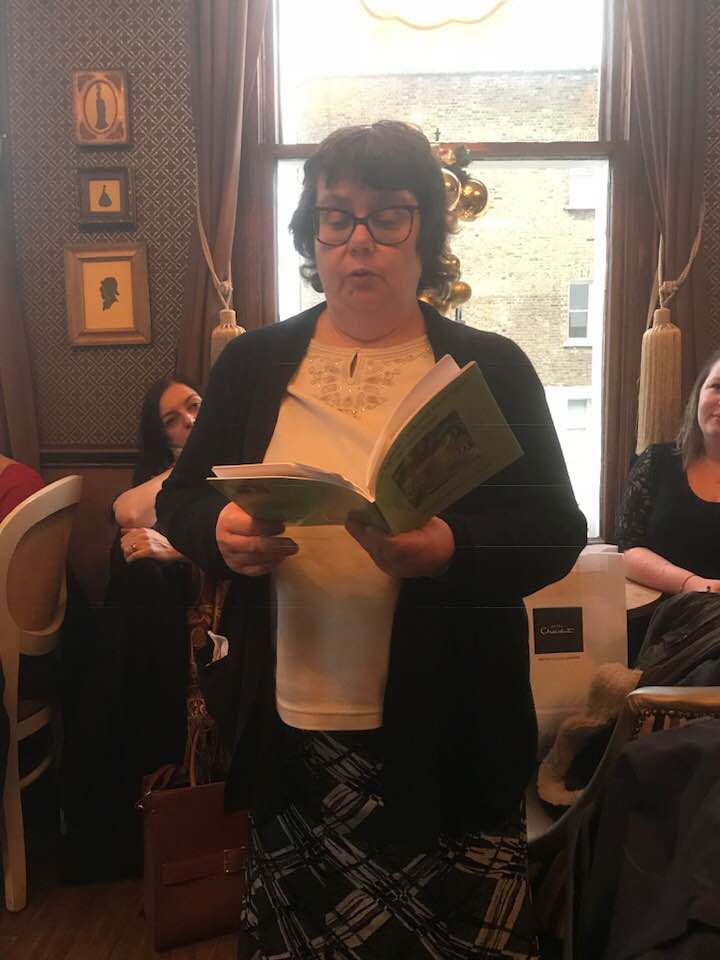
Picture of me reading was taken by the lovely #DawnKentishKnox at last year’s Bridge House event. Am very much looking forward to this year’s one too!


Gill talks with Dawn and I at the BH event, image taken by Paula Readman

Gill James talks with Dawn Knox and I at a networking event held by Bridge House Publishing last December. Am glad to report Dawn will also be in the Waterloo Festival Anthology. Image from Paula Readman and thanks to her for permission to use it.

Paula Readman, Dawn Kentish Knox and Allison Symes and books - with kind permission from Paula Readman - Copy

Paula Readman, Dawn Knox and I at the recent Bridge House celebration event. Many thanks to Paula for the image. Also Paula is another winning entry for the Waterloo Festival.

20171202_160214

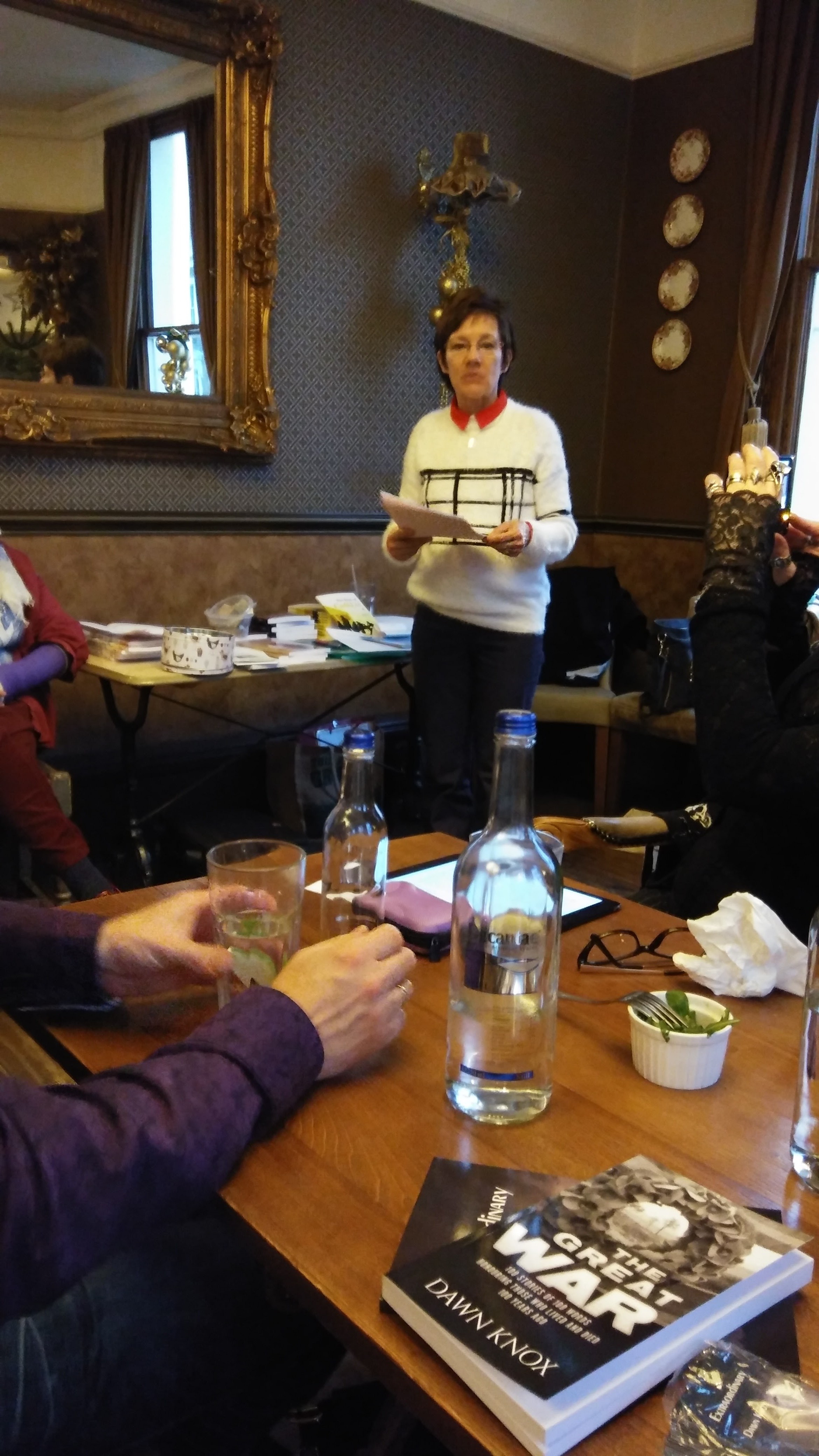
Dawn Kentish Knox, fellow flash fiction writer, reads some work from her excellent book, The Great War. Image by Allison Symes

Lovely having an appreciative audience, pic taken by Dawn Kentish Knox

I read three stories from From Light to Dark and Back Again. Many thanks to Dawn Kentish Knox for the picture!

Book Buying News!

From Light to Dark and Back Again is available from The Book DepositoryDelivery time on the paperback is 1 to 3 business days.  As ever, reviews are always welcome in the usual places.  The great thing is reviews do not need to be long but they all help the writer, even the indifferent ones!

Fairytales with Bite – Flash Fiction and Fairytales

Flash fiction is an ideal vehicle for fairytales.  Why?  Because the best fairytales set up their world quickly, have a definite conclusion, and often pack a powerful punch.  Flash fiction does this too so to my mind flash and fairytales are a match made in writing heaven.

Flash fiction has to be character led due to its limited word count but you can set that character wherever and whenever you wish.  A few telling details can set up a magical world quickly.  For example from my George Changes His Mind (in From Light to Dark and Back Again), I set up a magical world with the opening line “He refused to kill the dragon.”  The telling detail there is in one word – dragon! The story goes on to show what happens and that is the important bit of the story after all.  I don’t need to use thousands of words setting up the magical world in which this is set.  This is not crucial to this story.  What matters is it IS in a magical world and what George goes on to do or not do.

A lot of my stories are either reflections of a fairytale world or set in it and they are great fun to write but I always focus on what the lead character is like.  That is the crucial point of any story I think but in flash where every word must work hard to earn its place to stay there, it is even more so.

This World and Others – Stand Alone

Part 2 of my CFT mini series on The Joys and Challenges of Writing Series Novels looks at, amongst other topics, how to ensure a book stands alone given no series novelist can know at which point a reader will discover their writing.  It is highly unlikely to be book 1.  Indeed I’ve discovered series at the mid point! Many thanks again to my marvellous panellists – Jennifer C Wilson, Val Penny, Anne Wan, Wendy H Jones, and Richard Hardie – for some great insights.  Very happy to recommend their books to you too.  Great reads one and all albeit for different audiences!

It is true that every writer stands alone, even those that collaborate as they have to go off to write “their bits” before coming back and swapping notes with the other one(s) in the project.  We have to judge whether our work is strong enough to submit and, if there is a choice of places to submit to, which is the best one.  We have to judge whether we have edited a piece enough or if it still needs work.  The call is with us and we are going to get it wrong.  The joy, of course, is when we get it right and a piece is published.

This is where meeting other writers, whether at conferences, online, at courses etc., is invaluable.  There is nobody like another writer to know exactly how it feels when you’re struggling to get the words out or who knows the joy of the words pouring out and work going well.  You do have to share this sometimes for the sake of your own sanity!

I learned a long time ago no writer is a competitor to me.  I write as I write.  I cannot write as you would.  We all bring our unique perspectives to what we write – and that is the great thing about it!

This slideshow requires JavaScript.


Conferences, Dead Time and Reading

Facebook – General

Thoroughly enjoyed the Association of Christian Writers’ day in Derby on journalism on Saturday. Love learning from writer events like this. Have found before that, even though I might not use some information now, I do end up using it later! Brought home some ideas I hope to investigate further and am not saying more than that for now.

On the fiction side, I am finalising a short story for a competition. I am also looking forward to sharing a two-part interview with a fellow Chapeltown Books author on Chandler’s Ford Today. Part 1 will be up on Friday.

Am getting better at using “dead” time. I spent my train journeys to and from Derby using the fabulous Evernote to draft a blog post for ACW, a future CFT one and some ideas for what I hope will end up being my third flash fiction collection. I also got to talk to a children’s writer on the train home. One of the lovely things about writing is, when you do meet up with fellow writers, you’ve got an instant topic of conversation!

Oh and you never get bored!


This slideshow requires JavaScript.

Facebook – General

The only problem with going to writing conferences is catching up with things again on getting home! Still, I can think of worst problems.

Sorry to hear about Ken Dodd. Never got to see him live but enjoyed his TV and radio shows. (Radio 4 Extra sometimes repeats the latter, expect they will soon. Worth a listen).

Priorities this week are to finish editing a short story and, as always, CFT. Why does editing always take longer than you think it will, no matter what your level of experience is?! Or is this just me? Answers on a postcard….

This slideshow requires JavaScript.

Facebook – General

Do you like short, sharp paragraphs or longer, more detailed ones? For me, it depends on the kind of story I’m reading or writing. I would expect a thriller to have the first kind of paragraph with a family saga having more of the second kind.

Overall, what matters is that each word, each paragraph etc moves the story on and genuinely can’t be cut from the tale without wrecking it. You know you’ve carried out a good editing job when you reach that point in a story!

Sometimes a more detailed paragraph can be used to indicate the time period a story is set in, given you would expect more “wordy” paragraphs in a tale set long before social media came in. Choice of words must be appropriate to the character, the time period and the setting.

Facebook – From Light to Dark and Back Again

I’ve spent a lot of the weekend in Derby at an Association of Christian Writers’ Day on journalism (it was fab) so used a lot of the time on the train journeys scribbling away via the wonderful Evernote on my phone. Jotted down ideas for several flash fiction pieces and am really looking forward to writing them up.

I am getting better at using “dead” time like this and when I had to take my car in for service, while I was waiting, I wrote three flash pieces (which are part of my second collection now submitted to Chapeltown Books). I felt distinctly miffed when they told me my car was ready as I had settled down quite well, thank you. There was a tea and coffee machine, loos, and I was all set for further writing! The really great thing here? No distractions… ah well.


Most of us struggle to have as much time to read as we'd like - image via Pixabay

I think most of us struggle to find as much time to write as we’d like.  Image via Pixabay

Publishing has to start with a blank page - image via Pixabay

From start to finish here perhaps?  The blank to the printed page.  Image via Pixabay


The To Be Read pile - image via Pixabay

The to be read pile! Image via Pixabay

A few books to choose to read from here - image via Pixabay

Plenty to enjoy here! Image via Pixabay

Facebook – From Light to Dark and Back Again

Do you start your story with a title in mind or do you write the tale and then the title comes to you as a result?

I find I must have a title to “peg” my ideas to but often have to change the title to a more suitable one, once I’ve got the story down. I have, on occasion, tried to work without a title but soon found myself feeling “lost” without one! So I take the attitude now it is all in draft anyway so it doesn’t matter if I change the title half a dozen times until I’ve got it right for the piece.

Goodreads Author Programme – Blog

I have spent many a fine evening re-reading favourite novels and short stories. For me, there is no such thing as a book beyond its “read by”date.

It has been my experience even books written in styles we wouldn’t use now have some entertainment value and I can usually learn something from the way the author has written their characters. I usually pick up something on each reading.

As for contemporary reading, I am reading a fair number of flash fiction collections, I love reading history (and historical fiction), as well as crime. I am reading far more non-fiction than I used to but I think this may be a reflection of the fact I’m writing non-fiction now as well.

Having a Kindle has increased the amount of reading I do too. I do like the “Look Inside” feature and have often used this. I was glad it was available on my own flash fiction collection. This has given me many chances to try books I wouldn’t have necessarily thought of trying.


The wonderful world of stories... Image via Pixabay.

GETTING OUT AND ABOUT

I had a wonderful time meeting old friends and making new ones at the Association of Christian Writers’ (UK) Writers’ Day in Birmingham today.  The speaker, Sheridan Voysey, was wonderful and spoke on radio interviews and podcasting amongst other topics.  Really useful day too.

FAIRYTALES WITH BITE

Getting Out and About is inspired by my trip out today and I look at transportation in the magical world.  I must admit I don’t fancy the idea of broomstick riding (not exactly comfortable!) and wing power has its disadvantages too.  Still, at least those methods don’t mean people standing on their way home because there are too few coaches…

THIS WORLD AND OTHERS

Getting to Know People is another post inspired by my trip out today and reflects one of the huge advantages in going to a writing conference.  You get to meet other writers – and not only do you make friends, you learn from their writing experiences and you from theirs.  In this post, I look at how your characters would make friends.  What are the rules?  Would there be those they could never befriend?

FACEBOOK PAGE

Again I talk about the ACW Day but I also share my tale of woe and how an unexpected knight in shining armour came to my aid – a Brummie cabbie!

https://www.facebook.com/plugins/post.php?href=https%3A%2F%2Fwww.facebook.com%2Fallison.symes.50%2Fposts%2F10155127408067053&width=500


The old fashioned notebook and pen still have major roles to play in interviewing - image via Pixabay

Plenty of notebooks and pens used at the ACW Day today.  Image via Pixabay


Learning with others in a writing conference is huge fun. Image via Pixabay.

PUNISHMENTS AND CRIMES

FAIRYTALES WITH BITE

I talk about punishments in tonight’s post.  My fictional Fairy Kingdom likes a rough justice kind of approach.  If you offend someone more magically powerful than you in the world I’ve set out you are (a) going to know about it and (b) the results are definitely going to hurt.  (All that’s open to question is just how much your punishment is going to hurt).  I list some of the typical punishments meted out.  The clever bit here is to ensure you are never caught like this.

THIS WORLD AND OTHERS

On the flip side I look at crimes and discuss why breaking someone else’s magical talking mirror is not a great idea.  I list some of what are considered the worst things you could do.

FACEBOOK PAGE

I discuss my day out today at the Writers’ Day held by the Association of Christian Writers in London today.  I learned a lot, talked with old friends, talked with new ones and had a wonderful time!

https://www.facebook.com/plugins/post.php?href=https%3A%2F%2Fwww.facebook.com%2FAllison.Symes.FairytaleLady%2Fposts%2F795814707188177&width=500

A typical writing conference room. Image via Pixabay.

A typical writing conference room. Image via Pixabay.