What Makes A Good Story

Image Credit:  Unless otherwise stated, all images are from the fantastic Pixabay.

Facebook – General – and Chandler’s Ford Today

I share what I think makes a good story and why. I also name some of my favourites and share my reading “diet”. I also invite you to share your favourite stories. Hope you enjoy – and that you have plenty of wonderful books and stories as Christmas presents this and every year!

This slideshow requires JavaScript.

Two posts from me tonight. This second one also ties in with my CFT theme of What Makes a Good Story too.

Below is the book trailer for Nativity, this year’s Bridge House Publishing anthology. I’m delighted to have a humorous fairytale in here – What Goes Around.

Do check out the wonderful stories in here. There’s a lovely mixture of styles and moods but of course you don’t just need to take my word for it!

Boxing Day is my chance to catch up on some reading – books old and new – and I relish the opportunity to put my feet up for a bit and get my nose stuck into a good read!

Must admit to being a bit miffed Doctor Who has been pushed back to New Year’s Day. It always was the highlight of my Christmas Day viewing.

Have no idea what I’ll be watching this year. If nothing appeals, it’ll be back to the Morecambe and Wise box set. Can’t go wrong with that! The scripts were wonderfully written and brilliantly performed.

This is also where I particularly miss mum. She loved a good game or two of Scrabble. You knew word play had to come into this somewhere, right?

I’ll be taking a bit of time off from writing naturally but what is lovely about this is (a) a brief break does me good (and does for everyone) and (b) I’m raring to go again when it is time to start again. Gets the New Year off to a good new creative start and I love that.

Am I ready for Christmas yet? Umm…

This slideshow requires JavaScript.

I’ll be asking What Makes a Good Story in my CFT post this week. I know – I could’ve gone on at length on that one. I haven’t, honestly (the link will be up on Friday so you can see for yourself!). I look at a good reading “diet” too and share a couple of festive flash fiction stories.

I can’t remember what the first book I read by myself was though the Reader’s Digest Fairytale Collections and Little Women have got to be strong contenders for that. What I do know is once I was hooked on stories, that was it.

What I like now is the range of ways in which you can take stories in – I love audio books for example and a great film adaptation can bring stories to life for many and may drive them to read the book too. The latter is one reason I love The Muppet Christmas Carol so much as The Great Gonzo aka Charles Dickens recommends reading the original book! (And very good advice that is too).

This slideshow requires JavaScript.

Facebook – From Light to Dark and Back Again

Good stories (my theme for Chandler’s Ford Today this week) come in so many varieties of style, mood, genre and, of course, word count length! The phrase “less is more” could have been invented for flash fiction writers. It wasn’t but it could have been!

Of course good stories for me are centred around the characters (as I discuss further in my CFT post) but the characters don’t have to be likeable. Well, Hannibal Lecter is memorable, is he not? Would you want to have dinner with him? I’d pass on that one… you’d never know who you would have having with the Chianti, would you? (I refuse to believe that’s a plot spoiler after all this time!).

So how do you make your characters memorable then? For me, they have to have a distinctive voice. This is one reason I use the first person a lot for my flash fiction. I can take you straight into the characters’ heads and show you their thoughts and attitudes. You then decide whether you like them or not!

A good story, whether it is a flash fiction piece or longer work, has to engage with a reader and the characters are, for me, the key to doing that.

As you know, I like a mixture of darker and lighter stories in my reading “diet”. I do find at this time of year when the nights draw in so early, I read more of the lighter side. I guess I’m trying to balance things out here! I know I need something to give me a bit of a lift reading wise and that’s why I head to the funny/amusing side of fiction first.

And, yes, as the light gradually increases, that’s when I turn to the darker stories for a good read.

Whatever your reading diet, I do hope the books you’ve asked for end up under your Christmas tree this year. The best things about winter by are having more time to read and hot chocolate!

This slideshow requires JavaScript.

Flash fiction can be written in different styles as after all it is a very short story and tales can be told in varying ways as well as in a variety of word counts!

They’ve been told in many different ways for centuries – from the oral tradition to the printed word from stories told in letters, diaries (think Adrian Mole!) etc.

I’ve occasionally written limericks which tell their own story. Hope you like this one.

TAKING THE PEN AWAY

There was once a cracker joke writer
Whose puns made people curse the blighter
So when his pen was taken
He felt forlorn, forsaken
But the world felt oh so much brighter!

Ends
Allison Symes

I suspect there are many of us who could identify with this!😊


This slideshow requires JavaScript.

Fairytales With Bite – Transformations

Fairytales often have transformation as a theme ranging from the changing of an arrogant prince into something ugly (Beauty and the Beast) to changing someone’s life completely (Cinderella).

In all of the stories there is justification for the transformation ranging from deserved punishment to rewarding virtue/delivering from a dreadful environment. So when you use transformation in your stories (especially if it is done courtesy of a helpful and handy to have around fairy godmother), ensure you have a good reason for it.

The actual transformation is a pivotal point of the story of course. The arrogant prince becomes the beast and his story after that point is in discovering whether someone will love him enough to free him from the curse. For Cinderella her life is turned upside down by the fairy godmother’s intervention. Think about how your characters could handle that. Not everybody would handle it well and there could be some interesting stories there.

This slideshow requires JavaScript.

This World and Others – When Your World Works…

This is by no means a definitive list but useful pointers for gauging whether your fictional world works include:-

  1. You can imagine living there yourself.
  2. You can picture how the different species in your world could co-exist (whether they do so or not is then up to you!).
  3. You know where your characters fit into the overall picture. Not everyone can be a leader so who are the governed and who does the governing?
  4. You know how your characters live and what they do for housing, food, sanitation etc. You have to convince yourself your world could work if it existed somewhere. You may not need to put all of these details into your story. You just need to convey enough so a reader is convinced you know how your world works!
  5. You know what could threaten your world and its characters and why.


This slideshow requires JavaScript.


Friends and Traditions

Image Credit:  Mainly the marvellous Pixabay, but also a big thanks to Debz Brown, Paula Readman, and Dawn Kentish Knox for kind permission to use their images of the Bridge House Publishing Celebration Event.

Facebook – General – and Chandler’s Ford Today

I discuss Friends and Traditions in this week’s CFT post. I think the image below from Pixabay may well prove to be a favourite. Just love the thinking behind it.

It is with great pleasure I look back at the Bridge House Publishing/Cafelit/Chapeltown Celebration Event which was held at St. John’s, Waterloo, last Saturday.

I must say a big thank you to Dawn Kentish Knox, Paula Readman, and Debz Brown for kind permission to use some of their pictures. The big problem with taking part in an event is not being able to take pictures of yourself doing so! If you ever want to know how to help a writer friend out, do consider taking pics for them!

I also look at what traditions writers could have. Hope you enjoy.

Captions as ever over on the CFT link.

This slideshow requires JavaScript.

What kind of picture prompts do you find most useful for generating story ideas?

I prefer “open-ended” images which give me ideas for settings and then I work out what characters would live in those places. I don’t want specifics. I want to be able to fill in some gaps for myself.

I also find quirky pictures don’t work well. They tend to dicate the mood of your story (which inevitably will also be quirky and while I LOVE quirky fiction and write it, I don’t want to write it all the time).

And forget cute pictures of kittens etc. Lovely to look at but dreadful for inspiring story ideas. (I know, that’s not the purpose of cute kitten pics, but whenever I do see a photo, if a story idea is triggered, I see it as very welcome input. You just can’t do that with a cute kitten pic!😀).

This slideshow requires JavaScript.

I’m looking at Friends and Traditions for this week’s Chandler’s Ford Today post.

I look back at the Bridge House Publishing celebration event held last weekend. I’ll also be looking at how writers can make their own “traditions” by figuring out what works best for them when it comes to settling down and getting the words out.

I also celebrate my lovely celebration of meeting up with other writers. I always come back from doing that with a real “buzz”. Encouragement is contagious! Link up on Friday. Next week I’ll be looking at what makes for a good story. I suspect I’ll have to put a strict word count limit on that one!

Facebook – From Light to Dark and Back Again

Flash fiction can take many forms. I’ve written acrostic stories which can work well and, of course, you can write a story in a poetic form. A lot of the Christmas carols do this. Think of The First Nowell for example. You have the telling of the Christmas story in one carol there. Good King Wenceslas is also a great story told in song.

But the point remains, whatever the length or format of your flash fiction story, there has to be one central theme to focus upon. Everything else hangs off that, of course, but there is no room for sub-plots (and those are wonderful for the longer short stories, novellas, and novels. I love the fact that every aspect of writing has a purpose and a joy of its own).

I’ve found it helpful to sum up my stories in a line, especially for flash, as that becomes the “peg” I write the story to!

(Oh and one other Christmas tradition I’ve happily upheld tonight is watching The Muppet Christmas Carol. Easily the best film they made and a classic telling of a brilliant story).

This slideshow requires JavaScript.

Am listening to a hilarious version of The Twelve Days of Christmas on Classic FM narrated by Joanna Lumley (as at 12th December!). Could well count as a flash fiction story though likely to be towards the upper end of the spectrum. Do check the piece out. It is very funny. (Oh and the writer of this piece has stuck to the “golden rule” of flash fiction by not having too many named characters!).

And talking of Christmas related flash fiction, I hope you enjoy this one.

AN UNEXPECTED STOP
‘You do know at what speed you were travelling, sir?’
‘Er… no… officer, I’m afraid I was concentrating on getting to my next destination. I have to cover everyone on my list, you see, and I don’t have much time. Was it important?’
‘I’ll say so, sir. You will cause chaos flying at that speed. If everyone did that there’d be accidents galore.’
‘But, officer, it’s Christmas Eve, I’m Santa Claus, there’s nobody up here except us and I’d love to know how YOU got here.’

ENDS
Allison Symes


This slideshow requires JavaScript.

Do I ever feel frustrated by word count limits imposed by flash fiction?

No. If a character has a longer story to tell, then I tell it and it goes on to be a competition entry for, say, a 1500 to 2000 word market.

If I can’t enter a 100-worder flash competition, I can always enter a longer piece for a 250 or sub-500 words kind. I do like that kind of flexibility.

The really important thing is getting the story right and if it works better at 150 words rather than 100, you are better off sticking to the longer word count. There will be a home for it somewhere out there.

This slideshow requires JavaScript.

Fairytales With Bite – A to Z of Fairytale “Rules” – Part 4

Final section with some tricky letters to tackle but here goes!

U = Unique. Your fairy godmother will always come up with a unique way to help you. Pumpkins are often involved and she seems to have a bit of a thing for extremely uncomfortable footwear (for you that is) but she means well so bear with her. Her unique approach will work out.

V = Variety.  Where the fairy godmother will demonstate variety is in the number of ways they transform errant beings into hideous beasts and so on. Naturally there will be a need for someone to set said errant beings free from their horrendous transformation. Naturally the errant being needs to have learned enough humility to recognise they need to be set free. There is no room or point in continued arrogance here. It is that which led to the horrendous transformation in the first place.

W = Wands. A magical being will have their wands on them at all times of course. Fairy godmothers will still have the star on the end. Tradition is a big thing in the magical world and also the end client expects to see something of that nature. Letting people down is not what a fairy godmother does!

X = X-Ray Vision. A fairy godmother won’t “do” a Superman here. Where her vision is at her sharpest is in assessing character. Let’s just say when a being gets transformed into something hideous, there’s always a good reason for it. Nobody has been wrongly transformed to date. So when it comes to reading a character’s soul, your average fairy godmother has wonderful X-ray vision and will not be fooled. (Indeed trying to pretend you’re something you’re not is even more likely to encourage her to ensure you are next on her “to bring down several pegs or so” list).

Y = Yarns. Not wool! What your average magical being likes is a good story. Sometimes they like being the star of said yarn but it naturally has to have a happy ending and make them look good (even if they don’t do so at the beginning).

Z = Zest. Every magical being is expected to be full of zest. Nobody wants a bedraggled and tired looking fairy godmother turning up to help out. Magical beings are expected to keep themselves looking and feeling good, no matter what it takes to do so. (This may explain Snow White’s stepmother’s attitude towards her own looks).

discovery-space-shuttle-1757098_640Even in a fantasy world, the author will share some of its history to make the world seem more real to the readerEven in time travel stories there is a history involved

The best books take you right into their world - it's a painless procedure

Books take you into other worlds.

The perfect way to end a day - with a good book - Pixabay

Fab end to a day I think. Pixabay.

This World and Others – What Is A Good Fictional World

For me a good fictional world has to have the following attributes.

  1. I’ve got to be able to see it in my mind’s eye and either wish to live there or avoid it like the proverbial plague. Sounds like a contradiction, right? What matters here is being able to visualise that world so well it will trigger either reaction in you. That world has drawn you in – job done!
  2. A good fictional world will reflect the lives of different species/classes/genders within it. There generally isn’t one species/class/gender etc. Okay, the story may focus on only one but you should be able to see how that one reacts and acts to the others living in that same world. (They’ll often be the source of conflict driving the story or will be supporting your hero/heroine in some way).
  3. A good fictional world will give some details on its virtues and shortcomings. What do your characters love and loathe about being where they are?


Trains and Wish Lists for Writers

Image Credit:  Unless otherwise stated, all images are from Pixabay

Facebook – General – and Chandler’s Ford Today

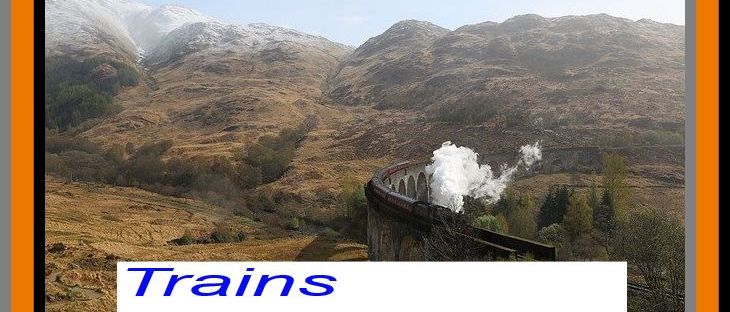
It was a joy to write about trains for Chandler’s Ford Today this week. It is one of my favourite inventions. I share how it has affected my writing (in terms of how I use a train journey and writing events I get to) and share some links to some great places to visit connected with the train. All of this just ahead of my going to the Bridge House Publishing celebration event tomorrow. Naturally I’m travelling by train!

Yes, I did have a train set as a kid, shared with my sister, but you can’t beat going on the real thing and I’ve loved trips on the Fort William to Mallaig line (think Harry Potter) and the Watercress Line amongst others. (The latter has a Permanent Way sign on one of their engineering sheds as a tribute to Terry Pratchett. They also have an old advert for Nosegay tobacco – make of that what you will – see the post for the picture proving it!).

One thing I didn’t mention in the post was I love stories connected to trains too. I’ve always loved Agatha Christie’s 4.50 from Paddington (a Miss Marple story) – and who could forget Murder on the Orient Express? And I’ll always have fond memories of my book signing at my local railway station. That was good fun. (Many thanks to the Three Rivers Rail Community Partnership for their help there and I’m pleased to advertise their Mulled Wine and Mince Pie event coming up on 13th December. See the post for more).

Oh and my favourite Terry Pratchett story? Very hard to say but I do adore Raising Steam.  Captions over on the CFT post, as always, but I will say a big thank you to the Three Rivers Rail Community Partnership for their poster for their Mulled Wine and Mince Pie event.

This slideshow requires JavaScript.

Had lovely day in Dorset celebrating wedding anniversary with other half and Lady. Plenty of walking and very fresh air! Hope both prove to be inspiring!

Many thanks to all who read my story Staying In on Cafelit earlier this month..it is nice to know it did very well in the number of reads for the period. Things like this are so encouraging.

If there was a wish list for writers I would include:-

1. Encouragement to always come when most needed.

2. Time to somehow magically expand when the writing is going well and you are on a roll.

3. Inspiration to always come when most needed.

4. Always knowing not only have you found the right publisher before submitting work you have sent them the perfect pitch.

5. Never running out of paper, computer consumables, and good ideas!

And below is Lady having a fab time on West Bay beach!

Lady having a good time at West Bay

Lady having a good time at West Bay in Dorset. Image by Allison Symes.

What dates have special meaning for your characters and why? How do they celebrate key events/mark the more sombre ones? Do they live in an environment where commemorations/celebrations are enforced? If so, what led to that and do they toe the line or rebel? What are their reasons?

Questions like these are useful for fleshing out the characters you want to write about but also their setting (which can often be treated as a character in its own right).

In flash fiction, I have to hint at a setting but for standard short stories (1500 words +), there is more room for manoeuvre. I’ve found that the telling details (often only a line or two) are the ones that create the greatest impression of the world you’re trying to convey and so have the biggest impact on a reader.


This slideshow requires JavaScript.

Facebook – From Light to Dark and Back Again

I’m looking forward to the Bridge House Publishing celebration event tomorrow and enjoying hearing fellow writers read their creations. I love being read to – doesn’t happen often enough (though this is where audio books are brilliant).

I’m planning to read some of my flash fiction stories too and this is where my favourite type – the 100 worders – come into their own. Short and with a sting in the tale. What’s not to like?! Looking forward to sharing new material and an old favourite or two.

I hope to write further stories on the train. I usually get a couple drafted, along with blog posts etc.

And one of the best ways of showing someone what flash fiction is simply to read them an example!

This slideshow requires JavaScript.

What do you like your characters to be? I like mine to show spirit, whether or not that stance is justified! I also have a very soft spot for the older hero/heroine.

All of that is fine but I have to watch out I don’t just write characters who are all like that.

It can be a challenge to write about characters I dislike. The even bigger challenge is ensuring I do that so a reader would never know!

It can be really satisfying though when a character you don’t particularly like wins you round by the end of the story you’ve put them in.

This slideshow requires JavaScript.

All fiction writers are given the advice to show, not tell in their stories. It’s even more crucial for flash fiction writers to do so. We have to imply so much and leave readers to fill in the gaps (which is just one very good reason why I love reading and writing flash. I’ve always loved filling in the gaps – and yes I was a huge dot to dot fan for much the same reason when I was a kid! I HAVE to fill the gaps in!).

All we can show you is this brief moment in a character’s life and its impact on them. You should be able to see the point of every flash fiction story and why this moment is important to that character. I’m particularly fond of those stories which leave me wondering at the end whether I would have made the same choices as the character. A story that encourages you to think is a very good thing indeed.


This slideshow requires JavaScript.

Fairytales with Bite – A to Z of Fairytale “Rules” – Part 3

O = Obscure Origins. Fairytales love their lead characters to have humble beginnings. Many a hero has sprung from there. So never despite anyone coming from such a background. In the fairytale world, they usually go on to greatness.

P = Poverty. This is often an underlying theme. Look at Cinderella. She was made to live in poverty. The fairytale world generally looks kindly on such and will go out of its way to help. Good news if you are that person. Less good news if you’re the one forcing the character to live like this in the first place. There is a comeuppance in most fairytales and you will face it.

Q = Queens. Don’t always get a good press in the fairytale world. Just ask Snow White’s stepmother. Alternatively, there are those such as Sleeping Beauty’s mother, who struggles for a long time to conceive (there is a whole story there which would resonate), gives birth to the heroine, but is not even named (which I think is a great shame).

R = Royalty in general. There is a right royal mixed bag here. The fairytale world is full of princes who aggravate magical beings (Beauty and the Beast), kings who send their three sons out on missions (and it will always be the youngest one who succeeds), and those who try to prevent a bad spell from ever being activated by burning all the spinning wheels in the kingdom. Nice try that but the king concerned should have guessed it only needed one to escape that particular edict and for story purposes that was bound to happen, wasn’t it? Even kings are bound by the rules of story in the fairytale world.

S = Story. There has to be a beginning, a middle and, a lot of the time, a happy ending though The Little Mermaid and The Little Match Girl are notable exceptions to the latter. But it is also true in the fairytale world that the hero/heroine will overcome all obstacles in their way, sometimes with magical assistance. The story is usually a test of character for that hero/heroine and they have to pass it.

T = Time. Most fairytale stories play out over a relatively short period of time (Sleeping Beauty notwithstanding!). What always begs the question for me is why did Cinderella’s fairy godmother turn up so late to help her goddaughter, who clearly needed help much sooner?!

Final section next time.

This slideshow requires JavaScript.

This World and Others – Visiting Fictional Worlds

A recent question which came up on my Goodreads page was which fictional worlds would you visit if you could and why? Well, my choice was Middle Earth from The Lord of the Rings, as I’ve always loved its portrayal and the films just confirmed what I had already imagined this glorious place would be like. I also liked the hobbit holes and fancy one myself as they look lovely and cosy. Mind you, I’m under 5′ tall so I would probably fit in quite well! I must admit though I’d happily give Mordor a miss.

My second choice would be Narnia from The Chronicles of Narnia, though I would ensure I wrapped up well (see The Lion, the Witch, and the Wardrobe for why!). I wouldn’t mind visiting Harry Potter’s Hogwarts either. I like the look of the school grounds! (And to tie in beautifully for this week, I would love to get to Hogwarts on their train!).

So where would you go if you could and why?

This slideshow requires JavaScript.


Progress, Success, and How to Judge Them

Image Credit:  Unless otherwise stated, all images are from Pixabay.

Facebook – General – and Chandler’s Ford Today

My CFT post this week (Progress and Success and How to JudgeThem) was inspired by thoughts on what makes a writer successful. Is it having multiple books out? Is it having a movie option on your book (which would rule most of us out!)?

So I thought I’d look at what I think would count as progress and success. The trouble with both of these things is they can be hard to measure. This is where science has the advantage – it is much easier to define progress and success there. Note I say easier. It’s not the same thing as easy though!

I also look at this topic particularly from a writer’s viewpoint and share why I think there can’t be a one size fits all for writers. I also share what I think would be progress and success for humanity. Very much one of those “if only” thoughts…

Captions as ever over on CFT.


This slideshow requires JavaScript.

Enjoying the latest series of Tom Wrigglesworth’s Hang-ups (Radio 4). Great characterisation and dialogue.

My CFT post this week is about progress and success and how to judge them. Link up tomorrow. I’ll also be on the ACW More Than Writers’ blog tomorrow with a piece about history in stories. (I’m looking at this from a character history viewpoint and working out what you leave out of the actual story). I’ll put the link up for that tomorrow as well.

Happily writing further flash fiction stories. I often write these a batch at a time. I hope to edit my short story for a competition this weekend too. Making good progress on the novel though I know I won’t be submitting it anywhere this side of Christmas. Hope to get it submitted sometime during January though.

Also want to get a few blogs drafted in advance at some point to try and be more “efficient”! Scheduling posts is a great idea and I need to do this more often. No – tonight’s one wasn’t an advance one!


A big thanks to all who reacted and/or commented on my lighthearted post about the signs of being a “proper” writer (which I’ll repeat here shortly). I love writing fun posts like that.

Of course the real answer to being a “proper” writer is that if you write regularly, you are a proper writer and that’s it. By regularly, I would define that as being committed to writing no matter what, whether you write for several hours a week or can only manage 15 minutes every other day etc. If you can’t imagine your life without writing in it somewhere, that’s a pretty good sign too!

I’ll be talking about progress and success and how to judge them in my Chandler’s Ford Today post this week. Link up on Friday. I’ll be taking a look at this topic as it applies to writers too.


This slideshow requires JavaScript.

I think this lighthearted post is worth repeating. Many thanks to all for the reactions and comments to it. Much appreciated.

How do you know if you’re a “proper” writer?

1. You scorn the very idea you have too many notebooks.
2. You develop a thing for collecting nice pens too, some of which you will actually use.
3. You dread power cuts as they always seem to happen in the middle of a writing session.
4. You have the great joy of having a number of books written by friends on your shelves.
5. You are even more thrilled when your works are on the same shelves!
6. You can’t wait to tell everyone your latest publication news.
7. You open the latest copy of Writing Magazine and look for people you know in the letters page and the Subscribers’ sections in particular.
8. You feel a little miffed when you come across an issue when there isn’t someone you know in it. (It’s a kind of something’s not quite right with the world feeling).
9. Launches, especially online ones, are a regular part of your life and you love them all.
10. Your TBR and TBW piles never diminish but that’s the way you like them.
11. There is no such thing as having too many books. What you CAN have is not enough shelving.
12. You just feel SO at home in book shops and libraries.

Okay, guilty as charged on all those. How about you?

This slideshow requires JavaScript.

Facebook – From Light to Dark and Back Again

Time for a flash story to end the working week with. Hope you enjoy.

The End of the World

He was going to miss the end of the world. He was late. Of all the days this could happen, it had to be this one.

It was all over the media – the world would end at midnight on Wednesday, 3rd June.

It never occurred to him to ask about the oh-so convenient timing and how could anyone be sure of the exact date anyway when, even in the Bible, there were warnings against those predicting such things.

All he knew was he had to get to a good vantage point to witness first hand the last moments of the world.

It was a pity really. On the way to the top of St. Giles’ Hill in Winchester, he was run over by a bus that was also running late.

They put the time of his death as midnight, Wednesday June 3rd.

Ends

Allison Symes – 29th November 2019

This slideshow requires JavaScript.

Drafted a couple of flash fiction stories yesterday based on a couple of phrases conjured up thanks to a random phrase generator.

It also occurred to me that a random letter generator could also be useful. You can use an electronic one or pick a letter at random from a Scrabble set. Some thoughts here:-

1. Take one letter and write a story where the opening word of every sentence starts with that letter. For example, M – Mary had no regrets about her life of crime. Misuse of a library book WAS a crime. Mind you, the miserable little wotsit behind the offence wasn’t going to be bothering her and the rest of the library staff for some time. Mary wondered how long it would take for the idiot to get out of the handcuffs and locked room down in the basement.

2. Take one letter and use it for every word in a sentence. For example the letter D – Daft duck drives dumpers daily! (Could have great fun generating some nonsense but this could be a useful way into a writing session or a way from winding down from an intensive time at the old desk).

3. Take one letter and use it for the opening and closing word of a sentence. (Could be a challenge though if you get the Q!). (Example: Queenie happily chomps quiches!).

Have fun!

This slideshow requires JavaScript.

Flash fiction is a great vehicle for telling a story from an alternative viewpoint. As you know, I am very fond of fairytales told from said alternative viewpoint, not least because my first story in print, A Helping Hand, was precisely that type of story. (It’s the Cinderella story as seen through the eyes of the younger stepsister and can be found in Bridge House Publishing’s Alternative Renditions anthology). (Link takes you to my Amazon Author Central page where you can find Alternative Renditions).

I find these stories huge fun to write (and indeed to read) but the sharp focus of flash fiction I think makes them work even better. It forces you to focus on what is really important for that alternative viewpoint to get across.

It’s not enough for say Character C to rant about how Character A got all the breaks. What an alternative viewpoint story should show is why Character C deserved to do as well if not better than Character A. It’s then up to the reader to decide whether the character has a point or not!

Association of Christian Writers – More than Writers – History In Stories

It’s that time again – time for my monthly blog spot for the Association of Christian Writers. I look at history in stories from the viewpoint of character histories. What do you need to know about your characters before you write their stories? What do you need to know but don’t need to put in the story itself? Hope you enjoy. Captions over on the More Than Writers blog.

Fairytales With Bite – A to Z of Fairytale “Rules” – Part 2

G = Generosity. You can guarantee those characters who are generous in heart, especially to those less fortunate than themselves, will do well in the fairytale world. Fairy godmothers will be falling over themselves to assist! So be generous!

H = Honesty. What is the point of lying to a magical being? They’re going to know. Honest characters do well. What I loved about Puss in Boots was the master knew full well the cat was far smarter than he was. Good man. Credit where it is due and all that. Again, be honest.

I = Integrity. There is a definite theme developing here and that’s not coincidental. Again, those characters with integrity such as Beauty from Beauty and the Beast prosper. The fairytale world knows what it likes and rightly sticks to those things. So keep hold of your integrity. In the fairytale world at least it makes all the difference. (It ought to here as well but that’s another matter).

J = Judgement. The fairytale world has a strong sense of what’s right and wrong and will ensure justice is done. Beast from Beauty and the Beast was punished for his arrogance and had to learn humility and to win true love before being set free from his curse. Evil does not prevail here (though it doesn’t necessarily mean there are sugar sweet happy endings to every story. Just look at Hans Christen Andersen’s The Little Mermaid). Judgement is always proportional too.

K = Kindness. It pays to be kind to people in the fairytale world. So many of the wizened old people turn out to be wizards or fairy godmothers in disguise! So be kind…

L = Love. As well as the romantic love, the fairytale world celebrates love. Take the story of Hansel and Gretel as one example. I also loved Bella’s love of books in the Disney version of Beauty and the Beast. I guess I would! It could be argued that magic and love power the fairytale world.

M = Mayhem. This is common in the fairytales until a magical being comes along to put things right. My favourite example is the mayhem caused in the Emperor’s New Clothes by a child shouting out the truth! (You’ve almost got to admire the rip-off merchants who “stung” the Emperor and made him look like an idiot). Always look for the one causing mayhem in a fairytale. They’re the ones to avoid.

N = Names. Names are important and have meaning, as Rumpelstiltskin would be the first to testify. The important thing for a fairytale character is to keep their good name.

More next time…

This slideshow requires JavaScript.

This World and Others – Top to Bottom

When you set out to create your fictional world, what do you focus on? How it is governed (the top) or how the practical stuff is done (the bottom)? Is there a class system? Can characters better themselves or are they expected to stay within their allocated class? Now you can guarantee that just asks for someone to rebel so how do they do so and what do they achieve?

By having a good idea of how your world works, you will write it with a conviction that comes through to a reader so it plans to to deduce what it is you need to know first.

Good luck!

This slideshow requires JavaScript.


Why I Love History

Image Credit:  

Unless otherwise stated, images are from the marvellous Pixabay.

Facebook – General – and Chandler’s Ford Today

Just sometimes I write a CFT post where I have to stick to a very strict word count limit. I could go on at length about Why I Love History but that is precisely why I shouldn’t!

I’ve forgotten who it was who apologised to a friend for sending a long letter as they hadn’t the time to write a short one, but I know what they mean. (Whoever it was behind this comment would surely have made a great flash fiction writer – or at least had an appreciation for it!).

Captions over on the CFT site.

This slideshow requires JavaScript.

This is one of those posts where I HAD to set a strict word count limit. Too easy to go on at length on Why I Love History. I take a look at how history gets everywhere, I discuss the importance of remembering, and how fiction writers use history. (Just to name one example, there will be the histories of our characters that we need to know to be able to write about them, though most of this will not end up in the stories themselves). I also look at the joy of local history. Hope you enjoy.

You found more in this amazing stained glass window the more you looked at it

The more you looked at this amazing stained glass window, the more you saw in it. Image by Allison Symes and taken at Tewkesbury.  History also gives you plenty of places to visit!

Why do you write? I write because I have to and that’s it. I aim to be published as often as possible yet know there will be plenty of rejections to cope with too. The former is a joy when it happens, the latter is a pain, but that is the writing lot, which is fine by me. Ups and downs are part of normal life, so they’re going to happen in the writing life too. It’s working out how you handle them that’s important.

I just cannot imagine (literally!) not writing. It is my way of playing with words. I was (and still am) useless at art but words are my way of being creative. I think everyone has some creative instinct in them somewhere. It’s a question of finding what is right for you.

I love the challenge of creating new posts for Chandler’s Ford Today, short stories, and flash fiction. Particularly for the latter, the challenge is to keep on coming up with interesting characters that will grip a reader (and said characters have got to start by gripping me first!).

Writing is a great way to keep the brain very active!

This slideshow requires JavaScript.

Glad to report Nativity is now showing on my Goodreads page. Many thanks to the folks there for sorting that out for me.

I have had the joy of being published in other Cafelit titles though some of those stories made it into From Light to Dark and Back Again and naturally I’m going to focus on publicising that which is why is has a prominent place here!

Glad that I’m finally getting a grip on things like my Goodreads and Amazon pages though. It is easy to overlook things like that. (Also nice to find I’ve now had work in 12 books, including FLTDBA though there is one book missing from my Amazon page. I had a piece in The Shamblelurkers Return, a charity book edited by #MaritMeredith, many moons ago, which does show up on Amazon but is unavailable. It was good fun to take part in though! Many thanks, Marit!).

Nativity by Bridge House Publishing is a great example of several authors working to the same theme but taking many different takes on it. If you needed confirmation all authors have their own unique voice, anthologies like this prove it. I concede though it can take a while to work out what your voice is! I know it took me some time to do so. I think you know you’ve found what your voice is when you write in a certain way and know that IS the way for you to do it. When you can only write the way you do…

That doesn’t let you off the hard graft of editing and polishing your stories and articles to give them the best chance “out there” though. Knowing what your voice is and using it is just the start! But a reader should be able to read several pieces of yours and hear your voice through the way you present your characters etc.


Facebook – From Light to Dark and Back Again

I don’t often use adverbs in flash fiction. They don’t give me enough of an impact to justify their inclusion. For example, what makes the most impact out of these two sentences?

1. She ran quickly.

2. She ran as if the hounds of hell were after her.

Sure, the first one is economical in terms of word count but to me it is meaningless. When you run, you usually do it as quickly as you can for a start!

The second one, while longer, is much more promising. It conjures up much stronger images and I would definitely use this one. If I needed to reduce a word count down to say 100 words and this phrase took me over it, I would be looking to make cuts elsewhere in the text OR submit the piece to a competition with a higher word count limit.

Impact on the reader is by far the most important consideration when working out what to leave IN a story.

This slideshow requires JavaScript.

Top tips I’ve found useful for writing flash fiction include the following:-

1. Keep the pace taut. (Short sentences and paragraphs work wonders here).

2. Stick to one major character if your flash fiction story is sub-500 words. The idea of flash is to focus and limiting how many characters you have in your story helps enormously with that focus. The character themselves can refer to other characters – I use this technique a lot to show what my lead thinks of the others who are “off stage”. That in turn shows up what this character’s attitude is and as the story goes on, the reader should find out whether the character is justified or not in their stance.

3. Vary how you create your flash stories. I sometimes start with the closing line and work backwards to get to the start. Mixing up your methods here keeps things fresh and interesting for you and I believe some of that filters through to a reader.

Have fun!


Quick bargain alert: From Light to Dark and Back Again is on offer at Amazon. Paperback and Kindle versions are at the same price. If you know someone who likes quirky fiction… 😊

One of the things I would love to become true, if it isn’t already, is that flash fiction helps reluctant readers overcome that reluctance to read. After all, none of us started off by reading War and Peace, did we? Oh… that was just me not doing so then…😀😉

Children are encouraged to read and with the wonderful world of children’s literature out there, they have such fantastic choices. “Grown ups” (the jury’s out on me!) also have fantastic selections but I’ve heard people say at book fairs etc that they “don’t read”. That strikes me as being incredibly sad. They are missing out on so much.

But what can we as authors do to encourage people NOT to stop reading much later on in life? To see reading as every bit a valid form of entertainment as TV, cinema etc? Thoughts welcome…

FromLightToDark_medium-2

Image from Chapeltown Books

Allison Symes and published works

Image taken by Adrian Symes

SG PART 2 - Warning - poems, blogs, stories, novels, all writing alike benefits from good editing - image via Pixabay

Warning: Writer at Work. Pixabay

Ideas, the spark for writing competitions, image via Pixabay

Read widely to inspire these. Pixabay

FromLightToDark_back_medium


Fairytales with Bite – A to Z of Fairytale “Rules” Part 1

This is what I think fairytale rules might consist of – see what you think.

A = Always Believe. The lead character usually has to!

B = Be Humble.  Characters who are not tend to get their comeuppance.

C = Charity Welcomed. Think of the characters who have been kind to little old men/women who then turn out to be powerful wizard or fairy godmother in disguise.

D = Deserving. Characters who are considered to be deserving of assistance get it – Cinderella is the classic example of this for me.

E = Energy.  The best fairytales are full of energy and zip along. There is not one dull moment, something all writers need to aspire to with their own work.

F = Fairy Godmothers. These turn up when needed. They always turn up to characters who aren’t expecting them. There has to be a rulebook about this somewhere…

More next time…

This slideshow requires JavaScript.

This World and Others – Setting Your Sights

When coming up with your characters, how much of the world you’ve put them in are you going to show to your readers? How much do readers need to know? How much do you need to know that never makes it on to the page but which is crucial for you to create your characters and their setting with conviction?

You need to decide whether it is best to set your sights on a tight focus – i.e.  you show your characters living in one specific town, say. Or would your story be better served showing the complete world in which your characters live and the contrasts between areas in that world?

Only you can answer that one but it pays to set your sights as early on as possible and then focus on whichever route you’ve decided to go. If your story world has a major affect on how your characters act and react, then you probably do need to show the reader as much of that as possible so they understand why.

This slideshow requires JavaScript.


When Authors Talk and Publication News

Image Credits:

The photos of the author event at the Hiltonbury Farmhouse were taken by me, Allison Symes. Many thanks to Antony M Brown (Cold Case Juries series) and Richard Hardie (Temporal Detective Agency) for supplying other photos, especially their book covers. The other images are from those fantastic people at Pixabay.

Facebook – General – and Chandler’s Ford Today

This week’s CFT post When Authors Talk is a look back at an author event held by YA author Richard Hardie (Temporal Detective Agency) and Antony Brown (Cold Case Juries series) recently.

Both authors talked about how they got into writing (and in Richard’s case publishing too) and the ups and downs of the writing life.

I also look at the benefits of author events like this from the viewpoint of a reader. Hope you enjoy. (And do support author events!).

The joy of author events, from a writer’s viewpoint, is they give us a chance to engage with readers (actual and potential). From a reader’s viewpoint, you can quiz the author about what inspired them and find out their latest news. So do support author events you know of (the support is always appreciated).

My favourite remains, I think, the signing at my local railway station. It was a great venue, I hope to do it again at some point, and flash fiction is great to demonstrate to curious passengers! It also doesn’t take up too much time (which is one of its selling points to the reluctant reader).

My next event should be the Bridge House celebration event in December, all being well. It’s a great opportunity to catch up with writer friends I don’t see the rest of the year too.

This slideshow requires JavaScript.

When you go to author events, what do you like best about them?

For me, it’s always hearing how the writer concerned got the “itch” to write in the first place and how they kept going despite all the rejections etc that happen. I’ll be reporting on the joint author event held by Richard Hardie and Antony Browne tomorrow for Chandler’s Ford Today. I’ll also be looking at what readers can get out of events like this. It is very much a two-way thing.

I loved the old James Garner films Support Your Local Gunfighter and Support Your Local Sheriff. There ought to be something for Support Your Local Writer!😀

This slideshow requires JavaScript.

Had a lovely evening at a local author event held by YA writer, Richard Hardie, and Cold Case Jury writer, Antony M Browne at the Hiltonbury Farmhouse yesterday. Write up to follow for CFT later in the week including why author events are important for the READER as well as the writer.

Publication News

It’s a nice feeling to get to Wednesday and to already have had publication news with the “advent” of Nativity by Bridge House Publishing yesterday. I make no apology for the pun. (Am shameless like that but that’s what being a fan of I’m Sorry I Haven’t a Clue can do for you).

Nativity Full

Am catching up with some fantastic reading on my Kindle. Hope to post some reviews soon.

It’s also nice to get to the stage where Writing Magazine hits the doormat and the first thing I check is if there is anyone I know in there! Usually there is…

Facebook – From Light to Dark and Back Again

Some ways to trigger ideas:-

1. Random generators – I’ve used random word, phrase, and even number ones to trigger ideas. It also pays to mix up the parameters you set for these things too.

2. Play the What If game. Ask that question of potential characters. Think about the setting and play What If on that. Can the setting have an effect on what your character can and cannot do? Are there stories there about how your character overcomes this?

3. Think attitude. What kind of attitude does your lead character have and how does that land them in it? What do they do to overcome the issues that throws up?

4. Is your character a rebel or a conformist? If the former what are they rebelling against? (That can be anything from a corrupt power to expectations they or their famiies have). If a conformist, what has led them to take that view? Is it a case of fear for their own safety to be otherwise? Look at the story behind that fear.

Have fun!

This slideshow requires JavaScript.

I received a lovely message from FB that the FLTDBA page is now up to 50 followers. A big thank you to everybody (and to all who follow this blog!). Just for that, I think the appropriate response is a flash fiction story for you! Hope you enjoy.

JUST A MINUTE

The big mistakes don’t take long to make.
Stranbarb chose the wrong shortcut in no time and faced a witch.
Her glower told him his life could be measured in seconds. Her wand was raised and she looked as if she wanted blood. It didn’t matter whose.
‘Dwarf, why are you here?’ She paused. ‘Did you see two children go by?’
‘I got lost. No.’ The dwarf looked at the confectionery cottage behind the witch. Understanding dawned. He’d just stopped her having dinner.
He looked at her again. She was smiling. She’d already selected an alternative main course.

Ends.
Allison Symes – 14th November 2019

SEASONS IN WRITING - But setting your own deadline can be helpful for writing competitions

One thing flash fiction is brilliant for is that it is so easy to demonstrate what it is at signings etc. Nor does it take long! (Mind you, I make a point of sticking to ONLY reading out a couple of my 100 word stories. The longer ones in the flash word count range can be saved for when people read the book!).

I was asked at a local author event I went to yesterday if I used adverbs. Generally I don’t. It’s an easy save on the word count. The exception is if I think the use of an adverb adds something to the characterisation or the plot of the story. That doesn’t happen often.

For example:-

The witch wickedly put the kids in the oven.

You really don’t need the wickedly for that, do you? I think wickedness is definitely implied by the action!

BUT:-

The kids put the witch in the oven forcefully.

It makes more sense to use forcefully here (though I would say forcefully can still be implied. Well, you’re not going to put a witch in an oven gently now, are you?). I would prefer to write a sentence like this as:-

The kids shoved the witch in the oven.

You’ve got all the force you need in the word “shoved” and you save a word on the old word count. Those saved words mount up over the course of a story which in turn can make all the difference to which competitions/markets you can use. (Paragraph Planet, for example, is 75 words INCLUDING title so for something like that you are really looking to pare things back).

Oh and no kids or witches were harmed in the making of this post.😀


This slideshow requires JavaScript.

Fairytales With Bite – Adverts

Okay so adverts get everywhere so why not in the magical realm? How about some slogans then?

The porridge so good thieving girls will love it – won’t commend itself to the Three Bears but Goldilocks might go for it.

For comfortable shoes, don’t go to the fairy godmother, come to us – Cinderella would concur with this one.

Need a long sleep? Be sure to get a comfortable mattress! – One for Sleeping Beauty. Possibly Snow White too.

Looking for the perfect apple? Don’t go to the old crone, come to us. Definitely one for Snow White.

Worried about your looks? Come to us at Swan Beauty. One for The Ugly Duckling.

Hope you enjoy!

This slideshow requires JavaScript.

This World and Others – Working Out Your Characters

I’ve mentioned before that I start by working out what my characters’ major traits are and, from there, what kind of scrapes said traits are likely to get them into! If a character is stubborn, you can have a lot of fun with that. But with most traits there is a flip side to that. Stubborness can also mean grit and determination and courage to keep going when nobody else will. How can you use that aspect in your stories? That’s only naming one trait too.

Another way in to knowing your character(s) is to interview them. Work out what their tastes would be and why.  You can also ask yourself why you want to write about these characters. Why are they special enough to be written up into a story? If they’re not special enough, then why even consider putting them into a tale? The first person that has to be convinced by your characteristion is you!
This slideshow requires JavaScript.


Favourite Adverts

Image Credit:  

Unless otherwise stated, all images are from the magnificent Pixabay.

Facebook – General – and Chandler’s Ford Today

I look at advertising in this week’s Chandler’s Ford Today post. I also look at the topic of writers and advertising. Naturally I get in a little bit for The Best of Cafelit 8! Well, you’ve got to practice what you preach, right?

perf5.500x8.500.indd

And some more advertising right here! Many thanks to Gill James for the cover image.

Also, if you remember the 1970s and 80s well, there’s a quiz here which may well suit you! Have fun. (I’ll be putting the answers up to said quiz in the comments box early next week to give people a chance over the weekend to see how many they can remember).

I also discuss how advertising has benefited me – yes, really!

This slideshow requires JavaScript.

I’ve got some slogans and products for you to identify as my quiz within my CFT post on Favourite Adverts this week. I look at how adverts have benefited me too (they were my way into classical music for one thing).

Branding etc is a topic very much on my mind as I continue to revamp my website so I thought I’d write about a closely related topic!

I’ve found the postcards of my book cover (From Light to Dark and Back Again) have proved effective, as have the pens. I guess you can always use a postcard and a pen when all is said and done! (The postcard can double up as a bookmark too).

I’m generally not impressed by “flamboyant” advertising. For me the ones that work best are simple, often humorous, and to the point.

The lesson about not going on for too long and refusing to over-complicate things is a good one for writers too.

This slideshow requires JavaScript.

My CFT post this week is called Favourite Adverts. I share some of mine and also look at advertising for writers. I will be sharing some thoughts on what can work for writers and how important it is not come across as too pushy. It puts people off! There will also be a kudos only quiz! Link up on Friday.

Talking of advertising for writers, there will another CFT post prepared by me which will go up tomorrow advertising a joint local author talk.

#RichardHardie YA author of Temporal Detective Agency fame and Antony M Brown of Cold Case Jury fame will be in the Hiltonbury Farmhouse next Tuesday from 7.30 pm. They’ll discuss how they became authors and hold signing sessions. Do get along if you can.

I don’t need an excuse to visit a pub but finally I seem to have one! Thanks, guys.

Author signing and talk at Hiltonbury Farmhouse

Poster kindly supplied by Richard Hardie

Facebook – From Light to Dark and Back Again

My CFT post on Favourite Adverts this week of course made me think about advertising for writers.

Good copywriting makes flash fiction look “wordy” given the best adverts keep their slogans simple and to the point. The trick for writers is to do exactly that for our one line pitches/tag lines. The old question of can you sum up your story/book in one line is a good one.

Thought for My Day

Write some one liners down that sum up a story or book you love which is written by another author.

Then do this for your own work.

Then simplify!

(Never go with the first efforts here. You will know when you’ve got your one liner right – it will be when you really cannot change anything and it flows and it sounds so good to YOU that you’d read the work if someone else had written it. That’s a good test by the way – ask yourself, would you?).

I was pleased to find the picture from Pixabay that I’ve used for this week’s Feature Image. It kind of says it all for writers. What is our brand? How do we come across when engaging with readers, potential or actual? All of that should feed into the brand we present to the public. But it should be genuine (people spot fakes) and it should be fun for YOU. You’re the one living with this after all! You’re the one who needs to keep it going for future books and stories.

Writers need to think about their brand too

Well, what is your brand? Pixabay

Always glad to advertise these people

Always pleased to advertise Pixabay!

What are the things you most like about your characters?

What are the things you most dislike about your characters?

Even in flash fiction, I have a rough idea of the answers to these for my lead “actor”. I find I have to have something to like AND dislike about them. It reassures me that this character is “real” enough to be liked and disliked. Well they’re real enough to me anyway. The first reader you have to convince IS you!

Besides nobody’s perfect. Our characters shouldn’t be either. Nobody wants to read about perfect characters even if somehow they did exist. It’s how flawed creations overcome their difficulties (or not) that fascinates readers. I can’t see that changing at any time soon!

Flash fiction, like any good story, needs a beginning, a middle, and an end. The only difference is those three key ingredients are so much closer together! I often find with my very short stories (sub 100 words) that one line is the middle and acts as the pivot point of the whole tale.

I occasionally start with the pivot point and then work out how my character got to it. I then work out in which directions the pivot point could take them and go with the one I like best. But I do find it hard to start with a middle point. (There are competitions which give you a middle line you have to incorporate into the story).

My preferred way of starting a story is with a strong character whom I’ve just dumped right in it, (I’m a sweetie, really, just not to my characters!), and then go from there. It’s a really fun way to start! But however you start a story, it helps a lot if you know where you want your character to be at the end of it. It helps keep you on track.

This slideshow requires JavaScript.

Fairytales With Bite – Fairytale Advertising

Linking in with my theme for tonight, what would or should be the advertising slogans for some of our favourite fairytale characters?  Hmm…

Cinderella – Comfortable Classic Shoes Always or

Cinderella – Troubled by rats? Worry no more!

Sleeping Beauty – You can’t beat a good cocoa to send you to the Land of Nod or

Sleeping Beauty – Needles giving you the needle? Worry no more!

Rapunzel – Never let your hair get too long or

Rapunzel – Life too short for washing your hair? Worry no more!

Snow White – Additives in my Apples? Never!

Thumberlina – See what the high-heeled look has done for me.

Tom Thumb – If I can get a suit to fit, so can anyone.

The Ugly Duckling – Feel good about yourself, look good!

I love inventing this kind of thing, as you can probably tell. Hope you enjoy. Several of my stories in From Light to Dark and Back Again play on nursery rhyme/fairytale themes and characters though the example given in the trailer below is my nod to Frankenstein.

This World and Others – Likes and Dislikes

As well as working out what your characters like and dislike (so you get to know them ahead of writing the story), what is it about the world you’ve set them in that you like and dislike? No world is perfect. What are the flaws of your creation? How do your characters cope with or overcome those flaws?

Why have you put those flaws in? If a character has to go on a quest and hates water, having your world mainly as a seafaring one, with all that implies, gives said character a lot to overcome before they even start on their quest. They will know that they’ve got to go by boat at some point so how do they prepare for that? What makes them do it when the more sensible thing would be to stay at home? (I know, I know, no story then but your character does have to be driven enough to overcome their fears. And having to face fears as well as carry out the quest makes for a very powerful story when well done).


Competitions and Revamped Website

Image Credits:

1.  A huge thank you to Stuart Wineberg and The Chameleon Theatre Group for kind permission to use their photos for my CFT post. As ever, captions for the photos appear on the CFT post.

2.  Unless stated otherwise, the rest of the images come from the marvellous Pixabay as usual.

Facebook – General – and Chandler’s Ford Today

My CFT post this week is a review of the latest Chameleon Theatre Company – Chandlers Ford production My Husband’s Nuts.

I discuss farce (well, with a title like that, this wasn’t going to be a serious documentary now, was it?!) and what it is meant to do.

I also research the background of plays etc that I review. Putting this title into a search engine produced some interesting results, including a link with candied almonds! See the post for more.

Also a big thanks to the Chameleons who seem to like the review!

Fantastic review of ‘My Husband’s Nuts’ by Allison Symes on Chandler’s Ford Today. Thank you, Allison! :


This slideshow requires JavaScript.


Am revamping my Word Press website (this very one!). Enjoying doing so and looking forward to sharing the results once I’m done. (Mind you, I bet there’ll be something I’ll have forgotten to add and then remember later but hey, that is the way of things!).

My CFT post this week is a review of the latest play put on by the wonderful Chameleon Theatre Group – My Husband’s Nuts. I’ll refrain from further comment other than to say the link will go up on Friday. Fans of serious documentaries may wish to skip this one… titles DO give clues!

Many thanks to all who’ve given great feedback on my latest Cafelit story, Humourless. I will have more work up in November and look forward to sharing that. It’s hard to believe it WILL be November on Friday! I get a sense of how fast the year is going by every time I schedule a CFT post as I have to know the dates!

I do wonder what that blue tit is telling the other one in the first picture below (from Pixabay as ever). Any chance is it’s nagging the other one to get up earlier to give it the best chance of getting the worms, do you think?

Image may contain: bird

I hope it’s a good story the blue tit is relating here! Pixabay

Facebook – From Light to Dark and Back Again

Reviewing is not the easiest thing to get right. You want to give a flavour of whatever it is you’re reviewing without giving away all of the “best bits”. It was good fun going to see The Chameleons’ My Husband’s Nuts and reviewing it this week for Chandler’s Ford Today though.

This play’s title confirms the importance of getting your title right to reflect the mood of your play, story, book etc! You just know this play isn’t going to be a serious documentary.

So how do you decide which title is right for your latest flash fiction story, say? The methods I use include:-

1. I use my titles to reflect the mood of the story.

2. I use my titles to reflect something of the main character.

3. I often keep my titles open so they can be taken in a humorous or other mood (e.g. Time Waits For No Man can be a funny story, could be a very sad one but the title flags up to the reader that the mood of the tale could go either way so that’s fine).

4. I sometimes use a pun as a title.

5. I’ll often use proverbs of famous sayings as titles, again because they can be open to interpretation. What I hope to do here is hook the reader’s curiosity so they want to find out which way the story goes.

If a better idea for a title occurs to me as I’m writing or editing the story, then I switch to that. You do get gut instincts that a title would be better if you went from Title A to Title B and I’ve learned to trust my gut instinct here. It’s rarely wrong.


Aside from writing flash, I, of course, read it, but I also like turning to longer works of fiction and non-fiction as something completely different.

It pays to mix up what you read to keep your reading life interesting AND ideas spark from all over the place so reading widely helps widen the areas where those sparks can originate from! And of course it is so much fun…

(One of my great joys is having books on my shelves at home written by friends. Always lovely to add to my collection there).

What do I look for when reading flash fiction by other authors?

1. I want to be hooked by the character(s).

2. I want to be surprised by the ending. (This does not mean it has to be a twist in the tale funnily enough, though I love those. I want to be able to foresee a good ending for the story and then discover the writer has come up with something better!).

3. I want to half wish I’d writen the story!

Why only half wish? Because I learned a long time ago I’m not in competition with other writers nor are they with me. Why? Because I write in my voice and they write in theirs. They are not the same.

You can take a dozen authors, give them the same word count and title and there will be a dozen different takes and styles.

The Waterloo Art Festival’s ebooks (produced by Bridge House Publishing) have proved that. My entries in To Be…To Become and, for this year, Transforming Being, are very different in style to the other tales. And that’s how it should be. Makes for a wonderful eclectic mix too.

Am revamping my Word Press website as I mentioned on my author page. I am hoping to have a specific flash fiction spot on this. Will share when it’s all ready. There is something creative in doing this though and I am enjoying it. I just feel that possibilities are opening up… (I do hope I’m right there!).

Flash fiction was known as postcard fiction and I can understand why. A story you can fit on the back of a postcard makes sense as a definition. Doesn’t really work for me. My handwriting’s tiny. I could get a three volume trilogy on there!😉😉😃

Flash has also been known as sudden fiction but I’m not keen on that definition. There can be some very poignant pieces written in flash and you’d hardly describe those as “sudden”.

The biggest challenge in flash fiction writing isn’t actually the word count – honestly. It’s coming up with different, interesting characters for each and every story you write. Mind, I love doing that. For me, it’s where the creative juices flow.

Fairytales With Bite – 

How to Tell If Your Fairy Godmother is Out of Warranty

  1.  Her wand keeps misfiring. You will get a lot of pumpkins but think of all the lovely recipes you can use those for!
  2.  Her spells will only last for so long and always expire at midnight. This may well prove not to be convenient but tough. There is nothing she, or you, can do about it.
  3. She proves to have a bit of a thing for changing animals into human characters – rats a speciality – despite knowing such a spell cannot last and it is going to really confuse the animals when they truly become themselves again. What memories will they have for a start?
  4. If she uses a sleeping spell on you, beware! Her alarm clock is stuck to 100 years, not a minute less. Again this may prove to be inconvenient. On the plus side, you’re never going to beat this for a lie-in!
  5. Your fairy godmother, if she is on the ball so to speak, will make herself known to you early in life so her arrival doesn’t come as a huge shock to you later on…  ah… I see you’ve only just met her… ooops.  Good luck. You’ll need it but you probably are in for an entertaining and unforgettable evening. Have fun!

This slideshow requires JavaScript.

This World and Others – Foundations

What are the foundations for your stories and the worlds in which you set them? Mine are:-

  • I’ve got to know the characters really well, especially their major traits. I don’t necessarily need to like them but I do have to know how they are likely to react to events and why and whether anything could throw them.
  • I then visualise the setting in which these characters would fare best, work out why that is, and flesh out details of what the characters would face here. Not every detail will end up in the story but I will put in enough so readers can conjure up images of what the world is likely to be like.
  • I like to get a sense of how the world is governed (as that may well be the direct cause of conflict in my story. Even where it isn’t, I need to know what my characters could expect to face in terms of authorities, how they might interfere with what the characters are doing etc).


This slideshow requires JavaScript.


Meanings

Image Credit:  Unless otherwise stated, the images come from the marvellous Pixabay

Facebook – and Chandler’s Ford Today

For this week’s CFT post, I look at Meanings, how comedy writing depends on there being multiple meanings to get the laughs (particularly true for puns), and discuss how certain radio shows can help you as a writer learn about the use of language. Hope you enjoy.

Feature Image - Meanings

My inspiration for my Chandler’s Ford Today post on Meanings this week comes from going to see My Husband’s Nuts, the latest production from the Chameleon Theatre Group. (Review next week).

I guessed that there would be at least some reference to the various meanings of nuts within the play (you can fill in your own gags here!) and that led me to look at how much comedy writing depends on multiple meanings etc.

Ideas can be funny things at times. All it needs is that initial spark to create a starting point and you go from there. You just need to be open to recognising that initial spark for what it is AND to see that it really is just the beginning.

I’ve found reading and writing more makes it easier to recognise those initial sparks. And ideas do come from all over the place (and not always at convenient times either!) but you get used to that.

I have brainstorming sessions every so often and just write down all the ideas I come up with then. A lot I do go on to use either for story ideas or CFT blog posts and some I discard.

Closer examination, after a break away from that brainstorming session, leads me to critically decide which ideas have the “legs” and which don’t. But coming up with ideas I don’t take further later on is not a waste of time. Far from it. Sometimes I have to add another element into that initial idea and then it has the “legs”. What matters is there ARE ideas I can flesh up and write up. I think there is a certain element of having to think through ideas to get to the nuggets you can do something with.

This slideshow requires JavaScript.

Posting early today as off to see The Chameleon Theatre Group’s latest production, My Husband’s Nuts, later tonight. I make no comment on the title except to say I’ll be reviewing the play and production next week for Chandler’s Ford Today. This week’s post will be all about Meanings. Read into that what you will! 😀😀

I’ll be meeting up with my lovely CFT editor, Janet Williams. Going to the plays has become something of a CFT tradition for both of us. I like to think of it as a kind of works outing! What I do know is this evening should be a lot of fun!

Have put in my order for the Best of Cafelit 8. Looking forward to that postal delivery. You never lose the thrill of being in a book!

Am working on a story for a competition and hope to get that submitted over the weekend. I really don’t miss the old days of having to get everything sent off in the post – email submissions are so much easier.

I’m looking at Meanings for this week’s CFT post. I look a little at how the use of certain English words has changed.

I also discuss how radio shows like Just A Minute and I’m Sorry I Haven’t A Clue, as well as being great fun, are excellent for writers to learn from. This is particularly true for JAM. (If you get the chance, do check out earlier series where grammatical deviation challenges are particularly useful for writers to learn from).

I look at how comedy writing is so dependent on getting the right meaning from the right words to get the laughs. Well, where would puns be without having more than one meaning?

This slideshow requires JavaScript.

Facebook – From Light to Dark and Back Again

Pleased to say I’ll have another flash fiction tale up on Cafelit soon. Will share the link obviously. Very pleased with the look of The Best of Cafelit 8. Receiving parcels with books with your stories in is a great joy. It doesn’t dim!

How do I decide what is a great moment in a character’s life that deserves having a flash fiction tale revealing said moment?

Well firstly that moment has to grip ME. A writer is their own first reader and if you’re not gripped by the characters and situation you’ve put them in, nobody else will be.

Secondly that moment should reveal something interesting to a reader.

That can be anything from the character finally learns a much needed lesson (humour can work well here), the character changes their ways or deals with a conflict and resolves it.

I’m always interested in how characters resolve problems and why they’ve gone the route they have. I think most readers are fascinated by that. It’s why we read to the end if we are gripped by the tale. We have to find out what happens and that urge to find out has been with humanity for centuries. It’s not going anywhere any time soon!

This slideshow requires JavaScript.

Posting early as off to see My Husband’s Nuts, the latest production by The Chameleon Theatre Group, later on. Oh the power of a title!!

I look at Meanings (including how comedy writing depends on words having multiple meanings to get the laughs at all) for this week’s Chandler’s Ford Today post. Link up tomorrow.

I sometimes know the title of a flash fiction story immediately because I’ve come up with something I really want to write something to and so off I go. At other times, the title emerges from the character and the story but at all times I have to have a draft title to get me started. I do need a “peg” like that but once I’ve got one, away I go!

But I’ve learned not to worry about changing the title if a better one comes to me. Only the Ten Commandments were set in stone, folks.

(Oh and have literally just had The Best of Cafelit 8 delivered – at 5 pm on Thursday 24th October. I like getting parcels like that! So naturally that needs a photo!).

This slideshow requires JavaScript.

For someone who writes flash fiction, I can’t say I have that many flashes of inspiration! I don’t usually get an idea out of the blue. What I do hear is a character’s voice and I can detect from that something of what their major traits are likely to be.

Assuming I like the sound of this character (whether they’re hero or villain doesn’t matter – all I need is to see possibilities for them), I ask myself what situations would they hate having to deal with and why. I then dump them in those situations. It’s time for my character to sink or swim then! No shortage of conflict here either (especially internal conflict). And yes, I know, I’m all heart to my characters – NOT!

There’s no point in putting your super duper character in a situation you know they can handle. Where’s the story in that? Give them hell and then some. It will challenge you to work out how your character deals with it and that is where the story is!

Have fun dropping your characters right in it then!

Fairytales With Bite – What I Like in a Fairytale

  • Strong characters (even if they themselves don’t think they are but prove it later)
  • To see wrong being righted (with some help from a fairy godmother and a magic wand. Be prepared for pumpkins to be involved. Just go with it… it’s part of the fairy godmother’s stock in trade).
  • Humour. While the character of Buttons is not in Cinderella to the best of my knowledge, I can understand his addition to the traditional pantomime. If the main character can’t be humorous, for whatever reason, best to get a sidekick to do it then!
  • A good and appropriate ending, usually a happy one though there are exceptions (The Little Mermaid as told by Hans Christen Andersen is a classic example here).


This slideshow requires JavaScript.

This World and Others – Deciding on a Setting

How do you decide what setting is best for your characters?

  • The setting has to meet the character’s needs. If a character is on a quest, where are they likely to meet those who will help them/supply them etc? Also where are they going to and why? What kind of obstacles must they overcome to achieve their objective?
  • The setting has to be appropriate to the characters. You wouldn’t get a mermaid to live in an inner city etc (well she wouldn’t last for long if you did!).
  • What kind of world do you want to create? Have you got a hankering for forests? Then create a world which has plenty of them and think about what kind of characters would live in woodlands? Which characters would hate that? Would there be conflict between the two types (I should think so but good stories always come out of conflict!)?


What Books Mean To Me Part 3

Image Credit:  Unless otherwise stated, all images are from Pixabay. A big thank you to my guests on the Chandler’s Ford Today Series What Books Mean to Me for supplying photos.

Facebook – General – and Chandler’s Ford Today

I’m delighted to share the final, bumper edition of my What Books Mean To Me series for Chandler’s Ford Today. A big thank you to all of fantastic guests for sharing their insights here. It has been a superb series to put together and great fun!

This time Gail Aldwin, Paula Readman, Jim Bates, Wendy H. Jones, Val Penny and yours truly answer the three questions I set.

I asked which ONE book would you save in the event of a disaster, what does reading mean to you, and what do you think reading has done for you as a writer.

As ever, do share your thoughts on the books you’d save over on the CFT page.

A HUGE thank you to all of my guests appearing in the What Books Mean to Me series on Chandler’s Ford Today.

The series was great fun to put together. The wide variety of books chosen to save was amazing (as were the reasons why).

There is plenty to learn from also when my guests discussed what reading had done for them as writers (and of course continues to do).

If you were ever in doubt about the importance of reading for writers, do check this series out. My guests’ comments will leave you in no doubt that the best thing any writer can do to help them improve their craft – read and read widely and read lots. But, hey, don’t just take our word for it. Get on and read and discover how true this is for yourself (and the great thing is you can include reading the posts as part of that!).

Incidentally one of the joys of my CFT posts is choosing a Feature Image (nearly always from those magnificent people at Pixabay). Isn’t the library image for this week’s post just gorgeous?! See the slideshow!

This slideshow requires JavaScript.

W = Welcome into a new world (sometimes it’s this one but seen from a new angle).

R = Real characters you can identify with come to life before your eyes as you read and you root for them all the way to the finish.

I = Imagination. The writer has clearly shared theirs with you. Does your imagination picture the world the writer has created clearly enough? Does the story spark your imagination and maybe inspire you to write your own stories or, even if that is not the case, can you think how the characters might live on after the book is finished? The latter shows the characters really are “live”.

T = Tension. There should be plenty of that, even in the funniest of books. Characters have to strive for something important. Other characters should get in their way for good reasons of their own. No tension/conflict = no story.

I = Intensity. Does the story grip you with its intensity? Do you feel the emotions the characters are being made to feel? (You should. No cardboard cut out characters here, thank you).

N = Narrative should be lively and speed the story along. The information given here should be crucial to your enjoyment of the tale.

G = Genre. Read widely in many! Think how many worlds you can explore through book covers if you do that!

This slideshow requires JavaScript.

Looking forward to sharing Part 3 of What Books Mean to Me on Chandler’s Ford Today later this week. It has been great fun putting this series together and there have been some fabulous insights and books selected to be saved. More to come on Friday!

My guests this week are #GailAldwin, #JimBates, #PaulaCReadman, #WendyHJones, #ValPenny and…. er… Allison Symes. Well I thought I should answer the three questions I set! Never ask other writers questions you’re not prepared to answer yourself!

(And if the series gives you a marvellous Wish List for a certain season due in a couple of months’ time, even better!).

Second image in was taken on my phone at the pub just before the Waterloo Arts Festival in the summer. Here are three happy flash fiction writers – Paula Readman, Gail Aldwin, oh and me.

Many thanks to Wendy Jones and Jim Bates for supplying their pictures. Val Penny and I were having a selfie moment at the Winchester Writers’ Festival earlier this year.

Do check out everyone’s thoughts on what books mean to them on Friday. Meanwhile, there are Parts 1 and 2 to catch up on over at CFT.

This slideshow requires JavaScript.

Facebook – From Light to Dark and Back Again

Glad to say I will be having more stories on Cafelit later this month and into November. Two of them are linked. I’ve experimented with linked flash fiction stories this year and have found these to be good fun. I think the trick, if there is one, to them, is to ensure the link is strong enough and don’t keep it going for too long. Will keep you posted.

Tying in with my post on my author page, here is another acrostic which I hope shares some good tips.

F = Flesh out your character who is going to be the focus of your flash fiction story. Why are they the star of your story? What is special about them? Some of that needs to come through so your reader picks up on their special qualities and will want to read on. (Not necessarily all by the way. Readers won’t need the full biography! Just give the readers what they need to know.).

L = Lively pace. Well nobody wants a dull read, do they?

A = Animated character(s). They’ve got to be the type of people who readers will want to root for and, in the case of villains, are perhaps a little sorry when they lose (assuming they do).

S = Setting(s) to be places readers could picture, even if the setting is a fantastical world beyond any known galaxy. What is there readers can identify with? (That even on Planet QZog, the females of the species have trouble getting their men to put the bins out?).

H = History – character and setting. There won’t be a lot of room in a flash fiction tale of course, so imply what you can when you can. A character’s thoughts can be a useful device here as they consider what action they will take based on the circumstances you’ve put them in. They will decide what to do based on their past experience and also based on any known history of their country etc, as indeed we do.

What do I want my flash fiction to be?

1. Entertaining. (Never despite the value of the escapism value of a book or story. The ability to escape into a good story is invaluable and I’m convinced has health benefits too).
2. To have the impact on a reader I hoped it would, whether it be to make them laugh, scream, or, where appropriate, both.
3. To be something I can be proud of – not just now but years on when I can look back at it and think, yes I loved writing that story/book and I still enjoy reading it.
4. A good character study, even if my character is a rotten piece of work. (Marvellous fun to write up though!).
5. To sometimes, and where appropriate, give a reader (and me) pause for thought.

Fairytales with Bite – What Books Mean to Me

I’ve thoroughly enjoyed interviewing my guests for the Chandler’s Ford Today series for the past three weeks. But linking that into fiction writing, I’ve got to ask what do books mean to your characters? Are your characters set in a world where they can read and books are easily available? Or are their stories preserved in other ways?

When you think about it, we have not had the printed word for that long compared with how long we have had the oral storytelling tradition. I love both “formats” and long may they reign but what would your characters know best? What is their technological equivalent to the Kindle if they have it? What fictional books would they read?

You can also ask that last question as you create your characters. Their choices may well tell you a great deal about them (and do query why the choices are the ones they are. Do they love, as I do, Jane Austen’s Pride and Prejudice because they appreciate irony? How do they express their own irony and is it appreciated? Does it land them in trouble?).

Thoughts to ponder!

This World and Others – Goalposts

When you create a setting for your characters, do you set up goalposts for yourself? What do I mean by that? Simply, do you set limits for the setting that you absolutely have to know about before you write?

For example, you may decide you need to know the history of the town your lead character lives in but not of the neighbouring villages. There’s one limit set (one goalpost if you like that you won’t cross!).

Look at what you decide you need to know and examine why you need that. You should have no problems justifying those choices. What does pay is if thoughts occur to you about your setting that do not appear to be relevant, do jot them down anyway. You may find they come in useful later on in the story draft.

This slideshow requires JavaScript.