Triggering Writing Ideas

SOA_Member_rgb

Image Credits:-
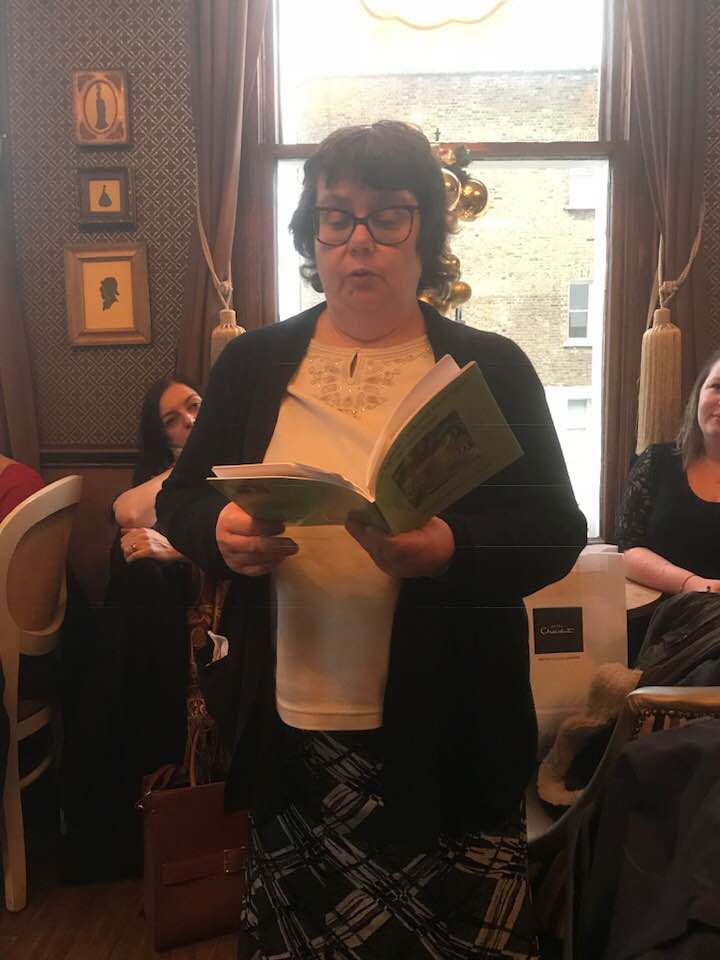
All images from Pixabay/Pexels unless otherwise stated with many created in Book Brush. Book cover images from Chapeltown Books and Bridge House Publishing. Screenshots taken by me, Allison Symes. Many thanks to Julia Pattison for taking the image of me at an editing workshop for The Writers’ Summer School, Swanwick.
Hope you have had a good week. Lady has got to play with pals, get a soaking with yours truly, play with pals again, get another soaking – yes, one of those weeks. Pleased to say the editing workshop for the lovely people at Medway Mermaids went very well. Always enjoy running these workshops and it is good to know they are useful.

BookBrushImage-2023-11-17-19-641

Facebook – General and Chandler’s Ford Today

Post 2 of 2 from me tonight. Post 1 below. It’s a fact of life you can have days where there is lots going on and other days where there is nothing! Having said that, it is always fabulous to have plenty of news and posts to share.

Am pleased to share Triggering Writing Ideas for Chandler’s Ford Today this week. It’s proved to be an apt topic given I talk on Gill James’ blog this week (see below for more) about how I took her theme of gifted for the Bridge House Publishing anthology of the same name and used it for my story in there. An idea was definitely triggered by someone else setting the theme. (This is another advantage to taking part in Flash NANO too).

Hope you enjoy the CFT post and find it useful.

Triggering Writing Ideas

This slideshow requires JavaScript.


Bonus Post

Post 1 of 2 from me tonight. Many thanks to Gill James for hosting me on her blog to talk about my contribution, Desperately Seeking Talent, in the Bridge House Publishing anthology, Gifted, which is out and would make a great present for someone. Find out what I love about the short story form as well and why I took the theme of gifted the way I did with my tale. Link to blog here.

Screenshot 2023-11-17 at 10-06-01 Allison Symes talks to me today about her involvement in our Gifted anthology

My sport of choice is swimming. I go regularly and you get to spot other regulars there and start chatting usually as you come out of the pool. (One good thing about it being cold today was it did encourage me to get something of a move on in said pool!). Anyway, one of those regulars complimented me about being consistent and disciplined about my swimming. I find I have to be otherwise it would be too easy not to go, especially during the winter months.

But it occurred to me the need to be consistent is a good thing for writers too. It doesn’t matter what your routine is – writing daily, writing every other day or what have you. It is the regular turning up at your desk to get on and write which matters. It is the regularity of writing which will build up your stories, novels etc. I’ve found this to be the case and know I have submitted far more pieces than I might otherwise have done simply by being consistent. It’s an underrated quality I think.

And if you want some inspiration, I’ll be talking about Triggering Writing Ideas for Chandler’s Ford Today this week. Link up tomorrow. See above.


Hope you have had a good day. Lady got to play with her Rhodesian Ridgeback pal. Great run around by both of them and a massive zoomies session to finish with. Lady came over and “flumped” down in front of me as if to say, ‘Mum, I’m done!’. Takes a lot to do that to a collie!

I’ll be looking at Triggering Writing Ideas for Chandler’s Ford Today on Friday. I’ll be looking at some of the methods I use here and hope the post will prove to be useful. See above.

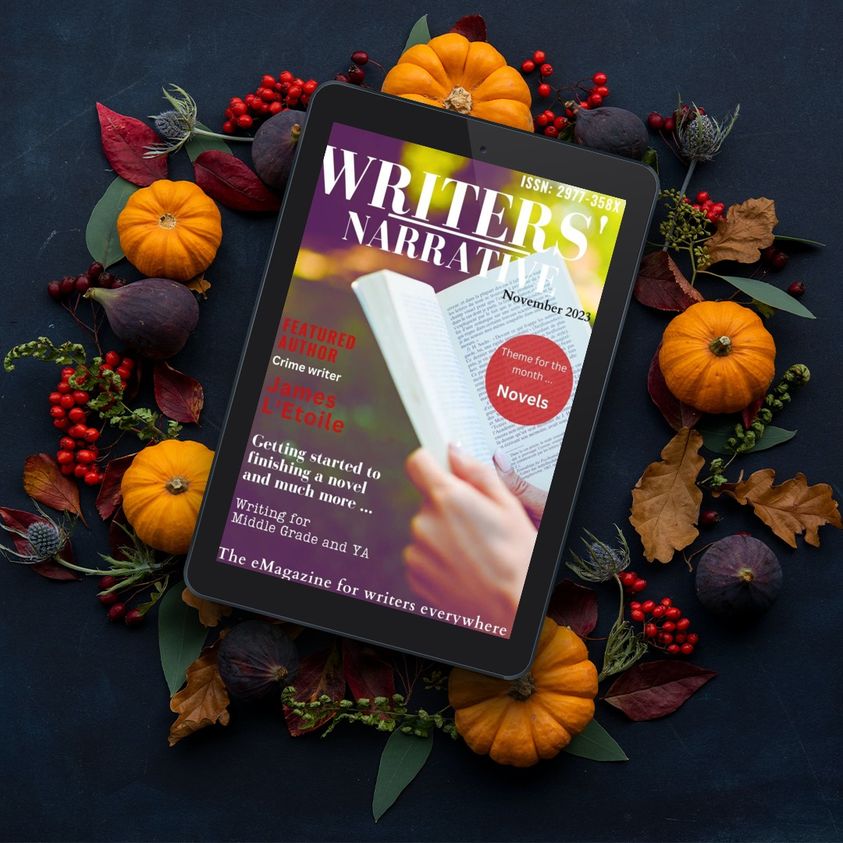
Don’t forget the November issue of Writers’ Narrative is out. The theme is on Writing Novels this time and you can find the magazine at the link below. A perfect free read packed full of fabulous advice and interviews.

Facebook – From Light to Dark and Back Again

Glad to be back on Friday Flash Fiction with my latest tale, Maisie. Does Maisie the dog know better than her owner as the world falls apart around them? Find out here. I hope you enjoy the tale and a big thank you for the comments already coming in on this one.
Screenshot 2023-11-17 at 10-04-57 Maisie by Allison SymesGlad to report Hannah Kate is having her Three Minute Santas show on North Manchester FM again this year. Full details via link here. Do give it a go. It’s great fun.

Top Tip: When you’ve got your story ready, do record yourself on Zoom and play it back to yourself. You will pick up on things like characters stumbling over dialogue etc but also get your timing right. The stories need to be a maximum of three minutes long and I’ve found it so useful to use Zoom here as that will give you an exact timing.

Good luck! Yes, I’ll be having a go again at this myself this year and am looking forward to tackling Day 16 of Flash NANO later today.

Screenshot 2023-11-16 at 16-59-30 🎅 3 Minute Santas 2023 is Open for Submissions! 🎅

Looking forward to having a crack at today’s Flash NANO challenge later on. I have to cut something already drafted in half. I’ve done this kind of exercise before. It’s a great discipline and takes longer than you think too. This time I have to add a specified object in. That will be fun. The object in question, well let’s just say I’m going to have to find a legitimate way of working it in! It wasn’t an “obvious” object but I did work the thing into my story legitimately.

I have used objects in stories before as one kind of exercise and cut a story in half as another but this will be the first time I’ve combined these two.

If I had to nominate a favourite writing exercise, it is the opening line one. Why? Because I can work out what possibilities could come from what has been set and a character to suit it.

I then go for what I like best. It is always the one that has the most impact on me whether it makes me laugh or cry or what have you. I figure if I react like that, readers will too. It is always a good sign when you remember the impact a story has on you.

402392564_771677418305455_9087310129080573567_n

Fairytales with Bite – Laughter

In your magical world, is there much in the way of laughter? Do magical students give their teachers many a laugh when getting things wrong as they develop their skills? And that’s just to name one example. I can easily visualise this happening. (The Harry Potter series touches on this too, especially with Ron Weasley and his wand held together with Spellotape).

Does your setting encourage its inhabitants to laugh? Are communities made up of a wide mix of species type or do the different magical types not mix at all? Where folk really don’t get on, the latter is probably the best solution, but a better one is where they do mix and they live and laugh together.

Equally is this something your characters do get on with even though the powers that be may not entirely approve?

Laughter can be a great bridge builder and comedy the source of that laughter so how does this play out in your setting? Laughter can bring about understanding.

Is there one species type that is better at producing laughter than the others? Is this a talent or is it a case everyone else laughs at them and how do they handle that? Laughter makers can also be bridge builders. How could this be put to good effect in your stories?

BookBrushImage-2023-11-17-19-3921

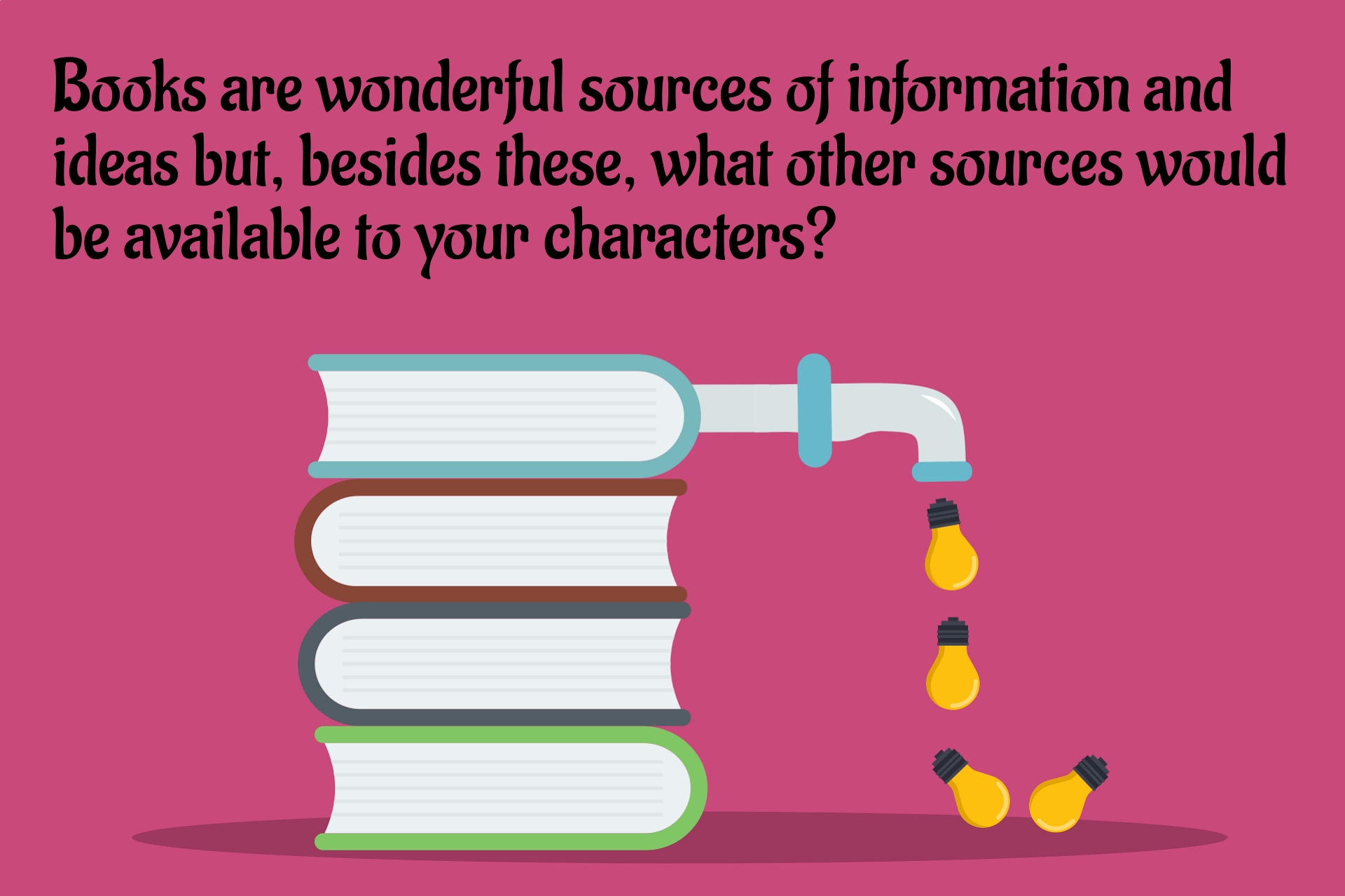
This World and Others – Sources of Information

We live in an age where sources of information have never been so readily available. If you don’t know where to find something of this nature, a quick search of the internet is likely to throw up ideas as to where you can find out what you need to know. Plus there are always the reference libraries and museums often have their own libraries. I’ve spent time at a lovely steam railway exhibition looking at their displays and then having a good read in their archives.

So in your world setting, what sources of information exist? Is there an equivalent of the web? Are there papers, media etc and do these operate freely or are they limited in what they can share with the general populace?

Also how well educated are your characters because that will make a huge difference to what they can access even if there are no other restrictions? Who publishes papers and periodicals and where do they get their information from?

Think back to the history of your setting as well. What does everyone “know” (or more accurately think they know) about it? What information in archives backs this up or challenges the accepted view (hence it was archived and kept out of sight!)?

What information would your characters need to make to fulfil their stories?
BookBrushImage-2023-11-17-19-4317

WRITERS NARRATIVE SUBSCRIBER LINK

WN publicity shot - November 23 mag

AMAZON AUTHOR CENTRAL – ALLISON SYMES

This slideshow requires JavaScript.

Twitter Corner with hashtag, Scrabble tiles, and the blue bird

https://platform.twitter.com/widgets.js https://platform.twitter.com/widgets.js https://platform.twitter.com/widgets.js https://platform.twitter.com/widgets.js

Processing…
Success! You're on the list.

Back on the Radio and Blog Appearance

Member of the Society of Authors Link
Image Credits:-
All images from Pixabay/Pexels unless otherwise stated with many created in Book Brush. Book cover images from Chapeltown Books and Bridge House Publishing. Screenshots taken by me, Allison Symes.
Hope you are all okay. Weather has suddenly warmed up considerably. Feels more like summer than the summer did. Glad to say I was back on Hannah Kate’s radio show over the weekend – details below. And I am a guest on Gill James’ blog too again see below.

BookBrushImage-2023-9-5-20-2750

Facebook – General

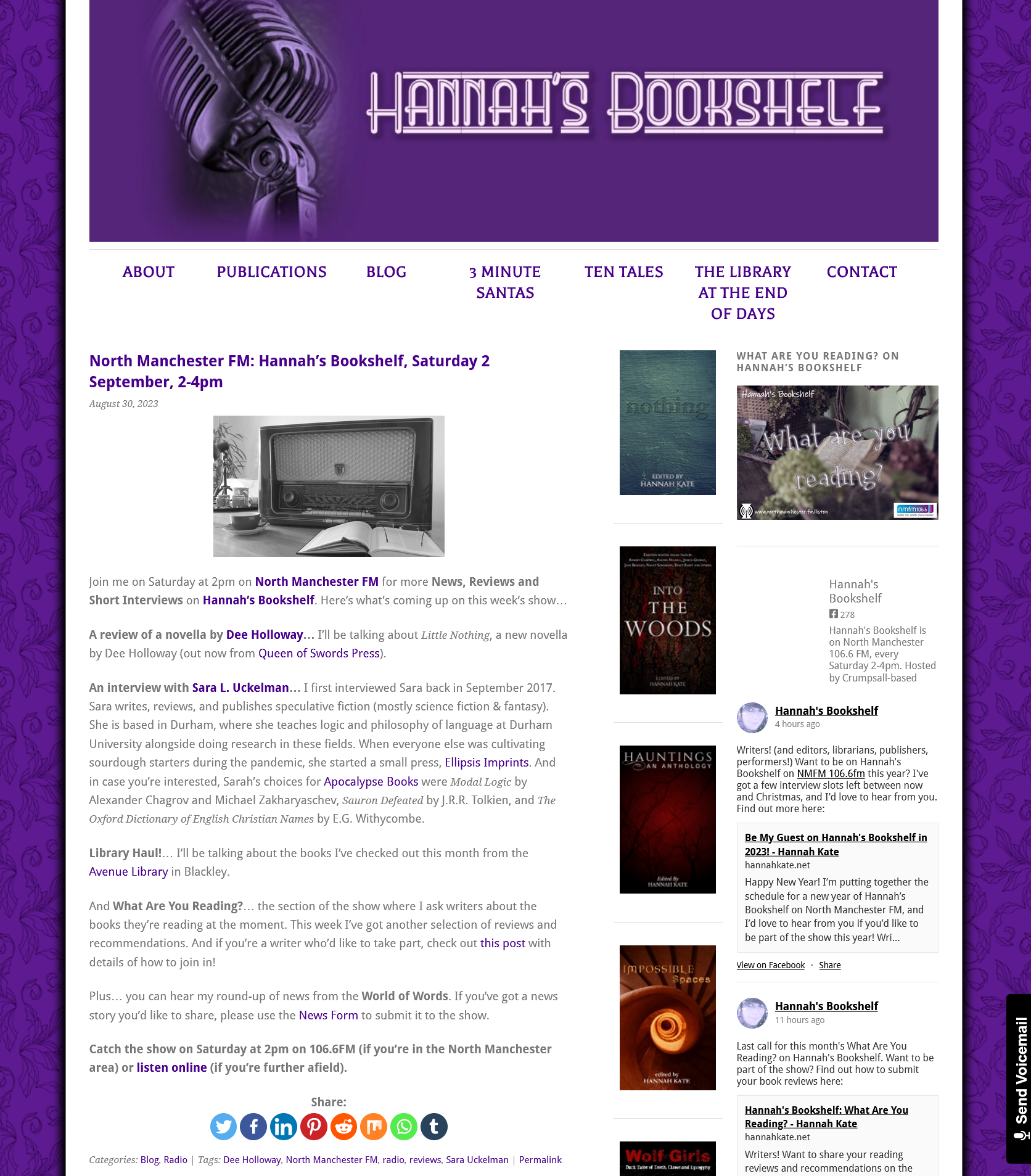
Am pleased to now be able to share the Mixcloud link from Hannah Kate’s radio show, Hannah’s Bookshelf, which went out on Saturday. This show is what Hannah calls a pick and mix (I remember Woolworths too) and there is an author interview here, the What Am I Reading slot I took part in, and much more besides. Do check it out if you love books in any way whatsoever! Further down are links to the two halves of the show so you have a choice of how to listen!

Much as I love reading books, I also enjoy listening to them so having a radio show all about books makes a great deal of sense to me! One of my favourite book radio reads is The Daughter of Time by Josephine Tey. This was done on Radio 4 Extra (and I suspect will be broadcast again at some point). If you are a fan of Richard III, this is worth checking out (the book itself and the radio read of it).


Many thanks to Gill James for inviting me on to her blog to discuss The Best of CafeLit 12. It was great fun to do this and I share what was behind my story, Jubilee, which is in this anthology. I also share why I love short stories and flash fiction. It isn’t just because I am published in both, honestly. Find out more via the link.

Screenshot 2023-09-04 at 14-49-31 Allison Symes talks to us about being invovled with The Best of CafeLit 12

Hope you have had a lovely weekend. Great to see some late summer/early autumn sunshine.
Will be looking at The Benefits of Creativity for Chandler’s Ford Today next week. There are many benefits and I believe everyone has some creativity. It is a question I think of finding what yours is and enjoying it, playing to its strengths if you like. More on Friday when the post goes up.

What do you like about stories the most? Yes, I know, tough question time and on a restful Sunday too, what am I thinking of? I ask because my favourite moment is when the story has been resolved but I know the characters have brought that resolution about by their own attitudes and actions. I like to think the characters have earned their good ending.


It was a joy to be back on North Manchester FM with Hannah Kate on her Hannah’s Bookshelf show. I was taking part in her What Am I Reading? slot and that was a joy to do. I come in at about the 28 minutes mark on Part 2 of the show but do check out both halves. Links to both below.

This is a fabulous show which celebrates books and writing. What is there not to love about that? I review books by Stephen Clark (history), Jennifer C Wilson (historical fiction, romance, collection), Val Penny (crime), and Ruth Leigh (women’s fiction, Christian fiction, humour).

I’ve mentioned before I like to mix up my reading – and why not? I’m not going to be confined to one genre! Mind you, that is one thing I love about flash fiction writing. As it has to be character led, I can set my characters in any setting, time period etc. It is a joy to do that.

Part 1 – https://podcast.canstream.co.uk/manchesterfm/index.php?id=49679

Part 2 – https://podcast.canstream.co.uk/manchesterfm/index.php?id=49680

Screenshot 2023-08-31 at 19-56-24 North Manchester FM Hannah's Bookshelf Saturday 2 September 2-4pm - Hannah Kate

Facebook – From Light to Dark and Back Again

Hope you have had a good day. Another scorcher today. Lady has kept cool. On this, she is a remarkably sensible dog. On almost everything else, she’s anything but (being lovable helps her cause a lot!).

I often end a flash piece with a punchline (especially if it is a humorous tale) but sometimes I finish with a line of dialogue which acts as the punchline. I did this for George Changes His Mind in From Light to Dark and Back Again. There was nothing to add after that final comment from my character. So I left it there!

Writing flash over time helps you develop a good sense of where the story should stop. This is another good reason to practice writing flash as learning what makes a good ending and leaving it there can apply to other forms of writing too.

Flash with Amazon and Barnes and Noble

It’s Monday. It has suddenly become very warm. On the plus side I know it is not me having a hot flush. It is still Monday. Definitely time for a story. Hope you enjoy Therapy, my latest on my YouTube channel.


How do I decide which word count to write to for my flash fiction? For competitions and websites like Friday Flash Fiction, the word count is usually set. (I could write longer stories for FFF now I have two of my 100-worders on there but it has been a joy to rediscover the joy of writing the 100 word stories/drabbles again so am happily sticking to that for them).

When a word count isn’t set, I get my first draft down first (having a rough outline as what I want this story to be). It is then a question of working out what I can do to tighten up the writing and sharpen the piece overall. There is always something!

I then look at what word count I have reached. If, for example, I am just over 300 or 500 words (two common categories in competitions) I see if I could legitimately get my story down to those word counts or just under them. Sometimes I can. Sometimes I can’t.

If it is a question I can’t reduce it without losing something valuable, I would enter that story for the next category up. So my possible 300-worder coming in at 350 would stay that way and I would put this in for a 500 words or under competition instead.

The crucial factor is how well the story works at a given word count. If it is working fine, I leave it alone. If I can see ways to improve it (which often does bring the word count down), then I will improve it.

374766874_724814532991744_2719517168538352080_n

Many of my flash stories focus on one character. Given I don’t usually ask my characters to talk to themselves, I do use thoughts (in italics) as the best way of communicating to the reader. After all we think so our characters would think.

Fiction reflects our reality even if the setting is fantastical. The joy with reading a story though is being able to read the character’s thoughts! And I like to use those thoughts to show something of my character’s state of mind and attitudes.

When I have a longer flash piece with more than one character, thoughts can show the reader the character may be thinking one thing but saying quite another to the other character. Hopefully the reader is then hooked into wanting to find out how things pan out.

For one thing, I’d want to know if there is a good reason for the thinking one thing but saying another – the character could be trying to protect the other from something. Equally they could be lying. And then I’d want to know why. Only one way to find out – I keep reading.

Character Flaws

Goodreads Author Blog – Promoting Books

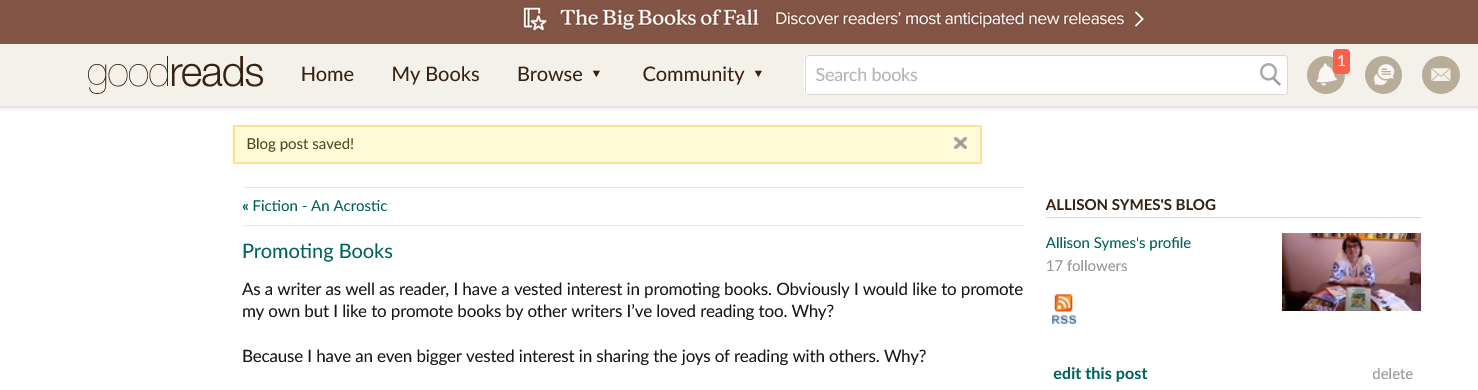
As a writer as well as reader, I have a vested interest in promoting books. Obviously I would like to promote my own but I like to promote books by other writers I’ve loved reading too. Why? Because I have an even bigger vested interest in sharing the joys of reading with others. Why?

Well, it is the way to encourage book reading, book buying, use of the libraries and so on – all good things. Reading is good for us. It entertains, it informs, it helps us escape for a while. It deepens our vocabulary. It helps us puzzle things out.

Don’t you try to guess the ending for a crime story ahead of reading that ending? I do all the time. Sometimes I do guess the killer correctly, sometimes I don’t but I have had a fabulous time in guessing and I always like it when an author manages to wrong foot me too. I go back through the book then to try and spot the clues I missed first go around.

Every writer’s most difficult task is in getting that initial spark of interest in their work. We need to encourage people to read, to see the point of reading, whether they then go on to read our work or others. Ideally they’d do both of course!

And I am conscious there are other forms of entertainment. We have to make the case for books, I think, as being a fabulous use of anyone’s time.

Screenshot 2023-09-02 at 20-08-38 Promoting Books

WRITERS NARRATIVE SUBSCRIBER LINK

AMAZON AUTHOR CENTRAL – ALLISON SYMES
Allison Symes - advertising books and services resized 640Twitter - phone and blue bird image

https://platform.twitter.com/widgets.js https://platform.twitter.com/widgets.js https://platform.twitter.com/widgets.js https://platform.twitter.com/widgets.js https://platform.twitter.com/widgets.js

Processing…
Success! You're on the list.

Reviews, Time, and Appearances

Image Credits:-
All images from Pixabay/Pexels unless otherwise stated with many created in Book Brush. Book cover images from Chapeltown Books and Bridge House Publishing. Screenshots taken by me, Allison Symes. Busy start to the week, the spring flowers continue to come up, but still no sign of proper spring weather yet. Lady continues to enjoy the mud! She has got used to the clock change in the UK quicker than I have!

BookBrushImage-2023-3-28-17-357

Facebook – General

Posting a bit earlier tonight (and again tomorrow) as I’ve got a couple of busy evenings coming up (though one of them is for the Flash Fiction Group I lead for the Association of Christian Writers. Always fun, always good writing produced from it. Can’t wait to see the usual members there tomorrow. Zoom is fantastic for this kind of thing).

Writing tip: I know I’ve mentioned this before but it bears repeating. When time is short, just do what you can. I am in that situation at the moment and will be for a while.

What matters is getting some writing done and I get to my desk relieved and happy to get on with some writing even if, right now, it is not quite as much as I would like to do. There will be time to make up for that later on hopefully.

Ironically this is where I find deadlines especially helpful. They give me something to work to and ensure I focus.

May be an image of text that says "I've found it pays to take time off an official deadline and use that as the date I get stories in by instead. This is the date ー use to go through my script for the last time. If| need to correct mistakes, still can.lfit's it's fine, off it goes. can."

Hope you’ve had a good start to your week. Not bad here and Lady got to play with her Rhodesian Ridgeback bestie today so all well there. Still feeling a bit of “jetlag” after losing an hour yesterday. The day after a clock change is always the worst for that!

Pleased to say I’ll be interviewing Gill James about a very special idea in April. A bit more on that nearer the time – am looking forward to sharing this on Chandler’s Ford Today. It is going to make an apt tie in with my Anthologies post which will be up this Friday. There are times you just can’t plan these things. Serendipity can be fabulous!


I’ll be discussing Anthologies for Chandler’s Ford Today on Friday. Well, they do say write what you know! I’ll also share some tips on how to make the most of the theme you’re set (as so many anthologies will want you to write to one).

Talking of which, it is great to see some fabulous reviews coming in for The Best of CafeLit 11 on Amazon. The wonderful thing about writing a review for an anthology is you can help many authors in one review (!) so so write one. Doesn’t have to be long either.

Allison Symes: books, biography, latest update

CafeLit11 3D

Hope you have had a good day. It actually felt like spring here today. Just in time for the clocks to go forward in my part of the world tonight.

I’ve often used time in stories. Sometimes I’ve used Time as a character. Sometimes I’ve used time travelling characters. Sometimes I’ve written historical flash fiction where the setting of the story acts like a character (and again is a time frame). But time could be used as a countdown in a story too. That would be a great way of ensuing a good pace. Equally you can have an inciting incident happen at a particular time in a story and the tale takes off from there.

I use time to work out my writing week. Certain days of the week I have more time to write than others so I save my longer pieces of work for those days. I use pockets of time to jot down notes, opening lines, title ideas etc. It all mounts up and helps me to be more productive. Time is to be used!

May be an image of text that says "Never Neverworry worry about how much time you have to write. Five minutes of writing builds up over time and is perfect for drafting short pieces. V"

Facebook – From Light to Dark and Back Again

Flash fiction can cover any mood and any genre. It’s just the word count you need to watch. But the word count for your flash story has to be appropriate for the tale you are sharing with us. Some of my stories genuinely work out better at 500 words rather than 100 and so I leave them at the upper limit.

May be an image of sky and text that says "One advantage to flash fiction writing is I can set my characters anywhere. I do too!"


It’s Monday and time for a story. Hope you enjoy Appearances. Be ware who you mock!


One of the toughest writing exercises I’ve tried is writing to a middle line. You’re usually told where exactly in the story, word count wise, it has to be be too. It’s not an exercise I come across often and I suspect that is because everyone finds it tough! But this is where forward planning is the writer’s friend.

What I have found useful here was having a spider diagram with the middle line slap bang in the middle and then work out, firstly, what could lead to that line from the start of the story. I then work out what could lead from it to get to a suitable ending (and I usually work out that ending too). I just jot down possibilities and then go with what I like best but the “two way” planning here has worked well for me in the past.

May be an image of text

Looking forward to the Association of Christian Writers’ Flash Fiction Group meeting on Zoom. Exercises will be set. I know. I’ll be setting them but I do make it a policy not to do the exercises myself until the night of the meeting. I love taking part in live writing exercises myself. It’s fun, a good discipline, and I get to draft some stories for later polishing and submitting somewhere. Win-win there!

May be a cartoon of text that says "Have fun with writing exercises. They give you new ways to create stories."

Goodreads Author Blog – Reviews

R = Reading is one of the great joys of life, along with writing the stories in the first place!
E = Entertainment between the covers and can be educational too.
V = Varying between light reading, serious reading, humorous reading and all kinds of genres, is it too much to ask for a review?
I = Imagine the author hard at work – a review is of enormous help to them.
E = Easy to write too – often the best reviews are fairly short.
W = Will the review influence others to buy the book – hopefully – authors appreciate their sales!
S = Support your authors – buy the books and review them. Thanks!

Screenshot 2023-03-25 at 20-48-09 Reviews


ALLISON SYMES – BOOK BRUSH READER HUB

MOM’S FAVORITE READS LINK – CHECK OUT THE MAGAZINE INCLUDING MY FLASH FICTION COLUMN HERE –

AMAZON AUTHOR CENTRAL – ALLISON SYMES

This slideshow requires JavaScript.

Alternative Twitter image

https://platform.twitter.com/widgets.js https://platform.twitter.com/widgets.js

Processing…
Success! You're on the list.

Evergreen, Blogging, and Historically Based Flash Fiction

Image Credits:-
All images from Pixabay/Pexels unless otherwise stated with many created in Book Brush. Book cover images from Chapeltown Books and Bridge House Publishing. Screenshots taken by me, Allison Symes.
Getting colder again where I am but there are signs of spring about. I’ve seen my first daffodil out and even a very early crocus. My snowdrops have put in an appearance too. How would your characters think of emerging from spring in their lives? When something happens which uplifts them? Coming out of winter is cheering but you can take this metaphorically for fiction too.

BookBrushImage-2023-2-7-20-401

Facebook – General

Pleased to say I am putting in an appearance on Gill James’ blog today where I talk about my contribution to Evergreen, the most recent anthology from Bridge House Publishing. Hope you enjoy it and many thanks, Gill, for inviting me on to your blog.


Am busy preparing a story for a competition. Hope to have that submitted soon. I will also be having a catch up interview soon too – more details nearer the time.

I write for a number of monthly blogs (and have a ball doing so too!) so pretty much with all of them, the moment I’ve put one to “bed” so to speak, I’m away drafting my piece for the following month. It gives me time to get something down, and then come back to it as I need to, and still have plenty of time for editing and submitting the blogs. It works for me!

I sometimes use the random question generators to trigger ideas for potential pieces here too – they can work for non-fiction too. When I have my brainstorming sessions for ideas for titles, blog posts etc, I am jotting down themes to explore. I then come back to these every so often and write up the ones I like most.

May be an image of ‎text that says "‎Add New Post Enter title here Blogging is my non- fiction side and I am currently expanding this while keeping my "style" consistent throughout. AddMedia iii ا 111 B Paragraph Parag‎"‎

Many thanks for the comments coming in on The Milk, my latest story on Friday Flash Fiction. This is one of those tales I would put in the “wry smile of recognition” category as I suspect this has happened to most of us in our time. Hope you enjoy it. This one also definitely falls in the category of “write what you know”!

Screenshot 2023-02-03 at 09-43-43 The Milk by Allison Symes

Hope you have had a good day. I’ll be chatting to YA author Richard Hardie, for Chandler’s Ford Today this coming week. Link up on Friday. Richard is also behind Authors Reach Limited. I hope to chat to other writers from that stable later in the year. Watch this space, as they say!

With the boot on the other foot so to speak, I’ve recently sent back my own answers to some excellent questions sent to me by Val Penny. More details on that nearer the time I am due to be on her website. It is always an interesting experience being both sides of the questions!

And don’t forget you can outline characters effectively by asking them a few questions too. Work out what you think you need to know. Interviewing your own creations is a good way to find out more about them. I’ve found by working out what I need to know I can then write my characters’ stories up convincingly precisely because I now know what they are and what they could be capable of doing when push comes to shove.

May be an image of text that says "WHo WHERE WHEN HoW WHY I often use these questions to help me outline a blog post or a story. Covers a lot of ground!"
Facebook – From Light to Dark and Back Again

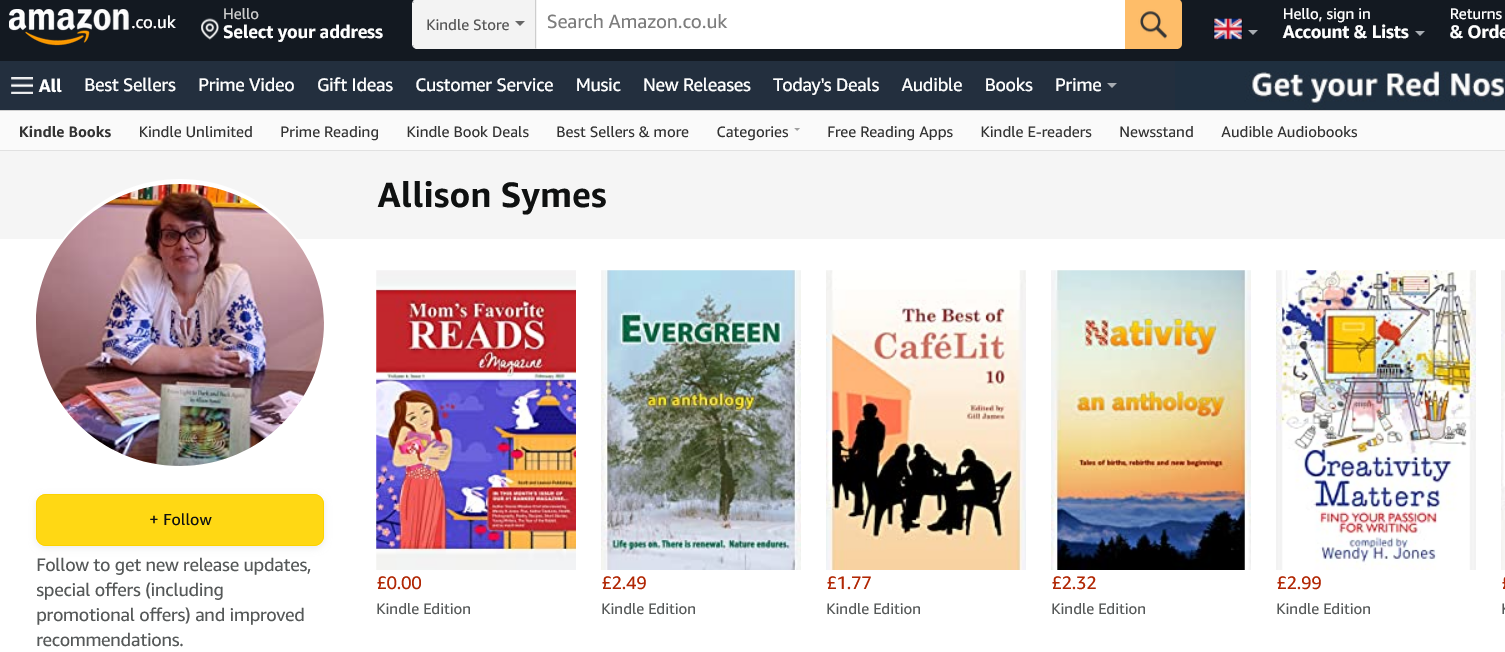
Delighted to say the February issue of Mom’s Favorite Reads is now available FREE to download on Amazon. See link to my Author Central page. Do check the magazine out – it is a wonderful read.

Screenshot 2023-02-07 at 20-52-16 Allison Symes

It’s Monday. It’s dark. It’s slowly getting lighter in the evenings – hooray – but for the moment it is still dark. It helps if you like spiders for my latest on YouTube – As Good As.


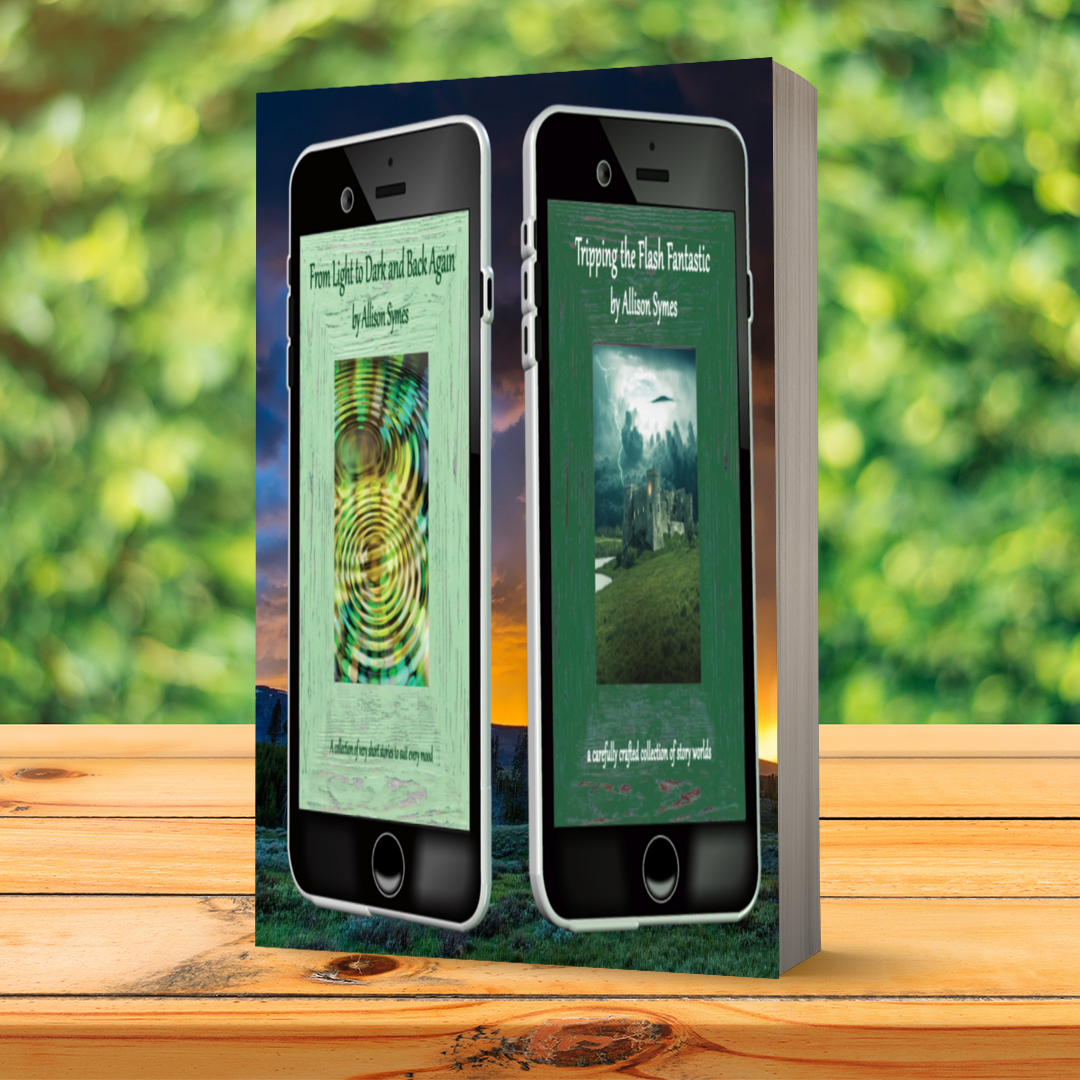
I sometimes write historically based flash fiction where I either take a character I’m interested in and have their flash story told from their point of view. I do this for Elizabeth of York in Not Knowing from Tripping the Flash Fantastic.

Sometimes I take an event and base my story around that, focusing on just one aspect to it, given I won’t have the word count room for anything else. Both approaches work and you could also write a story based on the viewpoint of someone connected to the historical character or event (a servant’s viewpoint for example).

It’s an interesting form to write in and I hope to do more of this. History is a wide field after all (and don’t forget there are other aspects to it such as scientific history so explore!). What does matter though is being true to the character and what is known.

If you’re going down the reasonable supposition route (as I have occasionally), there should still be plenty of historical fact around to show this is reasonable supposition based on what is known. If you’re going to change history in your fiction, you do have to make it clear from the outset this is alternative history, a “what if” kind of story, otherwise readers will feel cheated and that will switch them off.


Another thing flash fiction writing teaches you pretty early on is how to hit the ground running. You do have go straight into the action (even if that is revealing a thought in your character’s head). What it must be is intriguing enough so the reader will want to find out what happens. Now that’s the core factor for all fiction but it is even more crucial for flash. No time to waste. Straight in there. Job done.

Flash also teaches you how to end a story. You can’t witter on. The story has to end with some sort of “bang”. And that’s a good thing.

I keep in mind my Ideal Reader here. I always think how does this line serve the story? If it doesn’t, it’s out. I’m thinking of the impact I want my tale to have on my Ideal Reader as well.

It’s all about the focus!

May be an image of text that says "The short forms of writing encourage focus. Impact can be stronger because of the shorter word counts. WOOZ SN3T"

Goodreads Author Blog – Light Fiction

What would you say light fiction was? It’s definitely nothing to do with the weight of the book, though I would advise against dropping the three volume paperback of The Lord of the Rings on your foot (to say nothing of the hardback!).

Light fiction isn’t necessarily anything to do with genre either. I have read cosy crime which I would consider to be “light” fiction because it has amused me, entertained me, but doesn’t pretend to send a great message out to the world at large.

I love reading books “just” for entertainment (though it is my experience the writers of said works have worked very hard to get to this point. If something looks effortless, it means someone somewhere has put in years of work to get to that point).

Jane Austen is rightly considered a classic author. The messages in her book are sbutle but she delivers them through entertaining stories. I don’t want a heavy, serious read. I read to unwind or to learn something and even there, non-fiction doesn’t have to be “heavy going” either. The best books here read like novels too and, for me, are far more likely to have readers keep turning the pages to find out more.

Screenshot 2023-02-04 at 20-54-37 Light Fiction


Twitter Corner (2)

https://platform.twitter.com/widgets.js https://platform.twitter.com/widgets.js https://platform.twitter.com/widgets.js https://platform.twitter.com/widgets.js https://platform.twitter.com/widgets.js https://platform.twitter.com/widgets.js https://platform.twitter.com/widgets.js

Processing…
Success! You're on the list.

ALLISON SYMES – BOOK BRUSH READER HUB

Screenshot 2022-12-30 at 21-43-08 Reader Hub Book Brush

MOM’S FAVORITE READS LINK – CHECK OUT THE MAGAZINE INCLUDING MY FLASH FICTION COLUMN HERE –

This slideshow requires JavaScript.

Back Home – A Blog Appearance and Flash Fiction

Image Credits:-
All images from Pixabay/Pexels unless otherwise stated. Book cover images from Chapeltown Books and Bridge House Publishing. Screenshots and holiday photos taken by me, Allison Symes. The week back after a holiday is always a busy one but so far I’ve appeared on a blog and I’ll be running a Flash Fiction group on Zoom soon too. Hit the ground running then, Allison!

20221010_130845

From Seahouses looking across to Beadnell Beach. Weather last week was glorious.

Facebook – General

Good to get back to swimming today. Always a tough one – the first swim after a break.

Posting early today as out this evening. What do you look for in an author interview? I look for information, helpful tips, and something indicating the writer has had their fair share of ups and downs. I don’t know about you but it makes me feel considerably better to know I’m not the only one there!

When I’m on the receiving end of an interview, I look to give tips, share warnings about some of the scams out there which can trip up the unwary writer, and share some of my own ups and downs. It helps to know It is normal for the writing life not to be a straight road.

I’ve learned so much about the writing world from author interviews whether I read them or listen to them on podcasts etc.

Look up author interviews and get a feel for the kind of questions that are asked

Hope you have had a good start to the week. Busy one here. Lady back to enjoying her usual visits to our park (and got to see the lovely Coco yesterday, who is a smashing Labradoodle).

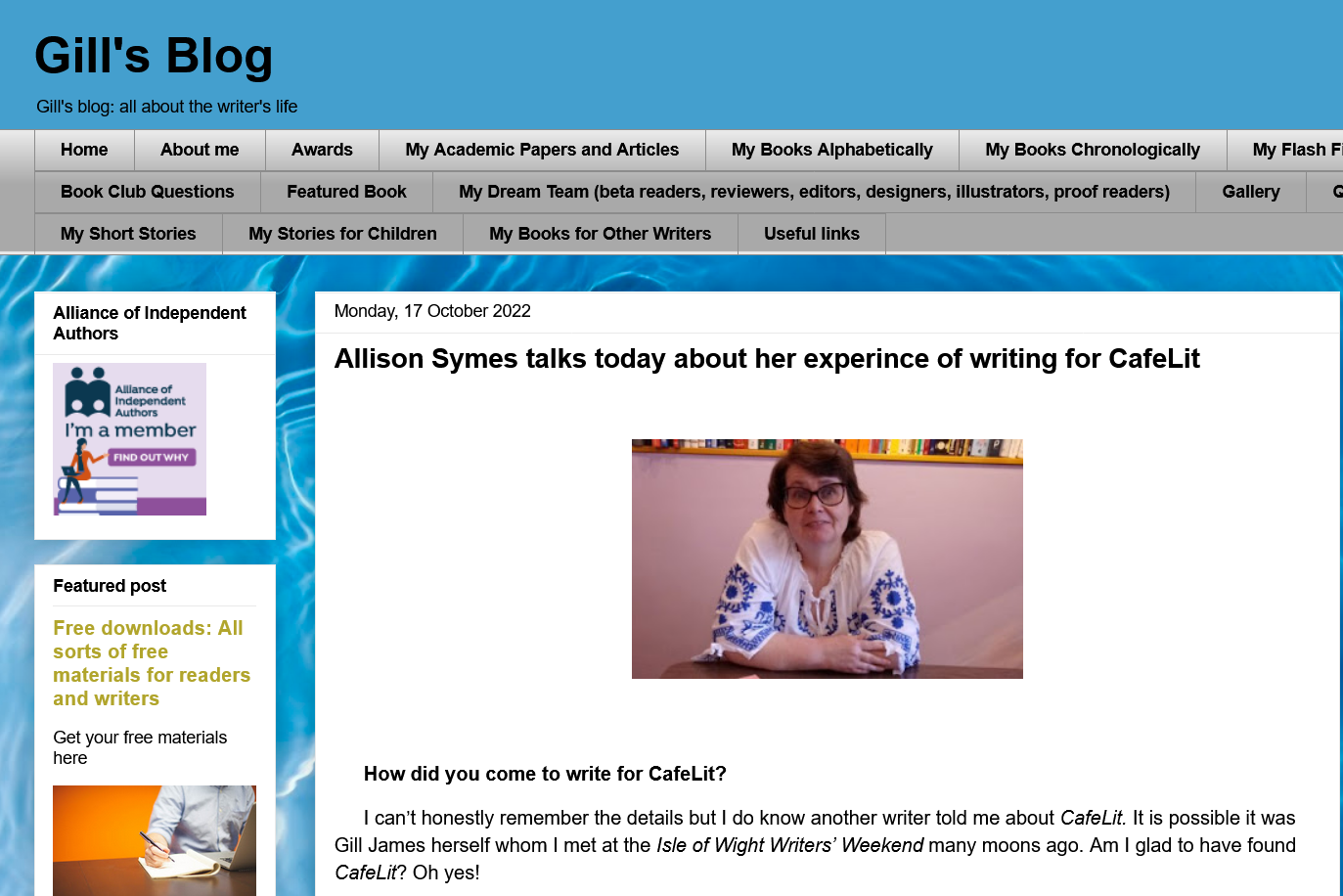
Am pleased to say I am on Gill James’ blog today. I talk about all things CafeLit. Do see link (and many thanks to Gill for hosting me).
Screenshot 2022-10-17 at 13-55-16 Allison Symes talks today about her experince of writing for CafeLit
There is a lot of truth in the saying you need a holiday to get over a holiday! This coming week will be especially busy but it was lovely to get away.

Looking forward to the Association of Christian Writers Flash Group meeting on Wednesday. Always good fun.

Hope to be working on my stories for YouTube and Friday Flash Fiction later on. Now which random generator will I use tonight? Hmm… decisions, decisions – but these are fun ones! And there is a wealth of generators to choose from. You will find one(s) to suit.

I refuse to think about a certain festive event until the end of the month though I will add now if you have a writer in your life, be thankful. We are so easy to buy for. There are always books we want. Pens, notebooks, book-related mugs etc always go down well. So come the end of the month, I will be starting to put my list together! (Oh and the other easy type to buy for are dogs so I shall need to get Lady’s list for a certain person together next month too).

And it will be time to be thinking about festive flash too. I usually write a couple of these. Good fun.

My flash collections are available in Kindle and paperback

Had great time in Northumberland. Good weather for most of the week too. We always do self catering as it is easiest option for dog owners. Would happily stay in our cosy cottage again. Great views over farmland and such a comfy place.

For Chandler’s Ford Today I will be interviewing Ruth Leigh to talk about her new book, The Continuing Times of Isabella M Smugge. Isabella is one of those great unforgettable creations who is funny and moving. Once read, want to read more which is a great sign of fabulous characterisation.

Ruth and I will also be chatting about launches and marketing. Part 1 of the interview is up on Friday.

This slideshow requires JavaScript.

Facebook – From Light to Dark and Back Again

Looking forward to the Association of Christian Writers Flash Group meeting on Zoom tomorrow night. The members here live hundreds of miles apart so an in-person gathering is not feasible. Zoom has been (a) a lifeline and (b) made certain things possible and not just for ACW.

Naturally it is good to have a couple of hours to talk flash, have a go at some writing exercises and so on (I have great fun thinking these up by the way!).

Intrigue the reader

It’s Monday and time for another YouTube flash story from me. Transforming Hope is based on a line triggered by a poetry line generator (yes, really!). I adapted the line a little bit to suit my purposes. Hope you enjoy this.


When I’m picking flash tales to read at Open Prose Mic Nights, I look for a mixture of moods. I like to mix up funny with more sombre tales as it is a good advert for flash doing that. You can pack a punch with a short piece. You can also make people laugh with a short piece. I love trying to do both.

Life so often is a mixture of light and dark and I think it apt fiction overall reflects that. After all I read to either match my mood or to give me an uplift, depending on how I am feeling so what I write will do this too.

Flash Fiction focuses on THE important aspect of a character's life

I came across some lovely place names while away in Northumberland. Possible inspiration for future character names, I think. I wouldn’t be the only writer to use place or other names for character names. P.G. Wodehouse famously did this for Lord Emsworth, Galahad Threepwood etc. Emsworth is in my home county of Hampshire.

I also use random name generators. I often just go with the Christian name. I don’t always need a surname. I use names to indicate likely social status, if they’re from this world or not, also age. Names make a great indicator and I find them useful in flash for that as they can be a useful shortcut. A name can tell you things and save a lot of description.

May be an image of ‎one or more people, brick wall and ‎text that says "‎Names can be used to indicate likely social background and much more. ಅe ××××××ב‎"‎‎

Goodreads Author Blog – Non-Fiction Inspiring Fiction

Non-fiction can inspire fiction. How things are made, for example, can trigger ideas for how things would be made in your fictional settings and the characters who would make them.

Equally reading up on science that interests you or a period of history can trigger ideas for characters. I’ve always found getting a character in my head is a surefire way to spark story ideas.

So having a reasonable general knowledge, fuelled by non-fiction reading, is a useful “pool” to fish in for story ideas. And as ever, the wider you read the bigger your “pool” to fish from.

Twitter Corner

https://platform.twitter.com/widgets.js https://platform.twitter.com/widgets.js https://platform.twitter.com/widgets.js

Processing…
Success! You're on the list.

Learning, Back at an ACW Event, and North Manchester FM

Image Credit:-
All images from Pixabay/Pexels unless otherwise stated (and most created via Book Brush using Pixabay photos). Book cover images from Chapeltown Books and Bridge House Publishing. Screenshots were taken by me, Allison Symes.
Hope you have had a good start to the working week. Lovely autumnal weather here in the UK right now – just the kind the dog and I like most.

Facebook – General

Enjoying the lovely autumnal weather at the moment – dry, sunny, crisp – my kind of weather at this time of year.

Writers are often advised (and I’ve done it too) to read widely as sparks for story and article ideas will often crop up from what you enjoy reading. But I was at a fascinating Zoom talk last night about Cistercian Abbeys. Not something I write about. Nor am I likely to do so but the talk was interesting and revealed plenty I did not know especially about life in a community.

Now I can see I might get something from that for a story or two later on. Fabulous if I do. Still improving my knowledge even if not. Win-win basically. So why not try a Zoom or other kind of talk on a topic that might be a little outside of your own box but where you have some underlying interest? (In my case, I love history).

I’ve talked before about mixing up how you approach story writing to keep things (a) fresh and interesting for you and (b) to encourage lateral thinking and even more creativity. Why not use talks as another way into that mixing up your approach?

This slideshow requires JavaScript.


Hope you had a good Monday. Not bad here. Nice autumnal day, plenty of sunshine, and Lady got to play with her Rhodesian Ridgeback buddy and her Labradoodle pal. All is well in her world at least!

Coming back to earth after a wonderful ACW event on Saturday but I find I always do need a bit of a breathing space after an event like that to take stock and then get on with my writing again.

Many thanks for the lovely comments so far on my Leaving It Late, which is my most recent tale on #FridayFlashFiction. Am so loving writing the drabbles again – and this particular tale shows just how far one character can take stubbornness.

Screenshot 2021-10-08 at 16-41-23 Leaving It Late, by Allison Symes

It was lovely getting back to using Evernote properly on my train trips to/from London for the Association of Christian Writers day yesterday. I’ll be out and about on the train again next month when I go to the Brechin/Angus Book Fest and again in December because Bridge House Publishing are having their annual celebration event, hooray!

Mind you, some things don’t change over the years. I always used to become irritated when bad radio reception would hit right during the middle of my favourite song. These days my irritation is aimed at when the internet connection drops out just as I’m trying to post something (and you don’t always know when a tunnel is coming up!).

It was fantastic catching up with so many friends yesterday and I look forward to catching up with more over the next couple of months. I also managed to draft a flash piece yesterday which I’m going to use for my YouTube video this week. Hope to share the link for that tomorrow over on my book page at From Light to Dark and Back Again. See further down.

Oh and it has been lovely listening to Gill James being interviewed by Hannah Kate on North Manchester FM. Plenty of plugs for Bridge House, Chapeltown, CafeLit etc (and a couple for me too – thank you, Gill and Hannah). Give it a listen and discover insights into how a small independent publisher works.

Gill James Interview Here
Screenshot 2021-10-12 at 20-56-33 North Manchester FM Hannah's Bookshelf, Saturday 9 October, 2-4pm - Hannah Kate

Am on way to my first in-person event for the Association of Christian Writers today. Event is being held in London. I am so looking forward to catching up with friends I’ve either not seen or only seen through Zoom for the past two years. Am drafting this via Evernote on train up. Will probably post on train home.

As well as what you learn from the speaker(s), you pick up loads of tips, sites to check out etc., when chatting with other writers over a cuppa or several. You also sense a creative buzz at the event which you can draw on to inspire you when you’re back home again.

So it will be a tiring, inspirational, and fantastic trip out. ACW are also celebrating the launch of Write Well! This will be launched during the latter half of today’s event. The book is written by various ACW members about aspects of writing and I am looking forward to reading it.

The lovely thing with writing is you don’t stop learning or developing what you do. This is so good for the old brain!

This slideshow requires JavaScript.

Facebook – From Light to Dark and Back Again

Giving your character an immediate problem they have to resolve is a great way to get into a story. Your reader has to read on to find out what happens, which is exactly what you want. But you can also add intrigue by hinting at an unusual setting for the problem.

I did this with my Decisions from Tripping the Flash Fantastic. My opening line to this is “He could watch the world end or jump on the alien spacecraft that encouraged visitors.”.

Well, firstly, what would you do if you faced that? Whatever you decide, hopefully the hook is there for you to want to find out what my character did. Secondly, I’ve managed to give you the genre in four words – world end and alien spacecraft. This confirms the genre has to be sci-fi and this is an apocalyptic tale.

The setting is here on Earth – that is confirmed by my character’s name (Jeff). So little things like this give your readers plenty of information to take in and you don’t info-dump on them either. That was something I did use to do when I first started out. Great big blocks of description and/or “have to tell the reader this so I will give it to them all in one go right here and now”. Uhh… no!

Drip-feeding information is better by far, more interesting, and helps keep your word count down, invaluable for flash of course.

Pleased to share my latest YouTube story, The Package. Who do you feel the most for here? Comments welcome here on over on my channel page. Hope you enjoy the tale.


Nice to have a quieter day after a wonderful day in London yesterday with the Association of Christian Writers. Will be returning to the capital in December for a Bridge House Publishing celebration event – can’t wait for that. Have been in contact with people over Facebook and Zoom, of course, but it will be so nice to get together in person again.

I’ll be sharing tomorrow my latest YouTube video which was inspired by a snippet of conversation I overheard on the train yesterday! Good fun to write and I look forward to sharing the story. (I say overhear, it was more a case of not being able to miss the conversation, but it can all be useful material for sparking off story ideas!).


Am back on the train for an Association of Christian Writers event so am resuming using Evernote for jotting down blog posts and flash fiction pieces. It’s lovely getting to use the app again after a long gap. I used it for the first time since lockdown for my trip to the Swanwick Writers’ Summer School back in August but with today’s event, it feels like it’s going to be a regular thing again. And that’s nice.

I will often use train writing sessions to brainstorm ideas for titles and/or opening lines. Course it’s a great chance to people watch again! Have just heard someone saying they had to go to their old house to pick up a delivery they sent to their old place by mistake and the person now living there was a “really old lady”. I suspect they mean someone of my age – fifties!! But could I get a story from that?

Oh yes! Firstly, the old lady could be something not of this world and my character has no idea what to do when they discover this. Far from getting one over on an old lady, she is the one turning tables here. Secondly, I could do something with the delivery itself. What is it? Why does my character need it? What would happen if the old lady opens it as it came to her house?

So will be keeping ears and eyes open for this trip ready to jot down ideas!  See YouTube video above – I did do something with this!

This slideshow requires JavaScript.

Goodreads Author Blog – New Books

One lovely thing about going to events, as I’ve done this week, is exploring the book stalls and bringing home a new book or several! (Naturally I hope to sell some of mine too!).

It is great being able to go to events again. I missed this so much in 2020. And I know I will be picking up a very good read indeed when I go to the book stalls.

I’ve yet to go back to bookshops again but that will only be a matter of time! I may get to do so as part of my travels as there is a Foyles bookshop at London Waterloo. I think a lot will depend on how much I spend at the book stalls first!

The downside is every time I pick up new books like this, it reminds me I should sort my bookshelves out! I guess into every reader’s and writer’s life a little rain must fall!

This slideshow requires JavaScript.

Alternative Twitter image

https://platform.twitter.com/widgets.js https://platform.twitter.com/widgets.js https://platform.twitter.com/widgets.js

How Has Your Summer Been?

Image Credit:  As ever, Pixabay/Pexels unless otherwise stated.

ADVANCE NEWS:  Delighted to say I’ll be sharing a platform via Zoom with Gill James of Bridge House Publishing and, fellow flash fiction writer, Dawn Kentish Knox on Saturday 26th September 2020 between 3 and 4 pm UK time. More details further down and I will flag it up again nearer the time. We’ll be talking about the writing life and our books and working with a publisher so plenty to enjoy. Tickets for the event are FREE but you do need to register. Link also below.

Facebook – General – and Chandler’s Ford Today

My post for CFT this week is called How Has Your Summer Been?

This could’ve been a short post – two words ending in “awful”. 😄It’s not, honest!

I look back at the summer and share highlights including my video for the Waterloo Arts Festival in July, which includes part of my winning story, Books and the Barbarians.Hope you enjoy.

Reviewing the summer, as I have done for Chandler’s Ford Today this week, is the kind of fun post I like to write every now and then. It is a good opportunity to look back and recall the positives as well as acknowledge the negatives.

This summer has been the strangest one I’ve known (and hope I’m likely to know. I do fervently hope next year is much closer to normal than where we are now.

I know people talk about the new normal and there will be that, but I also believe in the truth of the saying “don’t throw the baby out with the bathwater”. I want what was good from pre-lockdown to come back/remain and my post reflects this.


This slideshow requires JavaScript.

EVENT NEWS – 26TH SEPTEMBER 2020

ADVANCE NEWS and bonus post from yours truly.

I’ll be taking part in a special Zoom event on September 26th from 3 to 4 pm (UK time) with Gill James (Bridge House Publishing, Chapeltown Books, Cafelit) and Dawn Kentish Knox, fellow flash fiction writer.

Link for FREE tickets below and the blurb for the event also.

Eventbrite link for Bridge House Publishing event on 26th September 2020.

Some of our writers will read from their work and tell us about their life as a writer. We shall give some insight into the publishing process. There will be free gifts for all attendees.

(Dawn is in the middle of the top picture when you click on the link and her The Great War is such a moving example of what flash fiction can do and be. Always happy to recommend that!).

This slideshow requires JavaScript.

Boy, did the heavens open at about 5 pm. So glad I didn’t go out with the dog until 6 pm! Still plenty of idiots not allowing for flooding on the road etc and driving without a thought for anyone else. Mind, I guess they’d do that anyway regardless of what the weather is. Keep well, drive safe, and avoid the huge puddles, everyone!

I’ve TWO CFT posts to share with you this week. My usual spot tomorrow night is my review of the summer (and there are good points, honest! I also get to share my Waterloo Arts Festival video so if you would like to hear an extract from my winning story, Books and the Barbarians, you can do so!).

Meanwhile, I do have a stories page on my website so if you fancy a quick read do pop over (see link below). I hope to add more stories to this page in due course. One lovely thing about flash fiction is it can make a great advert for the other writing you do and it is easy to share.

My second CFT post is a Local Author Post with YA author, Richard Hardie (Leap of Faith and Trouble With Swords). He has special news to share and that post will go out on Saturday.

Also on Saturday will be my spot for the Association of Christian Writers’ blog page, More than Writers. I’ll be looking at Creating Characters which I hope you’ll find useful. I look forward to sharing that.

Above my desk I have a framed print which reads “Don’t give up on your dreams”. I’ve found that very encouraging and no doubt will continue to do so, but if I could add a modifier to it, I would put in something like “it’s perfectly okay to change your dreams if you need to!”.

I say that because I changed direction with my writing to focus on flash fiction (and I am so pleased I did that!).

Just because one dream doesn’t work out quite as you thought, that’s no reason to think ANY dream of yours is bound to fail.

I have unpublished work that I hope at one point might see the light of day somewhere (especially after work on it!) but I will not fret much if it doesn’t happen. (I would like to say I wouldn’t fret at all but writers always have something that niggles a bit and it is usually an unpublished MSS they would like to do something with! It can haunt you…).

Why? Because my dream was to be a writer and then to be a published one. I hadn’t anticipated it would be in short form fiction but that’s fine and it came as a pleasant surprise.

I would say it was more important to be open to trying new forms of writing as you may well discover an avenue that you hadn’t known existed and who knows where that might take you?

This slideshow requires JavaScript.

Facebook – From Light to Dark and Back Again

F = Fun to write and read.
L = Length of story may be short but the impact is powerful.
A = Adjectives are made redundant as you find better choices of word to suit your word count limit! (This is a good thing. Makes you think about word choice more).
S = Story. It is all about the story. Something has to happen that a reader wants to find out about.
H = Hero/heroine – oh yes. But the number of characters in a flash tale are limited. You have to focus on one or two at most AND the most important point.

F = Fabulous settings and worlds are possible.
I = Imagination can be set free. The limits of flash fiction encourage you to think outside the box more. Just where can you set your characters? Anywhere, actually!
C = Characters. They are your stars. Flash fiction has to be character led, even if that character is “just” your narrator. Monologues can be effective flash fiction pieces.
T = Time. The time frame in a flash tale has to be limited but having a framework, I’ve always found, encourages creativity. Just what can you do inside that frame?
I = Intensity. Flash focuses sharply. You are looking at one/two characters and what happens to them in a short span. So a flash tale is intense and can pack a powerful punch emotionally precisely because of its short word count.
O = Originality. I’ve found writing flash encourages this. You learn to think differently. What can I get my character to be/to do in this short space? What reaction do I want to trigger in a reader and how can the character act in such a way so that happens? Your character can be in any point in time and space, can be any species you care to invent etc. There’s a lot of potential for originality there!
N = Nothing new under the sun? Maybe. The very short form of story writing has been around for a long time. Think about Aesop’s Fables, Jesus’s parables in the Bible etc. We just call it flash fiction now. So what can you do with your flash fiction writing? Have fun with it. Explore what YOU can bring to the table here.

This slideshow requires JavaScript.

I’ve written a mixture of story moods and word count lengths for Tripping the Flash Fantastic, as I did with From Light to Dark and Back Again.

For TTFF though I’ve written a flash story in diary form for the first time, which was great fun to do, though it does come in at the upper limit for flash. It was good to experiment though and I do love the characters in this particular tale, especially the feisty Rose – and that’s all I can say for now!

I loved putting the collection together for Chapeltown Books. I like a mixture of moods in what I read so it is only natural that should be reflected in what I write.


Flash fiction might be stories in miniature but they still need to have a proper beginning, middle, and ending. A successful flash fiction story leaves the reader feeling as if no more could be said.

I like to think of flash fiction as precision writing as you need to select words carefully to make the most of the available word count but it does help with any other writing you do.

The habit of selecting words carefully carries over and that is so useful. So often the first choice of word is not necessarily the best one for what you are trying to say. It’s natural to reach for the “obvious” when something with more depth is what is needed to make your story become something special.

That doesn’t mean writing purple prose though. Clarity is everything. Think specifics.

For example:-

Harriet wore a coat that belonged to her grandmother. Granny always said a woman ought to have an outfit or something to match.

Not a lot of info there. Match what exactly?

How about:-

Harriet wore a red coat that belonged to her grandmother. Granny always said a woman ought to have an outfit or something to match.

Better. Have got a little more detail here and we now know Granny clearly liked bright colours and matching accessories. No subdued shades either. That may well reveal something about Granny and Harriet.

Better still:-

Harriet wore a scarlet coat that belonged to her grandmother. Granny always said a scarlet woman ought to have an outfit or something to match.
Allison Symes – 26th August 2020

Now that’s better! (And doesn’t Granny sound an interesting character!).


This slideshow requires JavaScript.

Fairytales With Bite –

Which Fairytale Character Should You Be Wary Of?

I know, I know. Look out for the witch in the big, black pointed hat with a wand aimed at you. Yes, you should watch for her. But also look out for the disgruntled fairy godmother with a penchant for spinning wheels and very sharp needles.

Generally though I’d look out for the quiet characters in fairytales. They’re either going to end up as the unexpected hero/heroine or are a remarkably sneaky villain. And always look out for anyone who has a reason to get revenge because you just know they’re going to do so.

I’d also watch out for anyone who says they can do a little magic. Why? Because they’re either lying through their teeth and are experts OR they’re telling the truth and could kill everyone with their incompetence. (Think The Sorcerer’s Apprentice here).

This slideshow requires JavaScript.

This World and Others – Time

How is time going to work on the fictional world you set up? Will it be the same as we have here or can it run backwards? Or does it run faster or slower than here? What are the impacts on the characters of all of this?

Think about how time is measured. Are your characters’ lives dictated by time (and by implication mortality)? If any of your characters are not worried about time, why is that? Are they immortal and what are the downsides to that? (There will be some and do see Doctor Who’s The Five Doctors for more on that. An excellent storyline!).

Is anyone able to control time? Anyone who could do that would hold a great deal of power so what would they do with that?

This slideshow requires JavaScript.


LIKES, DISLIKES AND SIGNS OF SUCCESS

Facebook – General and Chandler’s Ford Today

My latest Chandler’s Ford Today post is the first part in a new mini-series by me called 101 Things to Put into Room 101. I cover 15 items in this post. See what you think – do you agree? What would you put into the dreaded vault of doom? Funny answers particularly appreciated!

The post was great fun to write and I’m looking forward to writing the rest of the series.

This slideshow requires JavaScript.

Facebook – From Light to Dark and Back Again

We all have our likes and dislikes but what are your characters’ choices here? What is behind their likes and dislikes? Were they forced to accept (for example) a food choice and then the moment they were “free” rejected it? Have they taken a like or dislike to something because their people expect them to or, again, are they rebelling against that expectation?

All characters need to have strong motivations for their actions but this can also apply to their likes and dislikes too. After all, it will be those traits that will directly influence their action. Most people loathe injustice, for example, but that loathing will be intensified if they have ever been the victims of it, or know others who have been. Their dislike has been “focused” by what they have experienced.

Facebook – Cafelit and Chapeltown

Many thanks to Gill James for sharing this post on Facebook!

https://www.facebook.com/plugins/post.php?href=https%3A%2F%2Fwww.facebook.com%2Fgilljameswriter%2Fposts%2F10160134450880094&width=500” target=”_blank” rel=”noopener”>http://https://www.facebook.com/plugins/post.php?href=https%3A%2F%2Fwww.facebook.com%2Fgilljameswriter%2Fposts%2F10160134450880094&width=500

Paula Readman, Dawn Kentish Knox and Allison Symes and books - with kind permission from Paula Readman

Paula Readman, Dawn Kentish Knox and I celebrate where our stories have appeared! Many thanks to Paula Readman for the picture.!

Lovely having an appreciative audience, pic taken by Dawn Kentish Knox

I read three stories from From Light to Dark and Back Again. Many thanks to Dawn Kentish Knox for the picture!

20171202_154720

Gill reads from January Stones. Image by Allison Symes

Gill talks with Dawn and I at the BH event, image taken by Paula Readman

Gill talks with Dawn Kentish Knox and me. Image thanks to Paula Readman.

Fairytales With Bite – Character Likes and Dislikes

What are your characters’ likes and dislikes?  This topic has come up as I’ve started a new series for Chandler’s Ford Today called 101 Things to Put into Room 101 (the latter is, of course, based on George Orwell’s 1984).  Now I know the reasons behind my 101 things (which I’ll share over about 6 to 7 weeks) but what are the reasons behind your characters’ choices here?

Also listing said likes and dislikes can help enormously when outlining.  You should get a much clearer picture of who your characters are and what really drives them in just listing these things.  In the magical world, there is generally a massive dislike of human interference (which is understandable.  What we would do with such powers, given what we have done to our own planet and indeed to each other especially in times of war, is something that could be the stuff of nightmares).  In your created worlds, what are the common things most people/alien beings/even dodgy wizards like/dislike?  How was this consensus reached or was it forced on people?

Even relatively trivial likes and dislikes can tell you something about a character.  A character who loathes broccoli, cauliflower and cabbage but can eat sweetcorn all day long if allowed to do so shows someone who can be picky (and who clearly has a problem with members of the brassica family!).  This could be exploited for comic effect or be used against them.  (An enemy poisons the sweetcorn supply possibly!).

This World and Others – Signs of Success?

One obvious sign of success for a writer is when their words pass into the language and become well known sayings.  Shakespeare is the obvious candidate for highest success rate here, though George Orwell must be unusual in that his Big Brother and Room 101 have been used to form the basis of TV shows here in the UK! How many writers can claim that achievement?  (Mind, what he would make of it is quite another matter, especially for Big Brother.  Room 101 has the saving grace of being funny).

I’ve started a new mini-series for Chandler’s Ford Today called 101 Things to Put Into Room 101 and I’m looking forward to writing the other posts to complete this over the next few weeks or so.  But it led me to think about what success would mean for a writer.

I think for Orwell it would be a question of getting his message about the evils of totalitarianism across well (as he does in Animal Farm as well as 1984).  I also think for most writers it would be a question of writing to the best of your ability and being published.  (Anything after that is a bonus!).

But what would your characters say were the important signs of success as far as they were concerned?  What is getting in their way of achieving that success?  Will they strive for that success at no matter what cost to themselves or to others?  What is the price they pay should they manage to achieve their goals?

Plenty of food for thought for story ideas there, I think.  Happy writing!

This slideshow requires JavaScript.


SELF-CENSORSHIP AND JUDGEMENT

I concede the above title is not the most fun one I have ever invented but I hope my thoughts in my Fairytales with Bite (judgement) and This World and Others (self-censorship) prove useful.

FAIRYTALES WITH BITE

All writers sit in judgement on themselves.  Sounds harsh but it is true.  We have to judge what is relevant for our stories and articles etc so we can edit efficiently and well.

The thought of judgement came up for this post partly as a result of Part 2 of my Chandler’s Ford Today interview with Gill James.  This does look at censorship, including the self-imposed variety, as we continue to discuss writing historical fiction and its joys and woes.  (One great joy, which is also a woe, is being tempted to use all of that lovely research which was needed to write the book but, if it were included, would weigh said book down and put readers off with far too much information). I also talk more about this issue on my This World and Others site.

This question of judgement is a strange one for writers.  In many ways we are the worst people to do it.  Why?  I think it fair to say most writers swing between thinking everything we write is total rubbish or, conversely, is a work of genius and not one word must be cut!

The truth, as with most things, is somewhere in the middle!  Yes, you’ve got good work here but it does need at least one damned good edit to get rid of what your reader doesn’t really need to know to enjoy and get the most out of the story/article.  The judgement is in working out what is needed to be known and what isn’t.  This is where that phrase “never be afraid to kill your darlings” comes in.  Everything has to be relevant to the story.  Everything has to move it on in some way.  Whatever is not doing either of those things (and ideally both) is what comes out.

I’ve also found I have to put work away for a while before being able to read it again with a less prejudiced eye.  I try to read what I’ve written, after said suitable gap, as if I was the reader, as if I’d NOT written it and I ask myself questions as I go through the piece (mainly is this relevant?  Do I need to know this?  Would the story sag without this information etc etc?  What do I make of the characters now I am reading their story in the cold light of day so to speak?).

It has taken me a while to realise I cannot judge my story or article immediately.  I really must put it away for a bit but it does mean when I return to it, I can wear my editor’s hat comfortably and get on with what I know needs to be done:  getting rid of the rubbish I wrote in that first draft!


Fill that blank sheet with ideas from non-fiction as well as other fiction works - image via Pixabay

The start of the process, though no writing is complete without at least one good edit.  Image via Pixabay.


Well, what is your story - image via Pixabay

Being able to judge what is relevant to your story/article is vital.  Image via Pixabay.


THIS WORLD AND OTHERS

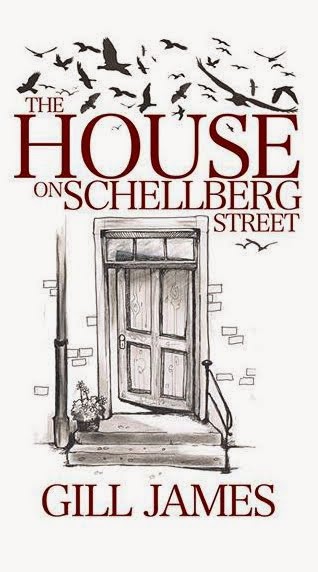
Part of my interview with Gill James on Chandler’s Ford Today for this week looks at the issue of censorship, including the self-imposed variety. Is there ever a case for doing this?  I think so – and I recommend a read of the interview so you can see what Gill thinks about it.  Her experience of writing historical fiction is based on writing her book The House on Schellberg Street, which is set in Germany throughout World War Two, so censorship would have been an issue for her characters and something they had to work with.

In many ways, any writer who edits their work (and I would hope that is all of us!) self-censors.  We look at the way we originally wrote a piece, realise we can write it with stronger words and so on and cut out the deadwood.  We deliberately make choices as to what remains.  Also we have to work out what our reader really does need to know about our characters to get the most out of the story.  I can’t think of any fiction writer who, preparing biographies for their characters (whether detailed or a simpler outline), puts every single thing into their stories!  They would become top-heavy with information for a start.  As for word count restrictions forget it, you’d never meet them if every single thing you created went into your finished piece.

The important thing, I feel, is whether writing non-fiction or fiction, is to ask yourself if the information is relevant to the reader?  If you left the information out, would the article or story still stand?  If the answer to that is no, then the information goes in and stays in!

18frontcoverTHoSS

Cover of The House on Schellberg Street.  Image supplied by Gill James.  Working in historical fiction will mean dealing with censorship, especially if writing about an era where it is prevalent.

One thing that has been true throughout history is the need for a good edit! Image via Pixabay

Editing immediately means accepting you are self-censoring to a certain extent, yet without it your story will be weaker. Image via Pixabay

CHANDLER’S FORD TODAY/FACEBOOK – GENERAL

Part 2 of my interview with Gill James looks at the issue of censorship.  Gill also shares her joys and woes when it comes to writing historical fiction and also offers some very useful tips for writers new to the genre. I hope to be writing more “writing in other genres” posts for CFT later in the year, including crime and ghost stories.  Will post more details when I have them.


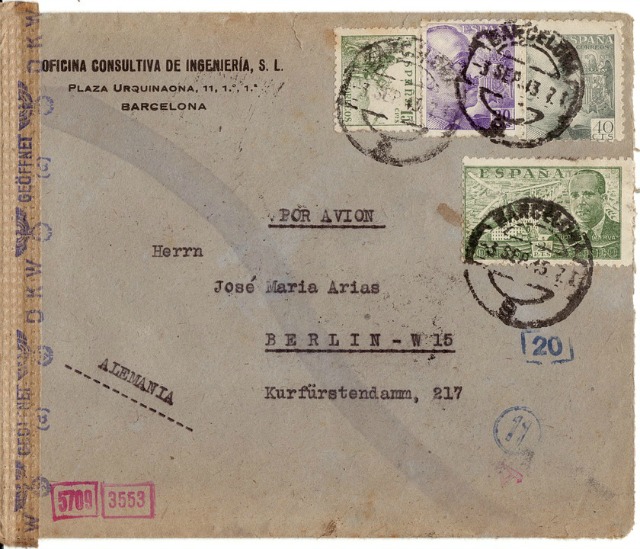
Note the dates on the postmarks - clear censorship - image via Pixabay

Note the dates on the envelope, clear indications of censorship.  Image via Pixabay.


FACEBOOK – FROM LIGHT TO DARK AND BACK AGAIN

I share some thoughts on competitions and whether titles count as part of a word count limit in tonight’s post.

https://www.facebook.com/plugins/post.php?href=https%3A%2F%2Fwww.facebook.com%2Ffairytaleladyallisonsymes%2Fposts%2F612259645829514&width=500


Copyright (never enter a competition asking you to give away ALL rights) - image via Pixabay

Never enter a competition which asks you to sign over ALL your rights. If in doubt seek advice from writers’ groups, the Society of Authors etc.  Image via Pixabay.


“Honest” Writing and Historical Fiction

Fairytales with Bite – Dismissing Fairytales – Why?

I’ve never understood why some people dismiss fairytales.  I’ve often come across comments like “oh that is just a fairytale”, “you shouldn’t take that seriously, it is just a fairytale” etc etc.  For me there is no “just” to a fairytale.  There is a lot of truth behind many, if not most of them.

I strongly suspect Hans Christen Andersen had witnessed seeing poor girls selling matches on the street, leading him to write The Little Match Girl.  There is a truth behind that story which I think comes across powerfully.  Oscar Wilde’s The Happy Prince to me conveys what I think Wilde would have liked to have seen happen.  The statue Prince in the tale knew his gold leaf would only be of benefit to people if it was taken off and given to poor people to sell so they could make ends meet.

So fairytales should be taken seriously I think.  They’re not just for kids.  Indeed the original versions of so many of the tales are not suitable for the under-18s.  Disney could never have filmed The Little Mermaid as Hans Christen Andersen originally wrote it.  There is no happy ending in the original.  The classic fairytales are carefully crafted stories (and/or reworkings of even older tales) and should be appreciated as an art form in their own right.


castle-2115425_640

Fairytales are not just “pie in the sky”.  Image via Pixabay


This World and Others – Honest Writing

In my CFT post tonight, I interview Gill James about her historical fiction and the issue of truthful writing came up as part of our discussions.  Gill made the very good point that sometimes fiction can pull out truths that strict facts cannot and, for me, a great example of this is The Daughter of Time by Josephine Tey, which has made many people think again about what they think they know about Richard III.

Gill’s own book, The House on Schellberg Street, examines just what ordinary young German people may have known during Hitler’s rise to power and throughout World War Two.  (Many really did not want to be at war with Britain incidentally.  As well as having friends here, well we Brits are often known as Anglo-Saxons and of course the Saxons were from Saxony which is in Germany.  Our history goes back a very long way).

So what then is “honest” writing?  Is it just strict non-fiction based on verifiable fact?  I don’t think so.  It is writing which comes from the heart of the author and which conveys an important message (and without preaching.  To Kill a Mockingbird does this superbly. The horror of racism is conveyed brilliantly).   It is the author writing true to their characters regardless of how horrible or nice they are.  It can be the author sticking to their guns at times when it comes to how they want “their people” to be portrayed.

stones-244244_640

Honest Writing will create ripples.  Image via Pixabay

Facebook: General & From Light to Dark and Back Again & Chandler’s Ford Today –

Writing Historical Fiction

In Part 1 of my Chandler’s Ford Today interview with Gill James about her historical fiction (The House on Schellberg Street), we talk, amongst other things about why invent historical stories when history itself is full of real ones?  An interesting topic I think.  Comments very welcome here and on the Chandler’s Ford Today website.  Part 2 next week will share Gill’s excellent advice for writers new to the genre of historical fiction.  Gill’s book is based on factual letters written by (as round robins) young German girl friends living during Hitler’s rise to power and throughout World War Two.  I read the book and felt a palpable sense of menace especially for one of the characters given, of course, I read with the benefit of hindsight, something the characters could not have.


18frontcoverTHoSS

Gill’s book’s front cover.  Image kindly supplied by Gill.


Old letters - image via Pixabay

So much history is found in letters and postcards.  Image via Pixabay.