Changing the World and Reading Fairytales

All images are from Pixabay unless stated otherwise.

Facebook – General – and Chandler’s Ford Today

My latest Chandler’s Ford Today post is the start of an occasional series where I look at pivotal moments in history. I start with one where the result changed everything – Bosworth 1485. And the relevance for Hampshire? Well given our county symbol is the Tudor Rose, quite a bit!

It is strange that Bosworth is not commemorated more than it is given its impact on the whole country.

Hopefully, see some of you at the Winchester Discovery Centre 10th-anniversary celebrations tomorrow.

This slideshow requires JavaScript.

Facebook – From Light to Dark and Back Again

Looking forward to reading some of my flash fiction at tomorrow’s Winchester Discovery Centre event (10 am to 4 pm. Officially, I’m “on” at 11.45 for a short presentation but I will be there for the day with a stand).

If you would like to know more about flash fiction and/or writing for the small press and online magazines, do come over and have a chat.

There will be a wide range of authors taking part throughout the day and other activities so the whole day should be a lot of fun with something to interest most people!

This slideshow requires JavaScript.

Fairytales With Bite – Reading Fairytales

I’ll be reading some of my fairytales with bite at Winchester Discovery Centre tomorrow (Saturday 25th November 2017) as part of their 10th anniversary celebrations.  A group of local writers, including me, will be giving short presentations and readings throughout the day as well as manning our own book stands there.  It should be good fun.  If you are in the area and would like to know more about flash fiction and/or writing for the small press and online magazines, do come over and chat.

Reading fairytales also means of course reading between the lines.  One of the things I love about fairytales is they usually have a fairly strong message behind them.  With Hansel and Gretel, I pick up the obvious anti-child cruelty theme but also the importance of sticking together and supporting one another.  Had Hansel and Gretel not done this for each other, they wouldn’t have survived in the tale, which is the whole point.

The nice thing about fairytales also is the story shows you the message without preaching it.  It is by far a more effective way of getting the message across and something we should all aspire to with our own writing. I know I find it far too easy to slip back into “telling” though flash fiction writing, with its tight word count,does help me against that (there’s no room for it!).

This slideshow requires JavaScript.

This World and Others – Changing the World

My latest Chandler’s Ford Today post looks at how the Battle of Bosworth in 1485 changed everything and I especially look at its impact for Hampshire, my home county. It was very much a personal battle too between Richard III and Henry Tudor, later Henry VII.  One man’s actions, that of Lord Stanley who betrayed Richard, literally did change everything so this made me wonder what about our characters and the changes they could bring about.

What individuals amongst them could change everything in the worlds we’ve created and how?  What would the impact be of them doing this?  What if they decided not to change anything?  Is the status quo maintainable (and should it be)?  Is the world you’ve created crying out for change and needs the right character to do it?  Even if your “right” character is willing to carry out the changes needed, how do they reach that decision and what obstacles are in their way?  Do they ever doubt themselves and their “mission”?

There are some cracking stories to be written answering those questions. Of course, for the last couple, I was thinking of The Lord of the Rings, but while I know I won’t ever write anything on that scale (few of us could!), we can still answer those questions for our own stories and bring more drama and tension into them, which should hopefully keep our readers wanting more from us!

This slideshow requires JavaScript.

FORMATS AND FAIRYTALE REVENGE

Facebook – General – Formats for Reading

Pleased to catch up on some magazine reading this week. I tend to have weeks where I get little chance to read much or am able to read loads. There seems to be no happy medium for me. Not sure why this is but do know it can be annoying!

I do read on my Kindle most evenings and I love the ‘”portable library” aspect of that. Really useful but only this week I’ve ordered a paperback, which has just arrived. Love books, love all the formats they come in is my motto!

Not all formats suit all people. I can think of family members who would never read a paperback (especially if it is of the length of The Lord of the Rings trilogy, which I adore, though to be fair if you drop THAT on your foot, you’ll know it!), but they do love audiobooks. I only listen to those when on lengthy car journeys but they are fabulous for that.

So what is your favourite format for a book? I think predictions of the death of the paperback are just plain wrong. I think the swing towards ebooks and then back again towards paper books will continue. (New Kindles come out, leads to boost in sales of ebooks etc).

This slideshow requires JavaScript.

Facebook – General – Part 2 – Winchester Discovery Centre

Looking forward to taking part in the Winchester Discovery Centre’s 10th-anniversary celebrations next Saturday, 25th November.

A group of local writers, including yours truly, will be giving short talks and readings throughout the day. There will be a range of other activities going on throughout the day too.

There is a video clip on the link below. Hope to put up more details a little later on in the week but, if you can, do come along and enjoy the day at the Centre. Should be fun.

Facebook – From Light to Dark and Back Again Part 1

Just sometimes I like to write something different for my blog posts!  This story will end up, I hope, in my second book.

I ran till I could run no more.
I dropped to the thick forest floor.
The sounds behind me had now gone
But I knew it was a big con.
They weren’t fooling me anymore.

I guess it would’ve helped if I had
Chosen not to go to the bad.
But when a girl’s luck is so down
And she can nick a pretty crown,
To not do so would just seem mad.

Who would miss that one little piece?
Not the king. Not even his niece
And she was the one who wore it!
No, I thought, I do need a bit
Of luck my way, the bad to cease.

I’d sell this lovely work of art.
I knew I must make myself part
With it so I could try to use
The money to feed my own muse.
Well, all writers need a good start!

Allison Symes – 18th November 2017

A poem or flash fiction or both? I occasionally write stories in verse though I do prefer the more obvious prose format. It is nice to throw something different into the mix now and again though!

Facebook – From Light to Dark and Back Again Part 2 – Vengeful Fairies

If you were ever in any doubt that fairies could be downright nasty when it suited them, have a look at my “mini-series” on this theme in From Light to Dark and Back Again. Job Satisfaction and Collector’s Piece show fairies having a great capacity for revenge (and why it pays never to annoy the Tooth Fairy. And you thought going to the dentist was bad enough…).

I’ve always loved J.M. Barrie’s portrayal of Tinkerbell. Definitely not all cute and sweet. When children are told to clap if they believe in fairies and Tinkerbell wishes she could “get at” the ones who didn’t clap, well I think that one passage alone sums up the fairy folk attitude to life admirably! (Oh and fairies are definitely not twee in Shakespeare either so why fairytales can sometimes be seen that way and “just for kids” is beyond me).


Reviews and Favourite Stories

Facebook – General – Reviewing

One of the problems with any kind of review is that you can’t take the personal taste of the reviewer out of it! Now that, of course, can make for some great reviews when the reviewer (a) acknowledges that and (b) gives a fair assessment whether or not they love whatever it is they are reviewing.

My policy here is to never review anything unless there is a good chance I am going to like at least something about the production or the book in question. I’ve never seen the point of “hatchet jobs” in reviews when it is clearly the reviewer’s personal taste clashing with whatever it is they’ve gone to see or have read.

As a writer myself, I have every sympathy for the hours and hours of work put in by the writers, actors etc only for them to receive said hatchet job. Why bother doing that? Simply say why the production or book didn’t work for you and leave it at that. That way at least the reviewer is merely being honest and readers can decide whether or not they are likely to agree and so either go and see the play/read the book or not, as the case may be.

Image Credit:  General images are from Pixabay, images of books I’ve appeared in or have written are obviously by  me.

This slideshow requires JavaScript.

Facebook – General – Favourite Stories

Do you have a favourite story?

I think the nearest I come to this is the Cinderella one as, not only is it a great fairytale, my take on it was my first story in print (A Helping Hand in Bridge House Publishing’s Alternative Renditions). I tell the story from the youngest ugly sister’s viewpoint. The anthology comprises fairytales told from the viewpoint of minor characters in those tales and is good fun.

So the story has special meaning for me on those grounds and because I love the idea of injustice being put right (even if it does take a fairy godmother, some rats, and a pumpkin!).

What I read is dependent on my mood. I tend to read a lot in a genre for a while, then go on to another one, read a lot in that and so on. Of course, what matters most of all is to read widely and frequently. I see it as “topping up” my love of stories and books and that is necessary to help me write my own.

This slideshow requires JavaScript.

Facebook – From Light to Dark and Back Again

I’m preparing a talk on flash fiction, which I hope to use at an event later this month (and adapt for future events too!). More details on the event concerned when I have them but my talk looks at what flash fiction is and the benefits to readers and writers alike.

When preparing something like this, I focus on what would most likely be of interest to the potential audience. In most book and literary events, there is likely to be a mixture of readers and fellow writers. The nice thing is all writers should be able to wear the “reader’s hat” as well as obviously wearing the writer’s one and so pitching the talk, and working out what both are likely to be interested in, is easier to do.

Both reader and writer are interested in the process of producing a story, albeit from different angles. Both are interested in the inspiration behind the stories, though the writer wants to know how to take that inspiration and use it to produce something unique to themselves. Both reader and writer are looking for connections.

In the case of a reader, you are pointing them in the direction of reading your story if they haven’t done so already. If they have, you, as the writer, are generally looking for feedback. What worked well? What was less good/effective? In the case of another writer, they are looking for tips to help them improve their own writing and learn from you what lessons YOU learned the hard way so they don’t have to! Be fair though. You will do this yourself every time you go to another author’s talk!

This slideshow requires JavaScript.

Facebook – From Light to Dark and Back Again Part 2

The art to a great flash story
Be it sad, funny or gory
Is having no word out of place.
It also grips you and its pace
Is apt for the allegory.
(Allison Symes 2017)

Okay, the Poet Laureate’s job is definitely not threatened by me, but the above does sum up flash fiction reasonably well.

I’ve used nursery rhymes (Hickory Dickory Dock) as a basis for my tales (Telling the Time), as well as fairytales told from the viewpoint of other characters.

I’m looking for what impact my flash fiction will have on a reader and I like my characters to justify their stance. It doesn’t mean that they’re right but you should be able to see into their mind and understand why they act the way they do and/or live the way that they are. It is a question of looking out from where they are, as opposed to where I am. I write more effectively for the characters if I can do that.

This slideshow requires JavaScript.


Comic Fiction and Stories told in Letter Form

Facebook – General

Comic fiction is amongst the hardest things to write, given humour is subjective. My late mother had very wide tastes in books (think H.G. Wells to Dickens to Shakespeare to Jane Austen to Daphne Du Maurier to name a few). Her one blind spot was humorous prose. No time for it at all, though she did have a good sense of humour (and loved Morecambe and Wise amongst others).

Humour doesn’t always work well in text. You sometimes need to be able to read someone’s body language so that you know they are joking. Subtle humour can sometimes be too subtle for the joke to really work. I’ve always found the best humour in fiction has been either through a character that is generally funny in and of themselves or through a funny situation, which is well set up and acted on.

In From Light to Dark and Back Again I’ve tended to use humorous situations and I also like to give my characters a good sense of irony. They may not pick that up but the reader will. Sometimes the best humour is the unconscious kind!


This slideshow requires JavaScript.

Facebook – General Part 2

What is the point of any short story? To make a specific point and show how the characters reached where they are, and what they are going to do about it. A short story can cover those changes of attitude or incidents, which would suit the form well, but not that of a novel. Less is definitely more in this case!

I have a distrust of padding out a story in any case. You should have enough material to draw on to write a story without any padding. It may be that what might look like a short story idea is really just an incident (you could think of turning it into a flash fiction piece.). Equally think the idea out more, brainstorm, even put the whole thing aside for a bit until you DO have a strong enough idea, you easily have enough material for it.

Facebook – From Light to Dark and Back Again

My favourite form of flash fiction are those stories which leave a definite impact on the reader. Doesn’t have to be a happy ever after kind of story but one where there is a clear resolution to the problem set up at the beginning of the piece.

Of course with flash that impact is very sharp because there isn’t a lot of room in which to deliver it. Yet the impact mustn’t feel forced, must arise naturally out of the situation the story has created, and be appropriate to that tale.

Ernest Hemingway’s famous example of For Sale One Pair Baby Shoes has everything, Your emotional reaction to that story can be one of horror, sadness, or matter of fact acceptance. A lot will depend on your own outlook on life. (It can also be positive – the baby had LOADS of shoes, quickly outgrew them and so didn’t need this pair).

Facebook – From Light to Dark and Back Again Part 2

Technically a flash fiction piece is anything under 1000 words, though I think anything on the upper limit mark is really a short story. (Just a shorter one than the norm for competitions!).

The advantage of the 500-word and 750-word flash fiction tales is I can go into a little more detail, give a bit more depth into the character but literally about as half as much as I would do for a standard length short story (1500 words).

In Punish the Innocent and You Never Know, I use the longer version of the flash fiction I write to tell the stories in a letter format from the main character. It is one of those areas where I don’t think the main character would write 50 or 75 or 100 words. They would write more. In Punish the Innocent, the main character is a mother writing to her daughter. In You Never Know I don’t name the recipient but it is clear it is someone the main character knows well.

The great advantage of “letter” stories is the way in which they are written tells you so much about the character (and their mood!) when “they wrote it”. You can save on word count here. When a letter writer is irritated by someone, you know at once the recipient has to be someone they know well. You usually write fairly politely to strangers! Well I do…

This slideshow requires JavaScript.

WHEN LIFE GETS IN THE WAY… IN A GOOD WAY

I’ve not managed to achieve much writing wise this weekend due to settling in our new dog, Lady, but for once life has got in the way in a good way!

Facebook – General

Making slow but steady progress on the follow-up to From Light to Dark and Back Again. Have got enough material for Chandler’s Ford Today posts to the end of the year and probably well into January, though this is a good position to be in! Looking forward to the Bridge House Publishing/Cafelit event in early December. Frightening to think it’s not far away now. (Have got precisely one Christmas present so far!).

Lady, our new border collie cross, is now home and does not appear to be fazed by fireworks. This is nice as Mabel and Gracie were petrified of the things. Lady will need additional training, being so young still, but we hope to take her to classes soon. (It will be as much for us as for her). Has a very good temperament.

Pictures below were taken at the Dogs Trust, Salisbury. More will follow in due course!


Facebook – General – Part 2

It’s been a busy but lovely weekend as we settle Lady into her new home. Lots of walks, which she has loved, and she’s not fazed by fireworks, which came as a very welcome surprise. Mabel and Gracie loathed them.

We will be taking Lady to training classes (to also help with her socialisation, though she has been very good on the lead when meeting other dogs). She’s not made up her mind yet where she’s sleeping and tends to flit for a while before settling but both Mabel and Gracie did this for a while.

Lady was a bit fazed by the noise of the printer but has now got used to that. She will get used to that – a LOT!

Writing wise, have not got a lot done this weekend. Am not surprised but equally unworried. Will be making up for that!

The bigger ball was a favourite of both Mabel and Gracie.


Facebook – From Light to Dark and Back Again

One form of flash fiction I like a lot is to hint at a film or fairytale I love and show an aspect of it from a character that is not the lead. A story I’m working on for my next book focuses on one of the witches from The Wizard of Oz as my lead.

I’ve also experimented with a four-line flash piece, which tells a complete story, but which might just technically count as a poem. It is a real pleasure to play with form like this.

I also have a couple of historical pieces in the next collection and hope to write more on these.

Whether I’ve written novels, short stories, scripts or flash I’ve always loved getting straight into the characters’ heads. Flash fiction almost encourages you to do to that given you’ve got to get the story up and running so quickly – and this is where the character does the work!

Image Credit:  All images below by Pixabay

This slideshow requires JavaScript.

Facebook – From Light to Dark and Back Again Part 2

Can’t quite believe how quickly the light fails now the clocks have gone back. Book title very appropriate! (Wish they’d choose one time and leave it at that but there you go).

Due to settling in the new dog, Lady, I’ve not got much writing done this weekend but did manage to do some work on the follow-up book, so I’m pleased with that.

Am working on next CFT post which will be a review of a recent spoof I’ve seen (good fun it was too, though my review will go into more detail than that!). My next few weeks of CFT posts are pretty much lined up with an author interview (two-parter) to come and a look at how local places are supporting their local writers. So plenty to get on with when not working on follow-up book.

img_20170814_132128.517

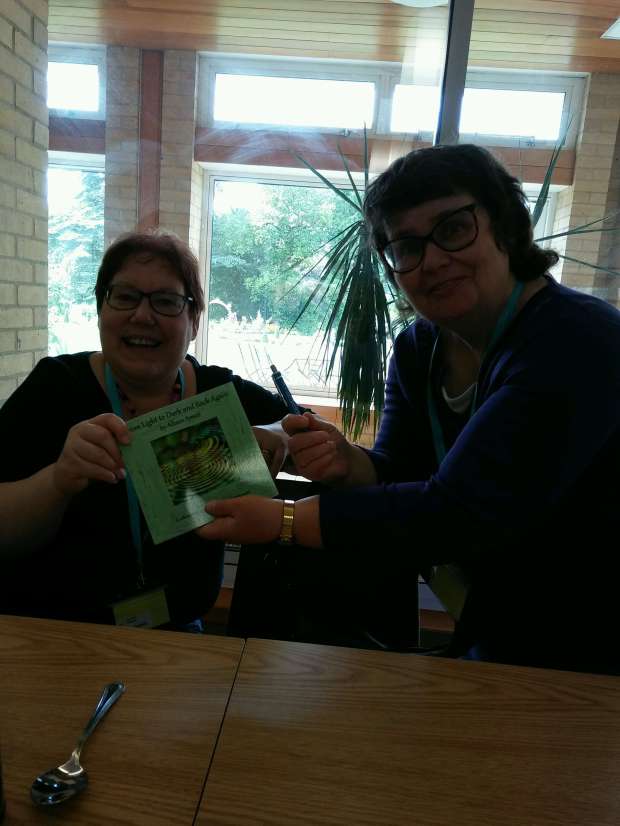
Val Penny and I at Swanwick earlier this year. Good luck to Val with her book, Hunter’s Chase, due out in 2018

img_20170814_133141.118

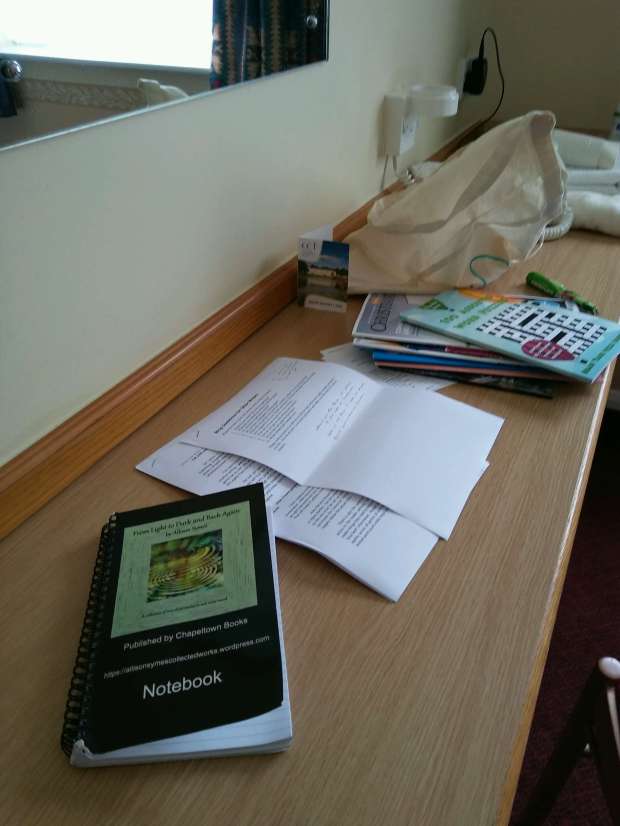
My desk in my room at Swanwick.

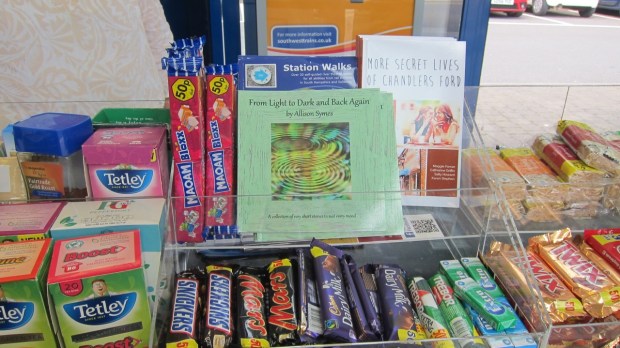
Local authors' books at Chandler's Ford railway station

Local author books on sale in Chandler’s Ford Railway Station including mine

Allison book-signing Chandler's Ford railway station

Book signing at the railway station earlier this year


Books, Writing Flash Fiction Almost Anywhere, and a Non-Fiction Favourite


Classic Books - image via Pixabay

Non-fiction and especially history should not be deadly dull.  Image via Pixabay.


Good range of topics tonight, I think.

Definitely covers the spectrum (well, okay, I left novel writing out but another time perhaps!).

Facebook – General

What is on your to be read list? I have a mixture of history (fiction and non-fiction), fantasy, crime, P.G.Wodehouse, biographies – and that’s just on my Kindle.

Still, it is always good to have plenty of wonderful material to read and I’m in no danger of running out anytime soon.

Logically then you might feel the last thing I need is more books. Get out of it.

Logic does not come into it when it comes to buying books. A title/story (and I include non-fiction in this) grips you and you want to read it as soon as you can or not as the case may be. Therefore, you have to buy!

Well, that’s my excuse and I’m sticking to it.

Looking forward to the Chandler’s Ford Book Fair on Saturday!

20171015_233807.jpg

My Bridge House Publishing/Cafelit/Chapeltown Books works to date.  Image by Allison Syme

BookFairPoster8

Looking forward to the Book Fair on Saturday. I buy books as well as write them!  Image from Catherine Griffin (Chandler’s Ford Writers’ Hub).

Feature Image - Flash Fiction - Books are Gateway - image via Pixabay

Says it all really and applies to non-fiction equally as fiction. Image via Pixabay.

Facebook – From Light to Dark and Back Again

Making progress on what I hope will be my second book. I suppose another thing I love about flash fiction is it also easy to write almost anywhere. Naturally, I keep notebooks and pens in my bag but am increasingly using my mobile phone for this kind of thing.

I love using Evernote to scribble down ideas and stories when I’m on trains etc. Really useful program and I can share contents to different places so I know I will always have at least one back up. I’m using the free version of Evernote at the moment but like it a lot.

Nice to be able to use it to take pictures, which I have done. Have not used the audio function as I prefer to write stories, rather than dictate them. Good to have the option though!

And it remains my big hope that flash fiction as a whole will tempt people who are reluctant readers (you’re not asking them to commit to a big read all in one go).

Also, I hope it will encourage those who feel they don’t have enough time to read to realise well actually you do. Five minutes here. Five minutes there. And flash fiction is the answer when it comes to providing a quick read!

https://www.facebook.com/plugins/video.php?href=https%3A%2F%2Fwww.facebook.com%2Ffairytaleladyallisonsymes%2Fvideos%2F632947710427374%2F&show_text=0&width=476

Goodreads Blog – Favourite Non-Fiction

My favourite non-fiction is usually history, based on an era I know reasonably well, but which then goes on to show me aspects I had NOT known.

A good example of this is The Maligned King by Annette Carson, who re-assesses Richard III’s reign and uses source materials to do so. It is a fascinating read.

I like the whole Wars of the Roses history (though thankful not to have lived through it!) but the story of Richard and the “did he or didn’t he?” motif is a particular favourite.

There is so much material here I had not heard of and there has been an update to the book recently given the discovery of the King in the now infamous Leicester car park. I had the original book in hardback, the update gave me the perfect excuse to download it to Kindle!

I am, of course, open to reading about other eras I know less about but, given limited reading time, I “target” my reading accordingly. Why is there never enough time to read as much as you’d like?

Personal history can often be found in things like old exercise books, which in turn reveal things about political history and how much people knew at the time. Image via Pixabay.

Personal history can often be found in things like old exercise books, which in turn reveal things about political history and how much people knew at the time. Image via Pixabay.

Wishes and Flash Fiction


Facebook – General

One week to go to the Chandler’s Ford Book Fair from 10 to 12 at the Age Concern Centre in Brownhill Road. Good range of authors and genres represented. Should be good fun.

If one of my fairy godmother characters could grant me three wishes, what would I choose? (For that matter, what would YOU choose for yourself?). My choices would be:-

1. To send predictive text into oblivion and arrange things so people forgot it ever existed. (I’m counting that as one wish, my fairy godmother character may disagree, but I would sacrifice a wish cheerfully to get this through. Much as I love my smartphone it has confirmed my loathing of predictive text. Complete pain when writing, It rarely predicts anything I can actually use!).
2. To NEVER be interrupted by anything when reading. (Think my fairy godmother character might struggle with this one).
3. For paper jams and power cuts to be a thing of the past. They always happen at the most inconvenient times.

If I could sneak in some extra wishes, I’d go for:-

4. For all people to be able to read and write and to want to read. Reading can easily be dismissed as something people don’t have time for and I’m at a loss as to why. Same people would happily watch a 3-hour film. Maybe reading needs to be seen more as a form of entertainment than it currently is?
5. For genre fiction to no longer be looked down on (though there has been some progress here). Why shouldn’t a book JUST be for entertainment? Why does it have to be worthy as well?

So what would your wishes (+ 2 bonus wishes) be?

More of the books

Local writers’ books  including mine recently on sale at the Hiltingbury Extravaganza.  Hope to see some of you at next week’s larger event, the Chandler’s Ford Book Fair.  Image by Allison Symes

BookFairPoster8

Thanks to Catherine Griffin for the excellent Book Fair poster.  Also to Sally Howard and all in Chandler’s Ford Authors who are organising this event.  Should be good!

Well, what IS your story? Image via Pixabay.

Well, what IS your story? Image via Pixabay.

Facebook – From Light to Dark and Back Again

A flash fiction tale has to be complete in itself with a beginning, middle and end, but its great joy (for me at least) is the ability to imply so much more.

My story, Serving Up a Treat, is a tale of domestic abuse where the character brings an end to it. (For how you’ll need to see the book!). What is implied in this story is the backstory. It is implied that what has been happening to the character has gone on for a very long time.

The “snap” point should be expected so does the piece deliver on that expectation? Yes, it does. You do have to follow through! However, that doesn’t mean you have to spell out every last detail. In fact, with flash you can’t as there simply isn’t the room with the limited word count.

I’ve found flash fiction to be a great way of improving my blog posts, longer short stories etc because it forces you to ask what is REALLY important. What MUST the reader know? What can I drop hints at and leave them to work things out from there?

Photo2988

From my railway station signing. The lovely origami boxes were made by my CFT editor, Janet Williams.  Image by Allison Symes

Writer at work. Image via Pixabay.

Writer at work! Flash fiction stories must be complete in themselves but they can imply so much.  Image via Pixabay.


Many thanks to all who’ve reviewed my book so far on Amazon and Goodreads. 

Goodreads – Author Programme – Blog Post

Why do you read? Like me, I suspect you have several answers to this. Mine include:-

1. For entertainment.
2. For education.
3. For research (for a story or post I’m writing. Not quite the same thing as for education above. I define that as reading to learn but for its own sake and not necessarily to “use” elsewhere).
4. Because I always have read and reading is simply part of what I am and do.
5. The book is nearly always better than the film!
6. I like to read at bedtime to help me unwind and have a better night’s sleep.
7. To widen my tastes in books and stories, I have to be prepared to try genres new to me so I see this as a kind of exploration of what’s out there. I have no idea at this stage whether I’m going to like what I read or not so can’t say if I will be entertained!
8. I’m thrilled to be published myself and I do see it as necessary to support the industry I’ve entered. How can I best do that? By buying and reading books! (A kind of self-help here I think).
9. To enjoy what my friends are writing!
10. To explore literary culture. In the last two years, for example, I’ve read and seen more Shakespeare plays than I ever have done and part of this is to expand my knowledge here. (It’s a very enjoyable exploration too and I love National Theatre Live for making it easier to go to see productions).

There is no right order for any of the above reasons for reading but they strike me as all being very good ones to do so!

20170917_145438.jpg

To write books you need to have a deep love for the written word and how else can you develop that other than by reading widely?  Image by Allison Symes

Other News

Many thanks to Jennifer C Wilson for hosting me on her excellent blog a little while ago.  I share the link to my post here (Falling into Flash Fiction), but highly recommend exploring the rest of her site and her paranormal historical fiction works, Kindred Spirits: Tower of London, Kindred Spirits:  Royal Mile, and The Last Plantagenet?  Jennifer is published by Crooked Cat but her most recent book, The Last Plantagenet?, is her first self-published novella.

STORY ENDINGS

A definite theme emerged tonight.  Which do you find most difficult to write – the ending of a story or its beginning?  I share some thoughts on both my Fairytales with Bite and This World and Others posts.  Comments very welcome.  And I would welcome questions coming in via the Goodreads Author Programme Q&A too.

Firstly, though:-

FACEBOOK – GENERAL AND CHANDLER’S FORD TODAY

This week’s Chandler’s Ford Today post looks back at YA author, Richard Hardie, and his book signing at Eastleigh Library last weekend. This was part of Cub/Brownie Uniform Day and, overall, part of the Love Your Library Week.

The post looks at what libraries can do (Richard’s report) and I share my thoughts on how writers and libraries need each other, as well as give a summary of the book signing event itself.

If you missed Richard at Eastleigh, then he will be at the Chandler’s Ford Book Fair on Saturday 28th October from 10 am to 12 noon, along with many other regional writers, including me. We hope we can see some of you there.

There will be a good range of books on offer from Richard’s YA fantasy books (Leap of Faith and Trouble with Swords) to my flash fiction (From Light to Dark and Back Again) to short story collections (Secret Lives and More Secret Lives of Chandler’s Ford) and many books and genres besides. Far too many to list here but that’s a very good thing!

Eastleigh Library - Richard at work

Richard at work in Eastleigh Library,  Image by Allison Symes

Allison Symes, Richard Hardie, Daniel

Richard, his dog, Oscar and my son, Daniel, were amongst my supporters at my signing earlier in the year. Image by Janet Williams, Chandler’s Ford Today’s lovely editor.

BookFairPoster8

Richard and I will be two of the authors at the local Book Fair soon.  Image via fellow Chandler’s Ford Writer’s Hub member, Cahterine Griffin.

Facebook – From Light to Dark and Back Again

One of the dilemmas I sometimes face when writing my flash fiction is knowing where to stop!

Sometimes I bypass this dilemma by writing a short piece (usually 100 words) and then, separately, extending the story out to a standard 1500 to 2000 word count later on if I feel the idea is strong enough to take this. (I then use those stories for standard short story competition entries).

I don’t do this too often as I’m usually well engrossed in the next story idea and I also think this solution is one best done sparingly anyway. You want generally to move on to the next idea, the next story etc. However, for a really strong idea, there is no reason why you can’t do this and have two stories based on a strong central premise. Waste not, want not!

The other way around this dilemma, which I use more often, is to work out which ending would have the most impact on the reader and at what point. I then leave the story at that point. You can’t go wrong with that method, I’ve found, but this is where putting work aside for a while pays dividends. You can then look at the piece with fresh eyes and read it as a reader would. It is only by reading it like that you can work out what that best impact point is in the first place!

20171015_233807.jpg

My latest story is in The Best of Cafelit 6, recently published.  The rest of the books shown here are where I’ve been published by Bridge House Publishing, Cafelit and, of course, Chapeltown Books.  Image by Allison Symes

Love the cover for this. Image supplied by Bridge House Publishing.

My last Bridge House story is in here. Naturally I hope there will be many more to come! Image supplied by Bridge House Publishing.

The links below take you to my Weebly websites with these posts but I have set up a slideshow on both not reproduced here.

FAIRYTALES WITH BITE

One of the joys of writing flash fiction is it doesn’t limit your possibilities with a very strong story idea.  I have written a short piece (usually one of my 100-word tales and then, separately, extended the story at a later date to the standard 1500 to 2000 words required by most writing competitions.  So I have two stories around one strong central premise.  I like this!

I must admit I do this sparingly because I have usually moved on to the next story idea etc. (I also think it is something best done sparingly anyway and for your very best ideas only, otherwise you dilute your own work too much).

This situation comes about when I realise I am having problems working out where exactly to end a story.  Do I leave it at the short punchy ending which suits flash fiction so well or do I extend the characters out (and the plot with them) and trust the right ending will emerge from that (it always does incidentally)?

My main method of working out the right story ending is to work out at which point the story has the most impact on the reader and that is where I leave the tale.  Nothing more, nothing less, job done.  For flash fiction, which aims to give short, sharp impressions on the reader, this is by far the best way of working out where to stop the story (I think).

Feature Image - Flash Fiction - Books are Gateway - image via Pixabay

One of my favourite stock images because it is so true.  Image via Pixabay.

THIS WORLD AND OTHERS

My theme tonight has been the right story endings – right for your story that is, as all endings have to be appropriate for the tale and that can have so much variety.  I can’t imagine Shakespeare’s Hamlet or Romeo and Juliet with happy endings (can you?!), but the way these plays finish is appropriate for the characters and the situations they are in as the Bard of Avon wrote them.  (He also went for maximum impact on his audience, which ties in with my post Finding the Right Story Ending on my Fairytales With Bite site tonight).

So happy ever afters then?  The classic ending for fairytales, usually but not always.  Hans Christen Andersen proved with this with The Little Mermaid and The Little Match Girl in particular, which I guess I could describe as two of my favourite “weepies”.  But, again, the endings are apt for the way he wrote the characters and the situations he put them in and I think this is what we should aim for with our own stories.  Sometimes a happy ending will be appropriate, sometimes it won’t, sometimes the possibility of a happy ending to come beyond the life of the story is an apt way to finish, and sometimes a tragic solution is the only way to end the story.

So you need to ask yourself what would be the most appropriate finish for your story?  Does it tie in with what we know of your characters?  Does it have the maximum impact on your reader?  The most important thing about endings is they have to be definite and definitive.  Something about the ending must bring to a satisfactory conclusion what you have revealed about what your characters – this is where the “ring of truth” to fiction comes in.

Do you find writing the endings to stories more difficult than the start?  Comments welcome!


Eastleigh Library 2017 - Richard gave his talk from here

Richard Hardie gave his talk from this wonderful rug at Eastleigh Library but I also thought it a good way to wrap up this post tonight.  While I have talked about story endings, story beginnings can be difficult too, but for fairytales, you can’t beat this one!  Image by Allison Symes


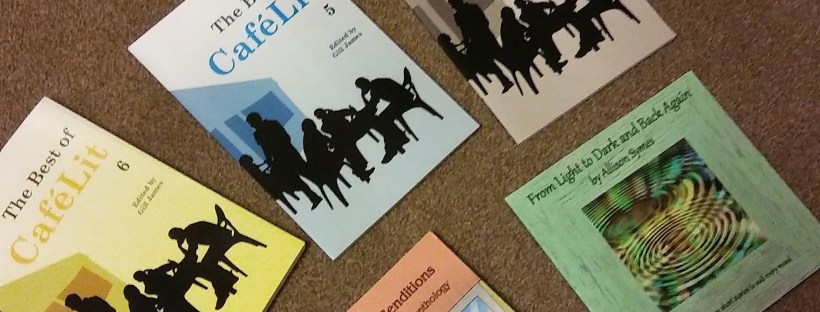
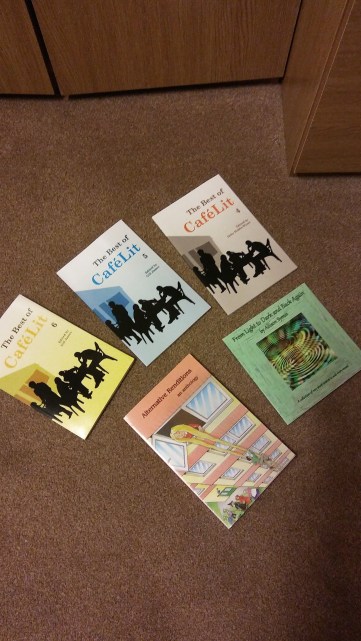
My stories are in The Best of Cafelit 4, 5 and now 6 and also by Bridge House Publishing (Alternative Renditions). My first collection From Light to Dark and Back Again is published by Chapeltown Books.

FLASH FICTION/SHORT STORIES

Facebook – General

Am enjoying reading The Best of Cafelit 6 and looking forward to catching up with some of my fellow contributors at the Bridge House/Cafelit joint celebratory event in December. Nice mix of flash fiction and short stories. All that I’ve read so far conjure up powerful images within their first few words, a sure fire way to keep you reading. Not that I’m biased or anything… 😁😉

What do I like most about the short story (flash or longer)? I suppose it is because they are their own self-contained world. What is nice about a collection of them is you can enjoy visiting many different worlds by different writers and this is particularly good if your reading time is limited. Also, short stories are a fantastic way to try out an author’s work before going on to read their novels etc.

Keeping the short story alive is one of the great things about the independent presses. They want diverse voices. We as writers can let them have that. More short stories get out there. Okay, we still have to do the publicity but we would have to do that with a novel anyway. My own gut feel is that short stories (flash perhaps especially) can be a great way of tempting reluctant readers in so the more short stories there are out there available for people, the better.

Below are images of the books I’ve been published in to date.

20171015_233743.jpg

My stories are in The Best of Cafelit 4, 5 and now 6 and also by Bridge House Publishing (Alternative Renditions). My first collection From Light to Dark and Back Again is published by Chapeltown Books.

Facebook – From Light to Dark and Back Again

How do I like to start my flash fiction tales? Often it is with a name character carrying out some action, no matter how minor, as that immediately tells you the story is about X. (Also that the action is going to matter too, no matter how minor. Everything means something in flash fiction. There is literally no room for anything that doesn’t contribute to the story in some way).

Sometimes I go straight into my characters’ heads and show their thoughts. That will give the reader an immediate idea as to what this character is like (and from there you can make intelligent guesses as to what they might do/be capable of – for me, a lot of the fun in reading fiction by other writers is seeing if my guesses turn out to be right or not. While I’m always pleased when I guessed correctly, kudos must go to those writers who successfully wrongfoot me!).

My latest published story which is in The Best of Cafelit 6 sets a time and an immediate scene so I take the reader to where I want them to be. It also helps set the mood of the story.

So there are plenty of different ways to start your story but the common link is they are all designed to draw your reader in and keep them with you until they’ve finished reading your tale.

20171015_233541.jpg

My latest published story is in The Best of Cafelit 6.


Love the cover for this. Image supplied by Bridge House Publishing.

My last Bridge House story is in here. Naturally I hope there will be many more to come! Image supplied by Bridge House Publishing.

Changes and Conjuring Up Worlds in a Few Words

Facebook – General AND Chandler’s Ford Today post

Many thanks to all with their kind words of support following the loss of our lovely border collie, Mabel, yesterday. She gets a brief mention in this week’s Chandler’s Ford Today post, where I talk about the changing seasons and my love of autumn.

Autumn was always blighted by inconsiderate firework users (too many of them going off too late at night and for days and days on ends. Absolutely terrifying for most dogs. Not going to be a problem for me this year, sadly, but I do make a plea for the adoption of silent fireworks (yes, they exist) or to focus on organised events which have the saving grace of (a) being safer and (b) don’t go on too late in the evening. The latter gives pet owners time to calm their pets down etc and is much appreciated by said pet owners.

I also put in a plea to look out for hedgehogs under the bonfire heaps before lighting them. I’ve been fond of the creatures ever since I read Mrs Tiggywinkle’s adventures courtesy of Beatrix Potter.

I also invite comments in on what your favourite season is and why. This post was a real joy to write and selecting the images a pleasure (though I could have put so many more in!).


Feature Image - Changing Seasons

My latest CFT post.   Image via Pixabay


Facebook – From Light to Dark and Back Again

An interesting question that came up at Swanwick in the summer was whether flash fiction counted as poetry or prose. It is always counted as prose but it is possible to write poetry as a piece of flash fiction.

Obviously you have to keep it short but the way you express yourself in a few lines can (a) have a poetic quality about it in itself and (b) the way you present the lines on the paper can also create a link to longer poems being presented in the same way. For example:-

THE GUILTY SECRET

I stumbled through the woods.
Not sure what was following me.
I knew I had to dump the goods
No other eye should ever see.

ENDS
COPYRIGHT ALLISON SYMES 2017

I’ve written this off the top of my head for this post and I can already see ways of improving it. (Hope to do this and include it in my next collection!). But you can see that it looks like a poem but reads like prose. It is a complete story in itself and the word count means it would come in under flash fiction categories very easily.


The eerie quality of fog can have its own beauty

The eerie quality of fog can have its own beauty.  Image via Pixabay


The Interview Interviewed!

I have interviewed Gill James before for CFT and most recently on her wonderful historical fiction, The House on Schellberg Street.  Here she interviews me for her blog!


Blogging via diaries and tablets, ancient and modern technologies via Pixabay

Blogging via journals, diaries and tablets.  Image via Pixabay


Goodreads Author Programme

I’m glad to say I am now part of the Goodreads Author Programme and I love the author Q&A they start you off with to help introduce you to people.  Please do send in questions via this and in the meantime here is what I’ve put up on site so far.  There is a blog attached to this too.  I have written a quick introductory post and, as I get into the habit of writing regularly here too, I will share the links here eventually.  In the meantime here is the Q&A.

Writer at work. Image via Pixabay.

Writer at work. Image via Pixabay.

Fairytales With Bite

My latest Chandler’s Ford Today post talks about the changing seasons and why I love autumn.

A sad change for me this week has been the loss of my elderly border collie.  In the fullness of time we’ll adopt another rescue collie but right now the house feels very empty without my lovely Mabel.  Change can be a terrible thing at times.

Having said that, change is vital for writers.  We need to be able to see what is wrong with our own work so we can edit it effectively.  We need to be open to new writing ideas.  (My being open here led to me writing flash fiction and ultimately being published in it with From Light to Dark and Back Again).  We need, I think, to keep setting goals and striving to achieve them if we are to develop further writing skills (and hopefully publication credits too).

A more positive change recently has been where I was interviewed by Gill James.  (I’ve interviewed her before for CFT).  I share the link here.  Amongst other topics we talk about why I write in the genre that I do.  Sometimes re-examining why you are doing what you are writing wise can be a good idea.  It can reinvigorate your enthusiasm, also perhaps get  you to evaluate if something really is working for you  (and be open to change if not).


Mabel-Gracie

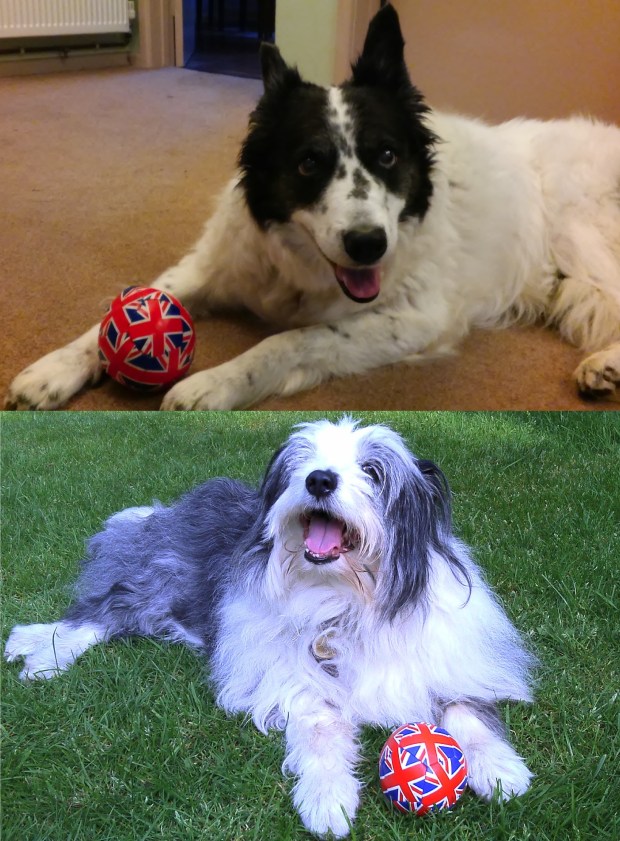
My two lovely girls, sadly now gone.  We lost Mabel, the border collie, this week.  Gracie, the bearded/border cross, died just over five years ago.  Both dogs loved their toys!


This World and Others

One huge advantage of writing flash fiction is it teaches you to write “tight” as you don’t have the room for wasting words.  So how can you conjure up new worlds in just a few words?

What you are after is a general impression for your reader.  You can’t go into too much detail but there needs to be enough for them to pick up and fill in gaps with their imagination.

For example my story Calling the Doctor in From Light to Dark and Back Again is one of my very short tales (100 words or thereabouts) and in a few lines I’ve conjured up a naive character, a sense of menace and a rough setting.

This is because this tale has a twist based on a well known novel and if you know that book, the setting of my story would come to you at once.  (Even if you didn’t know the book, there is still enough in the naivety of my character for you to picture what that person would be like and get a sense of their world that way).

So it is a question then of selecting the most important thing your reader must know to make sense of your story.

Ironically, this can work well for longer pieces of fiction too even though you would have the word count to go into more detail.  By focussing on what is the most important thing(s) for your readers to know, there will be no waffling and the images created in your readers’ minds will be so much the stronger because of that.


stones-244244_640

Do your stories have the right impact on your readers?  What are the ripples caused by the images you create?  Image via Pixabay.