Reflections

Facebook – General – and Chandler’s Ford Today

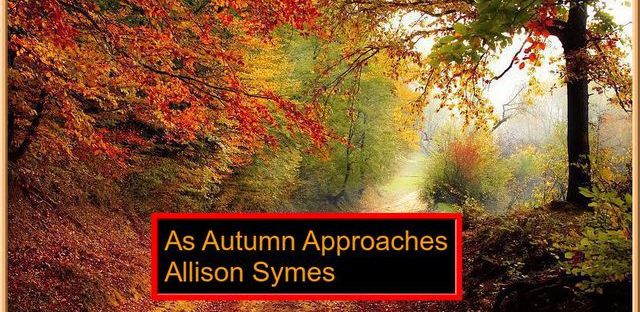
My latest CFT post is an alliterative one! As Autumn Approaches is a reflective look at the season, I share some thoughts about how the season is for writers.

I also discuss the importance of taking time out to look back, as my church has recently done for its 200th anniversary, but equally how vital it is to move on from periods of reflection, given what stays static dies eventually.

This slideshow requires JavaScript.

My CFT post this week is a reflective one on autumn. I share what I like about it, why it is an interesting season for writers, and also discuss my church’s recent exhibition to celebrate its 200th anniversary where we took stock of our history and recalled friends past, present, and no longer with us. Oral storytelling and local history are so important.

Facebook – General – and Association of Christian Writers’ More than Writers – The Highs and the Lows

Many thanks to all who commented on my More Than Writers blog earlier. You really can’t underestimate how much persistence, determination, and ability to work hard you will need as a writer. The great comfort is ups and downs are a normal part of the writing life so you’re definitely not alone here.

The Highs and the Lows – Allison Symes

What would you say were the writing highs? 

Your first piece of writing (aka “the I did it” moment!)?

Your first publication credit (the “family start to take you seriously” moment!)?

Your first book acceptance (the “some of the rest of the world start to take you seriously” moment!)?  Sadly, it always is some of the rest of the world…

What would you say were your writing lows? 

That first rejection?
Having your novel come back for the umpteenth time?
Countless short stories turned down?

The great irony, of course, is, with the right spirit and attitude, a writer can use those rejections and set backs to (a) fill them with determination to keep going, (b) to improve on what they do so the turn downs don’t arrive so often as they once did, and (c) recognise all writers go through this.

There are no shortcuts to publication.  Also, even when published, the learning curve goes on and you have to be open to it.  The writer that doesn’t learn is the one who remains static.  What is static dies, eventually.

So then it is a question of relishing the highs and getting through the lows, which is where the support of understanding writing friends is crucial.  One of the things I love about social media is the fact it makes it easier to stay in contact with said writing friends, especially when you can only meet up face to face once or twice a year.Writing forums such as the one we have on the ACW website are also useful for this kind of contact (and for sharing helpful advice and tips too).  Going to a good writing conference is invaluable too given that for most of the year we are at our desks, working alone.

Peter, of course, literally had his mountain top experience but his low was clearly his denial of Christ.  (What I love about Peter’s story is his redemption – it offers hope for us all).  So this pattern of highs and lows then is a reflection of life as it is lived and not just the writing life.

Our characters must have their highs and lows.  Without them, there is no conflict yet alone a story.  The highs and lows are not just the story events but what is in those characters.  No villain should be all evil (there must be a decent reason for them acting the way they are, decent to them at least).  No hero should be a goody two shoes.  Much as I loved Little Women by Louisa May Alcott, I found it easier to identify with Amy or Jo rather than the saintly Beth.  Identifying with your characters is the goal.  The moment a reader does that, the more likely it is they will read on and find out what happens.

Show the flaws.  Show the vulnerabilities.  Show the things the character does well.  Enjoy the process.  And good luck.

Facebook – From Light to Dark and Back Again

Don’t forget if you subscribe to Writing Magazine, you can put your book on their Subscribers’ Showcase. It’s free for a while but after that you pay a small amount per month to have it on there. My own plans later, once hopefully I have more books out, is to switch which ones I put up there to keep things fresh.

n a novel, you would have the space for different moods. Moods in the story itself. Moods of the characters. In flash fiction, you have to focus on one mood (and often on one character). But the advantage of putting a collection together is over the space of the entire book, you can have a range of moods and therefore of stories.

This was one aspect of putting From Light to Dark and Back Again together that I really enjoyed. Themes and moods became apparent and it was so easy to group these together.

Time for some more one-line stories, though one I admit is also useful wildlife advice!

1. The dragon, determined not to be fobbed off with false gold coinage, destroyed the Royal Mint with two blasts of flame.

2. Glass slippers, how the hell did that happen, thought the fairy godmother as she hung up her wand in disgust.

3. The quick brown fox jumped over the lazy dog only to find the canine could bite in places no male animal would ever wish bitten.

4. When the red, red robin comes bob bob bobbing along, it’s looking for food in the winter months, not the chance to be the star of a song.

5. The girl in the red hooded coat took one look at the Big Bad Wolf in her granny’s bed and said, “That gingham really doesn’t suit you, try silk next time.”

Any story, no matter what its length, should create an impact on a reader, whether it is to make them laugh or cry. I concede though No. 3 will probably make a few of you wince!

Goodreads Author Programme – Blog Where Do You Turn First?

So you have limited time to read (it is ever so!) and you can choose between reading one hardback, one paperback, or pick one option from your Kindle? Which would you automatically plump for over the others?

I’d go for the paperback every time (partly because while I have some hardbacks, my paperback collection is far greater). There is still the element of the “go for the real book” here, much as I love the Kindle.

Where the Kindle does come into its own is when I’m away anywhere and the last thing I want to do is lug a lot of books along with me (unless they’re by me and I’m trying to sell them of course!).

The other reason I’d go for the paperback first is I’d want the experience of the “whole book”. You can’t smell a Kindle’s “pages” but you can do it with a paper book – and I have and will continue to do so.

I do like the smell of a book. I like the look of a well designed cover. I like the feel of a paperback in my hands. So there is the whole tactile experience going on here.

I do know I’m not the only reader/writer to feel that way so if I’m weird, I know I’ve got company. Very well read company, I should add!

So what would you pick then and why? Comments welcome.

Fairytales with Bite Fairytales A to Z Part 4

J = Jealousy.  Such a powerful emotion and an excellent trait to exploit in your characters given it is understandable as a motivation for action. People do strange things, motivated by this, in real life.  Your characters can do so too in fiction.  You don’t have to like jealousy as a trait or the character to be able to identify with where the character is coming from here.  It can also act as a kind of shorthand.  If you say someone is the jealous type, it conjures up an immediate image of what that person is likely to be like, doesn’t it?

K = Killer Instinct.  Do your characters have this?  Do you?!  Firstly your characters, particularly your villains, need this (and often in the literal sense), but even the “goodies” need this to keep them going in the face of opposition etc.  They need to know when to “go” for a course of action and it will be their instinct here that will ignite the spark which drives them on.  As for you as a writer, do you have the killer instinct when it comes to editing your work?  Will you take out anything that is really not working (and be open to the idea it isn’t)?  You need to learn to be ruthless about taking out anything that is not pushing your story on.  The “kill your darlings” expression has a lot of truth behind it.

L = Learning and Laughter.  Do your characters learn from their mistakes?  A good story and great characters will have that as a major factor.  Some of my favourite series novels have shown the lead character developing over time and I love that.  It makes the character far more real to me.  As for laughter, even in darker stories, there can be room for this.  In the classic fairytales, for me, the Emperor’s New Clothes is a great example of laughing at those who supposedly are superior but are taken in by conmen (and you do have to hand it to those tailors for sheer nerve).  So where can laughter fit into your stories?

This World and Others Reflections

Reflection is a major theme of my latest Chandler’s Ford Today post called As Autumn Approaches.  (Well, this is true for the UK and Europe anyway!).

What would make your characters reflect on their actions to date/their attitudes to life?  Being made to confront the consequences of what you are doing would be one major reason to take time out to reflect, especially if there was time to reverse matters or limit any damage done.  Love, as they say, changes everything and can be a major influence in making people change their behaviour (usually for the better, but this isn’t always the case).

Sometimes a character will take time out to reflect before heading out on their adventure/quest etc.  What is interesting here is how that period of reflection influences what the character then does.  If your characters do this, how do they reflect?  On their own or do they have a mentor?  Do they look up books (especially history) to find out how others in their world’s past handled certain situations?  If the characters themselves will be setting a precedent, are there general guidelines to give them pointers as to what they should be doing?

Last but not least, are the characters themselves willing to learn from the reflections of others?


Getting Away From It All and the Fairytale A to Z (Part 1!)

Facebook – General – and Chandler’s Ford Today

My latest CFT post is Getting Away From It All. Appropriate as I am about to swan off to Swanwick! I share some thoughts on the importance of relaxing and how just writing something for the sheer fun of it can be a marvellous way to unwind for writers.

The great thing too is you can always work the piece up “properly” later on and submit it but to just write something for fun is wonderful. Possibly something we don’t do enough of? I’ve found doing this useful (a) to take a break from my main writing work and (b) to remind myself during tough patches just what it is I really love about writing – the creativity of it. I think you can lose sight of that at times.

This slideshow requires JavaScript.

Facebook – From Light to Dark and Back Again

More on the ABC of Flash Fiction…

D = Drive. Not only do you need that as the writer, but your characters do as well. Something has to happen in your narrative for it to be a story at all so your characters must be ready to “act” and for that to wrap up quickly. They must be ready to “hit the ground running”. They do something, there is a reaction, there is a conclusion (and of course it doesn’t necessarily have to be a happy one).

E = Entertainment. Whatever your genre, your flash fiction should entertain (even if that entertainment is simply to make your reader think about the theme of your story and whether they would do the same as your character has). Every word has to make your reader want to read on, every line has to move the story on, and at the end you want your reader to feel as if they have had a good read, even if it is only in 500 words, 100 words, 75 words or what have you.

F = Fairytales. I’ve found flash fiction to be a good vehicle for fairytales (albeit of the short and sharp variety. Not necessarily sweet as well though. Many of my fairy characters do have a penchant for justice, the rough kind where they feel it is necessary at that!).


Association of Christian Writers – More than Writers – On Criticism

Confession time:  Am certain I didn’t put this up when I was supposed to so will share now.  It IS better late than never and I hope my post for July on On Criticism will prove helpful.

What good judging should be and that includes for reviews etc

What every review should be. Pixabay image,

Fairytales With Bite – the Fairytale A to Z Part 1

I love a list – whether it’s a numerical one or an A to Z format.  So for fairytales and the magical world, what would my A to Z be?  Part 1 then would be:-

A = Anthropomorphism 

Not my favourite word to spell, I must admit!  However, for me, a classic tale will have this as one of its elements.  Think Puss in Boots, Shrek, The Chronicles of Narnia etc etc.  What matters is the traits shown or speech given to an animal character to have/speak must make sense for the way that character has been portrayed.  We see Puss in Boots is a character who would be smarter than his master so the speech given to Puss must reflect that.

B = Beauty
One thing I love about fairytales is that beauty is in the eye of the beholder and is not always the classical definition either.  I love the stories of The Ugly Duckling and Beauty and the Beast. Is it just me but I didn’t think the Beast was that ugly incidentally (especially as Disney portrayed him?  Huge, yes, but that’s not the same thing!  That aside, there is a strong emphasis that it is a beautiful heart/character that matters most, which I fervently believe.  I can’t say what single thing makes me love fairytales but this is a very high contender for being the top one.

C = Characters
There isn’t one dull character in fairytales, is there, when you come to think about it.  There shouldn’t be in your stories either.  (And even when a character is meant to be “dull”, there still has to be something about them that will make your reader want to find out if they stay that way or change or if there is a point to the dullness.  Maybe the lead character needs a duller one’s sensible comments to point them in the right direction?).

More next time….

This World and Others – Getting Away From It All

Getting Away from it All is my title for this week’s Chandler’s Ford Today post and my latest Goodreads blog.

What do your characters do to unwind?  Where would they go to get away from it all?  If your fictional world has a hierarchy (and frankly most will have something), are there places where the “commoners” can’t go?  How is that enforced?

I am about to head off to the Swanwick Writers’ Summer School for a wonderful week of courses, catching up with writer friends, and making new ones.  A marvellous time is had by all.  For your longer stories, where would your characters go to catch up with friends and family they can’t see often (and how did that situation happen)?

In my Goodreads blog, I talk about my holiday reading.  What would your characters read?  Does your fictional world have a good literacy rate?  If not, is anything being done about it?  I’ve mentioned in previous posts that a totalitarian world will seek to restrict/ban books (as sadly is seen too often in this world!) but is there an underground system that bypasses/overcomes those restrictions?

Plenty of story ideas there!

This slideshow requires JavaScript.


Handling Criticism

It has been a very busy week but it was a great joy to welcome Val Penny to my blog on Tuesday last.  Looking forward to her Hunter’s Revenge coming out in September.  I’m also looking forward to the Swanwick Writers’ Summer School later this month.

Facebook – General – and Association of Christian Writers – On Criticism

My More than Writers blog post for the Association of Christian Writers went up on site yesterday.

On Criticism talks about handling criticism, and how showing how your characters handle that themselves can be used to reveal a lot about them. It can be a good way to get depth into a story given no character should be one-dimensional. They should act and react and then usually act on that reaction! How they handle being criticised is a good way to show how they related to the ones doing the criticising for one thing!

I also share some thoughts on allowing time to elapse before evaluating your own work. Link above.

My CFT post this week will be a review of the Chameleon Theatre Group’s latest production, What a Bunch of Amateurs. A really funny play (writers: Ian Hislop and Nick Newman). Looking forward to sharing the link on Friday.

A great story, regardless of format, is one in which you are very happy to suspend disbelief for the duration of reading it/watching it performed/listening to it etc. Amateurs was easily that and good fun.

Images below kindly provided by Lionel Elliott and the Chameleons (and used with permission). More to come on Friday.

Beginning to heat up in Hampshire again…. Lady not keen. Neither are Lady’s owners! Still our park did perk up a bit after the rain last weekend. It doesn’t ALL look like straw now!

Weather can be used as a descriptive shorthand. If you say someone has a sunny disposition you know exactly what is meant. It can be a useful technique for flash fiction of course – all those words saved on your word count!

However, it is too easy to fall into cliche with it (and that’s what I’ve just done with that phrase I think!) so best to use this sparingly. (Think of it as the writing equivalent of chilli powder – too much and you will know it! Too little and well what was the point?).

This slideshow requires JavaScript.

Facebook – From Light to Dark and Back Again

Am hoping to submit some more flash fiction before I head off to Swanwick. Happy with progress of WiP (which is nice – haven’t always been able to say that). Have all sorts of ideas bubbling away for future flash fiction collections, which I’m looking forward to having a go at.

Would like to investigate more flash fiction competitions too, so plenty to be getting on with over the summer, but then that is never a bad thing!

The lovely thing about flash fiction is the freedom it gives you to write in different genres, albeit in a very short format! FLTDBA has everything in it from humour to horror to fantasy to poignant pieces and a little bit of crime too. I adore that flexibility. The only thing I have to worry about is the word count!

I love to use thoughts in my stories (though admittedly in flash fiction, I have to keep these brief. That’s no bad thing though). Thoughts reveal the character’s attitude, what state of mind they are in at the time and so on. Thoughts can also help you cut the word count (something every flash fiction writer is looking to do!) because you can go “straight to the chase”. The character is showing you what they are thinking.

Had a nice time earlier going through the Swanwick Writers’ Summer School brochure, trying to decide what courses I will do when there. The lovely thing about writing flash fiction is all sorts of things can feed into it and spark off ideas so a course on crime writing may well inspire all sorts of very short stories on that topic.

Expecting, Why Stop Now, and Punish the Innocent are just three of my flash stories in FLTDBA where the theme is crime. Other themes in the book are fantasy, Pride and Prejudice, Frankenstein, and abusive relationships. Quite a mix! I can’t stress enough how vital it is to read widely. You need to spread your net wide to “catch” as many sparks to fire off ideas as you can and then the work is in deciding which are the strongest ones to actually write up into stories.

This slideshow requires JavaScript.

Goodreads Author Blog – Heatwaves and Reading

Is the hot weather (in the UK at least) encouraging you to read more or less than you would usually?

I find I’m “dipping” into things more, especially magazines, given by the end of the day, when I’d usually like to read for a while before lights out, I’m feeling far too washed out to read much. Oh and I am reading more magazines on Kindle now, which was something I never thought I’d do, but I’ve got on better with it than I thought I would.

Magazine reading is ideal for that feeling washed out to concentrate much scenario, as are short story and flash fiction anthologies. Quick reads when you feel as if your brain has melted are ideal. The literary fiction can definitely wait for when it is cooler!

Looking at my reading patterns over the year, I tend to read more novels over the autumn and winter months. It’s not a conscious thing. I suppose you hone in to the fact that with the nights drawing in, now’s the time to get on with a good, LONG book!

Meanwhile it’s back to the cool drinks and quick reads for me!


Why I Blog (and some stories in a sentence!)

An apt title as my main focus in the last few days has been blogging on different sites.  All good fun, hope you enjoy.

Facebook – General – and Chandler’s Ford Today

My latest CFT post is Part 1 of a 2 part series called Why I Blog. Many thanks to my guest writers for sharing their thoughts too.

I blog for a variety of reasons – from marketing to self expression to the fact it is simple and fun to do! Who says you have to have one reason?!

See what you think and do post your comments in the CFT comments box.

This slideshow requires JavaScript.

Looking forward to sharing the Why I Blog post on CFT tomorrow (with part 2 next week). Many thanks to my fellow writers for their thoughts on the topic.

I often use blogging as a warm up “writing exercise” before I tackle my fiction. I suppose I find that useful because blogging is immediate, I can get a few hundred words under my belt fairly quickly, and then I am right into the “zone” so to speak.

My ACW post is due up on site tomorrow as well as the CFT one. Another Goodreads one is due from me soon too. Writing for the different audiences is also useful – it makes you think about your material more and that is never a bad thing.

This slideshow requires JavaScript.

Facebook – From Light to Dark and Back Again

My favourite way of getting started on a new piece of flash fiction is to take a well known saying and see what I can do with it. Sometimes the results are funny, other times the results are much darker, but I find it a great way to start.

I find I need something to “peg” my idea to so must have a title. It also challenges me to ensure my story fits that title but not in a blatantly obvious way, there still has to be room to surprise the reader, and the first reader I have to surprise is me! What I always love is when, as I am writing the story, I can kind of “feel” the tale coming together and I know then that the piece will work. It is then a question of finding the right home for it but that’s another story, so to speak.

I sometimes have fun writing stories in one sentence. Usually I go on to expand these a bit so they become either flash fiction pieces circa the 100 words mark or standard length short stories. However, occasionally, it is fun to leave them as they are. After all, Ernest Hemingway did this with his For Sale: one pair baby shoes.

1. After the latest foul-tasing meat scandal, the dragon decided it was time to go veggie.

2. Jemma knew monsters existed, the monsters knew they existed, so why did everyone else scoff at the idea and then end up eaten by the things?

3. Just for once, the fairy was going to grant her own wish and the authorities could go hang.

Allison Symes – 29th June 2018


Goodreads Author Programme – Blog – What Does Reading Do For You?

Well, what DOES reading do for you?

In my case, it depends on the book. I read for:-

1. Entertainment – whether it makes me laugh, cry or scream.

2. Escapism – nearly always fantasy/fairytales for grown-ups so I enter another world for a while as I read.

3. To learn (especially from non-fiction) – I read a fair amount of history and am currently enjoying London by Peter Ackroyd and Double Cross by Ben Macintyre. Different “storytelling” techniques used here but both brilliant.

4. To relish what I know from past experience is masterly prose – Terry Pratchett, Jane Austen, P.G. Wodehouse for me here.

5. To experience something different from what I usually read and/or write. I like to read in my genre, flash fiction, but it is refreshing to read longer short stories, novels etc.

Reading takes me out of myself and into other places for a while. You see things from other perspectives. You identify with characters, whether you like them or not. Reading makes you think. (No wonder one of the first actions of any dictatorship is to try to limit or ban books and/or journalism).

Reading, like the arts, is good for the soul. It feeds the mind, even if the fare you prefer is lighthearted, humorous, not intended to be taken seriously etc. I do know I feel much poorer in myself during those times when things get in the way of my reading time. When life is stressful, turning to a good book won’t resolve the crisis, but gives you time out from it for a while. Sometimes that is all that is needed. At other times, the break is useful for you.

So happy reading!

More than Writers – Association of Christian Writers blog – Should You Resemble your Characters?

I can think of several colleagues who would take one glance at that question and say “no way”. Some may express that more forcibly!

I can think of several of my own characters whom I would never want to meet in life, yet alone resemble, and for all sorts of reasons.

So why ask? Well, so much depends on the character, doesn’t it? If a character shows grit, determination, honour etc, we probably wouldn’t mind emulating them. If a character shows horrible traits, we’d pass, thank you. How many of us want to be a coward for example?

In outlining our stories, we have to create our “people” based on what we know about human nature and behaviour. We know we need our characters to be believable so that means no goody-goody heroes of whatever gender. It also means no cardboard cut out villains. They’ve got to have some redeeming quality or a motive which is understandable. Often writers do both of course.

Redemption, of course, is possible, as is a good character going astray. What makes us choose which way they go? A wish to show that if this character was us, this is how we’d be? Or do we opt for the choice of this is how the character would be and I wouldn’t be like this in a zillion years?

In creating our characters, we have to be honest in their portrayal (or readers will see straight through it and switch off). So maybe I should have rephrased the question to read do we resemble our characters? I suspect there would be some interesting answers to that!

Truth is stranger than fiction but good fiction can reveal something of what humans are capable of, even if we use fantastical creatures to represent us in some way. Sometimes good fiction can be  prophetic and I am thinking of George Orwell’s 1984 here especially.  Whatever would he have made of social media? I can imagine his harsh criticism of it.

And what is the great thing about honest character portrayal? Simply, I’ve found both as a reader and writer, that honesty comes through, and I am engaged with those characters and their stories as a result. It is, for me, honestly portrayed characters, whether they’re goodies or baddies, that grip me and keep me reading.  I identify with the truth behind their portrayal.

Even in flash fiction, my genre, the moment I have what my character is like outlined, I am away, happily scribbling the story down. After all, if I’m not engaged with my people, why should anyone else be?

So it’s off to write characters that intrigue me then. The great thing is I don’t have to like them, yet alone resemble them. Just as well really. Fiction would suffer without the characters we dislike. Story is conflict and it is the dubious characters that get that conflict going. We need to see the Ebenezer Scrooges before their transformation to be able to appreciate that transformation when it happens. Now just how human is that?!

This slideshow requires JavaScript.

Fairytales with Bite – What Makes a Great Fairytale Character?

A great fairytale character will:-

1.  Be easy to identify with.  I love Tinkerbell in J.M. Barrie’s Peter Pan for “wanting to get at those who didn’t clap” when the children had been told clapping would restore her.  You can just imagine the annoyness and irritation there, can’t you?

2.  Sometimes arouse your pity, other times your anger.  Fairytales are strong on right and wrong (which I think is why kids love them so much.  I remember at a very young age already knowing the world wasn’t fair so stories which put “things to rights” very much appealed).  The Little Mermaid always generates pity in me.  The vileness of the cruel characters in fairytales riles me but all of the characters make you feel something.

3.  Be on some journey or quest and you just HAVE to find out how it goes.  This can be anything from finding out whether Cinderella will go to the ball or not to discovering if Frodo will complete his mission in the right way in The Lord of the Rings.

This World and Others – Populating Your World

How do you populate your fictional worlds?

A lot will depend on genre, of course. (One great reason for loving fantasy and sci-fi is the huge scope for creating your own peoples and civilisations).

However, one fundamental here is that there will be a major people/alien being group and minorities around it. Of course there are a lot of stories to be had in showing how the major group treats the minorities and do they rebel against ill treatment etc? But even where there are no direct clashes on the grounds of racism etc, what do your peoples need to survive and how do they get this? Is there a have and have-not society going on?

You will need the suppliers and the supplied-to. You will need the ruled and the rulers. Different peoples will have specific needs so how does your world cater to those needs? What are the belief systems? Do the peoples share common values/faith etc or not?

And, to add spice to the mix, there will always be those characters who defy their society’s expectations of/for them.

So have fun creating your peoples!


BEING THANKFUL AND ONLINE WRITING

Plus I have a link to a ghost story of mine on Scriggler (US based) which I put up recently so a nice mixed bag tonight!

Facebook – General and Association of Christian Writers (More Than Writers Blog)

My monthly post on the Association of Christian Writers More than Writers blog is up today. I talk about being thankful for the gift of writing. I think it is something easily taken for granted. For one thing, it proves we are literate and have had an education, something that should be a global “given” but sadly so often isn’t.

This slideshow requires JavaScript.

Facebook – General

My CFT post this week will be about online writing, aptly given CFT is an online magazine. I see online writing as part of the continuing history of writing as a whole but more on this when I put the link up on Friday.

For fantasy and sci-fi writers especially, what form does writing take in your worlds? Is it like ours but the language is different? Does it rely on images like the Egyptian hieroglyphs? Is reading encouraged or only available to the elite (there is ALWAYS an elite, no matter what world you’re on, fictional or otherwise!).

I find it is the details that help make a fictional world real and the great thing is there shouldn’t be any longwinded explanations. A few telling details are enough to conjure up the images you want to create in your readers’ minds.

As for historical fiction, what I love here are the details that show how people lived. It can make you thankful for the developments in education (especially for women) too.

This slideshow requires JavaScript.

Scriggler – Night Fright by Allison Symes

And talking of reading, here is the link to my latest short story on Scriggler.  Night Fright is a ghost story with a difference.  Hope you like it.

Facebook – From Light to Dark and Back Again

One of the tricky things to get right with flash fiction is working out the ending. It is too easy to “go on” beyond the moment when the story should end. I love twist endings as they stop that temptation to just add a little bit more etc. The twist is IT, so to speak.

I sometimes, when brainstorming new ideas, come up with something that I know would make a really good ending to a story. I then work backwards to get to the start of the tale. It makes a refreshing change from coming up with an opening line and working in the conventional way from start to finish. I also think it a good idea to mix up how to do things here as it keeps you on your toes for a start!

Facebook – From Light to Dark and Back Again

Flash fiction can be a great vehicle for character study. Given the form is so short, it is easier to put yourself in the shoes of the character and ask yourself whether you would have acted in the same way as they did, given the circumstances outlined in the story you’re reading.

I often disagree with the choices my characters make (!) but you do have to put yourselves in their shoes and ask why have they behaved that way? What is their justification (and a well portrayed character will always be able to justify what they do)? Villains always have strong motivations for acting the way they are (and often it is because there is something they want to gain – and there will be good reasons for that too. It isn’t always greed or selfishness. The wish to be secure, for example, can lead to all sorts of strange behaviour).

The good news on all of this is that some of my characters are murderous so you really wouldn’t want me agreeing with them!😁


HOW STORIES SOUND, DESCRIPTIONS AND CLARITY

Facebook – General

I’ve read my stories aloud at times to literally hear how they sound (and have sometimes recorded them so I can play them back too. This is particularly useful if you need to time a story). If you trip over your dialogue, your readers will too so definitely time to get the editing pen out again.

It is an oddity that what looks okay written down suddenly isn’t okay when you read it out loud. You can hear where the text sounds awkward. My More than Writers post, due up on the Association of Christian Writers blog tomorrow, talks about clarity. (Link to come tomorrow). One thing I discovered a while ago is that simple, clear writing is a joy to read and it can take several rewrites for an author to get it to that stage. It is worth the effort though.

I’ve forgotten who said that the professional writer is the amateur who didn’t quit, but there is a lot of truth in that.

Facebook – General

I don’t necessarily choose the mood of the story (or the main character) before I start writing. Often the theme can mean the mood of the story can go in a couple of different directions and my job then is to pick the outline that seems to have the most promising characters that I can do something with!

I like it when one character clearly stands out. You find yourself rooting for that character to succeed (usually). It is their story so it’s my job to let “them” tell their story their way. That disguises a lot of editing and ensuring that all the information you’ve given the reader marries up, is only what they absolutely need to know etc.

This slideshow requires JavaScript.

Facebook – General

Am glad to share the link to my monthly spot on the Association of Christian Writers’ More Than Writers blog. I talk about clarity this time.

I discovered the Plain English campaign have a gobbledygook generator. Yes, really! Had lots of fun clicking the box and seeing what garbage emerged… all based on real examples too. It’s a great example of how NOT to write!

CLARITY POST - Clarity - image via Pixabay

Should clarity, rather than cleanliness, be next to godliness?  I think so!  Image via Pixabay.

CLARITY POST - Clarity of thought should lead to clarity of expression - image via Pixabay - Copy

Clarity of thought should lead to clarity of expression.  Image via Pixabay

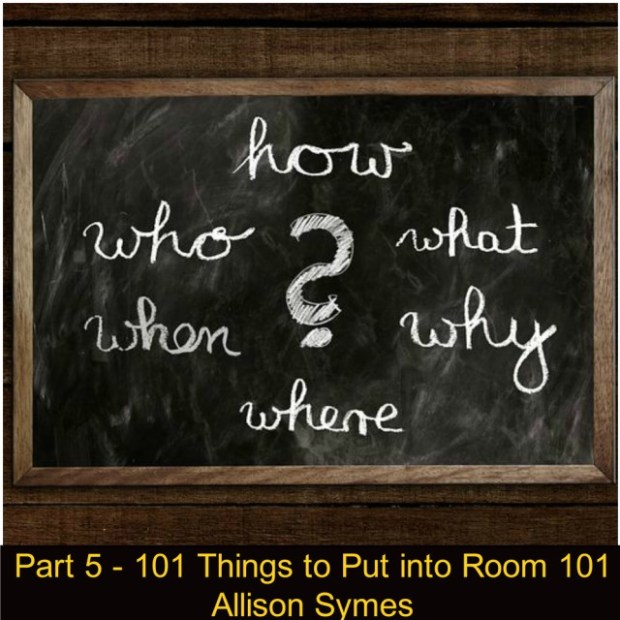
Feature Image - Part 5 101Things to Put into Room 101

A recent CFT post of mine but the questions can help you ensure your writing is beautifully clear.  Image via Pixabay.

The basic kit for a writer - image via Pixabay

The writer’s basic toolkit – image via Pixabay

Some of the tools of the scrivener's trade here - image via Pixabay

The tools of the scrivener’s trade. We’ve come on a bit since then! Image via Pixabay

Electronically or by print, both face publishing frustrations - image via Pixabay

Ebooks and print – both have their own frustrations when it comes to publishing. Image via Pixabay

Books can be one major key to knowledge - image via Pixabay

Books are the keys to knowledge. Image via Pixabay

Facebook – General

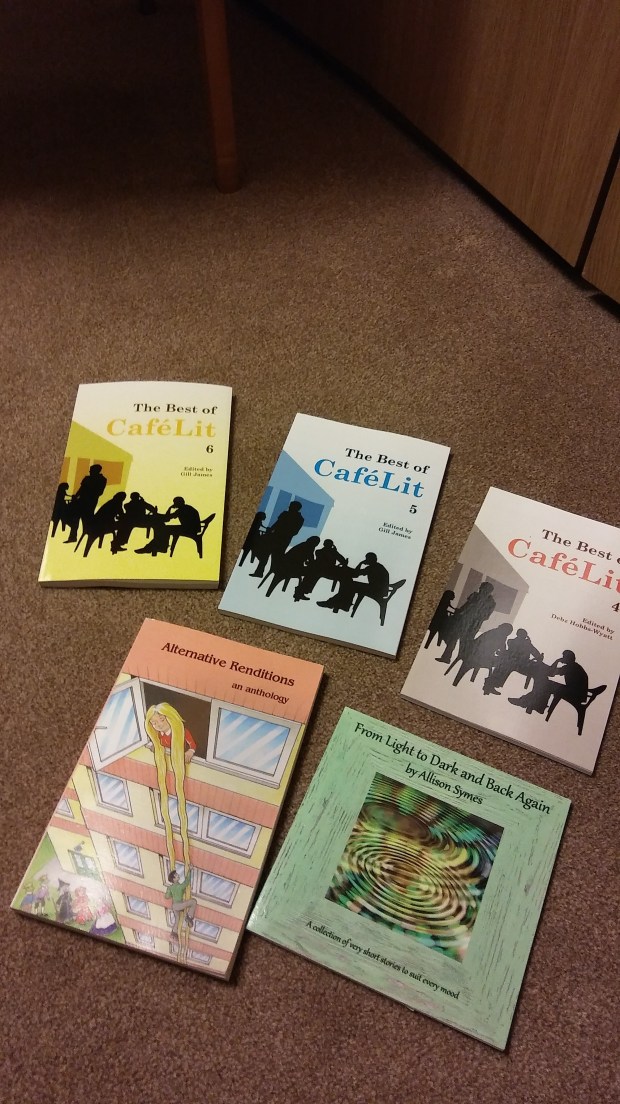
News just in, as they say! Two of my stories will be on Cafelit – one on 5th May and the other on 5th June. Will share links on the days. Very pleased. Don’t think I’ll ever tire of hearing something I’ve written has been accepted!

Having acceptances is obviously one of the highlights of writing, but what about the downside? Yes, the rejections would come into that category but, for me, I’m more despondent when the writing simply isn’t going as well as I’d like. Rejections I see as par for the course and I try to learn from them and see where it is where I may have gone wrong. If it is just down to editorial taste, then I can submit the story elsewhere. So generally I can get something positive out of this.

But when you are keen to write and it seems like a struggle (and it happens to us all), that is more of a challenge to deal with. I tend to have a break away from whatever it was I was working on to write something else or brainstorm ideas for future projects. I’m not sure why it is but whenever I write something else, ideas come to me for the original thing I was struggling with. Distraction therapy perhaps? All I know is that it works.

This slideshow requires JavaScript.

Facebook – From Light to Dark and Back Again

I’ve been enjoying the different flash fiction collections put out by Chapeltown Books and this has proved to be a great way of ensuring I read plenty of contemporary fiction. (Reading enough classic fiction is never an issue!).

A good reading “diet” should include contemporary and classic works and non-fiction. I see all of this as feeding the mind as you never know when reading something triggers ideas for your own stories. The more you read, the more you cast your “net”, and the more likely it is you will have those “sparks”.

So happy writing – and happy reading!

FromLightToDark_medium-2

My flash fiction collection from Chapeltown Books!

perf6.500x6.500.indd

Mandy’s flash fiction collection from Chapeltown Books. Image kindly supplied by her.

perf6.500x6.500.indd

Gail’s flash fiction collection from Chapeltown Books. Image supplied by Gail Aldwin. Also note the Chapeltown Books branding of a frame around an image. Simple but effective

20171202_154725.jpg

Gill James reading from her January Stones collection. Image by Allison Symes

Paula Readman, Dawn Kentish Knox and Allison Symes and books - with kind permission from Paula Readman

Paula Readman, Dawn Kentish Knox and I celebrate where our stories have appeared! Many thanks to Paula Readman for the picture.!

20171015_233807.jpg

Some of the books I’ve appeared in and FLTDBA of course. Image by Allison Symes

Facebook – From Light to Dark and Back Again

Given flash fiction makes its readers fill in the gaps due to the word count restrictions, it is also a great way to conjure up other worlds which reflect on our own.

A reference here, a name of a character there etc will carry weight based on what we know of that reference and name. The world might be strange but the reference or name are not and it makes filling in the gaps easier. What is really nice is when you know that reference or name will make the reader smile because you know what they will associate it with.

Facebook – From Light to Dark and Back Again

Descriptions can be tricky. Too much information and you switch the reader off. Too little and you can’t conjure up enough of an image for your reader to “hook into” so they can get right into your story’s world.

Flash fiction, of course, by its nature means you have to be sparing with the details so the trick is to find the most powerful image in the shortest number of words. (Well, it IS meant to be a challenge!).

I ask myself what are the images I want my reader to definitely pick up from my story. This is where outlining your thoughts before writing the story is so helpful. It makes it easier to select the telling details that absolutely have to be in the tale.

You can also mark those others that would be useful to have in if you have sufficient word count spare but would not spoil the story if they weren’t included. It has been my experience there usually isn’t the word count spare (unless I am writing right at the upper range for flash). Focusing on what HAS to be in is, I find, the best place to start. Anything after that is a bonus but should still only be included if it does something useful such as giving depth to your tale.


REAL WRITING = REAL CHARACTERS

A busy few days and I also have a new flash fiction story to share with you.

Facebook – General – and Chandler’s Ford Today

My latest Chandler’s Ford Today post sees me resuming my series on 101 Things to Put into Room 101. This week’s post sees me reach No. 45! Do you agree with my choices? Comments welcome in the CFT comments box.

Feature Image - Part 3 Room 101 Post

My latest CFT post. Image via Pixabay.

Decisions, decisions

Decisions, decisions and a not terribly helpful signpost. Image via Pixabay.
Still this kind of board might raise a smile

This notice may make you smile though. Image via Pixabay.

Could Room 101 be behind here - image via Pixabay

The vault of doom aka Room 101. Image via Pixabay

Facebook – General and More Than Writers Blog (Association of Christian Writers)

Busy, busy. I have a short post up on Chandler’s Ford Today regarding Richard Hardie’s author events at the Winchester Discovery Centre on 3rd April. If you like YA fantasy and are in the area, why not pop along? Entry is free (though there are books to buy!). See http://chandlersfordtoday.co.uk/local-author-news-richard-…/

My usual Friday slot tomorrow sees me resuming my 101 Things to Put into Room 101 series. I incorporate everything from snow to shoes that pinch your feet (though if they pinch anything else, you’re doing something very odd with your shoes!).

My monthly post for the Association of Christian Writers is online tonight. My spot is the 29th of each month. This means I get every three Februaries off!

My post is Real Writing = Real Characters and talks about the importance of honest portrayal of characters. If they’re right so-and-sos, then you portray them as such. (How you do that is up to you but there must be no doubt in the readers’ minds that the character IS a right so-and-so!).

Facebook – General

What are your characters’ favourite memories and why? How do they influence their actions in your story? Can showing some of their memories help you create a richer, more fully rounded character? I think so.

Now with flash fiction, there isn’t the room for a lot here so you have to pick the most important memory and focus sharply on that. Or you tell the story where the character is looking back on something.

For example, in my flash tales, My Life and Changing My Mind, I have my take on Pride and Prejudice told from the viewpoints of Elizabeth and Mr Darcy, each with their own story. To combine them in one tale would have made the stories lose impact (though it would still have been well within the flash fiction word count limit). Mind, it did make it easy working out where they had to be in From Light to Dark and Back Again – right next to each other!

Facebook – From Light to Dark and Back Again

What is the purpose of flash fiction? To create a miniature world a reader can literally dive in and out of in moments yet still leave an impact on them. To say in a few words (and with greater impact) something that would lose its power if put into a longer story.

I suppose one thing that really has drawn me to the form is the fact I’ve always loved working things out from clues the author gives and you do that a lot with flash fiction. I don’t want the writer telling me everything!

Facebook – From Light to Dark and Back Again

I think humour lends itself well to flash fiction because the best gags (or at least the ones I remember best) are short and to the point. (Mind you, the Two Ronnies’ Four Candles is an honourable exception to this and such a fabulous play on words too. Should imagine that was a delight to write. Likewise Morecambe and Wise with Andre Preview in their Christmas special – sheer joy from beginning to end.).

The nice thing about flash fiction is I’ve found it opens up the genres you write in. After all in From Light to Dark and Back Again, I have crime stories, relationship stories, light horror stories and so on. A lot of my lighter tales play with humour too – I’ve used a lot of irony. So mix up your humour styles and see what flash fiction you can generate. Above all, have fun doing this!

Facebook – From Light to Dark and Back Again

Why should any writer read well and widely in AND outside of their own genre?

The simple answer is you are feeding your imagination by reading. I’ve had ideas for stories by reading works by others, especially in non-fiction. Something I’ve read has just triggered that spark and away I go! So the more you read, the more likely you are to get that spark and you are “fishing from a bigger pool” too. You expand your own knowledge and therefore you can expand what you write about too.

With non-fiction, a story can emerge from reading, say, a historical fact, and wondering how that would affect characters from differing backgrounds.

So never feel guilty about “just” reading. It is the flip side of writing and a highly enjoyable one at that. After all, if you don’t want to read, why would you want to write? There has to be that love of books and stories inside you to trigger that desire to write. That love can only come through reading – whether your preferred format is Kindle, paperback or audio doesn’t matter. All that matters is you read!

Cafelit – The Art Critic

Am pleased to share my latest piece of flash fiction, The Art Critic.  Do check out Cafelit.  There is a wealth of fabulous stories on there and I am so pleased to be part of it.

A great way to relax - with a book and a cuppa - image via Pixabay

Great way to relax. Now where are those biscuits? Image via Pixabay

Fairytales with Bite – Publicity IN your stories

On my Chandler’s Ford Today post this week, I resume my series on 101 Things to Put into Room 101One of the things I mention is annoying adverts.  This led me to wonder how advertising, business, publicity etc could work in a fictional world.

How do your characters survive?  Presumably by working so what do they do?  What products are made in your world?  How are others persuaded to buy them?  Are there things your world does not allow to be made or sold and if so what and why?  Is there a black market (there usually is!)?

Also how do your characters find out what is going on?  Can they tell what is truth and what is propaganda?  Are adverts truthful?  Are there governing bodies regulating these things?  Or is your society a simpler, barter based one?

Talking of adverts, I will just share a flash fiction story of mine, The Art Critic, which is now up on Cafelit.  Do check out the website for some fabulous stories by a whole range of authors.  I’m delighted to have work on here.  Hope you like the story.

This World and Others – Your Character Likes and Dislikes

My Chandler’s Ford Today post this week sees me resume my series on 101 Things to be Put Into Room 101So far I’m up to number 45!  I’ll have no trouble finding 101 things to banish…

What are your character likes and dislikes and why?  if your character loathes the colour brown, to name one example, what is the reason for it and does that loathing make them change their behaviour in any way?  Could that loathing change the way the story ends because the character’s actions change (and not necessarily for the better either)?

You almost certainly wouldn’t use all of this in one story but listing what your character likes and loathes is a great way of finding out all about them before you write the story properly.  You will write with a deeper knowledge of that character (and it does show through).

From the writers’ viewpoint, I dislike characters who have no reason to be in the story but are clearly making up the numbers and  I have come across this.  (Earlier in my writing life, I’ve been guilty of it but I think many of us have been.  The important thing is to realise the characters don’t have a role to play and cut them out). Each and every character has to have a very good reason to be in your story.  Each and every character has to be distinctive (even if it is, say, Character A loves flowers and Character B hates them because they have chronic hayfever.  Easy to tell those two apart!).

This slideshow requires JavaScript.


Conferences, Dead Time and Reading

Facebook – General

Thoroughly enjoyed the Association of Christian Writers’ day in Derby on journalism on Saturday. Love learning from writer events like this. Have found before that, even though I might not use some information now, I do end up using it later! Brought home some ideas I hope to investigate further and am not saying more than that for now.

On the fiction side, I am finalising a short story for a competition. I am also looking forward to sharing a two-part interview with a fellow Chapeltown Books author on Chandler’s Ford Today. Part 1 will be up on Friday.

Am getting better at using “dead” time. I spent my train journeys to and from Derby using the fabulous Evernote to draft a blog post for ACW, a future CFT one and some ideas for what I hope will end up being my third flash fiction collection. I also got to talk to a children’s writer on the train home. One of the lovely things about writing is, when you do meet up with fellow writers, you’ve got an instant topic of conversation!

Oh and you never get bored!


This slideshow requires JavaScript.

Facebook – General

The only problem with going to writing conferences is catching up with things again on getting home! Still, I can think of worst problems.

Sorry to hear about Ken Dodd. Never got to see him live but enjoyed his TV and radio shows. (Radio 4 Extra sometimes repeats the latter, expect they will soon. Worth a listen).

Priorities this week are to finish editing a short story and, as always, CFT. Why does editing always take longer than you think it will, no matter what your level of experience is?! Or is this just me? Answers on a postcard….

This slideshow requires JavaScript.

Facebook – General

Do you like short, sharp paragraphs or longer, more detailed ones? For me, it depends on the kind of story I’m reading or writing. I would expect a thriller to have the first kind of paragraph with a family saga having more of the second kind.

Overall, what matters is that each word, each paragraph etc moves the story on and genuinely can’t be cut from the tale without wrecking it. You know you’ve carried out a good editing job when you reach that point in a story!

Sometimes a more detailed paragraph can be used to indicate the time period a story is set in, given you would expect more “wordy” paragraphs in a tale set long before social media came in. Choice of words must be appropriate to the character, the time period and the setting.

Facebook – From Light to Dark and Back Again

I’ve spent a lot of the weekend in Derby at an Association of Christian Writers’ Day on journalism (it was fab) so used a lot of the time on the train journeys scribbling away via the wonderful Evernote on my phone. Jotted down ideas for several flash fiction pieces and am really looking forward to writing them up.

I am getting better at using “dead” time like this and when I had to take my car in for service, while I was waiting, I wrote three flash pieces (which are part of my second collection now submitted to Chapeltown Books). I felt distinctly miffed when they told me my car was ready as I had settled down quite well, thank you. There was a tea and coffee machine, loos, and I was all set for further writing! The really great thing here? No distractions… ah well.


Most of us struggle to have as much time to read as we'd like - image via Pixabay

I think most of us struggle to find as much time to write as we’d like.  Image via Pixabay

Publishing has to start with a blank page - image via Pixabay

From start to finish here perhaps?  The blank to the printed page.  Image via Pixabay


The To Be Read pile - image via Pixabay

The to be read pile! Image via Pixabay

A few books to choose to read from here - image via Pixabay

Plenty to enjoy here! Image via Pixabay

Facebook – From Light to Dark and Back Again

Do you start your story with a title in mind or do you write the tale and then the title comes to you as a result?

I find I must have a title to “peg” my ideas to but often have to change the title to a more suitable one, once I’ve got the story down. I have, on occasion, tried to work without a title but soon found myself feeling “lost” without one! So I take the attitude now it is all in draft anyway so it doesn’t matter if I change the title half a dozen times until I’ve got it right for the piece.

Goodreads Author Programme – Blog

I have spent many a fine evening re-reading favourite novels and short stories. For me, there is no such thing as a book beyond its “read by”date.

It has been my experience even books written in styles we wouldn’t use now have some entertainment value and I can usually learn something from the way the author has written their characters. I usually pick up something on each reading.

As for contemporary reading, I am reading a fair number of flash fiction collections, I love reading history (and historical fiction), as well as crime. I am reading far more non-fiction than I used to but I think this may be a reflection of the fact I’m writing non-fiction now as well.

Having a Kindle has increased the amount of reading I do too. I do like the “Look Inside” feature and have often used this. I was glad it was available on my own flash fiction collection. This has given me many chances to try books I wouldn’t have necessarily thought of trying.


Reviews and Writing Plans

It is the time of year for reviews but I look at how these can be useful for writers.

Facebook – General – and Chandler’s Ford Today

Busy night tonight and a good way to wrap up for 2017! Firstly my monthly blog for Association of Christian Writers’ blog site, More than Writers, is now up on site. I look at what starts Christmas for me and why the story of Herod rings so true. People preparing to keep their position by committing murder etc – well it is not a new phenomenon, unfortunately.

Secondly, my weekly Chandler’s Ford Today post is now up. I look at personal reviews and share how they can be useful for writers in generating characters. Non-fiction writers can use personal reviews too.

This slideshow requires JavaScript.

Facebook – From Light to Dark and Back Again

A busy night on the blogging front with posts up from me for ACW’s More Than Writers slot and my weekly CFT slot. For the first, I look at how the story of Herod makes the Christmas story so realistic, given people being prepared to murder to hold on to their position in life is sadly nothing new. For the second, I look at personal reviews and how they can be useful to writers. (Links above).

On the flash fiction front, I hope to enter more competitions during this coming year. I also hope to write more short stories and I have one or two longer projects I would like to at least make a start on in 2018. As ever, I would like to read more too!

Whatever your writing or reading plans, may I wish you all the best for 2018.

This slideshow requires JavaScript.

Fairytales with Bite – Happy New Year!

Firstly,  may I wish you a very happy New Year!

Secondly, and continuing with my theme of looking back from last week, my current Chandler’s Ford Today post looks at how personal reviews (so common at this time of year) can be really useful to writers for character and story generation.  Reviews like this can also be used in non-fiction writing.

Thirdly, my monthly blog for the Association of Christian Writers’ page,  More than Writers, looks at Christmas favourites and how Christmas starts for me.  It isn’t with Black Friday!

So what are your writing/reading/both plans for 2018?  I hope to enter more flash fiction competitions and read more.  I would like my characters to develop more in the next year too.  How?  By perhaps resonating more with readers.  By my bringing in a depth to them that perhaps I haven’t done before.  This isn’t necessarily done with more words.  Flash fiction is the ultimate in the less is more syndrome for writing.  It is picking stronger words that convey more meaning which will help me develop depth of character more.

This slideshow requires JavaScript.

This World and Others – Writing Plans

I always write in my new writing diary what I would like to achieve in the coming year. I try to achieve as many as possible but don’t beat myself up on what I can’t get done. Sometimes that is because I have tried something else completely (in my case, I did this with flash fiction) and you end up going down a path that you hadn’t anticipated. In my case with the flash fiction, it has proven to be a very enjoyable path so I’m planning to stick to it!

I never set anything in stone then but am open to new possibilities. I hope to enter more flash fiction competitions in 2018 (and submit more to online magazines I’m already involved in) but if I spot a genuine writing contest which looks interesting, I may well give it a go. (Incidentally I always do check out the background of any competition I’m entering and look for what others have said about it, which I think is a wise idea and one I can’t recommend highly enough).

So what are your writing plans for this year? I am also hoping to start at least one longer term project in the next 12 months. Are you looking forward to the writing you will be doing this year? You should be!

I wish you a very happy 2018 and good luck with the writing.


ONLINE – HERE AND THERE

It’s been a busy but productive week so far.  The good news is it is only Wednesday too!

Facebook – General – Guest Post on Wild Words Website

A reminder from yesterday of my post on Bridget Holding’s Wild Words website.  Lovely to guest blog.  Many thanks, Bridget.  I met Bridget at Swanwick Writers’ Summer School earlier this year and loved her talk on finding your voice.  It took me a long time to find mine.  As for writing rituals which I discuss in this post, it took me a while to work out what best suited me.  I’m a night owl type of writer.  What type are you?  Comments welcome!  (And, before you ask, I don’t hoot!).

Likewise, do send comments in on writing rituals you’ve found useful.  A chief one of mine is to always write first.  If I have any editing to do, I get on with that later into my writing session.  I like to get the creative work down first.  (Incidentally editing can be creative too but not in the same way).

This slideshow requires JavaScript.

Facebook – General – Publication News

Busy day online. Firstly my monthly post for More than Writers, the Association of Christian Writers blog, is up on site. I talk about some of the joys in the Christian life.

Secondly, I have a new flash piece up on Cafelit, with more to follow soon. I’ve experimented with the form a little bit in that tonight’s story is a flash tale told in rhyme. Fun do to (and a challenge!). See http://cafelitcreativecafe.blogspot.co.uk/

Facebook – From Light to Dark and Back Again

It is a joy to write fiction and non-fiction, though the first has always been what has “called” to me the most. I’ve always had a love of stories and always will though it is great that now a lot of fiction techniques are being used to make non-fiction work more accessible to people. Long gone are the days of long lists of dates and figures… now we look at how people would have lived back in the days of whenever. A much better approach.

I would hope flash fiction would also be a way to convince the die-hard non-fiction only reader (and I’ve known a couple in my time) that you can enjoy storytelling. And that it can be kept to the point like any good non-fiction article.

I love flash for its brevity, for the way it makes me write tightly, and for those moments that you know make a story but are too short for a standard length competition.  Flash fiction gives those stories an outlet.


To come:-

Talking of non-fiction, my Chandler’s Ford Today post for this week will be a look back at the Winchester Discovery Event last weekend.

Another flash fiction piece by me should be up on Cafelit tomorrow too.