FUNNY FLASH FICTION AND WHEN NIGHTMARES HAPPEN

Nice combination of topics tonight, I think!  Different certainly…

Facebook – General

What are your characters’ worst nightmares and what are the foundations for them? Is there any chance of them coming true and, if so, how do your characters handle this?

One of my nightmares is being trapped on a seemingly endless train journey, crammed in and not able to write. The temperature on board is rising, I think, as I am unable to tell if it IS that or if I’m having a really inconveniently timed hot flush (as you do! ). I do know I wonder if I’ll ever get home.

Sadly mine came true yesterday with a horrendous journey home from London Waterloo. (There was a circuit failure, meaning almost all trains in and out were delayed and of course that led to many cancellations. People weren’t happy – surprise, surprise!)

But it led me to wonder when nightmares do happen, what are the consequences for the characters and their stories? How does the course of the story change (as I suspect it must do)?

Shakespeare had his quill, modern writers have their laptops. Image via Pixabay.

Working out changes to the storyline perhaps? Image via Pixabay.

Blogging via diaries and tablets - ancient and modern technology! Image via Pixabay.

All good to go for the next story! Image via Pixabay.

Facebook – From Light to Dark and Back Again

One of the reasons I love writing flash fiction is it can be a great vehicle for humorous pieces that are too short for a standard length short story but which are self-contained in their own right.

One of my favourite lighter stories from From Light to Dark and Back Again is Helping Out, which is the story of a fairy and a witch teaming up so they can avoid the usual fate imposed on them by their magical world. (Think Gladiator here. Forced to fight to the death).

The story gives you enough information about their world and a good idea of what these two are like in about 400 words. (From my viewpoint, one of my longer flash fiction stories!).

It was fun to write but the length of this story is exactly right for what it needs to convey. I can over-write (as I suspect most writers do) but that is where good editing is a lifeline. And it is always better to cut so people might want to know more rather than have “padding” and people think she should have cut that!


fantasy-1578656_640

Stories are the gateways to other worlds whether they are flash fiction, standard length fiction or novels.  Image via Pixabay.

 

I could spend many a happy hour here - the library at Prague. Image via Pixabay.

Now here is a place to lose yourself in wonderful stories and books – the library at Prague. Image via Pixabay.


“Honest” Writing and Historical Fiction

Fairytales with Bite – Dismissing Fairytales – Why?

I’ve never understood why some people dismiss fairytales.  I’ve often come across comments like “oh that is just a fairytale”, “you shouldn’t take that seriously, it is just a fairytale” etc etc.  For me there is no “just” to a fairytale.  There is a lot of truth behind many, if not most of them.

I strongly suspect Hans Christen Andersen had witnessed seeing poor girls selling matches on the street, leading him to write The Little Match Girl.  There is a truth behind that story which I think comes across powerfully.  Oscar Wilde’s The Happy Prince to me conveys what I think Wilde would have liked to have seen happen.  The statue Prince in the tale knew his gold leaf would only be of benefit to people if it was taken off and given to poor people to sell so they could make ends meet.

So fairytales should be taken seriously I think.  They’re not just for kids.  Indeed the original versions of so many of the tales are not suitable for the under-18s.  Disney could never have filmed The Little Mermaid as Hans Christen Andersen originally wrote it.  There is no happy ending in the original.  The classic fairytales are carefully crafted stories (and/or reworkings of even older tales) and should be appreciated as an art form in their own right.


castle-2115425_640

Fairytales are not just “pie in the sky”.  Image via Pixabay


This World and Others – Honest Writing

In my CFT post tonight, I interview Gill James about her historical fiction and the issue of truthful writing came up as part of our discussions.  Gill made the very good point that sometimes fiction can pull out truths that strict facts cannot and, for me, a great example of this is The Daughter of Time by Josephine Tey, which has made many people think again about what they think they know about Richard III.

Gill’s own book, The House on Schellberg Street, examines just what ordinary young German people may have known during Hitler’s rise to power and throughout World War Two.  (Many really did not want to be at war with Britain incidentally.  As well as having friends here, well we Brits are often known as Anglo-Saxons and of course the Saxons were from Saxony which is in Germany.  Our history goes back a very long way).

So what then is “honest” writing?  Is it just strict non-fiction based on verifiable fact?  I don’t think so.  It is writing which comes from the heart of the author and which conveys an important message (and without preaching.  To Kill a Mockingbird does this superbly. The horror of racism is conveyed brilliantly).   It is the author writing true to their characters regardless of how horrible or nice they are.  It can be the author sticking to their guns at times when it comes to how they want “their people” to be portrayed.

stones-244244_640

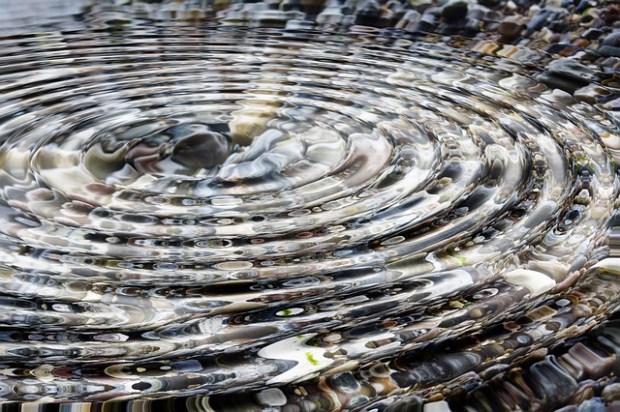
Honest Writing will create ripples.  Image via Pixabay

Facebook: General & From Light to Dark and Back Again & Chandler’s Ford Today –

Writing Historical Fiction

In Part 1 of my Chandler’s Ford Today interview with Gill James about her historical fiction (The House on Schellberg Street), we talk, amongst other things about why invent historical stories when history itself is full of real ones?  An interesting topic I think.  Comments very welcome here and on the Chandler’s Ford Today website.  Part 2 next week will share Gill’s excellent advice for writers new to the genre of historical fiction.  Gill’s book is based on factual letters written by (as round robins) young German girl friends living during Hitler’s rise to power and throughout World War Two.  I read the book and felt a palpable sense of menace especially for one of the characters given, of course, I read with the benefit of hindsight, something the characters could not have.


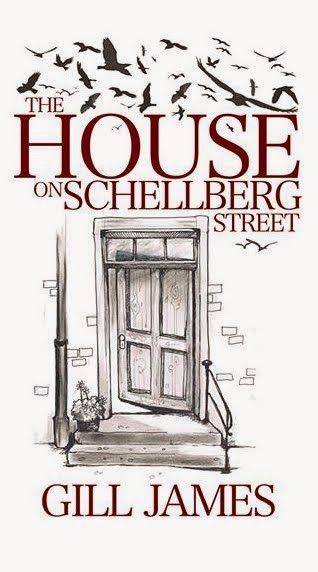
18frontcoverTHoSS

Gill’s book’s front cover.  Image kindly supplied by Gill.


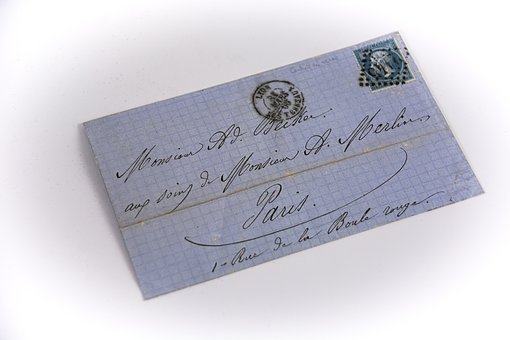
Old letters - image via Pixabay

So much history is found in letters and postcards.  Image via Pixabay.


WHAT FASCINATES ME ABOUT GENRE FICTION

What I Find Fascinating about Genre Fiction

What I find fascinating about the different genres in fiction are the different ways in which they appeal to different people.

Why is crime always such a big seller? People want to see justice done, are fascinated by what makes others turn to crime, have become a fan of the detective or whoever is the hero of the novel they’re reading and wants to read the latest adventure and also to solve the puzzle that the crime story sets. (Of course, most readers have more than one reason for loving a certain type of story. I know I do).

As for historical fiction, for me, the big appeal is looking at viewpoints you might not have thought about before and also to work out what could have happened in situations where there is no definite conclusion. (What actually happened to the Princes in the Tower is the obvious one here. Were they killed? Were they smuggled out of the country? Why was Henry VII so worried about Perkin Warbeck? You can have lots of fun writing books that try to answer questions like that. You don’t need to be right even. What you do need to be is accurate with the proven history and make a good case for the solution you are coming up with).

So what do you like to read and why? (I love to read outside my normal genre for writing in, which is healthy, I think).

Writer at work. Image via Pixabay.

Writer at work. Image via Pixabay.

Chandler’s Ford Today

My comments above tie in nicely with this week’s Chandler’s Ford Today post where I interview Gill James about her historical fiction, The House on Schellberg Street.  More details tomorrow.

Personal history can often be found in things like old exercise books, which in turn reveal things about political history and how much people knew at the time.  Image via Pixabay.

Personal history can often be found in things like old exercise books, which in turn reveal things about political history and how much people knew at the time. Image via Pixabay.

From Light to Dark and Back Again – Reviews

Many thanks to all who have left reviews for From Light to Dark and Back Again (Kindle or paperback versions). One example is below but all are much appreciated.

Feedback, negative or positive, is vital for any writer. We learn from mistakes. We learn we can’t please all of the people all of the time! It is also confirmation you are reaching out to readers (hopefully in a good way).

What you can glean from reviews is the general consensus, which can be incredibly useful in thinking about who your Ideal Reader is likely to be, which in turn helps you to write more effectively for that mythical creation.

I wrote a piece a while ago about book reviews (and why they matter) on Chandler’s Ford Today.  I share the link here.  See what you think.  The great thing with a review is it doesn’t have to be long but does give at least one clear reason as to why you liked something or didn’t.  Help an author – review them!


“This is a quirky collection of flash fiction: from malevolent fairies to gritty contemporary dramas and bite-size funny stories. I like the way Allison is playful with words and gives a fresh slant to traditional tales. A very enjoyable read.”

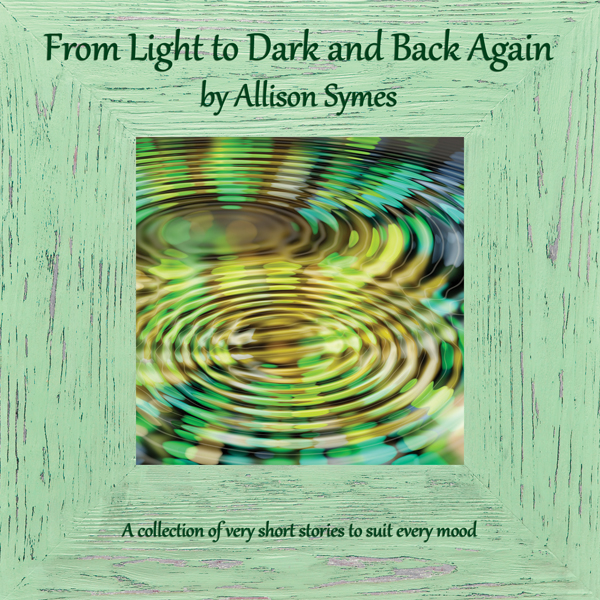
FromLightToDark_medium-2


WHAT I LIKE IN MY FICTION

What I Like in My Fiction

When not writing, I love to read crime fiction, history (fiction and otherwise!), fantasy (naturally) and non-fiction such as the Ben Macintyre books. (Particularly enjoyed Operation Mincemeat, which gave the true story behind The Man Who Never Was).

The problem with history, of course, is we all know it is written by the winners, something Richard III would have good cause to complain about if in a position to do so! (Don’t you just know the story would be very different indeed if he’d won Bosworth!). What always annoys me with his story is the historian John Rous given he praised Richard to the heights during Richard’s reign and then condemned him during Henry Tudor’s time on the throne. The very definition of hypocrisy I feel!

Classics - image via Pixabay

Classics – image via Pixabay

So how DO you write about history using fiction to do so? My interview on Chandler’s Ford Today on Friday will be with Gill James and we talk about her historical work, The House on Schellberg Street.

We discuss, amongst other things, why write historical fiction when “real” history is full of stories anyway. Gill gives some wonderful insights into writing historical fiction.

The interview will be in two parts and I hope it will show what historical fiction can achieve. It can fill the gaps where facts do not exist for one thing. It shows what could’ve happened and leaves you to think about it (which is why I love The Daughter of Time by Josephine Tey).

Shakespeare had his quill, modern writers have their laptops. Image via Pixabay.

Such a familiar look. Image via Pixabay.

Capturing Moments in Time


If a short story captures a moment in time, then I think it is fair to say that a flash fiction piece captures half of that. Sometimes you don’t need to see the whole moment to gauge what a character is like or how the incident in the flash fiction piece would unfold if the writer expanded the tale out to the more usual length of a story. A glimpse can be more than enough to tell you what you need to know!

Flash fiction is a good vehicle for quirky stories that perhaps do not have the most obvious home to go to. Less really is more at times. For me, the best stories (of whatever length) are on the understated side. You feel the characters’ pain, anxieties etc. They are not forced on you. You as the reader are left to work things out. I love doing this myself. It can be great fun reading on to see if you guessed correctly.


The magic of stories. Image via Pixabay

The magic of stories. Image via Pixabay


.

Never give up, work hard, be disciplined... all valuable traits for success, whether you're a tennis player, a writer or a character in a story! Image via Pixabay.

Never give up, work hard, be disciplined… all valuable traits for success, whether you’re a tennis player, a writer or a character in a story! Image via Pixabay.

The magic of stories. Image via Pixabay

WHY I WRITE AND “CIRCLE STORIES”

POSTS FROM MY FACEBOOK AUTHOR AND BOOK PAGES

General – Why I Write

The big advantage of a wet Sunday afternoon? Staying in and reading without feeling guilty about it instead of rushing about trying to get odd jobs done ahead of the coming week!

Am looking forward to my writing this week as I will be sharing a fantastic interview (a two-parter) with a historical fiction writer on Chandler’s Ford Today with Part 1 to come on Friday. More details later in the week.

I love reading and writing in my own genre (fairy tale/fantasy) but I enjoy reading outside of it more. Why? I’m expanding my horizons for one thing.

For another, it is so important not to lose sight of why you write at all. For me, it is because I love words and stories and want to share my tales in the hope people will like what I write as I like the way other people write. It is an ongoing virtuous circle I think. We all build on what has gone before and try to leave something behind that others in their turn can build on.

If you can make a living out of writing, even better, but because you can’t know that you will, there has to be this basic, deep down reason to write at all to keep you going during those times when all you receive in the inbox/post are rejections. Ironically you do need those rejections to help you learn to improve what you do and increase your chances of acceptances but it is never something that writers face with any great joy!

Reading outside my own genre reminds me directly of that fundamental love.


fantasy-1578656_640

FROM LIGHT TO DARK AND BACK AGAIN

Many of my flash fiction pieces in From Light to Dark and Back Again are what I think of as “circle” stories. You can see how the openings lead to what are the inevitable (to me anyway) endings.

I am also fond of the “eyewitness” kind of tale and I often use this for different takes on standard fairy tales. For example in The Outcome, my narrator is Cinderella’s fairy godmother. My first story in print, A Helping Hand in Bridge House Publishing’s Alternative Renditions anthology, took the same fairy tale but told it from the perspective of the younger ugly sister. Same events, very different views on it, two very different stories despite the powerful link between them.

I’ve also found this technique useful for getting into different kinds of characters’ heads and working out their motivations and what REALLY drives them. Knowing that makes my writing for them more effective and you may find this too. Certainly worth a go if you are trying to work out just why someone is acting in a way other characters would consider perverse, villainous etc.

Well, what is your story - image via Pixabay

Books make wonderful gifts. Image via Pixabay.

Books are wonderful – whether in print or electronic, whether as audio stories or told by a storyteller. Image via Pixabay.


Allison's books

Where some of my earliest works appeared in print.  Image taken by Allison Symes


FAVOURITE READING AND WHAT I LOOK FOR IN SHORT FICTION

Facebook Posts – General and

From Light to Dark and Back Again


I thought I’d share in full here my posts for tonight on Facebook.  I talk about my favourite reading and what I look for in short fiction.  Comments welcome, especially on what you look for in short fiction.  I look for impact, as you’ll see below.


Favourite Reading

Managed to catch up with some reading tonight so am pleased with that. When reading Writing Magazine when it first arrives, I turn to the letters pages and the Members’ News section immediately and see if there is anyone I know in there. It is a real pleasure to see more friends turn up in the latter.

Favourite reading does depend on how much time I’ve got. If not long, then flash fiction is key. Short, sharp and focused – that’s how I like my stories! If I’ve more time, then I like good sensible how-to articles on aspects of writing and novels. You can never have too much time for reading but you can have not enough time to read as well as you like. 

Reading is the flipside to writing. I’ve read many an article where ideas for stories have sprung out of the item. So I get to learn from the article and have ideas for future stories – what is there not to like about that?!

Reading - says it all really via Pixabay

Short Fiction

When reading very short fiction what am I looking for? I look for impact and I have this in mind when I write my flash fiction.

The impact can be funny, dramatic, spine chilling or what have you. A really powerful flash story can cross these effects. I have read 100-word stories where I am moved by what the character has told me but I also know or can guess at the situation they would face if the story went on and that can lead to anticipation of horror to come.

Sometimes the impact is on the reader (as was the case where I “felt” for the character who thought they were over the worst of what they would face but I knew they were not). Sometimes the impact “hits” a character who may be “off stage” (but where you know if the story continued, there would be a major scene as a result of that impact).

I always ask myself what impact do I want my readers to feel as a result of reading my flash stories and then write accordingly!

Classic Books - image via Pixabay

Escape with a good book via Pixabay