Murphy’s Law For Readers

Time for some lightheartedness I think… hence my CFT post. More in a moment.

Image Credit:  As ever, all images are from Pixabay or Pexels unless otherwise stated.

Facebook – General – and Chandler’s Ford Today

I thought a lighthearted post would be useful for my slot on Chandler’s Ford Today this week – hence Murphy’s Law for Readers! Hope you enjoy this and do send in your own Murphy’s Law suggestions for Readers via the CFT comments box.

The post takes in readers and books, readers and libraries, and readers and book events etc and so I’ve taken a broad approach here! Hope you enjoy.

This slideshow requires JavaScript.

It is always good fun to write humorous posts for Chandler’s Ford Today and I hope the Murphy’s Law For Readers which is this week’s piece amuses you! It amused me when I wrote it so I hope that’s a good sign! (I wrote a piece on Murphy’s Law for Writers a year or so ago so that is everyone on the reading and writing fence covered now I think).

Many thanks to our church for sending a Good Friday service sheet for us to use at home today. It was great but must admit to missing seeing everyone and I hope it is not too long before we meet again. It really does not feel like Easter to me. Mind you, the weekends don’t really feel like weekends either at the moment.

I would be glad to have a writing routine anyway as I am one of life’s planners (as much as possible at the moment anyway) but am finding having this routine now to be incredibly useful. It’s a bit of normality in what is an abnormal situation for us all.

Nice lot of cheering in my neck of the words for the frontline workers. Well done all. (This is happening ever Thursday night at 8 pm in the UK for the duration of the lockdown here – I don’t know whether anything similar is happening elsewhere but I do think this show of appreciation is a very good thing indeed).

Looking forward to hearing where my choices for the Classic FM Hall of Fame come in this year’s chart. They count this down over the Easter weekend. My choices were:-

1. Jupiter (from the Planet Suite) by Holst
2. Fantasia on a Theme by Thomas Tallis by Vaughan Williams.
3. Danse Macabre by Saint Saens (and used as the theme for Jonathan Creek and the book trailer for my From Light to Dark and Back Again – see below! So this music will always have special meaning for me!).

Need a sort out of my writing desk so that is on the cards for me to do tomorrow. Yes, have been putting it off. I refuse to believe I’m the only writer who does that.😆😆

Have resumed playing tennis on the old Nintendo Wii to help with my exercise levels. Well I say playing… let’s say I give it a go! Lady doesn’t like it though and goes and hides while I “strut my stuff” here. Of course it won’t help she can’t possibly get the ball here and no collie will like that.

Writing wise, am working on a book proposal for my non-fiction idea but that will take a while to do. Am also fleshing out ideas for a flash piece for a competition so plenty to be getting on with.

My CFT post this week will be a lighthearted one about Murphy’s Law for Readers. I wrote one about a year ago for writers so it is only fair readers get their turn! Link up on Friday.

Am slowly getting back to reading again which is good. I’ve had no problems writing but think my focus has been on ONE creative activity rather than two.

Reading is a creative activity in its own right in that, for fiction, you should be able to engage with the characters. For non-fiction, you should be gripped by what you are discovering and hopefully go on to find out more about the topic you’re engrossed with.


Facebook – From Light to Dark and Back Again

Am happily drafting a flash fiction piece for a competition at the moment. Have got the character and her voice as I like it. But she’s spouting on a little bit too much for the word count requirement so she is going to be shortened! It is one of those cases where I know she can be shortened without losing her style and indeed her style will come through better at the reduced count.

This is where I need to work out what is VITAL for the reader to know. Anything that is not something I could honestly call vital comes out.

This is why I do like writing the longer flash fiction stories too as those give you a bit more room to play with and there you can have characterisation that adds depth and strengthens the story. This is where you can have that “little bit more” which adds flavour to a story.

I think it is a good thing to write a mixture of word count stories so you get a real feel for writing short and spare tales and longer ones with added “value” that you simply can’t put into a shorter story. But what I do know is when I’ve got my character and their voice right, the word count has to suit that. I know I can simplify what I’ve drafted for my current story and I should do that anyway. It should take me to the required count but there are times I really can’t get a story down any further without losing something important – so I don’t! You do get better over time I think at working out when to call it a day.

This slideshow requires JavaScript.

One thing I have found useful with regard to having an Amazon Author Central page is having my book trailer on it for FLTDBA. I very much hope later in the year when hopefully Tripping the Flash Fantastic is out that a book trailer for this will also appear.

I have had some fun on my website with book trailers too. (https://allisonsymescollectedworks.com/book-trailers/)

As well as the ones for FLTDBA and the Bridge House/Cafelit/Waterloo Art Festival Writing Competition collections I’ve been involved in, I have created a basic trailer for one of my stories from FLTDBA. I hope to do more of this as and when but I mention it because flash fiction is ideal for this kind of thing! You want something nice and short that is easy to read on a screen… hmm… on to a winner there I think!


This slideshow requires JavaScript.

What do I like best about story and flash fiction collections?

I like the range of moods that can be contained in one book (which directly inspired the title for my own From Light to Dark and Back Again of course).

I love being able to dip in and out of such a book, whether I read it in paperback or via the Kindle.

I love them as they are brilliant for those times when I don’t have time to read or don’t feel like reading a huge amount. Indeed it is often the collections that get me out of the latter mood and into reading novels and non-fiction again.

I also just love the whole idea of reading a book full of little self-contained worlds with a host of characters. They are just fun!

They’re huge fun to write too!

This slideshow requires JavaScript.

Fairytales With Bite – 

What Fairytales Have Done For Me

I’ve loved fairytales for more years than I care to remember, encouraged no doubt by my parents buying me The Reader’s Digest Complete Collection of Fairytales. This is a two volume set which I still have. (One of the books is bound up with tape to keep the spine together!). I spent hours reading the stories and admiring the wonderful illustrations. So what have fairytales done for me as a writer then?

  1. Fairytales have a strong message which they get across without lecturing and in an entertaining way.  I find that inspirational (and a challenge to always “raise my game” here).
  2. Fairytales don’t shy away from calling something evil that is evil. There is no mistaking the goodies and baddies here. The characters are clear cut and their actions and thoughts are consistent. That’s all useful stuff for writers.
  3. Fairytales have endings which are appropriate. Generally these are happy ones but there are exceptions and that’s  okay too. What matters is the ending is appropriate to the story.
  4. When magic is used in a fairytale, it is always used to assist and it is rarely the first resort. Characters still have to use their intelligence and take advantage of others forms of help coming to them.


This World and Others – The Arts

What place do the arts have in your fictional “other world”? Is there music? Painting? Creative writing? Are these things valued or despised? Does everyone have access to them or only the privileged few?

For your characters, what do the arts mean to them? What role can the arts play in their story?

When fleshing out your creation, think of the arts as a way of adding culture and depth to your created world. You can always use things like statues as well known landmarks your character has to reach to meet someone etc. That tells a reader there is sculpture in your world at least (and therefore likely to be other art forms too. It also reveals there is at least some appreciation of these things and this is a good indicator of likely intelligence levels too).

This slideshow requires JavaScript.


Writing – and Multiple Projects

Image Credit:  As ever, unless otherwise stated, the images are from the marvellous Pixabay

Facebook – General

Full of cold at the moment. Not a happy bunny though booking my place for this year’s Swanwick Writers’ Summer School HAS cheered me up no end!

Also looking forward to the next edition of Writing Magazine because I love turning to the letters page, the subscribers’ news etc and see how many friends have got a mention in there! It’s nice to see the numbers going up!

Writing wise, I’m focusing on non-fiction at the moment though I have got short stories “brewing” ready for me to look at them again with a fresh eye. I find the time away from stories really useful, as when I do go back to them, I will see their strengths and weaknesses with an unjaundiced eye, but I hope to get back to these sometime next week. One I want to submit within the next couple of weeks.

Writing takes you away from the world for a bit. Just a pity it can’t get rid of the sniffles as well…


The advantages of having more than one project on the go:-

1. You never get bored.
2. If you get stuck on one thing, work on the other. Ideas for resolving the problem(s) on the first will come to you while you work on something else. One of the chief Murphy’s Laws for Writers, I think. I do know that this has always been the case for me.
3. You can work on smaller projects and see (hopefully) submission successes while still working away on a longer project you know will take longer to place even when you’ve finished writing and editing it.
4. You can try different kinds of writing and see what you like best.
5. When work has been submitted, you’ve always got something else to work on.

I’ll look at the disadvantages tomorrow.


This slideshow requires JavaScript.

Following on from yesterday’s post, now it’s time to look at the disadvantages of having more than one project on the go.

1. It can be easy to feel overwhelmed. (My advice here is to plan things out as much as you can. When you know you haven’t got much writing time, use what you’ve got to get little pieces done. It makes you feel like you’ve accomplished something – you have! – and the great thing is you can polish these pieces up and submit them later. Also remember if you only have time for say a writing exercise or two, do them because you will get some useful material from them for later, which could feed directly into the projects you’re working on. Likewise, if you can only write a page or two for one of your projects, get it done. Those pages or two mount up over time.).

2. You can feel torn as to which project you should be working on. (It can help to set yourself deadlines here but be realistic. If you’re working on a novel, and say a collection of short stories or flash fiction, it simply IS going to take you longer to complete both but that’s okay. Work out when you would like to get these projects done by in an ideal world, then add time on given it isn’t an ideal world (!), and work to that timetable. Also accept life will get in the way sometimes so don’t beat yourself up if that happens. It does happen to everybody including those who do only work on one project at a time).

3. I can’t help but sneak in another advantage here in that I’m working on big projects which I know will take ages to complete but that’s okay. Meanwhile I’m getting short pieces written and out and building up publication credits etc. All of that will add to my writing CV when I am ready to submit the big projects later.

But deciding what works for you writing wise, and what YOU feel you can sustain long term, whether you work on one or more projects at a time, is key here. Key to getting things done. Key to you being happy with your output. Good luck!

This slideshow requires JavaScript.

W = When you get to invent worlds and people for fiction or present interesting information for non-fiction.
R = Really get to understand why characters are the way they are and, for non-fiction, discovering more about your topic.
I = Imagination fires up and triggers more story ideas and, for non-fiction, imagination helps you see connections that can trigger further blog posts, articles etc.
T = Time – there’s never enough!
I = Insist on carving out writing time for yourself, whether it’s for a short period or longer; you will feel better in yourself for having that time and others will benefit from your having the benefit of the writing buzz for a while too.
N = Never running out of ideas to work up as stories or blogs or articles.
G = Genre – plenty to choose from; there’s bound to be at least one to suit you.

Just some of the many things I love about writing!


This slideshow requires JavaScript.

Facebook – From Light to Dark and Back Again

My two favourite kinds of flash fiction stories are those which end on a punchline and make me laugh, or where the twist is so good, the ending take my breath away. Neither are easy to write but are so worthwhile to do. They’re the stories you remember the longest.

I’ve found when writing funny tales, it pays to start with the punchline and then work out what could lead to that coming out “naturally” from the character. It is far more convincing doing it that way. You don’t want the punchline to seem like it is a set-up.


This slideshow requires JavaScript.

One of the joys of flash fiction is the word count limit means having to leave the reader to infer things.

Now I have always loved “filling in the gaps” in novels and the longer short stories where I’ve become attached to the characters. You know the kind of thing – wondering what other adventures they might have had after the main story is over. On those grounds, I understand fan fiction, though I don’t write it. Nor have any plans to do so.

But where a story has real emotional impact, I find that impact is stronger precisely because the writer has not had the space to spell it all out. I can and do work that out for myself – and love doing so. The challenge for me as the writer is working out what a reader must know to be able to fill in the gaps successfully for themselves.


This slideshow requires JavaScript.

One of the things I love best about flash fiction is creating characters. I always like to look at what a character’s main trait is as that can be very useful for dropping them right in the mire from a great height should I wish to do so!

For example, if I have a character who believes they are brave, I could then put them in a situation where they have to prove they are (or discover they really are not! The latter especially could have comic potential).

It is when I nail down the main trait(s), I start to have a feel for the character’s voice. Someone who thinks they’re brave is likely to be boastful (well, they’ve got to tell someone else haven’t they? It”s no good thinking you’re brave if you can’t show off about it!). That in turn gives me ideas on how they are likely to speak and the kind of language they are likely to use.

There are many different ways in to character creation but I do like this one.

Creating a Flash Fiction Story

INGREDIENTS

A strong character you can identify with and want to write about (readers will identify with them and will want to read their tale).

An idea as to what impact you want your story to have on a reader. This will affect the story mood and how you craft it.

Simmering in the back of your mind, an idea of which competition/publisher you will submit the work to and, of course, already know what their submission requirements/deadlines are.

METHOD

1. Get the story drafted. (To paraphrase P.G. Wodehouse, it’s time to apply seat of pants to seat of chair).

2. Put aside a for a while and start drafting another!

3. Come back to your original story, read it through (and where possible out loud too so you can literally hear how dialogue etc sounds), and then edit.

4. When you’re happy with the story THEN worry about the word count. Check to ensure there are no wasted words in your tale (cut out things like very, actually etc).

5. Once done, if your story has a strong impact at 250 words but it would be weakened if you tried to get it down to 100, then leave it at 250 and submit it to a suitable competition/market.

6. Apply steps 2 to 6 to the second story!

Have fun!

This slideshow requires JavaScript.

Goodreads Author Programme – First Books

Do you remember the first books you read or had read to you?

I can’t honestly say I do though the Reader’s Digest Collection of Classic Fairytales does rank very highly in this list. I still have this two volume set, though the spines are “taped up” thanks to years of use!

The illustrations in these books are lovely and I spent many a happy hour poring over them as a kid. The stories are the originals from Grimm, Perrault, Andersen etc.

I do remember collecting the Famous Five series. Southern TV, as it was then in our ITV region, had adapted the series and paperbacks were reissued to link in with this. Have no idea what happened to those books. Do know they’re not with me now. I recall going to our local newsagent to buy the paperbacks (in the days when you did have independent newsagents!).

The first books I chose for my home after getting married came to me via the old Odhams collections. You paid a subscription and received one new book every month. I collected Agatha Christie novels (and collections of short stories), which I still have.

What is important though is those first books were never last books!!


Getting Started and Genre Fiction

Image Credit

Unless otherwise stated all images are from the brilliant Pixabay.

Facebook – General

Regardless of what I write where, the hard part is getting started. Once I’m away, I’m away. But I have learned over time to trust the instinct that something will come which I can work up into a story or a blog post. The great thing is it’s going to be a first draft and the only person seeing that is me.

I never worry about getting the writing right first go. I know I won’t. What matters is getting started and putting something down on paper or on screen. You can only work with what you’ve put down to work with after all!

So ways to get started on a piece of writing then?

1. Look through any brainstorming notes and see if ideas jotted down there take your fancy now. If so, away you go.

2. Have another brainstorming session and write anything down that occurs to you. I’d do this for about five minutes. Then look through the ideas. Did one in particular stand out? If so, great, off you go. If not, what was the idea you like the best and why do you think that is? Then still write it up. There will be a reason why you like this particular idea so go with it.

I’ve found that once you start writing, the ideas continue to flow. It is a bit like turning on a creative tap. Stronger and better ideas come as you write too. Jot them down. Come back to them. But just get writing and have fun. Nobody has to see this work but you.

Out of what you jot down, there may come ideas to write up fully. Even if you seem to draw a blank, you are clearing away some creative clutter from your brain in getting these ideas down and out of your system. Just put them away for a bit. Come back to them later. You might see potential in them THEN.

This slideshow requires JavaScript.

Am forging away with my CFT post for this coming Friday – and it will include a quiz too. No prizes – just bask in the glow of getting the questions right! More details later in the week.

Revamping a website always takes longer than you think. I’m adding pages to my work on Cafelit and Bridge House Publishing/Chapeltown Books. I also hope to have a page on writing tips etc. Looking forward to sharing more details when all done. Do explore the rest of the site. There will be more goodies to come in due course. The site is now known as allisonsymescollectedworks.com

Next big event for me will probably be the Bridge House celebration event in December. Looking forward to that a lot. So good to meet up with fellow writers that, for the rest of the year, I meet courtesy of Facebook! Incidentally, I do think that is one of the nicest aspects of social media – writers being able to encourage one another even if they can’t meet in person.

More immediately, I’ve got short stories to draft and non-fiction ideas to work on too. Why is it that it can take ages to get started on a piece of work, you get into your stride with it and THEN the time whizzes by and you have to stop? Oh well. The one comfort there is I know I’m not alone on that one!

Allison Symes and published works

Facebook – General – and Publication News

Glad to say Staying In is my latest story on Cafelit. It ties in with my last story, Humourless. I’ve been working on some linked flash fiction this year and hope to write more of these.

Definitely on the darker side of my particular writing scale but I hope you enjoy them both.


Catching up with reading on the Kindle at the moment. I’m also re-reading my novel on there too (I do love the Send to Kindle function!) and am trying to read it as a reader would.

I tend to save using the Save to Kindle function for my big projects. I think I might try batching my short stories and flash fiction in one document so I can review them like this too.

When I put the Kindle on, I am straight into reader mode which is precisely what I want to achieve here. The inner editor has been told to go away somewhat forcefully and I can relax and read.

Ironically, I’ve found on the novel it has made me spot things I can improve but that is because I’m reading it in a relaxed way. I’m not at this stage trying specifically to do anything to it. I think state of mind as you read is key here.

This slideshow requires JavaScript.

Facebook – From Light to Dark and Back Again

I like to write flash fiction in a variety of moods. My absolute favourite are the humorous kind but that’s because I’ve always had a very soft spot for funny writing. I also think it’s under-estimated. (Anything that looks easy to write, you can bet the writer has worked very hard for years to get to that point).

Humour, I think, is the most difficult to get right in any form because it is so subjective. You have to accept not everyone might “get” your sense of irony.

My dear late mum loved a wide range of books but just didn’t “get” funny writing at all. I suspect that’s one reason I DO love it. Well, I guess it is one way of rebelling… albeit very tamely. (She would have been delighted though about From Light to Dark and Back Again and my other published stories).

This slideshow requires JavaScript.

I’ve mentioned using random word and phrase generators before as good triggers for story ideas. I thought I’d take a look at the random phrase generator and again and came up with:-

Two Down, One To Go
Down for the Count
On the Ropes

All of those would make great titles and/or themes for stories. May well have a crack at some of these myself. The nice thing is you can keep clicking until you come to a phrase you like the sound of and, also, how about combining phrases?

Two Down, One to Go could make a great title while On the Ropes could be the theme of that same story.

Happy writing!

This slideshow requires JavaScript.

Are there themes that really resonate with you whether you’re writing the stories, reading them, or both? I think I’d list mine as:-

1. Seeing the tables turned on superiors by a character who has been underrated or rejected.

2. Injustice put right, especially if someone has been falsely accused. (This is why Azkaban remains my favourite Harry Potter story).

3. A quest carried out by someone who is assumed will never fulfil it but they do. Take a bow, Frodo Baggins!

4. Where someone technically inferior is clearly far superior to their boss (but their boss knows it and acknowledges it) – Jeeves and Wooster are the top men here.

For flash fiction, of course, you would need to show a “brief taste” of these themes but there is nothing to stop you fleshing our a short piece into something much longer if you wanted to do so later.

That is one aspect of flash fiction I love – you CAN have a second bite of the cherry here. It’s just that the second bite is going to go much deeper (and go on for longer) than the first one!

This slideshow requires JavaScript.

Am having great fun revamping my website at the moment. Am planning to put on an All About Flash Fiction page with hints and tips. Will share once it’s ready. Plan is to update it regularly. I’ll also use it to compile some of the advice I’ve shared here and I hope to share thoughts on writing exercises too.

I love flash fiction for the way it shines a sharp light on one moment in a character’s life. There is something about the intensity of flash that really appeals to me. And I love getting to create so many different characters too.

This slideshow requires JavaScript.

Goodreads Author Blog – Genre Fiction

I’ve never understood snobbery around genre fiction. Genre fiction encourages people to read according to their tastes and isn’t the idea to get people into books in the first place?

My favourite genres include:-

1. Fantasy
2. Crime
3. Historical

(And yes you can combine those. Terry Pratchett’s Sam Vimes novels in his Discworld series combines 1 and 2 and I’m sure you can think of others that blend genres).

I suppose the only “properly literary” fiction I’ve read is Hilary Mantel’s Wolf Hall, which I adored, but my go-to-for-a-good-read first is always something which is genre based.

Yes, I know what to expect from, say, a crime novel, but what is fascinating is seeing how different crime writers handle their material. (As a writer, I can pick up tips there myself so win-win!).

I’m always fascinated as well by character creation and different writers take varying approaches to this. So reading widely across genres opens my eyes to different ways that this can be done.

So reading books then is a good idea then? Well of course it is!

Now to decide which genre I’m going to go for next…

Happy reading!

This slideshow requires JavaScript.


Time, Heat, and Random Generators

Facebook – General

I wrote this while in the car on the way to a family do (on Saturday 24th August). Looking forward to seeing everyone again. Glad of the air con though.

I remember when that first came to the UK thinking it was a daft idea. With the exception of rare very hot summers, we’d never need that here, I thought. The States, yes; Australia, yes, but here?

Just how wrong can you be?! Very, as it turns out!

Where I am glad not to be wrong is in taking up writing seriously. My only regret is not starting sooner. It does take far longer than you anticipate finding out what it is you want to write and to develop your voice.

Give yourself plenty of time then and ensure you enjoy the journey, at least most of the time!😊

This slideshow requires JavaScript.

Must admit I’m not enjoying the heat much (neither is the dog) and it’s hard to believe we’re almost into September. My plans for the last quarter of the year then?

1. To continue submitting work to competitions. I’ve entered more at this stage than I had done for the same period last year so I am pleased with that. I’m waiting to hear on some but will presume no luck if I don’t hear by the end of September. The good thing with that? I’ll have another look at the stories, do any further work on them, and submit them elsewhere.

2. To continue submitting flash fiction to publishers.

3. To hopefully get my novel out into the submissions process.

4. To complete and edit another major project I’m working on with the idea of looking to submit it early in the New Year.

5. To continue with my blogs on CFT and Goodreads. Am hoping to do more with blogging in terms of being a guest on others’ blogs and inviting more on to mine. That is a long term ongoing goal.

6. To revamp my website.

So definitely not stuck for things to do! And I’ve written my goals down too… (much more likely to achieve them or make progress towards achieving them writing them down).

This slideshow requires JavaScript.

Just a Minute famously doesn’t allow repetition (except for the subject on the card) in its rounds. Do you find repetition creeping in with your writing?

I find favourite phrases tend to be repeated. I watch for these and limit my use of them. I might’ve written them down six times in my draft but they’ll only appear twice at most in the piece of work that goes “out there” (and that’s assuming I need the second one for emphasis or because it is a phrase my character would use like that).

Most of the time the repetition is not deliberate but I have learned over time not to worry about this when I’m drafting a story. The most important thing is just to get the words down and then tidy things up in the edit.


This slideshow requires JavaScript.

Glad the weather is supposed to be cooler from tomorrow. Lady and I have drunk gallons (spread out over the day obviously), stayed in the shade etc, and followed all the sensible advice but we still feel more ragged than a ragged cloth that once belonged to a ragged man who lived in a ragged house on a ragged street in a ragged town. I tell you, a used teabag has more life in it than me right now!

Am so glad writing is something you can do sitting down! Moans about the temperature aside, I don’t find writing in high heat a problem. Writing takes me out of myself and I forget everything else and that helps a LOT!

Getting engrossed with characters or the latest blog post is a great situation to be in. It means you know you’ve got something viable. So back to it then….


Images:  Those of Lady were taken by Allison Symes. Thankfully side on face shots of dogs can work quite well. Just as well really…

Facebook – From Light to Dark and Back Again

Getting out and about during the summer can be fun, especially when you catch up with family and friends.

It can also be hell if transport is not all you”d like it to be – and it so often isn’t! If you want to test if your deodorant works, go on the Tube during the summer!

How easy do your characters find their journeys? Is their journey the story or just an important component? What difficulties are you throwing in their way?

In flash fiction, of course, the story is usually the character’s journey in terms of their development and/or how they change in some way. What it should always be is interesting.

I was pleased to get lots done writing wise while travelling to see family yesterday. I love Evernote.

Having said that, writing in the back of a car is not always easy. I use a stylus for writing and every time you go round a bend, the phone screen flips from vertical (my preference) to horizontal and THAT was driving ME round the bend. The Romans were definitely on to something with their straight roads idea…

For once I was focusing on drafting some blog posts rather than flash fiction so I will redress the balance there when I’m next out and about. Need to get some more work out for specific flash fiction competitions I think. (I am waiting to hear on some but it will be a case of only hearing if I do well. If I haven’t heard by the end of September it will be a case of revisiting the stories and then seeing what I can do with them but I never mind that).

F = Fantastic Fun to Write
L = Lines to be kept Tight
A = Action and Animated Stories
S = Super Characters who will keep you gripped
H = Heroics condensed (to 50 words, 100 words, 250 etc etc!)

This slideshow requires JavaScript.

I’ve mentioned random word generators before and they can be a great form of writing exercise. But I’ve now come across a random phrase generator. You can select one or several phrases at a time. I think I’ll have some fun with this!

I selected three phrases at a time tonight and my selection came up as:-

Ride Him, Cowboy
Scot-Free
Throw in the Towel

Now there are options here:-

1. Use the phrases as titles for your stories,
2. Use the phrases as themes for your stories.
3. Use the phrases individually, combined or the lot in your tale!
4. Do any or all of the above!

So here goes then… (and this isn’t a story I prepared earlier, honest!).

RIDE HIM, COWBOY
‘Go on then, ride him, cowboy. You are supposed to ride horses, you do know that?’
‘Fine, Jake, but nobody said I had to ride that beast. It’s snorting and pawing the ground. That thing wants to hurt someone and I know it isn’t going to be me.’
‘So Dirk gets off scot-free with his taunting then, Joe. You’ll have a reputation for cowardice for miles. He is watching to see what you’ll do. He’s put bets on that you’ll throw in the towel.’
‘How do you know?’
‘I put 200 on. I came into some money. You know I had that lucky find. Well, I’d been wondering what to do with it and I thought I’d have a flutter. I thought I’d bet on you!’
‘Really?’
‘Yep. Now do you really want me to lose that?’
I gave Jake the look that said I didn’t care but I made myself walk towards the beast from hell. I ignored Dirk’s outright laughter. I knew I’d have to prove myself eventually and it may as well be now. Besides I had a trick up my sleeve and in my pockets.
I stopped within ten feet of the beast and held out my hands to him. He looked at me and came walking slowly over.
There isn’t a horse yet that can resist sugar lumps.
Dirk looked like he wanted to be sick and Jake was rubbing his hands in glee. What he didn’t know was I’d put that money out for him to find. I wanted to take money off Dirk somehow. That would hit him far more than anything else I could do against his taunts and bullying. I just had to do it indirectly.
As for the horse, well every time I see him now, I just stop for a bit and feed him sugar lumps. It’s Dirk’s horse, see. If he ends up with expensive veterinary dental bills for his horse, I’ll have taken money off him again!

ENDS.
Allison Symes – 26th August 2019

This slideshow requires JavaScript.

Further to my post about random phrase generators, I thought it was time to give random number ones a turn! How can those be used to generate story ideas?

I found a generator where you set lower and upper limits. The number I generated from this was 313.

Thoughts on how to use this for a flash fiction story:-

1. It could be your word count (to include title or not, as you see fit).

2. You could use a number like this as a time – 3.13 am or 3.13 pm and that time has to be important to your character for some reason. (For numbers that don’t fit with the clock, generate more that will! Or you could use, say 499 if that was the number generated, as a countdown for something. For example your character had 499 minutes to rescue someone).

3. You use the number in some way in your story (for example your character has to run up 313 steps to get away from someone else).

4. Does your character have a number phobia? Can’t bear to see anything with the number 13 in it, for example, and then you put them in situations where that is all they see. How would they react? Would their phobia bring them to a screeching halt or would they find ways of overcoming it so their life isn’t crippled by it any more?

5. Could be a house number either for the character or somewhere the character has to get to or avoid.

Definite story idea triggers there. Have fun!

This slideshow requires JavaScript.

Goodreads Author Blog – Reading for Inspiration

Do you read specifically to be inspired for your writing?

I don’t as such.

What I do is read in subject areas of interest to me, fiction and non-fiction, and expect sparks for story/blog ideas to come. I’m rarely disappointed!

Sometimes I know I need to research and then I target my reading appropriately. But usually the spark ideas come as a nice surprise. I know I will find the sparks, it’s just the form they’ll take I can”t anticipate.

But that’s a good thing. In having an open mind, I can make far more use of those sparks when they turn up.

And I increase the amount of reading I do. Win-win!❤😊


Blogging on the Move

I was away in the stunning far North of Scotland last week and was pleased I managed to blog most of what I would usually do most of the time.  Tonight’s roundup will include two Goodreads blog posts I wasn’t able to share while on the move last week.  I’ll also include the Fairytales with Bite and This World and Others links I also wasn’t able to share last week (and repeat the copy from each blog).

Must say I found the Word Press mobile app a joy to use though and that is encouraging.  (Only things I couldn’t do were coloured headings which is not overly crucial when all is said and done, nor could I share slideshows, so got around that with various individual images instead.  That worked a treat.).

First things first though.

Facebook – General

Learned a lot this week as to which mobile apps really are mobile friendly and those will be the ones I’ll stick to when next blogging on the move.

Having said that, it has been lovely writing overlooking a beautiful loch. From tomorrow it will be back to looking at my study wall! Mind, I can turn and look at the garden.

What matters when writing is being in the right frame of mind. That is, you are ready to write and you want to write because you can’t stop yourself from writing.

No photo description available.

Loved this when I found it on Pixabay.

Back to my desk and now it is time to catch up with my usual writing (though I drafted a lot while on the move last week, which I am going to be so thankful for this week!). Have smartphone, have Evernote, am dab hand with a stylus, and away I go.

I’m planning on submitting a couple of flash fiction stories this week, having drafted them while away. Later this week will be about the right time to look at them again with a “clear view” and if they still grab me, I will submit them. You do have to be grabbed by your own stories. You are your own first audience. If you don’t like what you write, why should anyone else?

The important point is to be objective and above all be honest. What did you like about your story and why? Are there any points you think need strengthening? Do trust your gut instincts here by the way, they’re nearly always right.

This slideshow requires JavaScript.

I’ve got a few writing prompts in my diary to catch up on later this week. The one that takes my fancy the most is the picture of the white terrier running along a sandy beach – now I wonder why that is!

Another prompt is to select ten words associated with a train journey and write these up into a piece of writing. The nice thing with this one is you can easily make that fiction or non-fiction. (I suspect for anyone caught up in train delays, broken down trains etc that they’d have no trouble coming up with at least 10 words on the subject! How many of them would be non-swearing is another matter though…).

Am delighted to say I’ll be going to the Waterloo Arts Festival on 8th June. I missed it last year due to holiday.

My story, The Professional, is one of the 16 winners in the Waterloo writing competition. I’m looking forward to meeting up with friends and there will be the opportunity to read out extracts of the winning stories at the event.

I look forward to reading some of my story but also hearing the others. It is a treat to be read to!

If last year’s collection To Be…To Become (where I also had a story published) is anything to go by, it’ll be a good eclectic mix of tales.

Will share the link to the ebook when it is available.

This slideshow requires JavaScript.

Facebook – From Light to Dark and Back Again

My favourite kind of flash fiction is where it ends with a punchline that makes me smile. That’s partly because I’ve got a very soft spot for any kind of humorous prose. It’s also because having something that “just” makes you laugh is worth so much. Escapism, especially in humour, is invaluable.

Image may contain: outdoor

Haven’t seen this one round my way.  Pixabay

Image may contain: text

Good idea!  Pixabay

Looking forward to reviewing some flash pieces I drafted while away last week. (Have smartphone and Evernote, the free version, love both!). Once done, I’ll be sending them off to a couple of competitions. Then it’ll be a case of working out which competitions I’d like to have a go at and getting on with the next batch of stories.

The nice thing with short fiction is being able to get work out there far more quickly than you can with novels.

One of the frequent reminders on the motorway is “Tiredness kills, take a break”. In terms of writing, tiredness saps your mental energy and it can be tough to write when you feel like that.

What has helped me has been seeing writing as something that helps me unwind, whatever I come up with now doesn’t have to be “perfect” now (which is just as well!), and that I always feel a bit better once I have written something, even if it is only a few lines.

I see the writing as the “taking the break” bit of the above phrase. When a day has been particularly tough, I jot down ideas for future blogs and stories, and find it is almost like clearing my mind out for a while. (That in itself can help with unwinding). And, of course, when feeling brighter, there are ideas ready for me to write up into what I hope will be something special!

This slideshow requires JavaScript.

June is going to be a busy month. I’ll be going to the Waterloo Arts Festival (where winners of their writing competition will read extracts from their stories – really looking forward to taking part in that and listening to the others).

A week later I’ll be at the Winchester Writers’ Festival.

At both, I’ll look forward to meeting up with friends as well as enjoying the events. I’ve no doubt I’ll learn plenty from them too.

This slideshow requires JavaScript.

A Double Dose of Goodreads Author Blogs!

Reading and Travelling

I was never able to read while on a car journey when I was a kid as it used to make me feel sick. Now it’s not a problem and is one of the joys of a long journey.

It is also where the Kindle does come into its own. Not much to pack either, just don’t forget the charger!

I catch up with reading, as well as draft stories, when travelling and have a lovely time doing so.

Do you remember the old I-Spy books? I used to love them but they were no good to me on a trip! I had to remember what I’d seen and fill my books in on getting home!

I don’t pick specific holiday reading as I always have books to catch up on but the joy of holidays is having the time to do that.

Wherever you go this summer, happy reading!

What Do You Love Most About a Story?

My favourite part of any story is in the middle. The characters and situation are set up, the (usually) life versus death scenario is well under way, and it is a question of whether you can outguess the author as to the resolution.

I love it when I guess correctly but love it more when a writer wrongfoots me here. I then go back and re-read the story and inevitably find clues over the unexpected resolution that had been there. I just hadn’t paid enough attention, which is an object lesson in itself!

Naturally, I can apply what I learn here to my own writing, but it is also no coincidence the stories I re-read are the ones that have kept me on my toes. There is just so much enjoyment to be had here.

The great thing with twist in the tail stories is the simpler the twist the better and more effective it is. Simple doesn’t necessarily mean easy to guess at either, as it is easy to overlook or forget the “obvious”.

This slideshow requires JavaScript.

Fairytales with Bite – Character Values

In my CFT post this week, I’ve looked at what I value most. It won’t come as a huge surprise to know I’ve included family, friends, and literacy in this, amongst other important things.

What is it that your characters value most? As with me, it is highly unlikely to be just one thing, but you should be able to deduce which your characters would fight for and which they wouldn’t. It should also be apparent why they would feel this way.

It can be useful information for an enemy, of course. What can they use against your heroes here? What does the enemy value that could be used against them? (It’s never a one-way street in fiction but you can exploit that).

See this as an invaluable part of an outline and have fun working out how you can use a character’s values to strengthen their portrayal and against them to generate conflict.

This World and Others – Pointer Checklist

Hope you find the following useful.  The following list is a guide to checking if your created world makes sense to a reader.

  1. Can a reader picture your world in their imagination?
  2. Can a reader identify with your characters? They don’t have to like them though!
  3. Does your world have a system of government that makes sense to your reader? Someone has to be in charge. Your characters should know who they would be answerable to!
  4. How do your characters survive on a daily basis? They will have to eat, drink, breath, excrete, reproduce, and die (unless they’re immortals of course but could anything threaten that?).

By ensuring you can answer these points, you will have a functioning created world of your own.

This slideshow requires JavaScript.


Working Out What Works

Facebook – General – and Chandler’s Ford Today

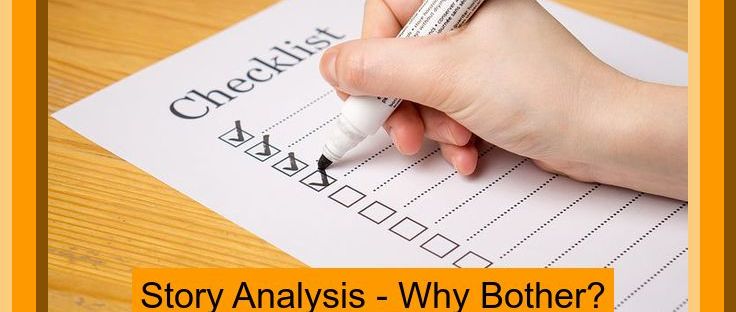
My CFT post this week is Story Analysis – Why Bother? I doubt if there’s an English Literature student who HASN’T thought that at some point!

I look at why story analysis benefits writers, how I do this with flash fiction (yes, it can be done), and look at differing types of analysis.

For example, you can look at whether your story works in terms of structure. You can look at whether the sentence length is appropriate given your type of story. You can look to see if your tale is following the Three Act structure.

Story analysis is a useful tool. Hope you enjoy.

Image Credit:  Pixabay

This slideshow requires JavaScript.

What do you most enjoy writing – dialogue or description?

I must admit I adore writing dialogue but I have to watch I don’t overdo this. Mind, writing flash fiction with its tight word count helps a lot there!

I can understand the appeal of writing plays given dialogue has to be a prominent part of them.

When I’ve finished a standard length short story (1500 words or so), one of my editing processes is to ensure the balance of dialogue to description is (a) right and (b) specifically right for that story. Some of my longer tales genuinely need a lot of dialogue. The rule is to cut out anything which doesn’t move the story onwards in some way.

This slideshow requires JavaScript.

My CFT post this week looks at story analysis and discusses why it is worth doing by writers (both for their own work and on their own favourite authors). I also look at whether you can over-analyse and share how I analyse my flash fiction (yes, it can be done!). Link up on Friday.

Making progress on the novel, an idea I have for a non-fiction book, and, of course, I’m drafting flash fiction too. Hope to get some of that edited and submitted soon. Never short of things to work on but that’s how I like it!

Facebook – From Light to Dark and Back Again

As part of my CFT post on Story Analysis this week, I look at how I do this for flash fiction. It can be done!

The most important part of any story though, regardless of its length, is getting that idea out of your head and down on to paper or screen though!

I use story analysis to review my stories thoroughly once the first draft and basic edit (typos and grammatical errors – there is always at least one!) are done.

This slideshow requires JavaScript.

One of my favourite word games used to be Word Association. (These days it’s Scrabble on the phone, though the ads are annoying! I’ve also just got into Countdown as an app. No. Have not yet made a 9 letter word. I’m working on it!).

I still use Word Association sometimes as a brainstorming exercise. It can be a great way to find links (and as a result story ideas). Be prepared to dig deep though. Your first reactions to a word will be to come up with the obvious links. It’ll be what comes after you’ve used all those up that will be interesting.

For example:-

Bell = ring = clanger = Jo drops a clanger. Who is Jo? What was the clanger? What were the consequences?

Hmm…

You get the idea. Have fun and play with words like this. It will boost ideas and since when has that been a bad thing?!

What writing task do you dread doing most?

I suppose if I’ve got one, it is the line by line edit for typos and grammatical errors. The thing that keeps me going there is the thought that all of this will vastly improve my story or book.

I think of this task as a bit like dusting. Nobody will notice when you have done it but when you haven’t, that’s another matter! (I loathe dusting… no surprises there).

It helps to focus on getting your MSS as near perfection as it is possible for us mere mortals to do. In a way you don’t want people to notice it. Your work should read seamlessly and well. If it is any small comfort, I learned a long time ago that something which appears to be an easy read is the same something the author slogged their guts over to achieve that. It’s also taken them a long time to get to that level of experience to know it needs doing, IS worth doing etc!

This slideshow requires JavaScript.

Fairytales With Bite – Working Out How Things Work

My CFT post Story Analysis – Why Bother? looks at why story analysis works and why it is useful for writers.  But how do your characters work out if things are working the way they should be?

Usually your characters take a while to work out when things are going wrong (and this is particularly true if someone is a traitor to a group of characters.  It takes time to figure out something is not right and then deduce who the guilty party is).

I suppose it is a reflection of human nature that characters often have to realise something is wrong (as opposed to knowing things are going well).  But therein lies the drama and conflict and without all of that, there is no story.

Interesting lines of thought to follow for stories are when characters are put in situation where they are in a different culture and have to adjust their thinking.  How easy is it for them to do that?  Do they manage to blend in with their new surroundings or do they stick out?

But there you have a character who has to got to work out how things work in their new environment.  Also work out what the consequences are for if/when your character gets this wrong.  Is the new situation they’re in welcoming to strangers or not?  Increase the tensions and the pressures on your characters to get this right to ratchett up the stakes the character has to “play for” to achieve whatever goal has been set as the story aim.

This World and Others –

My Favourite Things About Stories

Where do I start with this one?  Well, here goes:-

1.  Stories take you into another world.  Sometimes that world is this one but we see it in a light we’ve not considered before.

2.  Stories show you a wide range of characters, some of whom you’ll love.  Others you’ll love to hate of course but all of them draw  you in and make you feel something!

3.  Stories, when they convey messages/morals, do this subtly.  The writers rightly don’t want to lose their audiences by preaching.  Subtlety generally works better in any case.  It is better that the reader works out what the message/moral is and have their own lightbulb moment. The message hits home all the better for the reader working it out for themselves.

4.  Stories entertain.  In what is a mad world, the escapism element shouldn’t be despised.

5.  Stories can show you different aspects of history and culture from around the world.  (I find it fascinating how so many of our beloved fairytales go back such as long time and there are many cultures which have very similar versions to the ones we know).


Just a Minute and Other Thoughts

Facebook – General

Had to smile today. I receive book recommendations by email sometimes and today it finally happened. Yes, From Light To Dark and Back Again was recommended to me!

Moving on swiftly, I’m pleased to say I’m making good progress with my novel and third collection of flash fiction stories. I’ve ideas for non-fiction that I’m working on as well and I could really do with more hours in the day or to somehow be able to manage without sleep. Given neither of those are going to happen, it’s a case of best endeavours!

Have also started drafting a short story I’ve got in mind for a competition in April. Sounds ages away I know but it’ll be here before we know it and I do like to get a story drafted and then leave it for a while before reassessing and editing it. So starting the story about now is the right sort of timescale for me.

This slideshow requires JavaScript.

Have typed up a couple of writing diary prompt stories that I’m considering for my third flash fiction collection. I’m at the 15000 word mark with this so will probably go to 20K and stop there. I know there’ll be a lot of cutting to do – there always is! But I never mind that. I think it shows there IS a story there and it is just a question of getting rid of anything that doesn’t enhance it.

I’ve only consciously padded a story the once and, guess what, I gave up when I realised the idea simply wasn’t strong enough. It remains the only story I’ve ever given up on. So yes I prefer to write and then cut. It always works better for me.

The writing prompts in my diary at the moment are where you’re given an opening line and you then see what you can do with it. I like those. I like to think of them as imagination stretching exercises!

Enjoyed listening to Just a Minute on Radio 4 tonight. The rules of no repetition, no hesitation, and no deviation from the subject are great guidelines for writing fiction too.

You want your story to move onwards and upwards to its conclusion so no repetition (it will also irritate readers). I’ve found outlining a story before I start writing it gives me the confidence to write it at all and so I do (no hesitation). I also think something of that confidence shows through in the final story too.

And as for going off at a tangent… a big no-no. As someone once said “just the facts, Ma’am, just the facts”. What those facts are, as far as your story is concerned, of course is down to you!

This slideshow requires JavaScript.

Glad to say a flash fiction story of mine, Mirrored, was in the recent Swanwick Writers’ Summer School newsletter.

I discuss adaptations in my CFT post this week. What makes a good adaptation? What doesn’t? Also, this doesn’t just apply to writing either. Link up on Friday.

Editing of the novel continues to progress well and I’m drafting a 750-word short story too at the moment. Really like my lead character. They have promise! The real issue for me on this one is whether I can keep to the strict word count for this particular competition. Still, I will find out! I do love being able to set a Project Target on Scrivener and find it really useful for competitions like this. I like seeing the bar change colour as I get nearer to my goal!

Scrivener images below werebtaken by me as screenshots.

Facebook – From Light to Dark and Back Again

I’m very fond of flash fiction stories that end with a line which make me laugh. When writing this kind of story, I always write that finishing line first and then work backwards to the beginning.

I’ve found outlining in that way means the ending seems natural to a reader and springs out of what has come before. I can take the time to work out what must come before for that line to work and none of that shows in the finished story. Win-win!

How can I tell if a flash fiction idea is going to work best at 50 words, 75, 100, 500, or what have you?

A lot depends on how strong the character is – can they carry a longer story? Also the story itself is about one moment in the character’s life. The moment you’re writing about must not be dragged out (it shows, trust me, that shows) so if you are finding you are trying to extend a story, stop, think again, and look at the piece as a much shorter one. It will almost certainly work better and pack more of an emotional punch on a reader by keeping it shorter. It is impact you want. That is what a reader remembers. You don’t want to dilute that.

Equally, I’ve found sometimes a character needs space to show what is happening in their “moment” properly so fine I go with that. The time to stop is when if you add anything at all, it will weaken the story/character and the potential impact. There’s nothing to stop you incidentally from trying out a story in two different word counts and seeing what works best. Read them out loud. What has the most impact on you?

Street Cred

I’m the coolest one on my street. I’ve been here the longest. Know the best places to hang out with pals. Know the best places to get together with the girls, if you see what I mean. It was just a pity a momentary lapse in concentration meant my cool went haywire and I managed to walk into the catflap my owner put in for me, rather than through it.

Don’t let anyone tell you cats have no sense of humour. The rest of the gang were all laughing at me. Still I’m not worried. I’ll just have to fight them all tomorrow. But for now, me the big ginger tom from No. 27, is curling up on the sofa with my so-called owner. (I own HER truth to be told). She is feeding me titbits from her tuna supper. This is the life.

Being cool again can wait until tomorrow.

Allison Symes
25th February 2019

This slideshow requires JavaScript.

I love writing twist endings for my stories and, as mentioned before, often work those out first and then write the story “backwards” to get to the starting point.

But my other favourite writing technique is to begin with a promising opening line and then outline a few ideas as to where that could take me. Naturally I then go for the idea that I like the most (which is always the strongest one or has the most potential in it. Definitely not a coincidence that!).

Sometimes I can “see” a 100-word story in its entirety. My The Haunting is an example of that and was inspired by the character of Mrs Wilberforce (aka Mrs Lopsided) in The Ladykillers.

Goodreads Author Blog – Short Stories and Flash Fiction

I’m glad to see the return of short stories and the development of flash fiction for many reasons. One of these is that I write both so I won’t pretend to be unbiased here. But the major reason for loving this development is it expands the kind of reading available.

I love novels but it is great being able to read a collection of short stories or flash fiction after finishing one full length tome. It mixes up what I read. By the time I’ve finished reading an anthology I’m raring to get on with a novel again!

Also if the novel has been a dark one in terms of mood, there’s nothing like a collection of funny short stories to show the opposite side of life and I, for one, find that helpful. I don’t want to read “dark” all the time. I also know life isn’t always one big laugh so I like to have a balance of dark and light in my reading, as well as my own writing.


SUBMISSIONS, IMPACT, AND DELVING INTO THE PAST

Facebook – General

Sent off a story submission tonight so pleased with that. Had drafted the story a while ago but wanted to leave it to one side and come back to it with a fresh eye. The voice of my character comes through loud and clear!

This piece is just under 1000 words, which is LOADS compared to my favourite 100-worders! But that is a major joy of flash fiction – it has divisions within it and there is nothing to stop you sticking to one type or mixing and matching. I like the latter approach.

Sometimes a character does need to be “let off the leash” for a longer distance and that was the case with this story.

This slideshow requires JavaScript.

Whenever I watch/listen to an adaptation, whether it is a panto, a play or a novel turned into a TV series, am I looking for a word-to-word faithful rendition?

No! What I am looking for is the adapation to be faithful to the spirit of the original book, play or what have you. There is also a strong reason to adapt, say, fairytales for pantos and the like, given so many of the original stories are far too grim (some pun intended!) to be staged exactly as they were originally written.

I want the characters to be recognisable as the ones the original author created. I don’t like mish-mashes of characters, as can happen. Those never seem real to me, precisely I think because now I can spot the joins!!

Am looking forward to sharing my CFT post as it will be a review of a recent panto put on by The Chameleon Theatre Group. The style I’ve used for this one is a bit different too but suits the material well. More on Friday! (I think we need pantos in January given it seems such a long month and the weather’s generally awful or cold or both).

Making good progress with the novel. Am “brewing ideas” for a story competition (deadline end of March) so plan to start outlining hopefully later this week/over weekend.

Also hope to finalise third flash fiction collection in the next couple of months. The material is pretty much all there now but it needs a darned good edit! Mind, there is nothing I write (with the possible exception of the annual holiday note to the milkman) that DOESN’T need a darned good edit!

I discuss impact in my turn on the More Than Writers’ blog spot from the Association of Christian Writers.

I look at the impact I hope to achieve in the stories I write by deciding in advance what I’d like that to be and then selecting the words to best achieve that. The rest, of course, is down to the reader. You can put down the pointers but it is up to reader if they “run with them”.

Having said that, I have found thinking about impact like this means I’m trying to engage with readers from the outset. It also stops me going off at unhelpful tangents (and that is too easily done!).

Facebook – From Light to Dark and Back Again

Looking ahead to some of the writing prompts coming up in my diary, there are some promising thoughts for new flash fiction stories. Some of the prompts are asking for character studies (with some being based on a specific name. I’ll have fun with that when I get to the week for that one. A name is just a peg after all. It’s what you do with the peg that matters!).

There are also some word association prompts. That will be fun too. A great way to allow yourself to go off at tangents to generate further story ideas. I love playing with words like that.

One huge advantage to writing flash fiction is it can give you a way of getting work out there while working on a much longer project, such as a novel.

I’m happily revisiting a novel of mine and using the editing skills writing flash fiction has given me. This should sharpen the novel up and I hope give it a better chance “out there” when I’m ready to submit it.

Naturally, this is going to take time but when not working on that, having flash fiction stories on the go is a great way of building up publishing credits and so on. I hope all of that will prove useful with regard to the novel later on. Watch this space, as they say!

One of the hardest things to do is cutting out a character you love but you know doesn’t really fit into the story or novel you’re writing. At one time you thought they did, that’s why they were there at all, but you have come to realise, often on repeated reading, that they’re not doing that much and if you cut them out, they wouldn’t be missed. (By anyone other than you naturally). Of course they’ve GOT to go but it seems such a shame…

Well, have you thought about seeing if you can write some flash fiction for them? Waste not, want not and all that. If a character can’t justify a full length story, can they be useful in a much shorter piece?

Food for thought I hope!

This slideshow requires JavaScript.

Linking on from my theme of impact which I discuss in my monthly spot on More than Writers (the Association of Christian Writers’ blog), flash fiction has the huge advantage that its impact is immediate. It has to be.

That doesn’t rule out having “big themes”, far from it, but in a flash fiction story, you touch on them briefly and leave the readers to ponder on them.

I love this when I read flash fiction by other authors. I like being given the room to think on the impact of the stories I have just read. When a piece really inspires me, I look at how I think the author achieved that and learn from this. One shared joy of reading and writing is there is always something to learn to add greater enjoyment to what you read/help you improve your own writing.

Goodreads Author Blog – Delving into the Past

Delving into the past has great connotations for readers and writers alike.

Firstly, there is the whole range of historical books to explore – fiction and non-fiction. Then there’s the delight in exploring your favourite historical eras and discovering ones you hadn’t known much about.

For me, coming across Josephine Tey’s The Daughter of Time was one of those moments when a book really does change things for you. It completely altered my views on Richard III. Do check out the book and see if it does the same for you!

Secondly, there is the joy of rediscovering the stories that were favourites of yours in your own past. I’ve done this recently by, of all things, going to a panto and revisiting a story I’d not read in years – Ali Baba. The panto was great but the story reminded me that fairytales are anything but twee and when justice is served, it is usually with a very rough edge!

Other books connected to my past are my late mother’s Dickens collection. Some I’ve read, others not, but I do know I’m not running out of reading material any time soon! This is a VERY good thing!

So if you are stuck for something to read (I know, perish the thought!), delve into your past and look again at wht you used to read. Why did you stop reading that? Is it a question of going, say, from “childish” fairytales (though I’d argue fairytales are anything but childish) to more adult magical realism and fantasy stories?

Above all have fun delving into your literary past and see where it takes you now!

This slideshow requires JavaScript.


PROGRESS, PLANS AND MOODS

Facebook – General

Does the mood you are in affect what and how you write? My own answer to that is it depends!

If I’m in a flat state of mind but the writing I’m working on has a character in a similar state, then I can use my own mood to help write that piece! (I get something useful out of being in a flat mood! Ironically that knowledge cheers me up so win-win!).

Sometimes I deliberately write opposite to my mood so, again if I feel flat, I try to put myself in the head of a character in a lighter mood and find myself writing light. Again that can be a mood booster for me. Writing can be amazingly therapeutic at times.

What I do know is writing anything is a good “outlet” and later, once in a better frame of mind, I can evaluate any writing done in a flat state and see what I can do with it. But the great thing is I have still written, I still have work to do something with, so my advice would be, if you feel flat and don’t feel like writing, try to write something, even if it is a very short piece. I’ve found many times once I get started, I keep going, and writing takes me to a different, better place. Again, win-win there, I think.

Drafted first flash fiction story that I’ve created using a picture prompt in my new writing diary. 51 challenges remaining then given there’s one such prompt a week! Also enjoying working on my novel again. I want to try to enter more short story competitions (1500 word type) this year too. I like mixing the writing up. Challenges the old brain and that’s never a bad thing.

Third flash fiction volume coming along nicely though I need to group my stories at some point. Am hoping to get along to Winchester Writers’ Festival and, of course, Swanwick Writers’ Summer School later in the year, also the ACW Writers’ Days. I think one of the best things about writing is you never stop learning whether it is how to improve what you do, new places to try to submit work or what have you. That is also a very good thing.

Feed that brain!

Image Credit:  Many thanks to the Hampshire Writers’ Society for the image of me reading an example of what flash fiction is at their meeting last year.

Having completed a picture prompt generated story yesterday, I see this week’s prompt in my diary has no picture whatsoever! Still will tackle that prompt later in the week I hope.

I’m planning to share a few of my favourite writing tips and why they’re useful on Chandler’s Ford Today this week. You pick up lots of useful tips from conferences, chatting to writer friends etc., but as is the way with these things, some advice will always be more useful to you than anything else. It can be a question of working out what is going to help you most. Anyway, will share the link on Friday.

Made good progress on the novel and short story ideas over the weekend so will resume work on those shortly. A writing session for me is most useful when I know I’ve made progress on work, whether that progress is editing something, adding a line or two to something already down, or writing a whole new flash fiction piece/draft CFT post.

It’s when I feel I haven’t got anywhere that is most discouraging and that’s when encouragement from writer friends is enormously helpful. I still wish my fairy godmother would turn up though and grant me “elastic time” which I could stretch as and when I needed to without any side effects/damage to history etc. You know I’d use it to stretch my writing time!

Image Credit:  Many thanks to Dawn Kentish Knox for the picture of me reading at the 2018 Bridge House celebration event.

This slideshow requires JavaScript.

Am looking forward to sharing book offer related news later this week. Will share info and links soon!

Meanwhile, am making progress on a longer term project (non-fiction) I’d been wondering about doing for a while and have finally got around to tackling. I don’t know yet whether I’ll submit this to publishers or self publish but it is good to have both options on the table.

Am also making good progress on my novel too. My writing times are fairly consistent (which helps a LOT) and I’ve learned how to use which sessions for which projects in a way that suits me best.

I suppose the biggest lessons I’ve learned are to make the most of the time you do have AND accept you are in writing for the long haul. Stamina and persistence are key. (Good luck is a useful extra though!). How like life!

Facebook – From Light to Dark and Back Again

Once I’ve finished a few posts tonight, I’m going to use the picture prompt in my writing diary to draft a new flash fiction piece. The diary has one for every week in the year so that’s potentially 52 new stories to be written!

I do use picture prompts sometimes to trigger stories but tend to use phrases, proverbs, and things like that to get me started on stories. I’ve posted before about mixing up sources for ideas so I will be practising what I preach tonight at least!

This slideshow requires JavaScript.

We talk about “moments of illumination” – well, flash fiction could be the written version of those! Such moments are always brief and reveal something not known before. Your flash stories should do that too and be to the point.

From the writer’s viewpoint, this is the fun bit as you get to decide what that moment is in your story. For me, it has to be a turning point, whether you “turn” the character or the direction your story is going in to surprise the reader. It is where twist endings come in because you can save the moment of illumination until then.

I often, when reading stories like this, then go back through the tale to look for any clues I may have missed that hinted at the story ending up the way it has. I usually spot something on that look again read and of course I can learn from that and develop the techinique for my own writing.

When I work out ideas for a story, I focus on the lead character and then plan all sorts of havoc either for them to experience or to be the cause of – all good fun! But I do need to know the lead character’s main trait/attitude first – I use this as a “driver” for working out who they are, what they know they are capable of, and so on.

For me, character is everything. The right characters for the right stories make them spark and come to life for the reader. A good character in a weak plot – both end up being disappointing. You get the feeling the character has been “wasted”.

I’ve found it pays to take my time in outlining a character (and this is a feature of Scrivener I adore. On their fiction setting, you have a template you can fill in to help you plot out a character and I’ve used this several times. Scrivener also have one for working out what the setting of the story is and I have used this but the character development one is really useful. I don’t tend to use it for flash fiction but for longer stories where I’ve got 2 or more characters to flesh out).

Once I’ve got my character, I’m generally well away into writing the story. While editing is always necessary, outlining at the start does stop you going off at an irrelevant tangent and has saved me considerable time.

Will have book offer related news later this week so stay tuned! Links and info up when I have them.

What are the difficulties of writing flash fiction?

1. It is so easy to overwrite and be well over the word count limit. Okay a very good edit will take care of that but the story still has to flow, make sense, and impact on readers, once that editing is done. There’s the real challenge, I think.

2. Knowing where and when to stop! (Having said that, if the idea is a strong one and you can continue it so you end up with a standard length short story, do so. You just enter that piece for standard length short story competitions and markets instead!).

3. Getting people to take the form seriously, though this situation is improving!

Goodreads Author Blog – Story Idea Spotting

Do you ever indulge in story idea spotting when reading a favourite novel? I do!

I love looking for what I think are the influences for a writer. To me this adds extra enjoyment to the story and gives me the perfect excuse for re-reading a book. Not that I really need one but never mind.

It’s my experience you never find all the influences/links in one read through! Sometimes not in two reads either!

Sometimes I know what the writer’s influences are in advance because I’ve read interviews etc and can then have fun seeing how these play out in what they have produced. Other times I don’t know and I get to play detective here.

What I like best is when spotting an influence in a book and it is clear the writer is a fan of another writer I also love. Double whammy!

Reading is fun anyway of course but for me this is extra and I love that.

This slideshow requires JavaScript.


A New Year – New Goals?

Facebook – General

I don’t really start thinking in specific terms about what I’d like to achieve writing wise for a New Year until about now. I know what my general goals are and those don’t change much but at about this time I set myself some specifics and then work my way through them as the year goes on.

Some years I achieve them all, some years I don’t, but I feel as if I achieve more for having set some ideas down as to what I’d like to get done.

One specific thing I really do want to do next year is enter more writing competitions (flash, short stories, maybe novel but certainly the first two). I didn’t enter as many as I thought I might this year though I have been working away at other projects, one of which I’d like to also get out in 2019 if I can.

Whatever your projects are, whatever your writing goals are, the most important thing is to enjoy what you write and believe in it. If one market or competition does not work out for you, see if you can figure out why. If there is nothing obviously wrong, try with another market or competition that the piece or story would suit. Above all, don’t give up. Enjoying what you write helps a lot when the rejections come in – and they will.

This slideshow requires JavaScript.

The only problem I have between Christmas and New Year is working out which day of the week it is and I know I’m not the only one to lose track. Back to full writing routine from tonight though and it is great to be back.

Looking forward to using my new writing diary. Full of prompts and loads of places to jot down ideas (including a monthly To Do/Goals page and at the end of the month an Achievements page. The trick here is to try to get both pages equally full I think! A blank achievements page could be depressing! However I plan to use this to help me try and achieve a plan to enter more writing competitions this year).

Under the picture prompts, there is space to jot down notes for story ideas. I’m going to use those to flesh out some flash fiction!

Big plan is to have the novel ready to start submitting again (I hope around Easter time). So lots to do and I start by preparing material for a guest blog and my usual CFT spot. More details on both to come.

Good luck with your writing plans and have fun with them!

Happy New Year, everyone. Good luck with all writing endeavours.

Never be afraid to check out the credentials of publishing services companies/publishers/agents etc as the genuine ones will (a) not mind you doing this as it shows you are taking things seriously and (b) will be able to answer queries well and thoroughly. Also don’t forget you can seek advice from the Society of Authors/Alliance of Independent Authors and their websites are always worth checking out.

Have fun with your writing, try out competitions, write what you would want to read, and read loads! (Magazines, novels, short stories, flash fiction, non-fiction – it all “counts”).

I’ve got a couple of projects planned for the next year including submitting my revamped novel, a third flash fiction volume, and I’d love to do more non-fiction too. Don’t know whether I’ll get this all done but it will be fun finding out – and I guess that’s the point!

Loved the Doctor Who special tonight. Can’t keep a good enemy down, that’s all I’m saying.

The whole point of any story is conflict resolution though that can cover anything and everything from exterminating someone to being reconciled with them. What matters is the conflict is over. The story has concluded.

But while the conflict is going on, it is true that the hero/heroine and villain must be worthy of each other. No hero/heroine gets to win “easily” – there must be huge hurdles to overcome. The villain needs then to be capable of stretching your heroes to their utmost (and beyond ideally, making said heroes stretch too. Drop your characters right in it and see what they can do).

This slideshow requires JavaScript.

Facebook – From Light to Dark and Back Again

Had a great trip on the Watercress Line (steam railway) yesterday with family. Always think of the stories of the navvies who cut out the sidings etc to make our railways. So many stories we won’t know but can only make educated guesses at.

When it comes to our own stories, what is most important to your characters? Who are the characters who you MUST tell stories about and why? Think about what has made you choose these people and play to their strengths and weaknesses. A well portrayed character has plenty of virtues and failings and both will affect the direction of the story.

It’s a good idea to mix up how you source ideas for stories. I like to use proverbs, well known sayings, songs can be an inspiration too and this year I hope to use more picture prompts. (My new writing diary has loads of these in it and I plan to get several flash fiction pieces from these!).

It’s also nice from the writer’s viewpoint to mix up how you gather the ideas/raw material to get you on you way to generating a new story. It keeps things interesting for you and you on your toes, which is never a bad thing. One of the things I adore about flash fiction is it is always a challenge to write small but doing so is very satisfying. (Even more so if the story is published!).

One thing I would like to try and do more of is use more of my own photos to trigger ideas and to take pictures specifically with story generation in mind. The great thing with using your phone for pictures is it is so easy to delete the ones that don’t work out. Sometimes you need to do that with a story too but that is much harder to make yourself do.

I try and avoid getting into that position by outlining first (it really does help). The great thing with outlining is it can be as detailed or not as you like. I’ve sometimes drafted a one-line outline for a piece of flash fiction but it has helped me work out which route to take with the story before I start it. I find I then write more efficiently too.

What are your hopes and plans for your flash fiction writing in 2019?

Mine are to submit pieces online and for competitions more regularly. I also hope to post more on my website – allisonsymescollectedworks.wordpress.com – as well.

I’m working on a third volume of flash stories as well and hope to get this up together and ready for submission.

I really enjoyed taking part in Open Prose Nights for the first time this year and would love to do more of those. I would also like to give more talks on flash fiction as well.

But I should finish the year’s posts with a flash fiction piece I think.

CROSSING TIME
‘I suppose you think that was clever’, the girl said.
‘Of course, why do it otherwise?’ I replied.
‘You can’t hold me back. It doesn’t matter what you do.’
‘There’s not a human born who doesn’t long to, you know. I had the courage to try.’
‘Or the foolishness! Most of you accept you cannot beat me. You even celebrate me once a year.’
‘Yes, it’s all lights and fireworks and parties, but you are a cruel devil and I will beat you.’
The girl laughed. ‘How? You’re not immortal. You can’t win a fight with Time. I should know. I also know how long you have. I can see your sands running through’.
Out of nowhere she produced an hour glass and sure enough the sand was running through but I didn’t care. I didn’t bother looking. I didn’t want to know. It wasn’t the object of the exercise. I wanted to defy Time and I had.
‘I can keep you at bay with this time piece, and keep doing so until it is time for me to go. I like my current age. I will stay this way. That will do.’
I waved the pocket watch in the girl’s face as if daring her to take it but she waved it away from me. The watch’s hands were going backwards. I set them to a week ago last Friday. I wanted to see if I could do it the way the saleman in that strange little shop insisted I could.
And sure enough here I was back where I had been last Friday. Just outside the chip shop, cursing myself for forgetting my coat on what was the coldest night of the year so far. What I hadn’t expected was this wraith like girl turning up to berate me.
‘There is always a price to pay for crossing Time,’ the girl said, sighing. ‘I will catch you in the end. Your time will come. And trust me I will make you know it when it does. I don’t like cheats. I never have.’
‘So be it but my “time’s up” will be at the age I choose.’
‘And how are you going to explain that to people? Tell them you’ve got a funny portrait in your attic?’
I grimaced. I must admit that thought had not occurred to me. But so what? I could always tell people I had found a really good moisturiser!
The girl vanished. I went and got my chips. I was just crossing the road, munching them happily, when a Mini came out of nowhere and sent me crashing across to the other side. The last thing I remember was seeing the girl reappear and she was laughing.
I got one thing right. Time IS a cruel devil.

Allison Symes – 31st December 2018

One nice aspect to flash fiction is if you use a writing exercise to help you start off your creative work for the day, then there is nothing to stop you revisiting what you come up with for that and see if you can turn it into a flash fiction story.

From that writing exercise can come an entry for a competition, a published flash tale etc. Give it a go if you try these writing exercises (which often get you to write a couple of hundred words or so. Perfect length for a lot of the flash fiction categories. You can always edit to get a piece down to 75 words or less or keep the piece as it is and look for the 200, 250, 300 word category competitions and markets).

Good luck!

Goodreads Author Blog – And Happy New Year!

Following on from my Merry Christmas post last week, I could hardly call this one anything else!

So with a New Year in mind, what are your reading and/or writing plans for 2019?

I would like to read more flash and short story collections in the next 12 months plus get my own third anthology of stories finished and ready to submit. (Still very much at first draft stage).

I would like to catch up on my To Be Read pile (but I suspect that is an ambition most of us have!). I would like to submit more non-fiction pieces too.

I don’t tend to take up reading challenges because I think I would feel so disappointed in myself if I don’t manage them. However, I would like to widen my variety of reading (which is reasonably wide as it is but I am conscious there are many genres I haven’t tried and I ought to explore. The world of books is meant to be explored!).

Whatever your plans here, good luck! Happy New (reading) Year!