Learning From Our Favourite Characters

Image Credits:-
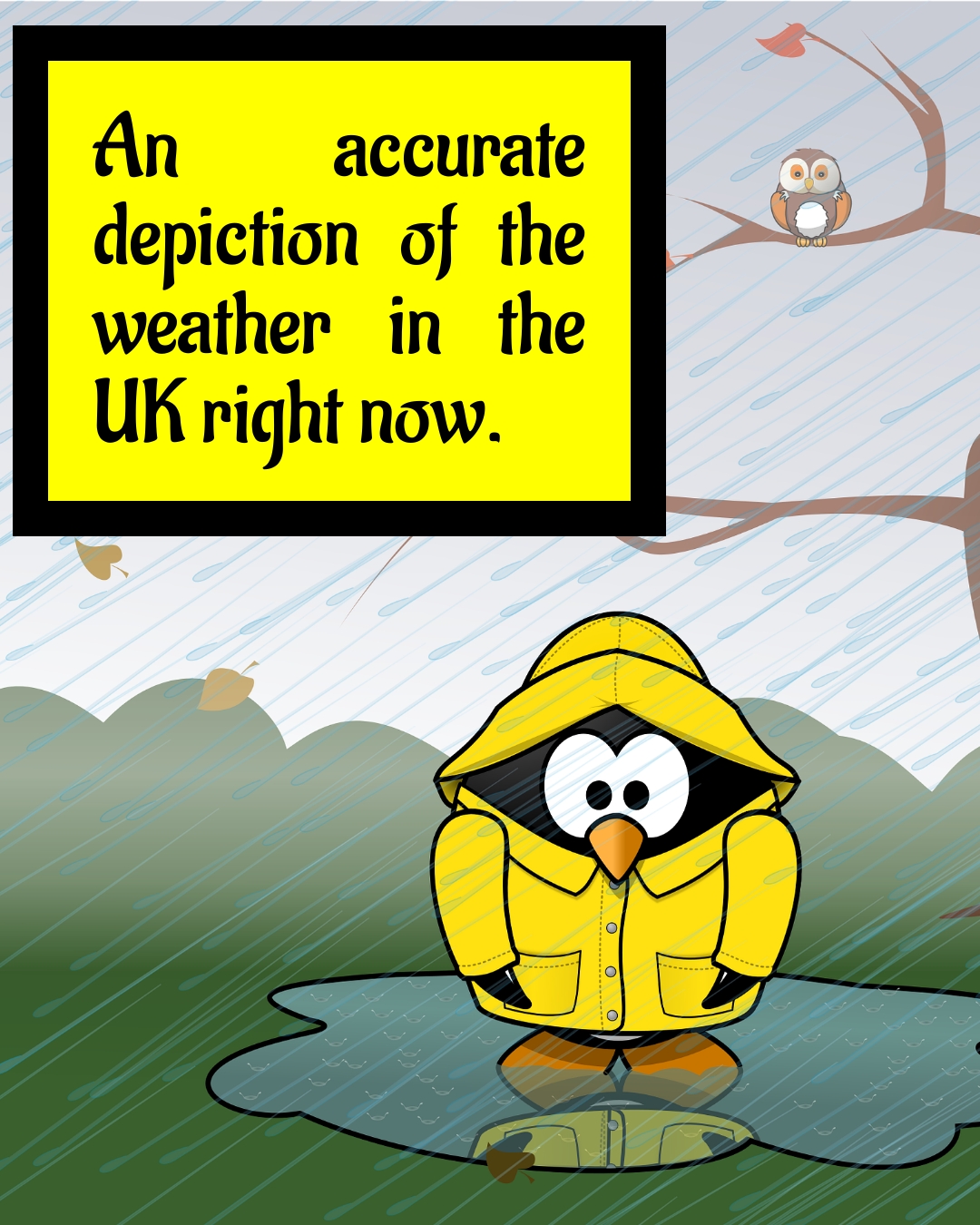
All images from Pixabay/Pexels unless otherwise stated. Book cover images from Chapeltown Books and Bridge House Publishing. Screenshots taken by me, Allison Symes. Hope you have had a good weekend. This week sees my latest author newsletter go out and my taking part in Flash NANO for the first time. Weather all over the place here though we still have gorgeous autumn colours to enjoy (the photo below was taken by me during my Northumberland holiday only a couple of weeks ago).
BookBrushImage-2022-11-1-20-476

20221011_105625_HDR

Facebook – General

Where does the time go? Mind you, it wasn’t hard to believe it’s November today. I’ve had heavy rain, gales, hail, all sorts here and that was by lunchtime today! Lady got to have a bonus play with her best buddy today so she was well pleased.

Author newsletter went out today. Received my first Flash NANO prompt which I plan to write up later this evening.

I’ll be reviewing Sherlock Holmes and The Mystery of Mallen Hall for Chandler’s Ford Today on Friday. Always a joy to go and watch The Chameleon Theatre Group. Looking forward to going to their pantomime (Pinocchio the Pantomime) in January – oh yes I am!

Oh and big news – I’ve booked my place for The Swanwick Writers’ Summer School, very much being an ”early bird”. If you want to know more about Swanwick, do check their website out.


Screenshot 2022-11-01 at 20-24-19 Swanwick Writers' Summer School

Hope you have had a good start to the week. Lady got to play with her best buddy today, the Rhodesian Ridgeback., so those two went home tired but happy. Went out at the right time too – the heavens opened at lunchtime!

Looking forward to taking part in Flash NANO which starts tomorrow. Good luck to everyone taking part in that and in the NaNoWriMo. Hope you all get plenty written. I’m hoping to write to as many of the prompts as I can with the idea being these might go forward to a future collection of mine.

Separately, don’t forget I send out my author newsletter on the first of the month so do head over to my landing page at https://allisonsymescollectedworks.com if you would like to catch the next one “hot off the presses”, so to speak, given it goes out tomorrow. I often share flash tips etc here.

This slideshow requires JavaScript.


Hope you have had a good weekend. Did appreciate the extra hour’s lie-in this morning as clocks went back in the UK. Even the dog welcomed it!

Many thanks for the fabulous comments coming in on The Caterpillar and The Zebra, my latest tale on Friday Flash Fiction.

I’ll be reviewing Sherlock Holmes and The Mystery of Mallen Hall for Chandler’s Ford Today on Friday. It was great to see The Chameleon Theatre Group on stage again.

Also a big thanks for the comments coming in on Learning from Our Favourite Characters, my most recent blog post for More than Writers (the Association of Christian Writers’ blog spot).

Will be pretty busy preparing interview questions for CFT for a couple of lovely authors soon. More details on these interviews nearer the time. Once nice thing about it getting darker sooner in the evenings is that it gives me even more incentive to stay at my desk writing away!


It’s my turn on the blog spot for the Association of Christian Writers. For More Than Writers this month, I look at Learning from Our Favourite Characters. For one thing, you can figure out whether you would make the choices they do in the book you’re reading. One of the joys of being a writer is you get to read more too and you can learn so much from what else you read, whether it is contemporary or classic, fiction or non-fiction.

Facebook – From Light to Dark and Back Again

Received my first Flash NANO prompt and am looking forward to writing that up later. Plan for the month is to write up as many of the prompts as possible. I’ll be worrying about editing in December!

One of the most sensible pieces of writing advice I’ve received (and act on) is to write the story first and worry about editing later. See them as two separate tasks.

That has helped me so much. It means I don’t “hamstring” myself trying to get the first sentence right. I just get the story written and then look at ways to improve it. There always are ways!

Writing Advice

It’s Monday. It’s a darker than normal Monday too – not because of Halloween but because the clocks went back in the UK yesterday! It bucketed down with rain at lunchtime. And it remains Monday. Definitely time for a story on YouTube then. This one, Past Writings, is inspired by a random theme generator and the theme which came up was that of old notebooks. It’s a complete contrast to my zebra video last week (and again a huge thanks for the views coming in on that).


I’ve signed up to take part in Flash NANO which begins on 1st November. You receive 30 prompts over 30 days and it is up to you how many stories you write up. If you want to find out more about this head over to Nancy Stohlman’s site at https://nancystohlman.com/flashnano/

Am looking forward to this. Should be fun. And talking of flash fiction, I am glad to say the November issue of Mom’s Favorite Reads is now out and I’m talking about Twists in Flash Fiction this time. Also check out the wonderful stories that came in as a result of my challenge.


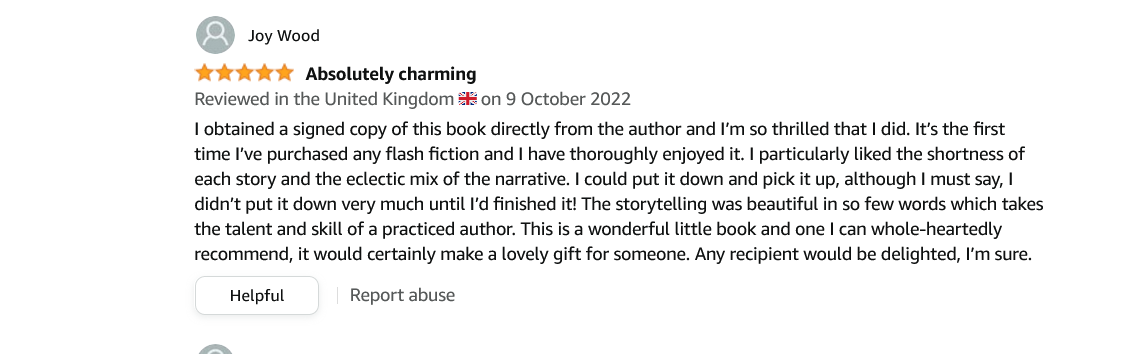
One simple thing any reader can do to help a writer is to review their books. Doesn’t need to be a long review. Just needs to be honest and to the point for the book in question. On that note, I’m delighted to have received another five star review for Tripping the Flash Fantastic. See screenshot. Many thanks to #JoyWood.

Also, there is no “use by” date for these things. Yes, they are especially helpful at the time of a book launch but any author will welcome helpful reviews whenever they come in.

This review mentions signed copies of my books. I’m always pleased to sign my books for people. Just get in contact with me via https://allisonsymescollectedworks.com and we can take things from there.
Screenshot 2022-10-29 at 16-31-50 Tripping the Flash Fantastic eBook Symes Allison Amazon.co.uk Kindle Store

Goodreads Author Blog – The ABC of Books Part 2 – N to Z

It’s time for Part 2 of my alphabetical celebration of books.

N = New and old books – read both and have a great reading “diet”.

O = Open up your reading diet to include genres new to you – this is where I’m glad I have many writing friends. I like to read what they bring out. It’s wonderfully entertaining and I’ve got to read books this way I might not otherwise have come across.

P = Paperbacks and the Penguin. Paperbacks are my favourite format and Penguin opened these up for so many – definitely worth celebrating that.

Q = Quirky fiction. Plenty of room for that in the book world – and often it is the quirky books or characters that grab the attention. Who would have thought a trilogy about a brave hobbit would take off?

R = Reading – and across formats as well as genres. Stories can be taken in via the printed word, audio, etc. Enjoy them all.

S = Stories. This is what books give us – yes, even non-fiction. Why? Because in a non-fiction book, the “story” is you finding out something you had not known before on a topic that has grabbed your interest. Or has increased your knowledge on it.

T = Trailers for books. These are great fun and a fabulous way of giving a teaser to a book. I’m all for getting the word about books out there and this is another way to do that.

U = Universes, yes plural. Fabulous books take you into a world of their own (whether it is set here, back in time, or a fantasy planet somewhere). You should lose yourself in a good book!

V = Voice. A good book will show you the author’s voice through their characters and will enthrall you. You’ll look out for more by that writer hopefully too.

W = Words, the powerhouse of books. Books impact you through words, the way the author has put them together, what they get their characters to say and do. The words of characters stay in your memory. Words, and therefore books, are powerful.

X = X marks the spot found in classic pirate fiction such as Treasure Island, and that leads me on to saying (e)xcellence in fiction, especially children’s fiction will encourage a life long love of reading. How do I know? It happened for me!

Y = Young Adult fiction. I am so glad this category exists now. It didn’t really when I was growing up. I did find myself between categories and I’d have loved the YA range. Also a great way to keep people reading and I’m all for that too.

Z = Zestful books – the kind that keep you reading all night. The books that are hard to put down even when you have finished reading them. The very best books of all!

Screenshot 2022-10-29 at 20-39-26 The ABC of Books - Part 2 - N to Z

Twitter Corner (2)

https://platform.twitter.com/widgets.js https://platform.twitter.com/widgets.js https://platform.twitter.com/widgets.js

Processing…
Success! You're on the list.

Achievements and Descriptions

Facebook – General

When you write descriptions, do you just focus on what a character can see? Do you bring in what they can feel/touch/taste etc? Also an interesting perspective can be to take what is a normal everyday object but show it from the viewpoint of someone who has never seen it before. (The reasons why they haven’t seen it would be interesting too).

In flash fiction, of course, you can’t be overly descriptive. You simply haven’t got the word room. In my Telling the Time I refer to an object as a “beautiful grandfather clock”, leaving it to the reader to imagine what THEY would think such a thing would look like. In my Rewards, I do bring in a thick red carpet but that purpose is to show my character, Becky, pacing around on it!

Description then, like any other element of a story, has to serve a purpose. If it doesn’t, it really shouldn’t be there even if you are writing an epic saga and word count isn’t an issue!

This slideshow requires JavaScript.

What do you want to achieve most with your writing?

For me, it is knowing I’ve created a piece of work (of whatever word count) that entertains others. Course I wouldn’t object to being a bestselling author etc but then who would?!

But given there are no guarantees the latter will ever happen, it is far better to focus on writing because you love it and to do so to the best of your abilities. Then put it out into the market and see what happens!

You also have to accept from the outset I think that you are in for the long haul and adapt expectations accordingly. Persistence pays only when you put in the work to get your MSS up to publication standard and that takes time and more effort than non-writers realise.

This slideshow requires JavaScript.

What made you decide to write and why? Did you find what you wanted to write immediately or did you have to try short stories/novels etc before finally settling on what you really want to do?

The fascinating thing here is no two writers have exactly the same journey, even if a lot of their paths cross.

I started off with an idea for a novel, wrote that book, it was longlisted for a competition years ago and then I wrote short stories and flash fiction. I am now revisiting that early novel given flash fiction has taught me so much about editing and I know applying that to the book will do it the world of good.

As for why I decided to write at all, it was one of those things I knew I would have to at least try. I’ve always loved working with/playing with words. My only regret here is not starting a lot sooner than I did. But what matters is starting and then keeping going.

Biggest joy of writing? Yes, being published, but making so many writer friends is right up there too.

This slideshow requires JavaScript.

I’m looking at the highs and lows of the writing life in this week’s CFT. I hope it’ll be an eyeopener for readers, or indeed anyone who knows a writer, especially on why reviews and supporting writer events matters so much. Link up on Friday.

NB: This post definitely comes into the “write what you know” category!

Also pleased to say I’m in the Spring edition of Christian Writer talking about Making Your Characters Count.

This slideshow requires JavaScript.

Facebook – From Light to Dark and Back Again

For the flash fiction collection I’m currently working on, I’ve had a great deal of fun with linked stories. That is I’ve used the same character(s) in a follow up tale.

I’ve also used a viewpoint of a character in one story and then flipped it to show the viewpoint of another character, who isn’t necessarily in agreement with the first one.

Plus there have been the acrostics, the one-line stories and so on. Flash fiction can be amazingly versatile and the fact you have to work to a word count is a good thing. It helps you write (and edit) with precision. You work to find exactly the right words to convey as much meaning as possible in as short a word count as possible. That discipline can and does spill over into other things you write, which is always a good thing.

When do you know if a flash fiction piece has real bite? When you read it again after a break from it (say a few days) and it still hits you hard, as you originally intended the piece should do.

When I’m editing, I’m always asking myself how the reader would see what I’ve written. CAN they fill in the gaps the way I intend they should? HAVE I given them what they need to know to do that (but no more)? IS the impact what I think it will be? Could what I intend be misconstrued? Is the language used appropriate for the piece? Do I still like or loathe my characters (as appropriate)?

I think it is vital to see editing as a totally separate job to the act of creation. Creation is the fun bit. Editing is the bit which makes sure your created work IS as fun as you meant it to be when read by a stranger. Without good editing, your story will not work as nobody can really claim to ever write a perfect first draft. Shakespeare didn’t so I think it’s safe to claim we won’t either. My attitude to editing changed entirely when I saw it as what would make the difference to my being published or not (and it does).

I was wondering when I had my first piece of flash fiction published on Cafelit. It turns out to be A Study in Magic way back in 2013. Wow! That six years has gone quickly. Well here’s to the next six! I still love the very short story form. It has a great deal of potential and can/should make a powerful impact.

When I analyse a flash fiction piece, what am I looking for?

1. Do the characters “grab” me? It doesn’t matter if I love or loathe them. Have they got my attention? Have I GOT to find out what happens to them?

2. Does the story have an impact on me? If it’s funny, did I laugh? If it’s a crime story, did my blood run suitably cold?

3. Are there stand-out lines which, when written by other authors, make me wish I’d written them? (I use that to spur me on incidentally, which is what great writing should do).

4. Is the start intriguing enough?

5. Does the story end with a suitable punch? When it’s twist in the tale, did I see that twist coming? I don’t mind if I do incidentally. Sometimes it’s nice to be right but I adore the ones where the author has wrong-footed me and come up with something really special. Again, I find this encourages me to “up my game”, something all writers should always seek to do.

Goodreads Author Blog – Encouraging Books

Yes, this could mean the self-help books and there is much to be said for those, but for me an encouraging book is one that makes me read further into the subject. This can apply to fiction as well as non-fiction.

For example, Josephine Tey’s The Daughter of Time is fiction based on Richard III and is one of my all time favourite books. It has also led me to read far more about Richard such as The Maligned King, The Last Days of Richard III and others.

For non-fiction, it is easier to go by topic of course when looking for books to encourage further reading.

For fiction, it is nearly always based on how well the main character comes across and the theme of their story that makes me look for similar themes in other tales.

When the character is based on a real person, and if the story has gripped me enough, I nearly always look up non-fiction material on that character as I did with Richard III.

And there is scope for a lot of crossover – fiction leading into non-fiction and vice versa. Book reading leading into magazine reading etc.

I don’t write historical fiction (though I do read some) but I should imagine one of the great joys of it is the research the writer has to do before starting. I should also imagine the big problem here, and one I know I’d have, is stopping the research and actually getting on with the writing!

So what books have encouraged you to read more on their character/theme etc?

This slideshow requires JavaScript.


WRITING, EDITING, AND WORLD BUILDING ISSUES

Facebook – General – and Chandler’s Ford Today

Looking forward to the Hursley Park Book Fair over the weekend (though sadly I can only be there on the Saturday). I hope I can get to listen to a couple of the other talks during the day too.

This slideshow requires JavaScript.

Facebook – From Light to Dark and Back Again

I plan to read a few of my stories as part of my talk on flash fiction at the Hursley Park Book Fair tomorrow, 23rd June. (The event is on 24th as well but sadly I can’t make it for both days). Good opportunity to spread the word about what flash fiction is all about.

As with my longer fiction, I draft a flash piece first, give it an initial edit, and then leave it for a while before looking at it again. In the meantime, of course, I am writing more flash fiction and non-fiction posts. This generally means I always have something to write or to edit.

When I use Evernote, I tend to just write and have fun being creative. I tend to edit this work once I’m back at my desk again. I’ve found this method works best for me but the most important thing, I think, is to see the creative writing and editing of same as two separate tasks. I never try to write and edit at the same time, else I hamper myself. I need a bit of gap to be able to judge objectively if something is working or not.

This slideshow requires JavaScript.

Fairytales with Bite – What Classifies a Fairytale as a Fairytale?

This is not a definitive list but what I think classifies a fairytale to be called a fairytale.  Comments welcome!

1.  Magic is involved.  This can be at a high level (Cinderella’s transformation – clothes, coach etc) to low level (a little magic is used to help a character succeed at something.  This is taken to its logical conclusion in Fantasia though there the character also needed to know how to stop but that’s another story!).

2.  There has to be a transformation of fortune.  Usually from being downtrodden to the happy ever after, but sometimes, such as in The Little Mermaid, the transformation can be seen not to have been what the character really wanted.  Or it failed to achieve what it is was meant to achieve.  However, the transformation of fortune has still happened.

3.  Generally, the good guys either win or fail heroically but leave the banner to someone else.  Always true.  I would describe a story where the villain won as a a nightmare, rather than  a fairytale.  Why?  Because with the villain winning, you can kiss goodbye to hope.  That villain will impose their will on their subjects say with nothing and nobody to stop them.  I fail to see the story in that.  Re the latter, remember in The Lord of the Rings, there had been a previous attempt to defeat Sauron once and for all.  That failed but it paved the way for the story to follow.

4.  Inanimate objects should be treated with caution.  This can include things like the Portals in the Harry Potter series, any shiny red apple, talking mirrors, and swords/rings etc that seem keen to be reunited with their former owners.  These always cause trouble but it is a major element of a fairytale.

5.  Expect the unexpected and/or what is unknown in our world to be known here.  This is especially true for the existence of magical creatures, universes far far away, and so on.

This World and Others – World Building Issues

Some issues relating to world building can include:-

1.  Not giving enough information for your reader to be able to picture the world in their own minds.  As with flash fiction, it is the telling detail that matters here.  Your story should ensure it has everything in it the reader will need to know.

2.  Not making the world attractive enough for the reader to care what happens to it.  The details you give them have to matter.  The readers need to see what is appealing about World X always doing this or that on their equivalent of a Tuesday, to name one example.  They also need to see why it matters.  In this case, would the world collapse if the tradition changed?

3.  Not having the right balance of character types.  You do need a decent villain.  You also need a hero/heroine with the right “can do it” attitude.  Yet if you just have the good guys, there is literally nothing for the good guys to fight.

This slideshow requires JavaScript.