
Facebook – General
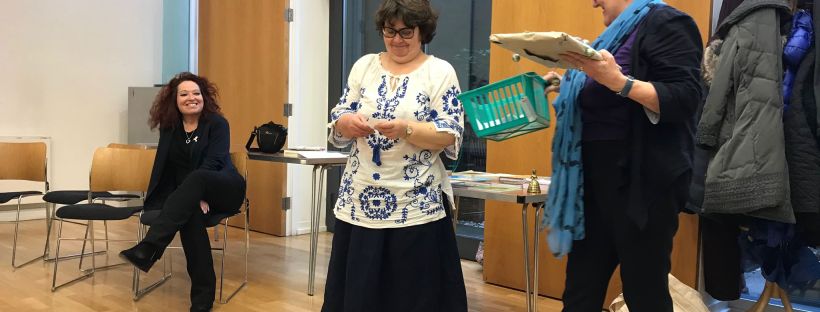
Had a fabulous time at the Bridge House celebration event in London today. Great to meet up with friends and fellow writers once again.
In no particular order, I’d like to give a shout out to Paula Readman, Ana and Russell, Dawn Kentish Knox and her lovely mum, Pat, Gail Aldwin, and Amanda Huggins. Meeting for lunch in a pub before the event was a fantastic idea! It was nice that the venue was so easy to find from Southwark Tube Station too.
Lovely to hear some great stories read out. Lots of twists and surprise endings, several of the characters I would be very wary of were I meet them in life (!), and it is SO nice being read to!
I read Circle of Life from From Light to Dark and Back Again, Moving On and Time for a Change which were published on Cafelit fairly recently. Laughs and applause were much appreciated by me so thank you all.
Above all, thanks to Gill James and Debz Hobbs-Wyatt for all their hard work behind the scenes at Bridge House, Cafelit and Chapeltown. (I plan to write a Chandler’s Ford Today post on this event in the not too distance future and will share more photos there and then).
Below are just some of the authors who read works out during the celebrations. All of the stories read were excellent and had the audience spell bound. Many thanks to Dawn Kentish Knox for taking the photo of me and for kind permission to use it. Also thanks to her for other images used further down in this post and for the one I’m using as the feature image for this post.
Some signs of really good stories include:-
1. Promising opening line that MAKES you want to read on immediately.
2. You loved the story so much you feel disappointed when it ends.
3. You remember it (or in the case of novels, for example, you recall your favourite extracts).
4. You’ve read that opening line but CAN’T read on immediately and rush through everything else you’ve got to do so you CAN! OR If you can’t rush through, part of you is inwardly gnashing your metaphorical teeth, until you can sit down with a cuppa and get on and read the story!
5. The real classics become a tradition. The best example of this, of course, is Dickens’ A Christmas Carol.
6. In the case of twist stories, you really didn’t see the surprise coming. It is only when you re-read the tale, you spot the clues. Roald Dahl was the past master of this in his Tales of the Unexpected.
Time for some more writing acronyms. I expect some of these will ring a bell or several.
OFD – On First Draft
SOFD – STILL on First Draft
DAASD – Don’t ask about Second Draft
EWE – Editing, What Editing?
PDHRN – Printer Died Halfway (through) Running (out) Novel
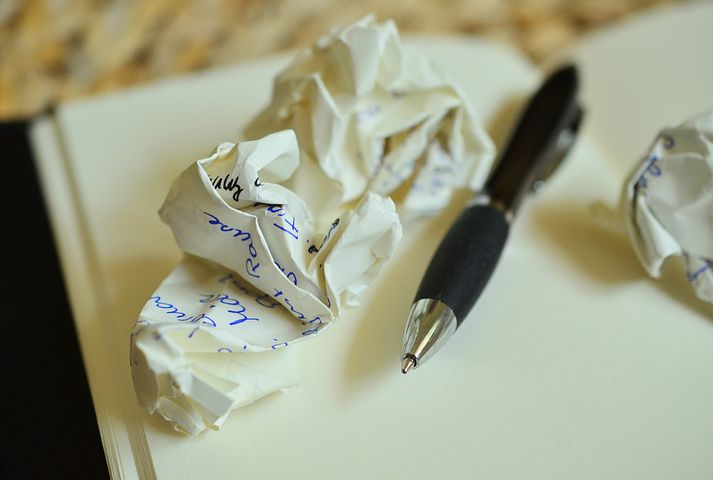
WCINFAP – Why Can I Never Find A Pen (when I call myself a writer)?
RFOMN – Room For One More Notebook
DWD – Deadline, What Deadline? (Theme emerging here I fear!).
PWP – Procrastination, What Procrastination?
WSWPS – Will Start Writing Properly Shortly – linked to PWP inevitably.


If there is one thing I don’t miss from the “good old days”, it is having to cut and paste literally! I also don’t miss carbon paper.
Has the PC spoiled us all? Perhaps but it is a boon knowing I can correct material easily and can move passages of writing around as I want to and without having to then photocopy the new sheet with the amended bit on (as the copy wouldn’t look as if it HAD had anything added to it!).
I suppose the one thing I really DO miss from said good old days is that reading lots of stories and books was something, if you will pardon the pun, that WAS taken as read. Now we have to encourage reading as much as possible. That isn’t a bad thing obviously but it strikes me we are detecting a “reluctance” that has to be overcome somehow. Why is reading seen as a poor relation to other forms of entertainment?


Facebook – From Light to Dark and Back Again
There were some great flash fiction pieces read out at the Bridge House/Chapeltown/Cafelit celebration event in London today. Many congratulations to all.
I’ve found the biggest benefit from writing flash fiction is it teaches you quickly how to REALLY edit! You learn to write with precision and that skill can be transferred to whatever other writing you do.
Must confess I am feeling somewhat tired and I swear I was only on tea and orange juice today!! (More pics to come in a future Chandler’s Ford Today post in a couple of weeks time).
(I don’t know when they got the Christmas tree up at Waterloo but it looked nice, as always).
Questions to ask yourself when writing flash fiction:-
1. What do I want the impact to be on the reader?
2. What mood is the story? (Some titles could take you in several directions so I find it helpful to work out whether it is going to a sad tale, a funny piece, or what have you and then think about a title).
3. Would this story work best as a short, sharp piece (say 25 to 75 words) or expanded a little so there is more depth (say 100 to 500)?
4. Which market/competition am I aiming at? Always have your audience in mind! It directly affects how you write the piece.
5. If writing to a familiar theme, think about the unique take you can bring to it. For example, if you’re writing a love story, what will make that stand out? Dig deep for ideas. The first ones you come up with will inevitably be the “obvious” ones. So search a bit more and a bit more…


It is ironic cliches are usually avoided in fiction (and is that in itself a cliche I wonder?!). However, they can have their uses in flash fiction. Why? Because they can be a useful short cut to conjuring up images you want your readers to conjure up. Because they can tell you a lot about your characters. Because they can save a lot of words!
However, the trick here is to not use the cliche directly. I sometimes use a cliche as a title but in the story itself I twist it. One example was a story I drafted a year or so ago at Swanwick where instead of using “take the biscuit” I came up with “take the Garibaldi”. That made people smile when I read my piece out but it should put a picture in your mind as to what kind of character would think automatically of a Garibaldi as THE biscuit to go to! Equally had I said “take the cheap Rich Tea”, that would, I think, create in a reader’s mind an image of a very different character.
The idea here then is to use the cliche but don’t let it use you. Do something different with it. I know I get tired of reading cliches when I come across a lot of them in a story (and it does happen) but the odd one or two, ideally with a twist to them, is fine.


Advantages to writing flash fiction include learning how to REALLY edit, keeping to word counts, and writing precisely. (That is the only way to keep the word count to where it should be). You have to think of the strongest word to convey the greatest image and to again save on word count. No weak images here, thank you!
You are also thinking about the impact of your story on a reader as giving this some thought early on will dictate the way the story goes and save you some time and work in editing later. Putting yourself into the mind of a potential reader will ensure you are writing with an audience in mind from the outset (which will help when it comes to finding a suitable publication to submit the story to as well).


Goodreads Author Programme Blog – Being Read To
When was the last time you were read to as an adult?
For me, that was this afternoon – 1st December 2018 – but more on that in a moment.
I have, as I hope you have, many fond memories of being read to as a child. It instilled a life long love of books in me at a very early age. Thanks to Beatrix Potter, I learned the meaning of the word “soporific” early on too! Good books can do wonders for your vocabulary.
This afternoon I was at the Bridge House/Cafelit/Chapeltown Books celebration event. My favourite time was listening to published works being read out by fellow authors (and I read some too). Let’s just say there are some characters I heard about today I am so glad I can never meet in life. One in particular had a penchant for getting away with… well to say more would give the plot away! Oh and I wouldn’t want to meet all of MY characters either!
But it was such a joy just sitting back and listening. I love audio books but there is nothing to beat hearing an author read out their own work. Dickens was definitely on to something there! I don’t know quite what it is but, even in a tale that has you gripped to the edge of your seat, there is something soothing in being read to.








 Allison Symes: Collected Works