Introducing Crime Writer, Val Penny

Introducing Val Penny…

One of the lovely things about writing is getting to meet other writers at conferences and so on. You can share tales of woe, exciting publication news etc and know the other person will appreciate where you are coming from. Sometimes you can find out about markets and competitions you hadn’t heard of, but above all you have friends – and social media makes it so much easier to keep in touch.

I was delighted to meet crime writer, Val Penny, at the Swanwick Writers’ Summer School a couple of years back. I’m looking forward to catching up with her again there this year. I am very pleased to have Val join me on my blog tonight and she shares an excerpt from her forthcoming book Hunter’s Revenge, the second in the Hunter Wilson/Edinburgh Mysteries series. (Good news for those of you who like crime writing, as I do, is there will be more to come).

Over to you, Val… (and I want to know the moment you DO achieve your childhood dream of owning a candy store. I shall be right over….!).

The Author Bio for Hunter’s Revenge

Val Penny is an American author living in SW Scotland. She has two adult daughters of whom she is justly proud and lives with her husband and two cats. She has a Law degree from Edinburgh University and her MSc from Napier University. She has had many jobs including hairdresser, waitress, lawyer, banker, azalea farmer and lecturer. However she has not yet achieved either of her childhood dreams of being a ballerina or owning a candy store. Until those dreams come true, she has turned her hand to writing poetry, short stories and novels. Her crime novels, Hunter’s Chase and Hunter’s Revenge are set in Edinburgh, Scotland, published by Crooked Cat Books.
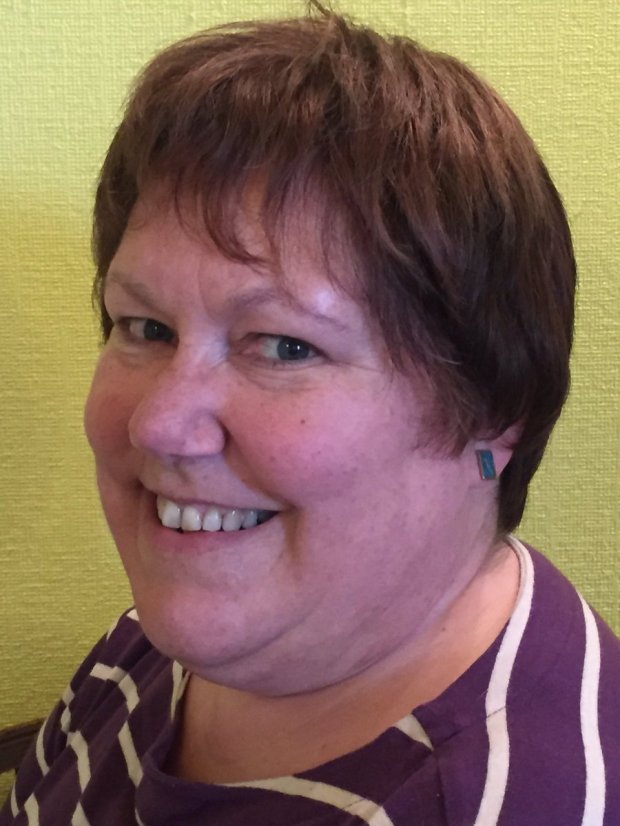
author pic 2

And Val has very kindly shared the extract from her forthcoming book.  Enjoy!  I know I did!


Hunter’s Revenge
Prologue
East Germany, January 1968
The last thing Georg did on his eighteenth birthday was kill a man.
He really hadn’t meant to kill the Stasi officer in front of him, but it was him or Georg – and Georg did not want to die. It was the first time he’d seen a corpse. The streets were slick with ice. The man lost his balance and cracked his head on the pavement. Georg stared down at the body: there was blood and brains all over the pavement. He looked into the officer’s eyes. They stared blindly to heaven, but Georg knew there wasn’t a Stasi officer on earth who was going there. He looked away from death and towards his friends in horror, but when they saw what had happened, they scattered. Georg picked up the officer’s gun and began to run.
More Stasi officers appeared as the boys fled.
Georg was out of breath when he got home.
“What’s the rush, son?” his father asked.
“Shit, Dad! It’s bad.”
“You’re drunk! No language in this house, boy,” said his grandmother.
“Dad, the boys and me were leaving the bar to come home and we saw a Stasi officer”
“So?”
“We were laughing and having fun.”
“And?”
“For a laugh I knocked his hat off.”
“Idiot! You know Stasi have no sense of humour. Ever. So what next?”
“He pulled his gun and told us to stand silently against the wall.”
“And you apologised and complied, I hope.”
“I panicked and punched him. He slipped on the ice and fell over. He hit his head on the ground, and when I checked him, he wasn’t breathing. He was dead. I just took his gun and ran.”
The silence in the room was deafening.
“You did what? You fucking idiot! Did you really punch a Stasi officer? Are you mad? You know we don’t even have to openly engage in resistance to draw the attention of the Stasi and incur its retribution. Just failing to conform with mainstream society can be enough. Shit! I sired a fool.” Georg’s father’s red face reflected his rage.
“And now you are here,” his grandmother added. “You ran home, leading them straight to us. We will all die now. Thank you.”
“What is all the noise?” Georg’s mother came through from the kitchen, drying her hands on her apron. His twin sister Ingrid and younger brother Wilhelm followed her. They looked bewildered. Their father rarely raised his voice, especially not to Georg.
As his father explained the issues, Georg’s mother burst into tears.
“They will kill him,” she whispered.
“They’ll kill him?” his father shrieked “Fuck, the rest of us will be lucky if all they do is kill us too! Have you any idea the danger you have put this whole family in, you young imbecile?”
“God, that’s true!” his mother sobbed. “Georg has to leave. He must escape right away. Maybe, when they come and find him gone, they will believe we had no part of it.”
“You and I both know that is not going to happen,” his father said. “They know everybody in the town, and even if they don’t already know it was Georg, one of their informers will turn him in for reward or to save their own skin. They will soon find out where he lives.”
His wife nodded.
“Mum, where do I go?” Georg pleaded. “Dad, what will you do? I didn’t mean anything by it. I was just fooling around.”
“Then you are more of a fool than I ever thought,” his father said. “It’s a bit fucking late to worry about us. We will cope, but we must deny you and any knowledge of this atrocity. I love you always, but you must leave, son. Now. There is no choice, and you must be quick because they will be here all too soon. Make a start on your escape tonight. It’s your only hope, and ours.”
“Quick, Wilhelm, fetch him my savings and your grandfather Georg’s book,” said his grandmother. “Georg will need the money, and he can always sell the book.”
“I’ll pack a meal,” his mother said. She gathered up the family Bible, along with some bread, ham, cheese and apples.
“Don’t give him too much, it will slow him down,” said Ingrid.
“Pack everything in a rucksack. You can put it on your back, Georg, and still run,” said Wilhelm as he handed their grandmother’s meagre treasures to George.
“I am so sorry, Father. Where do I go? Where am I running to? What will happen to you?” Georg’s voice raised to a scream.
His mother held him and kissed his head, but his father grabbed his arm, pulled him from her and shook him.
“You got yourself into this; we will get you out of it. No point in worrying about us. Get out of this country. Don’t look back. Just run. Go west, go to Britain. Stay alive. Get out of this house, get out of my sight and never come back. Do you hear me, Georg?”

Hunter's Revenge Banner

Wow!  Plenty to get your teeth into there!  Well done, Val.
Hunter’s Revenge Blurb
Hunter by name – Hunter by nature: DI Hunter Wilson will not rest until his friend’s death is revenged.

DI Hunter Wilson is called to the scene of a murder. He is shocked to find the victim is his friend and colleague, George Reinbold. Who would want to harm the quiet, old man? Why was a book worth £23,000 delivered to him that morning? Why is the security in George’s home so intense?

Hunter must investigate his friend’s past as well as the present to identify the killer and identify George’s killer. Hunter also finds a new supply of cocaine from Peru flooding HMP Edinburgh and the city. The courier leads Hunter to the criminal gang but Hunter requires the help of his nemesis, the former Chief Constable, Sir Peter Myerscough and local gangster Ian Thomson to make his case. Hunter’s perseverance and patience are put to the test time after time in this taught crime thriller.
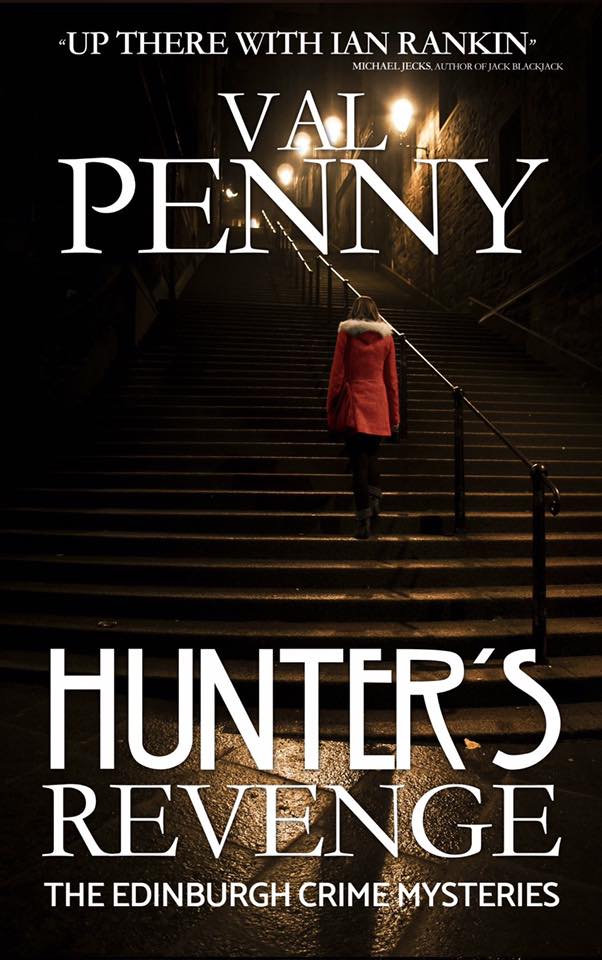
Hunter's Revenge Cover
Many thanks, Val, for sharing such an intriguing extract! I look forward to reading more!

I think one of the appeals of crime fiction is following the development of characters like Hunter Wilson over a series of books. Crime fiction reveals a lot about the human condition and I think there will always be a fascination with what makes criminals tick, what got them into crime in the first place, could anything have been done to prevent it, and so on.

It’s not a new fascination either. I’ve recently been watching a series of programmes on BBC Four about Highwaymen, Outlaws and Robbers and the old printed sheets detailing someone’s crimes (usually just before they went to the gallows) sold like the proverbial hot cakes in London. We’re talking 17th and 18th centuries here. And going further back, there is fascination now about what happened to the Princes in the Tower, but that fascination started at pretty much the moment it was known the boys were missing.

So crime writers are very much tapping into something fundamental here – the need to know why someone would act in a way at odds with what is seen to be right.

Happy writing, Val.  Very much looking forward to this.

CHARACTER RESEMBLING - Just what is your story then

Find out more about Hunter Wilson’s story in September! Image via Pixabay

Finding Ideas

Facebook – General

The challenge of finding new ideas for stories, is, of course, ongoing but the great thing is there are so many avenues to explore.

Proverbs and sayings can give themes for stories. Someone coming out with a strange way of expressing something can be an inspiration. (I was on the receiving end of one of these this week. Am certain I can get a flash fiction story out of it – will keep you posted!).

How about taking advertising slogans and changing a word or two to get your own theme? Instead of the old egg advert which said “Go to Work on an Egg”, how about “Go to Work on a Unicorn”. Now there’s a fantasy story or several behind that. Have fun (I intend to with that one as well).

Items of clothing (for example an odd shaped hat) can lead you wondering about the kind of character who would wear such a thing and what they might get up to while wearing it!

Keep your eyes and ears open. I’ve found, over time, when I hear or see something that could be useful for a story, I tend to hone in on it. It’s almost as if you develop a kind of antenna for this so be open to it. If the ideas don’t work out, well you’ve lost nothing but time trying them. (And I would be surprised if you didn’t get something out of them, if only the core for a stronger story you write up later).

I love stories that mirror others as long as it is done well. The play I saw on Wednesday was a great example of that. More details in my CFT post on Friday. The play was influenced heavily by one of Shakespeare’s finest which confirms something I’ve believed for a long time.

Reading widely is so important for anyone wanting to write. Indeed, it is more than that. It is NECESSARY.

Not only can you see how writers set things out, you DO learn by reading what others have done. You take in things like ratio of dialogue to narrative, where passive tense IS used appropriately, and how the writer you’re reading uses drama and cliffhangers in chapters to make you keep on reading so you have to find out how the story ends. That’s just a few things you take in when reading.

Also, by reading widely you are supporting the industry you want to join so it makes sense on so many levels. Ideas for your own stories come from all over the place and the theme of a novel you love may well be one you’d like to also write about, albeit in a totally different way.

Reading non-fiction can open your mind to ideas that you would want to bring into your fictional world. For example you read about how the phone came into being. Okay, how would that happen on the world you’re creating? What is their equivalent of the phone? Reading history (fictional and otherwise) can not only give you a sense of the past so much so you will want to set your own stories there, but there’s absolutely nothing to stop you writing about a minor character in the court of a monarch. Equally you could take your knowledge of how the court of Elizabeth 1 operated and set up a similar style of government in the world you’re creating.

Happy reading and writing!


This slideshow requires JavaScript.

Facebook – From Light to Dark and Back Again

Flash fiction, because it has to be character led, can deal with “issues” but, obviously, briefly. That can often work better than a longer story where the writer can feed more into the tale. Short and to the point is what flash fiction does and, with stories that pack a punch like this, I believe brevity is best. No danger of repeating yourself either!

Flash fiction can take you anywhere
You like in terms of worlds, time or space.
Readers find out how your people fare
In whatever word count fits the case.
As long as it is under one K,
You and your story will be okay!

Allison Symes – 29th July 2018

COMING UP NEXT TIME…

Guest Post from crime writer, Val Penny

I’m looking forward to sharing with you on Tuesday, 31st July a guest post from friend and crime writer, Val Penny.  She is behind the Hunter Wilson/Edinburgh Mysteries series and shares with us an extract from her forthcoming novel, Hunter’s Revenge.  It is very good but don’t just take my word for it.  See what you think from the extract on Tuesday!


Guest Blogging and Facebook Author Page Likes

Many thanks to Val Penny for hosting a spot from me on her book reviews site.  More in a moment on that…

Facebook – General

Many thanks to Val Penny for hosting me on her book reviews site. It was huge fun to write! Hope you enjoy reading. I chat about my flash fiction (and what I love about flash fiction in general) and Chandler’s Ford Today

Looking forward to catching up with Val at Swanwick next month!

This slideshow requires JavaScript.

My CFT post is very close to home this week. There are some lovely places to walk in my area, whether I’m with the dog or not, and I share some of those, along with some gorgeous pics of a wildflower meadow. Link up tomorrow.

I don’t tend to think about stories etc while out and about. I’m too busy (a) watching out for what Lady is doing or sniffing (!) and (b) appreciating the local fauna and flora.

The benefit from the writing point of view is having that break away from the desk or household chores (or both) and coming back tired but refreshed. (Lady sees to the tired bit, she comes home and sleeps during the afternoon, lucky girl!).

Many thanks to all who have liked my author page. It is lovely to have 50 of you on board now, thanks to you all!

thank you text on black and brown board

Indeed! Image via Pexels

beautiful beautiful flowers bouquet color

And you can also say it with flowers! No hayfever either! Image via Pexels

Facebook – From Light to Dark and Back Again

Always nice to guest blog so many thanks to Val Penny for hosting me today.

I suppose in a way flash fiction and blogging are good “bedfellows” since you’ve got to watch the word count with both of them! For flash, you’ve got room for usually one character. For blogging, it pays to stick to one topic per post. (Ironically with my Word Press site, I can’t really do that as it is meant to be a round up of what I write where, but for things like this post, it pays to stick to one theme).

Have you got a favourite theme for your stories? Was it one that emerged naturally as you wrote or did you plan it from the start? There are a lot of poetic justice stories in From Light to Dark and Back Again. In my case, the theme emerged.

How about you? Comments welcome.

I love the flexibility of flash fiction. There is some flexibility with word count, ironically. I’ve often found what I thought might be a 100-word story works better as a 500-word one, but that’s fine.

You can be flexible with genre of the specific tale. I’ve written historical fiction as flash fiction, likewise fantasy, crime, light horror, ghost stories etc.

You can also go back or forward in time. Your characters can be human or other worldly. You can write in first or third person. (I do both, though not in the same story!). You can write dialogue alone, though I think all stories, regardless of type, work best with a mixture of narrative and conversation/thoughts.

Flash fiction is a style of writing to have a lot of fun with!

This slideshow requires JavaScript.


TALKING CRIME, RESEARCH IN FICTION AND NETWORKING

A good mix tonight, I think!

Facebook – General – and Chandler’s Ford Today

I talk crime and research, amongst other things, in Part 2 of a fab interview with crime writer, the lovely Val Penny.  Val is the author of Hunter’s Chase, which is the first book in her Edinburgh Crime series. We also talk about writing conferences and I know both of us are looking forward to networking in person later in the year at the Swanwick Writers’ Summer School!

This slideshow requires JavaScript.

Also a big thanks to Gail Aldwin for sharing details about other Chapeltown books including Badlands by Alyson Faye and my own From Light to Dark and Back Again. Much appreciated.

Facebook – General

How do you feel when you reach the end of writing a story or, even more, a book?

A little bereft perhaps but at the same time eager to get on with the next one. That’s my position at the moment.

Have got a few competitions I’d like to have a go at so those will be my next goal. I deliberately want to get work off to these before I start outlining my thoughts for my next book (and I’ve ideas I want to explore there). I think a break between books is a good idea. By the time you come back to writing a book again, you’ll be keen to get on with it!

Facebook – From Light to Dark and Back Again

Where do I get ideas for my stories? From all over the place! When I was starting out as a writer, that kind of answer used to annoy me. My thoughts tended to be along the lines of “well, it’s all right for them to say that but I’m struggling, thank you”. Well, words to that effect anyway.

What I have learned over the years (lots of years too!) is you do learn to develop more of an open mind as to what could make a good story idea. What is useful is having a starting point to trigger ideas that can be developed further. Some of my starting points include:-

1. Proverbs/famous sayings to use as a theme.
2. Picture prompts (not necessarily taken by me). For example, landscapes can offer ideas as to where your setting is or if you are writing fantasy or sci-fi, is your world the complete opposite to the picture? Sometimes that can be useful in getting started.
3. Competition themes can be great as you can then enter the competition too!
4. Snippets of conversation can get you thinking about how a character of yours might get to say something similar.
5. I sometimes have a brainstorming session and write down what could be an opening line to a story. I don’t plan these sessions and try to just write freely for a set time. The lines can be as bizarre or as ordinary as I want but the ones I like the most of later are the ones I write up.

I think the most important thing is to have fun with your writing. If you don’t enjoy it, nobody else will!


Honest feedback is the only kind worth having - image via Pixabay

Honest feedback is the only kind worth having. Image via Pixabay.

Good historical fiction will make it seem as if you had stepped back in time - image via Pixabay

Could this picture inspire stories? Good fiction will take you out of the world for a while. Image via Pixabay.

The best advice for any writer - image via Pixabay

Sound advice.

Feature Image - Flash Fiction - Books are Gateway - image via Pixabay

Says it all really and applies to non-fiction equally as fiction. Image via Pixabay.

writing in many forms via Pixabay

Planning your work. Image via Pixabay.

Facebook – From Light to Dark and Back Again

Looking forward to starting work on a third flash fiction collection after a pause to enter some competitions etc. I find a break between books useful.

Indeed, when I write batches of short stories, I like to have a break and switch to writing flash for a while and vice versa. In between all of this I’m writing posts for Chandler’s Ford Today and More Than Writers (the ACW blog though the lovely thing with writing on the 29th of the month is I have most Februarys off!!).

There are other things I’d like to do at some point (including seeing if I could write a radio play) but those will be projects that I might refer to as my “bits on the side”. I do think it is vital writers have fun with whatever it is they write and also to set themselves fresh challenges now and again.


Fairytales with Bite – Do You Need Research to Write Fiction?

One of the topics I discuss with crime writer, Val Penny, in Part 2 of my interview with her for Chandler’s Ford Today this week is research. We talk about the resources that are available for crime writers and I go on to mention that even for writing fantasy as I do, some research is useful.

Strictly speaking, for any fiction, of course you don’t have to carry out research.  You make it all up!  However, I’ve found that to root my characters so readers can identify with them, I need to know how we react as people and why (so a basic knowledge of how humans “work” is useful).  Also when it comes to world building, knowing how we work is a building block for making up your own  universe.  After all if you decide your world is going to be nothing like this one, you’ve got to work out in exactly which ways it will differ.  So you do have to bring some knowledge to the writing desk to be able to write effectively.

I’ve also found that researching (whether I do so via the internet, a book or what have you) helps me extend my knowledge (obviously!) but the knock-on benefit of that for my fiction writing is it also expands what I can write about.  Write about what you know is good advice so expand what you know and you can expand what you can write.

This World and Others – Networking

I discuss the value of networking in my Chandler’s Ford Today post this week, which is Part 2 of a great interview with crime writer, Val Penny.   Amongst other topics, we share our thoughts on two conferences we’ve been to – Winchester Writers’ Festival and the Swanwick Writers’ Summer School (and indeed are looking forward to networking in person again then!).

How does networking happen on the world you’ve created for your fiction though?  What is it used for?  Can only certain people/beings/robots/strange creatures etc do this?  Is corruption an issue and does anyone try to fight it, if so?  Which of the creative arts is known on your world and are there conferences/classes for them?  How is successful networking “rewarded”?

Have any of your characters formed friendships, which later they depend on in life threatening situations?  How does networking earlier in their life benefit them now?  (Or does it endanger them because the friends they thought they’d made turn out not to be friends at all?!).

This slideshow requires JavaScript.


STORIES – AND A WRITER’S THREE WISHES

Facebook – General

My Chandler’s Ford Today post this week will be Part 2 of my interview with crime writer, Val Penny. She discusses how much research she does and why networking is invaluable for all writers, amongst other topics. Will put the link up on Friday.

I was thinking, for my new Goodreads blog post, which went up earlier this evening, about why I love short stories and flash fiction so much. I think it may be because I’m impatient! With a novel, you have to wait for the tension to build and build… With a short story (and even more so for flash fiction), you get the impact nigh on immediately. That probably says a fair bit about me!

Let creativity spill out - image via Pixabay

Let the creative process flow! Image via Pixabay

Hunter's Chase book cover

Val’s latest crime novel. Image supplied by Val Penny.

The fantastic world of books must include non-fiction too - image via Pixabay

The wonderful world of writing should include non-fiction, which benefits from creative techniques too. Image via Pixabay.

Feature Image - Facts and Fiction - image via Pixabay

What writing triggers will help you create your new worlds? Image via Pixabay

Facebook – General

What do you find most difficult to do – start a story or finish it?

For me, it’s finding the right starting point. Once I’ve got that, I’m up and running, I know I will generally end a story on a “punch” ending (and often a twist in the tale at that). As the story progresses I can sense myself getting to that bit, so finishing a tale is usually okay. I’m the same with blog posts. Get me started and I’m away!

I try to start anything I write with a “hit the ground running” approach. I often will go straight into the main character’s head so “they” can show a potential reader what state/mood they’re in, what crisis they’re facing etc. I find that really useful.

Other opening lines can include a brief indication as to the setting, but I keep that as short as I can. Later, if I need to go back and fill in more details, I do but I am wary of too much description. In flash fiction, there’s no room for it anyway!

This slideshow requires JavaScript.

Facebook – From Light to Dark and Back Again

I created a poll a few days ago about whether an intriguing start or a twist ending was the best for a story. Please do vote if you haven’t already. I’ll discuss results in a few days’ time.

Have submitted my follow-up book to From Light and Dark and Back Again. Really glad to have that done. Would like to focus on my third book and getting more stories out there. Would like to do something with my non-fiction articles too at some point. Always good to have plenty to be getting on with!

Only wish? As ever, that I had more time. Now, this is where I could do with arranging for one of my fairy godmothers to become real and grant all writers three wishes. What would those wishes be?

1. Whatever time you need to write with NO interruptions or disruptions.

2. You will never suffer a dodgy internet connection again.

3. You will also be given as much time as you want to read whenever you want again with NO interruptions or disruptions.

Sounds good to me!

Facebook – From Light to Dark and Back Again

What do you think is the most important part of a story, whether it is standard length or flash fiction?

I’ll leave this poll up for a few days and report back later in the week. I’ll give my view as part of that.

An intriguing start
A twist ending
This poll ends in 2 days

Goodreads Author Programme – Blog

I’ve loved short stories for years. Flash fiction has been a fairly recent innovation and I quickly became addicted to both reading and writing it.

As you can imagine, I was thrilled to be published for the first time last year with Chapeltown Books for a flash fiction collection (From Light to Dark and Back Again).

Now I have nothing against the novel. You can’t beat the novel for a satisfying, longer story when all is said and done.

But sometimes you just want a glimpse into a character’s life (rather than have the whole “spiel”) and this is where short stories, and especially flash fiction, come into their own.

They really do pack a punch when you consider their limited word count. (Even the longer short story is still short when compared to your average novel).

I love to write my stories knowing they will have an impact, whether it is to hopefully make readers laugh or, if the tales are darker, to make them shudder!

The big problem with a novel is keeping impact going without it seeming artificial and ensuring the final impact happens at the right moment. It is possible to write a final scene for a book and then decide you’ve just got to add this, or that, and thaen the final impact is diluted.

You can’t really do that with short stories (and you certainly can’t for flash). You have the big, final moment and that’s it. But to me that is a huge advantage as a writer. I know when to stop then!

The images below were taken at the Bridge House celebration event last December.  We all know the value of stories!

This slideshow requires JavaScript.

Crime Fiction and Writing Triggers

Facebook – and Chandler’s Ford Today

My latest Chandler’s Ford Today post is Part 1 of a great interview with crime writer, Val Penny. Her new book, Hunter’s Chase, is now out in paperback and ebook and is the first of her Edinburgh Crime Series. We discuss what drove Val to crime (!) and why she thinks crime fiction is so popular. She also shares some top tips for writers. Part 2 next week.

Facebook – From Light to Dark and Back Again

I have a very soft spot for stories told from alternative viewpoints, especially fairy tales. My first published story was A Helping Hand in Bridge House Publishing’s Alternative Renditions anthology (many moons ago now) and tells the Cinderella tale from the viewpoint of the youngest stepsister.

In From Light to Dark and Back Again, I take Goldilocks’ viewpoint as my angle in the tale, Health and Safety, (though between you and me, I still think she comes across as the kind of character you wouldn’t want to take into a posh giftware shop given the chaos she caused with one chair and one bed in the Three Bears’ house!).

One great thing about using alternative viewpoints like this is you can explore why that character has behaved the way they have. You can explore their justifications for their actions. The great thing is they don’t have to be right! (It can be even more fun when they’re not but they really think they are. You really get to know what they are made of exploring this kind of avenue).

Fairytales with Bite – Writing Triggers

I mention this topic as part of my interview with crime writer, Val Penny, on Chandler’s Ford Today this week looked at what triggered her wish to write.  It is one of those questions I often ask writers I interview and the results are always fascinating.

Also, it is interesting to note that, while there can be similarities, I believe most writers have triggers to begin writing that are unique to them.  Mine were turning 30 and having given birth to my son, two major life changes that made me face up to the fact if I wanted to be a writer, I had better get on and write then!

I also love writing triggers in the form of opening lines, photos, closing lines etc that encourage you to write something around them.  They can make you really work your imagination.  The theme for competitions can also act as good triggers (and can be useful for writing practice even if you don’t enter the contest.  If you do and win it or are shortlisted, even better though!).

I find the ideal opening line writing trigger is one that can give you all kinds of possibilities to work with.  For example, I would find the line “He refused to cry again” a lot more interesting to work with than “The starship crashed into a crater”.  I could write stories on both and have fun doing so but the first one you could set in any time, any world come to that.  The second is an immediate sci-fi or fantasy story, which is fine, but you are getting your genre and setting in one go here.  (That can be useful when I want triggers for my flash fiction though and that is when I will want a line that does a lot of work for me!).

Let creativity spill out - image via Pixabay

Let the creative process flow! Image via Pixabay

The fantastic world of books must include non-fiction too - image via Pixabay

The wonderful world of writing should include non-fiction, which benefits from creative techniques too. Image via Pixabay.

Feature Image - Facts and Fiction - image via Pixabay

What writing triggers will help you create your new worlds? Image via Pixabay

The old fashioned notebook and pen still have major roles to play in interviewing - image via Pixabay

Can’t beat the notebook and pen for quick notes. Image via Pixabay,

20171015_233807.jpg

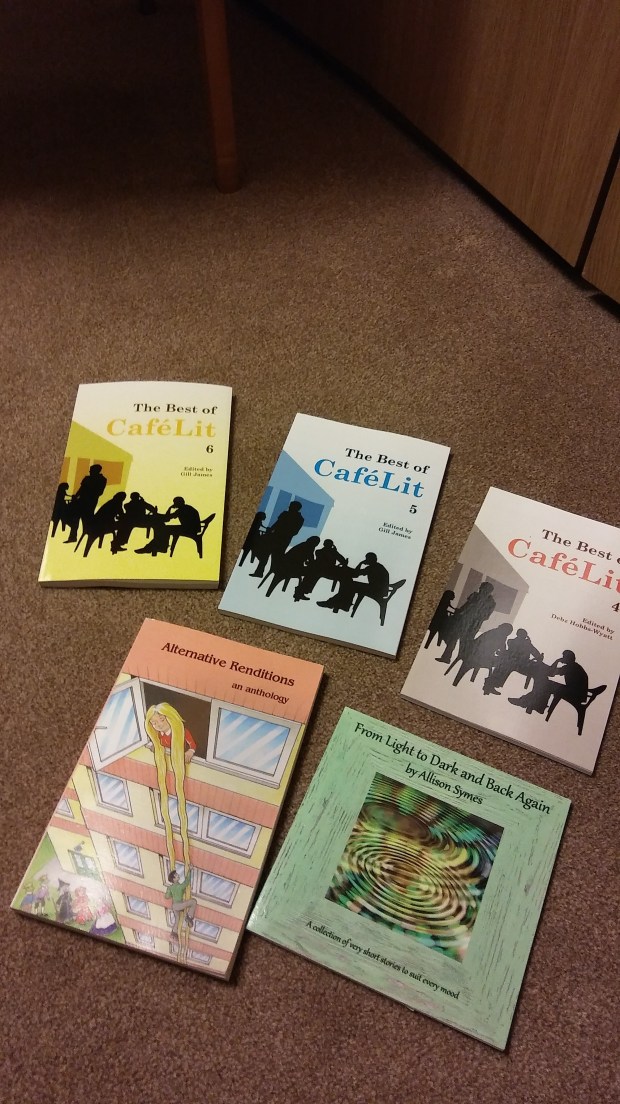
Some of the books I’ve appeared in and FLTDBA of course. Image by Allison Symes

This World and Others – Popular Fiction – Do You Just Write What You Know Will Sell?

The short answer is “no”!  This topic came about thanks to this week’s Chandler’s Ford Today post.  This is Part 1 of my interview with crime writer, Val Penny, and one thing we discussed was why crime fiction is so popular and what drove her to crime (!).

I think crime and horror are probably the two most popular genres in fiction.  There can be crossover and within each genre there is a wide range of sub-categories.  But does this mean you should just write to these two genres, say, because you know there is a proven market for them?  Absolutely not!

You have got to believe in what you write.  You have got to love what you write (at least most of the time!  I appreciate when you’ve been through the sixth rewrite, you may feel a tad tired about the whole thing!  We all do!).

You have got to love your characters, and love those you love to hate. I also believe that if you don’t write what is your “driving fictional instinct”, what you do come out with will be just a poor imitation of the markets you are trying go get into and that will show.  Whereas if you love what you write, that will also show.  It is where your writing voice will come through loud and clear.  Good luck!

This slideshow requires JavaScript.


My Goodreads blog post this time is an expanded version of my Facebook post for From Light to Dark and Back Again.

Goodreads Author Programme – Blog

I have a very soft spot for stories told from alternative viewpoints, especially fairy tales. My first published story was A Helping Hand in Bridge House Publishing’s Alternative Renditions anthology (many moons ago now) and tells the Cinderella tale from the viewpoint of the youngest stepsister. It was great fun to write and, due it being the first thing I’d written that was accepted for publication (thank you, Bridge House!), it will always have a special place in my heart.

In my flash fiction collection, From Light to Dark and Back Again, I take Goldilocks’ viewpoint as my angle in the tale, Health and Safety, (though between you and me, I still think she comes across as the kind of character you wouldn’t want to take into a posh giftware shop given the chaos she caused with one chair and one bed in the Three Bears’ house!).

One great thing about using alternative viewpoints like this is you can explore why that character has behaved the way they have. You can explore their justifications for their actions.

The great thing is they don’t have to be right! (It can be even more fun when they’re not but they really think they are. You really get to know what they are made of exploring this kind of avenue).

You can also prove the truth of the old saying “there are two sides to every story” by exploring what the other characters think! They just have to be strong enough to carry their own story.