FAVOURITE TRAITS AND WHY FAIRYTALES WITH BITE?

Facebook – and Chandler’s Ford Today

My CFT post is a review of the Fryern Funtasia held on Bank Holiday Monday. It is just one of those things I know but there is either heavy rain or baking heat when the FF is held! No happy medium. It’s either a big coat or the sun cream!

Having said that, the Funtasia WAS great fun and it was good to catch up with friends at Bettermaths and the Three Rivers Rail Community Partnership especially.

It was also good to see the Fair Oak dog display team, though none of the dogs were running around the agility course. They were trotting – quite rightly too – and there were several huge buckets of water for them around their arena. As for human refreshments, you should’ve seen the queues for the icecream and cold drinks!

This slideshow requires JavaScript.

Facebook – From Light to Dark and Back Again

Have got my schedule of writing for my train journeys all lined up for tomorrow. I’d like to come back home again with at least three new flash stories and an article drafted. Will report back on how I did but I am pleased to be able to make more use of travelling time like this, especially as by the time I get back home again, I usually just want to crash out. Should do even better when I go to Swanwick Writers’ Summer School in August. The journey is longer!

I need to get back to entering more flash competitions so, depending on how well I actually do on the train tomorrow, I may well have some stories to submit. Hope so anyway.

Fairytales With Bite – Why Fairytales with Bite?

The reason I refer to what I write as fairytales with bite (and so giving this website its name) is (a) it is a very accurate description of what I do and (b) I was fed up with fairytales being dismissed as “twee” or “just for kids”.  I’ve written posts on this topic before but I thought I’d add here those elements I think make for a good fairytale.

1.  Magic.   There has to be magic somewhere but it is not the be all and end all in a fairytale either.  See below.  Also it is usually acknowledged there are limits to what magic can do.

2.  Characters have to make choices.  This is generally true of all fiction but in fairytales, the characters still have to decide something has to change.  Cinderella wanted to escape her horrible life but still needed to be willing to do what the fairy godmother told her.  (Couldn’t you just see the ugly sisters arguing with the godmother?  I could!).

3.  An appropriate ending.  Most of the time in fairytales this is the traditional happy one, but not always, as Hans Christen Andersen proved with The Little Mermaid amongst others.  Having said that, his ending to that story was apt for the way he’d written all that came before.

4.  There has to be some hope.  There has to be hope for the characters to achieve their happy ever after ending or, if they know this is not going to be the case, what can they salvage to make things as good as they can be?  If you have to settle for second best, you are still going to want that second best to be as good as possible.

There are other elements of course but these strike me as being amongst the most important ones.  Comments welcome!

This slideshow requires JavaScript.

This World and Others – Favourite Traits in Characters

What are your favourite traits in characters (your own or those from other writers)?  I think mine would have to include:-

1.  The ability to prove the doubters wrong.  I love it when the underdog wins the day. Whenever I read of a character being “written off”, I am on the look out for that character turning out to be the hero (usually) or the villain (sometimes, and inevitably reacting against being written off!  I do have some sneaking sympathy here.  You can see why they would react that way at least.).

2.  The ability to stick with the right path, no matter what.  The ultimate example of this for me is both Frodo and Sam in The Lord of the Rings.  (Sam was just as determined to do right as Frodo was, even though Sam was doing this for his friend, rather than for the “cause” directly).

3.  Being the best friend/sidekick the hero didn’t know they needed until undergoing the quest.  If awards were being given out for this, it would have to go to Sam Gamgee.  Never ever overlook the sidekick.  They’re in the story for a good reason and it is almost always a pivotal moment the hero needs.

4.  Honest characters.  I love those moments when, usually the sidekick, gives the hero/heroine a verbal bashing for missing something important or taking others for granted or for becoming arrogant etc.  The lead characters do need others who can rein them in – nobody gets it right in life all the time so why should they in fiction?  Just as we need others to tell us “hang on a moment there”, so do characters need other characters to tell them when they’re at risk of going off track.

This slideshow requires JavaScript.


Reviews and Characterisation

Facebook – and Chandler’s Ford Today

My post for Chandler’s Ford Today this week is a review of three different plays staged in one production by The Chameleon Theatre Group. There was Oh What a Lovers’ War (set against the background of August 1914), The Dreaming (a surreal play), and Pina Coladas (a mystery). All were very good and I loved the mixture of plays. More details and pics in the post. Well done to the Chameleons for a great evening.

Image Credit:  Many thanks to the Chameleons, especially Lionel Elliott, for kind permission to use the images, which were taken by them.

This slideshow requires JavaScript.

Facebook – From Light to Dark and Back Again

There will be a new flash fiction piece from me up on Cafelit tomorrow (sometime during the early evening onwards) called Getting Lost. Must try and enter more flash fiction competitions this year too.

I tend to draft promising first lines and then draft stories to fit them (often when on train journeys). It definitely beats doing the crossword by a very long margin! Often that promising first line sparks ideas for the title of the piece too.

How do I decide whether a story will be a drabble at 100 words or a longer one? Basically when I know I cannot edit the piece any more without it losing something that contributes to the characters or the overall story. I then leave the piece be and whatever the word count is remains the word count! Often this will be at 100 words or under but sometimes a piece really does work better as a 250-300 worder. This is where reading a piece out loud can show you how well the whole thing “flows” and if it “flows” well, that is when it is time to drop the editing pen.


Fairytales with Bite – Describing Your Characters

If you were asked to talk about your characters, how would you describe them (and without sending whoever questioned you to sleep!)?

I like to start with traits – for example, Eileen is brave, resourceful, and rebellious.  Those three words alone give you a good starting point for portraying Eileen.  Getting your characterisation right is everything in getting the story right (and therefore give it much more chance of being accepted somewhere).  A good plot needs great characters to make it work.

It is useful to outline a character whether you put all you detail into a story or not.  (The likelihood is you wouldn’t.  I know I need to know this and that about a character, your readers might only to know “this”).  However, outlining a character gives you all the information you need to work out what kind of story they would be in, how they would handle a situation (or mishandle it), and what their “happy ever after” ending is likely to be.  It is then up to you if they achieve it!  (Great stories can be found in a character attempting to get to this point but never quite making it so they have to adjust their “happy ever after” for something more sustainable over the long term.  I guess this is where the “happy for now” endings, especially in romance novels, comes from).

I’ve found it does pay to take time outlining.  I find when ready to write the story itself, I write it quicker because I’ve already got the “building blocks” in place ready to go with my tale.


This World and Others – Ten Things a Great Character Must Have

1.  A sense of purpose – whether they’re the hero or villain.
2.  Determination (without it, there’s no chance of fulfilling their purpose).
3.  A worthy opponent.  (Sherlock Holmes is wonderful but Moriarty challenged him and Holmes needed that challenge.  Your leads need those who will get in their way, try to thwart their plans etc.  That’s where the story comes alive).
4.  A cause worth supporting (even if they are the only ones supporting it!  Not quite the same as 1 above as a character can have a sense of purpose even without a cause.  The great sidekicks in literature are often like this.  Sam Gamgee in Lord of the Rings saw his cause as being supporting Frodo.  It was Frodo who really had the sense of purpose and Sam didn’t always understand Frodo’s “intensity”,  Frodo had both the sense of purpose in that he had a job to do no matter what, which was at one and the same time also a cause worth supporting).
5.  Courage.  This comes into it somewhere in the story.  It has to.  The kind of courage can vary from the obvious courage in battle to the quieter kind where someone will keep going to support someone no matter what the hellish circumstances.
6.  The ability to ask for help.  Not every character has this.  Recognising you need help and the best people to give it shows humility and pragmatism (as the character comes to terms with knowing they need help if they are going to fulfil their objective at all).
7.  A mentor/adviserThis ties in with 6.  A great character is going to need guidance to help them meet their goal and knows who to get that guidance from.
8.  The ability to get on with most characters.  This ties in with 6 and 7.  Nobody is going to want to guide or assist a character who is arrogant or overbearing.
9.  Planning. The character must work out how they’re going to meet their commitments and then just get on with it.
10 .  A cool head.  Given the undoubtedly hellish situations, you are going to put your character through, they will still need a cool head to face down those challenges and press on towards their goal.

ODD COMBINATIONS AND FLASH FICTION TERMS

Again, a mixed bag for you!

Facebook – General – and Chandler’s Ford Today

My latest CFT post combines two things in a review, which I never anticipated I would ever combine – the Famous Five and William Shakespeare! Yes, really.

I review Five Go Mad for Shakespeare staged by the MDG Players at the Dovetail Centre in Chandler’s Ford last Thursday. They were ably assisted by the Romsey Players with their “play within a play”, which is another nod to the Bard!

The evening was a mixture of spoofs, well known scenes from Hamlet and Macbeth, and songs. It was good fun and very well put together.

MDG NOTICEBOARD

The MDG Players cast and notice board. Image by Allison Symes

MDG NOTICEBOARD PART 2

All the seats were taken at the show. Image by Allison Symes

Programme Front

The front cover of the programme. Image by Allison Symes.

Programme - What is on offer during the show

A mixed menu of delights in the show are listed here. Image by Allison Symes

THE GAME CARDS FOR WOULD WE LIE TO YOU

The green and red cards were used for a game during the show, Image by Allison Symes.

Facebook – General

Went to see an April Trio of Plays by the Chameleon Theatre Company tonight. Review on CFT next week. This week will be a review of Five Go Mad For Shakespeare put on by the MDG Players last week. So yes, I’ve been out and about and seeing some wonderful plays! I like this. I like it a lot! (Hope it won’t be too long before I get to see some National Theatre Live productions again too).

Facebook – General

One of the problems I face with writing is prioritising! Writing for Chandler’s Ford Today helps as I know I’m posting on Friday so I plan my posts so usually I’m carrying out final checks on Wednesday.

However, it is fitting everything else in that I’d like to do, both for fiction and non-fiction, that is the problem. The one comfort? I know I’m not alone in this. (And things like using Evernote on a phone on a train does help me get a lot more done with time that would otherwise be wasted. Just how much staring out of the window can you do?!!).

The one good thing is I am well ahead on coming up with ideas for stories for what I hope will end up being my third flash fiction collection. I’ve also drafted some of the stories out. (I hope some of them will appear online at some point).

Facebook – From Light to Dark and Back Again

There are times I wish there were better terms for flash fiction writers. We’re flashers for a start! Anyone writing 100-word stories is a drabbler and I have occasionally written at the 50-word mark too (though this has been more for my second collection which is under submission).

Therefore, this makes me a flasher, a drabbler and an occasional dribbler. Doesn’t sound good, does it?😀 Does anyone know who came up with these terms in the first place?!

Facebook – From Light to Dark and Back Again

I’ve talked before about one benefit of writing flash fiction being that it shows up your wasted words. This carries over into any other creative writing you do as you learn to look out for these wasted words and they’re the first to be cut out.

However, another huge benefit to writing flash fiction is having to write with absolute clarity. As your word count is limited, you want every word to carry its weight so your readers pick up the meaning you intended.

That clarity can (and I think should) carry over into other writing too. Also, because flash fiction really does have to be character led, it beefs up your ability to create convincing characters! They have to “lead” the story, there simply isn’t the room for an elaborate plot. But the great thing is genre isn’t an issue. I’ve written flash fiction pieces in fantasy, fairytale, crime, horror, and so on.

This slideshow requires JavaScript.

Facebook – From Light to Dark and Back Again

Managed to draft another flash fiction piece while waiting to give blood this afternoon. Best thing to come out of the afternoon too given there was trouble with my veins and I had to come home without donating. Ah well… try again. (I cherish the thought if the National Blood Service had trouble with my veins, so would your average vampire! You have got to find the things to use them!).

That aside, I’m pleased with the progress I’m making on this batch of stories and hope to submit some more to Cafelit before long.

Goodreads Author Programme – Blog – Childhood Books

I sometimes review local theatre productions and a recent one was called Five Go Mad for Shakespeare. Good fun, and I enjoyed the references to Enid Blyton’s adventure series, and to the Bard too.

I used to collect the Famous Five series as the local newsagent stocked them. (Those really were the days… the newsagent’s shop was big compared to the ones I come across now. Its book section was reasonably generous in size).

I loved reading the Five’s adventures and I think those books, plus the fairytale collections I had (and still have!), are the fiction volumes that have had the most affect on me. Of course, the moment I’d got my hands on the latest Five adventure, I had to read it as soon as possible. I don’t remember reading them in one sitting but I know I would’ve been ready for when the next book was due in the newsagent’s!

So what childhood books have had the most impact on you? Have you re-read them since then?

This slideshow requires JavaScript.

Fairytales With Bite – Why Children’s Fiction Matters Even When You Do Not Write It

My Chandler’s Ford Today post this week is a review of a show called Five Go Mad for Shakespeare and it was good fun.  I never expected to review something that combined Enid Blyton’s Famous Five with the Bard of Avon but there you go…

This led me on to thinking about the importance of children’s fiction, even for those who do not write it.  My first loves in terms of children’s books were the classic fairytales and the Famous Five series.  I also liked Heidi, Black Beauty, and other classic children’s books.

I think it can be forgotten sometimes that anyone who, like me, writes for adults, “owes” our audience to children’s writers.  Why?  Because most people who read regularly have always read since they were children and all that changes as they become older is their tastes in books!

While I’m sure it does happen, the majority of readers don’t suddenly go into a bookshop and pick out a book to read.  They are going into stores or ordering books online because they already have a love of reading they are developing further.  That love of books nearly always starts in childhood with the classic children’s stories.

This World and Others – What Makes a “Fully Rounded Character”?

You hear the phrase “fully rounded characters” a lot, well I have (!), but what does it actually mean? My take on this is:-

1. You can identify with the character.
2. The character has clear virtues and flaws. (This is usually why you can identify with them!).
3. The character makes mistakes and, usually, learns from them. Often they make the same mistakes more than once before they learn from them, but then so do real people!
4. Their behaviour and attitudes make sense, given the way the writer has portrayed them.
5. You can imagine how this character would live outside of the constraints of the story.
6. They interact with other characters in a way that makes sense, even if the interaction itself isn’t good. (This could be because the character really does not get on well with others or the other characters aren’t great at “people skills”).
7. The character has feelings, tastes in music, food etc so you would feel they “could be” a real person if somehow characters could come to life.
8. The character has emotional depth. Basically this means the reader can see if the character is shallow or is capable of more complex emotions and attitudes. Shallow characters can be appropriate to a story. It’s just their emotional depth isn’t very deep!
9. You can’t imagine the story without them. (Always a good sign).
10. The character has real struggles and difficulties to overcome and finds different ways of overcoming them. (Unless they are a shallow creation, they don’t give up at the first hurdle).

This slideshow requires JavaScript.


LIFE’S LITTLE IRRITATIONS AND TEN FAVOURITE THINGS

A nice mixture of moods this time I think!

Facebook – and Chandler’s Ford Today

What do cooking chocolate, zips that break too easily and roundabouts that are too small for purpose have in common? Easy peasy. They’re some of the items I’ve consigned to Room 101 in the latest part of this series. (I’m now up to No. 75!). I also share my thoughts on product name changes and fake news. So a nice mixed bag here tonight!

This slideshow requires JavaScript.

Facebook – General

What aspect of writing do you like the least? I suppose for me it would be the line by line edit for typos, grammatical errors etc, anything that I would call the technical side of writing.

Yet without that side, the chances of work being accepted do decrease given you have to present your work as professionally as possible. Anything that reduces a professional impression, such as weak spelling etc, will impact on your story.

The nice thing, though, is that if spelling, grammar etc are weak points, ideas like a writing buddy can be a real boon. (Going to good creative writing classes can help you make friends, get feedback on your work, including on this kind of thing, and help you find someone who might end up being your writing buddy!).

I also think there isn’t a writer anywhere without blind spots as to certain words/grammatical issues. My blind spots are “effect” and “affect” (I always have to double check them against the dictionary definitions to make sure I’m using the right one).

Facebook – From Light to Dark and Back Again

Do you prefer alien settings in your flash fiction or tales that are firmly rooted on to this planet? I like both, no real surprises there, but here are some advantages to consider.

The biggest advantage to having an alien world as a setting is you get to choose what that world looks like, how it is run etc. Only drawback would be is it is too easy to just keep on creating your world and never getting on with the story. So just stick to the bare bones of what your reader really does need to know.

The biggest advantage to setting a world here is that the background information we know already. You really do just to fill in relatively minor details such as what part of the world they’re in (can give your readers ideas about likely weather patterns and so on).

Facebook – From Light to Dark and Back Again

Although flash fiction by its nature might seem quick to write, it still needs careful crafting to ensure every word carries its weight and justifies its place in the story.

Yes, obviously, novels do take far longer and the joy of those is having the room for sub-plots and being able to characterise more deeply. Having said that, one of the great joys of flash fiction for me is being able to shine a sharp light on say one aspect of a particular character. That IS the story. Nothing more to be said. Nothing more needs to be said.


Writing first, editing later but both needed - image via Pixabay

Preparing a talk or a flash fiction story perhaps. Image via Pixabay.

Stories can be created and read on just about any modern device - image via Pixabay

Big screen, little screen, LOTS of stories on either! Image via Pixabay

stones-244244_640

Let your stories have impact. Image via Pixabay

Themes pour out of good books - image via Pixabay

Let the writing flow and if music can help it along even better! Image via Pixabay

Fill that blank sheet with ideas from non-fiction as well as other fiction works - image via Pixabay

The basic necessities of the writer’s life!

wallpaper-1531107_640

Flash – for light or dark fiction! Image via Pixabay

castle-2115425_640

There can be reality behind fairytales. Image via Pixabay (and image used as part of book trailer for From Light to Dark and Back Again)

Goodreads Author Programme – Blog

1. Books can take you into worlds beyond anything we know here. This is especially true for science fiction and fantasy.

2. Books can shed light on history both in non-fiction accounts and historical novels. The latter also has the advantage of being able to show what a historical figure could’ve been like as an individual, based on what is known about them. The author is not saying they are definitely like this, just that they could’ve been.

3. Reading a book encourages you to keep reading others. Not only is this relaxing, this improves your own appreciation of the written word by reading different authors and types of book.

4. You learn so much about characterisation by reading widely, in and out of your own genre.

5. Reading across non-fiction and fiction will help feed your own imagination. What can you do in your stories the authors you’ve read have not etc? (Also different writers have sparks for story ideas from varying sources. Where you get your sparks from will almost inevitably not be the same as where I get mine. At best there MIGHT be some overlap but we are all inspired by different genres and styles, What we do with what inspires us is unique to us too).

6. If you want to try out an author new to you, but are not sure about committing to the cost of a hardback etc, you can always borrow from the libraries and support them while you indulge in a good read!

7. Short story collections, including flash fiction, are increasingly popular so if the thought of a full length novel is not for you at this stage, why not try shorter fiction? There is something out there that will suit you! I love the fact there is a book out (and usually several) for anyone and everyone.

8. I suppose I am particularly conscious of this being a woman, but literacy is not something that has always been available to so many of us. So therefore I want to make the most of being able to read and write. There is a whole world of stories out there to explore.

9. Especially reading non-fiction, you can increase your own education significantly. Above all, it should be fun to find out things you didn’t know.

10. Last but not least, as a writer, by reading as well you are supporting the industry you hope to join or have become part of. Whether you are self or traditionally published, I can’t help but feel this is a good thing to do. I also can’t see how you can write without reading well. You have to know what you like and dislike to come up with your own stories and how can you do that, other than by reading?

Comments welcome!

Fairytales with Bite – Life’s Little Irritations

My current series on Chandler’s Ford Today is all about life’s little irritations (and is called 101 Things to Put into Room 101)From a fictional viewpoint, it doesn’t matter whether you write short or long fiction or, indeed, what genre you write in, but you can guarantee your characters will have more than their fair share of life’s “little irritations”.

So what are these and why do they rile your characters so much?  Do some of your characters handle the trials of life better than others and, if so, why and how?  What would count as an irritation in your fictional world that here on our own planet might be seen as a catastrophe or something your characters shouldn’t be wound up about at all?

Are the irritations you portray shared by other characters in your stories?  Is there anything that the society/world you’ve created considers an irritation and how did it come to be seen this way?  (There is always a reason for these things!).  Answering all of these will help you flesh out your world and your characters better and that is always worth doing.

This World and Others – Ten Favourite Things about Characters

I do love a list!  Ten favourite things I like about well portrayed characters include:-

1.  Such characters show me something about my own nature (for good or bad!).
2.  I can identify with the characters, sympathise even.
3.  I will “root for” characters and “feel” their struggles, which is not quite the same as 2 above.  For this, I have to really like the characters concerned.  With 2, I can identify with say what a villain is up to (they’ve been crossed once too often and are now out for revenge), but I’m not going to root for them to succeed in their aims.  I often hope ambiguous characters will not turn out to be villainous in the end or at least have motivations that are understandable.  The best of these will do both.
4.  You can “see” exactly where a character is coming from.  That leads to empathy (which I believe can encourage empathy generally and that is no bad thing).
5. Characters will show you the world they live in and how they handle it.  Is there something I can learn here?  (That includes what not to do!).
6.  For a character that’s set in a historical period, you can compare how they handle their situation and ponder how you would do so.  (I love Elizabeth Bennett in Pride and Prejudice but can see her situation as almost being prison like.  For her not to marry Mr Collins, when it would have meant helping her family, was a brave thing to do.  It would also be seen as selfish, especially by her mother.  Here, I am so glad I have never faced something like that).
7.  As a writer, you can put your characters through the emotional wringer!  Heartless though that may sound, it is also huge fun – and it will be where your story really is.  It is all in the conflicts.
8.  Sometimes a historical character can change your mind about a period in time or a well known historical figure.  The Daughter of Time by Josephine Tey did this for me with regard to Richard III and Henry VII.
9.  Characters can show up injustice clearly.  Think To Kill a Mockingbird here or something like Uncle Tom’s Cabin.
10. Characters can say things you would love to say to others but for whatever reason rightly decide it’s best not to!  And I’m not saying more than that….!


FAIRYTALES, TRUTH, AND NETWORKING

Now there’s a combination!

Facebook – General – and Chandler’s Ford Today

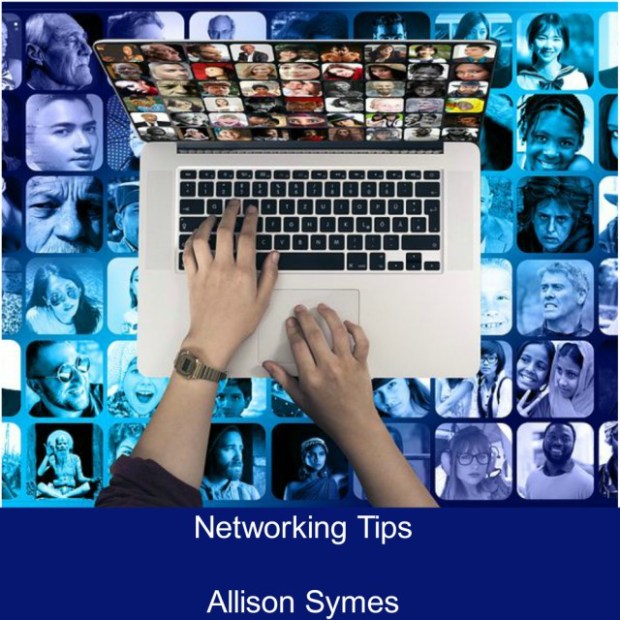
My latest Chandler’s Ford Today post is called Networking Tips. Fellow Chapeltown Books author, Mandy Huggins, and I both share our thoughts on networking here and we hope you find the post useful. Many thanks to her for her pictures. Also a big thank you to Paula Readman for kind permission to use the picture of Dawn Knox, Paula and I which was taken at the Bridge House celebration event last December.

I remember being so scared of the thought of having to network when I was first starting out as a writer. It was really only when I realised networking meant talking about something I love – books, stories etc (generally, as well as my own) – that I relaxed. Can I talk about these things? Yes! The problem can be stopping me! (But that is how it should be. I don’t see how you can commit to writing as a long term love unless you are enthuasiastic about stories. Given the ups and downs of a writer’s life, writing has to be thought of as a series of hopefully achievable goals over a reasonable period of time. There are no shortcuts).

This slideshow requires JavaScript.

Facebook – General

Questions I like to ask of my characters from time to time include:-

What would you say was your best trait?
What would you say was your worst one?
What drives you and why?

I inevitably don’t use all of what I come up with here in the stories themselves but have found having a good working knowledge of what my characters are really like makes it so much easier to write convincingly about/for them.

It is worth taking the time out to flesh out your thoughts here before you write your story. (Scrivener is great here with its character and setting outlines in its short story “mode” but you can create your own template of things you should know about your “people” before you write their stories down).

Facebook – General

What are your writing “likes”? Some of mine include:-

Decent one-liners that make me laugh.

A story that shows me motivations or stresses characters are under that I might not have considered before. For example murders are committed for serious reasons and to what appears to others to be trivial ones. Yet a good story will take you into the mind of that murderer and show why the trivial reason isn’t trivial to them.

Good, sharp pace with quiet bits in between giving me good background on the setting and characters, knowing said quiet bits are gearing the reader up for the next big scene.

A satisfactory ending, which is not the same as a happy one necessarily. The ending has to be right for the story and the main character. It won’t feel right if the match isn’t there.

Characters I can rally behind (or metaphorically boo for) but either reaction has to be genuine. I don’t want to see the author’s hand making their characters act in a certain way. The characters’ acting has to be realistic for those characters.

I love getting to the end of a story or novel and in a sense wishing neither had ended. Always a sign of a well told tale! Going back over a story/novel and picking up the bits I missed first go around. This is particularly true for a detective novel. I always miss some of the clues on the first read!

I like a happy ending where the hero/heroine has “earned” it. I also like to see villains get their comeuppance but again in a realistic manner. Villains generally are not going to fall apart. They can be caught out.

Every word to count… Funnily enough that doesn’t necessarily mean everything has to be short but that each word is appropriate for the story being told. In P.G. Wodehouse’s stories so often he uses very long sentences (he’d never get away with it now!) but not a word is out of place and indeed especially when Wooster’s narrating the long-windedness is part of (a) the character’s charm and (b) the character’s characteristics!

Positive developments in characters, especially a character that goes on to make something good out of themselves.

I like pinpointing moments of change in a story and watching the drama unfold.

Feeling a slight sense of envy I didn’t write the story/novel I’ve enjoyed is a good sign – and nothing but a compliment to the actual author!

Facebook – From Light to Dark and Back Again

It is only in looking back at stories that make up a collection, you really get to see what influences came out. FLTDBA has a nice mixture of influences – fairytales, nods to films, Frankenstein, poetic justice, and Pride and Prejudice to name just some.

I guess this shows why you should read widely (in whatever format and including non-fiction) because you are feeding your imagination. What drives you to write the stories you do? Your own influences/thoughts. Why have you got those influences and thoughts? Almost certainly thanks to things you have read that rang true for something deep inside your creative self.

Facebook – From Light to Dark and Back Again

The right ending for a story is the one that is most appropriate for it. It doesn’t need to be happy necessarily. Indeed, quite a few of mine in From Light to Dark and Back Again are definitely not of the traditional happy ever after variety!

I remember being stunned when I first read Hans Christen Andersen’s The Little Mermaid. You expect everything to work out okay (after all, isn’t that how fairytales are supposed to turn out?) and then it doesn’t! And I won’t say more than that. No spoilers here. It does pay to read the fairytales. They’re often darker than people think and have more layers. The Little Mermaid is a tale of sacrifice when all is said and done.

Facebook – From Light to Dark and Back Again

What do I most like about writing? Well, here’s a few thoughts.

Coming up with characters who spring to life and develop in front of your “eyes”.

Coming up with world(s) that fascinate you.

Coming up with villain(s) that fascinate you!

Coming up with hero(ines) that also fascinate but show why they are the good guys. They’ve got to have a good cause, literally.

Being able to write short length stories from flash to standard length (up to 2000 words) to novels to plays… the only limit is your imagination.

You can explore ideas.

You can discover ideas from the characters you develop, not just in terms of new story ideas, but you get to learn how your “people” think and why. Could it change how you feel about issues? Can be fun finding out!

Receiving feedback which helps you improve your work (this is not necessarily complimentary, though nice responses are obviously nice, but so you can see how well you “got through” to your reader).

Winning or being shortlisted for competitions is a huge morale boost.

Getting to talk about your work at writing festivals and enjoying hearing about others’ work. I love both aspects here. I think it’s like a kind of celebration of the work of the imagination.

Fairytales with Bite – Fairytales and Truth

I’m sure you must have come across at some point someone saying something like “it’s just a fairytale”.  That phrase has always annoyed me.  There is nothing “just” about a fairytale.

When examined closely, the vast majority of fairytales contain at least one element of truth in them (and often much more).  Yes, fairytales do tend to follow character type but there is a lot of truth in those.  What does the wicked witch represent?  Those who are prepared to use the power they’ve got to control others or who are prepared to do anything to gain power.  Who does the good fairy represent?  Those who use their powers for the good of others.  And that’s just to name two examples. We can all think of real life people who can fit into those categories so fairytales do reflect humanity as we know it.

Hans Christen Andersen showed that fairytales do not always have happy ever after endings.  (While it surprised me the first time I read his The Little Mermaid here, I have a greater appreciation now of the truthfulness of his characterisation and the way the story does end).  Fairytales can sometimes get across a certain amount of social commentary (again see Hans Christen Andersen’s The Little Match Girl here).

So I do wish some people would stop being dismissive of fairytales.  There is a lot more to them than may at first be apparent.

This slideshow requires JavaScript.

This World and Others – Networking In Your Stories

My Chandler’s Ford Today post this week is all about networking.  Fellow Chapeltown Books author, Mandy Huggins, and I share our thoughts on this and I hope you find it useful. But it led me to wonder what kind of networking goes on inside the world of our stories.

How do our characters meet each other?  Have they known each other for years?  What are the social networks in the worlds you’ve created?  What happens to those who defy convention here?

Our stories won’t necessarily spell out all of that but readers should know why the characters are interacting the way they do.  If they hate each other, that is bound to be a major factor in how your story develops and the reason for the hate should be shown.  (I don’t think you can ignore the fact they hate each other, it must be what is driving your story.  I can’t see how it would be otherwise).

Is there such a thing as an old boys’ network in your world?  Who benefits or suffers because of it?  Is there a class system and can people/beings cross the divides?  If your world just has one major species, there should be some sort of hierarchy within it.  How does this work?

Feature Image - Networking Tips

My latest CFT post. Mandy Huggins and I discuss networking. Image via Pixabay

FromLightToDark_medium-2

My flash fiction collection from Chapeltown Books!

perf6.500x6.500.indd

Mandy’s flash fiction collection from Chapeltown Books. Image kindly supplied by her.

Amanda Huggins reading from the Ink Tears showcase anthology Death of a Superhero at the launch party in London December 2017

Mandy Huggins – reading is a great way to network with your readers. Image kindly supplied by Mandy Huggins.

It is always good to meet readers and even better when they read you - image via JW

Networking with readers at the Chandler’s Ford Book Fair in 2017. Image from Janet Williams, CFT’s amazing editor.

Setting the mood classically perhaps - image via Pixabay

Setting the mood with music. Image via Pixabay

pexels-photo-680940.jpeg

Humans are immensely creative - image via Pixabay

Let those ideas flow! Image via Pixabay,

A familiar desk scene for writers - image via Pixabay

The familiar sight of the writing desk, regardless of genre! Image via Pixabay.

The best advice for any writer - image via Pixabay

Sound advice. Image via Pixabay

From diving board to keyboard via Pixabay

The keyboard beckons…


REAL WRITING = REAL CHARACTERS

A busy few days and I also have a new flash fiction story to share with you.

Facebook – General – and Chandler’s Ford Today

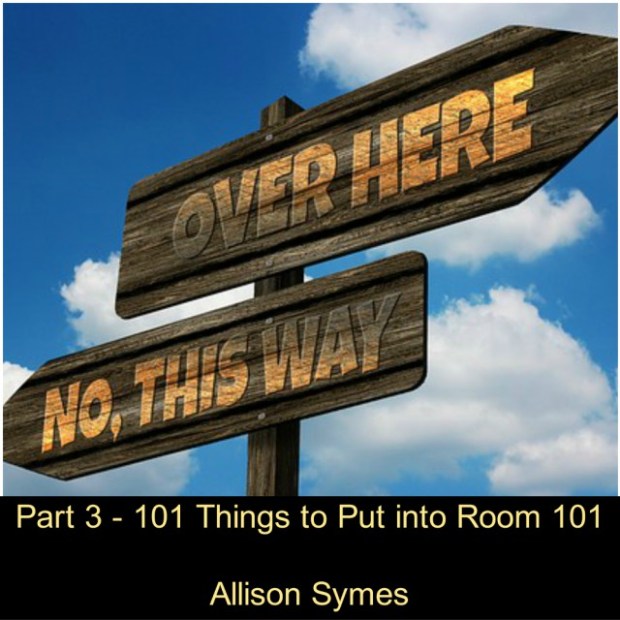
My latest Chandler’s Ford Today post sees me resuming my series on 101 Things to Put into Room 101. This week’s post sees me reach No. 45! Do you agree with my choices? Comments welcome in the CFT comments box.

Feature Image - Part 3 Room 101 Post

My latest CFT post. Image via Pixabay.

Decisions, decisions

Decisions, decisions and a not terribly helpful signpost. Image via Pixabay.

Still this kind of board might raise a smile

This notice may make you smile though. Image via Pixabay.

Could Room 101 be behind here - image via Pixabay

The vault of doom aka Room 101. Image via Pixabay

Facebook – General and More Than Writers Blog (Association of Christian Writers)

Busy, busy. I have a short post up on Chandler’s Ford Today regarding Richard Hardie’s author events at the Winchester Discovery Centre on 3rd April. If you like YA fantasy and are in the area, why not pop along? Entry is free (though there are books to buy!). See http://chandlersfordtoday.co.uk/local-author-news-richard-…/

My usual Friday slot tomorrow sees me resuming my 101 Things to Put into Room 101 series. I incorporate everything from snow to shoes that pinch your feet (though if they pinch anything else, you’re doing something very odd with your shoes!).

My monthly post for the Association of Christian Writers is online tonight. My spot is the 29th of each month. This means I get every three Februaries off!

My post is Real Writing = Real Characters and talks about the importance of honest portrayal of characters. If they’re right so-and-sos, then you portray them as such. (How you do that is up to you but there must be no doubt in the readers’ minds that the character IS a right so-and-so!).

Facebook – General

What are your characters’ favourite memories and why? How do they influence their actions in your story? Can showing some of their memories help you create a richer, more fully rounded character? I think so.

Now with flash fiction, there isn’t the room for a lot here so you have to pick the most important memory and focus sharply on that. Or you tell the story where the character is looking back on something.

For example, in my flash tales, My Life and Changing My Mind, I have my take on Pride and Prejudice told from the viewpoints of Elizabeth and Mr Darcy, each with their own story. To combine them in one tale would have made the stories lose impact (though it would still have been well within the flash fiction word count limit). Mind, it did make it easy working out where they had to be in From Light to Dark and Back Again – right next to each other!

Facebook – From Light to Dark and Back Again

What is the purpose of flash fiction? To create a miniature world a reader can literally dive in and out of in moments yet still leave an impact on them. To say in a few words (and with greater impact) something that would lose its power if put into a longer story.

I suppose one thing that really has drawn me to the form is the fact I’ve always loved working things out from clues the author gives and you do that a lot with flash fiction. I don’t want the writer telling me everything!

Facebook – From Light to Dark and Back Again

I think humour lends itself well to flash fiction because the best gags (or at least the ones I remember best) are short and to the point. (Mind you, the Two Ronnies’ Four Candles is an honourable exception to this and such a fabulous play on words too. Should imagine that was a delight to write. Likewise Morecambe and Wise with Andre Preview in their Christmas special – sheer joy from beginning to end.).

The nice thing about flash fiction is I’ve found it opens up the genres you write in. After all in From Light to Dark and Back Again, I have crime stories, relationship stories, light horror stories and so on. A lot of my lighter tales play with humour too – I’ve used a lot of irony. So mix up your humour styles and see what flash fiction you can generate. Above all, have fun doing this!

Facebook – From Light to Dark and Back Again

Why should any writer read well and widely in AND outside of their own genre?

The simple answer is you are feeding your imagination by reading. I’ve had ideas for stories by reading works by others, especially in non-fiction. Something I’ve read has just triggered that spark and away I go! So the more you read, the more likely you are to get that spark and you are “fishing from a bigger pool” too. You expand your own knowledge and therefore you can expand what you write about too.

With non-fiction, a story can emerge from reading, say, a historical fact, and wondering how that would affect characters from differing backgrounds.

So never feel guilty about “just” reading. It is the flip side of writing and a highly enjoyable one at that. After all, if you don’t want to read, why would you want to write? There has to be that love of books and stories inside you to trigger that desire to write. That love can only come through reading – whether your preferred format is Kindle, paperback or audio doesn’t matter. All that matters is you read!

Cafelit – The Art Critic

Am pleased to share my latest piece of flash fiction, The Art Critic.  Do check out Cafelit.  There is a wealth of fabulous stories on there and I am so pleased to be part of it.

A great way to relax - with a book and a cuppa - image via Pixabay

Great way to relax. Now where are those biscuits? Image via Pixabay

Fairytales with Bite – Publicity IN your stories

On my Chandler’s Ford Today post this week, I resume my series on 101 Things to Put into Room 101One of the things I mention is annoying adverts.  This led me to wonder how advertising, business, publicity etc could work in a fictional world.

How do your characters survive?  Presumably by working so what do they do?  What products are made in your world?  How are others persuaded to buy them?  Are there things your world does not allow to be made or sold and if so what and why?  Is there a black market (there usually is!)?

Also how do your characters find out what is going on?  Can they tell what is truth and what is propaganda?  Are adverts truthful?  Are there governing bodies regulating these things?  Or is your society a simpler, barter based one?

Talking of adverts, I will just share a flash fiction story of mine, The Art Critic, which is now up on Cafelit.  Do check out the website for some fabulous stories by a whole range of authors.  I’m delighted to have work on here.  Hope you like the story.

This World and Others – Your Character Likes and Dislikes

My Chandler’s Ford Today post this week sees me resume my series on 101 Things to be Put Into Room 101So far I’m up to number 45!  I’ll have no trouble finding 101 things to banish…

What are your character likes and dislikes and why?  if your character loathes the colour brown, to name one example, what is the reason for it and does that loathing make them change their behaviour in any way?  Could that loathing change the way the story ends because the character’s actions change (and not necessarily for the better either)?

You almost certainly wouldn’t use all of this in one story but listing what your character likes and loathes is a great way of finding out all about them before you write the story properly.  You will write with a deeper knowledge of that character (and it does show through).

From the writers’ viewpoint, I dislike characters who have no reason to be in the story but are clearly making up the numbers and  I have come across this.  (Earlier in my writing life, I’ve been guilty of it but I think many of us have been.  The important thing is to realise the characters don’t have a role to play and cut them out). Each and every character has to have a very good reason to be in your story.  Each and every character has to be distinctive (even if it is, say, Character A loves flowers and Character B hates them because they have chronic hayfever.  Easy to tell those two apart!).

This slideshow requires JavaScript.


INTERVIEWS AND UNUSUAL BUS JOURNEYS

Facebook – Chandler’s Ford Today

My latest Chandler’s Ford Today post is part 1 of my interview with fellow Chapeltown Books author, Gail Aldwin. She shares how her around the world bus journey inspired her flash fiction, especially her story, Paisley Shirt, which is the title for her new collection. Part 2 next week will see Gail sharing writing tips and her thoughts on “real” books and ebooks amongst other things. Plenty of insights for writers and readers to come.

This slideshow requires JavaScript.

Facebook – General

My Chandler’s Ford Today post this week will be Part 1 of an interview with fellow Chapeltown Books author, Gail Aldwin, whose flash fiction collection, Paisley Shirt, is now out. She shares travel tales from around the globe and looks at where paisley comes from. It is not often the East India Company gets a mention in my posts but it does here!

Part 2 will feature writing tips, a discussion on characters etc. Link to Part 1 will go up tomorrow.

There are so many things I love about interviewing other writers. Some of these things include finding out what inspires them, how links form between something they may have read years ago and a story they’ve written now (it can be amazing what conscious and sub-conscious influences come out when you’re writing), and the tips they’ve found most useful.

I also really love the way Chapeltown Books have such a distinctive image for their flash fiction collections. Okay, so my From Light to Dark and Back Again is one of them. Okay, so I AM biased (!) but if you wanted to see an example of effective branding, I would say this is a good one.

This slideshow requires JavaScript.

Facebook – General

What do you like most about interviews (regardless of format)?

I like those questions that draw the interviewee out and interviews that really do seem like it is a conversation written down or broadcast or what have you.

One great thing about writer interviews is that, regardless of the genre being covered, we all face the same challenges of getting the story down, editing it well, hopefully getting it published and then marketing it. That does give a lot of ground in which to find lots of lovely questions to ask!

Sometimes you can strike gold when your interviewee reveals something that you instantly recognize you’ve got to ask them more about. It is often about the most unexpected things too. My CFT post later this week contains such a gold nugget! Link to go up on Friday. All I’ll say now is it involves transport!


Facebook – From Light to Dark and Back Again

The joy of flash fiction is its brevity. No words wasted. A powerful impact on the reader made very quickly. But, as with the standard short story, all moods and emotional reactions can be covered in the form (which is why I called my book what I have!). Indeed, I think it a good thing that there is variety here. I like to see my flash collection as a “selection box” of moods and stories.

I suppose it’s indicative of human nature that no one person likes the same thing all the time. I love humorous fiction but also appreciate crime stories, historical tales and so on and I like to mix up what I read too. I wouldn’t want to just read (or indeed write) one thing all the time. Another joy of flash is that you can sample different styles of writing and moods very quickly. You could even use a flash collection to try out stories in genres you’ve not read before.

Happy reading and writing!


Facebook – From Light to Dark and Back Again

Write what you know, so they say.
But influences come out in your every word.
Sometimes they’re buried away
For years but they will find a way of being heard.
Time means nothing there, you’ll find.
So read widely, both non-fiction or a tall tale.
You’ll feed your creative mind.
Ensure the whole story does not stumble or pale.
Strong “people” reflect our best
While the weak characters will reflect our worst side
Write, rewrite, then let it rest
Every writer has to have a skin made of hide.
Some will not get what you do.
But it’s true you won’t like everything they invent
Rejections can make you blue.
It’s all part of the process you can’t circumvent.
Ask where your story would fit.
Target well, it improves your chances of a hit!

Allison Symes – 15th March 2018

Facebook – From Light to Dark and Back Again

I have a framed poster above my desk which says “Don’t ever give up on your dreams”. (Good advice. Okay, sometimes the dreams have to change for myriads of reasons. Just because you can’t be a novelist that doesn’t stop you from becoming a short story writer etc). But it also struck me this line could be a great motivator for a character.

What are the character’s dreams? Just what are they prepared to do to achieve them? What obstacles are in the way? Is he/she/it encouraged or are others holding them back? (You could also look into what their agenda was).

Feature Image - Facts and Fiction - image via Pixabay

What writing triggers will help you create your new worlds? Image via Pixabay

Time to find a new place to call home perhaps - what stories could that lead to - image via Pixabay

Time to have another home perhaps? Good stories to be had here! Image via Pixabay

Note taking is an invaluable aid to retaining what you learn at conferences, image via Pixabay

Write, edit, write, edit… image via Pixabay

Nobody gets their ideas spot on immediately, image via Pixabay

Nobody gets their ideas right first go. Image via Pixabay.

Escape with a good book via Pixabay

Escape with a good book, it’s good for you! Image via Pixabay

Fairytales with Bite – What is Behind Your Stories?

In my interview with fellow Chapeltown Books author, Gail Aldwin, for Chandler’s Ford Today this week, she shares with me how her round the world bus trip influenced her flash fiction.  She also shares some of the research she carried out into where paisley comes from given the title of her flash fiction collection is Paisley Shirt.  One of the things I love about these kind of interviews is discovering what has influenced a writer to come up with what they have!  There are so many influences…

This is also why every writer, regardless of genre, should read widely and well in non-fiction and fiction, classic and contemporary works.  You are literally feeding your mind.  You can’t know in advance what book it is you read that will spark off ideas of your own.  You will just know it when you come to it.  So have plenty of fun reading lots of lovely books!  It is good for your own writing.

I used to worry about picking up other writers’ styles doing this but have found it not to be the case.  I read something that sparks off an idea in me and I then write that idea down in my style only because, well, it is the only style I have.  After all, doesn’t every author want their work to be uniquely something from them?  That’s where the joy of writing is – in creating something that is unique to you.

A lot of the fairytales are retelling of stories passed down orally over many generations.  Sometimes there can be agendas behind stories.  Hans Christen Andersen must have had concern for the poor as his agenda behind The Little Match Girl (and probably the hypocrisy of people being horrified at what happened to his character yet doing nothing to allievate suffering themselves).

So what is behind your stories?  Why have you created your characters as you have?  I was surprised when I was looking back at my draft of From Light to Dark and Back Again how often the theme of poetic justice came up.  That wasn’t planned (well not consciously anyway).  I also hadn’t planned the variation in moods of the stories that formed the book (though it did help inspire the book’s title!).  Look back at what you have written and see if you can spot what is really behind it.  It may well inspire other stories!

This World and Others – Character Journeys

My latest Chandler’s Ford Today post features fellow Chapeltown Books author, Gail Aldwin, and how her round the world bus journey influenced her flash fiction.

The obvious character journey (well for me it is!) is that of Frodo Baggins in The Lord of the Rings.  Everything about this story is epic!  However, character journeys can be much smaller than that.  Scrooge went on a journey of sorts as he transformed from a miserable miser to a generous (and much happier) man in A Christmas Carol.

So what journeys are your characters going on? If it is a physical journey, why are they making it?  Do they like travelling or is is something where they have no choice?  What obstacles must they overcome?  What is the landscape like?  Are they from a background where travelling is normal?  (It generally wasn’t for hobbits so Frodo’s journey was unusual from that angle).

If the journey is more of a character development one, is the journey a good one or a bad?  (People can go from being good to bad, so why not characters?).  Is it a successful journey?  What is the impact of the character change on them and those around them?  Change can threaten others so how is this dealt with?


The Frustrations of Publishing

Facebook – General – and Chandler’s Ford Today

Am a night early with my Chandler’s Ford Today post this week. Am away at an ACW conference so thought it best to schedule for this evening!

In writing my 101 Things to Put into Room 101, I came to a topic that deserves its own vault all by itself – the frustrations of publishing. There are few authors who can’t sympathise with this topic, though it has been great to share links to both the Society of Authors and the Alliance of Independent Authors in this post. Writers need all the support they can get!

Will be back to the Room 101 series in a couple of weeks or so, as this post leads into a two-part interview with fellow Chapeltown author, Gail Aldwin, who will be talking about her own route to publication.

I have yet to interview a writer whose route to publication was straight forward or easy! Nature of the beast I suspect!

This slideshow requires JavaScript.

Facebook – From Light to Dark and Back Again

When stuck for an idea or two
Have a go at something brand new
Don’t say this is me being rash.
Doing this got me into flash!

Allison Symes 8th March 2019

I accept I’m never going to be offered the Poet Laureate’s post based on my doggerel above. Just as well too, I think. However, the verse is true! It really was my being open to the idea of having a go at Cafelit’s100-word challenge that meant I discovered the joys of flash fiction. Had it not been for that, I wouldn’t have a book to my name now.

One of the great joys of creative writing is to have fun with it and one great way of doing that is to mix up what you write. So go ahead, give flash fiction a go!

Fairytales with Bite – The Frustrations of Publishing

My Chandler’s Ford Today post looks at the frustrations of publishing.  I expect you may have experienced most of them! However, there are two classic ways out of at least some of these.  One is to self publish and the other is to seek publication via the small, independent press.  I chose the latter route!  More in the post…

The main frustration I feel is the Catch 22 one of people wanting you to have a track record before they will take you on, yet the only way to get that track record is to be published!  It is also highly appropriate to use the phrase Catch 22 too given we’re talking about getting books out there…

Back to our fictional worlds though – what role does literature play in it?  Who “controls” literature?  Could your characters be published writers?  What form of writing do they use?  Do they have stories as we understand them?  Who are the publishers  in your setting(s)?  Does the government exercise any control over what the public can read?

(I like the thought of there being an underground library for those not wanting to just read what is on a government’s approved list!).

This World and Others – Overcoming Frustrations

My Chandler’s Ford Today post this week looks at (some of) the frustrations of publishing.

How do your characters overcome the inevitable frustrations they will face?  Do they handle them well or badly?  What are the consequences  of their reactions?  Are there frustrations caused by government (too much bureaucracy etc?

How do your characters face the day to day frustrations and when it comes to being under continuing pressures, how do they handle that?

I'm not arguing with this - image via Pixabay

I’m not arguing with this one! Image via Pixabay.

A familiar desk scene for writers - image via Pixabay

The writer’s desk. What do you hope will emerge from yours this coming year? Image via Pixabay.

The best advice for any writer - image via Pixabay

And prepare well!

Feature Image - Flash Fiction - Books are Gateway - image via Pixabay

Says it all really and applies to non-fiction equally as fiction. Image via Pixabay.

wallpaper-1531107_640

Flash – for light or dark fiction! Image via Pixabay

castle-2115425_640

Fantasy may look at other worlds but often reflects on our own. Time is different too. Music can interpret worlds too. Think of classic film scores like that for The Lord of the Rings. Image via Pixabay.

Heaven on earth? Image via Pixabay (of the library at Leeds Castle)

Heaven on earth? Image via Pixabay (of the library at Leeds Castle)

Goodreads Author Programme – Blog

I’m a great fan of Agatha Christie. The first set of books I collected from Odhams (remember them?) were hers and I proudly own at least 30 red leather-bound hardbacks.

Each hardback contains two novels or a novel and a set of her short stories (such as The Labours of Hercules).

My favourite character is Jane Marple, though I do love Tommy and Tuppence in The Secret Adversary.

My favourite novel, though, is Murder on the Orient Express because it looks at whether murder is ever justified, even when the usual justice system fails.

It’s still a pertinent question. Even more pertinent is the fact the justice system shouldn’t fail but can do. Desperation and anger drive people to do desperate things and this is very much reflected in this book.

I also liked the David Suchet TV version of this. His Poirot was in angry anguish over what happened (and by implication what drove those events in the first place).

So what are your favourite Agatha books?

READING/WRITING FLASH FICTION

Facebook – General – and Chandler’s Ford Today

My latest Chandler’s Ford Today post is Part 2 of my 101 Things to Put into Room 101. Amongst other things, I consign to eternal doom stilettos, bad grammar, confusing road signs and the 5 pence coin. What would you put in the vault?

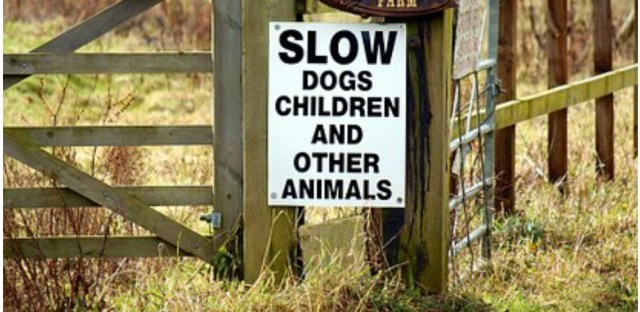
As for the image below, are the dogs slow? Are the dogs and children slow? Or could it even be that the dogs’ children are slow?! Or are all the animals on this farm slow? (That is anything going faster than a slow walking pace is not kept on this farm?!).

If you ever doubted that the comma is important, then let this convince you it really is, it SO is!

PART 2 - Some commas here would be good - image via Pixabay

Oh for some commas here! Image via Pixabay

PART 2 - You know what it is meant here - image via Pixabay

Really?! Image via Pixabay

Facebook – From Light to Dark and Back Again

One thing that is important with flash fiction is you should be reading it as well as writing it (and not stop at just reading your own!). Not only does this give you a greater appreciation of what can be done with the form, you increase your reading of contemporary fiction.

I have no problems at all finding time to read older fiction (Wodehouse, Austen, Dickens etc) but a good reading “diet” must include what is out there now (or has been published fairly recently). Another advantage of reading widely like this is that it will open your eyes to publishers willing to take collections.

Also, I can’t think of any author who wouldn’t appreciate this kind of support. And you would too, wouldn’t you?

This slideshow requires JavaScript.

Fairytales With Bite – Biting Comments

My new mini-series on Chandler’s Ford Today is a humorous look at what things I would put into Room 101, that famous creation of George Orwell.  Part 2 of 101 Things to Put into Room 101 includes items as diverse as stilettos, bad grammar and confusing road signs.

I think stilettos are one of the most stupid things ever invented because they’re not good for your feet or your spine.  When I did wear them, back in the day so to speak, I always dreaded getting them caught in some grating somewhere.  Now that comment is not that biting, I feel, but some of my characters do come out with very pointed remarks at time – and rightly so.  It is part of their personality to do so and the situations they face also justify pointed criticism.

So what kind of biting comments would your characters make?  What would drive them to be like that, or are they like this all the time anyway?  How do the other characters respond?  What kind of conflicts can you get out of this to drive the story along?

Have fun finding out!!

This slideshow requires JavaScript.

This World and Others – Inventions

In my latest Chandler’s Ford Today post, which is Part 2 of 101 Things to Put into Room 101, I list, amongst other things, stilettos.  I describe these as one of the most stupid inventions ever.  They don’t do your feet or your spine any good and when I did wear them in my younger years, I always dreaded getting them caught in a drain cover etc.  There are lots of stupid inventions out there but this is my pet peeve.  They are stupid shoes.

In Terry Pratchett’s marvellous Discworld series, I loved his inventor, Bloody Stupid Johnson, whose ideas never seemed to quite work the way the inventor had envisaged!

So in your created world, who are your creative people, your inventors, your engineers etc?  It helps to bring a world to life if we the readers can see at least part of how your world works for those who live in it.  What are the technologies?  Are your societies developed or are people held back by the lack of progress?

Does your world have anyone whose inventions go wrong or whose ideas get pinched by someone else?  (There is a whole raft of stories there about how someone would cope with that/get their ideas back and so on).


LIKES, DISLIKES AND SIGNS OF SUCCESS

Facebook – General and Chandler’s Ford Today

My latest Chandler’s Ford Today post is the first part in a new mini-series by me called 101 Things to Put into Room 101. I cover 15 items in this post. See what you think – do you agree? What would you put into the dreaded vault of doom? Funny answers particularly appreciated!

The post was great fun to write and I’m looking forward to writing the rest of the series.

This slideshow requires JavaScript.

Facebook – From Light to Dark and Back Again

We all have our likes and dislikes but what are your characters’ choices here? What is behind their likes and dislikes? Were they forced to accept (for example) a food choice and then the moment they were “free” rejected it? Have they taken a like or dislike to something because their people expect them to or, again, are they rebelling against that expectation?

All characters need to have strong motivations for their actions but this can also apply to their likes and dislikes too. After all, it will be those traits that will directly influence their action. Most people loathe injustice, for example, but that loathing will be intensified if they have ever been the victims of it, or know others who have been. Their dislike has been “focused” by what they have experienced.

Facebook – Cafelit and Chapeltown

Many thanks to Gill James for sharing this post on Facebook!

https://www.facebook.com/plugins/post.php?href=https%3A%2F%2Fwww.facebook.com%2Fgilljameswriter%2Fposts%2F10160134450880094&width=500” target=”_blank” rel=”noopener”>http://https://www.facebook.com/plugins/post.php?href=https%3A%2F%2Fwww.facebook.com%2Fgilljameswriter%2Fposts%2F10160134450880094&width=500

Paula Readman, Dawn Kentish Knox and Allison Symes and books - with kind permission from Paula Readman

Paula Readman, Dawn Kentish Knox and I celebrate where our stories have appeared! Many thanks to Paula Readman for the picture.!

Lovely having an appreciative audience, pic taken by Dawn Kentish Knox

I read three stories from From Light to Dark and Back Again. Many thanks to Dawn Kentish Knox for the picture!

20171202_154720

Gill reads from January Stones. Image by Allison Symes

Gill talks with Dawn and I at the BH event, image taken by Paula Readman

Gill talks with Dawn Kentish Knox and me. Image thanks to Paula Readman.

Fairytales With Bite – Character Likes and Dislikes

What are your characters’ likes and dislikes?  This topic has come up as I’ve started a new series for Chandler’s Ford Today called 101 Things to Put into Room 101 (the latter is, of course, based on George Orwell’s 1984).  Now I know the reasons behind my 101 things (which I’ll share over about 6 to 7 weeks) but what are the reasons behind your characters’ choices here?

Also listing said likes and dislikes can help enormously when outlining.  You should get a much clearer picture of who your characters are and what really drives them in just listing these things.  In the magical world, there is generally a massive dislike of human interference (which is understandable.  What we would do with such powers, given what we have done to our own planet and indeed to each other especially in times of war, is something that could be the stuff of nightmares).  In your created worlds, what are the common things most people/alien beings/even dodgy wizards like/dislike?  How was this consensus reached or was it forced on people?

Even relatively trivial likes and dislikes can tell you something about a character.  A character who loathes broccoli, cauliflower and cabbage but can eat sweetcorn all day long if allowed to do so shows someone who can be picky (and who clearly has a problem with members of the brassica family!).  This could be exploited for comic effect or be used against them.  (An enemy poisons the sweetcorn supply possibly!).

This World and Others – Signs of Success?

One obvious sign of success for a writer is when their words pass into the language and become well known sayings.  Shakespeare is the obvious candidate for highest success rate here, though George Orwell must be unusual in that his Big Brother and Room 101 have been used to form the basis of TV shows here in the UK! How many writers can claim that achievement?  (Mind, what he would make of it is quite another matter, especially for Big Brother.  Room 101 has the saving grace of being funny).

I’ve started a new mini-series for Chandler’s Ford Today called 101 Things to Put Into Room 101 and I’m looking forward to writing the other posts to complete this over the next few weeks or so.  But it led me to think about what success would mean for a writer.

I think for Orwell it would be a question of getting his message about the evils of totalitarianism across well (as he does in Animal Farm as well as 1984).  I also think for most writers it would be a question of writing to the best of your ability and being published.  (Anything after that is a bonus!).

But what would your characters say were the important signs of success as far as they were concerned?  What is getting in their way of achieving that success?  Will they strive for that success at no matter what cost to themselves or to others?  What is the price they pay should they manage to achieve their goals?

Plenty of food for thought for story ideas there, I think.  Happy writing!

This slideshow requires JavaScript.