Books, Books, Books!

Facebook – General

I suspect I’m preaching to the converted with the title for this post but never mind!

Books have been a vital part of my life since goodness knows when but I’ve only been writing since I turned 30…. X number of years ago!! Quite a considerable number of years in fact but not so many as when I first discovered the joys of reading and would spend many a happy hour in the local library.

Why did it take me so long to make the connection between “you really love books and stories” and “you really like writing your own stories” so you should become a writer? Goodness knows. Looking back on it, it is daft I didn’t start writing sooner but the main thing is I am writing now!

My advice to anyone pondering if they should write or not is to give it a go and have fun creating characters and stories. Whether you then try to get published is up to you. There’s nothing wrong with just writing for your own satisfaction. What matters is you’re writing and loving it.

This slideshow requires JavaScript.

I loved watching the TV series of Black Beauty when I was a kid. That encouraged me to read the book by Anna Sewell. Southern TV, as it was back then, adapted some of the Enid Blyton Famous Five books and I loved those too. Pity they lost the franchise because that ended the series pronto!

So a good TV adaptation can encourage people to get back to the books, which is very much A Good Thing! This also happened with me with Oliver Twist. Alec Guinness and Oliver Reed were superb as Fagin and Bill Sykes. Had to read the book after watching the film.

With The Lord of the Rings, I had read the trilogy first. The magic of those films was bringing to life the images I had conjured up in my head of what Middle Earth looked like. (I still like the look of the hobbit holes. I’m about the right height to live in one too!).

I love it when creative media feeds off AND benefits other creativity like this.

This slideshow requires JavaScript.

So terribly sad to see the news about Notre Dame. I hope the damage is as limited as possible. Also that restoration can take place as soon as possible too.

On to other things…

The only time I specifically write to a theme is when entering competitions. I’ve usually got a character in mind when I’m thinking about a new flash fiction story and work out, from their main characteristics, what theme would best suit them. I can’t say whether this is the right or wrong way to do things but I do know it works for me.

My other use of themes is to trigger ideas for a new story and then I spend some time working out which kind of character would best suit it. If I can’t work out a suitable character I don’t write the story.

For me it is all about the characters, always.

This slideshow requires JavaScript.

I suppose my first introduction to short stories must have been the Reader’s Digest Collections of Fairytales, which I still have.

I was never conscious of this when reading these books (over and over and over and over again etc!) though I do recall being stunned at how long The Little Mermaid was and that it really didn’t have a happy ending. That was an eye opener for me. I didn’t know stories could be like that!

I also loved The Snow Queen with Gerda being the “action lead”. That was an eye opener too. Here was a girl off having all kinds of adventures to rescue her neighbour from said Snow Queen (and the splinter of the evil mirror in his heart). Loved that on first reading.

Here is where you meet ideas for future characters of your own – by reading widely and discovering them in other stories, then wondering what YOU could do with a character like that. You then wonder what setting YOU would put them in and what adventures/problems YOU set them. YOU wonder how your characters would sound and act and react and all of this comes together, creating a story that is uniquely yours. Writing and reading are truly wonderful things.

This slideshow requires JavaScript.

Facebook – From Light to Dark and Back Again

The Book Depository UK has FLTDBA listed as available within 2-3 business days. Amazon currently has it available as one month plus! I don’t know why this happens but it does pay to check out online retailers for availability, whether it is in books or anything else!

And I will put in another word about reviews. They really do help authors. Amazon sit up and take notice if you have 50 reviews. If you’re not sure what to write, one line saying what you liked (or loathed) about the book is sufficient. It is a great irony that even a review where someone didn’t like s book still helps the author of that book when it comes to the “numbers game”.

My own policy for reviews, whether it is for groceries or books, is to have a good look through what people have said. Usually there is a consensus and I can then go with that or not as I see fit but I find reviews a useful guide when I’m on the other side of the fence. So please do review! Thanks!

This slideshow requires JavaScript.

I sometimes use alliteration in my flash fiction titles (Pen Portrait, Telling The Time etc) but I haven’t deliberately done this. In each case the title has been the right one for the story and the alliteration is a nice side effect!

I also think it is better to have things that way round rather than try to think of a clever title and try to make the story fit it. I can never see how that would work. Something would feel artificial about it.

I have to have a title to work to when writing a story (of any length) but I will change it if something better pops into my head as I’m working on the first draft. I use my titles to help me set the mood for a story. I sometimes use titles which can have a secondary meaning that the story makes clear.

The important thing is that the title suits the story.

This slideshow requires JavaScript.

Once I’ve got a flash fiction collection written and edited, I spend some time working out what would be the best “running order” for the stories. This can take some time but it’s worth it.

From Light to Dark and Back Again lives up to its name (!) but the big plus with that was it helped me group stories beautifully!

The reason for all of this? I don’t just want my individual stories to make an impact on a reader. I want the book as a whole to do so too so taking a step back and planning what stories goes where helps enormously with that.

This slideshow requires JavaScript.

What is the worst aspect of writing flash fiction?

For me, it’s coming up with a character with a strong enough voice. Once I’ve got that (after some outlining), I can set that character wherever I want and away they go!

It’s not enough for a character to be pushy or what have you. There has got be strong enough reason for them to be like that. Give them this and you will take the reader with you even though the reading journey for flash fiction is necessarily a short one!

This slideshow requires JavaScript.

Goodreads Author Blog – Playing with Genre

With my flash fiction, I like to play with genre a lot. As flash fiction has to be character led due to the strict word count, I can have great fun putting that character wherever and whenever I want. I’ve written fantasy flash fiction, historical flash fiction, crime flash fiction etc as a result.

I’ve read excellent collections by other authors too. Some focus on one genre. The Great War by Dawn Kentish Knox is a great example of a themed historical flash fiction collection. Do check it out. The characterisation is very moving.

But it is not just in the flash and short story form that genre can be played with, far from it.

I love the crossover novel. It blends the best of the two (usually) genres it is mixing and gives something unique to the reader as a result. A good example to check out here is Jennifer C Wilson’s Kindred Spirits series which crosses ghost stories with historical fiction. Great mix!

I think readers are much more flexible over this than writers/publishers realise at times. I know what I like when I read it even if I can’t categorise it! And while categories ARE important, I don’t think they’re meant to be straitjackets either.

Have fun with your reading/writing and mix those genres!

This slideshow requires JavaScript.


Character Types and Story Essentials

Facebook – General – and Chandler’s Ford Today – and More Than Writers (ACW blog page)

Busy day on the blogging front. Firstly, my CFT post is about Signs of Spring– the ones I love and some I loathe. Comments as ever welcome on the CFT comments box.

Image Credit:  All the images are from Pixabay as usual, do see the CFT and More than Writers’ links for the captions I put to these originally.  Hopefully the pictures will intrigue you.  I love the one showing clocks going off into space!


This slideshow requires JavaScript.

Secondly my spot on the Association of Christian Writers’ More than Writers blog is about When Writing is Difficult. I share some hints and tips. Hope you find them helpful.

This slideshow requires JavaScript.

Had a lovely mini-Swanwick meet up with the fab JuneWebber in Winchester today. Lovely weather, great company, and lots of talk about writing and stories. Now that is what I call a good day. Looking forward to Swanwick itself in August of course.

My CFT post this week will be a seasonal one, all about the signs of spring I love (and a couple that I loathe). Link up tomorrow.

Have almost got my 750-word story ready for submitting. I always find the first edit to reduce word count is the easy one. I take out my known wasted words, find ways of rephrasing things etc and that brings the word count down significantly. The hardest edit is when I’ve done all this and I still need to reduce the word count yet without “losing” the story itself. Almost there though.

This slideshow requires JavaScript.

Righty-ho, on to the final section of my What I Like From a Good Book A to Z.

U = Uniqueness. There must be something about the book that makes it stand out (and most of the time this will be down to how good the characters are. I’m on the characters’ side in the character -v- plot debate because a weak character will drag down a strong plot. I think it is the “cast” people remember from a good book, rather than the plot. How often have you said, when asked if you’ve read a certain book, something like “oh is that the one with so-and-so in it?” I know I have, too many times to count!).

V = Variety (of pace). I want plenty of fast paced action/dialogue etc but I also want the “in between” bits which move the story on, tell me what I need to know, and give me chance to get my breath back before the next action scene.

W = Writing that is a sheer pleasure to read because it flows. Yes, clever lines are wonderful, but it is the overall effect I’m after here. You want to feel at the end of the book that the writing couldn’t have been better (whoever said writing is easy hasn’t done any!).

X = Xeno. Okay, confession time. I looked this one up. It means strange. I wasn’t going to cheat by using eXtraordinary for this one or anything like that and X-rated seems too easy! So then, strange (oh and trust me I’ll be remembering xeno the next time I play Scrabble!) – well I love quirky fiction so this ties in beautifully with that. I love stories of strange creatures and worlds BUT they have got to make sense within that setting and still have something we can identify with to make us want to read on to find out more. So xeno or being strange has its place in a good book but it has got to be integral to it and not an add-on.

Y = Yield. An odd one to choose? I don’t think so. A good book at the end of it should have yielded to you the reader an enjoyable read when all is said and done. For me it is always the characters that make a book work or not. Also it is interesting to follow characters working out when they should yield on a point to develop the story or to get themselves out of a big hole. Whatever the reason for a character yielding or changing their mind, there should be a justified reason for it.

And finally…

Z = Zero. This is in terms of feeling that absolutely no words have been wasted. There is nothing that could be changed without spoiling the story in some way.

Happy reading!

This slideshow requires JavaScript.

Facebook – From Light to Dark and Back Again

I find I have to know the voice of my character before I can really get into the story and do it justice. This is where outlining is so useful.

For flash fiction, I often find a line or two about what the character’s attitude to life is and why is a good place to start. I soon know whether a character is bossy but kindhearted with it, a pain in the neck to all and sundry etc. I see this kind of prep work as essential. It’s just that novel writers have to do more of it!!

Themes for any story are best kept simple to (a) avoid overegging the pudding and (b) avoid you managing to tie yourself up in knots as you write the thing.

The strongest themes can often be condensed to one word only – love, revenge, justice, adventure etc.

The best plot lines are exactly that – a line. For example:-

Mother vows to avenge child killed by drunk driver. (My Punish the Innocent).

Villager vows to stop the animal cruelty going on at home. (My The Circle of Life)

Now the nice thing here is the take you put on these themes is up to you. Punish the Innocent is a serious crime story. Couldn’t really be anything else I feel.

For The Circle of Life, I turned this into a humorous story (my character finds a very neat way of thwarting his fellow villagers who don’t share his views).

The great thing is to have fun with what you write. I’m convinced it does show through in what you produce.

Fantastic day out today as a post-birthday treat with better half and Lady at West Bay in Dorset. Lovely weather. Good time had by all. All shattered.

But time to do something different every now and then is useful both in terms of health but also for your writing. You do come back to it refreshed and that’s important. I see writing as very much a long haul thing and stamina is needed (to cope with the rejections and other disappointments along the way for one thing). So breaks away can help with that enormously.

Another way of giving yourself a break, when going to the beach is not immediately available as an option (!), is to give yourself time to free write, brain storm, jot down notes for future ideas etc. I find this great fun, put said thoughts aside for a while and come back to them later. If the ideas still appeal (and they don’t always), I then write them up!

Goodreads Author Blog – Books to Dip Into

I love books you read straight through from cover to cover but I also adore those where you dip into them as and when.

Things like the Guinness Book of Records come into that category. I’m currently reading a “big book of facts” produced by Classic FM but will almost certainly have regular dips into this, rather than read it straight though. (To be fair it is a HUGE book).

I also like the way this mixes up my reading a bit as I read flash fiction (as well as write it), short stories, and novels. I also dip read. Dip reading is also useful when I’ve finished a book and am not quite sure what I’m going to read next.

I often fancy a change of mood after completing a novel and until I know what is next on my reading “menu”, I will dip into books like this until such time as I do know.

This slideshow requires JavaScript.

Fairytales With Bite – Favourite Character Types

This is by no means a definitive list and I suspect you could add many of your own but my favourite character types include:-

1.  The underdog. (Most of the fairytales have good examples of these.  Cinderella is not expected to do well by her stepmother and stepsisters!).

2.  The character who is not expected to be a hero but becomes one.  (Frodo Baggins is a great example).

3.  The rebel (especially one who can see through the faults of their own side and has tried to rectify them but to no avail.  My fairy godmother character, Eileen, is of this ilk.  Characters like that are great fun to write for).

4.  A well rounded animal character.  I have a soft spot for anthropomorphism. Where would The Wind in the Willows be without it?! I also adore Gaspode in Terry Pratchett’s Discworld.

5.  Those who deal out justice to those worthy of receiving it!  This is usually where some character thinks they’ve got away with something and our hero/heroine turns up to prove them wrong. Or it can be someone like Terry Pratchett’s Lord Vetinari who deals out what he feels is appropriate justice (and is usually right.  Look at how he deals with Moist Von Lipvig in Going Postal).

This slideshow requires JavaScript.

This World and Others –

The A to Z of Story Essentials Part 3

Moving on from last week then…

K = Killer Lines.  The ones that make you gasp, laugh out loud, or simply make you wish you could’ve written something that good!  Use them as inspiration to do exactly that!

L = Logic.  A strange thing to put for this perhaps?  I think not.  A story must make sense, even if it set in the most fantastical place imaginable.  The characters must make sense.  Your story needs a structure that follows through from start to finish.  So the story then must have its own internal logic.  Anything that doesn’t “feel” like a story when claiming to be one will, I think, put readers off.  We have expectations that stories will work and it is because the logic of them works.

M = Murder.  I do love a good crime story and most of those are based on murder.  But this can be applied to other genres here if you take murder to mean “killing your darlings” if they’re in the way of your story. When you read of the death of a character in a story, there should be a point to it and move the story onwards.  A character that doesn’t do anything for the story should not be in it and good writers will ensure their characters do earn their place.  Sometimes that will mean literally killing them off as part of the story.  Sometimes it will mean realising this character isn’t strong enough so back to the drawing board for one that is!

N = Narrative. Should be compelling, drive the story on, tell the reader things they need to know in a way said reader is going to find entertaining (no lecturing!) etc.

O = Overwhelming Odds.  I do love a character that has to face up to these and overcome them.  It is fascinating to find out how they do it. It should also show depth to that character and it’s even better when the character is surprised as they look back at how far they’ve come on, what they’ve been able to achieve etc. Incidentally the overwhelming odds can be something as dramatic as Frodo Baggins’ quest in The Lord of the Rings but it can be something which, to us, might seem mundane, but to your character is everything.  As long as reader knows it really is everything to that character and why, they should want to find out whether the character overcomes or not.

More next time…


REVIEWS, FAIRYTALE RELATIONSHIPS, AND STORY IDEAS

Facebook General – and Chandler’s Ford Today

My CFT post tonight is the penultimate one in my 101 Things to Put into Room 101 series. I have had no trouble whatsoever in coming up with 101 things! This probably says a lot about me but never mind…

As well as the horror of ripped jeans, I consign “easy to open packets” and the ability to lose scissors into the vault of doom. The latter of course is a real pain when wanting something to cut open the supposedly easy to open packets…

Part 6 - How many of the packets in a supermarket are that easy to open

How many easy to open packets are here, I wonder, and how many REALLY are easy to open? Image via Pixabay.

Part 6 - We'll be with you between 9 am and 6 pm with your parcel, argh

“We’ll be with you between 9 am and 6 pm”. Hmm… not exactly helpful is it? Image via Pixabay.

Part 6 - A ban on trumpet playing wasn't my first thought on bad manners but here things are different

A ban on trumpet playing? Image via Pixabay

Part 6 - End of the world predicted

I can predict there will be more end of the world predictions! Image via Pixabay

Facebook – General

What are the signs of a really good story for you? My top five would be:-

1. Not wanting the story to end.
2. Wondering how the characters would have carried on with their lives after the story ended.
3. Re-reading the story several times. (In flash especially a second or third reading will often reveal meanings and inferences you didn’t pick up the first time. You then really get to appreciate the depth of the story in such a tight word count).
4. Wishing you had written it!
5. The ending is so apt for the story, you can’t imagine it ending in any other way.

Comments welcome!

Facebook – General

Where do story ideas come from? Mine come from a wide range of sources including proverbs and other sayings, books or films that I’ve loved, to objects on my desk that have particular meaning for me.

I’ve learned, over time, to be “open” to ideas and not instantly dismiss them as being “too silly” or what have you. I will explore the idea to see if I can do anything with it and nine times out of ten I can.

I’ve only abandoned an idea once or twice in all my years of writing and I know now that was due to my not having outlined enough. By outlining (and spider diagrams can be useful here), you can work out whether an idea has “legs” or not or whether it needs something else to bring it to life.


This slideshow requires JavaScript.

Facebook – General

It’s funny how often in writing we remember the bad reviews but not the good ones etc. However, there is a flip side to this. I remember my first acceptance (hello, Bridge House Publishing, for my A Helping Hand in their Alternative Renditions anthology). That will always be a special writing moment.

I can’t recall my first rejection though. Nor do I wish to! I do wish I could recall my LAST rejection but that would mean stopping writing and I’m one of those people where the pen would have to be wrested away from me. And that is the way it should be!

Facebook – From Light to Dark and Back Again

Does mood affect what you write? The jury is out on this one as far as I’m concerned.

I’ve written funny stories when feeling sad (it was therapeutic doing that). I’ve written dark stories when feeling cheerful. (Not entirely sure what to make of that one).

What matters most, I think, is you have to decide what is going to be the mood of your story and then write accordingly. Deciding on the mood will then lead you to think about why you’ve chosen that and what character or type of character would be best for your tale. Sometimes I think putting a story together is exactly like putting a jigsaw together. The pieces are interconnected but you need a starting point and using mood of story can be a useful way to “kick off”.

This slideshow requires JavaScript.

Facebook – From Light to Dark and Back Again

What influences your writing? Books and stories you’ve admired by other authors? A cracking film that kept you on the edge of your seat for over two hours? A special symphony?

I expect that your influences come from all over the place. What is lovely is when a couple of them combine and you can create a new story from that combination. For example, your lead character loves gothic novels and classic railway engines. How could you use that in a story? (Could be fun finding out. Indeed, SHOULD be fun finding out!).

What is great here is that by reading/watching films/listening to music etc, you can ensure you never get stuck for an idea again. The “trick” is to read widely/watch films across many genres/listen to several types of music etc. Think of it as casting your net really widely!

Facebook – From Light to Dark and Back Again

It is only when you are putting a collection together, you realise sometimes just (a) how much you have written and (b) that more work is going to be needed to get that volume right.

Where themes emerge, you will want to group them together (so you’ll need to get your contents page right for one thing and that will keep changing as you move things around).

The importance of VERY accurate proof reading will dawn on you in a way it may not have done before! (You want “your baby” to be perfect, yes?). Also, you will soon realise you cannot rush the proof reading stage to be sure of accuracy.

But enjoy the process. This is a very special part of the writing life – you are that bit nearer to publication.

Facebook – From Light to Dark and Back Again

Busy preparing a couple of flash fiction pieces for a competition. Been a while since I submitted competition entries (not deliberately, you know how it is. You become engrossed with other writing work etc). Want to do better on this front so am starting to make diary notes to remind me to do it.

Really pleased that my last competition entry, for the Waterloo Festival anthology, did well and will be included in that ebook when it comes out. Naturally I shall post about it nearer the time!

I’ve been making greater use of my writing diary since earlier this year for sending in work to Cafelit and that has worked well. Why is it that almost making an appointment with yourself to do something like this can and does make all the difference to whether you actually do it or not?

I suppose it is because seeing it in the diary makes me block out time to actually get the job done. I need to block out more time!

Fairytales with Bite – Relationships in the Fairytale World

I write this post on the eve of the Royal Wedding in the UK between Prince Harry and Meghan Markle.  So there will be a lot of talk about “fairytales” as in “fairytale weddings” tomorrow.  And yes, the happy ever after fairytale ending is a classic one.  But if you take a deeper look into fairytales as a whole, you will find that most relationships in a fairytale world are fraught ones!

1.  Cinderella.  Didn’t exactly have the happiest relationships with her stepmother and stepsisters.

2.  Snow White.  Having a stepmother actively trying to kill you puts Cinderella’s woes in the shade!

3.  Hansel and Gretel.  Could sympathise with Snow White.  Would feel, at best, disappointed their father ever agreed to the stepmother’s scheming at all, even if it was reluctantly.

4.  The Emperor in the Emperor’s New Clothes.  Couldn’t rely on his courtiers to be honest with him.  Quite sad really.  Makes me wonder if his vanity was an insecurity issue. How did he react, later, after his foolishness was soundly mocked?  He really needed someone to tell him he was being an idiot (and be honest enough to admit he needed that, as I think we all do).

So jealousy, hatred, and insecurity are huge themes here.  Hmm… fairytale relationships?  Perhaps not quite so happy ever after then!

This World and Others – Advice to My Much Younger Self

I wrote a Chandler’s Ford Today piece on this a while ago where I discussed what I’d tell my 20-year-old self.  I thoYouught I’d revisit the theme and list some things I would tell myself when I was starting out as a writer that I know now but didn’t then.

1.  Expect rejection but don’t be fazed by it.  Use it to improve what you do.

2.  Submit to honest competitions as often as you can.  It is all useful experience in submitting work for outside criticism and in meeting deadlines.  If you do well and win or are shortlisted, you can add that to your writing CV.  And always check out the background of the competition so you know you are submitting work to a reputable one.  It’s not you, there ARE charlatans out there.

3.  Be open to trying different forms of writing.  Had I done this when younger, I would’ve discovered the joys of flash fiction that much sooner!

4.  You can never have too much A4 printer paper or toner cartridges or pens.  Stock up.  Take advantage of special offers when possible.

5.  Submit work to honourable online sites as well as for print anthologies etc.  Your body of work will soon build up doing this and you cover both audiences – those who only read online, those who read “proper” books and most people go for both anyway.

6.  Don’t underestimate how long it will take you to be published.  It always does take far longer than you dream of!

7.  Before entering any contract, get it checked by the Society of Authors (UK) or other reputable equivalent body.  You can save yourself a lot of heartache and money doing this.

8.  Expect to be addicted to (a) notebooks, (b) nice pens, (c) going to good writing conferences, and (d) tea/coffee etc to keep you going as you write.  Save up accordingly!  Start now…

9.  Read as much as you can, contemporary and classic, fiction and non-fiction.  You may think you’re already doing this but writing has made me read much more than I ever did before, sometimes for review purposes, sometimes not.  You need to know what’s out there now.  It can help you find your own niche for one thing.  You can then play to your strengths here which will give you a greater chance of success when approaching publishers.

10.  Remember practically everybody struggles to find an agent, it isn’t just you.  Rejection is never personal either.  It can be easy to forget these things.  Keep going.  There is a lot of truth in the saying the professional writer is the amateur who didn’t give up.

This slideshow requires JavaScript.


A moment I've hoped to achieve for more years than I care to recall...

MOODS AND THEMES

FAIRYTALES WITH BITE

I finish my mini series on Writing Tips tonight with A to Z of Writing Tips Part 8 where I cover W to Z!  I discuss Writing, X-Rated (fiction),  Young Adult (fiction) and Zero Heroes.  By the latter, I refer to those storeis whre the hero is not particularly likeable but clearly the best of a bad bunch.

THIS WORLD AND OTHERS

In Moods and Themes I look at writing to a theme and discuss how often mood can emerge from a story, taking even its author by surprise.  That’s happened to me quite a bit!  I’ve often written to a theme but rarely write to a mood.  How can you decide to write “funny”, for instance?  The “funny” has to emerge naturally or it will come acrsoss as artificial.

FACEBOOK PAGE – GENERAL

A bit of a mixed bag tonight.  I pay my own tribute to Brian Cant, who was one of my favourite children’s TV presenters when I was growing up.  I also discuss my holiday reading plans.  Whether they actually happen is another matter!  I also make a plea for dogs to stay at home in the very hot weather we’re currently having in the UK.  Dogs can literally cook in minutes if left in cars – regardless of whether you leave the windows open.  It really is kinder for the dogs to stay at home if you can’t take them with you.

https://www.facebook.com/plugins/post.php?href=https%3A%2F%2Fwww.facebook.com%2FAllison.Symes.FairytaleLady%2Fposts%2F998918886877757&width=500

FACEBOOK – FROM LIGHT TO DARK AND BACK AGAIN

I discuss moods and themes again here tonight.  I also look at how easy (or not) coming up with titles is and throw that question open to you.  Comments welcome!  I have to have a title to work to, even if it changes later (and it often does).  It’s almost as if I need a “peg” from w hich to hang my story!

https://www.facebook.com/plugins/post.php?href=https%3A%2F%2Fwww.facebook.com%2Ffairytaleladyallisonsymes%2Fposts%2F560532417668904&width=500

ADVERT FOR RAILWAY SIGNING


Images from the magical world... Image via Pixabay

THEMES

FAIRYTALES WITH BITE

One thing I love about fairytales (and fantasy in general) is that the themes the stories tackle are themes I adore.  For example, justice will happen eventually and monsters will be defeated.  I list five themes in Themes that particularly appeal to me.

THIS WORLD AND OTHERS

Keep on Keeping On was one of my late mother’s favourite phrases and it emphasizes the need for persistence and not to give up easily.  That is vital for us as writers if we are not to be knocked back by rejections.  It is also crucial for our characters to be able to show real grit and persistence.

FACEBOOK PAGE

I discuss what I like most All You Need to Know about Classical Music and why it is important writers are thoroughly nosey!

https://www.facebook.com/plugins/post.php?href=https%3A%2F%2Fwww.facebook.com%2FAllison.Symes.FairytaleLady%2Fposts%2F874553382647642&width=500

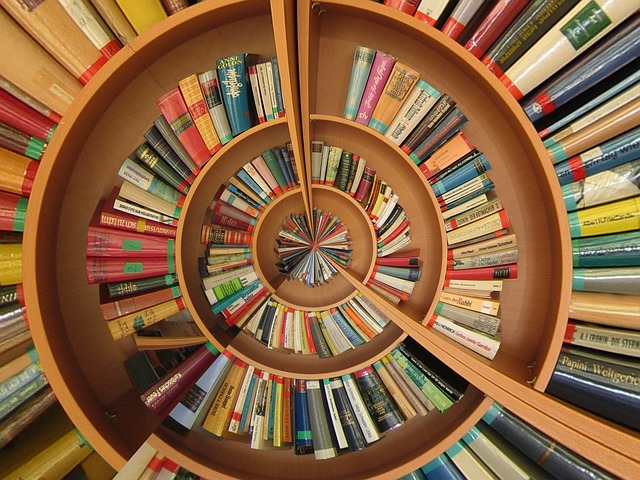
The ultimate book circle perhaps? Image via Pixabay.

The ultimate book circle perhaps?  Certainly enough stories to start with! Image via Pixabay.