STORIES, STEREOTYPES, TRICKS AND UNICORNS

Be fair, that is quite a mix, isn’t it?!  I share links to three new stories of mine on Cafelit this week as well and discuss them in my Facebook posts throughout the week too.  Hope you like the stories.  I loved writing them.

Facebook – General – and Chandler’s Ford Today

Busy night tonight. My latest CFT post is live and looks at favourite views, literal and metaphorical. I also discuss how to develop “the writer’s eye”.

This slideshow requires JavaScript.

Facebook – From Light to Dark and Back Again

Delighted to have three new stories due to appear on Cafelit over the next few days. Will share links as and when. But back to the idea of using the same word to start the sentences of a flash piece with. My word for tonight is Restless and I will ‘fess up and admit I have given this one more thought though I did like the environmental theme that came through with Habitat.

RESTLESS
‘Restless, you are, Wilma, that’s what you are – always have been, always will be.
‘Restless, surely not, I just can’t get comfortable, that’s all’.
‘Restless, I said, and restless I meant.’
‘Restless, that’s the last thing I should be in here, George; I always thought I’d have peace HERE.’
‘Restless spirit, restless grave – I did think I’d have a break from your fidgeting when I joined you in here!’

ENDS.

Allison Symes – 18th September 2018

Hope you enjoy.

I do enjoy reading and writing flash stories told from the viewpoint of a minor character looking at the “main action”. Tonight’s story on Cafelit by me, The Balcony Seen, takes this approach. I don’t even name the character in this one. What matters is showing you what they observed and what they felt.

As ever, with flash, it is vital to focus on sharing what the reader needs to know. It is likely you will need to know a lot more before you put pen to paper or write directly to screen but that is what outlines are for. Outlines are fun to write. The difficult bit can be selecting what it is the reader DOES need to know and leaving out all those lovely pieces of information that are good to know but not crucial to the story. What is crucial for you as writer to know isn’t necessarily the same as what the reader needs to know!

This slideshow requires JavaScript.

I love writing throw away lines in a story which tell you something about the character and move the tale on. In my Leaving Home (on Cafelit tonight), there is an example of this. But the crucial thing is it moves the story on. Anything that doesn’t is cut. And that’s the way it should be!


Facebook – Publication News – Cafelit

The first of my three stories appearing on Cafelit is The Balcony Seen (I make no apologies for the pun!). This story is based on an exercise set by Simon Hall as part of his A-Z of Novel Writing at this year’s Swanwick Writers’ Summer School. Hope you enjoy. Most of the images below were taken by me at a Hampshire Medieval Fair a year or two ago and shows the scrivener’s wares and his accommodation, which was good by the standards of the time.

Woodland Walk - image via Pixabay

A beautiful woodland walk. Pixabay image
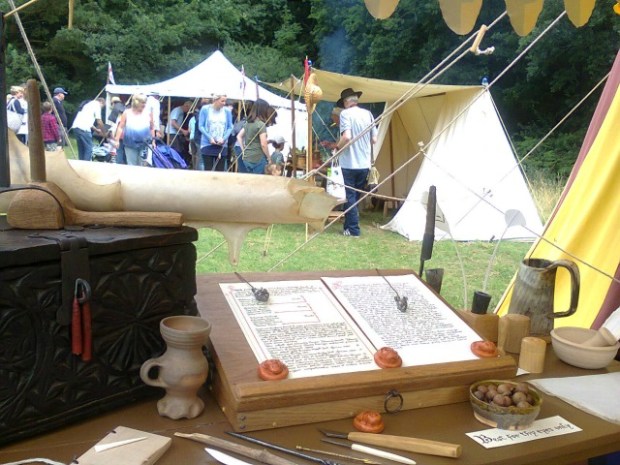
The tools of the medieval writer's trade

The medieval scrivener’s wares. Image by Allison Symes

The Scribe's (Scrivener's) Tent

The Scrivener’s tent. Image by Allison Symes

The scribe had good accommodation

The scrivener had good accommodation compared to most! Image by Allison Symes

As promised, story number two from me on Cafelit this week is now live. Leaving Home shows that the problems of kids pinching parents’ transport is nothing new (or necessarily confined to this world!). Hope you enjoy.

This slideshow requires JavaScript.

As promised, the third of my three Cafelit stories is now on site. Dignity and Injustice looks at the death of Anne Boleyn from a very different perspective. Hope you enjoy.


Another view of the Tower of London - image via Pixabay

The Tower. Pixabay image.

The Tower of London as night falls - image via Pixabay

The Tower at night. Pixabay image.

Fairytales with Bite – Fairytales A to Z Part 7

Marching on towards the end of the alphabet then, this post looks at letters S, T and U.

S = Stereotypes.
It could be argued fairytales have a lot of stereotypes in them.  The Big Bad Wolf represents villainy and indeed the saying has passed into the language.  We say someone is known to be “a big, bad wolf”.  The downtrodden types that have their lives turned around for the better are known as Cinderella types.  I think what any fairytale writer should do is use the tropes wisely but not be confined by them.  What does your Cinderella type do to try to help herself/himself out of the situation that they’re in?  Maybe it is that which attracts the attention of the fairy godmother to help them in the first place.  Stereotypes can also be spoofed or reversed as in the Shrek series.  So use stereotypes, they can be a useful shorthand, but put your own stamp on the characters you are creating so they are clearly “their own people”.

T = Tricks
It is fine to use stereotypes to create shorthands for your characters, who should then still go on to be characters that are uniquely your creation, and other writing techniques to improve what you do, but those should be the only “tricks” played in your stories.  Indeed they shouldn’t even show!  Your stories should read “naturally” with nothing drawn to the reader’s attention any “artificial devices” have been used in the making of that story.  As for tricks played by characters on others, there should be ground rules set out early on in your story as to magical capabilities so readers know that character A could be reasonably expected to play such a trick on character B.

U = Unicorns (and other mythical beasts)
Use sparingly if at all!  For me a story is all about the characters. Unless you are writing a story from the viewpoint of the unicorn or other strange creature, there seems to be little use for these, other than as transport, possibly, or to set the scene for how your world works and looks.

This World and Others – Story Moods

I’m pleased to say I have three new flash stories on Cafelit.  I share the link to my author page here.

The Balcony Seen started life as an exercise at Swanwick Writers’ Summer School this year.  Leaving Home and Dignity and Injustice are new to me in that they share a common character.  But these stories remind me of one of the reasons I really love flash fiction.  They all vary in mood and it is easy to switch from one mood to another and back again.

I also think really short stories can carry the most impact at times.  Yes, there are exceptions (the sadness of Hamlet goes beyond saying) but I generally find the shorter the story the more powerful the reaction.  I suppose part of the reason for that is there is no room to dilute that impact with sub-plots etc.  In a novel, you would need those sub-plots to give a proper ebb and flow to the overall story and avoid having a monotone.  No need to worry about that for flash fiction!

Anyway, hope you enjoy these.

Goodreads Author Programme Blog – Opening Lines

What is it about an opening line that makes you want to read on?

For me, that opening line has to intrigue me, show me something of the fictional world to come, or show me something about the lead character. The very best opening lines combine at least two of these.

I’m thinking especially of Orwell’s 1984 “It was a bright, cold day in April and the clocks were striking thirteen.”. I’m immediately intrigued by the thirteen and I want to know about what kind of world it could be to have clocks capable of doing this. The opening line has definitely fulfilled its role there!

The challenge then for the writer is to make sure that everything which follows lives up to the promise of that opening line and delivers on it! And some people think writing is easy…hmm… I learned a long time ago that when someone makes something look easy, that same someone has almost certainly worked their socks off for years to get to that point.

So what are your favourite lines and why?

I also love the opening to Jane Austen’s Pride and Prejudice and Dickens’s A Tale of Two Cities. Very different in style but they intrigue and set the tone for what is to come.

Happy reading, and writing!


UNWINDING YOUR CHARACTERS AND GOOD WRITING CONFERENCES

Facebook – and Chandler’s Ford Today

I always enjoy writing my CFT posts but tonight’s one, The Benefits of a Good Writing Conference, was particularly nice to do.

There are several pictures from the recent #Swanwick70 in there and many thanks to #GeoffParkes for kind permission to use some of the many fantastic pics he took. My favourite from the ones I’ve used is that of me reading from From Light to Dark and Back Again at the Prose Open Mic but I admit freely I am not exactly unbiased here!

Looking forward to #Swanwick71 already.

This slideshow requires JavaScript.

Facebook – From Light to Dark and Back Again

Another fantastic element to writing flash fiction is that you can literally write stories set in a fanastic setting and then come right back down to earth again with a setting in the every day.

You can have alien characters (and I do!) and poignant character studies. One of my favourites from the latter category is They Don’t Understand which shows in a couple of hundred words or so the lives of two elderly people as one reflects on what they both went through during the war years and beyond.

What I’m looking to do here is have the right character for the impact I want to make on the reader and that will dictate both the mood of the story and often its setting as well.

Image Credit: Many thanks to #GeoffParkes for kind permission to use the image of me reading from From Light to Dark and Back Again at the Swanwick Writers’ Summer School Prose Open Mic night. Also all credit to him for the fantastic group photos celebrating #Swanwick70.

Also thanks to #CherylHolland for using my phone to take the wonderful group pic of friends and I having a laugh on the lawn at Swanwick. (It wasn’t the only laugh that week, far from it!!). Am I missing being at Swanwick? You bet..

Fairytales With Bite – Fairytale A to Z Part 3

On to part 3:-

G = Greatness.  Whether your character is a godmother (of the fairy variety), a villain, or a hero/heroine, there should be some greatness about them to make them memorable characters.  Greatness can be in the form of intelligence (the villain perhaps), moral integrity, actions undertaken etc.  There should be something about your characters that resonates with the readers (even if it is just understanding of where the villain is coming from in terms of attitude and behaviour while at the same time not agreeing with it).  There is greatness behind whatever resonates here.

H = Humour.  Humour is wonderful in a story.  It can provide moments of light relief.  It can show up attributes of a character that would not come out necessarily in any other way.  (Perhaps a character’s wit here could show a good grasp of irony that they might use in a different way later in the story to bamboozle their opponents?  Quick thinking and humour often go hand in hand and the former is usually vital for a character wanting to get out of a tight spot).

I = Imagination.  How imaginative are your characters in dealing with others, making their plots succeed, using others to achieve their ends etc?  Do they need to plan things out thoroughly or can they be intuitive?  How do they handle matters when things go wrong?  Can they use their imaginative skills to correct the situation?

This World and Others – Unwinding Your Characters

I find being in the company of writers from all genres, as I was when I was at the Swanwick Writers’ Summer School recently, to be a great way to unwind.  I talk about other benefits of good writing conferences in my latest CFT post – The Benefits of a Good Writing Conference

But this led me to wonder about how characters unwind.  When your characters are in the thick of the action, what favourite memories of special places and people help motivate them to keep going and get through it all?  I always loved the Rivendell sequences in The Lord of the Rings.  (This for me is where the films were particularly fantastic, being able to visualise Rivendell like that). Just ahead of the quest, Frodo particularly needed that time there.  So what do your characters need to prepare them for whatever hell you are going to put them through (all in the name of entertaining fiction of course!)?

Knowing what really makes your characters tick will enable you, as the writer, to know what will spur them on, what will discourage them, what is the right way to motivate them etc.  A really well written villain in your stories will do exactly the same and tweak the strings of your lead like an evil puppetmaster.  Result?  A villain worthy of your hero/heroine.  Drama.  Conflict.  Story, story, story!  What’s not to like about that?


Writing Should Be Fun

Facebook – General

Difficult to say which was my favourite course at Swanwick as I learned so much from each one, which is fab. One course I particularly did just for fun was the Secrets of Comedy one and that was enlightening. The lovely thing is all writers are playing with words and it can be fascinating to find out how that is done in formats and genres you don’t work in (as yet anyway!).

Writing should be fun and there should always be a fascination with how others write. It makes you take a fresh look at your own writing and, hopefully, develop it further and appreciate it more.

I was delighted to draft a short story on the train up to Swanwick. I’ve now edited and polished it and sent it off to the competition I had in mind for it. I’ve got a few pieces drafted at Swanwick to now work on and am looking forward to that.

My Chandler’s Ford Today post this week looks at the benefits of a good writing conference, considering things such as the boost to confidence and how writers see themselves, amongst other thoughts. Link to go up tomorrow. Most pics are by me but I’d also like to say many thanks to Geoff Parkes for allowing me to use some of his great photos in this post.

This slideshow requires JavaScript.

Facebook – From Light to Dark and Back Again

Story prompts are useful things. Sometimes I’ll use them and enter the competition they’re linked to, sometimes I’ll just see what I can write up and then decide where to try and place it. (Usually, it’s Cafelit! They like quirky there. And I like quirky a lot!).

Occasionally I’ll find a story doesn’t have an obvious home. Then I’ll keep a closer eye out on the competitions and their themes as a suitable one will turn up eventually. Nice thing with that is, after some final editing, I’ve got a story that’s good to go fairly quickly.

Have you tried writing a story in a sentence? Give it a go, it can be great fun. You basically need a subject and some sort of action which will show what the character is like (and make you want to read on were the story to develop further). For example, from me:-

1. He refused to cry again.
2. It was her 25th bank robbery in a month.
3. The dragon wouldn’t eat the girl, he was veggie.
4. Enter that book shop and never be seen in this world again.
5. The used car salesman disappeared up his own exhaust.

The great thing with these is you can, of course, expand the story out but equally they can get a reaction from a reader if you do not. Have fun with this, I often do!

Goodreads Author Programme – Blog What Do I Want From a Story?

Call me fussy but there are certain things I want from any and every story, regardless of genre.

1. Intriguing characters.

2. A life or death situation (this can be life or death in the literal sense or a character making the proverbial mountain out of a molehill but it is still life or death to them).

3. Dialogue that rattles along.

4. A sense of place but not too much physical description, please. I just want enough images to form a vision of the whole thing but a few telling details are enough for that.

5. When the story ends, I’m sorry because I’ve loved being “with” the characters.

All of the above is why I read in and out of my genre as I love to find out how other writers achieve these things. And it has added considerably to both my online and physical bookshelves!


Swanwick, Set Backs, and Favourite Writing Tips

Facebook – General

Back to business then and I’m working on a short story that I hope will go in for a fairytale competition.

I drafted this on the train up to Swanwick (what ELSE are three hour train journeys for?!😁} but, for once, need to add to the story to get it to the required length. This won’t be a problem. There was one scene I had wanted to expand but hadn’t, because I was wary of the word count. So it looks at if I might to get have my cake and eat it here after all (though I expect the overall cake will still need a darned good edit once done!).

I’ve got other pieces to type up which I hope to do over the next few days and I’m happily reworking my novel too. So busy, busy, busy, and all of it fun and that’s a very nice position to be in. Am grateful for it too. Doesn’t always work that way.


This slideshow requires JavaScript.

Image may contain: 1 person, standing

I read at the Prose Open Mic at Swanwick this year.  Great fun!  Many thanks to Geoff Parkes for the photo.

Ironically, for a week associated with stories, I didn’t get to read many while away at the Swanwick Writers’ Summer School. By the time I got back to my room most nights, I was far too tired to read much.

Buzzing with ideas and taking in so much from the different courses does that to you! So one of the things helping me with the “come back to earth again blues” is returning to my book pile, which includes some lovely new additions, thanks to the Swanwick Book Room!

How do your characters handle setbacks? Do they bring out the best or worst in your creations? Or do your characters need time out before coming to terms with what’s happened and then moving on? If they have a sidekick, do they react in the same way? Do differences of opinion here mean the end of the partnership or it going in a direction neither had anticipated at the start of the story?

Whatever you choose, have fun with it, but just as we’re prone to strops when life does not go our way, some of our characters at least should reflect that too.

Favourite writing tips I’ve learned so much from over the years:-

1. Edit on paper. You miss things on screen.

2. Read widely (in and out of your genre and include non-fiction too).

3. Put work aside for a while before editing it so you can read the piece with fresh eyes.

4. When facing a deadline (competitions etc), take away a week to ten days from the official date. That way you still have a few days to get your entry in if the piece takes longer than you think to complete. (And it often will).

5. Read work out loud. If necessary record yourself and play it back. This is really useful for hearing how dialogue sounds especially. Golden rule here: if you trip over it as you read it, so will your readers. Time for the red editing pen again!

Facebook – From Light to Dark and Back Again

Be open to finding sources of ideas for any kind of story in places you don’t expect to come across them.

The reason I mention that is because I had great fun with an exercise set in Simon Hall’s A to Z of Novel Writing at Swanwick recently and know I’m going to get a flash fiction piece from it.

Another exercise from the same course looks like it may become a longer short story and I am looking forward to writing these up soon.

Neither of these exercises were specifically set to generate flash fiction or a short story (as the course name suggests!!) but when you can see where you can adapt something for a form in which you are already writing, go for it. You have nothing to lose.

How do I know when a piece I’ve drafted will make a flash fiction story? It’s not just down to the word count. What I’m looking at is the impact of the story.

If I feel that impact will be strengthened by adding to it, then I will and often these pieces end up being standard length short stories (which I usually then put into competitions).

But often I will feel a piece has a powerful impact at a couple of hundred words and I will leave it at that. I focus on editing the piece then and fine tuning it so that impact is as powerful as I can make it. Then those pieces go on to Cafelit, the online magazine, and/or are put into the collection of flash fiction I’m currently working on. Sometimes I’ll put them up on my website too.

The nice thing about flash is it is easy to share on a site. It literally doesn’t take up too much room, is read easily on screen, and I’ve found before that the best way to describe flash fiction is to read some out/put some up for people to see for themselves.

One of my favourite techniques in writing flash fiction is to take a first person viewpoint and let them lead the reader up the garden path so to speak.

In Health and Safety I start with my character letting you know they road test products. By the end of the story, you find out that my narrator has glossed over their actions in an attempt to justify what happened as a result of them.

Not so much an unreliable narrator, more of an embarrassed one who wants to try to save some face! Good fun to write though…

I love writing stories from the viewpoint of characters who were “overlooked” for the starring role in the traditional fairytales. My first published story was A Helping Hand in Bridge House Publishing’s Alternative Renditions anthology and told the Cinderella story from the viewpoint of the younger Ugly Sister. Great fun to write. Sympathetic to Cinders? What do you think?! But it is great to turn a tale on its head like that. Do give it a go.

I also love those minor characters in a story that can’t be the lead but who still have a vital role to play in it. From The Lord of the Rings you know from the outset the focus has to be on Frodo, but Merry and Peregrin are great fun and do come into their own much later on.

So how can you make your minor characters interesting and fun to follow? Humour is great here, especially if the lead role, as is the case with Frodo, have a burden to deal with and where light relief will be welcome. Get your minor characters right and you will create wonderful subplots, which add layers to your story. They give added reasons for your readers to keep reading, which after all is the objective of a good story!


COMING BACK TO EARTH

Just returned from the Swanwick Writers’ Summer School, after a fabulous week of excellent courses and getting to catch up with writer friends, with whom, for the rest of the year, I stay in contact with via social media.  Lovely as that is, you can’t beat getting together face to face!

So tonight’s post is all on the theme of coming back to earth and I also look at Books That Should Have Been Written as a lighthearted CFT post.  There is nothing anywhere that says you HAVE to come back to earth with a bump or several!

Facebook – General – and Chandler’s Ford Today

My CFT post this week is called Books That Should Have Been Written and, if you like puns, this is definitely for you!  I also take a peek at irony.

Back from a wonderful week at #Swanwick70. The highlight of my writing year is the week at the Swanwick Writers’ Summer School. Why?

I meet up with writer friends that for the rest of the year, I keep in contact with by social media. I make new friends. I learn loads from the courses, which is never a bad thing. Oh and I sold a few books in the Book Room too!

Back down to earth then but with perhaps a more gentle bump! My CFT post this week is a lighthearted one called Books That Should Have Been Written. Contributions welcome in the CFT comments box!

This slideshow requires JavaScript.

Facebook – From Light to Dark and Back Again

Had a lovely time at #Swanwick70. Really enjoyed reading three of my 100-word stories from From Light to Dark and Back Again at the Prose Open Mic hosted by #JenniferCWilson. Flash fiction works really well at these things (as indeed does poetry – I missed the Poetry Open MIc night as it clashed with the Literary Quiz and I do love a good quiz but I hope all who took part in the Open Mic slots had a fab time).

Images of Swanwick were taken by me at last year’s event. Such a lovely place to be!

Fairytales with Bite – A toZ of Fairytales Part 2

So on to the second part of this series…

D = Determination.  The best fairytale characters I know have this trait in buckets (other suitably large utensils are available, as they say…!).  They can vary from determination not to be ground down (Cinderella) to determination to survive (Hansel and Gretel).  Determination can keep a character going when the world and its dog/unicorn/dragon seem to be out to “get them”.  Determination separates the wolf (big, bad or otherwise) from the sheep.

E = Energy. Can be topped up by determination but your characters are going to need plenty of energy to get them through whatever frightful horrors you’re putting them through.  Not only are there the obvious physical needs to think about, but bring in how your characters top up their mental strength.  They will need plenty of that too.

F = Fairies/Fantastic Creatures.  The great irony with fairytales is you can have them without fairies in (Little Red Riding Hood), but when you do use them in your stories, give them plenty to do and ensure not everything is solved with a wave of the magic wand.  Your fairy character still has to work for/struggle to get success, even if that is only implied in your story.  A wave of the wand may be what they do to remedy a situation or modify it (Sleeping Beauty) but there should still be issues for the characters in your story to overcome.    Otherwise there is no conflict and without that, the story vanishes.  Fantastic creatures can vary from animals to other magical beings (including your own invented ones) but we still need to have some sense of what they are like and where they fit in to the world you’ve created.

More next time…

This slideshow requires JavaScript.

This World and Others – Coming Back to Earth

Coming Back to Earthis the title of my latest Goodreads blog (where I do suggest a cure!).  I wrote a lighthearted post for CFT this week, Books That Should Have Been Written,partly as a “gentle” way of coming back to earth after my return from the Swanwick Writers’ Summer School.

But how do your characters come back to earth?  They’ve experienced perhaps great adventures, now there’s a lull in the action as they come to terms with what they’ve just gone through.  How do they handle that?  I love The Lord of the Rings  for many reasons but the portrayal of Frodo becoming more and more tired as the stress of what he has to do becomes more and more of a burden is realistically shown.  On the assumption your characters are not super heroes who never get tired or out of sorts, how do your characters handle setbacks, tiredness, illness etc?

How do they pick themselves up from “earth” to get back to their “mission”?  Who helps them and how?  Plenty to think about there!

Goodreads Blog – Coming Back to Earth

Have just got back from my annual highlight – the Swanwick Writers’ Summer School.

Had a wonderful time discussing and learning about all things connected to the worlds of books and stories. What’s not to like about that?

But, as ever with these things, you come back home again and you feel shattered and a bit flat. (You take in far more than you know you are when you are there and then I think the physical/mental tiredness of that hits you later).

So what can help you perk up again?

Why, nothing but a good book of course!

And the lovely thing about being a writer? You need to read widely, in and out of genre, to help feed your own imagination in any case, but you also get to write the books and with a lot of hard work, and some luck, get them out there.

So happy reading and writing!


Swanwick, Scheduling and the Book Cover Challenge

Facebook – General

Am busily preparing CFT posts for the next couple of weeks. I’d like to get both of the following Fridays done because I know when I come back from Swanwick, I will be happy but shattered so doubt if I’ll be writing too much later that evening! So easier to write and schedule such posts now.

I need to get back to blocking out time for specific things I’d like to do (which is where Swanwick will be particularly helpful to me this year).

Once the CFT posts are done (which I hope to have up and scheduled by Wednesday). I can focus on some fiction. The great thing with flash is I can happily spend an evening writing that and have several stories by the end of it to work on further. Okay, they WILL need working on further but the joy of the first draft is worrying about editing much later on!

I love taking my Kindle away with me as it (a) saves a lot of packing and (b) saves a lot of heartache working out which books to take and which to leave behind. Also for some reason my case is always a lot lighter than it used to be! Biggest issue for me though is to remember to pack the charger!

Talking of recharging the old batteries, my CFT post this week takes a look at that and I will be sharing a few things I find really helpful for unwinding (and I don’t even mention wine, chocolate etc., so you have still those as options too!). Link up on Friday.

I’ve been enjoying taking part in a book cover challenge this week. Has made me really think about the novels I couldn’t be without. What are the ones that have influenced you in some way?

So far I’ve included The Lord of the Rings, Pride and Prejudice, The Daughter of Time, Raising Steam, and Murder on the Orient Express. A nice mixed bag there! And all great in very different ways.

Am doing my packing for Swanwick tomorrow. Wouldn’t surprise me at all if other writing friends have done theirs already but the Thursday before is soon enough for me and my books and notebooks go in first! (Did put my rail tickets in my railcard holder today – I suppose that counts!).

The case is packed ready for Swanwick. Just the usual odds and sods to add at the last minute. (Disaster for me will be forgetting my phone charger!). And yes I did pack my books, notepads, pens etc first. Got to have your priorities right!

Okay, I’m not sure where I’ll put books I buy from the Book Room but I’ll worry about that later in the week (and I refuse to believe I’m the only Swanwicker taking that view!). Happy, and safe, travelling to all who are going. May you get through the engineering works at Derby without your blood pressure soaring too high!

This slideshow requires JavaScript.

Facebook – From Light to Dark and Back Again

I do love writing some one line complete stories from time to time and it makes for a good exercise to get you into your writing session. For example:-

1. The day the clocks stopped the watchmakers were fired.

2. The dragon surveyed the empty street, which had been teeming with life a moment ago.

3. Try as he might, Arthur could not get that wretched sword out of the stone. (N.B. This also counts as a complete story wrecker!).

4. Turn left and he’d face obliteration, turn right he’d have to face the New Year sales – he went left.

5. The gull enjoyed the look of astonishment on the day tripper’s face, almost as much as the bird loved the stolen battered cod.

6. Dessert was sorted – the gull went back and pinched the same tourist’s mint choc chip icecream.

Allison Symes – 6th August 2018

Give this exercise a go! It’s fun and there’s nothing to stop you developing your ideas further. As for me, that’s some ideas drafted for my third flash fiction book!

My favourite forms of flash fiction are the ones I write in the first person. There is an immediacy about those I think and I love being able to get straight into the character’s head.

It is also great letting them “tell you” the story. There is no pretence at being unbiased or anything like that. The character will give you their thoughts with both barrels, so to speak.

Of course, when everything goes horribly wrong with said character, the reader should be able to see the seeds of that happening early on in the story. And often it is the character’s attitude that plays a major part in this. Great fun to bring about!

Looking forward to my train journey on Saturday to Swanwick despite the engineering works at Derby. Why? Aside from loving train travel (usually!), I hope to write quite a bit via Evernote and my phone for my flash fiction and non-fiction posts. Three hours? Can get a fair bit done in that time, thank you.

I’ve been on the train a fair bit this year so that almost certainly helps for my being further on with my third flash fiction collection than I thought I’d be! And I am getting better at using “dead” time more efficiently. The stories soon mount up (and if you’re a crime writer, the bodies do too! 😁).

The ABC etc of Flash Fiction… (will continue this over the next few posts though there may be some gaps in posting due to my being at Swanwick and probably having far too good a time to be posting!).

A = Atmosphere. The story may be short but its atmosphere must come through clearly. You literally have a few words to set the mood and then follow through. On the plus side, if you like writing “from inside the head of the character”, as I do, this really isn’t a problem.

B = Brutality. There is editing and there is editing. You really do have to murder your darlings with flash fiction. Only what is crucial to the story remains. And it can be hard sometimes to cut a really good line but if it really isn’t vital to the tale, it should go out. Save it though. Might be able to use it elsewhere.

C = Characters. Couldn’t really pick anything else for C. Flash fiction has to be all about the characters. They show you their world and their attitudes in a few words and, ta da, from that the story comes. Character attitudes lead to conflicts which in turn lead to stories.

More next time…

Goodreads Author Blog – Getting Away From It All

I shall be getting away from it all shortly at the Swanwick Writers’ Summer School once again but will be immersed in a world of stories and books (reading and writing them!). Bliss!

So what books go with you when you get away from it all?

I pack my Kindle and what I read depends on my mood, naturally, though I am currently enjoying Lucy Worsley’s A Very British Murder and hope to finish that by the end of the week. The book is great. It is usually a question of how long can I keep my eyes open at the end of the day! That is the trouble with bedtime reading…

There’s a couple of other crime novels I want to read as well while I’m away. And after that I may well turn back to humour again. I do find I like to read a few stories or books in a genre, then switch to another one and read a few in that for a bit. Still, it all mixes up the reading and then there is always the delight of the wondrous world of non-fiction too!

So whatever your holiday/summer reading is, enjoy!


YOUR FIRST WRITING – AND SWANWICK!

Facebook – General

What was the first piece of writing you remember? I can’t recall mine but do know when it was “composition” time at school, I was in my element. The whole idea of making up your own story back then was marvellous (and frankly still is!).

I couldn’t tell you either the moment I decided I would be a writer I just know the nagging feeling of wanting to write and, backing it up more importantly with actually doing the writing, has been with me for far longer than I can recall. The best thing to do is follow that writing urge but be open to trying new forms of writing. It is the way, I think, to find out what it is you really want to spend your time doing!


This slideshow requires JavaScript.

Have prepared what I hope to be working on during Swanwick Writers’ Summer School, which starts on Saturday. This is a longer term project I want to read through and edit. I’ve also got a few ideas on where to submit this once done so want to check those out too while I’m away. Hope to submit said project by the end of the year (the idea being once back from Swanwick I’ll be ready to sort out my amendments and get the project out there).

Am continuing to work on my third flash fiction book. Have got ideas for non-fiction too which I hope to flesh out more so in between the courses at Swanwick, and catching up with friends there, I shall have plenty to do! But that is always a good thing…

Facebook – From Light to Dark and Back Again

What do your characters like to eat/drink? Are they good cooks or do they live on their world’s equivalent of take out? What do they like to wear (and does it fit in with their world’s idea of what is suitable)?

Ask yourself questions about your characters. Not only will you get a better picture of who they are and what they’re like, the crucial points about your fictional world will develop too. For example, if you know your character is a freedom fighter, what are they fighting against? It also shows your world is probably a dictatorial one. (If it wasn’t, why are there any freedom fighters at all?).

Am hoping to submit some more flash fiction stories before long (but probably after I’m back from Swanwick Writers’ Summer School. This week will be spent in preparing posts to schedule for while I’m away I expect).

My third flash fiction book is coming along but I hope to do a lot more on that while away. And as I mentioned on my author page that will be alongside a longer term project I want to read through and edit and, hopefully, be submiting by the end of the year. It is great having a mixture of different writing projects – I never get bored (!), I love the challenges each one presents (and those differ naturally). and, if things go as I hope, I should have a variety of work “out there”, hopefully to find a good home!


Handling Criticism

It has been a very busy week but it was a great joy to welcome Val Penny to my blog on Tuesday last.  Looking forward to her Hunter’s Revenge coming out in September.  I’m also looking forward to the Swanwick Writers’ Summer School later this month.

Facebook – General – and Association of Christian Writers – On Criticism

My More than Writers blog post for the Association of Christian Writers went up on site yesterday.

On Criticism talks about handling criticism, and how showing how your characters handle that themselves can be used to reveal a lot about them. It can be a good way to get depth into a story given no character should be one-dimensional. They should act and react and then usually act on that reaction! How they handle being criticised is a good way to show how they related to the ones doing the criticising for one thing!

I also share some thoughts on allowing time to elapse before evaluating your own work. Link above.

My CFT post this week will be a review of the Chameleon Theatre Group’s latest production, What a Bunch of Amateurs. A really funny play (writers: Ian Hislop and Nick Newman). Looking forward to sharing the link on Friday.

A great story, regardless of format, is one in which you are very happy to suspend disbelief for the duration of reading it/watching it performed/listening to it etc. Amateurs was easily that and good fun.

Images below kindly provided by Lionel Elliott and the Chameleons (and used with permission). More to come on Friday.

Beginning to heat up in Hampshire again…. Lady not keen. Neither are Lady’s owners! Still our park did perk up a bit after the rain last weekend. It doesn’t ALL look like straw now!

Weather can be used as a descriptive shorthand. If you say someone has a sunny disposition you know exactly what is meant. It can be a useful technique for flash fiction of course – all those words saved on your word count!

However, it is too easy to fall into cliche with it (and that’s what I’ve just done with that phrase I think!) so best to use this sparingly. (Think of it as the writing equivalent of chilli powder – too much and you will know it! Too little and well what was the point?).

This slideshow requires JavaScript.

Facebook – From Light to Dark and Back Again

Am hoping to submit some more flash fiction before I head off to Swanwick. Happy with progress of WiP (which is nice – haven’t always been able to say that). Have all sorts of ideas bubbling away for future flash fiction collections, which I’m looking forward to having a go at.

Would like to investigate more flash fiction competitions too, so plenty to be getting on with over the summer, but then that is never a bad thing!

The lovely thing about flash fiction is the freedom it gives you to write in different genres, albeit in a very short format! FLTDBA has everything in it from humour to horror to fantasy to poignant pieces and a little bit of crime too. I adore that flexibility. The only thing I have to worry about is the word count!

I love to use thoughts in my stories (though admittedly in flash fiction, I have to keep these brief. That’s no bad thing though). Thoughts reveal the character’s attitude, what state of mind they are in at the time and so on. Thoughts can also help you cut the word count (something every flash fiction writer is looking to do!) because you can go “straight to the chase”. The character is showing you what they are thinking.

Had a nice time earlier going through the Swanwick Writers’ Summer School brochure, trying to decide what courses I will do when there. The lovely thing about writing flash fiction is all sorts of things can feed into it and spark off ideas so a course on crime writing may well inspire all sorts of very short stories on that topic.

Expecting, Why Stop Now, and Punish the Innocent are just three of my flash stories in FLTDBA where the theme is crime. Other themes in the book are fantasy, Pride and Prejudice, Frankenstein, and abusive relationships. Quite a mix! I can’t stress enough how vital it is to read widely. You need to spread your net wide to “catch” as many sparks to fire off ideas as you can and then the work is in deciding which are the strongest ones to actually write up into stories.

This slideshow requires JavaScript.

Goodreads Author Blog – Heatwaves and Reading

Is the hot weather (in the UK at least) encouraging you to read more or less than you would usually?

I find I’m “dipping” into things more, especially magazines, given by the end of the day, when I’d usually like to read for a while before lights out, I’m feeling far too washed out to read much. Oh and I am reading more magazines on Kindle now, which was something I never thought I’d do, but I’ve got on better with it than I thought I would.

Magazine reading is ideal for that feeling washed out to concentrate much scenario, as are short story and flash fiction anthologies. Quick reads when you feel as if your brain has melted are ideal. The literary fiction can definitely wait for when it is cooler!

Looking at my reading patterns over the year, I tend to read more novels over the autumn and winter months. It’s not a conscious thing. I suppose you hone in to the fact that with the nights drawing in, now’s the time to get on with a good, LONG book!

Meanwhile it’s back to the cool drinks and quick reads for me!


Frustrating Things about Writing

Facebook – General

What do you find is the most frustrating thing about writing?

Rejections?

That lovely moment when you think you’ve got a corker of an idea but you go to write it down and it suddenly evaporates?

Being interrupted when you’ve got going nicely and you know you will have to come back later and find you can’t quite get into your rhythm again?

All of them, I hear you cry! I know. It is difficult to choose from this particular shortlist.

Rejections – I take some comfort from the fact EVERY writer has them, it really isn’t just you or me for that matter. But hopefully you can learn and improve on what you do with each one. Also just because a piece is rejected somewhere, it doesn’t mean it can’t be accepted elsewhere. So keep trying, keep going!

Ideas Disappearing – it happens. Write down what you can. Then think laterally. I sometimes use a spider diagram. Sometimes I get the idea I had initially back, other times I think of something better. Win, win there either way!

Interruptions – On the plus side, whoever you are prepared to drop your writing for must be pretty important to you so treasure them! I carve out blocks of time for my writing and, unless there is a dire emergency, I stick to those. I’ve found it helps to be consistent with this. It also helps to show loved ones what I’ve produced in this time, publication credits when I get them etc so they can see the point of what I’m doing that way. It helps lessen the risk of any “non urgent” interruptions!

One of the highlights of my writing year is rapidly approaching – the Swanwick Writers’ Summer School. Brochure arrived yesterday.

I think I know what courses I’m going to be doing – I went through the programme when it was put up on the website (I know, I know, girly swot!). Having said that, the brochure gives me the perfect chance to change my mind again and then again and then… well you get the picture!

Looking forward to catching up with old friends and making new ones! Pictures below taken by me – The Hayes is a stunning place to be.

How can you tell when a story idea really is something you should run with?

When the idea haunts you, basically.

When you start writing the idea down and more ideas flood in as you do so.

I’ve only had a couple of ideas where, on outlining, I found I couldn’t expand them further to create a story. All that promise and nothing… bah humbug!

So does it pay to outline? Definitely. Can save a lot of time.

As for outlining flash fiction, I keep this brief, aptly. Character is X, major trait is Y, how is latter going to help or hinder X?

I often find that a flash story can go in a couple of different directions and then it is down to what mood I want to go for. A humorous story is when X’s major trait hinders, causes trouble etc – there is a lot of comic potential there.

A more sombre story shows the major trait hindering X but they are not necessarily aware of it. What X sees as persistence, all those around them see as stubborness and X being an awkward so and so.

But a good idea gives you that potential to go in different directions.

This slideshow requires JavaScript.

Looking forward to seeing the latest production by local theatre group, The Chameleons, tomorrow night. Will be writing more about it for CFT later but my lovely editor, Janet Williams, is also going so I think I can classify this as the nearest thing CFT has to a “works’ outing”!

My CFT post this week will be looking at what to look for in a good review/critique. I also share some tips – link to go up on Friday.

The local wildflower meadow I wrote about for last week’s CFT post is still going strong I’m glad to say. This is totally unlike the grass in the park, our lawn, and most of our plants. I’ve also noticed the trees have started to shed leaves. Really wouldn’t mind some rain now… and talking of the weather, it has been mad here today. It was hotter at 8 am than it was at lunchtime and hotter still at about 5/6 pm!

This is not in my genre at all but I guess there is room for climate change fiction!! (And practically all of it will be based on facts…).

Facebook – From Light to Dark and Back Again

I don’t set out to write fiction with a “purpose” other than hopefully to be entertaining. I’m all for books that can educate, open readers’ eyes to new worlds etc etc. but there is absolutely nothing wrong in wanting to write stories which make people smile/laugh/scream as appropriate and be for sheer entertainment only.

I’ve never understood why some can look down on genre fiction due to its easy accessibility to readers. You want people to read, yes? Fine, let them get on with that. Maybe people will move on to “more worthy” books later when they are ready but if not, they will still be reading, which is always a good thing.

(And writing to entertain can be easier said than done anyway! Now back to the writing… oh and the first one you have to entertain IS you. If you don’t like it, why should anyone else?}

When is the right time to start a new flash fiction book? Directly after you’ve finished the last one and sent it off to the publisher!

Am making good progress on my third collection. Am planning to make even more progress on it while I’m at Swanwick. I also plan to revisit my unpublished novel (as I would like to change the status on that one!!).

So plenty to do and no chance of getting bored – good, bring in on, say I!

Should you be able to guess the ending of a story, regardless of length?

I must admit one of the joys of reading for me is to try to work out where the story will head. It is great when I’m right. It is even better when I’m not! I like a really good story twist that takes me by surprise yet when I go back through the tale find that the clues to it were there all along.

When I write my twist endings, I nearly always reject the first idea that comes to me. Why? Because inevitably the first idea that occurs is the same one that will occur to most other people too! There is no fun to be had in guessing the ending there!

I do write that first idea down though, despite knowing I inevitably won’t use it. Why? I’ve found the very act of writing it down helps generate other, better, stronger ideas. I find it easier to come up with something when paper and ink are involved somewhere in the process rather than just think it all up. I suppose in a way in drafting ideas like that I am kind of giving myself permission to “play about” with the thoughts that have occurred to me. Whatever the deep down reason, all I know is that it works!

In flash fiction you don’t have room for many characters but you can “infer” some to compensate for that. I do this by revealing what my lead character thinks of X even if X never makes it into the story itself. This also reveals my lead character’s attitude to X and can show how likely it is my lead gets on with others (or not. I can think of quite a few of my “people” I wouldn’t get on with but the great thing is I don’t have to like them to write about them!!).

Another way of showing another character yet without them taking up precious word count room is to have the story written as a letter, diary etc. I use the letter format in my You Never Know where my lead character’s attitude to who they’re writing to is all too apparent! It is also clear they are irked by the attitude of the unseen character.

I love being able to imply things with stories like this. I’ve never been that keen on stories where the author spells everything out. I like putting two and two together for myself and if the writer can send me up a false trail, well done them!


Goodreads Author Programme – Blog – Book Covers

I think everyone does judge a book by its cover. How else can you do so? You need something to draw you in initially and that is the cover’s job.

I like a cover to be appropriate for whatever it is I’m reading and, ironically for a writer, I want the picture to do most of the work.

I’ve sometimes given opinions on book covers before the books concerned are published and the ones with lots of text merely look cluttered. Far from giving me more to read on the cover, too much text here switches me off.

Where I do want the text is on the back for the blurb. Have you ever read a book, enticed by the blurb and cover, but the story fails to deliver on its promise? I think most of us have and you just feel let down. (All writers beware here!)

The great thing here though is that despite the cover and blurb being really important, it is STILL the story that matters most of all. And what we are all after is a story that entertains, educates, keeps us gripped to the final page and so on.

This slideshow requires JavaScript.


WEATHER, PLANS, AND THE WRITING JOURNEY

Facebook – General

Must admit I struggle a bit in the heat, due to being asthmatic (much easier to breathe in cooler air). But then I still don’t really associate Britain with heatwaves, really. It just doesn’t feel right for this country.

And yes I do remember the summer of 1976. Government appointed a Minister for Drought and within about a week the heavens opened. Someone liked a laugh there!

I don’t tend to use the weather in my stories but how your characters react to (a) standard and (b) unusual conditions can help your readers find out more about them. I wilt in the heat. Others get edgy. How do your characters react? Does their behaviour and attitudes change notably?

Food for thought when outlining your characters as, even if you don’t use this in a story directly, just knowing how they would react helps you as a writer to show something of that in the situations you do put them in.

Time really does fly – hard to believe it’s July already. Still, on the plus side, it’s just over a month to the Swanwick Writers’ Summer School. Really looking forward to that.

Need to get some more submissions out so will try and focus on that. (Third flash fiction book coming along nicely though). Am also beginning to look at some non-fiction work I’d like to do. Would like to make good progress on that by the end of the year.

Am reading well, which is great. I see reading as the fuel to writing. How can you know what you like to write unless you know what you like to read? Deliberately mixing up my reading formats. Sometimes I focus on the Kindle, other times good old fashioned paperbacks, still other times catching up with magazine reading. All wonderful material.

When you first start out as a writer, you look to improve what you do (and this is something you continue to keep on trying to do). Then you aim for publication. Then you see if you can be published again and again and again etc.

All the time you are trying to improve what you do in terms of output and quality. You are also getting to grips (or trying to!) with marketing and promotion, arranging book events, using social media effectively to attract a readership and so on.

So at no point in the writing journey are you standing still and that is a good thing.

But it does pay every so often to stop and look at where you are and what you would like to do next (and then go for it!). Focus on enjoying what you write – that enjoyment will help you keep going through the tougher times.

This slideshow requires JavaScript.

Facebook – From Light to Dark and Back Again

Flash fiction is a good outlet for one liners which sum up a character.

One of my favourites comes from Making the Grade: “Still, as I told Mother, if this is what I can do when I’m honest, just think of the possibilities when I’m not!” Attitude to life, feisty character all in one line!

Flash fiction is the epitome of economical writing! This is another reason why I love it. It challenges me to convey as much information as possible in as few words as possible. All good fun!

I love an intriguing first line
Be it in flash or short story.
But what is wonderful and fine
Is the ending in its glory.

Allison Symes – 1st July 2018

I’m partial to some doggerel too! Having said that, intriguing first lines are fabulous but the story has to follow through on them. The story must never peter out. The ending must back up all that has come before. You want your reader to feel they’ve had a satisfying read, whether it is a funny tale or a grim one.

This slideshow requires JavaScript.

Flash is a great vehicle for sci-fi and fantasy, even though both are known for (a) epic novels and (b) world building (which leads to the size of said epic novels!). Why?

Because you can conjure up a world with a few well chosen words and leave the rest to your reader’s imagination. In my The Truth, I refer to a Mark 3 Intergalatic Spacecraft with the latest time warp technology. I haven’t room in this 100-word story to tell you more than that, but the great thing is YOUR vision of what such a spacecraft would be like is as valid as mine would be. And you can picture the kind of world that would have such a thing in the first place.

I like to have fun with my flash stories in giving the one telling detail a reader would need to know and leaving it at that! I’m not being rotten, honest. I think a reader engages much more with any story if they have gaps to fill in. I know I love this when I have to fill in gaps on stories I read.

N.B. Do you think they have trouble changing head light bulbs on your average UFO given the trouble most of us have trying to do the same task on our cars? Just a thought…!