
Image Credits:- All images from Pixabay/Pexels unless otherwise stated with many created in Book Brush. Book cover images from Chapeltown Books and Bridge House Publishing. Screenshots taken by me, Allison Symes. Hope you have had a good few days. Lady needed an X-ray but is fine and recovering well. Writing going well too. And mostly Lady and I are managing to avoid the rain so we always take that as a win.

Facebook – General and Chandler’s Ford Today
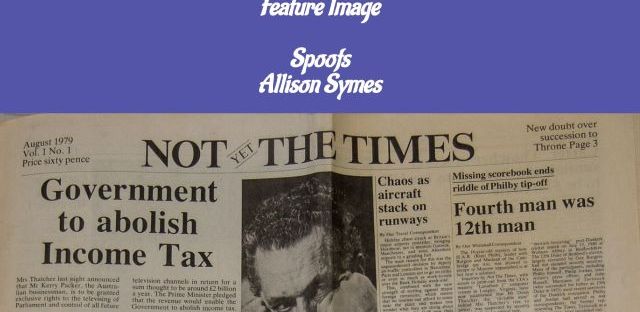
Am pleased to share Spoofs on Chandler’s Ford Today this week. A great spoof has to mimic what it is spoofing successfully so people will “go along” with the spoof and enjoy it (and what it is mimicking). This requires an in depth knowledge of the original work and, I believe, a great love for it. You have to know exceedingly well what it is you’re spoofing.
But when done well, this format is a delight. It isn’t just found in books either and I name two films and, separately, a TV series, which I think spoof brilliantly.
To find out more do check out the post.
Spoofs
Lady is pretty much back to her old self today (needed an X-ray the day before, see below) and it was particularly nice she caught up with her two best pals, the Hungarian Vizler and Rhodesian Ridgeback today. Seeing them perked her up no end and they all had a lovely time, despite the mud.
Writing wise, I’m sharing Spoofs on Chandler’s Ford Today tomorrow. Looking forward to sharing that. I look at what makes for a good spoof and if ever there was a time of year to enjoy them, I think it is now while we are still in the depths of winter with spring still a fair way away. See above.
It’s my experience too that humorous writing, of any kind, while it may be easy to read definitely isn’t easy to write. I salute anyone who manages it. This is partly because humour is subjective, of course, and not of all it “reads across” well. Also especially with a spoof, you do run the risk that those who love the original you base your spoof on will loathe the take you put on it!
But a good spoof is a great joy and you can find them in many art forms. More in my post tomorrow.

Hope the day has gone well. Has been a strange one here as Lady had to have an X-ray. She’s okay and we have had confirmed what we thought was the problem but it is manageable and things will get better from here because we know what it is. So glad to have her home again. The house has felt very odd without her here.
Writing wise, I loved the ACW Connect session run by the Association of Christian Writers last night. It was good to see old friends and chat with new ones. I’m also looking forward to the next session of the Association of Christian Writers Flash Fiction Group next week. I’m off to the panto next week too – oh yes I am!
I’ll be sharing Spoofs on Chandler’s Ford Today on Friday. I like a good spoof and share some of my favourites as well as discussing what I think a good spoof should be. It was fun to write, as you can imagine.
Writing Tip: My week is made up of writing sessions where I can get lots done in one go and lots of smaller sessions. Writing flash is great here because I can use the smaller time slots I have available for that. But a good idea is to save the smaller sessions for those writing tasks you’re not so keen on (e.g. marketing, editing etc) so you have the longer ones for longer stretches of creative writing, which is where most of us get the maximum enjoyment from our writing.

Facebook – From Light to Dark and Back Again
Lady was delighted to catch up with her Hungarian Vizler friend today and two chums she hasn’t seen for a while – the lovely Coco and Charlie. Lady is much more herself after her X-ray earlier this week.
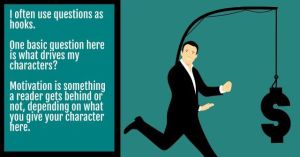
Flash Fiction Tip: Always focus on the lead character (in stories under 250 words or so, you are likely to just have the one character in your story). Think about their purpose. What are they seeking to achieve? Do they do so or fall flat on their face (which you can exploit, of course, for a humorous tale)? What drives them? What gets in their way? All of those questions would be good to answer for longer works too. Motivation matters for our characters. It is that which does so much to make them believable to readers.
Hope to get around to looking up some flash fiction competitions over the weekend. I know of a couple of possibles but it will be a case of having the time to check them out before I draft anything. It always pays to check the details to avoid the risk of being scammed etc. Sadly rogues target any industry including the writing and publishing ones.
Also some competitions have very restrictive conditions which may well make you think twice about going that route. I avoid those who want to take all of my rights, for example, on the general principle I really don’t like this. The author is unlikely to do well out of this.
Having said that, when I’ve found suitable competitions, I love the challenge of getting something into them. It is fun to do. And you do have to be in it to win it after all.

It is possible to write flash without realising it. Any novelist who prepares a blurb or the shorter kind of synopsis will be writing up to the 1000 words maximum (and probably closer to 500 words). It would count as flash!
Any writer who takes part in writing exercises at online or in person events will be writing flash as you never have enough time to write more than about 100-200 words or so in the time you’re given for these things.
So why not look at those pieces you’ve drafted and polish them up and submit them? I was asked last night at the ACW Connect session (which was fabulous) where I submit my flash. Well, I build up stories for collections, of course. I also send them into competitions. I also share some in my newsletter/on my website (all counts as marketing).
Why not see if you can get your flash work out there and see what can be done with it? If you win or are shortlisted, anything like that, it also gives you news to share.
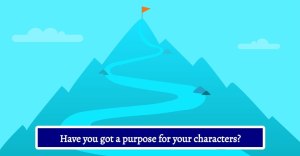
Flash Tip: Think about the purpose of your story. How do you want your readers to feel on reading it? Are you trying to make them laugh, cry, scream etc? From there you can work out the kind of character(s) which would be best suited for the story.
Fairytales With Bite – Starting Over
All of us need to start over at some point, whether it is starting a new job, new writing project etc. Why would your characters want or need to start over? Do they welcome or fear the prospect? How easy or otherwise do they find taking a new path in life? Is there support available?
What do your characters want their starting over to bring to them? There should be some advantages, otherwise why bother? If it is a question of necessity rather than wanting to start over, what brought them to this point? Could they have avoided it? If not, what advantages could they gain from dealing with the position they’re now in? Could something good come of the having to start over again?
Alternatively, is your character the one forcing someone else to start over? If they’re a fairy godmother or similar magical being, they could well need to use magic to bring someone to their senses to force them to face up to something and then change their ways. This is common theme in fairytales. Here, could you look at what was the last straw for your character which made them decide now is the time they are going to make Character X change their ways?
This World and Others – Finding A New Place
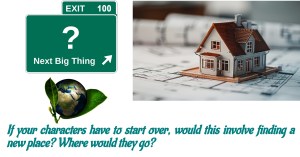
If your characters have to start over, as I discussed in Fairytales with Bite, would this involve finding a new place? Where would they go? Where are they coming from? Is the new place somewhere they want to go or are they out of options?
How easy or otherwise is it for your character(s) to find a new place to be? If they can choose where they want to go, given they can’t stay where they are for whatever reason, what would they be looking for? If they find this, does it compensate them for having to leave their old place at all? What does make them have to/want to leave?
In a magical setting, are characters expected to live in certain areas depending on their species? Or are the different species encouraged to live together and how does that work out? If it works out well, what would they do if someone from outside tried to change that? Would anyone be forced to find a new place because of this? (Sadly it is nothing new and we still see plenty of examples of it here).
Also, natural disasters can cause the need to find a new place. What kind of natural disasters could happen in your magical environment? Can the use of magic make things better or worsen them?
MailerLite – Allison Symes – Newsletter Sign Up

WRITERS’ NARRATIVE SUBSCRIBER LINK
News: Writers’ Narrative will soon be moving to Substack. Subscription IS still free to the magazine. Have shared a link with an older version of the magazine below. Do enjoy and look forward to the next issue soon.
AMAZON AUTHOR CENTRAL – ALLISON SYMES

https://platform.twitter.com/widgets.jsSpoofs https://t.co/IPU7qd3BOZ
— Allison Symes (@AllisonSymes1) January 23, 2026
Glad to share Spoofs on CFT. A great spoof must mimic what it is spoofing successfully so people will “go along” with it. Spoofs are found across the arts. I name two films and a TV series which I think spoof brilliantly. Hope you enjoy the post.






 Allison Symes: Collected Works