Another mixed bag plus a link to my page on US based site, Scriggler, where a new story of mine is now up.
Facebook – and Chandler’s Ford Today
My CFT post this week is the final installment of my 101 Things to Put into Room 101 series. Good fun to write and therapeutic too! Amongst tonight’s items are debt, fake sincerity and all calories in a 99 icecream. (You can guess where I put that in my list numerically speaking!).

If only all the calories from this could just disappear… image via Pixabay

The vault of doom. Image via Pixabay.

Yes, but is there fake sincerity going on here? Image via Pixabay.

They know how to charge for parking at hospitals. Image via Pixabay.

Hayfever misery shouldn’t be underestimated. Image via Pixabay.

Why do prices go up when something is taken out of a product? Image via Pixabay
Facebook – General
When is the best time to write? When you can! I write mainly in the evenings but if I can sneak in some writing during the day, I do so. What matters more, I think, here is being consistent with your writing. You know you will always sit down at roughly the same time and you will always write X number of words or accomplish this task or that one.
I keep a list of writing tasks I want to achieve and find it helpful as, whenever I tick off one, there is a sense of achievement. Given rejections happen to everyone, that sense of achievement is very welcome.
This slideshow requires JavaScript.
Facebook – General
Little things reveal a great deal about people. Anyone who always says “please” and “thank you” was brought up to be polite (and not take anything for granted usually too!). Likewise, those who hold doors open for others (regardless of gender), you can reasonably assume at least try to be considerate in other ways.
So little things should give away clues as to what your characters are really like deep down. I think of this as the kind of trait that a character can’t completely hide/suppress.
For example, a character is shown to be a “loudmouth”. Fine but every so often during the story, we also spot the said character lighting a candle as a prayer for someone else. That tells me well hang on, this character has another side to them. A deep, spiritual side they are either not comfortable showing more openly (they’re wary of showing off their piety perhaps) or they somehow feel the need to cover that aspect of themselves up by being “loud”.
So think about what little things will give away what your character is really like. These little things can also back up the main portrayal (and help make it more convincing).

Love what you write. Image via Pixabay.

Remembering… image via Pixabay

No literacy = no reading. Image via Pixabay

Aids research whether it is tea, coffee, hot chocolate etc! Image via Pixabay

A good reading pile! Pexels image.

Be thankful for stories, being able to write etc. Image via Pixabay
Facebook – From Light to Dark and Back Again
One thing that can be overlooked in flash fiction is, as with any story, the character still has to be at a point of change in their lives and the tale shows the results of that. The difference, of course, is that in flash, you have much less room to complete that “task”.
But a good flash fiction story will show you a character changing (for good or ill), or resolving a problem. It really is a question of cutting to the chase with flash fiction. There has to be a resolution to the conflict your character is facing, whether that is an internal or external one. Everything that is most important to the character and the resolution has to be in the story and not a word more.
This is why I think it is a good idea for most writers to have a go at writing flash fiction, even if you don’t use it as your main fiction form. Why? The skills you learn in writing to a tight word count will spill over into other things you write. As I’ve mentioned before, you soon find out what your wasted words are, you discover you don’t need many adjectives and adverbs, you do learn to say in one word what you might have taken three words to do etc.
This slideshow requires JavaScript.
Facebook – From Light to Dark and Back Again
Facebook – From Light to Dark and Back Again
Ideas, I think, are all over the place waiting to be picked up and used by writers who can recognize them for what they are and, more importantly, which ones are the “goers” and worth running with.
I don’t write character biographies (though I understand the point of them) but I do jot down ideas based on themes and then work out “What if?” scenarios. I think it important to recognize that ideas need development time.
Yes, a brilliant idea can occur and you write away but in my experience at least it has been ideas coming together to form a powerful whole that has inspired my stories. The advantage of this is that the ideas are layered and means I am building in depth to my stories. (Yes, you could and should have depth to flash fiction. There should be nuances the reader ponders on later).
But it is theme, motivation, and character types that interest me the most. Again looking at the news you can pick up thoughts as to what motivated someone to do this or that and then apply that motivation to your characters. For example, we all understand jealousy and how that can arise. So why would your characters be jealous and what would they do as a result?
This slideshow requires JavaScript.
Scriggler – My page
I have put a new story on this called Night Fright but am including the link to the whole of my page here. Am hoping to add more to this later in the year.
I do like a list (!) and it has been a little while since my last one on here so time for another! I would list the following as my five signs of a great character (fairytale or otherwise).
1. Being Memorable. Sounds easy but can be easier said than done. The advantage is a character can be memorable for good or villainous reasons but there has to be something about them that sticks in your readers’ minds long after they’ve finished reading about them. Can you say something about your character that would instantly bring them to mind without you having to refer to the story? (This can be a useful test!)
2. Having a Life. Your characters have a life of their own, which may not necessarily be directly relevant to the story you’re telling about them but which feed into it. For example, a character may be known for usually being a stay at home and then they suddenly go on a quest and they wonder how those who know them will react to this. The quest is the story but the fact the character has friends and neighbours who will gossip about what they’re up to brings that character to life. The obvious examples here are Frodo and Bilbo Baggins from Tolkein.
3. They would be capable of further adventures. The great characters have traits and skills that would be easily transferrable to other stories about them. Your readers should be able to picture your characters going off on other adventures.
4. The characters are willing to be challenged or overcome initial reluctance to face challenges. I love stories with characters like these, partly because I think about what I (or my characters) would do if facing the same fictional challenges. This feeds into 3 above, of course. It is my experience characters like this always do more than their author originally thought them capable of and that is a very good sign.
5. Their enemies fear them with good cause. The irony here is that this can apply to the enemies fearing the hero, but also the hero fearing the enemy. A worthy hero deserves a decent villain to test them. You can also see why the fear is justified.

Creating great characters. Image via Pexels.

Outlining your characters, perhaps. Image via Pexel

All good aids to writing, though the chocolate is not a great diet aid. Image via Pexels
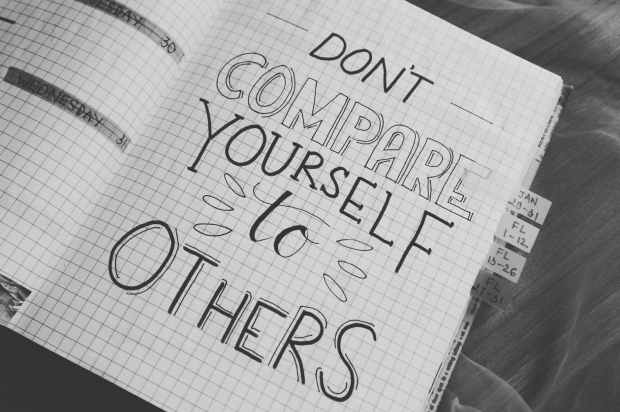
Always good advice this. Image via Pexels
I think this question is the first thing you must ask yourself before writing your story. What is so special about your characters readers have to keep on reading to find out what happens to them?
The basic answer, of course, is that it has to be a mixture of character traits and personality to make a fully rounded “person” to be the star of your story. So think about where your characters get their traits from and why they have the personality that they do. What would happen to this personality if they were put under stress (especially the ongoing for some time kind of stress)? Would your character still be special or crack under the strain and, if the latter, how can they come back from that? There are stories to be had there!
Also, what is special to your character? What do they consider to be the most important things about themselves and why? Who are their heroes and villains, and why? What possessions do they have that they value the most (and these don’t have to be priceless antiques. it could be, say, a battered old teddy bear they’ve had since very young etc)?
Happy writing!
This slideshow requires JavaScript.


 😁
😁







 Allison Symes: Collected Works