REMEMBERING – AND THE POINT OF FICTION

Facebook – General

I had a friend, now sadly gone, who couldn’t understand the point of fiction. He only read non-fiction and thought the world was too wonderful to want to make things up!

I had some sympathy for that view funnily enough, as I could see what he was getting at, but I did point out that fiction can show truths facts can’t always do. Fiction can show elements of human nature in a better way than just relating a list of what we are capable of.

I also think fiction should encourage empathy. We root for characters we like. Why? Because there is something in them we can identify with or aspire to in ourselves. So does it follow then the more we read, the more we encourage empathy in ourselves? I like to think so.


This slideshow requires JavaScript.

Very moved by the Remembrance events over the weekend. So many stories we know about, so many still untold (not everyone wants to “open up” about what they went through). So much history recalled – personal, national and international. I was also pleased to see the animals who served in the war (especially horses and dogs) were also remembered at various times over the weekend.

One common theme running through Doctor Who is how one action, no matter how small, can change the history of the individual and, from that, the history of their country, the planet even. Very much a chain reaction.

So when are we planning our characters and stories, look for the pivotal moments that are going to turn everything upside down. What is behind those moments? What makes your characters act and react the way they do (given there is always an opposite reaction to be considered)? Is the motivation of your character strong enough to justify the stance they’re taking?

Glad to hear one of my favourite radio shows, I’m Sorry I Haven’t A Clue, is back on Radio 4. Some fantastic word play here. Got to see the live show a little while back. Good fun. If you get the chance to go, do so. Laugh a minute is not an exaggeration!

I’m very fond of a good pun. (Am also very fond of a dreadful one!). I like playing with the language like this. (This is also why the late great Frank Muir and Denis Norden are much missed. They were fabulous at this).

I occasionally get to give my characters a humorous one liner, which I enjoy doing, but I think it has more impact because I don’t do this all the time. Also the humour has to arise out of the situation I’ve put the characters in and mustn’t feel forced. A reader will spot that a mile off.

But having fun with the language is one of the great joys of writing.

My CFT post this week will look at the art of time management and takes in a quick look at time travel too. More on Friday.

How does time work in your stories? I don’t tend to think of it much as most of my flash fiction is very much in the “here and now”. I’m not sure though whether my using the first person encourages that or if the here and now encourages the use of the first person! Jury out here…

Even those pieces where a character is looking back at a period of life have a kind of bracketed time zone. It can only be for so long. I suppose you could argue I use time as a kind of a frame for my flash fiction and that does work well. As ever, though, be consistent with your use of time throughout the story.

Facebook – From Light to Dark and Back Again

R = Recalling the debt we owe
E = Engaging with the past so we do not end up re-living it
M = Memories to be treasured and learnt from
E = Elegies and the war poetry of Sassoon and Owen amongst others
M = Men fallen and wounded, numbers too vast to comprehend
B = Bugles and the moving notes of The Last Post
R = Regiments, so many of them “old pals” networks. Reflect an almost forgotten era.
A = Armistice Achieved Eventually.
N = Never again they said. Sadly they were wrong. What can WE do then? Remember, recall, DON’T repeat.
C = Creatures such as the horses that also saw active service, amongst others.
E = Edith Cavell, Nurse, who rightly wanted to help the injured of both sides.

Allison Symes – 10th November 2018

This slideshow requires JavaScript.

How do the seasons affect your characters? The reduced amount of sunlight throughout the autumn and winter months is known to affect many people in terms of moods, being more prone to depressive attacks (in terms of quantity and how long each episode lasts). Should our characters reflect this too? I think so.

As well as the general point of acknowledging depression openly, (pretending it doesn’t exist or happen helps nobody), I think it unrealistic to have characters in a “set” state of mind. Their moods are bound to fluctuate, whether it is due to the lack of sunlight, the earlier and longer nights, or the circumstances they’re facing or a combination of that.

When we portray our characters, we must show them honestly for them to have any resonance with our readers. While there isn’t the word count room in flash fiction to show a lot of change of moods (you’d need the longer short stories and novels for that), you CAN give an indication of a character’s usual mood and where/what has changed it.

For example, in my They Don’t Understand, I start with my lead character showing us he has blamed himself for something. As the story progresses, he recalls his life with his wife, and then the ending, the “punch in the gut” end as I like to think of it, shows why he blamed himself at the start. This was one of my longer flash fiction pieces and I needed all the words available here to convey this sense of mood well enough. But without those changes of mood, and the reasons for them, the story simply wouldn’t have impact.

Flash fiction isn’t a new idea, far from it. The name of it might be but the concept isn’t. Aesop’s Fables would count as flash fiction as would many of Jesus’s parables in the New Testament. (Many come in at under 100 words!). (The longer story of the Good Samaritan is a great example of the Rule of Three in action too!). Truly, there is nothing new under the sun!

Having said that, the challenge for flash fiction writers now, as with any story writer, is to come up with strong characters and engaging ideas which grip your reader so much they HAVE to read your story through. I call it the “do I have to read this and read it NOW?” test. If the answer to that is a resounding “yes”, you are definitely on to something!

This slideshow requires JavaScript.

What are your favourite times for writing? I find late afternoon into the evening works best for me. With most of the day’s cares behind me, I can focus on writing something I love and relish every moment of it.

I’ve found the biggest thing about having a regular writing “slot” is it conditions you to accept this is the time you will write so you settle down and get on with it (never a bad thing that!).

I try to mix up what I write during the week as a whole. I focus on my CFT post first, then get on with the flash fiction and other, longer term, projects I’ve got in mind. Keeps the imagination busy!


Goodreads Author Blog – Remembering

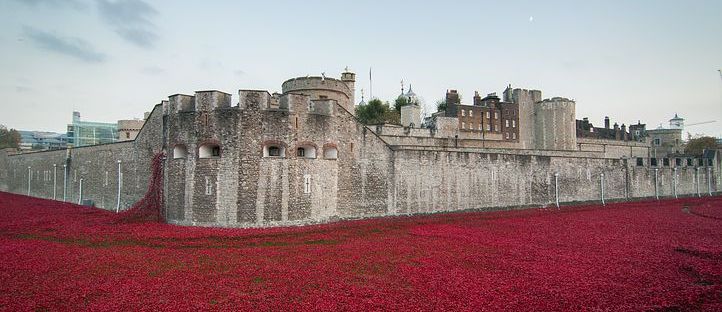
I write this on the eve of Remembrance Sunday/Armistice Day 2018 when all thoughts turn to remembering those who sacrificed so much.

This is where the war poetry of Sassoon and Owen amongst others hits home. This is where historical writing – fiction AND non-fiction, can truly show what life would have been like in the trenches (and make us devoutly thankful we’ll never face anything like that).

The testimonies and local history records should be treasured. Reading others’ experiences and thoughts should encourage empathy in us (and I think is one of the truly great things about fiction generally).

There are so many stories – someone local to me has found out the stories of those on our War Memorial. Imagine that happening up and down the UK. Every single person recalled and their story told.

Fiction is wonderful and should reflect the human condition but the sheer brutal facts of non-fiction around things like the World Wars should never be forgotten. We owe a huge debt to those who wrote things down so we have those written records. We dare not forget (else be destined to re-live) and writers play a crucial role here.
 

This slideshow requires JavaScript.


Word Play

Facebook – General – and Chandler’s Ford Today

One joy of writing is the joy of reading. This is partly because it makes sense to read from (and therefore support) the industry you want to join! Also, you need to read widely to discover the range of writing out there and to find out from that what it is you want to write. There’s also the sheer pleasure of reading well crafted stories that inspire you to work harder on your own!

Playing with Words, as my CFT post this week discusses, is both a fun and invaluable thing for writers to do.  My post this week also pays tribute to Denis Norden and celebrates puns and playing with language.


This slideshow requires JavaScript.

I like to “hit the ground running” when I write flash fiction and do so in a number of ways.

I can take you straight into the lead character’s thoughts, or show you an image of them doing or reacting to something. I also try to show you their general attitude within the first couple of lines. Attitude in itself can tell you so much about what a character is likely to be like (and whether you would like them or not!).

I can also show you a character’s observations such as in my Circle of Life. That opens with “People throw kittens in the river here. I hate that.” Immediately shows a conflict. Immediately shows an attitude at odds with the view held by others around the character. You also know they’re going to do something about it. It is a question of what and will they get away with it?

With all of these different kinds of opening, I am aiming to provoke curiosity in the reader to make them want to find out more.

My CFT post this week looks at Playing With Words. I also pay tribute to the late Denis Norden, who along with Frank Muir, was a wonderful wordsmith. Link up on Friday. I also take a look at puns. (Muir was wonderful on Call My Bluff years ago and Norden – well, I loved his dry wit and manner – and Take It From Here, written by them both, was a forerunner for modern radio comedy).

Two of my favourite ways to end a flash fiction story are a twist in the tale finish or a punchline. Both of course can revolve around puns. I love playing with language but one of the great joys of loving books is coming across others who are masters at this sort of thing. Their work is a joy to read and/or listen to and if you haven’t come across a copy of Muir and Norden’s My Word Ultimate Collection, do yourself a favour and dig out a copy from somewhere. If you like tall tales and puns, as I do, this is a fabulous book.

Facebook – From Light to Dark and Back Again

Flash fiction can be a great vehicle for (a) puns (as part of a punchline to finish with) and (b) short, sharp humorous moments. A good funny flash fiction will not only make you laugh but you should be able to spot other potential for humour had the story been a longer one.

The lovely thing is you can combine humour with other things such as poetic justice to create a great story. Characters being annoyed at the situation they’re in may well make you smile in recognition of their predicament. The situation is rarely funny for the characters themselves. Shouldn’t stop us smiling though!

My late mum always believed in being short and to the point. Think she’d be pleased I take the same approach by writing flash fiction!

You lose any fear of killing adverbs or cutting whatever isn’t necessary for your story when you write flash and, of course, you can carry that over into whatever other writing you do. There’s no chance of getting confused over your characters either given, realistically, you only have the room for 1, maybe 2, main people.

I admit I do miss the fact you can’t have subplots in flash fiction, that really is the privilege of a short story or a novel, but I do love being able to cut to the chase with the very short tale. Definitely a case of you pays your money, you take your choice here.

Time for some autumnal flash fiction one-liners, I think. Hope you enjoy.

1. There were some things brought down by the autumn winds that would have been best left undisturbed.

2. The mouse scoffed the loaf that was meant for the church’s Harvest Festival display, much to the vicar’s chagrin.

(A case of For what we have received, we are truly grateful, I think!).

3. Would the leaves come down deeply enough to cover a body, she wondered?

4. With the nights drawing in, there was more scope for planning and executing the perfect crime.

5. It would be easy enough to do, he thought, given she always has soup at lunchtime on these cold days.

Hmm…. it looks like I’m in a criminal frame of mind this evening!


Is it harder to write longer fiction where you have to keep the readers enchanted enough with your writing to follow the story through to the end or more difficult to write short, sharp stories?

I wouldn’t like to judge on that one as both have their challenges and their joys. Both are vital for ensuring literature has a wide range of styles and lengths of story to suit all tastes.

One problem I face when editing flash fiction is ensuring I keep the important details in as it can be easy to cut far too much out to keep to a set word count and the story is the poorer for it. In those situations, I let the story go what is its natural length whether it’s 50 words or 500 or 1500!

The acid test for me is the editing is done when I cannot add to the story or take away from it. It is a question of not overegging the pudding or cutting back so harshly you have a limited story left. Anything that dilutes the impact of the story on a reader, and that can include harsh editing, is out.

This slideshow requires JavaScript.

Goodreads Author Programme – Blog – Playing with Language

One of the joys of reading across a wide range of genres, including non-fiction, is discovering the different ways authors play with language.

For me the late Denis Norden and Frank Muir were great exponents of this and one of my favourite paperbacks is their My Word The Ultimate Collection. This is full of puns and tall tales galore! Bliss and an addictive read.

I like crisp, punchy styles of writing but every so often you come across a line or two that are just so engrossing, they almost take your breath away. P.G. Wodehouse was a master at creating worlds within what would be considered now very long sentences, but you simply have to read to the end.

I suppose the real test of a good story is does it provoke your curiosity enough so you read it through regardless of the style or genre in which it was written?

Fairytales with Bite – Fairytales A to Z Part 8

Since the alphabet doesn’t divide neatly into three, I will conclude this mini series tonight with the final five letters – V through to Z.  Hmm… going to have fun here I think!

V = Variation
Whatever genre you write in, there should be variation in the types of character you portray.  A story with all heroes is no story at all!  There has to be a villain somewhere (even if the characters concerned don’t think they’re villainous at all).  Also, in a magical setting, there should be variation in how much magical ability characters have.  If they all have unlimited powers, where is the conflict? You’d have a stalemate situation.  The characters know they can’t better each other, at least not with their powers.  So vary things, mix things up, deliberately drop your characters in it, and see what happens!  This is very much the fun side of writing.  You will soon find out who your strong characters are.

W = World
The world you set your stories in can almost be a character in itself.  It needs to be believable, no matter how fantastical its powers or setting.  There must be things about that world we can identify with here.  For example, every world has to be governed somehow so politics has to rear its (at times) very ugly head.

X = Xeno (meaning strange!  Confession time: did have to look it up.  I could have gone for X-rated for this but felt it was too obvious.  I also want to remember this word next time I play Scrabble!).
So word of the week for me is this one then!  Seriously, though, no matter how strange the world you’ve created is, there still has to be something about it that fascinates a reader.  If it is too odd, you risk alienating the reader.  Does that mean your world has to be a sensible one?  Not necessarily.  There has to be a point to what the world does.  If it mines balloons for example, it would make sense to do that if is that world’s chief export to its nearest neighbour.  I did like Monsters Inc for showing why the monsters had to get the children’s screams (they needed it as it was their power source) and I liked it even more when the monster world discovered making the children laugh was a greater source of power.

Y = You
The first fan of your writing should be you.  Your fairytale, whoever it is aimed at, must first convince you.  Is the magic a vital part of the story?  It should be for a fairytale. Do your characters have to get themselves out of trouble without magic?  Even better!  You should enjoy what you write and at the same time be open to where it can be improved.  Not an easy balance to strike which is why it is such a good idea to put work aside for a while and then re-read it.  You will come back to the story with a more open mind, having had the break from it.

Z = Zippy
There will be many in the UK especially who will remember Zippy as a character from children’s TV show, Rainbow!  However for this, I mean zippy in terms of lively.  Your fairytale should be a lively read from start to finish.  Your characters should be lively and engage with your reader.  (This is why if you enjoy your writing, there is every chance others will too.  As for the feeling after reading something you’ve written “this is rubbish”, bear in mind every writer goes through that.  This is another reason for putting work away for a while before coming back to it).

This slideshow requires JavaScript.

This World and Others – Playing with Words

Playing with Words is not just the title of my latest CFT post but the theme for this week for me.  I also take a look at this topic on my latest Goodreads blog.

So how do I like to play with words then?

1.   I like twist endings to a lot of my stories so there is a lot of playing with words to be had there in coming up with a twist that works.

2.    I sometimes end stories with a punchline which often revolves around a pun.  Puns are the very definition of playing with language!

3.     I like to take known phrases and play with them to come up with something that has “echoes” but which is also unique to my story.  For example, we usually talk about punishing the guilty for crime etc but my story in From Light to Dark and Back Again is deliberately called Punish the Innocent.  The idea is to get you wondering (a) why would someone want to punish the innocent, (b) do they do so, (c) were the innocent that guiltless after all?

I sometimes use spider diagrams to help me work out in which directions I could take a story idea and then I pick the one that I like the best.  Playing with words here helps me come up with thoughts deeper than my initial “obvious” ideas and therefore I hope a more original story line.