Stories!

Facebook – General – and Chandler’s Ford Today

My latest CFT post is a review of one of my favourite stories, A Christmas Carol, as performed by the MDG Players at the Dovetail Centre recently. Well done to all!

And this is the only production where the audience got to join in! If you want to know how, read the post! Oh and yes I joined in too.

I forgot to mention I’ve had a couple of stories on Cafelit recently. Anne Boleyn fans will like my story, Consistency, published by Cafelit on 24th November.  It’s been a good week on Cafelit given my Moving On was published by them on 27th November.  Hope you enjoy them both.

My Doubting the Obvious was published by Paragraph Planet on 22nd November.  I need more weeks like this!  The link should take you to their archive for November, which is why I’ve listed the date in case you need to scroll through to find this.  Having said that, have a look good at the other stories here (and indeed on Cafelit too).  There is some wonderful writing here – all very entertaining tales!

This slideshow requires JavaScript.

Facebook – General – and Association of Christian Writers’ More than Writers blog spot

I discuss writing goals in my monthly spot on the Association of Christian Writers’ More than Writers blog.

Do you set any? Have you achieved what you hoped to do? Did you take part in NaNo? I didn’t because I know I’d exceed the word count on some days, be under on others, and while it might balance out in the end, I just don’t need the guilt of “not achieving”! And I would feel guilty…

See what I DO do about setting goals in this post.


This slideshow requires JavaScript.

Facebook – General

My CFT post this week will be a review of A Christmas Carol as staged by the MDG Players.

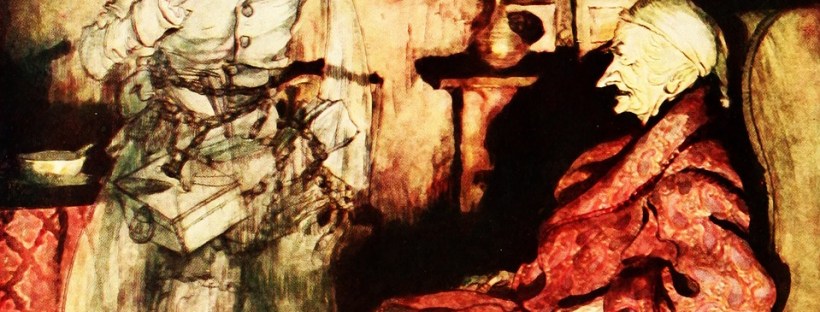
A Christmas Carol is my favourite Dickens story and one of my favourite tales overall. It has everything – a villain (at least to begin with), ghosts who reveal why Scrooge has become the way he has and what it will mean for him if he doesn’t change, and redemption. The story is its own little world and just works so well.

Still love the Muppet version with Michael Caine. Is on my must watch list again this year. It is just really well done. Looking forward to sharing my post on Friday.

Facebook – From Light to Dark and Back Again

Sometimes I write flash fiction with a historical flavour to it. Here’s one for Anne Boleyn fans. Consistency was published by Cafelit on 24th November. Hope you enjoy.  Link given above.

I’ve been talking about achieving goals as my monthly Association of Christian Writers’ blog has been about that. See below. I don’t set a particular number of flash fiction stories to write or submit in a year. What I DO try to do is seek to produce a regular number of stories and then submit them to outlets as often and consistently as I can.
 

Where is the point where a story really comes alive for you?

For me, it is when I realise I have GOT to find out what happens to the character, whether I love them or loathe them. I generally want to see villains get their comeuppance so read on to see if they do! Equally I want the “good guys” to win through so again read on.

So when creating my own characters, I am always trying to ask myself will this one grip a reader? Is the character strong enough? What is there to love and/or loathe about them?

Fairytales With Bite – When Is a Story Ready to be “out there?”

There is no hard and fast answer to the above question, of course, but what I have found to be true is that a story is ready for submitting when:-

1.  You really cannot edit another word of it without spoiling it in some way.

2.  The story haunts you – and you wrote it!  (Good chance readers will be haunted by it too).

3.  Having deadlines to submit (for reputable competitions say) can be really useful as it makes you work to a date and encourages you to let a story “go”.  It can be easy to keep editing and polishing.  At some point you need to pluck up courage and test the market with your stories.

4.  When you can genuinely envisage your piece as suiting Publication X, say, because you have read several of their editions, have a feel for their style and your story or article fits in beautifully.  If you are right go on and send it in but be sure to follow their submission guidelines.

5.  You come across other published stories which you have cause to feel are not as good as yours.  Only one way to find out if you’re right or not:  send your one in!

This slideshow requires JavaScript.

This World and Others – Story Moods

What’s your favourite mood for a story or does it depend on what mood you are in at the time of reading?

I love humorous and poignant stories and am glad to say Cafelit have published one of mine in each of these categories in the last few days.  Consistency is a historical piece and Moving Onis a changing job story, both very different in mood.  I should add the mood varies for my Chandler’s Ford Today pieces too.  My post this week is a review of A Christmas Carol as staged by the MDG Players recently.  In articles like this, as well as the actual review, I like to give some background to either the material or the writer of the material which is being performed so I generally go for an informative. chatty style.  For my scam alert pieces, I obviously adopt a more serious tone.

The key, of course, is having the right “mood” for the right story or article.  Yes, you can have funny crime and I’ve read and listened to some wonderful stories in that genre, but generally, unless it is flagged up, you would expect crime stories to have a fairly sombre tone to them.  This is where the blurb on books is so important.  A reader will pick up on the mood of the book and decide if it suits them thanks to that so it is vital to get this right.

With my From Light to Dark and Back Again the title is the big clue that there is a variety of moods here (as is my strapline – “a story to suit every mood”).

Yes, I think you should play to your strengths when writing so if that is serious writing, go for it, but I would also say don’t be afraid to experiment and play with words.  If you find you can write in more than one mood or tone of story, so much the better.  It will open up more competitions and markets for you to try.  Good luck!

Goodreads Author Programme Blog – Impact of Writing

The impact of writing on the world in general cannot be underestimated.

As well as the Bible, Shakespeare, Dickens etc., all of which have contributed so much to our language and whose stories have been the inspiration for so many others, there are things like the Domesday Book and Magna Carta.

Historical documents which colour so much else in life and law. Nobody could have foreseen at the time of writing just how much impact these would have (though there would have been many hopes about the Magna Carta. Not least that King John was hoping to get rid of it again as soon as he possibly could! An early recognition of dangerous writing perhaps?).

What makes us love our favourite books and stories the way we do? It is also down to impact. The impact of them stays with us. We want to be like the heroic lead characters perhaps. We feel fear for the characters we love as they face dangers. We feel relief, joy etc when our favourites survive.

So do writers’ play with their readers’ emotions then? Yes but it is always best done subtly. The reader has to be willing to go along with the writer here. The writer has to deliver on the promise of his/her opening lines. We have got to be able to identify with those in the story to want to find out whether they make it through to the end or not.

So the impact of writing is everything then. As readers then we need to decide what impact we want to experience.


Light and Dark

Facebook – and Chandler’s Ford Today

My latest CFT post is called The Light Fantastic and looks at light and dark in terms of fiction, mood, and vision (including photography). I look at how fantastic light is but why we also need darkness – and this is true for fiction writing too. Hope you enjoy.

This slideshow requires JavaScript.

Had a lovely evening at the Dovetail Centre watching A Christmas Carol performed by the MDG Players. Review to follow on CFT on Friday week.

A Christmas Carol is one of my favourite stories and Dickens is one of the few authors to add something to the Christmas tradition. (The others include Christina Rossetti with In the Bleak Midwinter, Mrs Cecil Frances Alexander with Once in Royal David’s City etc, Charles Wesley with Hark the Herald Angels Sing etc and Clement Clark Moore with The Night before Christmas). Favourite version of Dickens’ classic for me is The Muppet one though!

Talking of stories, I am thrilled my Doubting the Obvious is on Paragraph Planet. 75 words including the title is a good challenge! Work to come in next few days on Cafelit too.

DOUBTING THE OBVIOUS Jemma knew monsters existed, the monsters knew they existed, so why did everyone else scoff at the idea and end up eaten by the things? They weren’t getting her that way. Jemma was prepared. She had her dart gun. She had a fire roaring in the forest clearing. Everyone knew monsters were attracted to the warmth. It meant food. An hour later one monster discovered that was true. Jemma was barbecuing him.

Allison Symes – Published on Paragraph Planet 22nd November 2018


This slideshow requires JavaScript.

Really loved seeing the moon rising through the trees tonight, both at home, and on a late walk with better half and Lady. Lady has to have a clip on light to her collar, otherwise you really wouldn’t see her, so she goes around lighting up the world like a little Christmas tree. She’s not impressed by this – but I am! And it means I can see my dog!

I was impressed with the amount of light the moon was giving on the walk tonight. Absolutely beautiful. My theme for CFT this week funnily enough is light and dark in terms of mood, fiction, and vision (in every sense). It’s too easy to take too much for granted and the way the brain processes light is one of them.

As for light writing, I have a 75 word piece coming up online tomorrow. More details then but I will say my heroine isn’t afraid of the monsters in the dark! Mind you, most of my heroes/heroines aren’t but then that’s how I like my characters!

This slideshow requires JavaScript.

Facebook – From Light to Dark and Back Again

Light and dark is the theme for my Chandler’s Ford Today post this week. Very appropriate given my book’s title! Do you enjoy writing and/or reading the lighter stories in a collection for do your prefer your tales on the dark side?

I love both of course. Much depends on my mood as to which I prefer at any one time. What I do know is the 100-word story is ideal for where I want to make an impact and also the simpler the theme the better. More likely to “deliver” on the promise of the theme set.

Contrasts are often used in fiction as they are a great way to generate conflict between characters or between a character and their situation. I’m reminded of magnets here – contrasts can either attract or repel!

Contrasts can also be internal within a character especially on things they would like to do and things they are actually able to achieve. (There can be some great comedy out of that scenario too! Think of all the comedy characters who’ve clearly thought more of themselves than they should have done and how they always fall flat on their face – in the famous Del Boy falling through the bar scene in Only Fools and Horses, that was quite literally too!).

There can be be the obvious contrast between light and dark between two characters or within one character. Dr Jekyll and Mr Hyde resonates as a story precisely because we can all identify with a character’s struggles to be “good”.

Looking forward to sharing latest flash fiction story to be published online tomorrow. I will say it is a 75-word one so that will give fellow flash fiction writers a big clue as to where it is appearing! More tomorrow.

I must admit one of my favourite writing sessions is when I have got “the bit between the teeth” and I draft lots ot flash fiction stories of differing word counts. I edit later and eventually submit them to different places. All good fun.

Another thing I love about flash is when I know I won’t have a lot of time for writing, there is always enough to draft a story or two here, even if they are just of the one line variety. Sometimes I expand those stories out when I DO have more time. Sometimes I leave them as they are (and I must try and submit some of these to the 25-word competitions, they’d be ideal for that).

Fairytales with Bite – Light and Dark

The Light Fantastic is my latest Chandler’s Ford Today post and looks at light and dark from the perspectives of vision (including photography), mood and fiction.  Light and dark are crucial to fiction.  If there is no dark in a story, there is no conflict, there is no drama, nothing happens for better or worse, and any potential tale here collapses.

Fairytales are full of the contrasts between light and dark in the way they portray their characters.  Fairytales are often grim and perhaps the antidote here has been what has become the “happy ever after” ending.  Light and dark have to be in the right proportions.  All darkness is just oppressive.  All light would be blinding.

Look at the light and dark qualities of your characters.  Are they in balance?  What weakness in your character really lets them down?  What virtue really makes them?  How did they develop these things?  Do they actively try to fight the weakness?

It isn’t always appropriate for a story to end happily of course but the finish must be appropriate.  I like to see stories end on a note of hope even if the finish is a sadder one.

This World and Others – Pointers for World Building

Some useful pointers for world building include:-

1.  Ensure there is some sense of how your world is run.  We may not need to know how it is done, we need to know it IS done, and your fictional world isn’t in a state of anarchy.

2.  Ensure your characters know what they need to know at a local level.  For example, if there are rules in the region of XYZ citizens can’t go out after a certain time at night, your characters need to know this.  Breaking such a rule could, of course, be a major part of your plot here.  If so, ensure your characters know the consequences of breaking the rules and what they are facing in doing so.  It all helps increase the tension!

3.  Your characters will, presumably, need to eat, sleep, find shelter etc so again there should be some sense of how your characters do this as they have their adventures.  Things don’t “just happen”!

4.  I like to see a general picture of how the different species interact with each other, including whether there could be any Romeo and Juliet situations where two “people” from rival backgrounds fall for each other.

5.  What is expected OF your characters by the world in which you’ve placed them?

This slideshow requires JavaScript.


ODD COMBINATIONS AND FLASH FICTION TERMS

Again, a mixed bag for you!

Facebook – General – and Chandler’s Ford Today

My latest CFT post combines two things in a review, which I never anticipated I would ever combine – the Famous Five and William Shakespeare! Yes, really.

I review Five Go Mad for Shakespeare staged by the MDG Players at the Dovetail Centre in Chandler’s Ford last Thursday. They were ably assisted by the Romsey Players with their “play within a play”, which is another nod to the Bard!

The evening was a mixture of spoofs, well known scenes from Hamlet and Macbeth, and songs. It was good fun and very well put together.

MDG NOTICEBOARD

The MDG Players cast and notice board. Image by Allison Symes

MDG NOTICEBOARD PART 2

All the seats were taken at the show. Image by Allison Symes

Programme Front

The front cover of the programme. Image by Allison Symes.

Programme - What is on offer during the show

A mixed menu of delights in the show are listed here. Image by Allison Symes

THE GAME CARDS FOR WOULD WE LIE TO YOU

The green and red cards were used for a game during the show, Image by Allison Symes.

Facebook – General

Went to see an April Trio of Plays by the Chameleon Theatre Company tonight. Review on CFT next week. This week will be a review of Five Go Mad For Shakespeare put on by the MDG Players last week. So yes, I’ve been out and about and seeing some wonderful plays! I like this. I like it a lot! (Hope it won’t be too long before I get to see some National Theatre Live productions again too).

Facebook – General

One of the problems I face with writing is prioritising! Writing for Chandler’s Ford Today helps as I know I’m posting on Friday so I plan my posts so usually I’m carrying out final checks on Wednesday.

However, it is fitting everything else in that I’d like to do, both for fiction and non-fiction, that is the problem. The one comfort? I know I’m not alone in this. (And things like using Evernote on a phone on a train does help me get a lot more done with time that would otherwise be wasted. Just how much staring out of the window can you do?!!).

The one good thing is I am well ahead on coming up with ideas for stories for what I hope will end up being my third flash fiction collection. I’ve also drafted some of the stories out. (I hope some of them will appear online at some point).

Facebook – From Light to Dark and Back Again

There are times I wish there were better terms for flash fiction writers. We’re flashers for a start! Anyone writing 100-word stories is a drabbler and I have occasionally written at the 50-word mark too (though this has been more for my second collection which is under submission).

Therefore, this makes me a flasher, a drabbler and an occasional dribbler. Doesn’t sound good, does it?😀 Does anyone know who came up with these terms in the first place?!

Facebook – From Light to Dark and Back Again

I’ve talked before about one benefit of writing flash fiction being that it shows up your wasted words. This carries over into any other creative writing you do as you learn to look out for these wasted words and they’re the first to be cut out.

However, another huge benefit to writing flash fiction is having to write with absolute clarity. As your word count is limited, you want every word to carry its weight so your readers pick up the meaning you intended.

That clarity can (and I think should) carry over into other writing too. Also, because flash fiction really does have to be character led, it beefs up your ability to create convincing characters! They have to “lead” the story, there simply isn’t the room for an elaborate plot. But the great thing is genre isn’t an issue. I’ve written flash fiction pieces in fantasy, fairytale, crime, horror, and so on.

This slideshow requires JavaScript.

Facebook – From Light to Dark and Back Again

Managed to draft another flash fiction piece while waiting to give blood this afternoon. Best thing to come out of the afternoon too given there was trouble with my veins and I had to come home without donating. Ah well… try again. (I cherish the thought if the National Blood Service had trouble with my veins, so would your average vampire! You have got to find the things to use them!).

That aside, I’m pleased with the progress I’m making on this batch of stories and hope to submit some more to Cafelit before long.

Goodreads Author Programme – Blog – Childhood Books

I sometimes review local theatre productions and a recent one was called Five Go Mad for Shakespeare. Good fun, and I enjoyed the references to Enid Blyton’s adventure series, and to the Bard too.

I used to collect the Famous Five series as the local newsagent stocked them. (Those really were the days… the newsagent’s shop was big compared to the ones I come across now. Its book section was reasonably generous in size).

I loved reading the Five’s adventures and I think those books, plus the fairytale collections I had (and still have!), are the fiction volumes that have had the most affect on me. Of course, the moment I’d got my hands on the latest Five adventure, I had to read it as soon as possible. I don’t remember reading them in one sitting but I know I would’ve been ready for when the next book was due in the newsagent’s!

So what childhood books have had the most impact on you? Have you re-read them since then?

This slideshow requires JavaScript.

Fairytales With Bite – Why Children’s Fiction Matters Even When You Do Not Write It

My Chandler’s Ford Today post this week is a review of a show called Five Go Mad for Shakespeare and it was good fun.  I never expected to review something that combined Enid Blyton’s Famous Five with the Bard of Avon but there you go…

This led me on to thinking about the importance of children’s fiction, even for those who do not write it.  My first loves in terms of children’s books were the classic fairytales and the Famous Five series.  I also liked Heidi, Black Beauty, and other classic children’s books.

I think it can be forgotten sometimes that anyone who, like me, writes for adults, “owes” our audience to children’s writers.  Why?  Because most people who read regularly have always read since they were children and all that changes as they become older is their tastes in books!

While I’m sure it does happen, the majority of readers don’t suddenly go into a bookshop and pick out a book to read.  They are going into stores or ordering books online because they already have a love of reading they are developing further.  That love of books nearly always starts in childhood with the classic children’s stories.

This World and Others – What Makes a “Fully Rounded Character”?

You hear the phrase “fully rounded characters” a lot, well I have (!), but what does it actually mean? My take on this is:-

1. You can identify with the character.
2. The character has clear virtues and flaws. (This is usually why you can identify with them!).
3. The character makes mistakes and, usually, learns from them. Often they make the same mistakes more than once before they learn from them, but then so do real people!
4. Their behaviour and attitudes make sense, given the way the writer has portrayed them.
5. You can imagine how this character would live outside of the constraints of the story.
6. They interact with other characters in a way that makes sense, even if the interaction itself isn’t good. (This could be because the character really does not get on well with others or the other characters aren’t great at “people skills”).
7. The character has feelings, tastes in music, food etc so you would feel they “could be” a real person if somehow characters could come to life.
8. The character has emotional depth. Basically this means the reader can see if the character is shallow or is capable of more complex emotions and attitudes. Shallow characters can be appropriate to a story. It’s just their emotional depth isn’t very deep!
9. You can’t imagine the story without them. (Always a good sign).
10. The character has real struggles and difficulties to overcome and finds different ways of overcoming them. (Unless they are a shallow creation, they don’t give up at the first hurdle).

This slideshow requires JavaScript.