Collaboration, Picture Books, and Characters

Facebook – General – and Chandler’s Ford Today

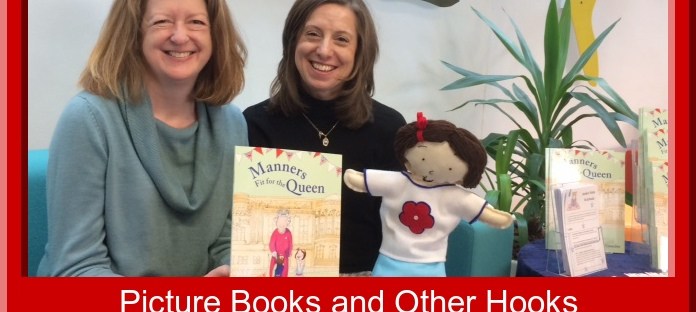
My latest CFT post is an interview with local children’s writer, Anne Wan. For her latest book, Manners Fit for the Queen, she teams up with local illustrator, Sally Goodden.

The interview looks at the colloborative process needed to produce a picture book and why picture books matter.

For most of us, one of our first introductions to the wonderful world of stories would have been through a picture book. I still love a well illustrated book. (The maps in the Lord of the Rings are fab!).

NB.  I love it when a title for a post just “comes” to me and I particularly like this week’s one.  Picture Books and Other Hooks has a good rhythm to it!

This slideshow requires JavaScript.

Looking forward to having a go at the writing prompt for this week from my diary. The prompt is to show the groundhog’s point of view as it prepares to meet his/her public for Groundhog Day (great film incidentally)!

Will have a crack at that challenge over the weekend. Should be fun! I can categorically state I’ve never created a groundhog character before! Am probably unlikely to do so again but it will be fun to find out what comes from this.

Later in the year, there‘s another prompt asking me to list 10 words associated with a train journey. People could have a lot of fun with that depending on which train operator they use regularly! (I think there should have been a comment in the prompt to “keep it clean” but that’s just me!).

As you will have gathered, I love this writing diary!


My CFT post this week will be an interview with children’s writer, Anne Wan, and illustrator, Sally Goodden. They recently had a story and craft event at Chandler’s Ford Library based on Anne’s most recent book, Manners Fit for the Queen, which is a picture book.

The ladies discuss how they worked collaboratively and how they met. Picture books look “easy” but are notoriously difficult to get right. The pictures need to convey enough of the story but without giving it all away. The text needs to be pitched right for the age range.

This slideshow requires JavaScript.

Facebook – From Light to Dark and Back Again

When did you first come across flash fiction? I ask as my latest CFT post looks at picture books and interviews Anne Wan/Sally Goodden on their colloborative work here. It made me realise that my way into reading, as it would have been for many of us, was via well cherished picture books. So on to my great love now – flash fiction – how did I get into that?

For me, it was via the 100-word challenge issued by Cafelit. Prior to that, I’d not heard of the form, yet alone had a go at it! I think part of the “not hearing” about it was due to the term used. I HAD heard about micro fiction but had not been clear about what that meant. I know now!

This slideshow requires JavaScript.

A good story will always make you react in some way. I’ve read (and written) stories that are meant to make you laugh or chill you to the bone.

So if a story isn’t working for you as you draft and edit it, look at what impact it is making on you as you read it. Is there an impact at all? If not, there is where the problem is! So think about what impact do you want it to have? How can the characters generate that impact?

If a character isn’t strong enough, ask why. Are they the right character for this story? Do you need to outline them in more depth to get right into their soul and really find out what makes them tick and react?

I’ve found a good way to get started is think of an extreme situation and look at how your character responds to it. For example, a fire breaks out in the character’s house so what do they do? What do they HAVE to save before they get out and why?

One of the nice sides to writing is you never lose the joy of hearing when something has been accepted! One huge advantage to writing flash fiction and short stories is being able to produce work and, hopefully, get it out there, building up publication credits, while working on a longer project.

Everyone knows how difficult it can be to get a novel out there but that doesn’t mean flash fiction and short stories should be considered “easy”. They’re not! You still need to craft the stories very well in order for them to have a chance of being accepted. You still need to pitch them to the right competitions/markets. They should also be recognised as a joy to write in their own right.

Ironically, it can be harder to write short than it is to write long. I always overwrite my stories but the advantage to that is I get off to a flying start with my editing pen! I find it a good acid test of whether a story is strong enough that I need to cut it back. If I’m having to pad (and I’ve only done this rarely), then the story idea isn’t strong enough in the first place (and I’ve always ended up either abandoning the idea altogether or finding ways of improving it. It never stays as it was).

Fairytales With Bite – What Matters to Your Characters?

What matters most to your characters and why? Get your characters to face losing what matters to them most and that will increase the tensions in your story considerably.

The nice things with this is whatever it is that matters most can vary considerably. For one character, it could be a life or death situation. Another character could be terribly worked up because they’re late back with their library book. The potential for humour is here too.

The one proviso is that your characters have to have very good reasons for why these things matter. A life or death scenario has an obvious “why it matters” inherent in it. In the case of the library book scenario, could it be that your character has never been late in their life for anything and fears losing control over their neat little life if they ARE late at all? Maybe they worry about what the librarian will think – other people’s opinions matter to this character. You get the idea.

Have fun and play with this. Work out what could make your character lose what matters most. For someone with a controlled life, what on earth has happened to make the possibility of being late back with their library book happen at all? Something catastrophic (to them) must have occurred. Hopefully it will be very entertaining for a reader!

This World and Others – Collaboration

Collaboration is vital when producing picture books, as discussed by local writer, Anne Wan, and illustrator, Sally Goodden in this week’s CFT post. (I must admit I was pleased with the title for this one – Picture Books and Other Hooks!).

Working in partnership matters even when you write on your own!  How and why?

For me, this means seeing writing as two distinct processes.  One is the fun creative side of getting everything down on paper or on screen.  The second is the editing process where you tighten your story up and really give it muscle by getting rid of anything and everything that does not contribute to moving your tale onwards and upwards to its conclusion.  I love editing.  I love the sense of the story improving as I spot repetitions etc I didn’t see in the giddy delight of creating new characters etc.  I love the sense of getting rid of what isn’t helping the story.

So where does the collaboration come in?  By accepting these are two distinct processes and not trying to do both at the same time.

Give your creative side free rein and enjoy the ride. Don’t let your inner editor spoil that.  It’s not time for them to come in yet.  Once that side is finished, then recognise the fact that all stories are improved (and therefore stand a better chance of publication) by good editing.

See editing as what gives your stories the wings to fly!  I do and find this side of things fun as a result.  Nothing is going to beat the heady thrill of creating something new but it helps enormously to know nobody has ever produced a truly terrific story in one go!  Everyone needs at least a second draft!  Good luck.


Impact, Pantomime, and Character Portrayal

Quite a mix tonight I think!  Hope you enjoy!

Facebook – and Chandler’s Ford Today

My CFT post is a review of the Chameleons’ recent panto production of Ali Baba and The Forty Thieves.

The show was wonderful and this particular post was great fun to write. I’ve written it in a different format to the way I usually write reviews and think this worked well on a fun topic. Loved writing it. Hope you enjoy reading it. It gives a good flavour! (Oh and the dame’s hair really does have to be seen to be believed but that’s the way it’s meant to be with panto – oh yes it is!).

Images Credit:  A very big thank you to Stuart Wineberg, Lionel Elliott and the Chameleons for  kind permission to use the photos below and in my CFT post.  I have a lot of fun writing captions for these but see the CFT post for these!


This slideshow requires JavaScript.

Looking forward to sharing my review of the Chameleons’ production of Ali Baba and the Forty Thieves tomorrow. Does panto bring out my inner kid? You bet it does!

What can be interesting on productions like this is seeing how true the script stays to the original story – or not as the case may be. Most adaptations are understandable. Many of the fairytales are too grim (pun intended!) to put on as originally written.

Am delighted to share a bonus CFT post tonight. Children’s writer, Anne Wan, and illustrator, Sally Goodden, are holding a story and crafts event at Chandler’s Ford Library this Saturday.

The theme is based on Anne’s latest book, Manners Fit For the Queen.

I’ve talked about the importance of children’s fiction on CFT before but picture books, such as Manners Fit For the Queen, play such a crucial role in encouraging youngster to read.

Hope everyone has a fab time at the event on Saturday.

Book cover image kindly supplied by Anne but drawn by Sally!

BOOK EVENT - Anne Wan and Sally Goodden


Well, one good thing about the cold weather is it encourages staying in and reading/writing a good book!

I don’t use the weather as a setting in stories (as it reminds me too much of the infamous opening “It was a dark and stormy night”, which has become a parody). I think you could use weather as a way of showing/reflecting your character’s mood though. For example, “Despite the warm temperatures and clear skies, Herbert’s mood was anything but sunny”. That could make a good opening to a story.

Also, I guess I want to be getting on with finding out what the characters are doing and saying. Weather? I don’t think I really need to know that unless it IS going to affect the story in some way. By that point, I want to be so gripped by the characters, that I pick up the detail about the weather without being irritated by it.

This slideshow requires JavaScript.

Facebook – From Light to Dark and Back Again

Plan to catch up with some flash fiction writing over the weekend. Hard to believe it’s two years since FLTDBA came out. Where has the time gone?!

What I love about flash fiction is when I am particularly busy I can jot down some one-liners that can stand alone or that I can work on later and develop into longer pieces.

A good challenge can be to write yourself a line and then use it for one story as the opening line and for another as the closing one. Give it a go and see what you come up with. Ideally pick different moods for these pieces as well. Above all, have fun with your writing. I fervently believe that when a writer is enjoying what they’re writing, some of that sense of enjoyment comes through and the reader picks up on it. Also if you don’t enjoy what you write, why would anyone else?!


I’ve experimented with linked flash fiction in the book I’m currently writing. I hope to write more too. The main criteria is that the character and situation has to be strong enough to sustain two or more stories.

The first set I wrote came about due to the way I’d ended a story and I realised from that ending, there was potential to exploit in a second tale, so I duly did!

Also there should be a natural sense of following on for all of the stories in the link to work. You’ve set the characters and setting up so well, your readers feel at home dipping into that world again.


Image Credit:  Many thanks to Dawn Kentish Knox for the picture of me reading at the December 2018 Bridge House Publishing celebration event.  Huge fun!

I talked on my author FB page about using weather in stories. Tying in with that, with flash fiction and the limited word count, weather is best used as a kind of code to represent something or as a metaphor. You don’t have the room to do much else but the great thing with that is you can’t give lots of description that people skim over.

What do I mean by code/metaphor? Best thing I think here are some examples.

1. Heather’s mind was as clear as a pea-souper.
2. Alan didn’t need the downpour to make him feel miserable.
3. Kathy’s hair shone as if she’d washed it in liquid sunshine.

All three of those should conjure up images in your mind as to what mood the characters are likely to be in and what kind of people they’re likely to be. I think it fair to say that Heather is unlikely to win Mastermind with a foggy brain! Kathy – well, she could be vain and, even if not, is her attitude to life as sunny as her hair? As for Alan, you get a real sense of the type of character he is – he can clearly feel miserable all by himself.

Happy writing!

Association of Christian Writers – More than Writers – Impact

Do you wonder what impact your writing has on others?

I mostly consider impact from the other side. That is I know my theme, what impact I’d like my piece to have and focus on selecting words I think will best achieve that.

What is lovely is when readers give you feedback and you can judge if the impact you thought your piece would have did so. If you wonder about commenting on a post but don’t, think again! Comments are noted.

Even negative feedback can be useful if you use it to gauge whether your critic missed the point of what you were trying to say or you didn’t make the impact you thought.

How do you create impact? Look for the strongest words for description. No “he wore grey” here. Go for “his suit was the same colour as my cheapest cutlery”. You use a few more words but the imagery, and resulting impact, is more powerful. I don’t need to say the guy here is unlikely to be getting his suits from Savile Row. That is implied by “cheapest”.

In thinking about impact ahead of writing a piece, you’re also trying to engage with potential readers from the outset. This is great because you’ll be less likely to go off at tangents which add nothing to your piece. (It is easily done!). That saves editing time! I must always cut so anything helping me edit more efficiently is welcomed!

For bloggers, feedback doesn’t always come when you think it will. Sometimes it won’t come at all! But that doesn’t mean your words lack impact. All it means is you don’t know about it. Frustrating though that is, if you enjoy blogging, carry on for that reason alone. I’ve also found as I blog, ideas for posts (and sometimes stories) pop into mind. By writing you are feeding your creative spirit.

Look at why you want your piece to have the impact you’ve chosen. Are those reasons good enough? Do they match the brief of your story competition or article theme the editor has called for?

Naturally we want the impact of our work on an editor to be “Wow! Got to take that.”. It is a question of accepting the need to polish your work and knowing sometimes the piece will make the cut. Sometimes it won’t but there’s nothing to stop you revisiting that piece and submitting it elsewhere assuming your topic or story is relevant to the market in mind.

Think about impact on you as a writer. If rejections are getting you down (and they do for everyone), harness the support of writer friends. This is where they come into their own. In time, they’ll appreciate your support during their difficult periods.

Every writer has their share of turn downs. They don’t necessarily stop when you are published.

We rightly talk about the writing life as a journey. Let’s make its impact on us and those around us as positive as possible.

IMPACT - Blogging. PixabayIMPACT - Feedback doesn't always come when you think it will. PixabayIMPACT - Feedback isn't always positive but look for what you can learn from it - PixabayIMPACT - Look for positive impact wherever possible - PixabayIMPACT - Use strong words for descriptions. Strong questions can help you get there. PixabayIMPACT - What impact does your story have - PixabayIMPACT - What impact will your work have on readers - Pixabay

Fairytales with Bite – The Right Ingredients

The theme of the right ingredients ties up with my Chandler’s Ford Today post this week about Ali Baba and the Forty Thieves, my review of the Chameleon Theatre Group’s recent panto production.  Why?  Because I talk about what ingredients are needed for a successful pantomime and I’m glad to say this show had them all and in great quantities!

What are the right ingredients for a fairytale?

  1. There must be a magical element.
  2. There must be a wrong to put right.  (See Cinderella/Snow White etc for the way they’re treated initially and how their stories end).
  3. There must be plenty of drama.  (You know from the outset that Cinderella is never going to keep to the midnight deadline set by her fairy godmother.  The drama here is in finding out what will happen when the girl is inevitably late!).
  4. The ending must be appropriate for the story.  That doesn’t necessarily mean a happy one – see The Little Mermaid as Hans Christen Andersen wrote it!  Also while Snow White had a happy ending, her stepmother rightly didn’t!  (Perspective is important too).


What are the right ingredients for a writer?

  1. A willingness to put in the work – to write, rewrite, rewrite again etc until the story is right.
  2. Accepting the fact rejections happen and trying to learn from them and then move on.
  3. Always seeking to improve what you do.
  4. Reading widely and across genres to feed your own imagination.  It does need feeding.  Often and lots!

This World and Others – Knowing When Your Character Portrayal Is Right

Can you ever know for sure when the character portrayal is right for your story?  I think so!

Firstly, your characters need to ring true to themselves.  If they’re greedy, are you showing them being that in different ways?  They need to be characters that could be people we know.

Secondly, your characters should have flaws and virtues and good reasons for acting the way they are.  Do they try to hide their faults or are they unremittingly unashamed of them (the I Am What I Am syndrome!).  However you portray your characters here, be consistent unless redemption/change is the point of story as it is in A Christmas Carol.  You still need to show your character “waking up” to the need to change.  One sudden change of heart will not convince readers.  Scrooge needed to be visited by all three ghosts to realise the error of his ways after all.

Thirdly, if your characters have different educational standards (and this is highly likely), are you showing the right level of education for the characters?  This will show through in how they speak, the kind of vocabulary they use and so on.

Fourthly, can you hear your characters speaking?  Do they seem real to you?  The first reader you have to convince is you!

This slideshow requires JavaScript.