In Fiction – Frameworks and Animals – and A Good Cause


Image Credits:-
All images from Pixabay/Pexels unless otherwise stated. Somes images created in Book Brush using Pixabay photos. Screenshots taken by me, Allison Symes. Book cover images from Chapeltown Books and Bridge House Publishing.
Hope you are all safe and well. UK currently experiencing Storm Eunice. Must admit I’m not impressed by her! Neither was the dog…
BookBrushImage-2022-2-18-20-3356

Facebook – General – and Chandler’s Ford Today/Authors Electric

Authors Electric
Busy night on the old blogging front as I have two separate posts to share. First up is my Authors Electric post for this month where I talk about Animals in Fiction. This is something I talked about for Chandler’s Ford Today a few weeks ago but the topic bears repeating. I share my love of animal characters and talk about what I do when I write from the viewpoint of an animal character. I’ve written from the viewpoint of a mother dragon after all! Hope you enjoy the post.

Chandler’s Ford Today

And now time for my Chandler’s Ford Today post. This week I’m looking at Frameworks in Fiction. I look at why frameworks matter, share a few of the different ones I use (and why I like to mix them up), and what can be used as a framework, even when at first glance the device in question doesn’t appear to be a framework at all! I also ask if frameworks can be too constricting. Hope you enjoy the post and find it useful.

Frameworks in Fiction

This slideshow requires JavaScript.

Lull between the storms in the UK right now. Take care, everyone, with Storm Eunice due tomorrow.
On a happier note, my Chandler’s Ford Today post this week will be about Frameworks in Fiction. I use a number of different ones for my flash tales and will be discussing these and why frameworks are so useful. Link up tomorrow. See above.

Don’t forget I send out an author newsletter on the first of each month with tips, news, prompts etc. If you’d like to sign up please head over to my landing page at https://allisonsymescollectedworks.com

Currently busy on story judging and editing as well as my own writing so am staying out of mischief well enough!

It was lovely catching up with everyone on the Association of Christian Writers Flash Fiction group on Zoom last night. We all ended up with a new story to work on thanks to a free writing exercise set by #AnnmarieMiles. I used a random name generator to come up with the name of a character to write about and there were excellent and different approaches taken. All good fun!


The wind is already getting stronger here in Hampshire – take care, everyone, over what promise to be a wild few days in the UK.

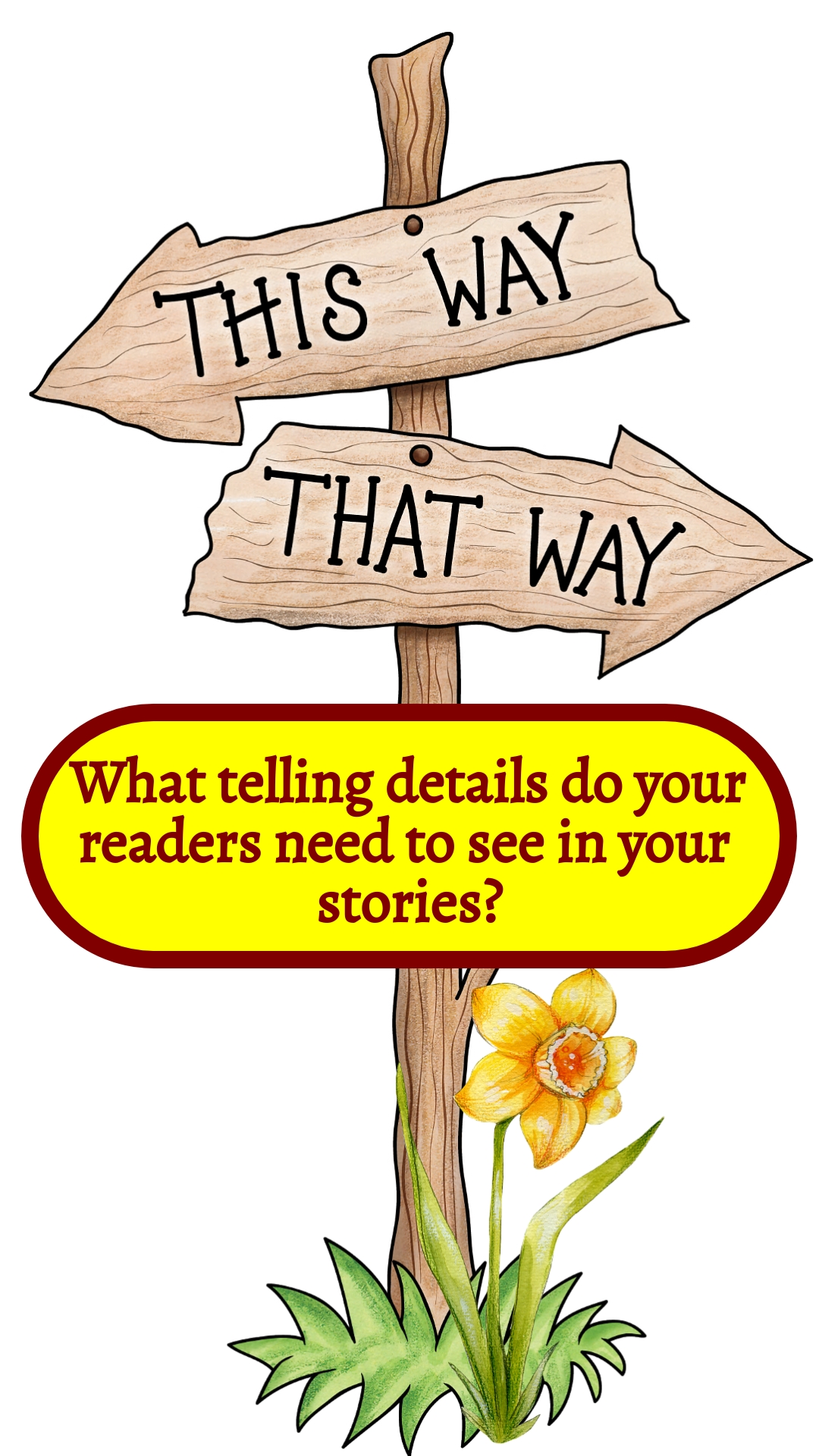
Now I don’t use the weather in fiction at all (too many cliches etc and It was a dark and stormy night has been done!). But you can use the elements to help set mood including landscape as well as weather. Think about the detail a reader needs to know. You won’t need to spell everything out. The joy of flash is so much is inferred and the reader fills in the gaps.

I’ve always loved doing that when reading longer works but for flash writing, it is crucial. I may need to know your character is on a moor. I don’t need to know how wet, boggy etc the moor is because I have my idea of what a moor is like and that will be what I visualise when I read the word “moor”. What is more important to know is the season. Is your character there in the summer or the winter? That will make a huge difference to the conditions they face.

So it is the question of the telling detail then – select what readers have to know, what they cannot guess at, and let your readers fill in the gaps. We will – and it saves so much on the old word count! Nor do you irritate readers telling them what they can work out for themselves.
BookBrushImage-2022-2-18-20-5049

Facebook – From Light to Dark and Back Again

Now earlier this week, I shared my YouTube story called At Number 64  – see below – and I mentioned I had submitted a linked story to this for Friday Flash Fiction. Well, I am glad to say my second story on the same theme is now up on FFF and I am glad to share it here. Hope you enjoy A Good Cause (and many thanks for the fab comments in on it so far).

Screenshot 2022-02-18 at 19-20-44 A Good Cause, by Allison Symes


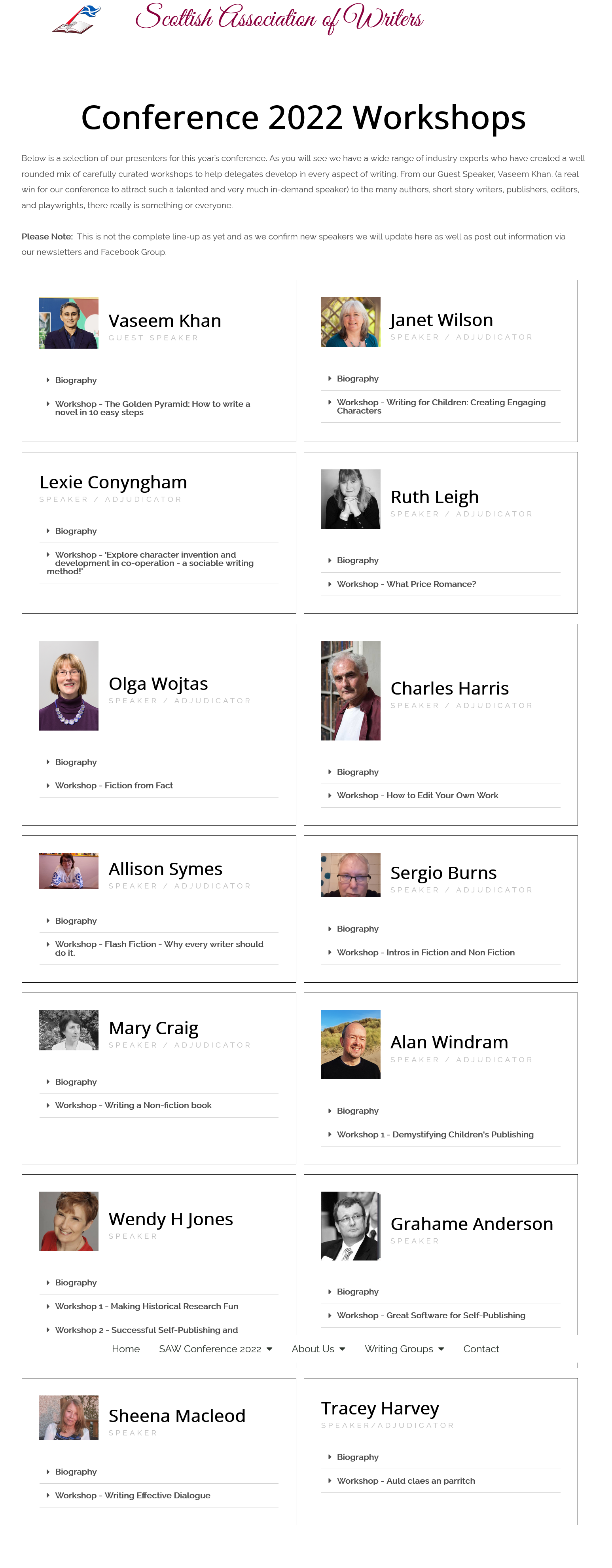
In a month’s time I’ll be on my way to the Scottish Association of Writers’ Conference where I’ll be running a flash fiction workshop. Looking forward to that immensely. Never thought I’d be doing this kind of thing when I started out.

But I have a very soft spot for workshops anyway. You get to meet other writers. You get to learn something useful. And a good workshop should trigger ideas for you own stories too.

Best invention since sliced bread? The notebook and pen of course.

Still great for workshop/conference environments. And flash gives you potential for writing up your exercises from workshops etc into polished stories you can submit later. Every so often I will go back through my old notebooks and see if there is something I can polish up. Sometimes I will find something useful like that. Other times I’ll read something which will trigger other story ideas and that’s great too.

Screenshot 2022-02-18 at 20-54-40 Writing Workshops Conference 2020 Scottish Association of WritersI was talking about giving readers the telling details they need to know to make sense of your story over on my Facebook author page just now and I referred to the elements. But you need to think about telling details for your characters too.

I’ve mentioned before I like to know the character’s major trait as all sorts of things can come from that which you can use to bring your character to life (e.g. the character is brave, they have a tendency to be reckless because of it and that’s where the story is – in what that recklessness leads to).

So work out what you need to know to make the character work for you. (If the character works for you, they’ll work for a reader). If a character is poor, do you need to know if they have become poor or have always been less well off? What is their attitude towards it? Can that attitude be where your story is – if your character is bitter, do they do something against anyone they hold to blame for their situation?

Ask yourself questions about what you need to know. I’ve found doing that sparks ideas and soon an outline for a possible story emerges. I like that – a lot!
Screenshot 2022-02-18 at 20-57-33 (2) Allison Symes Facebook

Fairytales With Bite – Happily Ever After?

And they all lived happily ever after has to be one of the most famous endings to any story. Though it should be added the original versions of fairytales often did not have a happy ending or gruesome things occurred before the happy ever after bit.

I understand it being in the classic tales for children but it is not one I am comfortable with myself. I like most of my stories to have a positive, upbeat ending where you can see things would continue to be okay for my deserving characters long after the story has finished. But sometimes I write stories with poignant endings because that is appropriate for the characters I’ve come up with.

And that is what I am really after in the stories I read and write – appropriate endings for the characters.

One thing I do get from my love of fairytales is the wish for the villains to get their well deserved comeuppance. I’m actually more interested in seeing how that pans out rather than the happy bit (because with the comeuppance bit achieved, the rest will follow).

I also like to see happy ever afters “earned” by the characters concerned – it seems more realistic to me the characters (a) deserve to get their happy ever after ending and (b) contribute to achieving that significantly themselves.

So give some thought to how you want your stories to end. When it is a happy ending, have your characters be worthy of it. You want your readers cheering them on to the happy conclusion after all.

BookBrushImage-2022-2-18-21-20

This World and Others – Living In Peace

Does your fictional world live in peace with other creations around it? Do the inhabitants of your created world get along with each other? How many species live in your world and is there any “history” between them? Do they live in peace now after centuries of not doing so? Is your world one of those where peace is a rarity or where war is unknown and disputes have to be resolved in other ways?

What would your fictional world make of our real one? Answering something like that can give you insight into how and why your people behave and act the way they do. Could they live in peace with us? What do they make of our warlike ways? Some would despise that (and possibly because we’re not warlike enough in their view). Some would hate it because they cannot understand violence. Some would love it, possibly seeing possibilities of exploiting that quality against us.

Living in peace takes effort. How much effort are your characters prepared to make? What is the incentive for them to be at peace especially if their culture is one of war?

Good story possibilities there I think especially since there is always someone who is prepared for various reasons to go against the status quo.


Twitter Corner (2)

https://platform.twitter.com/widgets.js https://platform.twitter.com/widgets.js https://platform.twitter.com/widgets.js https://platform.twitter.com/widgets.js https://platform.twitter.com/widgets.js https://platform.twitter.com/widgets.js

Processing…
Success! You're on the list.

Beginnings

Image Credit:  As ever, all images are from Pixabay unless otherwise stated. Think I’ve finally nailed the “have an appropriate title for the start of a New Year for your blog post” game!

Facebook – General – and Chandler’s Ford Today

Well, Beginnings is an appropriate topic for the start of 2020! I look at why beginnings are so important for any creative art (especially storytelling), share some of my favourite story openings, and discuss New Year’s Resolutions. Talking of which, Happy New Year!

As my CFT post on Beginnings mentions, I see the end of the old year as the time to take stock of where I am writing wise, so I am raring to go again as soon as possible writing wise after the festive season.

My initial goals are to continue to try to get more work in more anthologies and to develop professionally in other ways too. I hope to share more of the latter as I go throughout the year.

I am aiming to submit two of my big projects by the spring and see how I go with those. I’d like to finish another project by the end of the summer if possible and see if I can be submitting that by the autumn.

I’m also hoping to pitch more non-fiction articles too.

I don’t set specific dates ever because life can and does get in the way and no writer should feel bad about that. My deadlines are only set for my CFT posts and competitions and I work to those fine but it is lovely having longer projects to work on too. I like a good writing mix and am loving all of the writing I do. I hope that comes through in what I write.

So onwards then. Happy New Year and happy writing and reading!

This slideshow requires JavaScript.

Sent off my two short stories yesterday so that gets 2020 off to a promising beginning! I’m also working on some writing prompt exercises and those are proving to be good fun. Hope to resume my major projects over the weekend.

Appropriately my CFT post this week is on Beginnings. As well as sharing what I think of New Year Resolutions, I discuss why beginnings are so important to get right for any creative piece of work. I also share a couple of my favourite beginnings. Link up tomorrow as normal. I am SO grateful to CFT, especially this week. It means I know tomorrow is Friday!! (On weeks like this one, having a good writing routine helps so much!).

(Oh and the pictures of fireworks below, courtesy of Pixabay, are the only place I like to see such things. Lady agrees with me on that one).

This slideshow requires JavaScript.

Wow! Absolutely adored Doctor Who tonight (shown in the UK on New Year’s Day) and can’t wait to see Part 2. Cracking storyline and am intrigued to see how it pans out.

Getting off to a reasonably good start as I have two stories I’m planning to submit this week. I then have two competitions to prepare material for plus, at the weekend, I hope to get back to my longer projects.

Have been out and about with other half and Lady in the New Forest today. I hope all the exercise will prove to be refreshing to the imagination as well as much needed after the Christmas festivities! (Lady had a great time at the festivities and on the walks!).

This slideshow requires JavaScript.

Facebook – From Light to Dark and Back Again

Plans for 2020 include submitting to even more competitions (flash fiction and short stories). I am pleased I did enter more last year though nothing happened with the tales themselves. Still, that is material I can edit and resubmit elsewhere.

Little is wasted in writing especially if you can take a step back, analyse your story and be prepared to change things to make the tale stronger if it is needed.

Bear in mind sometimes a story not “making it” can be because the competition organisers/publishers have already chosen a story using the same theme you have. Sometimes, even when they want the same theme, someone else’s tale has just got a bit more bite to it which has clinched things for them. I’ve found it helps to see this as a challenge to me to “up my game”. That aspect of writing keeps me on my toes and I think that’s a good thing. Never take anything for granted!

Look at work that hasn’t been accepted in the cold light of day. Still can’t see any changes needed? Try submitting the story elsewhere. If you can get feedback on it, even better. And good luck with your writing plans for 2020.

I’m having fun at the moment coming up with linked stories based on the same character but set at different word lengths. Worth a go! (And a big thanks to #DawnKentishKnox for the tip). Will definitely be trying this again.

One huge advantage to writing prompts (which is where the above idea comes from) is they make you mix up how you approach writing a story. That keeps you on your toes, I’ve found it keeps writing interesting for me (and hopefully that comes through to a reader), and differing approaches can encourage you to try different styles. Well, you never know what you like here until you try it! I DO know you don’t want to get stuck in any kind of rut with your writing,

See Prompts by #GillJames on Amazon. Highly recommend.


Prompts 2020 by [James, Gill] Image by Gill James

Lovely afternoon walking in the New Forest with other half and Lady (New Year’s Day). Was eerie the way the mist suddenly appeared though. Of course the problem with having any kind of imagination at all is being able to visualise what kind of monsters that mist could be hiding!! Fortunately, only the New Forest ponies were company for us (and Lady looks at them curiously. We think she thinks they’re some kind of very big dog!).

Hope to get back to flash fiction writing shortly (though my immediate plans are to submit a couple of standard length short stories). I must admit the break has been great but the lovely thing about writing is I always look forward to getting back to it again.

Onwards and upwards! Or maybe for flash fiction that really should be onwards and downwards (with the word count!😀).

Fairytales With Bite – Starts

So many of the classic fairytale characters have awful starts to their stories but, of course, the real tale is in how they overcome those things (with or without the help of a fairy godmother).

This is why Hans Christen Andersen’s The Little Mermaid is such a revelation. It was the first fairytale/story I’d come across where there isn’t a classic happy ever after ending (well not for her anyway. Do check out the original tale and you’ll soon see why Disney couldn’t film it as true to the original. Well not and keep their All Ages certificate anyway!).

How do you start your stories off? I like to set up an intriguing situation and/or characters quickly (it usually is both together) and then I happily dump my characters in it. I have fun in finding out how my characters sink or swim and I hope if I have fun in writing that, readers will also have fun in discovering the same thing for themselves.

I nearly always have to chop the start of a story when I go back and edit it. It can be tricky to work out where a story should start but what matters is getting that draft down. Then you can see, after time away from the tale to give you some distance to be able to be objective, where the opening should be. But you do need to get  started on a tale and I’ve learned never to worry that an awful lot will be chopped later. That’s okay. It is a case of looking for the nugget of the story and ensuring that shines through. Anything not helping that nugget to shine gets cut.

Happy editing!

This World and Others – Celebrating

I hope you had a wonderful time celebrating Christmas and the New Year. When it comes to our fictional worlds, what kind of celebrations do they have? What is the history behind those celebrations? You almost certainly won’t put all of that into a story.

I’ve found it useful to work details like this out and then select those a reader needs to know. I’ve found working things out gives me the confidence to write the story and I think something of that confidence comes through. (It can also be useful to have this material to hand for use on your website as additional information for readers. I know I love reading material like that on favourite author websites. Little is wasted in writing. It is a question of finding an appropriate use for material at times!).

If your world does not celebrate anything, why is that? Was there a time when it did? What went wrong? There should be some interesting story thoughts there.


Achievements and Descriptions

Facebook – General

When you write descriptions, do you just focus on what a character can see? Do you bring in what they can feel/touch/taste etc? Also an interesting perspective can be to take what is a normal everyday object but show it from the viewpoint of someone who has never seen it before. (The reasons why they haven’t seen it would be interesting too).

In flash fiction, of course, you can’t be overly descriptive. You simply haven’t got the word room. In my Telling the Time I refer to an object as a “beautiful grandfather clock”, leaving it to the reader to imagine what THEY would think such a thing would look like. In my Rewards, I do bring in a thick red carpet but that purpose is to show my character, Becky, pacing around on it!

Description then, like any other element of a story, has to serve a purpose. If it doesn’t, it really shouldn’t be there even if you are writing an epic saga and word count isn’t an issue!

This slideshow requires JavaScript.

What do you want to achieve most with your writing?

For me, it is knowing I’ve created a piece of work (of whatever word count) that entertains others. Course I wouldn’t object to being a bestselling author etc but then who would?!

But given there are no guarantees the latter will ever happen, it is far better to focus on writing because you love it and to do so to the best of your abilities. Then put it out into the market and see what happens!

You also have to accept from the outset I think that you are in for the long haul and adapt expectations accordingly. Persistence pays only when you put in the work to get your MSS up to publication standard and that takes time and more effort than non-writers realise.

This slideshow requires JavaScript.

What made you decide to write and why? Did you find what you wanted to write immediately or did you have to try short stories/novels etc before finally settling on what you really want to do?

The fascinating thing here is no two writers have exactly the same journey, even if a lot of their paths cross.

I started off with an idea for a novel, wrote that book, it was longlisted for a competition years ago and then I wrote short stories and flash fiction. I am now revisiting that early novel given flash fiction has taught me so much about editing and I know applying that to the book will do it the world of good.

As for why I decided to write at all, it was one of those things I knew I would have to at least try. I’ve always loved working with/playing with words. My only regret here is not starting a lot sooner than I did. But what matters is starting and then keeping going.

Biggest joy of writing? Yes, being published, but making so many writer friends is right up there too.

This slideshow requires JavaScript.

I’m looking at the highs and lows of the writing life in this week’s CFT. I hope it’ll be an eyeopener for readers, or indeed anyone who knows a writer, especially on why reviews and supporting writer events matters so much. Link up on Friday.

NB: This post definitely comes into the “write what you know” category!

Also pleased to say I’m in the Spring edition of Christian Writer talking about Making Your Characters Count.

This slideshow requires JavaScript.

Facebook – From Light to Dark and Back Again

For the flash fiction collection I’m currently working on, I’ve had a great deal of fun with linked stories. That is I’ve used the same character(s) in a follow up tale.

I’ve also used a viewpoint of a character in one story and then flipped it to show the viewpoint of another character, who isn’t necessarily in agreement with the first one.

Plus there have been the acrostics, the one-line stories and so on. Flash fiction can be amazingly versatile and the fact you have to work to a word count is a good thing. It helps you write (and edit) with precision. You work to find exactly the right words to convey as much meaning as possible in as short a word count as possible. That discipline can and does spill over into other things you write, which is always a good thing.

When do you know if a flash fiction piece has real bite? When you read it again after a break from it (say a few days) and it still hits you hard, as you originally intended the piece should do.

When I’m editing, I’m always asking myself how the reader would see what I’ve written. CAN they fill in the gaps the way I intend they should? HAVE I given them what they need to know to do that (but no more)? IS the impact what I think it will be? Could what I intend be misconstrued? Is the language used appropriate for the piece? Do I still like or loathe my characters (as appropriate)?

I think it is vital to see editing as a totally separate job to the act of creation. Creation is the fun bit. Editing is the bit which makes sure your created work IS as fun as you meant it to be when read by a stranger. Without good editing, your story will not work as nobody can really claim to ever write a perfect first draft. Shakespeare didn’t so I think it’s safe to claim we won’t either. My attitude to editing changed entirely when I saw it as what would make the difference to my being published or not (and it does).

I was wondering when I had my first piece of flash fiction published on Cafelit. It turns out to be A Study in Magic way back in 2013. Wow! That six years has gone quickly. Well here’s to the next six! I still love the very short story form. It has a great deal of potential and can/should make a powerful impact.

When I analyse a flash fiction piece, what am I looking for?

1. Do the characters “grab” me? It doesn’t matter if I love or loathe them. Have they got my attention? Have I GOT to find out what happens to them?

2. Does the story have an impact on me? If it’s funny, did I laugh? If it’s a crime story, did my blood run suitably cold?

3. Are there stand-out lines which, when written by other authors, make me wish I’d written them? (I use that to spur me on incidentally, which is what great writing should do).

4. Is the start intriguing enough?

5. Does the story end with a suitable punch? When it’s twist in the tale, did I see that twist coming? I don’t mind if I do incidentally. Sometimes it’s nice to be right but I adore the ones where the author has wrong-footed me and come up with something really special. Again, I find this encourages me to “up my game”, something all writers should always seek to do.

Goodreads Author Blog – Encouraging Books

Yes, this could mean the self-help books and there is much to be said for those, but for me an encouraging book is one that makes me read further into the subject. This can apply to fiction as well as non-fiction.

For example, Josephine Tey’s The Daughter of Time is fiction based on Richard III and is one of my all time favourite books. It has also led me to read far more about Richard such as The Maligned King, The Last Days of Richard III and others.

For non-fiction, it is easier to go by topic of course when looking for books to encourage further reading.

For fiction, it is nearly always based on how well the main character comes across and the theme of their story that makes me look for similar themes in other tales.

When the character is based on a real person, and if the story has gripped me enough, I nearly always look up non-fiction material on that character as I did with Richard III.

And there is scope for a lot of crossover – fiction leading into non-fiction and vice versa. Book reading leading into magazine reading etc.

I don’t write historical fiction (though I do read some) but I should imagine one of the great joys of it is the research the writer has to do before starting. I should also imagine the big problem here, and one I know I’d have, is stopping the research and actually getting on with the writing!

So what books have encouraged you to read more on their character/theme etc?

This slideshow requires JavaScript.