TITLES AND PROMPTS

How easy do you find coming up with the right title for your story?

I can think of something suitable most of the time nigh on immediately but it is a question, when I am editing the story later, if the “something suitable” is good enough. Could it be replaced with something which will make more of an impact? Yes, it usually could be!

So I often change my initial idea but I find I have to have something to act as a peg to hang my story thoughts from before I write the tale.

I suppose the point here is be open to changing things. If at the end of the editing process, you’re not sure if the title is strong enough, then it almost certainly isn’t. Don’t be afraid to play around with different title ideas. (Often a better title idea will come to me as I edit).

This slideshow requires JavaScript.

What kind of story prompts are your favourite? I’ve never used picture ones (though I must give that a go at some point).

My favourite is the opening line prompt. I spend some time working out who the lead character will be (if it is not apparent from said opening line). I also work out different directions a potential story could go in and then write up the one I like best.

I also think of the effect I want the story to have on a reader. Do I want to make them laugh, cry etc? Most of the time I go for the make them laugh route!


What do you like best about your favourite characters (whether you’ve created them or not)?

For me, they’ve got to have spirit and the integrity to do what is right (which is not necessarily what their society would consider right. Elizabeth Bennett in Pride and Prejudice would have been expected to marry the odious Mr Collins).

A good sense of humour is also invaluable in making your characters appeal to readers. I’ve always loved Elizabeth Bennett’s wit and sense of irony and long thought of her being ahead of her time.

What is your favourite creative writing book? I’m very fond of On Writing by Stephen King but another favourite is How Not to Write a Novel by Howard Mittelmark and Sandra Newman. This also has the bonus of being funny!

I love books which can get their point across humorously, there is an art to it, and I find the message sinks in much better. I suppose this is why if given a choice between reading, say, a crime novel with humour in it or one without, I will always take the “with” option!

Facebook – From Light to Dark and Back Again

DO WHAT YOU MUST

The monster sat down and cried
No matter how hard he tried
He wasn’t scary any more.
The awful brat showed him the door.
No chance of any street cred here.
He could hear the others jeer.
What to do now? Oh yes, he knew
It bent the rules, that was true
To hell with it; do what you can
He went to the adverts man.
It was a way to earn a crust
He would up and do what he must.
The irony was what he sold
In his world would be like gold.
Rare and only for the few.
Here, it went to anyone who
Had the ready money to pay.
He disliked it but had no say.

Allison Symes – 25th August 2018

And before you ask, yes, I loved Monsters Inc!

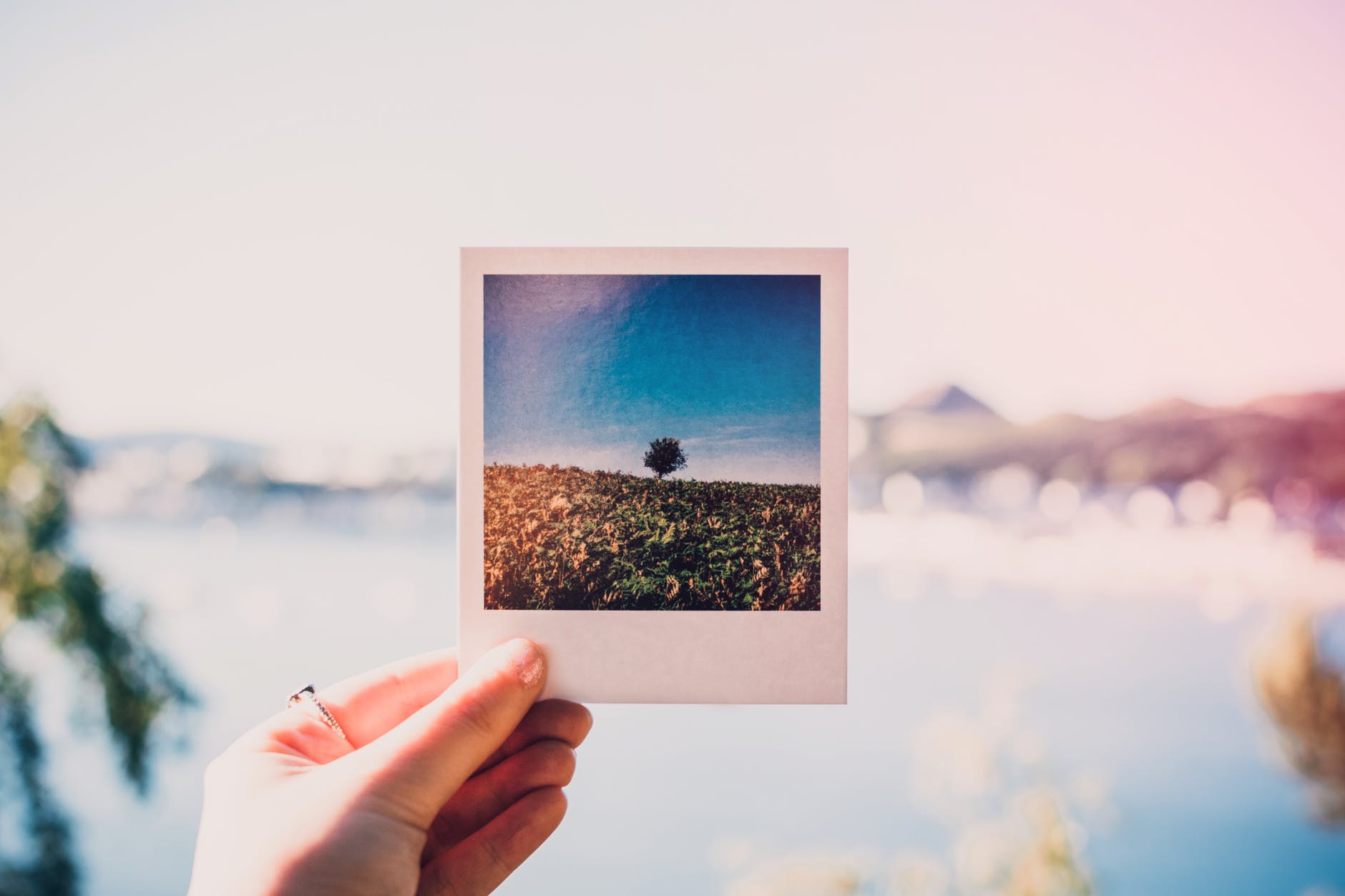
If a novel is a portrait of a world and its characters, then flash fiction is the equivalent of the old Polaroid instant snap!

I am revealing my age here by saying I can recall when the Polaroid was THE height of camera technology. For the first time your pictures came out immediately instead of having to take a roll of film to the chemists or where have you for developing. Yes, and for younger readers, it really was another world away in terms of technology compared with what we have now! Dinosaurs had only just stopped walking the earth etc etc 😁😉

But instant snaps really do capture moments in time and that is precisely what flash fiction should do. Hone in on what matters and nothing else. The joy of flash fiction is the focus.

The restrictions of flash fiction force you to think about what it is you really want to convey through your story. This is no bad thing in and of itself. I’ve found that kind of thinking through has then carried on into other writing that I do, which has definite advantages.

When it comes to editing, I’ve mentioned before that writing flash has helped me locate those wasted words I use by habit and which don’t add anything to the tale, so they’re the first things I cut. I am finding, however, that more often now as I am writing the first draft, I am instinctively NOT writing those words at all. I hope that continues!

This slideshow requires JavaScript.

Flash Fiction Favourite Pointers:-

1. Never forget, no matter what the length of the story, it still needs a beginning, a middle, and an end.

2. There should be conflict pretty much from the start as without that there is no story. You do have to hit the ground running.

3. Limit your characters. You haven’t got the room for subplots. I would focus on two characters or so though there’s nothing to stop you referencing another character as part of the story, as long as that is relevant to the tale. In my story Punish the Innocent, the two characters are the mum and daughter but the mum refers to others in the letter she writes to her daughter. This fills in backstory very quickly in this case and fleshes out why the mum has the attitude she has in this story.

4. Focus on what is most important only.

5. Let your readers fill in gaps. Just show them what they need to know and let them use their imaginations for the rest. From a reading viewpoint, that is the bit which is the most fun!


UNWINDING YOUR CHARACTERS AND GOOD WRITING CONFERENCES

Facebook – and Chandler’s Ford Today

I always enjoy writing my CFT posts but tonight’s one, The Benefits of a Good Writing Conference, was particularly nice to do.

There are several pictures from the recent #Swanwick70 in there and many thanks to #GeoffParkes for kind permission to use some of the many fantastic pics he took. My favourite from the ones I’ve used is that of me reading from From Light to Dark and Back Again at the Prose Open Mic but I admit freely I am not exactly unbiased here!

Looking forward to #Swanwick71 already.

This slideshow requires JavaScript.

Facebook – From Light to Dark and Back Again

Another fantastic element to writing flash fiction is that you can literally write stories set in a fanastic setting and then come right back down to earth again with a setting in the every day.

You can have alien characters (and I do!) and poignant character studies. One of my favourites from the latter category is They Don’t Understand which shows in a couple of hundred words or so the lives of two elderly people as one reflects on what they both went through during the war years and beyond.

What I’m looking to do here is have the right character for the impact I want to make on the reader and that will dictate both the mood of the story and often its setting as well.

Image Credit: Many thanks to #GeoffParkes for kind permission to use the image of me reading from From Light to Dark and Back Again at the Swanwick Writers’ Summer School Prose Open Mic night. Also all credit to him for the fantastic group photos celebrating #Swanwick70.

Also thanks to #CherylHolland for using my phone to take the wonderful group pic of friends and I having a laugh on the lawn at Swanwick. (It wasn’t the only laugh that week, far from it!!). Am I missing being at Swanwick? You bet..

Fairytales With Bite – Fairytale A to Z Part 3

On to part 3:-

G = Greatness.  Whether your character is a godmother (of the fairy variety), a villain, or a hero/heroine, there should be some greatness about them to make them memorable characters.  Greatness can be in the form of intelligence (the villain perhaps), moral integrity, actions undertaken etc.  There should be something about your characters that resonates with the readers (even if it is just understanding of where the villain is coming from in terms of attitude and behaviour while at the same time not agreeing with it).  There is greatness behind whatever resonates here.

H = Humour.  Humour is wonderful in a story.  It can provide moments of light relief.  It can show up attributes of a character that would not come out necessarily in any other way.  (Perhaps a character’s wit here could show a good grasp of irony that they might use in a different way later in the story to bamboozle their opponents?  Quick thinking and humour often go hand in hand and the former is usually vital for a character wanting to get out of a tight spot).

I = Imagination.  How imaginative are your characters in dealing with others, making their plots succeed, using others to achieve their ends etc?  Do they need to plan things out thoroughly or can they be intuitive?  How do they handle matters when things go wrong?  Can they use their imaginative skills to correct the situation?

This World and Others – Unwinding Your Characters

I find being in the company of writers from all genres, as I was when I was at the Swanwick Writers’ Summer School recently, to be a great way to unwind.  I talk about other benefits of good writing conferences in my latest CFT post – The Benefits of a Good Writing Conference

But this led me to wonder about how characters unwind.  When your characters are in the thick of the action, what favourite memories of special places and people help motivate them to keep going and get through it all?  I always loved the Rivendell sequences in The Lord of the Rings.  (This for me is where the films were particularly fantastic, being able to visualise Rivendell like that). Just ahead of the quest, Frodo particularly needed that time there.  So what do your characters need to prepare them for whatever hell you are going to put them through (all in the name of entertaining fiction of course!)?

Knowing what really makes your characters tick will enable you, as the writer, to know what will spur them on, what will discourage them, what is the right way to motivate them etc.  A really well written villain in your stories will do exactly the same and tweak the strings of your lead like an evil puppetmaster.  Result?  A villain worthy of your hero/heroine.  Drama.  Conflict.  Story, story, story!  What’s not to like about that?


Swanwick, Set Backs, and Favourite Writing Tips

Facebook – General

Back to business then and I’m working on a short story that I hope will go in for a fairytale competition.

I drafted this on the train up to Swanwick (what ELSE are three hour train journeys for?!😁} but, for once, need to add to the story to get it to the required length. This won’t be a problem. There was one scene I had wanted to expand but hadn’t, because I was wary of the word count. So it looks at if I might to get have my cake and eat it here after all (though I expect the overall cake will still need a darned good edit once done!).

I’ve got other pieces to type up which I hope to do over the next few days and I’m happily reworking my novel too. So busy, busy, busy, and all of it fun and that’s a very nice position to be in. Am grateful for it too. Doesn’t always work that way.


This slideshow requires JavaScript.

Image may contain: 1 person, standing

I read at the Prose Open Mic at Swanwick this year.  Great fun!  Many thanks to Geoff Parkes for the photo.

Ironically, for a week associated with stories, I didn’t get to read many while away at the Swanwick Writers’ Summer School. By the time I got back to my room most nights, I was far too tired to read much.

Buzzing with ideas and taking in so much from the different courses does that to you! So one of the things helping me with the “come back to earth again blues” is returning to my book pile, which includes some lovely new additions, thanks to the Swanwick Book Room!

How do your characters handle setbacks? Do they bring out the best or worst in your creations? Or do your characters need time out before coming to terms with what’s happened and then moving on? If they have a sidekick, do they react in the same way? Do differences of opinion here mean the end of the partnership or it going in a direction neither had anticipated at the start of the story?

Whatever you choose, have fun with it, but just as we’re prone to strops when life does not go our way, some of our characters at least should reflect that too.

Favourite writing tips I’ve learned so much from over the years:-

1. Edit on paper. You miss things on screen.

2. Read widely (in and out of your genre and include non-fiction too).

3. Put work aside for a while before editing it so you can read the piece with fresh eyes.

4. When facing a deadline (competitions etc), take away a week to ten days from the official date. That way you still have a few days to get your entry in if the piece takes longer than you think to complete. (And it often will).

5. Read work out loud. If necessary record yourself and play it back. This is really useful for hearing how dialogue sounds especially. Golden rule here: if you trip over it as you read it, so will your readers. Time for the red editing pen again!

Facebook – From Light to Dark and Back Again

Be open to finding sources of ideas for any kind of story in places you don’t expect to come across them.

The reason I mention that is because I had great fun with an exercise set in Simon Hall’s A to Z of Novel Writing at Swanwick recently and know I’m going to get a flash fiction piece from it.

Another exercise from the same course looks like it may become a longer short story and I am looking forward to writing these up soon.

Neither of these exercises were specifically set to generate flash fiction or a short story (as the course name suggests!!) but when you can see where you can adapt something for a form in which you are already writing, go for it. You have nothing to lose.

How do I know when a piece I’ve drafted will make a flash fiction story? It’s not just down to the word count. What I’m looking at is the impact of the story.

If I feel that impact will be strengthened by adding to it, then I will and often these pieces end up being standard length short stories (which I usually then put into competitions).

But often I will feel a piece has a powerful impact at a couple of hundred words and I will leave it at that. I focus on editing the piece then and fine tuning it so that impact is as powerful as I can make it. Then those pieces go on to Cafelit, the online magazine, and/or are put into the collection of flash fiction I’m currently working on. Sometimes I’ll put them up on my website too.

The nice thing about flash is it is easy to share on a site. It literally doesn’t take up too much room, is read easily on screen, and I’ve found before that the best way to describe flash fiction is to read some out/put some up for people to see for themselves.

One of my favourite techniques in writing flash fiction is to take a first person viewpoint and let them lead the reader up the garden path so to speak.

In Health and Safety I start with my character letting you know they road test products. By the end of the story, you find out that my narrator has glossed over their actions in an attempt to justify what happened as a result of them.

Not so much an unreliable narrator, more of an embarrassed one who wants to try to save some face! Good fun to write though…

I love writing stories from the viewpoint of characters who were “overlooked” for the starring role in the traditional fairytales. My first published story was A Helping Hand in Bridge House Publishing’s Alternative Renditions anthology and told the Cinderella story from the viewpoint of the younger Ugly Sister. Great fun to write. Sympathetic to Cinders? What do you think?! But it is great to turn a tale on its head like that. Do give it a go.

I also love those minor characters in a story that can’t be the lead but who still have a vital role to play in it. From The Lord of the Rings you know from the outset the focus has to be on Frodo, but Merry and Peregrin are great fun and do come into their own much later on.

So how can you make your minor characters interesting and fun to follow? Humour is great here, especially if the lead role, as is the case with Frodo, have a burden to deal with and where light relief will be welcome. Get your minor characters right and you will create wonderful subplots, which add layers to your story. They give added reasons for your readers to keep reading, which after all is the objective of a good story!


COMING BACK TO EARTH

Just returned from the Swanwick Writers’ Summer School, after a fabulous week of excellent courses and getting to catch up with writer friends, with whom, for the rest of the year, I stay in contact with via social media.  Lovely as that is, you can’t beat getting together face to face!

So tonight’s post is all on the theme of coming back to earth and I also look at Books That Should Have Been Written as a lighthearted CFT post.  There is nothing anywhere that says you HAVE to come back to earth with a bump or several!

Facebook – General – and Chandler’s Ford Today

My CFT post this week is called Books That Should Have Been Written and, if you like puns, this is definitely for you!  I also take a peek at irony.

Back from a wonderful week at #Swanwick70. The highlight of my writing year is the week at the Swanwick Writers’ Summer School. Why?

I meet up with writer friends that for the rest of the year, I keep in contact with by social media. I make new friends. I learn loads from the courses, which is never a bad thing. Oh and I sold a few books in the Book Room too!

Back down to earth then but with perhaps a more gentle bump! My CFT post this week is a lighthearted one called Books That Should Have Been Written. Contributions welcome in the CFT comments box!

This slideshow requires JavaScript.

Facebook – From Light to Dark and Back Again

Had a lovely time at #Swanwick70. Really enjoyed reading three of my 100-word stories from From Light to Dark and Back Again at the Prose Open Mic hosted by #JenniferCWilson. Flash fiction works really well at these things (as indeed does poetry – I missed the Poetry Open MIc night as it clashed with the Literary Quiz and I do love a good quiz but I hope all who took part in the Open Mic slots had a fab time).

Images of Swanwick were taken by me at last year’s event. Such a lovely place to be!

Fairytales with Bite – A toZ of Fairytales Part 2

So on to the second part of this series…

D = Determination.  The best fairytale characters I know have this trait in buckets (other suitably large utensils are available, as they say…!).  They can vary from determination not to be ground down (Cinderella) to determination to survive (Hansel and Gretel).  Determination can keep a character going when the world and its dog/unicorn/dragon seem to be out to “get them”.  Determination separates the wolf (big, bad or otherwise) from the sheep.

E = Energy. Can be topped up by determination but your characters are going to need plenty of energy to get them through whatever frightful horrors you’re putting them through.  Not only are there the obvious physical needs to think about, but bring in how your characters top up their mental strength.  They will need plenty of that too.

F = Fairies/Fantastic Creatures.  The great irony with fairytales is you can have them without fairies in (Little Red Riding Hood), but when you do use them in your stories, give them plenty to do and ensure not everything is solved with a wave of the magic wand.  Your fairy character still has to work for/struggle to get success, even if that is only implied in your story.  A wave of the wand may be what they do to remedy a situation or modify it (Sleeping Beauty) but there should still be issues for the characters in your story to overcome.    Otherwise there is no conflict and without that, the story vanishes.  Fantastic creatures can vary from animals to other magical beings (including your own invented ones) but we still need to have some sense of what they are like and where they fit in to the world you’ve created.

More next time…

This slideshow requires JavaScript.

This World and Others – Coming Back to Earth

Coming Back to Earthis the title of my latest Goodreads blog (where I do suggest a cure!).  I wrote a lighthearted post for CFT this week, Books That Should Have Been Written,partly as a “gentle” way of coming back to earth after my return from the Swanwick Writers’ Summer School.

But how do your characters come back to earth?  They’ve experienced perhaps great adventures, now there’s a lull in the action as they come to terms with what they’ve just gone through.  How do they handle that?  I love The Lord of the Rings  for many reasons but the portrayal of Frodo becoming more and more tired as the stress of what he has to do becomes more and more of a burden is realistically shown.  On the assumption your characters are not super heroes who never get tired or out of sorts, how do your characters handle setbacks, tiredness, illness etc?

How do they pick themselves up from “earth” to get back to their “mission”?  Who helps them and how?  Plenty to think about there!

Goodreads Blog – Coming Back to Earth

Have just got back from my annual highlight – the Swanwick Writers’ Summer School.

Had a wonderful time discussing and learning about all things connected to the worlds of books and stories. What’s not to like about that?

But, as ever with these things, you come back home again and you feel shattered and a bit flat. (You take in far more than you know you are when you are there and then I think the physical/mental tiredness of that hits you later).

So what can help you perk up again?

Why, nothing but a good book of course!

And the lovely thing about being a writer? You need to read widely, in and out of genre, to help feed your own imagination in any case, but you also get to write the books and with a lot of hard work, and some luck, get them out there.

So happy reading and writing!


YOUR FIRST WRITING – AND SWANWICK!

Facebook – General

What was the first piece of writing you remember? I can’t recall mine but do know when it was “composition” time at school, I was in my element. The whole idea of making up your own story back then was marvellous (and frankly still is!).

I couldn’t tell you either the moment I decided I would be a writer I just know the nagging feeling of wanting to write and, backing it up more importantly with actually doing the writing, has been with me for far longer than I can recall. The best thing to do is follow that writing urge but be open to trying new forms of writing. It is the way, I think, to find out what it is you really want to spend your time doing!


This slideshow requires JavaScript.

Have prepared what I hope to be working on during Swanwick Writers’ Summer School, which starts on Saturday. This is a longer term project I want to read through and edit. I’ve also got a few ideas on where to submit this once done so want to check those out too while I’m away. Hope to submit said project by the end of the year (the idea being once back from Swanwick I’ll be ready to sort out my amendments and get the project out there).

Am continuing to work on my third flash fiction book. Have got ideas for non-fiction too which I hope to flesh out more so in between the courses at Swanwick, and catching up with friends there, I shall have plenty to do! But that is always a good thing…

Facebook – From Light to Dark and Back Again

What do your characters like to eat/drink? Are they good cooks or do they live on their world’s equivalent of take out? What do they like to wear (and does it fit in with their world’s idea of what is suitable)?

Ask yourself questions about your characters. Not only will you get a better picture of who they are and what they’re like, the crucial points about your fictional world will develop too. For example, if you know your character is a freedom fighter, what are they fighting against? It also shows your world is probably a dictatorial one. (If it wasn’t, why are there any freedom fighters at all?).

Am hoping to submit some more flash fiction stories before long (but probably after I’m back from Swanwick Writers’ Summer School. This week will be spent in preparing posts to schedule for while I’m away I expect).

My third flash fiction book is coming along but I hope to do a lot more on that while away. And as I mentioned on my author page that will be alongside a longer term project I want to read through and edit and, hopefully, be submiting by the end of the year. It is great having a mixture of different writing projects – I never get bored (!), I love the challenges each one presents (and those differ naturally). and, if things go as I hope, I should have a variety of work “out there”, hopefully to find a good home!


Finding Ideas

Facebook – General

The challenge of finding new ideas for stories, is, of course, ongoing but the great thing is there are so many avenues to explore.

Proverbs and sayings can give themes for stories. Someone coming out with a strange way of expressing something can be an inspiration. (I was on the receiving end of one of these this week. Am certain I can get a flash fiction story out of it – will keep you posted!).

How about taking advertising slogans and changing a word or two to get your own theme? Instead of the old egg advert which said “Go to Work on an Egg”, how about “Go to Work on a Unicorn”. Now there’s a fantasy story or several behind that. Have fun (I intend to with that one as well).

Items of clothing (for example an odd shaped hat) can lead you wondering about the kind of character who would wear such a thing and what they might get up to while wearing it!

Keep your eyes and ears open. I’ve found, over time, when I hear or see something that could be useful for a story, I tend to hone in on it. It’s almost as if you develop a kind of antenna for this so be open to it. If the ideas don’t work out, well you’ve lost nothing but time trying them. (And I would be surprised if you didn’t get something out of them, if only the core for a stronger story you write up later).

I love stories that mirror others as long as it is done well. The play I saw on Wednesday was a great example of that. More details in my CFT post on Friday. The play was influenced heavily by one of Shakespeare’s finest which confirms something I’ve believed for a long time.

Reading widely is so important for anyone wanting to write. Indeed, it is more than that. It is NECESSARY.

Not only can you see how writers set things out, you DO learn by reading what others have done. You take in things like ratio of dialogue to narrative, where passive tense IS used appropriately, and how the writer you’re reading uses drama and cliffhangers in chapters to make you keep on reading so you have to find out how the story ends. That’s just a few things you take in when reading.

Also, by reading widely you are supporting the industry you want to join so it makes sense on so many levels. Ideas for your own stories come from all over the place and the theme of a novel you love may well be one you’d like to also write about, albeit in a totally different way.

Reading non-fiction can open your mind to ideas that you would want to bring into your fictional world. For example you read about how the phone came into being. Okay, how would that happen on the world you’re creating? What is their equivalent of the phone? Reading history (fictional and otherwise) can not only give you a sense of the past so much so you will want to set your own stories there, but there’s absolutely nothing to stop you writing about a minor character in the court of a monarch. Equally you could take your knowledge of how the court of Elizabeth 1 operated and set up a similar style of government in the world you’re creating.

Happy reading and writing!


This slideshow requires JavaScript.

Facebook – From Light to Dark and Back Again

Flash fiction, because it has to be character led, can deal with “issues” but, obviously, briefly. That can often work better than a longer story where the writer can feed more into the tale. Short and to the point is what flash fiction does and, with stories that pack a punch like this, I believe brevity is best. No danger of repeating yourself either!

Flash fiction can take you anywhere
You like in terms of worlds, time or space.
Readers find out how your people fare
In whatever word count fits the case.
As long as it is under one K,
You and your story will be okay!

Allison Symes – 29th July 2018

COMING UP NEXT TIME…

Guest Post from crime writer, Val Penny

I’m looking forward to sharing with you on Tuesday, 31st July a guest post from friend and crime writer, Val Penny.  She is behind the Hunter Wilson/Edinburgh Mysteries series and shares with us an extract from her forthcoming novel, Hunter’s Revenge.  It is very good but don’t just take my word for it.  See what you think from the extract on Tuesday!


Finding Story Ideas, Getting Out and About, and Myths and Legends

Another nice mixed bag!

Facebook – and Chandler’s Ford Today

It is nice with my CFT posts to take a little time out now and again to write a more reflective article. I do so this week with my Out and About – Summer 2018 article. And getting out and about with the dog gives me not only the fresh air and exercise but a chat to talk with other dog owners.

From a writing viewpoint, the break is good for the little grey cells and that, I think, is the main benefit. The nice thing is the break you take doesn’t have to be expensive and can be right on your doorstep. But refreshing yourself in this kind of way is of value to your physical and mental health and that has to feed into your writing in a positive way.

You can also think about things like: how would your characters take a much needed break? Where would they go? What would they do? How does it help them face up to their “quest”? All good details, which even if you don’t put them directly in your story, will help you know more about your people and, as a result, write about them much more effectively.

Facebook – From Light to Dark and Back Again

Flash fiction stories can be great for those moments in a character’s life which are defining but which in themselves are not enough to make a full length 2000-word story.

You can also use punchlines for an effective ending. My The Mint with a Hole and Little Packages are examples of this (and the first one uses a well known advertising slogan from many moons ago as its title as well).

But as with any kind of story, you have to hook your readers and reel them in! Happy writing!

This slideshow requires JavaScript.

Fairytales with Bite – Finding Story Ideas

I know I’ve talked about this topic before but it is one of those timeless ones and always useful.  I was looking through my From Light to Dark and Back Again and I would list the inspiration/themes for the stories in here as coming from:-

1. Fantasia by Walt Disney
2. My loathing of hunting increasingly rare animals for “sport”.  There’s a strong poetic justice theme here!
3. The Tooth Fairy not being as nice as perhaps traditionally thought.  (An idea to take and run with, possibly run away from if you are likely to require her services!).
4. Revenge.
5. The Sword in the Stone/King Arthur
6. Transformation/the idea someone could be a magical being and we’d never know.
7. Santa Claus and the idea that government inspectorates get everywhere!

And that’s just the first few stories in the book!

So you can use your favourite films/music etc as ideas to get you started.  With regard to bringing in your personal dislikes, don’t rant!  My story here, A Kind of Hell, shows my not so nice character getting their comeuppance but there’s no anti-hunting rare animals rant here.  It is all implied.  Less is definitely more.

As for my fairytale inspirations, it has long been established that fairy folk are not always that nice, a theme so many writers have used, but it is a rich seam for stories and highly unlikely to run dry any time soon!  Happy writing!

This World and Others – Myths and Legends

One aspect of world building to consider is to work out what your world would have for its cherished myths and legends. Who are its heroes/heroines? How did they earn this honour? Does everyone respect them or is their reputation controversial? Are the stories written down or is your world based on an oral tradition of story telling (and how accurate is that)?

Are the heroes/heroines from centuries before your story starts or are they in your current tale and you hint at their back story? How are myths and legends reported by your world’s media/historical societies/officialdom (which can also include religious officialdom)?

How does your hero/heroine cope with being a living legend? (Would make it awkward to go to the shops at times I would have thought! Now I’m being a little flippant here but you get the point. Your characters would have difficulties most would never face to enjoy any semblance of a normal life at all so how do they overcome all that or come to terms with it?).

Hope you find some wonderful story ideas here.

This slideshow requires JavaScript.


Guest Blogging and Facebook Author Page Likes

Many thanks to Val Penny for hosting a spot from me on her book reviews site.  More in a moment on that…

Facebook – General

Many thanks to Val Penny for hosting me on her book reviews site. It was huge fun to write! Hope you enjoy reading. I chat about my flash fiction (and what I love about flash fiction in general) and Chandler’s Ford Today

Looking forward to catching up with Val at Swanwick next month!

This slideshow requires JavaScript.

My CFT post is very close to home this week. There are some lovely places to walk in my area, whether I’m with the dog or not, and I share some of those, along with some gorgeous pics of a wildflower meadow. Link up tomorrow.

I don’t tend to think about stories etc while out and about. I’m too busy (a) watching out for what Lady is doing or sniffing (!) and (b) appreciating the local fauna and flora.

The benefit from the writing point of view is having that break away from the desk or household chores (or both) and coming back tired but refreshed. (Lady sees to the tired bit, she comes home and sleeps during the afternoon, lucky girl!).

Many thanks to all who have liked my author page. It is lovely to have 50 of you on board now, thanks to you all!

thank you text on black and brown board

Indeed! Image via Pexels

beautiful beautiful flowers bouquet color

And you can also say it with flowers! No hayfever either! Image via Pexels

Facebook – From Light to Dark and Back Again

Always nice to guest blog so many thanks to Val Penny for hosting me today.

I suppose in a way flash fiction and blogging are good “bedfellows” since you’ve got to watch the word count with both of them! For flash, you’ve got room for usually one character. For blogging, it pays to stick to one topic per post. (Ironically with my Word Press site, I can’t really do that as it is meant to be a round up of what I write where, but for things like this post, it pays to stick to one theme).

Have you got a favourite theme for your stories? Was it one that emerged naturally as you wrote or did you plan it from the start? There are a lot of poetic justice stories in From Light to Dark and Back Again. In my case, the theme emerged.

How about you? Comments welcome.

I love the flexibility of flash fiction. There is some flexibility with word count, ironically. I’ve often found what I thought might be a 100-word story works better as a 500-word one, but that’s fine.

You can be flexible with genre of the specific tale. I’ve written historical fiction as flash fiction, likewise fantasy, crime, light horror, ghost stories etc.

You can also go back or forward in time. Your characters can be human or other worldly. You can write in first or third person. (I do both, though not in the same story!). You can write dialogue alone, though I think all stories, regardless of type, work best with a mixture of narrative and conversation/thoughts.

Flash fiction is a style of writing to have a lot of fun with!

This slideshow requires JavaScript.


WHY I BLOG (PART 2) AND WHAT YOUR FICTIONAL WORLD NEEDS

Facebook – General – and Chandler’s Ford Today

Many thanks to all of my guest writers for sharing their thoughts on my CFT Why I Blog two part series. Part 2 is up on site now – do see the link. It has been fascinating from my viewpoint to read the different takes on this. Comments, as ever, are very welcome in the CFT comments box.

Facebook – From Light to Dark and Back Again

Am planning to catch up on my flash fiction writing this weekend. Most of the week has been a non-fiction “fest” for me (not that I’m complaining. I’ve come to love non-fiction in a way I never anticipated. For one thing, I’d never anticipated writing it at all when I started out as a writer!).

For my current WIP, I’ve been trying out historical flash fiction – i.e. stories told from the viewpoint of a certain historical character. Good fun to do and another way of getting into the heads of characters, which is something I love doing.

I love finding out what makes my characters tick and to do this to someone who lived and died centuries before makes me look at why they acted the way they are known to have done. It also gives me a very good excuse to read my history books again – I really can call it research here. Not that I really need an excuse to read such books.

In cases where there is speculation as to what happened because nobody really knows, then I can have some fun suggesting what might have occurred or coming up with a viewpoint the character might have held.

Fairytales With Bite – What Fairytales Reveal

One reason I love fairytales is for their honesty.  They call evil exactly that and have done with it.  Fairytales are very revealing about human nature (and the pictures they portray via words are not always flattering).

For example, Cinderella is realistic in the portrayal of the stepmother and her daughters and their ill treatment of Cinders.  Resentment, dislike, hatred even of anything not connected to blood kin does happen and more often than perhaps we would care to admit.

Then there’s the topic of pride and what that can lead to when unchecked.  Go to Snow White’s stepmother for the tips there!  Pride/vanity can and has led to people trying to destroy those better than themselves (and sometimes succeeding, sadly).

As for unrequited love, The Little Mermaid could tell you all about that.  Anyone who has ever been a victim of bullying because they look different would sympathise with The Ugly Duckling. 

A thought occurred to me recently as a result of a discussion I was having on Facebook about the left behind disabled child in The Pied Piper of Hamelin.  It was asked whether we felt the child felt left out or had had a lucky escape.  Opinion was pretty much split down the middle, I fall into the child feeling left out camp, but it occurred to me that Hans Christen Andersen was ahead of his time here in recognising the disabled can and do often feel left out and was highlighting that.  Sadly, still relevant.  I would like to think one day it wouldn’t be because we leave that “leaving out” state behind us.

In the meantime, I think we need, and will always need, the blunt honesty of fairytales showing up what we can be like.

This slideshow requires JavaScript.

This World and Others – What Your Fictional World Needs

A lot will depend on the scale of your story obviously.  (One advantage of flash fiction is you need less!  One advantage of novels is you can build your own world in a reasonable amount of detail).  But I think for most situations your fictional world will need:-

1.  A sense of what the world is like.  In my flash fiction stories in From Light to Dark and Back Again, I only have the word count to give a fleeting impression, which is fine.  It is just that the fleeting impression has to be strong enough to register with your reader.  With a longer story, of course, you can show more but do beware of showing anything that is not absolutely critical to your tale.  You don’t want to “info dump”.  Just show your readers what they need to make sense of your story, whether that is one line, one page or what have you.

2.  What your character is like.  This is best shown in their actions, reactions, dialogue and thoughts.  In my flash tale, The Outcome, I don’t go into a physical description of Becram, my alien lead, but I do show you his attitude!  And for this 100-word story, that is enough.

3.  A sense of how the world is run.  For my unpublished novel (hope to be working to change that soon, watch this space!), I do show how the government is run.  Terry Pratchett in his Discworld series worked out how Ankh-Morpork could operate based on how people got rid of their waste and then how the city was governed grew out of that.  You need to pick a place to start to work out to yourself first and foremost how things would work.  Then it is a question of working out just what your reader needs to know and which is just for you to enable you to write the story.

4.  How needs are met.  This can be done lightly.  Again in my The Outcome, a few words indicate Becram comes from a highly technological society (so you can imply from that the basics such as food and drink supplies really are not a problem!).

5.  Problems!  It may sound ironic, but there is no such thing as a perfect world for real, yet alone in fiction, so give it problems it has to try to resolve.  For example, does your world get on well with its neighbours?  If not, why not?  Is it your world’s fault or theirs?  Have there been attempts to resolve the issues here?


Finding a Fresh Angle, Blogging and Adjusting Your Reading

Well, there’s a nice mixed bag of topics for you.  Plus I will share my top 10 tips for helping the writer in your life.  (Fellow writers, you can always drop a lot of hints to non-writing friends based on my list!).

Facebook – General

When you’ve had a website or a blog for a while, it pays from time to time to go back into your older posts and have another look. I do this a few times a year and inevitably I can think of a fresh angle on the topic I’ve pulled out of the archives to have a look at. Hey presto – a new post!

Some other ways to generate ideas for fresh posts include:-

1. Think about what irks you most about writing and why. Share! You won’t be alone. (My biggest bug bear? Never having as much time to write as I’d like. Answer: Just make the most of the time I do have!). You can share tips about how you overcome these bugbears or how to minimise their impact.

2. Think about why you started writing in the first place. Think about where you are now with your writing. Be encouraged by how far you’ve come but again this topic is great for being able to share what you’ve learned on your own writing journey.

3. Think about your favourite writers and stories and why you love these. Share your thoughts and invite comments. Briefly, I love the works of Terry Pratchett, Jane Austen, and P.G. Wodehouse (now there’s a combo if ever there was one!).

4. Share writing advice that you’ve found helpful and equally that which has not been relevant for you. Other writers will find this really useful.

5. What would you have found most helpful to know when you were starting out as a writer that you only found out much later on? Share!

Above all, have fun writing your posts. My CFT post this week will be Part 2 of Why I Blog. I’ll share the links later in the week but finding out what other writers have to say on a topic is (a) fascinating and (b) you learn so much yourself.

My CFT post this week will be Part 2 of Why I Blog. Many thanks again to all the fab writers for taking part in both parts of this. Lots of interesting insights and proof people really do blog for all kinds of reasons. More on Friday when I’ll put the link up.

Will be reviewing the recent Hursley Park Book Fair soon too. Good fun, lots of footfall, a very promising start to what I hope will be an annual event.

And Swanwick Writers’ Summer School draws ever closer too!


Do you adjust your reading according to the seasons?

The nearest I get to it is that I make sure I read or listen to Terry Pratchett’s Reaper Man around September time and his Hogfather in the run up to Christmas. (I also sneak in either reading or watching A Christmas Carol during December – the Muppet version is my favourite!).

I suppose summer is associated with “light” reading to match the longer, lighter days, but I don’t change my reading much here. I am still reading history (and historical fiction), flash fiction, short stories, novels across the genres etc. What affects my reading choice more is mood.

As for writing, well it’s always a case of “game on” for my flash fiction and blog posts!

This slideshow requires JavaScript.

Facebook – From Light to Dark and Back Again

I think every flash story has to contain an element of surprise for it to engage the reader. Okay, you may well see where the author is going but isn’t the fun to be had there in finding out whether you are right or not?

That is what keeps me reading when I think I’ve guessed ahead correctly (and sometimes I’m right, sometimes the author twists the tale again and fools me. I like both of those options!).

Having said all that, it doesn’t mean the surprise has to be a nice one, far from it!

What should come through in your flash fiction pieces above all else is what makes your character tick. There is usually room for 1, maybe 2 characters, at most and their attitude should come through clearly. The attitude doesn’t need to be a “nice” one but it should be one readers can understand and, as they read on, see why the character has developed this.

As ever, it is the telling detail that matters here. For example, in The Outcome, the opening line is “I’m pleased to be wrong about my misgivings”. The attitude here is of a character who is open to the possibility of being wrong and being willing to admit it. Of course you then hopefully want to find out what they were wrong about! But it is that hook, the attitude of the character, which draws you in, I think.

Top ten tips to help the writer in your life:-

1. Buy their books!

2. Review said books. Doesn’t have to be a long review but must be honest.

3. Go to their book events to show support. Trust me, it is appreciated and, as a certain supermarket would say, every little bit helps.

4. Always get them nice notebooks and pens. The idea that any writer could ever have enough of these is just plain wrong! From your point of view, you’ll never be stuck for present ideas for your writer friend ever again. Win, win here.

5. If you are a computer whizz and can act as technical support, fantastic! You’ll save them a small fortune. No doubt your grateful friend will put you in their next book and not as a character to be killed off horribly either.

6. Plentiful supplies of tea/coffee/chocolate/other treats generally go down well with said writer. If it lifts their mood because they’ve got bogged down in Chapter 8, it benefits you. Do away with moody-writer-syndrome. Feed them their favourite treats. You know it makes sense.

7. If you really do feel you can’t get your writer friend any more notebooks and YOU feel like getting them something different, go for book vouchers or vouchers towards a writing course/retreat. Will go down well.

8. Accept said friend will often seem to be in a world of their own. That is because they are! Give them time to come back to earth before engaging in conversation. You’ll get more sense out of them for one thing doing that.

9.Never ask where they get their ideas from. You want to stay friends with them, yes? Just trust me on this one. If you insist on asking, don’t blame me if your friend gives you a long lecture on well this idea led to that one, I was inspired by one paragraph in A Christmas Carol, I thought I’d add a twist here and there, etc etc. Your friend should be able to go on at length as to where they get their ideas from. If you get bored, (and you almost certainly will), you only have yourself to blame here.

10. And last but not least, do spread the word about their books. It all helps.

 Goodreads Author Programme – Blog

What do you have in the way of book accessories?

I love bookmarks and those clear plastic stands for displaying books at signings etc. They make such a difference to your presentation.

I also like nice pens with a book logo on them and had some produced to go with my flash fiction collection when that came out. Likewise, a nice spiral notebook with the cover of the book on also went down well as prizes for my launch.

But the ultimate book accessory for me I think is the hardback and jacket! While nothing will diminish my love of the paperback, I do have some wonderful hardbacks, including a Sherlock Holmes collection, where the book itself is simply beautiful (and the contents brilliant! Got to hand it to Conan Doyle…).

I must admit when I do choose a hardback, I tend to have a quick peep to see if the cover has been reproduced on the book or if it is just on the jacket. A lot of the time it is the latter, all to keep costs down, but I have some where the cover has been reproduced on the book itself. Always looks great.

Even with a “plain” cover, a hardback book can be lovely in the way it has been bound etc.

So while the contents of the book are always the most important thing for me, I do enjoy the aesthetics of a lovely tome as well.

This slideshow requires JavaScript.