Gremlins and Hiccups!

Facebook – General

Sorry, can’t share my CFT post for this week as usual. There’s a site issue which is being looked into. Will share the post when I can (I hope at some point over the weekend).

I’ve written about what I think are mankind’s Top 10 achievements and am looking forward to sharing it. It is not a comprehensive list (it can’t be) nor is it in one particular field but I will invite comments once I can share the post!

Meanwhile, a huge thank you to all for the birthday wishes. All very much appreciated.

Pleased I’ve managed to draft flash fiction pieces this week (I like the acrostic form and will use it again). Won’t be around much tomorrow but looking forward to next writing session on Sunday. I like the occasional break but always look forward to writing again and I think that’s a nice position to be in.


NB.  Once I can share the CFT post on Facebook, I will prepare a short separate post here to cover it.  I hope this can be sometime over the weekend.  Meanwhile, I’ve managed to write a blog about gremlins, more below!

I often find getting started with writing is the difficult bit but, once away, there’s no stopping me! This is why I will sometimes leave lines for me to finish or an odd note so that when I resume writing the next day I overcome that starting “hiccup” and can get straight on with things.

It is useful to work out what your writing “hiccups” are and then think of strategies to overcome/minimise them.

This slideshow requires JavaScript.

My CFT post this week will be looking at what I think are amongst mankind’s top accomplishments. Link up on Friday. I will say now amongst other things the domestication of the dog comes into it.

Talking of dogs and having owned three collies now, I’ve spotted the similarities and differences in the characters of Gracie, Mabel, and Lady. Gracie and Lady are both champion cushion throwers (right off the sofa and into the middle of the carpet. I’m not talking sissy little cushions here either! They go for the big ones and don’t muck about). Mabel couldn’t wait to get her head down ON a cushion for her evening nap and wouldn’t dream of throwing them anywhere. She’d be very disapproving of Gracie and Lady for that!

Dogs come into my stories sometimes as pets of the main character. Sometimes they’re the driving force of a story (as in my She Did It Her Way, Kind Of). I do believe in writing what I know – well some of the time anyway!

Facebook – From Light to Dark and Back Again

A technical glitch has hit the CFT website tonight so I hope to share my post for this week later on this weekend, all being well.

The nice thing with flash fiction is you can write it regardless of technology. Pen and paper can be ideal for jotting down story ideas for typing up later. (It’s less useful when trying to write a novel – and yes I have written a novel by longhand. Now, I wouldn’t. I’d outline and go straight to screen).

Whatever writing you’re doing over the weekend, enjoy it! Not around much tomorrow but will look forward to my next “proper” session on Sunday. I’m always refreshed by mini breaks but then raring to write again. Never lose the love of writing!

Time for another acrostic flash fiction piece. I’m enjoying these. They’re stretching the imaginative little grey cells, which is always a good thing! Hope you enjoy. I think the mood of this one reflects general moods in the country at the moment, what with the Brexit uncertainty etc.

TRUTH

Truth is what you make it, I was told.
Rubbish, I replied, if you’re right, truth can be manipulated.
Under certain circumstances it’s needed, truth can be sold.
Then I want no part of it, I told the electioneer at my door.
Honestly, he sighed, I was honest then and you still want no part of it!

Allison Symes – 21st March 2019


Time for another acrostic piece then.

FICTION

Fabulous in pink, she whirled around,
Irritating her drab neighbours who stuck to their grey.
Carefree, unlike them, she ignored their shouts to stop
Trouble happened to others, never to her.
In a moment that situation changed
Oh my… dancing straight into traffic like that
Now on the national news for all the wrong reasons.

Allison Symes – 20th March 2019

This slideshow requires JavaScript.

Publication News:  Cafelit – If It’s Too Good to be True

This was a fun story to write.  Hope you enjoy it.

Fairytales With Bite – Gremlins!

Gremlins have hit the CFT website tonight so I hope to share a double bill of posts with you next week but I thought I’d look at gremlins that can hit a writer.

The Indecision Gremlin
And a right pain this one is too.  You have two good story ideas to work on.  Which to pursue first?  I look at deadlines here and prioritise the one with the closest deadline.  If it’s a choice between a short piece and the novel, I plan out my writing time so I carve out slots specifically for the novel and other time periods I use for shorter pieces.  Over the course of a week, I’ve got done (most of the time) most of the work I’ve wanted to do .  It means I know what I’m doing with each day’s writing session and it kicks the indecision gremlin where it hurts as I don’t give it house room!

The Social Media Gremlin
How much time is the right time to spend on social media?  There’s no definitive answer to that one but I’ve found it has paid me to allow so long on it before I switch it off to write.

The Editing Gremlin
Otherwise known as the “I’ll just edit this one more time” gremlin. Is a very close relative of the indecision gremlin and can be just as much of a pain.  There is no hard and fast rule here but if you find you are just tinkering with a story, stop!  Send it out to the relevant market/competition and see you how do with it.  Remember this gremlin has the power to stop you moving on with new work if you let it.

This slideshow requires JavaScript.

This World and Others –

The A to Z of Story Essentials Part 2

Continuing with what I think are the essentials to any story:-

F = Fun.  You should be enjoying what you’re writing even if you’re putting your characters through the grimmest hell imaginable.  Readers should be able to pick up on your enjoyment of putting a story together.  I detect this when I feel the story flows and has good pace.  That makes you want to read on.  There has to be the “I’ve got to find out what happens next” feel to your story.

G = Genre. Write in the genre you love.  Don’t pick a genre just because it’s fashionable as fashions never last long.  You’re in writing for the long haul so write what you love.  You’ll write better because you love it.

H = Humour.  This is tricky.  What is a great one-liner to one reader falls flat with another.  Allowing for humour being subjective then, write naturally.  Humour must come out of the situation or character you’ve created and must never seem forced.  This way the humour will arise naturally and readers will either get it or not but it won’t be out of place or jar your story in any way.

I = Imagination.  Let it run riot especially when outlining your story idea.  Work out possibilities and go for the one you love most.  It’ll be the one you will write with the most conviction.  And that does show through.

J = Jargon.  The best writing is simple writing.  That doesn’t mean it’s necessarily easy to write.  What you can guarantee is there has been a lot of editing carried out!  Avoid jargon.  Where characters might need to use it, it should be clear from context what the jargon means.  You don’t want to irritate your reader by coming up with something they can’t fathom out the meaning.  I’d also use any such jargon sparingly.

More next week….

Books, Acrostics, and Writing Regrets

Facebook – General

Hope you enjoy If It’s Too Good To Be True, my latest story on Cafelit. Loved writing it. (Oh and spot the typo! Made me laugh – and I hope the story does too…)

IMPACT - What impact does your story have - Pixabay

Do you have any writing regrets?

My main one is not starting to write seriously earlier than I did. Of course, on starting out, you have no idea how long it can take to get to publication standard. Knowing what I do now, I would’ve started at least five years earlier than I did!

My other regret is not discovering the joys of flash fiction sooner but the point is I have discovered them now!

Whatever writing regrets you might have, the important thing is to enjoy what you write. Go for writing opportunities that suit you. (The worst that can happen is your work is turned down. Then you can revise said work and submit it elsewhere).

B = Brilliant covers draw your attention
O = Original storylines
O = Opening lines entice you into the stories.
K = Kindle – so easy to carry – one device to hold them all!
S = Stunning plots keep you enthralled.

A = Action should keep you riveted to the tale.
R = Read, read, read. It’s what they’re there for!
E = Education? Yes, sometimes, but entertainment too.

F = Fiction or non-fiction? A world of choice!
A = Allegories and fantasies take you into other worlds.
B = Borrow from your library and support them too.
U = Underestimate the importance of characters? Never!
L = Live the lives of the characters through the narrative.
O = Oh my moments should keep you hooked.
U = Underneath the surface: how deep are the characters?
S = Story, story, story.

Well, I think that sums up what I love about books.

This slideshow requires JavaScript.

When did you decide you had to write?

I can’t say there was one particular moment for me. It was just something I’d been building up to doing for a long time (and my only regret is not plucking up the courage to start sooner. Yes, courage, as there is the tendency to think “who am I to think that I can write?”).

What I would recommend for anyone starting out is give it a go. You’ve nothing to lose. Try flash fiction. Try articles. Try longer stories. Play with words and have fun. It’s really important to have fun!

Later, on finding yes this form is my niche, then develop with practice and time the skills to be as good as you can get in that niche.

And there’s absolutely nothing wrong in wanting to just write for your own sake. It’s a great way to start and it was years after I started writing before I decided yes, I would see if I could be published. (Oh and success can take many forms whether it is getting a first publication credit or having a book out).

Facebook – From Light to Dark and Back Again

I’ve mentioned before I use well known phrases as a theme for a story. I also use them as titles. My latest example is If It’s Too Good to Be True on Cafelit. (I laughed at the typo. Conjures up some odd images but fun nonetheless!).  NB:  See link further up this page.

The great thing with this title is I will use it as a theme for another story at some point. It has a wide range of possibilities!

Playing with words - Pixabay image

Playing with words. Pixabay image.

Many thanks to #AlyRhodes for her six-word challenge earlier. Good fun. I do like these. Good for focusing the mind. And, of course, you can take that initial idea and expand it out to longer flash fiction or a standard short story.  My entry by the way was Tiny Dragon flees murderous girl.  A nice twist on how things usually go in tales involving dragons and young women!

I am very fond of flash fiction collections (not just mine, honestly!) because of the wide mixture of stories you can have in them. You have those collections which focus on theme, those like mine which have stories of differing moods in them, others which stick to a set word count etc. I am currently reading 365 Stories, which was given to me by a friend, and is a flash collection of stories of exactly 365 words with one for every day of the year. Good range of stories in there too.

I sometimes write acrostics (which I guess can be a kind of flash fiction as long as there is a story unfolding line by line). I’ve just written one for Books are Fabulous (and aren’t they just!) on my author page. So how would an acrostic flash fiction piece work then?

I’d keep it simple, short and sweet to maximise its impact. (I think a one word acrostic would be best. More than that I think would seem gimmicky but you can let your imagination run free with a one word acrostic well enough!). For example, what could be done for the word “stories”? Let’s see.

STORIES

S = Sarah knew today would be different.
T = Today she would deal with Bob for good.
O = Organising a hitman proved easier than she thought.
R = Risking everything on a stranger’s act was not something Sarah anticipated she’d ever do.
I = Involuntary shudders ran through Sarah as she recalled Bob’s abuse and violence.
E = Enough was enough.
S = Sentence of death was pronounced and would be carried out at 12.30 precisely.

Allison Symes – 18th March 2019

This slideshow requires JavaScript.

Am glad to share here a 100 word flash piece that appeared on the Association of Christian Writers’ Facebook page earlier today. The theme was worship.

Discovery
‘Where the hell is that singing from, Sarge? The only thing for miles is rubble.’
‘It’s not from hell, lad. It’s that hymn my gran sang, How Great Thou Art.’
The sergeant cleared bricks, revealing tiles. ‘We’re on an old church. They were destroyed when religion was banned. Remember?’
‘Yes. What a fuss. The fuddy-duddies had nowhere to go on Sundays.’
‘Rumours say some meet in underground churches.’
The men looked down.The singing was coming up.
‘Nothing to report.’
‘Sarge?’
‘Nothing here, lad. If we’re wrong, so what? Let them worship. They’re harmless. Shame our bosses aren’t.’

Ends.

Allison Symes – 19th March 2019


This slideshow requires JavaScript.

Goodreads Author Programme Blog –

The Role of Books/Stories

What is the role of books/stories?

For me, the primary role is to entertain and provide some escapism, especially when life is being particularly grim.

A good book will take you into its world and for a while that gives you a breathing space. Somewhere to just be for a bit before facing reality again. The benefits of that can’t be overstated.

I can understand real life stories and misery memoirs. I hope the writers found the writing of these to be enormously beneficial but this material is not something I can read.

I either want to escape into another world completely (via fairytales, The Lord of the Rings, Narnia, Discworld etc) OR, when I want to get my teeth into non-fiction, I want some good solid history. I love history when it is told as a story (which is why I adore Simon Schama’s History of Britain series).

A good story, and this includes non-fiction told as a tale, should have a point to it but I’d like to bang the drum for stories “just” being entertaining. To me there’s no “just” about it. A story doesn’t have to be “worthy” to be of benefit.

A story does just have to live up to the promise of its opening lines. And that’s challenging enough!


This slideshow requires JavaScript.


INFLUENCES – AND A LIFE WELL LIVED

Facebook – General – and Chandler’s Ford Today

There are some posts you really don’t want to write but know are coming and you write them as a way of expressing apprecation for a life well lived.

My tribute to Barbara Large, MBE, who founded the Winchester Writers’ Festival and Hampshire Writers’ Society, comes into that category.

I cannot think of anyone else who has done so much to support and encourage so many writers in our area. Barbara will be much missed.

This slideshow requires JavaScript.

Glad to say I’ll be having a new story up on Cafelit in a couple of days’ time. Will share the link. Do drop by and visit the site. There’s a wonderful range of stories on there in terms of mood, setting etc.

I must admit one reason I’ve developed a real love for classical music is its breadth of style and mood. Am currently listening to The Planet Suite by Gustav Holst. Bliss! I find classical helps me relax and when I relax I write. I wonder though what inspired him to use the planets as inspiration for his music. What matters in the end though was that he did!

However you get your inspiration for story ideas, keep going! Try to produce something as special as you can. One of the great things about writing and reading is, regardless of anything else, it adds richness to your life.

This slideshow requires JavaScript.

My CFT post this week will be an appreciation of Barbara Large, who founded the Winchester Writers’ Festival as it is now known. When I first went, it was under the name of Winchester Writers’ Conference. So many writers have learned so much here (and plenty have been published as a result too) and it is all down to Barbara’s vision and her drive to make that vision happen. Link up on Friday.

Facebook – From Light to Dark and Back Again

Am currently drafting a 750 word story but also want to have another go at the 75 word ones!

I do love the freedom flash fiction gives you. Yes, there is a strict word count but you can choose what it is to a certain extent. There are markets for 75 words, 25 words, 100 words etc etc.

Have recently discovered a possible one to try which goes for 53 words, yes 53. New one on me but may well give it a go! Mixes things up nicely though. Now to find the time… (There are times I really could use Hermione Granger’s time turner device).

Tips for finding your character’s voice:-

1. Write a short scene and just dump the character in it. What is their FIRST reaction? It can be exactly how you’d react. It could be the exact opposite. But once you know what that reaction is, you will have a good idea of their general attitude and approach. You will have that in mind as you write your story.

2. Ask yourself questions about your character. For example, what are their political beliefs? If they don’t have any, what do they believe in and why? Get your character to explain themselves to you! Interviewing your character can be a great way of producing an outline for the story and helping you discover hidden depths to your people. Most of that may not go into your story but you will write with more conviction because YOU know what your people are really like.

I suspect one of the major reasons for the increasing popularity of flash fiction is due to how easy it is to read on a screen, regardless of the latter’s size. The drive in technology, especially mobiles, tablets etc, has helped flash fiction spread. Naturally I’m all for that.

My hope is reluctant readers will be tempted in by an easy read on a screen and then go on to read longer works later. I was saddened though by a recent FB cartoon showing people poking and prodding at a book, not knowing what it was. I only wish I could be certain that would never happen!

But online markets give writers more opportunities to get their work out there. I would far rather people read online than not read at all.

Talking of online reading, I’ll have a new story up on Cafelit on 16th March. Will share the link once I have it. Keep reading!

This slideshow requires JavaScript.

Fairytales With Bite – Influences and a Life Well Lived

My CFT post this week pays tribute to the late Barbara Large, MBE, who founded the Winchester Writers’ Festival (as it is now known) and the Hampshire Writers’ Society. I cannot think of anyone else who has done so much to help so many writers over so many years.  She will be much missed.  I first met Barbara many years ago and her encouragement made a huge difference.  So many writers will say the same (including the children’s author, Anne Wan, whom I’ve also interviewed for CFT).

Influences matter to a writer and can make all the difference to whether someone keeps going or gives up.  This applies to our characters too.  What influences are your characters under or swayed by?  Are they positive ones?  If there are negative influences about, what do your characters do to fight that?

Barbara’s life was very much a life well lived and that is something we should all aspire to do.

As for our characters, what do you want your people to aspire to be?  What drives them?  What gets in their way?  Answer those questions and you have the very essence of a good, drama driven story.  And isn’t that what we all want for our books and stories?

Image Credit:  A big thank you to children’s author, Anne Wan, for supplying the images of Barbara Large.  It has been a real pleasure to interview both ladies for CFT at varying points.

This World and Others – The A to Z of Story Essentials

The great thing with an A to Z post is it gives you an instant framework! So my A to Z of story essentials (to be shared over the next couple of weeks or so) includes the following.

A = Action – without this there is no story.  Something has to happen!

B = Belief – this can be the belief of the character, the beliefs held by the world in which they’re set or both of course.  The lead character has to have belief in what they are doing to be able to follow it through.

C = Credible Characters – there has to be characters a reader can get behind, whether it is to cheer them on, or hope said characters fail.  (It is cathartic to boo on the villain!).  We should be able to understand why your characters are the way they are/acting the way they are even if we don’t necessarily agree with them.

D = Dialogue – also has to be convincing.  Accents and dialects are best used sparingly.  The odd word will give enough of a flavour of the relevant accent/dialect without overdoing it.  Dialogue in characters should sound natural (read it out loud to see if it does flow well.  If not, edit!)

E = Editing – this is the writer’s friend, honestly.  Nobody produces a perfect draft first go.  Shakespeare didn’t.  Dickens didn’t.  We’re not going to either.  But put work aside for a while so you can come back to it and look at it with a fresh eye.  Remember editing is not just about spotting the typos and grammatical errors.  There should be structural and story edits to ensure the structure and the story holds together and works the way they should.

More next time…


Just a Minute and Other Thoughts

Facebook – General

Had to smile today. I receive book recommendations by email sometimes and today it finally happened. Yes, From Light To Dark and Back Again was recommended to me!

Moving on swiftly, I’m pleased to say I’m making good progress with my novel and third collection of flash fiction stories. I’ve ideas for non-fiction that I’m working on as well and I could really do with more hours in the day or to somehow be able to manage without sleep. Given neither of those are going to happen, it’s a case of best endeavours!

Have also started drafting a short story I’ve got in mind for a competition in April. Sounds ages away I know but it’ll be here before we know it and I do like to get a story drafted and then leave it for a while before reassessing and editing it. So starting the story about now is the right sort of timescale for me.

This slideshow requires JavaScript.

Have typed up a couple of writing diary prompt stories that I’m considering for my third flash fiction collection. I’m at the 15000 word mark with this so will probably go to 20K and stop there. I know there’ll be a lot of cutting to do – there always is! But I never mind that. I think it shows there IS a story there and it is just a question of getting rid of anything that doesn’t enhance it.

I’ve only consciously padded a story the once and, guess what, I gave up when I realised the idea simply wasn’t strong enough. It remains the only story I’ve ever given up on. So yes I prefer to write and then cut. It always works better for me.

The writing prompts in my diary at the moment are where you’re given an opening line and you then see what you can do with it. I like those. I like to think of them as imagination stretching exercises!

Enjoyed listening to Just a Minute on Radio 4 tonight. The rules of no repetition, no hesitation, and no deviation from the subject are great guidelines for writing fiction too.

You want your story to move onwards and upwards to its conclusion so no repetition (it will also irritate readers). I’ve found outlining a story before I start writing it gives me the confidence to write it at all and so I do (no hesitation). I also think something of that confidence shows through in the final story too.

And as for going off at a tangent… a big no-no. As someone once said “just the facts, Ma’am, just the facts”. What those facts are, as far as your story is concerned, of course is down to you!

This slideshow requires JavaScript.

Glad to say a flash fiction story of mine, Mirrored, was in the recent Swanwick Writers’ Summer School newsletter.

I discuss adaptations in my CFT post this week. What makes a good adaptation? What doesn’t? Also, this doesn’t just apply to writing either. Link up on Friday.

Editing of the novel continues to progress well and I’m drafting a 750-word short story too at the moment. Really like my lead character. They have promise! The real issue for me on this one is whether I can keep to the strict word count for this particular competition. Still, I will find out! I do love being able to set a Project Target on Scrivener and find it really useful for competitions like this. I like seeing the bar change colour as I get nearer to my goal!

Scrivener images below werebtaken by me as screenshots.

Facebook – From Light to Dark and Back Again

I’m very fond of flash fiction stories that end with a line which make me laugh. When writing this kind of story, I always write that finishing line first and then work backwards to the beginning.

I’ve found outlining in that way means the ending seems natural to a reader and springs out of what has come before. I can take the time to work out what must come before for that line to work and none of that shows in the finished story. Win-win!

How can I tell if a flash fiction idea is going to work best at 50 words, 75, 100, 500, or what have you?

A lot depends on how strong the character is – can they carry a longer story? Also the story itself is about one moment in the character’s life. The moment you’re writing about must not be dragged out (it shows, trust me, that shows) so if you are finding you are trying to extend a story, stop, think again, and look at the piece as a much shorter one. It will almost certainly work better and pack more of an emotional punch on a reader by keeping it shorter. It is impact you want. That is what a reader remembers. You don’t want to dilute that.

Equally, I’ve found sometimes a character needs space to show what is happening in their “moment” properly so fine I go with that. The time to stop is when if you add anything at all, it will weaken the story/character and the potential impact. There’s nothing to stop you incidentally from trying out a story in two different word counts and seeing what works best. Read them out loud. What has the most impact on you?

Street Cred

I’m the coolest one on my street. I’ve been here the longest. Know the best places to hang out with pals. Know the best places to get together with the girls, if you see what I mean. It was just a pity a momentary lapse in concentration meant my cool went haywire and I managed to walk into the catflap my owner put in for me, rather than through it.

Don’t let anyone tell you cats have no sense of humour. The rest of the gang were all laughing at me. Still I’m not worried. I’ll just have to fight them all tomorrow. But for now, me the big ginger tom from No. 27, is curling up on the sofa with my so-called owner. (I own HER truth to be told). She is feeding me titbits from her tuna supper. This is the life.

Being cool again can wait until tomorrow.

Allison Symes
25th February 2019

This slideshow requires JavaScript.

I love writing twist endings for my stories and, as mentioned before, often work those out first and then write the story “backwards” to get to the starting point.

But my other favourite writing technique is to begin with a promising opening line and then outline a few ideas as to where that could take me. Naturally I then go for the idea that I like the most (which is always the strongest one or has the most potential in it. Definitely not a coincidence that!).

Sometimes I can “see” a 100-word story in its entirety. My The Haunting is an example of that and was inspired by the character of Mrs Wilberforce (aka Mrs Lopsided) in The Ladykillers.

Goodreads Author Blog – Short Stories and Flash Fiction

I’m glad to see the return of short stories and the development of flash fiction for many reasons. One of these is that I write both so I won’t pretend to be unbiased here. But the major reason for loving this development is it expands the kind of reading available.

I love novels but it is great being able to read a collection of short stories or flash fiction after finishing one full length tome. It mixes up what I read. By the time I’ve finished reading an anthology I’m raring to get on with a novel again!

Also if the novel has been a dark one in terms of mood, there’s nothing like a collection of funny short stories to show the opposite side of life and I, for one, find that helpful. I don’t want to read “dark” all the time. I also know life isn’t always one big laugh so I like to have a balance of dark and light in my reading, as well as my own writing.


The Uses of Weather in Fiction

Facebook – General – and Chandler’s Ford Today

I’ve finally got around to talking online about the weather in my CFT post this week, though I go on to discuss its uses in fiction. I also share why I don’t tend to use weather in my stories and look at how it can be done realistically.

This slideshow requires JavaScript.

Books I chose for the 7 covers in 7 days challenge on Twitter were:-

Men At Arms (Terry Pratchett)
Pride and Prejudice (Jane Austen)
The Lord of the Rings (J.R.R. Tolkein)
Code of the Woosters (P.G. Wodehouse)
The Daughter of Time (Josephine Tey)
Harry Potter and the Prisoner of Azkaban (J.K.Rowling)
Murder on the Orient Express (Agatha Christie)

Good fun to do but a challenge, given there are so many other books I could’ve included. I chose these on the basis that if I could only smuggle 7 books away with me somewhere, these would be the first ones I’d go for.

This slideshow requires JavaScript.

I’m going to be talking about the weather (and its uses in fiction) for my CFT post this week. I avoid using it in my stories, the post will explain why. Link up on Friday.

Lovely to see crocuses and snowdrops out. One great thing about walking the dog is you do get to see things like that which you might not otherwise notice. I’ve seen some spectacular wildlife sights too – sparrowhawks have been known to be in Chandler’s Ford – and buzzards often circle the park. You can always tell when they’re about – the sky goes quiet. Can’t see a little bird anywhere…

Facebook – From Light to Dark and Back Again

Had a fantastic time visiting the family tonight but a nightmare journey getting over there. What should have taken a maximum of 30 minutes took 90!! Naturally on the way home, it did take under 30.

So this led me on to think about what would be a nightmare journey for your characters. Is it just down to transport problems or what they are facing on that journey? Why are they making that trip? Can they avoid it or change it so it is better? If not, why not? There has to be a good reason for the journey to be made otherwise the reader will think why on earth didn’t Character X just stay at home and avoid all the bother!

The ultimate journey in fiction for me is Frodo Baggins’s “trip” to Mordor in The Lord of the Rings but a journey much shorter than that can still be a nightmare. For example, does your character need to walk a mile to fetch something but they have to go through a neighbourhood known to be hostile to his family?

What does your character fear that would turn any journey into a nightmare? What do they do to overcome that?

Hope these thoughts can seed some story ideas! Good luck!

Many thanks, everyone, for the likes and comments on yesterday’s post about how I produce a flash fiction story.

I also have brainstorming sessions every now and again where I’ll outline a possible story idea or an idea for a character in a line or two. I put those notes aside for a while before revisiting them and deciding then if the ideas were as strong as I first thought they were!

Usually they are, sometimes not (and I discard those), but in the majority of cases, the idea is okay but needs strengthening. That is where I need to dig even deeper into what my character is capable of as that is where I’ll find the trigger for turning an idea into a story. A character that I discover is capable of doing anything for a laugh because they think it is the best way to make and have lots of friends is someone with at least one story to tell (and probably a poignant one).

What if is the classic question to ask both of your character and your idea to get the best out of both.

This slideshow requires JavaScript.

My process for producing a flash fiction story goes like this.

1. Have idea for interesting character. (Flash fiction works best with one or two characters at most, though others can be referred to or implied).

2. Work out what to do with interesting character! As you can imagine, this is the REALLY fun bit!

3. Draft the story and check it makes sense.

4. Put it aside for a while and get on with my CFT posts, my novel, more flash fiction stories etc

.5. Come back to the story and read it with a fresh eye. Ask myself what impact it makes on me. Is it the impact I want it to have on a reader?

6. Edit the story based on 5 above but also check for the usual typos, grammatical errors etc. (I wish I could say there were never any but life’s not like that!).

7. Re-read it and if happy submit it to an appropriate market or competition.

I really enjoy reading and writing flash fiction stories which end with a punch. Sometimes that can be literal (!) and is most satisfying when the character has deserved it (and that will be the view your readers will take too). One huge advantage of fiction is wrongs can be righted in a way they’re so often not in real life. I believe that is one reason why fairytales are always popular!

I also love the witty one-liners that can close a story. It’s good to finish a story on an “uplift” where that is appropriate. Of course the set up for that finish happens much earlier in the story and it can be as simple as showing your character has the type of attitude which will make a witty one-line retort likely. (It usually is a retort!).

Above all, it is fun, which is what writing should be after all.

Goodreads Author Blog – Hooks Into Books

I seem to have a “thing” for rhyming titles at the moment. Sure it will be a passing fad…!

What attracts you to a book? Is it the title, the blurb, the cover, or a combination of the lot?

For me, the cover draws me in but the blurb is what clinches a sale for me, whether I’m reading on Kindle or a paperback. If I like the premise of the blurb, I will “look inside” a Kindle book or look at the opening page of a paperback. If it seems to deliver, I’ll go ahead and buy.

There is no such thing as a foolproof system but this works for me!

Of course, another great hook is reading a book by an author whose works you know you like. I love series novels and my favourite of these has to be Discworld. Each book original and entertaining but there’s enough familiarity with the world to make you feel right at home as you continue to enjoy the series.

Whatever you read, enjoy!

Fairytales with Bite – Signs Your Character Isn’t Strong Enough

This is by no means an exhaustive list but signs your character isn’t strong enough include the following.

1.  Forgetting their name!  It can happen. It’s bad enough when a reader does it but if the writer does so, then the character is in real trouble.  If they’re not memorable enough to you, they certainly won’t be to anyone else.

2.  Running out of things for them to do.  Yet the plot is strong, the other characters are ticking along very nicely with plenty of dialogue, action etc.  You need to ask yourself whether you really need this character in the story after all.  If you feel you do, look at why.  Could this character be combined with another in the tale to make one really strong creation that keeps the reader’s (and writer’s) interest?  You need to keep in anything and anyone that moves your story onwards.  You also need to ruthlessly cut what you really don’t need.

3.  Their dialogue isn’t distinctive enough.  Your reader should be able to tell who is speaking in a story by the style of the language used by the characters.  Character A talks in clipped tones, Character B tends to laugh a lot after talking, Character C has a lisp, Character D has a strong northern accent (as someone once said, everywhere  has a north!).  If you can’t tell your characters apart by how they speak, they’re not distinctive enough and again I would look at whether you really need them in the story.

This World and Others – The Weather and Its Uses in Fiction

This is my CFT post for this week and I discuss my views on weather being used in fiction, as well as showing some ways it can be done realistically.

Whether you use weather or not, the general point is that your fictional world must seem realistic to the reader, no matter how fantastical the setting.  That may well mean you do need to share some details as to what the climate is etc to help readers get a better understanding of your creation but only put in the details the reader has absolutely got to know and leave it at that.  Your reader will want to fill in some gaps for themselves.  Also, you don’t want them switching off because all that lovely research detail you put in and you found fascinating has done nothing whatsoever for them!

Ask yourself if the reader really needs to know this.  I’ve found the simple approach of “just the facts, Ma’am, just the facts” is a great way of working out what to put into a story.  I’ve also found it best to share those facts in as palatable a form as possible.  No great splurge of information but drip feeding it as and where necessary makes it easier to take in and therefore more entertaining and acceptable to your reader. And that is where the reader will keep on reading and hopefully loving your story!

This slideshow requires JavaScript.


Dangerous Words and What Flash Fiction Isn’t

Facebook – General – and Publication News

My flash fiction story, Dangerous Words, is now up on Cafelit. Hope you enjoy it. There’ll be another from me here on 16th March.

I love getting straight into the heads of my characters and letting them get on with it! The writing seems to flow better when I do this.  And here is the link to my page on Cafelit.  Hope you enjoy the stories!

When you think about who your favourite authors are, do you stop and think about why they’ve made it on to your list of favourites?

No reader or writer worth their salt ever has one favourite author only! You are reading widely across genres to help inspire your own creativity, aren’t you?!

Besides, with such a wonderful wealth of books out there, why stick to just one genre? (I’m the same about chocolate – yes I will always prefer milk, but there’s no way I’m missing out on dark and white!).

I strongly suspect the big draw will be the characters your favourite author(s) created. A well drawn character will have you sympathising with their predicament, their hopes, the obstacles they’ve got to overcome to have any chance of realising those hopes etc.

So turn this around then and ask yourself what you can do with your characters to make readers feel all that about them. Readers should be able to identify with said predicaments and hopes (though not necessarily agree with them or the way your characters handle matters).

I’ve been sharing on Twitter some of my favourite books, the kind you have to take to the mythical desert island with you. Amongst the list are Men at Arms (Terry Pratchett), Pride and Prejudice (Jane Austen), Murder on the Orient Express (Agatha Christie), and The Daughter of Time (Josephine Tey). A nice mixed bunch so far but then I’ve never seen the point of limiting your reading to just one genre.

What do I look for from a good book? An entertaining story, characters that make me want to root for them, for good to prevail over evil, and where the story can make me think as well, even better. The Daughter of Time remains, to date, the only novel to make me change my mind over something (Richard III and whether he was innocent or guilty of the murder of the Princes in the Tower).

The challenge as a writer is to create your stories in such a way they resonate with your readers long after they’ve read them. I’ve only ever read To Kill a Mockingbird once (at secondary school) but certain images and the way it made me feel against injustice remain with me to this day. I’ve not read the follow-up and I don’t know if I will but to be able to haunt your readers long after they’ve finished your book is something to aspire to, I think.

This slideshow requires JavaScript.

I love getting right inside the heads of my characters when writing stories and often use that as a way to get started on a piece.

I like to think of it as hitting the ground running, because a brief incursion into the character’s mind will reveal (a) what they’re facing and (b) their attitude to it. That’s when the sparks fly!

It also means I’m showing you the story from the viewpoint of that lead character. No telling here! It does mean you’ve got to know your character well enough from the outset so you can write them convincingly but this is where outlining a few thoughts comes into its own. That outline can be as detailed or not as you want, but as long as YOU know enough to write the character, that is what matters. How to tell?

Ask yourself how your character would react to a situation you are not actually writing about for this story. Do you instantly know how they would react? If so, good. If not, you need to flesh your character out more to yourself so you can turn that no into a yes.

This slideshow requires JavaScript.

Facebook – From Light to Dark and Back Again

Delighted Dangerous Words is now up on Cafelit. I’m very fond of stories where the main character reveals a lot of what appears to be backstory but is very relevant to what they are facing at the time! I’m also very fond of stories about little old ladies who aren’t quite as innocent as they might seem to be.

How easy do I find writing flash fiction?

The simple answer is I never know when I write flash how it is going to turn out until I do it so I take an idea and run with it and see what happens.

Sometimes that idea will work better as a longer standard length short story (and that’s okay because there will be markets and competitions for it). At other times, something I thought would make a great flash fiction idea really isn’t strong enough.

Flash fiction ISN’T a diluted short story. It has to be a complete story in and of itself. It captures a moment in time (a short story can capture more than one) but it has to be a moment worth sharing! One moment finely honed. And it takes practice too. But that’s true of any form of writing.

Learning to write short will help with creating blurbs for a novel amongst other things so practising writing flash fiction I think is great for all writers to do. The editing and polishing skils you pick up over time will pay off in other writing work you do.

The Lord of the Rings

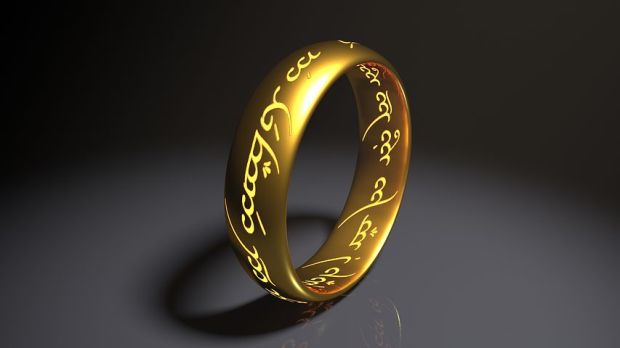
The Lord of the Rings – the ultimate in dangerous words is on this ring!. Pixabay image.

The writing prompt in my diary for this week was of a bird watching its potential mate carrying out a ritual wing display. (The mischievious side of me would have loved the picture to have shown the female holding up a score card – you know the marks out of 10 kind of thing – but then that’s my quirky sense of humour).

The prompt was to tie in with Valentine’s Day and I’ve drafted a flash story (in poetic form) where the female wishes she could have the special treatment more often during the rest of the year, that it wasn’t all down to mating etc, that there could be something special during the day to day effort to survive. My draft needs a lot of work (as all drafts do) but I sympathise with my character’s viewpoint here.

For all writers, the heady moments are (a) when you know you’ve created something good, (b) when you hear you’re going to be published, and (c) when the book contract (a good one obviously) turns up for you to sign! The nature of things means those heady moments are “spaced out” and we have to cope with the daily nitty gritty, which is far less “glamorous”.

The nitty gritty then for all writers is to get the writing done, get it out there, cope with the rejections that will come in, and so on.

And on that note I must get on!

Does flash fiction have its limitations?

Well, there is the word count of course, but I suppose the main one would be is it is not the vehicle for an in depth character study! What it can and should do is show a reader enough about a character so they fill in the gaps themselves. It is like shining a torch and you pick up ONE thing to focus more attention on.

I’ve always loved it when writers don’t tell me every last detail. I want to be able to work things out myself and flash fiction IS the perfect vehicle for that!

I really enjoy reading and writing flash fiction stories which end with a punch. Sometimes that can be literal (!) and is most satisfying when the character has deserved it (and that will be the view your readers will take too). One huge advantage of fiction is wrongs can be righted in a way they’re so often not in real life. I believe that is one reason why fairytales are always popular!

I also love the witty one-liners that can close a story. It’s good to finish a story on an “uplift” where that is appropriate. Of course the set up for that finish happens much earlier in the story and it can be as simple as showing your character has the type of attitude which will make a witty one-line retort likely. (It usually is a retort!).

Above all, it is fun, which is what writing should be after all.

This slideshow requires JavaScript.

Goodreads Author Blog Hooks into Books

I seem to have a “thing” for rhyming titles at the moment. Sure it will be a passing fad…!

What attracts you to a book? Is it the title, the blurb, the cover, or a combination of the lot?

For me, the cover draws me in but the blurb is what clinches a sale for me, whether I’m reading on Kindle or a paperback. If I like the premise of the blurb, I will “look inside” a Kindle book or look at the opening page of a paperback. If it seems to deliver, I’ll go ahead and buy.

There is no such thing as a foolproof system but this works for me!

Of course, another great hook is reading a book by an author whose works you know you like. I love series novels and my favourite of these has to be Discworld. Each book original and entertaining but there’s enough familiarity with the world to make you feel right at home as you continue to enjoy the series.

Whatever you read, enjoy!

This slideshow requires JavaScript.


Collaboration, Picture Books, and Characters

Facebook – General – and Chandler’s Ford Today

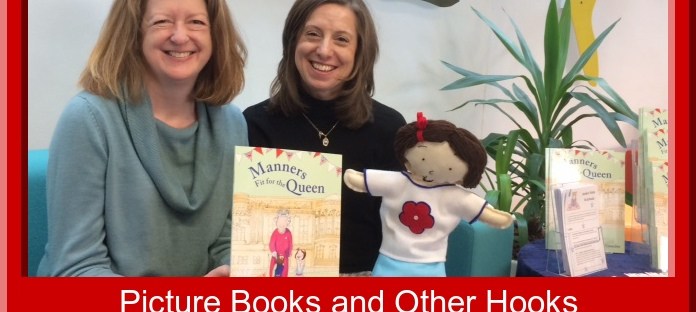
My latest CFT post is an interview with local children’s writer, Anne Wan. For her latest book, Manners Fit for the Queen, she teams up with local illustrator, Sally Goodden.

The interview looks at the colloborative process needed to produce a picture book and why picture books matter.

For most of us, one of our first introductions to the wonderful world of stories would have been through a picture book. I still love a well illustrated book. (The maps in the Lord of the Rings are fab!).

NB.  I love it when a title for a post just “comes” to me and I particularly like this week’s one.  Picture Books and Other Hooks has a good rhythm to it!

This slideshow requires JavaScript.

Looking forward to having a go at the writing prompt for this week from my diary. The prompt is to show the groundhog’s point of view as it prepares to meet his/her public for Groundhog Day (great film incidentally)!

Will have a crack at that challenge over the weekend. Should be fun! I can categorically state I’ve never created a groundhog character before! Am probably unlikely to do so again but it will be fun to find out what comes from this.

Later in the year, there‘s another prompt asking me to list 10 words associated with a train journey. People could have a lot of fun with that depending on which train operator they use regularly! (I think there should have been a comment in the prompt to “keep it clean” but that’s just me!).

As you will have gathered, I love this writing diary!


My CFT post this week will be an interview with children’s writer, Anne Wan, and illustrator, Sally Goodden. They recently had a story and craft event at Chandler’s Ford Library based on Anne’s most recent book, Manners Fit for the Queen, which is a picture book.

The ladies discuss how they worked collaboratively and how they met. Picture books look “easy” but are notoriously difficult to get right. The pictures need to convey enough of the story but without giving it all away. The text needs to be pitched right for the age range.

This slideshow requires JavaScript.

Facebook – From Light to Dark and Back Again

When did you first come across flash fiction? I ask as my latest CFT post looks at picture books and interviews Anne Wan/Sally Goodden on their colloborative work here. It made me realise that my way into reading, as it would have been for many of us, was via well cherished picture books. So on to my great love now – flash fiction – how did I get into that?

For me, it was via the 100-word challenge issued by Cafelit. Prior to that, I’d not heard of the form, yet alone had a go at it! I think part of the “not hearing” about it was due to the term used. I HAD heard about micro fiction but had not been clear about what that meant. I know now!

This slideshow requires JavaScript.

A good story will always make you react in some way. I’ve read (and written) stories that are meant to make you laugh or chill you to the bone.

So if a story isn’t working for you as you draft and edit it, look at what impact it is making on you as you read it. Is there an impact at all? If not, there is where the problem is! So think about what impact do you want it to have? How can the characters generate that impact?

If a character isn’t strong enough, ask why. Are they the right character for this story? Do you need to outline them in more depth to get right into their soul and really find out what makes them tick and react?

I’ve found a good way to get started is think of an extreme situation and look at how your character responds to it. For example, a fire breaks out in the character’s house so what do they do? What do they HAVE to save before they get out and why?

One of the nice sides to writing is you never lose the joy of hearing when something has been accepted! One huge advantage to writing flash fiction and short stories is being able to produce work and, hopefully, get it out there, building up publication credits, while working on a longer project.

Everyone knows how difficult it can be to get a novel out there but that doesn’t mean flash fiction and short stories should be considered “easy”. They’re not! You still need to craft the stories very well in order for them to have a chance of being accepted. You still need to pitch them to the right competitions/markets. They should also be recognised as a joy to write in their own right.

Ironically, it can be harder to write short than it is to write long. I always overwrite my stories but the advantage to that is I get off to a flying start with my editing pen! I find it a good acid test of whether a story is strong enough that I need to cut it back. If I’m having to pad (and I’ve only done this rarely), then the story idea isn’t strong enough in the first place (and I’ve always ended up either abandoning the idea altogether or finding ways of improving it. It never stays as it was).

Fairytales With Bite – What Matters to Your Characters?

What matters most to your characters and why? Get your characters to face losing what matters to them most and that will increase the tensions in your story considerably.

The nice things with this is whatever it is that matters most can vary considerably. For one character, it could be a life or death situation. Another character could be terribly worked up because they’re late back with their library book. The potential for humour is here too.

The one proviso is that your characters have to have very good reasons for why these things matter. A life or death scenario has an obvious “why it matters” inherent in it. In the case of the library book scenario, could it be that your character has never been late in their life for anything and fears losing control over their neat little life if they ARE late at all? Maybe they worry about what the librarian will think – other people’s opinions matter to this character. You get the idea.

Have fun and play with this. Work out what could make your character lose what matters most. For someone with a controlled life, what on earth has happened to make the possibility of being late back with their library book happen at all? Something catastrophic (to them) must have occurred. Hopefully it will be very entertaining for a reader!

This World and Others – Collaboration

Collaboration is vital when producing picture books, as discussed by local writer, Anne Wan, and illustrator, Sally Goodden in this week’s CFT post. (I must admit I was pleased with the title for this one – Picture Books and Other Hooks!).

Working in partnership matters even when you write on your own!  How and why?

For me, this means seeing writing as two distinct processes.  One is the fun creative side of getting everything down on paper or on screen.  The second is the editing process where you tighten your story up and really give it muscle by getting rid of anything and everything that does not contribute to moving your tale onwards and upwards to its conclusion.  I love editing.  I love the sense of the story improving as I spot repetitions etc I didn’t see in the giddy delight of creating new characters etc.  I love the sense of getting rid of what isn’t helping the story.

So where does the collaboration come in?  By accepting these are two distinct processes and not trying to do both at the same time.

Give your creative side free rein and enjoy the ride. Don’t let your inner editor spoil that.  It’s not time for them to come in yet.  Once that side is finished, then recognise the fact that all stories are improved (and therefore stand a better chance of publication) by good editing.

See editing as what gives your stories the wings to fly!  I do and find this side of things fun as a result.  Nothing is going to beat the heady thrill of creating something new but it helps enormously to know nobody has ever produced a truly terrific story in one go!  Everyone needs at least a second draft!  Good luck.


Stories, Persistence, and Progress

Facebook – General

Making good progress on the novel. Really enjoying finding out what my heroine is getting up to again! My third volume of flash fiction is coming along nicely as well, though I need to group the stories better. I’ve found grouping flash fiction really well helps add to the pace of the book as you read through so it is worth getting right.

Not impressed with the snow and ice. Okay they’re hardly a surprise in the UK in February but I’ve got to watch it when I take the dog out as she doesn’t seem to understand Mum really doesn’t want to go downhill skiing so Lady can get to the park that bit quicker! Lady is generally pretty good on the lead unless she knows we’re near the park! Pleased to make the acquaintance of a 12 week old Labrador puppy this week who wanted to use Lady’s ball chucker as an outsized teething ring…

One huge advantage of being a dog owner is you get to meet all sorts of interesting characters…. four legged and otherwise!

Now how can I put them into a story I wonder…!

There is an advert about great characters making great drama doing the rounds at the moment. And it is true but it is also true the characters don’t think they ARE great. They’re just getting on with the job or situation they’re in. What makes them great is how they handle things and their persistence. They almost always need that to keep going.

So what drives that persistence? Look deep into what really motivates your characters. What will they absolutely NOT stand? Then make them face it!

You’ll have fun writing that and readers will love reading it!

Submitted flash fiction pieces over the weekend so pleased about that. I often end up submitting flash stories in batches. Mind, I often write them in batches too.

One of the pieces was based on a character study writing prompt in my writing diary for this year (which is proving to be worth its weight in ink just on the challenges from the prompts alone. I do love the way the prompts are varied. Keeps me on my toes).

Editing of novel going well and, looking ahead a little, am investigating publishers to approach with it when ready. Some publishers accept submissions from unagented writers so that’s almost certainly the route I’ll have a crack at. I’ve got a couple of non-fiction ideas ticking away in the back of my mind too so definitely no chance of boredom setting in!

This slideshow requires JavaScript.

Glad to report there’ll be a couple of stories of mine on Cafelit over the next month. Will flag up more details nearer to the time of each. Have also submitted an entry for the Waterloo Festival writing competition, which Bridge House Publishing sponsors. Am also drafting a story for Bridge House’s own annual anthology.

I strongly suspect the writing prompts in my diary are going to generate stories for submission as well. I used to have the Mslexia diary but the new one I’m using has regular spots for To Do lists, Monthly Achievements, as well as the different writing prompts. There are plenty of pages at the back for notes too. It’s almost like a writing scrapbook but I like the format and will almost certainly go for it again. I find a writing diary helpful for keeping track of submissions but this one is helping me to produce more work, thanks to those excellent prompts. I just HAVE to do them (which of course is the idea!).

This slideshow requires JavaScript.

Facebook – From Light to Dark and Back Again

Which characters do you like writing about/for the most?

I adore writing characters who I know will make me smile.

I also have a very soft spot for characters with hidden depths whether they use those depths for good or ill.

That element of surprise is wonderful to write and I know when reading that kind of thing by other authors, those are always the most memorable parts of the stories.

Sometimes you can guess at the surprise to come, you pick up on the early hints; at other times you don’t guess, but in both cases, the story has you gripped. Job done on the part of the writer there!

This slideshow requires JavaScript.

Stories are ultimately problem solvers. Your characters must have something they wish to achieve and there must be obstacles in their way. Often those obstacles are other characters of course who either want the desired “object” themselves or simply don’t want your hero having it!

The great thing though is the way the character solves the problem can be so varied and that will affect the tone of the story. A wisecracking character is going to tip the story into humour, a sour one into a crime one (another character will be totally fed up with them and bump them off by Chapter 5 – well, you now know what I’d do!).

The problem has to be sufficiently important for the character (and ultimately your reader) to care about the outcome. The character needs to be appealing to readers (though bear in mind there’s a reason the charming villain as a character works. Readers love them. There has to be a wish to find out what really makes the character tick).

And flash fiction? You do all that in as few words as possible of course!

Flash fiction can encourage word play especially where it can convey more than one meaning. That in turn saves a lot on the word count!

Below is a story of mine called Test Pilot. I appear to use the same word twice in the same sentence (that’s a sin for a start, isn’t it?!) but the meanings are very different.

TEST PILOT
The crash landings were becoming embarrassing. Nobody minded the odd accident. That happened to everyone but this one was going to mean the test pilot, if unlucky enough to survive, would be hauled before the Board of Inquiry.
Like all such Boards, there was a hell of a lot of bureaucracy and paperwork. Unlike most Boards, said bureaucracy was to minute in minute detail what happened to the late specimens who’d faced them.
And this latest Inquiry was going to play to a packed house.
The crash had been spotted by those pests of the universe – humans.
Nobody was going to forget the Board of Inquiry for Roswell.

ENDS

Allison Symes – 4th February 2019

Hope you enjoy!


This slideshow requires JavaScript.

Glad to say a couple of my flash fiction pieces will be appearing on Cafelit over the next few weeks. Hope to get more out to them in due course, naturally.

When writing a story, of whatever length, I have to be able to hear the voice of the main character and know what is their chief attribute. From that I can gauge what mood would suit the character best and I write the story accordingly.

Of course, the great thing with, say, a pompous character is that gives great possibilities for humourous tales. Equally a pompous character could work in a tragedy (either by being the character that causes the tragedy for others or by being the victim because their pomposity blinded them to things that others could see all too clearly).


This slideshow requires JavaScript.

Goodreads Author Programme Blog – Series or Singles?

Which kind of book do you prefer reading? A series or a stand-alone book?

I love both. Really good series ensure each book in it DOES stand alone. Brilliant series ensure you have to read the others in it! Bit of a challenge there then…

There are books which I think work best as stand-alones and/or have had sequels/prequels which didn’t really work. Well, they didn’t work for me at least. I never did “get” the Pride and Prejudice and Zombies thing. Yes to the former, it is one of my favourite novels and a well written zombie book is fine too but to mix the two? Argh! Definitely not for me.

Of course a series author can’t know when a new reader is going to get into their books. I’ve never yet read a series from Book 1! I find the series, am gripped by the book I read and THEN look back at what else the writer has done and explore those works before going on to books beyond the first one I discovered.

The most important thing for me always is did I enjoy the book? And my answer to that is always down to whether I got behind the characters or not.


PROGRESS, PLANS AND MOODS

Facebook – General

Does the mood you are in affect what and how you write? My own answer to that is it depends!

If I’m in a flat state of mind but the writing I’m working on has a character in a similar state, then I can use my own mood to help write that piece! (I get something useful out of being in a flat mood! Ironically that knowledge cheers me up so win-win!).

Sometimes I deliberately write opposite to my mood so, again if I feel flat, I try to put myself in the head of a character in a lighter mood and find myself writing light. Again that can be a mood booster for me. Writing can be amazingly therapeutic at times.

What I do know is writing anything is a good “outlet” and later, once in a better frame of mind, I can evaluate any writing done in a flat state and see what I can do with it. But the great thing is I have still written, I still have work to do something with, so my advice would be, if you feel flat and don’t feel like writing, try to write something, even if it is a very short piece. I’ve found many times once I get started, I keep going, and writing takes me to a different, better place. Again, win-win there, I think.

Drafted first flash fiction story that I’ve created using a picture prompt in my new writing diary. 51 challenges remaining then given there’s one such prompt a week! Also enjoying working on my novel again. I want to try to enter more short story competitions (1500 word type) this year too. I like mixing the writing up. Challenges the old brain and that’s never a bad thing.

Third flash fiction volume coming along nicely though I need to group my stories at some point. Am hoping to get along to Winchester Writers’ Festival and, of course, Swanwick Writers’ Summer School later in the year, also the ACW Writers’ Days. I think one of the best things about writing is you never stop learning whether it is how to improve what you do, new places to try to submit work or what have you. That is also a very good thing.

Feed that brain!

Image Credit:  Many thanks to the Hampshire Writers’ Society for the image of me reading an example of what flash fiction is at their meeting last year.

Having completed a picture prompt generated story yesterday, I see this week’s prompt in my diary has no picture whatsoever! Still will tackle that prompt later in the week I hope.

I’m planning to share a few of my favourite writing tips and why they’re useful on Chandler’s Ford Today this week. You pick up lots of useful tips from conferences, chatting to writer friends etc., but as is the way with these things, some advice will always be more useful to you than anything else. It can be a question of working out what is going to help you most. Anyway, will share the link on Friday.

Made good progress on the novel and short story ideas over the weekend so will resume work on those shortly. A writing session for me is most useful when I know I’ve made progress on work, whether that progress is editing something, adding a line or two to something already down, or writing a whole new flash fiction piece/draft CFT post.

It’s when I feel I haven’t got anywhere that is most discouraging and that’s when encouragement from writer friends is enormously helpful. I still wish my fairy godmother would turn up though and grant me “elastic time” which I could stretch as and when I needed to without any side effects/damage to history etc. You know I’d use it to stretch my writing time!

Image Credit:  Many thanks to Dawn Kentish Knox for the picture of me reading at the 2018 Bridge House celebration event.

This slideshow requires JavaScript.

Am looking forward to sharing book offer related news later this week. Will share info and links soon!

Meanwhile, am making progress on a longer term project (non-fiction) I’d been wondering about doing for a while and have finally got around to tackling. I don’t know yet whether I’ll submit this to publishers or self publish but it is good to have both options on the table.

Am also making good progress on my novel too. My writing times are fairly consistent (which helps a LOT) and I’ve learned how to use which sessions for which projects in a way that suits me best.

I suppose the biggest lessons I’ve learned are to make the most of the time you do have AND accept you are in writing for the long haul. Stamina and persistence are key. (Good luck is a useful extra though!). How like life!

Facebook – From Light to Dark and Back Again

Once I’ve finished a few posts tonight, I’m going to use the picture prompt in my writing diary to draft a new flash fiction piece. The diary has one for every week in the year so that’s potentially 52 new stories to be written!

I do use picture prompts sometimes to trigger stories but tend to use phrases, proverbs, and things like that to get me started on stories. I’ve posted before about mixing up sources for ideas so I will be practising what I preach tonight at least!

This slideshow requires JavaScript.

We talk about “moments of illumination” – well, flash fiction could be the written version of those! Such moments are always brief and reveal something not known before. Your flash stories should do that too and be to the point.

From the writer’s viewpoint, this is the fun bit as you get to decide what that moment is in your story. For me, it has to be a turning point, whether you “turn” the character or the direction your story is going in to surprise the reader. It is where twist endings come in because you can save the moment of illumination until then.

I often, when reading stories like this, then go back through the tale to look for any clues I may have missed that hinted at the story ending up the way it has. I usually spot something on that look again read and of course I can learn from that and develop the techinique for my own writing.

When I work out ideas for a story, I focus on the lead character and then plan all sorts of havoc either for them to experience or to be the cause of – all good fun! But I do need to know the lead character’s main trait/attitude first – I use this as a “driver” for working out who they are, what they know they are capable of, and so on.

For me, character is everything. The right characters for the right stories make them spark and come to life for the reader. A good character in a weak plot – both end up being disappointing. You get the feeling the character has been “wasted”.

I’ve found it pays to take my time in outlining a character (and this is a feature of Scrivener I adore. On their fiction setting, you have a template you can fill in to help you plot out a character and I’ve used this several times. Scrivener also have one for working out what the setting of the story is and I have used this but the character development one is really useful. I don’t tend to use it for flash fiction but for longer stories where I’ve got 2 or more characters to flesh out).

Once I’ve got my character, I’m generally well away into writing the story. While editing is always necessary, outlining at the start does stop you going off at an irrelevant tangent and has saved me considerable time.

Will have book offer related news later this week so stay tuned! Links and info up when I have them.

What are the difficulties of writing flash fiction?

1. It is so easy to overwrite and be well over the word count limit. Okay a very good edit will take care of that but the story still has to flow, make sense, and impact on readers, once that editing is done. There’s the real challenge, I think.

2. Knowing where and when to stop! (Having said that, if the idea is a strong one and you can continue it so you end up with a standard length short story, do so. You just enter that piece for standard length short story competitions and markets instead!).

3. Getting people to take the form seriously, though this situation is improving!

Goodreads Author Blog – Story Idea Spotting

Do you ever indulge in story idea spotting when reading a favourite novel? I do!

I love looking for what I think are the influences for a writer. To me this adds extra enjoyment to the story and gives me the perfect excuse for re-reading a book. Not that I really need one but never mind.

It’s my experience you never find all the influences/links in one read through! Sometimes not in two reads either!

Sometimes I know what the writer’s influences are in advance because I’ve read interviews etc and can then have fun seeing how these play out in what they have produced. Other times I don’t know and I get to play detective here.

What I like best is when spotting an influence in a book and it is clear the writer is a fan of another writer I also love. Double whammy!

Reading is fun anyway of course but for me this is extra and I love that.

This slideshow requires JavaScript.


A Welcome Break and Winter Traditions

Hello again! 

It’s good to be back after a Christmas and New Year break.  I hope you had a lovely time over the festivities.

Facebook – General – and Chandler’s Ford Today

My CFT post this week looks at winter traditions. I share some of mine and look at good reasons for having any at all.

Is winter the toughest part of the year to get through? I think so (though I can appreciate why some might argue summer is – all that light and you are supposed to be cheerful all the time because of it can be hard to handle). The early dark nights are the most depressing part of winter for me. The weather comes next!

I share some of my favourite “traditional” TV watching, my views on when the words to carols are changed, and recall the alternative versions of certain carols which were always sung with gusto at home when I was growing up.

Oh and Lady gets a mention and a pic too!

So what winter traditions do you have? Do you find they help you get through the coldest and darkest time of the year?

This slideshow requires JavaScript.

My CFT post this week will be a look at winter traditions. Which are yours and why?

I share a few of mine and why I think it is good to have something of this nature to relish at this time of year.

Spring, summer and autumn have their own attractions but is winter the “ugly sister” of the seasons? It’s cold, gets dark early etc etc. I suppose a lot depends on the weather but so far it has been reasonable and I guess you have to learn to make the most of that.

More tomorrow when the link goes up. (Also included are fond memories of singing the alternative versions of well known carols as this is also a tradition! I suspect you can think of a few of those!).

Apologies – can’t seem to upload photos at the moment. Normal service tomorrow, I hope!  (Problem resolved itself I’m glad to say but still at a loss as to why it happened at all!).

8d5ff-acronyms2b-2bkeyboard

Technology is wonderful when it works properly!  Pixabay image.

What story genres have you got on your Kindle? I’ve a good old mix on there:-

Historical fiction
Non-fiction (particularly history)
Crime
Historical crime/non-fiction look at crime (A Very English Murder by Lucy Worsley – very good).
Fantasy
Classic fairytales
Classics (Austen, Dickens, Shakespeare).
Humour
Wodehouse
Flash fiction (of course)
Pratchett
Theology (but in an easy to read format. I like ALL my books like that!).
Poetry (Shakespeare, bless him, comes into this category too though I would like and must remember to download more poetry on to the Kindle. Like flash fiction, poetry is, I find, a joy to read on the small screen).

I’m sure there are others on there but I like to keep a good mix going on my bookshelves as well as on the small screen. It all helps inspire my writing. Spread the net wide when it comes to looking for inspiration for your own stories! If nothing else, you will have a wonderful time reading!

This slideshow requires JavaScript.

Facebook – From Light to Dark and Back Again

Is it easier to write funny stories or sad ones? Hard to say. A lot depends on your own mood of course but, that aside, I would say the biggest way of determining this is it is all down to your main characters. How do you see them? Are they funny or capable of coming out with one-liners? What is their dominant mood?

How you portray them is crucial here. What do you want them to DO/BE in your story? What is your character’s voice? Another crucial thing to remember is that for the majority of the time, your characters may well not think they’re funny at all. It is the readers’ job to pick up on the humour and “run with it”.

You set your characters in situations and of course a lot of humour comes out of contrasts. A snobby character ends up falling head first in the local duck pond. Not at all funny for them but hilarious for the reader (especially if said snobby character “had it coming”).

It is also crucial you enjoy writing your funny characters/lines. It shows through in the story and will come across as natural humour. Forced humour never works. Have fun here! I love writing funny one-liners for my characters when it is appropriate to them and the situation I’ve put them in. Relish the humour yourself. If you don’t, why should anyone else?

Uses for flash fiction:-

1. Makes a very good writing exercise to kick off your main creative activity.

2. Teaches you a lot about editing and what your wasted words are. We all have them. With time, you get better at spotting them in your script and eliminating them.

3. You learn to make an impact with your words in as few words as possible. No purple prose here!

4. The stories are a good length to share on, say, a Facebook post as an “advert” for what you write and your style of writing.

5. You can use it to test out which genres you would like to write. Flash fiction is character led and you can set those characters anywhere and at any time. Have fun with that. Do you discover a love of historical fiction or sci-fi coming out of this, say? Fine, explore that genre further and see what you can do.

6. It is an excellent writing form in its own right, of course.

I love using the first person for my flash fiction because:-

1. It is immediate.
2. You get right into the character’s head.
3. You get to show how they see the world, revealing much about their attitudes.
4. It helps drive a good pace.
5. You can only show what the character would think, say, do, feel etc. It helps keep you to the point!
6. You show what your character thinks of other characters. You could have lots of fun here! (I do!).
7. You can show the character justifying their actions to themselves. That tells you the reader much about them – CAN they justify their actions, how they do so, if they have to “twist” things to be able to do so etc.
8. Depending on the mood you give your character, your story can be poignant, funny, grim etc, and all driven by that mood.
9. You literally see the world of the story through that character’s eyes. I find that helps me to identify with the character and want to keep writing about them. Hopefully, that element is picked up on by readers who will want to keep reading about them.
10. If you are writing a story which has “nods” to other stories, a great way in is via a minor character you make your own. For example, in my Learning the Trade, the story is a nod to the Sorcerer’s Apprentice. In my story, I use the first person viewpoint of that apprentice.

This slideshow requires JavaScript.

Fairytales with Bite A Welcome Break

I hope you had a lovely Christmas and wish you a Happy New Year.  I enjoyed the break but am glad to be back writing again.

In your stories, what would count as welcome breaks for the general populace?  Do they have holidays and how are they celebrated?  Are visitors welcome to join in or are they kept out?  I look at Winter Traditions in my Chandler’s Ford Today post this week – what would these be in the world you’re creating?  Is there such a thing as winter?  (I suspect we often wish there wasn’t but it is necessary, honestly!).

Is everyone in your world celebrating a special holiday or is that the privilege of the ruling classes? What makes the holiday different from what we know here?  What are the similarities?  Does everyone enjoy the break?

Now there’s some story ideas there for you!  Happy writing!

This World and Others – Being Different

What counts as “normal” for the fictional world you’ve created? How are those that are different to the “norm” treated? How do your “being different” characters cope with that? What pressures are there on the from family, friends, government etc?

Those who are different – are they doing this deliberately to rebel against the norm or is it cultural expectations that make them different? What reaction is there to their differences from those around them?

Within your world setting, are there different cultures, faiths etc and if so how do these get along (well or not at all?!)? Explore the differences. Explore how they would affect how your characters act and react.

Hope you find some story ideas in answering those!