Swanwick Report 2 (This Time It’s Personal!)

Facebook – General – and Chandler’s Ford Today

I was on way home from Swanwick as I drafted this earlier this afternoon. Not sure I’m ready to face the real world yet but the weekend will help.

Mind, it was lovely getting home to the family again, and I was mugged by Lady in a totally good way as well! One happy dog…

My CFT post this week is Making Space Part 2 and here I share thoughts and tips on this for writers. Hope you find at least some of them helpful.

Planning is key to my getting writing done at all and it pays to make space for that planning. It really does help you be more productive. Try it and see!

Image Credit:  Pixabay.  Captions on CFT.

This slideshow requires JavaScript.

Publication News:  Cafelit

Busy night for me! I forgot to share this earlier this week but better late than never…

Am pleased to say my story, Life is What You Make It, went up on Cafelit on 12th August. Hope you enjoy.

This slideshow requires JavaScript.

Why does Swanwick week always speed by? Glad to see sun come out in time for the Dregs Party held on the main lawn though.

Really encouraged on the non-fiction front and have written flash fiction stories too. Plenty to be getting on with when I get back home (and not just my laundry!).

The joy of writing is in being creative and discovering and enjoying new forms in which to write.

The joy of Swanwick is you know there are close to 300 people there with you who totally understand that.

Image Credit:  Swanwick pictures taken by me but a huge thank  you to Penny Blackburn for the one of me reading at the Open Prose Mic Night.

This slideshow requires JavaScript.

I picked Getting Lost, Mirrored, and Test Pilot to read at the Swanwick Prose Open Mic night. Many thanks to Penny Blackburn for the pic (above).

Another full day of inspiring courses and workshops. It takes a while after you get home to process all you know will be useful to you but that’s fine. Knowing what you want to do is key and coming to Swanwick can and has been helping me hone in on that.

Facebook – From Light to Dark and Back Again

Have three flash stories drafted as a result of Swanwick. All need polishing though. I never get as much writing done as I think I will at Swanwick, because your head (and notebooks) are full of ideas to follow up when you get back.

I also want to cherish time spent with other writers, most of whom I won’t see for another year. This is where social media is such a blessing in that it makes you able to stay in touch that way.

What was great was coming across a number of other flash fiction writers. The form is growing and that will lead to more fantastic stories. Win-win there!

The nice thing with writing for competitions is if a place doesn’t get placed, you have a story you can look at again and rework and submit elsewhere.

Most of the time you won’t be placed. Does that sound depressing? Perhaps but on the assumption there’s nothing wrong with your story, other factors happen such as:-

  1. The judge has already read a story very similar to yours and, for whatever reason, the other has the edge. There’s not much you can do here other than make your work as polished as possible and try not to go for the too obvious interpretation of a theme.

  2. For open competitions especially, judges may genuinely have a preference for a particular story type or genre and yours doesn’t float their boat. Just get the work out somewhere else appropriate.

Good luck!

This slideshow requires JavaScript.

I love it when flashes of inspiration strike though nobody says they have to come at convenient times, unfortunately.

My awkward-to-get-to-a-pen moments include:-

Being in the shower when a real cracker of an idea turns up.

Being on the loo when etc etc.

Being stuck in traffic and I’m driving.

Longing to write when on a train but you’re packed in so tight even an exceptionally skinny ant would have trouble finding space. {Anyone come across an obese ant? Just thought I’d ask!).

Oh well…

This slideshow requires JavaScript.

Fairytales with Bite – Making Space

My CFT post this week discusses why Making Space is a great idea for writers. See http://chandlersfordtoday.co.uk/making-space-part-2-the-writing-view/

I believe fairytales and fantasy fills the spaces between reality and chaos. Why? Because so many tales in these genres reflect what we can be like, while others give strong moral messages. Why do we need such things?

  1. To guide us as to what our behaviour should/should not be;
  2. To show us what life could be like without kindness, gratitude etc. Would you really not want things to come right for Cinderella, for example?

As writers, we also need to give our characters space to develop in themselves and as part of the plot development. A character who doesn’t change will be of little interest to readers.

This World and Others – Entering Another World

You do feel as if you enter another world when you go to Swanwick Writers’ Summer School. For a week, I do! Coming out of that world again can be a wrench too.

Image Credit:  Photos of Swanwick taken by me with the exception of my reading at the Open Prose Mic Night. Many thanks to Penny Blackburn for that. ALREADY SHARED ABOVE.

But going home with ideas to work on will take me back into the fantastic world of the imagination in no time. So that’s all right then!😀 The really nice thing about this?

It applies whether you write flash or other fiction and non-fiction.

When you want to escape this world for a bit, write!

Your title needs to make an impact quickly and especially if writing flash fiction as it can set mood and save you word count - PixabayThe first title idea you have may need to change later but that's okay - PixabayAnd the first thing people will want to know is the title - Pixabay918521_S.jpg

594132_S.jpg

Still room for pen and paper drafts. Pixabay


Making Space and Variety

Publication News

Another story, Life Is What You Make It, will be up on Cafelit on 12th August. Am sharing link to my author page here but do check out the other writers on here too. There is a wonderful range of writing here.

Facebook – General – and Chandler’s Ford Today

My CFT post this week on Making Space is a two-parter and was inspired by a recent visit to the Sky Gardens in London. I had great fun spotting so many landmarks from a literally great height!

Making space to write is fundamental and, for me, this involves planning out my writing slots and how I’ll use them. I know that without the planning, I would get far less done, far less stories sent out (and less chance of acceptances too) etc.

I’ll share some tips I’ve found useful here in Part 2 of this post which will be be up on 16th August. And, yes, I’ve scheduled it! I should schedule posts more often but my problem is finding time/making the space to draft several blog posts in one go. I also do like writing posts like this “live” as it keeps me on my toes, which is never a bad thing.

The happy answer of course is to do a mixture of both but I find that I do most of my scheduling ahead of things like Swanwick or my holidays. I suspect that may be true for many of us!

Image Credit:  The images of London from the Sky Gardens were taken by Allison Symes on 27th July 2019. The other images, as ever, are from the marvellous Pixabay. Captions are on the CFT post.

This slideshow requires JavaScript.

Have set up a list of tasks on Evernote for me to start drafting while on the train to Derbyshire on Saturday for the Swanwick Writers’ Summer School. (Hit the ground running so to speak!).

Discovered recently the Slimming World HQ is near where I’ll be going too. Have no plans to call in (especially towards the end of next week. They do look after you very well at Swanwick!).

Will be taking a couple of projects to work on as well. How much time I get to spend on them remains to be seen but I always like to have something to work on. (I usually do get more done than I might have done at home).

Have I made up my mind about what courses/workshops I’ll go to? Of course not! Yes, I’ve a rough idea, but I know I’ll change my mind yet again before getting there! But that’s the fun of it….

Anticipate meeting up with old friends, making new ones, learning loads, and ending up with a head and notebook crammed full of ideas to work on. Now what’s NOT to like about that?

Image Credit:  Images from Swanwick taken by me. It is such a lovely place to be. A big thank you to Geoff Parkes for taking the image of me reading at the Swanwick Prose Open Mic night last year.  All other images are from Pixabay.


This slideshow requires JavaScript.

My CFT post this week is a two-parter on Making Space. Part 1 focuses on making space in cities, making space in packing (apt given I’m about to go to Swanwick Writers’ Summer School!), and I also discuss decluttering and books.

Mind, you can probably guess what stance I take on decluttering when it comes to books.

I also share my thoughts on white space and share my favourite quote about packing/going away which always makes me laugh out loud when I re-read it. Hope it does the same for you!

Facebook – From Light to Dark and Back Again

Transformation stories can work well in flash fiction. My Getting It Right is an example of this. It is written from the viewpoint of Snow White’s evil stepmother as she transforms into the old crone. I ONLY show that moment and her thoughts on what has led to it and that’s all. It’s all that’s needed.

Flash is brilliant at making you focus on the core of the story, which is another reason I love it. I like to think of it as precision writing given every word must punch its weight to justify staying in the story.


Key ingredients for a good flash fiction story:-

1. Strong leading character.
2. A focused incident/point of change. Less IS more here.
3. Dialogue (if used) or internal thoughts to be to the point.
4. Promising opening line (which can keep a reader guessing).
5. No sagging middles!
6. A powerful ending that fulfil the promise of the opening line.

Last but not least:-

7. An intriguing title which can be open to interpretation.

Why put that one last especially as I have to a title to get me started on any piece of work?

Because an intriguing title is fab but without the other six ingredients being in place, said title will fall flat.

This slideshow requires JavaScript.

What makes a good flash fiction story become a great one? My thoughts on that are:-

1. The story has to make me react – a story that is meant to be funny DOES amuse me, a scary one DOES make my blood run cold etc.

2. A powerful beginning which is backed up all the way to an equally powerful ending. No “sagging bits”.

3. Unforgettable characters (whether I love to love them or loathe them).

4. I am a sucker for a good punchline, I admit, or a twist ending that I didn’t see coming. What I love with those is then going back through the story again and spotting the clues the author did put in. On first reading, I am always keen just to see how the story pans out so it easy to miss something enroute. A really great story will withstand repeated readings and will give you something new with each read too. (Sometimes that can just be an increased sense of admiration for wonderful characterisation. I love that – and of course it inspires me to “up my own game”, which is never a bad thing).

This slideshow requires JavaScript.

Fairytales with Bite – Variety is the Spice of Life

Variety is the spice of the writing life. Last week’s CFT post was a review of a wonderful spoof staged by The Chameleon Theatre Group and this week I discuss Making Space.

I love variety in reading and writing. The former inspire ideas for posts and stories (and the wider you cast your net here the more opportunities you have for being inspired. Literally keep an open mind and feed your mind well with wonderful material from other writers!).  The latter keeps me on my toes. I love meeting the challenges of flash fiction and short story writing. I love meeting the challenges of non-fiction writing too.

But there’s nothing wrong with sticking to one genre if that is what you prefer to do. So how can you bring variety in here? The crucial point is to enjoy what you write, whatever it is you go in for. If you’re bored, that will show through in your writing (and I think will eventually lead you to stop writing altogether). For story writers, it is all down to characters as you can come up with so many combinations of characters and situations to write about. For me, a story is all about the character. It’s then fun to find out what happens to them.

For non-fiction, I look at themes that interest me and write articles and posts around those. One obvious theme is writing. I love reading and writing about writing (and I enjoy sharing tips I’ve found useful. I am grateful to authors who have likewise inspired and helped me here. One of the loveliest things about the writing world is, with few exceptions, it is a supportive one. You learn something, share it, someone else learns, their writing benefits and overall literature benefits too. We will always need a supply of writers across the genres and age ranges).

This World and Others – Making Space

I start a two-part series on Chandler’s Ford Today this week on Making Space and next week’s part will share some thoughts on this from a writing perspective. Meanwhile, where does making space come into your creation of characters?

I think the best way to answer that is to list what I think a truly great character needs to have. Also, it really does pay to take time out (make space) to think about your characters in advance and plan them out. It doesn’t mean you have to plan everything but you do need to know about your people in enough detail to be able to write about and for them with utter conviction. You need to decide what you need to know first!

I am convinced that when a writer writes with conviction something of that does show through in your writing and readers subconciously pick up on that. I also think they pick up when a character really doesn’t work and I know, for me, when that has happened, it is nearly always due to my not taking the time to flesh my character out properly in the first place.

So a truly great character should:-

  1. Be Memorable (and that usually means having distinctive traits a reader will love to love or love to hate. Both work but not usually in the same character!).
  2. Be someone a reader would want to identify with or be happy they’re nothing like them!
  3. Be put in situations a reader has to find out whether the character resolves or not (and how.  Failure to resolve something can ironically be a resolution of sorts. For example, a character wants to achieve a goal, they find they can’t do it, but they do achieve something positive they had not done before despite the overall “failure”. Readers will pick up on something being achieved, a positive point of change for the character, and everyone accepts not all endings are happy ones necessarily. Endings do have to be appropriate).

This slideshow requires JavaScript.


Tewkesbury and Top Flash Fiction Tips

Facebook – General

I’ve been to the Tewkesbury War of the Roses Re-enactment today for the first time. In previous years I’ve either been on holiday or otherwise engaged, so it has been lovely to finally tick this one off my To Do list. It has also been great catching up with family in this part of the world.

Lady stayed at home with my better half as, not only is it hot, I thought all the sights and sounds would over-excite her and I was right! The sights and sounds were incredible.

I sometimes think of the Wars of the Roses as an earlier English Civil War. There are so many stories here – not just of the victors and defeated but those of people who simply had to do what their lord did here. If the lord backed the wrong side, the consequences would be heavy and would go all the way down to whoever followed him. How many families were torn apart this way?

Historical fiction, when well done, can show you something of that and boost your history knowledge. Flash fiction can show you brief moments but a quick light burst can be enough at times.
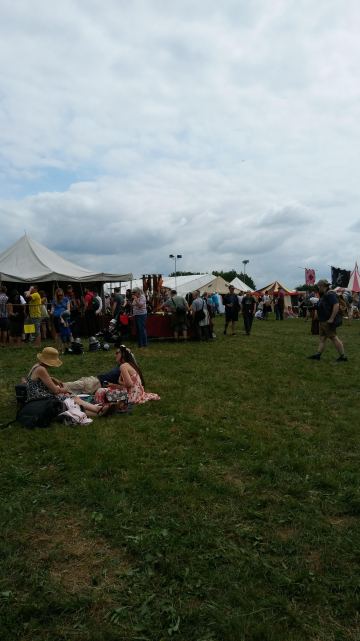
This is only a very small section of the Tewkesbury Medieval Fair

This is only a small section of the Tewkesbury Medieval Festival. Image by Allison Symes

A beautiful place to kneel and pray inside the Abbey

A beautiful place to pray in Tewkesbury Abbey. Image by Allison Symes
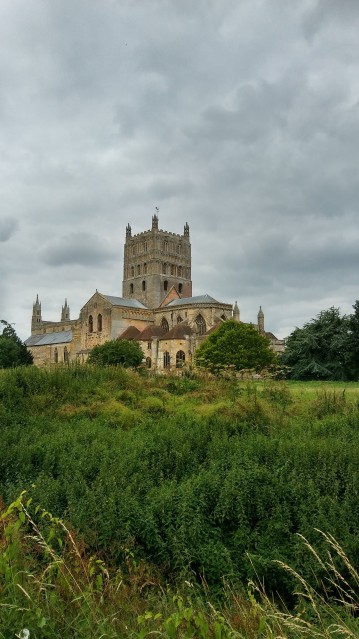
Tewkesbury Abbey

Tewkesbury Abbey. Image by Allison Symes

TF 2019 - Have never seen basketwork like this before

Incredible basket and weaving work was part of the Festival. Image by Allison Symes

I was amazed at the range of stalls at the Tewkesbury Medieval Fair yesterday. I didn’t get to cover them all either! There really was everything from longbows (including a pink one which I presume is meant for the ladies – hmmm… I’ve never been a pink type of girl anyway. I preferred the dark red ones. Before you ask, no I didn’t get one. Lugging that home on the Great Western Railway would not have been fun!).

What was lovely though was:-

a. Seeing the Richard III Society stand and having a lovely chat with the lady running it.

b. Meeting Alex Marchant of Grant Me the Carving of His Name, an anthology of stories with Richard III at the heart of them. This anthology has a story by #JenWilson in it and the book is raising funds for the Scilosis Society (and apologies if I spelt that wrong!). Alex’s YA book Order of the White Boar was on sale too.

I’m always going to love having a good nose around author stalls at events like this and yesterday was no exception! (It is also lovely to meet face to face people you “meet” on Facebook the rest of the year).

There was also a storytelling tent (aimed at children) but that ties in beautifully with the theme of oral storytelling traditions, which I’ve written about before.

Today has been spent recovering from a lot of walking (it is amazing how much you do walk around for events like this) and anticipating next year’s event!

Does going to events like this inspire story/article ideas? Yes, they can do and have done for me. It’ll be fun to find out what comes from this visit in that department.

Richard III - one document found by George Buck led to a reassessment of the king

Richard III. Pixabay.

Old documents reveal so much about our history including the writer's bias - Pixabay

Old documents can shed light on so much (lots of stories to be found here). Pixabay

Currently in power cut mode. Thank goodness for a smartphone and mobile data! Apparently someone went through the electric cables so SSE engineers now out working to fix things.

Much as I loved my Tewkesbury visit at the weekend, I am so glad I live now and not in mediaeval times. I appreciate literacy. The likelihood of my having any back then would be extremely remote. My best chance of any would be to be of high birth but I just know I’d be of peasant stock.

How many stories have there been of those rebelling against their “allotted” pace and role in life? How many lives have been changed due to being literate in a way their ancestors would envy?

Pictures are all from the magnificent Tewkesbury Abbey and taken by me.

This slideshow requires JavaScript.

What are the key ingredients to a story, regardless of its length?

1. Strong characters (strong in that they are memorable to readers. Readers don’t necessarily need to like them though).

2. A crisis (or series of them) that must be resolved (not necessarily well or happily) and usually involving great personal cost to the lead character.

3. A good pace as the crisis develops. Readers need to have the “must find out what happens next” reaction to what you have written.

4. A satisfactory conclusion, but again it doesn’t necessarily have to be a happy one.

Strong characters don’t have to be strong in the conventional sense. A character who is weak, backstabbing, treacherous etc can still be a strong one in that their actions will be crucial to your story and readers will remember them. (And if any fellow fans of Richard III are NOT instantly thinking of Lord Stanley here, I would be most surprised!).

Facebook – From Light to Dark and Back Again

The A to Z of Flash Fiction Writing Tips by Allison Symes

How about an A to Z of flash fiction writing tips? I’ll be holding my breath seeing what I come up with for Q as well but here goes…

A – Alliteration in your titles can make them memorable. (Examples from me are Telling the Time and The Truth, though I haven’t consciously singled out the letter T for alliteration usage, honest!).

B – Backstory. Not a lot of room for this in flash fiction but what you can do is hint at it and leave readers to fill in the rest.

C – Characters. Couldn’t really be anything else. Characters drive the story, regardless of its length. It will be the characters readers remember and either love or love to loathe.

D – Dialogue. Again not a lot of room in flash fiction so keep it to the point. For any story dialogue has to earn its place by moving the story on or revealing information the reader needs to know (and it can be both). This is even more important in flash fiction.

E – Episodes. Yes, you can write linked flash fiction where either one character features in more than one story or they are referred to in another tale. I didn’t do this in From Light to Dark and Back Again but have played with this in my third flash fiction collection (currently in draft form) and it is good fun.

This slideshow requires JavaScript.

So on to the next section of my A to Z of Flash Fiction Writing Tips.

F – Flexibility – I do see this as one of the great strengths of flash fiction. As it has to be character led for impact in as short a space as possible, you can have fun setting that character wherever and whenever you wish. Talking of which…

G – Genre – Have fun mixing up the genres for your flash stories. I’ve written in fantasy, historical, crime, and horror to name a few. See what you can do here. Mixing things up keeps you on your toes too, which is great for honing your writing to a particular genre’s requirements.

H – Humour – Flash fiction can be a great place for witty one-liners. I’ve sometimes ended stories this way as they can double up as a twist ending. You can also start stories this way andxsee where a promising witty character takes you. Enjoy!

I – Imagination – Being restricted to a specific word count shouldn’t restrict your imagination. It should fire it up! Why? Because you have to use your imaginative powers to select words which carry as much weight and have as much impact as possible. You choose what a reader has to know and what they can work out. Just what are the telling details that matter?

J – Justice – Poetic justice stories work well in flash fiction as the best of these go for maximum impact and that is best “concentrated”. You don’t want that kind of story dragging as it will lose its effectiveness.

More tomorrow but meantime a flash story tying in with my visit to the Battle of Tewkesbury Re-enactment.

Cut Down

I saw the standard bearer fall. I really thought my master had done it. Victory had to be ours…

But no… Master was cut down, betrayed.

My regret? Not taking the chance to cut down Lord Stanley. Without his command to switch sides, my master would still be here and not slung naked over the back of a horse.

Ends

Allison Symes – 13th July 2019

This slideshow requires JavaScript.

So more on the A to Z of Flash Fiction Writing Tips then and we start with K.

K – Knaves. Unless you write to the top end of flash fiction, there isn’t often the room for an out and out battle between good and evil in your stories. But what can be fun is writing a story from the knave’s viewpoint and working out why they are committing the acts they are (or are about to do) and how they justify doing so to themselves. Yes, you can do that in 100 words! (My Getting It Right is an example of this kind of story).

L – Lively Lines. I love writing dialogue but unless it moves a story on in some way, it has no purpose. In flash especially, dialogue between two characters will take up a lot of your word count. Now you might not worry about that, especially if you’re writing an all-dialogue type tale, but I’ve found instead of using dialogue, showing up a character’s attitudes via internal thoughts saves on the word count. I can still give them good lines too. They’re just not spoken out loud, that’s all, but the reader still picks up what the character is like etc and, I think, more directly too.

M – Monologue. I’ve always thought these work best when they are kept short. And so can they work in flash fiction? Oh yes. I write a lot of flash tales from within the viewpoint of one character only so it is as if they are monologuing to a reader. My Telling the Time is just one example of this.

N – Narrative Voice. Has got to be strong. Has got to make an impact. This is another reason why I like to get into the head of one character and write directly from that viewpoint. I can only use one narrative voice doing this and the impact is strong as a result of that. This is why it is a good idea not to have too many characters in flash fiction. It’s not just about the word count.

O – Originality. Is it possible when it has been said there are only a few basic plots? Yes. It is how you treat your characters and the voice you give them that makes your stories unique to you. Use the flexibility of flash fiction to help you here. You might prefer to write just funny flashes or crime ones or what have you (or mix them up, as I do) but play to your strengths and originality will come from that. You will develop your niche.

This slideshow requires JavaScript.

Moving on with the next section of my A to Z of Flash Fiction Writing Tips.

P – Pace. Despite the reduced word count, pace is still vital in terms of getting it right for the story. I’ve read and written fast and thoughtful pieces. The important thing is you need to know what pace will be best before you start and hit the ground running with it. Using character thoughts is a great way in here.

Q – Quirky. Flash fiction is a good vehicle for work that defies categories. It has to be character led and you can make your characters as quirky as you like. Have fun here, I do!

R – Reading. Crucial for a writer isthe willingness to read widely in and out of genre. Flash fiction comes in novella form, as well as collections, so explore the form. See what you like to read and it may well be it is what you like to write too.

S – Story. It’s all about the story and that is down to the strength or otherwise of your characters. Look for the impact your story has on you. Is it memorable to you after time away from it?

T – Tension. This will be more intense in flash tales as you have less set up and calm down again time. I think of this as that moment in the spotlight where everything is focussed on one point. Helps with pace a lot! So work out where the tension should be and play up to it. Don’t let your characters off the hook.

U – Universe. Your flash tale is its own universe. Is it somewhere you yourself would want to be? Why? If not, why? Whatever your answer is you need to convey that to your reader.

More tomorrow..

And finally to the last section on my A to Z of Flash Fiction Writing Tips. I start with a tricky letter (to place in Scrabble at times anyway!).

V – Variety. One of the joys of flash fiction is it is so easy to mix up your genres here so do so and have fun with it! It has to be character led so set your character where and when you want. I’ve written historical flash fiction pieces, crime ones, horror stories etc so mix up what you do here. It’ll be fun for you and some of that fun at least will come through in what you write to a reader.

W – Word Count. Had to be really. Don’t forget flash is quite flexible here. It has so many sub-divisions there is bound to be at least one which suits you. Play around with your writing and see where you tend to favour most. I tend to write up to about 500 words mostly, with the occasional longer piece.

X – Xerox! Am I cheating here? Well, maybe. What I mean here is it is good to read what has gone before but don’t copy it directly. Use the flexibility of flash fiction to create marvellous, inventive characters of your own. Read widely to see what characters you love reading about. Can you write a character who would bring out the same reaction in another reader? Look at how and why the character who appeals to you achieves that. You want to “xerox” the technique, not the actual writing or characters.

Y – Yardstick. Think about how you judge what a successful story is. Is it one that has been published? Yes, it can be, but you will have come across published stories that simply don’t work for you. The trick here of course is to make sure none of YOUR stories do that! (Again look at why a story didn’t grip you and look at how you can avoid doing that in your own writing). For me the yardstick is am I proud of the story? Could I make it better? The answers should be yes and no!

Z – Zips. This is what your story should be doing – zipping along with great characters and pace and keeping your readers gripped. Easier said than done? Frankly, yes, but it is worth striving for. A story that zips along and entertains is always going to be of interest to an editor somewhere.

This slideshow requires JavaScript.

Goodreads Author Blog Storytelling

I love taking in stories via reading, of course, but also have a very soft spot for the oral storytelling tradition. We owe our oldest tales to that tradition, but there is something wonderful about being told a story.

Whether it brings back happy memories of being read to as a child, or of great jokes told as a story, if you get the chance to go to Open Prose and/or Poetry Nights, do go. As well as supporting those taking part, you are helping to keep this fantastic heritage going.

I always loved the Ronnie Corbett monologues in The Two Ronnies. The ultimate in shaggy dog tales, I think, though I also love the My Word collection by the equally much missed Frank Muir and Denis Norden. I didn’t hear the radio series on which these are based, but if you love puns, do look them up.

Stories on radio and audio books are the modern oral storytelling methods, I guess. What would Chaucer or Shakespeare made of those?!

This slideshow requires JavaScript.


Writing Legacy

Facebook – General – and Chandler’s Ford Today

My CFT post this week is about Writing Legacies. I look back at the Winchester Writers’ Festival and reflect on the wonderful writing legacy left by the late Barbara Large, MBE. I take the subject from her own legacy to the legacy she gave hundreds (possibly thousands) of writers she encouraged over the decades.

I also ask what legacy we should leave as writers, regardless of what we write in terms of genre. Link up tomorrow. This is one of those posts that is a privilege to write but then it was a huge privilege to know Barbara. The writing world needs more like her…

Image Credit:  Mostly Pixabay though the image of Barbara Large and Barbara with Anne Wan were kindly supplied by Anne Wan for a previous CFT post.  The selfie is of crime writer, Val Penny, and I at the Winchester Writers’ Festival on 15th June 2019.

This slideshow requires JavaScript.

My CFT post this week is about Writing Legacies. I look back at the Winchester Writers’ Festival and reflect on the wonderful writing legacy left by the late Barbara Large, MBE. I take the subject from her own legacy to the legacy she gave hundreds (possibly thousands) of writers she encouraged over the decades.

I also ask what legacy we should leave as writers, regardless of what we write in terms of genre. Link up tomorrow. This is one of those posts that is a privilege to write but then it was a huge privilege to know Barbara. The writing world needs more like her…


What do you think your greatest achievement is as a writer? Is it publication? Is it repeated publication? Or is it knowing you’ve written without publication in mind but still produced work to a high standard.

All of that is wonderful. I’d say the real test is writing something, putting it away for a while, looking at your piece again, recognizing its flaws, and then editing it to improve it. And going through that process until you know that piece of work is as good as you can make it.

That, for me, is where the real writing lies.

Nobody but nobody produces a perfect piece of work at the first attempt. For me, there is great consolation in knowing that! What matters is putting the work into your story or article or book and doing what it takes to get it right. There’s a reason writers need stamina – and this is it.

Facebook – From Light to Dark and Back Again

I had an unusual opportunity to discuss flash fiction (and the wonderful Cafelit today) – and that was while I was in the dentist’s chair waiting for the anaesthetic to work! Never miss an opportunity, folks…

The main point to come out of this was I was discussing how flash fiction are complete stories in and of themselves. They’re not cut off prose. Each flash story must make sense AS a story.

What flash does do is leave more gaps for the reader to fill in. It has to because of the word count restriction. There should be scope for a reader to wonder what might have happened after the story ends. Now that’s true for all forms of fiction (haven’t you wondered about characters in novels you love?) but with flash you just reach that point far quicker!

This slideshow requires JavaScript.

Every so often I will jot down some promising opening lines and see where I can go with them. It’s one of the few times I don’t outline something. I wouldn’t call it the white knuckle ride of flash fiction writing exactly but it is the nearest I get to it given I do outline 90% of the time and am glad to do so. Outlining has saved me going off on too many tangents that don’t prove useful.

I am a firm believer in mixing up how you write your stories as it will keep things fresh and interesting for you. It’s a good way of avoiding being formulaic too. It is one of the great ironies of the writing life nobody wants you to be formulaic but they do want you to write more of the stories that have been published etc. More of the same but different… hmm…

One of the things I love most about Scrivener is setting my word count target. For flash fiction competitions and markets, this is invaluable.

Some include the word title as part of the allowable count, others do not, but whichever way it goes, I can set my target accordingly and know I’m not going to go over it.

You can even check how often you use a word if you want to do so. Yes, “the” and “and” are right up there! But if you use Scrivener and you know you use certain phrases or words a lot, this could be a great way of ensuring you don’t overdo it.

Image Credit: The shots of the Scrivener boxes were taken by me as screenshots, something else which is easy to do within the program. I love the traffic light system of red, amber and green as you approach your target.

This slideshow requires JavaScript.

Fairytales with Bite – Writing Legacy

My CFT post this week, Writing Legacy, looks at the legacy of the much missed Barbara Large, MBE, who founded the Winchester Writers’ Festival. I also ask what legacy we as writers should try to leave behind.

From a character viewpoint, what is the legacy we as our creators should leave them with?

  1. Have we made them unforgettable characters? We should have done…

  2. Have we given them plenty to do in the story? We should have done…

  3. Have we tested them to see what they are really made of? We should have done…

  4. Have they got good dialogue? If not, why not?

  5. Do they come across well to a reader? They should do (and this applies equally to villains. They need to be convincing too).

  6. Are the motivations of the character strong enough?

  7. Will the reader feel a pang of regret when the story is over?

Better get to it then!

This World and Others – The Longest Day

Today is the longest day (at least it is from my part of the world, the UK), but in writing terms, what would this mean for your characters?

  1. The longest day is taken literally and we follow the character through from getting up to going to bed.

  2. The longest day is taken metaphorically and we see a character going through all kinds of trials in a relatively short time span.

Whichever route you go, the character has to have enough to do and for that to be gripping enough to make the reader want to continue with your story. Their motivations must be strong enough and we need to see what makes them keep going when most would have given up. It doesn’t necessarily have to be a life or death scenario though a situation where the ability to leave is taken away from the character is always interesting and full of dramatic possibilities.

I find it more interesting though when a character could get out of a situation, you can understand why they would do so, but they continue on their current path. What drives that character? What makes them tick? Do they have any sense of failure? Who do they think they would be letting down if they did just walk away?

Definite story possibilities there!

Image Credit:  Pixabay.


This slideshow requires JavaScript.


Blogging on the Move

I was away in the stunning far North of Scotland last week and was pleased I managed to blog most of what I would usually do most of the time.  Tonight’s roundup will include two Goodreads blog posts I wasn’t able to share while on the move last week.  I’ll also include the Fairytales with Bite and This World and Others links I also wasn’t able to share last week (and repeat the copy from each blog).

Must say I found the Word Press mobile app a joy to use though and that is encouraging.  (Only things I couldn’t do were coloured headings which is not overly crucial when all is said and done, nor could I share slideshows, so got around that with various individual images instead.  That worked a treat.).

First things first though.

Facebook – General

Learned a lot this week as to which mobile apps really are mobile friendly and those will be the ones I’ll stick to when next blogging on the move.

Having said that, it has been lovely writing overlooking a beautiful loch. From tomorrow it will be back to looking at my study wall! Mind, I can turn and look at the garden.

What matters when writing is being in the right frame of mind. That is, you are ready to write and you want to write because you can’t stop yourself from writing.

No photo description available.

Loved this when I found it on Pixabay.

Back to my desk and now it is time to catch up with my usual writing (though I drafted a lot while on the move last week, which I am going to be so thankful for this week!). Have smartphone, have Evernote, am dab hand with a stylus, and away I go.

I’m planning on submitting a couple of flash fiction stories this week, having drafted them while away. Later this week will be about the right time to look at them again with a “clear view” and if they still grab me, I will submit them. You do have to be grabbed by your own stories. You are your own first audience. If you don’t like what you write, why should anyone else?

The important point is to be objective and above all be honest. What did you like about your story and why? Are there any points you think need strengthening? Do trust your gut instincts here by the way, they’re nearly always right.

This slideshow requires JavaScript.

I’ve got a few writing prompts in my diary to catch up on later this week. The one that takes my fancy the most is the picture of the white terrier running along a sandy beach – now I wonder why that is!

Another prompt is to select ten words associated with a train journey and write these up into a piece of writing. The nice thing with this one is you can easily make that fiction or non-fiction. (I suspect for anyone caught up in train delays, broken down trains etc that they’d have no trouble coming up with at least 10 words on the subject! How many of them would be non-swearing is another matter though…).

Am delighted to say I’ll be going to the Waterloo Arts Festival on 8th June. I missed it last year due to holiday.

My story, The Professional, is one of the 16 winners in the Waterloo writing competition. I’m looking forward to meeting up with friends and there will be the opportunity to read out extracts of the winning stories at the event.

I look forward to reading some of my story but also hearing the others. It is a treat to be read to!

If last year’s collection To Be…To Become (where I also had a story published) is anything to go by, it’ll be a good eclectic mix of tales.

Will share the link to the ebook when it is available.

This slideshow requires JavaScript.

Facebook – From Light to Dark and Back Again

My favourite kind of flash fiction is where it ends with a punchline that makes me smile. That’s partly because I’ve got a very soft spot for any kind of humorous prose. It’s also because having something that “just” makes you laugh is worth so much. Escapism, especially in humour, is invaluable.

Image may contain: outdoor

Haven’t seen this one round my way.  Pixabay

Image may contain: text

Good idea!  Pixabay

Looking forward to reviewing some flash pieces I drafted while away last week. (Have smartphone and Evernote, the free version, love both!). Once done, I’ll be sending them off to a couple of competitions. Then it’ll be a case of working out which competitions I’d like to have a go at and getting on with the next batch of stories.

The nice thing with short fiction is being able to get work out there far more quickly than you can with novels.

One of the frequent reminders on the motorway is “Tiredness kills, take a break”. In terms of writing, tiredness saps your mental energy and it can be tough to write when you feel like that.

What has helped me has been seeing writing as something that helps me unwind, whatever I come up with now doesn’t have to be “perfect” now (which is just as well!), and that I always feel a bit better once I have written something, even if it is only a few lines.

I see the writing as the “taking the break” bit of the above phrase. When a day has been particularly tough, I jot down ideas for future blogs and stories, and find it is almost like clearing my mind out for a while. (That in itself can help with unwinding). And, of course, when feeling brighter, there are ideas ready for me to write up into what I hope will be something special!

This slideshow requires JavaScript.

June is going to be a busy month. I’ll be going to the Waterloo Arts Festival (where winners of their writing competition will read extracts from their stories – really looking forward to taking part in that and listening to the others).

A week later I’ll be at the Winchester Writers’ Festival.

At both, I’ll look forward to meeting up with friends as well as enjoying the events. I’ve no doubt I’ll learn plenty from them too.

This slideshow requires JavaScript.

A Double Dose of Goodreads Author Blogs!

Reading and Travelling

I was never able to read while on a car journey when I was a kid as it used to make me feel sick. Now it’s not a problem and is one of the joys of a long journey.

It is also where the Kindle does come into its own. Not much to pack either, just don’t forget the charger!

I catch up with reading, as well as draft stories, when travelling and have a lovely time doing so.

Do you remember the old I-Spy books? I used to love them but they were no good to me on a trip! I had to remember what I’d seen and fill my books in on getting home!

I don’t pick specific holiday reading as I always have books to catch up on but the joy of holidays is having the time to do that.

Wherever you go this summer, happy reading!

What Do You Love Most About a Story?

My favourite part of any story is in the middle. The characters and situation are set up, the (usually) life versus death scenario is well under way, and it is a question of whether you can outguess the author as to the resolution.

I love it when I guess correctly but love it more when a writer wrongfoots me here. I then go back and re-read the story and inevitably find clues over the unexpected resolution that had been there. I just hadn’t paid enough attention, which is an object lesson in itself!

Naturally, I can apply what I learn here to my own writing, but it is also no coincidence the stories I re-read are the ones that have kept me on my toes. There is just so much enjoyment to be had here.

The great thing with twist in the tail stories is the simpler the twist the better and more effective it is. Simple doesn’t necessarily mean easy to guess at either, as it is easy to overlook or forget the “obvious”.

This slideshow requires JavaScript.

Fairytales with Bite – Character Values

In my CFT post this week, I’ve looked at what I value most. It won’t come as a huge surprise to know I’ve included family, friends, and literacy in this, amongst other important things.

What is it that your characters value most? As with me, it is highly unlikely to be just one thing, but you should be able to deduce which your characters would fight for and which they wouldn’t. It should also be apparent why they would feel this way.

It can be useful information for an enemy, of course. What can they use against your heroes here? What does the enemy value that could be used against them? (It’s never a one-way street in fiction but you can exploit that).

See this as an invaluable part of an outline and have fun working out how you can use a character’s values to strengthen their portrayal and against them to generate conflict.

This World and Others – Pointer Checklist

Hope you find the following useful.  The following list is a guide to checking if your created world makes sense to a reader.

  1. Can a reader picture your world in their imagination?
  2. Can a reader identify with your characters? They don’t have to like them though!
  3. Does your world have a system of government that makes sense to your reader? Someone has to be in charge. Your characters should know who they would be answerable to!
  4. How do your characters survive on a daily basis? They will have to eat, drink, breath, excrete, reproduce, and die (unless they’re immortals of course but could anything threaten that?).

By ensuring you can answer these points, you will have a functioning created world of your own.

This slideshow requires JavaScript.


Brainstorming, Historical Links, and Publication News

Really exciting week publication wise – more later.

Facebook – General – and Chandler’s Ford Today

I love historical links and going to events like the Fryern Funtasia on Bank Holiday Monday for CFT makes for a nice link with the medieval fairs.

What our ancestors would make of inflatable slides, train rides etc, makes the mind boggle though I suspect the Hog Roast would go down very well!

Images Credit:  Unless otherwise named, all images were taken by Allison Symes (so you know who to blame).

This slideshow requires JavaScript.

Facebook – General – and Publication News

Am thrilled to bits to share more publication news following the news my two stories, Dignity and Injustice and The Art Critic, will be included in the Best of Cafelit 8 due to be launched later this year.

My story The Professional is one of the winners of this year’s Waterloo Festival Writing Competition. Yay!

I was also in last year’s Waterloo Festival ebook To Be… To Become with my story, Progressing.

The full list of Waterloo Festival Winners is below.

Irene Lofthouse Cat and Mouse
Linda Flynn Climbing Rainbows
J S Brown Disarray
Jeanne Davies Everything has changed
Helen Price Havens
Amelia Brown Heat
Laure Van Rensburg Of Salt and the Raw Flesh of Fish
Beverly Byrne Old Masters
Paula R C Readman Over The Wall
Jessica Joy Russian Doll
Sinéad Kennedy Krebs Steam
Gail Aldwin Take Your Place
Yvonne Walus The Father Daughter Club
Allison Symes The Professional
Christopher Bowles The Side of Blue
Louise Rimmer The Undermen
Hannah Retallick The Word Has It
Madeleine McDonald They Lied to Me
Michael Baez Time Will Tell

Many congratulations to all of the other writers who are winners here.

What will be lovely this year will be getting to go to the Waterloo Festival. I missed it last year due to being in the stunning far North of Scotland on holiday.

Am already keenly anticipating going to the Festival AND having the great joy of meeting up with writer friends again, well ahead of when I’d usually see them for the Bridge House Publishing event in December. Win-win in every sense then.

And it is a really happy author who can report she has had a very good writing week!

Facebook – General

I’ll be sharing a look back at the Fryern Funtasia (held on Bank Holiday) Monday for my CFT post this week.

But meanwhile, my lovely editor, Janet Williams (who founded the site to bring people together), has prepared a very different summary of it including a great selfie pic of the two of us having a fab time. Pic taken by Janet, not me.

Naturally we got to have a good chat about writing, CFT etc over a cup of tea. An outdoor editorial meeting if you like!

If anyone tells you the writing life is glamorous…

If however they tell you it is a lot of fun, then DO believe that!

http://chandlersfordtoday.co.uk/fryern-funtasia-6th-may-20…/


Image may contain: 2 people, people smiling, glasses, close-up and outdoor

Janet Williams, my lovely CFT editor, and I at the Fryern Funtasia.  Many thanks to Janet for kind permission to use the selfie which she took.

Facebook – From Light to Dark and Back Again

Have got a long car journey coming up so am I planning to draft flash fiction, blog posts etc while in transit? You bet! The time will fly by and I’ll get lots done, I hope! Naturally I am NOT driving…!

Also hope to catch up with Kindle reading and to write some reviews. All of that should take care of the motorway stint!

The lovely thing with writing is you are never short of things to while away “dead” time and drafting work is always profitable for later on, if only in terms of having more work to submit.

Thrilled to bits to be a winner in the Waterloo Festival again. My story The Professional will appear in an ebook compilation later in the year and I’ll be only too pleased to share further details when I have them!

The Professional is one of my longer flash fiction pieces as it comes in at just a tad under 1000 words but the thing to remember with flash is the word count has to fit the story and NOT the other way round. If a flash piece works better at 500 words than say 250, then go for the former, always. Your story and characters will be sharper and better for it. (I’d say it’d stand better chance of being published too).

When writing to a very small word count (100 words or under), then I’ve found it helpful to select the ONE moment that has to be written about in my character’s life and focus intently on that. There is no room for anything else. But the story still has to be complete in and of itself.

Get the story right in terms of what details you HAVE to include, edit to sharpen it (you will find better ways of phrasing things while keeping the same meaning), and then get it out there and see what happens. Good luck!

This slideshow requires JavaScript.

How can I tell if a flash fiction story has worked, whether I’ve written it or not?

Simples to quote a certain advert. (Though if I ever see a meerkat reading or writing stories, I’ll double check what goes in my cups of tea!).

If it makes me react either in support of the character I’ve just read about/written for OR against them. Which way round it is depends on the nature of the story of course but that reaction must be there.

Sometimes the reaction can change as I read the story through. A character I thought to be a villain proves not to be etc but the reaction is there. The writer has successfully connected with me via their prose.

This slideshow requires JavaScript.

Fairytales with Bite – Using Historical Links in Fiction

My latest CFT post is a review of the annual Fryern Funtasia, which is a great fun event for all ages.  What I particularly love about events like this is the ongoing links with the medieval fairs.  It was appropriate there was a Hog Roast and an archery practice range (for children) at the event which was held on Bank Holiday Monday, 6th May 2019.

Historical links can be great for inspiring story ideas.  These can range from timeslip novels to ghost stories involving historical characters (do check out the works of Jennifer C Wilson for some great examples here).

I use historical links in flash fiction as a quick way to show when a story is set.  For example, if I mentioned someone’s ruff was distinguished, you’d know from that one detail alone the tale was set in the Tudor court (Elizabeth’s).

You can also be inspired by the stories of historical characters.  Anne Boleyn inspired my Dignity and Injustice which is on Cafelit (and will be in their Best of Cafelit  8 due out later this year).

So think about how you can use history to shape your own fiction. And a character’s sense of history (their own, their country’s etc) will affect how they think and act and can add great drama to your story.

This slideshow requires JavaScript.

This World and Others – Brainstorming

Following on from recent posts about writing exercises, another favourite way of generating story ideas for me is to have brainstorming sessions every so often.

I set myself a time limit and just write what comes into mind. It doesn’t matter if the ideas prove to be rubbish later on (most will be!) but out of all of that will come ideas I really can use.

I’ve found I need to give myself permission to just write freely and kick the inner editor out of the arena of my head for a while. It pays to put this writing aside and come back and look at it later with a cold, logical head. That’s where your inner editor is useful. But don’t try to free write and edit together, they really are separate processes.

If you’re not sure where to start on a brainstorming session, think of a character. Jot down anything about them – what they look like, what their habits are, what they think they are like, what others around them think they are like and so on. If it helps to use pictures to think of a character than do so. I tend not to do that. I think of a character who is awkward, for example, and look at reasons why they might be that way.

But whatever method works for you when it comes to starting a useful brainstorming session, stick with it. See what you come out with and have fun with this!

This slideshow requires JavaScript.


Publication News and Starting a Story

Facebook – General

I’m thrilled to say two of my flash stories, Dignity and Injustice, and The Art Critic, will be in the Best of Cafelit 8, which will be launched in December. All of the stories included in this book have been voted on by readers too so that makes it even more special. Thank you, everyone.

And a huge congratulations to all my fellow authors, who are as eager to see their stories in this book as I am with mine!

A special thank you to PaulaReadman for putting up the following list on Facebook earlier today. Am cheerfully swiping it to include here. Well done all!

The Best of CafeLit 8
Salisbury Plain, February 1946 by Laura Gray
No Room for Them by Dawn Knox
She Says We’ll Get There Soon by Hannah Retallick
Jeopardy in Pink,by Penny Rogers
Marking Time by Janet Howson
Rose Tinted Glass by Linda Payne
Remembrance Day by Jim Bates
Yellowjackets by James Bates
God works in mysterious ways especially at Christmas by Robin Wrigley
Goodbye My Lush by Shawn Klimek
Losing Tony by Gill James
Self Assessment by Peppy Barlow
Years & Years by Kim Martins
Airport Sandwiches by Pat Jourdan
Budgies and Bingo by Alyson Faye
Dignity and Injustice by Allison Symes
The Lady in Red by Caroline S Kent
Untrodden Snow by Paula Readman
A Walk in the Woods by Jo Deardon
Father Van Der Bosch’s Last Christmas by Robin Wrigley
Gemini Rising by Paula Readman
The First Time by Patricia Gallagher
Bats Downunder by Mehreen Ahmed
Induction Day by Janet Howson
Life Begins at the 250 Bus Stop by Jacqueline Ewers
On Time by Lisa Williams
Redemption by Richard Hough
The Art Critic by Allison Symes

And in the meantime, if you like an ecletic mix of stories in terms of mood, word count, genre etc., do check out the rest of the Cafelit series.

https://www.bookdepository.com/search…

https://www.amazon.co.uk/…/B01…/ref=as_sl_pc_qf_sp_asin_til…

This slideshow requires JavaScript.

How do you start a story? I have to know the voice of my character/narrator. Are they brusque? Are they feisty? Are they hard done by (or feel they are – of course it doesn’t mean they’re right!)?

I also have to know what their main trait is – are they brave? Selfish? Kind to animals but rotten to their fellow man?

With those two things firmly in place, I can then outline more about this character and as they come to life, I can work out the best situations to dump them in to bring out both the best and worst of their personalities.

I find the Scrivener outlining tool on their fiction template really useful for this but you can create your own. Decide on what you need to know about your character before you write them up and turn that into a template. Prep work pays!

Enjoyed the Fryern Funtasia today. Will be writing about that for CFT for Friday. Good to catch up with my lovely CFT editor, Janet Williams, too.

Other events I’m looking forward to are the Winchester Writers’ Festival and Swanwick and I hope to get along to the Waterloo Arts Festival as well. I had a piece in their writing competition ebook To Be…To Become last year.

Right at the end of the year will be the launch of The Best of Cafelit 8 in which I will have two stories. A great time is had by all who go to that!

Whatever writing events you are off to over the next few months, have a fab time!

Image Credit:  Many thanks to Dawn Kentish Knox for the picture of me reading at last year’s Bridge House event.


This slideshow requires JavaScript.

How do your characters handle disappointment? Are they of the “have it all out in one almighty tantrum” school of thought or do they prefer the quiet sulk? What drives them to react the way they do?

Do they use setbacks to find different ways of overcoming problems or do they give up? (If the latter, they’re not going to be of much interest as a character, unless the giving up is temporary, they start again and go on to find better ways of doing things, which can be a great story in itself).

Give some thought as to what really motivates your characters to react the way they do. Are they reacting the way their families have always done/expect them to or rebel against that?

Facebook – From Light to Dark and Back Again

Two of my flash stories, The Art Critic, and Dignity and Injustice, will be appearing in The Best of Cafelit 8 in December. Am thrilled, naturally.

Dignity and Injustice is one of my favourite historical pieces. The Art Critic is very different!

Days like this are wonderful for all sorts of reasons, not least in that it encourages you to get back on and write more flash fiction!

Congratulations to all my fellow authors, who will be appearing in the book too. A special well done to those who are appearing in print for the first time. It is such a special moment!

I am looking forward to catching up with as many of my fellow contributors as possible for a very convivial time at the launch of the book in December! As for the second picture below, well I would say that, wouldn’t I?

This slideshow requires JavaScript.

The best stories reveal something about ourselves. What flash fiction does is focus on one particular point and leave the reader to draw their own conclusions, both from what has been said, and what is inferred but not spelt out.

This was one thing I loved about the plays staged by the Chameleon Theatre Group I reviewed last week. Each play had plenty of inferences. I love filling in the gaps. I just need enough information to be able to do so.

So how do you decide what IS enough information? Well, this is where the restricted word count of flash fiction can be your friend as it imposes a limit. You really do have to work out what a reader has to know to be able to make inferences and leave anything not achieving that out. Best of all, you get to decide what the reader has to know!


This slideshow requires JavaScript.

Things flash fiction should not be:-

1. Too long! (You have up to 1K words).
2. Truncated prose. (The story must have a proper beginning, middle and end, same as with any other form of writing).
3. Too many characters. (You really don’t have the word count for them).
4. Sub plots. (As for 3 above!).
5. Too clever! (A story illuminates a moment of change, flash fiction focuses INTENSELY on one specific moment so you have to focus on what achieves that and nothing else).

Repeating a word to start consecutive sentences in story can be a great way to set a rhythm for the tale, as well as provide emphasis. I do this with Watching Myself.

I also like to use a character’s thoughts sometimes as a great way into the story. You get to see something of the character immediately that way. I do this in Rewards.

It is a good idea to mix up how you start your tales as it keeps things interesting for you (and as a result your reader) and you will get different things from varying the way you start.

Beginning with a character’s thoughts takes you right into their mindset and attitudes and a reader can begin to make conclusions from that.

Beginning with the same word in consecutive sentences sets up a “beat” and should trigger anticipation in the reader. What is important about this word? It must have some bearing on the story (and of course it will).

This slideshow requires JavaScript.


Goodreads Author Blog – The Dangers of Reading

Reading is wonderful but it can also be dangerous. Why?

1. Reading widely will open your mind and challenge thoughts and ideas. That is why in repressive regimes writers and journalists have been amongst the first to suffer. It’s why I admire George Orwell. He got on the nerves of both the far left and far right! That’s the way to do it…

2. Reading widely is often the trigger for creative writing. Once the bug bites you, it doesn’t let go! The challenge of creating your own stories is a wonderful one. The challenge of trying to write better, whether it is for publication or not, makes you try to up your game. You WILL be stretched mentally and imaginatively. That is how it should be.

3. Reading across the genres will help you discover what you like and dislike or, more accurately, what you THINK you like and dislike. I’d never heard of flash fiction when I first started writing (and it wasn’t around as a form when I started reading independently!). But in coming across the form and trying it in terms of reading it as well as writing it, I’ve discovered a love of the very short story form I never anticipated developing.

Where will your reading journey take you?

How will it surprise you and are you ready to be surprised?

Have fun finding out!


The Highs and Lows

Facebook – General – and Chandler’s Ford Today

I look at the highs and lows of the writing life in my Chandler’s Ford Today post this week. It’s easy to forget that the writing journey isn’t a straight line going up and up and up etc. It twists and turns, goes up and down, and the one predictable thing about it is it isn’t predictable!

Hope you enjoy the post but also find it consoling to know you’re not alone on that bumpy road!

Image Credit:  As ever, the images are from the fantastic Pixabay.


This slideshow requires JavaScript.

The writing life has its ups and downs (and that’s the theme of this week’s CFT post, link up tomorrow).

The irony is that without at least one of the downs, rejections, your writing is unlikely to progress. Why?

Because you do have to learn from what you do do wrong. Also because a rejection makes you look at a piece again and either try and improve it or submit it to another, relevant, market to test the water with it there. Onwards and upwards is a good motto to have here!

This slideshow requires JavaScript.

I’m very fond of stories told from an alternative viewpoint. This works really well for fairytales and my A Helping Hand, the first story I ever had published (thanks Bridge House!), was a reworking of the Cinderella story but from the viewpoint of the youngest stepsister.

In The Outcome in From Light To Dark and Back Again, I tell the Cinderella story from the viewpoint of the fairy godmother. Both stories were great fun to write (and it shows how powerful the Cinderella tale is given it is capable of being adapted like that. Also, how many other stories over the years have had what we’d recognise as a Cinderella theme?).

If a story isn’t working for you, even after you’ve drafted and edited it, try rewriting it from the viewpoint of another character in it and see what happens. Does the story grip you NOW? Was it the case of the wrong character leading the tale initially? It is worth playing around with a story in this way. If the story STILL doesn’t work, then move on. (Even then it may be worth an occasional revisit later to re-read it and see if there is anything you can do then. There is NO use by date for stories and as you write more and gain more experience, you do pick up all sorts of useful tips to improve your work. You may find that kind of tip will be the key to finally sorting your story problem out.).

The other great thing is if you really do have to abandon a story altogether (which I’ve only done once or twice), you will still learn something from it. I realised with mine the character and situation simply wasn’t strong enough and as a result I realised that I can’t NOT outline. Winging it on stories just doesn’t work for me. I’ve got to put some prep in first. And yes I outline flash fiction too! A line or two to work out in which direction I’m heading with my character and away I go.


Facebook – From Light to Dark and Back Again

Time for some more one-line stories then as it’s been a while since the last lot. I have great fun coming up with these (and I may or may not write them up into fuller flash fiction pieces later. I do love the flexibility of flash for things like this).

1. Sam would soon find out if there was a barrier against the cliff edge, given he’d decided not to bother looking.

2. When the collie rounded up the sheep, she included the shepherd as part of that process.

3. Gerry was sure wine bottles weren’t supposed to be cleaned out in one gulp and was unsure how Margaret could do it.

4. He’d have to report back there was no intelligent life on earth and that journalist’s stupid questioning put the tin lid on that conclusion.

5. The journalist watched the alien leave in their spaceship and smiled at the thought she’d just managed to give the thing the best fake news ever.

I don’t always name my characters in flash fiction. Sometimes this is due to my using the first person and it’s simply odd not to use anything but “I” for that.

Also a lot of my stories only feature the one character (though they often refer to other characters). This is due to the story only needing the one character and the one viewpoint. This is useful for oddball characters in particular.

The point of stories like that is not to challenge the oddball view but to show a reader why this character could be like that/do what they have. You are seeing right into that character’s mind. You don’t have to like what you see there though! I do like the immediacy first person gives you though and sometimes that is exactly what the story needs.

Flash fiction is great for showing you a complete little world in a few sentences. This is why I think the form is addictive. You want to see what else you can do with it and push yourself (never a bad thing to do in writing!). Also having tried 100-word stories, can you manage 75-worders or 25-worders and so on?

Another enjoyable challenge is coming up with a suitable title which has a powerful impact on the reader. I like titles which draw readers in, can convey something of the setting or mood of the story (saves word count in the story itself doing that), or is a well known phrase or proverb. (The hope there is the reader will find out how that well known phrase applies to my story).

Fairytales with Bite – Dealing with the Highs and Lows

My CFT post this week looks at The Highs and Lows of the Writing Life from the viewpoint of a writer (though there are some thoughts in there as to how readers can help too.  Okay, buying our books is the obvious way to help but there are others!).

For this post, I want to look at this from a character’s viewpoint.  Your characters are not going to have an easy life where nothing ever troubles them, otherwise you have no story.  Who would want to read about characters like that?  So what a reader is after then is a situation your characters have to cope with.  It can be a threat to life of course, but there are other ways of turning your character’s life upside down, and it is how your people respond to that which will keep readers turning the pages to find out more.

How do your characters cope with the highs and lows of their life? What situations do they find easier to cope with and others nigh on impossible?  (The latter incidentally could be something simple.  They have no problems crossing a haunted forest to get to where they need to be but struggle with communicating with others, which could put them and the others in danger if taken to a logical conclusion).

What are your characters’ emotional strengths and weaknesses?  Do they learn from their mistakes immediately or do they need several “goes” to get something right?  If their core trait is courage, what opportunities do they get to show that and does that trait ever fail them?

Answer questions like that and you should get some interesting story scenarios to write up!

This World and Others –

The A to Z of Story Essentials Part 5

Now for the final section covering U to Z.  Hmm…

U = Uniformity.  Not to hasten to add of characters, readers should be able to tell them apart easily.  What I mean here is if you have decided Character A is going to have a yellow bulging neck because that is how his species is made, then that should be shown uniformly throughout the story. Character A can’t suddenly NOT have a yellow bulging neck by the end of the story.  Whatever is vital to your character in terms of physical existence should be uniformly shown (and for the other characters who will be affected by the same things).

V = Variety.  It had to be this really as it follows on from U above in every sense!  Where variety does come in is via the traits your characters have.  Not everyone is going to be meek and mild (just as well really, there’d be no story!).  Not everyone is going to be hot tempered and causing fights all the time.  The secret to a good story, of whatever length, is getting the balance right.

W = Writing that Flows. Every good story has this.  Readers turn the pages, gripped by your characters, their world, and the situations you’ve put them in and your prose flows.  The pace should be appropriate. The style of words used should be appropriate to the story and your intended audience.  Nothing should jar the reader experience.  And yes it is tough to achieve.  It’s never done on one edit!

X = Xeno.  I’ve been looking forward to using this word again after having discovered it means strange!  A really good story has to grip the reader.  Something about your characters and situation should stir up their “HAVE to know what happens next” gene.  Strangeness can do that in terms of strange characters, strange worlds etc. Sci-fi and fantasy depends on this.  But even in an everyday setting, there should be something that draws your reader in.  I’ve found this is generally down to an intriguing character that I’ve got to know more about.  So what intrigues?  There must be something “xeno” about them.  For example, a fairy godmother who refuses to use magic.  Now that’s strange!  Got to know more… you get the idea.

Y = You.  I might be cheating a little here but I’ll plough on anyway.  What I mean here is you, as the writer, need to decide what tense you’re writing your story in – fine, that’s done, good.  Okay next task is to make sure it is your characters’ voices that your reader hears, not yours at all.  From a reader’s viewpoint, you here is to symbolize being totally engrossed with that story.  The story should entice you in and keep you there until it is finished.  So you and your reaction to a story is hugely important.  A writer should be looking to make impact on the “you” they think will read their story.

And last but not least…

Z = Zest.  A story essential, regardless of genre, is that it should be an enjoyable read.  There should be a zest to it that gives the sense the writer loved writing it.  (It does show).  I’ve also found characters that have some zest to them are more lively and therefore better to read about than those without that quality.

Phew!  Got there!  Whatever you read and write, enjoy it.  It’s the single most important thing about the story.  If you’re the writer and you’re not enjoying the process of writing it, why would anyone else enjoy reading it?  If you’re the reader and the story’s not gripping you, put it aside for a while.  Look at it again after a break. Does it still not grip you?  Then read something else. Sometimes it can be a case of timing.  I recall trying to read books when I was younger, not getting on with them, coming back to them later (sometimes via film adaptations) and loving them then.

This slideshow requires JavaScript.


Experimenting with Words and Form

Facebook – General – and Chandler’s Ford Today

My latest CFT post is Experimenting with Words and Form. I also look at favourite new words. If you have any, do share in the comments box.

I look at why playing with words (and I include things like playing Scrabble here) is a great thing for writers to do. As for experimenting with the form your writing takes, it can open your eyes to new forms of storytelling. What is there not to like about that?

Hope you enjoy.


Image Credit:  As ever, the images are from the marvellous Pixabay.

This slideshow requires JavaScript.

I suppose most people start their reading “careers” off by loving the fairytales/nursery rhymes etc read to them in childhood. Where do you go from there?

For me it was the Famous Five by Enid Blyton, the Little Women series by Louisa May Alcott, Heidi, Black Beauty – pretty much staple fare, or should that be stable fare?! 🤩.

Then later came Agatha Christie, Tolkein, CS Lewis, Wodehouse, Pratchett. Now I read a mixture of fiction and non-fiction, especially on the KIndle. I like to use that to try out books by non-fiction authors who are new to me.

It’s a pretty even split between books and magazine reading overall, though I find one week I’m in “book mode”, other weeks I’m not.

But what matters is I’m reading (and writing, naturally).

This slideshow requires JavaScript.

I’m looking at experimenting with words and form in my CFT post later this week. Word games from Scrabble to crosswords to Boggle I think are great things for writers to indulge in.

Why? Because at some point you are bound to reach for the dictionary to check if a word really is a word or not! (It’s amazing what can get through in Scrabble for a start!). Link up on Friday. (I also share favourite new words).

Facebook – From Light to Dark and Back Again

I talk about experimenting with form as part of my CFT post this week. Flash fiction is particularly versatile here.

Not only can you select which word count you’re going for (and I mix them up, despite my overall preference being for the 100-worders), you can mix up the form too. I’ve written one-liners, acrostics, flash in the form of a rhyme and so on.

It’s important to have fun with what you write. Mixing things up can and does increase that sense of fun.

What are the joys of writing flash fiction?

1. Knowing you’ve come up with a story which makes a huge (usually emotional) impact because of its tight word count.

2. Knowing there isn’t a word out of place and that every one punches its weight and carries the story along.

3. Memorable characters you might want to do more with in other flash fiction or longer stories. Absolutely nothing to stop you developing ideas and characters further.

What are the woes of writing flash fiction?

1. Ensuring you DO make that emotional impact on your reader AND in the way you intend. If a story is meant to make them laugh, you want them to laugh as you intended and NOT at the story effort you’ve come up with!

2. The word count can work against you sometimes where a character really does deserve a longer “run” but you can still go to 1000 words. Even where that isn’t feasible, celebrate having a fabulous character to work with and accept this one is going to be a standard length short story, novella or what have you. Oh and good luck!

3. Making sure your story idea is strong enough to be a flash fiction piece. Flash is very intense due to its brevity. Is the idea up to that intense scrutiny?

This slideshow requires JavaScript.

For obvious reasons I’m pleased to see the short story anthologies and flash fiction collections have a ready market. Even if I wasn’t writing in either market, yet alone both (!), I’d still want these to do well. Why?

I think it’s healthy to have a wide range of fiction available and collections are a convenient way of “storing” shorter stories. They also make the perfect books to read/dip into when time is short or, having finished one novel, you’re not sure what you’re going to read next.

And, as with all writers of novels, writers of the shorter fiction do appreciate reviews in the usual places whether it’s a one line review or a paragraph!

Fairytales with Bite –

Experimenting with Words and Form

My CFT post this week looks at Experimenting with Words and Form and why this is good for writers.

Especially when starting out, experimenting with different kinds of writing is a great idea as it will help you find your niche.  Later, when you have discovered what that niche is, you can hone it and playing with form is a fantastic way of doing that honing.  Also, if you write flash fiction, as I do, there’s nothing to stop you having a go at the standard length short story (which I also do from time to time).

The watchword here is to have fun with your writing.  Sometimes give yourself a break from what you usually do and be creative in other writing fields.  At worst, it’ll act as a brief break and you’ll find you really do want to stick to what you usually do.  At best, you’ll find a whole new world of writing to enjoy.  This is what happened to me with flash fiction and I’ve ended up being published in it!  So be open!

This slideshow requires JavaScript.

This World and Others –

The A to Z of Story Essentials Part 4

A slightly shorter number of letters to cover this week so I can finish with some of the awkward ones next week i.e. U to Z with a stopover at V, X and Y on the way. It’ll be a good challenge.  Meanwhile…

P = Promise.  Does the story live up to the promise of its tagline/blurb?  If it does, great.  Okay this is subjective.  No two readers will ever agree on every book they’ve read.  Personal likes and dislikes have to come into it somewhere but the general principle here is “does the writer deliver”?  For me, a good story is where that promise is easily fulfilled, even if you don’t like how the writer does it!

Q = Queries.  A good story should wrap these up by its end.  Leaving a reader wondering how the characters get on after the story ends is fine (and is a great sign) but the problems set up in the story should’ve been resolved.  There should be no unresolved queries here.

R = Reading Flow. A good story for me is one where I’ll be anxious to get to the next page for the “what happens next” moment.  The flow of the story should be a good one.  You want nothing to drag the story down. The story should read easily too, though don’t mistake simplistic reading/writing for simple reading/writing.  It is generally true if someone has made something look easy, such as making their prose look easy to reproduce, you can guarantee that same someone has worked hard for years to develop that skill. Getting the reading flow right requires precision with words and an awful lot of editing.  When it is done well, no reader will ever notice!

S = Set-up. The story set-up has to be intriguing enough to entice me into reading it. Anything with a fairytale/fantasy world basis will pique my curiosity enough to have a good look at the book.  It’s then when the blurb and opening paragraph kick in.  If they intrigue me, I’ll go on to buy the book.  So the set-up has got to be strong enough to intrigue me at all. That set-up must include there being something special about the characters to draw me in.

T = Tension.  There has to be lots of it and it should arise naturally from the characters.  If you have an awkward character, you know they’re going to clash with others in the story.  Fine.  What I also need to know is what makes that character awkward.  There is always a reason for it!

Final part next week…


TOP TEN ACCOMPLISHMENTS AND DIPPING BOOKS

Many apologies for not being able to share my CFT post yesterday.  I’m glad to say the site is now up and running again, hence this extra post.


Facebook – General – and Chandler’s Ford Today

Glad to say I can now share my CFT post for this week. I look at what I think are the Top Ten Accomplishments of mankind. I don’t stick to one particular field and my comments have to be a summary but I have picked photography, the domestication of the dog, and space exploration amongst others.

As ever, comments welcome on the CFT page.

Image Credit:  All images in the following slideshow are from Pixabay and are related to my CFT post.  You could play “guess the accomplishment” by looking at the slideshow first!

This slideshow requires JavaScript.

Facebook – From Light to Dark and Back Again

With flash fiction, you are focusing on one specific moment of change for a character. There literally isn’t the word count for more so the challenge is to make sure that specific moment is strong enough to be worthy of having a story written around it.

I look for impact on me as the writer, and then on what I think the impact will be on readers, when I decide on whether a story idea is strong enough or not. That idea has to generate a strong emotional reaction whether it is to make me laugh, cry, scream or what have you.

Goodreads Author Programme Blog – Books to Dip Into

I love books you read straight through from cover to cover but I also adore those where you dip into them as and when.

Things like the Guinness Book of Records come into that category. I’m currently reading a “big book of facts” produced by Classic FM but will almost certainly have regular dips into this, rather than read it straight though. (To be fair it is a HUGE book).

I also like the way this mixes up my reading a bit as I read flash fiction (as well as write it), short stories, and novels. I also dip read. Dip reading is also useful when I’ve finished a book and am not quite sure what I’m going to read next.

I often fancy a change of mood after completing a novel and until I know what is next on my reading “menu”, I will dip into books like this until such time as I do know.

But the important thing is I keep reading!