
Image Credits:- All images from Pixabay/Pexels unless otherwise stated with many created in Book Brush. Book cover images from Chapeltown Books and Bridge House Publishing. Screenshots taken by me, Allison Symes.
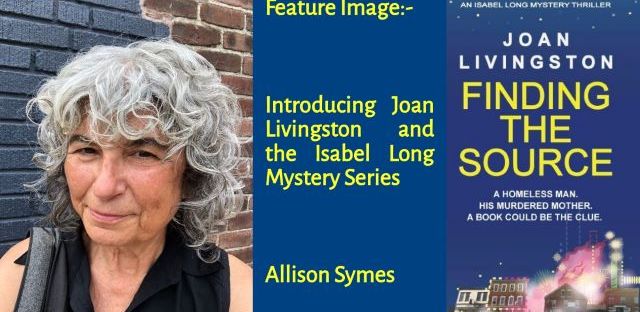
A huge thank you to Joan Livingston, Lynsey Adams of Reading Between the Lines Book Vlog, and Sarah Holbrook for author, book cover and poster pictures for this week’s Chandler’s Ford Today post. I interviewed Joan as part of a blog tour. It is a cracking interview. Do check it out below.
Hope the week has gone well. Lady has had a lovely time with some of her chums, we’ve managed to avoid some of the rain, and the writing is going well. So all good here.
Facebook – General and Chandler’s Ford Today
I’m delighted to welcome Joan Livingston, author of the Isabel Long Mystery Series, to Chandler’s Ford Today for an in-depth interview regarding her latest book in the series, Finding The Source.
The interview is part of a blog tour organised by Lynsey Adams of Reading Between the Lines Book Vlog.
In a cracking interview, Joan shares insights as to how she developed her series and lead character, Isabel Long. In a nice link, given I live in Hampshire, Joan explains how her background as a journalist, including writing for the Daily Hampshire Gazette, influenced her writing.
She also shares how she manages to get the right amount of back story into a novel, given not everyone will come to her work with the first book in the series. Plus she shares three wonderful tips on writing and another three on marketing, which will help any writer. And there is much more too. Do check the interview out.
Introducing Joan Livingston and the Isabel Long Mystery Series – Finding The Source
Lady was overjoyed to see her Rhodesian Ridgeback chum today. They’ve been best friends for a long time and we haven’t seen her for a while so the two dogs were overjoyed to see each other again. This is one thing I love about dogs like these two – the friendship is always there. Humans could learn a lot from dogs at times.
Writing wise, don’t forget to look out for my author interview with Joan Livingston on Chandler’s Ford Today tomorrow. It’s a fabulous one but don’t just take my word for it. See above.
This evening (11th September 2025), I’m supporting a friend’s book launch on Zoom. That’ll be fun. It was and interesting with it.
Will have news to share concerning the next edition of Writers’ Narrative but in the meantime why not check out the current issue, which is packed full of wonderful advice about publishing.
Lady and I didn’t manage to avoid the rain altogether though she did get to see her Hungarian Vizler pal and played with Coco, the lovely Labradoodle. Neither Lady nor Coco cared about the rain. Both had a super run around. Thankfully, both dry off easily enough, which is more than can be said for their owners!
Writing wise, I’ll be talking with Joan Livingston, author of the Isabel Long Mystery Series, about her latest book, Finding The Source, for Chandler’s Ford Today on Friday. This is part of the Reading Between the Lines Book Vlog book blog tour. The interview is packed full of cracking information and insights. Be sure not to miss it. See above. Plenty of interest to readers and writers of crime fiction here too.

Facebook – From Light to Dark and Back Again
It’s a delight to be back on Friday Flash Fiction with my latest 100-worder, The Green Pin. Katie discovers the green pin slipped under her door by someone unknown has huge significance for her. Find out what that is and how Katie reacts here. Hope you enjoy the tale.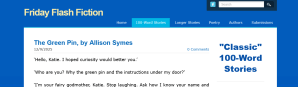
I’ve made no secret of my love of writing prompts and use many kinds to trigger ideas for my own writing. They’ve all paid off. But the lovely thing as a flash fiction writer is the fact I can use each prompt and get different stories out of it.
For one thing, I can write my prompt to 100 words, 250 words, 500 words, etc.
I’d have the choice of using the same character for each story or making up different ones.
If I use one character throughout, I can show more of their story with the increasing word counts.
If I use different characters, I could use the prompt itself as a common link and so have some linked flash written.
Either way I have options which I always like.

Though flash is necessarily on the short side, it doesn’t mean there are any limitations to the themes it can tackle. Indeed by focusing on the character, flash fiction can show the reader the big themes and the impact on those characters. As the word count is limited, the impact isn’t diluted.
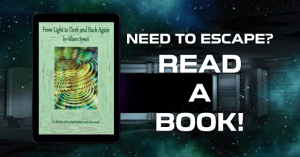
One of my tales from From Light to Dark and Back Again is called They Don’t Understand and is what I call a slice of life tale where my character looks back on his life. You can see the impact losing his wife is having on him as he relates their joint story together. He doesn’t have to spell everything out.
The joy and strength of flash is inference and it is a powerful tool here. For this kind of story, I think it is the best way to go. The character’s voice grabs your attention, there are no boring bits, he focuses on what you need to know, and it doesn’t go on for too long.
Neither does he tell you the theme – he shows it.
Fairytales with Bite – Something Spectacular
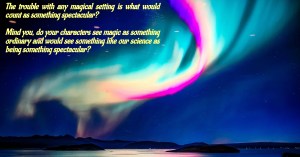
The trouble with any magical setting is what would count as something spectacular? Mind you, do your characters see magic as something ordinary and would see something like our science as being something spectacular?
I guess this is a matter of perspective but what perspective would your characters have? Do they agree with the overall consensus here or do they think differently?
What would your world consider as a spectacular development for them? Would it be a case of being able to do more with the magic or other powers they have or to develop something which is different to that so they have alternative sources of power to use?
And what would the general public make of it all? Who would be behind the spectacular development? What drove them to do it? What obstacles do they have to overcome?
Definite story ideas there.
This World and Others – What Passes For Normal Around Here?
Now I think this would be a great title for a novel or short story. If your setting is a magical world, just would be considered normal? It would be different from what we would think here.
There are always those who think outside of the box so their definition of normal is likely to be different from that held by the majority. How would the “misfit” get on given this? Or would they be encouraged given your setting’s great inventions tend to come from those who do dare to be different?
Also did your world’s definition of “normal” change over time (and maybe partly due to different inventions coming along changing life and attitudes?). If your world interacts with other species/planets, how has that changed their definition of normal?
Plenty of food for thought for stories there, I think.
MailerLite – Allison Symes – Newsletter Sign up

WRITERS’ NARRATIVE SUBSCRIBER LINK
As I’ve shared September’s issue above, I thought I’d share a back issue of this fabulous magazine here.
AMAZON AUTHOR CENTRAL – ALLISON SYMES

https://platform.twitter.com/widgets.jsIt’s a delight to be on Friday Flash Fiction with my latest 100-worder, The Green Pin. Katie discovers the green pin slipped under her door by someone unknown has huge significance. Find out what that is and how Katie reacts here. Hope you enjoy the tale.https://t.co/0iWnexPXZR pic.twitter.com/VuTj9zHTgu
— Allison Symes (@AllisonSymes1) September 12, 2025
https://platform.twitter.com/widgets.jsIntroducing Joan Livingston and the Isabel Long Mystery Series – Finding The Source https://t.co/8xB05Rphyj Pleased to welcome Joan Livingston to CFT to discuss Finding The Source. She discusses how her journalistic background influences her work, back story in novels, and more.
— Allison Symes (@AllisonSymes1) September 12, 2025








 Allison Symes: Collected Works