BEING CREATIVE

There’s a definite theme tonight!  (Sometimes I don’t plan that, a theme emerges from the different things I’m writing but this theme was planned and is inspired by my wondering if, when you’ve been creating works such as stories for some time, do you still appreciate the joy of doing so?  Anyway, more to follow).

Facebook – General – and Chandler’s Ford Today

This week’s Chandler’s Ford Today post talks about creativity being good for you. It is too!

Being creative has proven health benefits (mentally and physically) and my post talks about that and why creativity is a wonderful thing.

I do sometimes wonder if we appreciate it enough at times (which is my inspiration for writing this post). Whether you bake cakes, write stories, play music or what have you, if you have been doing this for a long time, can you end up taking the joy of creating these things for granted?

I think so and I hope my post helps to give us all a renewed sense of enjoyment about what we do creatively.

This slideshow requires JavaScript.

Facebook – General

My CFT post this week will be on the theme of creativity being good for you. And it is – mentally and physically. I feel much better once I’ve completed something creative during the day – whether it is flash fiction, a Facebook post (😀), or baking a cake.

The nice thing about creativity is anyone can join in and you can find your own level where you want to be. For those wanting to develop creative skills further, there are courses, online as well as the traditional evening classes/OU etc. I’ve found that though my major creative interest is in writing, I have a greater appreciation of all of the arts, music especially.

I also think if you are involved in one art form, you have an appreciation of the hard work that goes unseen behind others. I learned years ago that if a piece of writing looks easy to read then you can bet that author worked their socks off to get it to that point. (Other hosiery accessories are available!).

This slideshow requires JavaScript.

Facebook – General

What is the most helpful aspect of a book review? To be fair, there is more than one! There is obviously the publicity aspect but when people have said what they liked, or what they felt didn’t work so well, that has been what I’ve found most useful to know.

Okay nobody is going to please all of the people all of the time and there are many sound reasons not to even try doing that, but a general consensus does mean you are on the right lines (or not, as the case may be!).

Incidentally I can vouch for the fact Dawn, Paula and I do all appreciate the reviews we have had for books where our stories have appeared!

Paula Readman, Dawn Kentish Knox and Allison Symes and books - with kind permission from Paula Readman - Copy

Paula Readman, Dawn Knox and I at the recent Bridge House celebration event. Many thanks to Paula for the image.

Such appropriate decor for the Bridge House event in a pub room

This was part of the pub decor at the place where Bridge House had their event. Very apt! Image by Allison Symes

20171125_095900.jpg

At the back are some of the other books I’ve appeared in. Image by Allison Symes

Facebook – General

Am currently listening to the wonderful Planet Suite by Gustav Holst on Classic FM. Each piece of music within the suite tells its own story. (My favourite piece is Jupiter, the bringer of jollity. It also contains what many will know as the hymn tune for I Vow To Thee, My Country).

Holst used music to convey his thoughts. Writers of course use words. But the way you put them together (and the order) makes a huge difference to meaning. So are your words having the impact you actually mean them to have? Of course, this aspect can be “sent up” for comedic effect (hence the pun, the innuendo etc) but it is true you do have to know the rules before you break them!

Facebook – From Light to Dark and Back Again

Why does editing always take longer than you think it will? Answers on the back of a postcard… Seriously though, I do give myself plenty of time for this and it STILL takes longer than anticipated. I think there must be an unknown Murphy’s Law for Writers happening here. Talking of which:-

1. You tell people you’re a writer, they suddenly need a pen for something, and you cannot find one on you for love or money. Cue one embarrassed writer!

2. Your printer cartridge always runs out halfway through the printing of the story or book you are desperate to get out to your publisher.

3. You know you have more printer cartridges, you remember ordering them, but you filed them somewhere safe and now cannot remember where that place is!

4. You have a power cut just as you are getting to the end of your story and you forgot to back up so you lose what you’ve just written and have to start again from where you HAD last backed up. You discover you have words in your vocabulary you make a mental note NOT to use in front of the vicar when they next call in.

Guess which of these have happened to me!

Contributions to the Murphy’s Law List for Writers very welcome!

Facebook – From Light to Dark and Back Again

What is your favourite way to start a story? I must admit I don’t have one single way. And so much depends on whether I’m writing flash fiction or a standard length short story.

I am very fond of being right inside my main character’s head from the start. I like to think of this as hitting the ground running.

I also like to start with a brief sentence or two scene setting. Using a time as part of this can be handy as if the opening line says it is 4 am in mid-summer, you’ve got an immediate image of light levels, whether it is likely to be warm or not and so on. Setting place names can be great too. Mid-summer in the UK is vastly different to mid-summer in Australia, say.

I always look for the words that give me the strongest images whichever way I start though. It saves on word count and has the greater impact on your reader.

This slideshow requires JavaScript.

Facebook – From Light to Dark and Back Again

I sometimes use the opening line in a short story competition to inspire my flash fiction. (Sometimes I write up the short story and enter the competition!).

It can be an interesting challenge to see what you can do with an opening line meant to generate a 1500-words short story and see if you can make it work for a tale of under 1000 words (and in my case usually around the 100-words mark).

I must admit I much prefer opening lines competitions to those where you have to finish with a certain line. I think there is more freedom in taking an opening line and running with it rather than being told where you have to stop!

What competitions do you prefer?

Facebook – From Light to Dark and Back Again

The challenge of writing a complete story in the shortest number of words is not a new one but it does make you increase your vocabulary. (As a flash fiction writer, you will always be on the lookout for those words that can convey stronger meanings than others or can convey more than one meaning. Saves on the word count (!) and the rightly chosen words will give your story a more powerful impact).

Does that mean you’ll never write longer fiction again? Not a bit of it but working to a tight word count helps develop your editing skills and that is always useful, regardless of what you write.

Goodreads Author Programme – Blog

I have too many favourite characters to name them individually, as I expect is the case with most of us, but I do like particular types.

My overall favourite is the unexpected hero. Think Bilbo and Frodo Baggins! I admit being on the short side myself, I probably was always going to favour the idea of a hobbit as a hero!

I also love those characters who suffer injustice but win through in the end. That covers everything from Cinderella to the Prisoner of Azkaban to The Man In the Iron Mask.

I don’t have a problem with talking animals in stories as long as they make sense! Ideally, I prefer it when the animals know more of what is going on in the story than the hero does. (Hello, Puss in Boots!).

Characters have got to be appropriate to the fictional world in which they’re set so hobbits could only be in a fantasy world. Mind, if I had to live anywhere in fiction, I can think of far worse places than The Shire. (Mordor, for one!).

So what are your favourite character types and why?


Fairytales with Bite – Appreciating What You Do

My Chandler’s Ford Today post this week looks at why creativity is good for you and it was inspired by my wondering whether when you’ve been creating, say, stories for some time, do you still appreciate what you do as much as perhaps you should?

I think it is easy to take the joy of creating anything for granted and I hope this post encourages all of us to take a fresh look at what we do creatively and almost, if you like, fall in love with it all over again.

I also think it is a good thing for writers to be open to trying different forms of writing.  It flexes your writing muscles, you may well discover a form you become addicted to (in my case, I found flash fiction or maybe it was a case of flash fiction finding me!), and you get to find out what you really want to write.

It also means when successes come your way, no matter how large or small, you appreciate those more too and that can never be a bad thing.  One way of appreciating what you do is read your work out.  If you are gripped by the tale, others will be too.  Images below were taken by me and are from the Bridge House celebration event.  The range of stories read out was great.  I took part too.

20171202_154725.jpg

Gill James reading from her January Stones collection. Image by Allison Symes

20171202_160214.jpg

Dawn Knox reading some of her flash fiction. Image by Allison Symes

20171202_162639.jpg

Margaret Bullyment read a wonderful justice story at the Bridge House event in December. Image by Allison Symes

20171202_160630.jpg

Robin Wrigley read a poignant, character driven story. Image by Allison Symes

Lovely having an appreciative audience, pic taken by Dawn Kentish Knox

I read three stories from From Light to Dark and Back Again. Many thanks to Dawn Kentish Knox for the picture!

This World and Others – Enjoying the Creative Process

My latest Chandler’s Ford Today post takes a look at why being creative is beneficial (and for science as well as the arts too).

I think it is vital to enjoy the creative process to get the most from it.  That doesn’t mean it won’t be difficult at times.  You will feel like swearing (and may do so!) when the words don’t seem to flow so easily as they usually do, but if, generally, you love what you do as you create your characters and stories, then you can know you’re on the right lines. That love will keep you going (along with support from other writers whether that’s online or in a good wriitng group) throughout those tougher times and the inevitable rejections we all collect as if they were going out of fashion.  The one great thing is I can’t think of any writer who hasn’t felt in need of that support at times.  You are definitely not the only one!

It is difficult to say what my favourite part of the creative process is but I do feel elated when I know I’ve got a character right.  I know then that what I get them to say or do is right for them, and their story will flow much more easily as I am writing from deep knowledge of who and what and why they are the characters they are. I also think that will come through in the writing itself and make for a better read for future readers.  I also feel elated when I’ve got a first draft down as I know I’ve got something to work with then (and it can only get better!  All first drafts need work, even Shakespeare’s would have done!).


Events and Editing

Sorry for the gap in posts but lots going on, all positive.  More below.

Facebook – General

Not been around much the last couple of days. Have been editing a series for Chandler’s Ford Today, which has been interesting and good fun to do but time-consuming! All good experience though. The series will appear fairly soon.

My post this week will be the start of an occasional series looking at pivotal moments in history. Tomorrow’s post will focus on Bosworth and how that affected us in Hampshire. More details tomorrow but when you consider Hampshire’s symbol is the Tudor Rose, well the outcome of 1485 mattered! I somehow think Hampshire would have chosen a different symbol had Richard III won!

Looking forward to going to the 10th-anniversary celebrations at Winchester Discovery Centre on Saturday. I’ll be giving a short talk on flash fiction (at about 11.45) and giving readings from From Light to Dark and Back Again. Should be good fun.

And if you’d like to discuss flash fiction, writing for the small presses and online magazines, do come over and have a chat.

Meanwhile, Lady settles in…

Facebook – From Light to Dark and Back Again

Sorry for the gap in posting but I have been editing a new series for Chandler’s Ford Today which will start soon. It has been interesting and fun to do but time-consuming. All good experience though! Can help you look at your own work with a more critical eye too and that is useful.

I’m going to be at the Winchester Discovery Centre this Saturday as part of its 10th-anniversary celebrations. I’ll be giving a short talk on flash fiction and reading from From Light to Dark and Back Again.

Do pop over and say hello if you can. I’m also happy to talk to any writer who might like to know more about writing for the small independent presses and online magazines.

There will be a wide variety of events going on at the Discovery Centre and the local authors’ stands are one part of this. And I’m all for libraries and local writers supporting each other as previous Chandler’s Ford Today posts from me show!

Should be good fun. Hope to see you there.


WANT TO KNOW MORE

ABOUT FLASH FICTION?


COME AND TALK TO ALLISON SYMES

AUTHOR: FROM LIGHT TO DARK AND BACK AGAIN


20170917_145438.jpg

Enjoying writing the follow up to FLTDBA. Image by Allison Symes

PUBLISHED BY CHAPELTOWN BOOKS


SHORT SNAPPY TALES TO KEEP YOU ON EDGE OF YOUR SEA

100 WORD STORIES 

FAIRYTALES WITH A TWIST 

SUPERNATURAL STORIES 

AND CHARACTERS YOU WOULDN’T WANT TO MEET IN LIFE


COME AND FIND OUT MORE…


THERAPEUTIC WRITING AND USING FLASH FICTION TECHNIQUES ELSEWHERE

Facebook – General

Why can writing be therapeutic? I suppose because it takes you into your own invented world and, while you’re focussing on that, it distracts you from other things (even if only for a short time. Sometimes that short distraction can make a huge difference as to how you handle the situation you’re in/worrying about. When it’s a bigger life issue no amount of distraction can solve, by writing for a while you at least take a break).

You are also focussing on your characters’ needs and what is getting in the way of them having these met. One of the best things about fiction writing is the way it can help encourage your own empathy with others because as you work out why your characters are acting in the way they are, that whole process can give you insights as to why “real” people act the way they do.


This slideshow requires JavaScript.

Facebook – From Light to Dark and Back Again

The most important skill you pick up when writing flash fiction regularly is that of editing, as I’ve mentioned before. The great thing is you can then apply what you learn across the board of whatever it is you write.

What do novelists most dread writing? The synopsis and/or blurb. Writing the book is hard work but easier! You are in control of that after all and every writer at least starts off by writing to please themselves first. Condensing your precious prose into a few well-chosen lines is not easy but taking the approach, you will treat writing your synopsis as if it WAS a piece of flash fiction, can be a way of tackling this task.

Flash stories focus on only those things that really matter and so treating your synopsis, in the same way, is not a bad way to go. Every line of your synopsis must reveal crucial information to your reader, in this case, a potential agent/publisher. It is working out what is the crucial-can’t-do-without-this information that is the really tricky part.

Here I think you need to ask yourself what are the bare bones of your novel? What are the things an agent/publisher MUST know and then leave the rest out? Flash fiction writing will help you cut out the wasted words that don’t move your synopsis onwards. Good luck!

This slideshow requires JavaScript.

SPREADING THE WORD ABOUT WRITING

Facebook – General – and Chandler’s Ford Today

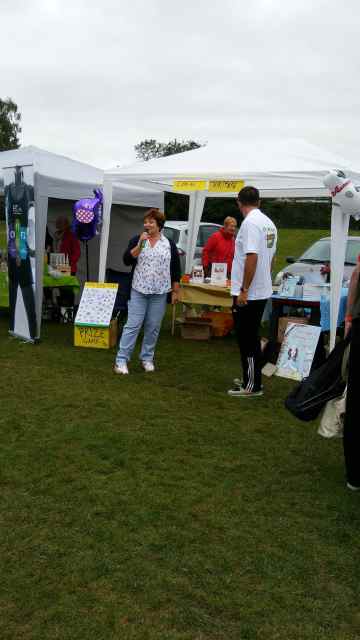
My latest Chandler’s Ford Today post takes a look at the recent Hiltingbury Extravaganza. It was the first time I’ve been behind a stall too. A group of local writers, including yours truly, were manning our book stand and I’m glad to say we all sold copies of our books.

My post gives an overview of the whole Extravaganza and I also share why I would not have entered my border collie, Mabel, into the Most Obedient Dog category in the dog show that was a very popular feature. Mind you, the pets supplies stand was also popular, especially given so many of their toys and treats were at “dog level”!  I also look a little at why it was so useful local writers banded together to support each other here, a topic I look at again in my other posts below.

FeatureImageHE2017

Facebook – From Light to Dark and Back Again

Have I found writing flash fiction useful with my other writing?

Yes. Firstly, as flash has proved incredibly useful for tightening my editing skills and working out what words are carrying their weight and which are not. As a result of that, learning not to be afraid of the editing pen and being ruthless with your own work when needed. Then there is the appreciation of the need for clarity. You have to be to the point with flash fiction.

I’ve always loved character led fiction and, to my mind, flash fiction has to be precisely that. There is no room for scene setting etc so you must go with what/who drives the plot – the characters. I’ve always enjoyed getting straight into my characters’ heads and seeing where that takes me. This is a positive asset when it comes to writing flash.

Am greatly encouraged by the increasing numbers of competitions for flash fiction too, a lot of which are online. (Great, no postage costs!).

The wonderful world of stories... Image via Pixabay.

The wonderful world of stories… Image via Pixabay.


So much marketing is done online - image via Pixabay.png

A lot of flash fiction competitions are now online so no postage costs!  Image via Pixabay


Fairytales With Bite

One of the great things about events such as our Hiltingbury Extravaganza is that it gives local writers a chance to show the community (a) there is a group of local writers in it (!) and (b) to show, and hopefully sell, what we do!

It was lovely meeting a good range of people interested in books, publishing, stories (or any combination!) and we all talked about why a group of local writers had got together in the first place.

The Extravaganza is a good example of an event where one writer would not have done this on their own.  (There are insurance costs, space hire to sort out, plus having to put your stand up and down again all on your own.  It made far more sense for a small group of writers to do all this between them and share the costs as it made the event viable for us all.  Not sure it would have been for any one of us).

Having said all that, we managed to spread the word about what we do, why writers group together to help one another and sold our books so it was a good event!  Any writer thinking of banding together with others should seriously consider it.  One other advantage was our stand ended up having a wide range of fiction on it from my flash fiction (From Light to Dark and Back Again) to romantic comedy to short stories set in our area to YA fantasy/time travel.  (More details of these in my CFT post).  The upside of this, of course, is it meant it was far more likely that at least some of our books would appeal to some of the people and this did prove to be the case.

Spreading the word is time consuming and you can never know exactly what will come from it but unless you do try to put the word out there, nobody will know what you do.  So I agree with the old proverb that “nothing ventured is nothing gained”.  And having support from other writers, and being supportive in your turn, is phenomenally helpful when doing this.  Good luck!


A corner of books

A corner of books.  Image by Allison Symes


More of the books

More of the books.  Image via Allison Symes


This World and Others

Writing is one of those things that keeps on giving.  Not only is there the joy of creating your own work (hopefully to be followed by the even greater joy of seeing it published!), but your reading should increase and widen.  Why?  To write well is to read well.  I can’t think of any writer who doesn’t read.  So in many ways when you become a writer, you become a deeper reader too (in terms of reading more widely and continuing to explore your own love of books anyway).  (The link incidentally takes you to this post on my Weebly site but there is also a small slideshow on that).

But one other thing that writing gives is an immediate topic of conversation at writers’ conferences and so on.  I have found it incredibly helpful to break the ice with people by asking what they write, have they been published or are they working on it and so on, and before you know it, they are asking the same (and other questions of you and lo and behold you have a conversation going!  This is the way long term writing friendships start.

Then there are the competitions and the thrilll you feel if you are shortlisted or win.  (A little vindication goes a long way for most writers!).  And when going out and about to events such as the recent Hiltingbury Extravaganza, you can talk about why writers group together to help each other, share news of creative writing classes in the area and so on.  So write, have fun, talk about writing, love that too and in all these things, we spread stories, the value of literature of all kinds and so on.  Quite a worthy thing to do really (and if we sell our books too, even better!).


Barbara hard at work spreading the word about books and ours especially

My colleague, Barbara Sedgwick, spreading the word about the writers’ stand at the recent Hiltingbury Extravaganza.  Image by Allison Symes


Karen Stephens shares what the writers' stand is about

My colleague, Karen Stephen, shares with the crowds what is on offer at the writers’ stand.  Image via Allison Symes


SELF-CENSORSHIP AND JUDGEMENT

I concede the above title is not the most fun one I have ever invented but I hope my thoughts in my Fairytales with Bite (judgement) and This World and Others (self-censorship) prove useful.

FAIRYTALES WITH BITE

All writers sit in judgement on themselves.  Sounds harsh but it is true.  We have to judge what is relevant for our stories and articles etc so we can edit efficiently and well.

The thought of judgement came up for this post partly as a result of Part 2 of my Chandler’s Ford Today interview with Gill James.  This does look at censorship, including the self-imposed variety, as we continue to discuss writing historical fiction and its joys and woes.  (One great joy, which is also a woe, is being tempted to use all of that lovely research which was needed to write the book but, if it were included, would weigh said book down and put readers off with far too much information). I also talk more about this issue on my This World and Others site.

This question of judgement is a strange one for writers.  In many ways we are the worst people to do it.  Why?  I think it fair to say most writers swing between thinking everything we write is total rubbish or, conversely, is a work of genius and not one word must be cut!

The truth, as with most things, is somewhere in the middle!  Yes, you’ve got good work here but it does need at least one damned good edit to get rid of what your reader doesn’t really need to know to enjoy and get the most out of the story/article.  The judgement is in working out what is needed to be known and what isn’t.  This is where that phrase “never be afraid to kill your darlings” comes in.  Everything has to be relevant to the story.  Everything has to move it on in some way.  Whatever is not doing either of those things (and ideally both) is what comes out.

I’ve also found I have to put work away for a while before being able to read it again with a less prejudiced eye.  I try to read what I’ve written, after said suitable gap, as if I was the reader, as if I’d NOT written it and I ask myself questions as I go through the piece (mainly is this relevant?  Do I need to know this?  Would the story sag without this information etc etc?  What do I make of the characters now I am reading their story in the cold light of day so to speak?).

It has taken me a while to realise I cannot judge my story or article immediately.  I really must put it away for a bit but it does mean when I return to it, I can wear my editor’s hat comfortably and get on with what I know needs to be done:  getting rid of the rubbish I wrote in that first draft!


Fill that blank sheet with ideas from non-fiction as well as other fiction works - image via Pixabay

The start of the process, though no writing is complete without at least one good edit.  Image via Pixabay.


Well, what is your story - image via Pixabay

Being able to judge what is relevant to your story/article is vital.  Image via Pixabay.


THIS WORLD AND OTHERS

Part of my interview with Gill James on Chandler’s Ford Today for this week looks at the issue of censorship, including the self-imposed variety. Is there ever a case for doing this?  I think so – and I recommend a read of the interview so you can see what Gill thinks about it.  Her experience of writing historical fiction is based on writing her book The House on Schellberg Street, which is set in Germany throughout World War Two, so censorship would have been an issue for her characters and something they had to work with.

In many ways, any writer who edits their work (and I would hope that is all of us!) self-censors.  We look at the way we originally wrote a piece, realise we can write it with stronger words and so on and cut out the deadwood.  We deliberately make choices as to what remains.  Also we have to work out what our reader really does need to know about our characters to get the most out of the story.  I can’t think of any fiction writer who, preparing biographies for their characters (whether detailed or a simpler outline), puts every single thing into their stories!  They would become top-heavy with information for a start.  As for word count restrictions forget it, you’d never meet them if every single thing you created went into your finished piece.

The important thing, I feel, is whether writing non-fiction or fiction, is to ask yourself if the information is relevant to the reader?  If you left the information out, would the article or story still stand?  If the answer to that is no, then the information goes in and stays in!

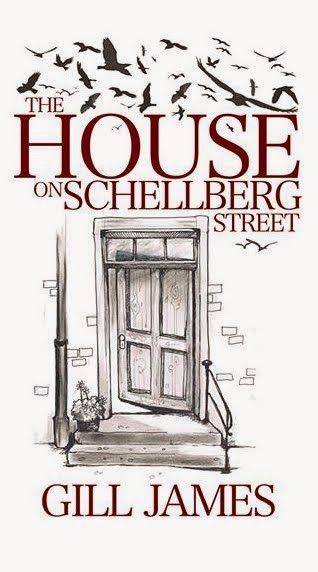
18frontcoverTHoSS

Cover of The House on Schellberg Street.  Image supplied by Gill James.  Working in historical fiction will mean dealing with censorship, especially if writing about an era where it is prevalent.

One thing that has been true throughout history is the need for a good edit! Image via Pixabay

Editing immediately means accepting you are self-censoring to a certain extent, yet without it your story will be weaker. Image via Pixabay

CHANDLER’S FORD TODAY/FACEBOOK – GENERAL

Part 2 of my interview with Gill James looks at the issue of censorship.  Gill also shares her joys and woes when it comes to writing historical fiction and also offers some very useful tips for writers new to the genre. I hope to be writing more “writing in other genres” posts for CFT later in the year, including crime and ghost stories.  Will post more details when I have them.


Note the dates on the postmarks - clear censorship - image via Pixabay

Note the dates on the envelope, clear indications of censorship.  Image via Pixabay.


FACEBOOK – FROM LIGHT TO DARK AND BACK AGAIN

I share some thoughts on competitions and whether titles count as part of a word count limit in tonight’s post.

https://www.facebook.com/plugins/post.php?href=https%3A%2F%2Fwww.facebook.com%2Ffairytaleladyallisonsymes%2Fposts%2F612259645829514&width=500


Copyright (never enter a competition asking you to give away ALL rights) - image via Pixabay

Never enter a competition which asks you to sign over ALL your rights. If in doubt seek advice from writers’ groups, the Society of Authors etc.  Image via Pixabay.


You can't beat a good book. Image via Pixabay.

WHEN IN DOUBT…

FAIRYTALES WITH BITE

When In Doubt looks at editing as my motto when deciding whether something should go into a story or not is when in doubt, leave it out.  If I have to think too hard about whether something should go into the story, then I inevitably won’t put that in as it will not weave seamlessly into what is already written.  I share what I do in the way of editing here too.

THIS WORLD AND OTHERS

What I look for in a story applies across all story forms.  I list five different things here though the biggest and most important one (for me anyway) is any decent story has to have strong characterisation.  Do you agree with my list?  Can you add to it?

FACEBOOK PAGE

I discuss what, for me, makes for a good writing session.  Short post tonight.

https://www.facebook.com/plugins/post.php?href=https%3A%2F%2Fwww.facebook.com%2FAllison.Symes.FairytaleLady%2Fposts%2F898012870301693&width=500

The magic of stories. Image via Pixabay

The magic of stories. Image via Pixabay