
Image Credits:- All images from Pixabay/Pexels unless otherwise stated. Book cover images from Chapeltown Books and Bridge House Publishing. Screenshots by me, Allison Symes.
Hope you have had a good weekend. My workshop at the London Jesuit Centre went down very well and many thanks to all who came. Also for the lovely feedback. Happy writing to you all! (I plan to have a write up about this for Chandler’s Ford Today once I have also ran my flash fiction workshop at the Association of Christian Writers Golden Jubilee celebration weekend in June. Meantime, there are pictures taken by me from the event throughout the post).


Facebook – General
Strange day – gorgeously sunny and warm and by this evening it was pouring down. Fortunately Lady and I missed the worst (we’re never sorry about that) and she got to play with her pal, Coco, today.
When do you know you really are a writer? Is it when you get your first publication credit or contract or you’ve mapped out your self-publishing route? Not necessarily! I would argue it is when you recognize that writing can not be part of your life and you will write regardless of anything else. Doesn’t matter if you only have a few minutes a day or several hours. It is the commitment and regular writing that matters I think.
Also the acceptance that rejections happen to everyone (and even more so not hearing back from a publisher or a competition) is an important factor. Another one is recognizing nobody’s work can ever be described as perfect. It is a question of making it the best you can make it at the time you wrote it.
I can look back on several of my earlier stories and see how I could improve them. They act as a record of where I was at the time and as encouragement to keep going and to continually try to improve on what I do. That is the challenge of writing – to keep on improving. Resting on your laurels doesn’t encourage you to see what else you might do either.
Hope your week has got off to a good start. Changeable weather here again though Lady got to play with her two best girlfriends today and all three dogs went home very happy. It is quite something to see a Collie cross, a Ridgeback, and a Vizler playing! You do learn to get out of the way quickly, mind you.
Many thanks for the comments in so far on Creation, my latest Friday Flash Fiction tale. The feedback on this site is encouraging and much appreciated.
It’s almost time again for my monthly Authors Electric spot – my post will be up on Wednesday (18th May so will be included in my next round up here) and I will be talking about Why I love the Shorter Fictional Forms. There you go! A good example of writing about what you know! 
More like an autumn day out there today than a spring one!
I plan to write up a bit more about my workshop yesterday for the London Jesuit Centre later in June, after I come back from The Hayes in Swanwick after the Association of Christian Writers’ Golden Jubilee weekend. I will be running my flash fiction workshop there and am looking forward to doing so and catching up with friends old and new.
That means I continue with my In Fiction series for Chandler’s Ford Today and next Friday’s post will be about Reading, Rhythms, and Resolutions In Fiction. There’s some nice alliteration for you!
Don’t forget I send out my author newsletter on the first of each month so please head over to my landing page at https://allisonsymescollectedworks.com if you would like to sign up for tips, prompts, news etc.
And I got my story off for one of the competitions I always have a try at so that rounds off the week nicely! As I mentioned to someone at the workshop yesterday, I really don’t miss having to send everything off in the post. I am so grateful for email submissions. It’s quicker and I can know my story got there straight away too!


A huge thank you to the lovely people at the London Jesuit Centre for making me so welcome today (Saturday, 14th May 2022). I ran my workshop Finding Your Voice – Writing Fiction – How to Get Started there this morning and there were some fabulous discussions and questions as a result of the workshop material. Many thanks all – I love interactive workshops whether I’m running them or attending them!
Also a quick trip down memory lane here as I always used to try and “buy” Bond Street on the old Monopoly board when playing this as a kid and my Tube Station stop today – you guessed it, Bond Street!
In other news, as they say, a big thanks also to all who have commented on Creation, my latest story on Friday Flash Fiction.


Facebook – From Light to Dark and Back Again
I’m sure we’ve all heard the expression “show, don’t tell” and it took me a long time to work out what that meant. Writing flash helped me enormously here.
When I “clicked” it was all about getting your characters to say/do things and not the author, I was away. (Catherine walked through the wall as if there was nothing to it as opposed to me saying something like The character, Catherine, did this, did that. Oh and by the way she’s a ghost. My first example shows you she must be a ghost without my spelling it out).
The flash element helped me develop this because of the limited word count. I had to ensure my characters were doing all of the work.It’s a bit like a play – what does the audience want? To see the actors perform the story (or listen if it’s an audio play). What they don’t want are the stage directions. Those aren’t for them.
Likewise, a reader doesn’t want to see my early drafts of a story. They want to see and read what my characters get up to – and it has helped me to remember that it is the character’s story.
Why am I writing this character’s story up? What is so important they get to do this? Only answer there is for the characters to show me (and ultimately the reader) through what I get them to say and do. The only people readers want to hear from are the characters.

It’s Monday (16th May 2022) and time once again for a YouTube video. Hope you enjoy my latest, 47. Linda has an unlucky number but it’s not one of the usual ones – she has no problem with the number 13 for example. Why 47? Find out here!
I suppose one of the reasons I love characters so much in any kind of story is I usually understand where they are coming from, even if I still disagree with their attitudes and actions. I want to then see how things pan out. Did those characters make the right choices for them and their situation after all or not? That is the big draw of fiction and I need characters to make things happen.
Okay, sometimes those things will make the initial situation worse but a “good” character will find ways of overcoming that/learning where they went wrong and put things right. In flash fiction, naturally, all of that happens so much more quickly so you get the payback more quickly.
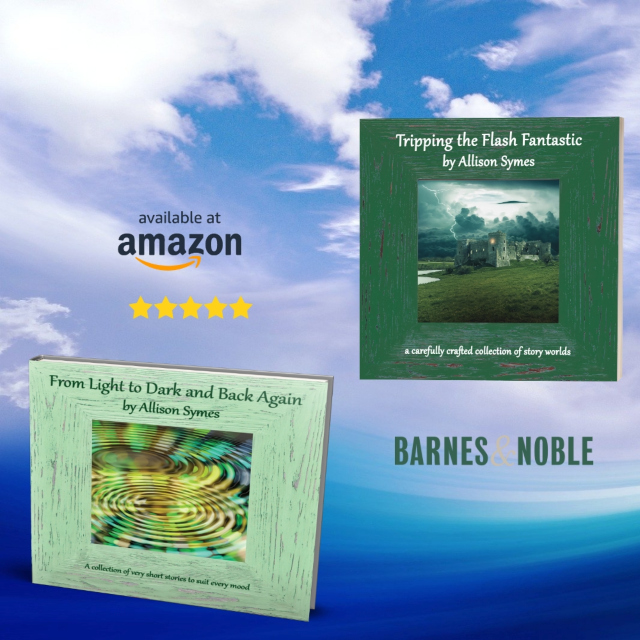
And for any kind of story collection, I like a mixture of moods of story too. It is why I called my first book From Light to Dark and Back Again after all!
I was sharing a flash piece today as part of my workshop Finding Your Voice – Writing Fiction – How to Get Started for the London Jesuit Centre today (Saturday, 14th May 2022). The great thing about doing this is that it doesn’t take too long, flash can illustrate points quickly, and it is easy to demonstrate the point of hooks, powerful opening lines etc.
Also you can show a character does not necessarily have to be right about conclusions they’ve reached for themselves but what should happen in stories like that is the reader should have empathy with that character. They should be able to understand where the character is coming from even though they think the character should have reached a more positive conclusion, say.
Stories, of any length, should make you react, make you feel something, make you care about what happens to the character (and something does have to happen. There should be a conflict which needs resolving. It should matter to the characters that it is resolved).


Goodreads Author Blog – Books Acrostic
B = Brilliant books in all sizes and genres, sure to be something to suit you.
O= Original storytelling from contemporary writers or do you fancy the
O = Old Classics? Why choose – have both!
K = Kindles now mean you can now have an overflowing electronic book shelf as well as a physical one!
S = Stories you read may well inspire the ones you write.
A = Adventures or animal stories – enjoy them all.
C = Children’s fiction, YA, adult, – work your way through!
R = Reading feeds the mind, liberates the imagination.
O = Off in a world of your own – maybe when you read but then the author has done their work well if that is the case.
S = Scary or silly – there are stories for both.
T = Twist endings are not just for crime tales though there are plenty there.
I = Imagine what it might be like to live in a different world – books can take you there.
C = Characters – it’s all about the characters for me whether I love them or loathe them. They have to make me feel something. The very best linger in the mind long after I’ve finished reading the book.

https://platform.twitter.com/widgets.jsliked Allison Symes's blog post: Books Acrostic https://t.co/48srWxOKD5 via @goodreads I share an acrostic all about books this week for Goodreads. Hope you enjoy it. pic.twitter.com/1rrGooAgx0
— Allison Symes (@AllisonSymes1) May 14, 2022
https://platform.twitter.com/widgets.jsIt’s Monday and time once again for a YouTube video. Hope you enjoy my latest, 47. Linda has an unlucky number but it’s not one of the usual ones – she has no problem with the number 13 for example. Why 47? Find out here! https://t.co/VaNAxDzWKs
— Allison Symes (@AllisonSymes1) May 16, 2022




 Allison Symes: Collected Works