A busy few days and I also have a new flash fiction story to share with you.
Facebook – General – and Chandler’s Ford Today
My latest Chandler’s Ford Today post sees me resuming my series on 101 Things to Put into Room 101. This week’s post sees me reach No. 45! Do you agree with my choices? Comments welcome in the CFT comments box.
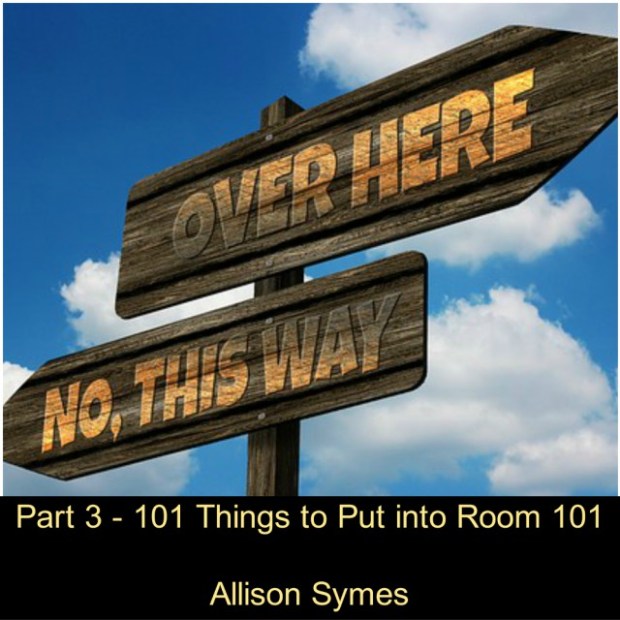
My latest CFT post. Image via Pixabay.

Decisions, decisions and a not terribly helpful signpost. Image via Pixabay.

This notice may make you smile though. Image via Pixabay.

The vault of doom aka Room 101. Image via Pixabay
Facebook – General and More Than Writers Blog (Association of Christian Writers)
Busy, busy. I have a short post up on Chandler’s Ford Today regarding Richard Hardie’s author events at the Winchester Discovery Centre on 3rd April. If you like YA fantasy and are in the area, why not pop along? Entry is free (though there are books to buy!). See http://chandlersfordtoday.co.uk/local-author-news-richard-…/
My usual Friday slot tomorrow sees me resuming my 101 Things to Put into Room 101 series. I incorporate everything from snow to shoes that pinch your feet (though if they pinch anything else, you’re doing something very odd with your shoes!).
My monthly post for the Association of Christian Writers is online tonight. My spot is the 29th of each month. This means I get every three Februaries off!
My post is Real Writing = Real Characters and talks about the importance of honest portrayal of characters. If they’re right so-and-sos, then you portray them as such. (How you do that is up to you but there must be no doubt in the readers’ minds that the character IS a right so-and-so!).

Great characters = great books. Image via Pixabay.

Great characters will engross you. You will lose time reading their stories. Image via Pixabay.

Books invite you into their world. Go! Image via Pixabay.

Keep the writing real, no matter how fantastic the setting. Image via Pixabay.

Books should keep you gripped and that is down to the characters. Image via Pixabay

Where will your characters take you? Image via Pixabay
Facebook – General
What are your characters’ favourite memories and why? How do they influence their actions in your story? Can showing some of their memories help you create a richer, more fully rounded character? I think so.
Now with flash fiction, there isn’t the room for a lot here so you have to pick the most important memory and focus sharply on that. Or you tell the story where the character is looking back on something.
For example, in my flash tales, My Life and Changing My Mind, I have my take on Pride and Prejudice told from the viewpoints of Elizabeth and Mr Darcy, each with their own story. To combine them in one tale would have made the stories lose impact (though it would still have been well within the flash fiction word count limit). Mind, it did make it easy working out where they had to be in From Light to Dark and Back Again – right next to each other!

Let the ideas flow and let journeys encourage that! Image via Pixabay

Time flies when reading or writing. Image via Pixabay

Books are the keys to knowledge. Image via Pixabay

What new worlds and scenes will books show you? Image via Pixabay

Some very strange creatures are in books. Image via Pixabay
Facebook – From Light to Dark and Back Again
What is the purpose of flash fiction? To create a miniature world a reader can literally dive in and out of in moments yet still leave an impact on them. To say in a few words (and with greater impact) something that would lose its power if put into a longer story.
I suppose one thing that really has drawn me to the form is the fact I’ve always loved working things out from clues the author gives and you do that a lot with flash fiction. I don’t want the writer telling me everything!

The writers’ basic kit. Image via Pixabay

Great way to relax. Now where are those biscuits? Image via Pixabay

Let the ideas flow and let journeys encourage that! Image via Pixabay

Let the creative process flow! Image via Pixabay

The wonderful world of writing should include non-fiction, which benefits from creative techniques too. Image via Pixabay.

Let those ideas flow! Image via Pixabay,

Fiction is strengthened when backed by fact. Image via Pixabay
Facebook – From Light to Dark and Back Again
I think humour lends itself well to flash fiction because the best gags (or at least the ones I remember best) are short and to the point. (Mind you, the Two Ronnies’ Four Candles is an honourable exception to this and such a fabulous play on words too. Should imagine that was a delight to write. Likewise Morecambe and Wise with Andre Preview in their Christmas special – sheer joy from beginning to end.).
The nice thing about flash fiction is I’ve found it opens up the genres you write in. After all in From Light to Dark and Back Again, I have crime stories, relationship stories, light horror stories and so on. A lot of my lighter tales play with humour too – I’ve used a lot of irony. So mix up your humour styles and see what flash fiction you can generate. Above all, have fun doing this!

Research material, notebook and pen to hand. Image via Pixabay

Reviews can have global reach. Most impact I think can often be local to the writer.

Says it all really and applies to non-fiction equally as fiction. Image via Pixabay.

Fantasy may look at other worlds but often reflects on our own. Time is different too. Music can interpret worlds too. Think of classic film scores like that for The Lord of the Rings. Image via Pixabay.

Says it all really but reading your work to yourself will show up where dialogue is weak. Image via Pixabay.
Facebook – From Light to Dark and Back Again
Why should any writer read well and widely in AND outside of their own genre?
The simple answer is you are feeding your imagination by reading. I’ve had ideas for stories by reading works by others, especially in non-fiction. Something I’ve read has just triggered that spark and away I go! So the more you read, the more likely you are to get that spark and you are “fishing from a bigger pool” too. You expand your own knowledge and therefore you can expand what you write about too.
With non-fiction, a story can emerge from reading, say, a historical fact, and wondering how that would affect characters from differing backgrounds.
So never feel guilty about “just” reading. It is the flip side of writing and a highly enjoyable one at that. After all, if you don’t want to read, why would you want to write? There has to be that love of books and stories inside you to trigger that desire to write. That love can only come through reading – whether your preferred format is Kindle, paperback or audio doesn’t matter. All that matters is you read!

After a swim, I’m soon back at the keyboard. Image via Pixabay.

This, for me, would be a magical place to be. Image via Pixabay

I finish my writing rituals for the day by having a good read. Immerse yourself in books! Image via Pixabay.

Some of the strongest ideas have a simple theme. See A Christmas Carol as a classic example. Image via Pixabay.

Open a book, open a gateway into another world. Image via Pixabay.

Images from the magical world… Image via Pixabay
Cafelit – The Art Critic
Am pleased to share my latest piece of flash fiction, The Art Critic. Do check out Cafelit. There is a wealth of fabulous stories on there and I am so pleased to be part of it.

Great way to relax. Now where are those biscuits? Image via Pixabay
On my Chandler’s Ford Today post this week, I resume my series on 101 Things to Put into Room 101. One of the things I mention is annoying adverts. This led me to wonder how advertising, business, publicity etc could work in a fictional world.
How do your characters survive? Presumably by working so what do they do? What products are made in your world? How are others persuaded to buy them? Are there things your world does not allow to be made or sold and if so what and why? Is there a black market (there usually is!)?
Also how do your characters find out what is going on? Can they tell what is truth and what is propaganda? Are adverts truthful? Are there governing bodies regulating these things? Or is your society a simpler, barter based one?
Talking of adverts, I will just share a flash fiction story of mine, The Art Critic, which is now up on Cafelit. Do check out the website for some fabulous stories by a whole range of authors. I’m delighted to have work on here. Hope you like the story.

A huge but lovely library. Image via Pexels

So much history here, so many stories here. Image via Pexels.

Another beautiful library (this one is in Canada). Image via Pixabay

What a beautiful home for books. Image via Pixabay

Wonderful books. Image via Pexels

Simple but effective storage! Image via Pexels
My Chandler’s Ford Today post this week sees me resume my series on 101 Things to be Put Into Room 101. So far I’m up to number 45! I’ll have no trouble finding 101 things to banish…
What are your character likes and dislikes and why? if your character loathes the colour brown, to name one example, what is the reason for it and does that loathing make them change their behaviour in any way? Could that loathing change the way the story ends because the character’s actions change (and not necessarily for the better either)?
You almost certainly wouldn’t use all of this in one story but listing what your character likes and loathes is a great way of finding out all about them before you write the story properly. You will write with a deeper knowledge of that character (and it does show through).
From the writers’ viewpoint, I dislike characters who have no reason to be in the story but are clearly making up the numbers and I have come across this. (Earlier in my writing life, I’ve been guilty of it but I think many of us have been. The important thing is to realise the characters don’t have a role to play and cut them out). Each and every character has to have a very good reason to be in your story. Each and every character has to be distinctive (even if it is, say, Character A loves flowers and Character B hates them because they have chronic hayfever. Easy to tell those two apart!).
This slideshow requires JavaScript.







 Allison Symes: Collected Works