Book Title Games

This slideshow requires JavaScript.

Image Credits:-
All images from Pixabay/Pexels unless otherwise stated with many created in Book Brush. Book cover images from Chapeltown Books and Bridge House Publishing. Screenshots taken by me, Allison Symes. Many thanks to Julia Pattison for the photo of me at my one hour workshop at Swanwick in 2023 and to Adrian Symes for the CafeLit 14 and my book signing pictures.
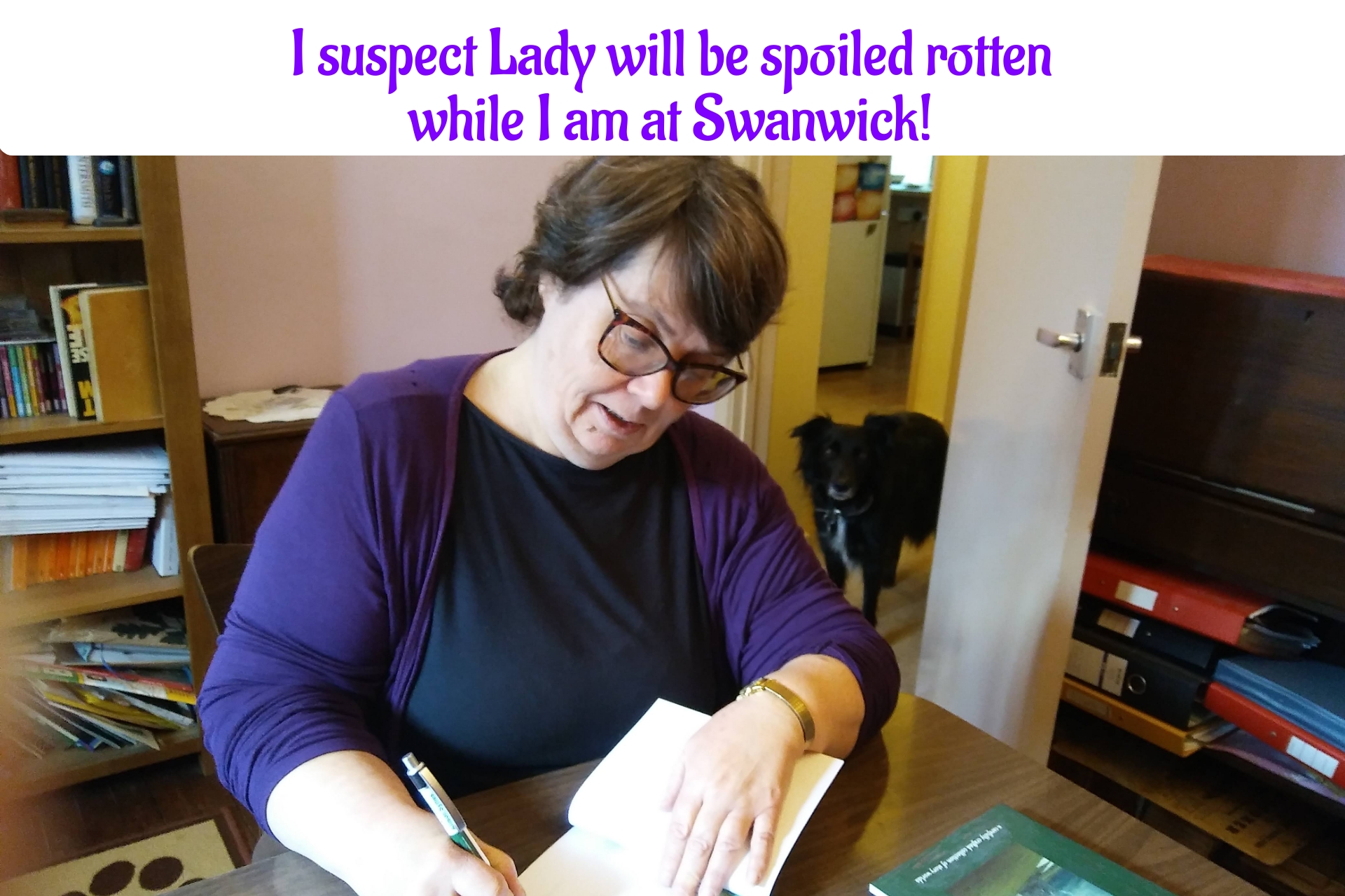
About to head off to Derbyshire. So looking forward to seeing everyone again. Will be posting but at different times. Expect to come back refreshed, reinvigorated, and shattered! In my experience that’s a great sign of a fabulous writing event as here will be a lot of creativity going on. Lady will be spoiled rotten while I’m away – she usually is.
BookBrushImage-2024-8-9-19-3251

Facebook – General and Chandler’s Ford Today

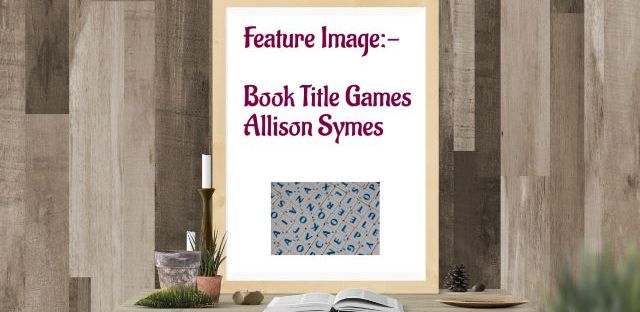
Pleased to share a post which was good fun to write – Book Title Games – on Chandler’s Ford Today this week. It’s amazing what changing a letter or a word in a book title can do to it and its mood! Find out more in the post and why not give it a try?

I also pay tribute to that wonderful BBC Radio Four comedy, I’m Sorry I Haven’t A Clue, which often has books in their games, changing the titles just being one of them. Hope you enjoy the post.

Book Title Games

This slideshow requires JavaScript.

Hope you have had a good day. Soggy one here. Lady not worried – she got to see her Hungarian Vizler and Rhodesian Ridgeback chums today. Good time had by all. On the way home, there is a certain spot where Lady always looks up at me with what I call her happy, shining eyes, as if to say thanks Mum, that was great. Today she did that three times (rather than just once) and kept nudging me to make sure I saw. Now that is what I call demonstrating your pleasure at seeing your friends again. Dogs can be so sweet.

My Book Title Games is on Chandler’s Ford Today this week – link up tomorrow. See above. Hope you’ll have some fun with this one too. The post shares different ways to have fun with words via book titles.

Will be posting as usual from Swanwick from Saturday for a few days but posts will be out at different times. So looking forward to seeing everyone.

Writing Tip: You will often have heard don’t give up and this is true. Writing takes time to develop (and any success in it even longer to achieve). But it is fine to change direction if one way isn’t working out for you.

I did so by switching from the longer form of writing to the shorter. Will I resume my long form writing? Yes. Am working on something now. But I am so glad I have discovered the joys of writing short stories and flash fiction.

454730149_10162101836072053_7325863274804326998_n

Good day today, Lady got to see her Hungarian Vizler pal, and I’ve done most of my packing for Swanwick. (Why is it packing always takes longer than you think?).

Will be looking at Book Title Games as a fun post for Chandler’s Ford Today on Friday. Am looking forward to sharing the link. See above. Hope it inspires some silly but fun alternative book titles with you!

Writing Tip: When do you know a character has “got to” you? For me, it is when I can envisage asking them practically any question and knowing how they would respond and why.

I sometimes outline a character by interviewing them with a few pertinent questions. I don’t believe in Yes/No questions for characters for my guests on Chandler’s Ford Today either! Do give this exercise a try. It can be great fun to do and it’s often amazing what you come up with here.

Facebook – From Light to Dark and Back Again

It’s Friday and time for a story. Hope you enjoy my latest on Friday Flash Fiction – Demanded. Just so you know, for the next two weeks while the competition linked to the Edinburgh Festival is on here, there won’t be any comments on any of the stories. Good luck to all entering the competiton too.

Screenshot 2024-08-09 at 09-38-35 Demanded by Allison Symes - Friday Flash Fiction
Later in the year I hope to take part in Flash NANO again. A flash prompt is given daily for the 30 days of November. I’ve taken part in this for the last couple of years and have found it to be great fun and a good challenge. There are always prompt types I’ve not tried before and I love the way these push me to try new formats. One such was to write a flash story in the form of a police report. Loved doing that.

Meantime I continue with my regular flash fiction writing. I have found it to be true the more you write of anything, the more useful material you produce. That in turn I have found means it is more likely some of this at least will find a publisher somewhere. Rejections are a fact of life for any writer but the more you write, the more you can polish and submit and that has to increase your chances.

454688558_10162101839002053_2270935487159968106_nOne of the things I love most about flash fiction is it has to be character led due to its restricted word count. I haven’t the word count room for lots of description so I have to focus only on what readers need to know (and leave them to infer other things from what I have revealed). This is a great writing discipline for other forms of writing and not just for fiction. I’ve found it has paid off for my blogs and articles elsewhere.

It does mean I can mix and match my character moods though and I do just that when it comes to reading out at things like Open Prose Mic Nights. I want a story/character to produce a smile, another to give pause for thought and so on. It makes a great advert for what flash fiction can be and do. I like that too.

Advantage to flash is setting characters anywhere

Fairytales with Bite – Conferences

I’m writing this post as I prepare for one of the highlights of my writing year – The Writers’ Summer School, Swanwick. And that led me to wonder about the kind of conferences you might find in a fairytale setting.

Do fairy godmothers go on retreat to recharge the old batteries when they’ve had enough (for a while) of helping unfortunate clients? Do they go to conferences where they can improve their wand/magical techniques? Do they have to go to these things to help with their Continuing Professional Development? What would be taught at such conferences?

Do fairy godmothers and the like relish the chance to get together with others in their profession, seeing it as a chance to share tales of woe and success, or do they dread it? Does having to go to these things mean they have to face up to fighting the magical equivalent of Imposter Syndrome? (Practically every writer I know goes through this at some point, and often more than once, but I think it is linked to the creative arts in general – you always wonder if you’re good enough).

Do the delegates appreciate good accommodation, wonderful food, and a great time? (You will gather from this a little of what Swanwick is lIke!). Or are they relieved the conference is over for another year? They’ve done what they’ve had to by requirement of higher powers and that’s it.

Story ideas here including from the viewpoint of those who run the conferences. Do they dread the latest intake? Could be some funny tales here.
BookBrushImage-2024-8-9-19-4959

This World and Others – Thoroughfares

I like the word thoroughfare. It has a nice sound to it and conjures up to me images of old roads and streets in cities like York and Winchester. Here in the UK we still have Roman roads in existence (Watling Street is probably the best known). As well as creating new roads, the Romans also built over those already in existence so thoroughfares go back a long way.

I have a soft spot for old maps (including old editions of the A to Z) because these too can show how things have changed over time.

Now in a magical setting, what would count as a thoroughfare? Is it like we know here? (There is one obvious one – the yellow brick road from The Wizard of Oz). But how about thoroughfares for those who can fly? Would they have the equivalent of motorway lanes but just set in the sky? Who worked out “lanes” here and are they policed?

Just as we have traffic regulations, how would that kind of system work for your characters as they move around your setting’s roads and streets (even if they are set in the sky)? Are there some thoroughfares no respecting magical being would ever go down and why would that be? (Potential for a horror story there especially if even magical beings are scared by it!).

Who set out the street system in the first place and what obstacles did they have to overcome to do it? Has it proved to be a blessing or a curse?

Which would be your main character’s favourite thoroughfares and why do they love them? That could reveal aspects to your character’s personality and something of their background too.

BookBrushImage-2024-8-9-20-247

WRITERS NARRATIVE SUBSCRIBER LINK

This time I share the November 2023 issue of the magazine which focuses on novels. My article in here is Writing Novels and based on my experience of writing my first book (still unpublished though I would like to get back to it at some point). Fabulous magazine as ever packed with useful advice regardless of where you are at on your writing journey.

AMAZON AUTHOR CENTRAL – ALLISON SYMES

This slideshow requires JavaScript.

Twitter - phone and blue bird image

https://platform.twitter.com/widgets.js https://platform.twitter.com/widgets.js https://platform.twitter.com/widgets.js https://platform.twitter.com/widgets.js

Processing…
Success! You're on the list.

A Novel Approach, Favourite Books and a Free Story

Image Credit:  Pixabay/Pexels unless otherwise stated. A big thank you to Jennifer C Wilson for supplying many of the photos for her interview on Chandler’s Ford Today this week.

Facebook – General – and Chandler’s Ford Today

It is with great pleasure I welcome #JenniferCWilson back to Chandler’s Ford Today.

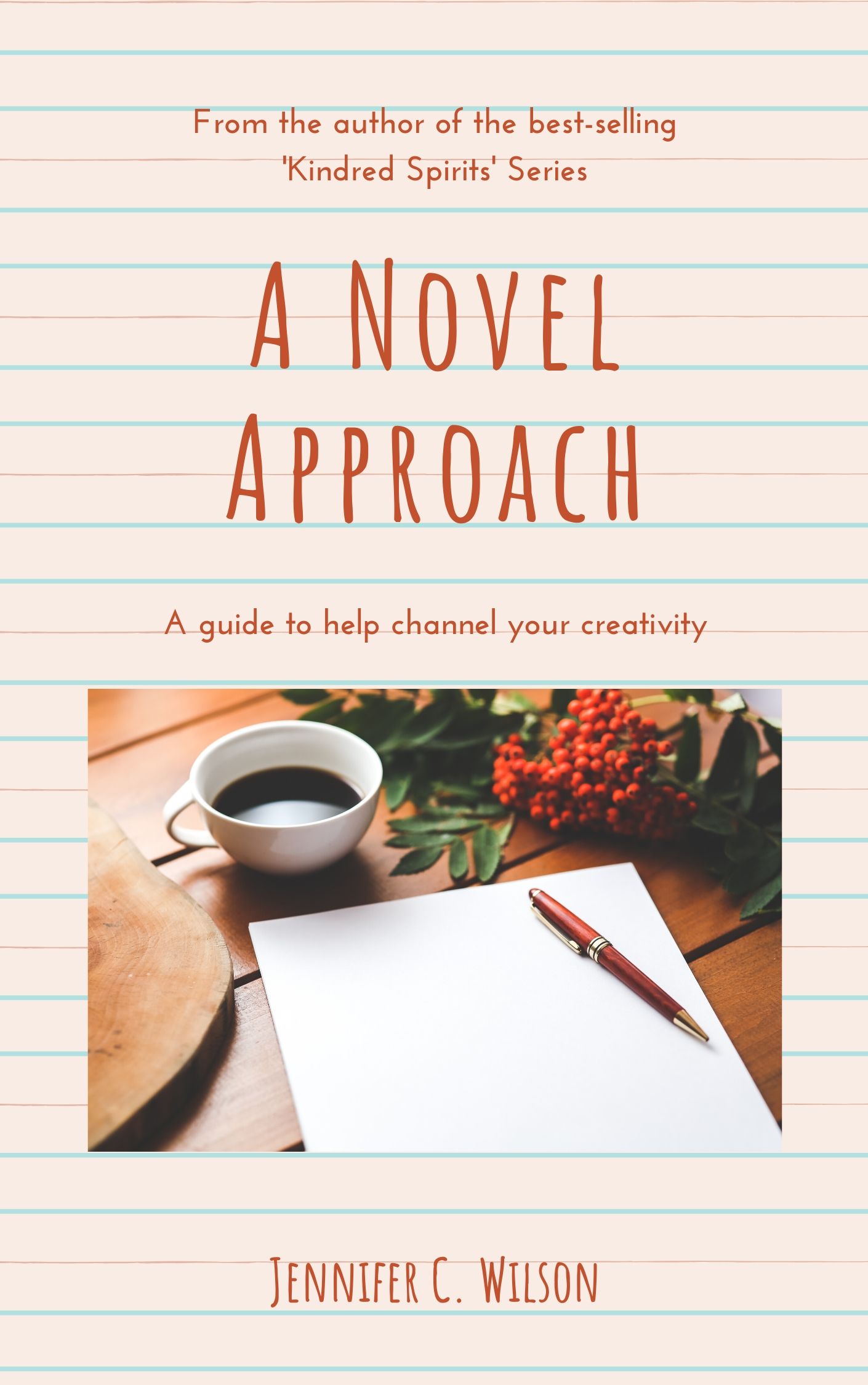
This time, we discuss her venture into non-fiction with her recently released book, A Novel Approach.

The theme for this summer on CFT has very much been one of changing direction and Jennifer’s interview continues that idea.

Do check out her thoughts on the benefits of finding a good writing group amongst many other gems here.

This slideshow requires JavaScript.

I always enjoy writing my CFT posts but interviews, I think, are the most fun of all. Why?

Because I always learn something useful, interesting, entertaining, and often all three from my guests. (So thank you one and all!).

No one author can know it all and learning from other writers is a crucial part of how we all develop. Reading interviews and, in my case, hosting them as well, helps enormously here!😊

This slideshow requires JavaScript.

We all have favourite books, many of which go back years. So what made you decide Book A was said favourite? Is it a question of working out what books you have you simply can’t manage without and favourite status is conferred upon them due to that?

In my case, one of my favourite books is definitely a nostalgic one as this was given to me by my late parents. Others, such as Josephine Tey’s wonderful The Daughter of Time I came across by accident and I was so happy to find it!

Still others are books written by friends and, not only do I love the stories, but every time I look at the books, I am reminded of happy times meeting up with said friends. (Usually at the Swanwick Writers’ Summer School, Bridge House Publishing or Association of Christian Writer events it has to be said!).

So what are your favourite stories and why do you love them so much? Do you have room in your life for new favourites? (The answer to that should be of course!). Which book is your most recent addition to the favourites list?

This slideshow requires JavaScript.

Am delighted to be welcoming #JenWilson back to Chandler’s Ford Today this week.

Jen will be talking about her change of direction into non-fiction writing with her recently released A Novel Approach. There has been a lot of this change of direction in the air this summer! It has definitely been my theme for this year for CFT.

Jen will be discussing how she came to write the book and shares her thoughts about what a good writing group can do for you amongst many other gems. Link up on Friday. Don’t miss especially if you are thinking about writing a novel.

Meanwhile if you want to check the book out do see the link.


JenniferCWilson-ANovelApproach-Cover

Facebook – From Light to Dark and Back Again

Free Story!

I couldn’t resist having another go at the random noun generator. This time I opted for three random nouns and what came up were “shirt”, “marriage”, and “ladder”. Now there’s an interesting mix!

Hope you enjoy the following. A humorous end to the week is always welcome!

THE SPECIAL OFFER

I couldn’t believe my eyes when I saw the sign. “Buy a shirt and your dearest wish will come true”. I’ve seen plenty of dodgy advertising in my time. So I went over to the market trader and challenged him. How on earth could a shirt grant wishes? Especially such a bright one. Vivid purple was never my style fortunately.

‘You’ve heard of magical lamps and rings, why can’t a shirt be magical too?’ was his response.

I guess on logic alone, he had a point, but when I think of
shirts and magic, it is only in terms of being able to get leaky ink stains out of a shirt in one go in the washing machine. And that doesn’t happen often I can tell you. Unlike leaky ink stains going flaming everywhere.

‘Anyway,’ I told the guy, ‘how can a shirt know what my wish is to grant it?’

‘You tell the shirt when you get it home, silly.’

That was me told.

Now don’t judge me here. I did buy the shirt. I needed to get a present for my nephew so I thought a vivid purple shirt would be the thing. (You should see the colour of his trousers. You need sunglasses, I tell you, so a bright shirt would suit him beautifully. Okay, I didn’t envy his mother the task of washing the wretched thing. That purple would be bound to run but I’ve long told my sister she ought to get her boy helping around the house more so she can start by getting him to wash the wretched thing).

Did I make a wish? Yes. For a laugh. I know my sister is concerned about her lad’s prospects so I wished that his life would take off in a good way so she could stop worrying. Covers both of them and it’s a nice wish I think.

I didn’t tell my nephew, or my sister, where I got the shirt or about the advertising for it.

But I was taken aback when a week after I’d given the present, he and his mother came around with news. Robbie was to be married to the young lass who worked at the launderette and knew everything there was to be known about washing colours separately.

Apparently, he’d borrowed his father’s ladder, went around to the young lass’s house, and proposed at the top of the ladder on Valentine’s Day Night. He had meant to do so when he took her out for a meal but lost his nerve.

That is so like him. As was tumbling off the ladder but fortunately he landed in a huge shrub and no damage done. The shrub was all right as well apparently.

The marriage takes place next month and now I’m off to the market stall. If there are any more of those shirts, I’ll get him a load. I’ve made a list of wishes that will be of real help to a young, married couple.

It’s the least I can do.

Ends

Allison Symes – 21st August 2020


Flash fiction may be a quick read but it isn’t necessarily a fast write! I get a first draft down quickly but the work is in the editing (as it is with all forms of writing I think).

Honing a story to ensure every word justifies its place in the tale takes time. And I will often rewrite a section to maximise the impact of that part of the story.

I ask myself if the impact is strong enough? Will it affect the reader the way I want it to do? A change of word, sometimes where I place the word in a sentence, can make all the difference.

It is only when I know any further changes to a story would weaken it that I submit the story somewhere.

Was listening to #WendyHJones‘ excellent podcast, The Writing and Marketing Show, earlier this evening and discovered a new term for what I call wasted words. The term was weasel words and I love that.

It is some comfort to know every writer has these literary pests (and mine are actually, very, and that, as I’ve mentioned before).

Still, when it comes to the edit, I know what’s coming out first and I find, with this done, it seems to get the rest of the edit off to a flying start. I find that helpful so maybe my wasted words have some use. They just don’t stay in!

Image of Wendy H Jones below kindly supplied by her. (Do check out her podcast. I was on episode 4 talking about flash fiction).

Fairytales With Bite – 

The Influence of Fairytales on Literature in General

The obvious influence is that fairytales are a genre in their own right, correctly so too. The next biggest influence I think is given most children’s introduction to literature is via fairytales, said stories act as a gateway into the wonderful world of books per se. That has to be a good thing! This was the case for me and I’ve never regretted having a lifelong love of stories and books as a result.

With that comes the influence on those children who go on to become writers. The marvellous Roald Dahl with his works aimed at children was, to my mind, clearly the successor to Hans Christen Andersen (especially as he knew children liked to read about characters who were not goody goody. Know your market always!).

Fairytales for children can lead to fairytales for adults and I would say A Christmas Carol by Charles Dickens is a prime example of that. What an influence that particular story has had on so many of us!

The idea of wrongs being put right isn’t just for crime writing! There’s a good case for saying fairytales were well ahead of the game there.

This slideshow requires JavaScript.

This World and Others – Fascinating Facts

When it comes to creating your own fictional world, and thinking of how it is all going to come together, do some research. This is where non-fiction reference books can be so useful to fiction writers. A lot can be done online of course but do go for a variety of books. This will help in ensuring you get facts right but almost inevitably you won’t find all you want in one book.

You want to create a new planet for your characters to live on. Okay. What are they going to breathe? What are they going to eat and drink? What will their climate be like? All of those things you can research based on what you know/can find out here on good old Planet Earth and then adapt for your own purposes.

If you want your creations breathing something other than oxygen, what do they breathe instead and how do their bodies manage this? Think about fish breathing through their gills. What would your people do?

Have fun working this all out and then show readers what they need to know to make sense of it all.


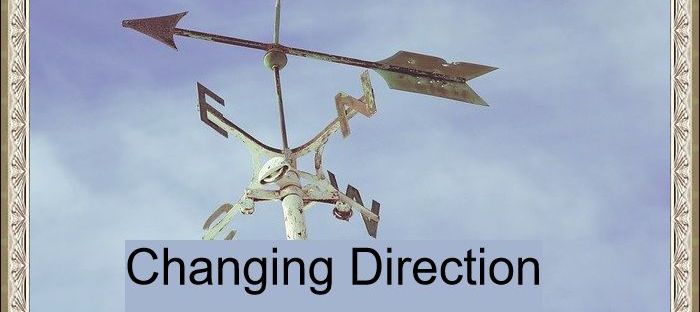
Changing Direction

Image Credit:  Unless otherwise stated, images are from Pixabay or Pexels.

Facebook – General – and Chandler’s Ford Today

My post this week looks at why changing direction in writing can be benefical and why it is inevitable at some point. After all when you start writing, you cannot know at that point for sure you will always write short stories, say. You may decide to write a novella or a play or what have you.

I share some thoughts about my own changes of direction and flag up a new one but see the post for more on that.

This slideshow requires JavaScript.

Did you know what you wanted to write when you first began creative writing? Or was it a case of wanting to try different forms until you found the one you were most at home with?

It was those questions which led to my writing this week’s Chandler’s Ford Today post on Changing Direction.

Writers are often urged to not give up and rightly so. Persistence does pay (it has for me) but it should also be said that it is perfectly okay to change direction if you want to do so. It was a turn of direction that led me to discover flash fiction after all. I hadn’t anticipated this at all when I began writing.

And so often writers will start by writing short stories, say, go on to write a novel, and then come back to the short form again.

The writing journey is not a straight line by any means. What it should be though is fun (at least most of the time!).

This slideshow requires JavaScript.

Facebook – General – Book Cover Challenge

I was nominated to take part in this on 5th June. I thought I would share my posts here (and again on my next post) as there are some wonderful books to share. If you haven’t read them already, do consider adding them to your TBR list. (I will repeat this post next time so all of the book covers are together). Oh and do check out the writing of the authors I nominate too!

Day 1
I have accepted a challenge by Jane Brocklehurst to post seven books that I love, one per day, no reviews, just covers. Each day I ask a friend to take up the challenge, let’s promote literacy and build a book list.

Today I nominate Val Penny who I hope will join in the fun.

My choice today? The Daughter of Time by Josephine Tey. Changed my opinion about Richard III. Is also a different kind of detective novel. A gripping read. Hope you check it out.

Image may contain: 1 person, text


Facebook – General

It can sometimes be difficult stopping a story because you really love the characters and the setting and you want to keep writing but, of course, you can’t.

The story has to end at the right point for that tale. There has to be a point of change and we should see the results of that change. Literally end of story.

One advantage of writing flash for me is the fact I have to make myself move on to tackle the next 100-worder or what have you. The lower word counts with flash means I can’t have too long to fall in love with my characters and therefore face the temptation of extending the story out beyond where it should really go.


This slideshow requires JavaScript.

Do you have pet phrases you like to use in your stories? Or do you find yourself coming out with the same turn of phrase more than once in a story as if you are on “hit default phrase selection” mode?!

Writing flash does help against that given the need to keep inventing new characters and situations. What I DO have to watch are my infamous wasted words and ensuring I don’t start each story in the same way. (That is particularly easy to do if you use the first person. Every story starts “I, I, I” etc etc).

I think it is useful to be aware of things like this so you can look out for them in your editing.


Facebook – From Light to Dark and Back Again

It seems such a long time ago that I took a change of direction with my writing and discovered flash fiction. Now there is one turning point I really don’t regret! And it has enlivened my reading too. Flash fiction collections are great fun to delve into (and ideal for a quick read when you haven’t much time).

Yes, yes, I know, I’m biased. Course I am. Go on check out some flash collections and see if I’m right or not then!

Do you work out your themes in advance of writing your story or does the theme arise naturally out of the tale you’re writing?

It has been a case of both for me. For example, I think I’d like to write a poetic justice story so I then plan out a character and a situation where that theme emerges.

The nice thing with that theme is sometimes poetic justice can have a humorous element to it (and I do enjoy writing and reading those kinds of stories).

There have been cases where I know who my character is and where they’re going plot wise and the theme then comes out of that.

Though in both cases I do like my heroes/heroines to have some fire in their belly. No time for wishy-washy characters here!😆]

I expect my characters to justify being created in that I WANT to write about them, there is no problem finding things for them to do or land themselves in or so on.

For my quieter characters, I want their trait of quiet determination to win through so it is clear to a reader that there is more to them than meets the eye. Any character like that intrigues me as I want to find out what that “more” is and I would hope a reader would feel the same for my people here.

This slideshow requires JavaScript.

What do I like in an opening line, especially for a flash fiction story? Some of the things I look for here include:-

1. An interesting situation or character that intrigues from the start.

2. Dialogue that sets the scene and, usually, indicates the problem the character has to overcome.

3. Internal thoughts of a character showing them in some sort of turmoil. My story, Rewards, has as its opening line: ‘”She must go,” Becky thought.’

I referred to this story when I was on #WendyHJones‘ podcast The Writing and Marketing Show a little while back.

And the reason I went for this as an example of an opening line to hook the reader immediately is because I would hope you would want to find out who the “she” is and why Becky thinks she has to go. After that you would want, I hope, to find out if Becky did get rid of whoever “she” is and how.

I think the ultimate “rule” here is that an opening line which makes me HAVE to find out what happens next means that opening line has done its job!

Now just to deliver on the rest of the story!


This slideshow requires JavaScript.

Fairytales with Bite – Character Motivation

Character motivations can cover a wide spectrum. There are the “obvious” ones of love, revenge, seeking justice etc but motivations can be more subtle than that – for example the wish to prove someone wrong.

What matters is whatever the motivation is, it is the be all and end all to your character, even if it seems to everyone else they’re making a fuss about very little.

A motivated character will do whatever it takes to get what they want and the important thing is to ensure your people are driven enough.

It’s not enough for a character to just want to stay out of trouble. But if your character goes to extraordinary lengths to stay out of trouble then a great deal of humour or tragedy can result from that.

What could be behind that? Maybe they’ve got a bet on with a friend to stay out of trouble for six days, say, and the friend has always been right in the past but this time our hero wants to prove them wrong and is determined to do so. They’re fed up with their friend being right all the time and finally want something to go their way.

There, the motivation is powerful enough and understandable. Your readers have to get behind your character to carry on reading their adventures after all. Naturally your character’s friend will know or be able to guess at their friend’s motivation here and will do all they can to scupper any chances of success.

Voila! Instant clashes and tension as you work out how your hero does or does not prove the friend wrong.

This World and Others – 

Top Tips For When Writing Isn’t Working As You Would Like

It happens. You go through phases where writing is either difficult or simply isn’t working out as you’d hoped. Lots of submissions. Lots of rejections. Few acceptances. Do you wonder if you should keep going? Some tips I’ve found useful to keep me going during difficult times include:-

1. Read More. Feed your own imagination. Remind yourself of why you love stories and why you wanted to write any.

2. Remove the Pressure. Deliberately write just for your own pleasure. Make up complete nonsense. Have fun. (Later, if you can do anything with the writing, even if it is just the odd line or two makes it into a story, say, then fab. Even if not, you’re taking time out to play with words and again remind yourself why you wanted to write).

3. Look at Where You’ve Come From Writing Wise. How much have you written over the years? Can you list publication credits (online and in print)? If not at that stage, have you had shortlistings? Are you simply submitting more stories for competitions than ever before?

Remember you define what success in writing is. Yes, publication is the obvious goal but it isn’t the only one. Saying you’ll write 3 or 4 stories and then try and get them published later is a fine goal too. Look at what you’ve learned as you have written more. Have you learned how to improve your editing skills? Have you picked up tips on the way that are helping you write better now (I would be surprised if you hadn’t)? All of these are good and worthy things.

4. Find supportive writing buddies via online groups or in creative writing classes. We all need to be reminded we’re not alone. Others do understand our compulsion to write. Others understand the frustrations of trying to get published. You need that support. It can make all the difference during low times, creatively speaking.


Good Books and Steps and Contrasts

Facebook – General – and Chandler’s Ford Today

So what DO you look for in a good book? I share what I think and name three of my favourite tomes in this week’s CFT post.

I do love a self-explanatory blog post title!

The three books I name are Lord of the Rings, Pride and Prejudice, and Men at Arms (by the much missed Terry Pratchett). What elements do these books share? They do have some.

Do share your own three favourite books. Comments are always welcome on the CFT page.

Image Credit:  Images on the slideshow are all via Pixabay (wonderful site!).  Captions up on the CFT post itself.  I can confirm this is the first (and likely to be last) time I put up a picture of ants reading…

This slideshow requires JavaScript.

One of the things I enjoyed doing for my CFT post this week was naming three of my favourite books and looking at what they have in common, despite being in different genres. My problem was limiting my selection to three but it was a nice problem to have! (I’ll put the link up tomorrow. The topic overall discusses what good books should be).

There are certain books I re-read periodically or at certain times of year (Hogfather by Terry Pratchett is always read or listened to in the run up to Christmas for example). I’m glad to say it is a very rare event for me not to be able to finish a book but when that happens it is because the book is awful and I’m at that stage where life is far too short to waste time on books like that. Mind, reading excellent works by other authors is a wonderful challenge to me to ensure I always “up my game” when it comes to writing my stories and that’s no bad thing.


Facebook – General – and More than Writers – Association of Christian Writers

I talk about Steps and Contrasts in my monthly spot on the More than Writers blog (Association of Christian Writers).

I look at how difficult it can be to have faith in the writing process when things are NOT going well and share some tips as to how I’ve got around this.

It is a case of getting around it. I see things not going well, writing wise, as a temporary obstacle. You go through it, bypass it, or what have you but you find ways of NOT letting it get in your way forever, including ignoring it, working on something else for a bit and then coming back to it.

I can’t count how many times I’ve come up with an idea to solve a problem I’ve had on one piece of work while working on something else! Distraction therapy works.

And I suspect most writers will identify with the second image in the picture below!

STEPS - Ideas have to be worked out, I have yet to have light bulb moments like this - Pixabay

I’ve yet to see an idea flash above my head like this! Pixabay

STEPS - Is there a writer who doesn't know how this feels = Pixabay

Most writers will know how this feels… Pixabay

STEPS - It will take time to work out where your writing journey will take you - Pixabay

The writing journey has to be taken a step at a time. Pixabay

STEPS - We all need to recharge at times - Pixabay

Recharge yourself when you need to. Your writing will be better for it. Pixabay

STEPS - Writing is made up of steps - Pixabay

The writing journey – upwards and onwards. Pixabay

STEPS - Writing is not black and white but it can be useful to contrast what your writing is with what you thought it would be - Pixabay

Contrasting can be a useful technique when trying to solve problems with your fiction. Pixabay

Facebook – From Light to Dark and Back Again

One of the things I love most about flash fiction is it is open to genres within it. I’ve written historical fiction tales, crime stories, fairytales, character studies etc all within the flash fiction limit of up to 1000 words.

Character is everything for me both in reading and writing stories. I don’t necessarily need to like the character I’m reading about or writing but there has to be something I can identify with so I can see why they are the way they are. I then want to find out how things work out for them. It’s that initial hook which is so important (and it is a lot of fun working out what that should be too!).

One technique I’ve found useful for writing flash fiction is to work out what I’ve loved in other very short stories and ask myself can I learn from this to help my writing.

The answer to that is inevitably “yes” as reading widely and absorbing, almost unconsciously, how other writers handle dialogue, changes of scene etc, is the best way to learn. The difference with flash fiction is there’s not so much material to get through!

What I’m looking for is the impact the flash tale has had on me and why it impacted that way. You can then look for clues in the story itself as to how the writer achieved that.

Almost inevitably, what I love most when reading other authors’ works is the strength of their characterisation. I’ve long believed getting the characters right is the key to good fiction. A weak character will let down even the strongest of plots.

This slideshow requires JavaScript.

There are days when you have particularly nice writing things to do. Today, I proofread my story, The Professional, which will be in the Waterloo Arts Festival ebook in due course. Love doing things like that.

And other days you are wrestling with a knotty story problem but you will get through it. I’ve found jotting down possible solutions, going to work on something else, and then coming back to look at those possibilities with fresh eyes is a good way forward.

Two advantages here: working on something else frees up your creative juices to mull over your problem. I can’t tell you how often an idea to solve something has occurred while writing something else. The other advantage is you’ve started drafting a new piece of work too!

This slideshow requires JavaScript.

Fairytales with Bite –

What Do You Look For in a Good Book?

What Do You Look For in a Good Book is my theme for this week’s CFT post. Hope you enjoy.

The challenge for any writer, whether they’re writing novels or story collections, is to ensure their book could be classed as “good”.  Allowing for differences in taste I think what writers need to achieve with their writing can be summarised as:-

  1. Believable characters.

  2. Characters we can identify with.

  3. A plot with twists and turns to keep a reader guessing.

  4. The story has to have a “got to find out what happens next” element to it. Without that, the whole thing falls down. This element, for me, works best when the characters are so gripping, I’ve got to find out what happens to them. I don’t need to like them. I just need to want to find out what happens to them. Sometimes it can be to follow a horrible character and experience great glee as they get their comeuppance at the end of the story!

  5. An easy to read style. I’ve got to enjoy the way the prose flows. Easy to read takes time to get right and I learned a long time ago that whenever someone makes writing look easy, that same someone has worked for years to get to that point.

Good luck with your own writing! And whoever said writing is easy has never done any…!

This World and Others Changing Direction

I’ve changed direction at different stages of my writing and anticipate doing so again (and probably a few times at that).

Why is this okay?  Sometimes you discover a new form of writing you just love doing (in my case this was flash fiction). At other times, a certain format is just not working for you no matter how hard you try so you focus your skills where you know you can achieve success.  (Incidentally you can define what success here is too.  It doesn’t necessarily have to be publication. It can be getting to a point where you know you could be published, it could be achieving writing X number of stories in a month etc etc).

Naturally, your characters can change direction too. Sometimes this is literally so (see any quest story for that – a map will come into the story somewhere too!). At other times, it can be a change of opinion (with repercussions. There should always be repercussions, that’s where the drama is).

Whatever the reason for the change of direction, and no matter what form it takes, there should be good reasons for it, reasons your readers will understand and accept. They don’t necessarily have to agree with your characters and neither do you (!), but the reasons for the changes should be well thought out, logical etc etc.

This slideshow requires JavaScript.