Fairytales and “Planned” Writing

Have had a lot of fun with slideshows on my Facebook author page this week!

Facebook – General

Loved the Royal Wedding. Loved the music and the sermon especially. A modern fairytale? Absolutely fine by me.

Ironically, I think one thing that can be overlooked about fairytales by some is the fact that they are based on a sound knowledge of human nature. The classic fairytales call a spade a spade when it comes to jealousy, cruelty etc. There is no pretence about the fate Snow White faced at the hands of the Wicked Queen, or that Cinderella really loved being treated the way she was by her stepmother and stepsisters.

Fairytales, I think, can be amongst some of the most honest fiction there is when it comes to holding a mirror up and reflecting what humanity can be like.

This slideshow requires JavaScript.

Facebook – General

Looking forward to taking part in the Hursley Park Book Fair next month. I’ll also be giving a talk on flash fiction as part of this. Will be posting more details a little nearer the time (here and via Chandler’s Ford Today).

Pleased I’ve sent off two flash fiction stories for the Bridport Prize. (Nothing ventured, nothing gained). Getting quite a few stories together now for a future third collection, which is great. I also hope to spend some time on non-fiction later this year too. Always good to have plenty to be getting on with writing wise!

Facebook – General

I like a mixture of planned writing to a topic and “free” writing. These posts are always in the latter category as, with the exception of flagging up my CFT posts, I never know quite what I’ll be writing until a few minutes before I get started. It keeps it fresh!

For CFT and other blogs, I do have to think well ahead for topics. How far ahead depends on how much research I need to do and things like the date the post will go out. For example, I know when the Fryern Funtasia will be each year so that tells me what my post for that week will be.

I like the mixture of planning and NOT planning – it keeps me on my toes! As for my flash fiction, I brainstorm opening lines every so often but deliberately don’t write the stories up until later. I want to give myself some thinking time here. I then set aside time (often on a train journey!) to get on and write those stories down. I know the theme, how I’m starting and likely possibilities of where that opening line can take me but that’s all. And away I go!

Facebook – General

My CFT post later this week will be the last in my series 101 Things to Put Into Room 101. I’ve had no trouble whatsoever coming up with 101 things… that DOES say a lot about me/human nature in general I think.

Will be talking about flash fiction at the Hursley Park Book Fair in June. Hursley Park is the home of IBM and is a well known landmark between Hursley and Winchester. Looking forward to this a lot. A number of local writers will be taking part – and the event is free and there is parking! More details a bit nearer the time. (Will be the biggest event I’ve taken part in to date).

Writing wise, do you find it easiest to have a good opening line to “peg” your story to or have a cracking ending that you work backwards from to get to the start point? I use both methods and like them both, though numerically I’ve written more from the starting point of a good opening line. I suppose it does feel more natural to write a story that way.

This slideshow requires JavaScript.

Facebook – From Light to Dark and Back Again

Busy preparing a couple of flash fiction pieces for a competition. Been a while since I submitted competition entries (not deliberately, you know how it is. You become engrossed with other writing work etc). Want to do better on this front so am starting to make diary notes to remind me to do it.

Really pleased that my last competition entry, for the Waterloo Festival anthology, did well and will be included in that ebook when it comes out. Naturally I shall post about it nearer the time!

I’ve been making greater use of my writing diary since earlier this year for sending in work to Cafelit and that has worked well. Why is it that almost making an appointment with yourself to do something like this can and does make all the difference to whether you actually do it or not?

I suppose it is because seeing it in the diary makes me block out time to actually get the job done. I need to block out more time!

Facebook – From Light to Dark and Back Again

What do you like most about flash fiction? I love being able to suggest a whole world in a few words and leave readers to fill in the gaps. I really enjoy having the boot on the other foot as well and filling in the gaps my fellow flash authors leave in their stories. I don’t want the writer doing all the work for me and so I try in my writing to make sure I’m not doing that.

Having the reader fill in the gaps keeps them hooked and reading your stories! The main thing to remember is to make sure they have the crucial points they will need to know to able to fill in those gaps.

Use what you know of our natural world and blend it with some imagination to create your own fictional one - image via Pixabay

Use what you know of our world and your imagination to create something really special. Image via Pixabay

Humans are immensely creative - image via Pixabay

Let those ideas flow! Image via Pixabay,

The fantastic world of books must include non-fiction too - image via Pixabay

The wonderful world of writing should include non-fiction, which benefits from creative techniques too. Image via Pixabay.

A wonderful palette of colours - image via Pixabay

A wonderful palette of colours. Image via Pixabay.

book-2134779_640

Grow as a writer? Grow your reading! Image via Pixabay

stones-244244_640

What impact do your stories have on your readers? Image via Pixabay

Themes pour out of good books - image via Pixabay

Let the writing flow and if music can help it along even better! Image via Pixabay

castle-2115425_640

There can be reality behind fairytales. Image via Pixabay (and image used as part of book trailer for From Light to Dark and Back Again)

wizzard-1818815_640

Flash fiction for impact. Image via Pixabay


Facebook – From Light to Dark and Back Again

Need to send more material off for flash fiction competitions. Have just sent off two new stories for the Bridport Prize. Would love to have a shortlisting there. I know, who wouldn’t?!😀

Am pleased with the stage I’m at for a potential third flash fiction book. Going on all those train journeys has helped no end! Alas, I’m not due on a train again for a while…

I find when I’m writing the stories, I tend to write a “batch”, then have to switch back to non-fiction for while, before getting on with the next “batch”. Not sure why that is but I have found switching like this keeps me alert to the challenges of both forms of writing. The other advantage, of course, is there is zero chance of becoming bored!

This slideshow requires JavaScript.

Facebook – From Light to Dark and Back Again

What is your favourite way of opening a flash fiction story? I am very fond of using the first person and taking you straight into the character’s head. In the space of a few words, you will know what that character is like and what dilemma they’re facing. I like efficiency (and you have to be spot on here when writing flash).

The other major way I use to start a story is to set the scene quickly. For example, from Pressing the Flesh, I start with “It was 3 am. The neighbours were sleeping”. (I would hope they were incidentally but this tells you that the character has somehow made sure of this point. That should immediately make you want to know why they would do that and what on earth they’re up to!).


Facebook – From Light to Dark and Back Again

Do you set out to write a collection of stories based on a specific theme or wait and see what emerges from the stories you have written? FLTDBA was really a case of the latter, though I did surprise myself a bit at how many of my stories involved rough/poetic justice of some kind!

I don’t think there is a right or wrong way here incidentally. It’s just I can’t see myself writing to a specific mood of story. You do have to write with conviction, whether you are writing funny tales or deeply serious ones. I suppose the answer if you prefer to write to a theme is to set one which is fairly broad and can be interpreted in different ways/moods/settings to give yourself as much flexibility as possible. I do know you’d need that! Writing can be hard enough without putting too narrow a restriction on yourself.

This slideshow requires JavaScript.

Goodreads Author Programme – Blog

This post has been inspired by the Royal Wedding (which I loved). I suspect there will be a book about it before long! There was a lot of talk during the commentaries about modern fairytales, which is fine with me. I’m all for fairytales, ancient and modern. My first reading love was the classic fairytales.

Thinking about it further, maybe children are drawn to the classic fairytales because they know they are honestly written?

Your average fairytale does not pull any punches about exposing what is wrong. There is no pretence Snow White didn’t face an awful fate at the hands of the Wicked Queen. There is no “acceptance of her situation” by Cinderella! Change has to happen, injustices need to be righted, but in this world some magic is needed to make that happen.

Now if we could only make it happen in this one! Mind, if I could bring my fictional fairy godmothers and the like to life, they’d have a huge shopping list of things to put right, so it is probably just as well I can’t.

Back to the reading and writing of books then!


REVIEWS, FAIRYTALE RELATIONSHIPS, AND STORY IDEAS

Facebook General – and Chandler’s Ford Today

My CFT post tonight is the penultimate one in my 101 Things to Put into Room 101 series. I have had no trouble whatsoever in coming up with 101 things! This probably says a lot about me but never mind…

As well as the horror of ripped jeans, I consign “easy to open packets” and the ability to lose scissors into the vault of doom. The latter of course is a real pain when wanting something to cut open the supposedly easy to open packets…

Part 6 - How many of the packets in a supermarket are that easy to open

How many easy to open packets are here, I wonder, and how many REALLY are easy to open? Image via Pixabay.

Part 6 - We'll be with you between 9 am and 6 pm with your parcel, argh

“We’ll be with you between 9 am and 6 pm”. Hmm… not exactly helpful is it? Image via Pixabay.

Part 6 - A ban on trumpet playing wasn't my first thought on bad manners but here things are different

A ban on trumpet playing? Image via Pixabay

Part 6 - End of the world predicted

I can predict there will be more end of the world predictions! Image via Pixabay

Facebook – General

What are the signs of a really good story for you? My top five would be:-

1. Not wanting the story to end.
2. Wondering how the characters would have carried on with their lives after the story ended.
3. Re-reading the story several times. (In flash especially a second or third reading will often reveal meanings and inferences you didn’t pick up the first time. You then really get to appreciate the depth of the story in such a tight word count).
4. Wishing you had written it!
5. The ending is so apt for the story, you can’t imagine it ending in any other way.

Comments welcome!

Facebook – General

Where do story ideas come from? Mine come from a wide range of sources including proverbs and other sayings, books or films that I’ve loved, to objects on my desk that have particular meaning for me.

I’ve learned, over time, to be “open” to ideas and not instantly dismiss them as being “too silly” or what have you. I will explore the idea to see if I can do anything with it and nine times out of ten I can.

I’ve only abandoned an idea once or twice in all my years of writing and I know now that was due to my not having outlined enough. By outlining (and spider diagrams can be useful here), you can work out whether an idea has “legs” or not or whether it needs something else to bring it to life.


This slideshow requires JavaScript.

Facebook – General

It’s funny how often in writing we remember the bad reviews but not the good ones etc. However, there is a flip side to this. I remember my first acceptance (hello, Bridge House Publishing, for my A Helping Hand in their Alternative Renditions anthology). That will always be a special writing moment.

I can’t recall my first rejection though. Nor do I wish to! I do wish I could recall my LAST rejection but that would mean stopping writing and I’m one of those people where the pen would have to be wrested away from me. And that is the way it should be!

Facebook – From Light to Dark and Back Again

Does mood affect what you write? The jury is out on this one as far as I’m concerned.

I’ve written funny stories when feeling sad (it was therapeutic doing that). I’ve written dark stories when feeling cheerful. (Not entirely sure what to make of that one).

What matters most, I think, is you have to decide what is going to be the mood of your story and then write accordingly. Deciding on the mood will then lead you to think about why you’ve chosen that and what character or type of character would be best for your tale. Sometimes I think putting a story together is exactly like putting a jigsaw together. The pieces are interconnected but you need a starting point and using mood of story can be a useful way to “kick off”.

This slideshow requires JavaScript.

Facebook – From Light to Dark and Back Again

What influences your writing? Books and stories you’ve admired by other authors? A cracking film that kept you on the edge of your seat for over two hours? A special symphony?

I expect that your influences come from all over the place. What is lovely is when a couple of them combine and you can create a new story from that combination. For example, your lead character loves gothic novels and classic railway engines. How could you use that in a story? (Could be fun finding out. Indeed, SHOULD be fun finding out!).

What is great here is that by reading/watching films/listening to music etc, you can ensure you never get stuck for an idea again. The “trick” is to read widely/watch films across many genres/listen to several types of music etc. Think of it as casting your net really widely!

Facebook – From Light to Dark and Back Again

It is only when you are putting a collection together, you realise sometimes just (a) how much you have written and (b) that more work is going to be needed to get that volume right.

Where themes emerge, you will want to group them together (so you’ll need to get your contents page right for one thing and that will keep changing as you move things around).

The importance of VERY accurate proof reading will dawn on you in a way it may not have done before! (You want “your baby” to be perfect, yes?). Also, you will soon realise you cannot rush the proof reading stage to be sure of accuracy.

But enjoy the process. This is a very special part of the writing life – you are that bit nearer to publication.

Facebook – From Light to Dark and Back Again

Busy preparing a couple of flash fiction pieces for a competition. Been a while since I submitted competition entries (not deliberately, you know how it is. You become engrossed with other writing work etc). Want to do better on this front so am starting to make diary notes to remind me to do it.

Really pleased that my last competition entry, for the Waterloo Festival anthology, did well and will be included in that ebook when it comes out. Naturally I shall post about it nearer the time!

I’ve been making greater use of my writing diary since earlier this year for sending in work to Cafelit and that has worked well. Why is it that almost making an appointment with yourself to do something like this can and does make all the difference to whether you actually do it or not?

I suppose it is because seeing it in the diary makes me block out time to actually get the job done. I need to block out more time!

Fairytales with Bite – Relationships in the Fairytale World

I write this post on the eve of the Royal Wedding in the UK between Prince Harry and Meghan Markle.  So there will be a lot of talk about “fairytales” as in “fairytale weddings” tomorrow.  And yes, the happy ever after fairytale ending is a classic one.  But if you take a deeper look into fairytales as a whole, you will find that most relationships in a fairytale world are fraught ones!

1.  Cinderella.  Didn’t exactly have the happiest relationships with her stepmother and stepsisters.

2.  Snow White.  Having a stepmother actively trying to kill you puts Cinderella’s woes in the shade!

3.  Hansel and Gretel.  Could sympathise with Snow White.  Would feel, at best, disappointed their father ever agreed to the stepmother’s scheming at all, even if it was reluctantly.

4.  The Emperor in the Emperor’s New Clothes.  Couldn’t rely on his courtiers to be honest with him.  Quite sad really.  Makes me wonder if his vanity was an insecurity issue. How did he react, later, after his foolishness was soundly mocked?  He really needed someone to tell him he was being an idiot (and be honest enough to admit he needed that, as I think we all do).

So jealousy, hatred, and insecurity are huge themes here.  Hmm… fairytale relationships?  Perhaps not quite so happy ever after then!

This World and Others – Advice to My Much Younger Self

I wrote a Chandler’s Ford Today piece on this a while ago where I discussed what I’d tell my 20-year-old self.  I thoYouught I’d revisit the theme and list some things I would tell myself when I was starting out as a writer that I know now but didn’t then.

1.  Expect rejection but don’t be fazed by it.  Use it to improve what you do.

2.  Submit to honest competitions as often as you can.  It is all useful experience in submitting work for outside criticism and in meeting deadlines.  If you do well and win or are shortlisted, you can add that to your writing CV.  And always check out the background of the competition so you know you are submitting work to a reputable one.  It’s not you, there ARE charlatans out there.

3.  Be open to trying different forms of writing.  Had I done this when younger, I would’ve discovered the joys of flash fiction that much sooner!

4.  You can never have too much A4 printer paper or toner cartridges or pens.  Stock up.  Take advantage of special offers when possible.

5.  Submit work to honourable online sites as well as for print anthologies etc.  Your body of work will soon build up doing this and you cover both audiences – those who only read online, those who read “proper” books and most people go for both anyway.

6.  Don’t underestimate how long it will take you to be published.  It always does take far longer than you dream of!

7.  Before entering any contract, get it checked by the Society of Authors (UK) or other reputable equivalent body.  You can save yourself a lot of heartache and money doing this.

8.  Expect to be addicted to (a) notebooks, (b) nice pens, (c) going to good writing conferences, and (d) tea/coffee etc to keep you going as you write.  Save up accordingly!  Start now…

9.  Read as much as you can, contemporary and classic, fiction and non-fiction.  You may think you’re already doing this but writing has made me read much more than I ever did before, sometimes for review purposes, sometimes not.  You need to know what’s out there now.  It can help you find your own niche for one thing.  You can then play to your strengths here which will give you a greater chance of success when approaching publishers.

10.  Remember practically everybody struggles to find an agent, it isn’t just you.  Rejection is never personal either.  It can be easy to forget these things.  Keep going.  There is a lot of truth in the saying the professional writer is the amateur who didn’t give up.

This slideshow requires JavaScript.


FAVOURITE TRAITS AND WHY FAIRYTALES WITH BITE?

Facebook – and Chandler’s Ford Today

My CFT post is a review of the Fryern Funtasia held on Bank Holiday Monday. It is just one of those things I know but there is either heavy rain or baking heat when the FF is held! No happy medium. It’s either a big coat or the sun cream!

Having said that, the Funtasia WAS great fun and it was good to catch up with friends at Bettermaths and the Three Rivers Rail Community Partnership especially.

It was also good to see the Fair Oak dog display team, though none of the dogs were running around the agility course. They were trotting – quite rightly too – and there were several huge buckets of water for them around their arena. As for human refreshments, you should’ve seen the queues for the icecream and cold drinks!

This slideshow requires JavaScript.

Facebook – From Light to Dark and Back Again

Have got my schedule of writing for my train journeys all lined up for tomorrow. I’d like to come back home again with at least three new flash stories and an article drafted. Will report back on how I did but I am pleased to be able to make more use of travelling time like this, especially as by the time I get back home again, I usually just want to crash out. Should do even better when I go to Swanwick Writers’ Summer School in August. The journey is longer!

I need to get back to entering more flash competitions so, depending on how well I actually do on the train tomorrow, I may well have some stories to submit. Hope so anyway.

Fairytales With Bite – Why Fairytales with Bite?

The reason I refer to what I write as fairytales with bite (and so giving this website its name) is (a) it is a very accurate description of what I do and (b) I was fed up with fairytales being dismissed as “twee” or “just for kids”.  I’ve written posts on this topic before but I thought I’d add here those elements I think make for a good fairytale.

1.  Magic.   There has to be magic somewhere but it is not the be all and end all in a fairytale either.  See below.  Also it is usually acknowledged there are limits to what magic can do.

2.  Characters have to make choices.  This is generally true of all fiction but in fairytales, the characters still have to decide something has to change.  Cinderella wanted to escape her horrible life but still needed to be willing to do what the fairy godmother told her.  (Couldn’t you just see the ugly sisters arguing with the godmother?  I could!).

3.  An appropriate ending.  Most of the time in fairytales this is the traditional happy one, but not always, as Hans Christen Andersen proved with The Little Mermaid amongst others.  Having said that, his ending to that story was apt for the way he’d written all that came before.

4.  There has to be some hope.  There has to be hope for the characters to achieve their happy ever after ending or, if they know this is not going to be the case, what can they salvage to make things as good as they can be?  If you have to settle for second best, you are still going to want that second best to be as good as possible.

There are other elements of course but these strike me as being amongst the most important ones.  Comments welcome!

This slideshow requires JavaScript.

This World and Others – Favourite Traits in Characters

What are your favourite traits in characters (your own or those from other writers)?  I think mine would have to include:-

1.  The ability to prove the doubters wrong.  I love it when the underdog wins the day. Whenever I read of a character being “written off”, I am on the look out for that character turning out to be the hero (usually) or the villain (sometimes, and inevitably reacting against being written off!  I do have some sneaking sympathy here.  You can see why they would react that way at least.).

2.  The ability to stick with the right path, no matter what.  The ultimate example of this for me is both Frodo and Sam in The Lord of the Rings.  (Sam was just as determined to do right as Frodo was, even though Sam was doing this for his friend, rather than for the “cause” directly).

3.  Being the best friend/sidekick the hero didn’t know they needed until undergoing the quest.  If awards were being given out for this, it would have to go to Sam Gamgee.  Never ever overlook the sidekick.  They’re in the story for a good reason and it is almost always a pivotal moment the hero needs.

4.  Honest characters.  I love those moments when, usually the sidekick, gives the hero/heroine a verbal bashing for missing something important or taking others for granted or for becoming arrogant etc.  The lead characters do need others who can rein them in – nobody gets it right in life all the time so why should they in fiction?  Just as we need others to tell us “hang on a moment there”, so do characters need other characters to tell them when they’re at risk of going off track.

This slideshow requires JavaScript.


ONE LINERS

Facebook – General

How can you tell when you’ve written a good one-liner for a character?

When you can’t imagine anyone other than that character saying it, when the words reflect something of that character’s state of mind/beliefs, when you know deep down the character could keep on talking like this for ages (not that you’ll need all of this for your story).

I love writing dialogue for my “people”. My problem is I can make them go on and on because I’m loving the writing of the dialogue so much. So when it comes to editing, anything that doesn’t move the story on in some way gets chopped.

I’ve still enjoyed writing the dialogue but am realistic enough to know it isn’t really needed for the story so out it goes. This is one reason why I believe writing and editing should be treated as separate tasks. When in creative mood, so to speak, are you going to be able to see the wood for the trees when it comes to working out what is really needed and what isn’t? In my case, the answer to that is “no” so I come back to my stories, after a suitable gap, so I look at them afresh and not in the “hot glow” of creativity.

This slideshow requires JavaScript.

Facebook – General

My Chandler’s Ford Today post this week will be a review of the Fryern Funtasia held on Bank Holiday Monday. All the fun of the show and it was great to catch up with some old friends too. Link to go up tomorrow.

Am off on another train journey this weekend so am planning to get on with more flash fiction stories. I am averaging 3 to 4 a trip now, depending on whether I draft some thoughts for future CFT posts as well. (I often do both). Better half reminds me every so often I was the one who couldn’t see a need for a smartphone!! Oh well… (glad to be wrong on that one incidentally).

And now I’ve figured out how to use the headphones (!), I can tune into the radio too. Before you ask, I discovered I wasn’t plugging the things in properly. She SHALL have music (classical) wherever she goes (unless it is through a tunnel!).


Facebook – From Light to Dark and Back Again

Looking forward to taking part in writing events in the next few months. More details nearer the time of each one.

Am glad to say a copy of From Light to Dark and Back Again will be a prize in the raffle which will be part of fellow Swanwicker Elizabeth Hopkinson’s e-book launch for her Tiny Tales Virtual Launch on 13th July. More details to come nearer the time. And good luck, Elizabeth, with the launch. I loved my cyber launch, it was great fun!

Facebook – From Light to Dark and Back Again

Am glad to see that the Quick Reads scheme is being saved by JoJo Moyes for the next couple of years. Reading schemes are never a waste of money (how is literacy ever a bad thing?), so whoever thought scrapping this was a good idea needs their head examining.

It is one fond hope of mine that flash fiction as a whole might encourage those who might be reluctant to read bigger works. We’re not asking readers to commit to too much in one go for a start and, from my experience, once you’ve found a book you like, you look for others you’ll like too. I started off reading short stories, I progressed to longer stories and then novels of course. It is getting that initial spark, the wish to read at all, that is so important.

pexels-photo-261909.jpeg

A good reading pile! Pexels image.

pexels-photo-267684.jpeg

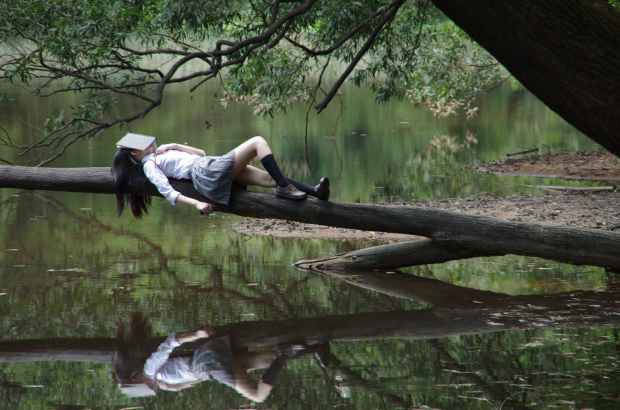
Doesn’t look comfortable to me. Pexels image.

still-life-teddy-white-read.jpg

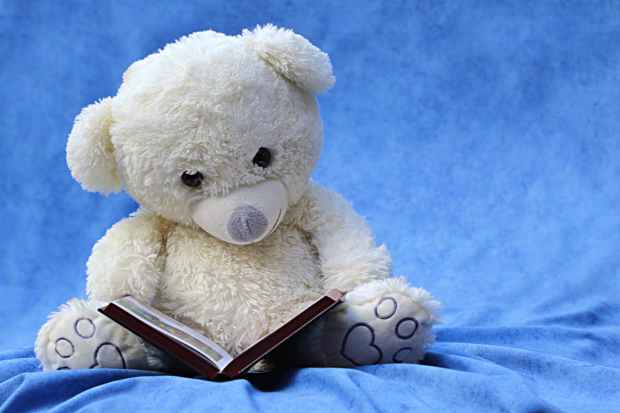
May require help turning the pages. Pexels image.

pexels-photo-880720.jpeg

Great topic but then I am a dog owner! Pexels image.

Allison Symes’s books on Goodreads

Reviews and Characterisation

Facebook – and Chandler’s Ford Today

My post for Chandler’s Ford Today this week is a review of three different plays staged in one production by The Chameleon Theatre Group. There was Oh What a Lovers’ War (set against the background of August 1914), The Dreaming (a surreal play), and Pina Coladas (a mystery). All were very good and I loved the mixture of plays. More details and pics in the post. Well done to the Chameleons for a great evening.

Image Credit:  Many thanks to the Chameleons, especially Lionel Elliott, for kind permission to use the images, which were taken by them.

This slideshow requires JavaScript.

Facebook – From Light to Dark and Back Again

There will be a new flash fiction piece from me up on Cafelit tomorrow (sometime during the early evening onwards) called Getting Lost. Must try and enter more flash fiction competitions this year too.

I tend to draft promising first lines and then draft stories to fit them (often when on train journeys). It definitely beats doing the crossword by a very long margin! Often that promising first line sparks ideas for the title of the piece too.

How do I decide whether a story will be a drabble at 100 words or a longer one? Basically when I know I cannot edit the piece any more without it losing something that contributes to the characters or the overall story. I then leave the piece be and whatever the word count is remains the word count! Often this will be at 100 words or under but sometimes a piece really does work better as a 250-300 worder. This is where reading a piece out loud can show you how well the whole thing “flows” and if it “flows” well, that is when it is time to drop the editing pen.


Fairytales with Bite – Describing Your Characters

If you were asked to talk about your characters, how would you describe them (and without sending whoever questioned you to sleep!)?

I like to start with traits – for example, Eileen is brave, resourceful, and rebellious.  Those three words alone give you a good starting point for portraying Eileen.  Getting your characterisation right is everything in getting the story right (and therefore give it much more chance of being accepted somewhere).  A good plot needs great characters to make it work.

It is useful to outline a character whether you put all you detail into a story or not.  (The likelihood is you wouldn’t.  I know I need to know this and that about a character, your readers might only to know “this”).  However, outlining a character gives you all the information you need to work out what kind of story they would be in, how they would handle a situation (or mishandle it), and what their “happy ever after” ending is likely to be.  It is then up to you if they achieve it!  (Great stories can be found in a character attempting to get to this point but never quite making it so they have to adjust their “happy ever after” for something more sustainable over the long term.  I guess this is where the “happy for now” endings, especially in romance novels, comes from).

I’ve found it does pay to take time outlining.  I find when ready to write the story itself, I write it quicker because I’ve already got the “building blocks” in place ready to go with my tale.


This World and Others – Ten Things a Great Character Must Have

1.  A sense of purpose – whether they’re the hero or villain.
2.  Determination (without it, there’s no chance of fulfilling their purpose).
3.  A worthy opponent.  (Sherlock Holmes is wonderful but Moriarty challenged him and Holmes needed that challenge.  Your leads need those who will get in their way, try to thwart their plans etc.  That’s where the story comes alive).
4.  A cause worth supporting (even if they are the only ones supporting it!  Not quite the same as 1 above as a character can have a sense of purpose even without a cause.  The great sidekicks in literature are often like this.  Sam Gamgee in Lord of the Rings saw his cause as being supporting Frodo.  It was Frodo who really had the sense of purpose and Sam didn’t always understand Frodo’s “intensity”,  Frodo had both the sense of purpose in that he had a job to do no matter what, which was at one and the same time also a cause worth supporting).
5.  Courage.  This comes into it somewhere in the story.  It has to.  The kind of courage can vary from the obvious courage in battle to the quieter kind where someone will keep going to support someone no matter what the hellish circumstances.
6.  The ability to ask for help.  Not every character has this.  Recognising you need help and the best people to give it shows humility and pragmatism (as the character comes to terms with knowing they need help if they are going to fulfil their objective at all).
7.  A mentor/adviserThis ties in with 6.  A great character is going to need guidance to help them meet their goal and knows who to get that guidance from.
8.  The ability to get on with most characters.  This ties in with 6 and 7.  Nobody is going to want to guide or assist a character who is arrogant or overbearing.
9.  Planning. The character must work out how they’re going to meet their commitments and then just get on with it.
10 .  A cool head.  Given the undoubtedly hellish situations, you are going to put your character through, they will still need a cool head to face down those challenges and press on towards their goal.

ODD COMBINATIONS AND FLASH FICTION TERMS

Again, a mixed bag for you!

Facebook – General – and Chandler’s Ford Today

My latest CFT post combines two things in a review, which I never anticipated I would ever combine – the Famous Five and William Shakespeare! Yes, really.

I review Five Go Mad for Shakespeare staged by the MDG Players at the Dovetail Centre in Chandler’s Ford last Thursday. They were ably assisted by the Romsey Players with their “play within a play”, which is another nod to the Bard!

The evening was a mixture of spoofs, well known scenes from Hamlet and Macbeth, and songs. It was good fun and very well put together.

MDG NOTICEBOARD

The MDG Players cast and notice board. Image by Allison Symes

MDG NOTICEBOARD PART 2

All the seats were taken at the show. Image by Allison Symes

Programme Front

The front cover of the programme. Image by Allison Symes.

Programme - What is on offer during the show

A mixed menu of delights in the show are listed here. Image by Allison Symes

THE GAME CARDS FOR WOULD WE LIE TO YOU

The green and red cards were used for a game during the show, Image by Allison Symes.

Facebook – General

Went to see an April Trio of Plays by the Chameleon Theatre Company tonight. Review on CFT next week. This week will be a review of Five Go Mad For Shakespeare put on by the MDG Players last week. So yes, I’ve been out and about and seeing some wonderful plays! I like this. I like it a lot! (Hope it won’t be too long before I get to see some National Theatre Live productions again too).

Facebook – General

One of the problems I face with writing is prioritising! Writing for Chandler’s Ford Today helps as I know I’m posting on Friday so I plan my posts so usually I’m carrying out final checks on Wednesday.

However, it is fitting everything else in that I’d like to do, both for fiction and non-fiction, that is the problem. The one comfort? I know I’m not alone in this. (And things like using Evernote on a phone on a train does help me get a lot more done with time that would otherwise be wasted. Just how much staring out of the window can you do?!!).

The one good thing is I am well ahead on coming up with ideas for stories for what I hope will end up being my third flash fiction collection. I’ve also drafted some of the stories out. (I hope some of them will appear online at some point).

Facebook – From Light to Dark and Back Again

There are times I wish there were better terms for flash fiction writers. We’re flashers for a start! Anyone writing 100-word stories is a drabbler and I have occasionally written at the 50-word mark too (though this has been more for my second collection which is under submission).

Therefore, this makes me a flasher, a drabbler and an occasional dribbler. Doesn’t sound good, does it?😀 Does anyone know who came up with these terms in the first place?!

Facebook – From Light to Dark and Back Again

I’ve talked before about one benefit of writing flash fiction being that it shows up your wasted words. This carries over into any other creative writing you do as you learn to look out for these wasted words and they’re the first to be cut out.

However, another huge benefit to writing flash fiction is having to write with absolute clarity. As your word count is limited, you want every word to carry its weight so your readers pick up the meaning you intended.

That clarity can (and I think should) carry over into other writing too. Also, because flash fiction really does have to be character led, it beefs up your ability to create convincing characters! They have to “lead” the story, there simply isn’t the room for an elaborate plot. But the great thing is genre isn’t an issue. I’ve written flash fiction pieces in fantasy, fairytale, crime, horror, and so on.

This slideshow requires JavaScript.

Facebook – From Light to Dark and Back Again

Managed to draft another flash fiction piece while waiting to give blood this afternoon. Best thing to come out of the afternoon too given there was trouble with my veins and I had to come home without donating. Ah well… try again. (I cherish the thought if the National Blood Service had trouble with my veins, so would your average vampire! You have got to find the things to use them!).

That aside, I’m pleased with the progress I’m making on this batch of stories and hope to submit some more to Cafelit before long.

Goodreads Author Programme – Blog – Childhood Books

I sometimes review local theatre productions and a recent one was called Five Go Mad for Shakespeare. Good fun, and I enjoyed the references to Enid Blyton’s adventure series, and to the Bard too.

I used to collect the Famous Five series as the local newsagent stocked them. (Those really were the days… the newsagent’s shop was big compared to the ones I come across now. Its book section was reasonably generous in size).

I loved reading the Five’s adventures and I think those books, plus the fairytale collections I had (and still have!), are the fiction volumes that have had the most affect on me. Of course, the moment I’d got my hands on the latest Five adventure, I had to read it as soon as possible. I don’t remember reading them in one sitting but I know I would’ve been ready for when the next book was due in the newsagent’s!

So what childhood books have had the most impact on you? Have you re-read them since then?

This slideshow requires JavaScript.

Fairytales With Bite – Why Children’s Fiction Matters Even When You Do Not Write It

My Chandler’s Ford Today post this week is a review of a show called Five Go Mad for Shakespeare and it was good fun.  I never expected to review something that combined Enid Blyton’s Famous Five with the Bard of Avon but there you go…

This led me on to thinking about the importance of children’s fiction, even for those who do not write it.  My first loves in terms of children’s books were the classic fairytales and the Famous Five series.  I also liked Heidi, Black Beauty, and other classic children’s books.

I think it can be forgotten sometimes that anyone who, like me, writes for adults, “owes” our audience to children’s writers.  Why?  Because most people who read regularly have always read since they were children and all that changes as they become older is their tastes in books!

While I’m sure it does happen, the majority of readers don’t suddenly go into a bookshop and pick out a book to read.  They are going into stores or ordering books online because they already have a love of reading they are developing further.  That love of books nearly always starts in childhood with the classic children’s stories.

This World and Others – What Makes a “Fully Rounded Character”?

You hear the phrase “fully rounded characters” a lot, well I have (!), but what does it actually mean? My take on this is:-

1. You can identify with the character.
2. The character has clear virtues and flaws. (This is usually why you can identify with them!).
3. The character makes mistakes and, usually, learns from them. Often they make the same mistakes more than once before they learn from them, but then so do real people!
4. Their behaviour and attitudes make sense, given the way the writer has portrayed them.
5. You can imagine how this character would live outside of the constraints of the story.
6. They interact with other characters in a way that makes sense, even if the interaction itself isn’t good. (This could be because the character really does not get on well with others or the other characters aren’t great at “people skills”).
7. The character has feelings, tastes in music, food etc so you would feel they “could be” a real person if somehow characters could come to life.
8. The character has emotional depth. Basically this means the reader can see if the character is shallow or is capable of more complex emotions and attitudes. Shallow characters can be appropriate to a story. It’s just their emotional depth isn’t very deep!
9. You can’t imagine the story without them. (Always a good sign).
10. The character has real struggles and difficulties to overcome and finds different ways of overcoming them. (Unless they are a shallow creation, they don’t give up at the first hurdle).

This slideshow requires JavaScript.


LIFE’S LITTLE IRRITATIONS AND TEN FAVOURITE THINGS

A nice mixture of moods this time I think!

Facebook – and Chandler’s Ford Today

What do cooking chocolate, zips that break too easily and roundabouts that are too small for purpose have in common? Easy peasy. They’re some of the items I’ve consigned to Room 101 in the latest part of this series. (I’m now up to No. 75!). I also share my thoughts on product name changes and fake news. So a nice mixed bag here tonight!

This slideshow requires JavaScript.

Facebook – General

What aspect of writing do you like the least? I suppose for me it would be the line by line edit for typos, grammatical errors etc, anything that I would call the technical side of writing.

Yet without that side, the chances of work being accepted do decrease given you have to present your work as professionally as possible. Anything that reduces a professional impression, such as weak spelling etc, will impact on your story.

The nice thing, though, is that if spelling, grammar etc are weak points, ideas like a writing buddy can be a real boon. (Going to good creative writing classes can help you make friends, get feedback on your work, including on this kind of thing, and help you find someone who might end up being your writing buddy!).

I also think there isn’t a writer anywhere without blind spots as to certain words/grammatical issues. My blind spots are “effect” and “affect” (I always have to double check them against the dictionary definitions to make sure I’m using the right one).

Facebook – From Light to Dark and Back Again

Do you prefer alien settings in your flash fiction or tales that are firmly rooted on to this planet? I like both, no real surprises there, but here are some advantages to consider.

The biggest advantage to having an alien world as a setting is you get to choose what that world looks like, how it is run etc. Only drawback would be is it is too easy to just keep on creating your world and never getting on with the story. So just stick to the bare bones of what your reader really does need to know.

The biggest advantage to setting a world here is that the background information we know already. You really do just to fill in relatively minor details such as what part of the world they’re in (can give your readers ideas about likely weather patterns and so on).

Facebook – From Light to Dark and Back Again

Although flash fiction by its nature might seem quick to write, it still needs careful crafting to ensure every word carries its weight and justifies its place in the story.

Yes, obviously, novels do take far longer and the joy of those is having the room for sub-plots and being able to characterise more deeply. Having said that, one of the great joys of flash fiction for me is being able to shine a sharp light on say one aspect of a particular character. That IS the story. Nothing more to be said. Nothing more needs to be said.


Writing first, editing later but both needed - image via Pixabay

Preparing a talk or a flash fiction story perhaps. Image via Pixabay.

Stories can be created and read on just about any modern device - image via Pixabay

Big screen, little screen, LOTS of stories on either! Image via Pixabay

stones-244244_640

Let your stories have impact. Image via Pixabay

Themes pour out of good books - image via Pixabay

Let the writing flow and if music can help it along even better! Image via Pixabay

Fill that blank sheet with ideas from non-fiction as well as other fiction works - image via Pixabay

The basic necessities of the writer’s life!

wallpaper-1531107_640

Flash – for light or dark fiction! Image via Pixabay

castle-2115425_640

There can be reality behind fairytales. Image via Pixabay (and image used as part of book trailer for From Light to Dark and Back Again)

Goodreads Author Programme – Blog

1. Books can take you into worlds beyond anything we know here. This is especially true for science fiction and fantasy.

2. Books can shed light on history both in non-fiction accounts and historical novels. The latter also has the advantage of being able to show what a historical figure could’ve been like as an individual, based on what is known about them. The author is not saying they are definitely like this, just that they could’ve been.

3. Reading a book encourages you to keep reading others. Not only is this relaxing, this improves your own appreciation of the written word by reading different authors and types of book.

4. You learn so much about characterisation by reading widely, in and out of your own genre.

5. Reading across non-fiction and fiction will help feed your own imagination. What can you do in your stories the authors you’ve read have not etc? (Also different writers have sparks for story ideas from varying sources. Where you get your sparks from will almost inevitably not be the same as where I get mine. At best there MIGHT be some overlap but we are all inspired by different genres and styles, What we do with what inspires us is unique to us too).

6. If you want to try out an author new to you, but are not sure about committing to the cost of a hardback etc, you can always borrow from the libraries and support them while you indulge in a good read!

7. Short story collections, including flash fiction, are increasingly popular so if the thought of a full length novel is not for you at this stage, why not try shorter fiction? There is something out there that will suit you! I love the fact there is a book out (and usually several) for anyone and everyone.

8. I suppose I am particularly conscious of this being a woman, but literacy is not something that has always been available to so many of us. So therefore I want to make the most of being able to read and write. There is a whole world of stories out there to explore.

9. Especially reading non-fiction, you can increase your own education significantly. Above all, it should be fun to find out things you didn’t know.

10. Last but not least, as a writer, by reading as well you are supporting the industry you hope to join or have become part of. Whether you are self or traditionally published, I can’t help but feel this is a good thing to do. I also can’t see how you can write without reading well. You have to know what you like and dislike to come up with your own stories and how can you do that, other than by reading?

Comments welcome!

Fairytales with Bite – Life’s Little Irritations

My current series on Chandler’s Ford Today is all about life’s little irritations (and is called 101 Things to Put into Room 101)From a fictional viewpoint, it doesn’t matter whether you write short or long fiction or, indeed, what genre you write in, but you can guarantee your characters will have more than their fair share of life’s “little irritations”.

So what are these and why do they rile your characters so much?  Do some of your characters handle the trials of life better than others and, if so, why and how?  What would count as an irritation in your fictional world that here on our own planet might be seen as a catastrophe or something your characters shouldn’t be wound up about at all?

Are the irritations you portray shared by other characters in your stories?  Is there anything that the society/world you’ve created considers an irritation and how did it come to be seen this way?  (There is always a reason for these things!).  Answering all of these will help you flesh out your world and your characters better and that is always worth doing.

This World and Others – Ten Favourite Things about Characters

I do love a list!  Ten favourite things I like about well portrayed characters include:-

1.  Such characters show me something about my own nature (for good or bad!).
2.  I can identify with the characters, sympathise even.
3.  I will “root for” characters and “feel” their struggles, which is not quite the same as 2 above.  For this, I have to really like the characters concerned.  With 2, I can identify with say what a villain is up to (they’ve been crossed once too often and are now out for revenge), but I’m not going to root for them to succeed in their aims.  I often hope ambiguous characters will not turn out to be villainous in the end or at least have motivations that are understandable.  The best of these will do both.
4.  You can “see” exactly where a character is coming from.  That leads to empathy (which I believe can encourage empathy generally and that is no bad thing).
5. Characters will show you the world they live in and how they handle it.  Is there something I can learn here?  (That includes what not to do!).
6.  For a character that’s set in a historical period, you can compare how they handle their situation and ponder how you would do so.  (I love Elizabeth Bennett in Pride and Prejudice but can see her situation as almost being prison like.  For her not to marry Mr Collins, when it would have meant helping her family, was a brave thing to do.  It would also be seen as selfish, especially by her mother.  Here, I am so glad I have never faced something like that).
7.  As a writer, you can put your characters through the emotional wringer!  Heartless though that may sound, it is also huge fun – and it will be where your story really is.  It is all in the conflicts.
8.  Sometimes a historical character can change your mind about a period in time or a well known historical figure.  The Daughter of Time by Josephine Tey did this for me with regard to Richard III and Henry VII.
9.  Characters can show up injustice clearly.  Think To Kill a Mockingbird here or something like Uncle Tom’s Cabin.
10. Characters can say things you would love to say to others but for whatever reason rightly decide it’s best not to!  And I’m not saying more than that….!


WRITING DIARIES, REVIEWS AND CLARITY

Another nice mixed bag I think!

I am on Goodreads and part of their author programme so if you wanted to send me questions about flash fiction, blogging, writing for online magazines, I’d be pleased to hear from you.

Facebook – General

Do you keep a writing diary? I find mine useful for planning out when I want to have work done by etc. (I don’t always achieve what I originally set out to do, life can get in the way sometimes, but I find I end up achieving what I set out to do, albeit occasionally later than I’d have liked. I think if I didn’t plan out what I think I’d like to get done, then I wouldn’t get as much written).

It’s also useful for keeping a note of submissions sent, where to, results etc. Naturally acceptances are written down in capital letters! I don’t think I’ll ever get over the buzz you have when you know a piece is going to be online or in print and that is how it should be.


Facebook – General

My CFT post this week will be Part 5 of my 101 Things to Put into Room 101. I’m up to No. 75! Link up on Friday.

Off to see a local show with my lovely CFT editor tomorrow and again next week. Seems like ages since I’ve watched a play so am looking forward to both of these plays. Reviews will probably follow! I have to say I have been impressed by the quality of the local theatre productions I’ve seen. Always a good sign when the time seems to whizz by as you’re watching.

I must try and get around to seeing one of the Discworld plays at some point. Love the novels, curious to see how the plays work. The great thing about seeing plays is that it is another way of taking in a story. I think it is a good idea to mix up the “formats” in which you do take in stories. No chance of being bored, sometimes a play will get across something in a way a novel doesn’t quite do and so on.

I admit though it would be a challenge to make a play out of a piece of flash fiction though!

This slideshow requires JavaScript.

Facebook – From Light to Dark and Back Again

Reading widely is a sensible thing to do regardless of what genre you work in, given doing so helps you feed your own imagination. Ideas for stories spark from all over the place. The trick is to be open to receiving those ideas. (Also it does make sense to support the industry you want to be part of!).

What drives a story are the characters, of course, but knowledge of human nature/how politics works/history etc can inspire how you create the world your people live in. By knowing what we’re capable of as humans, you can create your own worlds based on what we know here. If we act in this manner, how will your people act? Are they better than us or worse? As a result, it will make your world seem more “possible” and believable to a reader.

What will change here is the length of the story you are writing. For flash fiction, you have to convey a sense of the world your people are set in quickly. A few telling details are key here. If you say your character lives under a dictatorship, that is enough for the purposes of your flash fiction. We all know what dictatorships can be like so our imaginations will fill in the details your flash fiction piece doesn’t have the room for. If you were writing a novel, you would want more details as to what that dictatorship is like, possibly how it came into being, and what happens to those who rebel against it.


Facebook – From Light to Dark and Back Again

Clarity is important to any storyteller but when you have limited word count as with flash fiction, it is vital. The words you use can often carry more weight as you select the ones that will give you the most meaning without using up too much of your word count.

I’ve come across some annoying examples of how NOT to write in adverts, business speak etc, and I think the main reason why these things irritate so much is because they lack clarity. Someone somewhere with these examples has equated lots of words with lots of meaning. To quote George Gershwin, “it ain’t necessarily so” as any flash fiction writer would tell you!

This slideshow requires JavaScript.


FAIRYTALES, TRUTH, AND NETWORKING

Now there’s a combination!

Facebook – General – and Chandler’s Ford Today

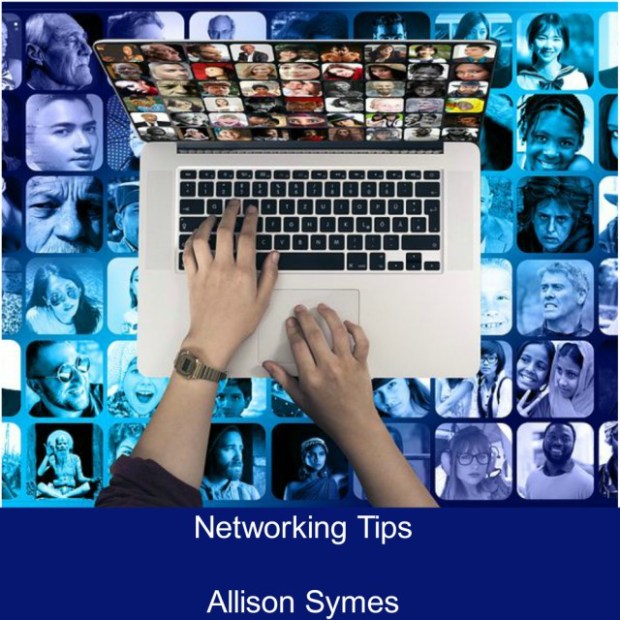
My latest Chandler’s Ford Today post is called Networking Tips. Fellow Chapeltown Books author, Mandy Huggins, and I both share our thoughts on networking here and we hope you find the post useful. Many thanks to her for her pictures. Also a big thank you to Paula Readman for kind permission to use the picture of Dawn Knox, Paula and I which was taken at the Bridge House celebration event last December.

I remember being so scared of the thought of having to network when I was first starting out as a writer. It was really only when I realised networking meant talking about something I love – books, stories etc (generally, as well as my own) – that I relaxed. Can I talk about these things? Yes! The problem can be stopping me! (But that is how it should be. I don’t see how you can commit to writing as a long term love unless you are enthuasiastic about stories. Given the ups and downs of a writer’s life, writing has to be thought of as a series of hopefully achievable goals over a reasonable period of time. There are no shortcuts).

This slideshow requires JavaScript.

Facebook – General

Questions I like to ask of my characters from time to time include:-

What would you say was your best trait?
What would you say was your worst one?
What drives you and why?

I inevitably don’t use all of what I come up with here in the stories themselves but have found having a good working knowledge of what my characters are really like makes it so much easier to write convincingly about/for them.

It is worth taking the time out to flesh out your thoughts here before you write your story. (Scrivener is great here with its character and setting outlines in its short story “mode” but you can create your own template of things you should know about your “people” before you write their stories down).

Facebook – General

What are your writing “likes”? Some of mine include:-

Decent one-liners that make me laugh.

A story that shows me motivations or stresses characters are under that I might not have considered before. For example murders are committed for serious reasons and to what appears to others to be trivial ones. Yet a good story will take you into the mind of that murderer and show why the trivial reason isn’t trivial to them.

Good, sharp pace with quiet bits in between giving me good background on the setting and characters, knowing said quiet bits are gearing the reader up for the next big scene.

A satisfactory ending, which is not the same as a happy one necessarily. The ending has to be right for the story and the main character. It won’t feel right if the match isn’t there.

Characters I can rally behind (or metaphorically boo for) but either reaction has to be genuine. I don’t want to see the author’s hand making their characters act in a certain way. The characters’ acting has to be realistic for those characters.

I love getting to the end of a story or novel and in a sense wishing neither had ended. Always a sign of a well told tale! Going back over a story/novel and picking up the bits I missed first go around. This is particularly true for a detective novel. I always miss some of the clues on the first read!

I like a happy ending where the hero/heroine has “earned” it. I also like to see villains get their comeuppance but again in a realistic manner. Villains generally are not going to fall apart. They can be caught out.

Every word to count… Funnily enough that doesn’t necessarily mean everything has to be short but that each word is appropriate for the story being told. In P.G. Wodehouse’s stories so often he uses very long sentences (he’d never get away with it now!) but not a word is out of place and indeed especially when Wooster’s narrating the long-windedness is part of (a) the character’s charm and (b) the character’s characteristics!

Positive developments in characters, especially a character that goes on to make something good out of themselves.

I like pinpointing moments of change in a story and watching the drama unfold.

Feeling a slight sense of envy I didn’t write the story/novel I’ve enjoyed is a good sign – and nothing but a compliment to the actual author!

Facebook – From Light to Dark and Back Again

It is only in looking back at stories that make up a collection, you really get to see what influences came out. FLTDBA has a nice mixture of influences – fairytales, nods to films, Frankenstein, poetic justice, and Pride and Prejudice to name just some.

I guess this shows why you should read widely (in whatever format and including non-fiction) because you are feeding your imagination. What drives you to write the stories you do? Your own influences/thoughts. Why have you got those influences and thoughts? Almost certainly thanks to things you have read that rang true for something deep inside your creative self.

Facebook – From Light to Dark and Back Again

The right ending for a story is the one that is most appropriate for it. It doesn’t need to be happy necessarily. Indeed, quite a few of mine in From Light to Dark and Back Again are definitely not of the traditional happy ever after variety!

I remember being stunned when I first read Hans Christen Andersen’s The Little Mermaid. You expect everything to work out okay (after all, isn’t that how fairytales are supposed to turn out?) and then it doesn’t! And I won’t say more than that. No spoilers here. It does pay to read the fairytales. They’re often darker than people think and have more layers. The Little Mermaid is a tale of sacrifice when all is said and done.

Facebook – From Light to Dark and Back Again

What do I most like about writing? Well, here’s a few thoughts.

Coming up with characters who spring to life and develop in front of your “eyes”.

Coming up with world(s) that fascinate you.

Coming up with villain(s) that fascinate you!

Coming up with hero(ines) that also fascinate but show why they are the good guys. They’ve got to have a good cause, literally.

Being able to write short length stories from flash to standard length (up to 2000 words) to novels to plays… the only limit is your imagination.

You can explore ideas.

You can discover ideas from the characters you develop, not just in terms of new story ideas, but you get to learn how your “people” think and why. Could it change how you feel about issues? Can be fun finding out!

Receiving feedback which helps you improve your work (this is not necessarily complimentary, though nice responses are obviously nice, but so you can see how well you “got through” to your reader).

Winning or being shortlisted for competitions is a huge morale boost.

Getting to talk about your work at writing festivals and enjoying hearing about others’ work. I love both aspects here. I think it’s like a kind of celebration of the work of the imagination.

Fairytales with Bite – Fairytales and Truth

I’m sure you must have come across at some point someone saying something like “it’s just a fairytale”.  That phrase has always annoyed me.  There is nothing “just” about a fairytale.

When examined closely, the vast majority of fairytales contain at least one element of truth in them (and often much more).  Yes, fairytales do tend to follow character type but there is a lot of truth in those.  What does the wicked witch represent?  Those who are prepared to use the power they’ve got to control others or who are prepared to do anything to gain power.  Who does the good fairy represent?  Those who use their powers for the good of others.  And that’s just to name two examples. We can all think of real life people who can fit into those categories so fairytales do reflect humanity as we know it.

Hans Christen Andersen showed that fairytales do not always have happy ever after endings.  (While it surprised me the first time I read his The Little Mermaid here, I have a greater appreciation now of the truthfulness of his characterisation and the way the story does end).  Fairytales can sometimes get across a certain amount of social commentary (again see Hans Christen Andersen’s The Little Match Girl here).

So I do wish some people would stop being dismissive of fairytales.  There is a lot more to them than may at first be apparent.

This slideshow requires JavaScript.

This World and Others – Networking In Your Stories

My Chandler’s Ford Today post this week is all about networking.  Fellow Chapeltown Books author, Mandy Huggins, and I share our thoughts on this and I hope you find it useful. But it led me to wonder what kind of networking goes on inside the world of our stories.

How do our characters meet each other?  Have they known each other for years?  What are the social networks in the worlds you’ve created?  What happens to those who defy convention here?

Our stories won’t necessarily spell out all of that but readers should know why the characters are interacting the way they do.  If they hate each other, that is bound to be a major factor in how your story develops and the reason for the hate should be shown.  (I don’t think you can ignore the fact they hate each other, it must be what is driving your story.  I can’t see how it would be otherwise).

Is there such a thing as an old boys’ network in your world?  Who benefits or suffers because of it?  Is there a class system and can people/beings cross the divides?  If your world just has one major species, there should be some sort of hierarchy within it.  How does this work?

Feature Image - Networking Tips

My latest CFT post. Mandy Huggins and I discuss networking. Image via Pixabay

FromLightToDark_medium-2

My flash fiction collection from Chapeltown Books!

perf6.500x6.500.indd

Mandy’s flash fiction collection from Chapeltown Books. Image kindly supplied by her.

Amanda Huggins reading from the Ink Tears showcase anthology Death of a Superhero at the launch party in London December 2017

Mandy Huggins – reading is a great way to network with your readers. Image kindly supplied by Mandy Huggins.

It is always good to meet readers and even better when they read you - image via JW

Networking with readers at the Chandler’s Ford Book Fair in 2017. Image from Janet Williams, CFT’s amazing editor.

Setting the mood classically perhaps - image via Pixabay

Setting the mood with music. Image via Pixabay

pexels-photo-680940.jpeg

Humans are immensely creative - image via Pixabay

Let those ideas flow! Image via Pixabay,

A familiar desk scene for writers - image via Pixabay

The familiar sight of the writing desk, regardless of genre! Image via Pixabay.

The best advice for any writer - image via Pixabay

Sound advice. Image via Pixabay

From diving board to keyboard via Pixabay

The keyboard beckons…


Likes, Dislikes and Using “Dead Time”

Facebook – General – and Chandler’s Ford Today

My latest CFT post is Part 4 of my 101 Things to Put into Room 101. I’m up to No. 60! Tonight’s “delights” to go into the vault of doom include rats, overpriced clothing for those of us with height issues (in either direction) and those people who dislike fake flowers. I bet they don’t suffer from hayfever!

Facebook – From Light to Dark and Back Again

Am planning to get on with some flash fiction writing whilst out and about on the train tomorrow. Great use of dead time and on my last trip out like this, I managed to write at least five stories (which are in the second collection I’ve submitted to Chapeltown Books). I can’t give you an exact number as I stopped counting after that.

One lovely thing about writing, regardless of genre or whether you write fiction, non-fiction or both, is you are never short of things to be getting on with while out and about on public transport! I also use dead time like this to draft future ideas for Chandler’s Ford Today and Association of Christian Writers’ blog posts.

Am I a convert to the smartphone? You bet! Picture below from one of my CFT posts from late last year but given the topic of this post, I thought it apt to use it again!

Fairytales with Bite – Character Likes and Dislikes

In my latest Chandler’s Ford Today post, I consign various items to Room 101. Amongst the items in Part 4 of my series are rats, people who dislike fake flowers, and overpriced clothing for those of us with height issues (in either direction.  Am not unbiased here!).

I love fake flowers because (a) they are of a much higher quality than they once were and (b) I’m a hayfever sufferer!  Thinking about this made me wonder about what quirky likes and dislikes your characters have.  I’m thinking of those things that would really make them stand out to a reader.  It is vital readers can tell characters apart and distinctive personality traits, likes and dislikes are great ways to achieve those necessary differences.  We’re not all clones after all, so our characters mustn’t be either.

Think about also why your characters have their likes and dislikes.  (Yes, people can and do have irrational likes and dislikes but, in fiction, you have got to convince the reader your characters are believable.  I find having a good reason for them to be the way they are, which would include their tastes, is a surefire way of achieving believability).

Part 4 - I'm all for stopping spam, the electronic and the meat kinds

I loathe spam – the electronic or the meat kind! Image via Pixabay

Part 4 - Success is one thing but being famous for being famous is beyond me

Success but should it be because you’re famous for being famous? Image via Pixabay

Part 4- Ambition is not the same thing as talent or being famous on merit

Ambition is no substitute for genuine talent. Image via Pixabay.

Part 4 - Wastefulness

This sums up humanity’s wastefulness. Image via Pixabay

This World and Others – Using “Dead Time”

Using “dead time” in a more efficient way so I can get more writing done is something I have improved on in the last six months or so. This is partly because I’ve finally got a smartphone (!) and I also use Evernote as an app to draft stories, articles etc when I’m out and about on train journeys etc.

The nice thing with this is not only do I get more work done, I haven’t got the distractions of all I have to do at home getting in the way. I can focus purely on writing for a while, which is bliss. One lovely thing about writing, which I touch on in a Facebook post tonight as well, is that whether you write fiction, non-fiction or both, there are always things to work on, edit or write!

On my last big train journey, I managed to write at least five flash fiction stories (I admit I gave up counting after that). So think about your pockets of time that can easily be lost. How could you use those? I remember being annoyed when I took my car in for service as I was happily drafting stories while waiting for that to be done. I was well into the writing zone when they told me the car was ready!

Main task for me now here is to submit more flash fiction to Cafelit as well as get on with ideas for my third book. My second book is in with Chapeltown Books now so fingers crossed!

This slideshow requires JavaScript.