HOT AND BOTHERED AND BLOGGING!

Facebook – General

Does the hot weather affect your writing? In my case, not directly. I’m at my desk, everything is as comfortable as possible, and off I go.

What I do dislike is the lethargy that can set in so I find it harder to stay up and write, write, write. So, accepting that is how it is is, I just squeeze more writing into the time I know I can work with before I simply HAVE to go to sleep. Must admit this is where I loved the weather in Scotland – generally good, but a few degrees cooler. Lady loved that too.

I’ll be looking at blogging in my Chandler’s Ford Today post this week and next. I’ll look at some of the joys of blogging and share some fantastic contributions from fellow writers and bloggers. Looking forward to that.

Hope to get some more flash fiction out to Cafelit before too long. Plus I hope to put more stories up on Scriggler, the US based site as well. I’ve got longer term plans for non-fiction writing, revamping my novel, as well as more flash fiction books so will be busy, busy, busy. All in a good way.

Must admit I am finding the heat a bit much (Lady is being pretty sensible about it to her credit for such a young dog). So the idea of sitting in the garden to write does not appeal. I’m definitely one for the shade!

What is the best thing about a story, regardless of genre? Is it the tale being written well enough to make you forget your cares for while?

Or is it that the characters are so well drawn you sympathise with them and can see why they are acting the way they are? The best stories contain elements of both, of course, but I don’t think it is something the writer can set out to do deliberately.

What we can do deliberately is give the most honest portrayal of our characters as we can and then it is up to the reader whether they identify with them or not. A really good story will leave you with no choice but to do so!

This slideshow requires JavaScript.

Facebook – From Light to Dark and Back Again

One thing I mentioned in my talk on flash fiction on Saturday at Hursley Park was the fact I love the way flash forces you to fill in the gaps. For example, if I give you a story about a time travelling alien, you fill in how/what it looks like as I get on with the important bit of showing you what happens to said alien in the story. There is no room for anything else.

The great thing here is your experience of time travelling aliens will be down to how much sci-fi you read or watch, whether you’re a fan of Doctor Who or not, and so on. You will fill in the gaps in description based on what YOU think a time travelling alien should look like. My interpretation will be different (even allowing for some overlaps). And that is where flash can be such fun.

This slideshow requires JavaScript.

My favourite ending for a flash fiction story, whether I write them or read them, is easily the twist one.

This is partly because I like to guess ahead and then see if I guessed correctly (and all kudos where it is due to flash fiction writers who wrongfoot me!).

I also like to see a twist that really works well and makes me go back into the story to look for the clues I know the writer will have planted there. There is always lots to learn from reading other fiction, whether it is in your own genre or not. If you needed an excuse to read more, please use that one!

Flash fiction encourages readers to fill in the gaps, given there isn’t room for much in the way of world building. I love that, both as a reader and writer.

You can infer so much more with flash too, indeed inference is a major tool in the “kit” to write it. It is true that with any story, you have to give the reader what they need to know to make sense of it, but with flash, that is fine tuned to the nth degree.

Write what you need to write and then get out is a useful guiding principle. Another is to check each line and ask myself, well why do I need this? The answer has got to be strong enough to justify that line’s inclusion in the story. Any hesitation on your part and at best you need to rewrite that line, at worst cut it.


FAIR REPORT AND READING OUT LOUD

Facebook – General

Had a great time at the Hursley Park Book Fair today. Good number of visitors, chatted to people, sold some books, and my talk on flash fiction went well (albeit to a small audience). All positives to build on, I’m glad to say, and that’s also true for the Book Fair itself. I very much hope it becomes a regular event in the calendar.

It was lovely catching up with some writer friends too. I’ll be writing a fuller review for Chandler’s Ford Today later. Pics are from the sports hall at the venue, and the theatre where people gave talks etc. Nice place.

This slideshow requires JavaScript.


Many thanks to all who came and checked out the Hursley Park Book Fair. It was great fun and it was lovely to chat to people about the joys of flash fiction. It was also lovely to meet fellow authors.

I will be posting a review of the Fair up in a couple of weeks’ time on Chandler’s Ford Today but I want a little time to elapse before I do this. Exactly as I do with writing a story in fact – write it, leave it for a bit, edit it looking at the piece with a fresh pair of eyes and post/submit it!

Favourite moment from the Fair? To the lovely lady who bought a copy of From Light to Dark and Back Again and then came back to me later in the afternoon. She wanted to show me one of my 100-worders that had made her laugh out loud (and yes it was meant to!). Now that IS a review!

Facebook – From Light to Dark and Back Again

Introduced a few people to the delights of flash fiction at the Hursley Park Book Fair today. What was lovely was when one person came back to me, having had time to dip into From Light to Dark and Back Again, and wanting to tell me she’d laughed out loud at one particular story! Now isn’t that the kind of feedback most of us writers want?!

One of the nice things about giving a talk on flash fiction, as I did yesterday at the Hursley Park Book Fair, is that reading some is often the best way to show what it is. And you get to choose what to read out! The 100-worders tend to work best.

One question I was asked was about the different forms of flash and whether the crafting was the same. Yes, it is, whether you write a 50-word or 500-word flash fiction story.

While you have more room for manoeuvre in the latter obviously, you still have to make every word count. Every word must serve a purpose in being in the story. (One of my guiding principles is write what I need to write and then get out! Anything you can cut without losing the story should be cut as it clearly isn’t necessary).

And yes you can have flash fiction written as a poem, I’ve written some of these myself, but you still need to put in the time on the editing. I find I tend to write my stories quickly, which is great, but it is the editing and the looking at how I can phrase things better to have a more powerful impact on the reader is where the time really gets eaten up.

Goodreads Author Programme – Blog – Reading Out Loud

Do you ever read stories out loud when you are on your own? (I accept if you do this on the Tube, the bus, or what have you, you WILL get some funny looks, so probably best not go there! If you’re driving, stick to audio books for your sake and everyone else’s!).

I’m thinking of those times when you’re curled up at home with a cup or glass of something nice and have got a lovely book on the go.

I’m also not talking about reading to children (though this is one of the best things you can ever do as a parent. I cherish my love of books and stories, thanks to my mother doing this for me when I was a child. It was a great joy to share the joy of this with my son as he was growing up. Guess what, he loves books, though in totally different areas to me, which is fab.).

I sometimes read my own work out loud, record it, and play it back on something like Audacity to hear how my dialogue sounds. Does it sound natural? Am I tripping over something etc?

But why not read out loud with books you are reading for pleasure when you’re on your own? Why? I think you pick up nuances as you hear how the prose sounds. I think it can give you a deeper appreciation of how well the words have been put together. And there is something about reading out loud that calls to mind where we get our storytelling from – the oral tradition – so very much a case of revisiting our roots here.

Chandler’s Ford Today – Graham MacLean Art Series

I acted as series editor on this.  Am glad to share the links to all three parts of the series now.  If you would like to know a bit more about art, the media used, and some of the most well known artists, do have a look at these.  Graham’s own artwork is used throughout the series and is stunning.  See what you think.

http://chandlersfordtoday.co.uk/graham-maclean-on-art-part-1-why-i-love-art/

http://chandlersfordtoday.co.uk/graham-maclean-on-art-part-2-media-used-in-painting/

http://chandlersfordtoday.co.uk/graham-maclean-on-art-part-3-my-favourite-artists/

The Mekong River At Phnom Penh , Cambodia Oil painting.

The Mekong River At Phnom Penh , Cambodia Oil painting. Just one of Graham MacLean’s fantastic artworks. Look at that light! Image kindly supplied by Graham MacLean

The Thames at Mortlake

Pi Toi O Fishing Village NT Hong Kong – image and original painting by Graham MacLean

The wild Croatian coastline outside Dubrovnik. The brilliant blue of the Adriatic Sea contrasted with the rocks and dark green foliage

The wild Croatian coastline outside Dubrovnik. Painting and image by Graham MacLean

These are just some of my favourite paintings by Graham.  There are many more fabulous pictures in the three part series.


WRITING, EDITING, AND WORLD BUILDING ISSUES

Facebook – General – and Chandler’s Ford Today

Looking forward to the Hursley Park Book Fair over the weekend (though sadly I can only be there on the Saturday). I hope I can get to listen to a couple of the other talks during the day too.

This slideshow requires JavaScript.

Facebook – From Light to Dark and Back Again

I plan to read a few of my stories as part of my talk on flash fiction at the Hursley Park Book Fair tomorrow, 23rd June. (The event is on 24th as well but sadly I can’t make it for both days). Good opportunity to spread the word about what flash fiction is all about.

As with my longer fiction, I draft a flash piece first, give it an initial edit, and then leave it for a while before looking at it again. In the meantime, of course, I am writing more flash fiction and non-fiction posts. This generally means I always have something to write or to edit.

When I use Evernote, I tend to just write and have fun being creative. I tend to edit this work once I’m back at my desk again. I’ve found this method works best for me but the most important thing, I think, is to see the creative writing and editing of same as two separate tasks. I never try to write and edit at the same time, else I hamper myself. I need a bit of gap to be able to judge objectively if something is working or not.

This slideshow requires JavaScript.

Fairytales with Bite – What Classifies a Fairytale as a Fairytale?

This is not a definitive list but what I think classifies a fairytale to be called a fairytale.  Comments welcome!

1.  Magic is involved.  This can be at a high level (Cinderella’s transformation – clothes, coach etc) to low level (a little magic is used to help a character succeed at something.  This is taken to its logical conclusion in Fantasia though there the character also needed to know how to stop but that’s another story!).

2.  There has to be a transformation of fortune.  Usually from being downtrodden to the happy ever after, but sometimes, such as in The Little Mermaid, the transformation can be seen not to have been what the character really wanted.  Or it failed to achieve what it is was meant to achieve.  However, the transformation of fortune has still happened.

3.  Generally, the good guys either win or fail heroically but leave the banner to someone else.  Always true.  I would describe a story where the villain won as a a nightmare, rather than  a fairytale.  Why?  Because with the villain winning, you can kiss goodbye to hope.  That villain will impose their will on their subjects say with nothing and nobody to stop them.  I fail to see the story in that.  Re the latter, remember in The Lord of the Rings, there had been a previous attempt to defeat Sauron once and for all.  That failed but it paved the way for the story to follow.

4.  Inanimate objects should be treated with caution.  This can include things like the Portals in the Harry Potter series, any shiny red apple, talking mirrors, and swords/rings etc that seem keen to be reunited with their former owners.  These always cause trouble but it is a major element of a fairytale.

5.  Expect the unexpected and/or what is unknown in our world to be known here.  This is especially true for the existence of magical creatures, universes far far away, and so on.

This World and Others – World Building Issues

Some issues relating to world building can include:-

1.  Not giving enough information for your reader to be able to picture the world in their own minds.  As with flash fiction, it is the telling detail that matters here.  Your story should ensure it has everything in it the reader will need to know.

2.  Not making the world attractive enough for the reader to care what happens to it.  The details you give them have to matter.  The readers need to see what is appealing about World X always doing this or that on their equivalent of a Tuesday, to name one example.  They also need to see why it matters.  In this case, would the world collapse if the tradition changed?

3.  Not having the right balance of character types.  You do need a decent villain.  You also need a hero/heroine with the right “can do it” attitude.  Yet if you just have the good guys, there is literally nothing for the good guys to fight.

This slideshow requires JavaScript.

PUBLICATION/EVENT NEWS AND ROUND UP

I was so pleased I managed to schedule Facebook, Chandler’s Ford Today posts etc, that I forgot to schedule something for here and also on my Goodreads blog!  Sorry, folks, but a round up of recent posts to follow.  Hope to put up a Goodreads blog in next day or so. Firstly, though:-

PUBLICATION AND EVENT NEWS

I am thrilled that my flash fiction story, Progressing, was one of the 16 winning entries to the Waterloo Arts Festival Writing Competition.  The ebook, To Be…To Become, is now available (reviews would be very welcome!) and I must admit I love a title that also tells you the theme!  Many of my fellow winners took part in the Festival last week and read out from their winning entries.  I was only sorry to miss it being in the beautiful far North of Scotland at the time!  (The link takes you to the Amazon page for the ebook incidentally – no surprises there!).

My latest published story, Progressing, is in here.  A splendid mix of stories – do try them out!  Image via Bridge House Publishing (the sponsor of the writing competition).


View from near where I was staying in Scotland. You wouldn't want to rush away from this. Image by Allison Symes

View from near where I was staying in Scotland. You wouldn’t want to rush away from this. Image by Allison Symes

Event News – Hursley Park Book Fair – and Chandler’s Ford Today

I am delighted to be taking part in the above Fair this coming weekend.  The whole event is on 23rd and 24th June but I can only be there for the Saturday, unfortunately.  This is the inaugural Hursley Park Book Fair and everyone taking part (over 40 authors) is hoping this will become a regular event.

I am giving a talk on flash fiction at 10.55 am on the 23rd and am looking forward to that.  Hursley Park is situated between Winchester and Romsey.  The event is free, there is plenty of parking, and a wealth of genres will be represented at the Fair.  So do come along if you can.  If you want to know what inspires our stories, what flash fiction is about etc, I will be pleased to see you.  There are workshops and many other talks, a book quiz, competitions for adults and children, so plenty going on so do drop by.

My post on CFT is naturally about this but gives more details and I am pleased to share some of the other local writers’ pictures and books who will also be at the Fair.  I’ve interviewed them all at some point too!

Book fair Flyer

Hursley Park Book Fair flyer. Image kindly supplied by Glenn Salter.

Chandler’s Ford Today – Graham MacLean Art Series

I occasionally edit a series on CFT and have had the great pleasure of editing Graham MacLean’s series on Art.  I’m sharing Part 2 of the series here, which has some slideshows of his fantastic artwork.  Part 1 was last week and Part 3 will be this Thursday.  If you have any interest in art, I would recommend taking a look.  (My favourite is Part 2 due to the slideshows!).

The Mekong River At Phnom Penh , Cambodia Oil painting.

The Mekong River At Phnom Penh , Cambodia Oil painting. Just one of Graham MacLean’s fantastic artworks. Look at that light! Image kindly supplied by Graham MacLean

Facebook – General

I will just round up all of my most recent posts in one long one here and will do the same for my book page too.  Hope you find plenty of interest.

It always pays to check over work before submitting it anywhere but there is nothing to stop you mixing up the formats you use.

For example, you’ve read through and edited your work on paper. Now have a look at it on screen. Read the piece out loud. Record your reading. Play it back. Literally hear how easily (or otherwise!) it is to read your dialogue.

When I’ve done this in the past, I’ve found that what I thought looked okay on the paper did not necessarily read well so made the necessary adjustments. I don’t use this method all the time, but if you want to check dialogue especially, I’d recommend it.

Old school writing - image via Pixabay

Old school writing. Image via Pixabay.

Always room for different kinds and formats of writing - image via Pixabay

Online writing -v- on a line writing! Image via Pixabay

home-laptop-tablet-lifestyle-163180.jpeg

What every writer needs. Image via Pexels.

Do you remember when you wanted to be a writer? What made you decide to “go for it”?

In my case I’d been writing for a while, was beginning to have acceptances, and took the attitude I would follow my dream here. Nothing ventured, nothing gained etc.

So what was the trigger point for you? Have you achieved what you initially set out to do? Has your writing journey taken a different direction from what you anticipated? I hadn’t heard of flash fiction when I began writing. Now I’m published in it. If there is a lesson here, it is to keep your options open!


This slideshow requires JavaScript.

What is your favourite piece of writing by another author? Is it what they usually do or something different from the norm?

I sometimes read poetry as that is completely outside what I do and generally read but must admit I tend to stick to the tried and tested classics. (Always a good place to start, at least.).

Given the choice between poetry and limericks, I always go for the latter, partly because I enjoy a good laugh!

What do your characters read? Are the characters in your creations fully literate or are there gaps in education we don’t face? How could you use education/the ability to read etc as (a) part of your story and (b) to give enough details so your reader can get a very good idea of what your world is like?

Writing can teach you many things if you let it. The obvious one is the value of patience given how long it can take to be published and prior to that, you despair as to whether publication is ever going to happen so your “hope muscle” gets a really good workout or several!

Tenacity, perseverance, and determination develop as you learn to handle rejection and improve your work. You also learn to turn a deaf ear to advice that really isn’t helpful for you (and sometimes it really isn’t). Your skin toughens up too coping with the rejections that come in.

But when the writing is going well, your latest has been accepted etc, relish it, see it as the progress it is. I do know I wish I could bottle that positive feeling and unleash it on myself for those days when writing etc does not grow well.

A surprise ending shouldn’t come as a total shock to the reader. There should be clues earlier on in the story that means the surprise ending is justified.

I must admit one of the great pleasures of reading for me is reading a story, guessing at who the bad guy is, and then finding out if I’m right or not!

I usually then go back through the story, especially if I guessed wrongly, to look for things that might be clues (and often get a bit cross with myself for not having spotted them in the first place. They are there, as they should be!).

My CFT post this week tells you all about the Hursley Park Book Fair, which is taking place on 23rd and 24th June at Hursley Park, the home of IBM, between Winchester and Romsey. The event is free, there is plenty of parking, and a wide range of authors are taking part. I’m there on the 23rd and will be talking about flash fiction at 10.55 am. Hope to see you there!

Who has the best reasons to thwart your characters’ plans? Do bear in mind that sometimes a character doesn’t need an enemy as such. Sometimes circumstances can thwart them. How do your characters react to that? When there is an enemy, how did they get to be that way? Is there enemity going on that new characters could help resolve? How do your characters response to life’s odd moments?

An A to Z of characters can start with:-

A = Ambition. Are your characters ambitious? What will they do to gain power and keep it?
B = Books. Are your characters well read? What do they read?
C = Creativity. Are your characters creative and, if so, in which field? Can they use their skills here in the story you’ve put them in?
D = Drive. What drives your characters? What can zap that drive and can they get it back again?
E = Education. This is a good one to use to show the standards in your creation. Are they high? Is education universal? Do your characters relish their education or did they hate it all?
F = Family. What are your characters’ families like? Do they support your hero/heroine as they continue their quest (sacred oir otherwise).

So continuing with the A to Z of characters, we are now at G.

G = Generosity. Are your characters generous or do they begrudge giving anyone money?
H = Helpfulness. Well, are your characters helpful or not? Can other characters rely on them?
I = Imagination. Do your characters have any? How do they use any they do possess – in writing, the creative arts, or in criminal activities, say?
J = Justice. Justice can be an emotive topic. Is justice truly upheld in your fictional world? Do the nasty (but cheap) and the loud (but knowledgeable) people exist in your fiction? What impact do they have on others?
K – Kindness. I like to see kind characters who are NOT doormats. They choose to be kind. Their attitude makes a difference. They’ve perhaps been shown great kindness and they are now kind of passing it on.

More next time…  (well, actually in a couple of days!).

Facebook – From Light to Dark and Back Again

I was reading something earlier about using character names to tell you something about back story, about the character themselves and so on. Good idea! And in flash fiction it would be another great way of keeping the word count down!

Ironically, having given this a bit more thought, I often don’t name my flash characters at all as I use first person a lot. It is immediate, takes you straight into the character’s head and thoughts, and is phenomenally useful.

My only problem with the above idea is I would end up revealing some spoilers as some of my flash fiction revolves around a crime. Murderess Mary rather does give the plot away about what said Mary got up to!!

This slideshow requires JavaScript.

I like writing flash stories which tell you quite a bit about relationships the main character has with others while getting on with whatever it is that is happening to them as the story.

My Making the Grade is a good example of this as the character is clearly taking exams but you find out a lot about her family and their attitudes in this.

It is also an example of first person usage and I think of this as the character talking directly to “camera” as Eric Morecambe used to do so frequently in the Morecambe and Wise shows. (Wonderful shows, they bring back many happy memories).

Flash fiction is a celebration of the joys of being brief! I think of it as the polar opposite to the epic novel…

I find flash really useful for those scenes which are a story in and of themselves, but are too short to be sent out to standard competitions etc. Waste not, want not! And I’ve always loved books I can read from cover to cover or dip in and out of as I choose. Flash fiction is ideal for that too.

I suppose you could also describe flash fiction as “moment” stories given you haven’t the word count to show much more of a character’s life.

The front cover of FLTDBA shows ripples in a body of water and when I was looking for something suitable to use for my book, this one leapt out at me. (Only metaphorically speaking!).

I liked the idea of the ripples spreading outwards and that for something (a splash!) which initially wouldn’t have seemed so important still managed to make its presence felt! I want my stories to have that kind of impact. A good story stays with you and I hope that with a reduced word count, people will find it easier to remember good flash fiction pieces.

The reason for a good title is to grab
The reader’s attention and hope
They’ll find flash anything but drab
And suddenly learn to say “nope”
To those saying flash isn’t worth the read
Because it’s so short and to truly feed
Your imagination you need the big book.
Of course you do but you need short stories too.

Allison Symes – June 2018

I sometimes schedule posts if I’m away, likely to be really busy and so on and find it quite useful. However, I do find it odd to write a few posts all in one hit so to speak. I am going to try scheduling more often to free up more writing time for other projects I’d like to work on. (It’s also a useful habit to get into as it can cover you for family emergencies, at least for a while).

I’m off on my travels again before long and am mapping out what I’d like to write on Evernote on my phone whilst on my way. I need to use that more for non-fiction posts, including mini blogs like this one. Still I am pleased with progress on my next collection and plan to write more of that up too!

What inspires your fiction? I’ve been inspired by crime stories, fantasy tales and so on. So the more you read, the more you can be inspired by!

If you are in Hampshire over the weekend of 23/24 June, why not pop along to the Hursley Park Book Fair at Hursley Park, home of IBM until 2014? There will be a range of authors (over 40 of us) and I am representing flash fiction writers. I’ll also be talking about the form and why I love it. It is very addictive.

The event is free, there will be a book quiz (with 3 prizes of book bundles in all, a copy of From Light to Dark and Back Again is part of one of the bundles), and car parking is free and plentiful. (Can’t often say that these days).

Children’s fiction will be represented more on the Sunday but why not go to both days and top up on books for all the family. Hope to see you there!

Because there isn’t room to world build in flash fiction, it is very easy to set your stories anywhere. You just put your character in a location, say London in Dickens’ time and for most readers that will instantly conjure up images (lots of fog especially!) that will add to the story for them without you having to spell it all out.

I love writing stories from the viewpoints of aliens as I can show you what they are like as characters. The details of their world in terms of how it is run, population types and sizes etc, are generally not relevant for my tales. (Though why they left can be…).

This can lead to a “mini series” if you really take to the character created. I love having fun with flash fiction and seeing what I can do with it. It all keeps the writing fresh.

I thought of my book’s title while I was away in the beautiful far North of Scotland last week. Only problem was I was reading by natural light up until about 11 pm most nights so by the time it did actually get dark, I was asleep! I am writing this now at just coming up to 11 pm in the South of England and it is pitch black out there. Oh what a difference latitude makes!

One image that I really wish I’d managed to photo was from a previous holiday where there were hills behind where we were staying. I watched the sun go down on one side and the moon rise on the other and it was a beautiful sight. A little bit other worldly too and I suspect, had I managed to snap the image, it would have made a very good picture prompt for a story on those grounds.

Managed to use the journey to and from Scotland to get more flash fiction written (and indeed some non-fiction too) so was very pleased with that.

And I am delighted to say another flash fiction piece of mine called Progressing is one of the 16 winning entries to the Waterloo Arts Festival Writing Competition. The ebook, To Be…To Become (title AND theme!), is now available from the usual outlets, as they say. (See at top of post for link and image).

Fairytales With Bite – All The Fun of the Fair

Am looking forward to taking part in the Hursley Park Book Fair on 23rd June. About 40 authors are taking part in this and it will be the biggest book event I’ve taken part in to date. I’ll also be giving a talk about flash fiction during this and, of course, I hope to sell some books!

Fairs generally go back a very long way in the UK in terms of history and were the highlights of medieval life in particular. They acted as a kind of holiday from the usual backbreaking toil which was the lot of the peasants.

In your fictional world, does your society have this kind of community event? If so, what form does it take, who can take part in it, and how often does it run? Is there a history to it? In a magical world, how do their Fairs differ from non-magical ones?

If there isn’t a Fair or something like that, what kind of recreational activities do the ordinary people of your world enjoy? If there’s nothing at all, how do the people cope with work, work, nothing but work? I would expect people to get ground down and tired and in need of some sort of break so what would happen in your world if that break doesn’t happen? I would expect friction, at least, and probably more than that. Someone is bound to rebel against their lot. And that’s where your story may well be!

This World and Others – Compare and Contrast

Comparing and contrasting what is on our world with what may or may not be on your fictional one is a great place to start when it comes to world building.  The “what if” card comes into play here and you can also use alternative versions of our history to create your own world.

I didn’t watch The Man in the High Castle but I heard very good things about it.  People I know who did watch it were gripped by the drama showing an alternative world to ours where Germany won World War Two and Hitler was a very old man. I don’t want to say more than that – no spoilers here! – but you can see how you could create your own timeline based on the opposite of what happened for real and create a whole new world and set of stories.

Another good starting point would be to take character traits you admire or loathe and get your characters, in a setting or time of your choice, to have the exact opposite!

For example, if you loved medieval life, what would the consequences be for, say, a knight who is a coward? (Okay, you could argue that knight would not live long and how did he get to be a knight in the first place with an attitude like that anyway?  I suspect there would be stories to be had answering that question!  Also, so much depends on perspective here.  The knight might not be a coward at all – it is how he is seen by others who might have their own agendas here.  So you can see there are story possibilities there as well).

So compare and contrast and have fun!

Co-Operative Marketing and What Defines a Good Book

Facebook – General – and Chandler’s Ford Today

My CFT post shares an update from Richard Hardie with regard to his Authors Reach group. More writers than ever are banding up together to hold events they would not go to alone or to assist in marketing.

A great example of this is last year’s Book Fair where a number of local writers got together to sell our books in the area. (We succeeded too!). A good group will cross-pollinate each others’ works. Sometimes it can be easier to promote others’s works than your own. But in this day of print on demand, smartphone, and other technologies, offering to assist can be crucial. It is appreciated by readers too. Having an event with a wider range of authors taking part gives readers more choice (and makes it more likely they’ll turn up to the event!).

This slideshow requires JavaScript.

Facebook – General

I’m glad to share the first part of a series for Chandler’s Ford Today on which I am series editor. Graham MacLean on Art will run for the next three weeks. Tonight’s article features Graham discussing the purpose of art.

Next week Graham will talk about the different media used in painting and share some of his fantastic artworks using the different forms. He’ll finish the series with a look at his favourite artists.

It was a real pleasure to help Graham put this series together. His paintings are wonderful. Hope you enjoy.  The images below are just three of Graham’s wonderful pictures.  Many thanks, Graham, for these.  There are more in all three articles.  The other two parts to this will appear on 14th and 21st June respectively.

Facebook – From Light to Dark and Back Again

One great thing about writing is that each writer brings their own perspective to a story. So even if several writers had the same theme, word count etc, our stories would be different. (Yes, there would be bound to be some writers coming out with similar ideas as to how to treat the topic but even there, the way characters are portrayed, the use of language, style etc all show the individual author’s voice).

This is why reading work by other writers is such a pleasure as I love seeing how others treat a theme etc, especially when it is a world away from the way I’d treat it. I like the contrast. I like other writers surprising me with what they come up (and hope sometimes at least I can return the compliment with my writing!).

Got plenty of reading to catch up on when I’m on holiday before long. Very much looking forward to it!

(Am glad to say the books in the slideshow below are some of those I’ve read as a result of interviewing the authors! Am more than happy to recommend them all – and naturally I’m starting with mine!!).

This slideshow requires JavaScript.

Facebook – From Light to Dark and Back Again

Good luck to all of the authors taking part in the Waterloo Arts Festival next week. A special hello goes to my fellow Bridge House and Cafelit authors, Paula Readman, Christopher Bowles, Gail Aldwin, and Dawn Knox, who, like me, have work included in the anthology that ties in with the Festival.

I’m only sorry I can’t be there but hope the readings go well and that the ebook sells really well! (Not that I’m biased or anything… much!).

The stories in this anthology are all flash ones so if you are looking to add to your flash fiction collection, do look out for the release of this ebook from 14th June. I will share more details towards the end of next week.

It is heartening to see flash fiction in such fine form!

Goodreads Author Programme – Blog – What Defines a Good Book?

A good book, as far as I’m concerned, has to:-

1. Have characters I care about (though I don’t mind if some are “slow burn” characters so I grow to care about them. I am prepared to give them time but I feel cheated if by the end of the book, I haven’t been made to care about the characters.).

2. Have characters I can get behind and either “root” for their success or, usually if a villain, hope they get their comeuppance. (I do love finding out how they do!).

3. Give you a sense that the author has said all that has needed to be said but oh how you wish there was more of the story because you enjoyed it so much.

4. Give you a sense of a wonderfully created world, leaving the way for prequels or sequels, whether or not the writer actually does write these.

5. Have a gripping plot, obviously.

6. Have an easy to remember blurb. It makes it easier to recommend the book to others because it gives you the main point, which drew you to reading the book in the first place.

7. Have a title that intrigues or you can see a few different directions in which the title could take you. That opens up all sorts of possibilities for the story itself and makes me want to crack on and read it!

8. If within a really popular genre, such as crime or fantasy, being able to offer something different to the “mix” so the book stands out.

9. You could see a decent film being made out of the plot as long as the movie people stick to the plot of the book, given it is so good.

10. You want to re-read it at least once a year. Always a good sign that.

Fairytales With Bite – Time to Wonder, Time to Reflect

Do your characters ever wonder or take some time out to reflect? Wonder can be at the physical beauty of the world they’re on, of course, (or if in a really bad place at just how ugly it is!), or they are aware of just how small they are in comparison to their surroundings.

Characters, like us, need periods of reflection, especially if they are on any kind of quest. So how do they find the time to reflect or is it forced upon them? (They’ve got to hide out for a while, so have got plenty of time to do some thinking etc).

What do your characters make of the world you’ve put them in? Are they observant? Do they treat their natural world with contempt or are they conservationists? Do they ever reflect on their own behaviour and attitudes?

Are your characters thoughtful or thoughtless ones? If you have characters where one is a reflective type and the other would far rather watch paint dry, (a) you can see the potential for clashes here (though they could be humorous ones) and (b) how do you resolve matters if the two absolutely have to work together? (Again potential for comedy or tragedy here).

I’ll leave you to wonder how to write that! Good luck!

This slideshow requires JavaScript.

This World and Others – Purposes

I’ve recently been the series editor for a series on art by Graham MacLean on Chandler’s Ford Today.  (The other two parts of this series will be going live on 14th and 21st June.  I’d highly recommend having a look – Graham is a superb artist).  Part 1 of this series talks about the purpose of art.  (We could have gone on at length about that rather than just write and edit one post about it!).  Part 2 will see Graham discussing the different media used in painting and he shares some fantastic examples of his own work in most of the forms discussed.  Part 3 will be his thoughts on his favourite artists.

So this led me to think about what purposes your characters (a) have, (b) consider worthy, (c) would not go a million miles near no matter how much you paid them, or (d) intend to carry out, no matter how or of who tries to get in their way.  How did they discover these purposes?  What is behind their attitude towards them?  Are societal/tribal pressures influencing them on how they should react/which purposes they should carry out or avoid?

A purpose will have a clearly stated aim so will automatically give your character something to either strive for or get away from, as the case may be.  It will be the conflicts caused by that striving or avoiding which give you your story.  The purpose has to be strong enough and definite.  So a purpose of, say, killing the dragon terrifying the village is fine.  A purpose of sitting down to think about what should be done about the dragon is not – far too wishy washy!

And talking of dragons, I’m glad to share a recently published flash fiction piece, Time for a Change, which has recently appeared on Cafelit.  Hope you enjoy.

And now I’m off for a few days break.  I will be back on here during the week beginning Monday 18th June.  Hope you all have wonderful holidays this summer.  I have, meantime, scheduled short Facebook posts on my author page and also on my From Light to Dark and Back Again page for the next few days.  I will be back here with a big round-up of those on my return.  Happy summer, everyone!

Writing Likes – and a Dragon Story

Facebook – General

Who do you like to write about most – the heroes or the villains?

I think there is some truth in the saying that villains are more fun to write (and indeed act out) but the challenge for writing for the “good guys” is to ensure they’re not worthy but boring.

This is where the device of the character flaw(s) for the heroes and where the villain(s) being shown to have understandable reasons for being the way they are comes in.

However, this can become cliched in itself so the challenge then is to create characters, bad or good, where the reader can “root for them”. They’ve got to grab the reader’s attention and hold it (even if it is a case of the reader really wanting the character to get their comeuppance).

This slideshow requires JavaScript.

Facebook – General – and Cafelit

My latest flash fiction story, Time For A Change, is now up on Cafelit. If you like dragons, you’ll like this one.

Also pleased to say another flash fiction story, Progressing, will soon be part of the Waterloo Arts Festival Writing Competition anthology. This will be an ebook. I’ll share further details when I have them.


Facebook – General

My CFT post for this week features an update from Richard Hardie, author of YA novels, Leap of Faith and Trouble With Swords, regarding his Authors Reach group.

I’ve discussed the importance of networking in previous CFT posts. Groups like Authors Reach will become increasingly important given writers are banding together more to support one another in marketing, holding events no one author could do alone and so on.

The post also shows you shouldn’t underestimate the time and effort needed to get your work “out there” regardless of whether you are in a group or are on your own. Writing the book really is the beginning…

Facebook – From Light to Dark and Back Again

I’ve talked before about having to have a title to work to when I’m writing a story. However, this doesn’t mean the title I initially come up with is set in stone.

Quite often a better title becomes apparent as I’m drafting the tale so I change things to suit. I don’t know quite what it is about having “something” to start with – perhaps it it is the literary equivalent of giving myself a head start!

All I know is it works!


Facebook – From Light to Dark and Back Again

I love story titles which can take you in all sorts of directions. My latest story on Cafelit, Time For A Change, is a good example of that. A title like that can mean your setting is on Earth, in any time or place, or out there in the depths of the known and unknown universes. The only limit is your imagination.

I love this Pixabay image of a dragon. There’s something about those eyes… (mind if you did get so close to such a magnificent beast, I doubt if you’d have chance to study the eyes much!).

This slideshow requires JavaScript.

Facebook – From Light to Dark and Back Again

Well, I hope you might look at dragons in a different light if you read my Time for a Change story on Cafelit yesterday! (Will share the link again shortly).

One thing I love writing is taking an often maligned character – say a dragon! – and show a story from their angle. I like to look in general terms as to why a character might act the way they are and, a lot of the time, you can end up feeling some sympathy towards a kind of character you might otherwise have felt nothing but antipathy towards!

I also believe knights in shining armour aren’t necessarily all they’re cracked up to be either! Some knights don’t need armour in which to shine either..


Goodreads Author Programme – Blog – What Defines a Good Book for You?

A good book, as far as I’m concerned, has to:-

1. Have characters I care about (though I don’t mind if some are “slow burn” characters so I grow to care about them. I am prepared to give them time but I feel cheated if by the end of the book, I haven’t been made to care about the characters.).

2. Have characters I can get behind and either “root” for their success or, usually if a villain, hope they get their comeuppance. (I do love finding out how they do!).

3. Give you a sense that the author has said all that has needed to be said but oh how you wish there was more of the story because you enjoyed it so much.

4. Give you a sense of a wonderfully created world, leaving the way for prequels or sequels, whether or not the writer actually does write these.

5. Have a gripping plot, obviously.

6. Have an easy to remember blurb. It makes it easier to recommend the book to others because it gives you the main point, which drew you to reading the book in the first place.

7. Have a title that intrigues or you can see a few different directions in which the title could take you. That opens up all sorts of possibilities for the story itself and makes me want to crack on and read it!

8. If within a really popular genre, such as crime or fantasy, being able to offer something different to the “mix” so the book stands out.

9. You could see a decent film being made out of the plot as long as the movie people stick to the plot of the book, given it is so good.

10. You want to re-read it at least once a year. Always a good sign that.

This slideshow requires JavaScript.

KNOWING WHAT I DO NOW…

Facebook – General

Are there things connected with writing that you are glad you know now? This is definitely the case for me and my list would be:-

1. When offered a contract, get it checked out by the Society of Authors. I did and it stopped me entering into something that would’ve been a vanity publishing contract. I’ve never regretted not going for that (though at the time I wasn’t published elsewhere nor was there anything in the pipeline). Talking of which:-

2. Don’t be afraid to turn things down. You have got to be happy with what you are doing writing wise. And, as with so much in life, if it seems too good to be true, it is. There’s no shame in walking away from such a thing.

3. You really do need to edit on paper and not on screen. You WILL miss typos, grammatical errors etc on screen. I’m sure there must be a logical reason to this, probably based on how the brain interprets things on screen as opposed to paper. All I know for sure is when I edit on paper, I pick up far more that needs correcting (and so save myself a great deal of embarrassment in NOT submitting something with errors because I’ve not seen the wretched things and dealt with them!). It IS worth taking the time here.

What would you list here?

This slideshow requires JavaScript.

Facebook – General

New story from me coming up on Cafelit on Tuesday (5th June), will share the link then. If you like dragons, it will be for you!

Am sorry to be missing the Winchester Writers’ Festival this year. Hope all who go have a wonderful time. Likewise all going to the Waterloo Arts Festival and to all of the winning authors who will be reading their stories out here, have a great time and good luck!

Am looking forward to the Hursley Park Book Fair later in June and Swanwick Writers’ Summer School in August. Much later in the year will be the annual Bridge House Publishing/Cafelit/Chapeltown Books get-together in London.

Immediate writing plans are to get more stories out to Cafelit and press on with my third flash fiction book (though I am happy with how that is going). I would like to write more non-fiction and a long term goal is to do something more with that.

Am also pleased to say a new mini-series will be coming up on Chandler’s Ford Today shortly which is about art by Graham MacLean. I was the series editor on it and it was lovely to work on. Some wonderful pictures by Graham illustrate the three part series. These will be appearing on 7th, 14th and 21st June.

This slideshow requires JavaScript.

Facebook – From Light to Dark and Back Again

Does the mood of your characters match your mood as you’re writing their stories?

Definitely not in my case and this is just as well given a lot of my flash fiction has themes of murder, revenge, poetic justice and so on! When I’m not writing on those topics, I often write about magical beings you would not want to meet, yet alone cross, or I’m writing about poignant situations.

So is all human life then in From Light to Dark and Back Again? Quite a bit of it is, yes – and a fair amount of non-human life too!

Facebook – From Light to Dark and Back Again

One of the most difficult things about writing flash is ensuring that it is a “proper” story and not just a piece of prose cut abruptly short. The need for a beginning, middle and end applies to whatever length of fiction you’re writing, though I suppose it is more obvious for things like novels and short stories.

This is where twist endings help a lot as you can’t go beyond that without spoiling the effect. I’ve occasionally written a flash piece as a letter (Punish the Innocent is a good example of this) and the great thing with that as a device it it has GOT to end with the sign-off (or possibly a PS at most!).

I think of the middle of the story as the “pivot point”. It is where the problem in the tale has been set out, it has got to be resolved, and your reader can see that being done in at least two different ways. (You’ve got to keep them guessing!).

Goodreads Author Programme – Blog – Holiday Reading

I’ve recently picked up three lovely paperbacks which will be part of my holiday reading. Many thanks to generous friends and family for the book shop gift cards. I’ve finally had a chance to go and use them on:-

1. Double Cross by Ben McIntyre
2. London by Peter Ackroyd
3. View from the Cheap Seats by Neil Gaiman

I love history of all sorts (and am intrigued by the idea of having a biography of a city!). The Neil Gaiman book is a collection of his non-fiction pieces and I’m really looking forward to reading that.

As ever, my trusty Kindle will also be with me on my holidays this year. I love both ebooks and paperbacks and switching between the two formats is another joy to reading as far as I’m concerned.

Now all I need to do is catch up on my reviewing!


EVENTS, PUBLICATION NEWS AND ONLINE WRITING

Facebook – General – and Chandler’s Ford Today

On my CFT post this week, I discuss online writing and ask whether it will finish print publication (eventually).

I also summarise what I think are the major changes in writing over the centuries (e.g. the methods used to write. The biro IS one of the world’s greatest inventions in terms of usefulness and the creativity it is used for!).

So is there a place for online writing and on A line writing (i.e. using the biro!)? See what you think and comments, as ever, are welcome in the CFT comments box.

This slideshow requires JavaScript.

Facebook – General

Glad to report the banners are now out at Hursley advertising the Hursley Park Book Fair taking place on 23rd and 24th June. They look great. I’m giving a talk on flash fiction on the 23rd. Parking is free, there are at least 40 authors taking part, and a wide range of genres are represented, so there is bound to be something to suit you! So do come if you can.

I’m talking about online writing and whether it will spell the end of traditional print publishing in my CFT post this week. Link to go up tomorrow.

Loved shopping for books in Winchester today. I really must do that kind of shopping much more often!

This slideshow requires JavaScript.

Facebook – From Light to Dark and Back Again

I use titles in my flash fiction to indicate the mood of the story (They Don’t Understand is a poignant piece and the title I think reflects that). Sometimes I use titles as a play on words (Collector’s Piece tells you the story is going to be about an object. However, it is an odd one and only reading the story is going to tell you what it is, no spoilers here!).

I must admit I particularly enjoy those competitions or websites where the title is NOT included as part of the word count. It gives you a few more words to “play with” and the title can act literally as the opening scene. So it does pay to put a lot of thought into the title. It can do a lot of work for you – from setting the mood to setting an opening scene.

Facebook – From Light to Dark and Back Again

I am delighted to say that my flash fiction story, Progressing, is one of those that will be in the Waterloo Arts Festival Anthology, along with the work of 15 other writers, including some good friends from Bridge House Publishing and Cafelit. Well done to all!

Am only sorry I can’t be at the event but I hope a great time is had by all. Incidentally while the Arts Festival has been ongoing for some time, it is the first year there has been a writing competition with it. I very much hope that proves to be ongoing too!

Fairytales With Bite – What Is So Special about your Favourite Characters?

This is a useful question to ask from a reader’s and writer’s viewpoint, as it will help you work out which books you want to read, and inspire you, I hope, in the stories you want to write!

So what makes you decide a character is your favourite?  What are the special qualities that attract you?  Can your own characters share at least some of these traits and what is it about your people that makes them unique as your creation?

I suppose some of the qualities I love to see in a character can be summarised as follows:-

1.  Stickability.  They don’t quit when the going gets tough. They may struggle, they may want to give up, it would be understandable if they did give up, but they don’t!
2.  Loyalty.  This can be to a cause or another quality but great characters are usually driven by something.  This can apply to villains too.  They may be loyal to a cause (so often it is their own!) but they will have really good reasons for this that you could identify with, maybe even sympathise with a little.
3.  Dependability.  They don’t betray.  They will do what they set out to do.  They are reliable. I can see the point of an unreliable narrator but have never been that fond of them.  I prefer characters who are what they appear to be, even if that isn’t nice!  (Be fair, you knew where you stood with Hannibal Lecter or Dracula or any of the “great” villains). I suppose it’s because there is honesty about the portrayal.  Also I worry a little in that as writers we are meant to come up with stories where readers willingly suspend disbelief and could an unreliable narrator break the trust we build up with those who read our work?  Hmm…

This World and Others – Technology in Created Worlds

In my Chandler’s Ford Today post this week, I talk about online writing and whether it would, eventually, kill of print publishing.  It made me wonder what impact technological change would have on the fictional worlds we creat as writers.

The one thing you can guarantee is nothing stands still forever so there would have to be developments of some sort, for good or ill. You can also guarantee changes would bring about different reactions in characters.  There are always some who welcome change and others who fear it (and may try to stop it by force).

So who are your inventors?  What changes have been welcome (possibly even cried out for!)?  What changes have been unwelcome?  What has been the impact of this on your characters and their setting?

This slideshow requires JavaScript.


BEING THANKFUL AND ONLINE WRITING

Plus I have a link to a ghost story of mine on Scriggler (US based) which I put up recently so a nice mixed bag tonight!

Facebook – General and Association of Christian Writers (More Than Writers Blog)

My monthly post on the Association of Christian Writers More than Writers blog is up today. I talk about being thankful for the gift of writing. I think it is something easily taken for granted. For one thing, it proves we are literate and have had an education, something that should be a global “given” but sadly so often isn’t.

This slideshow requires JavaScript.

Facebook – General

My CFT post this week will be about online writing, aptly given CFT is an online magazine. I see online writing as part of the continuing history of writing as a whole but more on this when I put the link up on Friday.

For fantasy and sci-fi writers especially, what form does writing take in your worlds? Is it like ours but the language is different? Does it rely on images like the Egyptian hieroglyphs? Is reading encouraged or only available to the elite (there is ALWAYS an elite, no matter what world you’re on, fictional or otherwise!).

I find it is the details that help make a fictional world real and the great thing is there shouldn’t be any longwinded explanations. A few telling details are enough to conjure up the images you want to create in your readers’ minds.

As for historical fiction, what I love here are the details that show how people lived. It can make you thankful for the developments in education (especially for women) too.

This slideshow requires JavaScript.

Scriggler – Night Fright by Allison Symes

And talking of reading, here is the link to my latest short story on Scriggler.  Night Fright is a ghost story with a difference.  Hope you like it.

Facebook – From Light to Dark and Back Again

One of the tricky things to get right with flash fiction is working out the ending. It is too easy to “go on” beyond the moment when the story should end. I love twist endings as they stop that temptation to just add a little bit more etc. The twist is IT, so to speak.

I sometimes, when brainstorming new ideas, come up with something that I know would make a really good ending to a story. I then work backwards to get to the start of the tale. It makes a refreshing change from coming up with an opening line and working in the conventional way from start to finish. I also think it a good idea to mix up how to do things here as it keeps you on your toes for a start!

Facebook – From Light to Dark and Back Again

Flash fiction can be a great vehicle for character study. Given the form is so short, it is easier to put yourself in the shoes of the character and ask yourself whether you would have acted in the same way as they did, given the circumstances outlined in the story you’re reading.

I often disagree with the choices my characters make (!) but you do have to put yourselves in their shoes and ask why have they behaved that way? What is their justification (and a well portrayed character will always be able to justify what they do)? Villains always have strong motivations for acting the way they are (and often it is because there is something they want to gain – and there will be good reasons for that too. It isn’t always greed or selfishness. The wish to be secure, for example, can lead to all sorts of strange behaviour).

The good news on all of this is that some of my characters are murderous so you really wouldn’t want me agreeing with them!😁


IDEAS, ROOM 101, AND SPECIAL CHARACTERS

Another mixed bag plus a link to my page on US based site, Scriggler, where a new story of mine is now up.

Facebook – and Chandler’s Ford Today

My CFT post this week is the final installment of my 101 Things to Put into Room 101 series. Good fun to write and therapeutic too! Amongst tonight’s items are debt, fake sincerity and all calories in a 99 icecream. (You can guess where I put that in my list numerically speaking!).

Facebook – General

When is the best time to write? When you can! I write mainly in the evenings but if I can sneak in some writing during the day, I do so. What matters more, I think, here is being consistent with your writing. You know you will always sit down at roughly the same time and you will always write X number of words or accomplish this task or that one.

I keep a list of writing tasks I want to achieve and find it helpful as, whenever I tick off one, there is a sense of achievement. Given rejections happen to everyone, that sense of achievement is very welcome.

This slideshow requires JavaScript.

Facebook – General

Little things reveal a great deal about people. Anyone who always says “please” and “thank you” was brought up to be polite (and not take anything for granted usually too!). Likewise, those who hold doors open for others (regardless of gender), you can reasonably assume at least try to be considerate in other ways.

So little things should give away clues as to what your characters are really like deep down. I think of this as the kind of trait that a character can’t completely hide/suppress.

For example, a character is shown to be a “loudmouth”. Fine but every so often during the story, we also spot the said character lighting a candle as a prayer for someone else. That tells me well hang on, this character has another side to them. A deep, spiritual side they are either not comfortable showing more openly (they’re wary of showing off their piety perhaps) or they somehow feel the need to cover that aspect of themselves up by being “loud”.

So think about what little things will give away what your character is really like. These little things can also back up the main portrayal (and help make it more convincing).

Facebook – From Light to Dark and Back Again

One thing that can be overlooked in flash fiction is, as with any story, the character still has to be at a point of change in their lives and the tale shows the results of that. The difference, of course, is that in flash, you have much less room to complete that “task”.

But a good flash fiction story will show you a character changing (for good or ill), or resolving a problem. It really is a question of cutting to the chase with flash fiction. There has to be a resolution to the conflict your character is facing, whether that is an internal or external one. Everything that is most important to the character and the resolution has to be in the story and not a word more.

This is why I think it is a good idea for most writers to have a go at writing flash fiction, even if you don’t use it as your main fiction form. Why? The skills you learn in writing to a tight word count will spill over into other things you write. As I’ve mentioned before, you soon find out what your wasted words are, you discover you don’t need many adjectives and adverbs, you do learn to say in one word what you might have taken three words to do etc.

This slideshow requires JavaScript.

Facebook – From Light to Dark and Back Again

Flash fiction is great for giving insights into a character which wouldn’t be enough in themselves for a standard length short story (usually 1500 to 2000 words).

With a novel you get to see the whole “tapestry” of the story with all the different threads coming together. With a novella you would see about half of that. With a short story you would see say part of the left or right hand side. With a flash fiction piece, you are picking one spot on the whole “tapestry” to study – and, despite the limited word count, can still produce an “intense” story. Flash fiction can have layers – it just can’t have too many of them!

Facebook – From Light to Dark and Back Again

Ideas, I think, are all over the place waiting to be picked up and used by writers who can recognize them for what they are and, more importantly, which ones are the “goers” and worth running with.

I don’t write character biographies (though I understand the point of them) but I do jot down ideas based on themes and then work out “What if?” scenarios. I think it important to recognize that ideas need development time.

Yes, a brilliant idea can occur and you write away but in my experience at least it has been ideas coming together to form a powerful whole that has inspired my stories. The advantage of this is that the ideas are layered and means I am building in depth to my stories. (Yes, you could and should have depth to flash fiction. There should be nuances the reader ponders on later).

But it is theme, motivation, and character types that interest me the most. Again looking at the news you can pick up thoughts as to what motivated someone to do this or that and then apply that motivation to your characters. For example, we all understand jealousy and how that can arise. So why would your characters be jealous and what would they do as a result?

This slideshow requires JavaScript.

Scriggler – My page

I have put a new story on this called Night Fright but am including the link to the whole of my page here.  Am hoping to add more to this later in the year.

Fairytales with Bite – Five Signs of a Great Character

I do like a list (!) and it has been a little while since my last one on here so time for another!  I would list the following as my five signs of a great character (fairytale or otherwise).

1Being Memorable.  Sounds easy but can be easier said than done.  The advantage is a character can be memorable for good or villainous reasons but there has to be something about them that sticks in your readers’ minds long after they’ve finished reading about them.  Can you say something about your character that would instantly bring them to mind without you having to refer to the story?  (This can be a useful test!)

2.  Having a Life.  Your characters have a life of their own, which may not necessarily be directly relevant to the story you’re telling about them but which feed into it.  For example, a character may be known for usually being a stay at home and then they suddenly go on a quest and they wonder how those who know them will react to this.  The quest is the story but the fact the character has friends and neighbours who will gossip about what they’re up to brings that character to life.  The obvious examples here are Frodo and Bilbo Baggins from Tolkein.

3.  They would be capable of further adventures.  The great characters have traits and skills that would be easily transferrable to other stories about them.  Your readers should be able to picture your characters going off on other adventures.

4.  The characters are willing to be challenged or overcome initial reluctance to face challenges.  I love stories with characters like these, partly because I think about what I (or my characters) would do if facing the same fictional challenges.  This feeds into 3 above, of course.  It is my experience characters like this always do more than their author originally thought them capable of and that is a very good sign.

5.  Their enemies fear them with good cause.  The irony here is that this can apply to the enemies fearing the hero, but also the hero fearing the enemy.  A worthy hero deserves a decent villain to test them.  You can also see why the fear is justified.

person typing on his macbook pro

Creating great characters. Image via Pexels.

person uses pen on book

Outlining your characters, perhaps. Image via Pexel

background black coffee bouquet chocolate

All good aids to writing, though the chocolate is not a great diet aid. Image via Pexels

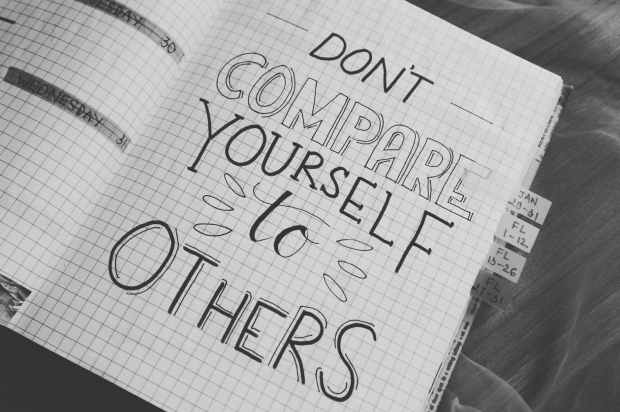
motivational quotes

Always good advice this. Image via Pexels

This World and Others – What is Special about your Characters?

I think this question is the first thing you must ask yourself before writing your story. What is so special about your characters readers have to keep on reading to find out what happens to them?

The basic answer, of course, is that it has to be a mixture of character traits and personality to make a fully rounded “person” to be the star of your story.  So think about where your characters get their traits from and why they have the personality that they do.  What would happen to this personality if they were put under stress (especially the ongoing for some time kind of stress)?  Would your character still be special or crack under the strain and, if the latter, how can they come back from that?  There are stories to be had there!

Also, what is special to your character?  What do they consider to be the most important things about themselves and why?  Who are their heroes and villains, and why?  What possessions do they have that they value the most (and these don’t have to be priceless antiques.  it could be, say, a battered old teddy bear they’ve had since very young etc)?

Happy writing!

This slideshow requires JavaScript.