Experimenting with Words and Form

Facebook – General – and Chandler’s Ford Today

My latest CFT post is Experimenting with Words and Form. I also look at favourite new words. If you have any, do share in the comments box.

I look at why playing with words (and I include things like playing Scrabble here) is a great thing for writers to do. As for experimenting with the form your writing takes, it can open your eyes to new forms of storytelling. What is there not to like about that?

Hope you enjoy.


Image Credit:  As ever, the images are from the marvellous Pixabay.

This slideshow requires JavaScript.

I suppose most people start their reading “careers” off by loving the fairytales/nursery rhymes etc read to them in childhood. Where do you go from there?

For me it was the Famous Five by Enid Blyton, the Little Women series by Louisa May Alcott, Heidi, Black Beauty – pretty much staple fare, or should that be stable fare?! 🤩.

Then later came Agatha Christie, Tolkein, CS Lewis, Wodehouse, Pratchett. Now I read a mixture of fiction and non-fiction, especially on the KIndle. I like to use that to try out books by non-fiction authors who are new to me.

It’s a pretty even split between books and magazine reading overall, though I find one week I’m in “book mode”, other weeks I’m not.

But what matters is I’m reading (and writing, naturally).

This slideshow requires JavaScript.

I’m looking at experimenting with words and form in my CFT post later this week. Word games from Scrabble to crosswords to Boggle I think are great things for writers to indulge in.

Why? Because at some point you are bound to reach for the dictionary to check if a word really is a word or not! (It’s amazing what can get through in Scrabble for a start!). Link up on Friday. (I also share favourite new words).

Facebook – From Light to Dark and Back Again

I talk about experimenting with form as part of my CFT post this week. Flash fiction is particularly versatile here.

Not only can you select which word count you’re going for (and I mix them up, despite my overall preference being for the 100-worders), you can mix up the form too. I’ve written one-liners, acrostics, flash in the form of a rhyme and so on.

It’s important to have fun with what you write. Mixing things up can and does increase that sense of fun.

What are the joys of writing flash fiction?

1. Knowing you’ve come up with a story which makes a huge (usually emotional) impact because of its tight word count.

2. Knowing there isn’t a word out of place and that every one punches its weight and carries the story along.

3. Memorable characters you might want to do more with in other flash fiction or longer stories. Absolutely nothing to stop you developing ideas and characters further.

What are the woes of writing flash fiction?

1. Ensuring you DO make that emotional impact on your reader AND in the way you intend. If a story is meant to make them laugh, you want them to laugh as you intended and NOT at the story effort you’ve come up with!

2. The word count can work against you sometimes where a character really does deserve a longer “run” but you can still go to 1000 words. Even where that isn’t feasible, celebrate having a fabulous character to work with and accept this one is going to be a standard length short story, novella or what have you. Oh and good luck!

3. Making sure your story idea is strong enough to be a flash fiction piece. Flash is very intense due to its brevity. Is the idea up to that intense scrutiny?

This slideshow requires JavaScript.

For obvious reasons I’m pleased to see the short story anthologies and flash fiction collections have a ready market. Even if I wasn’t writing in either market, yet alone both (!), I’d still want these to do well. Why?

I think it’s healthy to have a wide range of fiction available and collections are a convenient way of “storing” shorter stories. They also make the perfect books to read/dip into when time is short or, having finished one novel, you’re not sure what you’re going to read next.

And, as with all writers of novels, writers of the shorter fiction do appreciate reviews in the usual places whether it’s a one line review or a paragraph!

Fairytales with Bite –

Experimenting with Words and Form

My CFT post this week looks at Experimenting with Words and Form and why this is good for writers.

Especially when starting out, experimenting with different kinds of writing is a great idea as it will help you find your niche.  Later, when you have discovered what that niche is, you can hone it and playing with form is a fantastic way of doing that honing.  Also, if you write flash fiction, as I do, there’s nothing to stop you having a go at the standard length short story (which I also do from time to time).

The watchword here is to have fun with your writing.  Sometimes give yourself a break from what you usually do and be creative in other writing fields.  At worst, it’ll act as a brief break and you’ll find you really do want to stick to what you usually do.  At best, you’ll find a whole new world of writing to enjoy.  This is what happened to me with flash fiction and I’ve ended up being published in it!  So be open!

This slideshow requires JavaScript.

This World and Others –

The A to Z of Story Essentials Part 4

A slightly shorter number of letters to cover this week so I can finish with some of the awkward ones next week i.e. U to Z with a stopover at V, X and Y on the way. It’ll be a good challenge.  Meanwhile…

P = Promise.  Does the story live up to the promise of its tagline/blurb?  If it does, great.  Okay this is subjective.  No two readers will ever agree on every book they’ve read.  Personal likes and dislikes have to come into it somewhere but the general principle here is “does the writer deliver”?  For me, a good story is where that promise is easily fulfilled, even if you don’t like how the writer does it!

Q = Queries.  A good story should wrap these up by its end.  Leaving a reader wondering how the characters get on after the story ends is fine (and is a great sign) but the problems set up in the story should’ve been resolved.  There should be no unresolved queries here.

R = Reading Flow. A good story for me is one where I’ll be anxious to get to the next page for the “what happens next” moment.  The flow of the story should be a good one.  You want nothing to drag the story down. The story should read easily too, though don’t mistake simplistic reading/writing for simple reading/writing.  It is generally true if someone has made something look easy, such as making their prose look easy to reproduce, you can guarantee that same someone has worked hard for years to develop that skill. Getting the reading flow right requires precision with words and an awful lot of editing.  When it is done well, no reader will ever notice!

S = Set-up. The story set-up has to be intriguing enough to entice me into reading it. Anything with a fairytale/fantasy world basis will pique my curiosity enough to have a good look at the book.  It’s then when the blurb and opening paragraph kick in.  If they intrigue me, I’ll go on to buy the book.  So the set-up has got to be strong enough to intrigue me at all. That set-up must include there being something special about the characters to draw me in.

T = Tension.  There has to be lots of it and it should arise naturally from the characters.  If you have an awkward character, you know they’re going to clash with others in the story.  Fine.  What I also need to know is what makes that character awkward.  There is always a reason for it!

Final part next week…


Character Types and Story Essentials

Facebook – General – and Chandler’s Ford Today – and More Than Writers (ACW blog page)

Busy day on the blogging front. Firstly, my CFT post is about Signs of Spring– the ones I love and some I loathe. Comments as ever welcome on the CFT comments box.

Image Credit:  All the images are from Pixabay as usual, do see the CFT and More than Writers’ links for the captions I put to these originally.  Hopefully the pictures will intrigue you.  I love the one showing clocks going off into space!


This slideshow requires JavaScript.

Secondly my spot on the Association of Christian Writers’ More than Writers blog is about When Writing is Difficult. I share some hints and tips. Hope you find them helpful.

This slideshow requires JavaScript.

Had a lovely mini-Swanwick meet up with the fab JuneWebber in Winchester today. Lovely weather, great company, and lots of talk about writing and stories. Now that is what I call a good day. Looking forward to Swanwick itself in August of course.

My CFT post this week will be a seasonal one, all about the signs of spring I love (and a couple that I loathe). Link up tomorrow.

Have almost got my 750-word story ready for submitting. I always find the first edit to reduce word count is the easy one. I take out my known wasted words, find ways of rephrasing things etc and that brings the word count down significantly. The hardest edit is when I’ve done all this and I still need to reduce the word count yet without “losing” the story itself. Almost there though.

This slideshow requires JavaScript.

Righty-ho, on to the final section of my What I Like From a Good Book A to Z.

U = Uniqueness. There must be something about the book that makes it stand out (and most of the time this will be down to how good the characters are. I’m on the characters’ side in the character -v- plot debate because a weak character will drag down a strong plot. I think it is the “cast” people remember from a good book, rather than the plot. How often have you said, when asked if you’ve read a certain book, something like “oh is that the one with so-and-so in it?” I know I have, too many times to count!).

V = Variety (of pace). I want plenty of fast paced action/dialogue etc but I also want the “in between” bits which move the story on, tell me what I need to know, and give me chance to get my breath back before the next action scene.

W = Writing that is a sheer pleasure to read because it flows. Yes, clever lines are wonderful, but it is the overall effect I’m after here. You want to feel at the end of the book that the writing couldn’t have been better (whoever said writing is easy hasn’t done any!).

X = Xeno. Okay, confession time. I looked this one up. It means strange. I wasn’t going to cheat by using eXtraordinary for this one or anything like that and X-rated seems too easy! So then, strange (oh and trust me I’ll be remembering xeno the next time I play Scrabble!) – well I love quirky fiction so this ties in beautifully with that. I love stories of strange creatures and worlds BUT they have got to make sense within that setting and still have something we can identify with to make us want to read on to find out more. So xeno or being strange has its place in a good book but it has got to be integral to it and not an add-on.

Y = Yield. An odd one to choose? I don’t think so. A good book at the end of it should have yielded to you the reader an enjoyable read when all is said and done. For me it is always the characters that make a book work or not. Also it is interesting to follow characters working out when they should yield on a point to develop the story or to get themselves out of a big hole. Whatever the reason for a character yielding or changing their mind, there should be a justified reason for it.

And finally…

Z = Zero. This is in terms of feeling that absolutely no words have been wasted. There is nothing that could be changed without spoiling the story in some way.

Happy reading!

This slideshow requires JavaScript.

Facebook – From Light to Dark and Back Again

I find I have to know the voice of my character before I can really get into the story and do it justice. This is where outlining is so useful.

For flash fiction, I often find a line or two about what the character’s attitude to life is and why is a good place to start. I soon know whether a character is bossy but kindhearted with it, a pain in the neck to all and sundry etc. I see this kind of prep work as essential. It’s just that novel writers have to do more of it!!

Themes for any story are best kept simple to (a) avoid overegging the pudding and (b) avoid you managing to tie yourself up in knots as you write the thing.

The strongest themes can often be condensed to one word only – love, revenge, justice, adventure etc.

The best plot lines are exactly that – a line. For example:-

Mother vows to avenge child killed by drunk driver. (My Punish the Innocent).

Villager vows to stop the animal cruelty going on at home. (My The Circle of Life)

Now the nice thing here is the take you put on these themes is up to you. Punish the Innocent is a serious crime story. Couldn’t really be anything else I feel.

For The Circle of Life, I turned this into a humorous story (my character finds a very neat way of thwarting his fellow villagers who don’t share his views).

The great thing is to have fun with what you write. I’m convinced it does show through in what you produce.

Fantastic day out today as a post-birthday treat with better half and Lady at West Bay in Dorset. Lovely weather. Good time had by all. All shattered.

But time to do something different every now and then is useful both in terms of health but also for your writing. You do come back to it refreshed and that’s important. I see writing as very much a long haul thing and stamina is needed (to cope with the rejections and other disappointments along the way for one thing). So breaks away can help with that enormously.

Another way of giving yourself a break, when going to the beach is not immediately available as an option (!), is to give yourself time to free write, brain storm, jot down notes for future ideas etc. I find this great fun, put said thoughts aside for a while and come back to them later. If the ideas still appeal (and they don’t always), I then write them up!

Goodreads Author Blog – Books to Dip Into

I love books you read straight through from cover to cover but I also adore those where you dip into them as and when.

Things like the Guinness Book of Records come into that category. I’m currently reading a “big book of facts” produced by Classic FM but will almost certainly have regular dips into this, rather than read it straight though. (To be fair it is a HUGE book).

I also like the way this mixes up my reading a bit as I read flash fiction (as well as write it), short stories, and novels. I also dip read. Dip reading is also useful when I’ve finished a book and am not quite sure what I’m going to read next.

I often fancy a change of mood after completing a novel and until I know what is next on my reading “menu”, I will dip into books like this until such time as I do know.

This slideshow requires JavaScript.

Fairytales With Bite – Favourite Character Types

This is by no means a definitive list and I suspect you could add many of your own but my favourite character types include:-

1.  The underdog. (Most of the fairytales have good examples of these.  Cinderella is not expected to do well by her stepmother and stepsisters!).

2.  The character who is not expected to be a hero but becomes one.  (Frodo Baggins is a great example).

3.  The rebel (especially one who can see through the faults of their own side and has tried to rectify them but to no avail.  My fairy godmother character, Eileen, is of this ilk.  Characters like that are great fun to write for).

4.  A well rounded animal character.  I have a soft spot for anthropomorphism. Where would The Wind in the Willows be without it?! I also adore Gaspode in Terry Pratchett’s Discworld.

5.  Those who deal out justice to those worthy of receiving it!  This is usually where some character thinks they’ve got away with something and our hero/heroine turns up to prove them wrong. Or it can be someone like Terry Pratchett’s Lord Vetinari who deals out what he feels is appropriate justice (and is usually right.  Look at how he deals with Moist Von Lipvig in Going Postal).

This slideshow requires JavaScript.

This World and Others –

The A to Z of Story Essentials Part 3

Moving on from last week then…

K = Killer Lines.  The ones that make you gasp, laugh out loud, or simply make you wish you could’ve written something that good!  Use them as inspiration to do exactly that!

L = Logic.  A strange thing to put for this perhaps?  I think not.  A story must make sense, even if it set in the most fantastical place imaginable.  The characters must make sense.  Your story needs a structure that follows through from start to finish.  So the story then must have its own internal logic.  Anything that doesn’t “feel” like a story when claiming to be one will, I think, put readers off.  We have expectations that stories will work and it is because the logic of them works.

M = Murder.  I do love a good crime story and most of those are based on murder.  But this can be applied to other genres here if you take murder to mean “killing your darlings” if they’re in the way of your story. When you read of the death of a character in a story, there should be a point to it and move the story onwards.  A character that doesn’t do anything for the story should not be in it and good writers will ensure their characters do earn their place.  Sometimes that will mean literally killing them off as part of the story.  Sometimes it will mean realising this character isn’t strong enough so back to the drawing board for one that is!

N = Narrative. Should be compelling, drive the story on, tell the reader things they need to know in a way said reader is going to find entertaining (no lecturing!) etc.

O = Overwhelming Odds.  I do love a character that has to face up to these and overcome them.  It is fascinating to find out how they do it. It should also show depth to that character and it’s even better when the character is surprised as they look back at how far they’ve come on, what they’ve been able to achieve etc. Incidentally the overwhelming odds can be something as dramatic as Frodo Baggins’ quest in The Lord of the Rings but it can be something which, to us, might seem mundane, but to your character is everything.  As long as reader knows it really is everything to that character and why, they should want to find out whether the character overcomes or not.

More next time…


TOP TEN ACCOMPLISHMENTS AND DIPPING BOOKS

Many apologies for not being able to share my CFT post yesterday.  I’m glad to say the site is now up and running again, hence this extra post.


Facebook – General – and Chandler’s Ford Today

Glad to say I can now share my CFT post for this week. I look at what I think are the Top Ten Accomplishments of mankind. I don’t stick to one particular field and my comments have to be a summary but I have picked photography, the domestication of the dog, and space exploration amongst others.

As ever, comments welcome on the CFT page.

Image Credit:  All images in the following slideshow are from Pixabay and are related to my CFT post.  You could play “guess the accomplishment” by looking at the slideshow first!

This slideshow requires JavaScript.

Facebook – From Light to Dark and Back Again

With flash fiction, you are focusing on one specific moment of change for a character. There literally isn’t the word count for more so the challenge is to make sure that specific moment is strong enough to be worthy of having a story written around it.

I look for impact on me as the writer, and then on what I think the impact will be on readers, when I decide on whether a story idea is strong enough or not. That idea has to generate a strong emotional reaction whether it is to make me laugh, cry, scream or what have you.

Goodreads Author Programme Blog – Books to Dip Into

I love books you read straight through from cover to cover but I also adore those where you dip into them as and when.

Things like the Guinness Book of Records come into that category. I’m currently reading a “big book of facts” produced by Classic FM but will almost certainly have regular dips into this, rather than read it straight though. (To be fair it is a HUGE book).

I also like the way this mixes up my reading a bit as I read flash fiction (as well as write it), short stories, and novels. I also dip read. Dip reading is also useful when I’ve finished a book and am not quite sure what I’m going to read next.

I often fancy a change of mood after completing a novel and until I know what is next on my reading “menu”, I will dip into books like this until such time as I do know.

But the important thing is I keep reading!


INFLUENCES – AND A LIFE WELL LIVED

Facebook – General – and Chandler’s Ford Today

There are some posts you really don’t want to write but know are coming and you write them as a way of expressing apprecation for a life well lived.

My tribute to Barbara Large, MBE, who founded the Winchester Writers’ Festival and Hampshire Writers’ Society, comes into that category.

I cannot think of anyone else who has done so much to support and encourage so many writers in our area. Barbara will be much missed.

This slideshow requires JavaScript.

Glad to say I’ll be having a new story up on Cafelit in a couple of days’ time. Will share the link. Do drop by and visit the site. There’s a wonderful range of stories on there in terms of mood, setting etc.

I must admit one reason I’ve developed a real love for classical music is its breadth of style and mood. Am currently listening to The Planet Suite by Gustav Holst. Bliss! I find classical helps me relax and when I relax I write. I wonder though what inspired him to use the planets as inspiration for his music. What matters in the end though was that he did!

However you get your inspiration for story ideas, keep going! Try to produce something as special as you can. One of the great things about writing and reading is, regardless of anything else, it adds richness to your life.

This slideshow requires JavaScript.

My CFT post this week will be an appreciation of Barbara Large, who founded the Winchester Writers’ Festival as it is now known. When I first went, it was under the name of Winchester Writers’ Conference. So many writers have learned so much here (and plenty have been published as a result too) and it is all down to Barbara’s vision and her drive to make that vision happen. Link up on Friday.

Facebook – From Light to Dark and Back Again

Am currently drafting a 750 word story but also want to have another go at the 75 word ones!

I do love the freedom flash fiction gives you. Yes, there is a strict word count but you can choose what it is to a certain extent. There are markets for 75 words, 25 words, 100 words etc etc.

Have recently discovered a possible one to try which goes for 53 words, yes 53. New one on me but may well give it a go! Mixes things up nicely though. Now to find the time… (There are times I really could use Hermione Granger’s time turner device).

Tips for finding your character’s voice:-

1. Write a short scene and just dump the character in it. What is their FIRST reaction? It can be exactly how you’d react. It could be the exact opposite. But once you know what that reaction is, you will have a good idea of their general attitude and approach. You will have that in mind as you write your story.

2. Ask yourself questions about your character. For example, what are their political beliefs? If they don’t have any, what do they believe in and why? Get your character to explain themselves to you! Interviewing your character can be a great way of producing an outline for the story and helping you discover hidden depths to your people. Most of that may not go into your story but you will write with more conviction because YOU know what your people are really like.

I suspect one of the major reasons for the increasing popularity of flash fiction is due to how easy it is to read on a screen, regardless of the latter’s size. The drive in technology, especially mobiles, tablets etc, has helped flash fiction spread. Naturally I’m all for that.

My hope is reluctant readers will be tempted in by an easy read on a screen and then go on to read longer works later. I was saddened though by a recent FB cartoon showing people poking and prodding at a book, not knowing what it was. I only wish I could be certain that would never happen!

But online markets give writers more opportunities to get their work out there. I would far rather people read online than not read at all.

Talking of online reading, I’ll have a new story up on Cafelit on 16th March. Will share the link once I have it. Keep reading!

This slideshow requires JavaScript.

Fairytales With Bite – Influences and a Life Well Lived

My CFT post this week pays tribute to the late Barbara Large, MBE, who founded the Winchester Writers’ Festival (as it is now known) and the Hampshire Writers’ Society. I cannot think of anyone else who has done so much to help so many writers over so many years.  She will be much missed.  I first met Barbara many years ago and her encouragement made a huge difference.  So many writers will say the same (including the children’s author, Anne Wan, whom I’ve also interviewed for CFT).

Influences matter to a writer and can make all the difference to whether someone keeps going or gives up.  This applies to our characters too.  What influences are your characters under or swayed by?  Are they positive ones?  If there are negative influences about, what do your characters do to fight that?

Barbara’s life was very much a life well lived and that is something we should all aspire to do.

As for our characters, what do you want your people to aspire to be?  What drives them?  What gets in their way?  Answer those questions and you have the very essence of a good, drama driven story.  And isn’t that what we all want for our books and stories?

Image Credit:  A big thank you to children’s author, Anne Wan, for supplying the images of Barbara Large.  It has been a real pleasure to interview both ladies for CFT at varying points.

This World and Others – The A to Z of Story Essentials

The great thing with an A to Z post is it gives you an instant framework! So my A to Z of story essentials (to be shared over the next couple of weeks or so) includes the following.

A = Action – without this there is no story.  Something has to happen!

B = Belief – this can be the belief of the character, the beliefs held by the world in which they’re set or both of course.  The lead character has to have belief in what they are doing to be able to follow it through.

C = Credible Characters – there has to be characters a reader can get behind, whether it is to cheer them on, or hope said characters fail.  (It is cathartic to boo on the villain!).  We should be able to understand why your characters are the way they are/acting the way they are even if we don’t necessarily agree with them.

D = Dialogue – also has to be convincing.  Accents and dialects are best used sparingly.  The odd word will give enough of a flavour of the relevant accent/dialect without overdoing it.  Dialogue in characters should sound natural (read it out loud to see if it does flow well.  If not, edit!)

E = Editing – this is the writer’s friend, honestly.  Nobody produces a perfect draft first go.  Shakespeare didn’t.  Dickens didn’t.  We’re not going to either.  But put work aside for a while so you can come back to it and look at it with a fresh eye.  Remember editing is not just about spotting the typos and grammatical errors.  There should be structural and story edits to ensure the structure and the story holds together and works the way they should.

More next time…


Character Types (and Why It Matters to Get Them Right)

Facebook – General – and Chandler’s Ford Today

There’s a nice little Q&A session which has developed from my CFT post this week about character types and why it matters to get them right.

This is one thing I love about my CFT posts. I can never know what reaction there will be until the posts go up and sometimes great discussions take place, sometimes not. Do pop over and have a look at this week’s post and if you have favourite character types I’ve not listed here, please do share them in the comments box.

Comments on the character -v- plot debate would also be welcome. I do come down firmly on one side here but I’ll leave you to find out which one it is!

This slideshow requires JavaScript.

My CFT post this week will look at some of my favourite character types and why it matters to get them right.

A good story can only be that way if the characters are strong enough. A decent plot will be let down badly if the characters are not “up to scratch”. More on this and the link tomorrow.

Am looking forward to going to the Association of Christian Writers’ Day at Bath on Saturday. Always good to meet other writers!


There will be an expression here which will match your thoughts about most adaptations - Pixabay image

What are your characters like? What emotions do they have? Pixabay image.

It is with great sadness I see from the Winchester Writers’ Festival page that Barbara Large, MBE, who founded the original Winchester Writers’ Conference, passed away on Monday. She will be much missed.

Barbara gave so much support and encouragement to writers across a huge range of genres including me. I have a certificate for a Commended Short Story signed by her from the 31st Winchester Writers’ Conference and it has pride of place on my wall.

Condolences to all of her family and friends.


Resized Barbara Large and Anne Wan

Barbara Large MBE (left) will be much missed by the writing community including Anne Wan (right) and myself.  Image kindly supplied by Anne Wan.

Facebook – From Light to Dark and Back Again

The advantage of flash fiction is you have to learn to write tight to keep to the word count, even though there can be flexibility with that. You don’t have to stick to 50-word stories. You can have a go at the 500-word ones!

The advantage of a novel is you have room for sub-plots and can go much further into character development, which when well done adds layers to your story.

The short story is a cross-over to an extent. Usually there would be room for only one sub-plot (but there’s no room at all for anything like that in flash). You can go into character development but the word count restrictions here will limit how far you can take that. (Though that can vary from 1500 to 8000 or thereabouts as there are some longer short story competitions out there).

And all three are brilliant writing disciplines! All need decent editing and crafting to get your story into shape. Whatever form you’re going for, or if you’re going in for more than one, you can know you will be doing a lot of editing! But above all have fun with them. Writing should be fun.

How do you find coming up with promising opening lines? Is it a pain or is coming out with those just fine but then you struggle with delivering on the promise of that opening line?

I’ve found mixing up how I approach this helps a lot. I outline (briefly, appropriately for flash fiction) how a story could go from that opening line. There is usually some promise from those thoughts that I can develop. Okie dokie then, away I go and write the thing.

Sometimes though I’m not satisfied with what I’ve come out with. Somehow the thoughts don’t seem strong enough. DO trust your gut instincts here by the way, they’re normally right. When I have this happen, I then see if what I thought might be a good opening line would actually work better as a finishing one. I then work backwards to get to the starting point.

I’ve not rejected an opening line altogether yet because if one method here doesn’t work, the other does. It’s just that sometimes you can’t always see the best way to go straight away and that’s where outlining comes into its own and to your rescue!

A quick search of Writing Magazine’s Competition Guide has shown a couple of interesting competitions I’ll try and have a go at. Note to self: go through the guide at the weekend and mark the ones of interest! What is nice is some of the competitions are rolling ones in that there is one per month or something like that so if you miss one deadline, there are others you can aim for.

It proves that the market for very short stories and flash is a healthy one. Hooray for that!

This slideshow requires JavaScript.

Fairytales with Bite – Top Five Tips for Characterisation

My theme this week is character type(s) and my CFT post also featured this but I thought a quick run down of tips would be useful.

  1. Be realistic.  Your characters must have motivations that we will all understand, even if we don’t agree with them all!
  2. Show flaws as  well as virtues.  None of us are perfect after all so why should our characters be?  Besides they can get to learn from their mistakes.
  3. Stretch your characters.  Don’t be afraid to put them through hell to find out what they are really made of/are capable of.
  4. Let your characters surprise you, sometimes (don’t overdo it!).  A great example of what I mean here is Frodo Baggins from The Lord of the Rings.  Nobody expects in that wonderful world for a hobbit to be a hero, yet Frodo becomes one.  Frodo shows a determination and courage others far bigger than him are not capable of (and yet he’d have failed completedly without Sam Gamgee’s support).  It would’ve been the easiest thing of all for Frodo to stay in Middle Earth and let someone else do the heroics.
  5. Weaknesses SHOULD get in the character’s way and be something they’re seen to be fighting against.  And that, folks, is where the drama is!  A great story has plenty of that!

This World and Others – Character Types

I look at character types and why it matters to get them right in my CFT post this week.  It doesn’t matter how fantastic your world is, the characters must be believable for your readers to engage with them and want to read your story at all.

One key to getting this right is to examine your characters’ motivations. Why are they acting the way they are?  Is it something we can understand?  I’ve long thought Woody from Toy Story is a truly great character.  Why?  Because his jealousy when Buzz comes into his life is understandable.  There are very few of us, regardless of our age, who haven’t been jealous of something or someone in our time.

Look at how your world is governed. Is it a democracy?  Is there a tier of local government?  What are the politicians like there? (And there will be politicians somewhere along the line.  Where there is any kind of power, no matter how minor, politics and playing people off against one another will come into it.  Sad perhaps but again this is something we all understand and will help make your world seem more real to your readers).

So think about emotions.  What are your characters likely to feel and why?  (This is one reason why the Cybermen as a concept are frightening.  The removal of all emotions?  Those are what make us human.  They can also make your Species X what it is and differentiate them from other character types in your fiction).


Managing My Writing

Facebook – General

I’ve found getting into a regular time for writing has helped me get more work done but I sneak in writing as and when I can during the day. (Generally easier to do at weekends). I’ve learned over time that pockets of time mount up and of course flash fiction can be written as complete works in those pockets.

I tend to break longer projects into time slots – say 20 minutes on a longer short story, 30 on writing my CFT post for the week and so on. Inevitably I will find I overrun on a piece as it “grips” me and I carry on writing but that’s fine. I will “mine” that for all I can and then carry on with whatever else I was working on afterwards or the next night. I look at my writing over the course of a week and work out what I’d like to achieve over that time span.

So don’t give up just because you haven’t much time. It’s a question, I think, of working out what you time you have got and deciding how best to “spend” that time.

Looking forward to going to the ACW Writers’ Day in Bath on Saturday. What are the benefits of going to days like this/writing conferences in general?

1. You get to meet other writers and make friends.

2. You learn from the talks/courses.

3. Given most of the time you’re behind on the desk on your own writing, it is fantastic to meet up with others who know what the joys and problems of writing are and can sympathise!

4. Some writing conferences run competitions. Always worth a go.

5. My CFT post from last year talks about the benefits of a good writing conference. Many thanks to Geoff Parkes for the pictures of me reading at the Open Prose night.

This slideshow requires JavaScript.

Reading and writing are great joys at any time but I think they come into their own the most when your own mood isn’t so great.

Books and stories can (and indeed should) take you out of yourself and into a new world where you can lose yourself for a while. The challenge for the writer, of course, is to create a world the reader will want to spend time in. How best to do that? By creating characters the reader will either love or love to hate and where they/you have got to find out what happens to them.

This slideshow requires JavaScript.

Favourite characters beginning with the letter A:-

Aslan (Narnia)
Aragorn (LOTR)
Angua (Discworld – her bark really is worse than her bite!)
Adora (Belle Deerheart – Discworld. Feisty doesn’t begin to cover it for this character!).

All of these characters are memorable and stand out, not least because one of them is a lion! All overcome perils (and in Aslan’s case death as well. See The Lion, the Witch and Wardrobe for more on that! I refuse to believe this is a plot spoiler after all this time. Having said that, much as I love the book, I think Prince Caspian is even better).

It is the characters that draw me into any story, regardless of its genre. Yes, an odd set-up can provoke my curiosity but unless the characters appeal in some way, I won’t stay with that story.

PS Am having difficulty posting images with this one. Don’t know why. Sorry!  This is true for my Facebook post but I can and will post images here!

Facebook – From Light to Dark and Back Again

When does a character come alive to you, their creator?

I think it is when you can put that character in any situation (outside of those in the story) and you would know immediately how they would react/deal with it. I sometimes know what my character’s favourite songs would be. I don’t always work thing out to that level of detail but I can hear a piece and think X would like that.

And yes it is perfectly possible to be irritated/annoyed with your characters as you get to know more about them. You need to look at why that is happening and ask yourself if this is an effect you want your readers to experience. If not, it’s time for amendments!

Flash fiction shines a spotlight on writing faults due to its word count limitation but that can be useful as you can then do something about said faults! It is so easy to repeat phrases or to use words that don’t add anything to your story so when I’m editing, these are the first things I look for and remove when I (inevitably) find them.

Often that edit in itself can be enough to get a story down to a required word count. Even when it isn’t, getting rid of the dross can then help you assess what you really need from what you’ve got left. And at that point, I’m looking for “does this move the story on?” or “if I cut this out, would it be missed?” I’ve found those two questions so useful for helping with edits and of course they work with longer fiction too.

I use the first person for a lot of my flash fiction as that immediacy of viewpoint suits the story form very well. It makes it easier for me to hit the ground running with my stories by showing you their viewpoint from the outset.

I often outline a character by just working out what their chief characteristic is and then deciding how far they will take that. You can have a lot of fun here if your character’s chief trait is stubbornness! Just what trouble can they land themselves/others in… and that of course can lead to a tragic tale or a funny one.

Flash fiction can be useful for generating story ideas for fleshing out into much longer pieces later on. I’ve sometimes taken a flash piece of mine and created a separate standard short story from it (circa 1500 to 2000 words).

Sometimes I think an idea will work better at a longer length but it isn’t always the case! For example, a quirky character can work well in a short piece. In a longer one they may irritate a reader. Just not worth going there! So when I’m pondering whether or not to expand a flash fiction story, I look at whether the lead character is really up to a longer word count. And they have to have plenty going for them for the answer to that one to be “yes”! (Beware the one trick pony – they really are best off in flash fiction and staying there).

PS Sorry for lack of images. Just not loading on this or my author page today. Don’t know why. All that happens is my text vanishes and no picture appears eitther! This has occasionally happened before. Hopefully normal service with pics tomorrow…  Again, this is true for Facebook today but not here!

This slideshow requires JavaScript.

Goodreads Author Programme Blog –

Saturday Night is Alright for Reading

As is every other day of the week, of course! I thought of this title (and by default Elton John’s hit Saturday Night’s Alright for Fighting) because I recall Saturday night being THE night for TV viewing.

There would be something good on everyone would want to watch and, especially in the days before VCR, you’d have to catch the programme live or hope for a repeat.

I was reminded of that this week with the news of the sad passing of Andre Previn aka Andrew Preview on the Morecambe and Wise Show.

So given I think that kind of Saturday night viewing is a thing of the past, perhaps making it the Big Read Night is not such a bad thought.

It does surprise me a bit, given how many great novels and short stories there are out there, that more are not adapted for TV. I would love to see the Discworld novels brought to the small screen. The Vimes/Watch novels would work particularly well. And it would be very original material too!

So back to the books for entertainment then. That’s not a bad thing!


Adaptations and What I Look For in a Fictional World

Facebook – General – and Chandler’s Ford Today

What do you think about adaptations? Are they good or do they stifle new work coming through?

See my thoughts on that topic in my latest CFT post. I also discuss remakes, share my favourite adaptations and discuss what makes for a good one (and what makes for a bad one!). See what you think and do share your favourite adaptations via the CFT comments box.

This slideshow requires JavaScript.

Just enjoyed listening to Danse Macabre by Camille Saint-Saens on Classic FM. This is the theme to my book trailer (so wonderfully produced by Chapeltown Books) for From Light to Dark and Back Again and is fondly remembered for being the theme used for Jonathan Creek. Every time I hear the piece, I smile – I guess it’s a kind of “my song” moment!

Saddened to hear of the death of Andre Previn today. The Morecambe and Wise Greig Piano Concerto sketch with him was comedy genius and my favourite comedy sketch. Previn’s look of frozen horror is just fabulous. I automatically think of this sketch when this concerto is played – as I suspect most people over a certain age do!

I write with classical music on in the background and find it helps me relax and get into the writing mindset. That and a nice drink helps very nicely!


https://www.facebook.com/plugins/video.php?href=https%3A%2F%2Fwww.facebook.com%2FAllison.Symes.FairytaleLady%2Fvideos%2F954726234630356%2F&show_text=0&width=560

When is a adaptation a good one? I’ll be looking at this later this week with my CFT post. (I’ll also be sharing my thoughts on what makes a bad one!).

I suppose one thing about writing flash fiction is you know they’re never going to be make a film out of your work. The best you can hope for is a series of shorts!! Appropriate somehow I think…

Give some thought as to what your favourite adaptations are and why. Comments will be very welcome over at CFT.

I like to see a good balance between adaptations and new work coming through, whether it is in books, for radio, TV, or what have you. You need the new blood coming through but tried and tested favourites have got to be that way for a reason and shouldn’t be discarded.

Facebook – From Light to Dark and Back Again

I discuss adaptations in my CFT post this week. Short stories are often adapted for the screen (The Birds by Daphne du Maurier is probably the most famous example). Maybe it is a matter of time before a flash fiction piece is adapted – okay it probably will have to be a short but that’s fine!

Ironically, I’ve used moments from film to inspire my flash fiction stories so maybe there can be a two way process going on here.

One of the challenges facing a flash fiction writer is resisting the urge to bring too many characters into the story. Flash fiction works best with one to two characters only (and I love to get my people to refer to others who never actually appear in the tale. The mention is important to the plot but the absent character isn’t actually needed to turn up and “perform”).

The great joy with having a bigger cast of characters is being able to get so many interactions going but that really is best left for the longer short story and, even better, the novel. Flash fiction has to pinpoint and focus sharply. I’ve found it best to focus on one lead character and take things from there. I ask what is important for this character to know, to do, or to say that will bring the story to the right conclusion. Whatever doesn’t fit stays out.

This slideshow requires JavaScript.

I have a Dogs calendar on my desk which has an appropriate “Thought for the Day” on it. (Or should that be “bark for the day”?). All coming in at well under the 50-words mark. Flash fiction with bite, anyone?

Given I put up Street Cred about cats the other day, I should redress the balance and put up a story about my favourite pet, dogs.

GETTING THE JOB DONE
She collected specimens, whether they wanted it or not. They didn’t get to argue for long. They didn’t have to be alive for a start. Tell them that and she usually got their co-operation.
So why was this one being so belligerent? She couldn’t remember when someone last argued with her. She did know nobody ever got to tell the tale. All she had to do was inform her supervisor there was an awkward one. Everyone back home understood that.
Well nobody was going to make a dent in her track record. She whipped out a light gun and aimed it at the miniscule creature in front of her. It was a stupid looking thing. All fur, floppy ears, and big brown eyes. Goodness knew why the bosses wanted it.and then she found out.
The puppy sat, whimpered, and held up a paw. There was a husk of some sort in there.
She put the gun down, gently removed the husk, and was rewarded with a big lick across her three pink noses.
She scooped the pup up in her elongated pink arms. ‘Sod the bosses. You’re staying with me. Let’s find you something to eat.’
The pup squealed and wagged its tail. She smiled. She’d not had anything nice happen for a long time. She’d focussed on just getting the job done.
There were going to be changes around here.
Ends.

Allison Symes
27th February 2019

Hope you enjoy! Lady is generally more appreciative of walks and playtimes in the park!

Inquisitive Lady -1

Inquisitive Lady. Image by Allison Symes

Fairytales with Bite – Ideas and How to Find Them

This is by no means an exhaustive list but this includes some sources I’ve found most useful when generating story and article/blog post ideas.

1.  Proverbs and sayings.  What can you come up with, say, to fit the proverb “love is blind”? A book of proverbs is great for dipping into for themes you’d like to try to write to and generally are not that expensive to buy.

2.  Classic fairytales.  Look for the themes behind them.  A common one is that of wrongs being righted (see Cinderella, Snow White, Hansel and Gretel to name but a few).  How could you use that theme?  And that is just one to play with!  There are others.

3.  Films.  Again look at the theme but also look at the theme of the sub-plots (there will be at least one in any good movie).

4.  Advertising slogans.  Don’t copy word for word but adapt.  (This ties in nicely with my CFT post this week on Adaptations!).  For example, in the UK, there was a slogan from years ago which was “go to work on an egg”, advertising the virtues of eating eggs.  Your theme could be something like “go to work on…” and name a foodstuff of your choice or a vehicle we don’t see on Earth etc.  Let your imagination run riot!

Happy writing!

This World and Others – What Do I Look For in a Fictional World?

This can only be a brief summary but the important points I look for in a fictional world are:-

1.  Characters.  They can have three heads, two noses or what have you, but the important point is I’ve got to be able to root for the characters, whether it is to cheer them on to success or hope they come crashing down.  There has to be something about them I love or loathe but makes me want to read on to find out what happens to them.

2.  A sense of how the world is governed.  I don’t need all the details, they’ll get in the way of the story, but I need to know that your characters know the rules of their world and how these affect them as the story progresses.  For example, in a world where there is no oxygen, what do your characters breathe instead?  DO they breathe (or are they water dwellers)?

3.  The details given are relevant to the story.  Enough said I think!

4.  A sense of what it would be like to live in that world.  I don’t necessarily have to want  to live there.  I may be very glad I don’t in fact but this sense of what it would be like is enough for me to create my own mental images of what your fictional world might look like.  That in turn helps me engage with that world and the characters you’ve put in it.

5.  A sense that it could exist somewhere out in the universes.  No matter how unlikely, the possibility should be there!  This means that there has to be a sense of a world that can sustain itself, possibly trades with other worlds and so on.

This slideshow requires JavaScript.


The Uses of Weather in Fiction

Facebook – General – and Chandler’s Ford Today

I’ve finally got around to talking online about the weather in my CFT post this week, though I go on to discuss its uses in fiction. I also share why I don’t tend to use weather in my stories and look at how it can be done realistically.

This slideshow requires JavaScript.

Books I chose for the 7 covers in 7 days challenge on Twitter were:-

Men At Arms (Terry Pratchett)
Pride and Prejudice (Jane Austen)
The Lord of the Rings (J.R.R. Tolkein)
Code of the Woosters (P.G. Wodehouse)
The Daughter of Time (Josephine Tey)
Harry Potter and the Prisoner of Azkaban (J.K.Rowling)
Murder on the Orient Express (Agatha Christie)

Good fun to do but a challenge, given there are so many other books I could’ve included. I chose these on the basis that if I could only smuggle 7 books away with me somewhere, these would be the first ones I’d go for.

This slideshow requires JavaScript.

I’m going to be talking about the weather (and its uses in fiction) for my CFT post this week. I avoid using it in my stories, the post will explain why. Link up on Friday.

Lovely to see crocuses and snowdrops out. One great thing about walking the dog is you do get to see things like that which you might not otherwise notice. I’ve seen some spectacular wildlife sights too – sparrowhawks have been known to be in Chandler’s Ford – and buzzards often circle the park. You can always tell when they’re about – the sky goes quiet. Can’t see a little bird anywhere…

Facebook – From Light to Dark and Back Again

Had a fantastic time visiting the family tonight but a nightmare journey getting over there. What should have taken a maximum of 30 minutes took 90!! Naturally on the way home, it did take under 30.

So this led me on to think about what would be a nightmare journey for your characters. Is it just down to transport problems or what they are facing on that journey? Why are they making that trip? Can they avoid it or change it so it is better? If not, why not? There has to be a good reason for the journey to be made otherwise the reader will think why on earth didn’t Character X just stay at home and avoid all the bother!

The ultimate journey in fiction for me is Frodo Baggins’s “trip” to Mordor in The Lord of the Rings but a journey much shorter than that can still be a nightmare. For example, does your character need to walk a mile to fetch something but they have to go through a neighbourhood known to be hostile to his family?

What does your character fear that would turn any journey into a nightmare? What do they do to overcome that?

Hope these thoughts can seed some story ideas! Good luck!

Many thanks, everyone, for the likes and comments on yesterday’s post about how I produce a flash fiction story.

I also have brainstorming sessions every now and again where I’ll outline a possible story idea or an idea for a character in a line or two. I put those notes aside for a while before revisiting them and deciding then if the ideas were as strong as I first thought they were!

Usually they are, sometimes not (and I discard those), but in the majority of cases, the idea is okay but needs strengthening. That is where I need to dig even deeper into what my character is capable of as that is where I’ll find the trigger for turning an idea into a story. A character that I discover is capable of doing anything for a laugh because they think it is the best way to make and have lots of friends is someone with at least one story to tell (and probably a poignant one).

What if is the classic question to ask both of your character and your idea to get the best out of both.

This slideshow requires JavaScript.

My process for producing a flash fiction story goes like this.

1. Have idea for interesting character. (Flash fiction works best with one or two characters at most, though others can be referred to or implied).

2. Work out what to do with interesting character! As you can imagine, this is the REALLY fun bit!

3. Draft the story and check it makes sense.

4. Put it aside for a while and get on with my CFT posts, my novel, more flash fiction stories etc

.5. Come back to the story and read it with a fresh eye. Ask myself what impact it makes on me. Is it the impact I want it to have on a reader?

6. Edit the story based on 5 above but also check for the usual typos, grammatical errors etc. (I wish I could say there were never any but life’s not like that!).

7. Re-read it and if happy submit it to an appropriate market or competition.

I really enjoy reading and writing flash fiction stories which end with a punch. Sometimes that can be literal (!) and is most satisfying when the character has deserved it (and that will be the view your readers will take too). One huge advantage of fiction is wrongs can be righted in a way they’re so often not in real life. I believe that is one reason why fairytales are always popular!

I also love the witty one-liners that can close a story. It’s good to finish a story on an “uplift” where that is appropriate. Of course the set up for that finish happens much earlier in the story and it can be as simple as showing your character has the type of attitude which will make a witty one-line retort likely. (It usually is a retort!).

Above all, it is fun, which is what writing should be after all.

Goodreads Author Blog – Hooks Into Books

I seem to have a “thing” for rhyming titles at the moment. Sure it will be a passing fad…!

What attracts you to a book? Is it the title, the blurb, the cover, or a combination of the lot?

For me, the cover draws me in but the blurb is what clinches a sale for me, whether I’m reading on Kindle or a paperback. If I like the premise of the blurb, I will “look inside” a Kindle book or look at the opening page of a paperback. If it seems to deliver, I’ll go ahead and buy.

There is no such thing as a foolproof system but this works for me!

Of course, another great hook is reading a book by an author whose works you know you like. I love series novels and my favourite of these has to be Discworld. Each book original and entertaining but there’s enough familiarity with the world to make you feel right at home as you continue to enjoy the series.

Whatever you read, enjoy!

Fairytales with Bite – Signs Your Character Isn’t Strong Enough

This is by no means an exhaustive list but signs your character isn’t strong enough include the following.

1.  Forgetting their name!  It can happen. It’s bad enough when a reader does it but if the writer does so, then the character is in real trouble.  If they’re not memorable enough to you, they certainly won’t be to anyone else.

2.  Running out of things for them to do.  Yet the plot is strong, the other characters are ticking along very nicely with plenty of dialogue, action etc.  You need to ask yourself whether you really need this character in the story after all.  If you feel you do, look at why.  Could this character be combined with another in the tale to make one really strong creation that keeps the reader’s (and writer’s) interest?  You need to keep in anything and anyone that moves your story onwards.  You also need to ruthlessly cut what you really don’t need.

3.  Their dialogue isn’t distinctive enough.  Your reader should be able to tell who is speaking in a story by the style of the language used by the characters.  Character A talks in clipped tones, Character B tends to laugh a lot after talking, Character C has a lisp, Character D has a strong northern accent (as someone once said, everywhere  has a north!).  If you can’t tell your characters apart by how they speak, they’re not distinctive enough and again I would look at whether you really need them in the story.

This World and Others – The Weather and Its Uses in Fiction

This is my CFT post for this week and I discuss my views on weather being used in fiction, as well as showing some ways it can be done realistically.

Whether you use weather or not, the general point is that your fictional world must seem realistic to the reader, no matter how fantastical the setting.  That may well mean you do need to share some details as to what the climate is etc to help readers get a better understanding of your creation but only put in the details the reader has absolutely got to know and leave it at that.  Your reader will want to fill in some gaps for themselves.  Also, you don’t want them switching off because all that lovely research detail you put in and you found fascinating has done nothing whatsoever for them!

Ask yourself if the reader really needs to know this.  I’ve found the simple approach of “just the facts, Ma’am, just the facts” is a great way of working out what to put into a story.  I’ve also found it best to share those facts in as palatable a form as possible.  No great splurge of information but drip feeding it as and where necessary makes it easier to take in and therefore more entertaining and acceptable to your reader. And that is where the reader will keep on reading and hopefully loving your story!

This slideshow requires JavaScript.


Reading Journeys and the Role of Stories

Facebook – General – and Chandler’s Ford Today

I look at how what I’ve read has changed over the years in my CFT post about Reading Journeys this week. I also look at how the Kindle has impacted on my reading life too (and boy has it! My suitcase is a lot lighter thanks to it!).

I can’t remember what the first book I read all by myself was but wouldn’t be surprised if it was a picture book. I am still very fond of The Reader’s Digest Collection of Fairytales which is beautifully illustrated. I’m also a sucker for a good map (see The Lord of the Rings!).

I’ve said it before, and will no doubt say it again, but adult fiction writers owe a huge debt to those who write for youngsters. So many readers of fiction for adults come from a background of having always read books/had books read to them. It is just a case of tastes changing over time. It is difficult to understate how important it is to create that wish to read spark off in the first place.

This slideshow requires JavaScript.

My favourite moment when writing a story or a CFT post is when the piece “takes off”.

For a story, this is when the character hits their stride and there’s no holding them back. You, as the writer, are keen to find out what happens next (which is always a good sign!). And yes I outline but I deliberately don’t put down every detail. I need signposts but what happens between them is the really fun bit!

For a post, it is when one idea leads to another and that leads to more and before you know it, an article is written.

The scary moment? When you’ve outlined an idea and you begin writing and at that point you don’t know whether it is going to “go the distance”. There’s always a certain amount of relief when things “take off” and you realise the post or story will be fine (after editing later, naturally).

Image Credit:  The picture of From Light to Dark and Back Again was taken by my cousin, Raewyn Berry.  My book is on display at her guest house in New Zealand.  It is easily the furthest my book has travelled!

My CFT post this week will take a look at reading journeys and how they change and develop over time (as they should). Good excuse to put lots of pictures of lovely books up too! Win-win! I also look at how methods of reading have developed. Who would have predicted the Kindle when I was growing up in the 1970s?

Do you have a reading list of books you simply must read (in whatever format suits best) before the Grim Library Keeper tells you that you are way overdue and it is time to go?

One of my favourite cartoons is the one of a woman in bed ringing to tell someone her other half has been crushed by his To Be Read pile. I have a nasty feeling life could imitate art for many of us here on that front! So don’t pile them too high, eh?

And I really must go and reduce the height of mine!

Facebook – From Light to Dark and Back Again

The spark for a new flash fiction story comes from a variety of sources for me. These include:-

1. Hearing a turn of phrase which catches my fancy.

2. A well known saying or proverb. (I can often twist these too so double whammy as far as I’m concerned).

3. I sometimes use a question as the story title. The story of course is then found in answering that question!

4. Writing prompts – picture based, theme set or what have you, I find all of these useful. (My writing diary is a boon for these. I should have 52 new stories by the end of the year at least given there is a prompt set every week!).

5. What is lovely is when a character I’ve created sparks off an idea for a follow-on story but the character and the follow-on idea both have to be strong enough for this to work.

6. I will sometimes put a character name into my title (for example George Changes His Mind). The idea here is to provoke curiosity as to find out who the character is and, in this example, what he changed his mind about! The implication also is that it has to be something reasonably important otherwise there would be no story.

F is for Fun which writing should be
L is for Lines for your characters to say
A is for Action without which a story is dead
S is for Story, the “must know how it ends” reaction
H is for Heroes, of all kinds, caped or not.

F is for Flashbacks which should be kept brief
I is for Imagination – feed yours by reading well
C is for Characters we all want to root for
T is for Truthful Narrators or ARE they? Make us guess!
I is for Illumination, that lightbulb creative moment
O is for Original – you have a unique writing voice
N is for Names – what do they reveal about your “people”?

Allison Symes – 14th February 2019

This slideshow requires JavaScript.

Flash fiction can be great for giving little insights into a character and/or their setting which would not be enough for a standard length short story. You can imply their world without going into lots of description.

My Every Little Detail doesn’t spell out who the reader mentioned in the story is until literally the last word but so much is implied in the run-up to that, my closing word acts as a confirming punchline in many ways.

I relish writing stories like that. The fun comes from working out what clues to put in and how best to do so. The reader needs to work things out without you spelling everything out but the clues must enable them to do that.

Fairytales With Bite – Character Traits

I like to look for a major trait in a character and use that to help “round them out”.  For example, if I decide a character is a coward, I dig deeper and look for what has led to the character being like that.  I can also look at whether they’re ashamed of this or not.  Not everything I outline here will make it into my story but I know that if I know what the answers are here, I will write my character with more confidence (and therefore conviction as well) and I believe THAT comes through to the reader.

So useful character traits to consider then could include:-

  1. Cowardice/Heroism;
  2. Being a Liar/Being Honest (the latter could cause as much trouble as the former and the potential for comedy is here too);
  3. Stubbornness/Being Flexible;
  4. Being Unfriendly/Being Sociable;
  5. Being Prejudiced/Being Open.

There are of course many more traits than these and practically every trait has its opposite flaw/virtue which could also be used.

Questions to ask yourself when using these:-


  1. How did the character develop this flaw/virtue?
  2. Do they see it as a flaw or virtue?  Are they right about this?
  3. How do others around the character react to them and their flaw/virtue?
  4. What are their society’s expectations?
  5. Does the character change – for better or worse?

Have fun!

This slideshow requires JavaScript.

This World and Others – The Role of Stories

We all know how important stories are to us personally and to our society but when creating your own world, what thought have you given to the role of tales there? Does your world have its own legends? What are these? How are these legends shared?

Was/is there an oral storytelling tradition? Are only certain stories allowed (and who chose these and why)? Are books easily available to all (or the technological equivalent)? Is reading encouraged? Are there libraries?

How does your world decide whether something it is civilised or not? You’ll guess from the questions I list above I consider the ready availability of books, libraries, stories being generally available etc to be major considerations as to whether I think something is civilised!

How do the characters in your stories treat books and stories? Do their views agree with those held by their society or not?

The role of stories is important (they’re a great way of getting a message across without preaching and are a wonderful form of entertainment. Does your fictional world treat them in the same way? If not, why not?).

Publication News:  Cafelit

I will have two new stories up on Cafelit on 16th February and 16th March.  Will share links as and when.  I am also pleased to say two stories of mine are being voted on for consideration for the Best of Cafelit 8 print anthology due out later this year.  Will keep you posted on how I do but do check out the Best of books as there are wonderful stories in here from a lovely variety of writers.  (How do I know they’re lovely?  I’ve met them!).

This slideshow requires JavaScript.


Collaboration, Picture Books, and Characters

Facebook – General – and Chandler’s Ford Today

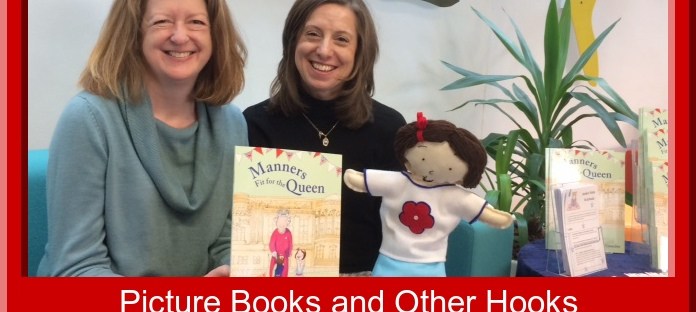
My latest CFT post is an interview with local children’s writer, Anne Wan. For her latest book, Manners Fit for the Queen, she teams up with local illustrator, Sally Goodden.

The interview looks at the colloborative process needed to produce a picture book and why picture books matter.

For most of us, one of our first introductions to the wonderful world of stories would have been through a picture book. I still love a well illustrated book. (The maps in the Lord of the Rings are fab!).

NB.  I love it when a title for a post just “comes” to me and I particularly like this week’s one.  Picture Books and Other Hooks has a good rhythm to it!

This slideshow requires JavaScript.

Looking forward to having a go at the writing prompt for this week from my diary. The prompt is to show the groundhog’s point of view as it prepares to meet his/her public for Groundhog Day (great film incidentally)!

Will have a crack at that challenge over the weekend. Should be fun! I can categorically state I’ve never created a groundhog character before! Am probably unlikely to do so again but it will be fun to find out what comes from this.

Later in the year, there‘s another prompt asking me to list 10 words associated with a train journey. People could have a lot of fun with that depending on which train operator they use regularly! (I think there should have been a comment in the prompt to “keep it clean” but that’s just me!).

As you will have gathered, I love this writing diary!


My CFT post this week will be an interview with children’s writer, Anne Wan, and illustrator, Sally Goodden. They recently had a story and craft event at Chandler’s Ford Library based on Anne’s most recent book, Manners Fit for the Queen, which is a picture book.

The ladies discuss how they worked collaboratively and how they met. Picture books look “easy” but are notoriously difficult to get right. The pictures need to convey enough of the story but without giving it all away. The text needs to be pitched right for the age range.

This slideshow requires JavaScript.

Facebook – From Light to Dark and Back Again

When did you first come across flash fiction? I ask as my latest CFT post looks at picture books and interviews Anne Wan/Sally Goodden on their colloborative work here. It made me realise that my way into reading, as it would have been for many of us, was via well cherished picture books. So on to my great love now – flash fiction – how did I get into that?

For me, it was via the 100-word challenge issued by Cafelit. Prior to that, I’d not heard of the form, yet alone had a go at it! I think part of the “not hearing” about it was due to the term used. I HAD heard about micro fiction but had not been clear about what that meant. I know now!

This slideshow requires JavaScript.

A good story will always make you react in some way. I’ve read (and written) stories that are meant to make you laugh or chill you to the bone.

So if a story isn’t working for you as you draft and edit it, look at what impact it is making on you as you read it. Is there an impact at all? If not, there is where the problem is! So think about what impact do you want it to have? How can the characters generate that impact?

If a character isn’t strong enough, ask why. Are they the right character for this story? Do you need to outline them in more depth to get right into their soul and really find out what makes them tick and react?

I’ve found a good way to get started is think of an extreme situation and look at how your character responds to it. For example, a fire breaks out in the character’s house so what do they do? What do they HAVE to save before they get out and why?

One of the nice sides to writing is you never lose the joy of hearing when something has been accepted! One huge advantage to writing flash fiction and short stories is being able to produce work and, hopefully, get it out there, building up publication credits, while working on a longer project.

Everyone knows how difficult it can be to get a novel out there but that doesn’t mean flash fiction and short stories should be considered “easy”. They’re not! You still need to craft the stories very well in order for them to have a chance of being accepted. You still need to pitch them to the right competitions/markets. They should also be recognised as a joy to write in their own right.

Ironically, it can be harder to write short than it is to write long. I always overwrite my stories but the advantage to that is I get off to a flying start with my editing pen! I find it a good acid test of whether a story is strong enough that I need to cut it back. If I’m having to pad (and I’ve only done this rarely), then the story idea isn’t strong enough in the first place (and I’ve always ended up either abandoning the idea altogether or finding ways of improving it. It never stays as it was).

Fairytales With Bite – What Matters to Your Characters?

What matters most to your characters and why? Get your characters to face losing what matters to them most and that will increase the tensions in your story considerably.

The nice things with this is whatever it is that matters most can vary considerably. For one character, it could be a life or death situation. Another character could be terribly worked up because they’re late back with their library book. The potential for humour is here too.

The one proviso is that your characters have to have very good reasons for why these things matter. A life or death scenario has an obvious “why it matters” inherent in it. In the case of the library book scenario, could it be that your character has never been late in their life for anything and fears losing control over their neat little life if they ARE late at all? Maybe they worry about what the librarian will think – other people’s opinions matter to this character. You get the idea.

Have fun and play with this. Work out what could make your character lose what matters most. For someone with a controlled life, what on earth has happened to make the possibility of being late back with their library book happen at all? Something catastrophic (to them) must have occurred. Hopefully it will be very entertaining for a reader!

This World and Others – Collaboration

Collaboration is vital when producing picture books, as discussed by local writer, Anne Wan, and illustrator, Sally Goodden in this week’s CFT post. (I must admit I was pleased with the title for this one – Picture Books and Other Hooks!).

Working in partnership matters even when you write on your own!  How and why?

For me, this means seeing writing as two distinct processes.  One is the fun creative side of getting everything down on paper or on screen.  The second is the editing process where you tighten your story up and really give it muscle by getting rid of anything and everything that does not contribute to moving your tale onwards and upwards to its conclusion.  I love editing.  I love the sense of the story improving as I spot repetitions etc I didn’t see in the giddy delight of creating new characters etc.  I love the sense of getting rid of what isn’t helping the story.

So where does the collaboration come in?  By accepting these are two distinct processes and not trying to do both at the same time.

Give your creative side free rein and enjoy the ride. Don’t let your inner editor spoil that.  It’s not time for them to come in yet.  Once that side is finished, then recognise the fact that all stories are improved (and therefore stand a better chance of publication) by good editing.

See editing as what gives your stories the wings to fly!  I do and find this side of things fun as a result.  Nothing is going to beat the heady thrill of creating something new but it helps enormously to know nobody has ever produced a truly terrific story in one go!  Everyone needs at least a second draft!  Good luck.