What Books Mean To Me Part 3

Image Credit:  Unless otherwise stated, all images are from Pixabay. A big thank you to my guests on the Chandler’s Ford Today Series What Books Mean to Me for supplying photos.

Facebook – General – and Chandler’s Ford Today

I’m delighted to share the final, bumper edition of my What Books Mean To Me series for Chandler’s Ford Today. A big thank you to all of fantastic guests for sharing their insights here. It has been a superb series to put together and great fun!

This time Gail Aldwin, Paula Readman, Jim Bates, Wendy H. Jones, Val Penny and yours truly answer the three questions I set.

I asked which ONE book would you save in the event of a disaster, what does reading mean to you, and what do you think reading has done for you as a writer.

As ever, do share your thoughts on the books you’d save over on the CFT page.

A HUGE thank you to all of my guests appearing in the What Books Mean to Me series on Chandler’s Ford Today.

The series was great fun to put together. The wide variety of books chosen to save was amazing (as were the reasons why).

There is plenty to learn from also when my guests discussed what reading had done for them as writers (and of course continues to do).

If you were ever in doubt about the importance of reading for writers, do check this series out. My guests’ comments will leave you in no doubt that the best thing any writer can do to help them improve their craft – read and read widely and read lots. But, hey, don’t just take our word for it. Get on and read and discover how true this is for yourself (and the great thing is you can include reading the posts as part of that!).

Incidentally one of the joys of my CFT posts is choosing a Feature Image (nearly always from those magnificent people at Pixabay). Isn’t the library image for this week’s post just gorgeous?! See the slideshow!

This slideshow requires JavaScript.

W = Welcome into a new world (sometimes it’s this one but seen from a new angle).

R = Real characters you can identify with come to life before your eyes as you read and you root for them all the way to the finish.

I = Imagination. The writer has clearly shared theirs with you. Does your imagination picture the world the writer has created clearly enough? Does the story spark your imagination and maybe inspire you to write your own stories or, even if that is not the case, can you think how the characters might live on after the book is finished? The latter shows the characters really are “live”.

T = Tension. There should be plenty of that, even in the funniest of books. Characters have to strive for something important. Other characters should get in their way for good reasons of their own. No tension/conflict = no story.

I = Intensity. Does the story grip you with its intensity? Do you feel the emotions the characters are being made to feel? (You should. No cardboard cut out characters here, thank you).

N = Narrative should be lively and speed the story along. The information given here should be crucial to your enjoyment of the tale.

G = Genre. Read widely in many! Think how many worlds you can explore through book covers if you do that!

This slideshow requires JavaScript.

Looking forward to sharing Part 3 of What Books Mean to Me on Chandler’s Ford Today later this week. It has been great fun putting this series together and there have been some fabulous insights and books selected to be saved. More to come on Friday!

My guests this week are #GailAldwin, #JimBates, #PaulaCReadman, #WendyHJones, #ValPenny and…. er… Allison Symes. Well I thought I should answer the three questions I set! Never ask other writers questions you’re not prepared to answer yourself!

(And if the series gives you a marvellous Wish List for a certain season due in a couple of months’ time, even better!).

Second image in was taken on my phone at the pub just before the Waterloo Arts Festival in the summer. Here are three happy flash fiction writers – Paula Readman, Gail Aldwin, oh and me.

Many thanks to Wendy Jones and Jim Bates for supplying their pictures. Val Penny and I were having a selfie moment at the Winchester Writers’ Festival earlier this year.

Do check out everyone’s thoughts on what books mean to them on Friday. Meanwhile, there are Parts 1 and 2 to catch up on over at CFT.

This slideshow requires JavaScript.

Facebook – From Light to Dark and Back Again

Glad to say I will be having more stories on Cafelit later this month and into November. Two of them are linked. I’ve experimented with linked flash fiction stories this year and have found these to be good fun. I think the trick, if there is one, to them, is to ensure the link is strong enough and don’t keep it going for too long. Will keep you posted.

Tying in with my post on my author page, here is another acrostic which I hope shares some good tips.

F = Flesh out your character who is going to be the focus of your flash fiction story. Why are they the star of your story? What is special about them? Some of that needs to come through so your reader picks up on their special qualities and will want to read on. (Not necessarily all by the way. Readers won’t need the full biography! Just give the readers what they need to know.).

L = Lively pace. Well nobody wants a dull read, do they?

A = Animated character(s). They’ve got to be the type of people who readers will want to root for and, in the case of villains, are perhaps a little sorry when they lose (assuming they do).

S = Setting(s) to be places readers could picture, even if the setting is a fantastical world beyond any known galaxy. What is there readers can identify with? (That even on Planet QZog, the females of the species have trouble getting their men to put the bins out?).

H = History – character and setting. There won’t be a lot of room in a flash fiction tale of course, so imply what you can when you can. A character’s thoughts can be a useful device here as they consider what action they will take based on the circumstances you’ve put them in. They will decide what to do based on their past experience and also based on any known history of their country etc, as indeed we do.

What do I want my flash fiction to be?

1. Entertaining. (Never despite the value of the escapism value of a book or story. The ability to escape into a good story is invaluable and I’m convinced has health benefits too).
2. To have the impact on a reader I hoped it would, whether it be to make them laugh, scream, or, where appropriate, both.
3. To be something I can be proud of – not just now but years on when I can look back at it and think, yes I loved writing that story/book and I still enjoy reading it.
4. A good character study, even if my character is a rotten piece of work. (Marvellous fun to write up though!).
5. To sometimes, and where appropriate, give a reader (and me) pause for thought.

Fairytales with Bite – What Books Mean to Me

I’ve thoroughly enjoyed interviewing my guests for the Chandler’s Ford Today series for the past three weeks. But linking that into fiction writing, I’ve got to ask what do books mean to your characters? Are your characters set in a world where they can read and books are easily available? Or are their stories preserved in other ways?

When you think about it, we have not had the printed word for that long compared with how long we have had the oral storytelling tradition. I love both “formats” and long may they reign but what would your characters know best? What is their technological equivalent to the Kindle if they have it? What fictional books would they read?

You can also ask that last question as you create your characters. Their choices may well tell you a great deal about them (and do query why the choices are the ones they are. Do they love, as I do, Jane Austen’s Pride and Prejudice because they appreciate irony? How do they express their own irony and is it appreciated? Does it land them in trouble?).

Thoughts to ponder!

This World and Others – Goalposts

When you create a setting for your characters, do you set up goalposts for yourself? What do I mean by that? Simply, do you set limits for the setting that you absolutely have to know about before you write?

For example, you may decide you need to know the history of the town your lead character lives in but not of the neighbouring villages. There’s one limit set (one goalpost if you like that you won’t cross!).

Look at what you decide you need to know and examine why you need that. You should have no problems justifying those choices. What does pay is if thoughts occur to you about your setting that do not appear to be relevant, do jot them down anyway. You may find they come in useful later on in the story draft.

This slideshow requires JavaScript.


The Writing Life – and Publication News

Image Credit:  As ever, all images, unless stated, are from Pixabay


Facebook – General

I thought I would look at what reading non-fiction has done for me.

I was a huge fan of the Simon Schama History of Britain TV series so got the books too. They are a fascinating read both in terms of content and how they are structured. Lots of useful pointers there for a writer.

I love guide books. Whenever I visit a historical place, I always get the guide book (and usually a nice pen too!). I learn so much from the contents but also from the human interest stories that often form part of these and how they fit into the factual narrative. Again, things to learn about blending material there.

I sometimes read specific books around a subject but I also love dipping into encyclopedias and other reference books (Brewer’s Dictionary of Phrase and Fable is a favourite) and seeing what I find out! It is a lot of fun exploring avenues here and makes you think along ways you wouldn’t have planned. Ideas for stories and blog posts do spark from doing things like this. Give it a go. If nothing else, you expand your reading!

Pleased to bits to have my first review for From Light to Dark and Back Again on Amazon.com – the simplest thing people can do to support authors is to review their books. Reviews don’t have to be long either. Honesty about what you liked (or didn’t) is key.

So please, please review!

Also pleased to say that the Kindle version of The Best of Cafelit 8 is now available. There will be a paperback later in the year. My flash stories Dignity and Injustice and The Art Critic are here. The book is now on my Author Central page.

Last but not least, I’ve finally sent off a pitch for an idea I’ve been working on. Got to have the old hat in the ring after all to be a contender!

Do I still get nervous about submitting new work? Oh yes. Do rejections still leave me feeling flat? Oh yes. But, over time, you do get used to this being a normal part of a writer’s life. You do dust yourself down, look at your idea again, think about reworking it and so on.

Sometimes when an answer is no, the real answer is not yet or not here. What you can’t know when you submit material is whether similiar ideas have been received by whoever it is you’re submitting work to and so, of course, they can’t have something that is too like work they’ve already accepted. Park the idea, revisit it later, and if you can think of a suitable alternative market, go for it. The worst that can happen is they say no but, even after all the years I’ve been writing, you still have to fight the nerves and get that work out there!

Of course, you can’t beat the feeling when you receive acceptances! I only wish I could bottle it.

Open Prose Mic Night Swanwick 2019 - image by Penny Blackburn

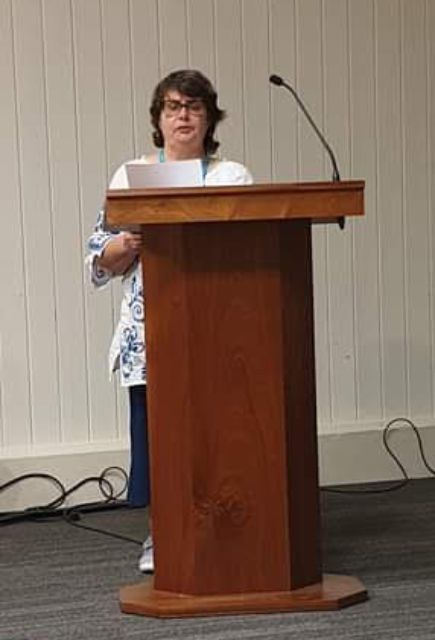
I read The Art Critic at Swanwick earlier this year. Many thanks to Penny Blackburn for the picture.

cropped-20190622_151100.jpg

Love having my creations around me! Image by Adrian Symes

0b75f-fromlighttodark_small

My flash fiction collection. Image taken by Allison Symes.

that lightbulb moment is a wonderful one for writers - pixabay

The lightbulb moment of inspiration for writers is wonderful. Pixabay image.

much easier to cut and paste and edit on one of these - pixabay

Write to screen but edit on paper. Pixabay image.

Glad to report The Best of Cafelit 8 is now up on my Amazon Author Page (see link above). Looks good on there! (Am also looking forward to the paperback coming out later in the year and the Bridge House Publishing event in December. Always good fun).

How do you find writing works for you when you’re tired? I find that shorter pieces of writing perk me up and I save the marathon sprints for when I have more energy. I do get ratty if I can’t write at all as those nearest to me would testify.

I have got to write something creative even if it is just the outline for a flash fiction story. Having said that, once I get started, I find the creative instinct takes over and often I’ll get to the end of a session having written more than I thought I would. So that cheers me up no end. Mondays ARE the worst day of the week for me for this. Do you have any bugbear writing days? How do you manage them?

This slideshow requires JavaScript.

My favourite part of writing is when I’m drafting a character’s thoughts. Why? Because I can get the character to show something of themselves without them being aware of it! It is the reader who will make judgements about the character based on what they read of their thoughts and actions.

I also like writing thoughts because they can be a great way of a character revealing what they think of themselves and what they feel other characters think about them. They don’t have to be right on either of these! (There’s potential for comedy or tragedy there).

Also characters will think things they would never say out loud to anyone else (just as we do) and there can be fun to had there as a reader “watches” a character struggle to keep their real feelings for another character hidden.

If you think someone is a dingbat but they’re your boss, you’re going to think twice about saying so AND know you’ll have to suppress how you really feel to make sure nothing embarrassing unwittingly is “let out”.

This slideshow requires JavaScript.

Facebook – From Light to Dark and Back Again

Do the seasons affect what you write? I can’t say I’ve noticed anything here but I can imagine it may be easier to write a darker tale when all is dark and gloomy outside. (You’ve at least got the atmospheric setting for it!).

Having said that, I often write cheerier stories during the darker months because I like something to cheer me up and I figure readers would like that too!

From a practical viewpoint, when the weather is awful, the lure of being at my desk in the warm with hot drinks on the go is too tempting to resist so I don’t! There is much to be said for bad weather increasing productivity!

This slideshow requires JavaScript.

Managed to do some writing while I was away in glorious Northumberland for a week. As well as my blog posts, I’ve drafted two new flash fiction stories (of the circa 500 words variety. I know, that’s going on a bit by my standards! Good fun to write though).

Pleased to say The Best of Cafelit 8 is now out on Kindle. It is now on my Amazon Author Central page (see links shared earlier). My flash tales Dignity and Injustice and The Art Critic are in there. Very different moods too just on those two stories. What I love about the Cafelit collections is the range of styles and moods of tales they have. (Paperback will be out later in the year).

I’m a great advocate of short story and flash fiction collections for the obvious reason I am sometimes in them (!) but also because they are a fabulous way to get a feel for a writer’s work. Give them a go!

This slideshow requires JavaScript.

I was away last week in gorgeous Northumberland and the scenery was amazing. The dog loved the stunning coastline and we all did plenty of walking.

I don’t usually go in for a lot of descriptions in my stories. There isn’t the room for them in flash fiction but if I ever set a story on a windswept beach with stunning views, then you can take it I was referring to either Dunnet in Scotland (right on the top edge of the country) or Duridge Bay in Northumberland! Would love to revisit both places next year.

Where setting is invaluable for a writer is where it is almost a character in its own right. Check out the crime writing series for great examples of these (Morse = Oxford is probably the best known). Mordor hangs over Frodo Baggins long before he gets anywhere near it. The latter is a great example as the very name Mordor implies dread and darkness. Well it does for me anyway.

(Oh and for Part 3 of my What Books Mean to Me series on Chandler’s Ford Today this week I will be featuring, amongst others, two Scottish crime writers who very much use their settings as a vital part of their stories. More later in the week).

This slideshow requires JavaScript.

What is your favourite kind of character?

I like characters that can surprise me even though I created them.

I like characters who might seem a bit dodgy but really do have good hearts. (It may be a cliche but it’s one I love. I also think we need far more good hearted people in this world – can we ever have enough of them? I think not).

I love characters who can make me laugh. The character who is good at one-liners will always go down well with me, even if they’re a villain. (‘And cancel Christmas’ – Alan Rickman as the Sheriff of Nottingham in Robin Hood: Prince of Thieves is a great example of that kind of character).

I love the underdog who becomes the hero/heroine. I like supporting characters who understand their role is to support the lead and don’t resent that. (Sam Gamgee of The Lord of the Rings and Ron Weasley in the Harry Potter series are great examples there).

So what kind of characters do you really love to read about and, better still, write for?


This slideshow requires JavaScript.

Goodreads Author Blog – Holiday Reading

I drafted this just as I was packing up to come home from a fabulous week in Northumberland. Lots of walking and wonderful scenery.

As ever, I took lots to read, read some of it, and fell asleep far too quickly.

My best opportunities for reading came before an evening meal and even then I had to fight the urge to nod off. I blame the gloriously fresh northern air!

I mixed up the reading I did do. Naturally I took the Kindle, magazines, and paperbacks.

Do you find you read more or less when away?

I don’t usually buy specific holiday reading as I see holiday time as a chance to reduce my To Be Read pile a bit. It’s another matter whether I’m successful or not!

What matters though is whether you can read for five minutes a day or five hours a day, you ARE reading!

This slideshow requires JavaScript.


What Books Mean To Me

Facebook – General – and Chandler’s Ford Today

It’s an absolute pleasure to share Part 1 of my latest series for Chandler’s Ford Today called What Books Mean To Me.

A big thank you to my fabulous guest authors for taking part, especially as I asked them which ONE book they would have to save above all others in the event of a disaster.

Come on, which author would only ever save ONE book?! Still at the end of the three part series I do get to answer that question myself.

The series also explores what reading means to us as readers and as writers. I’m very much looking forward to sharing the remaining two parts of this series.

And if the series gives you some ideas for presents for the book lovers in your life, even better! See it as a shopping list!

My featured authors include YA writers, children’s fiction writers, Scottish crime authors, flash fiction writers (not just me!), paranormal fiction, writers of women’s commercial fiction, and fantasy. Several of my guests wear more than one writing hat (do check them all out!) and some write short stories and flash fiction as well as novels. (Do check them out too!).

I hope you have as much joy in this series as I did in putting it together.

Image Credit: The library and books images are from the marvellous Pixabay. A huge thanks to my guests for supplying their images.

This slideshow requires JavaScript.

I start a three part series on Chandler’s Ford Today called What Books Mean to Me. A big thank you to all of my guests who are taking part in this. It was great fun to put together.

I asked writer friends three questions:-

1. What is your favourite book and why?

2. What does reading mean to you?

3. How has reading helped you develop as a writer?

For Question 1, my guests could only pick one book and the deciding factor was it HAD to be the one above all others they would save in the event of a disaster.

Really looking forward to sharing the links over the next three weeks. I will say now there is a wonderful eclectic mix of books chosen too.

This slideshow requires JavaScript.

Many thanks, everyone, for the congrats yesterday on the Slimming World result. Much appreciated.

Awful day today. Had no water for a few hours. Now you know what Murphy’s Law is at work here. The moment you know you can only flush the loo ONCE until the water is back on again, you suddenly find yourself keeping on wanting to go! Oh well…

Yes I do feel sorry for the engineers sorting things out. It wasn’t just our house, it seems to be a major part of my postcode area and just when people were coming home for the day too.

Not impressed with a certain water company’s Customer Services. Let’s just say that’s an hour of my life I won’t get back and I was cut off during one call just to add insult to injury so had to go through the queuing system again. Yes, I had to queue. The numbers on the website take you to Customer Services and that’s it. No direct quick response emergency number. That strikes me as odd to say the least.

I tell you, it’s a relief that I’m now about to turn to writing for the evening… I really DO want to escape into something creative and therapeutic! Writing can and does come into its own for enabling you to escape for a while. Bliss!

This slideshow requires JavaScript.

Facebook – From Light to Dark and Back Again

The love of stories (of all lengths) is what drives most writers to want to come up with some of their own – and to keep going when there seems little point in doing so.

I should also add there is some fabulous non-fiction out there which uses fiction techniques very effectively to get their facts across without being in the remotest bit boring. So when book shopping, check out the fiction AND the non-fiction aisles!

I’ve used actual events to inspire flash fiction stories and plan to keep on doing so. There is a lot of history to be inspired by after all!

This slideshow requires JavaScript.

Hope to draft some new flash fiction over the next week or so. I am almost there with another collection but would like to add a few new pieces to it.

Unless I’m entering a competition with a specific word count, I never know how long a piece is going to be until I’ve written it. Sometimes what I think will work well at 100 words actually works better at 50 or 250.

It’s always a case of getting the story right first, then worry about the word count. Where a story is better at a longer word count than what you might have envisaged, well there are always open competitions and flash fiction markets with longer word count requirements. There will be a suitable home!

This slideshow requires JavaScript.

Ten things I love about flash:-

1. It is direct. No waffle whatsoever. (No room for words like whatsoever either!😀😀).
2. It can be set in any genre or time you want.
3. It has to be character led so if you like inventing people, this is for you!
4. There are so many categories within flash there is bound to be at least one to suit you.
5. There are more competitions and markets for flash fiction now.
6. It is ideal to read on a screen (which is handy when travelling and could be a good way to tempt in a reluctant reader).
7. The form is flexible too. I have written flash tales in acrostic form to name just one. (Yes, it can be done in poetic form too but some would rather keep poetry to poetry and prose to prose and that’s fair enough too. I have written the odd poetic flash fiction story but it’s not something I do often).
8. If you like showing character thoughts and attitudes, again this is a great vehicle for that. It isn’t for long conversations though!
9. The form forces you to focus on what is really important and only that goes in your story. There is no room for more.
10. If you want to find out how to edit, REALLY find out how to edit, then flash fiction is a good way to go!

This slideshow requires JavaScript.

Fairytales With Bite –

What Triggered Your Love of Fairytales?

I have the nagging feeling I really should have asked this question a long time ago!

For me, the trigger for my life-long love of fairytales comes from The Reader’s Digest Collection of Fairytales which came in two volumes. Both are hefty hardbacks and you wouldn’t want to drop them on your foot! I loved the stories and beautiful illustrations. These books were given to me by my late parents. I still have the books. The spine on Volume 1 in particular has been bound up by tape! I’m probably going to leave the building long before these books do!

The stories are those collected by Perrault, the Brothers Grimm, as well as originals by Hans Christen Andersen etc. I remember the shock at discovering fairytales didn’t necessarily have to have happy endings when I first read The Little Mermaid.

My favourite overall fairytale is Cinderella. Mind, my first published story was A Helping Hand in Bridge House Publishing’s Alternative Renditions anthology.  I look at the Cinderella story from the viewpoint of the younger stepsister who is not best pleased with the fairy godmother turns up again.  Great fun to write and, being my first published story, it will always have a special place in my heart. I still love writing fairytales from different viewpoints. It’s good fun!

Looking at why you love stories can help inspire you write your own (and do so better!).

This slideshow requires JavaScript.

This World and Others – What Books Mean To Me

I’m starting a new three part series on Chandler’s Ford Today called What Books Mean to Me. It has been a great joy putting this together and I hope you enjoy it.

What do books mean to your characters? Is their world a literate one or is the oral storytelling tradition the strongest influence? Are stories welcomed or do your characters have to stick strictly to the facts and imagination is discouraged, punished even?

Can your characters read any books they like or do they have to stick to an official list? Is there a secret underground world of books where banned items can be read?

Do your characters treasure books themselves or do they leave that to others? If so, why?

Attitudes to books and stories can reveal so much about characters and their world settings. There are stories to be written here – lots of them ideally!

Image Credit:  All images from Pixabay.  Captions over on CFT (as are the pictures of my guests this week).


This slideshow requires JavaScript.


Put Three Words Together and Questions to Ask Your Characters

Facebook – General – and Chandler’s Ford Today

My CFT post this week looks at Put Three Words Together And…

I look at how it only takes three words to make an impact on readers and share positive and negative examples. The latter reflects on a brutal part of our history too, something I’m glad is long gone. The post also looks at alternative meanings of the words in question – there is a wide range! The meaning of the words taken together goes far beyond the meaning of the individual ones. Never underestimate the power of words!

Many thanks to all who have commented on this already. Good discussion going, thanks all.

I must admit I was surprised, when drafting this week’s CFT post, to find it only takes three words to make an impact on readers. (I had always thought it was a little more than that based on Ernest Hemingway’s For Sale: One Pair Baby Shoes). Still I guess it goes to show how you CAN pare things right back when you want to!

Happy writing, editing, re-reading, editing again etc!

Image Credit:  As ever, thanks to Pixabay. Captions over on the CFT page.


This slideshow requires JavaScript.

Many thanks to everyone who has liked my Facebook author page. Now up to 100 likes – thanks, all.

Looking forward to sharing my CFT What Books Mean to Me series soon. It’s always interesting discovering the different responses by authors to the same questions.

It’s also why I love taking part in anthologies and competitions where the theme is the same but you just know the take on said theme will be so varied amongst the authors taking part. It is literal proof of some very active imaginations out there (which is always a cause to celebrate).

This slideshow requires JavaScript.

Facebook – From Light to Dark and Back Again

One of the biggest tips I can pass on when writing flash fiction is not to have too many characters. In many of my stories, I only have the one!

I often get a character to refer to another one (usually they’re thinking about Character B – and not always pleasantly either!). Or we see Character A reflecting on what Character B has just said/done or both (!) to them.

But the important thing is to focus on THE important point of your story. There really is no room for anything else. And generally I find one to two characters are plenty enough to convey that.

This slideshow requires JavaScript.

I’ve occasionally written all dialogue flash fiction tales but don’t find them particularly easy to do. Firstly, they are best kept very short (I think the novelty of dialogue only would wear thing pretty quickly if you kept it up for long). Secondly, I’ve got a natural preference for showing you a character’s thoughts (and from that you’ll get their attitudes as well). I think you get more mileage from the latter and so I tend to stick to that.

This slideshow requires JavaScript.

Publication News

Delighted to share again my Three Wishes story on Cafelit. I also want to flag Cafelit up in general as there is a great mix of stories, authors, and styles on here. There is bound to be at least one to suit you! Do check them out.

And how often is the next big thing on the news unremittingly grim - Pixabay

I can dream!  Pixabay


Fairytales with Bite – Put Three Words Together And…

My CFT post is Put Three Words Together And…  I look at negative and positive impacts of three words when they’re used together (and how those impacts can vary widely from the individual meanings of the words concerned).

As for fiction writing, well we need more than three words for that but you could look at three word catchphrases for your characters. Catchphrases have to be memorable to work, also you need not to get tired of them (and that’s even more true for your reader!), and so are best kept short to help achieve those points.

If your characters were limited to three words as their pet phrase, what would they be and why? (I suspect the most famous one here would be I’ll Be Back from The Terminator). But what would you choose for your creations?

Would your pet phrase match your character? That is, if they’re a feisty character, would their phrase reflect that? Or would they downplay that side of things a bit (especially if they wanted to put off an enemy)? Would they be sarcastic or would their phrase be a cover for what they are really like?

Food for thought, I hope. The important point is to know who your characters are, how they would speak and sound (to a reader) and, if a catchphrase would be appropriate for your characters, to choose one that fits them well.

This slideshow requires JavaScript.

This World and Others –

Questions to Ask Your Characters

One great thing about this topic is that it is a timeless one! (Bear in mind also if you’re writing non-fiction, if you are using a narrative voice, you can treat that voice as a character, so some of these questions at least may also be worth trying). So what to ask then as part of your outline?

  1. What do you really want and why?
  2. What stops you getting what you really want?
  3. Why would your life be complete if you achieve what you want?
  4. How are you going to achieve your objectives?
  5. Have you got other characters to support you and, if so, how reliable are they?
  6. Are you making your life unnecessarily complicated? (Worth asking this one – any complications getting in the way of your character achieving what they want should be those that arise naturally out of the plot. There should be nothing that seems “faked” to increase the tension in the story. The tension should be genuine, the obstacles real and so on. For a non-fictional narrator, a good question to ask instead of this one is are you communicating as clearly as possible (i.e. go for clarity, not gobbledegook, don’t make your narration unnecessarily complicated? Are you conveying the facts reasonably? Are you backing the facts up with evidence? What are your sources?).
  7. What has driven you to decide this is what you really want?
  8. What if you’re wrong? (How would your character handle that? That could make for a really interesting story).
  9. Are there limits you won’t cross (and if so what are these? What is your thinking behind this?).
  10. Are there rules you are prepared to break? What would the consequences be? How are you going to limit your risk (or are you not worried about that? Some characters aren’t!).

Now if answering those questions doesn’t generate story ideas, I’d be very surprised!

This slideshow requires JavaScript.


The Power of Language

Image Credit:  Unless otherwise stated, images are from Pixabay

Facebook – General – and Chandler’s Ford Today

I think I may have found my favourite image for this week’s CFT post. There is so much truth in it, don’t you think?!

I look at the Power of Language and discuss rhetoric, the role of swearing, putting words INTO the language, and how flash fiction has affected how I use language. I also feel we should celebrate language, its richness and its origins. English of course notably borrows, sorry steals, from other languages and is the richer for it.

I also find proof of someone cheating at Scrabble…

Hope you enjoy! Captions over on CFT.


This slideshow requires JavaScript.

If you ask most writers what every new writer needs, I think the answers would be something like:-

1. Comfortable working environment with good support for your back given you can be at your desk for some time.

2. A willingness to commit what time you can to writing and to accept you are in for the long haul.

3. The ability to develop a thick skin when rejections/critical feedback/bad reviews come in, as they do.

4. Pens, paper, laptop, printer, and all requisites.

5. Tea/coffee/other drink of choice which will keep you going.

6. The ability to focus.

7. Accepting rewrites (often many) are a necessary part of the process.

8. A love of books in a wide range of genres and a good reading habit.

9. A willingness to learn and improve your craft.

All of these are vital BUT I would add in:-

10. An appreciation of language and what you can do with it. Play with words, have fun with them.

(It’s not just because I talk about the Power of Language on my CFT post tonight, though it helps!).

This slideshow requires JavaScript.

Questions to ask as you outline a story:-

1. What is its mood?

2. Why is it the right mood for the story?

3. What makes the lead character tick?

4. Are they the right lead character for this story? (It doesn’t always work out the way you think it will. I’ve rewritten a story from another viewpoint which proved to be far better than the one I’d originally chosen. If something doesn’t seem to be working, it may be worth looking at whether you are telling the story from the right character’s viewpoint).

5. What does the lead character want?

6. Why does it matter? (This one is crucial. The motivation has got to be strong enough to convince a reader a character would do X, Y, Z etc to obtain it).

7. What gets in the lead character’s way?

8. How are they going to overcome the obstacles? (At outlining, you may only have the vaguest idea but there should be something within the personality of your character that will make all the difference to the resolution of the story).

This slideshow requires JavaScript.

I’ll be looking at the Power of Language in my CFT post later this week. I share my thoughts on rhetoric and swearing amongst other things (and there’s a good mix!). Post up on Friday.

It’s one of those topics I should have had a look at before given flash fiction writing has meant I have to concentrate on the impact of the words I use given I can’t use as many as a short story writer (1500+) or a novelist (80K or so).

I’m also looking forward to sharing a new series, What Books Mean to Me, where guest writers share their answers to three specific questions. I finish the series by answering them myself. I didn’t pick easy questions, honestly. One of them is a question all writers would want to “modify” but more on that when the series starts in October.


This slideshow requires JavaScript.

Facebook – From Light to Dark and Back Again

Glad to report I will have a short story called Three Wishes up on Cafelit on Monday. Will share the link then. Yes, I’ve been flirting with the longer form of fiction but have also written new flash work this week. So a very good week then!

But I will always have a very soft spot for the flash fiction with fantasy at its heart. This is a relatively new one of mine which I hope will make it into a future collection.

And it solves a mystery too.. what DID happen to Humpty Dumpty?

I’M BORED
‘It’s up to you, I really don’t mind,’ Joe said, swinging his legs idly against the brick wall.
‘Grrr… all I asked was what would you like to do today, as a considerate friend does and as I ask every bloody day, and you still come up with that rot. Are you incapable of giving me a straight answer? I get so bored trying to come up with different things for us at least to try. It is boring sitting on this wall all the time.’
‘Then stop asking me such a stupid question then,’ and with that Joe pushed Humpty Dumpty off the wall.
The mess on the pavement was impressive. Humpty had been a huge egg.
‘Not going to be bored any more, are you, Hump?’

Ends
Allison Symes – September 2019

This slideshow requires JavaScript.

Do you ever use photos as writing prompts? I do occasionally (and usually use the ones in my writing diary) but there are some pictures I just know I couldn’t write about. Why?

Because I know I can’t have enough distance from the subject in the photos. Therefore I wouldn’t be able to write objectively. Without that objectivity, the story fails. I’ve got to be able to see the characters IN the picture as exactly that.

Landscapes are easier to do but if they are of places I know well or have special memories attached to them, then they’re out, again due to the lack of objectivity.

See what you can do with the ones below then. Pixabay as ever are the image suppliers here (except the ones of sunlight around a Scottish loch. I took that while on holiday earlier this year and was amazed at how the light worked on this one).

As I use first person a lot in my flash stories, I don’t use many names. When I do though, I look for something that will indicate age, class/background, their level of formality they’re likely to countenance etc. It saves on the word count too!

My parents named me thinking you couldn’t abbreviate Allison. Wrong! I never minded being called Ali (and still don’t). I deliberately gave my son a name where all the abbreviations of it we liked as much as the full name. Win-win there.

So what can you do your characters here? An Abigail is likely to be more formal than an Abby. What would you make of a George as opposed to a Georgie (and that can apply to male or female characters)?

Think of how you want your characters to come across to your reader. That should be the benchmark for you to decide on the appropriate names for your people.

Fairytales with Bite – Character Motivation

Character motivations can cover a wide spectrum. There are the “obvious” ones of love, revenge, seeking justice etc but motivations can be more subtle than that – for example the wish to prove someone wrong.

What matters is whatever the motivation is, it is the be all and end all to your character, even if it seems to everyone else they’re making a fuss about very little.

A motivated character will do whatever it takes to get what they want and the important thing is to ensure your people are driven enough.

It’s not enough for a character to just want to stay out of trouble. But if your character goes to extraordinary lengths to stay out of trouble then  a great deal of humour or tragedy can result from that.

What could be behind that? Maybe they’ve got a bet on with a friend to stay out of trouble for six days, say, and the friend has always been right in the past but this time our hero wants to prove them wrong and is determined to do so. They’re fed up with their friend being right all the time and finally want something to go their way.

There, the motivation is powerful enough and understandable. Your readers have to get behind your character to carry on reading their adventures after all. Naturally your character’s friend will know or be able to guess at their friend’s motivation here and will do all they can to scupper any chances of success. Voila! Instant clashes and tension as you work out how your hero does or does not prove the friend wrong.

This slideshow requires JavaScript.

This World and Others – The Power of Language

My CFT post this week looks at The Power of Language.  I look at this from a variety of angles, including how flash fiction has affected how I use language.  But let’s turn to this topic from the viewpoint of our stories and created worlds.

Is your created world one where everyone speaks formally? Is it one where you have to know the right language to use to be able to get anywhere in life and only certain people have that knowledge?

Is the power of language suppressed in any way? For example, does your setting allow for free speech, good access to different literature etc. How are journalists and other writers treated? With respect or are they considered threats? (Sadly, they too often are for real of course).

Where magic comes into your stories, does it have a special language all of its own? Is it widely accessible to beings of all backgrounds or again do only certain people have the knowledge? How are they stopped from controlling everything?

Some story ideas there I think!

This slideshow requires JavaScript.


Rules That Need to Exist

Image Credit:  Unless otherwise stated, all images are from Pixabay

Facebook – General – and Chandler’s Ford Today

Thinking further about my CFT post this week about Rules That Need to Exist made me consider which rules I absolutely follow when writing. The ones below are not in any order of importance but I think they are all necessary.

1. Keep my prose, punctuation, grammar etc simple. It helps clarity and pacing.

2. Always edit on paper, not on screen.

3. Read work out loud.

4. Accept the first draft is only that. Of course it won’t be perfect and that’s fine. That is what editing and polishing are for.

5. Be entertaining whether I’m writing blog posts, flash fiction, or short stories. I want my readers to engage with what I’m writing and a simplistic, entertaining style is a good way to do that. Incidentally never confuse simplistic with simple. It really isn’t the same thing. It’s easier NOT to write simplistically. I’ve forgotten who it was who apologised to a friend for sending a long letter because they hadn’t time to write a short one but whoever that was SHOULD have been an editor!

This slideshow requires JavaScript.

I’m a fan of Pointless, the game show where the idea is to score as few points as possible while still coming up with correct answers.

Am I annoyed when I don’t get as many as I think I should on the literature/author rounds? Oh yes. Am I equally annoyed when nobody gets the Terry Pratchett or P.G. Wodehouse question right? Yes and yes.

I really enjoy the words rounds. You know the kind of thing – name a word ending with two or three particular letters. I find with these that the first ones I name are the obvious ones. It’s only when I make myself think that bit deeper I come up with some good low scoring words. (My dilemma then is working out whether something is hyphenated or not – great for a flash fiction story as it counts as one word but not for the Pointless words round when it counts as two! That really does scupper me.).

Having said that, the thinking deeper bit is relevant for all writers, regardless of what you write, because the same point is true. We DO think of the obvious ideas and links first and we need to clear those away before coming up with something much better. When I have brainstorming ideas, I just write down what comes to me, knowing the first few on the list I’m almost certainly not going to use. But that’s okay. It’s what I’m left with that gives me the most interesting material to work with.

This slideshow requires JavaScript.

W = Writing is my idea of a brain workout.
R = Rigorous challenges range from the word count limits of flash fiction to ensuring your Great Novel is not TOO great in terms of size and fits in with the kind of size your publisher usually brings out. (Or the publisher you would LIKE to be your publisher!).
I = Integrity – you’ve got to be true to your characters. They need to be realistically drawn (no matter how fantastical a world they live in or whether they’re magical beings themselves). Readers have got to be able to identify with the characters and either love them or loathe them.
T = Tension. Is there enough in your story? Does the tension increase as you get closer to the end of the story or book?
I = Identifiable. Is your writing voice identifiable as you? Do you have a distinctive style?
N = Names (of characters). Are they memorable? Are any too close in sound to others in the same story? The answers should be yes and no respectively!
G = Genre. Can you say where your book or story would fit? Can you target your work to the right genre of competition or the right publisher for it?

Facebook – From Light to Dark and Back Again

What do I look for when editing my flash fiction?

1. Wasted words. I’ve mentioned before mine are actually, very, and that, and these add little to a story which cannot be expressed in better ways. Out they go then! The odd that is useful sometimes but nowhere near as often as you think. I have had to learn to cut them out where they’re really not needed.

2. Phrasing which doesn’t trip off the tongue when reading it out loud. Out comes the red pen again then! If I trip over it, a reader will too.

3. A nice mixture of short sentences and longer ones. I want my stories to have a good rhythm to them but too much of one type of sentence length can and does disrupt that. (That was a necessary that – and so were those!😀😀😀).

4. Clarity. Is there anything which could be misunderstood or misconstrued in any way? Could something have a double meaning you really did not intend? All worth checking for, if only to save yourself some blushes when you re-read work later.

5. Looking at the story as a whole, does it fulfil the promise of its title? Does it grip me? Would I like to read more? (That’s usually a good sign as it shows the characters have come to life for you).

What kind of characters do I enjoy inventing for my flash stories the most? It can vary but they include:-

1. Characters who are full of themselves. I just love bringing them down to earth.

2. Characters who see things from a different perspective. I’ve written stories from a dragon’s viewpoint before now! Trust me their view on gold is somewhat different to that of a typical fairytale dwarf. I just know…

3. Characters who are prepared to bend/break the rules. For this kind of story, I love dropping them right in the mire and finding out whether their willingness to break rules helps them or lands them further in it. All good fun!

4. Fairies or other magical beings confronting sceptical humans. Someone is heading for a fall here…

5. Characters who are either secondary in fairytales or are the villain. Very much an alternative rendition! (And I make no apologies for the pun on the title of the first Bridge House Publishing anthology I was in called Alternative Renditions where my A Helping Hand took the viewpoint of Cinderella’s youngest stepsister!).

This slideshow requires JavaScript.

F = Fast, frenetic (at times), and fun writing
L = Like being able to set my characters in any time/genre/setting I choose. I just worry about the word count.
A = Animated conversation in the stories? Not really. Not enough space but you can show so much though a character’s thoughts and attitudes coming out of those thoughts, you don’t really need this for this kind of of story anyway.
S = Simplifies your writing and helps increase your clarity. This is always good!
H = Historical flash fiction has been a recent development for me and I hope to write more of this. Using characters who may have witnessed events is a good way forward here.

Fairytales with Bite – Rules That Need to Exist

I discuss Rules That Need to Exist in my Chandler’s Ford Today post this week, but how can we apply this specifically to our fiction writing?

Rules for Writing

When it comes to writing rules, there are specific ones I always follow. These are:-

1. Keep my prose, punctuation, grammar etc simple. It helps clarity and pacing.
2. Always edit on paper, not on screen.
3. Read work out loud.
4. Accept the first draft is only that. Of course it won’t be perfect and that’s fine. That is what editing and polishing are for.
5. Be entertaining whether I’m writing blog posts, flash fiction, or short stories. I want my readers to engage with what I’m writing and a simplistic, entertaining style is a good way to do that.

Rules for Characters

1.  The character must be someone I can identify with, even if I loathe them and their attitudes. There has to be some spark of understanding why someone has turned out the way they have.

2.  The character must be memorable (whether it is for good reasons and they’re the hero, or for bad ones where they’re the villain). What they must never be is forgettable, else why have them in the story at all? If you’ve got a character you think you can cut out of your story, you almost certainly can because they’re not contributing anything and your tale will tighten up in terms of word count and pacing if there is no unnecessary baggage.

3.  The character must have at least one distinctive thing about them that can’t apply to anyone else or handle situations in ways that are unique to them.

What rules for writing or for characters do you use and why?

This World and Others –

Creating Something Out of Nothing

I was listening to UK based radio station Classic FM earlier this week when it was reported a well known composer still suffered nerves when coming up with a new composition. They were still made nervous by the blank page, despite their many years of successful composition. Ironically, this cheered me up somewhat. It’s the same for any creator and I know it’s true for me. That touch of nerves before you start writing is the worst bit. Once you get going, you’re absolutely okay.

I’ve learned over time to just get the words down any old how. Editing and polishing happen much later. Nobody writes a perfect draft. Shakespeare didn’t. Austen didn’t. Dickens didn’t. I’m certainly not going to but that’s fine! So how can you get over the nervous start bit or, at least, make it not so bad and easier to handle?

I’ve found having a range of ways to get started on stories or blog posts helpful. I also find having brainstorming sessions every so often useful to jot down ideas and when I am struggling, I can turn to these and find something to inspire me there. My range of ways to get started include:-

1.  Using a random word generator, pick three, and put them into a story. Using random words like this makes me think deeper and if there is no obvious link between the three words, even better. It makes me think again!

2.  Look back over my old blog posts and stories. Often there will a link there I didn’t follow up at the time but might prove useful now.

3.  Take a well known saying and use it as a theme or title (sometimes both) for a story or article.

4.  Use a spider diagram or flowchart to flesh out basic ideas. That will soon show if ideas in the back of my head do have some “legs” to them or not. Naturally I go with the ones that do! This is especially useful when used in conjunction with a random word generator.

5.  Look up writing competitions. Sometimes I’ll enter said competitions. Sometimes I’ll just write up a story to the theme and not submit it deliberately. I will go back to that story at a later date to polish it up further knowing it is not ready for a competition yet but I can still write to the theme. Who knows? The story might end up in an anthology later. Themes come up reasonably often so there will be other competitions the story the might fit.

However you get over the blank page nerves, happy writing and good luck!

This slideshow requires JavaScript.


Plans, Flash Fiction and Guest Blog Posts

Image Credit:  As ever, the marvellous Pixabay, unless otherwise stated.

Facebook – General

Many thanks to #PatriciaMOsborne for inviting me on to her blog. I always relish an opportunity to talk about flash fiction and it was also great fun to take part in her 100-word challenge earlier this year.

Do check out the other 100-worders on here. There is a wonderful mixture of styles and moods. (My guest spot includes a link to the story I sent in for this earlier in the year).

I share how I became a flash fiction writer at all and some of the things I love most about the form.


cropped-20190622_151100.jpg

One writing tip I DON’T follow, because I know it just wouldn’t work for me, is the one that recommends keeping a notebook by your bed. The thought here is you can jot down any ideas that occur to you as you drop off to sleep/wake up early with the Best Idea of All Time etc etc. (It always is meant to be the Best Idea of All Time).

There are several reasons why this tip isn’t for me:-

1. My reading pile is by my bed. There is no room for a notebook! Yes, it is a seriously impressive reading pile. (I LOVE being surrounded by books).

2. I read to unwind before sleeping and really don’t want to be writing at all at that point.

3. I often don’t dream at all. Once I’m asleep that’s it.

4. When I DO dream, the images are so confused and bizarre, there is no way a story idea is coming out of them. (And before you ask I never eat cheese late in the evening or partake of any other substances that might induce such daft dreams).

5. I have never, ever, woken up with the Best Idea of All Time running through my mind. I haven’t even had the Second Best Idea of All Time. Not sure whether to be sorry or relieved, to be honest. I appreciate my sleep, that’s all I’m saying!


I’m looking forward to sharing my CFT post later on in the week as I’m going to be sharing some Rules That Need to Exist!

Posts like this are fun to write. I don’t write many “opinion” pieces but I like to throw one in every so often. What I like to do with these is make them fun so no politicial arguing on these ones but hopefully they’ll generate some good comments back again.

I’m also pleased to say I shall be a guest on a fellow Swanwicker’s blog later this week (see earlier – and many thanks again to Patricia M Osborne) and look forward to sharing the link later. And later in the month I shall be popping up on another Swanwicker’s blog too.

So yes I’ve been doing a lot of blogging! There should be a term for that… what do you think? A brace of blogging?

This slideshow requires JavaScript.

Looking forward to sharing a new series on CFT in October. More details nearer the time. I’m also editing a series for CFT on local history which, again, I’ll share details about nearer the time. So the red pen is being kept busy at the moment… plus I’m editing my novel. (These things ALWAYS take longer than you think they will).

The only aspect to editing I don’t like is when I know I’ve gone through a piece of work on screen and on paper and STILL miss an error, which I pick up later. The phrase “why the hell did I miss that” springs to mind. If anyone knows a surefire way to avoid that, they’ll probably end up wealthy, as I know I’m not alone on this one.


This slideshow requires JavaScript.

Facebook – From Light to Dark and Back Again

Loved taking part in the Tuesday guest spot on the blog page of #PatriciaMOsborne. Many thanks, Patricia, for hosting me.

I shared my love of flash fiction (briefly, honest!) and how I got into the form at all. Flash fiction was a happy accident for me. I could do with more happy accidents like that!

Now, is there anything about flash fiction I dislike? I think it is fair to follow up with that question.

Yes, there is one thing, and that can be other people’s reaction to it. I know, I know. How can anyone not be IN to flash fiction at all?

I think a lot of this is due to misunderstanding what the form is – flash fiction has to be a complete story in and of itself. It isn’t truncated prose.

Still, we can but spread the word – literally!

34889c89ed2c7f0164fbf25826dd9ac9.0.jpg

Many thanks to Penny Blackburn for taking this image of me at the Swanwick Writers’ Summer School Open Prose Mic. Patricia and I both adore Swanwick and have made many friends there, including each other!

I was talking on my author page about a writing tip I deliberately don’t follow because I know it just wouldn’t work for me. So here I thought I’d share the ones I can’t live without.

1. Always edit on paper and not on screen. Your mind “fills in” missing words on screen. Really annoying that!

2. Read work out loud, particularly dialogue, to literally hear if it flows as well as you think it does. You may be surprised! If you trip over something, your readers will do too.

3. Write first, edit later. Never worry about a first draft being rubbish. Nobody writes a perfect first draft. You’re not going to change the universe there. Neither am I.

4. When entering competitions, take AT LEAST a week off the official deadline to give yourself a little extra time to make sure you have followed the rules to the letter, formatting is as they want it, there are no last minute typos etc to trip you up. I always aim to submit a story with several days to spare before the deadline.

5. Outlining your thoughts for your main character and the story they’re going to be in can save so much time (and you going off at unhelpful tangents). How much of an outline you want to do is up to you but I find them to be like a road map and they do help keep me on track.

This slideshow requires JavaScript.

I like to start my flash fiction stories by “hitting the ground running”. Often this means I take you straight into the head of my character so you see their attitudes and thoughts (and from that try and work out just how far in the mire they’re going to drop themselves!).

Sometimes I set a scene with a time. (My Pressing the Flesh starts with “It was 3 am. The neighbours were sleeping”. Well, yes they would be, but it is important for my character here to have been certain they WERE sleeping! And that tells you at once said character is unlikely to be doing something wholesome! The title is a clue here too).

The key to my opening line is to try to intrigue. With any fiction, you have to hook a reader in quickly. With flash fiction, I say you’ve got to do so immediately.

This slideshow requires JavaScript.

Goodreads Author Blog – Choosing What to Read Next

How do you choose what to read next?

If I’m reading a series, fine – problem solved. I carry on until I finish said series. But what about when I reach that point?

I often don’t feel like reading another series immediately, This is where stand-alone books come into their own, of course.

I’ve mentioned before a lot hinges on my mood when reading. If I’ve just finished reading a dark novel, I’ll inevitably got for something lighter just to balance things up a bit.

If I’ve been reading lots of novels, I’ll switch to short story and flash fiction collections for while.

If I’ve been reading books, I’ll switch to magazine reading for a time too.

The good thing with all of this?

I’m never going to run out of good things to read – and neither are you!

This slideshow requires JavaScript.


Is It A Good Idea to Have Favourites?

Facebook – General – and Chandler’s Ford Today

My CFT post this week – Is It a Good Idea to Have Favourites? – was an interesting one to write as I looked at both sides of the argument here.  I also look at favourites from a writing/reading viewpoint. I think I may have found my favourite “eyes” image from Pixabay here too!

Prior to writing this, I’d considered favourites as just something you have, whether it is for food, books or what have you, but, of course, the big danger with having favourites at all is that can make you unwilling to accept or try anything new.

From a writing viewpoint, that is definitely not a good thing. I wouldn’t be a flash fiction writer had I taken that view.

Anyway, see what you think and, as ever, comments are welcome over on the CFT page.

Image Credit:  As ever, the marvellous Pixabay! Captions over on CFT.

This slideshow requires JavaScript.

What has writing done for me? This is by no means a comprehensive list though I admit I could probably bore for Britain on the topic!

1. Given me an all engrossing creative art. I’m not an arty person (though I appreciate photography, wonderful landscapes, beautiful sculptures and, of course, music) so to have something I know I can do and be creative in is, for me, fantastic. It confirms my belief there is an art for everyone. It’s a question of finding which is the one (or more) for you.

2. Increased my circle of friends no end and long may that continue! (It’s one of the best things about social media too – you can maintain those friendships, albeit at a distance).

3. The lovely thing with writing is when you go to conferences etc., you have an instant topic of conversation. You don’t have to explain why you write. People get it. Of course any snippets of information (e.g. competition news, scams to avoid, publishers to approach etc) are also incredibly useful.

4. Writing has stretched my imagination and given me confidence to try new forms of writing, such as flash fiction!

5. Helped me develop a tougher skin as I learned to cope with rejections. To be honest, they’re still annoying now when they come in (though these days it’s more often a case of realising you’ve not heard from someone for months), but learning to accept they are all part and parcel of the writing life takes time. It helps though. When you get to that point, it is easier to take them on the chin. It also helps to know you’re not alone.

6. Expanded my reading, both for research purposes, and entertainment. One of the joys I cherish is having a book shelf with my book and anthologies I’ve had work in and along side those are books written by people who are now my friends. Can’t put a price on that. Cheers me no end every time I walk past the shelf in question!

7. Well, I wouldn’t be a published author and blogger without writing, would I?!

Does it pay sometimes to look at what writing actually does for you? I think so. I like to use this sort of thing to spur me on. We all need that sometimes.

Happy writing!

This slideshow requires JavaScript.

Facebook – From Light to Dark and Back Again

Are there any topics in flash fiction (or my general writing come to that) which I deliberately don’t tackle? Oh yes.

1. Politics. What I DO write here is set up a mythical world and show some of the politics in that, where it is appropriate to the story to do so. This is particularly true for my longer short stories. Naturally some of those thoughts will have echoes with what we experience here.

2. Romantic love. Just not my topic, I’m afraid. Where it forms part of an overall story, I’m happy reading it, but for it to be the whole story isn’t for me. The story of Arwen and Aragorn as part of The Lord of the Rings works well for me and I like it a lot but it is the overall story with Frodo and the Fellowship that matters most.

Having said that, there is so much scope with flash fiction to cover a wide range of topics through the characters so do I feel the lack of not writing about these two? Absolutely not!

This slideshow requires JavaScript.

Getting the mixtures of stories in a flash fiction collection, especially in terms of mood, isn’t always easy. If you’re working to a theme, that helps a lot. It can help keep you focused.

With FLTDBA I wasn’t working to a theme, as such. I graded my stories in terms of mood and then worked out where I thought they would best appear.

I didn’t want to end the book on a dark piece or start it with one so that indicated to me the title had to show some kind of “scale”. (Though one person’s dark story is someone else’s light horror so you can’t grade things to completely satisfy everyone. What matters is you and your publisher are happy with it when all is said and done!).

This slideshow requires JavaScript.

When outlining a new story, I work out who the main character will be and what their major traits are and then what I think the mood of the tale will be. I love writing humorous stories but I also like darker tales, so it is a question for me of deciding what mood would suit my lead character best.

Sometimes it’s obvious. A dark character fits into a dark tale and so on, but sometimes a character will prove to have a sense of humour which I can use to lighten the darkness.

I know when I read stories with characters like this in them, I am more engrossed. There’s a kind of “well, they can be funny, are they really that evil” and you have to read on to find out. (Oh and generally yes they are and often use the humour to manipulate other characters but that’s another matter! What’s important is I have kept reading. The challenge to me as a writer is to produce characters that fascinate and keep a reader engrossed like that).

This slideshow requires JavaScript.

Fairytales with Bite – Characters with Bite

My favourite types of character are those with bite (and I’m not a vampire fan either!). So what does with bite mean here? I adore characters who:-

1.  Say what they mean and follow up on what they say they will do (equally applies to villains!).

2.  Are not afraid to stand up for what they believe in (and can apply to villains too!).

3.  Have good, understandable reasons for their actions, even if you don’t agree with them.

4.  Are memorable. Some will have distinctive phrases but for me the most memorable ones are the ones with attitudes I remember and agree with or loathe. Whatever way it is, they stick in the mind, which is precisely what you want your characters to achieve.

5.  I love characters with a sense of humour (and even more so if they can laugh at themselves).

6.  I adore characters with courage. (Frodo Baggins, Sam Gamgee and a host of others).

7.  I love characters who fight for their own happy ever after, even if they fail. I loathe wishy-washy characters. I’ve got to feel the character has done something and that the story would be incomplete without them. If I feel why is this character in here then there’s something amiss.

What would you list as the attributes your characters must have?

This slideshow requires JavaScript.

This World and Others –

Is It A Good Idea to Have Favourites?

Linking in with my CFT post this week, I thought I’d look at this topic from the viewpoint of our characters and how we create them. So do you have favourite characters of your own making and, if so, should you?

I must admit I can’t see how any writer can avoid having favourites amongst their characters. There are bound to be creations we prefer over others, simply for things such as we like Character A’s sense of irony, which Character B, noble as they are, simply doesn’t have. What DOES matter is that we are scrupulous about how we create our characters.

By this I mean when planning out characters, we should ensure each and every one of them has flaws and virtues. Each and every one of them must have good reasons for acting the way they are. Each and every one of them should feel real to a reader. No cardboard cut-outs here!

You, as the writer, have got to know what makes them all tick. You need to know what drives them, what would frustrate them, what would tempt them away from the path they’re supposed to be on, and how they handle weakness in themselves, yet alone in others.

A good sign of a “proper” favourite character is knowing you’ve created a character that for many reasons you dislike (e.g. you disagree with their attitudes) but have brought them to life in such a way your reader will be intrigued by them and there will be no sign of your antipathy towards them either. Good luck!

This slideshow requires JavaScript.


My Writing Journey

Image Credit:  If not otherwise stated, the images are from the marvellous Pixabay!

Facebook – General

I can’t say a particular story made me decide to write creatively. My journey into writing was a long one. I had always loved composition as it was known at school but I didn’t start writing seriously until I was 30.

It was one of those moments, having always loved books, that made me feel if I am going to have a go at storytelling myself, I had better get on with it then. So I did!

My only regret is not starting sooner as it takes far longer than you can anticipate to find your voice, develop confidence in submitting work, learning how to deal with the inevitable rejections etc. Then there’s the time needed for further development as you work out how to improve your work and so on (usually by trial and error and feedback), until that magical day when the first acceptance arrives. Well worth it though!


This slideshow requires JavaScript.

One of the joys of writing my Chandler’s Ford Today posts is sourcing the pictures (take a bow, Pixabay).

But the funny thing is themes that seem to be open can often prove to be the most difficult to find suitable images for. I have no idea why that is but it is happening again this week with my topic of favourites. Yes, I know. You’d think I’d find loads for that.

The great thing is I have learned to think laterally in looking for suitable pictures so know I will find images that can fit the post. And I suppose it is a good thing to make yourself think laterally too. (It can be annoying at times though!).


This slideshow requires JavaScript.

Where do you find the most fun is in writing a story? For me, it’s when I go into a character’s head and show a reader their thoughts and attitudes.

Why? Because If I show you a character who’s irritated, you will conjure up your own mental image of what such an irritated person could look like. I don’t need to spell that out and it saves a lot on the word count, which for flash fiction is crucial.

It also means I get into what makes that character tick so much more quickly and I really love that. I then know what I can do with them, what triggers will really wind them up and that’s when the creative sparks really fly.

Also, it’s at that point when I know what the character’s major trait is (often shown through their thoughts and attitudes), I know whether I’m going to love this character or love to loathe them.

Either reaction is fine as long it is the reaction I want to generate from that character. A character that makes you react is one you want to read about, even if it is just to find out if they get their comeuppance or not. (Confession time: I have been known to cheer to myself when a character who deserves that comeuppance gets it! I had a hard time NOT cheering out loud when Molly Weasley “deals with” Bellatrix in the Harry Potter story. Doing so with the book was fine but I didn’t want to embarrass myself in the cinema!😃😃).

I would far rather read (and write) about a character who I dislike but has purpose and I can kind of understand why they are the way they are than read or write about a character who does nothing for me whatsoever. I have got to react to the characters in some way. It doesn’t always have to be positive.

This slideshow requires JavaScript.

The writing journey is not without its ups and downs, but (a) this is true for everyone, and (b) if you can get something out of the downs, great.

In my case, many years ago, I was almost caught out by a vanity publisher. What good came out of that?

Well, firstly I wasn’t caught out! Secondly I joined the Society of Authors as a result of the very helpful advice they gave me when I wasn’t a member. To begin with I joined as an Associate but became a Full Member later once I had enough short stories published.

If you’re ever in doubt about an agent or a publisher, don’t hesitate to check them out.

If you are going to spend money on self publishing, get all the advice you can first, and ensure your money is genuinely spent on self publishing! That does NOT include selling you your own books (which is effectively what vanity publishers do).

There are reputable service companies for self publishers out there. Never be afraid to ask pertinent questions. The decent ones won’t mind answering them (and will be expecting them). If you’re not sure what to ask, go to the Society of Authors or Alliance of Independent Authors for advice on what to look for and what to avoid.

This slideshow requires JavaScript.

Facebook – From Light to Dark and Back Again

When I started writing, I was unaware of flash fiction as a form. Am very glad I discovered it though! Mind, I don’t think I would’ve tried the form even if I had been aware of its existence then. Why?

Partly because I really didn’t know what I wanted to write. I wrote a novel. I wrote short stories. I have written the odd script or two as well. All great fun. The short stories were published eventually after many a rewrite and edit! The novel I’m working on again now and I hope to do something with the scripts at some point.

The important thing is to enjoy your writing journey wherever it takes you and not to worry about experimenting with different forms of storytelling. You will find the one(s) that really suit you and which you love writing. The fun bit is finding all of this out!


This slideshow requires JavaScript.

Most helpful tips I’ve used for flash fiction writing (and still do) include:-

1. Don’t have too many characters. One to two is best (especially for the 500 words or under type of story).

2. If a word adds impact, leave it in. Word count is important, obviously, but it is not the only thing that matters.

3. If a word does nothing for the story, take it out.

4. Be aware of what your wasted words are and cut them out on your first edit. You may not be able to stop yourself writing them (I can’t with mine) but they don’t have to go anywhere further than the first draft.

5. Always get your story down first and then edit.

6. Outline your character in as much detail or otherwise as you want before writing the story. You need to know enough about them to be able to write “their” tale convincingly. Only you can decide what is “enough”. For me, I have to know the major characteristic. Is the character brave, a wimp, humorous, as miserable as sin etc?

7. For open themed competitions, I’ve found it useful to set my own theme in advance and work to that. I find it helpful to set my own parameters here. It stops me going off at tangents that do nothing for the story or which could stop the story altogether.

This slideshow requires JavaScript.

Do I always know in advance what will work best as an opening or closing line for a flash fiction story? The really good lines can be used for either and I have sometimes deliberately written two very different stories, using the same line like this.

I outline my character and often as I do that it will become apparent where the line is likely to work best.

Take, for example, the line is something like:-

She was a clumsy clot.

I would almost certainly put that at the start of a story and then shows what happens to my unfortunate character. It is, if you like, the obvious way to write that particular line into a story. I would also think of it as a negative way to finish a tale. (It sums up the character but there’s no space left to show any redeeming features, which is why I would consider this a negative ending). Sometimes you want that, of course.

But my gut feel here would be to write a humorous tale that ends on a positive note, such as something useful coming out of my character’s mishaps which helps another character.

This slideshow requires JavaScript.

Writing exercise time… how about some lines to work on? But unlike the ones you might have been set at school, these should be fun, honest!

It’s up to you whether you use them as opening or closing lines. You could see if you can manage both. Good luck and have fun with these.

1. He would be extinguished if he didn’t get out before the candle burned out.

2. There were rats everywhere.

3. The temptation to go through the portal was just too much.

4. Less is more, she fumed, well I’ll show them.

5. The glittering gold couldn’t tempt him away from the mission but there was something that would.

This slideshow requires JavaScript.

Goodreads Author Programme Blog The TBR Pile

How large is your To Be Read pile?

Mine hasn’t quite got to the point where I need scaffolding to keep the TBR pile upright but give me time…

I also have a considerable reading list waiting for me on my Kindle too.

The positives with this are:-

(a) I’m never going to be short of things to read;
(b) I have different things to read to suit my moods;
(c) It doesn’t matter if I want to catch up with reading at home or away – the Kindle takes care of the latter nicely enough.

The negatives with this are:-

(a) Being only too aware of the finiteness of time! There will never be enough time to read every book I want to!
(b) Having to get the scaffolding out in due course to prop up my TBR pile!
(c) It’s going to take me a while to update what I’ve read here on Goodreads!

I read most just before settling to sleep or, on a long train journey and I’ve finished what writing I want to do, I then switch to reading.

However large your TBR pile is, happy reading! Whittle it down gradually and then you’ll have room for more lovely books…!

This slideshow requires JavaScript.


As One Season Ends…

Facebook – General – and Chandler’s Ford Today

As part of my CFT post this week, As One Season Ends, I look at how getting older has helped me as a writer. I prefer to use the term mature, though I appreciate that may put you in mind of a fine wine or a good cheese! I am proud to say though my “wine/cheese” still has plenty of life in it and I’m well ahead of my Best Before Date.

One thing I love about writing is it is not the privilege of one age bracket only. Debut writers have had successes when young or old and I find that tremendously encouraging. I hope you do too.

Image Credit: As ever, the marvellous Pixabay. Captions on CFT post.

This slideshow requires JavaScript.

What I love about character creation:-

1. You literally get to invent people. People with traits you’d like to have. People with traits you’re glad you DON’T have. It’s huge fun inventing a new person (I suspect Baron Frankenstein may have had similar thoughts but with much more questionable results in his case!).

2. You have great fun inventing dialogue for your characters and I love it when “they” come up with something that surprises me. I then look at this again and think, yes, that suits the traits I’ve given them. It’s proof to me this character is live, working, “their own” person and likely to be distinctive to the reader.

3. You have even more fun dropping said characters right in the mire and finding out how they get out of it (or not as the case may be. In the latter case, does someone else help them out? Why? What do they hope to gain? All sorts of story possibilities there).

This slideshow requires JavaScript.

Well, the weather was cooler today, much to the relief of both Lady and me. (The same can’t be said for the political atmosphere in the UK at the moment and that’s all I’m saying about that).

Writing wise, while I believe there is a lot of truth in there only being so many plots in the world, I also believe there are infinite possibilities with said plots. Why?

It’s all down to the characters. Character creation fascinates me as a tweak here or there can make a huge difference to how your character is going to respond to situations and therefore what conflicts ensure. If they’ve got any kind of spirit they will be the cause of problems AND be the type that resolves them (or those caused by others who are worse than they are!).

A meek and mild character is not generally going to be the hero/heroine (I never did like Miss Price in Austen’s Mansfield Park, far too wishy-washy for me) but they can be an irritant (however unintentionally) to your main character and be the cause of further problems for your lead to sort out. So even this kind of character can be useful.

Have fun with your people, people!

This slideshow requires JavaScript.

Facebook – From Light to Dark and Back Again

When I was putting From Light to Dark and Back Again together, I didn’t have an overall theme in mind. The stories were a nice mixture of humorous and dark tales and that directly inspired the book’s title.

When writing individual flash fiction stories, I focus on who the character is going to be, what their major trait is, and whether the story is going to be a funny or dark one.

If I’m writing for a competition with a set theme, then I work out different ways of how that theme could be taken and then go with the one I like best. It is very rarely the first idea I came up with either.

It is true for me when brainstorming ideas I do have to get the dross out of my system before coming up with something that has real possibilities. The important bit is not to worry about the dross, after all you’ll be discarding that, but get to those deeper ideas and that’s where you will find promising story ideas and characters to work with.

Open theme competitions can sometimes be more difficult precisely because they’re open. I set my own theme for these and then work to that. I have to have some parameters and then away I go. All I can say is that it works for me.

Whatever you’re writing this weekend, have a fab time doing so!

This slideshow requires JavaScript.

My favourite kind of ending for flash fiction stories is the twist one. I like trying to guess at it and feel pleased when I’m right. I’m more pleased when I’m not as the author has kept me guessing and wrongfooted me (and I really don’t mind that at all!).

It’s a tough thing to get right though.This is where I think knowing what your twist ending will be and then working backwards to get to the start point would pay off. I’ve found this to be a technique that works for me and I’m in illustrous company too. Agatha Christie was known to do this and I can see why.

This slideshow requires JavaScript.

I hope you had writing fun with the random word, phrase, and number generators. The great thing with these is if you’re ever stuck for something to write about, use any of these and just go with what comes up. It doesn’t matter if what comes up is ridiculous. Have fun with it!

Just free write, say for a set period of time, and have a look at your work later. Don’t expect it to be perfect. It won’t be. (I doubt if there is any such thing as a perfect piece of writing anyway).

What I hope you will find is in having something to work with, it will free up your imagination for other writing projects you have on the go.

I find it to be a fun thing to do and I often do use the generators for flash fiction in particular. (Oh and another great prompt can be pictures of course. See what you can do with the great images from Pixabay below!).

Association of Christian Writers – More than Writers –

– Appreciating Writing

How often do you take time out to appreciate writing – your own, as well as the work of others? Not often enough, I suspect, but this begs the question should we appreciate writing more? Wouldn’t we be better off just writing? I’d argue appreciating writing will help you improve your own.

Inspiring, Entertaining, Informing – all good things to aim for with our writing. Pixabay

Every now and again, I recall what writing has done for me. I look at what the work of others has done for me too. One novel changed my attitude to a king. (The Daughter of Time by Josephine Tey if you were wondering. The way it is written is good too).

Appreciating our writing, and that of others, should help us, and them, develop as writers. Pixabay

I believe in realising why you must write and its effects on you (in developing a creative streak, if nothing else), you will end up inspired to write better.

It is in writing my stories and blogs I discovered the hard work needed to (a) keep these going, (b) to continue to be entertaining and, hopefully, share useful information, and (c) how hard other writers must work on their material.

I’m also grateful for technology. I don’t miss carbon paper and typewriter erasers.  Pixabay

I appreciate a great turn of phrase so much more now and often wonder how long it took the writer to come up with the final selection of words that made it into print.

In appreciating the writing of others, you can also analyse what it is you love about it. What can you learn here to apply to your work? There will be something.

In going to conferences and Writers’ Days, you appreciate the breadth of the writing world and find encouragement within your own sphere. Writing has taken me to places I’d never dreamed of reaching. (If someone had told me a couple of years ago, I’d happily take part in Open Prose Mic Nights, I’d have told them not to be so silly).

I used a bigger Olympia. It weighed a ton! I really appreciate not having to lug that around any more! Pixabay

Writing should stretch you and that is good. There is no such thing as the perfect piece of writing but what we can do is the best we can at the time and go on to do better as we learn more about our craft and pick up tips from other writers.

It is also lovely when you can share tips with others. Writing is a lonely enough profession so support and encouragement go a long way. Well, they do for me.

Writing is something not to be taken for granted then. I don’t write to give a message. I write to entertain. I hope my stories and blog posts can lift people when they need that. I see it as giving back to the writing world which has given me so much.

This is always a good idea. Pixabay

There is every point for “message” writing. There is every point just to entertain. We cannot know what hard times readers are going through but to give them opportunities to take time out for a while  is worthwhile. So never be ashamed of just writing to entertain. I do sometimes wonder if entertainment is looked down on as a reason to write. I don’t think it should be.

Fairytales with Bite – As One Season Ends

My CFT post, As One Season Ends, looks at the topic from a personal and writing viewpoint, but here I want to look at how your characters handle the changes in the seasons in their lives.

We all have such seasons and our characters should be no different. After all, there have been times in life when we have been students and other times, say, when we’ve been employees. So what seasons in life do your characters go through?

If your setting is in fantasy or sci-fi, do your characters have education as we know it? What do their young people have to go through to be considered mature? How do your characters cope with expected changes in life (their society expects them to do this and then do that etc)? How do they handle the unexpected ones (the sudden loss of someone special etc)?

Does your created world have physical seasons as we understand them here? If so, what function does each season serve? I would expect there to be some sort of growing season (which logically must be followed by some kind of harvest).

How do your characters mature? Are there rituals they must follow and what happens to anyone who defies that?

Plenty of food for thought there I think.

Image Credit:  As ever, the photos are from the fantastic Pixabay. The ones I originally used on this on FWB are up above under my CFT link. Here are some other beautiful seasonal pictures. I always love an opportunity to use photos like these.

This World and Others –

What Every Good Story or Non-Fiction Piece Needs

While every genre has specific requirements, what every good story needs can be summarised as follows. (A lot of this can apply to non-fiction too).

  1. Memorable characters with distinctive voices. For non-fiction, this equates to a memorable narrative style and voice. Think of documentaries you have loved. What made them stand out? A lot of that will be down to the narrative voice.
  2. A plot that keeps the reader enthralled and has plenty of ups and downs. For non-fiction, it is a case of setting out what you want to share with the reader in an entertaining and informative way. No dull list of facts etc. You want to engage with your reader and draw them into the world you’re trying to show them.
  3. To meet the needs of the reader whether it is to entertain them with a story or show them something they hadn’t known with non-fiction. You really do need to know your audience.
  4. A powerful ending that delivers on a promising start.
  5. No sagging middles!
  6. A good, memorable title which hooks the reader.
  7. To be a good advert for the other writing you do!

Image Credit:  The fantasic Pixabay.

This slideshow requires JavaScript.