Fun With Words

Image Credit:  As ever Pixabay or Pexels supply the images unless stated otherwise.

Facebook – General – and Chandler’s Ford Today

I share another lighthearted post on CFT this week called Fun With Words. Here are some fun word games to have a go at, all involving book titles (but you could easily adapt these games to film and song titles etc).

The games are very inspired by I’m Sorry I Haven’t a Clue and other radio shows but I do sometimes use things like this to wind down with if a writing session has been particularly intense.

Have fun! Have a laugh! Sometimes it is just great to be silly for a bit…!

This slideshow requires JavaScript.

Very much a lighthearted day for me today which has been lovely. As well as my CFT post on word games, which was huge fun to write, I’ve just completed my movie education by finally getting around to watching The Blues Brothers in full. Loved it. (Had always seen snippets before and yes I know. I should have done this years ago but better late than never!).

This slideshow requires JavaScript.

Well done, everybody, in my neck of the woods for the great support shown at 8 tonight (Thursday, 23rd April) for key workers. Lady came out with us tonight but was bemused by it all. 😊

I’m looking forward to sharing my CFT post tomorrow. I share some wonderfully silly word games based on books and give some examples. Hopefully they’ll raise a smile and the games can be adapted for use with song titles, film titles etc. The sillier the answers the better!

I sometimes use word games like this to help me wind down a bit if the old writing session has been intense, as it can be at times. Having a laugh with the language is good fun to do! It also makes a useful reminder that writing should be fun, it doesn’t always have to be deadly serious. The moment the joy goes out of writing for me will be the time for me to hang up my pen but I can’t see that happening. The world of stories is just a fabulous place to be, reading them, writing them or ideally doing both but it is important to have fun with it too.

There are some things which really are better now. Cut and pasting work is so much easier. When I was a mere lass, cut and pasting involved a pair of scissors and a Pritt stick.

For my secretarial career, I used everything from a manual typewriter to a 486 PC. (My mobile phone has almost certainly got more go in it now than that old 486). That was in the space of about 10 years too.

Neither do I miss carbon paper or having to change typewriter ribbons. I know there has been a resurgence of affection for the typewriter. I understand that. I loved my old Olympia. (You just didn’t want to drop it on your foot, else broken foot!). The typewriter was never the problem, it was all the stuff that came with it.

The past really is a different country. Best visit only I think. As for being able to submit work by email now… woo hoo! I used to spend ages in Post Office queues getting stories sent out. Much as I love the Post Office, I’ll save queuing there for when I need to send parcels out.

So why the nostalgia fest tonight? Partly because this period of reflection is making us reflect more and this has come out of that. Partly because I really am glad to see the back of the typewriter ribbon and the Pritt stick (especially with the amount of chopping and changing I do to my stories at times).

Oh on a lighter note. My CFT post this week will share some thoughts on word games for you to try. All very silly and good fun. Link up on Friday.

This slideshow requires JavaScript.

Facebook – From Light to Dark and Back Again

My theme for tonight has been fun with words but playing around with the language is useful for all writers. Not only does it stretch your vocabulary (and knowledge of meanings), I think it strengthens your ability to write precisely. It really is a case of the mot juste!

For flash fiction writers, especially when we use humorous endings to a story, then knowledge of how puns work is crucial. And good fun to find out too so win-win!


I don’t often get story ideas when I’m out walking the dog. What I do get are interesting snippets that might become part of a flash tale later. These can vary from seeing a wonderful shade of red on a plant that might become the colour of my villain’s coat to hearing a noise I can’t quite place. I then work out what it could be and perhaps twist it to give it an other worldly feel for a story.

Sometimes I see a house I like the look of and wonder what kind of fictional characters could live there. What are they up to? What if they loathe the house and why would they do so?

Triggers for story ideas can come from all sorts of things. Over time I’ve learned to recognise these for what they are and then it’s a case of filtering so I use the strongest ideas only. Often it can be a case of combining two or three trigger thoughts and that’s when I’ll start getting ideas for a character. That’s when the story process really takes off for me.

But being observant and taking in little details to store away for future use is a good idea. You can have fun with it too.

I have a lovely book of inspirational quotes for writers on my desk, all of which are short pithy paragraphs. It was a freebie from Writing Magazine a while ago and every so often I dip into it.

I usually find something to remind me of what I am supposed to be doing (!) and some form of encouragement that generally I AM doing the right thing. It’s also a great source of comfort that whatever writing problem you’re facing right now, others have faced it before you and overcame it.

How do I know? Well one lovely quote describes the bowel clenching terror of a novelist writing their first draft… You can apply that equally to any writer getting their first draft of anything down. I know I always feel better once I’ve got something down that I can then knock into shape. I love editing and see it as THE key to good story writing. Nobody gets it right on the first go, ever.

One usual reminder that is handy for all flash fiction writers is to remember NOT to overwrite and to be economical with your descriptions. This is where the restricted word count of flash is a blessing as it kind of forces you into doing this.

This slideshow requires JavaScript.

Fairytales with Bite – Fairytales and Animals

It is a peculiarly appropriate link with Fairytales with Bite tonight given animals have some kind of bite! But animals often play more than a walk-on part in fairytales.

I’ve always had a soft spot for talking animals in fiction and, naturally, fairytales play an important part in this. The animals are often wiser than the humans around them. (I’ve always liked the Puss In Boots character and even more so as he is portrayed in Shrek!).

I’ve written stories where the Three Bears are easily far nicer than Goldilocks (well, she is a vandal and porridge thief when all is said and done).

Animals can be used to represent character types too. In The Three Little Pigs, you find one sensible pig and two foolish ones. The latter should have listened to the former. How often have we wished we’d listened to good advice given by family and friends? It is a strong lesson put across in a simple story but even as a kid I remember thinking I would definitely go and live with the pig that made his house out of brick!

I would like to know what happened to the rats when the spell wore off in Cinderella. Did they remember any of their unusual experience? Or did they just know if any woman came near them waving a stick with a star on it, the best thing to do would be to run for the hills?!

The other reason I like talking animals is they can be used to show intelligence, wisdom etc are not just qualities reserved for humans. We don’t know it all. The animal kingdom would have good cause to rise up and moan at us all, would they not?

In fairytales, they can at least put their side of the story and show their best qualities. It makes a refreshing change for humans/humanoids not to be the the heroes or villains of the story. Finest achievement here is probably George Orwell’s Animal Farm. Animals in that book definitely do get a powerful message across!

This World and Others – World Differences

What are the main differences between your fictional world and what we know here? Why have you gone for these? If, for you, the most important thing about your fictional world is there is no violence on it whatsoever, then your characters are going to have to find other, far more imaginative and interesting ways to resolve disputes. And there will be disputes. There is no story without conflict after all.

Also think in times of physical geography. What does your created world have that we don’t? What ideas from Earth have you put into your fiction? Water will have to come into it somewhere, given life is not possible without it, so how is that controlled? Does your world have enough water or is its chief problem is that it has too much of it?

When it comes to focusing on a particular place in your world, work out what it is about this place that makes it worth being singled out to write about! The Lord of the Rings brings The Shire into it because we need to know where the hobbits come from. We also need to know about Mordor and all that it signifies. So what does a reader need to know about the setting you’re putting before us?


Reasons To Be Cheerful

Image Credit:  Unless otherwise stated, all images are from Pixabay or Pexels.


Facebook – General – and Chandler’s Ford Today

Those of us of a certain age will recall Ian Dury and the Blockheads thanks to the title of my CFT post this week – Reasons To Be Cheerful.

I am on a “cheery post for the time being” roll for CFT for the moment! Hope you enjoy.

And please do send in your own reasons to be cheerful. A bit of cheer goes a long way for us all right now.

This slideshow requires JavaScript.

Following on from my Reasons to Be Cheerful theme for Chandler’s Ford Today this week, what reasons could we have for the writing community specifically? Some thoughts:-

1. We get the joy of creating interesting characters and then dump them right in the mire. We then have the additional pleasure of working out whether they sink or swim.

2. Positive feedback from readers is truly wonderful. (We really do appreciate good reviews, folk!).

3. There is nothing to beat the buzz of knowing you’re going to be published whether it is online, in print, or both. That buzz does not fade over time either. How often can you say that about something?

4. Story creation occupies the brain, inspires the imagination (and the more you write, the more that happens), and is just a fabulous thing to do. And there are markets for it! Creativity is a major part of what makes us human and for someone like me who cannot draw, sculpt or what have you, writing gives me a creative outlet I can enjoy.

5. You get to explore ideas. You can “live other lives” through the lives of your characters. (Mind you, if you are a crime or horror writer, I wouldn’t take this literally!!).

This slideshow requires JavaScript.

Have been catching up on reading this week and that’s been a joy. It’s nice to get back into it again. I still don’t really know what that took a dip when the lockdown started.

Maybe my subconscious felt you can do one creative activity, Madam, but you’re not doing two. Well if that is the case, my subsconcious can pack its bags. Don’t want that happening again. I love reading and writing equally and that’s the way it should be.

I’m looking forward to sharing my CFT post with you tomorrow. It’s called Reasons to be Cheerful (and yes I am of that age who recalls Ian Dury and the Blockheads!). I’ll be sharing some positives. It is very much a time for the more cheery post I think.

I hope there is plenty of cheering for the NHS and key workers shortly! (This post was written on Thursday 16th April 2020. Oh and there was!).


This slideshow requires JavaScript.

Hope to get my flash fiction piece submitted later this week. Then time to pick another competition to try. It helps me “raise my game”. Anything that doesn’t get placed I can rework and submit elsewhere later on so I see that as a great way of ensuring I’ve got new material out and about somewhere.

Have been taking part in a friend’s book and author game today (my entries included Stormy Weather by Gail Force and Standing Upright by Ei Leen Right amongst others).

Fun and pun games like this are great for writers. Why? As well as being fun to do, it makes you realise how good or otherwise your vocabulary is to be able to find those puns! Another challenge to raise my game then! I’ve always had a soft spot for word games, I think most writers do. It’s great to play with the language and see what you can come up with. You can also use games like that to help get you into your writing session or as a way to wind down from one.

This slideshow requires JavaScript.

Facebook – From Light to Dark and Back Again

I’ve been talking about reasons to be cheerful tonight but for flash fiction writing, I find I have to set the mood for my lead character pretty much from the outset. There isn’t the word count space to allow for much in the change of mood.

I use mood (shown through dialogue or thoughts) to indicate the attitude of the character. You will know within a line or so what my character is going to be like in terms of attitude to others and so on.

The advantage of setting mood quickly is I hit the ground running with my stories. I take you straight into the action/setting.

The disadvantage of doing this is you are showing your hand as a writer immediately. So any surprises you want to bring in do have to come as twist in the tale finales that are appropriate to the character and the set-up.

But then that’s fine with me! I love reading and writing those kind of tales. It’s just that if you want to show lots of mood changes, you would probably be better off with a longer, standard length short story, rather than flash fiction. Flash has to show up THE single most important point of a character’s story. Anything that is not directly relevant to the story has to be cut out. The message here is then to focus on what you really need to get across.

This slideshow requires JavaScript.

Very good turn out for the NHS and key workers around my way tonight. Well done, all.

What can you learn from flash fiction?

1. What you really need to know about the character in it. A good flash fiction story will leave you with the feeling nothing more could be added to it. Also that nothing could be taken away. You will have insight into the lead character in well chosen words equally well placed. One word can completely turn the mood of a story.

2. What the story really is – with flash there’s no room for anything that isn’t relevant to the tale. This is why I think it is a great thing for all writers to do. Concise, precision writing is useful no matter what your main writing work might be.

3. What words give “value for money” and can carry weight for you. He raced uphill is far stronger in impact than he ran quickly up the hill and you save three words!

4. You will lose all fear of killing adverbs. No more “ly” words when a stronger word will do the work for you. No more she said irritatedly when you can say she snapped.

Whatever you are working on at the moment, have fun with it! I find flash great fun to write and having fun with your writing is vital. It helps keep you going.

One of the joys of loving stories is that this comes in really useful for you as a writer.

You can work out what it is about the stories and their characters you love. From there, you can try to work out how the writer achieved this. Is there something you can use there? If your favourite story has a feisty character, how has the author shown that? They won’t have just told you the character is like that.

Also it is the love of stories that drew us into writing our own in the first place so it is only right that we should keep that love going! We need to be inspired. Reading widely fires up our own imaginative powers so there you have it – the perfect reason to keep reading! But the better thing is to let that reading inspire your writing and you keep writing too!


This slideshow requires JavaScript.

Fairytales With Bite – Why Analyse Fairytales?

Analysing any kind of writing will help you work out what made a writer decide to write the story in the way they have. There is a lot to be learned from that.

You can also learn from stories you’ve disliked. Work out what it was your disliked and why. Then you know what to avoid in your own! Also work out what you like and dislike about the characters for the same reasons.

Fairytales are interesting to analyse because most of them have a message behind them. Work out how the fairytale gets that across without being preachy. How can you use that for your own stories? How do the characters illustrate the points made? Do they learn from the mistakes they make in the course of the tale? When wrongs are corrected, how is that done?

Fairytales are realistic about cruelty. There is no glossing over Snow White’s stepmother’s deeds, for example. But the reason for her cruelty is pure and simple jealousy, which remains such a powerful motivator. So look at your cruel characters and ensure their motivations are strong enough to justify, if only to themselves, their reasons for being the way they are.

Fairytales can also be tales of redemption. Would such a thing work for your creations?

Fairytales mainly have happy endings. Is a happy ending appropriate for your tale? How can you make that happen in your story without it being sickly sweet? Characters in fairytales generally deserve their happy ending. Do yours?

So just on these points alone, I think fairytales are well worth analysing for tips on improving your own writing!

This slideshow requires JavaScript.

This World and Others – What Is Important?

This is a good question to ask because it will depend on your characters. A character on a quest is going to think getting to their destination is the most important thing of all. A ruler will consider achieving what they want to achieve is the most important thing (for good or ill. A real test of whether a ruler is a villain is whether what they seek enriches them or genuinely helps those who they rule over! Same as here really!).

So you need to decide what your characters think are the most important things of all. Then you put problems in their way to stop them achieving their most important things of all. The story fires up when they work out how to overcome all of that, assuming they do.

You also need to decide what is the most important aspect to your story. Yes, especially in a novel, there is room for sub-plots but they should seek to serve the main one and never be an “add-on”. They should blend seamlessly into the main narrative.

This slideshow requires JavaScript.


Murphy’s Law For Readers

Time for some lightheartedness I think… hence my CFT post. More in a moment.

Image Credit:  As ever, all images are from Pixabay or Pexels unless otherwise stated.

Facebook – General – and Chandler’s Ford Today

I thought a lighthearted post would be useful for my slot on Chandler’s Ford Today this week – hence Murphy’s Law for Readers! Hope you enjoy this and do send in your own Murphy’s Law suggestions for Readers via the CFT comments box.

The post takes in readers and books, readers and libraries, and readers and book events etc and so I’ve taken a broad approach here! Hope you enjoy.

This slideshow requires JavaScript.

It is always good fun to write humorous posts for Chandler’s Ford Today and I hope the Murphy’s Law For Readers which is this week’s piece amuses you! It amused me when I wrote it so I hope that’s a good sign! (I wrote a piece on Murphy’s Law for Writers a year or so ago so that is everyone on the reading and writing fence covered now I think).

Many thanks to our church for sending a Good Friday service sheet for us to use at home today. It was great but must admit to missing seeing everyone and I hope it is not too long before we meet again. It really does not feel like Easter to me. Mind you, the weekends don’t really feel like weekends either at the moment.

I would be glad to have a writing routine anyway as I am one of life’s planners (as much as possible at the moment anyway) but am finding having this routine now to be incredibly useful. It’s a bit of normality in what is an abnormal situation for us all.

Nice lot of cheering in my neck of the words for the frontline workers. Well done all. (This is happening ever Thursday night at 8 pm in the UK for the duration of the lockdown here – I don’t know whether anything similar is happening elsewhere but I do think this show of appreciation is a very good thing indeed).

Looking forward to hearing where my choices for the Classic FM Hall of Fame come in this year’s chart. They count this down over the Easter weekend. My choices were:-

1. Jupiter (from the Planet Suite) by Holst
2. Fantasia on a Theme by Thomas Tallis by Vaughan Williams.
3. Danse Macabre by Saint Saens (and used as the theme for Jonathan Creek and the book trailer for my From Light to Dark and Back Again – see below! So this music will always have special meaning for me!).

Need a sort out of my writing desk so that is on the cards for me to do tomorrow. Yes, have been putting it off. I refuse to believe I’m the only writer who does that.😆😆

Have resumed playing tennis on the old Nintendo Wii to help with my exercise levels. Well I say playing… let’s say I give it a go! Lady doesn’t like it though and goes and hides while I “strut my stuff” here. Of course it won’t help she can’t possibly get the ball here and no collie will like that.

Writing wise, am working on a book proposal for my non-fiction idea but that will take a while to do. Am also fleshing out ideas for a flash piece for a competition so plenty to be getting on with.

My CFT post this week will be a lighthearted one about Murphy’s Law for Readers. I wrote one about a year ago for writers so it is only fair readers get their turn! Link up on Friday.

Am slowly getting back to reading again which is good. I’ve had no problems writing but think my focus has been on ONE creative activity rather than two.

Reading is a creative activity in its own right in that, for fiction, you should be able to engage with the characters. For non-fiction, you should be gripped by what you are discovering and hopefully go on to find out more about the topic you’re engrossed with.


Facebook – From Light to Dark and Back Again

Am happily drafting a flash fiction piece for a competition at the moment. Have got the character and her voice as I like it. But she’s spouting on a little bit too much for the word count requirement so she is going to be shortened! It is one of those cases where I know she can be shortened without losing her style and indeed her style will come through better at the reduced count.

This is where I need to work out what is VITAL for the reader to know. Anything that is not something I could honestly call vital comes out.

This is why I do like writing the longer flash fiction stories too as those give you a bit more room to play with and there you can have characterisation that adds depth and strengthens the story. This is where you can have that “little bit more” which adds flavour to a story.

I think it is a good thing to write a mixture of word count stories so you get a real feel for writing short and spare tales and longer ones with added “value” that you simply can’t put into a shorter story. But what I do know is when I’ve got my character and their voice right, the word count has to suit that. I know I can simplify what I’ve drafted for my current story and I should do that anyway. It should take me to the required count but there are times I really can’t get a story down any further without losing something important – so I don’t! You do get better over time I think at working out when to call it a day.

This slideshow requires JavaScript.

One thing I have found useful with regard to having an Amazon Author Central page is having my book trailer on it for FLTDBA. I very much hope later in the year when hopefully Tripping the Flash Fantastic is out that a book trailer for this will also appear.

I have had some fun on my website with book trailers too. (https://allisonsymescollectedworks.com/book-trailers/)

As well as the ones for FLTDBA and the Bridge House/Cafelit/Waterloo Art Festival Writing Competition collections I’ve been involved in, I have created a basic trailer for one of my stories from FLTDBA. I hope to do more of this as and when but I mention it because flash fiction is ideal for this kind of thing! You want something nice and short that is easy to read on a screen… hmm… on to a winner there I think!


This slideshow requires JavaScript.

What do I like best about story and flash fiction collections?

I like the range of moods that can be contained in one book (which directly inspired the title for my own From Light to Dark and Back Again of course).

I love being able to dip in and out of such a book, whether I read it in paperback or via the Kindle.

I love them as they are brilliant for those times when I don’t have time to read or don’t feel like reading a huge amount. Indeed it is often the collections that get me out of the latter mood and into reading novels and non-fiction again.

I also just love the whole idea of reading a book full of little self-contained worlds with a host of characters. They are just fun!

They’re huge fun to write too!

This slideshow requires JavaScript.

Fairytales With Bite – 

What Fairytales Have Done For Me

I’ve loved fairytales for more years than I care to remember, encouraged no doubt by my parents buying me The Reader’s Digest Complete Collection of Fairytales. This is a two volume set which I still have. (One of the books is bound up with tape to keep the spine together!). I spent hours reading the stories and admiring the wonderful illustrations. So what have fairytales done for me as a writer then?

  1. Fairytales have a strong message which they get across without lecturing and in an entertaining way.  I find that inspirational (and a challenge to always “raise my game” here).
  2. Fairytales don’t shy away from calling something evil that is evil. There is no mistaking the goodies and baddies here. The characters are clear cut and their actions and thoughts are consistent. That’s all useful stuff for writers.
  3. Fairytales have endings which are appropriate. Generally these are happy ones but there are exceptions and that’s  okay too. What matters is the ending is appropriate to the story.
  4. When magic is used in a fairytale, it is always used to assist and it is rarely the first resort. Characters still have to use their intelligence and take advantage of others forms of help coming to them.


This World and Others – The Arts

What place do the arts have in your fictional “other world”? Is there music? Painting? Creative writing? Are these things valued or despised? Does everyone have access to them or only the privileged few?

For your characters, what do the arts mean to them? What role can the arts play in their story?

When fleshing out your creation, think of the arts as a way of adding culture and depth to your created world. You can always use things like statues as well known landmarks your character has to reach to meet someone etc. That tells a reader there is sculpture in your world at least (and therefore likely to be other art forms too. It also reveals there is at least some appreciation of these things and this is a good indicator of likely intelligence levels too).

This slideshow requires JavaScript.


What Do You Need to Know?

Image Credits:  A big thank you to The Chameleon Theatre Group for kind permission to use their photos for the Chandler’s Ford Today post.  All other pictures are from Pixabay or Pexels.

Facebook – General – and Chandler’s Ford Today

It’s good to welcome the Chameleons back to Chandler’s Ford Today. The second part of their compiled interviews takes a look at the technical aspects of staging a production. Topics covered include lighting, sound, set design, and props. Hope you enjoy. Many thanks to them for the photos and info!

Looking forward to going back to seeing their fabulous productions again in due course. I am missing my “CFT works outings” with my lovely editor, Janet Williams.

This slideshow requires JavaScript.

Always nice to have a compliment – many thanks to the Chameleon Theatre Group for the following:-

Great second piece today from Allison Symes in Chandlers Ford Today, utilising Sheila’s superb series of articles about all things behind the scenes.

Feature Image - Part 2 - The Chameleons Say Hello... to the Technical Side
It’s a joy to share Part 2 from the Chameleon Theatre Group for my CFT post this week. I love behind the scenes looks at most things being the nosey parker that I am so interviews like this give me a glimpse into different aspects of life. I find that endlessly fascinating.

Now what insights into your characters do you need to reveal to your reader? I’ve found it useful to work out what it is I need to know and what a reader needs to know. The two are generally not the same. I need to know, for example, a character is lazy. My reader just needs me to show the character demonstrating that.

Sometimes a character does need to “tell” something usually to another character, revealing something of their background and motivations. For example, in Dickens’ A Christmas Carol, it is the ghosts who unlock the sadness behind Scrooge and which go some way to explaining why he became the man he did – and why he needed to be set free from that. I’ve always found the scene where Scrooge BEGS to not be shown any more incredibly moving. But we are reliant on the ghosts telling Scrooge his own past to make him face up to it. The story then becomes whether Scrooge changes or not.

So what do you need to know about your characters? How can you best show things to a reader? In many ways your characters act their scenes out. I’ve found that thought useful to help me make sure my characters only reveal things that they would be reasonably expected to know or deduce. They see what they see. They do what they do. They deduce based on reason. The readers draw conclusions from that.

Good support for the applause for carers round my way, well done all. Also got to see two bats fly overhead. That’s a bonus. I like bats. Much misunderstood creatures though you have to admit they wouldn’t get very high in the All Time Graceful Flying Stakes! (Some pun intended).

I’m not struggling to write at the moment but I am struggling to read much. I know I’m not alone on this right now, I also know it will pass, but it has bemused me a bit. I tend to read more when upset etc, especially the humorous prose, so this has surprised me.

Looking forward to sharing further publication news next week.

Am preparing non-fiction material at the moment so will “indulge” in some flash fiction writing at the weekend. I like the contrast between the two types of writing and it keeps me on my toes. Never a bad thing that.

This slideshow requires JavaScript.

My CFT post this week will be Part 2 – The Chameleons Say Hello… to the Technical Side. Our local amateur theatre group have been conducting a series of interviews which I’ve compiled into articles. This week’s one looks at lighting and sound amongst other delights. Link up on Friday. And I must add I am really looking forward to their next production whenever that may be.

Insights into how things work are always fascinating especially if you’re curious (and I SO am!). A writer needs to have at least a basic level of curiosity as to what makes people (and therefore characters) tick to be able to write at all, I think. That curiosity develops into what would Character A really do if push came to shove. It is always fun to find out!


This slideshow requires JavaScript.

Facebook – From Light to Dark and Back Again

When it is possible to do so, I enjoy my “CFT works outings” with my lovely editor, Janet Williams, to the excellent productions staged by The Chameleon Theatre Group, who are featured in my CFT post tonight. Am really looking forward to resuming being able to do these again!

Janet and I have enjoyed National Theatre Live productions too. So what it is about plays that attracts a flash fiction writer then?

Simply, it’s because it is huge fun spotting the pivotal moment in a play when you know everything is going to change, whether for better or worse. Working out what the tipping point is helps fiction writers of all kinds too.

My tipping points can be the very last word of a story (Calling the Doctor is an example of that). It is often the line before I deliver a punch line or finale which has a twist in it. It is sometimes towards the beginning of the tale. My Punish the Innocent with its opening paragraph has the reader knowing from that point that everything is going to change dramatically for the characters in the story. What follows through then is how.

Have fun working out where the best place is to put your tipping point. Early can work well because your reader will want to follow through on the outcome. Right at the end can also work well because you have carried off a very successful twist ending if you can keep a reader guessing until then.


Time for some one liners, though I will admit to sharing one on the Association of Christian Writers page earlier today.

1. The dragon decided to turn veggie.
2. The house was empty because the walls seeped.
3. Mary decided she had a talent for art but she was alone in that view.
4. The genie took one look at who had rubbed the magic lamp and vanished inside again.
5. Treasure was meant to be found, not bite hard the person who found it.

Hope you enjoy. One-liners can of course be used as a writing exercise as an opening or closing line.


This slideshow requires JavaScript.

Masks are symbolic of drama of course but you could argue characters in stories sometimes wear them. (Best one for me here remains Severus Snape and I’m not going to say more though I strongly suspect this would not be a plot spoiler by now!).

How do your characters hide the traits they themselves aren’t proud of? How do they convince other characters they really are “the business” when perhaps deep down they know full well they’re not? If they are a double agent, how do they convince both sides they’re working for them?

Masks can be used by characters in more subtle ways. A character is heartbroken for some reason but they have to carry on and appear to be “strong” to help someone else cope. How do they do that? DOES it help? When does the mask come off? What are the consequences?

Now there’s definitely a story or several in there! Have fun…

This slideshow requires JavaScript.

Fairytales With Bite – What Fairytales Don’t Do

Fairytales don’t gloss over the reality of human nature. So many of them show cruelty (Cinderella and Snow White to name but two) and there is no glossing over this. Others show poverty. Others show the importance of love.

Think about Hansel and Gretel. It has always bugged me why the father didn’t show the stepmother the door for even suggesting abandoning the children to their fate but there you go. I’ve mentioned before Disney couldn’t film the stories as originally written. Fairytales were often (and still can be) used as warning tales. We talk about wolf like behaviour – a nod to the Big, Bad Wolf I think.

Fairytales, despite their magical elements then, are realistic about behaviours and motivations then. They don’t flatter. There is a blunt honesty about them that appealed to me even as a kid. The ring of truth always did hold appeal to me.

I couldn’t get on with characters that were too good which is why I always found it easier to sympathise with vain Amy rather than saintly Beth in Little Women. (Before you ask, I was sorry Beth died. I thought that whole storyline was beautifully done and I also liked the way the impact of her death was shown too).

I’ve always loved those tales where great wrongs were put right. Even as a kid I knew full well that didn’t always happen in life. There is a comfort to fairytales I think that shouldn’t be underestimated when it comes to things like that.

This slideshow requires JavaScript.

This World and Others –

How Does Your Created World Help or Hinder Your Characters? 

This is an interesting question because it can be taken in several directions. Firstly, think about the political landscape of your world. If the politics define that a character from an area should never associate with anyone from another area because of past history etc., what would happen when characters are forced to ignore all that and go against what their society would expect from them?

Secondly, there is the geographical aspect too. If you’ve got a long journey to take and there are mountains in the way, some thought has to be given as to how your characters tackle those (and that does include finding another route of course).

Thirdly, the state of development in your created world makes a difference too. Your character is off on a quest (note: it is never for something as mundane as nipping to the shops for a pint of milk, your character must have real problems to solve!). Right, that’s fine, they’re all geared up to go but how do they do it? What is the transport like? Must they walk? Are horses considered sacred and only certain kinds of people can ride them? (Naturally here your character will not be of that class and again will defy expectations here. There should be consequences).

Think about what your character needs to be able to fulfil their quest. Think about how what is around them will help or hinder them. Usually it will be a question of both. A created world will have something practical your character can use (otherwise there is no chance of them fulfilling the quest).


Times and Story Games

Image Credit:  As ever, images are from Pixabay or Pexels unless otherwise stated.

Facebook – General – and Chandler’s Ford Today

For my CFT post this week, I discuss the interesting times we’re living in right now but I also share thoughts and tips on how to start creative writing. I also share a story game which is good fun to play and can be played by all ages!

Any writer will tell you that writing is therapeutic and fun. Inventing your own people and situations stretches you, is good for the old brain, and is a lovely art form for those of us who can’t draw for toffee, sew etc (and yes that does include me). To have a finished piece of work is fabulous. You created that story. The buzz of that never palls.

So have fun. If you’ve wanted to try creative writing but have wondered where to start, have a look at my post. And writing just for the sheer fun of it is a great joy to do. It is how most of us, who have gone on to be published, started after all.

This slideshow requires JavaScript.

It was emotional joining in with the applause for the NHS tonight. Plenty of cheering going on round my way too. Well done, everyone. More appreciation for what is so easily taken for granted is always a good thing.

In other news as they say, and as a flag up to other authors with works out there, if you’re not registered with ALCS, check it out. ALCS is the Authors Licensing and Collecting Society run by writers for writers. Am thrilled to say I’ve had my first modest but lovely payment through on this. Many thanks to ALCS. If you’ve got published works out there, join them! (It’s free if you’re a member of the Society of Authors too).

Writing wise, am editing a story for a competition and hope to get that submitted by the end of the week. Email submission was always a blessing but even more so now.

Keep well, keep safe, God bless. Happy reading and writing. Support Your Authors. Go on, you know you want to!

One thing that is always in the forefront of my mind whether I’m writing fiction or non-fiction is to keep the needs of my reader paramount. I have a mental image of who my ideal reader is likely to be and what they will like and naturally I then do my best to provide it – in terms of flash fiction, short story writing, and the blogging that I do.

One other advantage of reading well for writers is you have a ready made audience in yourself. You know what you like in a story. You know what you like in dialogue. You know what you like in genre and pace etc. You also know what you dislike in all of those things. So use that knowledge to help you tailor what you write. You won’t be the only one who likes or dislikes those things. That will help you hone in on who your ideal reader is going to be. You can then target your work much more efficiently.

Good luck!


This slideshow requires JavaScript.

Facebook – From Light to Dark and Back Again

Hope to be drafting bits and pieces over the weekend. I draft potential blog posts as well as flash fiction and other stories. This has all proved useful when I’ve been pressed for time.

I hope to get a short story off for a competition tomorrow and then select a few others to have a crack at. It’s good to have something always on the go!

No chance whatsoever of boredom setting in, which is one of the things I love about writing. If I’m not writing, I’m editing and looking to make things better. That’s a challenge all by itself and it does me good I think to make sure I rise to said challenge.

Some aspects of editing are more fun than others to be honest but everything I’ve written has been drastically improved by the red pen. Nobody but nobody writes a perfect first draft first go. And I find there are always things I want to add in later to give extra depth to my characterisation, to make a scene make more sense etc. Those finishing touches make all the difference.

This slideshow requires JavaScript.

When do I know a flash piece has worked?

Basically when it hits me emotionally, whether it is to make me laugh, cry, scream, or what have you. I think it is time for a laugh. Hope you enjoy the following. I’ve taken a different approach with this one. I’ve used an acrostic style but with the initial letter of the paragraph spelling out a word rather than the first letter of each sentence.

SPRING

S = Surprise, surprise! So good to see you! What’s up? You look like you’ve sucked a lemon marinated in vinegar. Have you?

P = Purpose? I thought it would cheer you up. And I know what I can do with my marinated lemons. Charming that is, I don’t think! I was trying to be nice.

R = Ring you first? Well yes I could have done but then there would be no surprise.

I = Intentions? No. Not to give you a minor heart attack. You are a misery tonight. See, I brought a box of doughnuts for us to share. Know how much you love them. See I was trying to be kind. Gavin won’t like it? Who the hell is Gavin?

N = Never again. You hate this sort of thing? Since when? And you still haven’t said who Gavin is! Is there something you should be telling me?

G = Gavin’s your Slimming World consultant. You joined tonight. And I know what I can do with those bloody doughnuts. Oh…

Allison Symes – 26th March 2020

(For #SianNdowora and all at SW in my part of the world with love).

This slideshow requires JavaScript.

I don’t always know what length my flash fiction will be when I start writing it. This is particularly true when I use the random word/phrase/number generators.

For stories generated that way, I want to get my ideas down, hone and edit them, and then I see what I have left. When I’ve got the story as good as I can make it, I only then take a look at what the word count is for it. That will help me decide which market to send it to and of course markets and competitions have different requirements so there is a certain amount of automatic elimination here too.

For example, if a story works really well at 150 words, I’m leaving it there. I won’t be submitting it to the fabulous #ParagraphPlanet either given they want 75 words in total including the title. I would submit it to a competition or market which was for anything under 500 words, providing I was happy with that competition or market.

I can’t stress it enough but always check competitions and markets out. The reputable ones will be more than happy for you do to that. If a competition or market has FAQs, do check them out. Never be afraid to ask other writers either. This is where the support of writing pals makes a huge difference. You may not have heard of issues with Competition XXX but they may have done and you can check things out further based on what they tell you. I’ve had good cause to be grateful for people flagging things up to me.

Above all enjoy that story creation process. It is a wonderful thing.

Fairytales With Bite – Dodgy Magical Characters

Dodgy magical characters can range from the treacherous wizard to the sly underling who will always seize a chance to gain something for themselves, no matter who they sell out to do so.

Have a look when you’re outlining your story as to how they got to be like that, whether they have any regrets, whether there is any hope for them to be redeemed etc. The consequences of their actions should of course be played out in the story.

The possibility of someone being turned back from the dodgy path they are on increases tension and the reader’s interest. I’ve always taken more interest in characters where I think there is potential than in one where it is clear there is none whatsoever almost from the start. This is why I think Severus Snape is a fantastic character in the Harry Potter series.

This slideshow requires JavaScript.

This World and Others – What Makes Your World Tick?

What is the driving force in the world of your characters? Is it local and/or national politics? (People are often affected by what happens locally than nationally, though at this time of the coronavirus pandemic everything and everyone is affected by what is going on. That is an unusual situation in the overall scheme of things though).

Do your characters ignore the reality of their created world and focus on what it is they have to achieve? Does that ignoring of reality affect the chances of a successful outcome? As well as thinking about what drives your characters, think about what drives their created world. You could use that to add extra problems and tensions for your characters to resolve before getting to their main purpose.


This slideshow requires JavaScript.


Mixing Things Up

Image Credit:  As ever, the images are from the fabulous Pixabay.

Facebook – General – and Chandler’s Ford Today

My latest post for Chandler’s Ford Today looks at why mixing things up is so important for writers. I share some thoughts and tips as to how to do so too. Hope you find it useful and enjoyable. I also look at the advantages and disadvantages of writing to set and open themes for competitions. (And good luck if you’re entering any soon!).

Mixing Things Up is the theme and title for my latest CFT post of course but it would also make a great theme for stories!

How would your characters mix things up? Would they do this out of maliciousness or from a sense of mischief? What would the consequences be for them and for others?

Asking what the consequences would be is a great way of developing your story outline! To quote Isaac Newton: “To every action there is always opposed an equal reaction: or the mutual actions of two bodies upon each other are always equal, and directed to contrary parts.”

Good thought for story writing too (though I doubt if he would have thought of it that way!).

This slideshow requires JavaScript.

Am loving listening to Danse Macabre on Classic FM as I type this (on 19th March 2020). This is the theme used on my book trailer for From Light to Dark and Back Again. I think of it as “my song”! 😆😆 See below!

I write with classical music on and find it relaxing. When I’m relaxed I find I write more. So that’s added reason to relax then! I don’t know quite what it is about classical music for it to have this effect. I do know other types of music simply don’t do the same thing – for me at least.

My post on CFT tomorrow will be Mixing Things Up and I will share some thoughts as to how a writer can do that and, just as importantly, why it matters.


This slideshow requires JavaScript.

I’m glad the one-liner post the other day went well! The films were:-

The Italian Job (with the wonderful Michael Caine).

Carry On Cleo (with the wonderful Kenneth Williams. He had a marvellous narrative voice too).

Who Framed Roger Rabbit? (With the wonderful Bob Hoskins). Bear in mind this film was made before CGI and he was acting to “air”. The cartoon figures were added in later including the anatomically impossible Jessica Rabbit!

It was great rediscovering The Great Escape a few months ago. Fabulous and true story, well acted, and a great score to it too.

Favourite film adaptation of a book for me is and remains The Lord of The Rings. No surprises there…

And my own favourite one liner from a story?

Probably “Still as I told Mother, if this is what I can do when I’m honest, just think of the possibilities when I’m not!”

For the rest see my Making The Grade in From Light to Dark and Back Again!

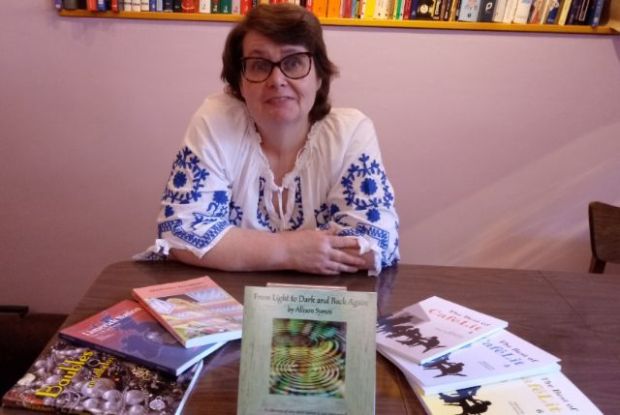
Allison Symes and published works

Allison Symes and some of her published works. Image by Adrian Symes

Facebook – From Light To Dark And Back Again

Used one of the prompts in the Prompts book by Gill James to write a flash tale that I have now submitted. It was good fun to write.

My week so far has mainly been on non-fiction work so it was good to get some fiction writing in. That should be my main focus for the rest of this week now.

Will have more news on another book but will save that for tomorrow night’s FB posts. (Well, we all need something to look forward to at the moment, right?!).


The one thing I hope to come out of the current crisis is that people read more and keep the love of reading going when things eventually calm down again.

Reading is a wonderful way to relax and for writers it is the flip side of what we do. To write well, you need to read well. (It’s also a bit daft to say the least NOT to support the industry you want to be in so go on get those books in, you know you want to!).

I love flash for its immediate impact, the longer short story for being able to expand on characterisation, and the novel for depth of plot etc. And the great thing with reading? There’s no limit on what you can read in terms of genre, length, topic etc. So go on, get stuck in!

This slideshow requires JavaScript.

Do you find it easier to write the ending of a story or its beginning?

I usually know when I’m brainstorming ideas whether a line I jot down is going to make a superb opening (I hope!) or a stunning finish. I then work out ideas from there and often use a spider diagram to help me get to the better storyline. (It is very rarely the first one I come up with!).

Sometimes the line can be open to being placed at either end of the story (and I love those). On my To Do list is to try to write two consecutive stories where the finishing line of one becomes the opening line of another. That could be fun to try (and good luck if you get to do that before I do! More than ever especially at the moment, it is important to still have fun and enjoy life as much as possible. Enjoying your story writing can be a key part of that).


Fairytales with Bite – The Downside of Magic

I’ve mentioned before that I like stories which show the downside of magic.

Firstly, something that powerful has to have disadvantages and would be prone to misuse/abuse (as with any kind of political power etc), though great stories come from exploring that.

Secondly, I love characters who use their wit and intelligence to get out of trouble in any genre and I want to see that in fairytales and fantasy too. Where magic is used, I want it to be appropriate.

I also believe there should be a downside to using it even when the intention is good. Something that powerful ought to have an effect on the user. For me, that’s realistic. I’ve always loved the section in The Lord of the Rings where Frodo offers Galadriel the Ring of Power because he clearly thinks the wretched thing would be best in the hands of someone good who would only use it for good (that’s my interpretation) and she reveals what that could mean.

What you don’t want is a wave of the wand getting characters out of trouble. Well, it’s not very interesting is it? Where a wave of the wand gets the character out of trouble but lands them right in it again in a different way because magic was used, now that is a lot more interesting to follow.

This slideshow requires JavaScript.

This World and Others – Hobbies and Interests

So you’ve created an interesting world for your characters to inhabit. You’ve creating fascinating characters that will keep us glued to your book. Excellent!

Now think of rounding out your characters that bit more. What are their interests and hobbies? Why are they interested in these?

If your characters are on a quest, what interests have they had to give up so they can go on the quest? Is there any chance of them being able to resume that old life again? What are their attitudes to having to give anything up? What do they do in their down time?

I’ve always found when reading series novels that a character with interests is going to attract me more for the good simple reason that the character concerned has a rounded life and that’s what I want to read about. What they do about their main work in the story adds depth to them.

This slideshow requires JavaScript.


Behind The Scenes

Image Credit:   As ever, unless stated, most of the images were from Pixabay or Pexels. A big thank you to The Chameleon Theatre Group for their images. Also thanks to Richard Hardie for supplying images related to his and Francesca Tyer’s events for World Book Day.  (And yes it has been a busy few days!).

Facebook – General – and Chandler’s Ford Today x 2!

Yes, count them, not one but two CFT posts this week.

First up, the start of a new mini-series.

I’m delighted to share a new mini-series on Chandler’s Ford Today. The #ChameleonTheatreGroupChandlerFord share interviews showing what life is like behind the stage. They share some fabulous insights into directing amongst other things in Part 1 (see link).

This series will run at intervals over the next few weeks. Many thanks to The Chameleons for wonderful material and the photos, as ever.

I’m looking forward to their next production, Spring Quartet, in April.


I’m always interested in behind the scenes looks at life, whether it is to do with creative writing or amateur theatre. So it is a joy to share a new mini-series on Chandler’s Ford Today where The Chameleon Theatre share their insights into life behind the stage.

Why the interest on my part? Well, partly it IS because I’m nosey (!) but that’s a good thing. Why? Writers have to be interested in what makes people tick. Knowing that helps us to develop convincing motivations for our characters and make their portrayal that much more believeable.

I’m also interested in behind the scenes looks because it opens up worlds that are new to me. That’s a good thing for increasing knowledge and understanding, I think. Understanding is also crucial in creative writing. You also get to understand yourself better I think.

And now for my second CFT post this week!

Am pleased to share a bonus CFT post this week. Every so often CFT has Local Author News slots. The last one was for me when I appeared on #WendyHJones‘s excellent podcast, The Writing and Marketing Show talking about all things related to flash fiction.

https://www.stitcher.com/podcast/the-writing-and-marketing-show/e/67280384

Up tonight is a piece with news from local YA author, #RichardHardie, and debut Authors Reach novelist #FrancescaTyer. They share news of their World Book Day eventsrecently. Francesca’s debut novel The Firestone was recently published.

Hope you enjoy. (Oh and remember the best things you can do to support local authors you know are to go to their events where possible and review their books in the usual places).

(My normal CFT post link will be up tomorrow where I start the first of a mini series from #ChameleonTheatreCompany-Chandler’s Ford. They share insights from life behind the stage. More tomorrow).


My CFT post this week is Part 1 of a mini series which will be spread out over a few weeks. As you know, I often review plays put on by our excellent local amateur theatre company, Chameleon Theatre Company.

They have recently been putting together some mini interviews which give a fascinating insight into life behind the stage. With their blessing (obviously!), I have compiled some of these interviews and Part 1 will be up on Friday.

Many thanks to the Chameleons for their wonderful material and photos and I look forward to sharing this post and the others to come.

Facebook – From Light to Dark and Back Again

What fascinates you most about a character?

For me, it has to be their motivation. I’ve got to know why my character thinks it is okay to act the way they are, especially when they’re the villain! It doesn’t mean I have to agree with them though…

The LEAST important thing for me is knowing what they look like, funnily enough. I find once I can hear their voice and know their motivations, physical appearance comes to me then. Mind, I’m not motivated by physical appearance myself. After all the best con men often wear a suit!

I love stories and books that “just” entertain. Yes, sure, I like those that give good messages too but there is a lot to be said for sheer escapism value, especially when life is more challenging than usual.

Let’s just say I probably won’t be reading much in the way of dystopian stories for a while. (It is definitely not a good sign when you can get your requirements there by tuning into the news…).😕

So how to go about being “just” entertaining? As ever, for me, it is all in the characters. I do enjoy setting up a character knowing I’m going to be throwing all manner of things at them to knock them right back down again (and ideally to make me and potential readers laugh). Okay, okay, nobody said a writer had to be nice to their characters. Indeed, it is better when we’re not as any crime or horror writer would also tell you!

I love those characters who deserve being knocked back a bit too. You know the kind of pompous character who needs bringing down a peg or several. The ultimate fall guy in many ways! (Well, they are for me).

For humorous prose especially I do need to get a sense that the writer enjoyed creating their characters. I believe something of that fun does come through in the writing.

This slideshow requires JavaScript.

How difficult do you find coming up with a suitable title for your story?

I know I need a “peg” from which to hang my story so I always have a working title. Most of them don’t change and suit my purposes just fine. Sometimes though a better title idea will occur as I draft my tale and that’s fine too. I just swap to the better idea.

I’ve mentioned using phrases and proverbs before and I often use them as themes, but don’t overlook them for use as potential titles. I’ve used a few that way.

You can also see them as a way to get started on a story if, like me, you need some kind of peg to help you get on your way with a draft. I think I have a bit of a mental block over any story that doesn’t have a title to it! There’s some unconscious thought at play here which associates no title with no story. I can’t be having with that so I put in a title to get me started. Nothing is set in stone after all but that is a great thing about a draft. You know it’s not going to be the final version. I’ve found it helpful to take that attitude with titles too.

Fairytales With Bite – Wishes

One of my favourite things about fairytales is when wishes are granted. The greedy never get away with theirs precisely because they always ask for the wrong things for the wrong reasons.

I love that aspect of things. I was very conscious even as a kid there was so much unfairness and cruelty in the world. The idea of a fairy godmother turning up to put things right for their ill-treated goddaughter always appealed (though I still wonder why Cinderella’s one turned up so late in the day. Come on, she could’ve helped Cinders a lot sooner. There is only so much domestic drudgery that could be claimed to be good for the soul and Cinders had gone well past that point when her fairy godmother deigned to make an appearance).

So in the grand scheme of things, what would your characters wish for and why? You are their fairy godmother as you bring them to life on the page. So what attributes would you grace them with and why? What would your characters strive for and why?

Do you think your characters are worthy of achieving their objectives? They don’t have to be. Villains are never worthy but should have understandable reasons for being what they are. What do you want your characters to be and why?

If your characters are allowed wishes, how will these turn the story and in what direction? Wishes being granted but proving to not be all that the character wanted could make a good story too.

This slideshow requires JavaScript.

This World and Others – World Essentials

For me, what I want to see in a created fictional world would be:-

1. A system of government (even if it is not the point of the story. There should be some sort of reference. For one thing, a reader would want to know if the main character was one of the governing or one of the governed).

2. What characters eat and drink and how those things are produced. A line or two is usually enough to convey that. When a character is on a journey, what food do they take with them? Where did they get it?

3. A sense of where the world is going. In The Lord of the Rings there is no doubt the world there is in turmoil and every part of that world is affected by it.

4. What your characters make of the world they’re in. They don’t have to like it!

5. How is transport organised? Does everyone have access to the same kind of transport? Is there a “them and us” situation here?


Landmarks, Flash Fiction, and Why Fairytales With Bite

Image Credit:  

As ever, unless otherwise stated, the images are from Pixabay.


Facebook – General – and Chandler’s Ford Today

My CFT post this week is Landmarks With Meaning. I share some of those that have the most meaning for me but I admit some are a lot more scenic than others. I’ve found the landmarks which mean the most almost always tie in with special memories/family connections and that is how it should be I think.

I don’t just stay with my local area either and found an excellent example of photo editing involving an elephant and Big Ben but you’ll just have to look at the post (or the slideshow below!) to see that one for yourself! I share a few thoughts on cathedrals I’m particularly fond of too and one of them has close links to one of my favourite authors, Jane Austen.

Hope you enjoy the post and do share in the CFT comments box what your favourite landmarks are and why.

This slideshow requires JavaScript.

What have I learned from the various stories I’ve read over the years (and there’s far too many of them to give you a number!)?

Firstly, you do take in how a story is laid out and that covers everything from punctuation usage to indenting (or not where appropriate). You get a feel for a publisher’s house style even if you’re not aware of it at the time. This is why it is important to read contemporary fiction as well as classic by the way. Styles change.

Secondly, over time, you work out what your tastes in fiction are and discover what you don’t like too. Funnily enough, the latter is useful. It tells you what you don’t want to happen with your own creative output. Work out what it was you didn’t like and why. Did the dialogue not ring true? Was it over complicated? Then work out what you would do about the piece if you had been writing it. What you pick up answering those questions will help you a lot when it comes to editing your own output.

Thirdly, you do discover what it is you like about the characters. I’ve always loved heroines who know their own mind (which covers a lot of ground, fortunately. I’m a big fan of Elizabeth Bennett, Jo March, George from the Famous Five, to name but a few). Work out what it is you like about your favourite people. What character traits would you want your people to have and why? When creating villains, give them good reasons to be the way they are.

There is always a back story. It may not make it into your main tale but you need to know why your characters are the way they are. You can also ask yourself questions about characters from your favourite authors. What made the writer develop them this way?
And you get a darned good read out of it all too!


I’m looking at landmarks with meaning for my Chandler’s Ford Today post this week. I share a few of my favourites and why they mean so much. Link up on Friday.

In other CFT news, I will be sharing a mini series over the next couple of months or so, spaced out at roughly three to four week intervals.

Our excellent amateur theatre company, The Chameleon Theatre Group, have been sharing a number of mini interviews which make for fascinating reading at life on the stage and behind it. First post up for that will be on Friday, 13th March. Looking forward to sharing that with you.

Am off to the Association of Christian Writers’ event in Birmingham on Saturday. The topic is Effective Public Speaking. Should be interesting and useful.

This slideshow requires JavaScript.

Facebook – From Light to Dark and Back Again

It was lovely having another flash story on Cafelit earlier this week (Taking Time Out From the Day Job). I am very fond of humorous stories.

The main point I have in mind when I’m writing these is that the humour must arise naturally out of the situation I’ve put my character in. That is the only way funny stories work for me whether I write them or read them. You can’t force humour on to a character or the story. It never works.

But I always love those moments when a good line emerges naturally from what my characters are saying or doing. I love those characters who I know can drop themselves right in it (so often a great cue for humour) because I’ve outlined them well enough to know what they are capable of doing/saying so they would drop themselves right in it. It all has to seem seamless to the reader.

This slideshow requires JavaScript.

When I don’t have a lot of time to write, I will often jot down what I think will make promising opening or closing lines to flash fiction stories and then write them up at a later date.

Where possible I will also add in a quick note or two as to how I think the story will go. For example, a line like “The thief realised they would not get out alive” seems to be a dead end line (in every sense!). I could make a note here to say this will be a closing line, mood of story = sombre or poetic justice. I could then add in a note to ask what the thief was trying to steal – fire from the gods.

Hmm… that was never going to work out well, was it? It does mean though, when I’m next at my desk with more time to write, I’ve got the outlines of a story already there, just begging to be written up and away I go.

This slideshow requires JavaScript.

How do I judge if my own flash fiction stories are ready for submission?

Obviously I check for typos, grammatical errors, and my hated wasted words. (I do feel a certain sense of satisfaction in erasing THOSE!). But I ask myself some questions:-

1. Does the story make the impact on me I thought it would? Usually the answer is yes and I’m happy but sometimes I have to go on and ask myself something else.

2. If the answer is no, is the impact I have created BETTER than my initial thoughts? Sometimes it can be. I’ve sometimes written a piece where I wanted the impact to be that I had made people sympathise with my character. All very nice and all that but if I can make myself feel like crying in sympathy with that character, this is even better. It means the impact is deeper than I originally planned. There is literally more feeling, I see that as a bonus, always. People remember stories for how they feel about them (which is why childhood stories are so often favourites for people throughout life).

3. Last but not least, I put the piece away for a while, re-read it at least one more time (and often twice) and again ask the impact questions. I also ask if I could improve the piece any further and if so, how? When I get to the point where I can’t think of anything here, I send the story off.

Of course meantime, I’m also drafting other stories so I always have something to work on. I love drafting stories while I’m “resting” others. It helps with work flow rates no end!

This slideshow requires JavaScript.

Fairytales With Bite – Why The Bite?

I came up with the title Fairytales With Bite as a way of showing that yes, I write fairytales but they are not twee. The original fairytales are anything but twee of course, indeed many of them act as warnings (beware the Big Bad Wolf being just one of them!), but a good fairytale should have bite to it.

I’ve always loved the fact most fairytales ensure evil does not triumph. Even as a kid, I was deeply aware the world is so often unfair. Fairytales were and remain a great way to escape that for a bit but they can still get a powerful message across, while being an entertaining story.

The Little Match Girl from Hans Christen Andersen is a stinging indictment on poverty and homelessness, which hit me hard when I first read it (and it it still does). But it is a phenomenally good tale. A good story, whatever its genre, should have the power to move readers, whether it is to make them laugh, cry, or scream, or what have you.

That’s where the bite comes in – and the good thing is you don’t have to include vampires in your story to get that bite in!


This World and Others – Stories In Other Worlds

What do I love most about reading stories set in other worlds? Well, they can reflect on aspects of our life here (which can be illuminating at times!). The way an alien society is run can reflect well or badly on how we do things here on Earth.

What should come through in such stories, and the ones we write, is being able to understand the characters in those stories and worlds, their actions and motivations and so on. Those basic elements don’t change much. Every species needs food, shelter, to be able to reproduce itself etc. We can understand what characters are capable of doing to ensure they have those things.

Societies need to be governed in some way so how would yours differ from what we know here? Why have you chosen those differences? Would you want to visit if you could?

Now I’m sure there could be some interesting answers to that last poser! If the answer is no by the way, do look at why. You may well be right to not want to visit the world you’ve created. What is the “message” behind that? If your created world is a heavily polluted one, say, you wouldn’t want to visit but look at why it is worse than what we know? How did it get to that state? Is anyone trying to do something about it? What obstacles are in their way?

There should be some cracking story ideas there. Happy writing!


The Writer’s Journey: Introducing Paula Readman

Image Credit:  As ever, Pixabay supplied the pictures unless otherwise stated. A big thank you also to Paula Readman for supplying some pictures for my Chandler’s Ford Today interview of her this week.

Every writer’s journey is unique. For a story of grit, determination and perserverance, check out Paula Readman’s story in my CFT post this week.

Facebook – General – and Chandler’s Ford Today

It was a real pleasure to interview Paula Readman for my CFT post this week. While Paula and I have publishers in common, it is also true every writer has a unique writing journey. Discover Paula’s fascinating writing journey in this interview and why grit, determination, and striving to be the best you can be as a writer is SO important to any writer, published or not.

This slideshow requires JavaScript.

It is always a joy interviewing writers for CFT but it is also great fun interviewing your own characters. I’ve used this technique for my longer short stories but even with my flash fiction, I’ve outlined what I need to know about a character and why it is I need to know that.

To do the latter, I have to quiz my potential character as to why they’d be, for example, greedy. What has triggered that? There usually is a reason behind it even if it is not a nice or honourable one. From all of that I begin to hear my character’s voice and away I go. I have to hear their voice before I can write about them at all.

Think about what you need to know before you write a character. Some writers need to know what their characters look like. I have to know my character’s voice and what drives them above anything else and I find physical description follows from that.

Sounds a bit odd I know but it works for me. I know my character is well spoken and is driven to prove themselves, for example. I quiz them as to why. Possible answer would be to prove all those who said they’d be a failure wrong. Their voice is to cover up the fact they come from a poor background – sounding upmarket is a kind of armour for them.

I’m then thinking of what my character might look like. They’d want to look smart for one thing so how that would manifest itself? Can I give them a real fad for fancy shoes, say, and make that a quirky trait that comes up in the story?

No two authors go about this process of discovery in quite the same way (which is another reason why it is such fun to interview them!). It is a case of working out what works for you.

I’ve often read of writers keeping magazine pictures of people to inspire how they would describe their characters’ physical appearance. I’ve taken that idea and modified it because I know I’ve got to hear the character’s voice ahead of anything else. Then, like a good actor, I need to know the character’s motivation. And then off I go!

This slideshow requires JavaScript.

My CFT post this week will be a fab interview with #PaulaReadman, author of The Funeral Birds (and with more to come later in the year). She shares with me what books (reading and writing them) means to her. Her writing journey is a powerful one and inspirational. Link up tomorrow.

Interviewing other authors is great fun to do. None of us come into writing in exactly the same way. None of us are inspired by exactly the same things. All of us have a unique voice. And we all love books. What’s not to love?!

Many thanks to Paula for supplying her author shot below. And if you’re wondering what the owls have to do with anything, look up the link when I put it up tomorrow! Update:  Hopefully by now you will have seen the CFT post and know exactly what the owls are about though there is a good clue below!


Am making good progress on my edits for my second flash fiction collection, Tripping the Flash Fantastic.

I always feel a certain amount of relief when I get to ANY editing stage on a book, a short story, or a piece of flash fiction. It means I’ve got something I can work with! And, yes, I have cut my wasted words – very and actually especially! Those went before I submitted the book at all!

Over the course of an average week, I’ll have writing slots where I’ll create new stories for competitions, another book etc.

I’ll then have others where I’m writing non-fiction (covering my CFT posts, ACW blog spots, draft articles I hope to pitch in due course etc. A recent edition to this is preparing various posts I can use either here on on Goodreads for those times when I’m pushed for time. I hope this is going to make me more productive as I would like to schedule more posts in advance).

Then there will be those slots where I’m editing. That can feel as if I’m not doing much but I am, of course. The writing really is in the rewriting. The chances of me writing a perfect first draft is remote. The work is in getting rid of the dross from what I hope will prove to be gold!

This slideshow requires JavaScript.

Facebook – From Light to Dark and Back Again

Some of my narrators in my flash tales are impartial observers and it is something I hope to use more of as a technique in my stories.

The advantages are that I can get straight into the head of this character, they come to the situation in the tale with no preconceptions (as there is no way they could have any), and what might seem obvious to us could appear alien to them.

That in turn can make us think about how something WOULD look to someone who has never come across it before and therefore doesn’t know what to expect.

So how can you make your observer truly impartial?

By ensuring they are not part of the main set up in the story. They’ve been invited in by someone who IS in that main set up. (Exploring the reasons for that can also make for interesting stories).

For example if your set up is the Court of Queen Elizabeth Tudor, your outsider could be someone who is the servant of one of the ambassadors to that Court. They would never be asked for their opinion by anyone in the English Court or by their boss but they would have some thoughts on what they get to see. Nobody is immune to having thoughts even if you do have to keep them to yourself.

Your impartial observer can share those thoughts in your story though! (And maybe the battle to keep said thoughts quiet knowing they won’t go down well with the boss or the English Court, say).

This slideshow requires JavaScript.

As you know, I sometimes use a random word generator to kick start story ideas. This works especially well for flash fiction.

Some of the generators allow you to set your own parameters. For example, you can see how many letters or syllables you want in your selections etc. You can even set the first letter and the last one.

When I use the parameters, I focus on word length and maybe the starting letter but leave it at that. I don’t want to be too prescriptive. If the first word generated doesn’t seem to suit, I trigger another three or so. I’ve usually got an idea I can work on within three or four goes on these things. And they’re great fun. (Bear in mind too you could combine ALL of what you trigger for an idea as well).

It could be useful to have a “stock” of these in ready to submit to competitions and markets as and when you come across suitable ones. (And yes I have a stock of stories in! Every so often I have a big writing session where I write a lot of flash. I know I’m not going to be submitting them anywhere for a while but it does mean when I have market or competition information that interests me, I can go through said stock and find something useful to submit).

This slideshow requires JavaScript.

Reading in and out of your genre inspires your own writing. You also take in subsconsciously how stories are laid out. I’ve never understood the attitude I’ve sometimes come across where, when people find you’re a writer, they seem surprised when you reveal you’re a reader as well!

It was the love of books and stories that I read which sparked my wish to be a writer at all. It is the books and stories I still read that fires my imagination and helps me to “up my game”.

So read away, folks, it’s good for you!


This slideshow requires JavaScript.

Fairytales With Bite – Happily Ever After?

The first indication I had that fairytales did not necessarily have to have a happily ever after ending was when I read Hans Christen Andersen’s The Little Mermaid for the first time. That was an eye opener to me as a child. Likewise how dark The Snow Queen is – the image of the ice piercing Kay’s heart still makes me shudder.

The crucial thing for any story, fairytale or not, is that the ending is appropriate. Also the author should deliver on the promise made by the opening of the story. There has to be a proper resolution, whether it’s a happily ever after or not!

This slideshow requires JavaScript.

This World and Others –

How To Drop Your Characters Right In The Mire

This is not the be all and end all list. I’m sure you can think of others to add to it.

  1. Use the elements of your created world against your character – unstable terrain, dreadful weather, and so on.
  2. Put them up against a tight deadline.
  3.  Put their loved ones at risk if they don’t complete the task you’ve set them whether this is to actually rescue their loved ones or to do something for an overlord to ensure their loved ones are not menaced at all.
  4. Put them in any other situation where failure is not an option though emotional ties are very good to exploit here. (I know, I know. Authors don’t have to be nice to their creations, okay?!).
  5.  Put them in danger directly.
  6.  Or put them at risk of losing that coveted promotion etc. What will they do to ensure they get what they want?
  7.  Get your character having to defend their reputation etc. Putting them up against a blackmailer here is good. Again what will your character do here?
  8.  Make them The Chosen One for a quest. Get them not to be able to get out of it either.
  9.  Going on the adventure is the only way to salvage a bad situation at home or, if that’s not possible, to escape the consequences of where they’ve mucked up here.
  10. Put them under pressure of society expectations. They can’t let the side down.

This slideshow requires JavaScript.


The Long and The Short of It

Image Credit:  Unless otherwise stated, all images are from Pixabay.

Facebook – General – and Chandler’s Ford Today

My CFT post this week is The Long and the Short of It – Reading and is a celebration of literacy, in particular the joy of stories and books across genres and formats.

There really is a genre and format of story and book to suit everyone. I think this is something that is too easy to take for granted.

I look at the advantages and disadvantages of short and long fiction from both the reader’s and writer’s viewpoint. Hope you enjoy.

This slideshow requires JavaScript.

Facebook – General – and Publication News

It has been a good week on the story front. Three linked stories of mine were up on Cafelit earlier this week and today I had a 75-word piece, Time Is Everything, on #ParagraphPlanet. I could do with more really productive weeks like this!

Time Is Everything was one of those stories when I did actually start with the opening line! I know, duh, every story starts with an opening line. True but sometimes I come up with a line which I know will make a cracking ending to a tale and I then work backwards to get to the beginning. This one I went from A to B rather than from B to A!

The Cafelit stories are three linked ones and are based on an idea from #DawnKentishKnox in the Prompts Book by Gill James. I picked some numbers and wrote stories to those numbers. I also used the numbers as a theme – in this case Time. Seven is for seven days in the week, Twenty Four is for the hours in a day and so on. The whole “package” is called Story by Number and I must thank #GillJames for picking such an appropriate drink to go with these tales. See the link for more! I usually select a drink to go with my Cafelit stories but, confession time, forgot this time.

This slideshow requires JavaScript.

Hope to have more publication news to share tomorrow as well as the link to my CFT post.

For the latter, I’m looking at The Long and the Short of It – the It being a celebration of literacy. (Now there is a word you must make sure you spell correctly to spare your own blushes!).

I’ll be looking at the joys and challenges of long and short writing (yes, I include non-fiction). The problem with a post like this one is in keeping it down to one post! I do think literacy is something that is far too easy to take for granted. We are so fortunate having a wonderful wealth of materials to read and enjoy.

One wonderful thing about all of this is there is at least one genre and one format of writing/reading to suit you. And that goes for non-fiction too. Think of the wealth of topics there alone!

If you’re a writer you have the joy of creating said materials too.  Now off to work on more short fiction and non-fiction myself!

This slideshow requires JavaScript.

Facebook – From Light to Dark and Back Again


How do I decide what IS the most important thing I have to get across in a flash fiction tale?

Sometimes it’s an obvious thing. I have an interesting character and I simply have to find out what happens to them. That is the single most important point. (That’s always a good sign when the writer is keen to find out what happens. I’m convinced some of that does get through to future readers).

Sometimes I know what the character is going to do to end the story so have to work out what has to happen for them to get to that point – the B to A approach so to speak. So again I’ve got the most important thing to focus on.

Sometimes the character has an attitude problem (!) and here I can go with either finding out what was behind that. There’s the point of the story. Alternatively, I can use the what are the consequences of that attitude approach. Both are fun to write.

This slideshow requires JavaScript.

Story time again…

GUARANTEE

Genuine? Of course it is, Madam.
Unassuming but pretty little object, isn’t it?
And it can be all yours for £50.
Really, I’d be selling it cheap at twice the price.
Auntie Jo always said my kind heart would land me right in it, but you just have to go with your instincts sometimes, don’t you?
Nah, of course, I’m not conning you.
Tried it on with everyone else in the market today, have I – well, no actually, I really have saved this for you, Madam.
Ever since I was a nipper, I could match a face to a bargain and this one is designed for you.
Everlasting wish maker this is, okay so you know it as a magic lamp, but wouldn’t you say it goes rather nicely with that broom I saw you fly in on?

Allison Symes – 20th February 2020

I used a random word generator to come up with the trigger for this story. I don’t always use the first word that comes up. I look for a word that is open to interpretation. Ideally I’ll use a word that could be used in a funny or serious context. Then I can have some real fun with it!

Hope you enjoy.

This slideshow requires JavaScript.

Am having one of those days where everything has run late. I may be a flash fiction writer but not everything I do can be said to be achieved in said flash! Oh well…

What do you do if you find that inspiration is hard to come by? I find a lot of the time when I feel “used up”, it is simply because I’m tired so I rectify that. I accept on those days I don’t write so much. I go to bed early, read, and wake up, hopefully refreshed, and ready to do much better on the writing front the following day.

Unless life gets in the way, as it can do, I usually do have a better “performing” writing day as a result. (One thing I’ve learned late is NOT to beat myself up if I can’t write much. I can and will make up for it. What matters is to enjoy writing as and when you can. If you’re not well or tired, it will affect what you do. Self care matters here too).

Another way to refresh the inspiration pot is of course to read. This is the time to try reading away from what you would usually go for. If you usually read fiction, try something from the non-fiction shelves and vice versa. I find reading longer forms of fiction is a great aid here too because it is different from what I usually work in. I think this mentally refreshes me.

Getting out and about for a good walk with the dog works wonders too though I won’t be sorry when the weather improves. That can’t come soon enough!

Fairytales with Bite – Once Upon A Time

Well, it is a classic opening, but what does it mean for you? For me, it means favourite fairytales, of course, but from a writing viewpoint I take it to be as follows.

Once – I pick the single most important moment to focus on in my character’s life for my flash fiction stories. Flash fiction illuminates briefly so it has to be the single most important thing for that character I then write up.

Upon – What am I going to make my character face? Is it going to test them enough? How will they cope?

A – What is the turning point in my story? There has to be one. Great stories can often change direction completely upon one word and even more where it is placed in the story. My Calling the Doctor is one of my favourite examples of where I’ve done this. Book trailer below but look to see how the final word of the story changes the mood completely of what has come before. I see the “A” word as that tiny moment which is the pivot for change in my character and/or their situation.

Time – When am I setting the story and why have I chosen it? Does the time chosen make sense for the story I am telling?


This World and Others – Once Upon a Time

I thought I’d follow on from Fairytales with Bite above with a look at the classic fairytale phrase and how it can be used when it comes to world creation.

Once – Decide what is the most important factor your readers needs to know about the world in which your characters live. Why do readers need to know this? How best can you show them this? For example, if the most imporant element, is the employment opportunities in your world, show what these are and why they matter.

Upon – What could happen to your created world that would have a direct impact on your character and the outcome of your story? Think weather conditions, climate, pollution, earthquakes etc.

A – Attitudes of your created world to other worlds or to countries within it. Are there power blocs? Who dominates? Is there democracy?

Time – Again decide what time is going to be the most appropriate for your story and think about what kind of development your world has got at this stage.

This slideshow requires JavaScript.