Story Types

Image Credit:-

All images from Pixabay/Pexels unless otherwise stated.

Book cover images from Chapeltown Books and Bridge House Publishing.

Deeply sorry to hear of the death of HRH Prince Philip, The Duke of Edinburgh today – 9th April 2021. His marriage to the Queen is a truly great love story.


Facebook – General – and Chandler’s Ford Today


So sorry to hear of the passing of HRH Prince Philip today. The story of his early life is an amazing tale in itself.

Pleased to share Story Types, my latest Chandler’s Ford Today post. Hope you enjoy it. I discuss why I mix up the type of thing I read and share what reading widely does for me as a writer. If you ever wanted to know why every writer under the sun tells you to read widely and well, my post is a good place to start to find out why.

Looking forward to my new series which starts next Friday. One good thing about a series on book covers is that I’m not going to have any problems at all in finding pictures to use for this! A huge thanks in advance to the authors who are taking part in this series with me and I will share more on this next week.

Story Types

This slideshow requires JavaScript.


Glad to say my new Chandler’s Ford Today post is up tomorrow. This week I’m talking Story Types. I look at the type of stories I like to read (as well as write) and share some thoughts about how mixing up what you read gives concrete benefits to what you write. I look at flash fiction and short stories, as well as novels, and share thoughts on how my reading feeds directly into what I write. It can be forgotten we take in more than we think when we read. For one thing, we unconsciously take in that this is how a book should look etc. Link up tomorrow.

From 16th April, I begin a three part series called Judging a Book by its Cover. Really looking forward to sharing that. I do share my own (of course) but plenty of guest contributors share theirs and what they hope a reader would take from them. Some fascinating insights here. So plenty to look forward to here for the rest of April.

Am so glad there wasn’t any snow today but it’s still cold! More irritated today by the temporary traffic lights just down the road from me were stuck on red in both directions. You can imagine the chaos. Any sign of workmen? What do you think?!

This slideshow requires JavaScript.


Another cold day (and yes a little bit more snow today). Brrr…

I was chatting earlier today over at #Val’sBookBundle about book collections you either still have or remember treasuring as a child. And some great memories were shared. I love the whole idea of collections – what a great way to encourage you to keep on reading. (It’s why I also understand and enjoy series novels).

But short story and flash collections encourage you to keep on reading too – just in a different way. I like to read through to see if there are links throughout the book. Even when there are no links, I want to find out what the next story or flash piece is all about. And then I like to work out which of the various characters I liked the most and why. (I can always learn from that).

The important thing then is to keep reading but I am preaching to the converted here, I hope!

My current read is The Diary of Isabella M Smugge by #RuthLeigh (and the hashtag is so apt here, just trust me on that one, or better still, check the book out and find out why).

Am moving on to the first Richard Osman one shortly after that so plenty to look forward to, reading wise. (Don’t watch nearly as much TV as I used to. To be honest, I don’t miss it. The time I would’ve spent watching the box I now spend writing and I feel bereft if I haven’t managed to have my usual creative session here. Anything special that comes on, I tend to record and watch while ironing etc. The glamorous writing life? Err… perhaps not! But it’s still fun and I can’t imagine my life without the writing and that’s a good thing).

This slideshow requires JavaScript.

Facebook – From Light to Dark and Back Again


Each flash story I write is the important moment in a character’s life. That is what I want to highlight. You can imply back story but you don’t have much room in which to do it. So how I do this?

I sometimes get a character to remember something.

In my story Enough Is Enough, from Tripping the Flash Fantastic, I show you the character’s back story as it leads directly into the action she is going to take.

Sometimes I get the character to relate some of their back story to another character. I do this in The Terrified Dragon where my hero reveals something of his past to the angry villagers surrounding him.

So there are ways in which to do it but, as ever with flash, it is best to be brief! Readers do pick up on things that are inferred and I must admit I love doing this myself whether I’m reading a flash story or a novel. I don’t want the author to tell me everything. I do want to work out some things for myself. I just need the relevant information for me to be able to do that.

This slideshow requires JavaScript.


As well as picking appropriate names for your characters and their settings/eras, give some thought to place names. Especially for fantasy and science fiction, these should still be easy for your readers to pronounce. No Mxzyoriaquantian here, thank you!

Whatever you write, it pays to read your work out loud. For novels, a section at a time is good. (I know. I have it easier here writing flash fiction!). But the thing to remember is if you trip over what you read out loud, so will your reader. You don’t want anything getting in the way of their having a fabulous reading experience as they read your latest wonderful prose.

Names should be tested this way. I’d also flag up dialogue or thoughts too. What looks good written down doesn’t always read so well and testing this by reading work out loud will flag up what you may need to simplify. No reader is ever going to moan about having an easy, seamless read. They will moan (and worse stop reading) if you make life unintentionally difficult here.


When I pick names for my flash characters, I obviously try to make the name suit the story genre. For example, in Losing Myself in Tripping the Flash Fantastic, one of the characters referred to is Graxia. That is meant to conjure up an alternative, probably magical, world setting – and the story does take place in one.

In Identity I had an older man as the main character so I went for an older man’s name here – Walter. (That also happens to be the name of one of my grandparents but no my fictional Walter is not based on my granddad! But the name is appropriate to conjure up a sense of age given Walter is not a younger person’s name).

In Being Yourself I thought the name Jane Stephens would give an idea of a lady probably in her late twenties or early thirties and who you wouldn’t be surprised to find working in a library where the story is set.

Keeping an eye out on names prevalent now (as well as using older books of names) is not a bad idea if you need a hand in coming up with suitable names for your people. But always bear in mind your story setting. Does the character name suit that?

This slideshow requires JavaScript.


Fairytales with Bite – The Villain

So what would be your definition of a “good” villain? For me, it would be someone (or something!) who is a worthy opponent to your hero and who has understandable reasons for doing what they are/being what they are. Okay, you don’t have to agree with those reasons, far from it, but you should be able to see where the villain is coming from here and what drives them to take the actions they are taking.

It is just as important for the villain to be as well rounded a character as your hero. You need them both to make a great story. No conflict otherwise. And the needs of the villain and the hero should be diametrically opposed. In The Lord of the Rings Frodo Baggins wants to destroy the Ring, Sauron wants to get it back and use its powers. No compromise possible there. There has to be an outcome too.

So thinking about what your villain and hero want and ensuring they are at cross purposes also helps gives structure to your story as there can only be one winner and one ending (happy or otherwise).

A good way of working out what your villain wants is to have a closer look at their background. If a villain, say, comes from a background where the only way out is to be more powerful than everyone else around them, well there’s a pretty powerful motive for you. It would also keep them going. The fear of falling back into being “weak” again would also kick in here.

As with any kind of characterisation, work out what you think you need to know about your people (alternative beings are available!). Work out what drives them. Work out what could get in their way. As you do all that, story ideas will kick in and a good structure along with it. What’s not to like about that?!

This slideshow requires JavaScript.


This World and Others – What Helps Your Villains to Thrive?

Is there anything about your created world that encourages villains to thrive? In The Lord of the Rings, Mordor is such a suitable setting for Sauron. (Good question here – does the darkness of Mordor come from him or does he make Mordor dark or is it both?).

Is there anything about your setting that encourages your characters to turn to evil to make their lives better, regardless of what that does to anyone else? What kind of politics exist in your setting that would lead to someone wanting to do whatever it takes to get to the top of the political tree? (And how do they achieve that?).

In a magical setting, do your villains use magic themselves, are they aided by it, or is it something they reject and they obtain power another way?

What is it about your setting that makes it difficult for the hero to beat the villain? If a people have been used to tyrannical leaders for centuries, would they suddenly take to a hero who wants to usher in a more democratic system or would they reject the hero and enable the villain to continue? (There would be a fair amount of fear of change coming in here, another obstacle for your hero to overcome, but does the setting itself contribute to that?).

The obvious use of setting almost as a character in its own right is, for me, The Lion, The Witch, and the Wardrobe by C.S. Lewis where it is always winter but never Christmas. That is a powerful image and made me wonder whether that could ever change. Of course, that is the whole point of the story – something has to change and here it is a question of reading on to find out how.

Could you use your setting in a similar way? Does it seem to hinder the hero?

This slideshow requires JavaScript.


https://platform.twitter.com/widgets.js

Objectives

Facebook – General

Looking forward to seeing the Chameleons’ production of Blackadder later this week. Should be a very good night out. The last episode of Blackadder Goes Forth is one of those sublime moments of writing where comedy meets tragedy and both are done superbly. Definitely not an easy thing to do.

Blackadder clearly had one objective in mind in Goes Forth – to get out of the war and go back home. Totally understandable.

What is your character’s overriding objective in your story? What will they do to achieve it? What gets in their way? In those three lines, you have a plot outline!

Pleased to have sent off some flash fiction stories last night. Plan to get more out later this week, there is one particular website I’m keen to try out, and finally want to get around to doing so!

One of the trickiest things to handle is time. (And yes I think Doctor Who showed that brilliantly in the Rosa Parks episode). How much time do you spend working on new stories and ideas? How much time do you spend marketing?

As with so much in life, there has to be a balance. I’ve found it helpful to look at the week as a whole. By the end of it, I want to have written some new material, be editing older work ready for submission, have my next CFT post up and ready to go, and have carried out at least some marketing. Okay life does not always go according to plan but whatever I’ve not quite done enough of writing wise in one week is what gets the focus of my attention during the following one. It does all balance out eventually.

Acronyms featured in this morning’s church service sermon and of course they’re a common feature in writing. KISS – Keep It Simple, Stupid is probably the best known one. Very much the antidote to “purple prose” – the days of the long descriptive passages are behind us!

I suspect that is due to everyone being used to films etc where you get into the action quickly but it is not a bad thing. I like descriptions in stories to be to the point and to feel as if they are a seamless part of the narrative and not a “bolt on”.

All parts of the story must feel to the reader as if they have to be there and the tale would fall down without them. If you’re not sure if something should be cut, ask yourself how your story works without that something in it and that should indicate quickly enough whether it is needed or not.

This slideshow requires JavaScript.

Had a fabulous time at the Writers’ Day run by the Association of Christian Writers today. The topic was on writing for children and YA but there was discussion on crossover fiction and contracts, all very useful stuff. From my viewpoint, it is lovely to meet some of the membership face to face given I usually only meet them via emails!

The importance of networking came out as well during the day and I lost my own fear of this when I realised it meant chatting naturally about books, what I’m writing and so on. I have no problem going on at length about that topic!

(Oh and a quick reminder: if you’re offered a publishing contract, always get it checked out. The Society of Authors and Alliance of Independent Authors are the places to go for that. Both I believe issue guides which are free to members. There’s a small fee charged to non-members. Never be afraid to ask).

This slideshow requires JavaScript.

Facebook – From Light to Dark and Back Again

A = Alliteration. Can be useful for titles in flash fiction (though I don’t use it much) but as with any story, it can grab the attention and help set the mood. Best not overused I think. You want each title to set the tone for what it is to come and a variety of methods for doing that is best. Keeps it fresh for you as the writer too.

B = Backstory. Not a lot of room for that in flash fiction! Best to hint at it through one or two vital details the reader has to know and leave it at that.

C = Character. The kingpin of fiction I think. Get the character right and the plot will come from them. Know your character inside and out – I find it useful to know their chief trait (and I piece together a mental picture of what they are like from there). Find the appropriate starting point for you but it is worth taking the time to know your character well before you start. Your writing will flow better because you write with that knowledge. It does come through in what you write.

There was talk at the ACW Writers’ Day today of how boundaries, far from restricting creativity, help it to flourish. This is SO true for flash fiction as well. The limited word count means you have to dig deeper to come up with those original ideas that make flash fiction stand out and have the most impact on a reader. It is worth the effort!

I usually know what impact I want a story of mine to have on a reader before I write it. This is to help me choose my words with precision. However, sometimes a story (more accurately the lead character) surprises me and the tale ends up being funnier, darker, sadder than I’d originally thought. This is no bad thing. It means the character has life and if they surprise me, they’ll surprise the reader too.

It may also indicate I hadn’t outlined enough but the great thing is ideas that come to you as you write a piece are not wasted. Jot them down, step back and take a look at where they can fit in. Are they better than your original thoughts? Do they add depth to your original thoughts?


Back to working my way through the alphabet again then…

D = Drama. Even the shortest flash fiction has to have some drama in it! But it is also true that serious drama doesn’t necessarily have to have lots of words to make it so! There is drama and anguish in Hemingway’s famous example of For Sale: One pair Baby Shoes. The drama should suit the story though (and be to the right length for that tale).

E = Editing. Every story needs this and I don’t think it should be something a writer dreads. I always feel a sensible amount of relief when I’ve drafted a story as it means I’ve then got something to work with. Editing improves a story and, as a result, increases its chances of success. Take your time over the process though.

F = Fun! Writing should be fun. You are creating something new for others to enjoy. The first person to enjoy said tale should be you!

So marching on then:-

G = Genre. One of my favourite things about flash fiction is because it has to be character led, due to the word count restrictions, you can set those characters anywhere. So, if you’ll pardon the pun here, you do have an open book when it comes to genre in the stories you write. Have fun with that, I do!

H = Humour. Can work well in flash fiction as you can end the story with what is effectively a punchline. Also when you have a very short funny piece, look at turning it into flash fiction. It can be an ideal vehicle for those pieces which would be spoiled if you added anything more (and this often goes for humorous pieces).

I = Imagination. True for any form of fiction, but I find with flash fiction I’m using my imaginative muscles far more. Why? Because I try not to come up with the obvious idea from a theme or title. I dig deep and see what else I can come up with, something that will make a greater impact on the reader.

Goodreads Author Programme – Blog –

After the End, What Next?

If you’ve enjoyed a really good book, what do you do when you finish it? Go on to read more books by the same author, or read more in the same genre, or do you go for something that is completely different in mood and style?

I have done all three of these (though obviously not at the same time!) and it very much depends on my mood at the end of the story. If I’ve loved a gory crime thriller, I may well want something humorous to show the lighter side of life, albeit a fictional one!

With short stories especially, I tend to read a few by the same author before moving on. With novels, if the book has really gripped me, I’ve got to check out what else the author has done, even if I decide I’ll come back to those later.

The important thing though is that whatever you read, you enjoy it so much, you keep on reading, no matter what author, genre, style etc you choose next. Happy reading!

Stand Alones, Flash Fiction and Fairytales

Facebook – General – and Chandler’s Ford Today

Many thanks again to Jennifer C Wilson, Val Penny, #AnneWan, Wendy Jones, and Richard Hardie for their further insights into the joys and challenges of writing series fiction. Amongst tonight’s topics is how to ensure each book in a series works as a stand-alone, given our series writers can never know which book a reader will actually start with. It isn’t necessarily book 1!

This slideshow requires JavaScript.

What five things do I like to see in a character? Ideally they have all of the traits I list below but as long as a character has the majority of them, I’m likely to enjoy spending time in the company of that character as I read their story.

1. Courage.
2. Sense of Humour.
3. Loyalty.
4. They, at the very least, respect books; at best they have their own library!
5. Kindness.

Does that rule out the villains? No! Even villains can be kind to their pet cat, have a decent library etc.

Looking at that list, it’s what I like to see in myself and, before you ask, I’m working on the personal library bit! (It’s nowhere near as grand as the one in the pictures below though!).

This slideshow requires JavaScript.

One of the things I love about going to writing conferences is that I always learn something pertinent to what I write. And it is not always an obvious link.

I’m off to the Association of Christian Writers’ Day on Saturday, the topic is Writing for Children and Young Adults, which is not directly what I do, but I just know I will pick up useful tips that I can apply directly.

And you never know – looking at what other writers do can help you re-examine whether you are working in the best way you can. It may also inspire a new direction of writing too! What I do know is it will be fun finding out if it does or not and what useful tips I’ll bring home with me.

The great thing with writing is you never stop learning how to improve what you do and that is so good for your brain!

(And networking is always fun!).

Facebook – From Light to Dark and Back Again

A = Alliteration. Can be useful for titles in flash fiction (though I don’t use it much) but as with any story, it can grab the attention and help set the mood. Best not overused I think. You want each title to set the tone for what it is to come and a variety of methods for doing that is best. Keeps it fresh for you as the writer too.

B = Backstory. Not a lot of room for that in flash fiction! Best to hint at it through one or two vital details the reader has to know and leave it at that.

C = Character. The kingpin of fiction I think. Get the character right and the plot will come from them. Know your character inside and out – I find it useful to know their chief trait (and I piece together a mental picture of what they are like from there). Find the appropriate starting point for you but it is worth taking the time to know your character well before you start. Your writing will flow better because you write with that knowledge. It does come through in what you write.

As ever, am planning to write flash fiction on the train journey to and from London on Saturday as I head off to a writing day run by the Association of Christian Writers. It’s amazing what you can get done on a smartphone with no interruptions! (Daren’t do this on the Tube though. Always worried I’ll miss my stop! I do think the Tube is a wonderful invention and you never get cold down there either…).

I also sometimes draft non-fiction articles and future blog posts when out and about. I just need a long enough train journey to draft a novel now. 😉😁Hmm….


When planning your story (you do, yes?), I find it useful to work out what the obvious ideas might be from a title I’ve thought of, and then work out what could come from those. I don’t plump for the first ideas that come to me. I try to make myself dig that bit deeper to come up with something that fits the theme, makes sense, but is also different precisely because I haven’t gone for the obvious ideas!

Spider diagrams or flowcharts can be useful here. I find I must have a title to kick start the process with, even if I do end up changing it for something better later. It is always a tad annoying that a better title idea crops up when you are writing the story and NOT before you get started, but that is one of those quirks of writing!

Picture of me reading was taken by the lovely #DawnKentishKnox at last year’s Bridge House event. Am very much looking forward to this year’s one too!


Gill talks with Dawn and I at the BH event, image taken by Paula Readman

Gill James talks with Dawn Knox and I at a networking event held by Bridge House Publishing last December. Am glad to report Dawn will also be in the Waterloo Festival Anthology. Image from Paula Readman and thanks to her for permission to use it.

Paula Readman, Dawn Kentish Knox and Allison Symes and books - with kind permission from Paula Readman - Copy

Paula Readman, Dawn Knox and I at the recent Bridge House celebration event. Many thanks to Paula for the image. Also Paula is another winning entry for the Waterloo Festival.

20171202_160214

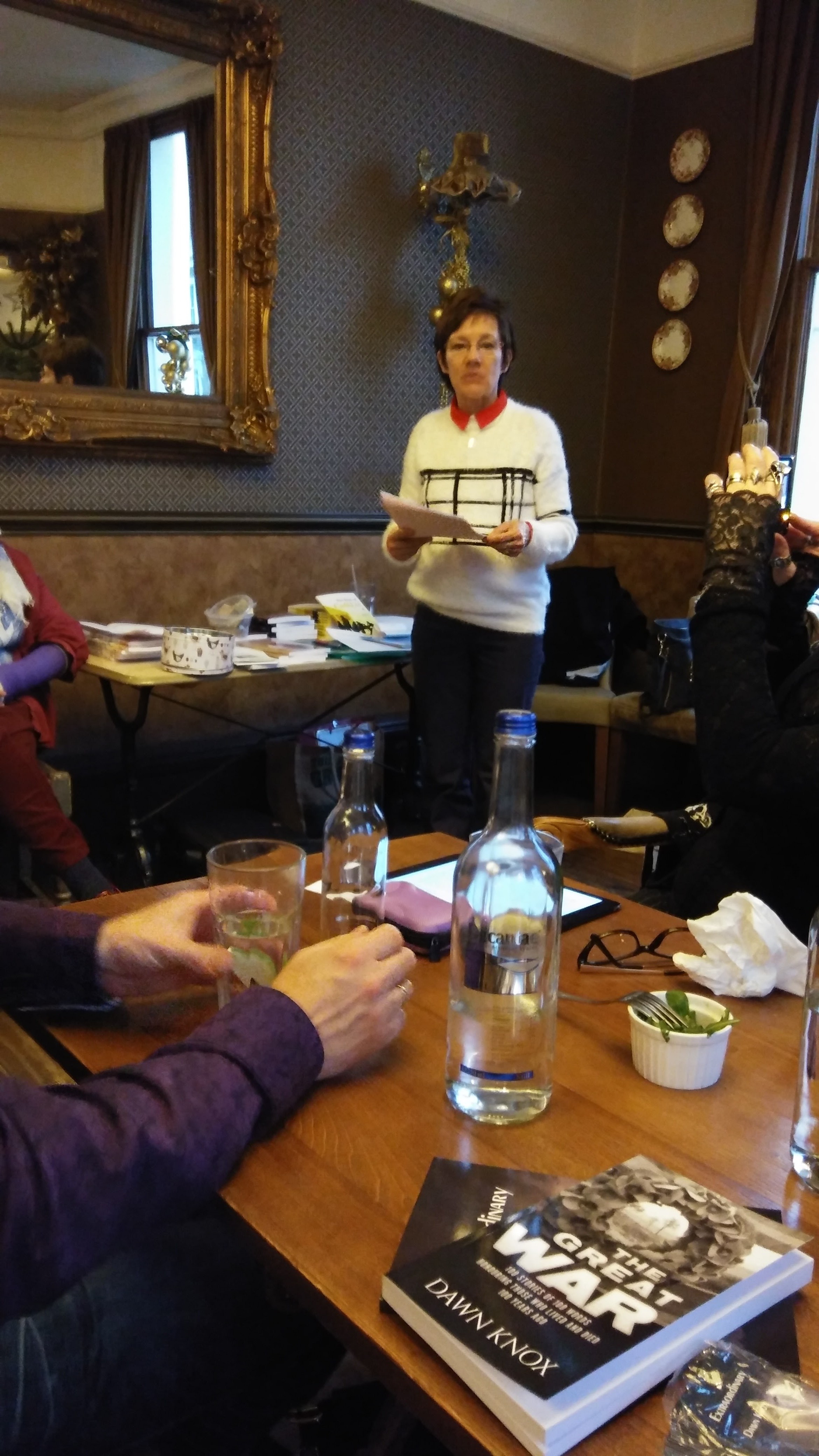
Dawn Kentish Knox, fellow flash fiction writer, reads some work from her excellent book, The Great War. Image by Allison Symes

Lovely having an appreciative audience, pic taken by Dawn Kentish Knox

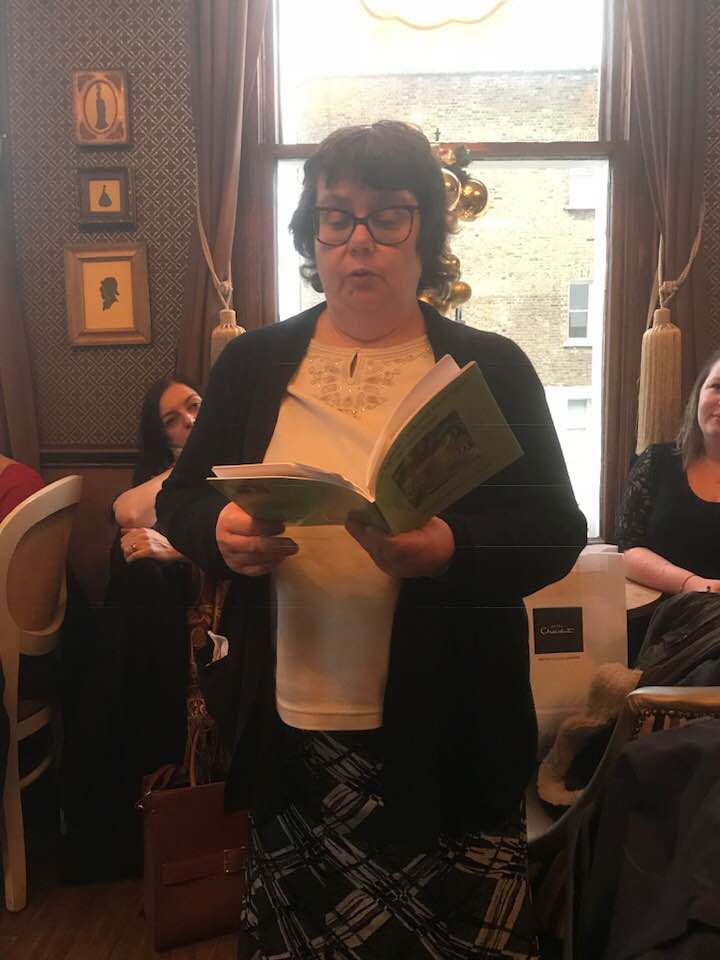
I read three stories from From Light to Dark and Back Again. Many thanks to Dawn Kentish Knox for the picture!

Book Buying News!

From Light to Dark and Back Again is available from The Book DepositoryDelivery time on the paperback is 1 to 3 business days.  As ever, reviews are always welcome in the usual places.  The great thing is reviews do not need to be long but they all help the writer, even the indifferent ones!

Fairytales with Bite – Flash Fiction and Fairytales

Flash fiction is an ideal vehicle for fairytales.  Why?  Because the best fairytales set up their world quickly, have a definite conclusion, and often pack a powerful punch.  Flash fiction does this too so to my mind flash and fairytales are a match made in writing heaven.

Flash fiction has to be character led due to its limited word count but you can set that character wherever and whenever you wish.  A few telling details can set up a magical world quickly.  For example from my George Changes His Mind (in From Light to Dark and Back Again), I set up a magical world with the opening line “He refused to kill the dragon.”  The telling detail there is in one word – dragon! The story goes on to show what happens and that is the important bit of the story after all.  I don’t need to use thousands of words setting up the magical world in which this is set.  This is not crucial to this story.  What matters is it IS in a magical world and what George goes on to do or not do.

A lot of my stories are either reflections of a fairytale world or set in it and they are great fun to write but I always focus on what the lead character is like.  That is the crucial point of any story I think but in flash where every word must work hard to earn its place to stay there, it is even more so.

This World and Others – Stand Alone

Part 2 of my CFT mini series on The Joys and Challenges of Writing Series Novels looks at, amongst other topics, how to ensure a book stands alone given no series novelist can know at which point a reader will discover their writing.  It is highly unlikely to be book 1.  Indeed I’ve discovered series at the mid point! Many thanks again to my marvellous panellists – Jennifer C Wilson, Val Penny, Anne Wan, Wendy H Jones, and Richard Hardie – for some great insights.  Very happy to recommend their books to you too.  Great reads one and all albeit for different audiences!

It is true that every writer stands alone, even those that collaborate as they have to go off to write “their bits” before coming back and swapping notes with the other one(s) in the project.  We have to judge whether our work is strong enough to submit and, if there is a choice of places to submit to, which is the best one.  We have to judge whether we have edited a piece enough or if it still needs work.  The call is with us and we are going to get it wrong.  The joy, of course, is when we get it right and a piece is published.

This is where meeting other writers, whether at conferences, online, at courses etc., is invaluable.  There is nobody like another writer to know exactly how it feels when you’re struggling to get the words out or who knows the joy of the words pouring out and work going well.  You do have to share this sometimes for the sake of your own sanity!

I learned a long time ago no writer is a competitor to me.  I write as I write.  I cannot write as you would.  We all bring our unique perspectives to what we write – and that is the great thing about it!

This slideshow requires JavaScript.