Returning To The Writers’ Summer School, Swanwick For 2025

This slideshow requires JavaScript.

Image Credits:-
All images from Pixabay/Pexels unless otherwise stated with many created in Book Brush. Book cover images from Chapeltown Books and Bridge House Publishing. Huge thanks to Penny Blackburn, Joy Wood, and Julia Pattison for supplying some images connected to my Chandler’s Ford Today post this week. Two images of Lady were taken by Adrian Symes. She missed me when I was away! Screenshots taken by me, Allison Symes.
Hope you have had a good week. Have spent my time slowly resuming normal routines, including the writing one, after my return from The Writers’ Summer School, Swanwick. Think I am getting there now. Have loved getting back to the park with Lady. The weather’s cooler at the moment and much pleasanter for us both.


Facebook – General and Chandler’s Ford Today

Have been looking forward to sharing my Chandler’s Ford Today post this week. Well, when I tell you it is Returning To The Writers’ Summer School, Swanwick For 2025, you’ll know why.

I share some highlights from what was an amazing few days in Derbyshire and discuss the courses and workshops I went to – it will give you a good idea of the range on offer here. Plus it was marvellous catching up with friends I only see online the rest of the year.

Hope you enjoy the post and maybe see you there next year.

Returning to The Writers’ Summer School Swanwick for 2025

This slideshow requires JavaScript.


Looking forward to sharing Returning to The Writers’ Summer School, Swanwick For 2025 for Chandler’s Ford Today this week. Link up tomorrow. See above.

Have yet to go through my Swanwick notebook to look up all of the drafts I did in response to exercises set but I hope to do this soon and then rework the pieces concerned. Hope to get at least some of them out somewhere once I’ve had chance to go through them and work on them. It pays too. Once piece I wrote up after a previous Swanwick has made it into my third book, Seeing The Other Side, out next May.

The writing journey is never the same for any two authors. When I started out I was just writing for my own pleasure, just to see if I could get a story down, and doing that kept me going for a long time. But then I felt I should have a go at the writing competitions to see if I could get anywhere there.

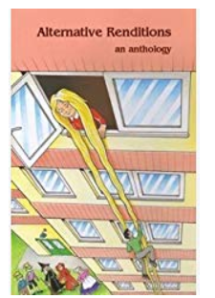
Took time but I did get there and in turn that led on to my first story being published in an anthology. That breakthrough moment was A Helping Hand in Bridge House Publishing’s Alternative Renditions which came out in 2009. I can’t believe where the last 16 years have gone either!
Lady had a fabulous time in the park today as she got to see her Hungarian Vizler pal again but also ran around with Coco, the lovely Labradoodle. Lady came home oh so tired but so happy with it. I managed to sneak in a short swim and found that refreshing. Murphy’s Law has struck again by the way. I swear the centre has turned down the temperature of the showers which would have made sense last week when things were so hot. This week it’s cooler…

Writing wise, am slowly catching up with some things I didn’t get chance to look at while at Swanwick.

Author newsletter will be out again before too long so if you’d like to sign up for writing tips (especially on flash fiction), story links, news and more, do head over to my landing page at https://allisonsymescollectedworks.com

This slideshow requires JavaScript.

Facebook – From Light to Dark and Back Again

You can now see the six shortlisted stories for the competition Friday Flash Fiction runs to tie in with the Edinburgh Festival. See the link for that.

Plus the screenshot will tell you more about FFF if you are new to them. It’s a great place for flash fiction writers, especially if you like the 100 word form. Just follow the submission guidelines to the letter and give them a go.

I’d just like to say a huge thank you to all who give me feedback on my stories here. It is much appreciated. 

Looking forward to the next meeting of the Association of Christian Writers’ Flash Fiction Group next week. Zoom comes into its own here given the members live hundreds of miles apart (though I am hoping to catch up with some of them in person at the next ACW in person event in October). Will be looking at prompts next week too, which is always a useful topic and one of my favourites. You know you can always get something useful out of a prompt!

Flash Tip: It pays to have a wide range of prompt types you know you can use. It keeps things interesting for you (I always like a flash fiction challenge) and it means you will rarely be stuck for ideas because you know you have all of these different kinds of prompt to try out. And you will know you can do them, which is a real confidence booster.

When I take part in Open Prose Mic Nights I narrow down my selection of pieces to read to one or two. I have a third in reserve. That is usually plenty to cover any time slot you are given. I mix up the moods of the stories as well when I know I can read at least two.

I also practice the ones I know I would like to read. I record my stories on Zoom and play them back so I know my timing is right and I can hear how I come across. I know I have to make myself slow down. It is too easy to race through a piece – that’s the adrenalin pumping of course, but it is then too easy to stumble or garble your words.

So playing a recording back is the single biggest tip I’ve found useful here. I’ve also found it to be a confidence booster because I know I’ve rehearsed. It does pay.

If you get the chance to take part in such nights, have fun. It is a great experience.

Many thanks to Penny Blackburn for the photo.

I was reading Time For A Change from my forthcoming Seeing The Other Side here.

Fairytales with Bite – Story Time

I was blessed to have a mother who loved books and stories and my kid sister and I were read to at bedtime regularly. It is a wonderful way to instill a love of stories in children and that is a gift for life.

So I was wondering which of your characters would have a special story time with their young ones? What forms would those stories take? What stories would they tell?

If they told “scary” stories, who would they be warning their youngsters about? Humans, possibly? What would be the basis of their fairytales and legends?

Naturally, you would invent those fairytales and legends yourself as part of your overall story. (Could be separate interesting material to publish later for one thing).

But no matter how fantastical your setting, your invented stories will still have to have that believability factor. Readers as outsiders should be able to understand the stories your characters tell their youngsters. We should be able to understand their monsters, their “goodies”, their “villains” and so on.

If your work is long form inventing those shorter stories could be a fun side line.
This World and Others – Who Tells The Tales?

Who does tell the tales in your setting? Which tales are allowed to be shared and which are definitely kept under wraps? Are there nominated storytellers in your setting with a specific role to play in your society?

Are the storytellers valued or is their job saved for those who could literally do little else? Not everyone appreciates stories, sadly, no matter what world you’re in.

How are the stories told aside from the obvious oral tradition with bards going from village to village? For example, is what we would know as technology used to create “virtual storytellers”? Perhaps your characters must have credits to access that virtual world. How would they get their credits? How many credits would you need for a story? Are all stories priced the same way or are there special ones which need a great deal more in the way of credits?

MailerLite – Allison Symes – Newsletter Sign Up

WRITERS NARRATIVE SUBSCRIBER LINK 

AMAZON AUTHOR CENTRAL – ALLISON SYMES

This slideshow requires JavaScript.


https://platform.twitter.com/widgets.js https://platform.twitter.com/widgets.js

Best Invention Ever – Books!

This slideshow requires JavaScript.

Image Credits:-
All images from Pixabay/Pexels unless otherwise stated with many created in Book Brush. Book cover images from Chapeltown Books and Bridge House Publishing. Screenshots taken by me, Allison Symes, though photos of me with The Best of CafeLit 13 were taken by other half, Adrian Symes. Thanks also to Julia Pattison for taking the image of me about to run a workshop at Swanwick 2023.
Hope you’ve had a good weekend. Back to hot sunny weather here. Getting ever nearer to the wonderful Writers’ Summer School, Swanwick – so looking forward to that. Lady has been catching up with her pals and having a great time in the park with them. Dogs keep things simple. I like the simple approach myself when it comes to drafting a story. I ask myself whose story is it and then work out the character and away I go from there.

BookBrushImage-2024-7-30-19-5830

Facebook – General

A hot one day but Lady keeping nice and cool, I’m glad to say. I have a flask of water with me for her which is a blessing.

Will be reviewing Bleak Expectations recently performed by the excellent The Chameleon Theatre Group for Chandler’s Ford Today on Friday. If you love a Dickens spoof and your own local theatre company put this show on, do go! Locals to my area, if you’ve not seen The Chameleons in performance, you should. You’re missing a treat otherwise. More to come in my post this week.

Don’t forget my author newsletter is out again on Thursday. Yes, I know, how did we get to August already, but there is no getting away with it. But plenty to share in my newsletter so do look out for it. If you’ve not signed up you can at https://allisonsymescollectedworks.com

This slideshow requires JavaScript.


Pleased to be back on More than Writers, the blog spot for the Association of Christian Writers. This month I’m talking about Best Invention Ever – Books! Well, it’s hard to argue with that one, isn’t it?

Regardless of what you like to read, life would be so much poorer without books in it. Hope you enjoy the post. I do ask how can we persuade people there are books out there for them, especially if they don’t come from a background of having always read. I do come from that background and am mindful I shouldn’t take that for granted.

This slideshow requires JavaScript.


Lovely sunny day and Lady got to see her Jack Russell pal, Willow, today. Very sweet dog. Lady always pleased to see friends.

Had a lovely Zoom session with Swanwick friends last night but what is nice is the next time we meet up it will be in person at Swanwick. So looking forward to that.

Writing Tip: I draft my various posts in advance, I’ve found it pays. When I have any spare writing time, I jot down ideas and then start writing those up even if I don’t have a definite date in mind for using said posts. It does mean I always have something “on the go”. It also gives me more time to finish these pieces off. I’ve found that pays too.

Same applies for story writing. Even if I don’t have a definite market or competition in mind, I will draft away because I know I will find a home for these tales later on.

453212528_940839758055886_1379820348304126146_nHope you have had a good weekend so far. Nice to have lunch out in the garden with other half and the dog. Just as well we did, Is clouding over ominously as I write this!

Next week’s Chandler’s Ford Today post will be a review of Bleak Expectations, recently staged by our excellent local amateur dramatic company, The Chameleon Theatre Group. Their last performance of this is tonight, 27th July. Those with fond memories of the Radio 4 show of the same name (which includes me) will love this show as it is based on that and written by the same chap, Mark Evans.

Looking forward to flash fiction afternoon which is a highlight of most of my Sundays. Have a competition entry to finish and send in too this time as well as preparing my usual stories. Am making good progress towards a potential fourth collection too. During the week my writing consists of a mixture of blogging, story writing, and marketing items (such as getting my newsletter ready etc). Never short of things to be writing and that is how I like it.

453041719_940206081452587_8414192118544789943_n


Facebook – From Light to Dark and Back Again

Have used one of the prompts I worked on during the recent Association of Christian Writers Flash Fiction Group meeting from my most recent YouTube video which I shared yesterday. I love joining in with the live writing exercises. It keeps me on my toes and I get more flash written – win-win.

All of us share what we prepare on the night. I like to encourage this because it is a good idea to get used to talking about what you write. Helps overcome the nerves in doing so too I find.

Youtube image 2It’s Monday. It’s a hot Monday. It’s still Monday. Time for a story then. Hope you like my latest on YouTube – All Going Swimmingly. Those from the Association of Christian Writers Flash Fiction Group may recognise this one from our recent meeting. Knew I’d do something with this tale and here it is!
 

Always look forward to Sunday afternoons. I always write a lot of flash fiction then. I know it sounds almost too horrible to contemplate but it won’t be that long before I am drafting my festive flash pieces. Yes, I know. Not even out of summer yet and I’ve hinted at a certain season coming along!

I bear in mind the women’s magazines will already know what will be in their seasonal specials later this year already so I tend to draft my festive pieces as and when the mood strikes me. I often do this in late summer/early autumn so I know I have pieces to look at and polish before sending them in anywhere. I like having time on my side as much as possible.

453042414_10162062645657053_8222404052672727223_nI sometimes have fun with my flash tales in that I use films I’ve loved as inspiration. For example, my Where The Wild Wind Blows (Tripping the Flash Fantastic) is based on The Wizard of Oz and I use one of the witches for the viewpoint character. It was great fun to do and a different slant on the tale I think.

I have a soft spot for this kind of story writing given my first story in print, A Helping Hand (Alternative Renditions – Bridge House Publishing) is a take on the Cinderella story. Hard to believe that was way back in 2009 – where has the time gone?

The tip I would give here though is always pick a story or film you know almost “inside out”. You need to understand the characters in the, if you like, “authorised” version before you can work out how to write a story suing a different angle based on it.

If you know Cinderella well, you will know the cast of other characters in that fairytale as well, giving you the opportunity to write something from their point of view. As you will know the characters well, your sharing of their viewpoint will come across as plausible to other readers who also know the story well, which is what you are after here.

Goodreads Author Blog – Spoofs

I’ve recently watched a wonderful play (Bleak Expectations) based on the works on Dickens, of course. The show itself was based on a Radio 4 comedy from many years ago and that and the play are written by the same man. There were many wonderful references to lines by Dickens, book titles etc in the play, which I loved. It was great fun spotting them!

But this led to me thinking about spoofs in general. Many are based on books – Bored of the Rings, anyone? (There is also A Midsummer Nightmare out there).

What I hope is the case here is the spoof comes about as a result of a genuine love for the author/books being spoofed. That is definitely the case with Bleak Expectations and if you get the chance to hear the radio series or go and see the play I heartily recommend it. Loads of laughs too! I wonder if any of these spoofs have led to people discovering the authors of the original works? I would like to think so.

One of my favourite moments from the long running Radio Four series, I‘m Sorry I Haven’t a Clue, is when they have a books round and usually the players have to add a word to the title or take a word away to come up with a totally different book. I’ve often thought some of the titles they come up with for this would make excellent spoofs.

A well done spoof then, I think, can add to the pleasure of reading in general. Certainly Bleak Expectations has reminded me of Dickens’ titles I need to check out again!

Screenshot 2024-07-27 at 17-20-28 Allison Symes's Blog - Spoofs - July 27 2024 09 20 Goodreads

WRITERS NARRATIVE SUBSCRIBER LINK

This time I share the link to the November 2023 edition of the magazine. The theme this time was Novels and my article is called Writing Novels. I share what I learned from writing my first novel. Do check the excellent advice throughout the magazine out.


AMAZON AUTHOR CENTRAL – ALLISON SYMES

This slideshow requires JavaScript.

Twitter Corner with hashtag, Scrabble tiles, and the blue bird

https://platform.twitter.com/widgets.js https://platform.twitter.com/widgets.js https://platform.twitter.com/widgets.js

Processing…
Success! You're on the list.

Author Interview: Sophie Neville – A Creative Life Part 1

This slideshow requires JavaScript.

Image Credits:-
All images from Pixabay/Pexels unless otherwise stated with many created in Book Brush. Book cover images from Chapeltown Books and Bridge House Publishing. Screenshots taken by me, Allison Symes.
Hope you have had a good few days since the last post. Weather still all over the place but Lady running all over the place with her closest chums so they’re happy at least!
Am so thrilled to welcome Sophie Neville to Chandler’s Ford Today – she is a very talented actress (best known for Swallows and Amazons), has written many books, and is an award winning scriptwriter as well. This interview is a two parter, with the next stage coming out on 12th April. Don’t miss either parts – there is so much to inspire here.

BookBrushImage-2024-4-5-19-1554

Facebook – General and Chandler’s Ford Today

Hope you have had a good Friday. Lady and her Rhodesian Ridgeback pal rounded off their “working week” with a superb playing, good zoomies (you stand out of the way!), and who then went home tired and happy. I was happy to dodge the rain. That counts as a win this week.

For Chandler’s Ford Today this week, I am delighted to share Part 1 of a wonderful interview with actress and writer (and much else besides), Sophie Neville, who is best known for her role as Titty in Swallows and Amazons, a classic children’s film. She went on to do much more in front of and behind the camera plus her writing, especially her scripts, has won her awards too.

This week we look at how the different aspects of Sophie’s work have fed into each other, her thoughts on preparing for talks (useful tips shared too), and her involvement with the Wild Otter Trust and much more.

Do enjoy! Part 2 this time next week. Don’t miss!

Author Interview: Sophie Neville – A Creative Life on Water, in Film, and in Writing – Part 1

This slideshow requires JavaScript.

Lady has had a super duper week in that she has got to see her friends for most of it! Had a lovely time again earlier today with her Rhodesian Ridgeback pal. It is quite something to see the pair of them running.

Don’t miss tomorrow’s Chandler’s Ford Today post. I will be sharing Part 1 of a splendid two part interview with the hugely creative and talented Sophie Neville of Swallows and Amazons fame and much else besides. The whole interview is so inspiring to anyone with any interest in the creative life so do look out for it. More tomorrow on this. See above.

Writing Tip: When writing flash fiction, don’t worry about the word count. I know that seems an odd thing to say but focus on getting the story right first. Once you’ve got that sorted, then figure out what the word count should be.

If my draft ends up coming in at, say, 120 words, I will then and only then see if I can genuinely get it down to a 100 word count. Sometimes I can. That’s great. Sometimes I can’t (because it would spoil the story in some way) so in that case I leave it alone and I send it in to a category which is over 100 words instead.

How can I judge what would spoil the story in some way? Simply by asking myself would cuts take away from the characterisation I am trying to show. If it does, I don’t do it.

The star of any flash fiction story is the character. The reader needs to know who they are (in some cases in my stories, what they are too!) so if my cutting takes something away from their enjoyment of the character, that’s when I leave the story alone.

But if I can genuinely cut something to tighten up pace, give my characters a sharper focus, then I will do that.


Hope you have had a good day. Strange weather though thankfully Lady did get to see her Hungarian Vizler and Rhodesian Ridgeback pals again today. Came home tired but happy. She always gets a buzz from being with her chums.

I was talking earlier today about non-fiction books via a Facebook group I am part of and I mentioned I’m currently reading Double Cross by Ben Macintyre, the true stories of the double agents used to fool Hitler. Fascinating reading. Highly recommend. I love the development of non-fiction told in narrative style, as this book is, as it almost seems like a novel (and a page turning one at that). Great way to take in history, I think.

I do sometimes write historical flash fiction though I do use standard modern English for my characters here. Why? Old English is not that easy to read so my one conceit is to allow past characters to talk in a way we would understand now. My historical flash pieces are all based on fact and/or reasonable supposition on the basis of known facts. Fun to do.

By using the flash format for this, I do have to hone in on what really matters to my characters. (And that applies to every other flash piece I write too, regardless of genre. Flash is a great writing discipline for this).

434500112_10161812547272053_4478909043558913187_n

Facebook – From Light to Dark and Back Again

No story on Friday Flash Fiction this week as they’re closed to submissions at the moment after the Andrew Siderius competition. Many congratulations to the winners and all who where shortlisted. It was great fun to take part. I submitted a story in the 100 words category and then a longer flash (151 to 500 words) over the two weeks the competition was running.

If you need to look at what 100 word stories look like on screen (or the longer up to 500 words category), do check out the website. I’ve found doing this useful in the past because it gives me a visual aid for what to “aim for” when drafting my story.

If I know a 100 word story could be three short paragraphs, I’ve already got a kind of structure in place. First paragraph – set up, meet character, know problem. Second paragraph – things worsen, character has to do something. Third paragraph – Character has done something and this is the resolution. Visual aids like that can be handy at times.

Also check out the wide range of stories on here. You’ll be in for a great read. The link takes you to a page full of useful tips for writing flash fiction. Do check them out.
Screenshot 2024-04-05 at 17-07-46 Writing Good Flash Fiction

One great thing about the opening line writing exercise is it challenges you to come up with excellent prose to follow on from it. I find I want to deliver on that cracking opening line and not let it down. So I need a strong character, one I know well and whose reactions and actions make sense based on my portrayal of them.

Do I like all of my own characters? Not necessarily! I can think of some of mine who make my skin crawl but the way I’ve portrayed them, their actions and attitudes would make sense if only to them. I don’t write too many of this kind of character because they’re not my favourite type but sometimes I have an idea for a plot where that kind of character has to be the one to “star” in it for it to make sense.

I do love my witty characters though and have a very soft spot for them. I especially love the ones who come up with wonderful one liners. What I need to watch there is to ensure I don’t write those lines just for the sake of it. Any and every line does need to move the character and the story on.

Any and every line has to earn its place in my stories. If there’s any doubt, then that tells me this line isn’t strong enough. Equally it tells me it doesn’t stand out enough to justify staying in the tale so out it comes.

433949985_862760885863774_6838487424595193097_nSometimes I’m inspired by films I like and take the viewpoint of another character for my flash piece. In my Where The Wild Wind Blows (Tripping the Flash Fantastic) I take the viewpoint of the witch from The Wizard of Oz who was unfortunate enough to have a farmhouse land on her. Just what are the odds of that happening, even in a magical world, I wonder! Good fun to do as it is interesting to explore what another character would make of the situation that has happened to them.

When Cinders got married, not all considered this to be good news – the stepmother and her daughters for a start. You can have fun playing with that kind of idea (and indeed I did with my A Helping Hand from Alternative Renditions (Bridge House Publishing), which was my first story in print back in 2009).

I’ve mentioned about using proverbs and sayings for inspiration (and they are fabulous sources) but why not the fairytales too? Whose story hasn’t been told? Who thinks they’ve been treated unfairly? A lot of fun stories could be told here (and I love the way the Shrek films covers this idea too).

Fairytales with Bite – Magical Studying

The best known magical school is, of course, J.K. Rowling’s Hogwarts. (Love those books and films). But when it comes to your own stories and settings, how would your characters be educated? Would there be formal education such as Hogwarts or would there something akin to learning from the “elders” of the people in a more traditional, oral manner? Would your characters have access to any education at all? If not, why not?

You can show a great deal about your society by showing who is allowed to be educated and who is not. Equally for your stories where education doesn’t come directly into the plot lines, your characters would still have needed to learn some skills in a magical world so they could survive. Do they ever talk about what they learned and how?

Good teachers have a positive influence on you for life. I recall with great fondness my English teacher, Miss Mackenzie, who introduced me to Jane Austen (Pride and Prejudice). I learned irony was a thing in fiction from that one book!

After that, we went on to The Day of the Triffids (John Wyndham), a book I was sure I would hate given it was science fiction. I was wrong. I was pleased to be wrong. Miss Mackenzie gave me an invaluable lesson here in mixing up your reading and not being afraid to try genres new to you, something that remains with me (and I am sure has had a positive influence on my own fiction writing).

So what teachers would have had an influence, good or bad, on your characters and how does that play out in your story? How does your characters’ magical studying, no matter how they did this, affect what they can do in your plot line? When they are in trouble, as all characters will be at some point (!), do the lessons they studied earlier in their lives come to their aid now?

Studying has a life long impact. So it would make sense for that to apply to characters too. It could make a huge difference to whether they survive or not. Story ideas a plenty there, I think!

BookBrushImage-2024-4-5-19-4417

This World and Others – Discoveries

I’m always pleased to hear of discoveries which will be useful to mankind (medicine perhaps being the obvious one here). I also love to hear of discoveries which are simply amazing. I love seeing the photos from the various space telescopes, for example. The images are amazing (and that in turn gives me a renewed appreciation for the wonders of the human eye, for colour, and for photography).

So think about your characters. Which discoveries do they value and why? Do any of these come to their aid in the course of the story? Development in transport, for example, could make a huge difference as to whether your characters succeed in their quest or not.

What does your fictional world think about science or do they equate their magic with our science? In terms of the ruling powers, do they encourage new discoveries or try to suppress them? Not all would welcome people being able to find out more because that, in turn, could well lead to said people questioning how they are governed, especially if their discoveries are in things like finding out other places have democracy and they themselves do not.

Discoveries can take many forms. Which would your world/characters appreciate? Which would they not want and why? Who is behind making the discoveries and are they on their own here or do they have support?

If the ruling powers support discoveries, is that only for specialized fields such as military applications?
Give some thought too as to which discoveries would turn your fictional world upside down and is that a good thing or a bad one? Not all would see it as good. Not all would see it as bad. What could that split in opinion lead to?

Which discoveries could your fictional world/characters really do with having? Is your setting anywhere near obtaining these?

One single discovery could change so much too. Think about the discovery of pencillin for us. How many lives has that saved? So what would your world’s equivalent of the “game changer” be?

Again, plenty of story ideas there, I think.

BookBrushImage-2024-4-5-19-5021

WRITERS NARRATIVE SUBSCRIBER LINK

AMAZON AUTHOR CENTRAL – ALLISON SYMES
Allison Symes - advertising books and services resized 640Twitter Corner with hashtag, Scrabble tiles, and the blue bird

https://platform.twitter.com/widgets.js https://platform.twitter.com/widgets.js

Processing…
Success! You're on the list.

Progress, Success, and How to Judge Them

Image Credit:  Unless otherwise stated, all images are from Pixabay.

Facebook – General – and Chandler’s Ford Today

My CFT post this week (Progress and Success and How to JudgeThem) was inspired by thoughts on what makes a writer successful. Is it having multiple books out? Is it having a movie option on your book (which would rule most of us out!)?

So I thought I’d look at what I think would count as progress and success. The trouble with both of these things is they can be hard to measure. This is where science has the advantage – it is much easier to define progress and success there. Note I say easier. It’s not the same thing as easy though!

I also look at this topic particularly from a writer’s viewpoint and share why I think there can’t be a one size fits all for writers. I also share what I think would be progress and success for humanity. Very much one of those “if only” thoughts…

Captions as ever over on CFT.


This slideshow requires JavaScript.

Enjoying the latest series of Tom Wrigglesworth’s Hang-ups (Radio 4). Great characterisation and dialogue.

My CFT post this week is about progress and success and how to judge them. Link up tomorrow. I’ll also be on the ACW More Than Writers’ blog tomorrow with a piece about history in stories. (I’m looking at this from a character history viewpoint and working out what you leave out of the actual story). I’ll put the link up for that tomorrow as well.

Happily writing further flash fiction stories. I often write these a batch at a time. I hope to edit my short story for a competition this weekend too. Making good progress on the novel though I know I won’t be submitting it anywhere this side of Christmas. Hope to get it submitted sometime during January though.

Also want to get a few blogs drafted in advance at some point to try and be more “efficient”! Scheduling posts is a great idea and I need to do this more often. No – tonight’s one wasn’t an advance one!


A big thanks to all who reacted and/or commented on my lighthearted post about the signs of being a “proper” writer (which I’ll repeat here shortly). I love writing fun posts like that.

Of course the real answer to being a “proper” writer is that if you write regularly, you are a proper writer and that’s it. By regularly, I would define that as being committed to writing no matter what, whether you write for several hours a week or can only manage 15 minutes every other day etc. If you can’t imagine your life without writing in it somewhere, that’s a pretty good sign too!

I’ll be talking about progress and success and how to judge them in my Chandler’s Ford Today post this week. Link up on Friday. I’ll be taking a look at this topic as it applies to writers too.


This slideshow requires JavaScript.

I think this lighthearted post is worth repeating. Many thanks to all for the reactions and comments to it. Much appreciated.

How do you know if you’re a “proper” writer?

1. You scorn the very idea you have too many notebooks.
2. You develop a thing for collecting nice pens too, some of which you will actually use.
3. You dread power cuts as they always seem to happen in the middle of a writing session.
4. You have the great joy of having a number of books written by friends on your shelves.
5. You are even more thrilled when your works are on the same shelves!
6. You can’t wait to tell everyone your latest publication news.
7. You open the latest copy of Writing Magazine and look for people you know in the letters page and the Subscribers’ sections in particular.
8. You feel a little miffed when you come across an issue when there isn’t someone you know in it. (It’s a kind of something’s not quite right with the world feeling).
9. Launches, especially online ones, are a regular part of your life and you love them all.
10. Your TBR and TBW piles never diminish but that’s the way you like them.
11. There is no such thing as having too many books. What you CAN have is not enough shelving.
12. You just feel SO at home in book shops and libraries.

Okay, guilty as charged on all those. How about you?

This slideshow requires JavaScript.

Facebook – From Light to Dark and Back Again

Time for a flash story to end the working week with. Hope you enjoy.

The End of the World

He was going to miss the end of the world. He was late. Of all the days this could happen, it had to be this one.

It was all over the media – the world would end at midnight on Wednesday, 3rd June.

It never occurred to him to ask about the oh-so convenient timing and how could anyone be sure of the exact date anyway when, even in the Bible, there were warnings against those predicting such things.

All he knew was he had to get to a good vantage point to witness first hand the last moments of the world.

It was a pity really. On the way to the top of St. Giles’ Hill in Winchester, he was run over by a bus that was also running late.

They put the time of his death as midnight, Wednesday June 3rd.

Ends

Allison Symes – 29th November 2019

This slideshow requires JavaScript.

Drafted a couple of flash fiction stories yesterday based on a couple of phrases conjured up thanks to a random phrase generator.

It also occurred to me that a random letter generator could also be useful. You can use an electronic one or pick a letter at random from a Scrabble set. Some thoughts here:-

1. Take one letter and write a story where the opening word of every sentence starts with that letter. For example, M – Mary had no regrets about her life of crime. Misuse of a library book WAS a crime. Mind you, the miserable little wotsit behind the offence wasn’t going to be bothering her and the rest of the library staff for some time. Mary wondered how long it would take for the idiot to get out of the handcuffs and locked room down in the basement.

2. Take one letter and use it for every word in a sentence. For example the letter D – Daft duck drives dumpers daily! (Could have great fun generating some nonsense but this could be a useful way into a writing session or a way from winding down from an intensive time at the old desk).

3. Take one letter and use it for the opening and closing word of a sentence. (Could be a challenge though if you get the Q!). (Example: Queenie happily chomps quiches!).

Have fun!

This slideshow requires JavaScript.

Flash fiction is a great vehicle for telling a story from an alternative viewpoint. As you know, I am very fond of fairytales told from said alternative viewpoint, not least because my first story in print, A Helping Hand, was precisely that type of story. (It’s the Cinderella story as seen through the eyes of the younger stepsister and can be found in Bridge House Publishing’s Alternative Renditions anthology). (Link takes you to my Amazon Author Central page where you can find Alternative Renditions).

I find these stories huge fun to write (and indeed to read) but the sharp focus of flash fiction I think makes them work even better. It forces you to focus on what is really important for that alternative viewpoint to get across.

It’s not enough for say Character C to rant about how Character A got all the breaks. What an alternative viewpoint story should show is why Character C deserved to do as well if not better than Character A. It’s then up to the reader to decide whether the character has a point or not!

Association of Christian Writers – More than Writers – History In Stories

It’s that time again – time for my monthly blog spot for the Association of Christian Writers. I look at history in stories from the viewpoint of character histories. What do you need to know about your characters before you write their stories? What do you need to know but don’t need to put in the story itself? Hope you enjoy. Captions over on the More Than Writers blog.

Fairytales With Bite – A to Z of Fairytale “Rules” – Part 2

G = Generosity. You can guarantee those characters who are generous in heart, especially to those less fortunate than themselves, will do well in the fairytale world. Fairy godmothers will be falling over themselves to assist! So be generous!

H = Honesty. What is the point of lying to a magical being? They’re going to know. Honest characters do well. What I loved about Puss in Boots was the master knew full well the cat was far smarter than he was. Good man. Credit where it is due and all that. Again, be honest.

I = Integrity. There is a definite theme developing here and that’s not coincidental. Again, those characters with integrity such as Beauty from Beauty and the Beast prosper. The fairytale world knows what it likes and rightly sticks to those things. So keep hold of your integrity. In the fairytale world at least it makes all the difference. (It ought to here as well but that’s another matter).

J = Judgement. The fairytale world has a strong sense of what’s right and wrong and will ensure justice is done. Beast from Beauty and the Beast was punished for his arrogance and had to learn humility and to win true love before being set free from his curse. Evil does not prevail here (though it doesn’t necessarily mean there are sugar sweet happy endings to every story. Just look at Hans Christen Andersen’s The Little Mermaid). Judgement is always proportional too.

K = Kindness. It pays to be kind to people in the fairytale world. So many of the wizened old people turn out to be wizards or fairy godmothers in disguise! So be kind…

L = Love. As well as the romantic love, the fairytale world celebrates love. Take the story of Hansel and Gretel as one example. I also loved Bella’s love of books in the Disney version of Beauty and the Beast. I guess I would! It could be argued that magic and love power the fairytale world.

M = Mayhem. This is common in the fairytales until a magical being comes along to put things right. My favourite example is the mayhem caused in the Emperor’s New Clothes by a child shouting out the truth! (You’ve almost got to admire the rip-off merchants who “stung” the Emperor and made him look like an idiot). Always look for the one causing mayhem in a fairytale. They’re the ones to avoid.

N = Names. Names are important and have meaning, as Rumpelstiltskin would be the first to testify. The important thing for a fairytale character is to keep their good name.

More next time…

This slideshow requires JavaScript.

This World and Others – Top to Bottom

When you set out to create your fictional world, what do you focus on? How it is governed (the top) or how the practical stuff is done (the bottom)? Is there a class system? Can characters better themselves or are they expected to stay within their allocated class? Now you can guarantee that just asks for someone to rebel so how do they do so and what do they achieve?

By having a good idea of how your world works, you will write it with a conviction that comes through to a reader so it plans to to deduce what it is you need to know first.

Good luck!

This slideshow requires JavaScript.


Work In Progress/Flash Fiction Ideas

Image Credit: Unless otherwise stated, all pictures are from Pixabay.

Facebook – General

A week today and I’ll be at the Swanwick Writers’ Summer School again. Can’t wait! Always good to catch up with old friends, make new ones, and learn so much from the different courses and workshops. The usual dilemma of which ones to go to applies… but I know I’m in good company with that!

Many thanks to all who’ve read Stolen on Cafelit.

Hope to get another story off for a competition this coming week. Am making a conscious effort to increase my throughput (so to speak) and am pleased I’ve done better this year on this than I did at the same time twelve months ago.

As for where I don’t hear what the results are or where I receive outright rejections, I will review those stories later in the year and see if I can submit them elsewhere. Usually, I can. Sometimes I can spot something, after a break away from it, that could do with strengthening so I work on the story and then re-submit it. Very little is wasted!

Update:  Am pleased to say I will have another story up on Cafelit on 12th August. More nearer the time.

And the first thing people will want to know is the title - Pixabay

I can’t remember what the first story I wrote was. It was not published but to begin with I didn’t write with publication in mind. My first thoughts were to see if (a) I could write a story at all and then (b) can I repeat the process?

I kept doing that for a while until I had a reasonable number and then started submitting work (on the grounds I had absolutely nothing to lose so may as well give it my best shot. If I was published I’d be thrilled to bits. I was – and I was! I still love that thrill of knowing something of mine has been accepted for publication. That’s the nice thing. That thrill does not diminish!).

I will always remember the first story that was published though! (A Helping Hand in Bridge House Publishing’s Alternative Renditions anthology. I suspect time will stand still long before I forget that!).

This slideshow requires JavaScript.

Pleased Just a Minute is back on Radio 4. That and Clue are the main comedy shows I listen to now. JAM is a wonderful way of discovering just how hard it is NOT to repeat, deviate, or hesitate when talking on a topic. Know I couldn’t do it.

Repetition in writing is something I have mixed feelings on. I sometimes repeat a word or phrase deliberately for emphasis. Sometimes I get a character to use a particular word so whenever it comes up, you know it’s that character who is speaking. (I avoid tags as much as possible but generally stick to he said/she said/it said when I do need to use them).

When I edit, I’m looking out for the repetitions I didn’t mean to do and there are always some! (This is another reason for reading work out loud by the way. I’ve found I’ve missed things even looking at a printout. Reading the work out literally brings home your repetitions and other failings as you hear yourself speak and realise you’ve used a phrase several times when you didn’t need to or mean to).

Delighted to say I’ll have another story up on Cafelit next week too. More details a bit nearer the time. Looking forward to sharing the link while I’m at Swanwick too.

This slideshow requires JavaScript.

I don’t schedule posts as often as could but I will be preparing a two-part CFT article on Making Space, which I’ll schedule for this Friday and the one after. (I will be very tired but happy after a wonderful week at Swanwick for the second part of my post, which will focus on making space as a writer. More details on the first part tomorrow).

I usually schedule posts for when I’m due to be away but, increasingly thanks to Evernote and a smartphone, I’m drafting posts and then putting up later the same day. I often use train journeys for this as well as my flash fiction. It means I get a nice mixture of writing done.

I need to try to write up posts in batches more often and schedule them, as I’m sure that will prove to be more efficient. The nice thing is as well is if something topical comes up, you just change your schedule for whatever you WERE going to post. You can always use that another time. The only thing to watch is to ensure any batch posts are all timeless and could go up at any time.

Pleased to say I submitted another story yesterday for a competition. Have submitted more work at this time this year than twelve months ago so pleased with that. Need to catch up on the writing prompts in my diary too as I know those will trigger more stories.

As you can no doubt tell, I don’t have time to get bored! But that is a very good thing indeed…

This slideshow requires JavaScript.

Facebook – From Light to Dark and Back Again

Favourite things about flash fiction for me:-

1. Can read a story in one sitting. (Invaluable when I’m short of time).

2. Great for twist endings (which I adore).

3. One-liners and punchlines work well here too and again I adore those.

4. You can set your character in any genre you want. It is only the word count you’re watching. I’ve found as a result the story has to be character led as that is more direct. There is no room for descriptions or interaction with many other characters after all.

5. I love writing dialogue. Not a lot of room for that in flash but what I can do is show you some of my character’s thoughts and I love writing those too. The great thing with that is you will pick up on the character’s general attitude to life. In dialogue they may disguise that especially if they want to impress someone.

Sometimes a flash story tips over and becomes a longer 1500+ tale and that’s fine. It just gets submitted to a different market/competition.

I’ve learned over time to let my character(s) have their voice. The trick is ensuring that what emerges IS relevant to the story (or deepens it and makes it more meaningful).

Writers need to come with an in-built “you’re waffling and you know you are, cut NOW” detector!

The critical test for me is to ask myself does a reader really need to know this? Will their enjoyment of the story be greater if this is in the piece? If it’s Yes and Yes, the material stays in. If there’s any doubt on either, out it comes.

This slideshow requires JavaScript.

Loving listening to the Pink Panther theme on Classic FM tonight. (You’ll be humming it all night now. I know I will but it is wonderful music! Loved the films AND the cartoons. I don’t know how many other films spawned cartoons either).

So you have distinctive and memorable pieces of music then across the genres. The challenge for writers is to make OUR writing distinctive and memorable.

For me, the only way to do that is to have stand-out characters. It’s never about the plot for me. It’s always about whether the character engages me regardless of whether the story is a 50 word dribble, a 100 word drabble, or a 250,000 word epic saga!

I find working out what my main character’s chief trait is going to be a useful way to unlocking what makes them tick, WHY that trait is their chief one and so on.

For my flash stories (and especially the first person ones), I have to know what my character’s voice is before I start writing them. Are they whiny? Boastful? Remorseful etc etc? Only when I think I’ve got a handle on who they really are do I start writing the story. Outlining like this has saved me a lot of time later.

Where I’ve found ideas for flash fiction stories includes:-

1. Proverbs (to use both as titles and themes).

2. Advertising phrases

3. Taking a period of history I like and writing from the viewpoint of one of my favourite characters from that period.

4. Other well known phrases (e.g. my Circle of Life, Pressing the Flesh, and Coming Up Roses).

5. Turning stereotypes on their head (e.g. my George Changes His Mind. Let’s just say I have an alternative view as to what happened when George met that dragon).

6. Using an alliterative title and seeing where it takes me (e.g. my Pen Portrait). The more open to interpretation the title, the better.

7. Taking a book I like (e.g. Pride and Prejudice) and writing a snapshot story from the viewpoint of one of the characters (e.g. my Changing My Mind is from the viewpoint of Mr Darcy).

8. Picking a fiction genre and seeing if I can write a flash fiction story in it. (I’ve written what I call light horror such as my Calling the Doctor in this vein).

9. Posing a question as the title and again seeing where it might take me.

10. Using a letter format from one character to another to generate a story.

What I like most is mixing up the methods used. It keeps me on my toes and I think makes the writing more interesting. It is really important to have fun with what you write, I think.

This slideshow requires JavaScript.

Goodreads Author Blog – Books You Can’t Finish

I’m glad to say there aren’t many books I haven’t been able to finish but I guess this is one of those things that happens to most of us.

I always think it’s a bit of a shame when this does occur and I ask myself just why I couldn’t finish the book. The answer is nearly always that the characters didn’t grip me enough to make me want to find out what happened to them.

These days, given life is short and I have to TBR pile to be seen to be believed (and on my Kindle too!), anything that doesn’t hook me quickly is discarded.

It’s a good challenge to me as a writer to ensure I do put plenty of hooks into my flash fiction and short stories.

It also makes you appreciate those wonderful writers who can keep doing this book after book after book over many, many years. When I think P.G. Wodehouse wrote over 90 books and was consistently funny, well for me that’s genius and should be recognised as such.

Now back to my reading…


Tried and Tested – and Book Offers!

A very busy night tonight and a special post about book offers too and I will start with those I think!  Also included this week is a link to my guest spot on crime writer Val Penny’s wonderful Book Review blog.  Many thanks to her for hosting me.

BOOK OFFERS!  ONE WEEK ONLY.  ENDS 18TH JANUARY 2019

Book news! I’m Bridge House Publishing/Chapeltown’s author of the week and there are free books up for grabs AND special offers on others. What’s not to like?

I’ve had the great pleasure of being published by BHP/CB in various anthologies as well as with From Light To Dark and Back Again. These form the basis of the package below.

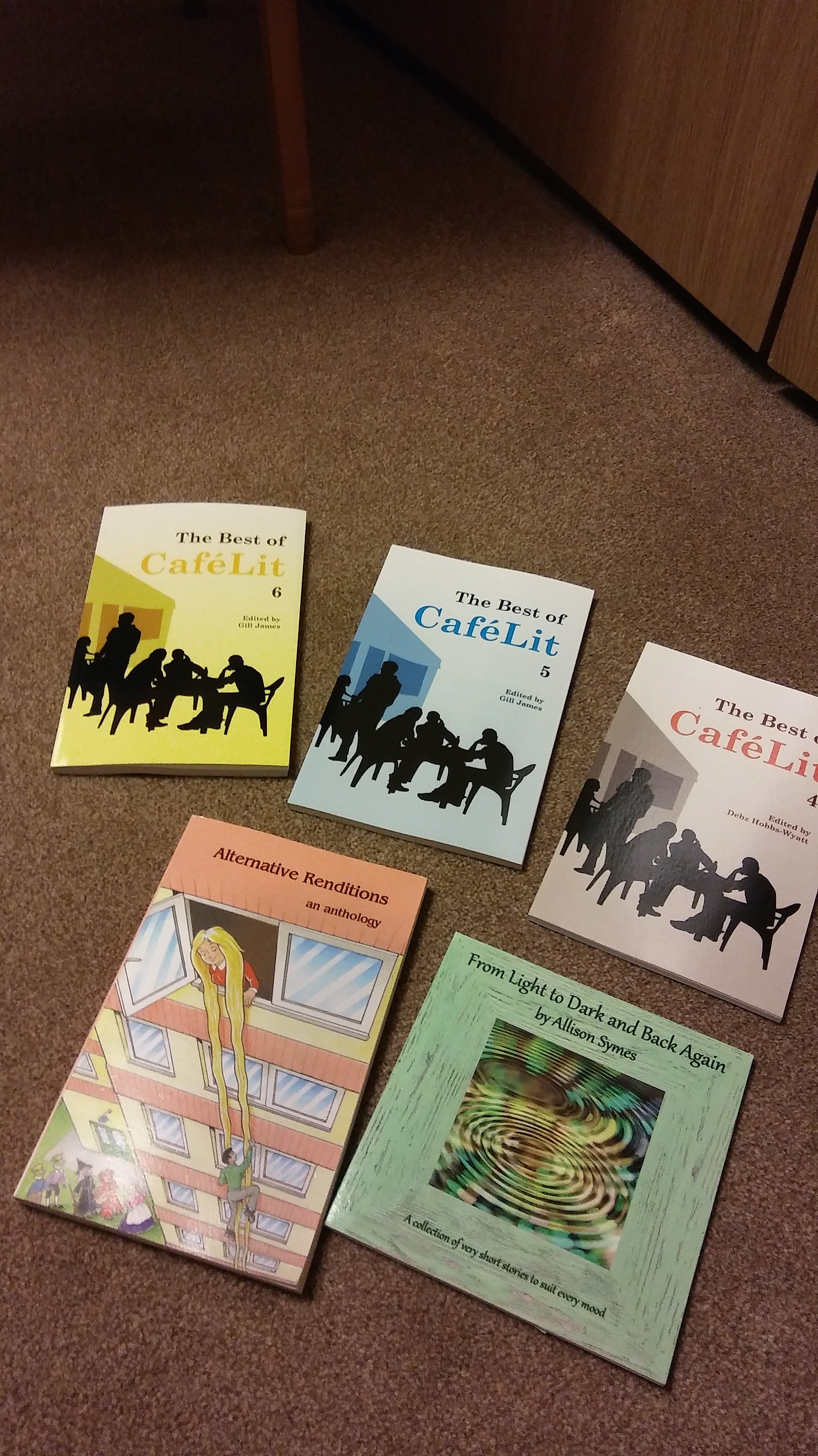
BOOK PACKAGE: There are SIX, count them SIX, publications where I have work on offer for £4.00, all as mobi-files. This includes To Be…To Become (the Waterloo Festival competition, anthology), Baubles (BH anthology), The Best of Cafelit 4, 5 AND 6 and From Light to Dark and Back Again, my first flash fiction collection.

And for those of you who would like print paperbacks there’s an offer for you too.

PAPERBACK OFFER: My first published story was A Helping Hand in Bridge House Publishing’s Alternative Renditions. That isn’t available on Kindle BUT is in paperback and that along with From Light to Dark and Back Again is on offer at a mere £7.00 for the two!

FREE BOOKS! BUT YOU HAVE TO BE QUICK.

I’m giving away one signed copy of:-

From Light to Dark and Back Again AND
Alternative Renditions OR
Baubles OR
One of the Best of Cafelit books I’m in.

First come, first served, naturally. Also one book per customer.

If you’re interested email my lovely editor, Gill James, at editor@bridgehousepublishing.co.uk with your contact details. Also let her know which of the books you would like and Gill and I will take things from there. I’m looking forward to getting some books off in the post next week!

So two lucky people can be in for a free read! What are you waiting for? Gill is waiting to hear from you!

All of the above books are available on Amazon.

And if you would like to try some of my work out first, head over to Cafelit at http://cafelitcreativecafe.blogspot.com/…/l…/Allison%20Symes

Do check out the other wonderful stories here. You’re in for a great read, I promise.

This slideshow requires JavaScript.

Facebook – General – and Chandler’s Ford Today

Busy night tonight but fun! Hope you saw the book offer posts earlier. Meanwhile back to CFT and I’m glad to share my Tried and Tested Writing Tips this week. Hope you find it useful.

This slideshow requires JavaScript.

Will be a busy day tomorrow. As well as my usual CFT post (all about tried and tested writing tips), I’m Bridge House Publishing/Chapeltown Books author of the week and will have news of book offers so stay tuned.

Re my CFT post: I’ve picked those tips I use most often and go into detail as to why they are useful.

Absolutely delighted to have been guest blogger on Val Penny‘s Book Reviews blog. Many thanks to her – it’s been a good week writing wise when it comes to getting the word out there!

And talking of words, the ones I’ve found most helpful are the ones that encourage when all that seem to come in are rejections etc. This is why you need writing friends. We know what it is like – both the joys and the down sides. It is a roller coaster ride but nobody says you have to be alone on the thing!

Am delighted to share the link to the great blog from crime writer Val Penny. The fact that I am her guest on it tonight is not at all coincidental!

Many thanks, Val, for the invite. The questions were great fun to answer. Val and I met at Swanwick Writers’ Summer School (or more accurately just outside Derby Railway Station just ahead of us both going to Swanwick!) and we’ve been great friends ever since.

It is also lovely being on the receiving end of questions too!

Facebook – From Light to Dark and Back Again

I’m due to be Bridge House Publishing/Chapeltown Books author of the week. News of book offers tomorrow.

Getting the balance right between writing new material, revising and improving material that has not yet found a home, and marketing has never been easy to get right. Has there ever been a writer who doesn’t feel there is always something they could be doing better in any of these departments? I don’t think so!

One advantage to flash fiction of course is it can be a great way of getting work done and “out there” while working on longer projects. (And if said work is published, you’re building up your writing CV too).

What questions would you put to your characters to get the best out of them before you write their story?

One of my favourites here is “what drives you?” I use it to dig deep into a character because there will be an answer that is something nobody would mind revealing – the public face, if you like.

However, it is the answer the character (and we as individuals) try to keep to ourselves that is the really interesting one to work with! It can also reveal things about our characters that make us realise we can do so much more with them. It IS worth digging that bit deeper to get to these points.

Your stories will be deeper and have more impact as a result – even the shortest of flash fiction stories will benefit. If I know my character thinks they’re capable of, say, robbery, but I dig deeper and find in certain situations, they could kill, guess which story I’m going with!

You DO want to dump your characters right in the mire and put them under as much stress as possible and really see what they’re made of. Let the drama play out. Have fun with this, I do! (Oh and nobody said writers have to be nice to their characters, often it’s the opposite in fact!).


Many thanks to #ValPenny for hosting me on her Book Reviews blog. It was great fun answering the questions.

Questions like these are really useful for making you evaluate why you write and whether the “how” could be improved. (The answer is almost certainly “yes” to that by the way!).

Fairytales with Bite – Storytelling

Storytelling is one of our oldest traditions of course. You can understand the appeal of fairytales especially when it comes to the oral storytelling tradition. A simple plot, a structure that works, a clear goodie and baddie, and a happy ever after ending. Perfect way to end the day!

Now, of course, we expect our characters to be more nuanced. There is no such thing as the perfect hero. Villains have to have good (and understandable) reasons for acting the way they are (and that can include the fact they simply enjoy being evil. To them, that is reason enough!).

What I love about stories is that there is no one perfect format. I love books in all their forms but totally understand why audiobooks work for some, whereas the print format doesn’t. Our focus as writers is to come up with stories that can work in several formats. Our focus is to entertain. I’ve never understood why some look down on escapism. The world is sad and bad enough to make a wish to escape understandable. After all why did our cavemen ancestors tell stories? To remember what was important. To bring the community closer together. To escape the cares of their day and the ones to come for a while.

So as a writer then I want my characters to appeal to readers. I also want to drop my characters right in it whenever I can. I want my books to engage people. It’s a good thing to aim for: to improve your storytelling as much as possible. You discover better ways of expressing things, learn what works and what doesn’t. Enjoy your storytelling and relish every moment of it.


This slideshow requires JavaScript.

This World and Others – Tried and Tested

My latest CFT post is Tried and Tested Writing Tips, which I hope you find useful.

How are your characters tried and tested?  Do they pass the tests you set them?  In almost any story you can think of, it is only when the characters are put right through the emotional wringer, do you see what they are capable of and where their limits are.  That is also where sidekick characters are useful – to help see your leads through to the bitter end and to get them through that “about to give it all up” moment.

Testing doesn’t need to to be overly dramatic either.  It can be as simple as a character having their patience tested by a relative who is trying to goad them (deliberately or otherwise, it’s not always consciously done).  Your character is very patient to begin with, then they become slightly less patient as time and the goading continues, and so on before they snap or do something they would not ordinarily have done.  Your character may be aware of this process so what do they do to try and fight it?  To not give in to that urge to snap no matter what the provocation?

Think about what would stress your characters out.  Think about their coping mechanisms.  What would happen if they failed or weren’t available when needed?

Have fun finding out!

Crime Fiction and Writing Triggers

Facebook – and Chandler’s Ford Today

My latest Chandler’s Ford Today post is Part 1 of a great interview with crime writer, Val Penny. Her new book, Hunter’s Chase, is now out in paperback and ebook and is the first of her Edinburgh Crime Series. We discuss what drove Val to crime (!) and why she thinks crime fiction is so popular. She also shares some top tips for writers. Part 2 next week.

Facebook – From Light to Dark and Back Again

I have a very soft spot for stories told from alternative viewpoints, especially fairy tales. My first published story was A Helping Hand in Bridge House Publishing’s Alternative Renditions anthology (many moons ago now) and tells the Cinderella tale from the viewpoint of the youngest stepsister.

In From Light to Dark and Back Again, I take Goldilocks’ viewpoint as my angle in the tale, Health and Safety, (though between you and me, I still think she comes across as the kind of character you wouldn’t want to take into a posh giftware shop given the chaos she caused with one chair and one bed in the Three Bears’ house!).

One great thing about using alternative viewpoints like this is you can explore why that character has behaved the way they have. You can explore their justifications for their actions. The great thing is they don’t have to be right! (It can be even more fun when they’re not but they really think they are. You really get to know what they are made of exploring this kind of avenue).

Fairytales with Bite – Writing Triggers

I mention this topic as part of my interview with crime writer, Val Penny, on Chandler’s Ford Today this week looked at what triggered her wish to write.  It is one of those questions I often ask writers I interview and the results are always fascinating.

Also, it is interesting to note that, while there can be similarities, I believe most writers have triggers to begin writing that are unique to them.  Mine were turning 30 and having given birth to my son, two major life changes that made me face up to the fact if I wanted to be a writer, I had better get on and write then!

I also love writing triggers in the form of opening lines, photos, closing lines etc that encourage you to write something around them.  They can make you really work your imagination.  The theme for competitions can also act as good triggers (and can be useful for writing practice even if you don’t enter the contest.  If you do and win it or are shortlisted, even better though!).

I find the ideal opening line writing trigger is one that can give you all kinds of possibilities to work with.  For example, I would find the line “He refused to cry again” a lot more interesting to work with than “The starship crashed into a crater”.  I could write stories on both and have fun doing so but the first one you could set in any time, any world come to that.  The second is an immediate sci-fi or fantasy story, which is fine, but you are getting your genre and setting in one go here.  (That can be useful when I want triggers for my flash fiction though and that is when I will want a line that does a lot of work for me!).

Let creativity spill out - image via Pixabay

Let the creative process flow! Image via Pixabay

The fantastic world of books must include non-fiction too - image via Pixabay

The wonderful world of writing should include non-fiction, which benefits from creative techniques too. Image via Pixabay.

Feature Image - Facts and Fiction - image via Pixabay

What writing triggers will help you create your new worlds? Image via Pixabay

The old fashioned notebook and pen still have major roles to play in interviewing - image via Pixabay

Can’t beat the notebook and pen for quick notes. Image via Pixabay,

20171015_233807.jpg

Some of the books I’ve appeared in and FLTDBA of course. Image by Allison Symes

This World and Others – Popular Fiction – Do You Just Write What You Know Will Sell?

The short answer is “no”!  This topic came about thanks to this week’s Chandler’s Ford Today post.  This is Part 1 of my interview with crime writer, Val Penny, and one thing we discussed was why crime fiction is so popular and what drove her to crime (!).

I think crime and horror are probably the two most popular genres in fiction.  There can be crossover and within each genre there is a wide range of sub-categories.  But does this mean you should just write to these two genres, say, because you know there is a proven market for them?  Absolutely not!

You have got to believe in what you write.  You have got to love what you write (at least most of the time!  I appreciate when you’ve been through the sixth rewrite, you may feel a tad tired about the whole thing!  We all do!).

You have got to love your characters, and love those you love to hate. I also believe that if you don’t write what is your “driving fictional instinct”, what you do come out with will be just a poor imitation of the markets you are trying go get into and that will show.  Whereas if you love what you write, that will also show.  It is where your writing voice will come through loud and clear.  Good luck!

This slideshow requires JavaScript.


My Goodreads blog post this time is an expanded version of my Facebook post for From Light to Dark and Back Again.

Goodreads Author Programme – Blog

I have a very soft spot for stories told from alternative viewpoints, especially fairy tales. My first published story was A Helping Hand in Bridge House Publishing’s Alternative Renditions anthology (many moons ago now) and tells the Cinderella tale from the viewpoint of the youngest stepsister. It was great fun to write and, due it being the first thing I’d written that was accepted for publication (thank you, Bridge House!), it will always have a special place in my heart.

In my flash fiction collection, From Light to Dark and Back Again, I take Goldilocks’ viewpoint as my angle in the tale, Health and Safety, (though between you and me, I still think she comes across as the kind of character you wouldn’t want to take into a posh giftware shop given the chaos she caused with one chair and one bed in the Three Bears’ house!).

One great thing about using alternative viewpoints like this is you can explore why that character has behaved the way they have. You can explore their justifications for their actions.

The great thing is they don’t have to be right! (It can be even more fun when they’re not but they really think they are. You really get to know what they are made of exploring this kind of avenue).

You can also prove the truth of the old saying “there are two sides to every story” by exploring what the other characters think! They just have to be strong enough to carry their own story.


Reviews and Favourite Stories

Facebook – General – Reviewing

One of the problems with any kind of review is that you can’t take the personal taste of the reviewer out of it! Now that, of course, can make for some great reviews when the reviewer (a) acknowledges that and (b) gives a fair assessment whether or not they love whatever it is they are reviewing.

My policy here is to never review anything unless there is a good chance I am going to like at least something about the production or the book in question. I’ve never seen the point of “hatchet jobs” in reviews when it is clearly the reviewer’s personal taste clashing with whatever it is they’ve gone to see or have read.

As a writer myself, I have every sympathy for the hours and hours of work put in by the writers, actors etc only for them to receive said hatchet job. Why bother doing that? Simply say why the production or book didn’t work for you and leave it at that. That way at least the reviewer is merely being honest and readers can decide whether or not they are likely to agree and so either go and see the play/read the book or not, as the case may be.

Image Credit:  General images are from Pixabay, images of books I’ve appeared in or have written are obviously by  me.

This slideshow requires JavaScript.

Facebook – General – Favourite Stories

Do you have a favourite story?

I think the nearest I come to this is the Cinderella one as, not only is it a great fairytale, my take on it was my first story in print (A Helping Hand in Bridge House Publishing’s Alternative Renditions). I tell the story from the youngest ugly sister’s viewpoint. The anthology comprises fairytales told from the viewpoint of minor characters in those tales and is good fun.

So the story has special meaning for me on those grounds and because I love the idea of injustice being put right (even if it does take a fairy godmother, some rats, and a pumpkin!).

What I read is dependent on my mood. I tend to read a lot in a genre for a while, then go on to another one, read a lot in that and so on. Of course, what matters most of all is to read widely and frequently. I see it as “topping up” my love of stories and books and that is necessary to help me write my own.

This slideshow requires JavaScript.

Facebook – From Light to Dark and Back Again

I’m preparing a talk on flash fiction, which I hope to use at an event later this month (and adapt for future events too!). More details on the event concerned when I have them but my talk looks at what flash fiction is and the benefits to readers and writers alike.

When preparing something like this, I focus on what would most likely be of interest to the potential audience. In most book and literary events, there is likely to be a mixture of readers and fellow writers. The nice thing is all writers should be able to wear the “reader’s hat” as well as obviously wearing the writer’s one and so pitching the talk, and working out what both are likely to be interested in, is easier to do.

Both reader and writer are interested in the process of producing a story, albeit from different angles. Both are interested in the inspiration behind the stories, though the writer wants to know how to take that inspiration and use it to produce something unique to themselves. Both reader and writer are looking for connections.

In the case of a reader, you are pointing them in the direction of reading your story if they haven’t done so already. If they have, you, as the writer, are generally looking for feedback. What worked well? What was less good/effective? In the case of another writer, they are looking for tips to help them improve their own writing and learn from you what lessons YOU learned the hard way so they don’t have to! Be fair though. You will do this yourself every time you go to another author’s talk!

This slideshow requires JavaScript.

Facebook – From Light to Dark and Back Again Part 2

The art to a great flash story
Be it sad, funny or gory
Is having no word out of place.
It also grips you and its pace
Is apt for the allegory.
(Allison Symes 2017)

Okay, the Poet Laureate’s job is definitely not threatened by me, but the above does sum up flash fiction reasonably well.

I’ve used nursery rhymes (Hickory Dickory Dock) as a basis for my tales (Telling the Time), as well as fairytales told from the viewpoint of other characters.

I’m looking for what impact my flash fiction will have on a reader and I like my characters to justify their stance. It doesn’t mean that they’re right but you should be able to see into their mind and understand why they act the way they do and/or live the way that they are. It is a question of looking out from where they are, as opposed to where I am. I write more effectively for the characters if I can do that.

This slideshow requires JavaScript.


The magic of stories. Image via Pixabay

WHY I WRITE AND “CIRCLE STORIES”

POSTS FROM MY FACEBOOK AUTHOR AND BOOK PAGES

General – Why I Write

The big advantage of a wet Sunday afternoon? Staying in and reading without feeling guilty about it instead of rushing about trying to get odd jobs done ahead of the coming week!

Am looking forward to my writing this week as I will be sharing a fantastic interview (a two-parter) with a historical fiction writer on Chandler’s Ford Today with Part 1 to come on Friday. More details later in the week.

I love reading and writing in my own genre (fairy tale/fantasy) but I enjoy reading outside of it more. Why? I’m expanding my horizons for one thing.

For another, it is so important not to lose sight of why you write at all. For me, it is because I love words and stories and want to share my tales in the hope people will like what I write as I like the way other people write. It is an ongoing virtuous circle I think. We all build on what has gone before and try to leave something behind that others in their turn can build on.

If you can make a living out of writing, even better, but because you can’t know that you will, there has to be this basic, deep down reason to write at all to keep you going during those times when all you receive in the inbox/post are rejections. Ironically you do need those rejections to help you learn to improve what you do and increase your chances of acceptances but it is never something that writers face with any great joy!

Reading outside my own genre reminds me directly of that fundamental love.


fantasy-1578656_640

FROM LIGHT TO DARK AND BACK AGAIN

Many of my flash fiction pieces in From Light to Dark and Back Again are what I think of as “circle” stories. You can see how the openings lead to what are the inevitable (to me anyway) endings.

I am also fond of the “eyewitness” kind of tale and I often use this for different takes on standard fairy tales. For example in The Outcome, my narrator is Cinderella’s fairy godmother. My first story in print, A Helping Hand in Bridge House Publishing’s Alternative Renditions anthology, took the same fairy tale but told it from the perspective of the younger ugly sister. Same events, very different views on it, two very different stories despite the powerful link between them.

I’ve also found this technique useful for getting into different kinds of characters’ heads and working out their motivations and what REALLY drives them. Knowing that makes my writing for them more effective and you may find this too. Certainly worth a go if you are trying to work out just why someone is acting in a way other characters would consider perverse, villainous etc.

Well, what is your story - image via Pixabay

Books make wonderful gifts. Image via Pixabay.

Books are wonderful – whether in print or electronic, whether as audio stories or told by a storyteller. Image via Pixabay.


Allison's books

Where some of my earliest works appeared in print.  Image taken by Allison Symes