Anti-Scammers and the Three C’s


Image Credits:-
All images from Pixabay/Pexels unless otherwise stated. Book cover images from Chapeltown Books and Bridge House Publishing. Screenshots taken by me, Allison Symes.
With the awful news going on right now, I think it is more important than ever to appreciate all of the creative arts – and avoid those who would scam you as a result of your trying to follow your dreams here.

BookBrushImage-2022-3-8-20-558

Facebook – General

Many thanks for the wonderful responses to my anti-scammers post yesterday. See below. And do bear in mind there are plenty of sharks who try to lure in the unwary writer too. Never be afraid to check things out and organisations such as The Society of Authors and Alliance of Independent Authors should be your first ports of call for advice. This is also another advantage to joining in with writing groups, whether these are online or in person, because writers share what they learn from one another and that includes warnings about which so-called “services” to avoid etc.

It’s also a good idea to regularly read the writing magazines too as you learn so much from these too and check out websites like Writer Beware! This is an American site but the principles of what they expose for rogue publishers etc applies the world over and you will at least know what to look out for.

It was only when I had been a writer for a while I realised how much there was I didn’t know and needed to know but recognising that and then doing something about it like joining writing groups etc is a good first step into being more savvy about the do’s and don’ts of the writing life. Don’t be conned!

BookBrushImage-2022-3-7-20-1616
I’ll be talking about Imagery In Fiction for Chandler’s Ford Today on Friday. I look at writers using words to “paint” images with and the importance of book covers. One way or another, imagery comes into fiction a lot, even if it is not always obvious.

Will be giving a talk soon on historical flash fiction soon – looking forward to that and, of course, next week, I’ll be heading off to Scotland once again. I’m at the Scottish Association of Writers Conference from 18th to 20th March and will be running a flash fiction workshop there. Plenty going on then and I will report back from Scotland for Chandler’s Ford Today in due course.

Oh and a word to the wise – I am getting emails in from those who say they have a proposal for me. I bet they have too – how to check my email address is a genuine one and use it for phishing at best. Stay well clear of these things, folks. I delete immediately and then clear my delete folder immediately too. Never click on the links they send you.

Not sure whether this one is targeted at me because I’m a writer or whether it’s a huge mailshot and they only need a few people to respond to make money (and that is what they’re after – your money). Hmm… maybe there’s a flash fiction story or several in which scammers like that get scammed themselves. Something to think about!

Where do my ideas for stories come from? All over the place which I know is not exactly helpful. The point though is to be open enough to recognise something as a potential idea. My ideas come from things I have read, fiction and non-fiction, and from triggers such as the random generators I often use. Also overheard snippets of conversation can be the starting point for a story.

But what matters is recognising what I call the “aha moment” when I come across something and think yes, I could do something with that. And the more you read, the bigger the pool you have to fish in for ideas of your own. We all build on what has gone before.

What we do is bring our unique take to an idea or a theme and make it our own. Prompt books are always useful too. What I find matters is finding a way in to writing a story. And you have to love reading stories to know that you yourself want to write them.

BookBrushImage-2022-3-6-19-3629

Fiction has a variety of purposes as I’m currently exploring in my In Fiction series for Chandler’s Ford Today. Escaping from worries via a variety of genres or exploring the human condition or confronting evil head on via what our characters go through is all fine.

What matters is that fiction is truthful. It has to be to have any meaning. And for fiction to be truthful, the characters have to be true to themselves, whether they’re the best hero of all time or the worst villain.
This is why I need to know the major trait for my characters before I write their stories up. I can look at how and why they’ve developed that trait (and this is so often a springboard for further story ideas).

Major traits can tell me so much about the characters in themselves. If my character’s major trait is they like a good laugh, I can look at what has driven that. Is their life sad and they want to escape sadness at any cost so put on a jolly persona to cover that up? Is it their way of being accepted by others and what drives the need for that acceptance?

Also, I can take things another way and show how their good laugh helps another character or causes problems. All sorts of story ideas can come from just knowing my Character A will do almost anything to have a good laugh. And that is just one example of how knowing a major trait can trigger ideas. For me, that’s more important than knowing what the character looks like.

BookBrushImage-2022-3-5-20-1340

Facebook – From Light to Dark and Back Again

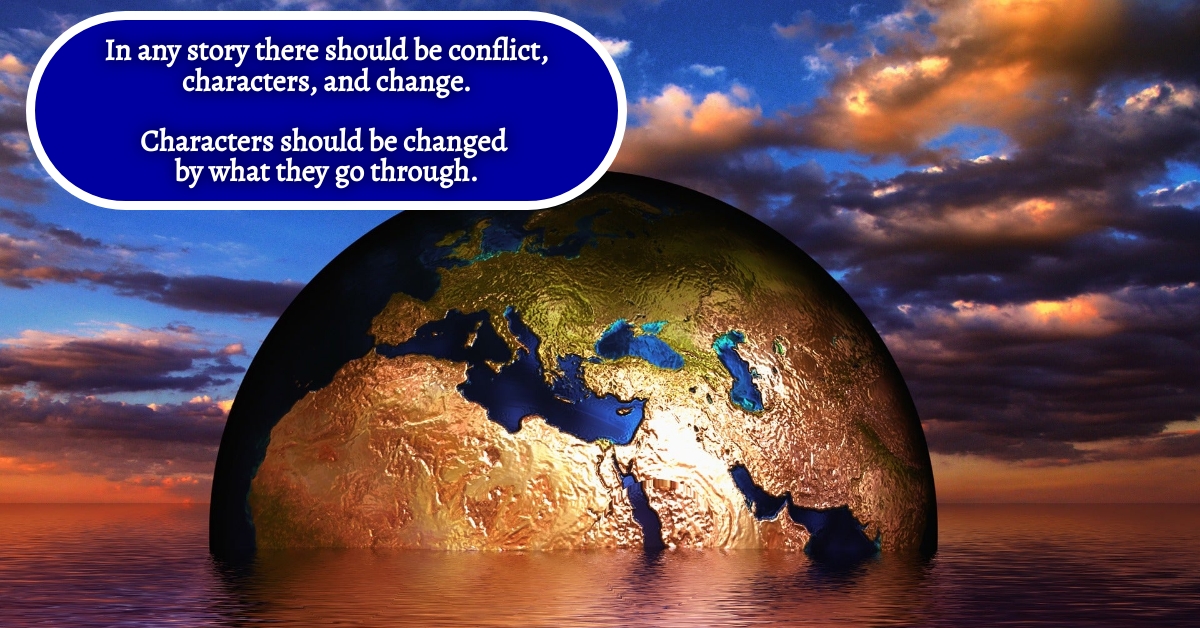
In any story regardless of its length, there has to be conflict, character, and change – the three C’s! Without a character experiencing conflict, even if it is internal only, there is no story. There should be change. Did the character overcome or succumb to the conflict? Either way that is a change though one is obviously more positive than the other!

One of the lovely things about flash is I can have, as a story, a self-contained moment of change for my character which simply isn’t long enough to even be a short story yet is still insightful.

How your characters react to things tells you so much about them. How you react to the character’s reaction may well shed insights about yourself – fiction can be illuminating like that. Flash does it more intensively than any other form though so be warned!
BookBrushImage-2022-3-8-20-416

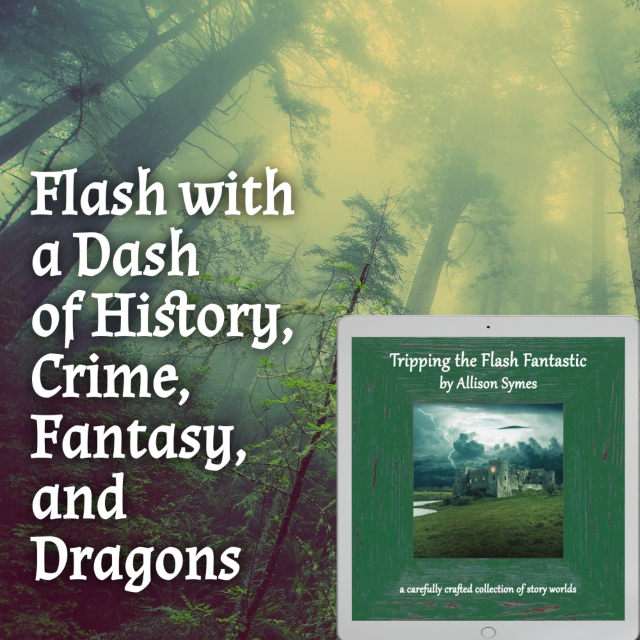
You know I’ve written from the viewpoint of a mother dragon before, yes? (See my book trailer for Tripping the Flash Fantastic). Well, I think I’ve upped my game a bit here. See my latest YouTube video and see what you think. Hope you enjoy it.


Writing a short story, such as flash fiction, is not easier than writing longer work. Nor is longer work easier than writing shorter items. You need the idea. You need to get that first draft down. You need to edit it. And edit it again. You need to rest it for a while. You look at the story again, spot the errors you missed first go around (and we all do that!), correct those, and once happy submit the piece or save it for a collection. And you do this over and over again because you love the challenge of it.

As I’ve mentioned, I find I can get a first draft down quickly. It is the editing and crafting of the story, even my 100-worders, that takes the time. Rightly so too. I want to get every word right. Where I can find a better choice of word that gives more “oomph” to my writing, I will change to that word. And if I am writing to a specific word count, as I so often am, I then have to check I haven’t gone over that and adjust things where I have.

The one thing I have learned over the years is I’ve got to give myself enough time to follow things through thoroughly enough. But that’s fine. I’m drafting more pieces while resting others so I always have something to work on. No chance of getting bored and I love that too.

BookBrushImage-2022-3-6-19-425

Just to flag up Amazon have an offer on the paperback of Tripping the Flash Fantastic. See link for more.
I like the variety flash offers me. I can write across a number of genres, write my stories as acrostics, all-dialogue pieces, monologues etc., and I can choose my word count up to 1000 words.

My hopes for flash is that it will encourage the reluctant reader to dip their “toes” into the wonderful world of books and encourage people to write their own stories. Creative writing is good for you. And writers read so book sales go up! There’s nothing to dislike about that scenario!

But I hope flash brings characters to life for people. Those brief glimpses of a character’s life, I hope, will intrigue people to want to read longer stories, novellas, novels etc. Characters are the draw for readers. We need to know what is going on in a character’s life. You don’t necessarily need to write an epic to give that fascination to a reader.

Allison Symes - Flash Fiction Collections

BB - Flash with a Dash for TTFF

Goodreads Author Blog – Realistic Characters

I’ve never been fond of characters who seem too good to be true. I love the characters with flaws and who change for the better. For any fiction, regardless of genre or length, I’ve got to be able to “get” where the character is coming from and why. I don’t necessarily have to agree with them though!

For my own writing, I like to work out my character’s major trait as all sorts of things can come from that. If a character is brave, are they reckless with it? If they like a laugh, what will they do to get that laugh from others? Plenty of story ideas there – and you can explore the idea of when things go wrong too.

So I like characters to resonate with me in some way. While I will always root for the hero/heroine to win, I want to see that the villain does have reasons to behave the way they are. Their objective has got to make sense. There is never any room for the pointless character. I suppose writing flash fiction with its restricted word count of 1000 words maximum has made me more aware of that.

This slideshow requires JavaScript.

Twitter Corner (2)

https://platform.twitter.com/widgets.js https://platform.twitter.com/widgets.js

Processing…
Success! You're on the list.

My Writing Journey

Image Credit:  If not otherwise stated, the images are from the marvellous Pixabay!

Facebook – General

I can’t say a particular story made me decide to write creatively. My journey into writing was a long one. I had always loved composition as it was known at school but I didn’t start writing seriously until I was 30.

It was one of those moments, having always loved books, that made me feel if I am going to have a go at storytelling myself, I had better get on with it then. So I did!

My only regret is not starting sooner as it takes far longer than you can anticipate to find your voice, develop confidence in submitting work, learning how to deal with the inevitable rejections etc. Then there’s the time needed for further development as you work out how to improve your work and so on (usually by trial and error and feedback), until that magical day when the first acceptance arrives. Well worth it though!


This slideshow requires JavaScript.

One of the joys of writing my Chandler’s Ford Today posts is sourcing the pictures (take a bow, Pixabay).

But the funny thing is themes that seem to be open can often prove to be the most difficult to find suitable images for. I have no idea why that is but it is happening again this week with my topic of favourites. Yes, I know. You’d think I’d find loads for that.

The great thing is I have learned to think laterally in looking for suitable pictures so know I will find images that can fit the post. And I suppose it is a good thing to make yourself think laterally too. (It can be annoying at times though!).


This slideshow requires JavaScript.

Where do you find the most fun is in writing a story? For me, it’s when I go into a character’s head and show a reader their thoughts and attitudes.

Why? Because If I show you a character who’s irritated, you will conjure up your own mental image of what such an irritated person could look like. I don’t need to spell that out and it saves a lot on the word count, which for flash fiction is crucial.

It also means I get into what makes that character tick so much more quickly and I really love that. I then know what I can do with them, what triggers will really wind them up and that’s when the creative sparks really fly.

Also, it’s at that point when I know what the character’s major trait is (often shown through their thoughts and attitudes), I know whether I’m going to love this character or love to loathe them.

Either reaction is fine as long it is the reaction I want to generate from that character. A character that makes you react is one you want to read about, even if it is just to find out if they get their comeuppance or not. (Confession time: I have been known to cheer to myself when a character who deserves that comeuppance gets it! I had a hard time NOT cheering out loud when Molly Weasley “deals with” Bellatrix in the Harry Potter story. Doing so with the book was fine but I didn’t want to embarrass myself in the cinema!😃😃).

I would far rather read (and write) about a character who I dislike but has purpose and I can kind of understand why they are the way they are than read or write about a character who does nothing for me whatsoever. I have got to react to the characters in some way. It doesn’t always have to be positive.

This slideshow requires JavaScript.

The writing journey is not without its ups and downs, but (a) this is true for everyone, and (b) if you can get something out of the downs, great.

In my case, many years ago, I was almost caught out by a vanity publisher. What good came out of that?

Well, firstly I wasn’t caught out! Secondly I joined the Society of Authors as a result of the very helpful advice they gave me when I wasn’t a member. To begin with I joined as an Associate but became a Full Member later once I had enough short stories published.

If you’re ever in doubt about an agent or a publisher, don’t hesitate to check them out.

If you are going to spend money on self publishing, get all the advice you can first, and ensure your money is genuinely spent on self publishing! That does NOT include selling you your own books (which is effectively what vanity publishers do).

There are reputable service companies for self publishers out there. Never be afraid to ask pertinent questions. The decent ones won’t mind answering them (and will be expecting them). If you’re not sure what to ask, go to the Society of Authors or Alliance of Independent Authors for advice on what to look for and what to avoid.

This slideshow requires JavaScript.

Facebook – From Light to Dark and Back Again

When I started writing, I was unaware of flash fiction as a form. Am very glad I discovered it though! Mind, I don’t think I would’ve tried the form even if I had been aware of its existence then. Why?

Partly because I really didn’t know what I wanted to write. I wrote a novel. I wrote short stories. I have written the odd script or two as well. All great fun. The short stories were published eventually after many a rewrite and edit! The novel I’m working on again now and I hope to do something with the scripts at some point.

The important thing is to enjoy your writing journey wherever it takes you and not to worry about experimenting with different forms of storytelling. You will find the one(s) that really suit you and which you love writing. The fun bit is finding all of this out!


This slideshow requires JavaScript.

Most helpful tips I’ve used for flash fiction writing (and still do) include:-

1. Don’t have too many characters. One to two is best (especially for the 500 words or under type of story).

2. If a word adds impact, leave it in. Word count is important, obviously, but it is not the only thing that matters.

3. If a word does nothing for the story, take it out.

4. Be aware of what your wasted words are and cut them out on your first edit. You may not be able to stop yourself writing them (I can’t with mine) but they don’t have to go anywhere further than the first draft.

5. Always get your story down first and then edit.

6. Outline your character in as much detail or otherwise as you want before writing the story. You need to know enough about them to be able to write “their” tale convincingly. Only you can decide what is “enough”. For me, I have to know the major characteristic. Is the character brave, a wimp, humorous, as miserable as sin etc?

7. For open themed competitions, I’ve found it useful to set my own theme in advance and work to that. I find it helpful to set my own parameters here. It stops me going off at tangents that do nothing for the story or which could stop the story altogether.

This slideshow requires JavaScript.

Do I always know in advance what will work best as an opening or closing line for a flash fiction story? The really good lines can be used for either and I have sometimes deliberately written two very different stories, using the same line like this.

I outline my character and often as I do that it will become apparent where the line is likely to work best.

Take, for example, the line is something like:-

She was a clumsy clot.

I would almost certainly put that at the start of a story and then shows what happens to my unfortunate character. It is, if you like, the obvious way to write that particular line into a story. I would also think of it as a negative way to finish a tale. (It sums up the character but there’s no space left to show any redeeming features, which is why I would consider this a negative ending). Sometimes you want that, of course.

But my gut feel here would be to write a humorous tale that ends on a positive note, such as something useful coming out of my character’s mishaps which helps another character.

This slideshow requires JavaScript.

Writing exercise time… how about some lines to work on? But unlike the ones you might have been set at school, these should be fun, honest!

It’s up to you whether you use them as opening or closing lines. You could see if you can manage both. Good luck and have fun with these.

1. He would be extinguished if he didn’t get out before the candle burned out.

2. There were rats everywhere.

3. The temptation to go through the portal was just too much.

4. Less is more, she fumed, well I’ll show them.

5. The glittering gold couldn’t tempt him away from the mission but there was something that would.

This slideshow requires JavaScript.

Goodreads Author Programme Blog The TBR Pile

How large is your To Be Read pile?

Mine hasn’t quite got to the point where I need scaffolding to keep the TBR pile upright but give me time…

I also have a considerable reading list waiting for me on my Kindle too.

The positives with this are:-

(a) I’m never going to be short of things to read;
(b) I have different things to read to suit my moods;
(c) It doesn’t matter if I want to catch up with reading at home or away – the Kindle takes care of the latter nicely enough.

The negatives with this are:-

(a) Being only too aware of the finiteness of time! There will never be enough time to read every book I want to!
(b) Having to get the scaffolding out in due course to prop up my TBR pile!
(c) It’s going to take me a while to update what I’ve read here on Goodreads!

I read most just before settling to sleep or, on a long train journey and I’ve finished what writing I want to do, I then switch to reading.

However large your TBR pile is, happy reading! Whittle it down gradually and then you’ll have room for more lovely books…!

This slideshow requires JavaScript.


Objectives

Facebook – General

Looking forward to seeing the Chameleons’ production of Blackadder later this week. Should be a very good night out. The last episode of Blackadder Goes Forth is one of those sublime moments of writing where comedy meets tragedy and both are done superbly. Definitely not an easy thing to do.

Blackadder clearly had one objective in mind in Goes Forth – to get out of the war and go back home. Totally understandable.

What is your character’s overriding objective in your story? What will they do to achieve it? What gets in their way? In those three lines, you have a plot outline!

Pleased to have sent off some flash fiction stories last night. Plan to get more out later this week, there is one particular website I’m keen to try out, and finally want to get around to doing so!

One of the trickiest things to handle is time. (And yes I think Doctor Who showed that brilliantly in the Rosa Parks episode). How much time do you spend working on new stories and ideas? How much time do you spend marketing?

As with so much in life, there has to be a balance. I’ve found it helpful to look at the week as a whole. By the end of it, I want to have written some new material, be editing older work ready for submission, have my next CFT post up and ready to go, and have carried out at least some marketing. Okay life does not always go according to plan but whatever I’ve not quite done enough of writing wise in one week is what gets the focus of my attention during the following one. It does all balance out eventually.

Acronyms featured in this morning’s church service sermon and of course they’re a common feature in writing. KISS – Keep It Simple, Stupid is probably the best known one. Very much the antidote to “purple prose” – the days of the long descriptive passages are behind us!

I suspect that is due to everyone being used to films etc where you get into the action quickly but it is not a bad thing. I like descriptions in stories to be to the point and to feel as if they are a seamless part of the narrative and not a “bolt on”.

All parts of the story must feel to the reader as if they have to be there and the tale would fall down without them. If you’re not sure if something should be cut, ask yourself how your story works without that something in it and that should indicate quickly enough whether it is needed or not.

This slideshow requires JavaScript.

Had a fabulous time at the Writers’ Day run by the Association of Christian Writers today. The topic was on writing for children and YA but there was discussion on crossover fiction and contracts, all very useful stuff. From my viewpoint, it is lovely to meet some of the membership face to face given I usually only meet them via emails!

The importance of networking came out as well during the day and I lost my own fear of this when I realised it meant chatting naturally about books, what I’m writing and so on. I have no problem going on at length about that topic!

(Oh and a quick reminder: if you’re offered a publishing contract, always get it checked out. The Society of Authors and Alliance of Independent Authors are the places to go for that. Both I believe issue guides which are free to members. There’s a small fee charged to non-members. Never be afraid to ask).

This slideshow requires JavaScript.

Facebook – From Light to Dark and Back Again

A = Alliteration. Can be useful for titles in flash fiction (though I don’t use it much) but as with any story, it can grab the attention and help set the mood. Best not overused I think. You want each title to set the tone for what it is to come and a variety of methods for doing that is best. Keeps it fresh for you as the writer too.

B = Backstory. Not a lot of room for that in flash fiction! Best to hint at it through one or two vital details the reader has to know and leave it at that.

C = Character. The kingpin of fiction I think. Get the character right and the plot will come from them. Know your character inside and out – I find it useful to know their chief trait (and I piece together a mental picture of what they are like from there). Find the appropriate starting point for you but it is worth taking the time to know your character well before you start. Your writing will flow better because you write with that knowledge. It does come through in what you write.

There was talk at the ACW Writers’ Day today of how boundaries, far from restricting creativity, help it to flourish. This is SO true for flash fiction as well. The limited word count means you have to dig deeper to come up with those original ideas that make flash fiction stand out and have the most impact on a reader. It is worth the effort!

I usually know what impact I want a story of mine to have on a reader before I write it. This is to help me choose my words with precision. However, sometimes a story (more accurately the lead character) surprises me and the tale ends up being funnier, darker, sadder than I’d originally thought. This is no bad thing. It means the character has life and if they surprise me, they’ll surprise the reader too.

It may also indicate I hadn’t outlined enough but the great thing is ideas that come to you as you write a piece are not wasted. Jot them down, step back and take a look at where they can fit in. Are they better than your original thoughts? Do they add depth to your original thoughts?


Back to working my way through the alphabet again then…

D = Drama. Even the shortest flash fiction has to have some drama in it! But it is also true that serious drama doesn’t necessarily have to have lots of words to make it so! There is drama and anguish in Hemingway’s famous example of For Sale: One pair Baby Shoes. The drama should suit the story though (and be to the right length for that tale).

E = Editing. Every story needs this and I don’t think it should be something a writer dreads. I always feel a sensible amount of relief when I’ve drafted a story as it means I’ve then got something to work with. Editing improves a story and, as a result, increases its chances of success. Take your time over the process though.

F = Fun! Writing should be fun. You are creating something new for others to enjoy. The first person to enjoy said tale should be you!

So marching on then:-

G = Genre. One of my favourite things about flash fiction is because it has to be character led, due to the word count restrictions, you can set those characters anywhere. So, if you’ll pardon the pun here, you do have an open book when it comes to genre in the stories you write. Have fun with that, I do!

H = Humour. Can work well in flash fiction as you can end the story with what is effectively a punchline. Also when you have a very short funny piece, look at turning it into flash fiction. It can be an ideal vehicle for those pieces which would be spoiled if you added anything more (and this often goes for humorous pieces).

I = Imagination. True for any form of fiction, but I find with flash fiction I’m using my imaginative muscles far more. Why? Because I try not to come up with the obvious idea from a theme or title. I dig deep and see what else I can come up with, something that will make a greater impact on the reader.

Goodreads Author Programme – Blog –

After the End, What Next?

If you’ve enjoyed a really good book, what do you do when you finish it? Go on to read more books by the same author, or read more in the same genre, or do you go for something that is completely different in mood and style?

I have done all three of these (though obviously not at the same time!) and it very much depends on my mood at the end of the story. If I’ve loved a gory crime thriller, I may well want something humorous to show the lighter side of life, albeit a fictional one!

With short stories especially, I tend to read a few by the same author before moving on. With novels, if the book has really gripped me, I’ve got to check out what else the author has done, even if I decide I’ll come back to those later.

The important thing though is that whatever you read, you enjoy it so much, you keep on reading, no matter what author, genre, style etc you choose next. Happy reading!

The Best and the Worst

Facebook – General – and Chandler’s Ford Today

My CFT post this week looks at some of the best (and worst!) decisions I’ve made in writing! I also share some thoughts on where to get good advice. Hope this proves helpful.

The writing journey is precisely that – and there are bound to be things like potholes, wrong turnings etc along the way. Doesn’t mean your particular journey has to come to a grinding halt though. I’ve found offen things that were not great at the time, I’ve (a) learned from that experience and (b) gone on to do much better.

What is your favourite one liner?

Mine is an Eric Morecambe classic – “He’s not going to sell much ice cream going at that speed, is he?”. Surreal and very, very funny. (Oh and correct too – nobody sells ice cream at speed!)

In fiction, I love Jane Austen’s, “It is a truth universally acknowledged that a single man in possession of a good fortune must be in want of a wife”. Delicious irony here and a great foretaste of what is to come from Pride and Prejudice.

I don’t know how often Eddie Braben wrote and rewrote that line for Eric Morecambe or how often Jane Austen wrote and rewrote her classic opener – but definitely worth the effort in both cases!

On a sadder note, I was sorry to hear of the death of Jacqueline Pearce (Servalan from Blake’s 7 – great acting and a fantastic character to play).

My CFT post this week will be about The Best and The Worst. I take a look at some of the best and worst decisions I’ve made as a writer. (There will be tears before bedtime… mine!). Link will go up on Friday but what I hope will come from this will be a few thoughts on where to go for advice and not being afraid to say no to something that is not good for you or your writing. You’ve got to to see yourself as being in this for the long haul – the VERY long haul!

It was interesting trying to work out what I considered the best and worst decisions I’ve made (to date at least) when it comes to writing/publishing.

You can see my list on my Chandler’s Ford Today post this week (I’ll put up the link tomorrow). It took me a while to figure these out and even then when it comes to the worst decisions, something positive has come out of those. So, overall, that is okay!

As with so much in life, you can only make the best decision you can at the time, but I found out early on it DOES pay to be as informed as possible. This is why bodies like the Society of Authors and Alliance of Independent Authors are vital.

This slideshow requires JavaScript.

Facebook – From Light to Dark and Back Again

Time for some six-word stories then:-

1. While the light lasted, danger abated.

2. “Help me”, he screamed to silence.

3. When the going gets tough, tough!

4. The planet destroyer was wheeled out.

5. So near to the Sun now.

6. I never forget a face, sunshine.

I thought it would be appropriate to have six of those!


What are the most important points any flash fiction writer needs to bear in mind?

1. The story has to be character led – and that character has to grab the reader’s interest from the very first words. (No waffling here!).

2. The story’s ending must be appropriate for the tale and be a satisfactory conclusion. Doesn’t mean it has to be happy though!

3. The opening line, in any form of writing, is crucial to hook interest but in flash fiction, where there is no such thing as spare word count, that line must grab your reader immediately. (Does your opening line make you think YOU would want to read this story if it had been written by someone else?).

4. Use the title to set the scene or mood of the story for you. (This is particularly useful for those competitions where the title is NOT included in the word count permitted. Do make the most of that).

5. Whether you’re writing a character study, a crime story, or writing for laughs, each word must contribute to the tale. There must be no wasted words.

6. Have fun with your stories. I love the fact flash fiction has to be character led. It gives you so much scope.

The cat sat on the mat
(Waiting for the postie)
All ready to surprise
While feeling all toastie.
Why should the household dog
Have all the games and fun
The cat, ready to roar,
And see postie was “done”
Would be Number 1 pet
With a prank, the best yet.
Postie duly obliged
With screams to wake the dead
No-one had told him the “cat”
Was a lion instead.

Allison Symes – 6th September 2018

If my regular postman reads this, I’ve only got a pet dog, okay!

Each flash fiction story is its own little world, of course, but the flash of illumination (in terms of what drives a character to act the way they do) can be taken and developed further for longer stories.

I don’t do this as often as I once thought I might because I’m generally moving on to the next idea, the one after that etc., but I have managed to write flash pieces and then get standard length short stories out of the same idea. Double whammy! Different markets and competitions are available to you too doing this. Something to consider…

What I am doing with the book I’m currently working on is having a few flash pieces with the same characters in, showing different aspects to what is happening with them. Am really enjoying that.


This slideshow requires JavaScript.

Goodreads Author Blog – Favourite Moments

Some of my favourite moments in a book come when a character has to face up to something they would never anticipate and find a way of dealing with it.

For example, my favourite Agatha Christie novel is Murder on the Orient Express, because Poirot has to deal with a situation he would not have guessed at and which in many ways should never have been able to happen. The David Suchet TV adaptation particularly plays on this element. (Not going to say more than that – no spoilers here! But if you’ve not read the book and/or watched the TV adaptation, try and do so. It really is a great story).

This element works especially well with a series character like Poirot when you have already come to know a lot about how they operate and think. To have that all thrown up in the air keeps the character and you, the reader, on your toes. Always a good thing, I think.

It confirms to me that what makes a really good story is the strength of the character, whether they’re a hero or a villain. Plots are fine but you need well rounded characters to carry them out!

Fairytales with Bite – Fairytale A to Z Part 5

M = Myth/Mythology. 
So many of the classic fairytales are based on old legends and myths.  The Brothers Grimm collected German ones. Hans Christen Andersen also collected (and embellished!) and of course went on to write superb tales of his own.  So look into your country’s myths and legends.  Look at the themes emerging from those and write your own fairytales around that.  I do wish people wouldn’t just dismiss something as “just a fairytale”.  There’s no “just” about a fairytale.  There is so much truth in them – and that should be reflected in our own stories too.  Honest writing = characters that grip people because they can identify with them.

N = Numpties
I love this Scottish word for idiot.  And fairytales do need their idiots (especially if they themselves don’t think they’re idiots or realise they are). There is great comic potential here for one thing. The Emperor’s New Clothes is a great example of a numpty in power!  Even the rich and powerful can be taken in by clever conmen.  One of the things I love about Puss in Boots is the miller’s son knows and accepts the cat is cleverer than he is!

O = Origins
This ties in with M above.  Look at the origins of fairytales.  Think about the origins of your characters.  What made you want to write about them?  How do their origins impact on their lives and the stories you are going to write about them?

This World and Others – The Best and the Worst

It is appropriate to come full circle on this tonight!

Following on from my Reflections post last week, I’ve been busily reflecting too this week!  My CFT post looks at The Best and the Worst decisions I’ve made with regard to writing/publishing and I hope this will prove useful.  A faulty step or two does not derail the whole writing journey and I think sometimes that needs to be said out loud.

What would be the best and worst decisions that your characters have made, especially your lead ones?  Do they learn from their mistakes?  How do they handle the fallout?

Often with decisions, it is a question of making the best judgement possible based on available knowledge at the time.  Sometimes the best decisions come as a result of taking time out to take stock and reflect (that word again!), and/or seeking advice from others.  Do your characters do this?  If so, what is the impact on them and your story?