FAIRYTALES, TRUTH, AND NETWORKING

Now there’s a combination!

Facebook – General – and Chandler’s Ford Today

My latest Chandler’s Ford Today post is called Networking Tips. Fellow Chapeltown Books author, Mandy Huggins, and I both share our thoughts on networking here and we hope you find the post useful. Many thanks to her for her pictures. Also a big thank you to Paula Readman for kind permission to use the picture of Dawn Knox, Paula and I which was taken at the Bridge House celebration event last December.

I remember being so scared of the thought of having to network when I was first starting out as a writer. It was really only when I realised networking meant talking about something I love – books, stories etc (generally, as well as my own) – that I relaxed. Can I talk about these things? Yes! The problem can be stopping me! (But that is how it should be. I don’t see how you can commit to writing as a long term love unless you are enthuasiastic about stories. Given the ups and downs of a writer’s life, writing has to be thought of as a series of hopefully achievable goals over a reasonable period of time. There are no shortcuts).

This slideshow requires JavaScript.

Facebook – General

Questions I like to ask of my characters from time to time include:-

What would you say was your best trait?
What would you say was your worst one?
What drives you and why?

I inevitably don’t use all of what I come up with here in the stories themselves but have found having a good working knowledge of what my characters are really like makes it so much easier to write convincingly about/for them.

It is worth taking the time out to flesh out your thoughts here before you write your story. (Scrivener is great here with its character and setting outlines in its short story “mode” but you can create your own template of things you should know about your “people” before you write their stories down).

Facebook – General

What are your writing “likes”? Some of mine include:-

Decent one-liners that make me laugh.

A story that shows me motivations or stresses characters are under that I might not have considered before. For example murders are committed for serious reasons and to what appears to others to be trivial ones. Yet a good story will take you into the mind of that murderer and show why the trivial reason isn’t trivial to them.

Good, sharp pace with quiet bits in between giving me good background on the setting and characters, knowing said quiet bits are gearing the reader up for the next big scene.

A satisfactory ending, which is not the same as a happy one necessarily. The ending has to be right for the story and the main character. It won’t feel right if the match isn’t there.

Characters I can rally behind (or metaphorically boo for) but either reaction has to be genuine. I don’t want to see the author’s hand making their characters act in a certain way. The characters’ acting has to be realistic for those characters.

I love getting to the end of a story or novel and in a sense wishing neither had ended. Always a sign of a well told tale! Going back over a story/novel and picking up the bits I missed first go around. This is particularly true for a detective novel. I always miss some of the clues on the first read!

I like a happy ending where the hero/heroine has “earned” it. I also like to see villains get their comeuppance but again in a realistic manner. Villains generally are not going to fall apart. They can be caught out.

Every word to count… Funnily enough that doesn’t necessarily mean everything has to be short but that each word is appropriate for the story being told. In P.G. Wodehouse’s stories so often he uses very long sentences (he’d never get away with it now!) but not a word is out of place and indeed especially when Wooster’s narrating the long-windedness is part of (a) the character’s charm and (b) the character’s characteristics!

Positive developments in characters, especially a character that goes on to make something good out of themselves.

I like pinpointing moments of change in a story and watching the drama unfold.

Feeling a slight sense of envy I didn’t write the story/novel I’ve enjoyed is a good sign – and nothing but a compliment to the actual author!

Facebook – From Light to Dark and Back Again

It is only in looking back at stories that make up a collection, you really get to see what influences came out. FLTDBA has a nice mixture of influences – fairytales, nods to films, Frankenstein, poetic justice, and Pride and Prejudice to name just some.

I guess this shows why you should read widely (in whatever format and including non-fiction) because you are feeding your imagination. What drives you to write the stories you do? Your own influences/thoughts. Why have you got those influences and thoughts? Almost certainly thanks to things you have read that rang true for something deep inside your creative self.

Facebook – From Light to Dark and Back Again

The right ending for a story is the one that is most appropriate for it. It doesn’t need to be happy necessarily. Indeed, quite a few of mine in From Light to Dark and Back Again are definitely not of the traditional happy ever after variety!

I remember being stunned when I first read Hans Christen Andersen’s The Little Mermaid. You expect everything to work out okay (after all, isn’t that how fairytales are supposed to turn out?) and then it doesn’t! And I won’t say more than that. No spoilers here. It does pay to read the fairytales. They’re often darker than people think and have more layers. The Little Mermaid is a tale of sacrifice when all is said and done.

Facebook – From Light to Dark and Back Again

What do I most like about writing? Well, here’s a few thoughts.

Coming up with characters who spring to life and develop in front of your “eyes”.

Coming up with world(s) that fascinate you.

Coming up with villain(s) that fascinate you!

Coming up with hero(ines) that also fascinate but show why they are the good guys. They’ve got to have a good cause, literally.

Being able to write short length stories from flash to standard length (up to 2000 words) to novels to plays… the only limit is your imagination.

You can explore ideas.

You can discover ideas from the characters you develop, not just in terms of new story ideas, but you get to learn how your “people” think and why. Could it change how you feel about issues? Can be fun finding out!

Receiving feedback which helps you improve your work (this is not necessarily complimentary, though nice responses are obviously nice, but so you can see how well you “got through” to your reader).

Winning or being shortlisted for competitions is a huge morale boost.

Getting to talk about your work at writing festivals and enjoying hearing about others’ work. I love both aspects here. I think it’s like a kind of celebration of the work of the imagination.

Fairytales with Bite – Fairytales and Truth

I’m sure you must have come across at some point someone saying something like “it’s just a fairytale”.  That phrase has always annoyed me.  There is nothing “just” about a fairytale.

When examined closely, the vast majority of fairytales contain at least one element of truth in them (and often much more).  Yes, fairytales do tend to follow character type but there is a lot of truth in those.  What does the wicked witch represent?  Those who are prepared to use the power they’ve got to control others or who are prepared to do anything to gain power.  Who does the good fairy represent?  Those who use their powers for the good of others.  And that’s just to name two examples. We can all think of real life people who can fit into those categories so fairytales do reflect humanity as we know it.

Hans Christen Andersen showed that fairytales do not always have happy ever after endings.  (While it surprised me the first time I read his The Little Mermaid here, I have a greater appreciation now of the truthfulness of his characterisation and the way the story does end).  Fairytales can sometimes get across a certain amount of social commentary (again see Hans Christen Andersen’s The Little Match Girl here).

So I do wish some people would stop being dismissive of fairytales.  There is a lot more to them than may at first be apparent.

This slideshow requires JavaScript.

This World and Others – Networking In Your Stories

My Chandler’s Ford Today post this week is all about networking.  Fellow Chapeltown Books author, Mandy Huggins, and I share our thoughts on this and I hope you find it useful. But it led me to wonder what kind of networking goes on inside the world of our stories.

How do our characters meet each other?  Have they known each other for years?  What are the social networks in the worlds you’ve created?  What happens to those who defy convention here?

Our stories won’t necessarily spell out all of that but readers should know why the characters are interacting the way they do.  If they hate each other, that is bound to be a major factor in how your story develops and the reason for the hate should be shown.  (I don’t think you can ignore the fact they hate each other, it must be what is driving your story.  I can’t see how it would be otherwise).

Is there such a thing as an old boys’ network in your world?  Who benefits or suffers because of it?  Is there a class system and can people/beings cross the divides?  If your world just has one major species, there should be some sort of hierarchy within it.  How does this work?
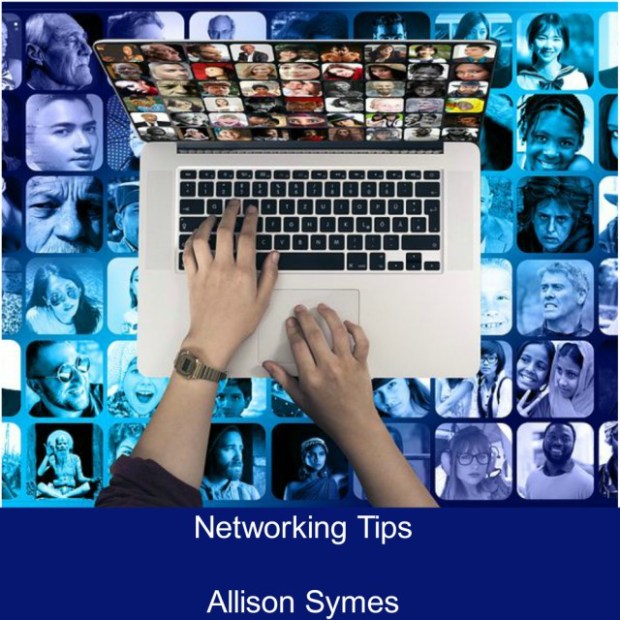
Feature Image - Networking Tips

My latest CFT post. Mandy Huggins and I discuss networking. Image via Pixabay

FromLightToDark_medium-2

My flash fiction collection from Chapeltown Books!

perf6.500x6.500.indd

Mandy’s flash fiction collection from Chapeltown Books. Image kindly supplied by her.

Amanda Huggins reading from the Ink Tears showcase anthology Death of a Superhero at the launch party in London December 2017

Mandy Huggins – reading is a great way to network with your readers. Image kindly supplied by Mandy Huggins.

It is always good to meet readers and even better when they read you - image via JW

Networking with readers at the Chandler’s Ford Book Fair in 2017. Image from Janet Williams, CFT’s amazing editor.

Setting the mood classically perhaps - image via Pixabay

Setting the mood with music. Image via Pixabay

pexels-photo-680940.jpeg

Humans are immensely creative - image via Pixabay

Let those ideas flow! Image via Pixabay,

A familiar desk scene for writers - image via Pixabay

The familiar sight of the writing desk, regardless of genre! Image via Pixabay.
The best advice for any writer - image via Pixabay

Sound advice. Image via Pixabay

From diving board to keyboard via Pixabay

The keyboard beckons…


DRAFTS, TLAs AND FAVOURITE GENRE

Facebook – General

Managed to draft a few flash fiction stories on my train journeys yesterday. Great use of time, made even better with my headphones plugged in so I can enjoy classical music while I write. She will indeed have music wherever she goes… unless the train goes into a tunnel of course!

I sometimes draft blog posts on this kind of trip too. This has come in extremely useful. It means I always have ideas drafted down I can refer back to and then flesh out when ready to do so. I did take my Kindle with me yesterday meaning to read as well but ran out of time. Still, I made up for that later…

It did strike me though, as I looked around the carriages to see practically all of us plugged into our phones, what a bizarre sight this could seem for an outsider looking in. All of us in our little virtual worlds, all with a kind of invisible barrier up around us. Hmm… I strongly suspect there’s some story ideas to be had from that image! Good luck…


Facebook – General

TLAs turn up everywhere. And it’s fine if you know what the three letter acronym is for. You can feel a bit of a twit if you don’t. Apparently, HFN means Happy for Now and HEA is Happy Ever After, both used in romantic fiction. I can’t think of any TLAs for flash fiction writers (do share if you know any but keep them clean!).

You could use TLAs as part of an outlining process for your characters.

ABB = Awkward but Brave
SBK = Stupid but Kind
NBT = Not (to) Be Trusted
DBD = Daring but Dim

Hmm… some interesting character possibilities there I think What TLAs would you use for your own characters and why?

Facebook – General

What is your favourite genre (whether writing or reading it) and can you sum this up in one line? Name an example.

Mine is fantasy because, while taking you to other worlds, it can also shed light on this one. My example would be The Lord of The Rings. The traits of the main characters, for good or ill, can all be found on our own planet. The places such as The Shire or Mordor can be compared to places on earth (and this is made even easier thanks to the fantastic film version).

The battle between good and evil is something to be identified with too (though, from a fictional point of view, the very “best” villains don’t consider themselves villainous at all. They see themselves as having a just cause. They’re wrong and it’s up to the hero/heroine to prove them so). Can treachery be overcome (it so often isn’t in life)? Will justice be done (it so often isn’t in life!)? Fantasy then can be a vehicle for resolving injustices we know so often aren’t put right on our world.

This slideshow requires JavaScript.

Facebook – From Light to Dark and Back Again

I enjoy a lot of flash fiction collections on my Kindle. It’s helped me widen my reading of contemporary fiction (which is no bad thing) and flash does read so easily on a screen.

It is a huge advantage to those who prefer technology to paper books. I hope it encourages those who wouldn’t pick up a paperback to discover reading electronically is absolutely fine and flash is such a great format for that.

I like downloading story magazines now too. I love magazines in any event but one problem is storage space for those ones you really do want to keep. No worries about that for e-magazines!

Facebook – From Light to Dark and Back Again

It’s difficult to say what I like best about writing flash. It is great when you have completed a piece, have edited it well, and after leaving it aside for a while, you come back to it and discover it is actually a good story! (One of the biggest enemies of all writers is the demon known as self doubt).

I like the process of writing the story out and then going back through it, removing what I realise I don’t need, and discovering it is a much stronger tale as a result. Of course, you don’t realise what is unnecessary material until you’ve completed the story, look again at what its theme is and then know what you have to take out, so the theme is not undermined.

What I do know for sure is there are no shortcuts and you have to persist, while learning from your mistakes too.

This slideshow requires JavaScript.

Goodreads – Author Programme Blog

I’m a bit of a traditionalist in that my favourite place to read is in bed shortly before I head off to the land of Nod.

However, the Kindle has widened my choices of location when it comes to reading. I sometimes read from it on a train trip (unless I’m too busy writing something via my phone). I always read from it when I’m travelling up to Scotland for my annual holiday.

One of my favourite things about e-reading is I no longer have to worry about how many books I can take with me when I’m away. I can have loads! I do find I want to get back to paperbacks when I’ve “feasted” on the Kindle for a bit though. Not that this is a bad thing!

I must admit I do hope we get some good weather in the UK soon. It would be nice to be out in the garden again, with book or Kindle in hand, and a glass of something nice close by. I suspect I may have to wait to August for that!


Likes, Dislikes and Using “Dead Time”

Facebook – General – and Chandler’s Ford Today

My latest CFT post is Part 4 of my 101 Things to Put into Room 101. I’m up to No. 60! Tonight’s “delights” to go into the vault of doom include rats, overpriced clothing for those of us with height issues (in either direction) and those people who dislike fake flowers. I bet they don’t suffer from hayfever!

Facebook – From Light to Dark and Back Again

Am planning to get on with some flash fiction writing whilst out and about on the train tomorrow. Great use of dead time and on my last trip out like this, I managed to write at least five stories (which are in the second collection I’ve submitted to Chapeltown Books). I can’t give you an exact number as I stopped counting after that.

One lovely thing about writing, regardless of genre or whether you write fiction, non-fiction or both, is you are never short of things to be getting on with while out and about on public transport! I also use dead time like this to draft future ideas for Chandler’s Ford Today and Association of Christian Writers’ blog posts.

Am I a convert to the smartphone? You bet! Picture below from one of my CFT posts from late last year but given the topic of this post, I thought it apt to use it again!

Fairytales with Bite – Character Likes and Dislikes

In my latest Chandler’s Ford Today post, I consign various items to Room 101. Amongst the items in Part 4 of my series are rats, people who dislike fake flowers, and overpriced clothing for those of us with height issues (in either direction.  Am not unbiased here!).

I love fake flowers because (a) they are of a much higher quality than they once were and (b) I’m a hayfever sufferer!  Thinking about this made me wonder about what quirky likes and dislikes your characters have.  I’m thinking of those things that would really make them stand out to a reader.  It is vital readers can tell characters apart and distinctive personality traits, likes and dislikes are great ways to achieve those necessary differences.  We’re not all clones after all, so our characters mustn’t be either.

Think about also why your characters have their likes and dislikes.  (Yes, people can and do have irrational likes and dislikes but, in fiction, you have got to convince the reader your characters are believable.  I find having a good reason for them to be the way they are, which would include their tastes, is a surefire way of achieving believability).

Part 4 - I'm all for stopping spam, the electronic and the meat kinds

I loathe spam – the electronic or the meat kind! Image via Pixabay

Part 4 - Success is one thing but being famous for being famous is beyond me

Success but should it be because you’re famous for being famous? Image via Pixabay

Part 4- Ambition is not the same thing as talent or being famous on merit

Ambition is no substitute for genuine talent. Image via Pixabay.

Part 4 - Wastefulness

This sums up humanity’s wastefulness. Image via Pixabay

This World and Others – Using “Dead Time”

Using “dead time” in a more efficient way so I can get more writing done is something I have improved on in the last six months or so. This is partly because I’ve finally got a smartphone (!) and I also use Evernote as an app to draft stories, articles etc when I’m out and about on train journeys etc.

The nice thing with this is not only do I get more work done, I haven’t got the distractions of all I have to do at home getting in the way. I can focus purely on writing for a while, which is bliss. One lovely thing about writing, which I touch on in a Facebook post tonight as well, is that whether you write fiction, non-fiction or both, there are always things to work on, edit or write!

On my last big train journey, I managed to write at least five flash fiction stories (I admit I gave up counting after that). So think about your pockets of time that can easily be lost. How could you use those? I remember being annoyed when I took my car in for service as I was happily drafting stories while waiting for that to be done. I was well into the writing zone when they told me the car was ready!

Main task for me now here is to submit more flash fiction to Cafelit as well as get on with ideas for my third book. My second book is in with Chapeltown Books now so fingers crossed!

This slideshow requires JavaScript.


Scrivener and Stories

Facebook – General

My Chandler’s Ford Today post this week will be Part 4 of my 101 Things to Put into Room 101. Is proving a fun series to write. Link up on Friday.

One of the biggest difficulties I have is prioritising time. I find I have to block out time to write, else guess what? I don’t write!

I use Scrivener on my PC and I find that great for organising my notes, especially for my non-fiction work. See one of my earlier CFT posts. I use Evernote on my phone and am increasingly using train journeys to draft a few flash fiction tales using it. I’m off again on my travels on Saturday so hope to get a few short pieces under my belt (or more accurately on my phone!) before I get home again.


Facebook – General

My favourite opening lines to stories are those that take me straight into the world of the tale or the mind of the character. You don’t need a lot of words to convey enough information for the reader to fill in the gaps. Flash fiction as a genre proves that.

For example from my Rewards in From Light to Dark and Back Again:-

She must go, Becky thought.
Becky paced her thick, red lounge carpet a dozen times. The beautiful Gemma had decided one boyfriend wasn’t enough.

You have the main character and her state of mind here. The thick, red lounge carpet is an indication Becky has (a) a home and (b) she probably isn’t poor. She also has a situation to resolve! All in 24 words.

Often I’ll write a flash piece and realise when I read it back, there are more clues to pick out than I originally anticipated. This is no bad thing. It means my subconscious is clearly working and something is coming through into what I write! That can be developed further or left as it is as a hint to the reader. Happy writing – conscious and unconsciously!

This slideshow requires JavaScript.

Facebook – From Light to Dark and Back Again

You learn a lot when you write stories. Firstly, you learn about rejections as, unless you are phenomenally lucky, you will receive loads of those. Secondly, you realise fairly early on that write what you know, while a very useful start, is simply not going to be enough. You need to be able to write about what you can find out too!

This is why reading widely, in and out of your own genre, fiction and non-fiction, is so important. The more you feed your mind, the more you will have to draw on when writing your own work.

Facebook – From Light to Dark and Back Again

A successful flash fiction story is one you’ve read where everything that is needed to be said has been! You should feel as if the writer could not add anything to the story without “over-egging the pudding”.

As with any story, a flash piece still has to have a beginning, middle and end (even if that end is a twist one). It should not feel like a piece of prose cut down to meet the word count requirements.

I love flash fiction stories where I would love to know more about the characters despite their role being over. That indicates real “life” behind the characters and their story.


Twists, Trailers, and Judging Your Own Work

Facebook – General

Lovely night out at a local pub/restaurant. Good opportunities for people watching! (You never know when something said or what someone wears will strike you as a good idea for your own characters).

Have earned my first royalties on my published works, many thanks to #GillJames and Chapeltown Books for such hard work here. Glad to say will need to put in an order for From Light to Dark and Back Again before too long.

Have confirmed I will be going to a big Book Fair later in the year. More details later but am looking forward to this.


Facebook – General

Book trailer for From Light to Dark and Back Again.

https://www.facebook.com/plugins/video.php?href=https%3A%2F%2Fwww.facebook.com%2FAllison.Symes.FairytaleLady%2Fvideos%2F1236887723080871%2F&show_text=0&width=560

I’ve put up the book trailer for From Light to Dark and Back Again on my main writing page as I was thinking of my choices in this year’s Hall of Fame that Classic FM put on at the Easter weekend.

Danse Macabre by Saint Saens was one of them. I came across it when I watched the TV series Jonathan Creek but it struck me as being the perfect piece for my book trailer. Quirky music for quirky fiction!

I nearly always do have classical on when writing. It relaxes me and I write better when in a good state of mind. It also has the huge advantage of using up zero calories (sadly, the odd glass of prosecco and bar of chocolate cannot claim that! Sighs…. there really is some fantasy that is unlikely to be realised!😁).


This slideshow requires JavaScript.

Facebook – General

Why do I like twist ending stories so much? For one thing, I like guessing at the ending. Sometimes I’m right, sometimes I’m not.

A really good twist tale will make me admire the way it was set up and carried out (even if I did guess the outcome). An even better one not only surprises me with the way it turns out, but makes me go back through the story to look for the clues I clearly missed in the first place. I then berate myself for having missed them!


Facebook – General

When do you know your story, of whatever length, has really “taken off”? For me, it is when the characters come to life. You know (though almost certainly won’t say in the story) what they have for breakfast, what their major traits are, and what they’d be like in a fight – just to name a few random examples!

I find outlining a character before I write “for” them really helpful (and this is one reason I love Scrivener. The character and setting outlines in the fiction – short story option are amazing. The great thing is you can adapt them with anything you feel you want to jot down before you write the story itself).

For my flash tales, I prepare a brief outline (appropriately!) but I just need to know what my character is really like. Sometimes “awkward but brave” is enough to get me started on a character.


Facebook – From Light to Dark and Back Again

Flash fiction takes at least as much crafting as any other type of story because of the need to get the story across in as few words as possible. There is a balance to be struck here between the needs of the writer getting their story down and the editor ensuring the story comes in at the right word count.

I’ve found that it never pays to do the two writing tasks together. I get the story down and worry about editing later.

Facebook – From Light to Dark and Back Again

I’ve talked about classical music on my main writing page tonight and why I used Danse Macabre for my book trailer theme for From Light to Dark and Back Again.

Do I have music in my mind when I write my stories? No, but I can often think along the lines that Character X would be a huge fan of rock or Character Y would love opera and so on. Thinking about what a character’s tastes would be is a great way of helping you to bring them to life on the page and, from a reader viewpoint, a very easy way to tell characters apart.

Facebook – From Light to Dark and Back Again

Sometimes you’re not always the best judge of your own work, but it is always good to know you are not alone here.

Spoiler alert!

I’ve been listening to Classic FM’s Hall of Fame and the 1812 Overture is the new No.1. Listening to it now in fact. Love the piece. Its composer,Tchaikovsky, however thought it had no artistic merit. Well, how wrong can you be? Quite a bit as it turns out!

I’ve found when looking through my stories, I’ve got to allow some time to pass between writing them and editing. I’ve got to come back to the pieces as if I’d not seen them before. It’s the only way I know to be objective about what I’ve written.

And it’s nice to know sometimes you can be wrong about your own work when you’re negative about it and others like it!

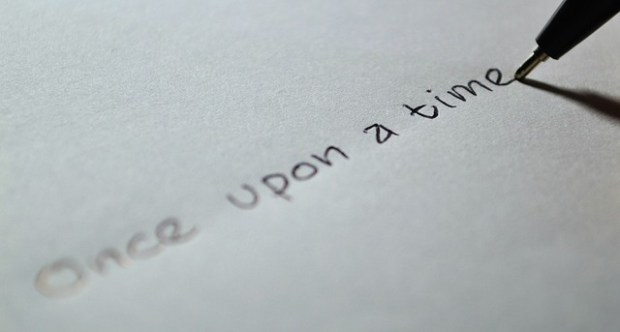
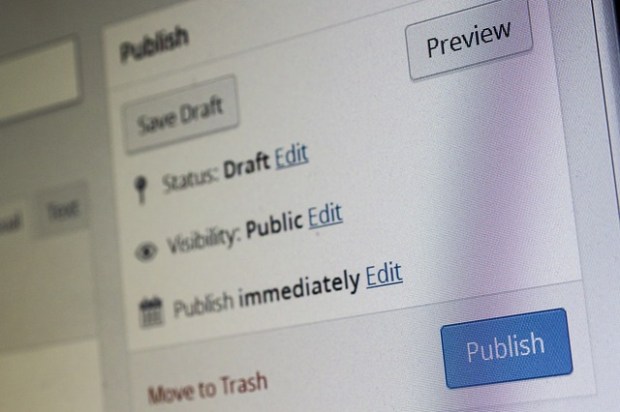
Classic music can make a classic filmMusic, whether writing it or playing it or both, is just one form of creativity - image via PixabayWriting, whether it is fiction or otherwise, is a wonderful way to create something new - image via Pixabayonce-upon-a-time-via PixabayOne joy of blogging is ease of publication via Pixabay


Facebook – From Light to Dark and Back Again

Flash fiction can be great for brief character sketches which give you a glimpse into that character’s life. My Pen Portrait is an example of this. What I’ve revealed in this tells you all you need to know about my heroine, Mary. The final line also shows something of her nature.

So what would you convey in a flash fiction piece like this given you haven’t the room for backstory as such? Just enough information to tell you what you need to know (in Pen Portrait you need to know what Mary’s job is) and leave enough “space” for your readers to fill in the gaps. In Pen Portrait, Mary has found a way of avoiding causing embarrassment to one of her neighbours but I don’t tell you why this is important to her. That’s for you to figure out!

Goodreads Author Programme – Blog

I love listening to classical music as I write my flash fiction. So what has this got to do with books and stories generally?

Firstly, I find classical music relaxes me and so I write more easily. Secondly a great piece of music can help you envisage the world you create. If it is vivid for you, as it should be, it will be vivid for your reader.

Reading, however, whether it is my work or not, is carried out in silence. I don’t want music distracting me. Besides, my main reading time is just before I sleep! Definitely not time for something like the 1812 Overture (much as I love that!).

Music can convey so much. There have been some truly amazing film scores which can enhance the original story. I’m particularly thinking of the score for The Lord of the Rings trilogy here. Fabulous and fantastic story. The music for the film version reflected those aspects well, I thought.

Sometimes I can hear a piece of music and it will make me immediately think of a story. I hear Danse Macabre by Saint Saens and think of the stories in my From Light to Dark and Back Again as this great piece was used for my book trailer. I hear a Bond theme and I think of the film first but without the books by Fleming in the first place, there would be no movies.

It is quite nice to think that a creative work such a book leads to a film and in turn leads to wonderful music being created for that. What can the stories we read and write to lead to ultimately, I wonder? Well, it should be fun trying to find out!

REAL WRITING = REAL CHARACTERS

A busy few days and I also have a new flash fiction story to share with you.

Facebook – General – and Chandler’s Ford Today

My latest Chandler’s Ford Today post sees me resuming my series on 101 Things to Put into Room 101. This week’s post sees me reach No. 45! Do you agree with my choices? Comments welcome in the CFT comments box.

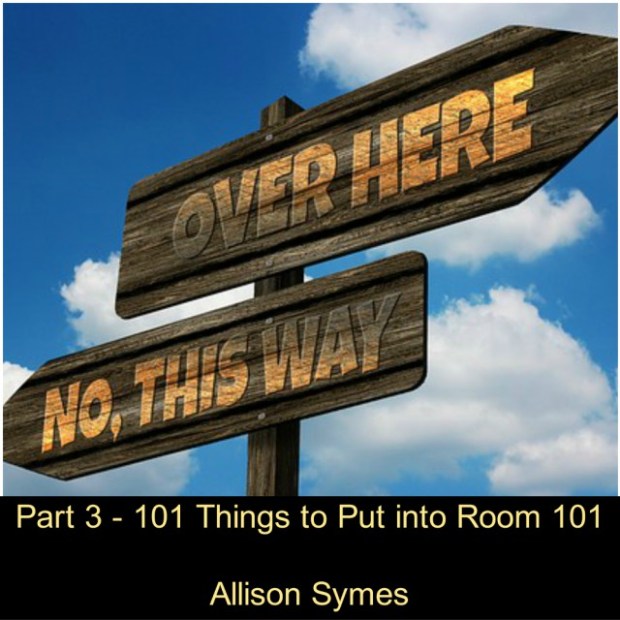
Feature Image - Part 3 Room 101 Post

My latest CFT post. Image via Pixabay.

Decisions, decisions

Decisions, decisions and a not terribly helpful signpost. Image via Pixabay.

Still this kind of board might raise a smile

This notice may make you smile though. Image via Pixabay.

Could Room 101 be behind here - image via Pixabay

The vault of doom aka Room 101. Image via Pixabay

Facebook – General and More Than Writers Blog (Association of Christian Writers)

Busy, busy. I have a short post up on Chandler’s Ford Today regarding Richard Hardie’s author events at the Winchester Discovery Centre on 3rd April. If you like YA fantasy and are in the area, why not pop along? Entry is free (though there are books to buy!). See http://chandlersfordtoday.co.uk/local-author-news-richard-…/

My usual Friday slot tomorrow sees me resuming my 101 Things to Put into Room 101 series. I incorporate everything from snow to shoes that pinch your feet (though if they pinch anything else, you’re doing something very odd with your shoes!).

My monthly post for the Association of Christian Writers is online tonight. My spot is the 29th of each month. This means I get every three Februaries off!

My post is Real Writing = Real Characters and talks about the importance of honest portrayal of characters. If they’re right so-and-sos, then you portray them as such. (How you do that is up to you but there must be no doubt in the readers’ minds that the character IS a right so-and-so!).

Facebook – General

What are your characters’ favourite memories and why? How do they influence their actions in your story? Can showing some of their memories help you create a richer, more fully rounded character? I think so.

Now with flash fiction, there isn’t the room for a lot here so you have to pick the most important memory and focus sharply on that. Or you tell the story where the character is looking back on something.

For example, in my flash tales, My Life and Changing My Mind, I have my take on Pride and Prejudice told from the viewpoints of Elizabeth and Mr Darcy, each with their own story. To combine them in one tale would have made the stories lose impact (though it would still have been well within the flash fiction word count limit). Mind, it did make it easy working out where they had to be in From Light to Dark and Back Again – right next to each other!

Facebook – From Light to Dark and Back Again

What is the purpose of flash fiction? To create a miniature world a reader can literally dive in and out of in moments yet still leave an impact on them. To say in a few words (and with greater impact) something that would lose its power if put into a longer story.

I suppose one thing that really has drawn me to the form is the fact I’ve always loved working things out from clues the author gives and you do that a lot with flash fiction. I don’t want the writer telling me everything!

Facebook – From Light to Dark and Back Again

I think humour lends itself well to flash fiction because the best gags (or at least the ones I remember best) are short and to the point. (Mind you, the Two Ronnies’ Four Candles is an honourable exception to this and such a fabulous play on words too. Should imagine that was a delight to write. Likewise Morecambe and Wise with Andre Preview in their Christmas special – sheer joy from beginning to end.).

The nice thing about flash fiction is I’ve found it opens up the genres you write in. After all in From Light to Dark and Back Again, I have crime stories, relationship stories, light horror stories and so on. A lot of my lighter tales play with humour too – I’ve used a lot of irony. So mix up your humour styles and see what flash fiction you can generate. Above all, have fun doing this!

Facebook – From Light to Dark and Back Again

Why should any writer read well and widely in AND outside of their own genre?

The simple answer is you are feeding your imagination by reading. I’ve had ideas for stories by reading works by others, especially in non-fiction. Something I’ve read has just triggered that spark and away I go! So the more you read, the more likely you are to get that spark and you are “fishing from a bigger pool” too. You expand your own knowledge and therefore you can expand what you write about too.

With non-fiction, a story can emerge from reading, say, a historical fact, and wondering how that would affect characters from differing backgrounds.

So never feel guilty about “just” reading. It is the flip side of writing and a highly enjoyable one at that. After all, if you don’t want to read, why would you want to write? There has to be that love of books and stories inside you to trigger that desire to write. That love can only come through reading – whether your preferred format is Kindle, paperback or audio doesn’t matter. All that matters is you read!

Cafelit – The Art Critic

Am pleased to share my latest piece of flash fiction, The Art Critic.  Do check out Cafelit.  There is a wealth of fabulous stories on there and I am so pleased to be part of it.

A great way to relax - with a book and a cuppa - image via Pixabay

Great way to relax. Now where are those biscuits? Image via Pixabay

Fairytales with Bite – Publicity IN your stories

On my Chandler’s Ford Today post this week, I resume my series on 101 Things to Put into Room 101One of the things I mention is annoying adverts.  This led me to wonder how advertising, business, publicity etc could work in a fictional world.

How do your characters survive?  Presumably by working so what do they do?  What products are made in your world?  How are others persuaded to buy them?  Are there things your world does not allow to be made or sold and if so what and why?  Is there a black market (there usually is!)?

Also how do your characters find out what is going on?  Can they tell what is truth and what is propaganda?  Are adverts truthful?  Are there governing bodies regulating these things?  Or is your society a simpler, barter based one?

Talking of adverts, I will just share a flash fiction story of mine, The Art Critic, which is now up on Cafelit.  Do check out the website for some fabulous stories by a whole range of authors.  I’m delighted to have work on here.  Hope you like the story.

This World and Others – Your Character Likes and Dislikes

My Chandler’s Ford Today post this week sees me resume my series on 101 Things to be Put Into Room 101So far I’m up to number 45!  I’ll have no trouble finding 101 things to banish…

What are your character likes and dislikes and why?  if your character loathes the colour brown, to name one example, what is the reason for it and does that loathing make them change their behaviour in any way?  Could that loathing change the way the story ends because the character’s actions change (and not necessarily for the better either)?

You almost certainly wouldn’t use all of this in one story but listing what your character likes and loathes is a great way of finding out all about them before you write the story properly.  You will write with a deeper knowledge of that character (and it does show through).

From the writers’ viewpoint, I dislike characters who have no reason to be in the story but are clearly making up the numbers and  I have come across this.  (Earlier in my writing life, I’ve been guilty of it but I think many of us have been.  The important thing is to realise the characters don’t have a role to play and cut them out). Each and every character has to have a very good reason to be in your story.  Each and every character has to be distinctive (even if it is, say, Character A loves flowers and Character B hates them because they have chronic hayfever.  Easy to tell those two apart!).

This slideshow requires JavaScript.


Flash Fiction, Top Five Favourite Books, and Guest Blogging

Facebook – General

Good news – another of my flash fiction tales, The Art Critic, is now up on the Cafelit website. Anyone who has had a bad review or hated a piece of artwork will sympathize with my heroine in this one. Good fun to write. Hope you enjoy reading it.

I’m outlining ideas for another collection of flash fiction tales and I hope some of these will also end up on Cafelit in the meantime. Many of my stories in From Light to Dark and Back Again started life on Cafelit. A number of Chapeltown Books authors can say the same about their flash stories – and I’m willing to bet we’re all pleased about this!

I loved the old James Garner films, Support Your Local Gunfighter/Sheriff etc. Maybe we should have something called Support Your Cafelit! In all seriousness, online sites like this are an immense help to writers including me. They give us somewhere to put our work, it can (and in this case has) led to publication opportunities, and feedback is also possible via the comments section under each story put on the site.

So give online story websites like Cafelit a try. You may well come across a form of fiction you might like to try writing. Certainly, you’ll like the stories already up there. Happy reading and writing!

This slideshow requires JavaScript.

Facebook – General

Firstly, as mentioned above, my latest flash fiction piece, The Art Critic, is now up on Cafelit. See http://cafelitcreativecafe.blogspot.co.uk/ but do check out the other wonderful stories on site.

Secondly, I am guest blogging on Amanda Huggins’s Troutie McFish Tales blog tonight. I talk about why I love writing flash fiction and for Chandler’s Ford Today and share some writing tips that have stood me in very good stead.

Thirdly, I’ll be appearing at the Hursley Park Book Fair due to take place in June. I’ll share more details nearer the time but author pics and bios are now up on their website, including for yours truly. See http://www.hursleyparkbookfair.com/authors


Facebook – General

My CFT post this week will be the resumption of my 101 Things to Put into Room 101 series. Yes, I can find 101 things!

I’m using my diary more to plan out what writing work I do when and am finding that useful. It reminds me to block out time for specific tasks for one thing so I am hoping by the year’s end, I will have been more productive than I was in 2017. Not that I was lazy last year, far from it (!), but I’ve been aware for a while I could probably do more than I am and that will need scheduling if I’m going to make it (a) happen and (b) work!

I am making better use of dead time thanks to Evernote and a smartphone. I use time like this to draft out ideas for flash fiction stories and CFT posts. All useful stuff. It’s amazing (though not in a good way) just how easily time slips away and you find you haven’t achieved as much as you thought or would like.

Facebook – From Light to Dark and Back Again

How can you tell if you have written flash fiction and not just a short story chopped down? Well, like any short story, a flash fiction tale must have a beginning, a middle and an end. Okay, a lot is implied, especially backstory, but everything in your flash tale must move the story onwards to what will seem like the inevitable conclusion (even if is a twist one).  If your story does that, then fine!

This slideshow requires JavaScript.

Facebook – From Light to Dark and Back Again

What is the purpose of a story?

To entertain – definitely.
To sometimes convey truths in a more palatable way – yes.
To get a message across – yes.

To set puzzles for readers to solve – think Agatha Christie here especially.

To warn – yes (particularly true for horror I would have thought. If you decide you’re going to tackle Dracula, you’ve got to be prepared for the consequences!).

Flash fiction does all of this but concisely!

Facebook – From Light to Dark and Back Again

Glad to report The Art Critic, my latest flash fiction piece, is now up on Cafelit. See http://cafelitcreativecafe.blogspot.co.uk/

It was great fun appearing on Amanda Huggins’ Troutie McFish Tales blog. See https://troutiemcfishtales.blogspot.co.uk/…/guest-post-alli… Many thanks, Mandy!

I share why I love writing (and indeed reading) flash fiction and also what I love about writing for Chandler’s Ford Today.

Printers would have fun trying to print this - image via Pixabay

Let the ideas flow and let journeys encourage that! Image via Pixabay

Printing Press - image via Pixabay

The old method of printing. Image via Pixabay

Books can be one major key to knowledge - image via Pixabay

Books are the keys to knowledge. Image via Pixabay

The To Be Read pile - image via Pixabay

The To Be Read pile. Image via Pixabay

What new scenes will a book show you - image via Pixabay

What new worlds and scenes will books show you? Image via Pixabay

Facebook – From Light to Dark and Back Again

What is the best thing about writing flash fiction? I always love that moment when I’ve come up with the “killer” last line that completes the story in such a way I know there couldn’t be an alternative ending.

Sometimes I do come up with a line I think will make a great ending and plot the story back from that. It’s an interesting challenge (and Agatha Christie was known to do it too).

Do last lines sometimes surprise me? Yes. I hope they surprise you too! I will think of a line I realize is better than the one I originally had in mind. For example, with Serving Up a Treat, the last line “He never got to take a second mouthful” not only sums up the story, (and you can get the genre from that line alone), but, taken with the rest of the tale, I realised later there was more than one way of this character meeting their fate. I had not originally plotted that but was glad it came about. (Yes, you will need to rest of the tale to find out!).

Maybe the art of being a better writer is in getting better at recognizing what works well and being open to changing your initial thoughts and ideas for better ones.

Goodreads Author Programme – Blog

What are your top five favourite books? They can be any genre, non-fiction or otherwise etc.

So often my favourite books do depend on my mood. If I want humorous fiction, I will read that. If I want crime, I will turn to that genre.

But I think for me the five that stand out overall are:-

1. The Daughter of Time by Josephine Tey. This book is one of the few novels to ever change my mind about a historical character, in this case Richard III.

2. The Lord of the Rings by J.R.R. Tolkein. The sheer scale of Tolkein’s imagination is amazing and you won’t get a better good-v-evil battle in fiction, I think. Loved the film version too.

3. Pride and Prejudice by Jane Austen. This was my first introduction to the use of irony in fiction and Elizabeth Bennett has long been one of my favourite heroines.

4. Men at Arms by Terry Pratchett. It was hard to pick just one Discworld novel but I plumped for this one as, for me, it is where Sam Vimes really takes off as a character.

5. The Best of P.G. Wodehouse Am I cheating here by going for a best of collection? Maybe! But I’m not sorry. This wonderful book shows off PGW’s fabulous array of characters.

So what would your choices be? Do you think they would change, say, annually, or be permanent selections?


WRITING TIPS AND CHARACTER CREATION

Facebook – General – and Chandler’s Ford Today

My latest CFT post is Part 2 of my interview with fellow Chapeltown Books author, Gail Aldwin. We discuss writing tips and character creation amongst other topics. Gail also shares her thoughts on “real” books and ebooks. Do you agree with her? Comments welcome in the Chandler’s Ford Today box at the end of the post.

This slideshow requires JavaScript.

Facebook – General

When is a character “faulty”? When it takes a convoluted plot to make the character work.

Characters, no matter how bizarre they are or how weird their world is, still have to be believable. There has to be something about them that catches the reader’s attention and then holds it until the end of the story. So a strong character is a must, even if that strength is in being a weak person who will do anything to save their own skin. (Some great stories to come from that, I would have thought!).

Facebook – From Light to Dark and Back Again

The most difficult thing about flash is having to cut lines you know are good ones, and usually add depth to the story, BUT don’t in themselves move the tale forward. There simply isn’t the word count room to indulge in that so out they come. Occasionally I’ve been able to use a suitable line elsewhere but not as often as I’d like!

Electronically or by print, both face publishing frustrations - image via Pixabay

Ebooks and print – both have their own frustrations when it comes to publishing. Image via Pixabay

Books can be one major key to knowledge - image via Pixabay

Books are the keys to knowledge. Image via Pixabay

Let creativity spill out - image via Pixabay

Let the creative process flow! Image via Pixabay

Writing, whether it is fiction or otherwise, is a wonderful way to create something new - image via Pixabay

You can’t beat notebooks for jotting down ideas. Image via Pixabay.

Facebook – From Light to Dark and Back Again

What is the purpose of a story?

To entertain – definitely.
To sometimes convey truths in a more palatable way – yes.
To get a message across – yes.

To set puzzles for readers to solve – think Agatha Christie here especially.

To warn – yes (particularly true for horror I would have thought. If you decide you’re going to tackle Dracula, you’ve got to be prepared for the consequences!).

Flash fiction does all of this but concisely!

Fairytales with Bite – Story Generating Ideas

In my Chandler’s Ford Today post for this week, I discuss with Gail Aldwin writing tips, character creation and “real” books amongst other topics.

One common question put to writers is where do you get your ideas.  Well, the answer can be all over the place, which is not what most people want to hear.  What they want, a quick pat answer, is simply not possible becauset he great thing about generating ideas for stories is that there are several methods to do this. One at least is bound to suit you.  I use:-

1.  Well known sayings (and sometimes I twist these too).

2.  Proverbs

3.  Think of a subject and a problem in one sentence and then see where it takes you.  For example, “He refused to cry again”.  Who is he?  What made him cry in the first place?  What has led to his change of attitude here (and it is clear there has been a change)?  What has been his problem that has led him to this point?

4.  Think of an ending in one sentence and work backwards.  For example, “At last, the dragon was killed”.  Okay, so why wasn’t it killed earlier?  What was the problem here?

5.  Sometimes in conversations or even TV/radio programmes, you will pick up on something that can be useful – an odd phrase can give a good indication of character.  Then it is up to you what you do with that character on the page!

This World and Others – Dreams and Reality

Writers learn early on to separate out dreams from reality.  The big dream of being published never goes away until fulfilled (and then you want to keep on being published).  The reality is knowing the writing journey is a tough one, that you’ve got to expect rejections but also knowing there are other options out there such as self publishing or seeking publication through the small independent press.

The latter is the route I, and fellow Chapeltown Books author, Gail Aldwin took.  Part 2 of my interview with her is up on Chandler’s Ford Today for this week’s post and we discuss writing tips and character creation amongst other things.

You need the dreams to keep you going. You need hard headed reality to be able to cope with the rejections, competition disappointments and so on.  It does help to know this is all part of the process.  The one good thing about it is that it does toughen you up so you face later rejections better than you might otherwise have done.

TALKING INTERVIEWS, FICTION, AND ANIMAL CHARACTERS

A good mix of topics for tonight I think!

Facebook – General

So a good interview then should encourage the interviewee to talk. What would be the equivalent for fiction writers? I think a character outline that helps you realise there is more to your creation than you first thought of! I love that moment when characters almost come to life before your eyes. You know then you definitely have someone worth writing about!

Facebook – General

Can’t remember the last time we had snow this late in the UK. Lady had a fantastic time in it again (though I also think she was trying to set some kind of record for how much of it she could (a) roll in and (b) eat! They say border collies are intelligent…😁).

Am pleased that I’ve submitted a short story and a flash piece this weekend. Good to get the ball rolling with both formats (though I am busy drafting ideas for a third flash fiction collection and am enjoying that). Plenty coming up with CFT over the next few weeks too.

What do I like best about writing overall? Tough one to call but I think it is the variety of what I do. The challenges for crafting a CFT post are different from those I face with writing a short story or a piece of flash fiction but I love it all. Absolutely no chance to get bored but would love more time to write… (says she, strongly suspecting that all writers have said this at some point!).

Facebook – General

Do you find yourself writing and/or reading in one particular format for a while before you switch to another? I do with fiction.

I’m just getting back into some short story writing after a gap (though during that time I’ve been drafting ideas for a third flash fiction collection, have been promoting From Light to Dark and Back Again, and finally submitted the second book to the publisher. Not necessarily in that order incidentally!). (Medium-term goal is to get a standard length short story collection out there).

With reading, I seem to need to read all I can in a genre before switching to another. Well, I guess I could call it immersing myself properly in a genre! (Before anyone claims it’s being obsessed in one genre, then being obsessed in another, guilty as charged so to speak, but I think most writers could identify with that. There has to be a certain amount of obsession with characters to be able to write about them properly I think).

Facebook – General

I’ve always been fond of animal characters in stories. I’m thinking of stories from Watership Down to Timmy the dog in the Famous Five series by Enid Blyton. Loved them all. (And The Wind in the Willows is one of the all-time classics!).

Not sure they’re the kind of story I could write but that is the great thing about fiction. What you don’t write yourself, you can love reading in tales by another writer. (It also helps with the old adage about reading widely outside of your own genre, as well as inside it).

So what do you love reading that you don’t feel you could write yourself?

Facebook – General

My CFT post later this week will be Part 2 of my interview with fellow flash fiction writer, Gail Aldwin. She shares her thoughts on “real” and ebooks, writing tips and talks about character creation amongst many other topics. Link to go up on Friday.

What I find particularly interesting about interviews like this (and many others I’ve read elsewhere) is finding out which writing tips writers list as the most important. There will always be overlap (we’re all going to encourage reading for one thing) but the order in which a writer lists these things can be revealing.

It is also interesting to find out what are the joys and woes of writing in a particular genre, especially if it is not one I write in. Good writing is good writing, no matter what the format, but the challenges of that cross the divides. It is the technical challenge of individual genres that fascinate me as there is a wide variety here. But the one single challenge that faces us all is making our stories believable.


This slideshow requires JavaScript.

Facebook – From Light to Dark and Back Again

The important thing to remember with flash fiction is, despite its very short form, it still needs crafting and editing, as much as any other kind of story would. I find it can sometimes take longer to edit a flash piece over a standard length short story because of the conflict between getting your word count down and still having a decent tale to submit.

This slideshow requires JavaScript.

Facebook – From Light to Dark and Back Again

A perfect story is one in which every word is needed to complete it. This shows up sharply with flash fiction, of course, and one huge advantage to writing it is it does sharpen your editing skills. It also makes you choose stronger image creating words given you are using fewer words to begin with!

You also learn to imply a lot of the story given you haven’t got the room to spell it out in detail. I’ve always loved stories which allow me to fill in the gaps or work things out for myself so I guess flash fiction is a natural choice for me.

I am glad to see more flash collections coming out as hopefully this will encourage people to read and write it. I would love flash fiction to be shown as a great way of getting reluctant readers hooked on books given you’re not asking them to commit to too much in one go.


Even in the heart of a big city, books are a great form of escape - image via Pixabay

Books are a fantasic form of escapism. Image via Pixabay

A great way to relax - with a book and a cuppa - image via Pixabay

Great way to relax. Now where are those biscuits? Image via Pixabay

The basic kit for a writer - image via Pixabay

The writers’ basic kit. Image via Pixabay

What a fantastic home for books - image via Pixabay

What a beautiful home for books. Image via Pixabay

Another lovely library, this one is in Canada - image via Pixabay

Another beautiful library (this one is in Canada). Image via Pixabay

Facebook – From Light to Dark and Back Again

What has happened as a writer that you did not anticipate when you first started out? For me, I never expected to write non-fiction (Chandler’s Ford Today) or flash fiction (From Light to Dark and Back again).

In the former case, it was a writer friend who told me about CFT and encouraged me to send something in (NEVER underestimate the importance of networking, you never know where it may lead!). In the latter case, I saw Cafelit had issued a 100-word challenge and I thought I’d give it a go. Not looked back since, as they say.

So I suppose I have learned to be open to trying new forms of writing and see where it takes me. It’s a fun journey too!

Facebook – From Light to Dark and Back Again

With flash fiction, you have little room for world building. (Little room for anything, actually!). So you have to convey an impression of a world with a few well-chosen words and leave your readers to fill in the gaps.

I think this is probably my favourite thing about this genre as I love being able to envisage what characters get up to once the “official” story is finished. (I understand fan fiction, wouldn’t write it myself, but do “get it”). I like being made to fill in the gaps and work things out. The challenge for the flash fiction writer is to give the right information so that readers can do this without giving too much away or slowing their story down.

Facebook – From Light to Dark and Back Again

Pleased to share the link with National Flash-Fiction Day tonight. The Day itself is not until 16th June but I love the idea of a whole day devoted to this form of fiction.

Okay, I’m not unbiased but I’ve always loved stories where I’ve had to work things out as a reader. As so much has to be implied in flash, I guess I should’ve realised sooner than I did that this was going to be a major format of writing for me. Still better late than not at all!

Goodreads Author Programme – Blog

Are you someone who only reads “proper” paperback books or are you a full convert to e-books?

I cross the divide. I love paperbacks, they’re a great format, but I have found e-books to be brilliant too. They’ve also saved me a major packing dilemma for when I’m away at writing conferences or on holiday. No more worrying about how many books I can take. Thanks to the Kindle, I can take as many as I like! I only wish it could give me more reading time but devices have their limitations!

But there are certain books I can only envisage reading in paperback – Terry Pratchett’s Discworld series with their wonderful covers for a start.

My main reading session is just before I sleep and I read paperbacks and from the Kindle then. I relish both! I do like the bookmark function and find that useful. I am forever losing “real” bookmarks from my paperbacks. Mind you, I often lose pens too. Hmm… doesn’t sound fab from a writer, does it?

I’ve not really tried e-magazines yet though I suspect that will be the next big area I’ll explore.

So what do you prefer? Do you think one genre works better in one format and, if so, which and why?

In the meantime, happy reading, no matter what format you’re using!


INTERVIEWS AND UNUSUAL BUS JOURNEYS

Facebook – Chandler’s Ford Today

My latest Chandler’s Ford Today post is part 1 of my interview with fellow Chapeltown Books author, Gail Aldwin. She shares how her around the world bus journey inspired her flash fiction, especially her story, Paisley Shirt, which is the title for her new collection. Part 2 next week will see Gail sharing writing tips and her thoughts on “real” books and ebooks amongst other things. Plenty of insights for writers and readers to come.

This slideshow requires JavaScript.

Facebook – General

My Chandler’s Ford Today post this week will be Part 1 of an interview with fellow Chapeltown Books author, Gail Aldwin, whose flash fiction collection, Paisley Shirt, is now out. She shares travel tales from around the globe and looks at where paisley comes from. It is not often the East India Company gets a mention in my posts but it does here!

Part 2 will feature writing tips, a discussion on characters etc. Link to Part 1 will go up tomorrow.

There are so many things I love about interviewing other writers. Some of these things include finding out what inspires them, how links form between something they may have read years ago and a story they’ve written now (it can be amazing what conscious and sub-conscious influences come out when you’re writing), and the tips they’ve found most useful.

I also really love the way Chapeltown Books have such a distinctive image for their flash fiction collections. Okay, so my From Light to Dark and Back Again is one of them. Okay, so I AM biased (!) but if you wanted to see an example of effective branding, I would say this is a good one.

This slideshow requires JavaScript.

Facebook – General

What do you like most about interviews (regardless of format)?

I like those questions that draw the interviewee out and interviews that really do seem like it is a conversation written down or broadcast or what have you.

One great thing about writer interviews is that, regardless of the genre being covered, we all face the same challenges of getting the story down, editing it well, hopefully getting it published and then marketing it. That does give a lot of ground in which to find lots of lovely questions to ask!

Sometimes you can strike gold when your interviewee reveals something that you instantly recognize you’ve got to ask them more about. It is often about the most unexpected things too. My CFT post later this week contains such a gold nugget! Link to go up on Friday. All I’ll say now is it involves transport!


Facebook – From Light to Dark and Back Again

The joy of flash fiction is its brevity. No words wasted. A powerful impact on the reader made very quickly. But, as with the standard short story, all moods and emotional reactions can be covered in the form (which is why I called my book what I have!). Indeed, I think it a good thing that there is variety here. I like to see my flash collection as a “selection box” of moods and stories.

I suppose it’s indicative of human nature that no one person likes the same thing all the time. I love humorous fiction but also appreciate crime stories, historical tales and so on and I like to mix up what I read too. I wouldn’t want to just read (or indeed write) one thing all the time. Another joy of flash is that you can sample different styles of writing and moods very quickly. You could even use a flash collection to try out stories in genres you’ve not read before.

Happy reading and writing!


Facebook – From Light to Dark and Back Again

Write what you know, so they say.
But influences come out in your every word.
Sometimes they’re buried away
For years but they will find a way of being heard.
Time means nothing there, you’ll find.
So read widely, both non-fiction or a tall tale.
You’ll feed your creative mind.
Ensure the whole story does not stumble or pale.
Strong “people” reflect our best
While the weak characters will reflect our worst side
Write, rewrite, then let it rest
Every writer has to have a skin made of hide.
Some will not get what you do.
But it’s true you won’t like everything they invent
Rejections can make you blue.
It’s all part of the process you can’t circumvent.
Ask where your story would fit.
Target well, it improves your chances of a hit!

Allison Symes – 15th March 2018

Facebook – From Light to Dark and Back Again

I have a framed poster above my desk which says “Don’t ever give up on your dreams”. (Good advice. Okay, sometimes the dreams have to change for myriads of reasons. Just because you can’t be a novelist that doesn’t stop you from becoming a short story writer etc). But it also struck me this line could be a great motivator for a character.

What are the character’s dreams? Just what are they prepared to do to achieve them? What obstacles are in the way? Is he/she/it encouraged or are others holding them back? (You could also look into what their agenda was).

Feature Image - Facts and Fiction - image via Pixabay

What writing triggers will help you create your new worlds? Image via Pixabay

Time to find a new place to call home perhaps - what stories could that lead to - image via Pixabay

Time to have another home perhaps? Good stories to be had here! Image via Pixabay

Note taking is an invaluable aid to retaining what you learn at conferences, image via Pixabay

Write, edit, write, edit… image via Pixabay

Nobody gets their ideas spot on immediately, image via Pixabay

Nobody gets their ideas right first go. Image via Pixabay.

Escape with a good book via Pixabay

Escape with a good book, it’s good for you! Image via Pixabay

Fairytales with Bite – What is Behind Your Stories?

In my interview with fellow Chapeltown Books author, Gail Aldwin, for Chandler’s Ford Today this week, she shares with me how her round the world bus trip influenced her flash fiction.  She also shares some of the research she carried out into where paisley comes from given the title of her flash fiction collection is Paisley Shirt.  One of the things I love about these kind of interviews is discovering what has influenced a writer to come up with what they have!  There are so many influences…

This is also why every writer, regardless of genre, should read widely and well in non-fiction and fiction, classic and contemporary works.  You are literally feeding your mind.  You can’t know in advance what book it is you read that will spark off ideas of your own.  You will just know it when you come to it.  So have plenty of fun reading lots of lovely books!  It is good for your own writing.

I used to worry about picking up other writers’ styles doing this but have found it not to be the case.  I read something that sparks off an idea in me and I then write that idea down in my style only because, well, it is the only style I have.  After all, doesn’t every author want their work to be uniquely something from them?  That’s where the joy of writing is – in creating something that is unique to you.

A lot of the fairytales are retelling of stories passed down orally over many generations.  Sometimes there can be agendas behind stories.  Hans Christen Andersen must have had concern for the poor as his agenda behind The Little Match Girl (and probably the hypocrisy of people being horrified at what happened to his character yet doing nothing to allievate suffering themselves).

So what is behind your stories?  Why have you created your characters as you have?  I was surprised when I was looking back at my draft of From Light to Dark and Back Again how often the theme of poetic justice came up.  That wasn’t planned (well not consciously anyway).  I also hadn’t planned the variation in moods of the stories that formed the book (though it did help inspire the book’s title!).  Look back at what you have written and see if you can spot what is really behind it.  It may well inspire other stories!

This World and Others – Character Journeys

My latest Chandler’s Ford Today post features fellow Chapeltown Books author, Gail Aldwin, and how her round the world bus journey influenced her flash fiction.

The obvious character journey (well for me it is!) is that of Frodo Baggins in The Lord of the Rings.  Everything about this story is epic!  However, character journeys can be much smaller than that.  Scrooge went on a journey of sorts as he transformed from a miserable miser to a generous (and much happier) man in A Christmas Carol.

So what journeys are your characters going on? If it is a physical journey, why are they making it?  Do they like travelling or is is something where they have no choice?  What obstacles must they overcome?  What is the landscape like?  Are they from a background where travelling is normal?  (It generally wasn’t for hobbits so Frodo’s journey was unusual from that angle).

If the journey is more of a character development one, is the journey a good one or a bad?  (People can go from being good to bad, so why not characters?).  Is it a successful journey?  What is the impact of the character change on them and those around them?  Change can threaten others so how is this dealt with?