Tewkesbury and Top Flash Fiction Tips

Facebook – General

I’ve been to the Tewkesbury War of the Roses Re-enactment today for the first time. In previous years I’ve either been on holiday or otherwise engaged, so it has been lovely to finally tick this one off my To Do list. It has also been great catching up with family in this part of the world.

Lady stayed at home with my better half as, not only is it hot, I thought all the sights and sounds would over-excite her and I was right! The sights and sounds were incredible.

I sometimes think of the Wars of the Roses as an earlier English Civil War. There are so many stories here – not just of the victors and defeated but those of people who simply had to do what their lord did here. If the lord backed the wrong side, the consequences would be heavy and would go all the way down to whoever followed him. How many families were torn apart this way?

Historical fiction, when well done, can show you something of that and boost your history knowledge. Flash fiction can show you brief moments but a quick light burst can be enough at times.
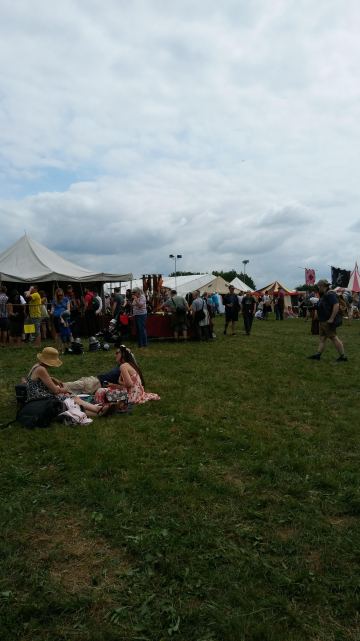
This is only a very small section of the Tewkesbury Medieval Fair

This is only a small section of the Tewkesbury Medieval Festival. Image by Allison Symes

A beautiful place to kneel and pray inside the Abbey

A beautiful place to pray in Tewkesbury Abbey. Image by Allison Symes
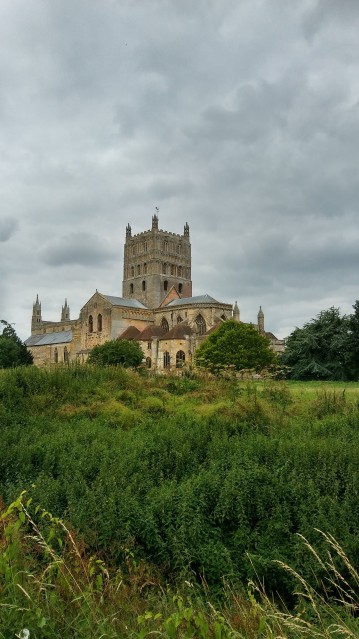
Tewkesbury Abbey

Tewkesbury Abbey. Image by Allison Symes

TF 2019 - Have never seen basketwork like this before

Incredible basket and weaving work was part of the Festival. Image by Allison Symes

I was amazed at the range of stalls at the Tewkesbury Medieval Fair yesterday. I didn’t get to cover them all either! There really was everything from longbows (including a pink one which I presume is meant for the ladies – hmmm… I’ve never been a pink type of girl anyway. I preferred the dark red ones. Before you ask, no I didn’t get one. Lugging that home on the Great Western Railway would not have been fun!).

What was lovely though was:-

a. Seeing the Richard III Society stand and having a lovely chat with the lady running it.

b. Meeting Alex Marchant of Grant Me the Carving of His Name, an anthology of stories with Richard III at the heart of them. This anthology has a story by #JenWilson in it and the book is raising funds for the Scilosis Society (and apologies if I spelt that wrong!). Alex’s YA book Order of the White Boar was on sale too.

I’m always going to love having a good nose around author stalls at events like this and yesterday was no exception! (It is also lovely to meet face to face people you “meet” on Facebook the rest of the year).

There was also a storytelling tent (aimed at children) but that ties in beautifully with the theme of oral storytelling traditions, which I’ve written about before.

Today has been spent recovering from a lot of walking (it is amazing how much you do walk around for events like this) and anticipating next year’s event!

Does going to events like this inspire story/article ideas? Yes, they can do and have done for me. It’ll be fun to find out what comes from this visit in that department.

Richard III - one document found by George Buck led to a reassessment of the king

Richard III. Pixabay.

Old documents reveal so much about our history including the writer's bias - Pixabay

Old documents can shed light on so much (lots of stories to be found here). Pixabay

Currently in power cut mode. Thank goodness for a smartphone and mobile data! Apparently someone went through the electric cables so SSE engineers now out working to fix things.

Much as I loved my Tewkesbury visit at the weekend, I am so glad I live now and not in mediaeval times. I appreciate literacy. The likelihood of my having any back then would be extremely remote. My best chance of any would be to be of high birth but I just know I’d be of peasant stock.

How many stories have there been of those rebelling against their “allotted” pace and role in life? How many lives have been changed due to being literate in a way their ancestors would envy?

Pictures are all from the magnificent Tewkesbury Abbey and taken by me.

This slideshow requires JavaScript.

What are the key ingredients to a story, regardless of its length?

1. Strong characters (strong in that they are memorable to readers. Readers don’t necessarily need to like them though).

2. A crisis (or series of them) that must be resolved (not necessarily well or happily) and usually involving great personal cost to the lead character.

3. A good pace as the crisis develops. Readers need to have the “must find out what happens next” reaction to what you have written.

4. A satisfactory conclusion, but again it doesn’t necessarily have to be a happy one.

Strong characters don’t have to be strong in the conventional sense. A character who is weak, backstabbing, treacherous etc can still be a strong one in that their actions will be crucial to your story and readers will remember them. (And if any fellow fans of Richard III are NOT instantly thinking of Lord Stanley here, I would be most surprised!).

Facebook – From Light to Dark and Back Again

The A to Z of Flash Fiction Writing Tips by Allison Symes

How about an A to Z of flash fiction writing tips? I’ll be holding my breath seeing what I come up with for Q as well but here goes…

A – Alliteration in your titles can make them memorable. (Examples from me are Telling the Time and The Truth, though I haven’t consciously singled out the letter T for alliteration usage, honest!).

B – Backstory. Not a lot of room for this in flash fiction but what you can do is hint at it and leave readers to fill in the rest.

C – Characters. Couldn’t really be anything else. Characters drive the story, regardless of its length. It will be the characters readers remember and either love or love to loathe.

D – Dialogue. Again not a lot of room in flash fiction so keep it to the point. For any story dialogue has to earn its place by moving the story on or revealing information the reader needs to know (and it can be both). This is even more important in flash fiction.

E – Episodes. Yes, you can write linked flash fiction where either one character features in more than one story or they are referred to in another tale. I didn’t do this in From Light to Dark and Back Again but have played with this in my third flash fiction collection (currently in draft form) and it is good fun.

This slideshow requires JavaScript.

So on to the next section of my A to Z of Flash Fiction Writing Tips.

F – Flexibility – I do see this as one of the great strengths of flash fiction. As it has to be character led for impact in as short a space as possible, you can have fun setting that character wherever and whenever you wish. Talking of which…

G – Genre – Have fun mixing up the genres for your flash stories. I’ve written in fantasy, historical, crime, and horror to name a few. See what you can do here. Mixing things up keeps you on your toes too, which is great for honing your writing to a particular genre’s requirements.

H – Humour – Flash fiction can be a great place for witty one-liners. I’ve sometimes ended stories this way as they can double up as a twist ending. You can also start stories this way andxsee where a promising witty character takes you. Enjoy!

I – Imagination – Being restricted to a specific word count shouldn’t restrict your imagination. It should fire it up! Why? Because you have to use your imaginative powers to select words which carry as much weight and have as much impact as possible. You choose what a reader has to know and what they can work out. Just what are the telling details that matter?

J – Justice – Poetic justice stories work well in flash fiction as the best of these go for maximum impact and that is best “concentrated”. You don’t want that kind of story dragging as it will lose its effectiveness.

More tomorrow but meantime a flash story tying in with my visit to the Battle of Tewkesbury Re-enactment.

Cut Down

I saw the standard bearer fall. I really thought my master had done it. Victory had to be ours…

But no… Master was cut down, betrayed.

My regret? Not taking the chance to cut down Lord Stanley. Without his command to switch sides, my master would still be here and not slung naked over the back of a horse.

Ends

Allison Symes – 13th July 2019

This slideshow requires JavaScript.

So more on the A to Z of Flash Fiction Writing Tips then and we start with K.

K – Knaves. Unless you write to the top end of flash fiction, there isn’t often the room for an out and out battle between good and evil in your stories. But what can be fun is writing a story from the knave’s viewpoint and working out why they are committing the acts they are (or are about to do) and how they justify doing so to themselves. Yes, you can do that in 100 words! (My Getting It Right is an example of this kind of story).

L – Lively Lines. I love writing dialogue but unless it moves a story on in some way, it has no purpose. In flash especially, dialogue between two characters will take up a lot of your word count. Now you might not worry about that, especially if you’re writing an all-dialogue type tale, but I’ve found instead of using dialogue, showing up a character’s attitudes via internal thoughts saves on the word count. I can still give them good lines too. They’re just not spoken out loud, that’s all, but the reader still picks up what the character is like etc and, I think, more directly too.

M – Monologue. I’ve always thought these work best when they are kept short. And so can they work in flash fiction? Oh yes. I write a lot of flash tales from within the viewpoint of one character only so it is as if they are monologuing to a reader. My Telling the Time is just one example of this.

N – Narrative Voice. Has got to be strong. Has got to make an impact. This is another reason why I like to get into the head of one character and write directly from that viewpoint. I can only use one narrative voice doing this and the impact is strong as a result of that. This is why it is a good idea not to have too many characters in flash fiction. It’s not just about the word count.

O – Originality. Is it possible when it has been said there are only a few basic plots? Yes. It is how you treat your characters and the voice you give them that makes your stories unique to you. Use the flexibility of flash fiction to help you here. You might prefer to write just funny flashes or crime ones or what have you (or mix them up, as I do) but play to your strengths and originality will come from that. You will develop your niche.

This slideshow requires JavaScript.

Moving on with the next section of my A to Z of Flash Fiction Writing Tips.

P – Pace. Despite the reduced word count, pace is still vital in terms of getting it right for the story. I’ve read and written fast and thoughtful pieces. The important thing is you need to know what pace will be best before you start and hit the ground running with it. Using character thoughts is a great way in here.

Q – Quirky. Flash fiction is a good vehicle for work that defies categories. It has to be character led and you can make your characters as quirky as you like. Have fun here, I do!

R – Reading. Crucial for a writer isthe willingness to read widely in and out of genre. Flash fiction comes in novella form, as well as collections, so explore the form. See what you like to read and it may well be it is what you like to write too.

S – Story. It’s all about the story and that is down to the strength or otherwise of your characters. Look for the impact your story has on you. Is it memorable to you after time away from it?

T – Tension. This will be more intense in flash tales as you have less set up and calm down again time. I think of this as that moment in the spotlight where everything is focussed on one point. Helps with pace a lot! So work out where the tension should be and play up to it. Don’t let your characters off the hook.

U – Universe. Your flash tale is its own universe. Is it somewhere you yourself would want to be? Why? If not, why? Whatever your answer is you need to convey that to your reader.

More tomorrow..

And finally to the last section on my A to Z of Flash Fiction Writing Tips. I start with a tricky letter (to place in Scrabble at times anyway!).

V – Variety. One of the joys of flash fiction is it is so easy to mix up your genres here so do so and have fun with it! It has to be character led so set your character where and when you want. I’ve written historical flash fiction pieces, crime ones, horror stories etc so mix up what you do here. It’ll be fun for you and some of that fun at least will come through in what you write to a reader.

W – Word Count. Had to be really. Don’t forget flash is quite flexible here. It has so many sub-divisions there is bound to be at least one which suits you. Play around with your writing and see where you tend to favour most. I tend to write up to about 500 words mostly, with the occasional longer piece.

X – Xerox! Am I cheating here? Well, maybe. What I mean here is it is good to read what has gone before but don’t copy it directly. Use the flexibility of flash fiction to create marvellous, inventive characters of your own. Read widely to see what characters you love reading about. Can you write a character who would bring out the same reaction in another reader? Look at how and why the character who appeals to you achieves that. You want to “xerox” the technique, not the actual writing or characters.

Y – Yardstick. Think about how you judge what a successful story is. Is it one that has been published? Yes, it can be, but you will have come across published stories that simply don’t work for you. The trick here of course is to make sure none of YOUR stories do that! (Again look at why a story didn’t grip you and look at how you can avoid doing that in your own writing). For me the yardstick is am I proud of the story? Could I make it better? The answers should be yes and no!

Z – Zips. This is what your story should be doing – zipping along with great characters and pace and keeping your readers gripped. Easier said than done? Frankly, yes, but it is worth striving for. A story that zips along and entertains is always going to be of interest to an editor somewhere.

This slideshow requires JavaScript.

Goodreads Author Blog Storytelling

I love taking in stories via reading, of course, but also have a very soft spot for the oral storytelling tradition. We owe our oldest tales to that tradition, but there is something wonderful about being told a story.

Whether it brings back happy memories of being read to as a child, or of great jokes told as a story, if you get the chance to go to Open Prose and/or Poetry Nights, do go. As well as supporting those taking part, you are helping to keep this fantastic heritage going.

I always loved the Ronnie Corbett monologues in The Two Ronnies. The ultimate in shaggy dog tales, I think, though I also love the My Word collection by the equally much missed Frank Muir and Denis Norden. I didn’t hear the radio series on which these are based, but if you love puns, do look them up.

Stories on radio and audio books are the modern oral storytelling methods, I guess. What would Chaucer or Shakespeare made of those?!

This slideshow requires JavaScript.


Summer Reports/Flash Fiction Tips

Facebook – General – and Chandler’s Ford Today

Writing my CFT post this week about Summer Reports brought back many memories. I can report that when I left school, they then went and closed it! Hmm…

Also, do you remember having to put your chair on your desk as the picture shows? (As ever most of the images in this post are from Pixabay, captions on the CFT post). (And yes I do remember the days of school milk. It was either horribly luke warm or ice cold and not in a good way).

Summer is a good time to take stock as there is still enough time left in the year to set a few goals and have a good attempt at achieving them. And that doesn’t just apply to writers either.

This slideshow requires JavaScript.

Am finding the muggy weather a bit of a trial as is Lady. Doesn’t slow the writing down, though it DOES slow me down! This is where I’m glad writing is not a sport in any way, shape or form! Currently at desk with French window open, listening to classical music. Bliss!

I used to write in total silence, then I moved to music (pop and rock) but found the mood of the songs could affect what I wrote (which was fine when I wanted that and a pain when not).

I don’t know quite what it is about classical but it doesn’t have that effect. It just soothes me and once in a relaxed state of mind, off I go and write and drop my characters into some enjoyable mayhem. (Well, enjoyable to me that is. Definitely not for them but they’re not meant to enjoy it! Nobody said the life of a character in a story had to be easy, far from it. Where is the drama in that?!).

This slideshow requires JavaScript.

My CFT post this week will be Summer Reports. I look back at my school reports (they closed my school after I left – am not kidding!), suggest what a good report should do, and give a writing report on myself too. (That alone should tell you I think it’s been a good year!). Link up on Friday.

I will add now though that a good report, as well as writing successes, should always spur you on to greater efforts!

So happy writing and good luck for future endeavours!


Facebook – From Light to Dark and Back Again

How about an A to Z of flash fiction writing tips? I’ll be holding my breath seeing what I come up with for Q as well but here goes…

A – Alliteration in your titles can make them memorable. (Examples from me are Telling the Time and The Truth, though I haven’t consciously singled out the letter T for alliteration usage, honest!).

B – Backstory. Not a lot of room for this in flash fiction but what you can do is hint at it and leave readers to fill in the rest.

C – Characters. Couldn’t really be anything else. Characters drive the story, regardless of its length. It will be the characters readers remember and either love or love to loathe.

D – Dialogue. Again not a lot of room in flash fiction so keep it to the point. For any story dialogue has to earn its place by moving the story on or revealing information the reader needs to know (and it can be both). This is even more important in flash fiction.

E – Episodes. Yes, you can write linked flash fiction where either one character features in more than one story or they are referred to in another tale. I didn’t do this in From Light to Dark and Back Again but have played with this in my third flash fiction collection (currently in draft form) and it is good fun.

More next time…

Advantages to writing one line stories:-

1. They can be expanded later for a longer flash fiction story/standard short story (1500 words+).

2. Easy to share on a FB post or on Twitter!

3. Great practice in honing your editing skills.

4. They’re the ultimate proof, I think, people DO have time to read. Come on, how many people really can’t spare the time to read one line?

5. They can make a great introduction to the wider ranges of flash fiction formats.

6. They can “break up” longer flash stories in a collection. I like a mixture of word count flash stories in a book (no surprises there, I know!).

7. Playing with words is fun and coming up with different styles of stories keeps you on your toes as a writer. That includes varying your word count ranges. Varying your word count ranges will increase the number of competitions/markets you can try.

This slideshow requires JavaScript.

Top tips for flash fiction writers:-

1. Read plenty of flash fiction yourself. You’ll get a feel for what you like and dislike and you see what is already out there. Where can your work fit in?

2. Engage with other flash fiction writers at writing conferences etc. No one person knows all the markets and competitions out there (and new ones spring up which may well be worth investigating).

3. It is lovely when YOU can pass the word on about a useful market/competition. What goes around does come around. I can’t stress enough that supporting other writers is not only a kind thing to do, it is a hugely sensible one. Partly because as mentioned in 2 above, others can tell you things you didn’t know (including on the scams that happen – it pays to be aware), which may help your own career but mainly because writing is a lonely profession. When all that seems to come in are rejections, you will be glad of the support of other writers who know exactly that this is like.

4. Experiment across the word count ranges and see what suits you best. You may find your niche at 250, 50, 1000, or pretty much in between.

5. Do send work into competitions regularly. It helps you hone your skills. As an aside to this, read winning entries, especially when accompanied by judge’s comments as you can learn so much from those.

6. Write, write, write. Edit, edit, edit!

Fairytales with Bite –

Ten Things I look for in a Good Story

I suspect there won’t be any great surprises here but each one should be a challenge to all of us to ensure we keep doing these!

  1. Characters I love or love to loathe. They’ve got to be memorable.

  2. Situations which are critical for the characters. They’ve got to strive for something important.

  3. A setting I would love to visit! (Anyone fancy a trip to The Shire in The Lord of  the Rings? Mordor, I’d be happy to miss!).

  4. Great pace.  Absolutely no boring bits!

  5. It’s a story I’d be happy to re-read at any time and enjoy it all over again.

  6. Humour, where apt for the story and the characters. I have a very soft spot for irony.

  7. Tragedy, when necessary as it often is, not to be overdone. (I think tragedy has much more of an impact when it does not become melodrama).

  8. Snappy dialogue.

  9. Catchphrases I can remember – and enjoy doing so.

  10. The story shows me something of the human condition which I’d either not considered before or reaffirms something. Funny stories can do this surprisingly well.

This slideshow requires JavaScript.

This World and Others – Summer Reports

I look at Summer Reports in my CFT post this week and discuss, amongst other things, what a good report should do, irrespective of whether someone is academic or not. I also give a summer writing update for me!

But from a writing viewpoint, what reports could you write, for whom, and how could they help you?

1.  Character Reports
I use Scrivener and in their story template they have outlines for characters (and settings) which you can fill in with as much or little detail as you want.  You can of course create your own, but I have found these enormously useful in working out what my characters are really made of and, therefore, I write them with more conviction. I hope they come across that way too! So writing a report on  your characters can help you discover things about them, help you give depth to how you portray them and so on.

2. Report on your Story
I find it useful as part of the editing process to look at the story as if I hadn’t written it and was discovering it for the first time as a reader would. I look at what my overall impressions are, what I think worked well and, as importantly, what didn’t! The crucial thing is to be totally honest here, otherwise this idea won’t do anything for you.

Sometimes my “report” here is just a series of notes such as Character A comes across well, they’ve got great humour, but where do their flaws come in? Is Character A too perfect? Once you’ve made notes like this, put the story and the notes aside for a while. Re-read the story after a week. Look at your notes and see if you still think the same.

If you have trusted beta readers available, this is where they could be invaluable but total honesty about what works and what doesn’t is key here. Keep in mind you want to produce a story that is as good as you can make it. If several people tell you something doesn’t work, take this seriously. If one says that, then it could just be opinion and you will then need to decide if it has weight or not.

So reports then are useful to a writer but honesty is key. I can’t stress that enough.

This slideshow requires JavaScript.


What Writers Need/Would Like

Naturally, what writers need and what they would like are not necessarily the same!

Facebook – General

What do all writers need?

1. Stamina.

2. The ability to accept rejections happen.

3. Commitment (10 minutes a day IS commitment so don’t be put off if your time is limited. The time you can spend on writing mounts up and besides this is not a competition). It is a case of working out what you can do and then sticking to it.

4. Reliable PC/laptop and printer (for running out those stories you need to edit on paper).

5. The ability to accept feedback, especially when it is critical. (What you’re looking for here is feedback that is honest but also says why something didn’t work for the reader concerned. “I didn’t like it” is not exactly helpful! “I didn’t like it because I thought the character was weak” is better. You then need to look at the character carefully and see if they are weak. If they are, there is work to do. If you honestly feel they’re not, then this may be this reader’s perception but something didn’t come across well and that is something you could look at).

6. Willingness to allow enough time to feed your own imagination and that means reading widely and across genres, including non-fiction.

7. The ability to plan out what work you will do when. My shorter writing sessions I use for flash fiction. Longer ones I give over to the novel or longer short stories. Planning how to use the time you’ve got will help you get more done.

8. Pens and notebooks. Jotting down ideas has to happen somewhere so it may as well be in a nice notebook. (Do ask non-writer family and friends for notebooks and pens as presents. You can’t have too many…!).

This is by no means a comprehensive list but I didn’t want this rivalling War and Peace for length!!


I listed yesterday some of the things writers need including stamina, the ability to accept rejections happen and so. Tonight I thought I’d flip the coin, so to speak, and look at what writers would like to happen.

1. Publication, obviously (and then to keep on being published).

2. Reviews (on Amazon and Goodreads particularly. They don’t have to be long reviews either).

3. Support from other writers and family/friends. It really does help especially for those times when your writing seems to be going nowhere.

4. An endless supply of pens/notebooks/toner cartridges/A4 etc etc.

5. An endless supply of tea/coffee etc while writing.

6. Always being able to go to your favourite writing events!

7. To never be short of things to write!

Again, this is by no means an exhaustive list!

What are the things I’ve found most useful as a writer? These are not in any particular order. All are invaluable.

1. Scrivener

2. Evernote

3. Smartphone (am a late convert to these but I get so much writing done when travelling by train thanks to this and it saves me lugging a laptop about. Biggest bugbear = my local train company, on taking over from the old one, blanking out all the recharging points on their trains. Why for goodness sake? This was a useful service to passengers. I can’t believe we’d have drained the train!!). Also incredibly useful for photos.

4. Notebooks and pens, naturally.

5. Good supplies of information on markets/competitions/writing conferences to go to (and this can be from something like Writing Magazine to informative Facebook groups to writing organisations).

6. Supportive writing friends/supportive friends and family who don’t write but root for me doing so!

7. The internet (it is useful for research. The clever bit is focusing on what you want to find out and not allow yourself to be distracted).

8. The indie press! (Take a bow Cafelit, Bridge House Publishing, Iron Press, Chapeltown Books etc).

9. The Society of Authors and ALCS.

10. My laptop and my printer aka Old Faithful. (Has seen off at least three “cleverer” colour printers with duplex printing. Old Faithful is strictly black and white and one side at a time and keeps going and going and going).

11. Liquid refreshments while writing (what I have here depends on time of year and my mood!).

12. My Slimming World Hi-fi bars for when the munchies strike while writing stories or blog posts.

This slideshow requires JavaScript.

Murphy’s Laws for Writers – An Occasional Series…

1. You have lots of ideas for stories or none.

2. You have lots of time to enter competitions or very little.

3. A competition that would have suited you perfectly has just passed its closing date by the time you spot it.

4. You run out of pens yet know you have loads on your desk. They just vanish into thin air when you try to find them.

5. You’ve finally got around to picking up a copy of the Writers’ and Artists’ Yearbook but within a week the next year’s edition is out. You are not best pleased.

6. You are delighted to be able to support your friends’ writing and are thrilled when they’re published, you tell them you’re looking forward to their books coming out, plan to get to their launches etc. However, you don’t know what to do when you discover they’re holding book launches on the same day and at opposite ends of the country. Hmm…

Am not going to say which ones I’ve been guilty of!


This slideshow requires JavaScript.

Facebook – From Light to Dark and Back Again

I’ve mentioned before that flash fiction works best with one character (at a pinch two), but it is also true said character should have only one goal to achieve/problem to overcome. There isn’t the room for more.

You want to keep things simple. Flash is direct. You are focusing on one character, one problem. Anything not to do with that is surplus to requirements and should be cut.

Simple is not the same as (a) easy (it really isn’t!) and (b) simplistic. You are looking for a prose style that flows and carries your readers along, keen to find how you get your character out of the horrible situation you’ve put them in. Do they sink or swim? Have they the right character traits to be able to swim? If they start to sink, how can they turn that around?

This slideshow requires JavaScript.

It’s about time for some one-line stories again. Hope you like these.

1. When the red, red robin came bob, bob, bobbing along, the cat had a field day.

2. The problem with wishing on a star is, unless you have space equipment on and a decent supply of oxygen, you’re not going to be wishing for long.

3. The Magic Roundabout can carry on without me – I am currently stuck in Swindon’s version.

(For those not in the know, Swindon is renowned for its system of multiple roundabouts in one big one and The Magic Roundabout was a well known children’s TV programme back in the 1970s. Well, that was when I watched it! Oh and for the record, I’ve only been to Swindon by train to visit their excellent Steam railway museum!).

This slideshow requires JavaScript.

It is often advised to keep a notebook handy so you can jot down story/blog post/novel ideas etc whenever they come to you. To be fair, this is very good advice.

However, it has never worked for me. Partly because when my head hits the pillow, I’m out like the proverbial light. No chance of me getting ideas during dreams.. I just sleep!

Secondly every other place where I have had ideas for stories has been too awkward for reach out and grab the notebook. It’s not unknown for ideas to come to me while showering or on the loo.

Why do ideas never come like that when you really COULD pause for a moment and jot them down the way you’re advised to? I refuse to believe this is just me!😀😀

This slideshow requires JavaScript.

I relish that moment in fiction writing when the character takes off and I know I’ve got a good story in the offing as a result. I do believe a great story, regardless of its genre, is down to the great characters fuelling it. But up until that point, there is always that wondering “is this character going to work as well as I’d thought?”, “what if this falls flat?” etc.

Sometimes the character doesn’t work out and the story does fall flat. What I do here is, after some time away from it, I look at the story again and analyse what worked and what didn’t. It is nearly always a case for me that the character’s voice wasn’t strong enough. I can then look to see if I can improve that and rescue the story. If not, it’s a lesson for next time.

I’ve got to be able to hear a strong character voice coming through the narrative. Without that, I don’t think any story will work properly. To get that strong character, you have to know who they are, what they would risk everything for, and, in your story, are the stakes high enough for them to care about the outcome? If not, then the story will fall flat and no reader would care either.

Goodreads Author Blog – Settings in Books

Does the setting in a book matter to you?

I was always gripped by Kirrin Island in the Famous Five series by Enid Blyton. (I guess the nearest I got to visiting anything like it was when I went on a day trip to Brownsea Island, just off Poole! I lacked the lashings of ginger beer though… sighs…).

One of the things I love about The Lord of the Rings is the way The Shire is conjured up as a lovely place to live. Mordor is anything but! The films did full justice to this too. (Not always true for film adaptations either).

A really good setting is almost a character in its own right and the authors treat them that way too. This is true for Narnia, Winnie the Pooh (I’ve just got to say 100 Acre Wood and that will conjure up the world of Pooh immediately – to me at least!), amongst many, many others.

Do I need intensive descriptions of settings? Not really.

What I look for is enough for me to be able to visualise that setting for myself. Also, the characters should fit the setting – Jeeves and Wooster are great examples of that. There shouldn’t be any feeling of anything of anyone being out of place. Even the villains in a story should fit (think of the weasels in The Wind in the Willows for example – they still fit in that world).

Which are your favourite settings and why?

This slideshow requires JavaScript.


Controlling the Weather and Writing Prompts

Facebook – General – and Chandler’s Ford Today

In my CFT post Controlling the Weather I share a flash fiction story of mine which is shorter than Edward Bulwer-Lytton’s “it was a dark and stormy night”. Do see the post for the full sentence (and take a deep breath before you start too!).

I now know why Snoopy only ever quotes “it was a dark and stormy night” but no more as there wouldn’t be enough room in the caption bubble!

I rarely use the weather in flash fiction as the word count means I have to show you the pertinent detail(s) about the characters. The weather rarely comes into that!

So what would count as pertinent details then? For me these are:-

1. Something of their attitude/outlook on life (I show this via internal thought as well as dialogue).

2. Something of their setting. Setting can change the outcome of the story or have a huge influence on it, for good or bad.

3. Sometimes a brief physical description where it matters to the story. In my Pen Portrait I show Mary as a character who brushes her hair once a day whether she needed it or not. I mention her clothes and shoes would see her through a battlefield but DON’T specify what they are. I don’t think I need to do so either. Those two lines should conjure up an image of Mary well enough! It also shows something of her attitude (double whammy here!).

I’d say 1 is the most important and “where it matters to the story” is THE golden rule of fiction writing, regardless of whether you write flash stories or longer works.

Image Credit:  The magnificient Pixabay. Captions via the CFT post! Also this post was shared on From Light to Dark and Back Again as well as I thought the pertinent details relevant to that page too!

This slideshow requires JavaScript.

Managed to catch up with a couple of writing prompt exercises, both of which will become flash fiction stories later. Complete contrast in moods for the exercises too but I like that. It keeps me on my toes, which of course is the idea behind said prompts.

I tend to write up these prompts in batches but that’s fine. It’s a little like not being able to stop at one crisp or what have you once you get started on them!

The nice thing about free writing like this is I know the stories aren’t perfect but that doesn’t matter at this stage. I’ve now got two more stories to work on for submission somewhere in due course and that’s great.

My CFT post this week will be looking at Controlling the Weather. You can tell my other writing hat is fantasy, yes?!

I look at why controlling the weather isn’t a good idea, even if we could do it.

Also I discuss why “it was a dark and stormy night” has gone down as one of the most renowned writing cliches. (Possibly to only be beaten by “and it was all a dream”? Thoughts on that would be welcome when the link goes up on Friday).

I have to say I’ve written flash fiction stories shorter than that infamous opening line from Bulwer-Lytton and I go on to prove it in this post too! And if could control the weather for a day, what would you ask for and why? Thinking heads on in time for Friday’s post then (and those of you of a certain age will remember where that phrase comes from! Clue to those who are not: a former Doctor Who plays a scarecrow, yes really!).

PS Looks like no photos will upload tonight so apologies. Believe this is a FB issue. Hopefully normal service (and photos) will resume soon…  (NB  From Wednesday, 3rd July when FB and What’s App seemed to have an issue with photos. Glad it appears to have been resolved).


Facebook – From Light to Dark and Back Again

Occasionally a story idea proves to be a better match for a standard length short story (1500 words or so) than flash fiction, which is fine. I find a suitable competition/market for that longer story and don’t try to keep it sub1000. (How do I know incidentally? It is always the character’s voice and sometimes they have more to say than I originally thought they would!).

I sometimes deliberately make myself write longer stories as the discipline of working to very small word counts AND what would be considered an industry standard is very good for you as a writer. Shaping what I’ve written to fit the most appropriate market/competition is something that will always be needed and is a useful skill to develop.

This slideshow requires JavaScript.

Looks like the photos will be unavailable for a bit though I understand this is a FB/What’s App issue. Hope it’s resolved soon. Don’t envy those trying to sort it out.

Meanwhile back to good old text only.

In researching my CFT post this week about Controlling the Weather (yes, really – more on Friday when the link goes up), I looked at a very famous opening line that has gone down in the annals of Cliche and Purple Prose, so much so even Snoopy quotes it regularly.

To my surprise, I found I’ve written flash fiction stories which come in at under the word count of that opening line!

So every word counts then in a flash story? Of course but the words have all got to pull their weight. You know when the story’s right (or as much as it can ever be) when you can’t change anything or remove a word without it spoiling the story somehow. One lovely thing about flash is you know you haven’t got the room for purple prose which is a huge encouragement not to write it at all!

Fairytales with Bite – Controlling the Weather and What Writers Should Control

My CFT post looks at why Controlling the Weather isn’t a good idea even if we could do it. I also look at why “it was a dark and stormy night” has gone down as one of the all time “great” writing cliches. But can the weather play a purpose in writing? Can writers control their use of it so it is effective, rather than something that can be mocked (as that infamous opening line so often is)? What should writers control in their writing?

The weather can play a role in writing as long as it matters to the story (in terms of outcome/character development etc).  Generally speaking, it matters to the story is the most important rule in all fiction writing! Weather can also be used to reflect or contrast mood. If someone is singing in the rain, we would generally want to know why!  Interest piqued… now follow through with interesting reasons why!

What writers should seek to control in their writing should be:-

1.  Everything that is in the story has to be in there. Something would be lost in terms of character and/or plot if anything was removed. If anything could be skipped, cut it out. It is what readers/editors will skip.

2.  Their characters. Characters should be well developed and should engage with the reader (even if it is to make the reader hate them!).

3.  Dialogue.  This should reveal information/move the story onwards. Any dialogue without a purpose shouldn’t be in there.

This slideshow requires JavaScript.

This World and Others –

When You Know Your World Works

There are certain pointers which will indicate your created world is working and hopefully will encourage you to develop it further.

1.  You know how the world is run. (There has to be some sort of government).

2.  You know who are the powerful and who are the downtrodden (some things are just universal!).

3.  You know the immediate setting for your story intimately. You need to be able to portray this, almost as if it were a character in its own right.

4.  You know where your characters fit into your world (and whether they fit in well or not. Do they defy convention or follow it religiously?).

5.  You have some idea of how your people survive in terms of food/water/sanitation/employment provision. I can’t think of any created world where characters don’t have to eat, be able to resource themselves etc.

Not all of these details need to make it into your story. We don’t need to know everything about politics in your world but we do need to know what matters to the story (which I think is going to be a new mantra for me but it is a useful one!).

This slideshow requires JavaScript.

Other News including Publication News

Am delighted to say my story What Goes Around will be in Bridge House Publishing’s Nativity anthology later this year. What with The Art Critic and Dignity and Injustice due to be published in The Best of Cafelit 8 in December, I will have three stories in two books then! I am also still thrilled of course that The Professional was in the ebook Transforming Being, the Bridge House published ebook of the winning entries for the Waterloo Arts Festival Writing Competition.

I have also set up an Amazon Authors Central page and these are set for the US, UK, France, Germany, and Japan. Here you can find out more about the anthologies my stories have appeared in as well as about From Light to Dark and Back Again of course.

It has been a good month!


A Good Writing Week

Facebook – General

Do you read or write (or both) outdoors? I don’t write outside. I much prefer being at a desk for that (and right now it is beautifully cool in the study so added reason to stay in! It also means I can turn up the volume when Beethoven’s 5th comes on and I avoid annoying the neighbours so win-win).

I read outdoors sometimes, there’s nothing to beat relaxing in a nice recliner with a book in hand unless it’s doing that, knowing you’ve got a long cold drink besides you too!

I cope with colder weather better than hot (as does Lady naturally). How do your characters react to their environment and weather conditions? Do they cope with anything that can be thrown at them weather wise or do they curl up at the sight of anything more than a fine drizzle?! If you’re writing fantasy or anything other worldly, what would be standard weather conditions in your setting? How does it impact on your characters?

Hopefully you’ll find some ways to deepen your characterisation answering questions like that.

A good writing week is when I can look back and see:-

1. CFT post written, images sourced, and appears on the Friday. (Only times it hasn’t appeared have been either because I’ve been away or ill and once there was a technical issue, which meant I had to post a day late).

2. Progress made on my projects, especially the novel.

3. I have either submitted work to competitions/markets or am drafting work to be sent in the near future.

4. My WordPress website round-ups have appeared on the Tuesday and Friday. I enjoy preparing these as they look like a mini magazine. I hope you enjoy them too!

It has been a good week! Do I get bored? No! Do I wish I had more writing time? Always.

This slideshow requires JavaScript.

Asking questions is a great way to generate story ideas. The classic one is “What If?” of course, but Kipling’s honest serving men of What and Why and When and How and Where and Who are invaluable for outlining a story of any length.

For example:-

What are the stakes for your lead character?

Why have they got to go for the goal you’ve set?

When do they have to achieve their goal by? (The shorter the time frame the better as it means more pressure for your character).

How will they achieve their objective?

Where does your character live and what bearing does the setting have on their trying to achieve their goal?

Who opposes them and who helps?

You can adjust the above questions to suit your needs, of course, but answering these will give you an outline you can add to or change as you require.


This slideshow requires JavaScript.

Thrilled to announce my humorous fairytale, What Goes Around, will be in the Bridge House anthology, Nativity, later this year. You can rely on me to share the link as and when I can!

Many congratulations to all of the 24 authors in the latest Bridge House book and a particular shout out to #AlysonRhodes, #PaulaRCReadman, #DawnKnox, #LindaFlynn, and #JamesBates.

I can’t wait to read all of your stories. They will be a wonderful ecletic mix!

Image below taken at a previous Bridge House event (and supplied by Paula Readman, who is on the right. Dawn Knox is in the middle).

It has been a busy few weeks with news of stories in The Best of Cafelit 8 and Transforming Being. I like weeks like this!

Paula Readman, Dawn Kentish Knox and Allison Symes and books - with kind permission from Paula Readman

Paula Readman, Dawn Kentish Knox and I celebrate where our stories have appeared! Many thanks to Paula Readman for the picture.!

Facebook – From Light to Dark and Back Again

Am currently listening to the theme from The Incredibles on Classic FM (well I was at the time I wrote this on Facebook!). Loved the film and the music is so appropriate for it. A really good film score always stands out and hooks the watcher into the movie.

Favourite film theme? Hmm… Love The Lord of the Rings soundtrack, no surprises there. Favourite John Williams’ piece is Raiders March (though Schindler’s List is so moving). Very hard to pick out an outright favourite.

For flash fiction writing, it is the title that has to be our big hook in for readers. The title has to be appropriate and to serve the story well, just as film music must serve its movie well. So it is worth taking extra time to get it right but it’s absolutely fine to start off with something and replace it later. I often do that when a better idea occurs as I’m writing the story.


This slideshow requires JavaScript.

Flash fiction, due to its word count restriction, works best with one character, possibly two (and there I would say that would work better with the longer forms of flash). You are looking for your character to have the strongest impact possible on the reader and having too many characters in such a short space dilutes the effect.

It’s another reason why I use first person a lot. I can get into the head of that character and they can reveal other characters for me/the reader. A good example of this is my Calling the Doctor where my character knows she is dying but it is not until the end she reveals who her doctor is. I don’t need to bring the doctor into the story at all. Do have a look at the book trailer as this is the story I chose to use on this and you’ll see why!


Flash fiction may be short, sorry it IS short, but it still takes time to edit and ensure the words you’ve chosen are exactly the right ones to make the maximum impact on a reader.

I usually get a first draft down pretty quickly. What takes the time is re-reading (often several times) and realising this phrase here could be sharpened up if I change one word here. Equally I need to look for those phrases where if I were to cut, something of the flow of the story would be lost. I always judge whether something should stay in on its impact on me (and therefore hopefully readers) and never just on the word count alone.

I see the word count as a guide. If something works better at 200 words rather than 100, then fine, the tale stays at 200! I’ll submit it for a different competition or market. You CAN over-edit. Mixing up what you write in terms of word count is not a bad thing to do anyway and gives you plenty of practice at writing across the range flash fiction offers. Nothing to lose there then!

Good news on the story front as my humorous fairytale What Goes Around is due to be published in the Bridge House Nativity anthology later this year.

It is wonderful when acceptances come in but behind them is a lot of hard work, even more rejections to get stories up to standards where they are in real contention for publication etc.

Even when that is the case, you cannot know whether your Story A or someone else’s Story B will fit the theme of the chosen anthology better.

So if a story is turned down somewhere, look at it again. Is there another market/anthology it could fit? All story writing is useful experience. What you learn as you write a tale (even if it is never published) is what you build on for the next story etc. You do learn, over time, to judge that a story of yours would suit Market X over Market Y. You learn to tailor your submissions too. That increases your chances of acceptance. Note I said increases!

There are no guarantees in writing and I guess that IS guaranteed!


Association of Christian Writers – More than Writers –

Legacies in Writing

Do you ever think about what your writing legacy is and, as importantly, should you?

I was recently at the Winchester Writers’ Festival and at the end of the Saturday courses, there was a lovely celebration held in the University of Winchester’s chapel for the late Barbara Large, MBE, who founded the event.

Not only was that a direct support to writers across all genres, she always found time to speak to writers of all levels, when she must have had a million and one things to do. She is remembered with much love, as you can imagine.

Easier said than done but encouraging others in their writing journey benefits them and you. Pixabay

None of us can ever know where our writing journey is going to take us when we first start. As with any road, there will be cul-de-sacs, the literary equivalent of potholes tripping us up, what we thought was a helpful road sign taking us in the wrong direction with our work and so on. (I’m not aware of any literary traffic wardens though!).

The writing journey is not always straightforward.  Pixabay

So we go into the writing life with our eyes wide open and seek to encourage other writers along the way as we ourselves receive encouragement from them.  We all know the heartaches of rejections after all, but we also know publication is possible. We also know writing for your own pleasure is as valid a thing to do but I also believe we can all leave a positive legacy behind. I think it is part of our calling as writers.

None of this can come all at once but are so worth striving for. Pixabay

The writing legacy we should leave then can be summed up as follows.

1.  Aim to write to the highest standard you can manage.

Improvement is always possible. It is always desirable too. Accept your first draft will not be great. My favourite quote on this comes from Terry Pratchett who saw first drafts as “you telling yourself the story”.

It’s then a question of extracting the gold from the dross – and there will be dross and more than you’d like. Shakespeare and Dickens faced the same. We will not be exempt!

Equally true for your writing but looking for continued improvement IS good to aim for.  Pixabay

2.  Be proud of your work. Ensure you enjoy it.

You are your first audience. Once published, you will want to keep on producing work to be “out there”. You must be able to enjoy what you write over and over again. Do mix up what you write.

I love writing short stories and blog posts as well as flash fiction, but whether you write one type of material or loads, you must enjoy it all.  That enjoyment comes through in what you write. Prose the writer has loved writing has an energy all of its own. I believe readers pick up on that instinctively.

It’s a pity we can’t award ourselves these every so often for our writing but look back and see how far you’ve come. Hopefully you will find encouragement there.  Pixabay.

3.  For you to be able to look back and see how your work has improved.

Working at the craft takes time. There are no shortcuts.

Determination to keep going is important too. Stamina is needed.  Pixabay


This has always struck me as sensible advice but the writing journey will have its ups and downs. The ride is rarely a straightforward and smooth one but it does help to know that!  Pixabay.

Writing challenges and stretches me and is so much fun.  It is also hard work. The two go together. Wherever your writing journey takes you, enjoy the ride!

Goodreads Author Blog – Changing Books

Which books stay with you as firm favourites throughout and which only last for a specific period in your life?

I wouldn’t give you a thank you for the old Peter and Jane books again (!) but would probably still enjoy the Famous Five.

The Lord of the Rings and the Chronicles of Narnia, along with the classic fairytales, will always be favourites.

But the joy of reading is discovering new genres and authors. It has only been comparatively recently I’ve discovered the joys of non-fiction reading. It wasn’t as if I was particularly against it, I just hadn’t tried any.

Now it’s a regular part of my reading routine. (I like the Ben Macintyre books especially. Loved Agent Zigzag in particular). The best non-fiction uses great fictional storytelling techniques and should keep you as gripped as an epic novel.

Which books from your reading past would you change now? Which would you change them for?


Moments That Matter/Narrative Voice

Facebook – General – and Chandler’s Ford Today

My CFT post this week looks at Moments that Matter. I share some of these from a writer’s perspective but also delve into the topic from a historical viewpoint too.

Moments that matter there, for example, include George Buck finding a copy of Titulus Regius, which Henry VII had ordered destroyed. Buck’s discovery of that document led to him reassessing Richard III. No surprise really that didn’t happen until after the Tudors had gone but it was a moment that mattered!

I also discuss why we should treasure moments that matter to us but also use them to spur us on. Hope you enjoy.

Image Credit:  Pixabay.  Suitable captions over on CFT!

This slideshow requires JavaScript.

What was the first story you read that made you think “I want to be a writer”? To be honest, I can’t remember what mine was (though I always loved the Famous Five so it probably was one of those), but books like The Lord of the Rings held me in awe of what could be done (and I’m still in awe over that one, and rightly so. Tolkein’s vision is amazing).

Much as I loved (and still love) fairytales, they didn’t then inspire me to write. I don’t think it was until I was reading children’s books etc for myself that the idea of writing stories myself occurred to me.

My trigger for writing was always having it in the back of my mind to give it a go some day. The trouble with that approach is working out when some day becomes “now”. It took a significant birthday and becoming a mum to make me realise if I wanted to write, I’d better get on and do it then. My only regret now is not starting a lot sooner than I did.

You don’t realise how much there is to learn, how it takes you time to get used to rejections, getting into the habit of submitting work regularly and so on when you first start. But when all is said and done, the important thing IS to start. Then enjoy the writing journey.

This slideshow requires JavaScript.

My CFT post this week will be on Moments that Matter. I look at this from a personal, writer’s, and historical viewpoint amongst others. Treasuring such moments is vital but so is moving on to the next one!

I also look at how the materials we have influence how we see historical turning points in particular (and what the absence in some cases can also do. Richard III fans will know what I mean there!). Link up on Friday.

Facebook – From Light to Dark and Back Again

It’s always important that your story has a strong narrative voice, but vital in flash fiction where that is used to imply so much and to drive the tale.

You need to get into your reader’s head what your character is like very quickly. Attitudes need to be shown quickly etc. There should be a sense of having to find out what this character will do next.

I think this is one reason why I use first person a lot in flash as I can take a reader straight into the head of that character and hit the ground running.

From my Serving Up a Treat:-

“I learned ages ago not arguing saved many beatings”.

Now hopefully that will provoke curiosity as to:-

a. Who the character is.

b. Why they’ve clearly put up with something intolerable for so long.

c. There is the implication that things are about to change and you will hopefully want to find out how. (Why, I think, is pretty much spelt out).

So a lot to do with an opening line then but I love the fun of coming up with lines like this which tell me so much about the character immediately. I want to find out what happens as I tell the story and that is a good sign. You are your own first audience. If you’re not gripped by what you write, nobody else will be!

Have fun writing lines like these. See where you can take your characters. I believe that the fun a writer has in coming up with a tale does get picked up on by readers, albeit at a subsconcious level. Get them hooked!

This slideshow requires JavaScript.

I remain convinced that technology has helped flash fiction take off as a genre given it is so easy to read on screens. If something like that encourages people to read who hadn’t read much before, I’m all for it. Tempt in with a quick easy read and before you know it, you have them hooked on War and Peace!

Okay, maybe not, but flash fiction can make a very useful start to a love of reading… and it helps you so much as a writer. You learn to focus and your editing skills are sharpened considerably. Also, you learn to come up with ideas, more ideas, still further ideas and so on. The more you use your writing muscles, the more you develop them.

This slideshow requires JavaScript.

Another good way of finding out if your flash fiction piece has the “oomph” you hoped it would is to record yourself reading it out, putting that away for a while, and then listen back. If you are gripped, well done, others will be too.

I’ve long advocated reading work out loud, even if you don’t record it, as if you stumble over dialogue, others will do. It is an oddity that something which looks good written down does not necessarily “read well”. Always read it out and see for yourself.

Simple easy to read writing takes lots of editing to get to that point. I don’t believe that IS just me!


This slideshow requires JavaScript.

Fairytales with Bite – Should Fairytales Ever Be Funny?

Well, should fairytales ever be funny? I suppose your answer to that might be based on what you believe fairytales are for. Many, of course, give moral messages (e.g.  never be unkind to an old person. In the fairytale they often turn out to be someone important and/or magical in disguise. Crossing them or being unkind is never a good move!).  Other fairytales can act as warnings. Some, naturally, can do both.

My own view is where a story (of any kind) can be funny and it gets something across better that way, then do so. Truth is often more palatable when sweetened a bit and making someone laugh or smile as they take in the more serious point behind the gag does make accepting that truth easier. I’ve never seen anything wrong in “just” writing for laughs.  It’s harder to do than it sounds but I’ve found the most memorable speeches/sermons/stories have all contained at least some element of humour. Humour makes it easier to remember and can be a useful tool for a writer.

Humour should never be forced. It should arise naturally out of your characters and the situations you put them in. I don’t think you can fake something to be funny. It either is or isn’t. There are topics which are not suitable for humour at all (abuse is the obvious one for me) but a fairytale which is trying to “promote” being kind, for example, could use humour to make more of an impact on a reader.

I love reading humorous prose. I find it a tonic for the soul. Given stories reflect life, and life should have humour in it, so should our tales! But it works best when it suits the material. You can’t force humour into a story where tragedy is more appropriate. Nobody went to see Romeo and Juliet for laughs for example.

Fairytales have great scope for flexibility. You have magical creatures and where there is magic, there is always the potential for it to go wrong. The consequences can be funny. Think of The Sorcerer’s Apprentice for example.

Happy – and fun – writing!

This slideshow requires JavaScript.

This World and Others – Moments That Matter

I discuss Moments that Matter in my CFT post this week and look at it from writing and historical perspectives amongst others. From a world building viewpoint, what are the moments that matter to you as the writer putting a fictional universe together? My thoughts are:-

  1. That moment it all comes “together”. The politics, the way your world is governed, how your characters react to all that finally makes sense and you write with utter conviction, knowing the parameters of your creation and testing your characters against those. (There are always rebels, though of course it does depend on your viewpoint if the rebels have a point or not!).
  2. When you know your lead characters inside out. You know what makes them tick, what pressures they would be vulnerable to, what would be pivotal moments for them. That’s where the stories and drama are!
  3. When you can visualise your world and feel it is almost as real as this one! You know the street names, where people would go for entertainment, whether there is religious/political freedom at all. You know your world to such a degree you could be quizzed intensely over it and come up with good answers!


It pays to write a list of questions you need to know the answers to and then work those answers out. Preparation work like that will save you work later. For a long piece of work like a novel, I could not write without having some sort of “map” to assist me here.  Happy writing!


AMAZON AUTHOR CENTRAL PAGE

Am pleased to finally share the link to my UK page. (There is one for the US, France, Germany, and Japan too! I will share links in due course).

https://www.amazon.co.uk/-/e/B07T3HT18L?ref_=pe_584750_33951330


Submissions, Housekeeping, and Anthologies

Facebook – General

Pleased to have submitted another story (a crime short) this evening. Am pushing myself to submit more often and am loving doing so. The nice thing is whatever happens to the stories, there will be things I can do with them later on. Nothing is ever wasted. If one competition doesn’t like it, will the tale suit another? Does it need a closer look and then submitting elsewhere? You have options!

Am working on my novel and also my Amazon Author Central pages (particularly for the US and UK). Hope to share the links for these soon. A big thanks to #PaulaReadman for putting me on to this. I blog regularly and use FB and other social media but this one had escaped me. It always pays to network with other writers because (a) it is huge fun, (b) reassures you that you are not alone in the crazy but wonderful world of writing, (c) you learn all sorts of things that can help you and, in turn, (d) you can help others too. All of that is great.

What has been nice has been looking up the various anthologies I’ve had work in over the years and it makes a nice selection to put up on said pages. So what now? Try to get in more anthologies of course!

A big thank you to my better half, Adrian, for taking the pics earlier today. It makes a huge difference when the writing geek in a family has support from the rest of the family (and something I am very grateful for).

PS  Have put the new pics up on other areas of the website. Housekeeping like this is a good habit to get into!

The writing life is made up of a series of special moments. You start by plucking up the courage to submit work somewhere. You then get your first rejection (almost inevitably) and you try again and again and then, hopefully, comes the great day when a piece of work is accepted. Joy!

But rejections continue to come in long after your first publication credit and you realise the writing life is a roller coaster and you need to learn to cope with the ups and the downs. Yes, even to cope with the ups, because you don’t want those to create the sense you can never better that special moment. You can hamstring yourself here!

You need, I think, to work towards making progress all the time. Progress can include trying forms of writing new to you and that’s a great opportunity to just write for fun. I took up flash fiction because Cafelit had put out a 100-word challenge and I just thought I’d give it a go. I didn’t expect anything to come from it but quickly became addicted to the form and things took off from there.

Progress can include looking at the rejections that come in and, if lucky enough to get comments, to see if there is a common thread.

Some competitions offer critiques for a fee in addition to the competition entry fee. I’ve gone for these sometimes.Some critiques are more useful than others but you literally pays your money and take your choice. You need to work out whether such a thing would be useful to you.

I only enter competitions that have been longstanding ones or where feedback on them is positive. I also go for critiques like these where the blurb tells you what to expect. For a short story, it is never going to be a long critique. What I’m after here is the critic’s general view of how well my story and characters come across. Tickbox critiques can work well here too.

Do you finish reading a story that hasn’t gripped you?

These days, I’m afraid I don’t – life’s too short etc – but I am pleased to say I can’t remember when I last abandoned a story. That’s partly I think because I’m getting better at picking out a tale that’s likely to appeal to me. It’s also because the moment a character has gripped me, I’ve got to find out what happens to them.

So of course you try to replicate that in your own writing. For me, it is always down to the characters which determines whether a story or book is successful or not. For non-fiction, it is the voice of the “narrator” of the piece that has to grip me and therefore determine whether I’m going to like the article or not.

Do you ever find you start a story slowly, then the pace quickens, and before you know it you can’t get the words down fast enough? I’ve likened this to almost taking dictation from your characters and that’s a good sign.

The other positive is that the slow start means you’ve started the story in the wrong place and that will be what you look at first to edit, cut, or rewrite later. You sometimes need to write a start like that to help get you going. The important thing IS to get going and have that first draft down. This is why I always write a story in full and then edit. I know it won’t be perfect straightaway (what is after all?) but that’s okay. The improvement works come later on.

Only the Ten Commandments were written in stone so just be aware you’ll need to go back and change that slow start. It if serves no purpose get rid of it. If there is useful material in there, what can you do to retain that and get it across to the reader in a better way? Sometimes that material can make a separate scene later once the pace has picked up and be a useful “take a breather” scene. Sometimes you can get the character to convey the information. There are options!

By the time you’re drafted your story and then re-read the whole thing, you should also have a better idea of where your tale should have begun. Hey presto, you take it from there!

This slideshow requires JavaScript.

Facebook – From Light to Dark and Back Again

Am pushing myself on story submissions though I’ve mixed this up with flash tales, standard length short stories and so on. All good fun!

One of my longer term projects is my third flash fiction collection (which is at a reasonable length as it is now but needs editing. I’ve got some linked flash stories in this one and some historical pieces but would like to add a few more tales to this before I really edit the lot).

My starting point for a flash fiction story is always to work out who is the character who is leading it, what their motivations are, what they stand to win or lose by the end of the tale. All of these have got to be strong enough to keep my interest going (yet alone anyone else’s!) and if the three strands together, then a promising flash fiction story should be the result.

This slideshow requires JavaScript.

I use first person a lot in flash fiction as it is so immediate but when I do name a character, it’s usually by Christian name only. This is partly due to the word count restriction but, much more importantly, I can convey what I need a reader to know about a character called Mary just by using that name only.

When I do bring in a surname it’s either a means to show what class/background that character belongs to OR another character is referring to them. That tells a reader immediately the named character is important to my narrator. It makes a useful flag!

This slideshow requires JavaScript.

Another advantage to flash fiction is when you are really pressed for time to write, you can jot down something to work with. Whether you then extend those jottings to a full length 1500 words+ story or keep it as something that could work in the flash market is up to you, but you have the option! So never despair if you only have 10 minutes to write, you can get something down in that time.

This slideshow requires JavaScript.

My CFT post this week will be about Moments that Matter but in flash fiction every moment matters!

Whatever kind of story you write, you select what the reader has to know, you leave gaps for them to work things out, and end with a satisfying conclusion to your tale. With flash, that whole process is more intense.

Every word must count and play its part. For example:-

She always wore velvet.

She always wore moth-eaten velvet.

Which of those lines would I use in a story? The second one.

This is because the “always” implies there’s a character here who may well be obsessed with what she wears. The “moth-eaten” tells you something about her financial well being (or she’s exceptionally careless about how she looks after her clothes). Yes. these are two extra words to the count but both add weight and meaning to the story so stay in.

This slideshow requires JavaScript.


Goodreads Author Blog –

What Do You Look For in a Story?

What people look for in a story differs of course but, for me, the primary wish is to be entertained.

I don’t like it when genre fiction is looked down on for not being “highbrow”. That isn’t the purpose of genre fiction. Besides genre fiction CAN be challenging and make readers think.

There is nothing wrong in writing or reading “merely” to be entertained. A good story that can make you forget your troubles for while is wonderful.

One of the lovely things about books/stories is they can take you out of yourself for a while and that is invaluable. In difficult times, I’ve relished those periods when I’ve been able to escape with a good book. The ability to escape for a while is crucial.

I can understand the point of misery memoir but frankly it isn’t for me. I hope others find healing and help through it but I want to switch off the real world when I read and deliberately venture into something I know is totally made up!

This slideshow requires JavaScript.


AMAZON CENTRAL

Below is the link to the US and UK pages I’ve set up on Author Central. More will be added as and when I have news/further publications out (there’s optimism for you!).  Hope you enjoy.

https://www.amazon.com/Allison-Symes/e/B07T3HT18L?ref_=pe_1724030_132998060

(American)

https://www.amazon.co.uk/-/e/B07T3HT18L

(UK)

There are also pages for me on Author Central France, Germany, and Japan!


Writing Legacy

Facebook – General – and Chandler’s Ford Today

My CFT post this week is about Writing Legacies. I look back at the Winchester Writers’ Festival and reflect on the wonderful writing legacy left by the late Barbara Large, MBE. I take the subject from her own legacy to the legacy she gave hundreds (possibly thousands) of writers she encouraged over the decades.

I also ask what legacy we should leave as writers, regardless of what we write in terms of genre. Link up tomorrow. This is one of those posts that is a privilege to write but then it was a huge privilege to know Barbara. The writing world needs more like her…

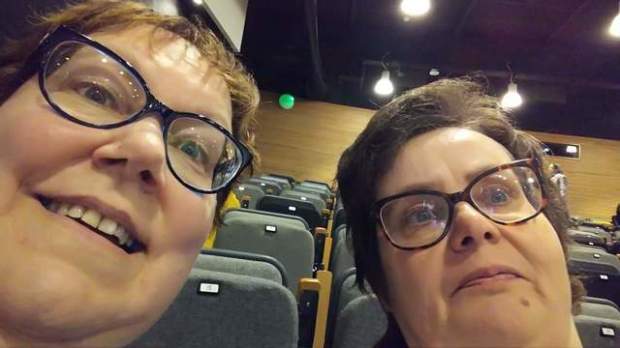
Image Credit:  Mostly Pixabay though the image of Barbara Large and Barbara with Anne Wan were kindly supplied by Anne Wan for a previous CFT post.  The selfie is of crime writer, Val Penny, and I at the Winchester Writers’ Festival on 15th June 2019.

This slideshow requires JavaScript.

My CFT post this week is about Writing Legacies. I look back at the Winchester Writers’ Festival and reflect on the wonderful writing legacy left by the late Barbara Large, MBE. I take the subject from her own legacy to the legacy she gave hundreds (possibly thousands) of writers she encouraged over the decades.

I also ask what legacy we should leave as writers, regardless of what we write in terms of genre. Link up tomorrow. This is one of those posts that is a privilege to write but then it was a huge privilege to know Barbara. The writing world needs more like her…


What do you think your greatest achievement is as a writer? Is it publication? Is it repeated publication? Or is it knowing you’ve written without publication in mind but still produced work to a high standard.

All of that is wonderful. I’d say the real test is writing something, putting it away for a while, looking at your piece again, recognizing its flaws, and then editing it to improve it. And going through that process until you know that piece of work is as good as you can make it.

That, for me, is where the real writing lies.

Nobody but nobody produces a perfect piece of work at the first attempt. For me, there is great consolation in knowing that! What matters is putting the work into your story or article or book and doing what it takes to get it right. There’s a reason writers need stamina – and this is it.

Facebook – From Light to Dark and Back Again

I had an unusual opportunity to discuss flash fiction (and the wonderful Cafelit today) – and that was while I was in the dentist’s chair waiting for the anaesthetic to work! Never miss an opportunity, folks…

The main point to come out of this was I was discussing how flash fiction are complete stories in and of themselves. They’re not cut off prose. Each flash story must make sense AS a story.

What flash does do is leave more gaps for the reader to fill in. It has to because of the word count restriction. There should be scope for a reader to wonder what might have happened after the story ends. Now that’s true for all forms of fiction (haven’t you wondered about characters in novels you love?) but with flash you just reach that point far quicker!

This slideshow requires JavaScript.

Every so often I will jot down some promising opening lines and see where I can go with them. It’s one of the few times I don’t outline something. I wouldn’t call it the white knuckle ride of flash fiction writing exactly but it is the nearest I get to it given I do outline 90% of the time and am glad to do so. Outlining has saved me going off on too many tangents that don’t prove useful.

I am a firm believer in mixing up how you write your stories as it will keep things fresh and interesting for you. It’s a good way of avoiding being formulaic too. It is one of the great ironies of the writing life nobody wants you to be formulaic but they do want you to write more of the stories that have been published etc. More of the same but different… hmm…

One of the things I love most about Scrivener is setting my word count target. For flash fiction competitions and markets, this is invaluable.

Some include the word title as part of the allowable count, others do not, but whichever way it goes, I can set my target accordingly and know I’m not going to go over it.

You can even check how often you use a word if you want to do so. Yes, “the” and “and” are right up there! But if you use Scrivener and you know you use certain phrases or words a lot, this could be a great way of ensuring you don’t overdo it.

Image Credit: The shots of the Scrivener boxes were taken by me as screenshots, something else which is easy to do within the program. I love the traffic light system of red, amber and green as you approach your target.

This slideshow requires JavaScript.

Fairytales with Bite – Writing Legacy

My CFT post this week, Writing Legacy, looks at the legacy of the much missed Barbara Large, MBE, who founded the Winchester Writers’ Festival. I also ask what legacy we as writers should try to leave behind.

From a character viewpoint, what is the legacy we as our creators should leave them with?

  1. Have we made them unforgettable characters? We should have done…

  2. Have we given them plenty to do in the story? We should have done…

  3. Have we tested them to see what they are really made of? We should have done…

  4. Have they got good dialogue? If not, why not?

  5. Do they come across well to a reader? They should do (and this applies equally to villains. They need to be convincing too).

  6. Are the motivations of the character strong enough?

  7. Will the reader feel a pang of regret when the story is over?

Better get to it then!

This World and Others – The Longest Day

Today is the longest day (at least it is from my part of the world, the UK), but in writing terms, what would this mean for your characters?

  1. The longest day is taken literally and we follow the character through from getting up to going to bed.

  2. The longest day is taken metaphorically and we see a character going through all kinds of trials in a relatively short time span.

Whichever route you go, the character has to have enough to do and for that to be gripping enough to make the reader want to continue with your story. Their motivations must be strong enough and we need to see what makes them keep going when most would have given up. It doesn’t necessarily have to be a life or death scenario though a situation where the ability to leave is taken away from the character is always interesting and full of dramatic possibilities.

I find it more interesting though when a character could get out of a situation, you can understand why they would do so, but they continue on their current path. What drives that character? What makes them tick? Do they have any sense of failure? Who do they think they would be letting down if they did just walk away?

Definite story possibilities there!

Image Credit:  Pixabay.


This slideshow requires JavaScript.


Aspects of the Writing Life

Facebook – General

This post comes almost live from the Winchester Writers’ Festival. What do you mean by almost, I hear you cry? Well I started drafting this on Evernote just after a fab lunch with the lovely Val Penny (writer of the Edinburgh Crime Mysteries starring DI Hunter Wilson). I swear we stuck to orange juice… whether you believe me is another matter!

So what do I find most useful about coming to Winchester? Difficult to know where to start but here goes.

Information from the courses. You find out information you knew you needed and equally things you hadn’t known you needed to know. Both are useful.

Networking with writer friends, old and new.

The opportunity to hear first hand from published authors, agents, editors, and publishers in keynote speeches and the like. These can be real eye openers.

Coming to events like this can be a confidence booster especially when starting your own writing journey. You start to feel as if you are a real writer. Rejections can knock you back. Events like this help pick you up again.

Already looking forward to next year’s Festival.

Val Penny and I having a selfie moment at Winchester last Saturday

Crime writer Val Penny and I having a selfie moment at the Winchester Writers’ Festival

Amongst the Murphy’s Laws that exist purely for writers must be the following:-

1. Time drags until it is time to write, then it flies by, leaving you wondering where on earth it went. Naturally you have not achieved as much as you would have liked either.

Incidentally that is okay. The big thing to ask yourself here is have you made progress on what you’re writing? Progress can include getting a certain number of words down, of course, but equally valid are things like changing scene orders, re-reading through, and being happy with how you’ve changed things. That all takes time but is as much writing as actual writing, if you see my meaning.

Don’t belittle yourself if “all” you managed to get done was some editing. As long as that editing is tightening up your work, improving it etc., it is a valid part of your writing and you are still making progress.

2. You may be a writer but you are still afflicted by the curse that says you can’t find a pen when you need one.

In public, this is embarrassing. Guess who, whenever she is due out at an event, makes absolutely sure she has pens in bags, pockets etc so she knows she has at least TWO on her person. It has to be two to prevent Murphy’s Law kicking in again by ensuring your solitary pen doesn’t work and if you only take one, it WILL fail on you.

3. Your toner cartridge runs out part way through a print run. It is never anywhere useful such as on the test print you do before you run out a lengthy story.

I use a laser jet so I have no indication of when it’s going to run out. Having said that, my lovely printer, which I call Old Faithful because I’ve had it for YEARS, has seen come and go at least three “cleverer” printers my better half has had, which DO say when their cartridges will run out, print in colour etc. On balance, I think I’ll stick with Old Faithful until it finally bites the dust.

This slideshow requires JavaScript.

There are similarities to writing and trying to lose weight.

1. You can be guaranteed frustrations along the way but it is best to face up to that from the start so that when they do come, you’re not surprised/thrown by them. It is important to pick yourself up and dust yourself down and then see how far along the road you can get before the next one hits.
2. Success in either never comes as quickly as you’d like.
3. Persistence pays. The determination not to give up is crucial.
4. You can’t know for sure you will get to your end goal. You can only give it your best shot but your end goal may genuinely change. You may discover your writing skills suit short stories rather than novels, for example, and that’s fine.
5. You need to accept the rough with the smooth and take some comfort from the fact everyone has to come to terms with rejections (set backs on the weight loss) and you are definitely not alone on this.
6. When going well, both writing and losing weight sensibly and successfully make you feel good about yourself!
7. Keeping going is the only way to get to the end destination at all.

This slideshow requires JavaScript.

Why does any writer need a decent amount of stamina?

1. The determination to keep going will help a lot when the rejections come in – and they will. Okay you may need to look at revamping what you’ve written or try other markets for it etc, but the important thing here is accepting rejections are par for the course. Everyone gets them. It’s how you react to them that matters. Sometimes you have to accept something isn’t working and move on to new work too. It can be tough to move on from a project you’ve loved but which just isn’t working.

2. There will be wonderful high moments such as when you receive your first acceptance, when you see your story or article in print etc., but the lows come too. All that comes into your inbox are rejections or you don’t hear anything at all. Stamina helps you accept all of this is the normal lot of the writer’s life, regardless of what you write.

3. Seeking out the markets and competitions that are right for what you write takes time and effort.

4. Submitting work to the appropriate outlet also takes time and effort.

5. Being aware there are charlatans out there who will happily take your money for precious little in return and researching who you can genuinely turn to for self publishing or other services which are legitimate etc again takes time and effort.

Spot the theme emerging!

This slideshow requires JavaScript.

Facebook – From Light to Dark and Back Again

If anyone tells you writing short fiction has to be easier than writing longer works, don’t believe them! Both have their challenges and joys. Both forms should be celebrated and treasured.

What flash fiction writing has taught me is how to pick words and phrases which will have the maximum impact on readers. The great thing with that is it is a transferable skill, useful for any and every form of writing.


I’m on a theme tonight – Murphy’s Law for writers (see my Allison Symes author page for more) – but let’s look at some specifically for flash fiction writers.

1. You’ve set your heart on entering a story for a 100-word comp. No matter what you do, your story stubbornly persists in coming in at 101 words.

Take out the additional word, I hear you say? Ha! It’ll either muck up your grammar (so spoiling your chances in the competition anyway) or it takes out something that adds depth to your character and is a crucial point in the story. Yes, one word can make a huge difference here. For example:-

She was dressed in velvet.
She was dressed in moth-eaten velvet.

2. You love writing flash fiction on a particular theme or in a certain genre say. Murphy’s Law will dictate the perfect competition with a short deadline will crop up when you’re away or ill. You will discover this when you are back at your desk. You will also discover you have missed that deadline or have a snowflake’s chances in hell of meeting it. You will not be a happy bunny. You will be a distinctly irritated bunny. No prizes for guessing how I know…

This slideshow requires JavaScript.

There is something about writing that transforms writers. You can be the sweetest soul imaginable to all around you, but at the drop of a pen, be utterly ruthless as you dump your characters into absolute hell and see how they get out of it, if they do at all. And that’s how it should be!

Your characters sink or swim and it is the hook of finding out which way your characters go that will keep your readers with you. So go on, you know you want to, drop your characters right in the mire and see what happens!

This slideshow requires JavaScript.

Flash fiction writers are living proof that great stories do not have to run to thousands of words and pages. A great story is one that keeps a reader gripped, whether it is a 50-word tale, or an epic saga like The Lord of the Rings.

Short writing takes effort. It is so easy to fill your writing with words you don’t really need – and really is one of those words that usually gets the automatic red pen through it when I write it. I wish I could stop myself writing words I know will only be cut later but the next best thing is to know what your weak words are and DO cut them later.

Can there be a genuine use for words such as really? Yes. The only time I use it is is in dialogue when I might want a character to be sarcastic. You can get a lot of emphasis into “really”!

Really!

Goodreads Author Blog – Planning Your Reading

Do you plan your reading time? Over a week, I like to make sure I’ve had a good balance of magazine, short story, flash fiction, non-fiction, and novel reading. I like to mix Kindle and paper reading too.

Whether it is better to read one thing before moving on to the next, or reading slices of different forms is best, is down to personal preference, of course. What is good is changing what you read whether you do this sequentially or not.

I’ve gone for the “slices” approach because some evenings I really do just want to read a novel. The next evening I’ll want to read short stories. I don’t want to feel obliged to finish one thing first.

Having said that, a fantastic book will keep me gripped as a reader so I have to complete it. The challenge for a writer is to produce that effect!


Reading Aloud Allowed

Facebook – General – and Chandler’s Ford Today

My CFT post this week is Reading Aloud Allowed. I look why reading out loud is such a good idea for writers but also why it is beneficial for readers too.

I look at performance prose, take a look back at the Waterloo Arts Festival, and sing the praises of audio books too. The latter are great for all sorts of reasons, not least of which is they are a means of getting stories to people who won’t necessarily go to the printed word first, if at all.

Many thanks to Ana Coelho for the picture of me reading from The Professional last weekend. The whole event was huge fun and I’ve practiced what I preach about reading aloud too!

Image Credit:  Ana Coelho as mentioned above (she also took the one of Paula Readman, Gail Aldwin and I in the pub ahead of the Festival).  All other images by Allison Symes bar one Pixabay one.  That won’t be difficult to spot! Captions on the CFT post.

This slideshow requires JavaScript.

I love that moment when you’re writing a story and you suddenly know you really have got your character spot on and they seemingly come to life in front of you. It’s at moments like that I can’t write the words down fast enough but it is such a good feeling.

Outlining what you think your character will be like is a good way to generate further ideas which will help that character take off.

I love the Scrivener story templates (character and setting – and I also love the way setting is treated almost as a character here. I’ve found it helps a lot. It makes me think about my setting more and as a result how my characters react to said setting. There can be stories to write in that alone).

Of course you can design your own. Think about what you really need to know about your character before you write their story. What makes them what they are? What are their biggest fears? What makes them laugh? Whatever outlining questions you go for have fun with this. Dig deep too. Look at why they have the fears they do. What are their triggers?

Then write their story. I believe it will come across that you really do know your characters well enough and that you are writing with conviction.

This slideshow requires JavaScript.

I’ll be discussing the joys of reading aloud in my CFT post this week. Okay there are some places where it is best not done. (You’d get some funny looks on the bus, particularly if you were the bus driver. 😉😀). There are benefits to reading aloud though both from the viewpoint of reader and author. Link up on Friday.

Practising what I preach here. I’ve added in a couple of additional pictures since I put this post up initially on Facebook.  Many thanks to Ana Coelho, Dawn Kentish Knox, Geoff Parkes, the Hampshire Writers’ Society, and Janet Williams (my lovely CFT editor) for taking various pictures of me at work and for their blessing to use the images. It is very difficult to take selfies of yourself in full flow and certainly would not be a pretty sight!!


Reading part of the Professional at the WAF. Photo taken by Ana Coelho

Loved reading from The Professional. Many thanks to Ana Coelho for the image.

Happy writers at the WAF - photo taken by Ana Coelho

Proof positive that Bridge House/Cafelit/Chapeltown authors are a happy bunch. Image taken by Ana Coehlo.

20190608_135851_HDR

Paula Readman, Gail Aldwin, and me just ahead of the Festival. Many thanks to Ana Coelho for taking the picture.

I read a few of my flash fiction stories and am pleased they go down well - image by Dawn Kentish Knox

I read some of my flash fiction from FLTDBA and Cafelit. Image by Dawn Kentish Knox

HAMPSHIRE WRITERS PICTURE OF ALLISON

Image from Hampshire Writers Society where I was a guest speaker last year. Great fun! Many thanks to HWS for permission to use the photo.

The Open Mic for Prose night

Many thanks to Geoff Parkes for kind permission to use this shot of me reading at the Swanwick Prose Open Mic Night.

cropped-cropped-version-of-my-reading-at-railway-station

My reading at my signing at our local railway station. Image taken by Janet Williams, CFT editor.

Facebook – From Light to Dark and Back Again

I’ve found generating stories come into two categories for me.

1. The idea comes quickly, I know it’s a winner, and off I go and write it up. OR
2. I have an initial idea, which builds up over time to a much stronger one.

Option 2 takes longer to write up and edit but I’ve found some of my longer, more thoughtful pieces have emerged that way.

Both options are equally valid. I love that feeling when the words and ideas just flow and you know you are creating something good. Yes, it will need to be shaped later but that’s fine and another enjoyable task. But to run with the story idea is huge fun.

I equally love an Option 2 story when it has taken me a while to get there but I can see how much further the tale has strengthened and developed over that “brewing” period and that it has turned into something special.

This slideshow requires JavaScript.

I’m writing directly to screen most of the time now thanks to Evernote on the phone and a good laptop and Scrivener. It’s good fun and it saves a lot of time not having to type up notes the way I used to have to do.

BUT I always carry out a final edit of any stories, posts etc., on paper as it is too easy to miss things on screen. It can be too easy to “fill in the gaps” mentally as you read something but the gaps are still there and will stand out to any editor/publisher/agent.

You’d think with flash fiction being so short that would be easy to edit on screen. Sure, I can do the basic edits that way and do so but I still run out the story on paper for the reasons given above. There must be some sort of psychological “block” at work here helping a writer to see things that aren’t there but should be or in missing blatant errors.

All I know for sure is a final edit on paper works for me.

The important thing with any submission is you have got to get it as good as you can make it and I don’t want to let myself down by sending something in only for me to spot errors in my copy of the MSS later. You make that mistake once – early on as a writer – and not again!


How do you know when a flash fiction story is the right length? Not everything suits a 50-word, 100-word tale etc.

The answer for me is when you cannot add another word as it would just tip the balance of the story over. You CAN have too much of a good thing!

Also when you cannot remove another word from it because to do so would spoil the rhythm of the prose or take something away from the character/setting.

It’s then a question of establishing the word count and sending the piece off to the appropriate competition/market. So never worry if you’ve set your heart on writing a 75-word story but it works better if it stays at 150. Far better to leave it at the latter.

Fairytales with Bite – Reading Aloud Allowed

Reading Aloud Allowed is the topic of my CFT post this week.  I show how it benefits readers and writers alike.

Do your characters read? If so, what do they read? Do they read out loud? What is their schooling like (where reading aloud is really encouraged of course)? Do you have characters who struggle with reading or is your fictional setting one which is aggressive to the idea of books and learning?

Is your fictional world one where stories are treasured?  Is there an oral storytelling tradition? What are the legends which generally are the basis of oral storytelling?

Now you are bound to have some story idea triggers from answering at least some of that!

Have fun!

This World and Others – Using Sayings in Fiction

I use sayings and proverbs in fiction as (a) titles and (b) themes for stories. There are so many stories that could be written on the theme of, for example, “revenge is a dish best served cold”. You can also subvert that idea and “prove” the saying wrong if you wanted to do so. See proverbs and sayings as a useful resource both used directly or having your characters react against the saying you’ve picked.

Looking through a book of proverbs can be a great way to trigger story ideas.  It is also useful when you’ve written a piece to look back through it and see what theme emerges from it that you hadn’t planned out. I suspect a lot of the time what you come up with here will link in with a well known saying.  Why?

Because we write from the depths of our soul and our life experiences will come into that. This will include things we read, things we have read, things we know to be true or things we know could be true.  Proverbs and sayings will have affected us subconsciously over years too.  Some of course we will have had direct experience of and so know them to be true and so could write stories on these based on our conviction they are true. Proverbs and sayings will influence how we think and therefore how we write.

This slideshow requires JavaScript.