Mixing Things Up

Image Credit:Β  As ever, the images are from the fabulous Pixabay.

Facebook – General – and Chandler’s Ford Today

My latest post for Chandler’s Ford Today looks at why mixing things up is so important for writers. I share some thoughts and tips as to how to do so too. Hope you find it useful and enjoyable. I also look at the advantages and disadvantages of writing to set and open themes for competitions. (And good luck if you’re entering any soon!).

Mixing Things Up is the theme and title for my latest CFT post of course but it would also make a great theme for stories!

How would your characters mix things up? Would they do this out of maliciousness or from a sense of mischief? What would the consequences be for them and for others?

Asking what the consequences would be is a great way of developing your story outline! To quote Isaac Newton: “To every action there is always opposed an equal reaction: or the mutual actions of two bodies upon each other are always equal, and directed to contrary parts.”

Good thought for story writing too (though I doubt if he would have thought of it that way!).

This slideshow requires JavaScript.

Am loving listening to Danse Macabre on Classic FM as I type this (on 19th March 2020). This is the theme used on my book trailer for From Light to Dark and Back Again. I think of it as “my song”! πŸ˜†πŸ˜† See below!

I write with classical music on and find it relaxing. When I’m relaxed I find I write more. So that’s added reason to relax then! I don’t know quite what it is about classical music for it to have this effect. I do know other types of music simply don’t do the same thing – for me at least.

My post on CFT tomorrow will be Mixing Things Up and I will share some thoughts as to how a writer can do that and, just as importantly, why it matters.


This slideshow requires JavaScript.

I’m glad the one-liner post the other day went well! The films were:-

The Italian Job (with the wonderful Michael Caine).

Carry On Cleo (with the wonderful Kenneth Williams. He had a marvellous narrative voice too).

Who Framed Roger Rabbit? (With the wonderful Bob Hoskins). Bear in mind this film was made before CGI and he was acting to “air”. The cartoon figures were added in later including the anatomically impossible Jessica Rabbit!

It was great rediscovering The Great Escape a few months ago. Fabulous and true story, well acted, and a great score to it too.

Favourite film adaptation of a book for me is and remains The Lord of The Rings. No surprises there…

And my own favourite one liner from a story?

Probably “Still as I told Mother, if this is what I can do when I’m honest, just think of the possibilities when I’m not!”

For the rest see my Making The Grade in From Light to Dark and Back Again!
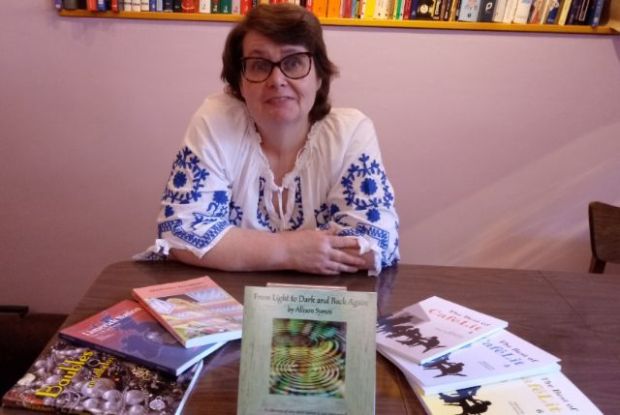
Allison Symes and published works

Allison Symes and some of her published works. Image by Adrian Symes

Facebook – From Light To Dark And Back Again

Used one of the prompts in the Prompts book by Gill James to write a flash tale that I have now submitted. It was good fun to write.

My week so far has mainly been on non-fiction work so it was good to get some fiction writing in. That should be my main focus for the rest of this week now.

Will have more news on another book but will save that for tomorrow night’s FB posts. (Well, we all need something to look forward to at the moment, right?!).


The one thing I hope to come out of the current crisis is that people read more and keep the love of reading going when things eventually calm down again.

Reading is a wonderful way to relax and for writers it is the flip side of what we do. To write well, you need to read well. (It’s also a bit daft to say the least NOT to support the industry you want to be in so go on get those books in, you know you want to!).

I love flash for its immediate impact, the longer short story for being able to expand on characterisation, and the novel for depth of plot etc. And the great thing with reading? There’s no limit on what you can read in terms of genre, length, topic etc. So go on, get stuck in!

This slideshow requires JavaScript.

Do you find it easier to write the ending of a story or its beginning?

I usually know when I’m brainstorming ideas whether a line I jot down is going to make a superb opening (I hope!) or a stunning finish. I then work out ideas from there and often use a spider diagram to help me get to the better storyline. (It is very rarely the first one I come up with!).

Sometimes the line can be open to being placed at either end of the story (and I love those). On my To Do list is to try to write two consecutive stories where the finishing line of one becomes the opening line of another. That could be fun to try (and good luck if you get to do that before I do! More than ever especially at the moment, it is important to still have fun and enjoy life as much as possible. Enjoying your story writing can be a key part of that).


Fairytales with Bite – The Downside of Magic

I’ve mentioned before that I like stories which show the downside of magic.

Firstly, something that powerful has to have disadvantages and would be prone to misuse/abuse (as with any kind of political power etc), though great stories come from exploring that.

Secondly, I love characters who use their wit and intelligence to get out of trouble in any genre and I want to see that in fairytales and fantasy too. Where magic is used, I want it to be appropriate.

I also believe there should be a downside to using it even when the intention is good. Something that powerful ought to have an effect on the user. For me, that’s realistic. I’ve always loved the section in The Lord of the Rings where Frodo offers Galadriel the Ring of Power because he clearly thinks the wretched thing would be best in the hands of someone good who would only use it for good (that’s my interpretation) and she reveals what that could mean.

What you don’t want is a wave of the wand getting characters out of trouble. Well, it’s not very interesting is it? Where a wave of the wand gets the character out of trouble but lands them right in it again in a different way because magic was used, now that is a lot more interesting to follow.

This slideshow requires JavaScript.

This World and Others – Hobbies and Interests

So you’ve created an interesting world for your characters to inhabit. You’ve creating fascinating characters that will keep us glued to your book. Excellent!

Now think of rounding out your characters that bit more. What are their interests and hobbies? Why are they interested in these?

If your characters are on a quest, what interests have they had to give up so they can go on the quest? Is there any chance of them being able to resume that old life again? What are their attitudes to having to give anything up? What do they do in their down time?

I’ve always found when reading series novels that a character with interests is going to attract me more for the good simple reason that the character concerned has a rounded life and that’s what I want to read about. What they do about their main work in the story adds depth to them.

This slideshow requires JavaScript.


Running Orders, Tech Issues, and One-Liners

Image Credit:Β  As ever, unless otherwise stated, the images are from Pixabay or Pexels.

Facebook – General

Have not long completed the first edit on my second collection, Tripping the Flash Fantastic. It was good fun to do and eye opening too.

I had gone through my draft at least three times before submitting it and I still missed things! This is why it is important an outside eye does see your work. They will pick up on things you are too close to the work to be able to see.

Also if they come back with comments, it will help you to see if you really have got things across as clearly as you thought you had. (The answer to that one incidentally is sometimes no! And in those cases I rewrite. An editor’s eye can also help you realise what comes across as a bit clunky and therefore awkward for a reader to enjoy smoothly. So again rewrite time there),

There are no shortcuts but editing is what is going to make your work special so it is worth taking time over.

This slideshow requires JavaScript.

It’s been a strange old week. I suspect next week will be stranger still. On the plus side, there is plenty of reading and writing to be cracking on with so I’ll focus on that. It is positive at least!

I’ve got a nice queue of items on my Kindle TBR list so will be trying to catch up on some of those.

Writing wise, I’m drafting a story for a competition which I need to finish. I also need to press on with my other major projects. And I do keep an eye out for interesting flash and short story competitions too. I like good writing competitions. They help me to “raise my game” which is never a bad thing.

Keep well, everyone.


This slideshow requires JavaScript.

Apologies to anyone who is having trouble accessing the Chandler’s Ford Today sitetoday (16th March 2020). The technical side of things I leave to my lovely editor #JadeCloud and I have emailed her. Hopefully this will prove to be one of those irritating hiccups that can soon be sorted. I don’t know if it this is something at CFT’s end or whether it’s a browser issue. Will keep you posted.

Meanwhile, I will look ahead to my post this week. I will be talking about Mixing Things Up as a writer and share a few thoughts as to how you can do that. I also look at the advantages (and otherwise!) of competitions with set and open themes. Post up Friday.

This slideshow requires JavaScript.

What are your favourite one-liners? Mine have to be:-

‘You were only supposed to blow the bloody doors off.’
‘Infamy! Infamy! They’ve all got it in for me.’
‘I’m not bad. I’m just drawn that way.’

(And if you want to play name the film, feel free!).

What do I like about one-liners in stories? Well, they pack a punch when well placed in a story. I sometimes use them to finish a flash fiction piece. They have emotional impact and a good story will have that, whether it makes you laugh or cry.

Great one-liners are memorable of course and it is always a pleasure to re-read them again when going back through favourite books. And you know those one-liners will have been through several edits as the author seeks to make every word carry its weight so what is left, well you know nothing could be added or taken out.

ALSO:-
Many thanks to #DawnKentishKnox for flagging up an access issue to Chandler’s Ford Today yesterday. Am glad to report the issue should now be resolved.

The auto renewal of the site’s SSL certificate did not happen. Goodness knows why. A big thanks to our technical guy for sorting that out and putting measures in place to hopefully prevent it happening again.

Meanwhile, I’m sharing the post Dawn Kentish Knox had wanted to comment on – the Local Author News spot I put up on behalf of #RichardHardie and #FrancescaTyer. Hopefully all well now!

Facebook – From Light to Dark and Back Again

Don’t make the mistake of thinking because flash fiction is short, the editing of it won’t take long! Ahem…

Well, obviously it will take less time than editing a novel but you still need to apply care and precision, especially since the placing of a word in a flash fiction piece can turn the story round just on that alone.

My Calling the Doctor has the mood of the story changed by the last word (see trailer).

It’s also not just about editing for word count. You want to make sure your story works without all the bits you’ve put the red pen through. The story mustn’t feel as if there is anything missing.

The aim is for a reader to feel as if another word couldn’t be added to the story while, at the same time, being unable to think of anything that could’ve come out from the tale they’ve just read. Not an easy balance to get right but so worthwhile when you do!


One of my favourite stories in FLTDBA is Circle of Life because it is a poetic justice tale. I’ve always been fond of those.

It’s a theme I can turn to time and again as you never run out of dodgy characters who you can dole out suitable retribution to! You are just limited by your own imagination and if ever there was a challenge to keep stretching said imagination, that’s it, I think.

I’m also fond of funny poetic justice stories. You don’t necessarily have to kill off the miscreant though I suspect my crime writing colleagues would beg to differ!πŸ˜†πŸ˜†πŸ˜†

One of the joys of fiction, of course, is you as the writer can always ensure justice is done to those deserving it. So go on, have some fun!

This slideshow requires JavaScript.


If it hasn’t happened already, there will be loads of virus tales across all story formats soon! I won’t be writing any though. The market gets saturated very quickly.

It is far better to write what you would like to write to the best standards possible and find a suitable competition/market for it than to try to write to a trend. Trends are often gone by the time you get your story out anyway.

The only thing I hope might come out of our current crisis is that people, if stuck at home, rediscover the joy of reading but I would really rather they did that without this horrid or any other virus contributing in any way. Books are fabulous and should be treasured and loved and read and re-read anyway!

This slideshow requires JavaScript.

Getting the running order in a flash or short story collection isn’t always as straightforward as it might appear. I look for impact on a reader here as well as from the individual stories themselves.

I like to group themes together (I think there is a stronger overall impact) but, as with chilli powder, you CAN have too much of a good thing here. (I once made a chilli with too much powder in it. I could’ve sworn there wasn’t much in it. I was wrong! Oh I was SO wrong…πŸ˜†πŸ˜†). So I tend to group 2 or 3 stories with a similar theme together but no more than that.

I write a reasonable number of poetic justice tales, to name one example. I’d group a couple of those together, then have a couple of say funny fairytales together, then some historical ones, then back to the poetic justice ones again. (I do like to think of my collections as “mixed assortments”. I’ve always loved those!).

It does pay to give plenty of time and thought to think about how you want your running orders to be. It will make the impact of your book that bit stronger and that is always a good thing.

Goodreads Author Blog –

Are Books The Best Invention Ever?

Daft question time, I can hear you say in response to this blog title! And you’d be right. Of course books are the best invention ever but… well, without literacy and encouraging people to read, those wonderful books we all love are left literally on the shelf, aren’t they?

How do we get people to read who don’t currently do so? I wish I knew the answer to that. All you can do as a writer is put your works out there, spread the word about them (and this is where supportive writing friends are brilliant), and hope people will take a look between your covers (ooh…err…. Missus), whether they’re electronic covers or the lovely paperback variety.

I have wondered whether people have lost confidence in reading. You know they finish reading at school and then that’s it. They’re not reading another thing. They’ll get their stories via film, TV, audio even, but not from the printed page. This is why I think supporting children’s authors is so important. They play a vital role in developing a future reading audience and keeping that love of books going. (And I still like reading YA, even though it has been a long time indeed since I qualified!).

I loved the James Garner Support Your Local Sheriff type films. We need at least three more. Support Your Local Children’s Author. Support Your Local Writers. Support Your Local Libraries.

This slideshow requires JavaScript.


Behind The Scenes

Image Credit:Β Β  As ever, unless stated, most of the images were from Pixabay or Pexels. A big thank you to The Chameleon Theatre Group for their images. Also thanks to Richard Hardie for supplying images related to his and Francesca Tyer’s events for World Book Day.Β  (And yes it has been a busy few days!).

Facebook – General – and Chandler’s Ford Today x 2!

Yes, count them, not one but two CFT posts this week.

First up, the start of a new mini-series.

I’m delighted to share a new mini-series on Chandler’s Ford Today. The #ChameleonTheatreGroupChandlerFord share interviews showing what life is like behind the stage. They share some fabulous insights into directing amongst other things in Part 1 (see link).

This series will run at intervals over the next few weeks. Many thanks to The Chameleons for wonderful material and the photos, as ever.

I’m looking forward to their next production, Spring Quartet, in April.


I’m always interested in behind the scenes looks at life, whether it is to do with creative writing or amateur theatre. So it is a joy to share a new mini-series on Chandler’s Ford Today where The Chameleon Theatre share their insights into life behind the stage.

Why the interest on my part? Well, partly it IS because I’m nosey (!) but that’s a good thing. Why? Writers have to be interested in what makes people tick. Knowing that helps us to develop convincing motivations for our characters and make their portrayal that much more believeable.

I’m also interested in behind the scenes looks because it opens up worlds that are new to me. That’s a good thing for increasing knowledge and understanding, I think. Understanding is also crucial in creative writing. You also get to understand yourself better I think.

And now for my second CFT post this week!

Am pleased to share a bonus CFT post this week. Every so often CFT has Local Author News slots. The last one was for me when I appeared on #WendyHJones‘s excellent podcast, The Writing and Marketing Show talking about all things related to flash fiction.

https://www.stitcher.com/podcast/the-writing-and-marketing-show/e/67280384

Up tonight is a piece with news from local YA author, #RichardHardie, and debut Authors Reach novelist #FrancescaTyer. They share news of their World Book Day eventsrecently. Francesca’s debut novel The Firestone was recently published.

Hope you enjoy. (Oh and remember the best things you can do to support local authors you know are to go to their events where possible and review their books in the usual places).

(My normal CFT post link will be up tomorrow where I start the first of a mini series from #ChameleonTheatreCompany-Chandler’s Ford. They share insights from life behind the stage. More tomorrow).


My CFT post this week is Part 1 of a mini series which will be spread out over a few weeks. As you know, I often review plays put on by our excellent local amateur theatre company, Chameleon Theatre Company.

They have recently been putting together some mini interviews which give a fascinating insight into life behind the stage. With their blessing (obviously!), I have compiled some of these interviews and Part 1 will be up on Friday.

Many thanks to the Chameleons for their wonderful material and photos and I look forward to sharing this post and the others to come.

Facebook – From Light to Dark and Back Again

What fascinates you most about a character?

For me, it has to be their motivation. I’ve got to know why my character thinks it is okay to act the way they are, especially when they’re the villain! It doesn’t mean I have to agree with them though…

The LEAST important thing for me is knowing what they look like, funnily enough. I find once I can hear their voice and know their motivations, physical appearance comes to me then. Mind, I’m not motivated by physical appearance myself. After all the best con men often wear a suit!

I love stories and books that “just” entertain. Yes, sure, I like those that give good messages too but there is a lot to be said for sheer escapism value, especially when life is more challenging than usual.

Let’s just say I probably won’t be reading much in the way of dystopian stories for a while. (It is definitely not a good sign when you can get your requirements there by tuning into the news…).πŸ˜•

So how to go about being “just” entertaining? As ever, for me, it is all in the characters. I do enjoy setting up a character knowing I’m going to be throwing all manner of things at them to knock them right back down again (and ideally to make me and potential readers laugh). Okay, okay, nobody said a writer had to be nice to their characters. Indeed, it is better when we’re not as any crime or horror writer would also tell you!

I love those characters who deserve being knocked back a bit too. You know the kind of pompous character who needs bringing down a peg or several. The ultimate fall guy in many ways! (Well, they are for me).

For humorous prose especially I do need to get a sense that the writer enjoyed creating their characters. I believe something of that fun does come through in the writing.

This slideshow requires JavaScript.

How difficult do you find coming up with a suitable title for your story?

I know I need a “peg” from which to hang my story so I always have a working title. Most of them don’t change and suit my purposes just fine. Sometimes though a better title idea will occur as I draft my tale and that’s fine too. I just swap to the better idea.

I’ve mentioned using phrases and proverbs before and I often use them as themes, but don’t overlook them for use as potential titles. I’ve used a few that way.

You can also see them as a way to get started on a story if, like me, you need some kind of peg to help you get on your way with a draft. I think I have a bit of a mental block over any story that doesn’t have a title to it! There’s some unconscious thought at play here which associates no title with no story. I can’t be having with that so I put in a title to get me started. Nothing is set in stone after all but that is a great thing about a draft. You know it’s not going to be the final version. I’ve found it helpful to take that attitude with titles too.

Fairytales With Bite – Wishes

One of my favourite things about fairytales is when wishes are granted. The greedy never get away with theirs precisely because they always ask for the wrong things for the wrong reasons.

I love that aspect of things. I was very conscious even as a kid there was so much unfairness and cruelty in the world. The idea of a fairy godmother turning up to put things right for their ill-treated goddaughter always appealed (though I still wonder why Cinderella’s one turned up so late in the day. Come on, she could’ve helped Cinders a lot sooner. There is only so much domestic drudgery that could be claimed to be good for the soul and Cinders had gone well past that point when her fairy godmother deigned to make an appearance).

So in the grand scheme of things, what would your characters wish for and why? You are their fairy godmother as you bring them to life on the page. So what attributes would you grace them with and why? What would your characters strive for and why?

Do you think your characters are worthy of achieving their objectives? They don’t have to be. Villains are never worthy but should have understandable reasons for being what they are. What do you want your characters to be and why?

If your characters are allowed wishes, how will these turn the story and in what direction? Wishes being granted but proving to not be all that the character wanted could make a good story too.

This slideshow requires JavaScript.

This World and Others – World Essentials

For me, what I want to see in a created fictional world would be:-

1. A system of government (even if it is not the point of the story. There should be some sort of reference. For one thing, a reader would want to know if the main character was one of the governing or one of the governed).

2. What characters eat and drink and how those things are produced. A line or two is usually enough to convey that. When a character is on a journey, what food do they take with them? Where did they get it?

3. A sense of where the world is going. In The Lord of the Rings there is no doubt the world there is in turmoil and every part of that world is affected by it.

4. What your characters make of the world they’re in. They don’t have to like it!

5. How is transport organised? Does everyone have access to the same kind of transport? Is there a β€œthem and us” situation here?


Cyberlaunches, The End, and Flash Fiction

Image Credit:Β  As ever, Pixabay, unless otherwise stated. (Images of The Hayes, Swanwick were taken by Allison Symes)

It has been a fun few days as I was one of the co-hosts for Patricia M Osborne’s cyberlaunch of her second novel, The Coal Miner’s Son. What follows is a kind of a report on that. Many thanks to Patricia for inviting me to take part. It was great fun – as a good launch should be!

Facebook – General

I’m looking forward to taking part in #PatriciaMOsborne‘s cyberlaunch for her second novel, The Coal Miner’s Son, tomorrow evening. (I interviewed Patricia as part of my CFT series on What Books Mean To Me a while back and I have guested on her website as part of her blog and her 100 word challenge. We are both also huge fans of Swanwick Writers’ Summer School, not least because we met there).

This is the follow up to her debut book, House of Grace. Obviously more on that tomorrow but very best of luck, Patricia, and hope you have an absolute ball with your launch.

I had a great deal of fun with mine for From Light to Dark and Back Again. Cyberlaunches are a fab opportunity to celebrate books and support writer friends. Always worth dropping by!

One of the loveliest things about the writing community is it is so supportive and launches, cyber or otherwise, bring that out. And best of all they are fun!

This slideshow requires JavaScript.

Many thanks to #PatriciaMOsborne for inviting me to take part in her launch of her second novel, The Coal Miner’s Son. This follows her debut novel, The House of Grace.

A very good time was had by all at the launch and the lovely thing about online launches is that the calories in the cakes and drinks provided simply don’t count!πŸ˜†

I am planning to hold a cyberlaunch for my second flash fiction collection, Tripping the Flash Fantastic, when that is out later this year. Preparation is crucial for you as the writer to get the most out of it I think. It helped me to relax into the event and get a real party feel going.

(And it WAS a wonderful party at Patricia’s launch tonight too!).

Launches are important for the obvious reason of getting the news of our books out there, but they also help a writer to have fun with their book after all their hard work in writing and editing it.

Cheers to that!

And congratulations, #PatriciaMOsborne, for a wonderful launch for The Coal Miner’s Son. (I love that cover! Do check out the link to Patricia’s Amazon page, given above, to find out why I love it!).

This slideshow requires JavaScript.

I always feel a sense of relief when I write The End for a flash fiction or short story. (I should imagine the sense of relief for a novelist is proportionately larger depending on their text length!).

I do know the hard work is shortly going to begin with the editing but there is that moment when you know you’ve got something to work with and that’s nice. It shouldn’t be unappreciated either. You have finished the first draft.

The great thing is nobody but you has to ever see that first draft. I know from mine what a good thing that is!

For competition entries, I always take at least a week (and usually a fortnight) off the official deadline to ensure I have time for any final tweaks and still get the piece off in good time.

This slideshow requires JavaScript.

Facebook – From Light to Dark and Back Again

Hope to draft some flash pieces on my train trip to Birmingham today for an Association of Christian Writers’ event. It is a great form to draft on a smartphone!

The only thing I make sure of is to put plenty of story prompts on Evernote before I travel so I have more than enough to write up.

If I ever forget to do that, I brainstorm opening lines and then write them up. Of course sometimes what I think will be opening lines make far better closing ones, but it’s fun to find that out!

When I started writing short stories, I nearly always used the third person. For flash fiction, I still use that, but I’ve developed a great love for using first person. I love its immediacy. I can tak you right into a character’s head and I have my narrator for the story literally to hand.

Flash, due to its brevity, means you can’t have too many characters as you’d quickly fall foul of word count requirements.

For example, if you want three characters in the story, you’ve got to have at least one good reason for all three to be in there. How many words will you use to get those good reasons in?! And even if you manage that well enough, what room have you got left for the actual story after all of that?

So using the first person is a handy technique but that is all it should be. I make myself mix up first and third person usage to avoid falling into the trap of all of my stories sounding the same.

Good reasons to get a writing event if you can and that includes online events (so travel is not a problem!):-

1. You will make writing friends who will totally understand your addiction to writing (and it IS an addiction). They also celebrate your successes and commiserate with your woes and that is vital. The writing community is precisely that, a community. We take the “no man is an island” bit seriously!

2. Said writing pals will tell you about competitions and markets you had not heard of as no one person can know everything that’s out there. You will also share useful news on similar lines to them.

3. You will get a lot from the courses and talks you go to as well!

This slideshow requires JavaScript.

Book trailers were completely new to me until Chapeltown Books produced the excellent one for From Light to Dark and Back Again. Yes, I know I’m biased… (am not sorry, so there!).

Flash is a great vehicle for book trailers since as a form it can fit into a trailer beautifully and give a useful free sample to potential readers. I prefer using the 100 words or under for this.

A sample of my flash fiction work. Job Satisfaction was first published in From Light to Dark and Back Again by Chapeltown Books in 2017.


Goodreads Author Blog – Book Stalls at Writing Events

I love writing events anyway but I particularly enjoy having a good nose around book stalls/book rooms at these things. Wild horses wouldn’t keep me away and all that…

It’s always a joy to see works by friends, as well as my own, on these stalls too. But they also prove to be good opportunities to have a look at works and authors new to you.

So go on, at the next event you go to as a writer, put your reader’s hat on too and see what you can find. Explore reading avenues new to you as well as enjoying favourite genres.

And for non-writers, one of the best ways to support author friends is to go to their events. The great thing is you are likely to come back with your next good read too! And that is always a good thing!😊


Landmarks, Flash Fiction, and Why Fairytales With Bite

Image Credit: Β 

As ever, unless otherwise stated, the images are from Pixabay.


Facebook – General – and Chandler’s Ford Today

My CFT post this week is Landmarks With Meaning. I share some of those that have the most meaning for me but I admit some are a lot more scenic than others. I’ve found the landmarks which mean the most almost always tie in with special memories/family connections and that is how it should be I think.

I don’t just stay with my local area either and found an excellent example of photo editing involving an elephant and Big Ben but you’ll just have to look at the post (or the slideshow below!) to see that one for yourself! I share a few thoughts on cathedrals I’m particularly fond of too and one of them has close links to one of my favourite authors, Jane Austen.

Hope you enjoy the post and do share in the CFT comments box what your favourite landmarks are and why.

This slideshow requires JavaScript.

What have I learned from the various stories I’ve read over the years (and there’s far too many of them to give you a number!)?

Firstly, you do take in how a story is laid out and that covers everything from punctuation usage to indenting (or not where appropriate). You get a feel for a publisher’s house style even if you’re not aware of it at the time. This is why it is important to read contemporary fiction as well as classic by the way. Styles change.

Secondly, over time, you work out what your tastes in fiction are and discover what you don’t like too. Funnily enough, the latter is useful. It tells you what you don’t want to happen with your own creative output. Work out what it was you didn’t like and why. Did the dialogue not ring true? Was it over complicated? Then work out what you would do about the piece if you had been writing it. What you pick up answering those questions will help you a lot when it comes to editing your own output.

Thirdly, you do discover what it is you like about the characters. I’ve always loved heroines who know their own mind (which covers a lot of ground, fortunately. I’m a big fan of Elizabeth Bennett, Jo March, George from the Famous Five, to name but a few). Work out what it is you like about your favourite people. What character traits would you want your people to have and why? When creating villains, give them good reasons to be the way they are.

There is always a back story. It may not make it into your main tale but you need to know why your characters are the way they are. You can also ask yourself questions about characters from your favourite authors. What made the writer develop them this way?
And you get a darned good read out of it all too!


I’m looking at landmarks with meaning for my Chandler’s Ford Today post this week. I share a few of my favourites and why they mean so much. Link up on Friday.

In other CFT news, I will be sharing a mini series over the next couple of months or so, spaced out at roughly three to four week intervals.

Our excellent amateur theatre company, The Chameleon Theatre Group, have been sharing a number of mini interviews which make for fascinating reading at life on the stage and behind it. First post up for that will be on Friday, 13th March. Looking forward to sharing that with you.

Am off to the Association of Christian Writers’ event in Birmingham on Saturday. The topic is Effective Public Speaking. Should be interesting and useful.

This slideshow requires JavaScript.

Facebook – From Light to Dark and Back Again

It was lovely having another flash story on Cafelit earlier this week (Taking Time Out From the Day Job). I am very fond of humorous stories.

The main point I have in mind when I’m writing these is that the humour must arise naturally out of the situation I’ve put my character in. That is the only way funny stories work for me whether I write them or read them. You can’t force humour on to a character or the story. It never works.

But I always love those moments when a good line emerges naturally from what my characters are saying or doing. I love those characters who I know can drop themselves right in it (so often a great cue for humour) because I’ve outlined them well enough to know what they are capable of doing/saying so they would drop themselves right in it. It all has to seem seamless to the reader.

This slideshow requires JavaScript.

When I don’t have a lot of time to write, I will often jot down what I think will make promising opening or closing lines to flash fiction stories and then write them up at a later date.

Where possible I will also add in a quick note or two as to how I think the story will go. For example, a line like “The thief realised they would not get out alive” seems to be a dead end line (in every sense!). I could make a note here to say this will be a closing line, mood of story = sombre or poetic justice. I could then add in a note to ask what the thief was trying to steal – fire from the gods.

Hmm… that was never going to work out well, was it? It does mean though, when I’m next at my desk with more time to write, I’ve got the outlines of a story already there, just begging to be written up and away I go.

This slideshow requires JavaScript.

How do I judge if my own flash fiction stories are ready for submission?

Obviously I check for typos, grammatical errors, and my hated wasted words. (I do feel a certain sense of satisfaction in erasing THOSE!). But I ask myself some questions:-

1. Does the story make the impact on me I thought it would? Usually the answer is yes and I’m happy but sometimes I have to go on and ask myself something else.

2. If the answer is no, is the impact I have created BETTER than my initial thoughts? Sometimes it can be. I’ve sometimes written a piece where I wanted the impact to be that I had made people sympathise with my character. All very nice and all that but if I can make myself feel like crying in sympathy with that character, this is even better. It means the impact is deeper than I originally planned. There is literally more feeling, I see that as a bonus, always. People remember stories for how they feel about them (which is why childhood stories are so often favourites for people throughout life).

3. Last but not least, I put the piece away for a while, re-read it at least one more time (and often twice) and again ask the impact questions. I also ask if I could improve the piece any further and if so, how? When I get to the point where I can’t think of anything here, I send the story off.

Of course meantime, I’m also drafting other stories so I always have something to work on. I love drafting stories while I’m “resting” others. It helps with work flow rates no end!

This slideshow requires JavaScript.

Fairytales With Bite – Why The Bite?

I came up with the title Fairytales With Bite as a way of showing that yes, I write fairytales but they are not twee. The original fairytales are anything but twee of course, indeed many of them act as warnings (beware the Big Bad Wolf being just one of them!), but a good fairytale should have bite to it.

I’ve always loved the fact most fairytales ensure evil does not triumph. Even as a kid, I was deeply aware the world is so often unfair. Fairytales were and remain a great way to escape that for a bit but they can still get a powerful message across, while being an entertaining story.

The Little Match Girl from Hans Christen Andersen is a stinging indictment on poverty and homelessness, which hit me hard when I first read it (and it it still does). But it is a phenomenally good tale. A good story, whatever its genre, should have the power to move readers, whether it is to make them laugh, cry, or scream, or what have you.

That’s where the bite comes in – and the good thing is you don’t have to include vampires in your story to get that bite in!


This World and Others – Stories In Other Worlds

What do I love most about reading stories set in other worlds? Well, they can reflect on aspects of our life here (which can be illuminating at times!). The way an alien society is run can reflect well or badly on how we do things here on Earth.

What should come through in such stories, and the ones we write, is being able to understand the characters in those stories and worlds, their actions and motivations and so on. Those basic elements don’t change much. Every species needs food, shelter, to be able to reproduce itself etc. We can understand what characters are capable of doing to ensure they have those things.

Societies need to be governed in some way so how would yours differ from what we know here? Why have you chosen those differences? Would you want to visit if you could?

Now I’m sure there could be some interesting answers to that last poser! If the answer is no by the way, do look at why. You may well be right to not want to visit the world you’ve created. What is the β€œmessage” behind that? If your created world is a heavily polluted one, say, you wouldn’t want to visit but look at why it is worse than what we know? How did it get to that state? Is anyone trying to do something about it? What obstacles are in their way?

There should be some cracking story ideas there. Happy writing!


Writing Prompts and Publication News

Image Credit

As ever, images are from the fantastic Pixabay, unless otherwise stated.

Facebook – General – and

Association of Christian WritersΒ  – More Than Writers

My turn on the Association of Christian Writers’ blog spot, More Than Writers.

I’m on the 29th so that means I get every three Februaries off! πŸ˜†πŸ˜†

Hope you enjoy the post and find it useful. Mixing up how you write stories is fun and keeps you on your toes too!

I talked about writing prompts in my monthly slot for the Association of Christian Writers today. As well as sharing some tips, I share a story I produced using one of the tips. Annoyed librarians may well like it… hmm… go on have a look then!😊

What I’ll add here is that I’ve found it useful to mix up how I approach writing a story. It keeps things interesting for me. It keeps me on my literary toes too.

By mixing up the methods, I avoid the dangers of becoming formulaic too. I don’t want any of my stories to sound the same to a reader after all. What I do want is someone to read my stories and spot my voice through them all, but to also enjoy each tale for its uniqueness. My characters are very different people after all. The way I tell their stories should reflect those differences too.


Facebook – General

Loved the finale to Doctor Who but that’s all I’m saying about that. It is nigh on impossible to say anything else without unwittingly revealing a spoiler so best not, I think. Give it a week and then I should be all right on that!

Well portrayed characters, for good or evil, will keep you glued, whether they’re on the page or on the screen. The challenge as a writer is to ensure the characters you create have that quality to keep a reader hooked. How do you make the readers care about what happens to your people?

Firstly, YOU’VE got to care what happens! Thankfully this happens rarely but I have come across instances where I’m bored with a character portrayal and I suspect the author became bored too.

Secondly, your character has got to have a problem that must be resolved somehow. It doesn’t necessarily have to be a life or death problem, though that is obviously a great one for winding up the tension in a tale, but the issue your character HAS to resolve must be something they can’t run away from. Their situation won’t improve until they DO do something etc.

Thirdly, your character mustn’t give up easily. When their initial attempt(s) to get out of their situation fail, how do they react? Do they learn from their failures? What gives them the break through to success?

This slideshow requires JavaScript.

Facebook – General and From Light to Dark and Back Again and Publication News

Story time again. Hope you enjoy. A little humour at the end of a busy Monday is never a bad thing!

Taking Time Out From the Day Job is my latest tale on Cafelit. (I’ve written flash fiction tales with fewer words than the title for this one in my time but there you go!). I have every sympathy for my lead in this one.

It’s lovely having one of my humorous fairytales with bite up on Cafelit.

Taking Time Out From the Day Job shows what happens when a fairy decides to do just that.

Hope you enjoy reading it. I loved writing it but then I do adore characters like this one.

It is a real contrast in mood from my recent linked stories on Cafelit but now you know why my collection is called From Light to Dark and Back Again. It sums up what I write!

Just to say that #ParagraphPlanet archive stories at the end of each month and the February 2020 “lot” are now available. See the link.My Time Is Everything is amongst the collection here. #flashfiction #amwriting #75wordstories

Is it easier to write to a specific word count or write the story first and then work out what the word count would suit it best?

Hmm… I’ve done both. The discipline of working to a specified word count is a great one and keeps you on your toes. It really does force you to check that each and every word has to be included in your tale. If there’s anything that doesn’t carry its weight, out it goes.

When I am working to a theme or title (often generated by random word generators), I write the story first. I see what I have, edit it, and then decide on whether it would work better at 100 words or 200, for example.

However you write, have fun!

This slideshow requires JavaScript.

Facebook – From Light to Dark and Back Again

Conflict in stories can take many forms of course but some of my favourite tales are the ones where a character is in conflict with themselves.

This is why I find Gollum from The Lord of the Rings an interesting character. You know you can’t trust him but I found on reading the tale for the first time, I desperately wanted him to somehow come good at the end. (And I’d say it’s open to interpretation whether he did or not. I am with Gandalf on this one when he says Gollum had his part to play in the history of the Ring and left it there).

In my story, Rewards, which is one of my longer flash tales, I use thoughts to show my lead character’s conflict. The reason this tale needed to be towards the upper end of the flash limit was because I needed some space to show those thoughts and then how my character acted on them.

But then that’s the joy of flash. You can go from the tiny tales in terms of word count to the longer ones but still have a limit you need to stick to. (I do find that a really good writing discipline. It’s why when I prepare my Chandler’s Ford Today posts I set my own word count and stick to it. I have to have parameters!).

The conflict a flash fiction writer has is deciding what word count will work best for their story. Sometimes you do have to go to the upper limit. Sometimes you can say all you need to in 100 words or less. Always think of the impact of the story on a reader. Don’t water it down by padding it out. If the conflict in the story is played out in 250 words, leave it there! But if you need 999, that’s fine too.

This slideshow requires JavaScript.

Symbols have a great deal of meaning of course. Can they be used in flash fiction?

Yes, as long as readers are likely to know the meaning of the symbol or can get to the meaning from context. As with any writing, clarity is the important thing here.

Could you come up with your own symbols for your characters?

Yes but it would be useful to base them on what we already know.

For example, red roses are associated with love but what could black roses be associated with?

This slideshow requires JavaScript.

Reviews are so important for any writer for a variety of reasons but the good news is they don’t have to be lengthy. One or two lines would be absolutely fine. A big thank you, while on topic, to all those who have been kind enough to review From Light to Dark and Back Again.

So if you’re looking for a way to support author friends, do review their books. The one caveat is reviews have to be honest for them to have any meaning. Honest reviews also aren’t usually at risk of being taken down!

https://www.amazon.co.uk/…/B07T…/ref=dp_byline_cont_ebooks_1


This slideshow requires JavaScript.

Goodreads Author Blog – Story Openings

What is it about a story opening that makes you want to read on?

For me, either the character has to be “hitting the ground running” in such a way, I’ve got to find out what happens to them, or the set up is intriguing enough to make me want to read on.

Mind you, I don’t think I’ll ever tire of the classic fairytale opening of “once upon a time”.

There is the wonderful association with happy childhood reading of those great stories. That opening just, for me, sets the tone for what is to follow.

I know to expect fairy godmothers turning up at surprisingly convenient moments. (I’ve always wondered why Cinderella didn’t berate hers for not coming to her aid a lot sooner but that’s another story).

I know to expect talking animals (and I should imagine the Three Bears had quite a bit to say about Goldilocks that was best kept off the page. I know how I’d feel if someone destroyed my chair and bed – though they’d be welcome to the porridge. I’ve never liked the stuff!).

I know to expect the villains to get their comeuppance. It’s just a question of finding out how and when.

And there is something wonderfully poetical about Charles Dickens’s opening to A Tale of Two Cities (which I confess I’ve not read but is on my To Be Read list), but even I love the sound of “It was the best of time, it was the worst of times” and the rest that follows. The rhythm of that opening paragraph is amazing.

So what I’m saying here is I want a story opening to take my breath away so I have to read on. Now there’s a challenge for any writer (including me!).

This slideshow requires JavaScript.


The Writer’s Journey: Introducing Paula Readman

Image Credit:Β  As ever, Pixabay supplied the pictures unless otherwise stated. A big thank you also to Paula Readman for supplying some pictures for my Chandler’s Ford Today interview of her this week.

Every writer’s journey is unique. For a story of grit, determination and perserverance, check out Paula Readman’s story in my CFT post this week.

Facebook – General – and Chandler’s Ford Today

It was a real pleasure to interview Paula Readman for my CFT post this week. While Paula and I have publishers in common, it is also true every writer has a unique writing journey. Discover Paula’s fascinating writing journey in this interview and why grit, determination, and striving to be the best you can be as a writer is SO important to any writer, published or not.

This slideshow requires JavaScript.

It is always a joy interviewing writers for CFT but it is also great fun interviewing your own characters. I’ve used this technique for my longer short stories but even with my flash fiction, I’ve outlined what I need to know about a character and why it is I need to know that.

To do the latter, I have to quiz my potential character as to why they’d be, for example, greedy. What has triggered that? There usually is a reason behind it even if it is not a nice or honourable one. From all of that I begin to hear my character’s voice and away I go. I have to hear their voice before I can write about them at all.

Think about what you need to know before you write a character. Some writers need to know what their characters look like. I have to know my character’s voice and what drives them above anything else and I find physical description follows from that.

Sounds a bit odd I know but it works for me. I know my character is well spoken and is driven to prove themselves, for example. I quiz them as to why. Possible answer would be to prove all those who said they’d be a failure wrong. Their voice is to cover up the fact they come from a poor background – sounding upmarket is a kind of armour for them.

I’m then thinking of what my character might look like. They’d want to look smart for one thing so how that would manifest itself? Can I give them a real fad for fancy shoes, say, and make that a quirky trait that comes up in the story?

No two authors go about this process of discovery in quite the same way (which is another reason why it is such fun to interview them!). It is a case of working out what works for you.

I’ve often read of writers keeping magazine pictures of people to inspire how they would describe their characters’ physical appearance. I’ve taken that idea and modified it because I know I’ve got to hear the character’s voice ahead of anything else. Then, like a good actor, I need to know the character’s motivation. And then off I go!

This slideshow requires JavaScript.

My CFT post this week will be a fab interview with #PaulaReadman, author of The Funeral Birds (and with more to come later in the year). She shares with me what books (reading and writing them) means to her. Her writing journey is a powerful one and inspirational. Link up tomorrow.

Interviewing other authors is great fun to do. None of us come into writing in exactly the same way. None of us are inspired by exactly the same things. All of us have a unique voice. And we all love books. What’s not to love?!

Many thanks to Paula for supplying her author shot below. And if you’re wondering what the owls have to do with anything, look up the link when I put it up tomorrow! Update:Β  Hopefully by now you will have seen the CFT post and know exactly what the owls are about though there is a good clue below!


Am making good progress on my edits for my second flash fiction collection, Tripping the Flash Fantastic.

I always feel a certain amount of relief when I get to ANY editing stage on a book, a short story, or a piece of flash fiction. It means I’ve got something I can work with! And, yes, I have cut my wasted words – very and actually especially! Those went before I submitted the book at all!

Over the course of an average week, I’ll have writing slots where I’ll create new stories for competitions, another book etc.

I’ll then have others where I’m writing non-fiction (covering my CFT posts, ACW blog spots, draft articles I hope to pitch in due course etc. A recent edition to this is preparing various posts I can use either here on on Goodreads for those times when I’m pushed for time. I hope this is going to make me more productive as I would like to schedule more posts in advance).

Then there will be those slots where I’m editing. That can feel as if I’m not doing much but I am, of course. The writing really is in the rewriting. The chances of me writing a perfect first draft is remote. The work is in getting rid of the dross from what I hope will prove to be gold!

This slideshow requires JavaScript.

Facebook – From Light to Dark and Back Again

Some of my narrators in my flash tales are impartial observers and it is something I hope to use more of as a technique in my stories.

The advantages are that I can get straight into the head of this character, they come to the situation in the tale with no preconceptions (as there is no way they could have any), and what might seem obvious to us could appear alien to them.

That in turn can make us think about how something WOULD look to someone who has never come across it before and therefore doesn’t know what to expect.

So how can you make your observer truly impartial?

By ensuring they are not part of the main set up in the story. They’ve been invited in by someone who IS in that main set up. (Exploring the reasons for that can also make for interesting stories).

For example if your set up is the Court of Queen Elizabeth Tudor, your outsider could be someone who is the servant of one of the ambassadors to that Court. They would never be asked for their opinion by anyone in the English Court or by their boss but they would have some thoughts on what they get to see. Nobody is immune to having thoughts even if you do have to keep them to yourself.

Your impartial observer can share those thoughts in your story though! (And maybe the battle to keep said thoughts quiet knowing they won’t go down well with the boss or the English Court, say).

This slideshow requires JavaScript.

As you know, I sometimes use a random word generator to kick start story ideas. This works especially well for flash fiction.

Some of the generators allow you to set your own parameters. For example, you can see how many letters or syllables you want in your selections etc. You can even set the first letter and the last one.

When I use the parameters, I focus on word length and maybe the starting letter but leave it at that. I don’t want to be too prescriptive. If the first word generated doesn’t seem to suit, I trigger another three or so. I’ve usually got an idea I can work on within three or four goes on these things. And they’re great fun. (Bear in mind too you could combine ALL of what you trigger for an idea as well).

It could be useful to have a “stock” of these in ready to submit to competitions and markets as and when you come across suitable ones. (And yes I have a stock of stories in! Every so often I have a big writing session where I write a lot of flash. I know I’m not going to be submitting them anywhere for a while but it does mean when I have market or competition information that interests me, I can go through said stock and find something useful to submit).

This slideshow requires JavaScript.

Reading in and out of your genre inspires your own writing. You also take in subsconsciously how stories are laid out. I’ve never understood the attitude I’ve sometimes come across where, when people find you’re a writer, they seem surprised when you reveal you’re a reader as well!

It was the love of books and stories that I read which sparked my wish to be a writer at all. It is the books and stories I still read that fires my imagination and helps me to “up my game”.

So read away, folks, it’s good for you!


This slideshow requires JavaScript.

Fairytales With Bite – Happily Ever After?

The first indication I had that fairytales didΒ not necessarily have to have a happily ever after ending was when I read Hans Christen Andersen’s The Little Mermaid for the first time. That was an eye opener to me as a child. Likewise how dark The Snow Queen is – the image of the ice piercing Kay’s heart still makes me shudder.

The crucial thing for any story, fairytale or not, is that the ending is appropriate. Also the author should deliver on the promise made by the opening of the story. There has to be a proper resolution, whether it’s a happily ever after or not!

This slideshow requires JavaScript.

This World and Others –

How To Drop Your Characters Right In The Mire

This is not the be all and end all list. I’m sure you can think of others to add to it.

  1. Use the elements of your created world against your character – unstable terrain, dreadful weather, and so on.
  2. Put them up against a tight deadline.
  3. Β Put their loved ones at risk if they don’t complete the task you’ve set them whether this is to actually rescue their loved ones or to do something for an overlord to ensure their loved ones are not menaced at all.
  4. Put them in any other situation where failure is not an option though emotional ties are very good to exploit here. (I know, I know. Authors don’t have to be nice to their creations, okay?!).
  5. Β Put them in danger directly.
  6. Β Or put them at risk of losing that coveted promotion etc. What will they do to ensure they get what they want?
  7. Β Get your character having to defend their reputation etc. Putting them up against a blackmailer here is good. Again what will your character do here?
  8. Β Make them The Chosen One for a quest. Get them not to be able to get out of it either.
  9. Β Going on the adventure is the only way to salvage a bad situation at home or, if that’s not possible, to escape the consequences of where they’ve mucked up here.
  10. Put them under pressure of society expectations. They can’t let the side down.

This slideshow requires JavaScript.


Looking Forward

Image Credit:Β  Unless stated otherwise, all images are from Pixabay.

Facebook – General

On days when I don’t have much time to write, I focus on drafting blog posts for future use and/or flash fiction stories. Ironically it can often feel like I’ve got far more done because I’ve written 3 or 4 posts and a couple of 100-word stories. But that’s fine. I don’t mind that at all.

What can feel tough is when you’re on a longer project and it feels like you haven’t got much done. Hang on in there. You have. You’ve written a chapter (fiction or non-fiction) for a book. You’ve drafted a longer story (say 2,500 words plus). You’ve edited a lot of work. You are achieving. It just doesn’t show up so well that’s all.


This slideshow requires JavaScript.

Loved Part 1 of the Doctor Who series finale, looking forward to Part 2 next week, and that’s all I’ll say there!

A good story makes you wonder, especially on your first read (or viewing come to that). The characters you’ve become attached to? Well, what WILL happen to them? I find I start trying to anticipate how the story will pan out. Sometimes I’m right but I love it even more when I’m wrong and the writer has wrongfooted me.

Of course flash fiction is a great vehicle for twist in the tale stories. The twist has to make sense – none of the “it was all a dream” nonsense, the last author who used that with any conviction WAS Lewis Carroll. This is why, for twist tales, I often know what the twist is first and then work backwards to get to several reasonable starts. I then pick the one I like best. Good fun that!


This slideshow requires JavaScript.

I can’t recall when books and writing were absent from my life. Nor do I wish to!

I do know they mean a great deal to me, even when the writing is a struggle or I’m not getting as much time as I’d like for them.

Incidentally with the former, it is usually just a question of being dog-tired (sorry, Lady!) and a good night’s sleep restores me and my imagination.

Don’t undervalue the importance of getting enough sleep. People focus on the health benefits of it but it is also true good sleep will help with your creative side. (At least you won’t have tiredness dragging it and you down).

A good writing day is when I head off to the Land of Nod happy with what I’ve written/edited/both and am anticipating another good writing session the next day.

A bad one is when I struggle to get anything down and am fighting to keep my eyes open. Time to give up and just get an early night. I’ve learned that lesson the hard way.

This slideshow requires JavaScript.

Looking forward to going to #TheChameleonTheatreGroup‘s Spring Quartet production in April aka the Chandler’s Ford Today works outing, given my lovely CFT editor will be there too. A good time will be had by all though, unlike with TCTG’s last production, there will be no cries of “It’s behind you!” to contend with – well, not unless something goes horribly wrong… πŸ˜†πŸ˜†

More immediately, am looking forward to sharing this week’s Chandler’s Ford Today post which will be an interview with #PaulaReadman. Link up on Friday. Don’t miss it. Some fab insights as to what books and writing mean to her.

Many thanks to #DawnKentishKnox for the shout-out on her Knox Box of Miscellany. It is also a pleasure to highlight Prompts by #GillJames as well. It is a fab book and I’m looking forward to writing up many more of the story ideas.

So lots of looking forward going on tonight but given Lady and I got caught in a downpour earlier today, I think looking forward, especially to spring, is a very good idea indeed!

Prompts 2020 by [James, Gill] Image by Gill James

Facebook – From Light to Dark and Back Again

I tend to “hit the ground running” with my flash fiction stories. I want to get a reader into the story as quickly as possible (and of course out again at the end of the tale).

I mix up the way I do this as it keeps things interesting for me (and I hope for readers). I sometimes take a reader straight into my character’s thoughts. Sometimes I ask a question I hope will provoke curiosity – the must find out the answer type.

Sometimes I will start with a character action, again the type that will trigger the where will this go reaction (and there is only ever one answer to that – read on!).

I mix up using the first and third person for my stories (though I love the immediacy the first person gives you).

I also mix up my settings. My first love is the humorous fairytale with a sting in the tale but I adore writing crime and historical ones too. That is the thing I love most about flash fiction – its flexibility with setting. It is just the word count I have to watch – and even there I have choice. If something works better at 200 words than 100 so be it. It just go in for a 100-word (aka drabble) competition or market, that’s all.

This slideshow requires JavaScript.

What I like with character creation:-

1. The sheer joy of coming up with a fully rounded person you as writer can have fun telling what to do and dropping right in the mire when it suits you!

2. When the character comes alive and, for me, that moment is when I know how they’d react in ANY circumstance. I usually know things such as what kind of music they’d listen to and so on. When I started out writing, I used to find it a little unnerving to hear a piece of music and think oh yes, Character X would like that. Now, I see that as a good sign.

3. When the character makes you laugh, terrifies you etc., just as you want them to do to a reader. If there’s no reaction from you, their creator, there won’t be from a reader either.

4. The challenge of coming up with different characters. Their voices must be different. I don’t want to write “all the same person” any more than a reader would want to read that. So getting the variety in keeps me on my toes.

5. When someone tells you they really loved or disliked a character but that is the reaction which is meant to happen!

This slideshow requires JavaScript.

What I like about writing dialogue:-

1. When the dialogue flows, I know for certain I’ve got into the head of my character properly. It can feel almost as if I’m taking dictation from my characters but that’s a good sign.

2. I can get my characters to say things I’d love to say but wouldn’t dare! Now that’s got you wondering, hasn’t it? Best left there I think. Well, imagination is not fun if you give EVERYTHING away now, is it?

3. For my longer stories, I love getting two characters to spark off each other via their dialogue. My danger point there is to make sure everything is relevant to the story and I’m not just writing it because I love my characters and what they’re saying (though I do!). This is where the edit comes in and I do cut out anything that does not move the story on. I really do kill my darlings, darlings.

This slideshow requires JavaScript.

Further to my mini-series so far, what I like about writing in general:-

1. Writing is fun and can be amazingly therapeutic. It is not a cure-all, nor is it meant to be, I think, but just escaping into your created world for a bit I’ve found to be very helpful and relaxing. Sometimes just that is all you need, regardless of what happens to the piece of writing itself. Of course, if you submit it and it is published/wins a competition etc., even better!

2. It is a challenge to do but it stretches you and that, I think, is a good thing.

3. You will expand your knowledge. I’ve looked into all manners of topics for my Chandler’s Ford Today posts, but research comes into fiction writing too. (If you are also a quiz fan, this could be really useful for that too!).

4. You can try all sorts of writing to work out which one suits you best. Nor do you have to stick at one either.

5. The challenge to begin with is to see if you can create a story, then, for me at least, it was to try and be published, and since then to see if I can be published more often. That challenge continues. It combines with wanting to make your storytelling better as you learn from what you write as you go along too.

Whatever you write, enjoy!

Goodreads Author Blog – Sneaking In Reading Time

My main reading time is in bed but the snag with that, of course, is if you’re really tired, you’re going to be lucky to get to the end of a page before your head hits the pillow and the book drops to the floor!

Having said that, there is nothing to beat being nicely cosy and comfortable and settling down for a chapter or so before sleeping. (To my mind this is not the time to read Stephen King though, especially if you dislike clowns!).

So I’ve managed to find little pockets of time during the day when I can sneak in some extra reading time. Five minutes here, five minutes there, and it’s lovely.

At the moment I’m using these pockets of time to catch up with my magazine reading but that’s great. Reading is reading when all is said and done, whether you read magazines, books, graphic novels etc.

When I use the train, I tend to focus on writing. I will occasionally read but I do feel the need to be β€œdoing” something so out comes the smartphone, Evernote, and my stylus and I either draft some flash fiction or blog posts like this one.

So how do you sneak in extra reading time? I realised long ago there is never enough time in the world to do all the reading you would like to do so it’s a question of compromise.

What must I read next? What must I read now? How can I break the book I’ve chosen into manageable reading chunks?

I am grateful for the time I have though and it is a question of trying to make the most of what you can do here. (Same applies for creative writing). Any thoughts and comments on how to sneak in even more reading time are welcomed!


This slideshow requires JavaScript.


The Long and The Short of It

Image Credit:Β  Unless otherwise stated, all images are from Pixabay.

Facebook – General – and Chandler’s Ford Today

My CFT post this week is The Long and the Short of It – Reading and is a celebration of literacy, in particular the joy of stories and books across genres and formats.

There really is a genre and format of story and book to suit everyone. I think this is something that is too easy to take for granted.

I look at the advantages and disadvantages of short and long fiction from both the reader’s and writer’s viewpoint. Hope you enjoy.

This slideshow requires JavaScript.

Facebook – General – and Publication News

It has been a good week on the story front. Three linked stories of mine were up on Cafelit earlier this week and today I had a 75-word piece, Time Is Everything, on #ParagraphPlanet. I could do with more really productive weeks like this!

Time Is Everything was one of those stories when I did actually start with the opening line! I know, duh, every story starts with an opening line. True but sometimes I come up with a line which I know will make a cracking ending to a tale and I then work backwards to get to the beginning. This one I went from A to B rather than from B to A!

The Cafelit stories are three linked ones and are based on an idea from #DawnKentishKnox in the Prompts Book by Gill James. I picked some numbers and wrote stories to those numbers. I also used the numbers as a theme – in this case Time. Seven is for seven days in the week, Twenty Four is for the hours in a day and so on. The whole “package” is called Story by Number and I must thank #GillJames for picking such an appropriate drink to go with these tales. See the link for more! I usually select a drink to go with my Cafelit stories but, confession time, forgot this time.

This slideshow requires JavaScript.

Hope to have more publication news to share tomorrow as well as the link to my CFT post.

For the latter, I’m looking at The Long and the Short of It – the It being a celebration of literacy. (Now there is a word you must make sure you spell correctly to spare your own blushes!).

I’ll be looking at the joys and challenges of long and short writing (yes, I include non-fiction). The problem with a post like this one is in keeping it down to one post! I do think literacy is something that is far too easy to take for granted. We are so fortunate having a wonderful wealth of materials to read and enjoy.

One wonderful thing about all of this is there is at least one genre and one format of writing/reading to suit you. And that goes for non-fiction too. Think of the wealth of topics there alone!

If you’re a writer you have the joy of creating said materials too.Β  Now off to work on more short fiction and non-fiction myself!

This slideshow requires JavaScript.

Facebook – From Light to Dark and Back Again


How do I decide what IS the most important thing I have to get across in a flash fiction tale?

Sometimes it’s an obvious thing. I have an interesting character and I simply have to find out what happens to them. That is the single most important point. (That’s always a good sign when the writer is keen to find out what happens. I’m convinced some of that does get through to future readers).

Sometimes I know what the character is going to do to end the story so have to work out what has to happen for them to get to that point – the B to A approach so to speak. So again I’ve got the most important thing to focus on.

Sometimes the character has an attitude problem (!) and here I can go with either finding out what was behind that. There’s the point of the story. Alternatively, I can use the what are the consequences of that attitude approach. Both are fun to write.

This slideshow requires JavaScript.

Story time again…

GUARANTEE

Genuine? Of course it is, Madam.
Unassuming but pretty little object, isn’t it?
And it can be all yours for Β£50.
Really, I’d be selling it cheap at twice the price.
Auntie Jo always said my kind heart would land me right in it, but you just have to go with your instincts sometimes, don’t you?
Nah, of course, I’m not conning you.
Tried it on with everyone else in the market today, have I – well, no actually, I really have saved this for you, Madam.
Ever since I was a nipper, I could match a face to a bargain and this one is designed for you.
Everlasting wish maker this is, okay so you know it as a magic lamp, but wouldn’t you say it goes rather nicely with that broom I saw you fly in on?

Allison Symes – 20th February 2020

I used a random word generator to come up with the trigger for this story. I don’t always use the first word that comes up. I look for a word that is open to interpretation. Ideally I’ll use a word that could be used in a funny or serious context. Then I can have some real fun with it!

Hope you enjoy.

This slideshow requires JavaScript.

Am having one of those days where everything has run late. I may be a flash fiction writer but not everything I do can be said to be achieved in said flash! Oh well…

What do you do if you find that inspiration is hard to come by? I find a lot of the time when I feel “used up”, it is simply because I’m tired so I rectify that. I accept on those days I don’t write so much. I go to bed early, read, and wake up, hopefully refreshed, and ready to do much better on the writing front the following day.

Unless life gets in the way, as it can do, I usually do have a better “performing” writing day as a result. (One thing I’ve learned late is NOT to beat myself up if I can’t write much. I can and will make up for it. What matters is to enjoy writing as and when you can. If you’re not well or tired, it will affect what you do. Self care matters here too).

Another way to refresh the inspiration pot is of course to read. This is the time to try reading away from what you would usually go for. If you usually read fiction, try something from the non-fiction shelves and vice versa. I find reading longer forms of fiction is a great aid here too because it is different from what I usually work in. I think this mentally refreshes me.

Getting out and about for a good walk with the dog works wonders too though I won’t be sorry when the weather improves. That can’t come soon enough!

Fairytales with Bite – Once Upon A Time

Well, it is a classic opening, but what does it mean for you? For me, it means favourite fairytales, of course, but from a writing viewpoint I take it to be as follows.

Once – I pick the single most important moment to focus on in my character’s life for my flash fiction stories. Flash fiction illuminates briefly so it has to be the single most important thing for that character I then write up.

Upon – What am I going to make my character face? Is it going to test them enough? How will they cope?

A – What is the turning point in my story? There has to be one. Great stories can often change direction completely upon one word and even more where it is placed in the story. My Calling the Doctor is one of my favourite examples of where I’ve done this. Book trailer below but look to see how the final word of the story changes the mood completely of what has come before. I see the “A” word as that tiny moment which is the pivot for change in my character and/or their situation.

Time – When am I setting the story and why have I chosen it? Does the time chosen make sense for the story I am telling?


This World and Others – Once Upon a Time

I thought I’d follow on from Fairytales with Bite above with a look at the classic fairytale phrase and how it can be used when it comes to world creation.

Once – Decide what is the most important factor your readers needs to know about the world in which your characters live. Why do readers need to know this? How best can you show them this? For example, if the most imporant element, is the employment opportunities in your world, show what these are and why they matter.

Upon – What could happen to your created world that would have a direct impact on your character and the outcome of your story? Think weather conditions, climate, pollution, earthquakes etc.

A – Attitudes of your created world to other worlds or to countries within it. Are there power blocs? Who dominates? Is there democracy?

Time – Again decide what time is going to be the most appropriate for your story and think about what kind of development your world has got at this stage.

This slideshow requires JavaScript.


Submissions, Reviews, and Publication News

Image Credit:Β  Thanks as ever to Pixabay for the images here.

Facebook – General

Good evening so far. Submitted a flash piece, pitched a couple of non-fiction ideas. Nothing ventured, nothing gained and all that.

Also sorted out my bedside cabinet and organised my reading piles (one for books, one for magazines before you ask!). Feel both productive AND virtuous and, trust me, that doesn’t happen often!

Hope the weather isn’t causing too much havoc where you are. Mainly tree debris where I am. Always sad to see trees down (though Lady will end up having more sticks to play with than she ever thought possible so there is that to it).

The other thing to be said about the weather is if you needed encouragement to stay cosy and warm and get on with writing at your desk, you’ve got it. Well, you’re not going to want to go out now, are you?

It WAS a dark and stormy night – and writers everywhere took one glimpse at the horrible weather, got on with their latest epics, only too glad to do so!πŸ˜€πŸ˜€

Happy writing, everyone!❀️⭐️

I’m looking forward to sharing two separate items of publication news later on in the week. It has been a good few days. I wish they were always like that but there you go!

Am almost there on a standard length short story I want to submit for a competition. I hope to get that submitted by the end of this week. And I’ve picked out the next competition I want to have a crack at so need to start thinking out some ideas for that.

I’m also going to be working on the edits for my second flash fiction collection, Tripping the Flash Fantastic, so have plenty in the pipeline.

But that’s how I like it – a nice mix of non-fiction writing (CFT particularly), sending stories out to hopefully good homes (!), and editing.

Reading wise, I’ve recently started London: The Biography. It’s an interesting concept for a historical book – a biography of a city – and I anticipate an enjoyable read. I love history – fiction and non-fiction. I won’t be sorry if story ideas spark from reading this book. (I’d be disappointed if I don’t get something. Non-fiction can be a great source of sparks for stories).

Hope the weather rapidly improves where you are. It is calmer here in Hampshire though there is some flooding. Lady gets a bit skittish in high winds (a bit like some young children can do) so it’ll be fun walking her tomorrow when said high winds are back. Still, at least it’s going to be dry.

This slideshow requires JavaScript.

What do you love writing the most? I love getting inside my characters’ heads and sharing their thoughts. Sometimes said thoughts surprise me and I think where did that come from but it’s a wonderful feeling when that happens. It confirms to me the character has backbone, is taking on a life of their own, and is going to resonate with readers. All good things to aim for!

But the danger here is to only focus on the things you like writing most. I do enjoy writing narrative but I’ve come across too many books in the past where the narrative has gone on for too long and is keeping me away from the character whose story I want to follow.

For narrative writing, I’ve learned to focus only on what a reader needs to know for the character and/or story to make sense and there are absolutely no massive descriptions of setting etc. That I feel belonged to a bygone era.

I got into conversation with someone (and I apologise now because I’ve forgotten the name) who felt that the long descriptions of setting particularly in classic novels were necessary then – no TV or film back then. I think that’s a valid point. Now, of course, books are just one form of entertainment amongst many. Everyone knows the kind of setting that would be in, say, an ancestral home thanks to things like Downton Abbey, TV adaptations of stories such as Pride and Prejudice, etc., so do you now need to write every aspect of that down? I think not. You just want enough to conjure up the appropriate images in a reader’s mind and leave it there. Less is more and all that.

This slideshow requires JavaScript.

PUBLICATION NEWS

Delighted to share not 1, or 2, but 3 of my linked flash fiction stories called Story by Number published on Cafelit. Many thanks to #DawnKentishKnox for her excellent prompt idea in the Chapeltown Books Prompts Book. My stories here are directly inspired by that.

Prompts 2020 by [James, Gill] Image by Gill James

The titles all reflect the number of words in each story. Hope you enjoy.

Will I write more of this kind of story again? I hope so. It is great for the old imagination muscle to mix up how you write a story. It keeps things fresh for you and will do for a reader too.

(The image I’ve added to the link below comes from a recent Chandler’s Ford Today post of mine called Numbers into Writing Will Go. It seemed appropriate! Link to article below.).

Facebook – From Light to Dark and Back Again

Firstly, a big thank you to Val Penny for her lovely comment on the book on Twitter earlier today (18th February). Much appreciated, Val!

Β https://twitter.com/valeriepenny/status/1229794879544479745

If you’re a reader and know some writers, I bet they’ll have asked for reviews of their books etc in the usual places. (My friends know I’ve asked them!).

If you think well hmm… I wouldn’t know where to start etc., I’ll just add that reviews on Amazon, Goodreads etc., don’t have to be lengthy write-ups. A line or two would do and whatever your tastes in reading, the author will appreciate those reviews. They’ve got to be honest ones though!

(Oh and a good place to start is what YOU liked about the book and yes what you disliked too. Reviews have to be honest to have any meaning and writers will learn a lot from feedback they receive this way).

Making writing friends online is great but meeting them in person is even better

I’ve mentioned before that I like to use character traits to help me “get going” with creating a new person to either write about or to be my narrator for my next flash fiction story.

I also talked about this in my interview with #WendyHJones which went out on Wednesday this week. Naturally that gives me a golden opportunity to share the link again! (Shameless plug and all that….! 😊❀️).

Episode 4 – How To Write Flash Fiction

Feature Image - Local Author News - Allison Symes - Podcast by Wendy H Jones

It was lovely being able to write a bonus CFT post for this. Image by Pixabay

But going on from there, one question could be “could you run out of character traits?”. Surely there are only so many.

Well that’s true but I like to combine them with something else.

For example if I have a character who is feisty, I’ll give them a vice such as greed. There could be a crime story there. There could be a comic story too if their greed dropped them right in it. The reactions from a reader here could range from horror and disgust at my character to laughter as my character makes a complete fool of themselves.

The trick will be making readers care enough to read about a character like that. There will be a certain amount of wanting to see if that character either gets their comeuppance (I love stories like that!) or somehow redeems themselves. Either way there is going to be a significant change in that character or their situation by the end of the tale and I hope I can make a reader curious enough to find out what that is.

Another character who is feisty I may well make charitable but their big mouth lands them in it from time to time. So there I would hope a reader would want to find out if the character can carry on doing their good works and their loudmouth has not ruined things completely. Or perhaps the being outspoken ends up bringing in much needed changes and my character is a catalyst for positive change.

Yes, there’s that word again – change. The single most important thing about any story of any length. There has to be change. Your character has to be different in some way by the end of the story whether it’s 50 words long or 50,000. The challenge is to have a character your reader HAS to follow to find out what happens to them.

Image supplied by Wendy H. Jones

Will have flash fiction publication news to share later in the week so am looking forward to putting the relevant links up.

Will be starting work soon on the edits for Book 2 – Tripping the Flash Fantastic. Looking forward to that. I do enjoy editing. Sure there are some tasks associated with that which ARE less interesting (yet another misplaced comma to remove etc etc!) BUT I keep in mind the overall goal is to improve my work and to get it to the best I can make it. That helps a lot.

I’ll be talking about short and long form fiction in my CFT post later this week and will share more on that on Wednesday. No prizes for guessing which is my big love here!


This slideshow requires JavaScript.

How do you handle those times when you know your story hasn’t got anywhere with a market or competition?

My practice here is to look at my story again. If I spot anything that could do with strengthening, I do that but I then get the story back out again to another, suitable market or competition.

Another way of using a story that doesn’t seem to be going anywhere is to look at why you wrote it in the first place and analyse it as if it had been written by someone else.

If this story had been in a magazine, would it have appealed to you? If there were bits that didn’t seem to gel with you, ask yourself why?

This is a good editing technique and by putting your reader’s hat on, you might find something about the tale that could do with working on and which, once done, will give it more of a chance in the big, bad world out there.

The one thing I’ve found is you have to be totally honest about what you think works in the story and what doesn’t work so well. The trick of course is to improve those latter sections so there are no bits which don’t work so well!

And be persistent too. One market or competition may feel it is not right for them (they may have taken something similar to your story recently, you will never know), but it doesn’t mean others will feel the same way.

This slideshow requires JavaScript.

Just a quick reminder for Writing Magazine subscribers that you can advertise your book on their Subscribers’ Showcase. Proof of the pudding? See this link!

FromLightToDark_medium-2

Image from Chapeltown Books

I hope later in the year when Tripping the Flash Fantastic comes out to put that on here (probably with a link back to From Light to Dark and Back Again).

Meanwhile over on Cafelit, do check out my latest three flash fiction stories. Yes, three of them. They are linked though. Linked flash fiction is relatively new for me and this set was inspired by a prompt in the Chapeltown Books Prompts Book. (Thanks to #DawnKentishKnox for her cracking idea which inspired me here).


This slideshow requires JavaScript.
Goodreads Author BlogReading Piles

How many reading piles do you have? Mine include:-

1. My book pile.
2. My magazine pile.
3. Everything on my Kindle!

It’s probably enough to be going on with though I suppose I could split my book pile into two categories: novels and short story/flash fiction collections.

Note I said probably just now. I’ve just seen a lovely post on Facebook where someone has come up with a new idea for an escape room – you have an hour to get out of a well stocked book shop!

I don’t know about you but that’s me well and truly stuck then. One hour would just about give me enough time to have a good look around and work out what was where. I might get to decide where I would be starting first if I was efficient with my time!

I’ve mentioned before I like to mix up my reading. There are some evenings where I just HAVE to read magazines, rather than books, and the other way round. I don’t really know why that is but I love reading both overall so that’s okay. So therefore it is absolutely necessary for me to have reading piles that suit all my reading moods.

How do you organise YOUR reading?

This slideshow requires JavaScript.