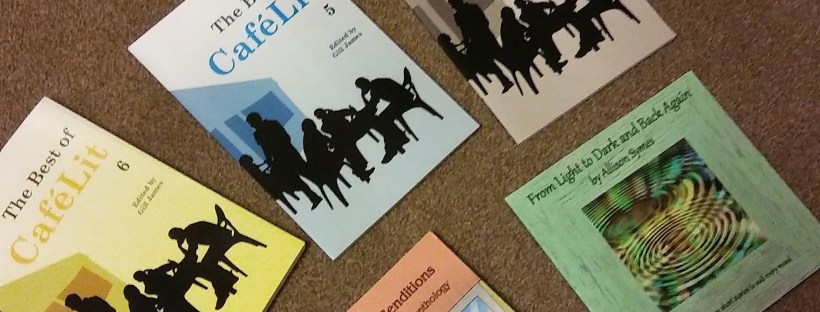
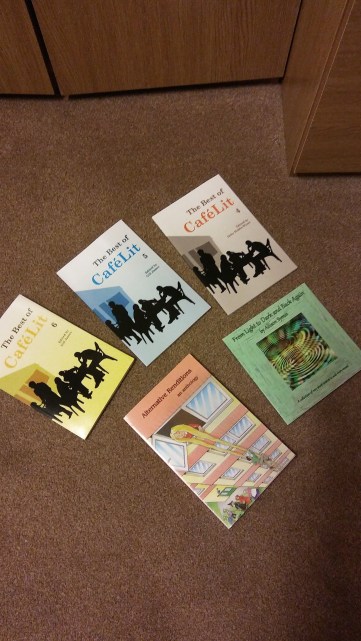
My stories are in The Best of Cafelit 4, 5 and now 6 and also by Bridge House Publishing (Alternative Renditions). My first collection From Light to Dark and Back Again is published by Chapeltown Books.

WRITING DAYS AND WORKING OUT WHEN TO STOP

Facebook – General – Writing Days and Characterisation

What counts as a good writing day? When you’ve got the right amount of words down (whether it’s a few hundred or a few thousand)? When you’ve completed a specific writing task? As ever with these things, so much depends on the writer.

For me, either completing a task or getting to the stage I wanted to reach for a longer one is my definition of a good writing day.

There is no way I can complete my Chandler’s Ford Today posts in one go for instance so I aim to write the post as one/two tasks, edit it and put it up on site ready to go (but not scheduled yet) as another, and then I sort out the images and feature image as the third part. The final, fourth part, is checking I’m happy with the text, images, links and feature image overall and, if I am, I then schedule the post.

So I think I’ve had a good writing day when I can tick off all those specific tasks.

Another great joy of writing flash fiction is I can count writing the first draft as one task because I CAN complete that in one go! There is a huge advantage in writing 100-word stories as opposed to 100,000-word novels (though I love both!).

Writing first, editing later but both needed - image via Pixabay

Get those ideas down, then edit. Image via Pixabay

What is the best thing about writing a story of any length – flash, short or novel (and script come to that too)? For me, it’s that moment when I realise I’ve “got something here”. I usually find I’m about halfway through my draft when I get to that point. The great thing is it really motivates you to finish the piece!

And what is it more than anything else that leads to me realising this? It is the characterisation. Something about one or more of the characters in the piece has gripped me and, if they grip me, there’s a good chance they’ll grip other readers.

It is at this point I have to resist the temptation to start editing and make myself wait until I have got the complete first draft down. Editing too early can kill off the joy of creating the characters in the first place so, for me, writing and editing have to be treated as two separate tasks.


Facebook – From Light to Dark and Back Again

What are the challenges of writing flash fiction? Obviously, there is the tight word count but I think the toughest thing is working out what is the real essence of your story so you know when to stop.

The other big challenge is to ensure the flash story is a complete tale in and of itself. It mustn’t be just a short bit of prose. Each flash story must have an impact on your reader (which, to my mind, can only happen if it has a “proper” conclusion!).

If a short story is like a snapshot of a character’s life, then a flash tale is like a tweet. Brief, to the point and then all over. But it should leave you feeling something. There should be a moment of change in the character’s life. It is just a shorter moment than the one you would have experienced from a standard short story.


book-2134779_640

Cafelit

One thing I love about the Cafelit series of books is there is a good mixture of story lengths in them.

There’s a good range of my favourite flash fiction but it is nice to have these interspersed with standard length short stories and those that fall somewhere between the two. So whatever my reading mood is, there is something to cover it here!

The link below covers the whole range of Cafelit books. I’m delighted to be in 4, 5 and 6 (and I reviewed 3 some time ago too!). So if you know someone who loves their short stories but likes a mixture of styles and story lengths, Cafelit books would be a great place to start.

Now then: note to self – get some more flash fiction into Cafelit!


20171015_233807.jpg

Wishes and Flash Fiction


Facebook – General

One week to go to the Chandler’s Ford Book Fair from 10 to 12 at the Age Concern Centre in Brownhill Road. Good range of authors and genres represented. Should be good fun.

If one of my fairy godmother characters could grant me three wishes, what would I choose? (For that matter, what would YOU choose for yourself?). My choices would be:-

1. To send predictive text into oblivion and arrange things so people forgot it ever existed. (I’m counting that as one wish, my fairy godmother character may disagree, but I would sacrifice a wish cheerfully to get this through. Much as I love my smartphone it has confirmed my loathing of predictive text. Complete pain when writing, It rarely predicts anything I can actually use!).
2. To NEVER be interrupted by anything when reading. (Think my fairy godmother character might struggle with this one).
3. For paper jams and power cuts to be a thing of the past. They always happen at the most inconvenient times.

If I could sneak in some extra wishes, I’d go for:-

4. For all people to be able to read and write and to want to read. Reading can easily be dismissed as something people don’t have time for and I’m at a loss as to why. Same people would happily watch a 3-hour film. Maybe reading needs to be seen more as a form of entertainment than it currently is?
5. For genre fiction to no longer be looked down on (though there has been some progress here). Why shouldn’t a book JUST be for entertainment? Why does it have to be worthy as well?

So what would your wishes (+ 2 bonus wishes) be?

More of the books

Local writers’ books  including mine recently on sale at the Hiltingbury Extravaganza.  Hope to see some of you at next week’s larger event, the Chandler’s Ford Book Fair.  Image by Allison Symes

BookFairPoster8

Thanks to Catherine Griffin for the excellent Book Fair poster.  Also to Sally Howard and all in Chandler’s Ford Authors who are organising this event.  Should be good!

Well, what IS your story? Image via Pixabay.

Well, what IS your story? Image via Pixabay.

Facebook – From Light to Dark and Back Again

A flash fiction tale has to be complete in itself with a beginning, middle and end, but its great joy (for me at least) is the ability to imply so much more.

My story, Serving Up a Treat, is a tale of domestic abuse where the character brings an end to it. (For how you’ll need to see the book!). What is implied in this story is the backstory. It is implied that what has been happening to the character has gone on for a very long time.

The “snap” point should be expected so does the piece deliver on that expectation? Yes, it does. You do have to follow through! However, that doesn’t mean you have to spell out every last detail. In fact, with flash you can’t as there simply isn’t the room with the limited word count.

I’ve found flash fiction to be a great way of improving my blog posts, longer short stories etc because it forces you to ask what is REALLY important. What MUST the reader know? What can I drop hints at and leave them to work things out from there?

Photo2988

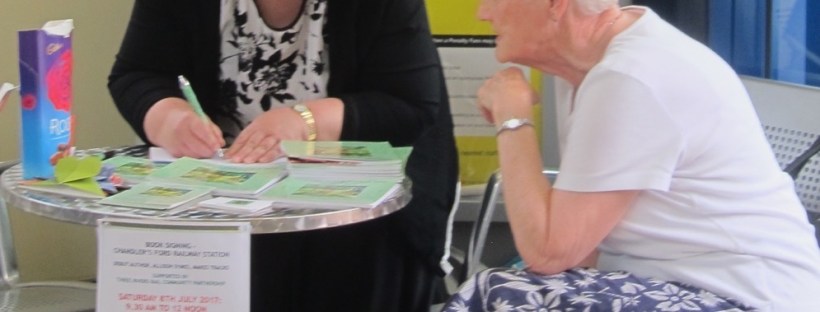
From my railway station signing. The lovely origami boxes were made by my CFT editor, Janet Williams.  Image by Allison Symes

Writer at work. Image via Pixabay.

Writer at work! Flash fiction stories must be complete in themselves but they can imply so much.  Image via Pixabay.


Many thanks to all who’ve reviewed my book so far on Amazon and Goodreads. 

Goodreads – Author Programme – Blog Post

Why do you read? Like me, I suspect you have several answers to this. Mine include:-

1. For entertainment.
2. For education.
3. For research (for a story or post I’m writing. Not quite the same thing as for education above. I define that as reading to learn but for its own sake and not necessarily to “use” elsewhere).
4. Because I always have read and reading is simply part of what I am and do.
5. The book is nearly always better than the film!
6. I like to read at bedtime to help me unwind and have a better night’s sleep.
7. To widen my tastes in books and stories, I have to be prepared to try genres new to me so I see this as a kind of exploration of what’s out there. I have no idea at this stage whether I’m going to like what I read or not so can’t say if I will be entertained!
8. I’m thrilled to be published myself and I do see it as necessary to support the industry I’ve entered. How can I best do that? By buying and reading books! (A kind of self-help here I think).
9. To enjoy what my friends are writing!
10. To explore literary culture. In the last two years, for example, I’ve read and seen more Shakespeare plays than I ever have done and part of this is to expand my knowledge here. (It’s a very enjoyable exploration too and I love National Theatre Live for making it easier to go to see productions).

There is no right order for any of the above reasons for reading but they strike me as all being very good ones to do so!

20170917_145438.jpg

To write books you need to have a deep love for the written word and how else can you develop that other than by reading widely?  Image by Allison Symes

Other News

Many thanks to Jennifer C Wilson for hosting me on her excellent blog a little while ago.  I share the link to my post here (Falling into Flash Fiction), but highly recommend exploring the rest of her site and her paranormal historical fiction works, Kindred Spirits: Tower of London, Kindred Spirits:  Royal Mile, and The Last Plantagenet?  Jennifer is published by Crooked Cat but her most recent book, The Last Plantagenet?, is her first self-published novella.

STORY ENDINGS

A definite theme emerged tonight.  Which do you find most difficult to write – the ending of a story or its beginning?  I share some thoughts on both my Fairytales with Bite and This World and Others posts.  Comments very welcome.  And I would welcome questions coming in via the Goodreads Author Programme Q&A too.

Firstly, though:-

FACEBOOK – GENERAL AND CHANDLER’S FORD TODAY

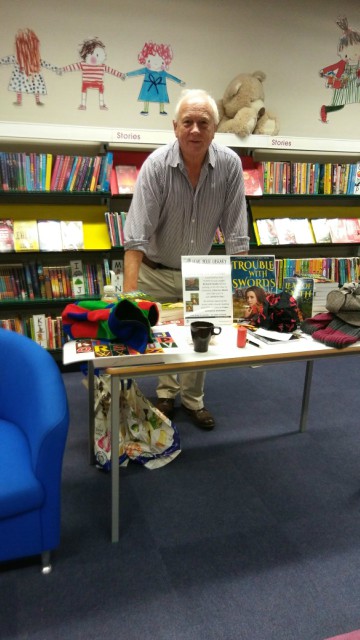
This week’s Chandler’s Ford Today post looks back at YA author, Richard Hardie, and his book signing at Eastleigh Library last weekend. This was part of Cub/Brownie Uniform Day and, overall, part of the Love Your Library Week.

The post looks at what libraries can do (Richard’s report) and I share my thoughts on how writers and libraries need each other, as well as give a summary of the book signing event itself.

If you missed Richard at Eastleigh, then he will be at the Chandler’s Ford Book Fair on Saturday 28th October from 10 am to 12 noon, along with many other regional writers, including me. We hope we can see some of you there.

There will be a good range of books on offer from Richard’s YA fantasy books (Leap of Faith and Trouble with Swords) to my flash fiction (From Light to Dark and Back Again) to short story collections (Secret Lives and More Secret Lives of Chandler’s Ford) and many books and genres besides. Far too many to list here but that’s a very good thing!

Eastleigh Library - Richard at work

Richard at work in Eastleigh Library,  Image by Allison Symes

Allison Symes, Richard Hardie, Daniel

Richard, his dog, Oscar and my son, Daniel, were amongst my supporters at my signing earlier in the year. Image by Janet Williams, Chandler’s Ford Today’s lovely editor.

BookFairPoster8

Richard and I will be two of the authors at the local Book Fair soon.  Image via fellow Chandler’s Ford Writer’s Hub member, Cahterine Griffin.

Facebook – From Light to Dark and Back Again

One of the dilemmas I sometimes face when writing my flash fiction is knowing where to stop!

Sometimes I bypass this dilemma by writing a short piece (usually 100 words) and then, separately, extending the story out to a standard 1500 to 2000 word count later on if I feel the idea is strong enough to take this. (I then use those stories for standard short story competition entries).

I don’t do this too often as I’m usually well engrossed in the next story idea and I also think this solution is one best done sparingly anyway. You want generally to move on to the next idea, the next story etc. However, for a really strong idea, there is no reason why you can’t do this and have two stories based on a strong central premise. Waste not, want not!

The other way around this dilemma, which I use more often, is to work out which ending would have the most impact on the reader and at what point. I then leave the story at that point. You can’t go wrong with that method, I’ve found, but this is where putting work aside for a while pays dividends. You can then look at the piece with fresh eyes and read it as a reader would. It is only by reading it like that you can work out what that best impact point is in the first place!

20171015_233807.jpg

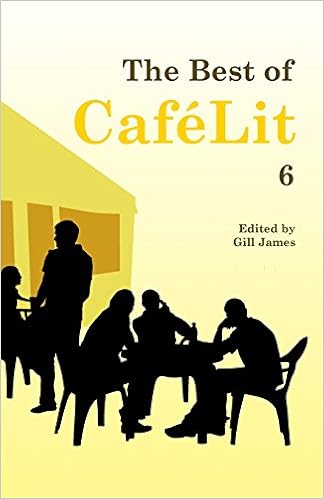
My latest story is in The Best of Cafelit 6, recently published.  The rest of the books shown here are where I’ve been published by Bridge House Publishing, Cafelit and, of course, Chapeltown Books.  Image by Allison Symes

Love the cover for this. Image supplied by Bridge House Publishing.

My last Bridge House story is in here. Naturally I hope there will be many more to come! Image supplied by Bridge House Publishing.

The links below take you to my Weebly websites with these posts but I have set up a slideshow on both not reproduced here.

FAIRYTALES WITH BITE

One of the joys of writing flash fiction is it doesn’t limit your possibilities with a very strong story idea.  I have written a short piece (usually one of my 100-word tales and then, separately, extended the story at a later date to the standard 1500 to 2000 words required by most writing competitions.  So I have two stories around one strong central premise.  I like this!

I must admit I do this sparingly because I have usually moved on to the next story idea etc. (I also think it is something best done sparingly anyway and for your very best ideas only, otherwise you dilute your own work too much).

This situation comes about when I realise I am having problems working out where exactly to end a story.  Do I leave it at the short punchy ending which suits flash fiction so well or do I extend the characters out (and the plot with them) and trust the right ending will emerge from that (it always does incidentally)?

My main method of working out the right story ending is to work out at which point the story has the most impact on the reader and that is where I leave the tale.  Nothing more, nothing less, job done.  For flash fiction, which aims to give short, sharp impressions on the reader, this is by far the best way of working out where to stop the story (I think).

Feature Image - Flash Fiction - Books are Gateway - image via Pixabay

One of my favourite stock images because it is so true.  Image via Pixabay.

THIS WORLD AND OTHERS

My theme tonight has been the right story endings – right for your story that is, as all endings have to be appropriate for the tale and that can have so much variety.  I can’t imagine Shakespeare’s Hamlet or Romeo and Juliet with happy endings (can you?!), but the way these plays finish is appropriate for the characters and the situations they are in as the Bard of Avon wrote them.  (He also went for maximum impact on his audience, which ties in with my post Finding the Right Story Ending on my Fairytales With Bite site tonight).

So happy ever afters then?  The classic ending for fairytales, usually but not always.  Hans Christen Andersen proved with this with The Little Mermaid and The Little Match Girl in particular, which I guess I could describe as two of my favourite “weepies”.  But, again, the endings are apt for the way he wrote the characters and the situations he put them in and I think this is what we should aim for with our own stories.  Sometimes a happy ending will be appropriate, sometimes it won’t, sometimes the possibility of a happy ending to come beyond the life of the story is an apt way to finish, and sometimes a tragic solution is the only way to end the story.

So you need to ask yourself what would be the most appropriate finish for your story?  Does it tie in with what we know of your characters?  Does it have the maximum impact on your reader?  The most important thing about endings is they have to be definite and definitive.  Something about the ending must bring to a satisfactory conclusion what you have revealed about what your characters – this is where the “ring of truth” to fiction comes in.

Do you find writing the endings to stories more difficult than the start?  Comments welcome!


Eastleigh Library 2017 - Richard gave his talk from here

Richard Hardie gave his talk from this wonderful rug at Eastleigh Library but I also thought it a good way to wrap up this post tonight.  While I have talked about story endings, story beginnings can be difficult too, but for fairytales, you can’t beat this one!  Image by Allison Symes


BOOK SIGNINGS, LIBRARIES AND TECHNOLOGY

Facebook – General

My Chandler’s Ford Today post this week is another one about book events. None for ages, then like buses, two on top of each other!

Following on from Anne Wan’s book launch report last week comes Richard Hardie’s news about his book signing at Eastleigh Library last Saturday. This signing was part of Uniform Day (encouraging Cubs and Brownies to complete their book reading badge) and the overall Love Your Library week. It was good to see a packed library. The event was great fun.

I talk about libraries and writers needing each other, Richard shares his thoughts on how the event went and what libraries really can do, and if you did miss Richard at last week’s event, he will be back with his books, Leap of Faith and Trouble With Swords, at the Chandler’s Ford Book Fair on 28th October from 10 am to 12 noon. More details in the post tomorrow.

Meanwhile, for my part, there is plenty of writing and editing work to do so best press on then! (Though I may have a sneaky read of The Best of Cafelit 6 first. Love what I’ve read so far – well done all contributors!).

Eastleigh Library 2017 - Richard gave his talk from here

The rather splendid rug at Eastleigh Library from which friend and fellow writer, Richard Hardie, talked about his Young Adult fantasy novels recently.  Image by me.

Eastleigh Library - Richard at work

Richard’s table at Eastleigh Library recently.  Image by me.

BookFairPoster8

Richard and I will be two of the authors taking part in the Book Fair coming up soon.  Image by Catherine Griffin of the Chandler’s Ford Writers’ Hub.

Facebook – From Light to Dark and Back Again

Flash fiction, I think, is the ultimate proof that less can be more when it comes to storytelling! I am convinced technology (particularly smartphones) helped the form to take off, which is a nice side benefit.

Often when technology brings about changes, there are always fears it will be the death of something else. For example, the monks who wrote out all books by hand (and beautifully done too) didn’t exactly welcome Guttenberg and Caxton!

But things do need to move on. I don’t miss having to use carbon paper when I needed more than one copy of a typewritten letter. I don’t miss literally cutting and pasting stories to get them in the right order for yet another re-typing later on.

I want to see technology getting more people reading, albeit in different ways than previously. I like the way libraries have embraced e-books and I know in Hampshire the Library Service holds regular “Get to Know Your I-Pod” sessions. (You can even borrow one for the duration of the course though you do have to register for these). My Chandler’s Ford Today post tomorrow also talks more about what libraries can do as Richard Hardie and I report on his most recent book signing at Eastleigh Library.

So however you read, enjoy! Ultimately, that is the most important thing.

20171015_233743.jpg

Traditional books will always have a place. My stories are in The Best of Cafelit 4, 5 and now 6 and also by Bridge House Publishing (Alternative Renditions). My first collection From Light to Dark and Back Again is published by Chapeltown Books.


The Kindle. I read from it at bedtime and have a wide variety of non-fiction and fiction books on it. Image via Pixabay.

The Kindle. I read from it at bedtime and have a wide variety of non-fiction and fiction books on it. Image via Pixabay.


Writing to a Story Prompt

Facebook – General

The Goodreads Author Programme sent me a story prompt idea which was to write a horror story in two sentences. Okay, I’m a flash fiction writer so this is very much up my street!

The link below is to my author dashboard slot. Please do send in questions via Goodreads, I love Q&As like this. I also like the idea of being sent a story prompt like this every so often, so thank you, Goodreads. Great writing exercise.

And my two sentence horror story?

It took three days to get the blood off the walls. It took another five to remove the last drops off the carpets.

I could reduce that to one long sentence, but think it works better as two shorter ones. There is a rhythm to two shorter sentences you simply wouldn’t have if they were joined.

And the story is very much to the point! The image is from Pixabay – it is always good to have plenty of reading material…

Reading - says it all really via Pixabay

Says it all really.  Image via Pixabay

Facebook – From Light to Dark and Back Again

The Goodreads Author Programme sent me a story prompt which was to write a horror story in two sentences. (I’ve shared this on my Allison Symes Author Page. I would welcome questions sent in via Goodreads too).

The two-sentence structure is interesting. Just enough to get the story going and then you come to an abrupt halt! The story works fine as it is but I could extend it into a standard length short story, one of my 100-word tales, or anything in between.

This is another advantage of flash, which I’ve used. You can write a flash piece, submit it, hopefully have it published and then take the same idea, expand on it, send it to somewhere that would take longer fiction and hopefully enjoy success with it again.

You would have created two stories, effectively around a common theme/lines, but then gone in different directions with it. The longer version would have more description and maybe more characters than the short piece. (Flash works best with 1 or 2 characters in it and others referred to). Short stories catch a moment in time, flash fiction even more so.

The magic of stories. Image via Pixabay

The magic of stories. Image via Pixabay


THERAPEUTIC WRITING AND USING FLASH FICTION TECHNIQUES ELSEWHERE

Facebook – General

Why can writing be therapeutic? I suppose because it takes you into your own invented world and, while you’re focussing on that, it distracts you from other things (even if only for a short time. Sometimes that short distraction can make a huge difference as to how you handle the situation you’re in/worrying about. When it’s a bigger life issue no amount of distraction can solve, by writing for a while you at least take a break).

You are also focussing on your characters’ needs and what is getting in the way of them having these met. One of the best things about fiction writing is the way it can help encourage your own empathy with others because as you work out why your characters are acting in the way they are, that whole process can give you insights as to why “real” people act the way they do.


This slideshow requires JavaScript.

Facebook – From Light to Dark and Back Again

The most important skill you pick up when writing flash fiction regularly is that of editing, as I’ve mentioned before. The great thing is you can then apply what you learn across the board of whatever it is you write.

What do novelists most dread writing? The synopsis and/or blurb. Writing the book is hard work but easier! You are in control of that after all and every writer at least starts off by writing to please themselves first. Condensing your precious prose into a few well-chosen lines is not easy but taking the approach, you will treat writing your synopsis as if it WAS a piece of flash fiction, can be a way of tackling this task.

Flash stories focus on only those things that really matter and so treating your synopsis, in the same way, is not a bad way to go. Every line of your synopsis must reveal crucial information to your reader, in this case, a potential agent/publisher. It is working out what is the crucial-can’t-do-without-this information that is the really tricky part.

Here I think you need to ask yourself what are the bare bones of your novel? What are the things an agent/publisher MUST know and then leave the rest out? Flash fiction writing will help you cut out the wasted words that don’t move your synopsis onwards. Good luck!

This slideshow requires JavaScript.

My stories are in The Best of Cafelit 4, 5 and now 6 and also by Bridge House Publishing (Alternative Renditions). My first collection From Light to Dark and Back Again is published by Chapeltown Books.

FLASH FICTION/SHORT STORIES

Facebook – General

Am enjoying reading The Best of Cafelit 6 and looking forward to catching up with some of my fellow contributors at the Bridge House/Cafelit joint celebratory event in December. Nice mix of flash fiction and short stories. All that I’ve read so far conjure up powerful images within their first few words, a sure fire way to keep you reading. Not that I’m biased or anything… 😁😉

What do I like most about the short story (flash or longer)? I suppose it is because they are their own self-contained world. What is nice about a collection of them is you can enjoy visiting many different worlds by different writers and this is particularly good if your reading time is limited. Also, short stories are a fantastic way to try out an author’s work before going on to read their novels etc.

Keeping the short story alive is one of the great things about the independent presses. They want diverse voices. We as writers can let them have that. More short stories get out there. Okay, we still have to do the publicity but we would have to do that with a novel anyway. My own gut feel is that short stories (flash perhaps especially) can be a great way of tempting reluctant readers in so the more short stories there are out there available for people, the better.

Below are images of the books I’ve been published in to date.

20171015_233743.jpg

My stories are in The Best of Cafelit 4, 5 and now 6 and also by Bridge House Publishing (Alternative Renditions). My first collection From Light to Dark and Back Again is published by Chapeltown Books.

Facebook – From Light to Dark and Back Again

How do I like to start my flash fiction tales? Often it is with a name character carrying out some action, no matter how minor, as that immediately tells you the story is about X. (Also that the action is going to matter too, no matter how minor. Everything means something in flash fiction. There is literally no room for anything that doesn’t contribute to the story in some way).

Sometimes I go straight into my characters’ heads and show their thoughts. That will give the reader an immediate idea as to what this character is like (and from there you can make intelligent guesses as to what they might do/be capable of – for me, a lot of the fun in reading fiction by other writers is seeing if my guesses turn out to be right or not. While I’m always pleased when I guessed correctly, kudos must go to those writers who successfully wrongfoot me!).

My latest published story which is in The Best of Cafelit 6 sets a time and an immediate scene so I take the reader to where I want them to be. It also helps set the mood of the story.

So there are plenty of different ways to start your story but the common link is they are all designed to draw your reader in and keep them with you until they’ve finished reading your tale.

20171015_233541.jpg

My latest published story is in The Best of Cafelit 6.


Love the cover for this. Image supplied by Bridge House Publishing.

My last Bridge House story is in here. Naturally I hope there will be many more to come! Image supplied by Bridge House Publishing.

THE IMPORTANCE OF BOOK LAUNCHES AND REALITY OF FAIRYTALES

A nice mix of posts tonight I think!

Facebook/Chandler’s Ford Today

I have to smile. I am being invited to add myself to the “Allison Symes” Team. Err… Facebook, I AM Allison Symes and I AM the team. Me and… well that’s it! Oh well, perhaps this is something I need to aspire to – to have people, other than me, to add on to the said team? This could take some time…

Meanwhile, my latest Chandler’s Ford Today post shares my thoughts on why book launches are important to an author and Anne Wan’s report on her most recent one at Waterstones in Southampton. I suspect most writers, published or not, will identify with this but comments would be welcome via the CFT comments box.

Anne writes the children’s series Secrets of the Snow Globe and has just launched her second book, I had hoped to get to Anne’s launch but couldn’t in the end so this is a bit of a strange post in that I’m sharing a launch I didn’t go to! Anne’s report only made me wish I HAD been able to go (which is a sign of a good launch if ever there was one).

Anne is on the left in the image with her illustrator, Dawn Larder, on the right. Dawn came back from Spain to be at Anne’s launch. Now there’s commitment for you!

Image Credit:  All images in my CFT post tonight were kindly supplied by Anne Wan.

Shooting Star - Feature Image - Anne Wan Book Launch at Waterstones 2017

Facebook – From Light to Dark and Back Again

I’ve discovered, thanks to the smartphone, there is no such thing as dead time.

I had to take my car into the main dealer today and while I was waiting for the necessary works to be carried out, I was happily writing away on the said phone (I’m becoming used to the stylus now!) and have drafted another story for my follow-up book to FLTDBA.

I didn’t manage to complete the story but I am almost there on it and I know where I’m going with it. (It will be one of my longer flash pieces too). This is where technology comes into its own. I was also pleased to be able to email what I’d written back to myself for an instant back-up. So even time waiting for a garage fix can be put to good use!

Stories can be created and read on just about any modern device - image via Pixabay

Stories can be created on almost any device.  Image via Pixabay

Goodreads Blog

I talk about the joys of non-fiction this week.

Much as I love reading a wide range of fiction, I must admit it has been my tastes in non-fiction that have expanded in recent years.I am reading more history now than before and loving it. Ironically perhaps, reading more straight history, so to speak, has made me appreciate historical fiction more.

I am reading more history now than before and loving it. Ironically perhaps, reading more straight history, so to speak, has made me appreciate historical fiction more.I think it makes it easier to see or guess at the depth of research a historical fiction author has to do to be able to set the scenes of their “world” properly and to carry their readers with them. Get one historical detail wrong and that whole world could crash.

I think it makes it easier to see or guess at the depth of research a historical fiction author has to do to be able to set the scenes of their “world” properly and to carry their readers with them. Get one historical detail wrong and that whole world could crash.This is the big advantage of fiction, of course. You can and do totally make it up! But set a story in a known historical setting or with known historical people, then the details must be authentic.

This is the big advantage of fiction, of course. You can and do totally make it up! But set a story in a known historical setting or with known historical people, then the details must be authentic.

I like the fact that non-fiction has been, in recent years, using more of the techniques in fiction to catch readers’ imaginations. Non-fiction should never be a deadly dull list of dates and facts.

Good non-fiction opens up the world it is written about and makes it real to the reader. This is very similar to a fiction writer portraying characters the ready can really identify with. Catching the imagination is vital whatever genre you write in then.

Personal history can often be found in things like old exercise books, which in turn reveal things about political history and how much people knew at the time. Image via Pixabay.

Personal history can often be found in things like old exercise books, which in turn reveal things about political history and how much people knew at the time. Image via Pixabay.

Fairytales with Bite

I look at the reality behind fairytales for this week’s post.

Can there be reality behind fairytales?  I think so.

Writers are always advised to write about what you know (which can be difficult for authors of sci-fi, horror and fantasy in particular when you stop and think about it!  We are inventing new worlds. How can we possibly “know” something that does not exist except on our pages?  I suppose the what we know here is knowing in good enough detail the world we’ve created and inventing characters readers can identify with.  Knowledge of human nature is crucial here).

But there is reality in fairytales.  Not just of character types.  Whatever world you write about, characteristics do not change much.  There will always be those who lust for power, the oppressed, those who fight back, those who go on seemingly impossible quests because they have to save something/someone and this is the only way to do it and so on.  (Great stories come from the last category alone, think The Lord of the Rings to name but one).

When I think of a realistic fairytale, my mind nearly always turns to Hans Christen Andersen’s The Little Match Girl.  Definitely not one of his cheerier tales but, without giving too much away, to be able to write this as well as he did, he had to know something of poverty (which he did) and I strongly suspect he actually saw real match girls which inspired this tale.  To me this story is a barely disguised report on something he saw and his underlying jibe at people being allowed to suffer like this girl did is as hardhitting now as it would have been when he first wrote the tale.

Often with fairytales it is the message behind them that is the realistic bit.  I think this is why fairytales have always resonated with people and always will.

castle-2115425_640

There can be reality behind fairytales. Image via Pixabay (and image used as part of book trailer for From Light to Dark and Back Again)


This World and Others

I talk about being well prepared for this week’s post (and I was!).

The importance of good preparation is something that comes up in my Chandler’s Ford Today post tonight where I talk about book launches and share a report from a recent one by children’s author, Anne Wan.

Does this mean you should never write “off the cuff”?  Funnily enough, no.

I have brainstorming sessions every so often which I find incredibly useful for producing potential ideas for future stories and blog posts.  There is no planning or preparation for this whatsoever.

This is unlike everything else I write though. I do sketch out a structure for the articles I write. I have my beginning, middle and end in mind before I start writing.

I outline my stories (sometimes in lots of detail, others with “broad brush strokes” and yes I’ve done this for my flash fiction work too!).

I find this kind of preparation, whether it is for fiction or non-fiction, helps me produce more work, not less. I think it helps me write more efficiently when it comes to producing the actual piece.  This blog post, for instance, I knew I would share something of how I work as a “peg” to hang the rest the piece from.  And that to me seems a good place to end this other than to say comments on how you work, what preparation you find useful etc would be most welcome.

Have a good writing week!
 

Writing first, editing later but both needed - image via Pixabay

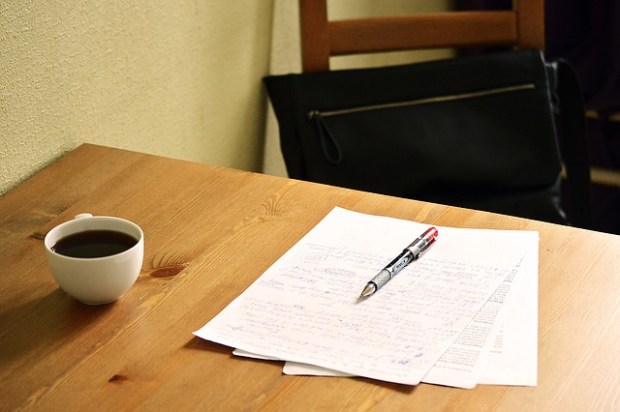
Writing first and editing later but good preparation makes an enormous difference to your progress on either.  Being prepared with a good beverage is ALWAYS a good idea!  Image via Pixabay.


Book Reviews – From Light to Dark and Back Again

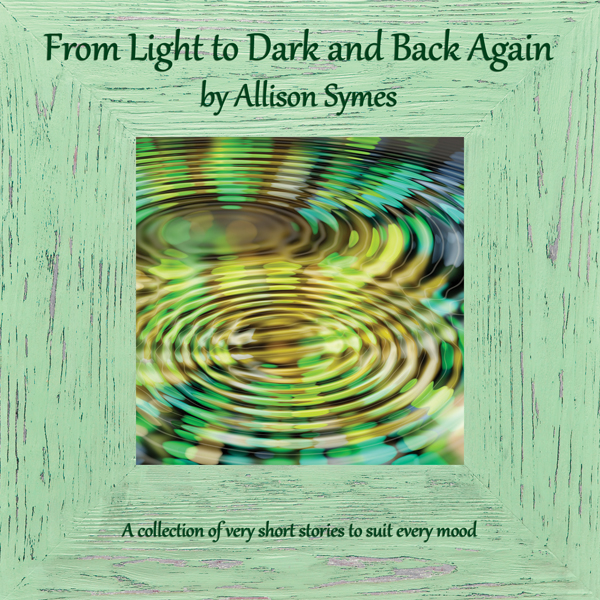
May I take this chance to say a very big thanks to all who’ve reviewed my book so far in either paperback or Kindle format.  Whether it’s a one-line or a one paragraph review, they are all much appreciated! The link takes you to the Amazon page showing both formats.  I am also pleased I now have my copies of The Best of Cafelit 6 where I have a flash story but I’ll share more on this on my next post.  This week has been busy but enjoyable, writing wise.
FromLightToDark_medium-2


ASPECTS OF THE WRITING LIFE

Facebook – General

What aspect of the writing life do you find most enjoyable? I find mixing with other writers at conferences and so on is the best here. I love finding out what others write (and often why too) and their inspirations.
Biggest problem? Finding enough time to read widely so I continue to feed my mind with ideas! Solution: working on it. I read at bedtime but am often too tired to read as much as I’d like to do.

I love that spark of creativity that comes as you write that initial draft. I also love the editing process and I swear I can almost feel that story improving as I take out all of my unnecessary words. I do sometimes wonder how many drafts Shakespeare, Dickens etc went through. I am grateful cutting and pasting is confined to the computer now. I have done this literally and it’s not fun.

What would I like for the future? I’d like people to make time for reading. I’ve heard people say they don’t read. Why? It beats me and saddens me as to why people don’t see the importance of reading.

Feature Image - Flash Fiction - Books are Gateway - image via Pixabay

Says it all really and applies to non-fiction equally as fiction. Image via Pixabay.

Fill that blank sheet with ideas from non-fiction as well as other fiction works - image via Pixabay

The basic necessities of the writer’s life!


Facebook – General and look ahead to Chandler’s Ford Today post

My Chandler’s Ford Today post for this week will talk about what book launches mean for an author and share a report on a recent one by children’s writer, Anne Wan. More details and the link tomorrow.

This post made me think more about the special moments in a writer’s life. The first is completing your first story or article. Okay, it will need a lot of work. Okay, it may never be published but it is proof you are on your way as a writer.

First publication (online or in print) is an obvious special moment. Someone else liked your work enough to want to publish it. (Even those you know who aren’t fond of books or understand your wish to write WILL understand this one is special).

Receiving your first comments on blog posts or your website (and hopefully they’ll be positive ones) indicates you are reaching out to your readers. Going to your first writing conference and meeting with writers in and out of your genre and learning from them and the courses you go to is a stand-out time too. You learn to network from things like this and each course will be a mini-master class.

So what would you count as a special writing moment?

Anne Wan and Allison Symes at Bay Leaves Larder

Facebook – From Light to Dark and Back Again

All of my stories in From Light to Dark and Back Again are under 1000 words and most of them are in my speciality, the 100-word tales. But there are some 250-words, 500-words etc tales in there too. The longer stories have room for a greater depth of characterisation, which can make the difference to your tale “working” or not.

Some of these longer flash fiction tales focus on familiar fairytales but others are complete crime stories. They were all fun to write! In all of the stories in the book, the length of the tale is right for that particular story. And that is what matters whatever you write.

Photo2988

From my railway station signing. The lovely origami boxes were made by my CFT editor, Janet Williams.


And Finally – Personal Note:  Mabel

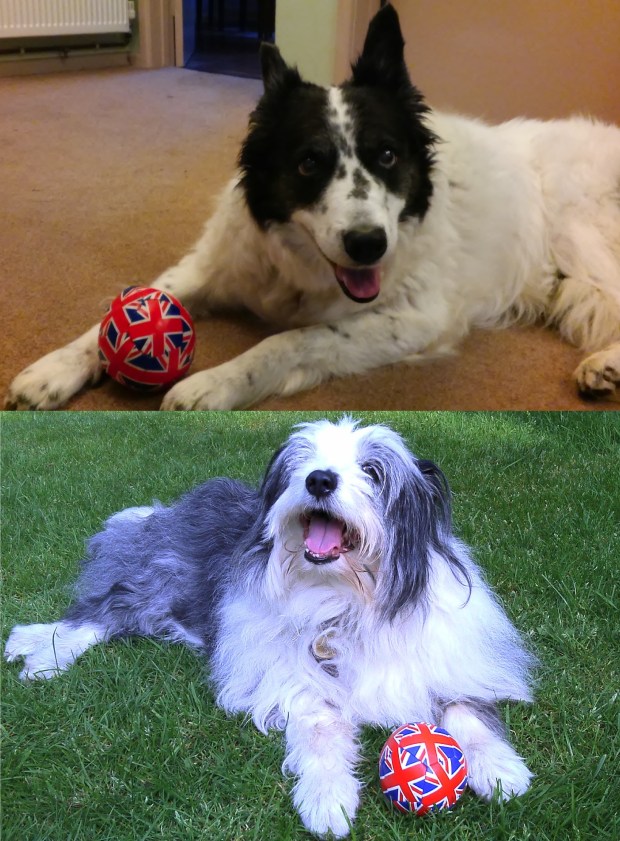
I have sometimes mentioned my border collie, Mabel, when writing online and I am sorry to have to say she had to be put to sleep last week.  She was 13 and had been ailing for some time.  While we knew it was coming, her loss has been and continues to be a huge loss for my family and I.  In the fullness of time, we hope to adopt and rescue another down on its luck collie but right now we mourn Mabel but are grateful for the five very happy years we had with her.  She nearly died five years ago when she was abandoned on a cold January night and tied to a lamp-post.

In the fullness of time, we hope to adopt and rescue another down on its luck collie but right now we mourn Mabel while grateful for the five very happy years we had with her.  She nearly died five years ago when she was abandoned on a cold January night and tied to a lamp-post. She was rescued by animal charity, Oldies Club, who specialise in rehoming older dog.  They send their dogs out to fosterers so reports can be written about how the animals settle into home life and a big thank you must also go to Mabel’s fabulous fosterer, Wendy Nutland.

Mabel-Gracie

My two girls, both much missed. Mabel, the border collie, left us last week. Gracie, the bearded/border cross, left us five years ago. And yes it is the same ball. They both loved it.


NEW ANTHOLOGY, A BOOK FAIR AND HOW I FELL INTO FLASH FICTION

Facebook – General

Delighted to say I received my copies of The Best of Cafelit 6 today. My flash fiction tale, Pressing the Flesh, is in there but there is a lovely range of short and long stories in the anthology. Highly recommend even if I wasn’t in it (though I admit that does give me an incentive!). Am also looking forward to the Bridge House/Cafelit celebration event in December. It is always good fun and it will be nice to meet other authors in the collections given we usually only get to meet on Facebook. Great and useful though that is, there is something nice about actually meeting the writer though.

The link takes you to the Amazon page for the book.  There’s a nice range of stories from flash fiction to standard length short stories and a good mix of styles.  Go on, have a look!

Looking forward to the Chandler’s Ford Book Fair in the Age Concern Centre in Brownhill Road on 28th October from 10 am to 12 noon. There is a nice range of authors taking part with different genres represented including YA, short stories, romantic comedy, my own flash fiction and many more besides. So there should be something to suit the book lovers in your life (which I hope would include you too!).

BookFairPoster8

My CFT post this week will be an update from Anne Wan about her book launch went for Secrets of the Snow Globe – Shooting Star. This is the second book in her Snow Globe series and these will also be at the Book Fair. Book launches are vital not just for the author but often for the bookshop or other venue in which they are held. Events do get people through the doors.

ShootingStar-BookLaunch-A5Leaflet-FINAL-page-001

Many thanks to Catherine Griffin for supplying the Book Fair poster, to Anne Wan for her poster and the last image shows Anne and I at Bay Leaves Larder in Chandler’s Ford. I had just interviewed Anne for a CFT post when this image was taken.

Anne Wan and Allison Symes at Bay Leaves Larder

Anne and I enjoyed a lovely chat at Bay Leaves Larder when I interviewed her for Chandler’s Ford Today.


Facebook – General – Part 2

I thought I’d share a quick post I put up yesterday which looked at why we write.

What is the real reason you write? To express yourself through story? Because you absolutely have to write and could no more stop yourself doing so than hold the sea in a sieve? (I think you’re allowed one bit of colourful description and that’s mine for tonight!).

Deep down for me, there is a feeling I need to give back to the world of story for the great joy it has (and continues) to give me. The way to give back is to create stories of my own and to put them out there.

There is also the sheer love of the written word and a desire to preserve the printed word. (I don’t see the Kindle etc as a threat. It is merely another format for story. I also don’t think anything can ever stop the appeal of a paperback. It is a question of getting stories out there in different formats and leaving it to your audience as to which format they prefer).

Sometimes, especially when feeling bogged down, it can pay to take a little time out to focus on why you write. It can help re-invigorate the old creative spark. Going to see stories performed (by live reading, theatre productions etc) is also good for the literary soul.

The important thing is to love stories and to love writing them. I couldn’t tell you how many rejections I’ve had (I definitely could wallpaper the room of my house with them!) but onwards and upwards has to be the motto. Else you make no progress. It is also true the more you write the more you improve and increase your chances of being accepted.

Stunning place in which to read and review - image via Pixabay

What a place in which to read!  Image via Pixabay

Facebook – From Light to Dark and Back Again

I was thrilled to be part of Jennifer C Wilson’s blog last Sunday with a piece called Falling into Flash Fiction. I talked about how I came into writing flash (it was a happy accident!) and shared two new stories, which I hope will make it into the follow-up to From Light to Dark and Back Again. (Many thanks to Jennifer for not only hosting me but for also linking to her lovely review of my book. Both are much appreciated!).

The real trigger point was my willingness to have a go at writing flash to see if I could meet Cafelit’s 100 Word Challenge. So do be prepared to try new forms of writing. You never know where it may lead you. I had never anticipated being published in flash format yet here I am!

What is also nice about flash fiction’s growing popularity is that a fair number of well respected competitions are now adding it as a category. For example, The Bridport Prize and the Winchester Writers’ Festival now have flash as specific competitions. There are several online competitions too and then there are the websites such as Cafelit where there is a standing invitation to submit stories.

I very much hope the growth in flash fiction continues. I would love it if people, perhaps reluctant to read, become avid readers, because they loved reading flash and then decided they wanted to read longer works of fiction.


Today, I have as a visitor the lovely Allison Symes, to tell us how she fell into flash fiction, and all about the writing form. You can read my review of Allison’s collection From Light to D…
jennifercwilsonwriter.wordpress.com