Dangerous Words and What Flash Fiction Isn’t

Facebook – General – and Publication News

My flash fiction story, Dangerous Words, is now up on Cafelit. Hope you enjoy it. There’ll be another from me here on 16th March.

I love getting straight into the heads of my characters and letting them get on with it! The writing seems to flow better when I do this.  And here is the link to my page on Cafelit.  Hope you enjoy the stories!

When you think about who your favourite authors are, do you stop and think about why they’ve made it on to your list of favourites?

No reader or writer worth their salt ever has one favourite author only! You are reading widely across genres to help inspire your own creativity, aren’t you?!

Besides, with such a wonderful wealth of books out there, why stick to just one genre? (I’m the same about chocolate – yes I will always prefer milk, but there’s no way I’m missing out on dark and white!).

I strongly suspect the big draw will be the characters your favourite author(s) created. A well drawn character will have you sympathising with their predicament, their hopes, the obstacles they’ve got to overcome to have any chance of realising those hopes etc.

So turn this around then and ask yourself what you can do with your characters to make readers feel all that about them. Readers should be able to identify with said predicaments and hopes (though not necessarily agree with them or the way your characters handle matters).

I’ve been sharing on Twitter some of my favourite books, the kind you have to take to the mythical desert island with you. Amongst the list are Men at Arms (Terry Pratchett), Pride and Prejudice (Jane Austen), Murder on the Orient Express (Agatha Christie), and The Daughter of Time (Josephine Tey). A nice mixed bunch so far but then I’ve never seen the point of limiting your reading to just one genre.

What do I look for from a good book? An entertaining story, characters that make me want to root for them, for good to prevail over evil, and where the story can make me think as well, even better. The Daughter of Time remains, to date, the only novel to make me change my mind over something (Richard III and whether he was innocent or guilty of the murder of the Princes in the Tower).

The challenge as a writer is to create your stories in such a way they resonate with your readers long after they’ve read them. I’ve only ever read To Kill a Mockingbird once (at secondary school) but certain images and the way it made me feel against injustice remain with me to this day. I’ve not read the follow-up and I don’t know if I will but to be able to haunt your readers long after they’ve finished your book is something to aspire to, I think.

This slideshow requires JavaScript.

I love getting right inside the heads of my characters when writing stories and often use that as a way to get started on a piece.

I like to think of it as hitting the ground running, because a brief incursion into the character’s mind will reveal (a) what they’re facing and (b) their attitude to it. That’s when the sparks fly!

It also means I’m showing you the story from the viewpoint of that lead character. No telling here! It does mean you’ve got to know your character well enough from the outset so you can write them convincingly but this is where outlining a few thoughts comes into its own. That outline can be as detailed or not as you want, but as long as YOU know enough to write the character, that is what matters. How to tell?

Ask yourself how your character would react to a situation you are not actually writing about for this story. Do you instantly know how they would react? If so, good. If not, you need to flesh your character out more to yourself so you can turn that no into a yes.

This slideshow requires JavaScript.

Facebook – From Light to Dark and Back Again

Delighted Dangerous Words is now up on Cafelit. I’m very fond of stories where the main character reveals a lot of what appears to be backstory but is very relevant to what they are facing at the time! I’m also very fond of stories about little old ladies who aren’t quite as innocent as they might seem to be.

How easy do I find writing flash fiction?

The simple answer is I never know when I write flash how it is going to turn out until I do it so I take an idea and run with it and see what happens.

Sometimes that idea will work better as a longer standard length short story (and that’s okay because there will be markets and competitions for it). At other times, something I thought would make a great flash fiction idea really isn’t strong enough.

Flash fiction ISN’T a diluted short story. It has to be a complete story in and of itself. It captures a moment in time (a short story can capture more than one) but it has to be a moment worth sharing! One moment finely honed. And it takes practice too. But that’s true of any form of writing.

Learning to write short will help with creating blurbs for a novel amongst other things so practising writing flash fiction I think is great for all writers to do. The editing and polishing skils you pick up over time will pay off in other writing work you do.
The Lord of the Rings

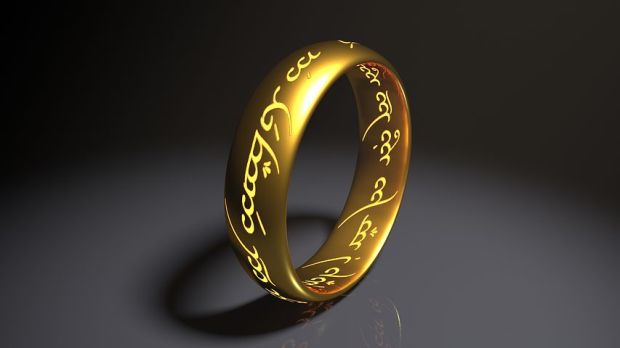
The Lord of the Rings – the ultimate in dangerous words is on this ring!. Pixabay image.

The writing prompt in my diary for this week was of a bird watching its potential mate carrying out a ritual wing display. (The mischievious side of me would have loved the picture to have shown the female holding up a score card – you know the marks out of 10 kind of thing – but then that’s my quirky sense of humour).

The prompt was to tie in with Valentine’s Day and I’ve drafted a flash story (in poetic form) where the female wishes she could have the special treatment more often during the rest of the year, that it wasn’t all down to mating etc, that there could be something special during the day to day effort to survive. My draft needs a lot of work (as all drafts do) but I sympathise with my character’s viewpoint here.

For all writers, the heady moments are (a) when you know you’ve created something good, (b) when you hear you’re going to be published, and (c) when the book contract (a good one obviously) turns up for you to sign! The nature of things means those heady moments are “spaced out” and we have to cope with the daily nitty gritty, which is far less “glamorous”.

The nitty gritty then for all writers is to get the writing done, get it out there, cope with the rejections that will come in, and so on.

And on that note I must get on!

Does flash fiction have its limitations?

Well, there is the word count of course, but I suppose the main one would be is it is not the vehicle for an in depth character study! What it can and should do is show a reader enough about a character so they fill in the gaps themselves. It is like shining a torch and you pick up ONE thing to focus more attention on.

I’ve always loved it when writers don’t tell me every last detail. I want to be able to work things out myself and flash fiction IS the perfect vehicle for that!

I really enjoy reading and writing flash fiction stories which end with a punch. Sometimes that can be literal (!) and is most satisfying when the character has deserved it (and that will be the view your readers will take too). One huge advantage of fiction is wrongs can be righted in a way they’re so often not in real life. I believe that is one reason why fairytales are always popular!

I also love the witty one-liners that can close a story. It’s good to finish a story on an “uplift” where that is appropriate. Of course the set up for that finish happens much earlier in the story and it can be as simple as showing your character has the type of attitude which will make a witty one-line retort likely. (It usually is a retort!).

Above all, it is fun, which is what writing should be after all.

This slideshow requires JavaScript.

Goodreads Author Blog Hooks into Books

I seem to have a “thing” for rhyming titles at the moment. Sure it will be a passing fad…!

What attracts you to a book? Is it the title, the blurb, the cover, or a combination of the lot?

For me, the cover draws me in but the blurb is what clinches a sale for me, whether I’m reading on Kindle or a paperback. If I like the premise of the blurb, I will “look inside” a Kindle book or look at the opening page of a paperback. If it seems to deliver, I’ll go ahead and buy.

There is no such thing as a foolproof system but this works for me!

Of course, another great hook is reading a book by an author whose works you know you like. I love series novels and my favourite of these has to be Discworld. Each book original and entertaining but there’s enough familiarity with the world to make you feel right at home as you continue to enjoy the series.

Whatever you read, enjoy!
This slideshow requires JavaScript.


Reading Journeys and the Role of Stories

Facebook – General – and Chandler’s Ford Today

I look at how what I’ve read has changed over the years in my CFT post about Reading Journeys this week. I also look at how the Kindle has impacted on my reading life too (and boy has it! My suitcase is a lot lighter thanks to it!).

I can’t remember what the first book I read all by myself was but wouldn’t be surprised if it was a picture book. I am still very fond of The Reader’s Digest Collection of Fairytales which is beautifully illustrated. I’m also a sucker for a good map (see The Lord of the Rings!).

I’ve said it before, and will no doubt say it again, but adult fiction writers owe a huge debt to those who write for youngsters. So many readers of fiction for adults come from a background of having always read books/had books read to them. It is just a case of tastes changing over time. It is difficult to understate how important it is to create that wish to read spark off in the first place.

This slideshow requires JavaScript.

My favourite moment when writing a story or a CFT post is when the piece “takes off”.

For a story, this is when the character hits their stride and there’s no holding them back. You, as the writer, are keen to find out what happens next (which is always a good sign!). And yes I outline but I deliberately don’t put down every detail. I need signposts but what happens between them is the really fun bit!

For a post, it is when one idea leads to another and that leads to more and before you know it, an article is written.

The scary moment? When you’ve outlined an idea and you begin writing and at that point you don’t know whether it is going to “go the distance”. There’s always a certain amount of relief when things “take off” and you realise the post or story will be fine (after editing later, naturally).

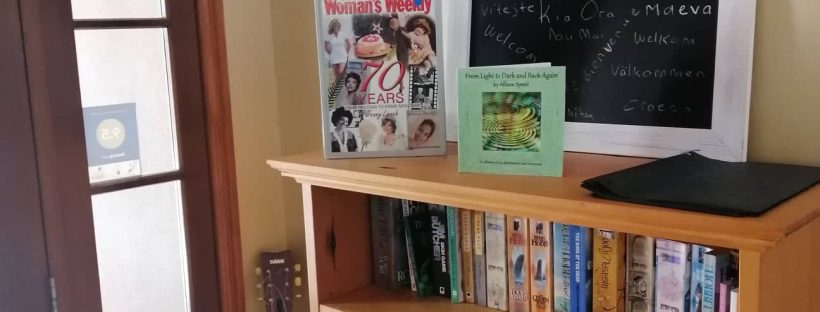
Image Credit:  The picture of From Light to Dark and Back Again was taken by my cousin, Raewyn Berry.  My book is on display at her guest house in New Zealand.  It is easily the furthest my book has travelled!

My CFT post this week will take a look at reading journeys and how they change and develop over time (as they should). Good excuse to put lots of pictures of lovely books up too! Win-win! I also look at how methods of reading have developed. Who would have predicted the Kindle when I was growing up in the 1970s?

Do you have a reading list of books you simply must read (in whatever format suits best) before the Grim Library Keeper tells you that you are way overdue and it is time to go?

One of my favourite cartoons is the one of a woman in bed ringing to tell someone her other half has been crushed by his To Be Read pile. I have a nasty feeling life could imitate art for many of us here on that front! So don’t pile them too high, eh?

And I really must go and reduce the height of mine!

Facebook – From Light to Dark and Back Again

The spark for a new flash fiction story comes from a variety of sources for me. These include:-

1. Hearing a turn of phrase which catches my fancy.

2. A well known saying or proverb. (I can often twist these too so double whammy as far as I’m concerned).

3. I sometimes use a question as the story title. The story of course is then found in answering that question!

4. Writing prompts – picture based, theme set or what have you, I find all of these useful. (My writing diary is a boon for these. I should have 52 new stories by the end of the year at least given there is a prompt set every week!).

5. What is lovely is when a character I’ve created sparks off an idea for a follow-on story but the character and the follow-on idea both have to be strong enough for this to work.

6. I will sometimes put a character name into my title (for example George Changes His Mind). The idea here is to provoke curiosity as to find out who the character is and, in this example, what he changed his mind about! The implication also is that it has to be something reasonably important otherwise there would be no story.

F is for Fun which writing should be
L is for Lines for your characters to say
A is for Action without which a story is dead
S is for Story, the “must know how it ends” reaction
H is for Heroes, of all kinds, caped or not.

F is for Flashbacks which should be kept brief
I is for Imagination – feed yours by reading well
C is for Characters we all want to root for
T is for Truthful Narrators or ARE they? Make us guess!
I is for Illumination, that lightbulb creative moment
O is for Original – you have a unique writing voice
N is for Names – what do they reveal about your “people”?

Allison Symes – 14th February 2019

This slideshow requires JavaScript.

Flash fiction can be great for giving little insights into a character and/or their setting which would not be enough for a standard length short story. You can imply their world without going into lots of description.

My Every Little Detail doesn’t spell out who the reader mentioned in the story is until literally the last word but so much is implied in the run-up to that, my closing word acts as a confirming punchline in many ways.

I relish writing stories like that. The fun comes from working out what clues to put in and how best to do so. The reader needs to work things out without you spelling everything out but the clues must enable them to do that.

Fairytales With Bite – Character Traits

I like to look for a major trait in a character and use that to help “round them out”.  For example, if I decide a character is a coward, I dig deeper and look for what has led to the character being like that.  I can also look at whether they’re ashamed of this or not.  Not everything I outline here will make it into my story but I know that if I know what the answers are here, I will write my character with more confidence (and therefore conviction as well) and I believe THAT comes through to the reader.

So useful character traits to consider then could include:-

  1. Cowardice/Heroism;
  2. Being a Liar/Being Honest (the latter could cause as much trouble as the former and the potential for comedy is here too);
  3. Stubbornness/Being Flexible;
  4. Being Unfriendly/Being Sociable;
  5. Being Prejudiced/Being Open.

There are of course many more traits than these and practically every trait has its opposite flaw/virtue which could also be used.

Questions to ask yourself when using these:-


  1. How did the character develop this flaw/virtue?
  2. Do they see it as a flaw or virtue?  Are they right about this?
  3. How do others around the character react to them and their flaw/virtue?
  4. What are their society’s expectations?
  5. Does the character change – for better or worse?

Have fun!

This slideshow requires JavaScript.

This World and Others – The Role of Stories

We all know how important stories are to us personally and to our society but when creating your own world, what thought have you given to the role of tales there? Does your world have its own legends? What are these? How are these legends shared?

Was/is there an oral storytelling tradition? Are only certain stories allowed (and who chose these and why)? Are books easily available to all (or the technological equivalent)? Is reading encouraged? Are there libraries?

How does your world decide whether something it is civilised or not? You’ll guess from the questions I list above I consider the ready availability of books, libraries, stories being generally available etc to be major considerations as to whether I think something is civilised!

How do the characters in your stories treat books and stories? Do their views agree with those held by their society or not?

The role of stories is important (they’re a great way of getting a message across without preaching and are a wonderful form of entertainment. Does your fictional world treat them in the same way? If not, why not?).

Publication News:  Cafelit

I will have two new stories up on Cafelit on 16th February and 16th March.  Will share links as and when.  I am also pleased to say two stories of mine are being voted on for consideration for the Best of Cafelit 8 print anthology due out later this year.  Will keep you posted on how I do but do check out the Best of books as there are wonderful stories in here from a lovely variety of writers.  (How do I know they’re lovely?  I’ve met them!).

This slideshow requires JavaScript.


When a Story Has “Got You”

Facebook – General

Thinking about picture books with regard to my most recent CFT post, Picture Books and Other Hooks, made me also think about what my reading journey has been.

Every reader of fiction owes a huge debt to children’s writers as the vast majority of readers have grown up loving and reading books, moving from stage to stage and genre to genre as they grow. You get to experiment with the genres you love most (and ideally end up loving loads!).

Writing for children then underpins books overall, I think.

We almost all start with rhymes and fairytales (the latter is somewhat ironic given so many fairytales can be grim!). Picture books play a vital role bridging the gap between “baby” books and the first books we read for ourselves.

So let’s hear it for children’s fiction, especially as it is notoriously difficult to get right.


I’ve listed below books that have either made me change my opinion about something or I’ve had to re-read several times. (Usually the book concerned falls into both categories). They’re not in any particular order of importance.

1. The Daughter of Time by Josephine Tey
2. Pride and Prejudice by Jane Austen
3. The Lord of the Rings by J.R.R. Tolkein
4. The Lion, the Witch, and the Wardrobe by C.S. Lewis
5. Men at Arms by Terry Pratchett.
6. A Christmas Carol by Charles Dickens
7. Murder on the Orient Express by Agatha Christie.
8. Code of the Woosters by P.G. Wodehouse
9. Harry Potter & the Prisoner of Azkaban by J.K. Rowling
10. The Wind in the Willows by Kenneth Grahame

For many of the authors, I could’ve listed more than one of their books. The lovely thing with books is discovering the joys of new ones and, when re-reading, catching up with “old friends”.

This slideshow requires JavaScript.

Book Offer News

Quick heads up! Amazon have currently got From Light to Dark and Back Again on offer at:-

£2.99 – Kindle edition
£4.04 – for the paperback.

Link takes you to the Kindle edition.


Facebook – General

When do you know a story has “got you”? When you are so gripped by the characters, you have to keep reading no matter what, and you get distinctly irritable when anything minor, like life, gets in the way of you reading! Confession time: have been distinctly irritable many a time due to this.

Of course the challenge for writers is to come up with a story that will make readers feel like that! Whoever said writing was easy has never actually done any. The great thing is nobody has to see your first draft, your sixth or what have you, until you are ready to let them see it! Nobody but nobody creates a perfect story first go. I do take a lot of comfort from that thought.

The great thing with writing is you have two interests in one here, the other being reading of course.

To feed your own writing “muscle”, you need to read widely in and out of your genre. I recommend reading widely in non-fiction too. Your creative spark will come from ideas that occur to you as you read other stories and non-fiction.

This author did this in this way. How would I do it? I’d have written this character this way because… etc etc. All sorts of great story ideas can come from asking yourself questions like that and then seeing what you do come up with.

Re non-fiction: I’ve found the creative spark ignites when I discover something interesting I hadn’t known and realise I can use it in a story setting.

It always pays to cast your imaginative net wide!

This slideshow requires JavaScript.

Far Flung Book News!

Many thanks to Raewyn Berry for supplying these pictures of From Light to Dark and Back Again in New Zealand!

My book in NZ 1

FLTDBA in NZ. Image kindly supplied by Raewyn Berry

My Book in NZ 2

Always good to see books about and it’s very special if one of them is yours! Many thanks to Raewyn Berry for the picture.

Facebook – From Light to Dark and Back Again

Have drafted a piece from the viewpoint of a groundhog which is this week’s prompt in my writing diary. Good fun to do but needs work but then the great thing with a first draft is only you need ever see it. Also I never envisaged starting a FB post with that opening line!

I often use sayings as titles for my flash fiction and generally that sets the theme and mood too. But a good title is always capable of having a twist put to it, so work out what would suit your character best. They’ll be “carrying” the story so if they are of a quirky nature, the story should reflect that.


This slideshow requires JavaScript.

I do love poetic justice stories and flash fiction is a great vehicle for them. You have to set things up immediately and deliver on the pay-off quickly too! My A Kind of Hell and The Circle of Life are examples of this.

Poetic justice stories work well within a short time frame, which is why they suit flash fiction. I don’t like to spin poetic justice stories out for too long a time span. My worry is a reader could get bored waiting to find out if there is ever going to be a pay-off. No danger of that in 100 words or so!

You haven’t got a lot of room in flash fiction to go into characterisation deeply. So what I do is pick the major trait/flaw/virtue of the character I’ve got in mind for a story and weave the tale around that.

The good thing with this approach is you can imply a lot (and flash fiction is brilliant for implying things!).

For example, if you decide your main character is going to be cowardly, all sorts of things are going to come out of that. How does the cowardice manifest itself? Do they know they’re cowardly? (Often a character will not think they’ve got the faults others think they have!).

Equally, are they prepared to lie to defend their position? Almost certainly yes to that one, I would have thought. Okay then, if they’re prepared to lie, what else would they do? You can already see how things could escalate (as will the tension in the story which is exactly what you want).

So pick a good place to start and away you go!

Time for some one-liners then.

1. Nobody saw the aliens leave with as many minerals as their spaceships would carry.

2. “I’m an endangered species, I’m allowed”, cried the dragon, after flaming the farmer’s field to get barbecued sheep for a mid-morning snack.

3. When even the rats run away, you know you’ve got problems.

4. I usually have no problems with pest extermination but you humans are beyond a joke.

5. It was funny how the beef always vanished whenever Joey the border collie was in the room.

Hope you enjoy.

Allison Symes – 12th February 2019

Goodreads Author Blog – Picture Books and Other Hooks

I don’t believe in wasting a good title! I used this for my Chandler’s Ford Today post recently when I interviewed a local author and her illustrator about a children’s picture book they had brought out. This in turn made me think about my own reading journey and what a debt we all owe to children’s writers.

Most readers have grown up loving books. Someone encouraged that love of story, bought them books, and in time they had the great joy of buying their own stories. I always remember one of my great wishes was to have a library of my own with books I’d chosen to be on the shelves.

Wish fulfilled there I’m glad to say! I’m also glad that there’s a special space on my shelves for books written by friends of mine. And of course my From Light to Dark and Back Again is on display too!

I was trying to think back to what was the first book I could read all by myself. Got stumped there but the Reader’s Digest Collection of Fairytales is a well read and taped up book (the spine needs support!) that would have been amongst the first of my “proper” reads. Has gorgeous pictures too. Never underestimate the power of good pictures to encourage reading and the development of imagination.

Someone “sees” the story and they “get” it. They can go on at a later date to read stories without pictures but there is still something of that hankering for images for most of us I think. Why else do we really love a great book cover?

And I’ve still got a good spot for books with good maps in them – The Lord of the Rings is superb here.

My favourite reads when growing up was Enid Blyton’s Famous Five and Little Women (I always have loved Jo March as a character). I liked Heidi and Black Beauty too. I went on to discover Agatha Christie, Jane Austen, P.G. Wodehouse, and Terry Pratchett. I do believe in a good mix!

So what were your favourite childhood books? What did you “graduate” to?

And let’s hear it for the children’s fiction writers too!


Collaboration, Picture Books, and Characters

Facebook – General – and Chandler’s Ford Today

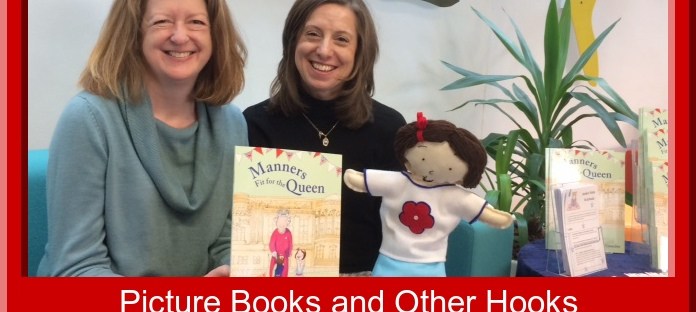
My latest CFT post is an interview with local children’s writer, Anne Wan. For her latest book, Manners Fit for the Queen, she teams up with local illustrator, Sally Goodden.

The interview looks at the colloborative process needed to produce a picture book and why picture books matter.

For most of us, one of our first introductions to the wonderful world of stories would have been through a picture book. I still love a well illustrated book. (The maps in the Lord of the Rings are fab!).

NB.  I love it when a title for a post just “comes” to me and I particularly like this week’s one.  Picture Books and Other Hooks has a good rhythm to it!

This slideshow requires JavaScript.

Looking forward to having a go at the writing prompt for this week from my diary. The prompt is to show the groundhog’s point of view as it prepares to meet his/her public for Groundhog Day (great film incidentally)!

Will have a crack at that challenge over the weekend. Should be fun! I can categorically state I’ve never created a groundhog character before! Am probably unlikely to do so again but it will be fun to find out what comes from this.

Later in the year, there‘s another prompt asking me to list 10 words associated with a train journey. People could have a lot of fun with that depending on which train operator they use regularly! (I think there should have been a comment in the prompt to “keep it clean” but that’s just me!).

As you will have gathered, I love this writing diary!


My CFT post this week will be an interview with children’s writer, Anne Wan, and illustrator, Sally Goodden. They recently had a story and craft event at Chandler’s Ford Library based on Anne’s most recent book, Manners Fit for the Queen, which is a picture book.

The ladies discuss how they worked collaboratively and how they met. Picture books look “easy” but are notoriously difficult to get right. The pictures need to convey enough of the story but without giving it all away. The text needs to be pitched right for the age range.

This slideshow requires JavaScript.

Facebook – From Light to Dark and Back Again

When did you first come across flash fiction? I ask as my latest CFT post looks at picture books and interviews Anne Wan/Sally Goodden on their colloborative work here. It made me realise that my way into reading, as it would have been for many of us, was via well cherished picture books. So on to my great love now – flash fiction – how did I get into that?

For me, it was via the 100-word challenge issued by Cafelit. Prior to that, I’d not heard of the form, yet alone had a go at it! I think part of the “not hearing” about it was due to the term used. I HAD heard about micro fiction but had not been clear about what that meant. I know now!

This slideshow requires JavaScript.

A good story will always make you react in some way. I’ve read (and written) stories that are meant to make you laugh or chill you to the bone.

So if a story isn’t working for you as you draft and edit it, look at what impact it is making on you as you read it. Is there an impact at all? If not, there is where the problem is! So think about what impact do you want it to have? How can the characters generate that impact?

If a character isn’t strong enough, ask why. Are they the right character for this story? Do you need to outline them in more depth to get right into their soul and really find out what makes them tick and react?

I’ve found a good way to get started is think of an extreme situation and look at how your character responds to it. For example, a fire breaks out in the character’s house so what do they do? What do they HAVE to save before they get out and why?

One of the nice sides to writing is you never lose the joy of hearing when something has been accepted! One huge advantage to writing flash fiction and short stories is being able to produce work and, hopefully, get it out there, building up publication credits, while working on a longer project.

Everyone knows how difficult it can be to get a novel out there but that doesn’t mean flash fiction and short stories should be considered “easy”. They’re not! You still need to craft the stories very well in order for them to have a chance of being accepted. You still need to pitch them to the right competitions/markets. They should also be recognised as a joy to write in their own right.

Ironically, it can be harder to write short than it is to write long. I always overwrite my stories but the advantage to that is I get off to a flying start with my editing pen! I find it a good acid test of whether a story is strong enough that I need to cut it back. If I’m having to pad (and I’ve only done this rarely), then the story idea isn’t strong enough in the first place (and I’ve always ended up either abandoning the idea altogether or finding ways of improving it. It never stays as it was).

Fairytales With Bite – What Matters to Your Characters?

What matters most to your characters and why? Get your characters to face losing what matters to them most and that will increase the tensions in your story considerably.

The nice things with this is whatever it is that matters most can vary considerably. For one character, it could be a life or death situation. Another character could be terribly worked up because they’re late back with their library book. The potential for humour is here too.

The one proviso is that your characters have to have very good reasons for why these things matter. A life or death scenario has an obvious “why it matters” inherent in it. In the case of the library book scenario, could it be that your character has never been late in their life for anything and fears losing control over their neat little life if they ARE late at all? Maybe they worry about what the librarian will think – other people’s opinions matter to this character. You get the idea.

Have fun and play with this. Work out what could make your character lose what matters most. For someone with a controlled life, what on earth has happened to make the possibility of being late back with their library book happen at all? Something catastrophic (to them) must have occurred. Hopefully it will be very entertaining for a reader!

This World and Others – Collaboration

Collaboration is vital when producing picture books, as discussed by local writer, Anne Wan, and illustrator, Sally Goodden in this week’s CFT post. (I must admit I was pleased with the title for this one – Picture Books and Other Hooks!).

Working in partnership matters even when you write on your own!  How and why?

For me, this means seeing writing as two distinct processes.  One is the fun creative side of getting everything down on paper or on screen.  The second is the editing process where you tighten your story up and really give it muscle by getting rid of anything and everything that does not contribute to moving your tale onwards and upwards to its conclusion.  I love editing.  I love the sense of the story improving as I spot repetitions etc I didn’t see in the giddy delight of creating new characters etc.  I love the sense of getting rid of what isn’t helping the story.

So where does the collaboration come in?  By accepting these are two distinct processes and not trying to do both at the same time.

Give your creative side free rein and enjoy the ride. Don’t let your inner editor spoil that.  It’s not time for them to come in yet.  Once that side is finished, then recognise the fact that all stories are improved (and therefore stand a better chance of publication) by good editing.

See editing as what gives your stories the wings to fly!  I do and find this side of things fun as a result.  Nothing is going to beat the heady thrill of creating something new but it helps enormously to know nobody has ever produced a truly terrific story in one go!  Everyone needs at least a second draft!  Good luck.


Stories, Persistence, and Progress

Facebook – General

Making good progress on the novel. Really enjoying finding out what my heroine is getting up to again! My third volume of flash fiction is coming along nicely as well, though I need to group the stories better. I’ve found grouping flash fiction really well helps add to the pace of the book as you read through so it is worth getting right.

Not impressed with the snow and ice. Okay they’re hardly a surprise in the UK in February but I’ve got to watch it when I take the dog out as she doesn’t seem to understand Mum really doesn’t want to go downhill skiing so Lady can get to the park that bit quicker! Lady is generally pretty good on the lead unless she knows we’re near the park! Pleased to make the acquaintance of a 12 week old Labrador puppy this week who wanted to use Lady’s ball chucker as an outsized teething ring…

One huge advantage of being a dog owner is you get to meet all sorts of interesting characters…. four legged and otherwise!

Now how can I put them into a story I wonder…!

There is an advert about great characters making great drama doing the rounds at the moment. And it is true but it is also true the characters don’t think they ARE great. They’re just getting on with the job or situation they’re in. What makes them great is how they handle things and their persistence. They almost always need that to keep going.

So what drives that persistence? Look deep into what really motivates your characters. What will they absolutely NOT stand? Then make them face it!

You’ll have fun writing that and readers will love reading it!

Submitted flash fiction pieces over the weekend so pleased about that. I often end up submitting flash stories in batches. Mind, I often write them in batches too.

One of the pieces was based on a character study writing prompt in my writing diary for this year (which is proving to be worth its weight in ink just on the challenges from the prompts alone. I do love the way the prompts are varied. Keeps me on my toes).

Editing of novel going well and, looking ahead a little, am investigating publishers to approach with it when ready. Some publishers accept submissions from unagented writers so that’s almost certainly the route I’ll have a crack at. I’ve got a couple of non-fiction ideas ticking away in the back of my mind too so definitely no chance of boredom setting in!

This slideshow requires JavaScript.

Glad to report there’ll be a couple of stories of mine on Cafelit over the next month. Will flag up more details nearer to the time of each. Have also submitted an entry for the Waterloo Festival writing competition, which Bridge House Publishing sponsors. Am also drafting a story for Bridge House’s own annual anthology.

I strongly suspect the writing prompts in my diary are going to generate stories for submission as well. I used to have the Mslexia diary but the new one I’m using has regular spots for To Do lists, Monthly Achievements, as well as the different writing prompts. There are plenty of pages at the back for notes too. It’s almost like a writing scrapbook but I like the format and will almost certainly go for it again. I find a writing diary helpful for keeping track of submissions but this one is helping me to produce more work, thanks to those excellent prompts. I just HAVE to do them (which of course is the idea!).

This slideshow requires JavaScript.

Facebook – From Light to Dark and Back Again

Which characters do you like writing about/for the most?

I adore writing characters who I know will make me smile.

I also have a very soft spot for characters with hidden depths whether they use those depths for good or ill.

That element of surprise is wonderful to write and I know when reading that kind of thing by other authors, those are always the most memorable parts of the stories.

Sometimes you can guess at the surprise to come, you pick up on the early hints; at other times you don’t guess, but in both cases, the story has you gripped. Job done on the part of the writer there!

This slideshow requires JavaScript.

Stories are ultimately problem solvers. Your characters must have something they wish to achieve and there must be obstacles in their way. Often those obstacles are other characters of course who either want the desired “object” themselves or simply don’t want your hero having it!

The great thing though is the way the character solves the problem can be so varied and that will affect the tone of the story. A wisecracking character is going to tip the story into humour, a sour one into a crime one (another character will be totally fed up with them and bump them off by Chapter 5 – well, you now know what I’d do!).

The problem has to be sufficiently important for the character (and ultimately your reader) to care about the outcome. The character needs to be appealing to readers (though bear in mind there’s a reason the charming villain as a character works. Readers love them. There has to be a wish to find out what really makes the character tick).

And flash fiction? You do all that in as few words as possible of course!

Flash fiction can encourage word play especially where it can convey more than one meaning. That in turn saves a lot on the word count!

Below is a story of mine called Test Pilot. I appear to use the same word twice in the same sentence (that’s a sin for a start, isn’t it?!) but the meanings are very different.

TEST PILOT
The crash landings were becoming embarrassing. Nobody minded the odd accident. That happened to everyone but this one was going to mean the test pilot, if unlucky enough to survive, would be hauled before the Board of Inquiry.
Like all such Boards, there was a hell of a lot of bureaucracy and paperwork. Unlike most Boards, said bureaucracy was to minute in minute detail what happened to the late specimens who’d faced them.
And this latest Inquiry was going to play to a packed house.
The crash had been spotted by those pests of the universe – humans.
Nobody was going to forget the Board of Inquiry for Roswell.

ENDS

Allison Symes – 4th February 2019

Hope you enjoy!


This slideshow requires JavaScript.

Glad to say a couple of my flash fiction pieces will be appearing on Cafelit over the next few weeks. Hope to get more out to them in due course, naturally.

When writing a story, of whatever length, I have to be able to hear the voice of the main character and know what is their chief attribute. From that I can gauge what mood would suit the character best and I write the story accordingly.

Of course, the great thing with, say, a pompous character is that gives great possibilities for humourous tales. Equally a pompous character could work in a tragedy (either by being the character that causes the tragedy for others or by being the victim because their pomposity blinded them to things that others could see all too clearly).


This slideshow requires JavaScript.

Goodreads Author Programme Blog – Series or Singles?

Which kind of book do you prefer reading? A series or a stand-alone book?

I love both. Really good series ensure each book in it DOES stand alone. Brilliant series ensure you have to read the others in it! Bit of a challenge there then…

There are books which I think work best as stand-alones and/or have had sequels/prequels which didn’t really work. Well, they didn’t work for me at least. I never did “get” the Pride and Prejudice and Zombies thing. Yes to the former, it is one of my favourite novels and a well written zombie book is fine too but to mix the two? Argh! Definitely not for me.

Of course a series author can’t know when a new reader is going to get into their books. I’ve never yet read a series from Book 1! I find the series, am gripped by the book I read and THEN look back at what else the writer has done and explore those works before going on to books beyond the first one I discovered.

The most important thing for me always is did I enjoy the book? And my answer to that is always down to whether I got behind the characters or not.


Impact, Pantomime, and Character Portrayal

Quite a mix tonight I think!  Hope you enjoy!

Facebook – and Chandler’s Ford Today

My CFT post is a review of the Chameleons’ recent panto production of Ali Baba and The Forty Thieves.

The show was wonderful and this particular post was great fun to write. I’ve written it in a different format to the way I usually write reviews and think this worked well on a fun topic. Loved writing it. Hope you enjoy reading it. It gives a good flavour! (Oh and the dame’s hair really does have to be seen to be believed but that’s the way it’s meant to be with panto – oh yes it is!).

Images Credit:  A very big thank you to Stuart Wineberg, Lionel Elliott and the Chameleons for  kind permission to use the photos below and in my CFT post.  I have a lot of fun writing captions for these but see the CFT post for these!


This slideshow requires JavaScript.

Looking forward to sharing my review of the Chameleons’ production of Ali Baba and the Forty Thieves tomorrow. Does panto bring out my inner kid? You bet it does!

What can be interesting on productions like this is seeing how true the script stays to the original story – or not as the case may be. Most adaptations are understandable. Many of the fairytales are too grim (pun intended!) to put on as originally written.

Am delighted to share a bonus CFT post tonight. Children’s writer, Anne Wan, and illustrator, Sally Goodden, are holding a story and crafts event at Chandler’s Ford Library this Saturday.

The theme is based on Anne’s latest book, Manners Fit For the Queen.

I’ve talked about the importance of children’s fiction on CFT before but picture books, such as Manners Fit For the Queen, play such a crucial role in encouraging youngster to read.

Hope everyone has a fab time at the event on Saturday.

Book cover image kindly supplied by Anne but drawn by Sally!

BOOK EVENT - Anne Wan and Sally Goodden


Well, one good thing about the cold weather is it encourages staying in and reading/writing a good book!

I don’t use the weather as a setting in stories (as it reminds me too much of the infamous opening “It was a dark and stormy night”, which has become a parody). I think you could use weather as a way of showing/reflecting your character’s mood though. For example, “Despite the warm temperatures and clear skies, Herbert’s mood was anything but sunny”. That could make a good opening to a story.

Also, I guess I want to be getting on with finding out what the characters are doing and saying. Weather? I don’t think I really need to know that unless it IS going to affect the story in some way. By that point, I want to be so gripped by the characters, that I pick up the detail about the weather without being irritated by it.

This slideshow requires JavaScript.

Facebook – From Light to Dark and Back Again

Plan to catch up with some flash fiction writing over the weekend. Hard to believe it’s two years since FLTDBA came out. Where has the time gone?!

What I love about flash fiction is when I am particularly busy I can jot down some one-liners that can stand alone or that I can work on later and develop into longer pieces.

A good challenge can be to write yourself a line and then use it for one story as the opening line and for another as the closing one. Give it a go and see what you come up with. Ideally pick different moods for these pieces as well. Above all, have fun with your writing. I fervently believe that when a writer is enjoying what they’re writing, some of that sense of enjoyment comes through and the reader picks up on it. Also if you don’t enjoy what you write, why would anyone else?!


I’ve experimented with linked flash fiction in the book I’m currently writing. I hope to write more too. The main criteria is that the character and situation has to be strong enough to sustain two or more stories.

The first set I wrote came about due to the way I’d ended a story and I realised from that ending, there was potential to exploit in a second tale, so I duly did!

Also there should be a natural sense of following on for all of the stories in the link to work. You’ve set the characters and setting up so well, your readers feel at home dipping into that world again.


Image Credit:  Many thanks to Dawn Kentish Knox for the picture of me reading at the December 2018 Bridge House Publishing celebration event.  Huge fun!

I talked on my author FB page about using weather in stories. Tying in with that, with flash fiction and the limited word count, weather is best used as a kind of code to represent something or as a metaphor. You don’t have the room to do much else but the great thing with that is you can’t give lots of description that people skim over.

What do I mean by code/metaphor? Best thing I think here are some examples.

1. Heather’s mind was as clear as a pea-souper.
2. Alan didn’t need the downpour to make him feel miserable.
3. Kathy’s hair shone as if she’d washed it in liquid sunshine.

All three of those should conjure up images in your mind as to what mood the characters are likely to be in and what kind of people they’re likely to be. I think it fair to say that Heather is unlikely to win Mastermind with a foggy brain! Kathy – well, she could be vain and, even if not, is her attitude to life as sunny as her hair? As for Alan, you get a real sense of the type of character he is – he can clearly feel miserable all by himself.

Happy writing!

Association of Christian Writers – More than Writers – Impact

Do you wonder what impact your writing has on others?

I mostly consider impact from the other side. That is I know my theme, what impact I’d like my piece to have and focus on selecting words I think will best achieve that.

What is lovely is when readers give you feedback and you can judge if the impact you thought your piece would have did so. If you wonder about commenting on a post but don’t, think again! Comments are noted.

Even negative feedback can be useful if you use it to gauge whether your critic missed the point of what you were trying to say or you didn’t make the impact you thought.

How do you create impact? Look for the strongest words for description. No “he wore grey” here. Go for “his suit was the same colour as my cheapest cutlery”. You use a few more words but the imagery, and resulting impact, is more powerful. I don’t need to say the guy here is unlikely to be getting his suits from Savile Row. That is implied by “cheapest”.

In thinking about impact ahead of writing a piece, you’re also trying to engage with potential readers from the outset. This is great because you’ll be less likely to go off at tangents which add nothing to your piece. (It is easily done!). That saves editing time! I must always cut so anything helping me edit more efficiently is welcomed!

For bloggers, feedback doesn’t always come when you think it will. Sometimes it won’t come at all! But that doesn’t mean your words lack impact. All it means is you don’t know about it. Frustrating though that is, if you enjoy blogging, carry on for that reason alone. I’ve also found as I blog, ideas for posts (and sometimes stories) pop into mind. By writing you are feeding your creative spirit.

Look at why you want your piece to have the impact you’ve chosen. Are those reasons good enough? Do they match the brief of your story competition or article theme the editor has called for?

Naturally we want the impact of our work on an editor to be “Wow! Got to take that.”. It is a question of accepting the need to polish your work and knowing sometimes the piece will make the cut. Sometimes it won’t but there’s nothing to stop you revisiting that piece and submitting it elsewhere assuming your topic or story is relevant to the market in mind.

Think about impact on you as a writer. If rejections are getting you down (and they do for everyone), harness the support of writer friends. This is where they come into their own. In time, they’ll appreciate your support during their difficult periods.

Every writer has their share of turn downs. They don’t necessarily stop when you are published.

We rightly talk about the writing life as a journey. Let’s make its impact on us and those around us as positive as possible.

IMPACT - Blogging. PixabayIMPACT - Feedback doesn't always come when you think it will. PixabayIMPACT - Feedback isn't always positive but look for what you can learn from it - PixabayIMPACT - Look for positive impact wherever possible - PixabayIMPACT - Use strong words for descriptions. Strong questions can help you get there. PixabayIMPACT - What impact does your story have - PixabayIMPACT - What impact will your work have on readers - Pixabay

Fairytales with Bite – The Right Ingredients

The theme of the right ingredients ties up with my Chandler’s Ford Today post this week about Ali Baba and the Forty Thieves, my review of the Chameleon Theatre Group’s recent panto production.  Why?  Because I talk about what ingredients are needed for a successful pantomime and I’m glad to say this show had them all and in great quantities!

What are the right ingredients for a fairytale?

  1. There must be a magical element.
  2. There must be a wrong to put right.  (See Cinderella/Snow White etc for the way they’re treated initially and how their stories end).
  3. There must be plenty of drama.  (You know from the outset that Cinderella is never going to keep to the midnight deadline set by her fairy godmother.  The drama here is in finding out what will happen when the girl is inevitably late!).
  4. The ending must be appropriate for the story.  That doesn’t necessarily mean a happy one – see The Little Mermaid as Hans Christen Andersen wrote it!  Also while Snow White had a happy ending, her stepmother rightly didn’t!  (Perspective is important too).


What are the right ingredients for a writer?

  1. A willingness to put in the work – to write, rewrite, rewrite again etc until the story is right.
  2. Accepting the fact rejections happen and trying to learn from them and then move on.
  3. Always seeking to improve what you do.
  4. Reading widely and across genres to feed your own imagination.  It does need feeding.  Often and lots!

This World and Others – Knowing When Your Character Portrayal Is Right

Can you ever know for sure when the character portrayal is right for your story?  I think so!

Firstly, your characters need to ring true to themselves.  If they’re greedy, are you showing them being that in different ways?  They need to be characters that could be people we know.

Secondly, your characters should have flaws and virtues and good reasons for acting the way they are.  Do they try to hide their faults or are they unremittingly unashamed of them (the I Am What I Am syndrome!).  However you portray your characters here, be consistent unless redemption/change is the point of story as it is in A Christmas Carol.  You still need to show your character “waking up” to the need to change.  One sudden change of heart will not convince readers.  Scrooge needed to be visited by all three ghosts to realise the error of his ways after all.

Thirdly, if your characters have different educational standards (and this is highly likely), are you showing the right level of education for the characters?  This will show through in how they speak, the kind of vocabulary they use and so on.

Fourthly, can you hear your characters speaking?  Do they seem real to you?  The first reader you have to convince is you!

This slideshow requires JavaScript.


SUBMISSIONS, IMPACT, AND DELVING INTO THE PAST

Facebook – General

Sent off a story submission tonight so pleased with that. Had drafted the story a while ago but wanted to leave it to one side and come back to it with a fresh eye. The voice of my character comes through loud and clear!

This piece is just under 1000 words, which is LOADS compared to my favourite 100-worders! But that is a major joy of flash fiction – it has divisions within it and there is nothing to stop you sticking to one type or mixing and matching. I like the latter approach.

Sometimes a character does need to be “let off the leash” for a longer distance and that was the case with this story.

This slideshow requires JavaScript.

Whenever I watch/listen to an adaptation, whether it is a panto, a play or a novel turned into a TV series, am I looking for a word-to-word faithful rendition?

No! What I am looking for is the adapation to be faithful to the spirit of the original book, play or what have you. There is also a strong reason to adapt, say, fairytales for pantos and the like, given so many of the original stories are far too grim (some pun intended!) to be staged exactly as they were originally written.

I want the characters to be recognisable as the ones the original author created. I don’t like mish-mashes of characters, as can happen. Those never seem real to me, precisely I think because now I can spot the joins!!

Am looking forward to sharing my CFT post as it will be a review of a recent panto put on by The Chameleon Theatre Group. The style I’ve used for this one is a bit different too but suits the material well. More on Friday! (I think we need pantos in January given it seems such a long month and the weather’s generally awful or cold or both).

Making good progress with the novel. Am “brewing ideas” for a story competition (deadline end of March) so plan to start outlining hopefully later this week/over weekend.

Also hope to finalise third flash fiction collection in the next couple of months. The material is pretty much all there now but it needs a darned good edit! Mind, there is nothing I write (with the possible exception of the annual holiday note to the milkman) that DOESN’T need a darned good edit!

I discuss impact in my turn on the More Than Writers’ blog spot from the Association of Christian Writers.

I look at the impact I hope to achieve in the stories I write by deciding in advance what I’d like that to be and then selecting the words to best achieve that. The rest, of course, is down to the reader. You can put down the pointers but it is up to reader if they “run with them”.

Having said that, I have found thinking about impact like this means I’m trying to engage with readers from the outset. It also stops me going off at unhelpful tangents (and that is too easily done!).

Facebook – From Light to Dark and Back Again

Looking ahead to some of the writing prompts coming up in my diary, there are some promising thoughts for new flash fiction stories. Some of the prompts are asking for character studies (with some being based on a specific name. I’ll have fun with that when I get to the week for that one. A name is just a peg after all. It’s what you do with the peg that matters!).

There are also some word association prompts. That will be fun too. A great way to allow yourself to go off at tangents to generate further story ideas. I love playing with words like that.

One huge advantage to writing flash fiction is it can give you a way of getting work out there while working on a much longer project, such as a novel.

I’m happily revisiting a novel of mine and using the editing skills writing flash fiction has given me. This should sharpen the novel up and I hope give it a better chance “out there” when I’m ready to submit it.

Naturally, this is going to take time but when not working on that, having flash fiction stories on the go is a great way of building up publishing credits and so on. I hope all of that will prove useful with regard to the novel later on. Watch this space, as they say!

One of the hardest things to do is cutting out a character you love but you know doesn’t really fit into the story or novel you’re writing. At one time you thought they did, that’s why they were there at all, but you have come to realise, often on repeated reading, that they’re not doing that much and if you cut them out, they wouldn’t be missed. (By anyone other than you naturally). Of course they’ve GOT to go but it seems such a shame…

Well, have you thought about seeing if you can write some flash fiction for them? Waste not, want not and all that. If a character can’t justify a full length story, can they be useful in a much shorter piece?

Food for thought I hope!

This slideshow requires JavaScript.

Linking on from my theme of impact which I discuss in my monthly spot on More than Writers (the Association of Christian Writers’ blog), flash fiction has the huge advantage that its impact is immediate. It has to be.

That doesn’t rule out having “big themes”, far from it, but in a flash fiction story, you touch on them briefly and leave the readers to ponder on them.

I love this when I read flash fiction by other authors. I like being given the room to think on the impact of the stories I have just read. When a piece really inspires me, I look at how I think the author achieved that and learn from this. One shared joy of reading and writing is there is always something to learn to add greater enjoyment to what you read/help you improve your own writing.

Goodreads Author Blog – Delving into the Past

Delving into the past has great connotations for readers and writers alike.

Firstly, there is the whole range of historical books to explore – fiction and non-fiction. Then there’s the delight in exploring your favourite historical eras and discovering ones you hadn’t known much about.

For me, coming across Josephine Tey’s The Daughter of Time was one of those moments when a book really does change things for you. It completely altered my views on Richard III. Do check out the book and see if it does the same for you!

Secondly, there is the joy of rediscovering the stories that were favourites of yours in your own past. I’ve done this recently by, of all things, going to a panto and revisiting a story I’d not read in years – Ali Baba. The panto was great but the story reminded me that fairytales are anything but twee and when justice is served, it is usually with a very rough edge!

Other books connected to my past are my late mother’s Dickens collection. Some I’ve read, others not, but I do know I’m not running out of reading material any time soon! This is a VERY good thing!

So if you are stuck for something to read (I know, perish the thought!), delve into your past and look again at wht you used to read. Why did you stop reading that? Is it a question of going, say, from “childish” fairytales (though I’d argue fairytales are anything but childish) to more adult magical realism and fantasy stories?

Above all have fun delving into your literary past and see where it takes you now!

This slideshow requires JavaScript.


Stories – and why Flash Fiction isn’t new

Facebook – General – and Chandler’s Ford Today

My latest CFT post The Story of Stories – Ali Babais effectively a two parter in that I discuss how I discovered the story of Ali Baba and next week’s post will be a review of that as a panto recently performed by The Chameleons.

It is always a great joy when writing these posts coming up with suitable Feature Images and I can’t recommend Pixabay and Pexels (both free to use sites) highly enough. Tonight’s image is my favourite to date. Many thanks, Pixabay!

I also discuss some of my favourite character types in this post and why fairytales definitely are NOT twee.

This slideshow requires JavaScript.

Had a great time at Ali Baba and the Forty Thieves, the pantomime staged by The Chameleons this year. Review to follow on CFT next week though for tomorrow’s post I do share where I came across this story and the special memories the book it was in has for me.

Yes, everyone did join in at the appropriate times in the panto.

Oh yes they did!

Reorganised my TBR pile earlier today. It is as large as ever but in a much neater heap now! To be fair, the pile IS slowly coming down but it is always the way I finish a few books, then somehow a few new ones make their way on and I’m back where I was!

Have almost finished drafting a story I want to submit later this month/early in February for a competition I took part in last year. Have got ideas for the annual Bridge House story too and want to flesh those out and go with what I like best.

I’m talking a little about the story of stories and why I think oral storytelling will never die out in my CFT post this week. Link up on Friday.

This slideshow requires JavaScript.

Facebook – From Light to Dark and Back Again

In many ways flash fiction isn’t something new. It just hasn’t been known by that name. Many of the parables of Jesus come in at under 500 words (and quite a few under 100!) and I suspect that many of Aesop’s Fables would also qualify.

The ideals of the very short story are conciseness and clarity. There really is nothing more to be said! It is an art form to get to the level of conciseness required though but this is why I think every writer should try flash fiction. It beefs up your editing muscles a LOT!

I don’t have an issue with serious stories. They serve a major purpose and can be a great way of getting a message across and usually on causes needing that.

However, I am a huge fan of stories “just” being for fun and things like pantomimes, where the story is acted out, and a great time is had by the cast and the audience are, I think, vital for keeping a proper balance.

There has to be light AND dark in fiction I think.

Can you cover concepts such as freedom in flash fiction, given its limited word count?

I think so. You can show what it means to ONE character. You can show your character’s attitude to it. You can’t go into much depth due to that word count restriction but you can imply so much with your character’s attitude and reaction. The reader can then figure out just how important (or otherwise) the concept is to that character.

You can show a character’s attitude to freedom by what they do to attain it (and that can be to restrict the freedom of someone else or to remove them if they are seen to be the obstacle to that freedom). Actions and attitudes then are the way to convey what a character really holds dear.

Fairytales with Bite – Where Stories Go Wrong

Where stories go wrong can be down to a number of factors but I list what I think are the most important points below.

1.  Character not strong enough.
By this I mean the character does not grab the reader’s attention.  There is not enough in the character to make the reader want to have their attention grabbed!  A reader needs to either identify with the character and so follow the story to see if all works out in the end, or be very happy to see your character get their comeuppance and again follow the story through to find out if they do!  (I remember wanting to cheer when Molly Weasley in Harry Potter “dealt with” Bellatrix Lestrange – and sorry but I refuse to accept that’s a plot spoiler now!  The point is the characters or Molly and Bellatrix grabbed my attention.  One I wanted to succeed, the other not to and so I was hooked).

2.  Story not strong enough.
There isn’t enough conflict or drama to warrant there being a story!  Things have got to happen in a story and sometimes those things are not necessarily dramatic but they are everything to your characters.  The reader needs to find out how your people will react if things do or don’t turn out well in the end.  Is there enough in your story to make readers want to find out what happens next?  It can be a good test to step aside from your work for a bit and come back to it as a reader would.  Is your story the kind you would eagerly pick up from a book shop because its opening lines and its blurb grip you?

3.  Characters not distinguishable from each other.
Each major character has to have their own voice.  A reader should be able to tell who is who.  If they can’t confusion sets in and nobody will read a story like that.

This slideshow requires JavaScript.

This World and Others – The Story of Stories

I look at this in my latest CFT post and it was a temptation to go straight into a history of stories.  Instead I focused on one – Ali Baba (partly because I’m reviewing the panto of it next week!) – but what is fascinating about stories like this which cross cultures and time is why they have.  My own feeling is that the characters and themes of the stories still resonate and they will continue to survive because of that.

The challenge for us as writers then is to ensure our own characters and themes resonate so readers will want to engage with them.  How can we do this?  By ensuring that our characters have virtues we aspire to and failures we can sympathise with!  No goody-goodies.  No villains who act in ways we can’t understand.  There has to be a reason for them acting the way they are, even if the reason isn’t a good one.  A reader has to be able to see where the character is coming from even if they think (rightly or wrongly) the character is going in totally the wrong direction!

As for themes, you can’t beat the big ones of love, justice, redemption etc.  What matters is the take we bring to these themes.  My voice (and therefore my characters) will be unique to me, yours will be unique to you.  Mix things up.  Often the themes of love and redemption are used together and very powerfully too.  So write about what matters to you.  If justice is your raison d’etre, then how can you convey that in a story?  Do you have a character who fights passionately for justice or who has been a victim of injustice?  What makes your character special that they’re going to stand out to, firstly, an editor and, secondly, readers?

Work out what you would like your story to convey.  Planning is vital, I find, to stop me going off at a tangent.  Focus.  Edit. Fine tune your story so you ensure it meets your theme.  Cut out anything that doesn’t help the story with that objective.  And have fun doing it!


Flash Fiction and Successful Writing

Facebook – General

When is writing considered successful? When you are published? When you submit more work in a year than you’ve done before? When you have more acceptances than rejections? When you can make a living from writing?

All of those things matter, of course they do, BUT if you are committed to your writing, and seek to always improve on what you do, I’d say that was being successful. Why?

Because you do need stamina to cope with the ups and downs of the writing life. You need to recognize you do need to keep striving.

And whether you seek publication for one book, lots of books, or just want to win short story competitions from time to time, then that’s fine. Decide what you would like to achieve and give it your best shot.

Good luck!


This slideshow requires JavaScript.

Whatever writing you do, I think the two most important things are to enjoy it and use it to help you develop.

If you write flash fiction, as I do, seek to find more ways of generating ideas and find more markets/competitions for your work.

Writing is a journey after all and, even after publication, you will still face rejections. You will want to get better at what you do. There are always things to spur you on.

My overall goal? To be the best writer I can be.


20181227_125552

West Bay Beach on a gorgeous day in December 2018.  Image taken by Allison Symes.  Walks along a beach can be a good place to reflect on what you would like to achieve as a writer.

Enjoyed the writing prompt in my diary tonight. I had to use certain words to come up with an opening to a story or a poem. A poem emerged! Needs a lot of work mind you but enjoyable to draft. What was nice about this was I could “hear” the rhythm of the draft and knew from that, this would a poem and not a piece of flash fiction.

I like the mixture of writing prompts in this diary. They’re going to keep me on my toes this year. I also like prompts as a chance to play with words and just see what comes out. Later will come more fun when I look at these drafts in the cold light of day and assess what works and what doesn’t and then obviously go with what does. I know now NOT to try and write and edit the same piece in the same session. Doesn’t work. I find I need to give myself some distance before appraising anything.


Off to the panto later this week. Oh yes she is! Oh no… etc etc.

Don’t think I’ve seen Ali Baba before and it’s been a long time since I last read the story. Should be a good fun evening and panto I think is about the only time nobody cares too much how noisy the theatre audience gets. (That may just be me remembering childhood pantos too vividly though!). Review will follow on CFT in due course.

My favourite panto story is probably Robin Hood though as I’ve always adored that tale.🏹🏹 Recently rewatched Prince of Thieves. (The much missed Alan Rickman IS the definitive Sheriff of Nottingham.)

Back to normal after a lovely weekend away. Why is it that, wherever it is you go, no matter for how short a time you’re away for, you always come back feeling jetlagged, even if you’ve been nowhere near a plane?!

My CFT post later this week will take a brief look at why the oral tradition of storytelling will never die out. I also look at how I came across the story of Ali Baba, the panto I’ll be off to see on Thursday, and the special memories of the book I have where I first read the tale. Much as I can see the point of decluttering, I draw the line at books!

Practically all of mine have special memories attached to them and it is a great pleasure to have a shelf of books written by friends of mine. (Take a bow, #ValPenny, #JenniferCWilson, #BeatriceFishback, #DawnKentishKnox, #GillJames, #RichardHardie, #BrendahSedgwick amongst others!). I look forward to filling other shelves with books by friends and, of course, my own!

This slideshow requires JavaScript.

Facebook – From Light to Dark and Back Again

Drafted another flash story on the train yesterday. Plan to polish that and submit it I hope sometime next week.

Never despise “only” having 5 minutes to write or what have you. These pockets of time are really useful for getting some drafts written. You’d be surprised at how much time those pockets can mount up to and therefore how many drafts you can get done!

Some one-line stories for tonight’s post, I think.

1. The red dragon thought it would defy being out of time by sitting on the clock tower and crushing it.

2. The fraud would work, she knew, but did she have the guts to go through with it?

3. It had a 90% risk of failure, and that would mean death, but he liked odds like that for bringing out the best in him.

Flash fiction lends itself well to having fun experimenting with genre writing. Why?

Because it has to be character led, you can set that character anywhere you want. So you can write fairytales, crime stories, historical fiction etc. The framework is that you are writing a flash story. It may even help you discover what your favourite genre to write in is – I will always have a very special fondness for humorous fairytales. But I do enjoy coming out with crime flash fiction every so often.

Mixing things up keeps ME thinking and stretching the old imaginative muscles, which is always a good thing.

This slideshow requires JavaScript.

I’m enjoying tackling the weekly writing prompts in my diary. Some are picture prompts, others you have to use certain words, and still others you have to write a description of a particular thing. All good creative stuff. Loving the mix too.

The one for last week was to use certain words as an opening for a poem or story. What was lovely was I heard the voice of my narrator immediately and they were demanding their words be written as a poem. Well, when you’re told like that, you have no choice do you?!

When writing is really going well, it can seem as if you are taking dictation from your characters, but that is a very good thing. It shows they’re real and if they engage you, they’ll engage readers too.

Flash fiction is wonderful for stories which are moments in time for a character. These moments are not enough in themselves to make a standard length short story but are of enough interest and insight to justify being “out there”. And those moments can be as funny or as sad or as horrific as you care to make them.

The great irony with flash fiction is, despite its restricted word count, it does actually give the writer a great deal of freedom as the stories HAVE to be character led. Of course it is up to you where and when and how your characters lead us! The important thing is you as the writer have fun here and we as the readers will pick up on that and love reading what you write.

This slideshow requires JavaScript.

Goodreads Author Blog – Going Away

Sorry, post a day later this week, as have been away this weekend, but I use opportunities like that to revise what I am reading and what I want to take with me while away. It helps with packing too! I won’t take the huge volume of stories which takes up far too much room. I WILL take the Kindle and one of my slimmer paperbacks..

So when you go away what crucial books do you HAVE to take with you?

I was catching up on Peter Ackroyd’s The Civil War over the weekend – like his style and this is a period of history I know a bit about but am conscious I ought to know more. Good to get back to this book again.

I usually finish Kindle books before I move on to something else but can sometimes get sidetracked, especially if a friend has a book out I really want to get on and read, but I do catch up in the end. Am always glad to do so too.


Wishing and Outlining

My post is up a night early due to other commitments over the next few days but hope you enjoy.  There is still time to take advantage of the book offers as part of my author of the week promotion but you only have until tomorrow, 18th January.

Meanwhile:-

Facebook – General – and Chandler’s Ford Today

Delighted to share my latest CFT post, Three Wishes. Great fun to write. So go on then – what would your three choices be? Have a look at the ground rules and assumptions (they’re not arduous, really, and I think they’re fair too) and then have fun picking your three. Comments on my CFT page would be great.  (And find out why space comes into my choices).

This slideshow requires JavaScript.

My CFT post will be going up a night early so look out for Three Wishes tomorrow. What would you wish for if your fairy godmother turned up and allowed you to have said three wishes? There are ground rules (no wishes for more wishes for a start! She has got a busy round you know) – see the link tomorrow. Great fun to write this piece. Looking forward to sharing the link.

Also am off to the local panto next week with my lovely CFT editor, Janet Williams. Will be a hoot, I’m sure. Whenever I go out like this it’s for Shakespeare, a funny or serious play, and panto! Still, I guess it is a good mix!

feature image - three wishes

My latest CFT post. Pixabay image.

Facebook – From Light to Dark and Back Again

Linking in with my Chandler’s Ford Today post this week about Three Wishes, what would you choose as a flash fiction writer? Mine would be:-

1. To always get the word count right for the story. (Not necessarily the competition or market. You may just have to find a competition or market the story suits better but the story HAS to be right).

2. To never run out of ways to find ideas for stories. (Random word generators, slogans, classic themes, the old question of What If? all come into what I use for mine but it is good to have a variety of ways to generate those ideas. For one thing, it keeps things fresh for you).

3. To never run out of ways of generating titles. Due to flash fiction’s restricted word count, getting the title right is hugely important. It can be used to convey the mood of the story and its genre and save you precious words doing that in the body of the tale. As with any story, the title has to tempt the reader in to reading the rest. You want to get it right!

This slideshow requires JavaScript.

Am away at the weekend so hope to draft a LOT of flash fiction while on the trains! Great use of dead time. I was pleasantly surprised to discover how quickly I got used to (a) using an app on a smartphone to write stories, blogs etc while travelling and (b) that using the stylus was no problem at all.

Main thing I loathe is my local train company has taken OUT all of the mobile phone recharging points that were on board (and put there by the previous train company, whom I miss a lot). The new lot have literally blank-plated the plug sockets out! Why? I saw the recharging points as a useful customer service and I really can’t quite believe that a lot of power would’ve been drained. Nobody is plugged in ALL the time! Oh well…

Echoes can be useful in flash fiction. In my Pen Portrait I refer to a character that follows the “Shirley Williams school of thought rather than Margaret Thatcher’s” when it comes to caring for hair!

If you recall both of those politicians, you will remember they had very differing hair styles. I’m sure the latter’s would not have moved an inch even in a hurricane. (Also for those who don’t recall but wish to do so, it’s easy enough to look up pictures of these two. Indeed you only need to look up one of them to get some idea of what the other would be like here).

What’s useful is the mention of these two politicians will give a reader an idea of the age of the character without me spelling it out, as well as what their approach is to brushing their hair!

Think about what you could use to convey information across to readers like this. Echoes are a great word count saver!

Fairytales with Bite – Wishing, Just Wishing

My Chandler’s Ford Today post this week is called Three Wishes and asks what would you choose if your fairy godmother turned up and granted you the customary three wishes?  Naturally, there are ground rules but check the post out and have fun picking yours!

For this post, I thought I’d look at what your characters would wish for.  Okay a lot is going to depend on your story, genre, etc but some general pointers I think would cross all of that and be true for most of them.  These then are:-

1.  To be well thought out before my writer puts me to paper or screen
I’ve found outlining a character to be a useful tool.  I don’t put down every single thing but I need to know their major traits, what might send them “over the edge”, what drives them etc. By the time I’ve thought about all of that, I can hear the voice of that character and once I’ve got that, I can write them into existence!  I’ve found that time spent initially in thinking about what I need to know here has saved me time later in editing and not having weaknesses in characterisation and/or the plot.  The lovely thing here is each writer can decide what they need to know.  It will vary from writer to writer.  It can vary from story to story too.  For example if you know you are going to write a humorous tale, you can ask what would your character dread happening to them because they’d be so embarrassed?  There would be a lot of humour potential there!

2.  To give me dialogue I can actually speak and which doesn’t sound like “authorese”.
This is where reading your work out loud pays off.  You can literally hear if the words flow or not.  If you stumble over dialogue, a reader will too.  Time to edit then! Speech itself, as well as speech patterns of characters, must seem natural.  You want to convey that this is something a “real” person in these circumstances might actually say (even if the setting is fantastical).

3.  For the writer to know what they are doing!
We’re back to outlining again.  Your characters need to have a function to justify their place in your story.  So you really do need to know what they are doing in your story and, as importantly, why.  Once you know that, you can write with confidence (and it does show through).

This World and Others – Outlining

Do you outline? Should you outline? Is there one absolute way TO outline?

Firstly, I do outline and I have found it has saved me a lot of time editing and fixing problems in the characters/plot because I’ve worked out the main points first.  That to me is the best reason of all to outline.

Secondly, I think most writers should outline.  Working out your direction before you start off, especially on a major project, makes a great deal of sense.

Thirdly, no!  For a flash fiction piece, I once wrote one sentence as I knew my story idea could go in one of two directions and naturally I wanted to go with the strongest idea.  By writing down that sentence, I could then see what was the strongest idea and I went with it.  For short stories and novels, I obviously outline more.

I don’t outline every single thing.  For characters, I look at what drives them (as that reveals their attitudes to life, to others etc).  For a story I want the beginning and end and a point in the middle which will usually prove to be the turning point.  I deliberately allow room for my imagination to kick in and have found when ideas come to me as I write the story, I can jot them down, look at my outline, work out where they’d fit in and away I go.

I will sometimes outline a setting to help me get a clear picture of it in my head.  For a setting I already know well, I may look at what might surprise me about it and see if I can be surprised by it.

Outlining is a tool.  How you make use of it is up to you but it is good to have that tool in your writers’ toolbox.  Use it to serve your writing.  I’ve found it pays off.