


Image Credits:-
All images from Pixabay/Pexels unless otherwise stated with many created in Book Brush. Book cover images from Chapeltown Books and Bridge House Publishing. Screenshots taken by me, Allison Symes.
Hope you had a good weekend. Great start to the week with publication and ALCS payment news. Lady got her week off to a cracking start by having a good run round with her Hungarian Vizler and Rhodesian Ridgeback pals. Hope the rest of the week continues to go well. Spotting more spring flowers out too. They cheer me up so much. I love the colours.

Facebook – General
Hope you have had a good day. Glad to share a Mixcloud link to Hannah Kate’s Spring Equinox show on North Manchester FM on Saturday. Always easier to share one link rather than two! (I had shared two links to both halves of the show over the weekend but will only share this one link here). It was great fun taking part in the flash fiction slot here and do check out the other stories. They were a good mix. Hannah’s Bookshelf is on every Saturday between 2 and 4 pm. If you like books, stories, and radio, well here is the show for you!
Separately, I will be talking about the joys of PowerPoint for Chandler’s Ford Today on Friday. Will be sharing tips and what I’ve found useful here.

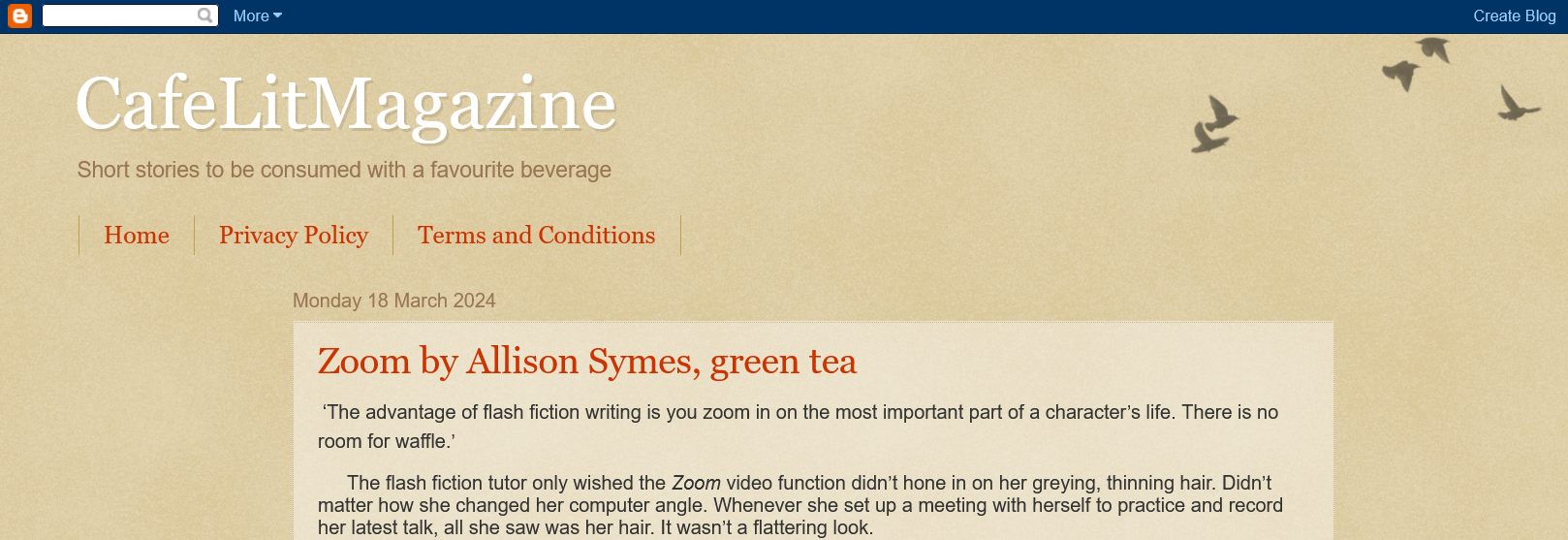
Busy night tonight. (18th March 2024 – you know how you sometimes get several things on one day, mine this week was Monday!). First post. Delighted to say I am back on CafeLit with a story called Zoom. Hope you enjoy it. Oh and I will leave you to decide if the character in this one could be in any way related to yours truly!
 Second post. (Told you Monday, 18th March 2024 was busy for me!). Glad to share my latest Authors Electric post where I discuss Author Newsletters. I discuss how I approach writing mine and share some tips. Hope you find it useful.
Hope you are having a lovely weekend. Pleased to see some sun this afternoon.
Will be back on Authors Electric tomorrow, talking about Author Newsletters. Will also have a story on CafeLit tomorrow. Gets the week off to a good start! See above. I like Mondays like Monday 18th March – lots happening!
Listening to Danse Macabre by Camille Saint-Saens on Classic FM as I write this. (Well, I had been!). One of my favourite pieces, I always vote for it in their hall of fame chart. Also used a free to use version of it for the book trailer for From Light to Dark and Back Again. It is apt!
Am busy preparing some wonderful author interviews to go on Chandler’s Ford Today in due course.
It was lovely listening to Budding Betrayal on North Manchester FM live yesterday. I often have to use catch up but it was great listening to the variety of tales, all of which were spring related in some way, and it made a nice change to get to do so at the time of broadcast.
Writing Tip: I regularly have brainstorming sessions where I jot down potential ideas for titles, opening and closing lines, and so on. This is great and I find it so useful. But what do you do when the brain decides now would be a good time to give you a fabulous idea to write up but you are not in a position to write anything? I sometimes find this when I go swimming. It’s not a great time for inspiration to strike.
All I do here is repeat the idea to myself (silently!) until I can get to my phone and type myself up a quick note. I can then flesh that note out further when I have more time. What matters is getting the nugget of the idea down. Do that and you should find it will remind you of what else you thought about and then you can jot it down.
 Hope you have had a good day. Delighted to hear my story Budding Betrayal on North Manchester FM in Hannah Kate’s Spring Equinox show this afternoon. Many congratulations to the other four writers who had stories on. It was a great mixture of tales! All of the stories are on the second half of the show. See single Mixcloud link further up.
What I do when I’m thinking of submitting something for broadcast is edit my story and then I record it on Zoom. I can then play it back and hear how it sounds but I can also check my timings. For Hannah Kate’s show, you send in your stories via Voicemail and you have three minutes maximum on this so your timing does have to be spot on.
As with Open Prose Mic Nights, getting your timing right is crucial but Zoom helps you here. It is also fine to come in at under the maximum time. It is never okay to go over. Word count, I find, for a three minutes slot like today’s one is usually around the 250 mark but it always pays to check as you need to allow for your own reading time here.
The playback is helpful again because I can hear whether I come across clearly or not. No garbling, rushing, or big gaps here. I also find reading out loud and playing a recording back is also great practice for future Mic Nights. Nothing to dislike here basically.
And do enjoy the stories!

Facebook – From Light to Dark and Back Again
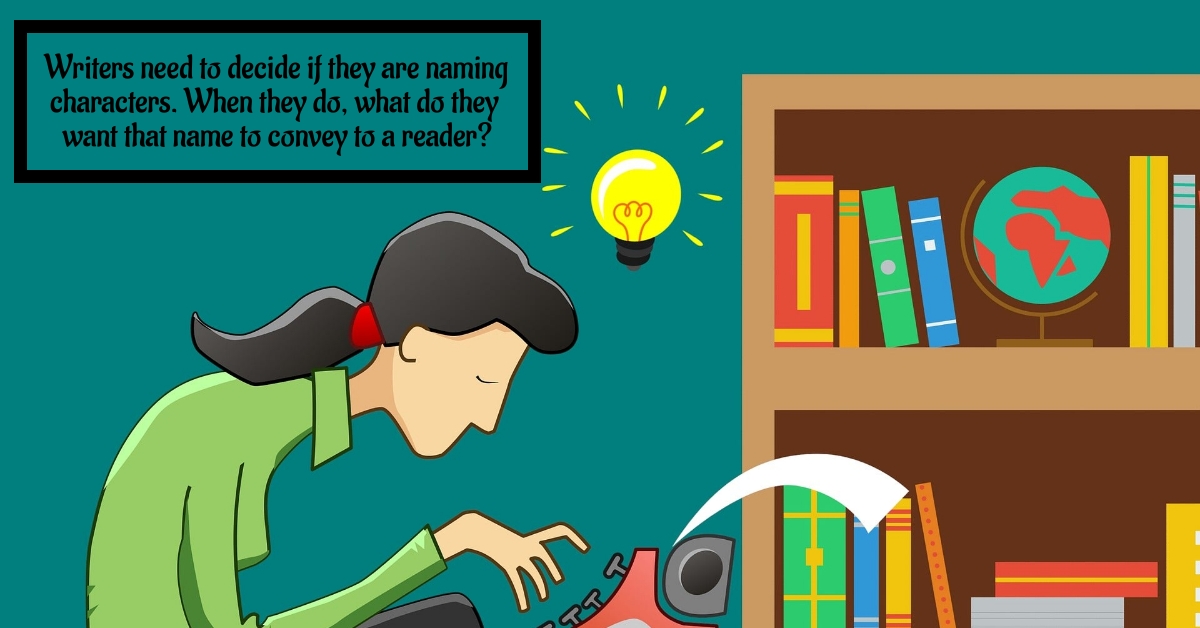
I don’t always name a character in my flash tales. (I always do for my longer short stories). I sometimes do this as leaving a character as an “it” can be more scary if I’m writing a darker flash piece. But at other times the name is not the most important thing about the character. Their attitude and back story is more important to know.
An example of this is my The Past – Ready or Not? from Tripping the Flash Fantastic. The story slowly reveals what you do need to know about my character but the name didn’t matter at all!
Most of the time I do name characters of course and use those names to help readers picture them but it isn’t always needed. It is a case of knowing why you are doing (or in this case NOT doing) something which matters most. There has to be a good reason for anything to be in a story.
 It’s Monday. Finally the evenings are getting lighter for longer. Having said that, it is still Monday. Time for a story then. Hope you enjoy my latest YouTube flash tale – Next Time. Dog owners especially will relate to this one.
When I have a theme set for a competition, I take some time working out what could come from that theme. It pays. I find the first few ideas are the “obvious” ones but as I write down more possible thoughts, I find I come up with something which isn’t so obvious. I will then explore those ideas further and see if there is anything I can do with them. Often there is and I will go down this route, knowing I’m producing a story which fits the theme but, hopefully, will stand out a bit as being “different”.
If you’re going for the more obvious takes on a theme, think about what would make your characters stand out in that story. What is it unique to you which you can bring to the mix here? A striking character can transform an “obvious” storyline.
But the time taken to work out ideas, I’ve found, has saved me considerable time and grief later. When I pick the idea to write up, I already know I have thought it through, worked out any potential issues with it, and then I get on with the first draft.
 Good to hear flash fiction on the radio. I enjoyed tuning in to Hannah Kate’s Spring Equinox show on North Manchester FM this afternoon (16th March 2024) and hearing five flash pieces, including my Budding Betrayal, broadcast.
Flash works well on radio. Flash has to keep to the point and to word counts. That in turn helps with timings (crucial for radio shows). When I do need a scene break in my flash tale, and I did with Budding Betrayal, I use a slight pause to indicate a change of scene is coming. Only way you can do it but it does have to be a brief pause, otherwise folk will think there’s something wrong.
All dialogue stories would work well on radio but you do need to find a way of distinguishing between your characters. Yes, you can use names but it is also handy to have one character speak in a specific way and another character to speak in another. You can use turns of phrase to good effect here.
If one character in a two character tale uses a certain word or two, we will know who they are just by the use of those words. We will also know who the other character has to be by default because they won’t use them.
For flash with its tight word count, it would pay to ensure any turn of phrase is kept short and it should be repeated (ideally once or twice maximum depending on your word count here) but, as with any good writing, it pays not to overdo it. I think flash helps here. It forces you to keep things tight. Repetition is used as a deliberately chosen effect (which to my mind is the best way to use it at all).

Goodreads Author Blog – Dialogue in Fiction
One thing writers need to be aware of is dialogue in fiction can’t match exactly what we come up with in life. Well, nobody wants to read lots of hesitations, repetitions which are not done for effect (and look like mistakes by the author), info dumps and so on. So dialogue in fiction has to “tidy up” what we would come up for real. Dialogue in fiction has to serve the needs of the characters (and, even more importantly, the readers).
The truly great stories get this spot on. You can imagine the characters speaking. What are they saying moves the story on and you are gripped by their conversation. That is the purpose of fictional dialogue.
Dialogue in fiction serves many purposes. It shares information. It reveals information from one character to another which furthers the plot. But whatever the intention of the author here, the dialogue must make us want to read on.
As readers, we need to be convinced by the dialogue the writer is sharing with us. (We have to be convinced this is what characters, as portrayed, would say if they were real).
I love writing dialogue. What I have to watch is to ensure I am putting dialogue into a story for a good reason. I could easily get my characters into conversational ping-pong. So what I do to ensure I don’t do this is ask what does this dialogue do for the story? If it helps in any way, which it should do, it stays in. Else it gets cut.
Great fictional dialogue shows you so much about the characters. In the Wodehouse stories, I can’t imagine Jeeves and Wooster speaking in any other way. The way the two speak (generally and to each other) confirms their portrayal and is so wonderfully done. That’s just to name one example.
Agatha Christie is consistent with how she gets Poirot and Miss Marple to speak. That matters too.
Consistency confirms characterisation. It is what we expect from the characters we like and loathe.
Character dialogue adds so much to the stories and books I enjoy, when done correctly. It acts as a good challenge for me to get it right with my characters too!
 WRITERS NARRATIVE SUBSCRIBER LINK
AMAZON AUTHOR CENTRAL – ALLISON SYMES

https://platform.twitter.com/widgets.js🎙️ #OnAir now on Hannah's Bookshelf Spring Equinox Special:
— Hannah Kate (@HannahKateish) March 16, 2024
🌼 Budding Betrayal by @AllisonSymes1
🌼 Waking Up is Never Easy by @jennyhsanders pic.twitter.com/ydDFiEtsx3
https://platform.twitter.com/widgets.jsDelighted to hear my tale Budding Betrayal on North Manchester FM in Hannah Kate’s Spring Equinox show today. Congratulations to the others who had stories on – it was a great mix. All stories are on the second half of the show.https://t.co/Pdx5Rryx4mhttps://t.co/iXPuhoRqFF pic.twitter.com/5BU9otBooi
— Allison Symes (@AllisonSymes1) March 16, 2024
https://platform.twitter.com/widgets.jsliked Allison Symes's blog post: Dialogue in Fiction https://t.co/KEBLFWEAHj via @goodreads Delighted to talk about dialogue in fiction for this week's Goodreads post. Get it right and it brings your characters to life, making them seem even more real for your readers. pic.twitter.com/e0ZU2FxdjF
— Allison Symes (@AllisonSymes1) March 16, 2024
https://platform.twitter.com/widgets.jsCafeLitMagazine: Zoom by Allison Symes, green tea https://t.co/Nc2J1s0OSE Delighted to say I am back on CafeLit with a story called Zoom. Hope you enjoy it. Oh and I will leave you to decide if the character in this one could be in any way related to yours truly! pic.twitter.com/v7YfRkyrQN
— Allison Symes (@AllisonSymes1) March 18, 2024
https://platform.twitter.com/widgets.jsAuthors Electric: Author Newsletters by Allison Symes https://t.co/jw0edukyz5 Glad to share my latest Authors Electric post where I discuss Author Newsletters. I discuss how I approach writing mine and share some tips. Hope you find it useful. pic.twitter.com/mm3tq8k2rm
— Allison Symes (@AllisonSymes1) March 18, 2024
https://platform.twitter.com/widgets.jsIt’s Monday. Finally the evenings are getting lighter for longer. Having said that, it is still Monday. Time for a story then. Hope you enjoy my latest YouTube flash tale – Next Time. Dog owners especially will relate to this one.https://t.co/KAac8548Xq
— Allison Symes (@AllisonSymes1) March 18, 2024
https://platform.twitter.com/widgets.jsMissed Saturday's Spring Equinox Special on Hannah's Bookshelf, featuring seasonal flash fiction from Carmen Walton, Peter Barnes, @jennyhsanders, @AllisonSymes1 & @noodleBubble? You can #ListenAgain here: https://t.co/GQaNnBPu4J
— Hannah Kate (@HannahKateish) March 19, 2024
 Allison Symes: Collected Works